Expression Videos
119 videos available.
 ja
ja
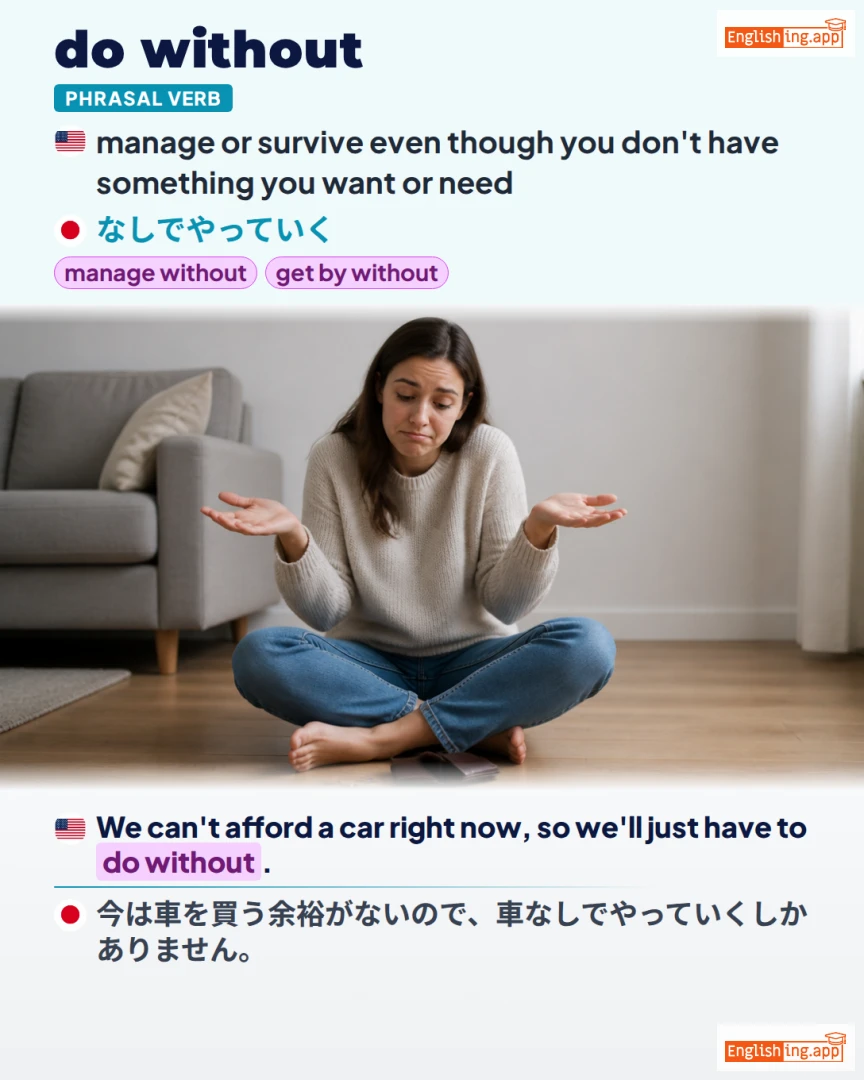
Do Without: English expression meaning and example
Learn the English expression "Do Without".
Meaning: Do without, phrasal verb. It means manage or survive even though you don't have something you want or need. Synonyms: manage without, get by without.
Example: We can't afford a car right now, so we'll just have to do without.
Japanese: Do without は、必要な物がなくても何とかする意味です。
Japanese example: 今は車を買う余裕がないので、車なしでやっていくしかありません。
#LearnEnglish #EnglishExpressions #Englishing
 ja
ja
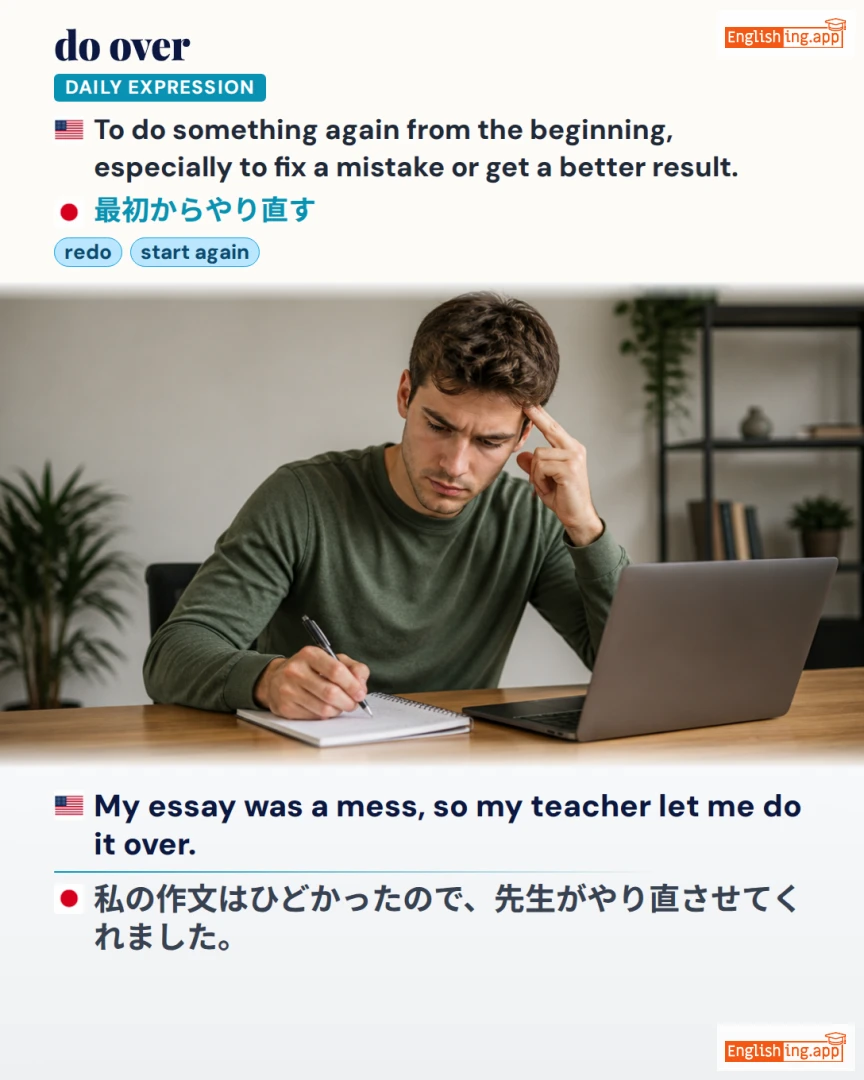
Do Over: English expression meaning and example
Learn the English expression "Do Over".
Meaning: Do over, daily expression. It means To do something again from the beginning, especially to fix a mistake or get a better result. Synonyms: redo, start again.
Example: My essay was a mess, so my teacher let me do it over.
Japanese: Do over は、最初からもう一度やる意味です。
Japanese example: 私の作文はひどかったので、先生がやり直させてくれました。
#LearnEnglish #EnglishExpressions #Englishing
 ja
ja
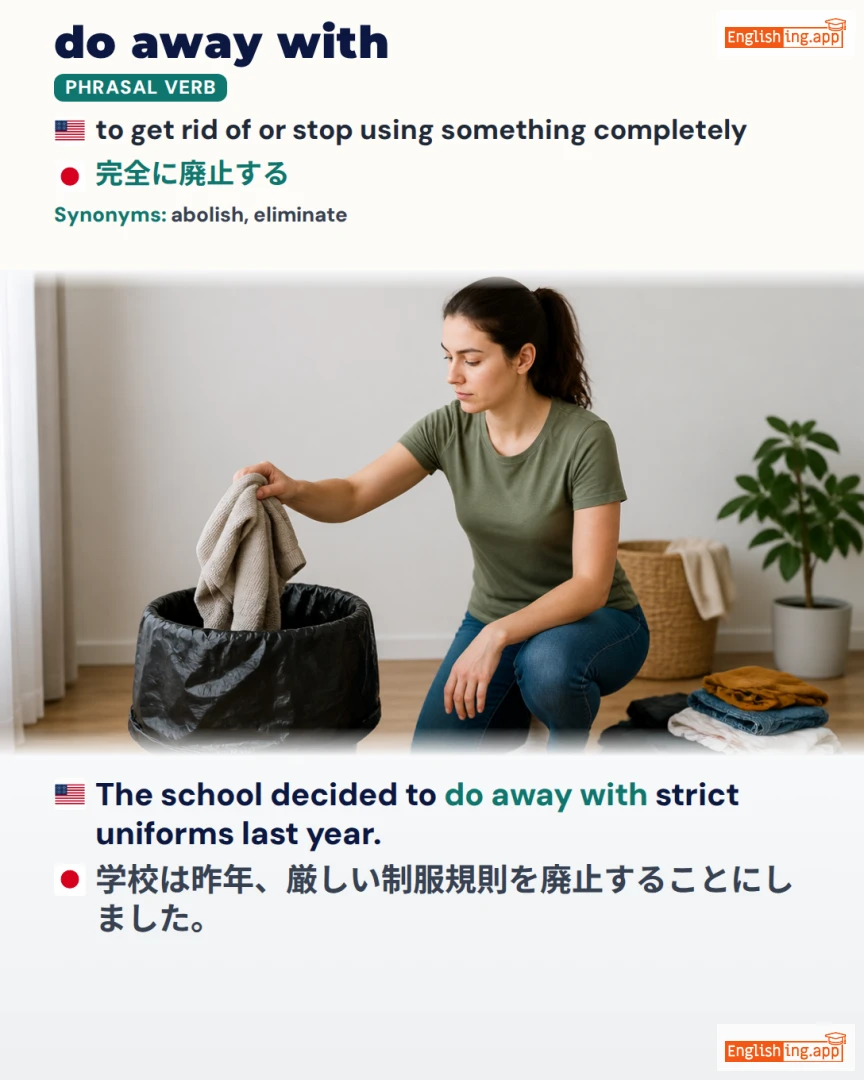
Do Away With: English expression meaning and example
Learn the English expression "Do Away With".
Meaning: Do away with, phrasal verb. It means to get rid of or stop using something completely. Synonyms: abolish, eliminate.
Example: The school decided to do away with strict uniforms last year.
Japanese: Do away with は、何かを完全になくす、使うのをやめる意味です。
Japanese example: 学校は昨年、厳しい制服規則を廃止することにしました。
#LearnEnglish #EnglishExpressions #Englishing
 ja
ja
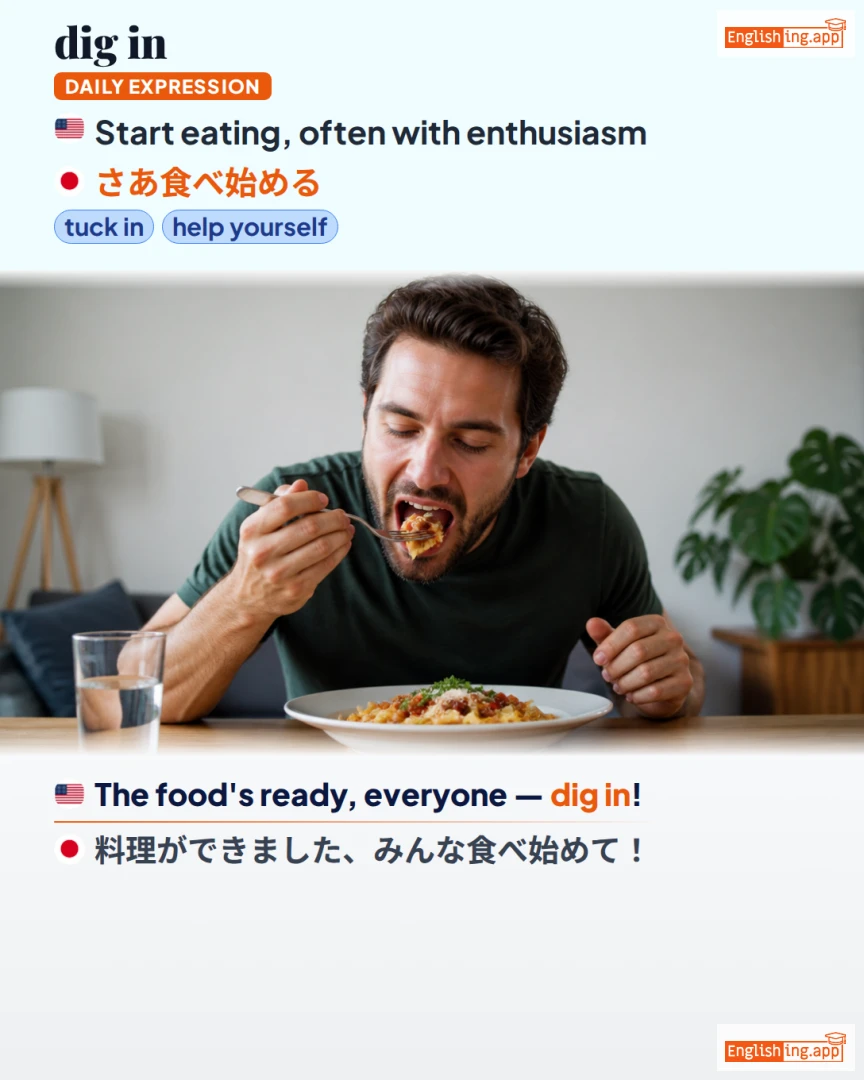
Dig In: English expression meaning and example
Learn the English expression "Dig In".
Meaning: Dig in, daily expression. It means Start eating, often with enthusiasm. Synonyms: tuck in, help yourself.
Example: The food's ready, everyone — dig in!
Japanese: Dig in は、食事を始めてくださいという親しみのある表現です。
Japanese example: 料理ができました、みんな食べ始めて!
#LearnEnglish #EnglishExpressions #Englishing
 ja
ja
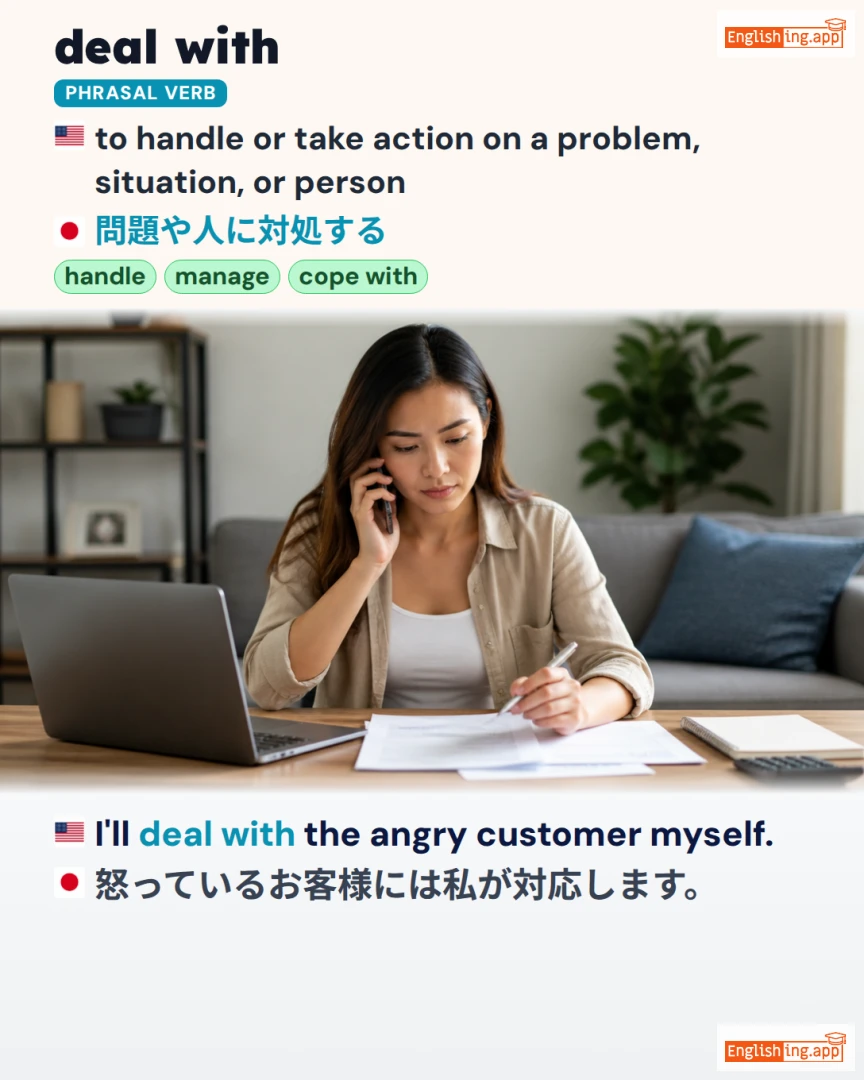
Deal With: English expression meaning and example
Learn the English expression "Deal With".
Meaning: Deal with, phrasal verb. It means to handle or take action on a problem, situation, or person. Synonyms: handle, manage, cope with.
Example: I'll deal with the angry customer myself.
Japanese: Deal with は、問題や状況、人に対処する意味です。
Japanese example: 怒っているお客様には私が対応します。
#LearnEnglish #EnglishExpressions #Englishing
 ja
ja
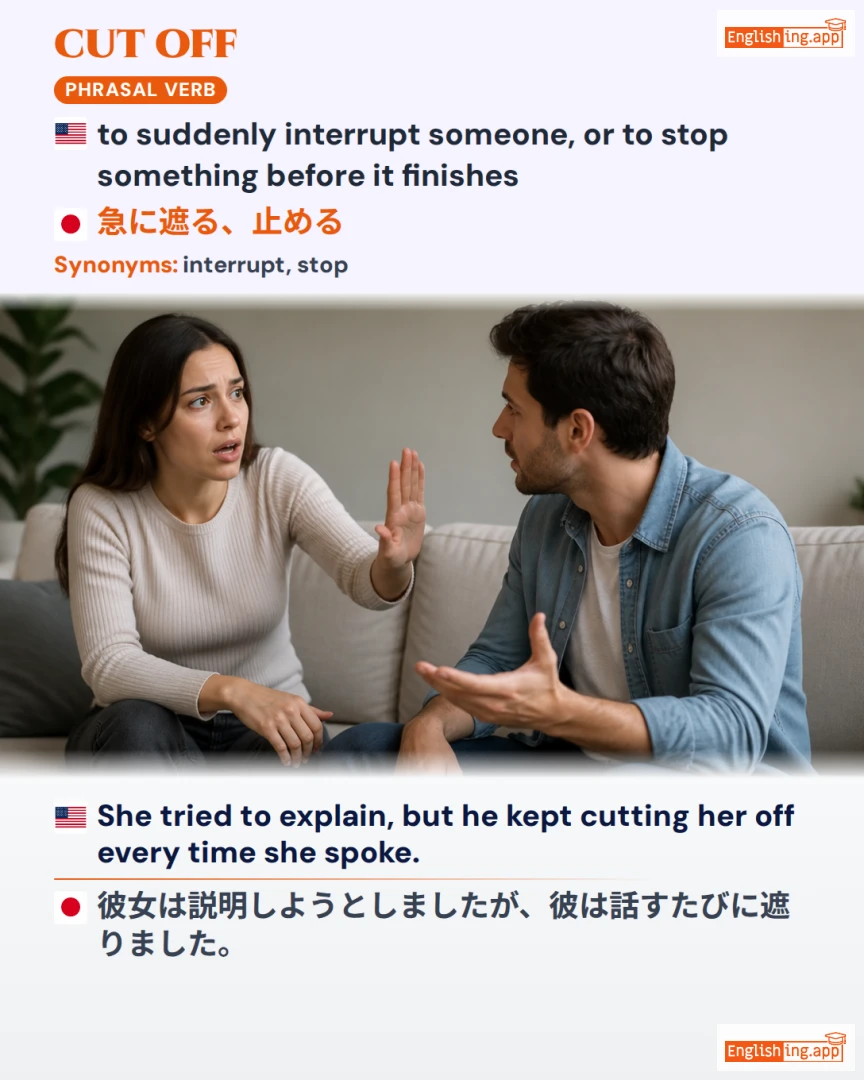
Cut Off: English expression meaning and example
Learn the English expression "Cut Off".
Meaning: Cut off, phrasal verb. It means to suddenly interrupt someone, or to stop something before it finishes. Synonyms: interrupt, stop.
Example: She tried to explain, but he kept cutting her off every time she spoke.
Japanese: Cut off は、人の話を急に遮る、または何かを止める意味です。
Japanese example: 彼女は説明しようとしましたが、彼は話すたびに遮りました。
#LearnEnglish #EnglishExpressions #Englishing
 ja
ja
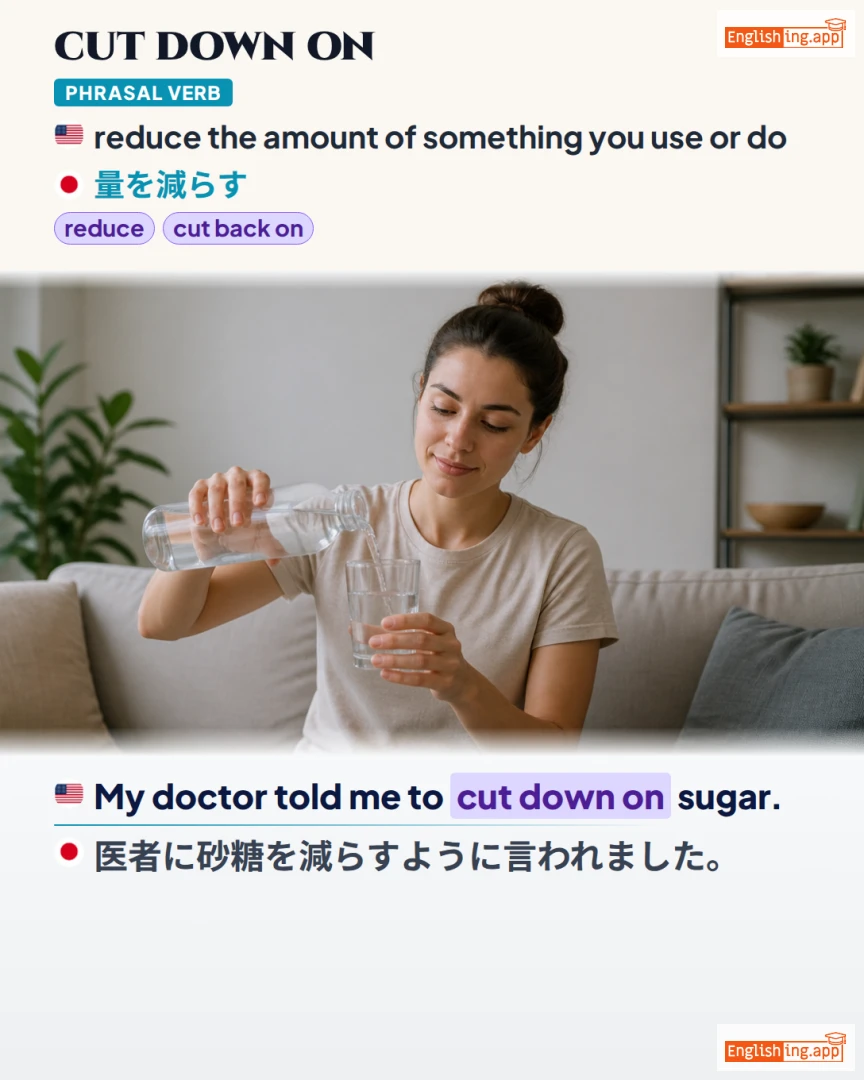
Cut Down On: English expression meaning and example
Learn the English expression "Cut Down On".
Meaning: Cut down on, phrasal verb. It means reduce the amount of something you use or do. Synonyms: reduce, cut back on.
Example: My doctor told me to cut down on sugar.
Japanese: Cut down on は、使う量やする量を減らす意味です。
Japanese example: 医者に砂糖を減らすように言われました。
#LearnEnglish #EnglishExpressions #Englishing
 ja
ja
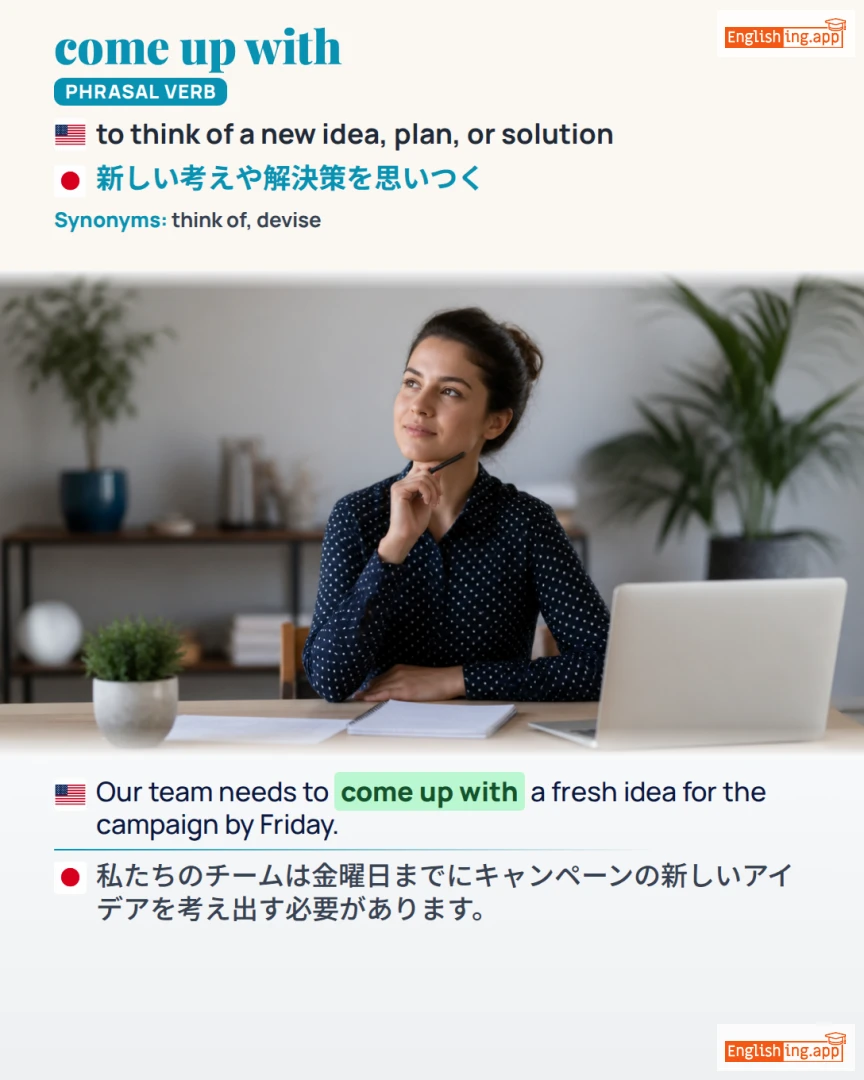
Come Up With: English expression meaning and example
Learn the English expression "Come Up With".
Meaning: Come up with, phrasal verb. It means to think of a new idea, plan, or solution. Synonyms: think of, devise.
Example: Our team needs to come up with a fresh idea for the campaign by Friday.
Japanese: Come up with は、新しいアイデアや計画、解決策を思いつく意味です。
Japanese example: 私たちのチームは金曜日までにキャンペーンの新しいアイデアを考え出す必要があります。
#LearnEnglish #EnglishExpressions #Englishing
 ja
ja
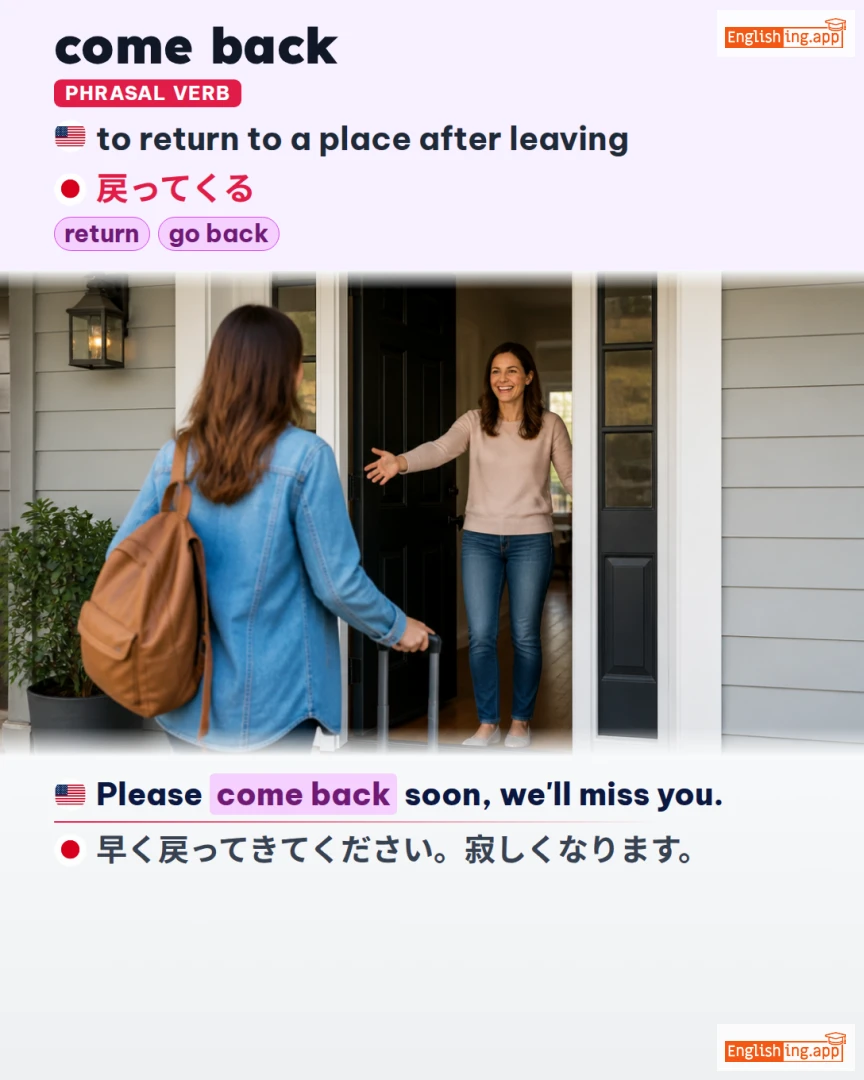
Come Back: English expression meaning and example
Learn the English expression "Come Back".
Meaning: Come back, phrasal verb. It means to return to a place after leaving. Synonyms: return, go back.
Example: Please come back soon, we'll miss you.
Japanese: Come back は、去った場所に戻る意味です。
Japanese example: 早く戻ってきてください。寂しくなります。
#LearnEnglish #EnglishExpressions #Englishing
 ja
ja
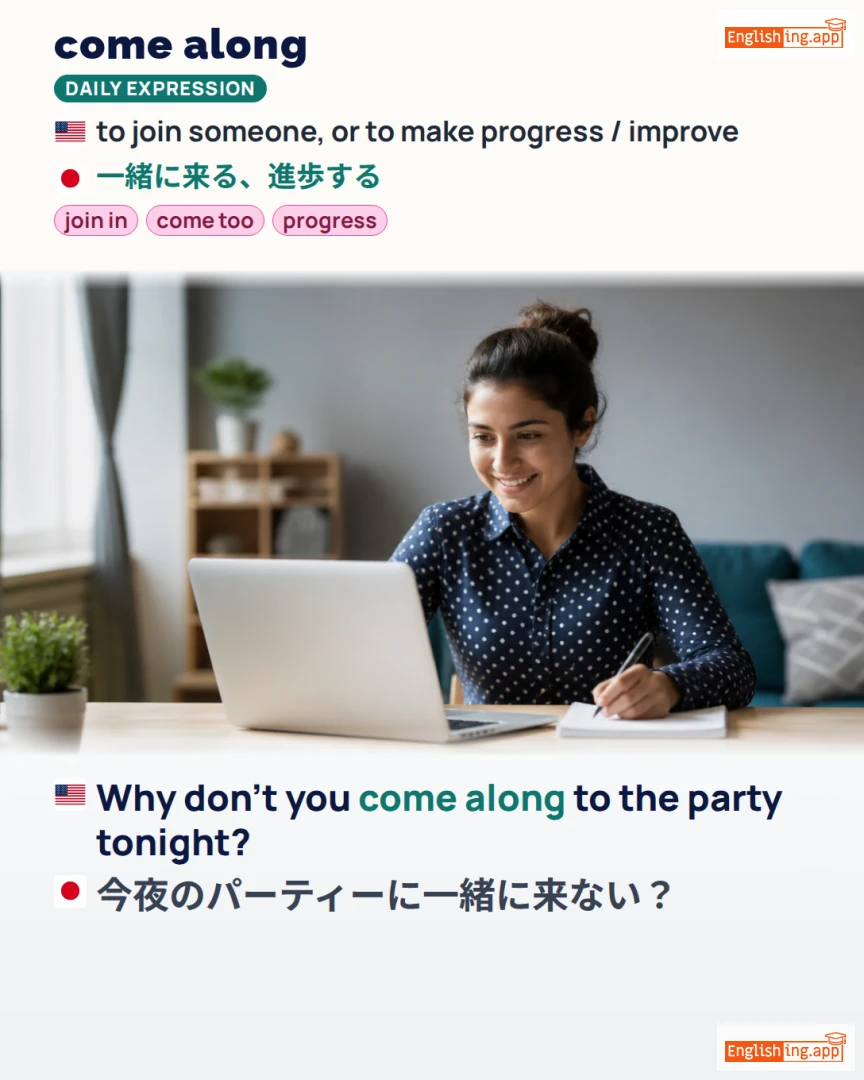
Come Along: English expression meaning and example
Learn the English expression "Come Along".
Meaning: Come along, daily expression. It means to join someone, or to make progress / improve. Synonyms: join in, come too, progress.
Example: Why don’t you come along to the party tonight?
Japanese: Come along は、一緒に来る、または進歩する意味です。
Japanese example: 今夜のパーティーに一緒に来ない?
#LearnEnglish #EnglishExpressions #Englishing
 ja
ja
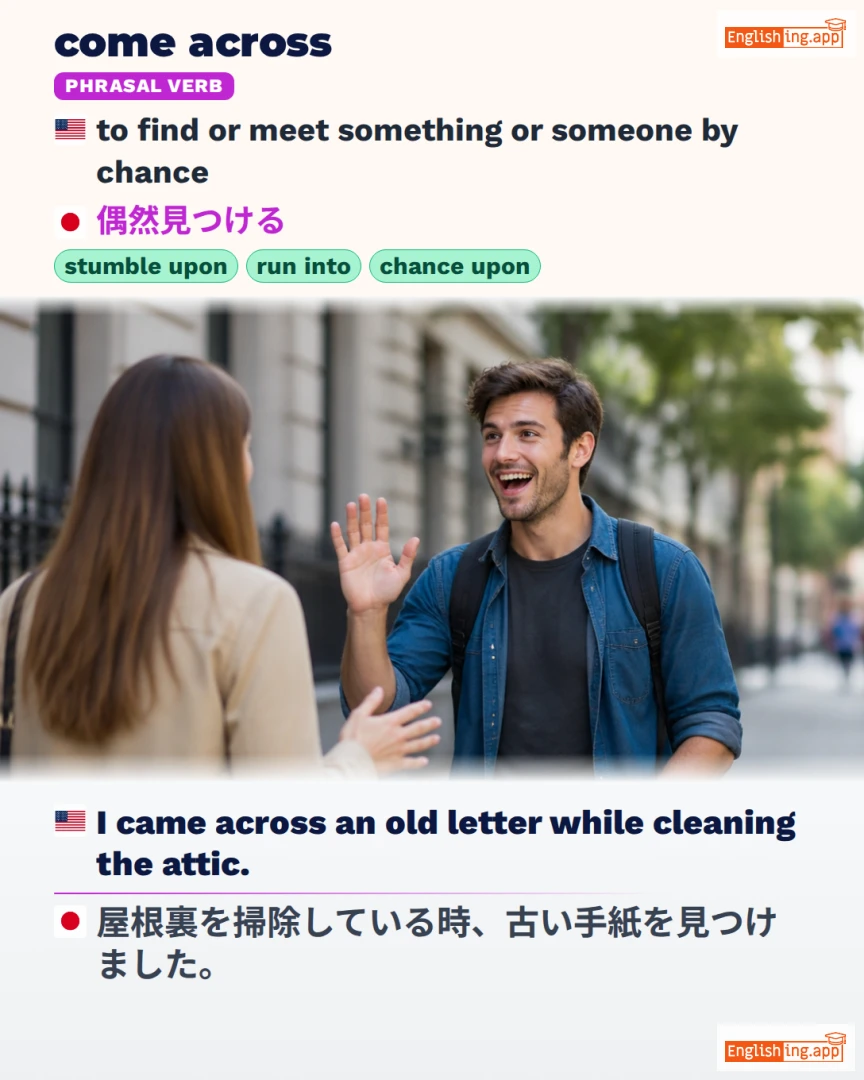
Come Across: English expression meaning and example
Learn the English expression "Come Across".
Meaning: Come across, phrasal verb. It means to find or meet something or someone by chance. Synonyms: stumble upon, run into, chance upon.
Example: I came across an old letter while cleaning the attic.
Japanese: Come across は、偶然見つける、出会う意味です。
Japanese example: 屋根裏を掃除している時、古い手紙を見つけました。
#LearnEnglish #EnglishExpressions #Englishing
 ja
ja
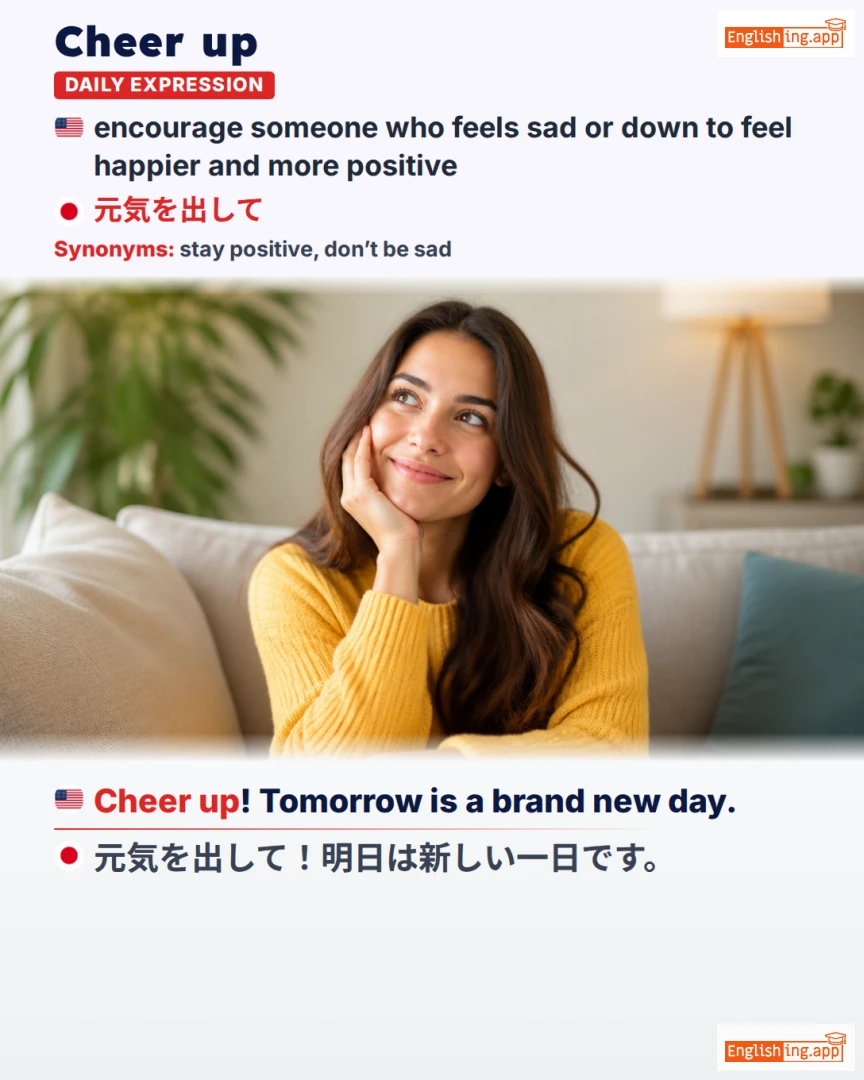
Cheer Up: English expression meaning and example
Learn the English expression "Cheer Up".
Meaning: Cheer up, daily expression. It means encourage someone who feels sad or down to feel happier and more positive. Synonyms: stay positive, don’t be sad.
Example: Cheer up! Tomorrow is a brand new day.
Japanese: Cheer up は、落ち込んだ人を励ます言葉です。
Japanese example: 元気を出して!明日は新しい一日です。
#LearnEnglish #EnglishExpressions #Englishing
 ja
ja
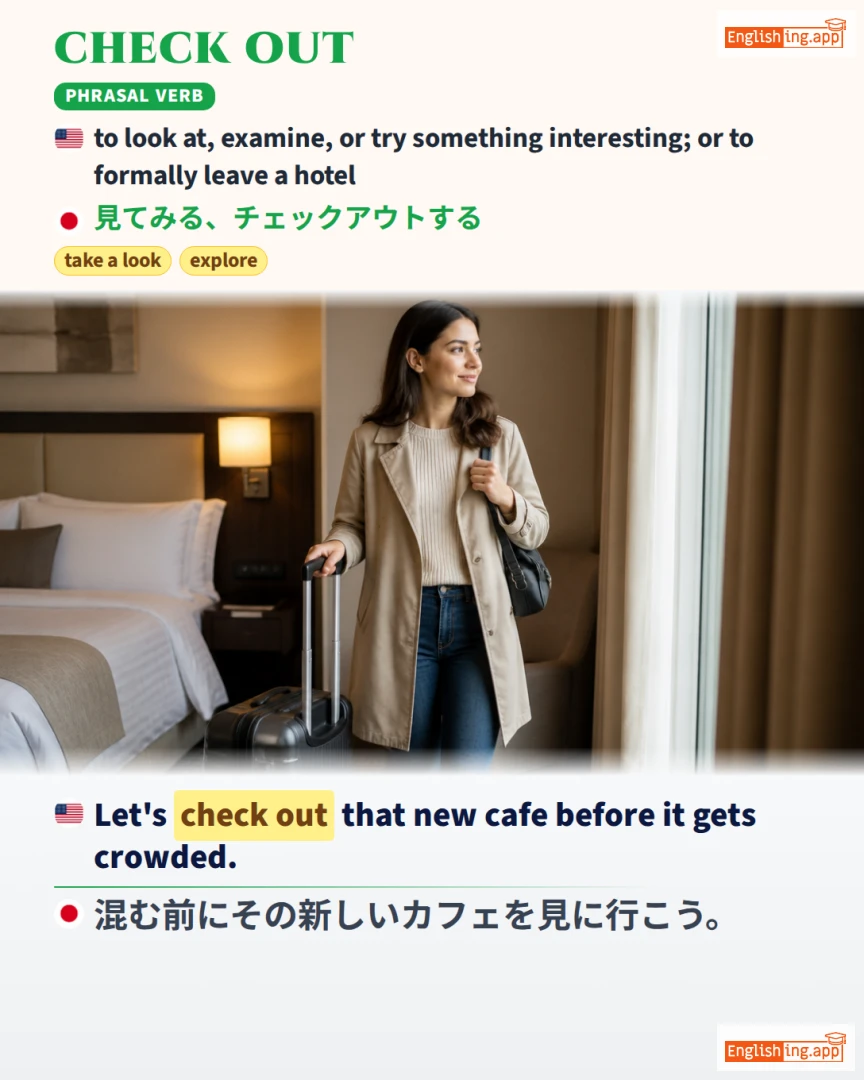
Check Out: English expression meaning and example
Learn the English expression "Check Out".
Meaning: Check out, phrasal verb. It means to look at, examine, or try something interesting; or to formally leave a hotel. Synonyms: take a look, explore.
Example: Let's check out that new cafe before it gets crowded.
Japanese: Check out は、見てみる、試す、またはホテルを出る意味です。
Japanese example: 混む前にその新しいカフェを見に行こう。
#LearnEnglish #EnglishExpressions #Englishing
 ja
ja
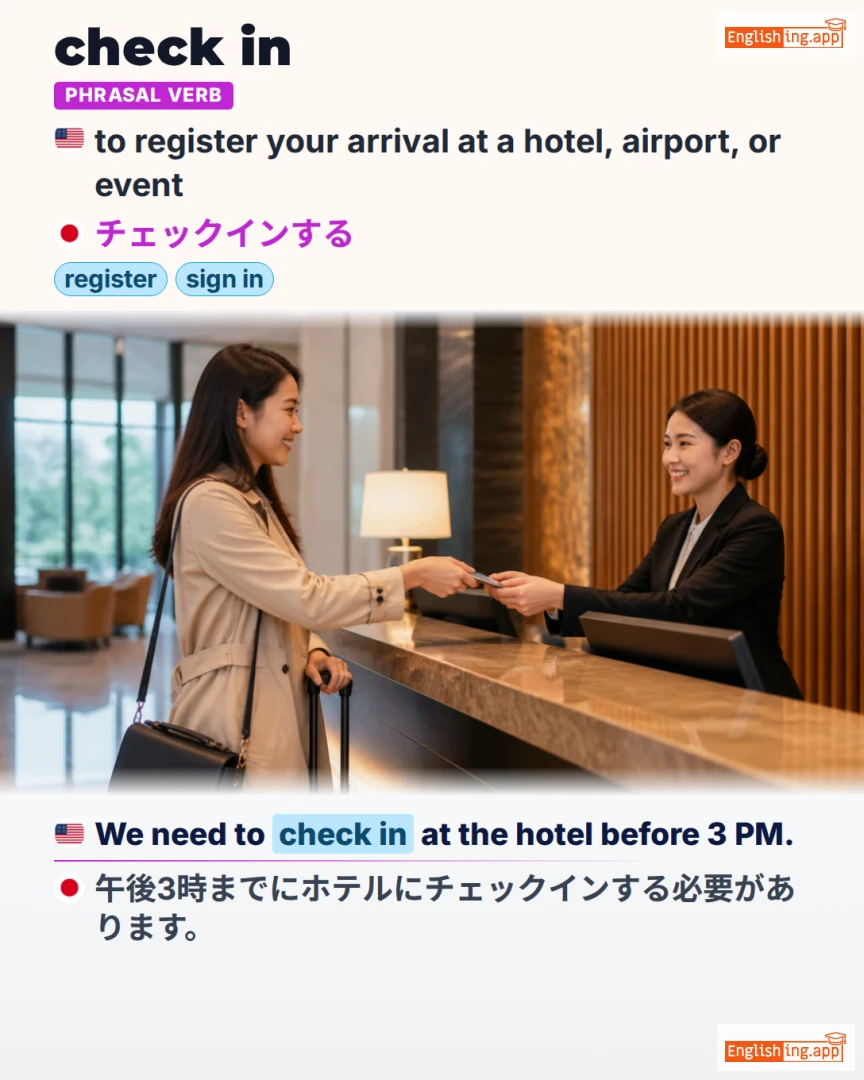
Check In: English expression meaning and example
Learn the English expression "Check In".
Meaning: Check in, phrasal verb. It means to register your arrival at a hotel, airport, or event. Synonyms: register, sign in.
Example: We need to check in at the hotel before 3 PM.
Japanese: Check in は、到着を登録する意味です。
Japanese example: 午後3時までにホテルにチェックインする必要があります。
#LearnEnglish #EnglishExpressions #Englishing
 ja
ja
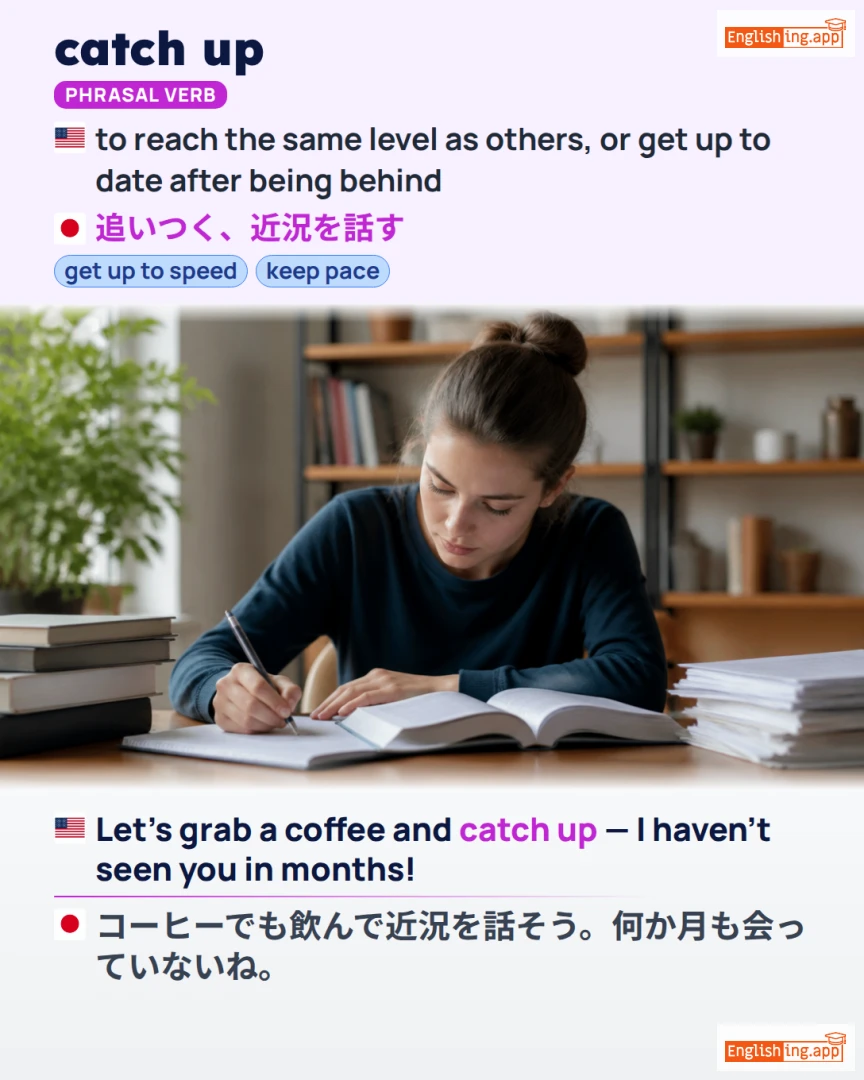
Catch Up: English expression meaning and example
Learn the English expression "Catch Up".
Meaning: Catch up, phrasal verb. It means to reach the same level as others, or get up to date after being behind. Synonyms: get up to speed, keep pace.
Example: Let's grab a coffee and catch up — I haven't seen you in months!
Japanese: Catch up は、追いつく、または近況を話し合う意味です。
Japanese example: コーヒーでも飲んで近況を話そう。何か月も会っていないね。
#LearnEnglish #EnglishExpressions #Englishing
 ja
ja
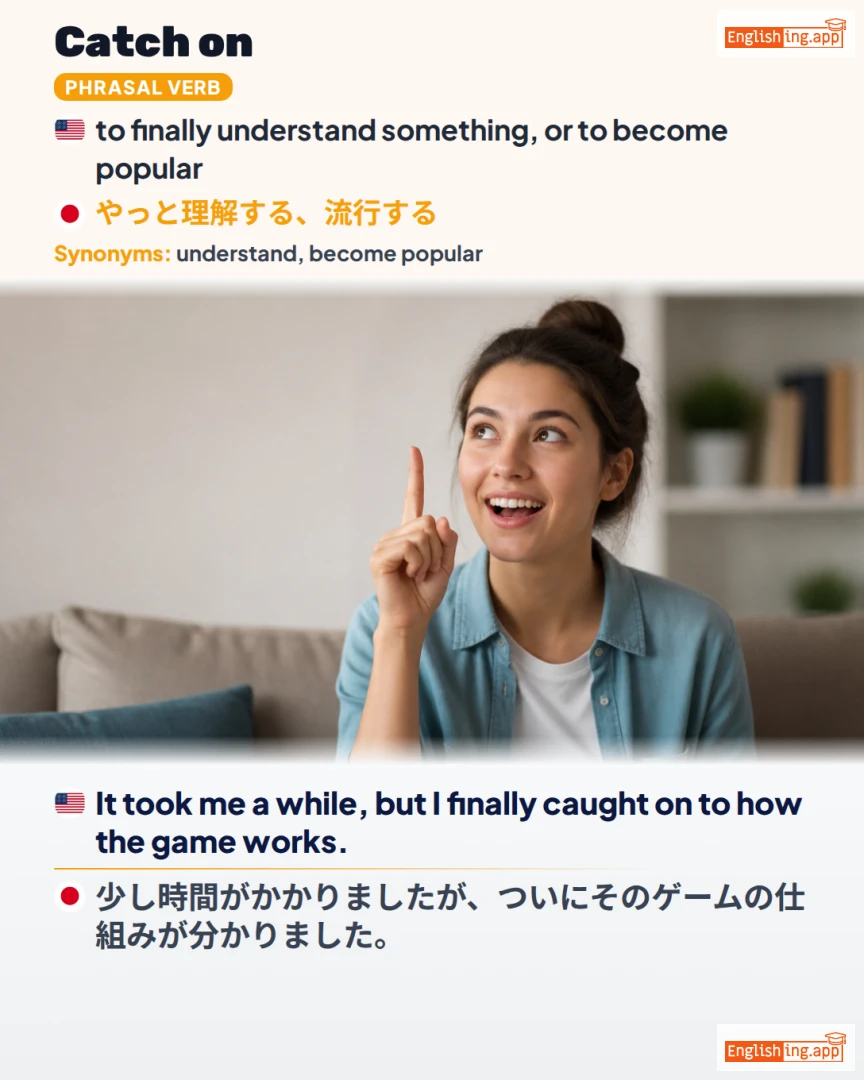
Catch On: English expression meaning and example
Learn the English expression "Catch On".
Meaning: Catch on, phrasal verb. It means to finally understand something, or to become popular. Synonyms: understand, become popular.
Example: It took me a while, but I finally caught on to how the game works.
Japanese: Catch on は、やっと理解する、または流行する意味です。
Japanese example: 少し時間がかかりましたが、ついにそのゲームの仕組みが分かりました。
#LearnEnglish #EnglishExpressions #Englishing
 ja
ja
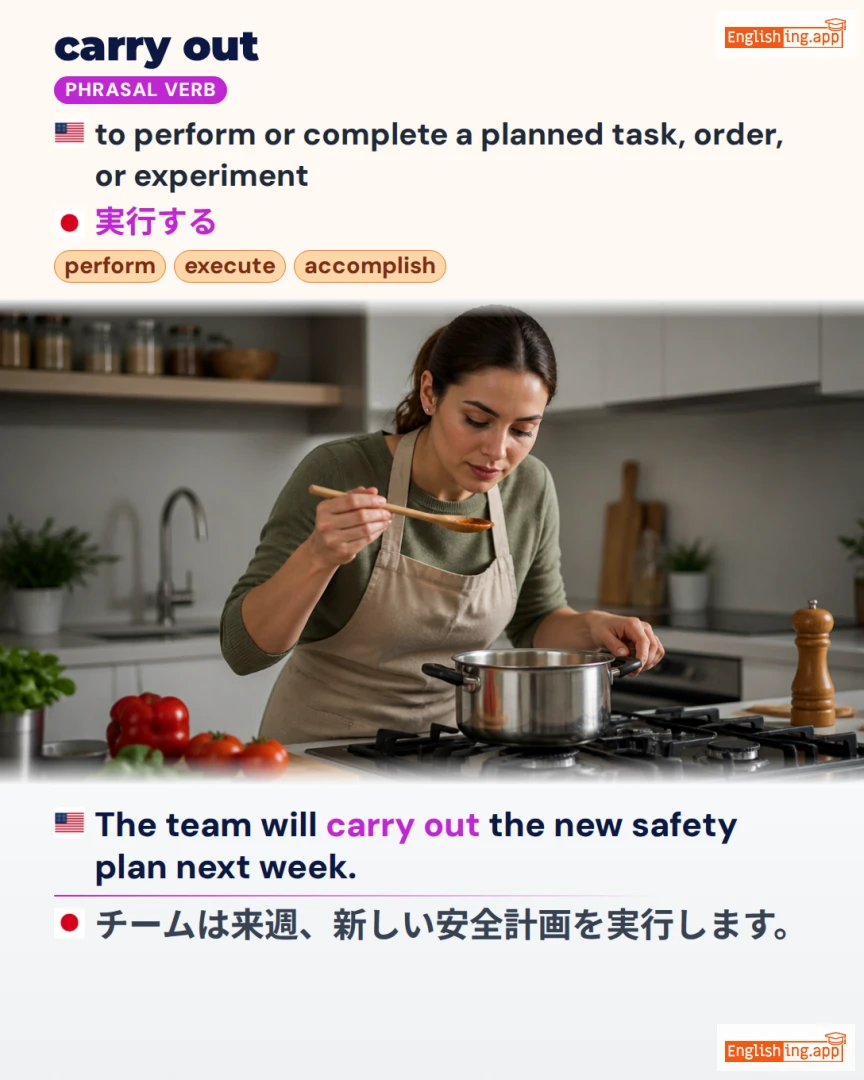
Carry Out: English expression meaning and example
Learn the English expression "Carry Out".
Meaning: Carry out, phrasal verb. It means to perform or complete a planned task, order, or experiment. Synonyms: perform, execute, accomplish.
Example: The team will carry out the new safety plan next week.
Japanese: Carry out は、計画や任務を実行する意味です。
Japanese example: チームは来週、新しい安全計画を実行します。
#LearnEnglish #EnglishExpressions #Englishing
 ja
ja
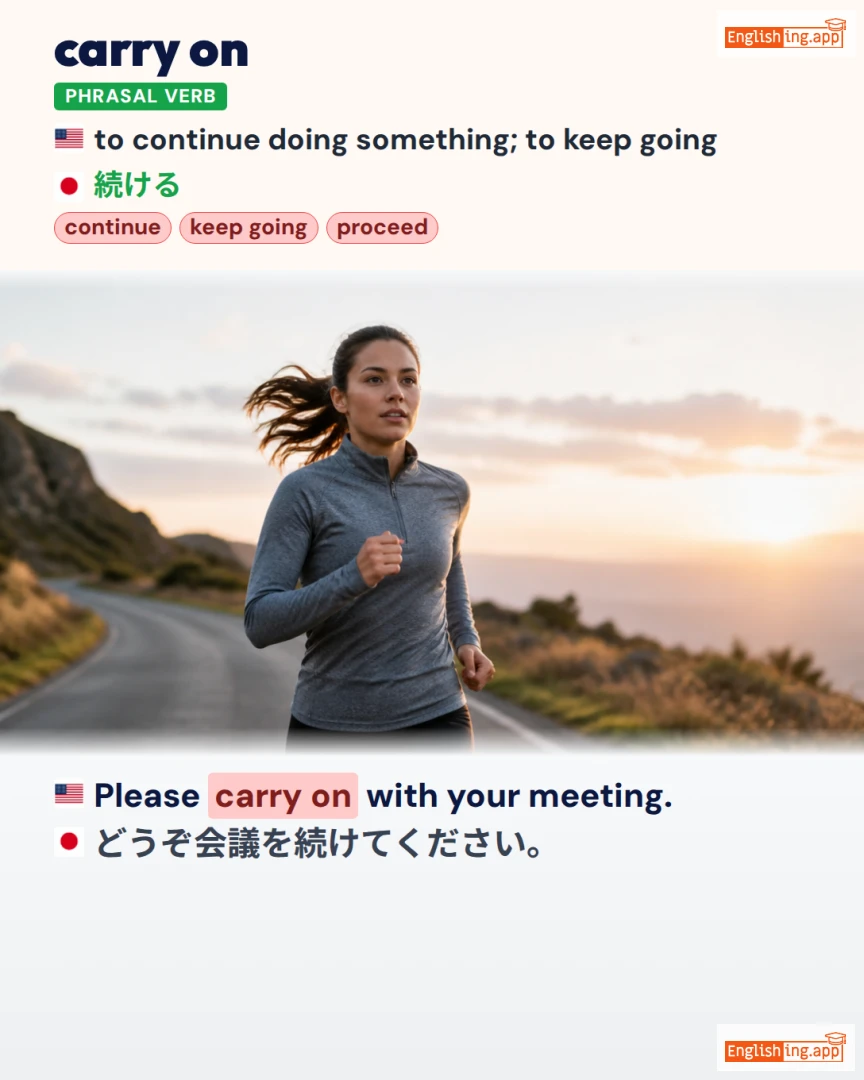
Carry On: English expression meaning and example
Learn the English expression "Carry On".
Meaning: Carry on, phrasal verb. It means to continue doing something; to keep going. Synonyms: continue, keep going, proceed.
Example: Please carry on with your meeting.
Japanese: Carry on は、していたことを続ける意味です。
Japanese example: どうぞ会議を続けてください。
#LearnEnglish #EnglishExpressions #Englishing
 ja
ja
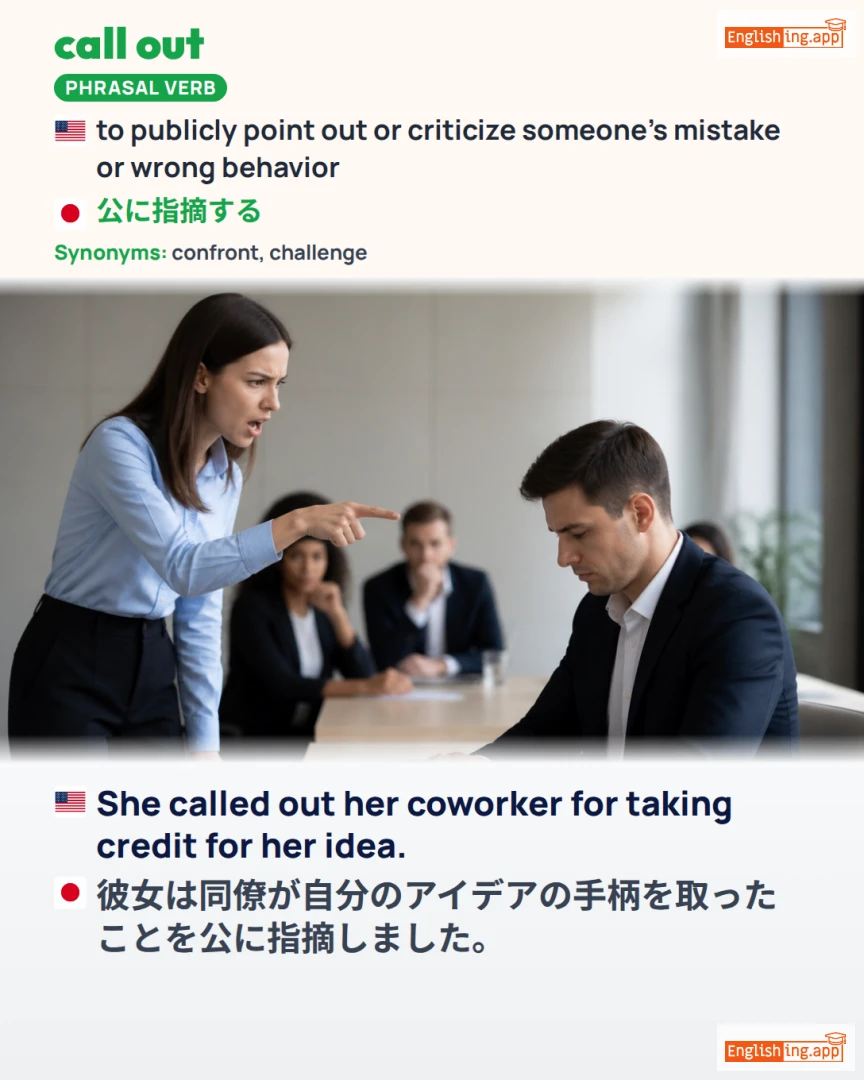
Call Out: English expression meaning and example
Learn the English expression "Call Out".
Meaning: Call out, phrasal verb. It means to publicly point out or criticize someone’s mistake or wrong behavior. Synonyms: confront, challenge.
Example: She called out her coworker for taking credit for her idea.
Japanese: Call out は、間違いや悪い行動を公に指摘する意味です。
Japanese example: 彼女は同僚が自分のアイデアの手柄を取ったことを公に指摘しました。
#LearnEnglish #EnglishExpressions #Englishing
 ja
ja
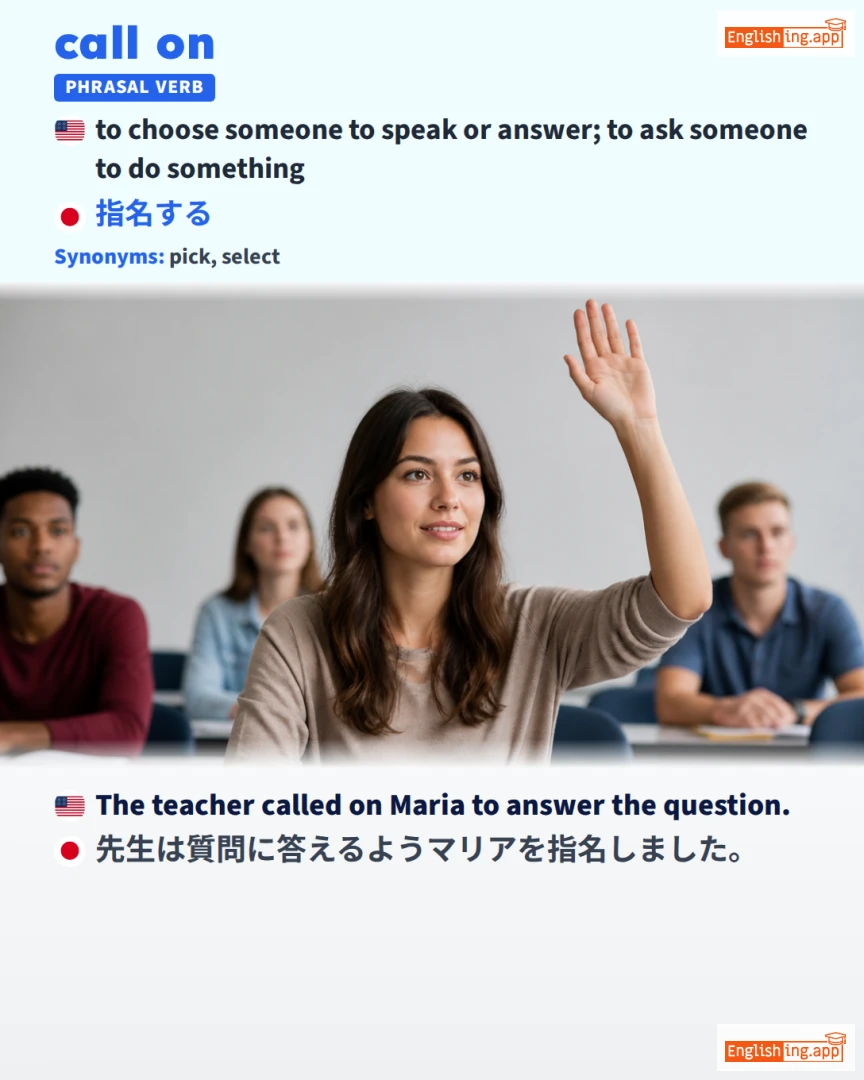
Call On: English expression meaning and example
Learn the English expression "Call On".
Meaning: Call on, phrasal verb. It means to choose someone to speak or answer; to ask someone to do something. Synonyms: pick, select.
Example: The teacher called on Maria to answer the question.
Japanese: Call on は、答える人を指名する意味です。
Japanese example: 先生は質問に答えるようマリアを指名しました。
#LearnEnglish #EnglishExpressions #Englishing
 ja
ja
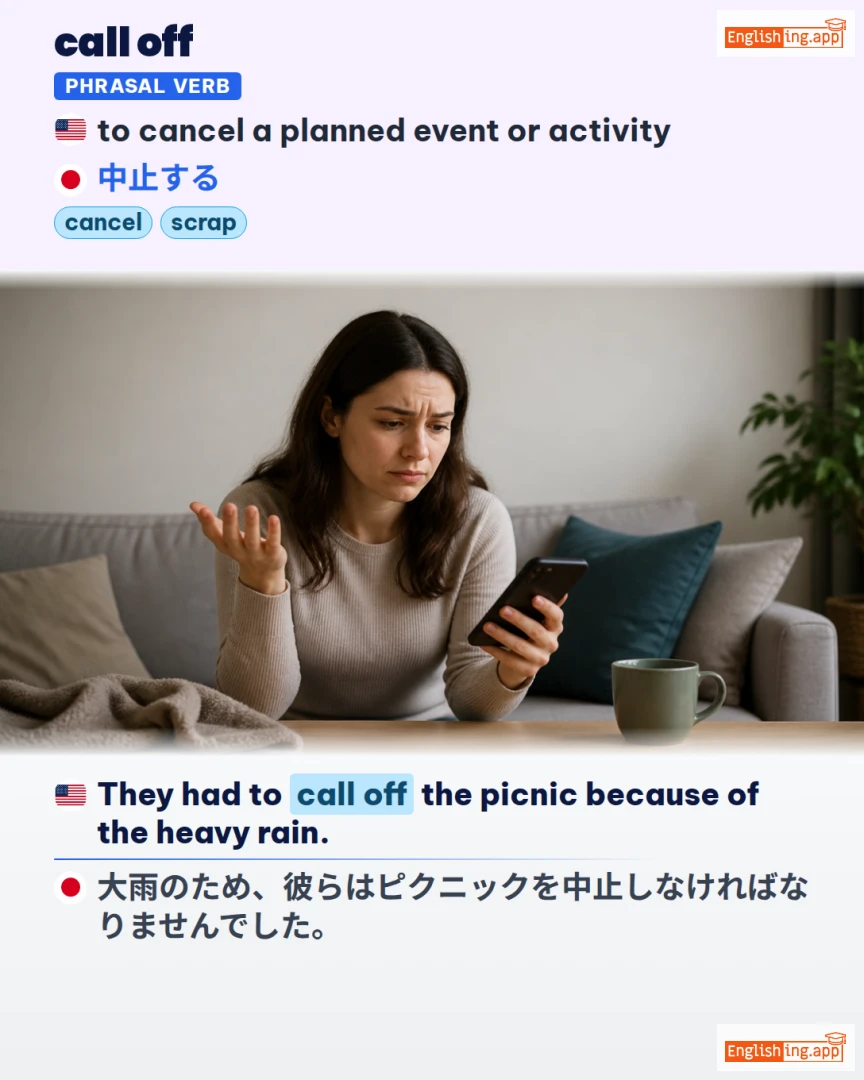
Call Off: English expression meaning and example
Learn the English expression "Call Off".
Meaning: Call off, phrasal verb. It means to cancel a planned event or activity. Synonyms: cancel, scrap.
Example: They had to call off the picnic because of the heavy rain.
Japanese: Call off は、予定をキャンセルする意味です。
Japanese example: 大雨のため、彼らはピクニックを中止しなければなりませんでした。
#LearnEnglish #EnglishExpressions #Englishing
 ja
ja
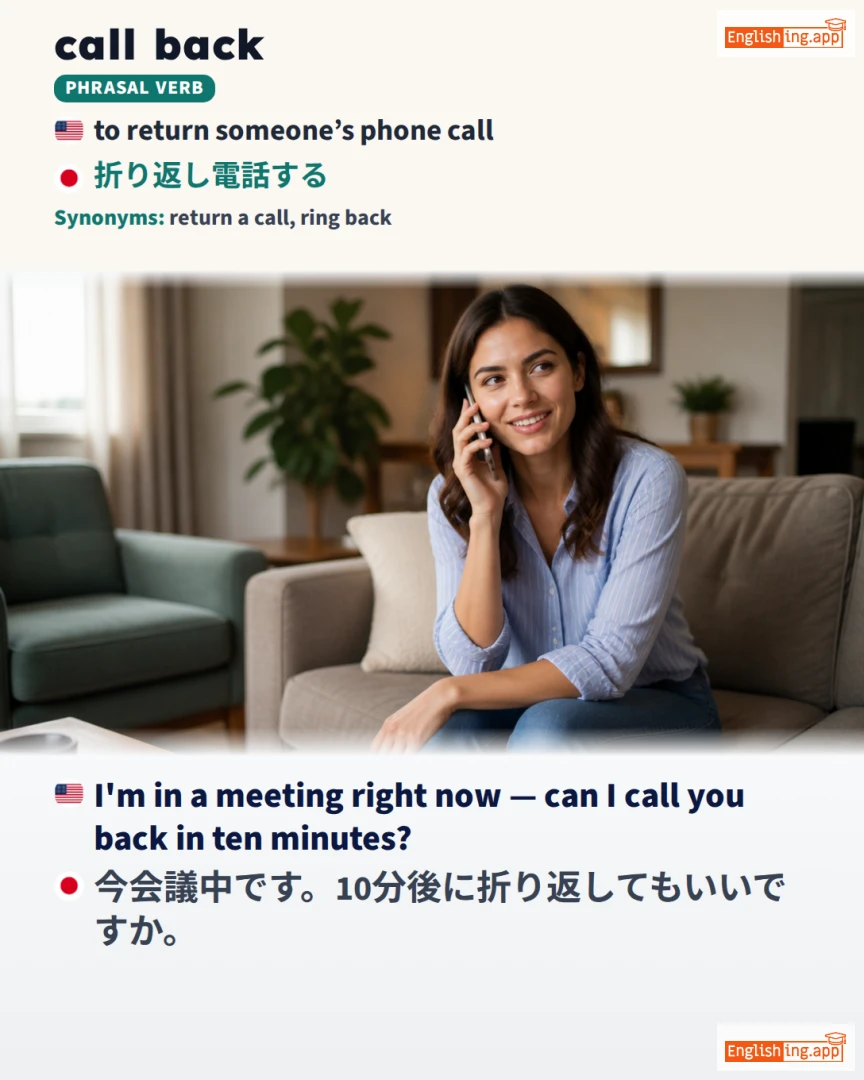
Call Back: English expression meaning and example
Learn the English expression "Call Back".
Meaning: Call back, phrasal verb. It means to return someone’s phone call. Synonyms: return a call, ring back.
Example: I'm in a meeting right now — can I call you back in ten minutes?
Japanese: Call back は、あとで電話をかけ直す意味です。
Japanese example: 今会議中です。10分後に折り返してもいいですか。
#LearnEnglish #EnglishExpressions #Englishing
 ja
ja
Burn The Midnight Oil: English expression meaning and example
Learn the English expression "Burn The Midnight Oil".
Meaning: Burn the midnight oil, idiom. It means to stay up very late working or studying hard.
Example: She burned the midnight oil to finish her thesis before the deadline.
Japanese: Burn the midnight oil は、深夜まで勉強や仕事をする意味です。
Japanese example: 彼女は締め切り前に論文を終えるため夜遅くまで頑張りました。
#LearnEnglish #EnglishExpressions #Englishing
 ja
ja
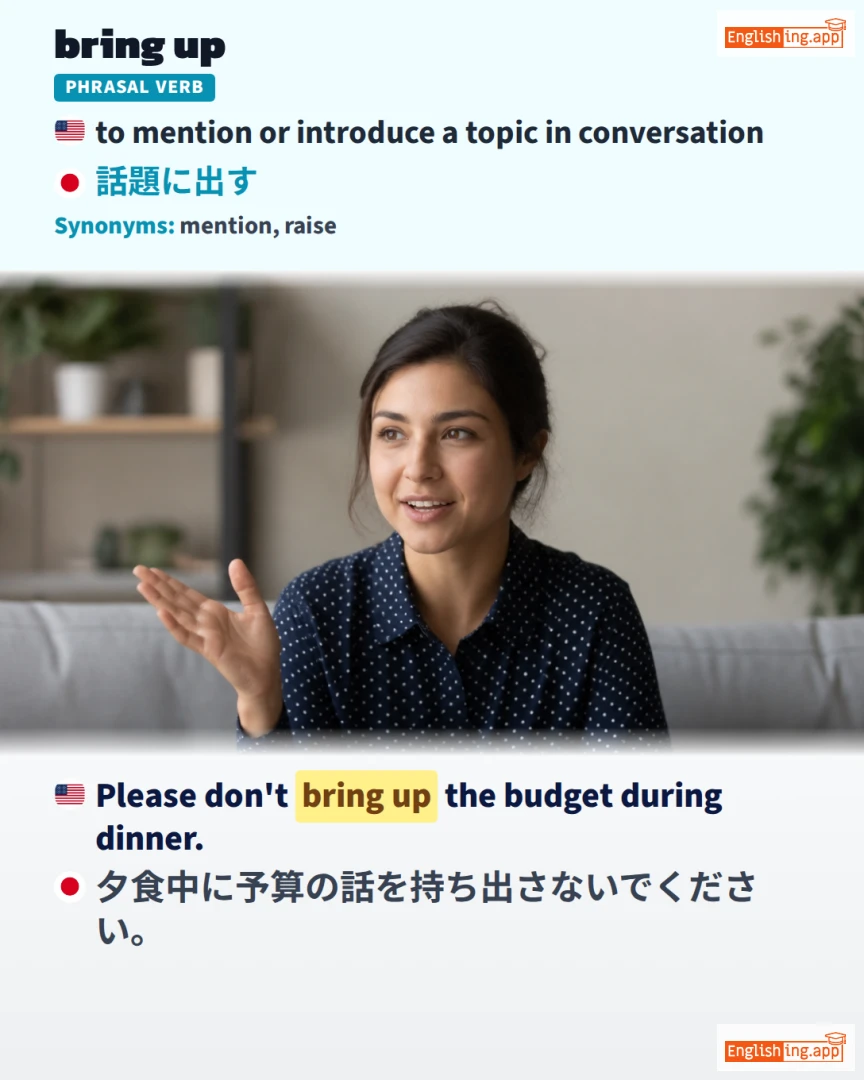
Bring Up: English expression meaning and example
Learn the English expression "Bring Up".
Meaning: Bring up, phrasal verb. It means to mention or introduce a topic in conversation. Synonyms: mention, raise.
Example: Please don't bring up the budget during dinner.
Japanese: Bring up は、会話で話題を出す意味です。
Japanese example: 夕食中に予算の話を持ち出さないでください。
#LearnEnglish #EnglishExpressions #Englishing