The Village That Found Its Voice
遠くのvalleyに、日々wanderedしている人々がいる小さな村がありましたが、適切なvotingシステムはありませんでした。Vendorであるラヒムは言いました。「Unless私たちがunitedしなければ、私たちの権利はvanishするでしょう。」彼のweeklyミーティングが始まり、variedなバックグラウンドを持つ人々が集まりました。みんな一つの目標を持っていました: 民主主義のvirtueをupholdすることです。多くの人々はvotingが伝統にversusすると考えていましたが、ラヒムはそれがどうusefulであるかを説明しました。彼の言葉のvolumeは増し、すべてのviewerが感銘を受けました。人々のwarmthと団結は圧制的なシステムをweakenedしました。地元の地主はwealthを持っており、その影響力をweaponとして使おうとしました。しかしコミュニティは強く、彼らは変化のvesselとなりました。ラヒムのvirtueは彼の誠実さと献身でした。Unless彼らが行動しなければ、何も変わらないでしょう。最終的に、村では初めて公正なvotingが行われました。人々のvariedな意見が聞かれ、民主主義が勝利しました。ラヒムは、たとえ単純なvendorでも、真実とvirtueをupholdsすれば変化をもたらすことができると証明しました。村人たちはunitedし、自分たちの未来を決定しました。今、彼らの声はvanishすることはなく、usefulな力を与える道具となりました。Weeklyミーティングは今や伝統となり、みんなが自分の懸念を共有します。
|
絵文字
|
単語 | Images | 翻訳 | 過去 | 過去分詞 | 三人称単数 | 動名詞 | 意味 | 例文 | 例文の翻訳 | 表現例 | 表現例の意味 | 表現例の翻訳 | 同義語 | 対義語 | コロケーション | ニーモニック |
|---|---|---|---|---|---|---|---|---|---|---|---|---|---|---|---|---|---|
|
🤝
••••••
|
/juːˈnaɪtɪd/
adjective
(ユナイテッド)
••••••
|
- •••••• |
団結した; 一緒に; 同意した
danketsu shita; issho ni; dōi shita
••••••
|
- •••••• | - •••••• | - •••••• | - •••••• |
joined together for a common purpose; in agreement
••••••
|
The team was united in their goal to win. |
チームは勝利を目指して団結していた。
chīmu wa shōri o mezashite danketsu shite ita.
••••••
|
- •••••• | - •••••• | - •••••• |
joined, combined, allied
••••••
|
divided, separated, split
••••••
|
united front, united effort, united nation
••••••
|
みんなで一つの目標に団結
••••••
|
|
🚫
••••••
|
/ʌnˈlɛs/
conjunction
(anles)
••••••
|
- •••••• |
もし~でない限り
moshi ~ denai kagiri
••••••
|
- •••••• | - •••••• | - •••••• | - •••••• |
except if
••••••
|
We won't go unless it stops raining. |
雨が止まない限り、私たちは行きません。
Ame ga yamanai kagiri, watashitachi wa ikimasen.
••••••
|
- •••••• | - •••••• | - •••••• |
except, without, but, if not
••••••
|
if, provided
••••••
|
unless otherwise stated, unless there is
••••••
|
Unless = もし~でない限り (Moshi ~ denai kagiri)
••••••
|
|
⚖️
••••••
|
/ʌpˈhoʊld/
verb
(apohōrudo)
••••••
|
- •••••• |
維持する
ijisuru
••••••
|
upheld
apherudo
••••••
|
upheld
apherudo
••••••
|
upholds
apohōrudosu
••••••
|
upholding
apohōrudoingu
••••••
|
to maintain or support a principle, law, or decision
••••••
|
The judge promised to uphold justice at all costs.
裁判官は、どんな犠牲を払っても正義を守ると約束しました。
••••••
|
裁判官は、どんな犠牲を払っても正義を守ると約束しました。
Saibankan wa, donna gisei o hatatte mo seigi o mamoru to yakusoku shimashita.
••••••
|
uphold the law
法律を守る
••••••
|
to support and enforce legal rules
••••••
|
法律を守る
hōritsu o mamoru
••••••
|
support, maintain, defend, sustain, endorse
••••••
|
reject, overturn
••••••
|
uphold justice, uphold the law, uphold a decision, uphold rights
••••••
|
UP 維持するは「法律や原則を守ること」
••••••
|
|
🔧
••••••
|
/ˈjuːs.fəl/
adjective
(yūsu-furu)
••••••
|
- •••••• |
役に立つ; 実用的な
yaku ni tatsu; jitsuyō-teki na
••••••
|
- •••••• | - •••••• | - •••••• | - •••••• |
having a beneficial purpose; practical
••••••
|
This tool is very useful for fixing problems.
このツールは問題を解決するために非常に役立ちます。
••••••
|
このツールは問題を解決するために非常に役立ちます。
kono tsūru wa mondai o kaiketsu suru tame ni hijō ni yaku datchimasu.
••••••
|
- •••••• | - •••••• | - •••••• |
helpful, beneficial, practical, handy, valuable
••••••
|
useless, harmful, worthless, ineffective
••••••
|
useful tool, useful information, very useful, quite useful
••••••
|
Usefulのように役に立つツール、問題を解決するために役立ちます
••••••
|
|
🏞️
••••••
|
/ˈvæl.i/
noun
(ヴェイリー)
••••••
|
- •••••• |
谷
tani
••••••
|
- •••••• | - •••••• | - •••••• | - •••••• |
a low area of land between hills or mountains
••••••
|
The green valley stretched for miles between the mountains. |
緑の谷は山々の間に何マイルも広がっていた。
Midori no tani wa yamayama no aida ni nan mairu mo hirogatte ita.
••••••
|
- •••••• | - •••••• | - •••••• |
dale, glen, hollow
••••••
|
mountain, hill, peak
••••••
|
river valley, mountain valley, fertile valley, deep valley
••••••
|
谷は水流が広がり、緑の草が育つ場所です。
••••••
|
|
✨
••••••
|
/ˈvæn.ɪʃ/
verb
(バニッシュ)
••••••
|
|
消える
kieru
••••••
|
vanished
バニッシュド
••••••
|
vanished
バニッシュド
••••••
|
vanishes
バニッシズ
••••••
|
vanishing
バニッシング
••••••
|
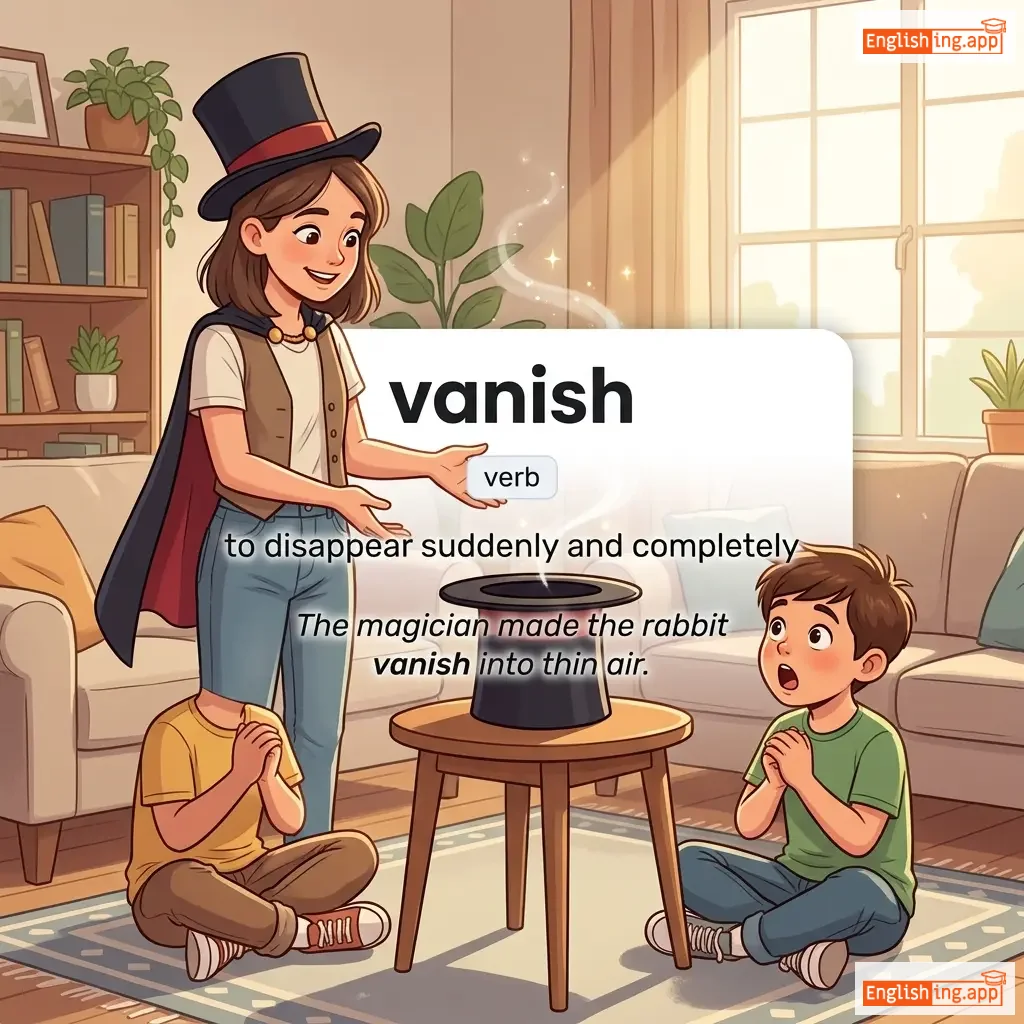
to disappear suddenly and completely
••••••
|
The magician made the rabbit vanish into thin air.
魔法使いはウサギを空中で消しました。
••••••
|
魔法使いはウサギを空中で消しました。
Mahoutsukai wa usagi o kuuchuu de keshimashita.
••••••
|
vanish into thin air
空中で消える
••••••
|
to disappear suddenly without a trace
••••••
|
空中で消える
kuuchuu de kieru
••••••
|
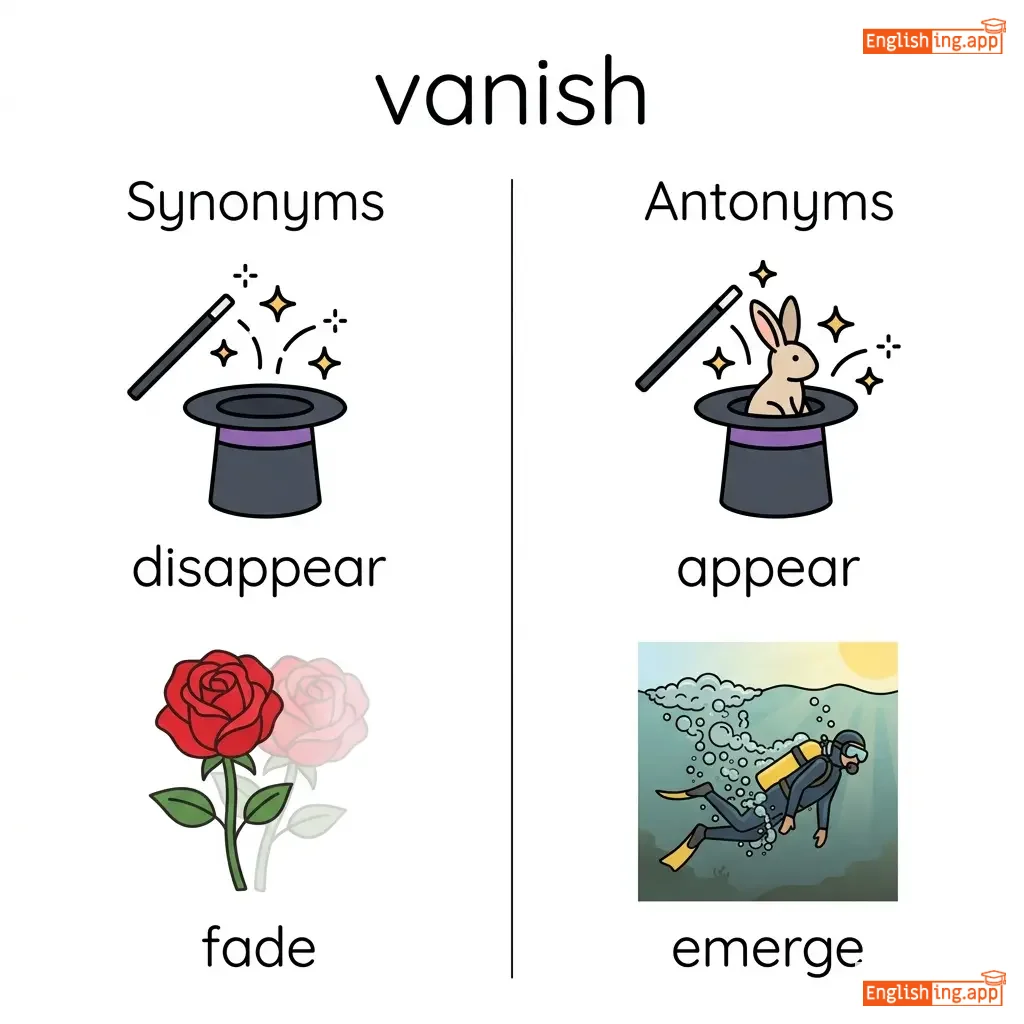
disappear, fade, evaporate, melt away
••••••
|
appear, emerge
••••••
|
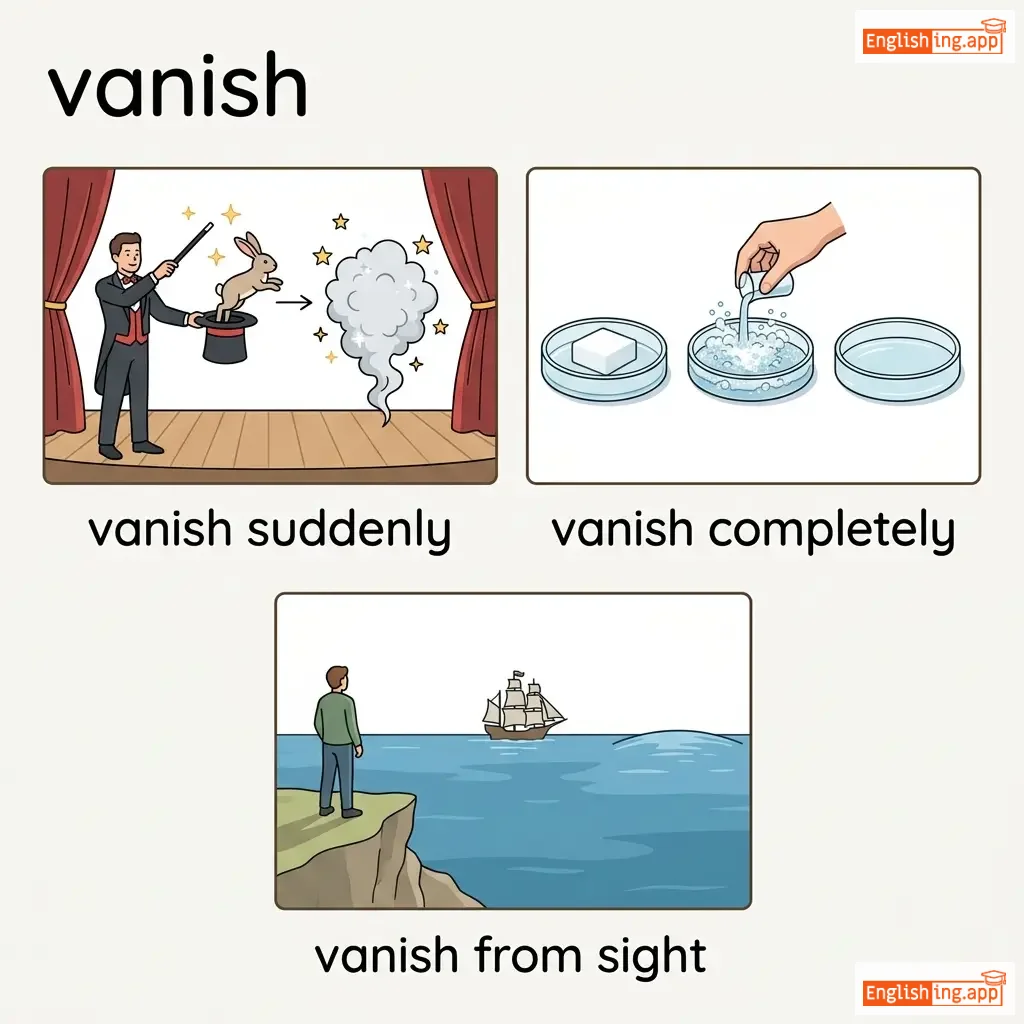
vanish suddenly, vanish completely, vanish from sight, vanish overnight
••••••
|
Vanishは消えるという意味です — 魔法使いが‘Vanish!’と言うと、ウサギが消えます。
••••••
|
|
🎨
••••••
|
/ˈvɛərid/
adjective
(ヴァリッド)
••••••
|
- •••••• |
多様な; 異なるタイプを含む
tayōna; kotonaru taipu o fukumu
••••••
|
- •••••• | - •••••• | - •••••• | - •••••• |
showing differences; diverse; containing different types
••••••
|
The museum has a varied collection of ancient artifacts. |
その博物館には古代のアーティファクトの多様なコレクションがあります。
Sono hakubutsukan ni wa kodai no ādifakuto no tayōna korekushon ga arimasu.
••••••
|
- •••••• | - •••••• | - •••••• |
diverse, mixed, assorted, different
••••••
|
uniform, identical, same, consistent
••••••
|
varied collection, varied experiences, varied diet, varied background
••••••
|
様々な色や形を思い浮かべてみてください、それが多様性です。
••••••
|
|
🧑🍳
••••••
|
/ˈvɛndɔːr/
noun
(ヴェンダー)
••••••
|
- •••••• |
販売者
hanbaisha
••••••
|
- •••••• | - •••••• | - •••••• | - •••••• |
A person or company that sells goods or services.
••••••
|
The street vendor sold fresh fruits every morning.
街のベンダーは毎朝新鮮な果物を売っていた。
••••••
|
街のベンダーは毎朝新鮮な果物を売っていた。
Machi no bendā wa mai asa shinsen na kudamono o utte ita.
••••••
|
vendor lock-in
ベンダーロックイン
••••••
|
A situation where a customer becomes dependent on a vendor for products or services and cannot switch easily to another provider.
••••••
|
ベンダーロックイン
bendā rokkuin
••••••
|
seller, merchant, trader, dealer, supplier
••••••
|
buyer, customer, purchaser
••••••
|
street vendor, software vendor, vendor contract, vendor list
••••••
|
Vendorは販売者を意味し、街角のベンダーが果物を売るイメージ。
••••••
|
|
⚔️
••••••
|
/ˈvɜːsəs/
preposition
(バーサス)
••••••
|
- •••••• |
対
tai
••••••
|
- •••••• | - •••••• | - •••••• | - •••••• |
against (in a competition or conflict)
••••••
|
The team is playing versus their biggest rivals. |
チームは最大のライバルと対戦しています。
Chīmu wa saidai no raibaru to taisen shiteimasu.
••••••
|
- •••••• | - •••••• | - •••••• |
against, in opposition to
••••••
|
- •••••• |
team versus team, player versus player, man versus nature
••••••
|
Versus means competition - Think of two players going against each other in a game!
••••••
|
|
🚢
••••••
|
/ˈvɛsəl/
noun
(ヴェッセル)
••••••
|

|
船 / 容器
fune / youki
••••••
|
- •••••• | - •••••• | - •••••• | - •••••• |
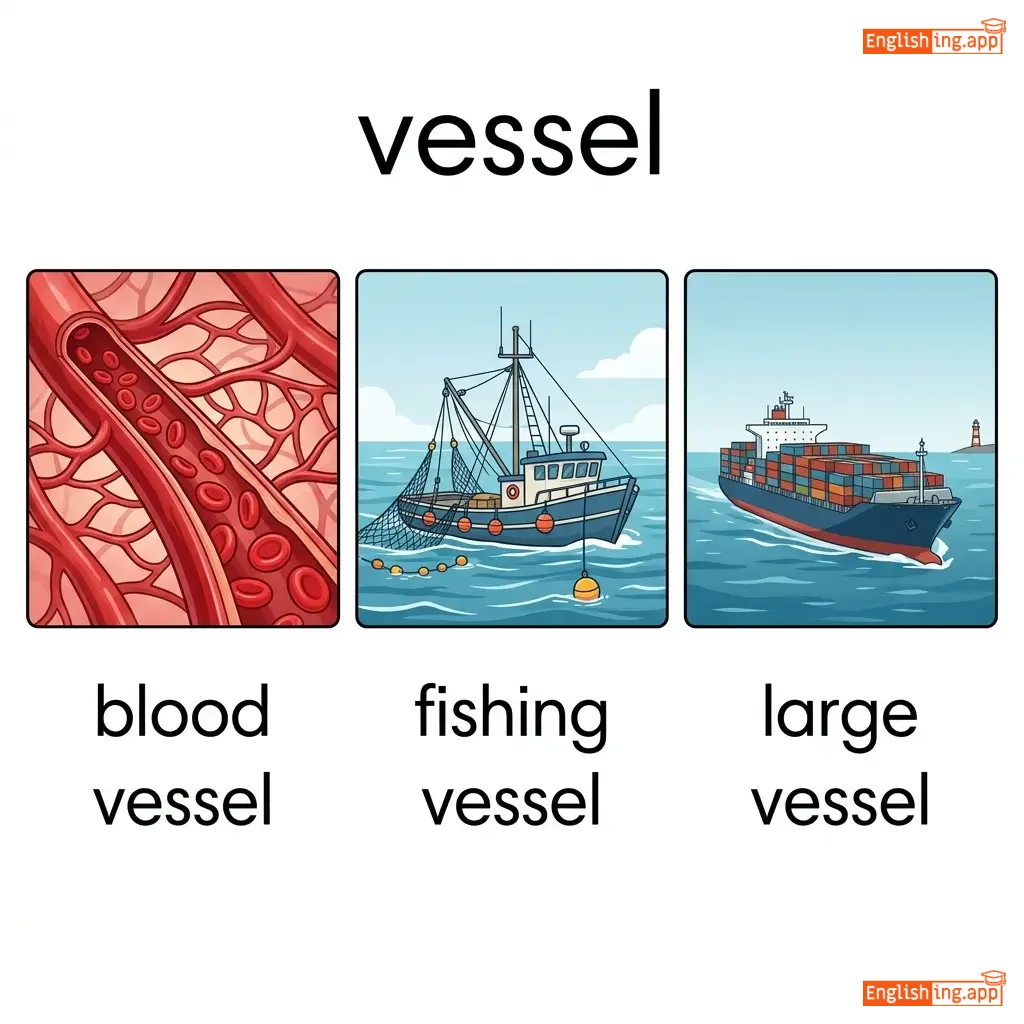
A ship or large boat; also a container for holding liquids or a tube in the body that carries blood.
••••••
|
The fishing vessel returned safely to the harbor. |
漁船は安全に港に戻った。
Gyosen wa anzen ni minato ni modotta.
••••••
|
blood vessel |
A tubular structure in the body that carries blood.
••••••
|
血管
kekkan
••••••
|
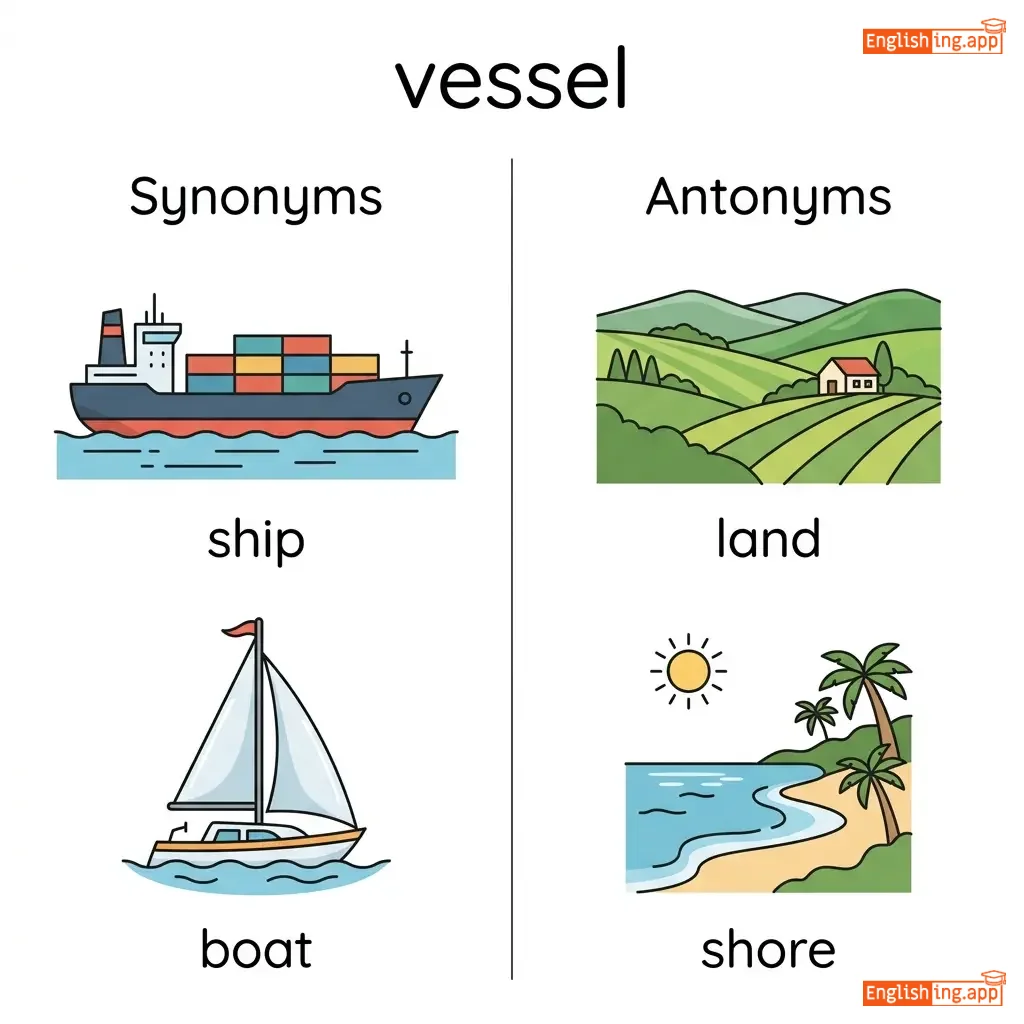
ship, boat, craft, container, receptacle
••••••
|
land, shore
••••••
|
blood vessel, fishing vessel, large vessel, sea vessel
••••••
|
Vessel は🚢 船または血管のこと。船と血液を覚えて!
••••••
|
|
👁️
••••••
|
/ˈvɪərər/
noun
(ビューアー)
••••••
|
- •••••• |
視聴者
shichōsha
••••••
|
- •••••• | - •••••• | - •••••• | - •••••• |
a person who watches something, especially television or video content
••••••
|
The viewer is able to switch channels with the remote control. |
視聴者はリモコンでチャンネルを切り替えることができます。
Shichōsha wa rimokon de channeru o kirikaeru koto ga dekimasu.
••••••
|
- •••••• | - •••••• | - •••••• |
observer, watcher, spectator, audience
••••••
|
participant, actor
••••••
|
TV viewer, movie viewer, loyal viewer, viewer discretion
••••••
|
視聴者はテレビを見る (Shichōsha wa terebi o miru)
••••••
|
|
🌟
••••••
|
/ˈvɜːrtʃuː/
noun
(ヴァーチュー)
••••••
|
- •••••• |
美徳
bitoku
••••••
|
- •••••• | - •••••• | - •••••• | - •••••• |
High moral standards or a good quality considered morally good.
••••••
|
Patience is considered a great virtue. |
忍耐は偉大な美徳と考えられています。
Nintai wa idaina bitoku to kangae rareteimasu.
••••••
|
by virtue of |
because of; as a result of
••••••
|
による美徳
ni yoru bitoku
••••••
|
morality, goodness, integrity, righteousness
••••••
|
vice, immorality, corruption
••••••
|
cardinal virtue, moral virtue, virtue of patience
••••••
|
美徳 (bitoku) は、英語のvirtueと同じ意味を持ちます。
••••••
|
|
🔊
••••••
|
/ˈvɒl.juːm/
noun
(ボリューム)
••••••
|
- •••••• |
体積
taisei
••••••
|
- •••••• | - •••••• | - •••••• | - •••••• |
the amount of space that a substance or object occupies, or that is enclosed within a container
••••••
|
The volume of water in the tank increased after the rain. |
雨の後、タンクの水の体積が増えました。
Ame no ato, tanku no mizu no taisei ga fuemashita.
••••••
|
- •••••• | - •••••• | - •••••• |
amount, quantity, size, magnitude
••••••
|
smallness, limitation
••••••
|
high volume, volume control, sound volume, large volume
••••••
|
体積を測る、タンクの水のように。
••••••
|
|
🗳️
••••••
|
/ˈvoʊtɪŋ/
noun
(投票)
••••••
|
- •••••• |
投票
touhyou
••••••
|
- •••••• | - •••••• | - •••••• |
voting
投票
••••••
|
the act of making a choice in an election or decision by casting a vote
••••••
|
Voting is an important part of a democratic society.
投票は民主主義社会の重要な部分です。
••••••
|
投票は民主主義社会の重要な部分です。
Touhyou wa minshu shugi shakai no juuyou na bubun desu.
••••••
|
voting rights
投票権
••••••
|
the legal rights to participate in elections by voting
••••••
|
投票権
touhyouken
••••••
|
balloting, election, poll, suffrage
••••••
|
abstaining, disenfranchisement
••••••
|
voting rights, voting system, voting booth, voting process
••••••
|
投票で未来を選ぼう!
••••••
|
|
🚶
••••••
|
/ˈwɒndər/
verb
(ワンダー)
••••••
|
|
さまよう
samayou
••••••
|
wandered
ワンダード
••••••
|
wandered
ワンダード
••••••
|
wanders
ワンダーズ
••••••
|
wandering
ワンダリング
••••••
|
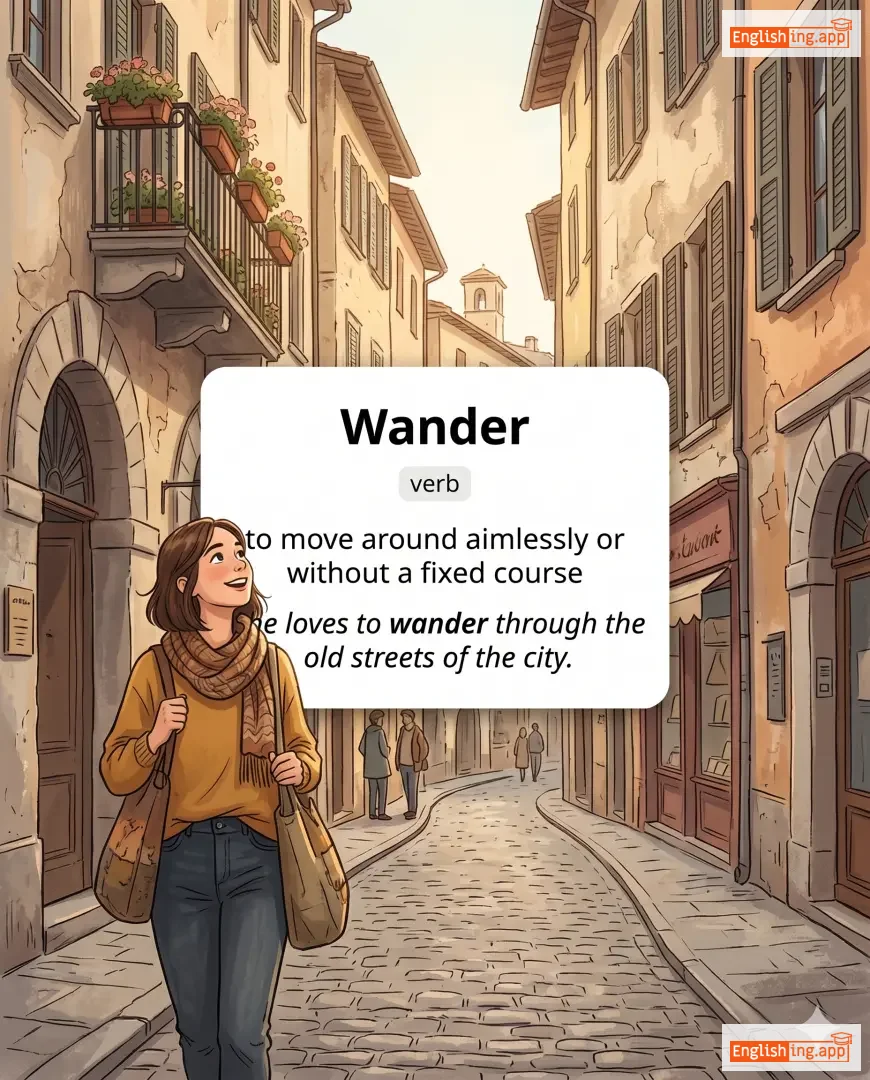
to move around aimlessly or without a fixed course
••••••
|
She loves to wander through the old streets of the city.
彼女は街の古い通りを歩くのが好きです。
••••••
|
彼女は街の古い通りを歩くのが好きです。
Kanojo wa machi no furui toori wo aruku no ga suki desu.
••••••
|
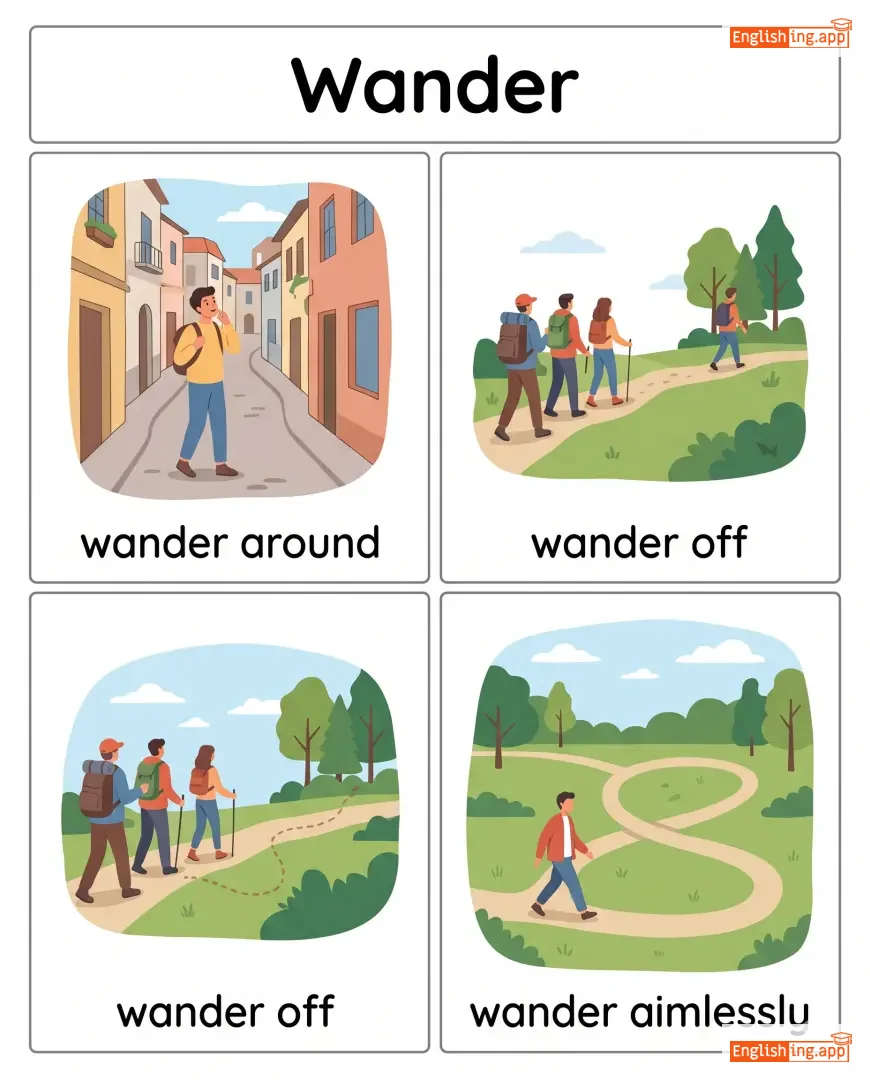
wander off
迷子になる
••••••
|
to leave a place or group without telling anyone
••••••
|
どこかに行ってしまう
dokoka ni itte shimau
••••••
|
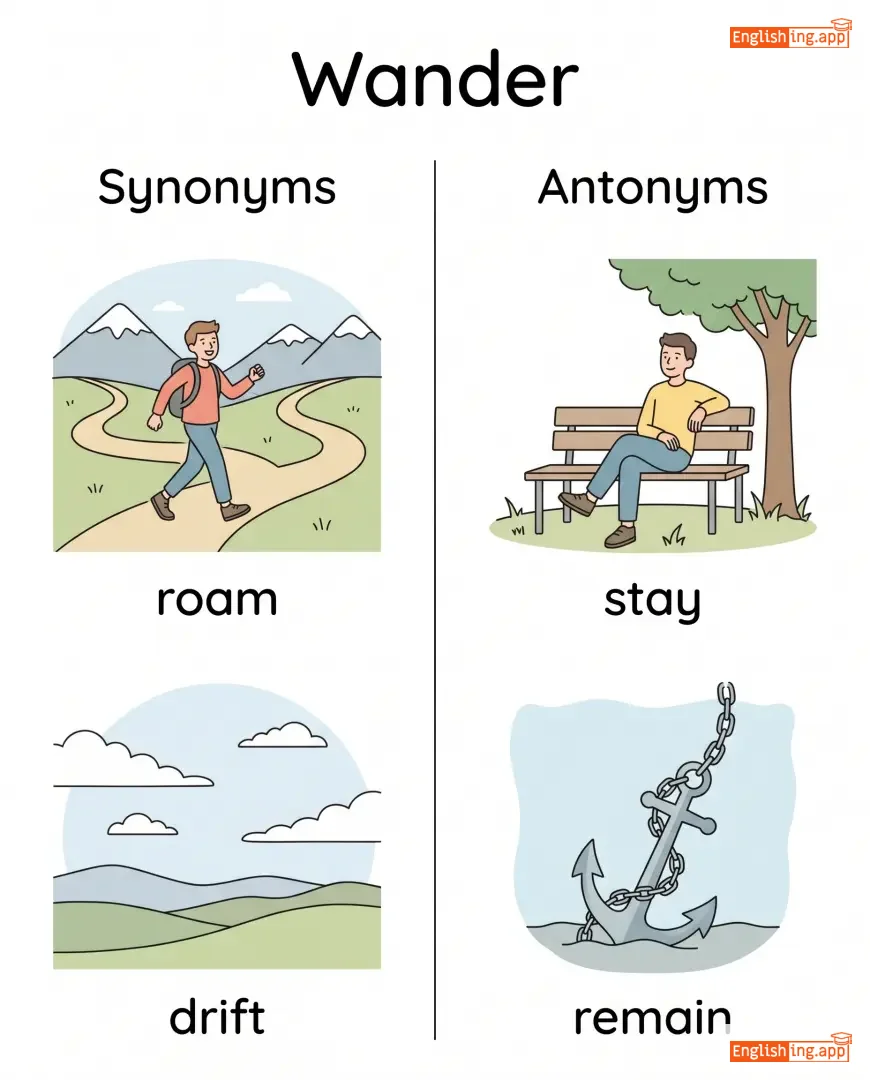
roam, drift, meander, stray, stroll
••••••
|
stay, remain, settle
••••••
|
wander around, wander off, wander aimlessly, wander through
••••••
|
Wanderはさまよう、例えばwindow shoppingのように。
••••••
|
|
☀️
••••••
|
/wɔːmθ/
noun
(ハピネス)
••••••
|
- •••••• |
温かさ
atatakasa
••••••
|
- •••••• | - •••••• | - •••••• | - •••••• |
the quality or state of being warm in temperature or feeling
••••••
|
She felt the warmth of the sun on her face.
彼女は顔に太陽の温もりを感じた。
••••••
|
彼女は顔に太陽の温もりを感じた。
Kanojo wa kao ni taiyō no nukumori o kanjita.
••••••
|
warmth of heart
心の温もり
••••••
|
kindness and affection
••••••
|
心の温もり
kokoro no nukumori
••••••
|
heat, coziness, affection, kindness, friendliness
••••••
|
coldness, chill, indifference
••••••
|
emotional warmth, inner warmth, warmth and love, warmth of the sun
••••••
|
Warmthは温かさ — ‘warm th’はただの温かさではなく、心の温かさと愛情も含まれます。
••••••
|
|
💤
••••••
|
/ˈwiːkən/
verb
(ウィーケン)
••••••
|
|
弱める
yowameru
••••••
|
weakened
ウィーケンド
••••••
|
weakened
ウィーケンド
••••••
|
weakens
ウィーケンス
••••••
|
weakening
ウィーケニング
••••••
|
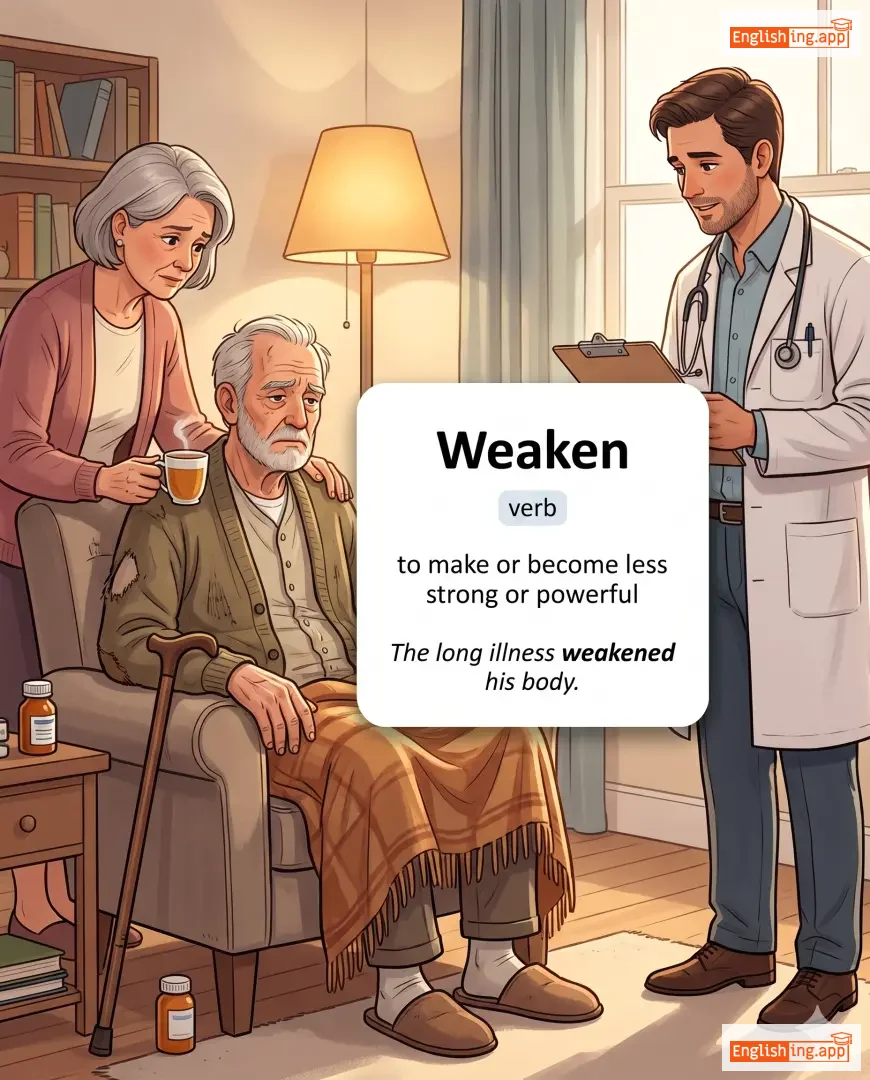
to make or become less strong or powerful
••••••
|
The long illness weakened his body.
ザ ロング イリネス ウィーケンド ヒズ ボディ。
••••••
|
長い病気が彼の体を弱めた。
Nagai byōki ga kare no karada o yowameta.
••••••
|
weaken someone's resolve
ウィーケン サムワンズ リゾルヴ
••••••
|
to make someone less determined or confident
••••••
|
誰かの決意を弱める
Dareka no ketsui o yowameru
••••••
|
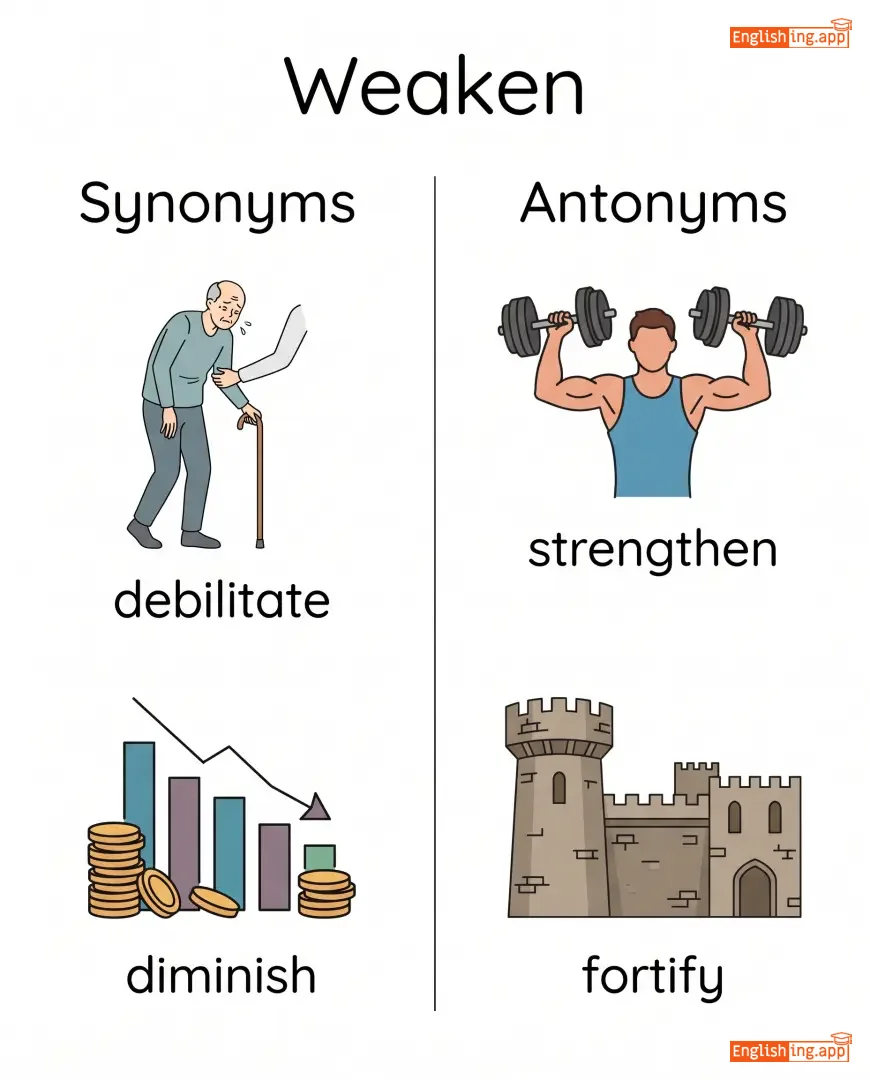
debilitate, diminish, reduce, impair, lessen
••••••
|
strengthen, fortify, empower
••••••
|
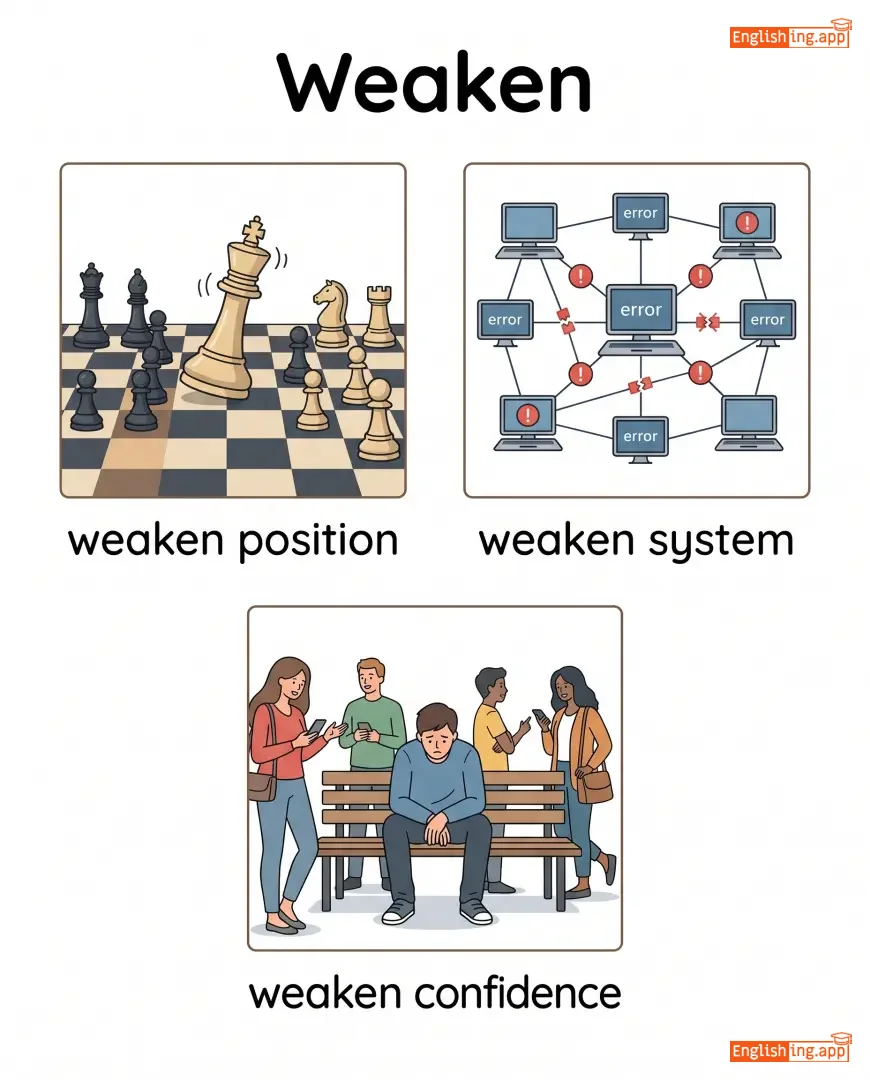
weaken position, weaken system, weaken confidence, weaken economy
••••••
|
Weakenは弱める、病気があなたを弱くさせるように。
••••••
|
|
💰
••••••
|
/wɛlθ/
noun
(wɛlθ)
••••••
|

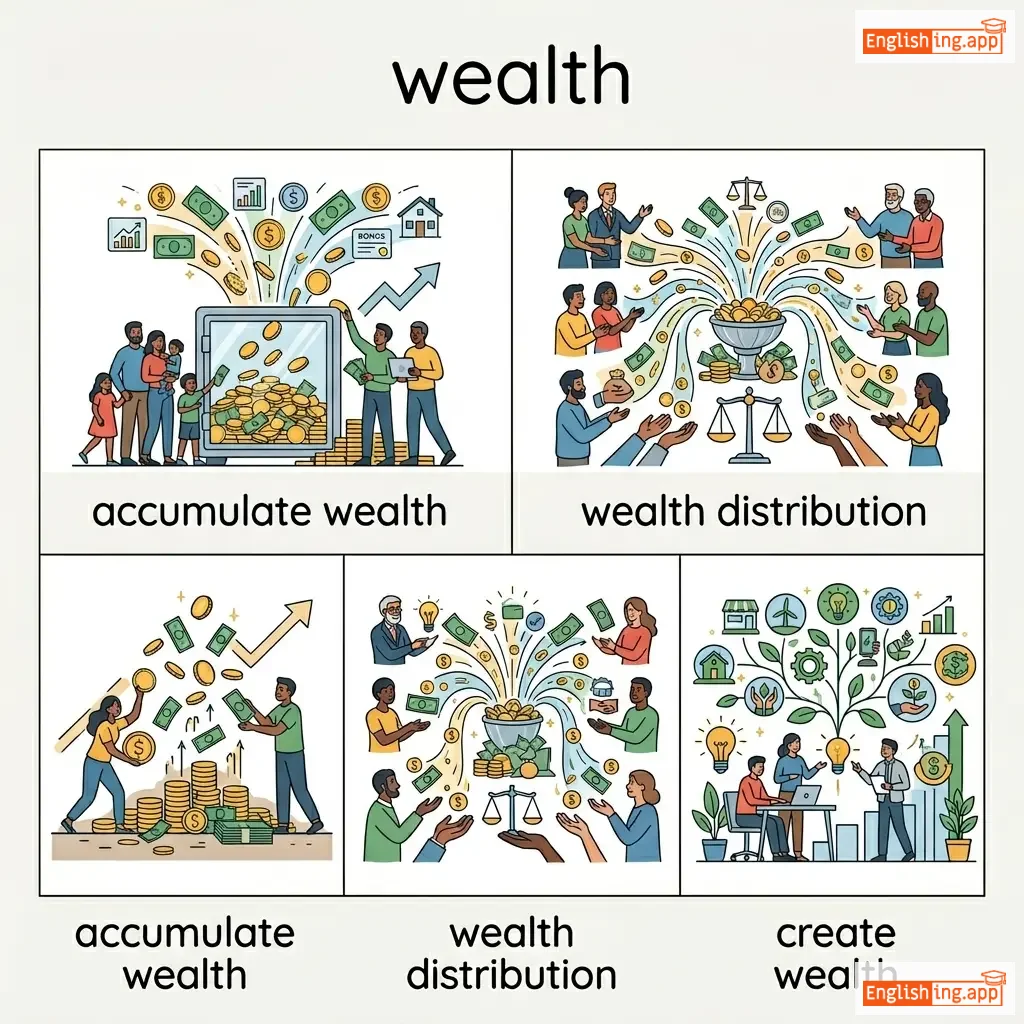
|
富
fu
••••••
|
- •••••• | - •••••• | - •••••• | - •••••• |
an abundance of valuable possessions or money; prosperity
••••••
|
The businessman built his wealth through hard work and smart investments. |
その実業家は、努力と賢明な投資を通じて富を築きました。
Sono jitsugyōka wa, doryoku to kenmei na tōshi o tōjite fu o kizukimashita.
••••••
|
wealth of experience |
a large amount of knowledge or skill gained through practice or time
••••••
|
経験の豊かさ
keiken no yutakasa
••••••
|
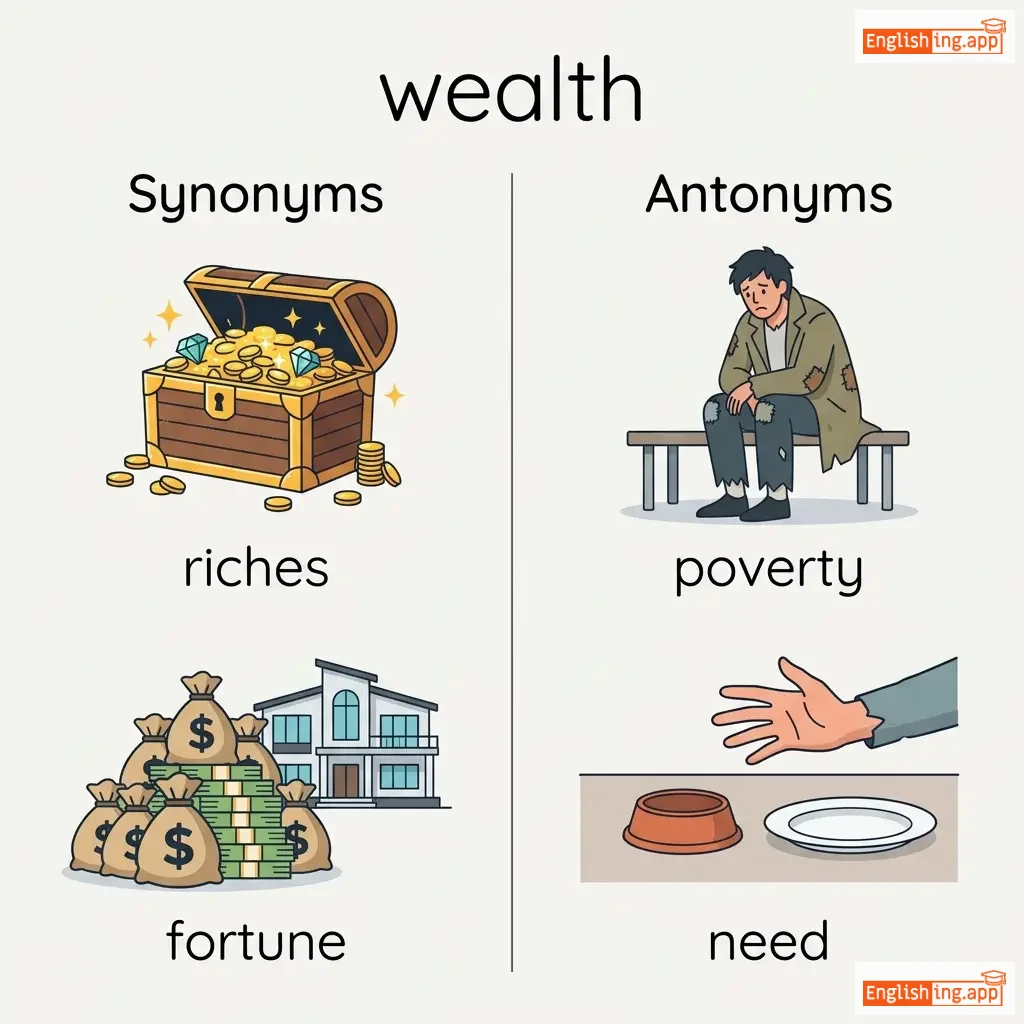
riches, fortune, prosperity, affluence
••••••
|
poverty, need, scarcity
••••••
|
accumulate wealth, wealth distribution, create wealth, family wealth
••••••
|
WEALTHは'富'を意味します - 'We Earn And Live Through Hardwork' 💰
••••••
|
|
🗡️
••••••
|
/ˈwep.ən/
noun
(ウェポン)
••••••
|
- •••••• |
武器
buki
••••••
|
- •••••• | - •••••• | - •••••• | - •••••• |
a thing designed or used for inflicting bodily harm or physical damage
••••••
|
The police found a dangerous weapon at the crime scene.
警察は犯罪現場で危険な武器を発見した。
••••••
|
警察は犯罪現場で危険な武器を発見した。
Keisatsu wa hanzai genba de kiken na buki o hakken shita.
••••••
|
- •••••• | - •••••• | - •••••• |
arm, armament, firearm, tool of violence
••••••
|
shield, protection, defense, peace
••••••
|
deadly weapon, nuclear weapon, weapon of mass destruction, concealed weapon
••••••
|
武器は自己防衛や攻撃のために使われる道具であり、力を象徴する。
••••••
|
|
📅
••••••
|
/ˈwiːkli/
adverb
(ウィークリー)
••••••
|
- •••••• |
毎週
wiikurii
••••••
|
- •••••• | - •••••• | - •••••• | - •••••• |
happening or done once every week; every week
••••••
|
I visit my grandmother weekly on Sundays.
私は日曜日に毎週、祖母を訪ねます。
••••••
|
私は日曜日に毎週、祖母を訪ねます。
Watashi wa nichiyoubi ni maishuu sobo o tazunemasu.
••••••
|
- •••••• | - •••••• | - •••••• |
every week, once a week, hebdomadally
••••••
|
daily, monthly, annually
••••••
|
weekly meeting, weekly report, weekly basis
••••••
|
Week-リー = Week + lee; imagine a calendar shouting 毎週 on Sundays to remember weekly
••••••
|

