Vocabulaires

Découvrez, apprenez et maîtrisez le vocabulaire anglais

adjective C2
/rɪˈtɪkjʊlət/
網状 (mōjō)

Having a net-like pattern or structure.

"The leaf had a reticulate pattern of veins."

"葉は網目模様の静脈がありました。" (Ha wa mōjō moyō no jōmyaku ga arimashita.)
noun C2
/ˈrɛtɪnjuː/
従者 (jūsha)

A group of attendants or followers accompanying an important person.

"The king entered the hall followed by his retinue."

"王は従者を引き連れてホールに入った。" (Ō wa jūsha o hikitsurete hōru ni haitta.)
verb C2
/rɪˈtrɛntʃ/
コスト削減、従業員の解雇 (kosuto sakugen, jūgyōin no kaiko)

to reduce costs, spending, or staff to save resources

"The company had to retrench employees due to financial difficulties."

"会社は財政的な困難のため、従業員をリトレンチしなければならなかった。" (Kaisha wa zaiseiteki na konnan no tame, jūgyōin o ritolenchi shinakereba naranakatta.)
noun C2
/ˌrɛtroʊˈɡrɛʃən/
後退 (koutai)

a return to a worse or less developed state

"The country experienced economic retrogression after the crisis."

"国は危機後、経済的な後退を経験しました。" (Kuni wa kiki go, keizaiteki na koutai o keiken shimashita.)
noun C2
/ˈrɛvəlri/
祭り (matsuri)

Lively and noisy festivities, especially involving drinking and dancing.

"The sound of revelry could be heard throughout the night."

"一晩中、祭りの音が聞こえていました。" (Hitobanju, matsuri no oto ga kikoete imashita.)
reverie definition card — visual illustration of the meaning
noun C2
/ˈrɛvəri/
夢想 (musou)

a state of being pleasantly lost in one's thoughts; a daydream

"She drifted into a reverie while staring at the sunset."

"彼女は夕日を見ながら夢想にふけっていた。" (Kanojo wa yūhi o minagara musou ni fukette ita.)
verb C2
/rɪˈvaɪl/
非難する (hinan suru)

to criticize in an abusive or angrily insulting manner

"The politician was reviled by the public for his corruption."

"その政治家は腐敗のために公衆から非難されました。" (Sono seijika wa fuhai no tame ni kōshū kara hinan saremashita.)
noun C2
/rɪˈvaɪlər/
侮辱者 (bujokusha)

a person who criticizes or insults others abusively

"He was known as a reviler of all who opposed him."

"彼は自分に反対する全ての人々を侮辱する者として知られていました。" (Kare wa jibun ni hantai suru subete no hitobito o bujoku suru mono to shite shirarete imashita.)
noun C2
/rɪˈvaɪ.zəl/
改訂 (kaitei)

The act of revising, reviewing, or making changes to something.

"The revisal of the contract took longer than expected."

"契約の改訂には予想以上の時間がかかりました。" (Keiyaku no kaitei ni wa yosō ijō no jikan ga kakarimashita.)
noun C2
/ˌrɛv.əˈkeɪ.ʃən/
取り消し (torikeshi)

The act of officially canceling or withdrawing something.

"The court ordered the revocation of his license."

"裁判所は彼のライセンスの取り消しを命じました。" (Saibansho wa kare no raisensu no torikeshi o meijimashita.)
verb C2
/ˈræpsəˌdaɪz/
熱狂的に話す (nekkyōteki ni hanasu)

to speak or write with great enthusiasm and admiration

"He would often rhapsodize about his travels to Europe."

"彼はよくヨーロッパ旅行について熱心に話していた。" (Kare wa yoku Yōroppa ryokō ni tsuite nesshin ni hanashite ita.)
noun C2
/ˈræpsədi/
高揚した歌/賛美 (kōyō shita uta/sanbi)

an expression of great enthusiasm or an epic musical composition

"The singer’s performance was a rhapsody of emotions."

"歌手のパフォーマンスは感情のラプソディでした。" (Kashu no pafōmansu wa kanjō no rhapsody deshita.)
noun C2
/ˌrɛtəˈrɪʃən/
雄弁家 (yūbenka)

A person who is skilled in the art of rhetoric or persuasive speaking/writing.

"The rhetorician captivated the audience with his eloquence."

"雄弁家はその雄弁さで聴衆を魅了しました。" (Yūbenka wa sono yūbensa de chōshū o miryō shimashita.)
adjective C2
/ˈruːmi/
涙目 (namidame)

Watery, especially referring to the eyes.

"His rheumy eyes showed signs of age and fatigue."

"彼の涙目は年齢と疲れの兆しを示していた。" (Kare no namidame wa nenrei to tsukare no kizashi o shimeshite ita.)
adjective C2
/ˈrɪbɔːld/
下品な冗談 (gehin na jōdan)

Referring to sexual matters in a humorous or vulgar way.

"The comedian’s ribald jokes made the audience laugh uncomfortably."

"コメディアンの下品な冗談は観客を不快にさせながら笑わせた。" (Komedian no gehin na jōdan wa kankyaku o fukai ni sasenagara warawaseta.)
noun C2
/ˈrɪɡməˌroʊl/
面倒なこと (mendō na koto)

a long, complicated, and confusing process or story

"Getting a visa was such a rigmarole of paperwork and interviews."

"ビザを取得するのは、書類とインタビューの面倒なことだった。" (Biza o shūtoku suru no wa, shorui to intabyū no mendō na koto datta.)
noun C2
/raɪm/
(shimo)

frost formed on cold surfaces by freezing water vapor

"The trees were covered with a white rime after the cold night."

"木々は冷たい夜の後、白い霜で覆われていました。" (Kigi wa tsumetai yoru no ato, shiroi shimo de ōwarete imashita.)
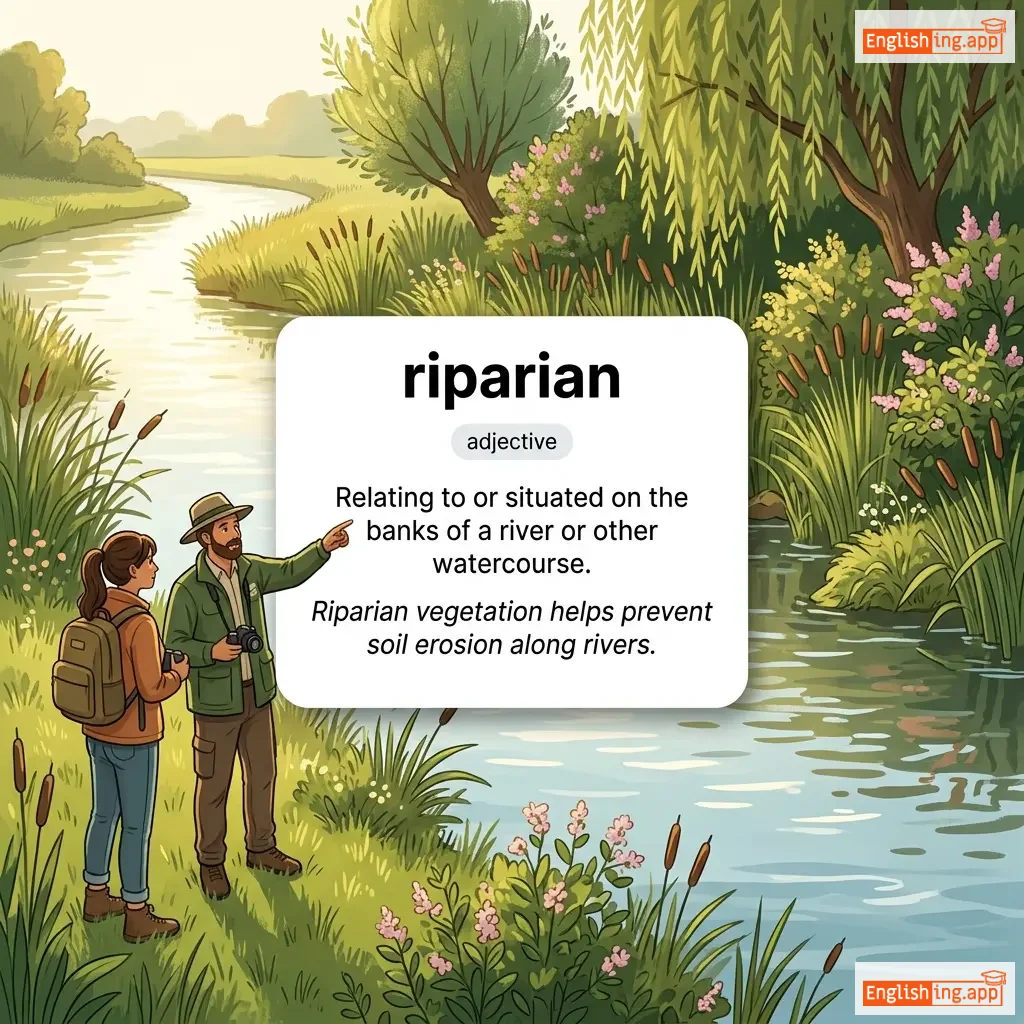
riparian definition card — visual illustration of the meaning
adjective C2
/raɪˈpɛə.ri.ən/
河川や他の水路の岸辺に関連する (kasen ya hoka no suiro no kishibe ni kanren suru)

Relating to or situated on the banks of a river or other watercourse.

"Riparian vegetation helps prevent soil erosion along rivers."

"河川沿いの植生は、河川沿いの土壌浸食を防ぐのに役立ちます。" (Kasen-zoi no shokusei wa, kasen-zoi no dojo shinsoku o fusegu no ni yakudachimasu.)
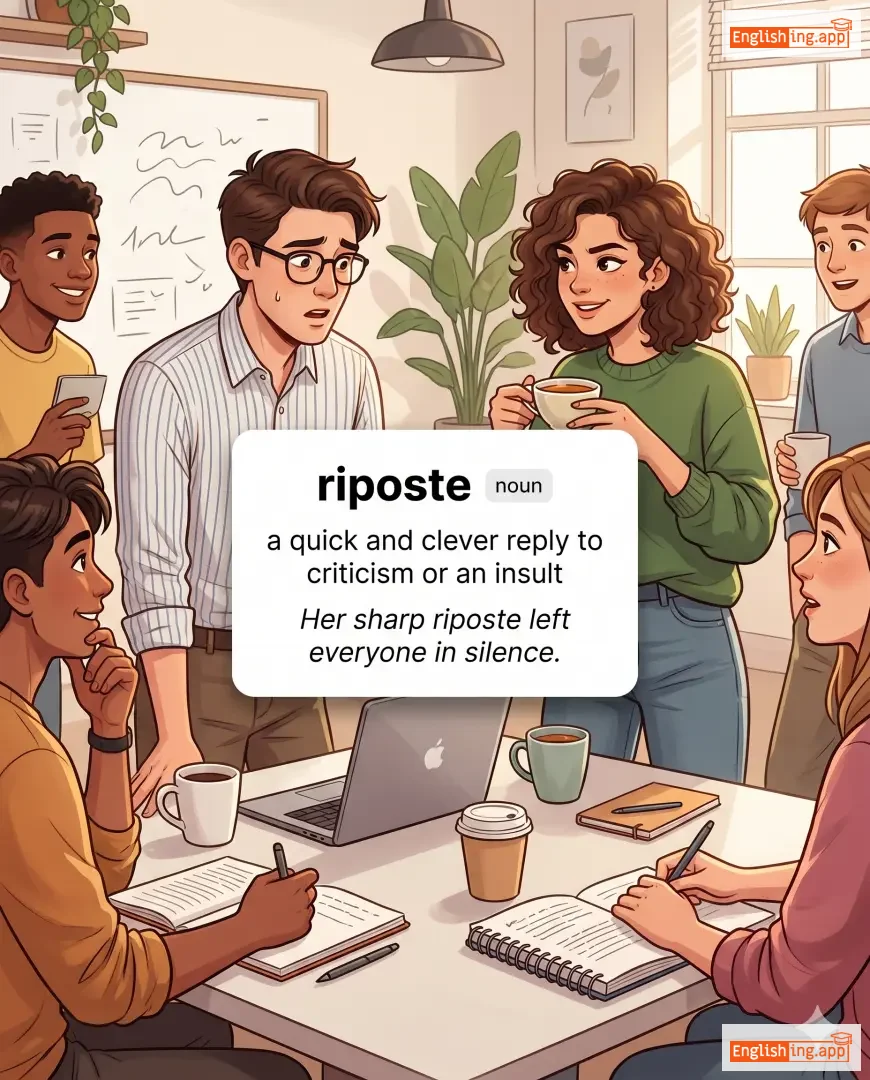
riposte definition card — visual illustration of the meaning
noun C2
/rɪˈpoʊst/
鋭い返答 (surudoi hentou)

a quick and clever reply to criticism or an insult

"Her sharp riposte left everyone in silence."

"彼女の鋭い返答は皆を黙らせた。" (Kanojo no surudoi hentou wa mina o damaraseta.)
noun C2
/ˈrɪp.lɪt/
小さな波 (chiisana nami)

a small or tiny ripple

"Tiny ripplets appeared on the lake as the fish moved."

"魚が動くと湖に小さな波が現れました。" (Sakana ga ugoku to mizūmi ni chiisana nami ga arawaremashita.)
adjective C2
/ˈrɪz.ə.bəl/
滑稽な (kokkei na)

so absurd or ridiculous that it deserves to be laughed at

"The idea of flying pigs is completely risible."

"飛ぶ豚のアイデアは完全に滑稽です。" (Tobu buta no aidea wa kanzen ni kokkei desu.)
verb C2
/raɪv/
裂ける (sakeru)

to tear apart violently

"The earthquake rived the ground in several places."

"地震がいくつかの場所で地面を裂けました。" (Jishin ga ikutsuka no basho de jimen o sakemashita.)
noun C2
/ˈrɪvjʊlət/
小川 (ogawa)

a small stream of water; a tiny brook

"A rivulet ran down the hillside after the rain."

"雨の後、小川が丘を下った。" (Ame no ato, ogawa ga oka o kudatta.)
adjective C2
/roʊn/
ロアン馬 (roan uma)

denoting an animal, especially a horse, having a coat of mixed colors, typically reddish-brown and white

"The rider mounted a roan horse with a speckled coat."

"騎手は斑点のあるコートを持ったロアン馬に乗った。" (Kishu wa banten no aru kōto o motta roan uma ni notta.)
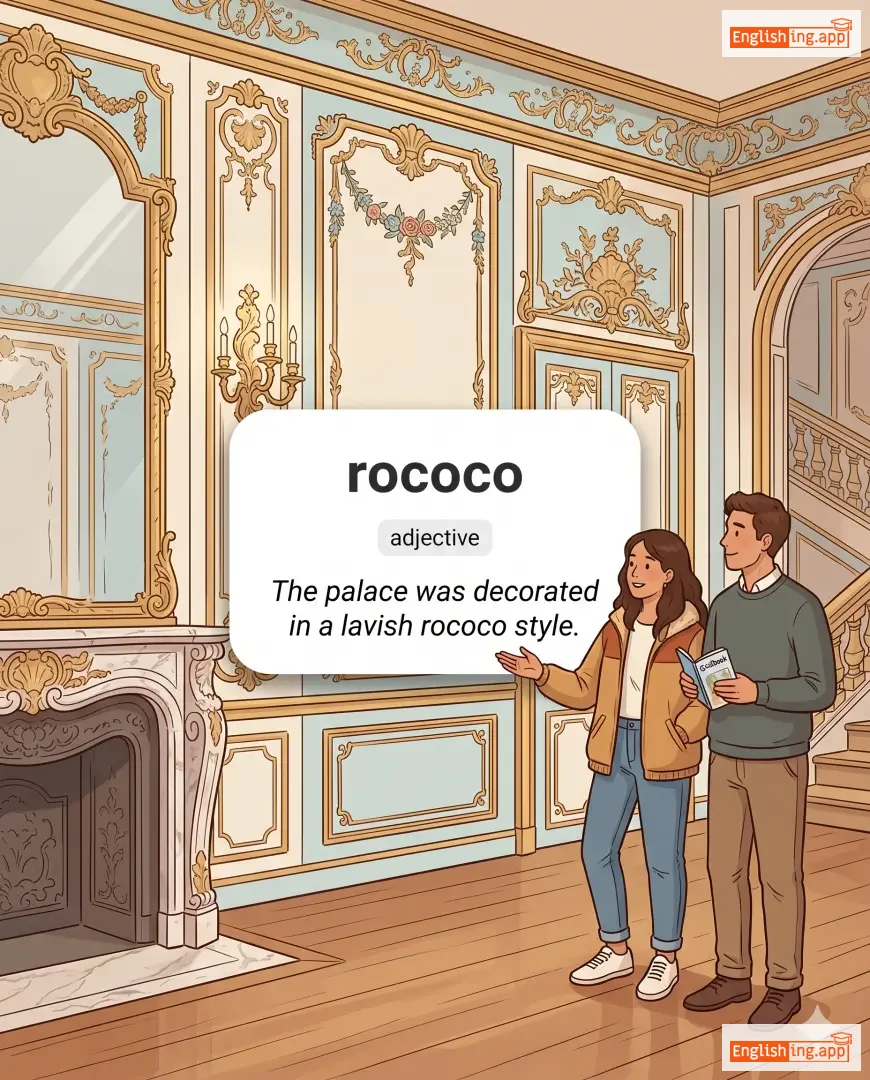
rococo definition card — visual illustration of the meaning
adjective C2
/rəˈkoʊkoʊ/
ロココ (rokoko)

characterized by ornate detail and elaborate decoration, especially in art, architecture, and design

"The palace was decorated in a lavish rococo style."

"宮殿は豪華なロココ様式で装飾されていました。" (Kyūden wa gōka na rokoko yōshiki de sōshoku sareteimashita.)
verb C2
/rɔɪl/
かき乱す (kaki midasu)

to make a liquid muddy or disturbed; to cause agitation or disorder

"The constant protests roiled the city streets."

"絶え間ない抗議が街の通りをかき乱した。" (Taimanai kōgi ga machi no tōri o kaki midashita.)
verb C2
/ˈrɔɪstər/
大声で祝い (oogoe de iwai)

to revel noisily; to engage in loud, boisterous celebration

"The fans roistered in the streets after the victory."

"ファンは勝利後に街で騒いでいました。" (Fan wa shouri go ni machi de sawaideimashita.)
noun C2
/ˈrɒndoʊ/
音楽作品(繰り返しのテーマを持つ) (ongaku sakuhin (kurikaeshi no teema wo motsu))

a musical composition with a recurring leading theme

"The pianist ended the recital with a lively rondo."

"ピアニストは生き生きとしたロンドでリサイタルを終えました。" (Pianisuto wa ikigiki to shita rondo de risaitaru wo oemashita.)
noun C2
/ruːd/
十字架 (juujika)

a crucifix, especially one positioned above the entrance to the chancel of a church

"The old church displayed a carved rood above the altar."

"古い教会は祭壇の上に彫られた十字架を展示していました。" (Furui kyoukai wa saidan no ue ni horareta juujika wo tenji shiteimashita.)
noun C2
/ˈrʊkəri/
鳥の巣 (tori no su)

a place where rooks or other birds breed and nest in colonies

"We saw a rookery full of noisy birds near the forest."

"森の近くで、騒がしい鳥たちでいっぱいの鳥の巣を見ました。" (Mori no chikaku de, sawagashii tori-tachi de ippai no tori no su o mimashita.)
adjective C2
/ˈroʊziət/
バラ色の、楽観的な (bara iro no, rakkan-teki na)

Having a pink color; optimistic or idealistic.

"She looked at the future with roseate optimism."

"彼女はローズ色の楽観主義で未来を見ました。" (Kanojo wa rozu iro no rakkan shugi de mirai o mimashita.)
adjective C2
/roʊˈtʌnd/
丸い (marui)

round or plump in shape; full in sound

"The rotund cat struggled to climb the fence."

"丸い猫はフェンスを登るのに苦労していた。" (Marui neko wa fensu o noboru no ni kurō shite ita.)
noun C2
/roʊˈtʌn.də/
円形の建物 (enkei no tatemono)

a large circular building or hall, often with a dome

"Tourists gathered inside the grand rotunda of the capitol."

"観光客は議会堂の壮大なロタンダの中に集まりました。" (Kankōkyaku wa gikai-dō no sōdaina rotanda no naka ni atsumarimashita.)
noun C2
/roʊˈtʌn.də.ti/
円形 (enkei)

the quality of being round or plump

"The rotundity of the balloon made it float gracefully."

"風船の円形がそれを優雅に浮かせた。" (Fūsen no enkei ga sore o yūga ni ukaseta.)
noun C2
/ruːˈeɪ/
感覚的な楽しみを追い求める男 (kankakuteki na tanoshimi o oimotomeru otoko)

A man devoted to a life of sensual pleasure; a debauched man.

"The old roue squandered his fortune on gambling and women."

"年老いたルーエはギャンブルと女性に財産を浪費した。" (Toshi oita rūe wa gyanburu to josei ni zaisan o rōhi shita.)
adjective C2
/ˈruːbɪkənd/
健康的な赤みを帯びた顔 (rubicund)

Having a healthy reddish complexion.

"The old man’s rubicund face showed he was in good health."

"その老人の赤みを帯びた顔は、彼が健康であることを示していた。" (Sono rōjin no akami o obita kao wa, kare ga kenkō de aru koto o shimeshite ita.)
adjective C2
/ˈrʌdi/
赤ら顔 (akarao)

Having a healthy red color in the face.

"She had a ruddy complexion from working outdoors."

"彼女は外で働いたため、赤ら顔でした。" (Kanojo wa soto de hataraita tame, akaragao deshita.)
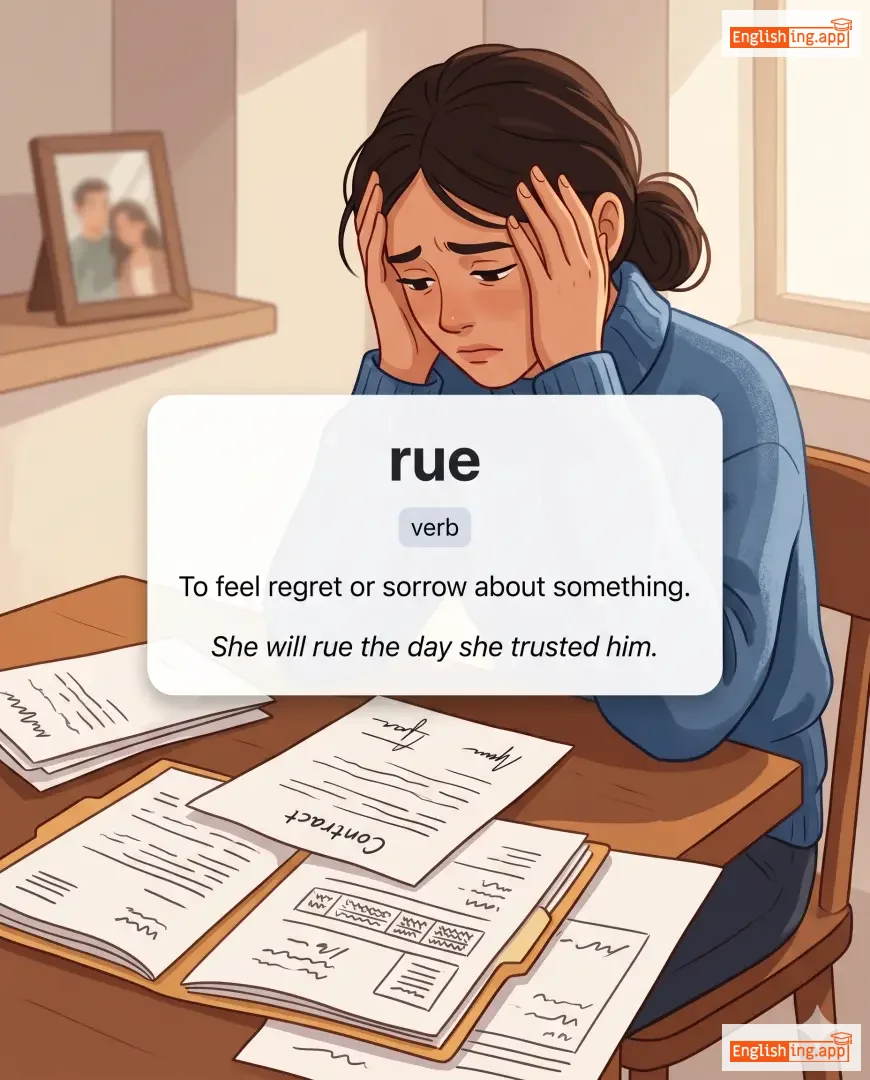
rue definition card — visual illustration of the meaning
verb C2
/ruː/
後悔する (koukaisuru)

To feel regret or sorrow about something.

"She will rue the day she trusted him."

"彼女は彼を信じたその日を後悔するだろう。" (Kanojo wa kare o shinjita sono hi o koukai suru darou.)
noun C2
/ˈruː.mɪ.nənt/
反芻動物 (Hansū dōbutsu)

a cud-chewing mammal, such as a cow or sheep

"Cows are ruminants that chew cud."

"牛は反芻動物で、食べ物を再度咀嚼します。" (Ushi wa hansū dōbutsu de, tabemono o saido soshaku shimasu.)
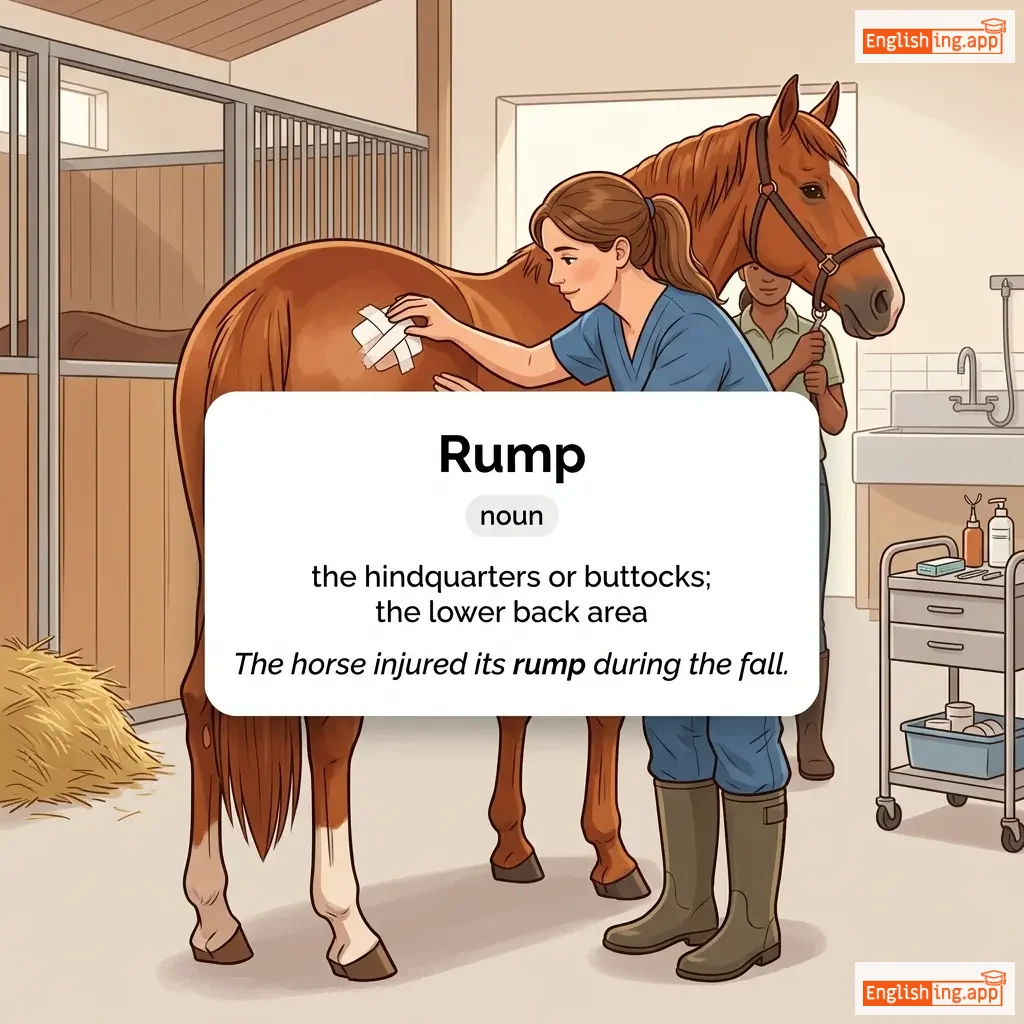
Rump definition card — visual illustration of the meaning
noun C2
/rʌmp/
尻; お尻; 背中の下部 (rampu)

the hindquarters or buttocks; the lower back area

"The horse injured its rump during the fall."

"その馬は転倒した際にお尻を痛めました。" (Sono uma wa tentou shita sai ni oshiri o itamemashita.)
verb C2
/ˈrʌmpəl/
しわにする (shiwa ni suru)

to make something untidy or wrinkled by creasing or crumpling

"She accidentally rumpled her dress while packing."

"彼女は荷物を詰める際にドレスをうっかりしわにした。" (Kanojo wa nimotsu o tsumeru sai ni doresu o ukkari shiwa ni shita.)
adjective C2
/ˈruːnɪk/
ルーンに関連する (rūn ni kanren suru)

relating to or consisting of runes; mysterious or magical

"The old stone had strange runic carvings on it."

"古い石には奇妙なルーンの刻印がありました。" (Furui ishi ni wa kimyō na rūn no kokuin ga arimashita.)
verb C2
/ˈrʌstɪkeɪt/
田舎に行く / 大学から一時的に追放する (Inaka ni iku / Daigaku kara ichiji-teki ni tsuihō suru)

To go to the countryside or to suspend someone from university.

"He decided to rusticate in the village to escape the busy city life."

"彼は忙しい都市生活から逃れるために村に行くことを決めました。" (Kare wa isogashī toshi seikatsu kara nogareru tame ni mura ni iku koto o kimemashita.)
noun C2
/ruːθ/
同情 (dōjō)

A feeling of pity, compassion, or sorrow.

"He felt no ruth for the people he had betrayed."

"彼は裏切った人々に対して一切の同情を感じなかった。" (Kare wa uragitta hitobito ni taishite issai no dōjō o kanjinakatta.)
adjective C2
/ˈsækərɪn/
幸せ (shiawase)

Excessively sweet or sentimental.

"His saccharine smile seemed insincere."

"彼女は賞を受け取ったとき、自分の幸せを隠せなかった。" (Kanojo wa shō o uketotta toki, jibun no shiawase o kakusenakatta.)
adjective C2
/ˌsæsərˈdoʊtl/
神職に関する (shinshoku ni kansuru)

Relating to priests or the priesthood.

"The ritual had a distinctly sacerdotal character."

"その儀式には明確な神職に関する特徴がありました。" (Sono gishiki ni wa meikaku na shinshoku ni kansuru tokuchō ga arimashita.)
noun C2
/ˈsækrɪsti/
サクリスティ (sakurisuti)

a room in a church where sacred vessels and vestments are kept

"The priest entered the sacristy before the mass began."

"司祭はミサが始まる前にサクリスティに入った。" (Shisai wa misa ga hajimaru mae ni sakurisuti ni haitta.)
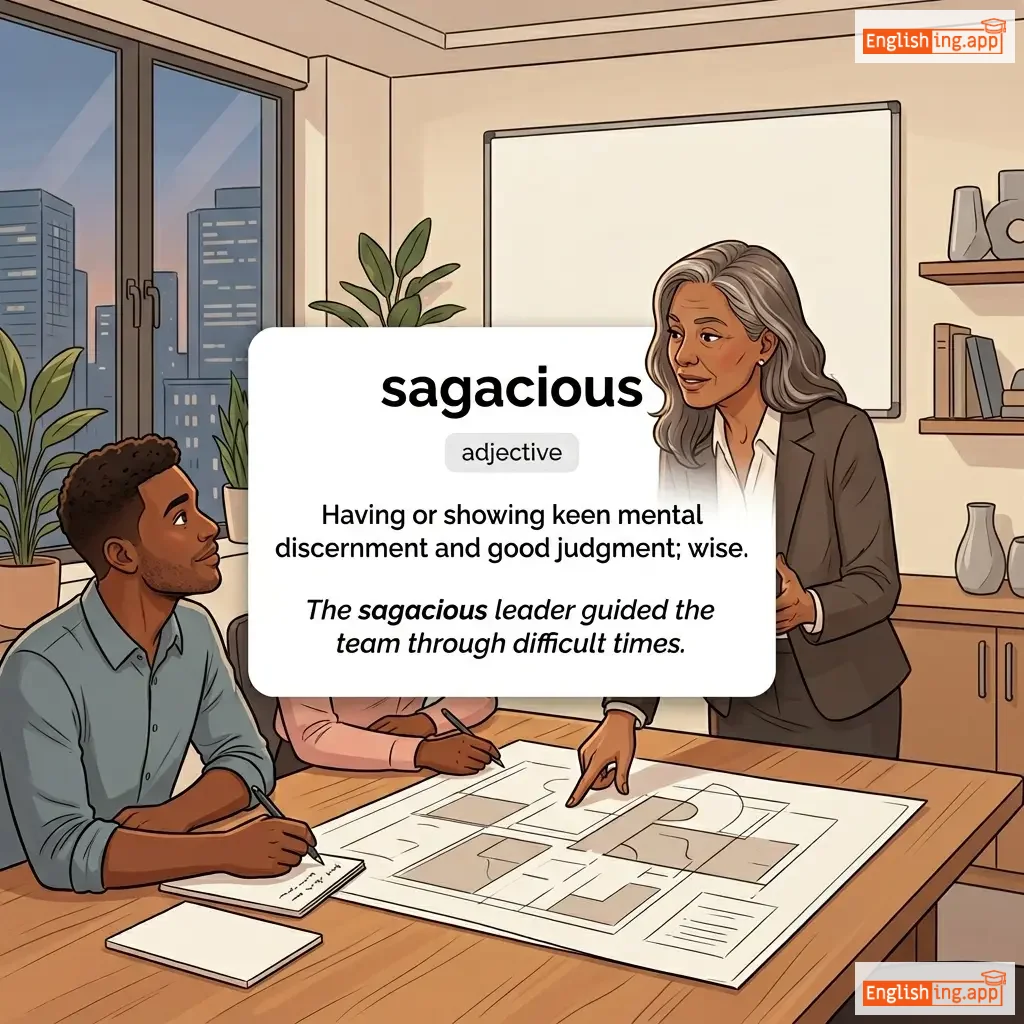
sagacious definition card — visual illustration of the meaning
adjective C2
/səˈɡeɪʃəs/
賢明な (kenmei na)

Having or showing keen mental discernment and good judgment; wise.

"The sagacious leader guided the team through difficult times."

"賢明なリーダーは困難な時期をチームと共に乗り越えました。" (Kenmei na rīdā wa konnan na jiki o chīmu to tomoni norikoemashita.)
sagacity definition card — visual illustration of the meaning
noun C2
/səˈɡæs.ə.t̬i/
深い知恵 (fukai chie)

The quality of being sagacious; having or showing keen mental discernment and good judgment.

"His sagacity made him a great leader."

"彼のサガシティは彼を偉大なリーダーにしました。" (Kare no sagasiti wa kare o idaina rīdā ni shimashita.)
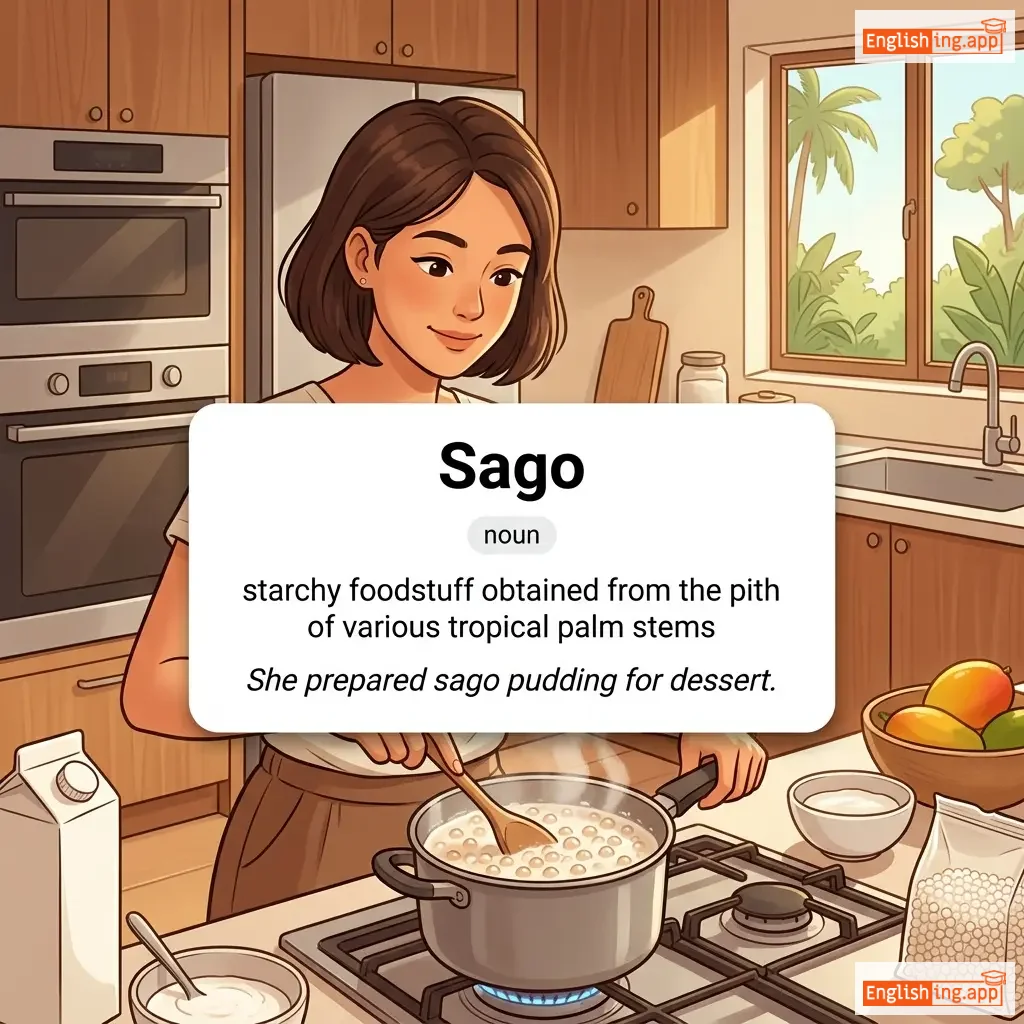
Sago definition card — visual illustration of the meaning
noun C2
/ˈseɪ.ɡoʊ/
サゴ (sago)

starchy foodstuff obtained from the pith of various tropical palm stems

"She prepared sago pudding for dessert."

"彼女はデザートにサゴプディングを準備しました。" (Kanojo wa dezato ni sago pudding wo junbi shimashita.)