Vocabulaires

Découvrez, apprenez et maîtrisez le vocabulaire anglais

machinations definition card — visual illustration of the meaning
noun (plural) C2
/ˌmæk.ɪˈneɪ.ʃənz/
阴谋 (yīnmóu)

complicated and secret plans, often intended to cause harm

"The politician was brought down by his own machinations."

"那位政治家被自己的一手阴谋推翻了。" (Nà wèi zhèngzhìjiā bèi zìjǐ de yī shǒu yīnmóu tuīfānle.)
noun C2
/məˈʃiː.nɪst/
机修工 (jīxiū gōng)

a person who operates machine tools or makes and repairs machines

"The machinist carefully adjusted the gears on the lathe."

"机械师小心地调整了车床上的齿轮。" (Jīxiū gōng xiǎoxīn de tiáozhěng le chēchuáng shàng de chǐlún.)
noun C2
/ˈmækɪntɒʃ/
防水雨衣 (fangshui yuyi)

a waterproof raincoat, originally made from rubberized fabric

"He wore a mackintosh to stay dry in the rain."

"他穿了一件麦金托什雨衣以保持干燥。" (Ta chuanle yijian maijin tuoshi yu yi yi baochi ganzao.)
noun C2
/ˈmæk.rəˌkɒz.əm/
宇宙宏观 (yǔ zhòu hóng guān)

The whole universe considered as a large, complex system; a large-scale representation of something.

"The macrocosm of the universe reflects the microcosm of human life."

"宇宙的宏观反映了人类生活的微观。" (Yǔzhòu de hóngguān fǎnyìngle rénlèi shēnghuó de wēiguān.)
verb C2
/ˈmæk.jʊˌleɪt/
玷污 (diànwū)

To stain, spot, or pollute something.

"The white cloth was maculated by ink stains."

"白色布料被墨水污点弄脏了。" (Báisè bùliào bèi mòshuǐ wūdiǎn nòng zāngle.)
adjective C2
/ˈmæk.jʊˌleɪ.tɪd/
斑驳的 (banbo de)

Spotted or stained; marked with blemishes.

"The maculated surface of the old mirror gave it a unique charm."

"旧镜子的斑驳表面赋予它独特的魅力。" (Jiu jingzi de banbo biao mian fuyu ta dute de meili.)
noun C2
/məˈdɒn.ə/
马东娜 (圣母玛利亚) (mǎ dōng nà (shèng mǔ mǎ lì yà))

An artistic representation of the Virgin Mary; also used as a respectful form of address for a woman in Italian culture.

"The Renaissance painting depicts a Madonna holding child Jesus."

"文艺复兴时期的画作描绘了一位抱着耶稣婴儿的马东娜。" (Wényì fùxīng shíqī de huàzuò miáohuì le yī wèi bào zhe yēsū yīng'ér de mǎ dōng nà.)
noun C2
/ˈmædrɪɡəl/

A short, lyrical poem set to music, typically from the Renaissance period.

"The choir performed a beautiful madrigal from the 16th century."

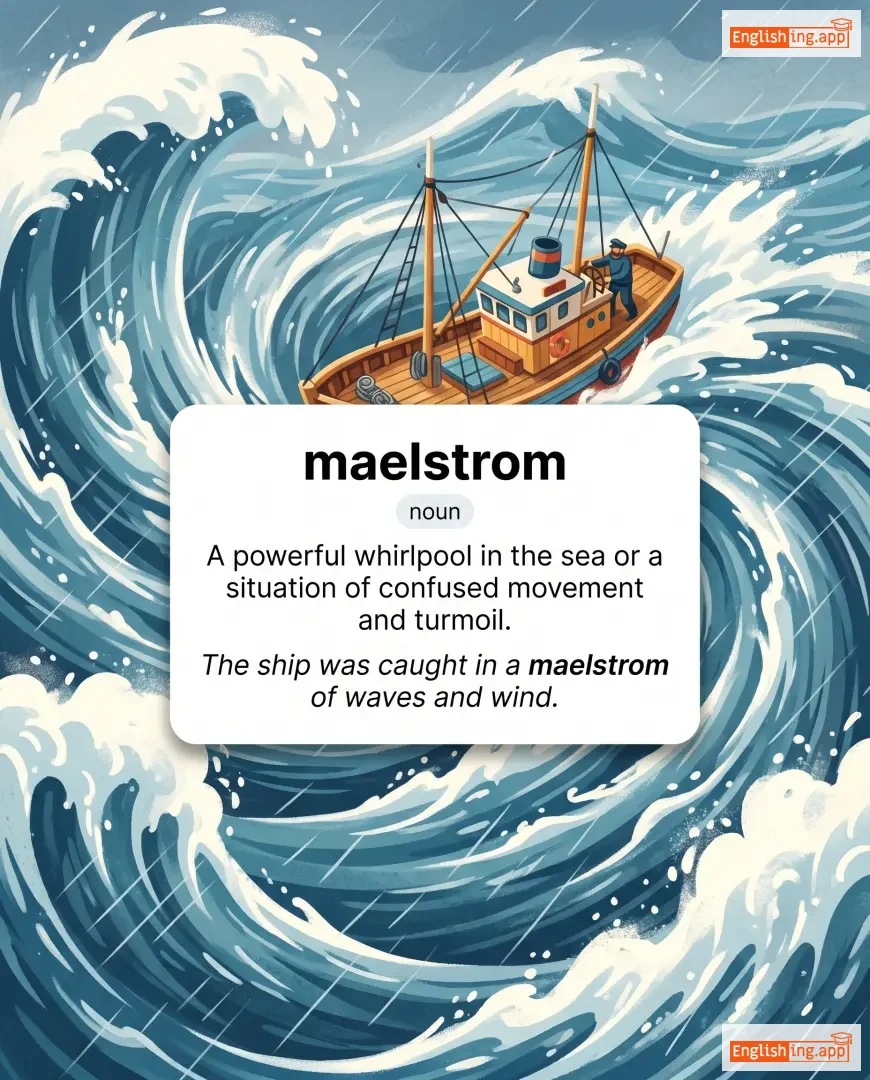
maelstrom definition card — visual illustration of the meaning
noun C2
/ˈmeɪlstrəm/
漩涡 (xuánwō)

A powerful whirlpool in the sea or a situation of confused movement and turmoil.

"The ship was caught in a maelstrom of waves and wind."

"船只被卷入了波浪和风的漩涡中。" (Chuán zhī bèi juǎn rù le bōlàng hé fēng de xuánwō zhōng.)
adjective C2
/ˌmædʒɪˈstɪəriəl/
权威的 (quánwēi de)

Having the characteristics of a master or authority; commanding and dignified.

"The professor spoke in a magisterial tone during the lecture."

"教授在讲座中用权威的语气发言。" (Jiàoshòu zài jiǎngzuò zhōng yòng quánwēi de yǔqì fāyán.)
noun C2
/ˈmædʒɪstrəsi/
司法办公室 (sifa bangongshi)

The office, authority, or district of a magistrate.

"He was proud to serve in the local magistracy for over a decade."

"他为能在当地的司法办公室工作超过十年而感到自豪。" (Ta wei neng zai dangdi de sifa bangongshi gongzuo chao guo shinian er gandao zihau.)
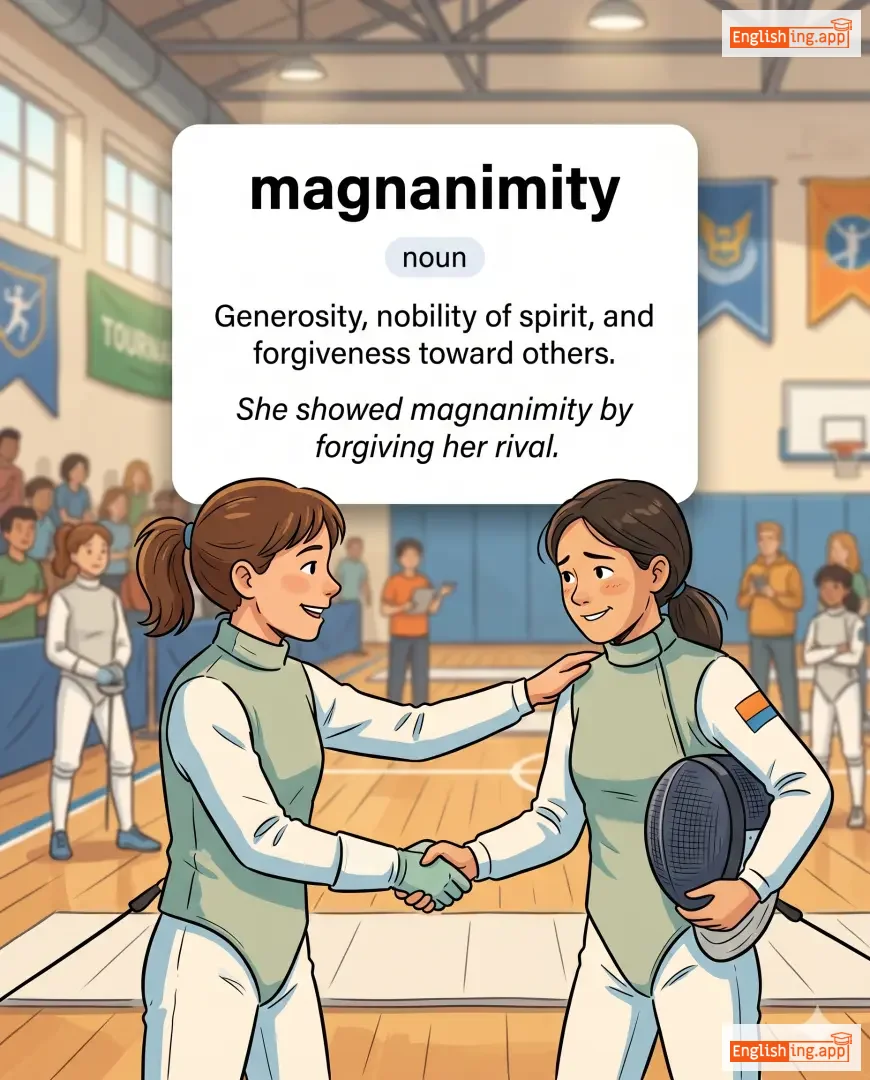
magnanimity definition card — visual illustration of the meaning
noun C2
/ˌmæɡnəˈnɪmɪti/
宽宏大量 (kuanhong daliang)

Generosity, nobility of spirit, and forgiveness toward others.

"She showed magnanimity by forgiving her rival."

"她通过原谅她的对手展示了宽宏大量。" (Ta tongguo yuanliang ta de duishou zhanshi le kuanhong daliang.)
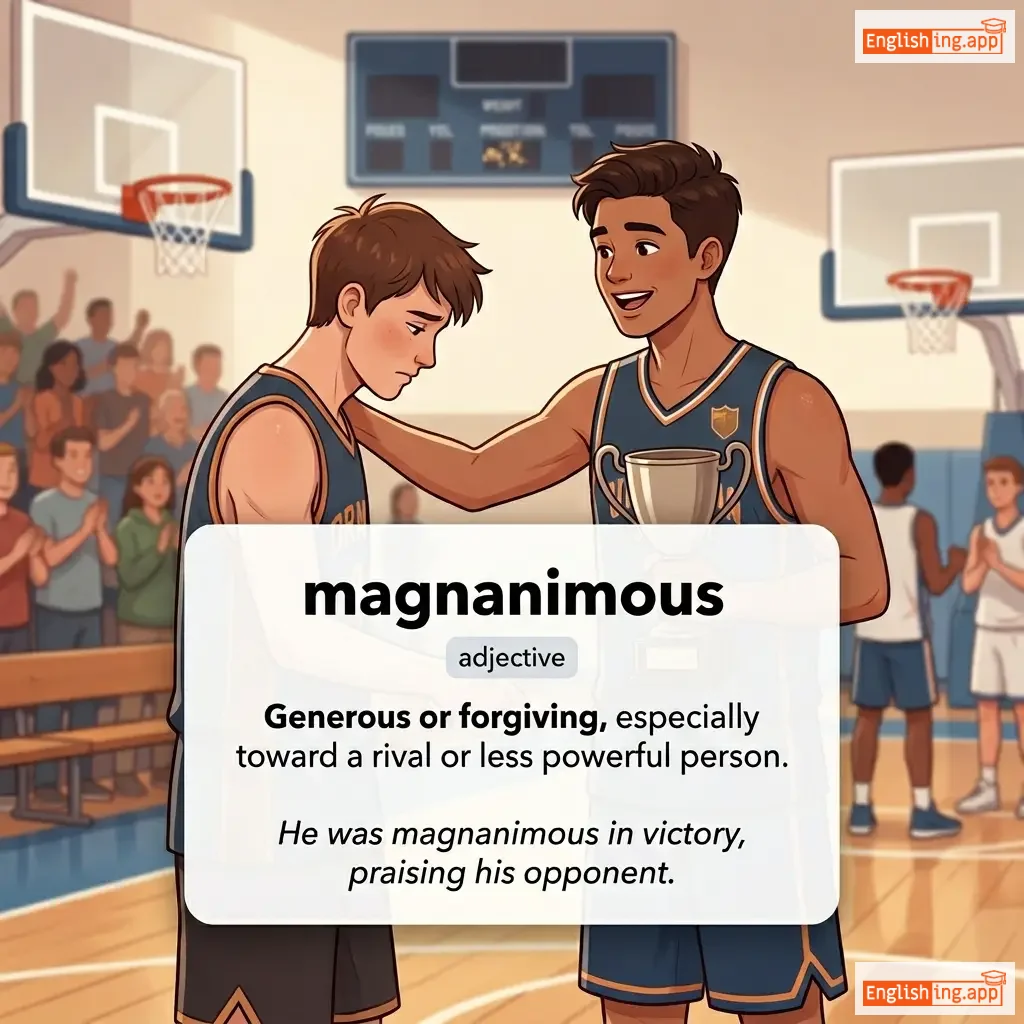
magnanimous definition card — visual illustration of the meaning
adjective C2
/mæɡˈnænɪməs/
宽宏大量 (kuan hong da liang)

Generous or forgiving, especially toward a rival or less powerful person.

"He was magnanimous in victory, praising his opponent."

"他在胜利中宽宏大量,赞扬了他的对手。" (Ta zai shengli zhong kuan hong da liang, zanyang le ta de duishou.)
verb C2
/ˈmæɡnɪtaɪz/
磁化 (cíhuà)

to make something magnetic or to strongly attract

"The scientist managed to magnetize the iron rod."

"科学家成功地将铁棒磁化了。" (Kēxuéjiā chénggōng dì jiāng tiě bàng cíhuàle.)
adjective C2
/mæɡˈnɪləkwənt/
夸张的语言 (kuāzhāng de yǔyán)

using high-flown or pompous language

"The politician’s magniloquent speech impressed the crowd."

"政治家的夸张演讲给人们留下了深刻的印象。" (Zhèngzhì jiā de kuāzhāng yǎnjiǎng gěi rénmen liú xiàle shēnkè de yìnxiàng.)
noun C2
/ˌmɑːhəˈrɑːdʒə/
马哈拉贾 (maharaja)

A great king, especially a ruler of one of the principal states in India.

"The maharaja lived in a grand palace surrounded by gardens."

"马哈拉贾住在一个宏伟的宫殿里,四周是花园。" (Mǎhā lā jiā zhù zài yīgè hóngwěi de gōngdiàn lǐ, sìzhōu shì huāyuán.)
noun C2
/ˈmeɪdənˌhʊd/
少女期 (shàonǚqī)

The state of being a maiden; girlhood or virginity.

"The poem celebrated the innocence of maidenhood."

"这首诗歌庆祝了少女时期的纯真。" (Zhè shǒu shīgē qìngzhù le shàonǚ shíqī de chúnzhēn.)
verb C2
/meɪm/
使残疾 (shǐ cánjí)

To wound or injure someone so that part of the body is permanently damaged.

"The accident maimed several passengers."

"事故使几位乘客致残。" (Shìgù shǐ jǐ wèi chéngkè zhìcán.)
adjective C2
/ˌmæləˈdrɔɪt/
笨拙 (bènzhuō)

clumsy or awkward in movement or behavior

"His maladroit attempt at fixing the chair made it worse."

"他修理椅子的笨拙尝试只让事情变得更糟。" (Tā xiūlǐ yǐzi de bènzhuō chángshì zhǐ ràng shìqíng biàn dé gèng zāo.)
noun C2
/ˈmæləprɒˌpɪzəm/
误用词汇 (wù yòng cí huì)

the mistaken use of a word in place of a similar-sounding one, often with amusing effect

"He is famous for his malapropism when speaking in public."

"他因在公众演讲时的误用词汇而闻名。" (Tā yīn zài gōng zhòng yǎn jiǎng shí de wù yòng cí huì ér wén míng.)
adjective, adverb C2
/ˌmæləprəˈpoʊ/
不合时宜 (bù hé shí yí)

inappropriate or unsuitable; at an inconvenient or inappropriate time

"His comment was malapropos during the serious discussion."

"在严肃的讨论中,他的评论不合时宜。" (Zài yánsù de tǎolùn zhōng, tā de pínglùn bù hé shí yí.)
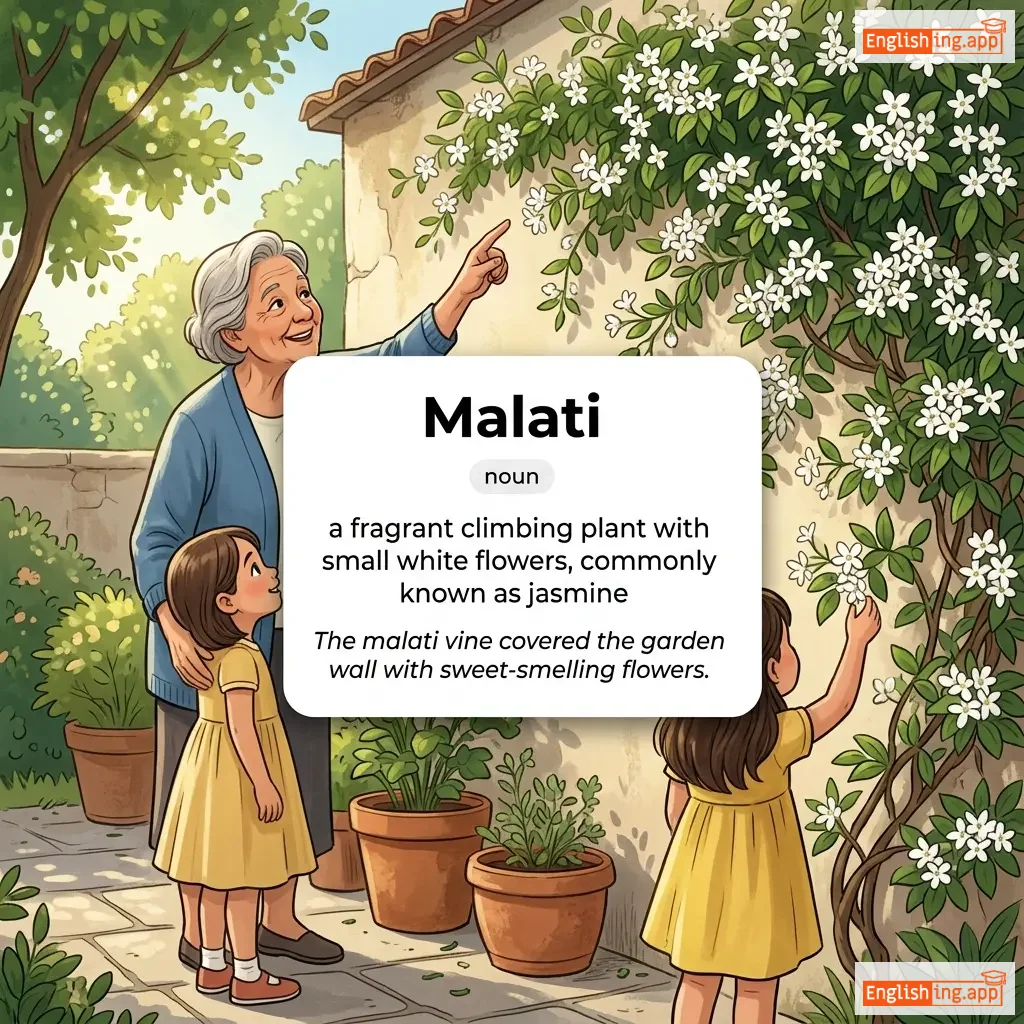
Malati definition card — visual illustration of the meaning
noun C2
/məˈlɑː.ti/
马拉提 (malati)

a fragrant climbing plant with small white flowers, commonly known as jasmine

"The malati vine covered the garden wall with sweet-smelling flowers."

"马拉提藤蔓用甜美的花香覆盖了花园的墙壁。" (Malati tengman yong tianmei de huaxiang fukai le huayuan de qiangbi)
noun C2
/ˈmæl.kənˌtɛnt/
不满的人 (bùmǎn de rén)

A person who is dissatisfied or rebellious; one who is not content.

"The malcontent voiced his grievances against the government."

"这个不满的人表达了他对政府的不满。" (Zhège bùmǎn de rén biǎodále tā duì zhèngfǔ de bùmǎn.)
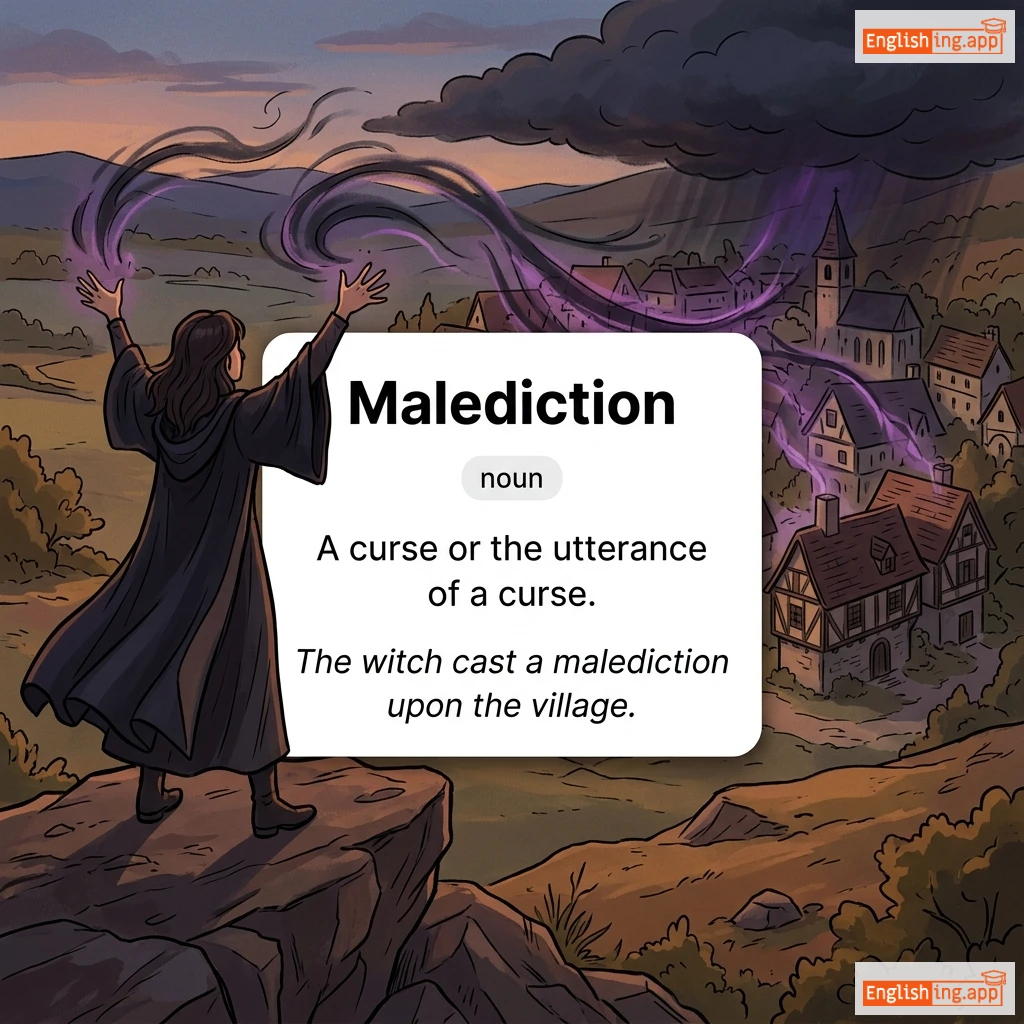
Malediction definition card — visual illustration of the meaning
noun C2
/ˌmæl.əˈdɪk.ʃən/
诅咒 (zuzhou)

A curse or the utterance of a curse.

"The witch cast a malediction upon the village."

"女巫对村庄施下了诅咒。" (Nǚwū duì cūnzhuāng shīxiàle zǔzhòu.)
noun C2
/ˈmæl.əˌfæk.tər/
恶棍 (è gùn)

A person who commits a crime or does evil.

"The malefactor was arrested for the robbery."

"恶棍因抢劫被捕。" (È gùn yīn qiǎngjié bèi bǔ.)
adjective C2
/məˈlɛfɪsənt/
邪恶 (xiee)

Causing harm or destruction, especially by supernatural means.

"The maleficent witch cursed the young princess."

"那个恶毒的女巫诅咒了年轻的公主。" (Na ge exie de nǚwū zhǔzhòu le niánqīng de gōngzhǔ.)
adjective C2
/ˌmæl.əˈfɪʃ.ənt/
恶意的 (è yì de)

Doing harm or evil; having a harmful effect.

"The maleficient acts of the tyrant ruined the kingdom."

"暴君的恶意行为摧毁了王国。" (Bàojūn de èyì xíngwéi cuīhuǐle wángguó.)
noun C2
/məˈlɛvələns/
恶意 (èyì)

The state or condition of being malevolent; having or showing a wish to do evil to others.

"His malevolence was clear in the cruel way he treated his rivals."

"他的恶意在他对待竞争对手的残忍方式中表现得淋漓尽致。" (Tā de èyì zài tā duìdài jìngzhēng duìshǒu de cánrěn fāngshì zhōng biǎoxiàn dé línlí jìnzhì.)
noun C2
/mælˈfiːzəns/
公职人员的不当行为 (gongzhi renyuan de budang xingwei)

Wrongdoing or misconduct, especially by a public official.

"The mayor was accused of malfeasance in office."

"市长因在职务中不当行为而被指控。" (Shizhang yin zhiwu zhong budang xingwei er bei zhikong.)
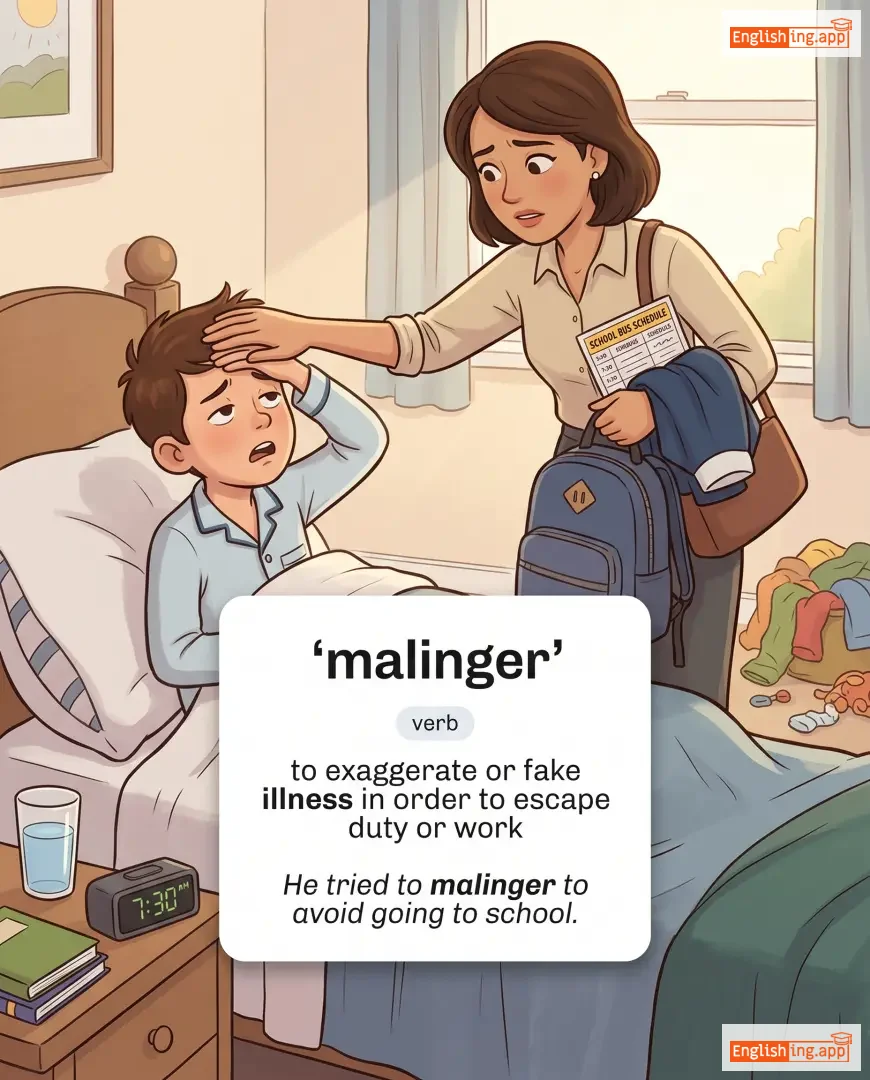
malinger definition card — visual illustration of the meaning
verb C2
/məˈlɪŋɡər/
装病 (zhuang bing)

to exaggerate or fake illness in order to escape duty or work

"He tried to malinger to avoid going to school."

"他试图装病以逃避上学。" (Ta shitu zhuang bing yi taobi shangxue.)
malingerer definition card — visual illustration of the meaning
noun C2
/məˈlɪŋɡərər/
装病的人 (zhuang bing de ren)

a person who pretends to be sick to avoid duty or work

"The manager suspected that John was a malingerer."

"经理怀疑约翰是一个装病的人。" (Jing li huai yi Yue han shi yi ge zhuang bing de ren.)
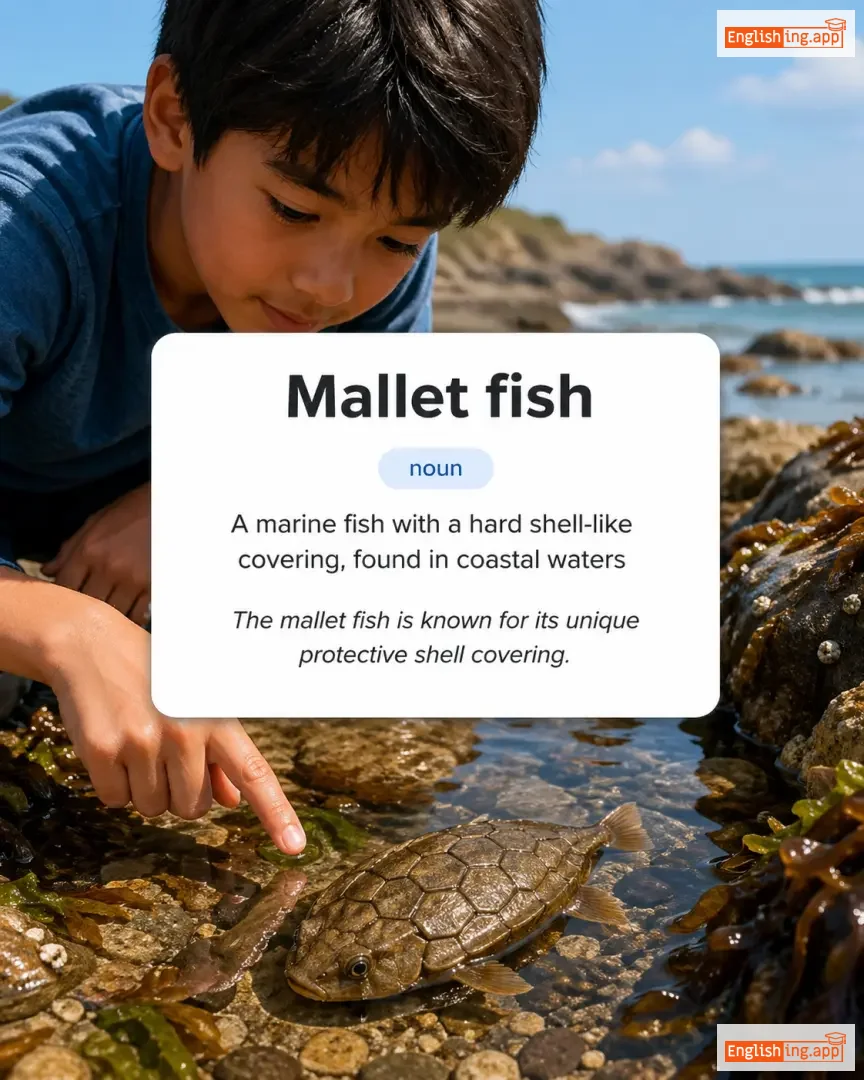
Mallet fish definition card — visual illustration of the meaning
noun C2
/ˈmælɪt fɪʃ/
有壳鱼 (you ke yu)

A marine fish with a hard shell-like covering, found in coastal waters

"The mallet fish is known for its unique protective shell covering."

"有壳鱼以其独特的保护性外壳而闻名。" (you ke yu yi qi du te de bao hu xing wai ke er wen ming)
noun C2
/ˌmælˈoʊdər/
难闻的气味 (nánwén de qìwèi)

An unpleasant smell; bad odor.

"The garbage bin gave off a terrible malodor."

"垃圾桶散发出可怕的难闻的气味。" (Lājītǒng sànfā chū kěpà de nánwén de qìwèi.)
adjective C2
/ˌmælˈoʊdərəs/
难闻的 (nànwén de)

Having a very unpleasant smell.

"The malodorous room made everyone leave quickly."

"那个难闻的房间让所有人迅速离开。" (Nàgè nànwén de fángjiān ràng suǒyǒu rén xùnsù líkāi.)
verb C2
/ˌmælˈtriːt/
虐待 (nüèdài)

To treat someone cruelly or unfairly.

"The law punishes those who maltreat animals."

"法律惩罚那些虐待动物的人。" (Fǎlǜ chéngfá nàxiē nüèdài dòngwù de rén.)
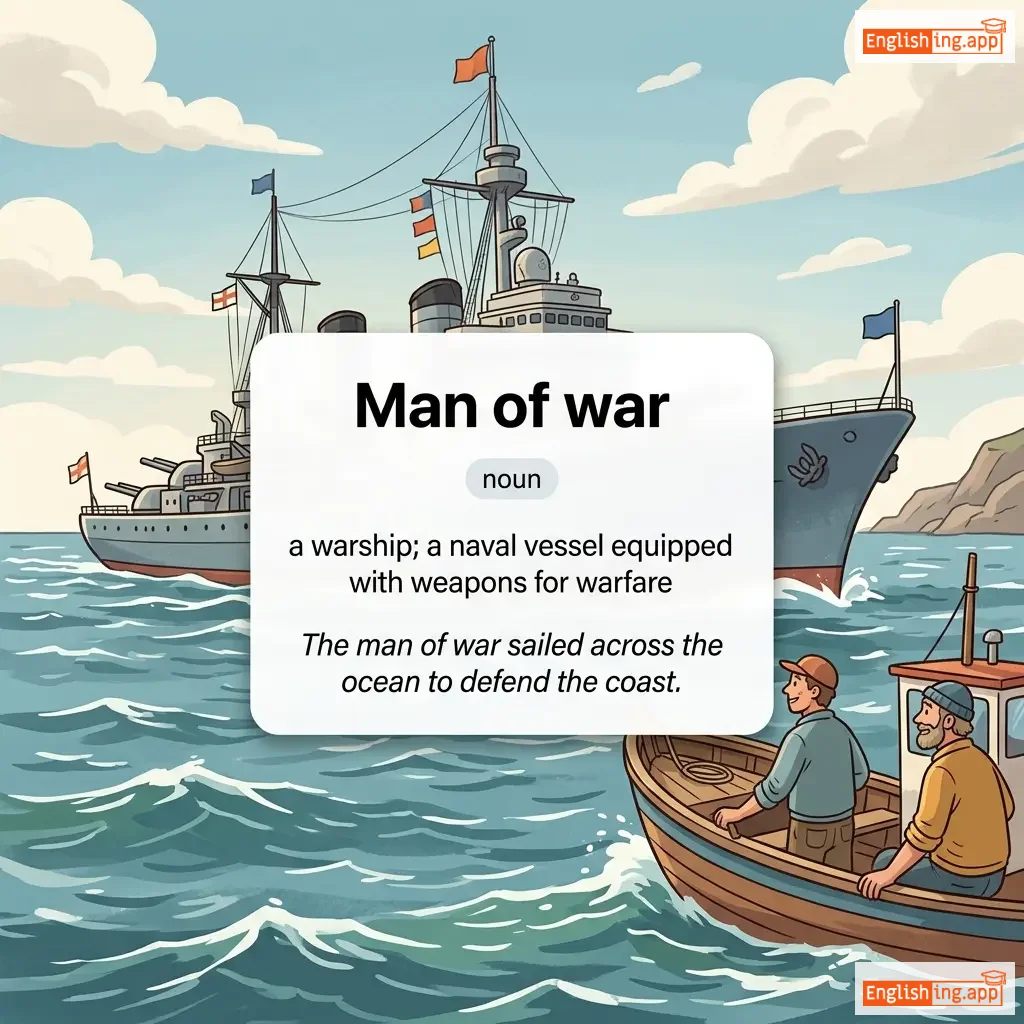
Man of war definition card — visual illustration of the meaning
noun C2
/mæn əv wɔːr/
战舰 (zhànjiàn)

a warship; a naval vessel equipped with weapons for warfare

"The man of war sailed across the ocean to defend the coast."

"战舰横渡大洋,保护海岸。" (Zhànjiàn héngdù dà yáng, bǎohù hǎi'àn.)
noun C2
/ˈmænˌiː.tər/
食人者 (shì rén zhě)

An animal that kills and eats humans; informally, a woman who is very assertive in relationships.

"The tiger became a notorious man-eater in the village."

"老虎在村子里成了臭名昭著的人吃人。" (Lǎohǔ zài cūnzi lǐ chéngle chòumíng zhāozhù de rén chī rén.)
noun C2
/ˈmænˌtræp/
捕人陷阱 (bǔ rén xiànjǐng)

A trap designed to catch or injure humans; informally, a woman considered dangerously attractive.

"The old castle had a man-trap at the entrance."

"那座古老的城堡在入口处有一个人类捕捉陷阱。" (Nà zuò gǔlǎo de chéngbǎo zài rùkǒu chù yǒu yīgè rénlèi bǔzhuō xiànjǐng.)
noun/verb C2
/ˈmæn.ə.kəl/
手铐 (shǒukào)

A metal shackle for fastening someone's hands or ankles; also to restrain with such shackles.

"The prisoner was manacled before being taken to court."

"囚犯在被带到法庭之前被镣铐。" (Qiúfàn zài bèi dài dào fǎtíng zhīqián bèi liàokào.)
noun C2
/meɪndʒ/
疥癣 (jiaixuan)

a skin disease in animals caused by parasitic mites, leading to hair loss and sores

"The stray dog was suffering from mange."

"流浪狗正在忍受疥癣。" (Liulang gou zhengzai renshou jiaixuan.)
verb C2
/ˈmæŋɡəl/
毁坏 (huihuai)

to severely damage or mutilate something, often by tearing or crushing

"The car was mangled in the accident."

"车在事故中毁坏。" (Chē zài shìgù zhōng huǐhuài.)
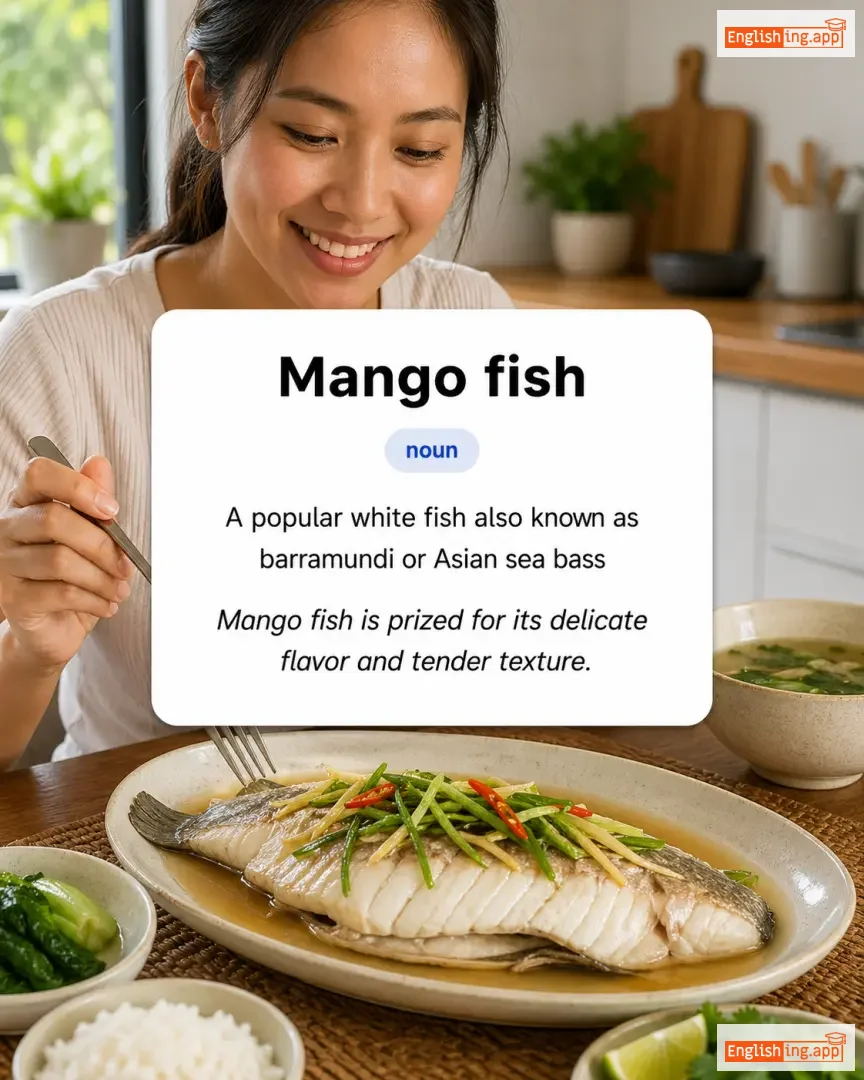
Mango fish definition card — visual illustration of the meaning
noun C2
/ˈmæŋɡoʊ fɪʃ/
金目鲈 (jin mu lu)

A popular white fish also known as barramundi or Asian sea bass

"Mango fish is prized for its delicate flavor and tender texture."

"金目鲈因其细腻的味道和嫩滑的质地而受到青睐。" (jin mu lu yin qi xi ni de wei dao he nen hua de zhi di er shou dao qing lai)
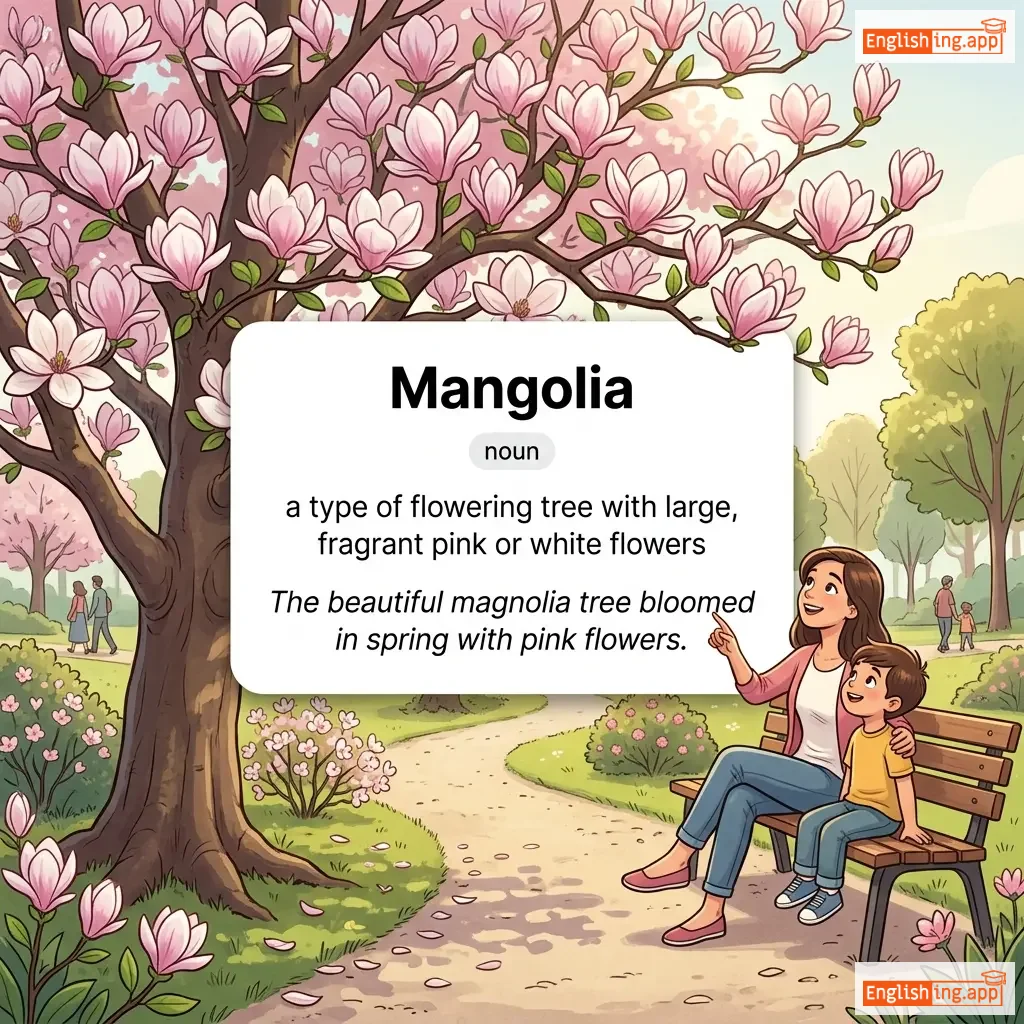
Mangolia definition card — visual illustration of the meaning
noun C2
/mæŋˈɡoʊ.li.ə/
木兰花 (mùlán huā)

a type of flowering tree with large, fragrant pink or white flowers

"The beautiful magnolia tree bloomed in spring with pink flowers."

"美丽的木兰花树在春天开花,盛开着粉色的花朵。" (Měilì de mùlán huā shù zài chūntiān kāihuā, shèngkāi zhe fěn sè de huāduǒ)
adjective C2
/ˈmeɪndʒi/
脏且破旧 (zang qie po jiu)

in poor condition, shabby, dirty, or affected by mange

"The stray dog looked mangy and weak."

"流浪狗看起来又脏又虚弱。" (Liúlàng gǒu kàn qǐlái yòu zāng yòu xūruò.)
adjective C2
/məˈnaɪəkəl/
狂热 (kuángrè)

behaving like a maniac; showing excessive enthusiasm or madness

"He gave a maniacal laugh during the movie."

"他在电影中发出了狂热的笑声。" (Tā zài diànyǐng zhōng fāchūle kuángrè de xiàoshēng.)
adjective C2
/ˈmæn.laɪk/
男性化 (nánxìnghuà)

Having qualities or characteristics traditionally associated with a man; manly.

"His manlike courage impressed everyone in the village."

"他的男性化勇气给村里的人们留下了深刻的印象。" (Tā de nánxìnghuà yǒngqì gěi cūn lǐ de rénmen liú xiàle shēnkè de yìnxiàng.)
noun C2
/ˈmæn.li.nəs/
男子气概 (nánzǐ qìgài)

The quality of being manly; courage, strength, and honor associated with men.

"His manliness was admired by his peers."

"他的男子气概得到了同伴们的赞赏。" (tā de nánzǐ qìgài dédàole tóngbàn men de zànshǎng.)
noun C2
/ˈmæntl̩/
壁炉上的架子 (bìlú shàng de jiàzi)

A shelf above a fireplace, often used for decoration.

"She placed family photos on the mantel above the fireplace."

"她把家庭照片放在壁炉上的架子上。" (Tā bǎ jiātíng zhàopiàn fàng zài bìlú shàng de jiàzi shàng.)
noun C2
/ˌmænjəˈmɪʃən/
奴隶解放 (nuli jiefang)

The act of a slave owner freeing their slaves.

"The manumission of the slaves marked a turning point in history."

"奴隶的解放标志着历史的转折点。" (Nuli de jiefang biaozhi zhe lishi de zhuanzhe dian.)
verb C2
/ˌmæn.juˈmɪt/
释放奴隶 (shifang nuli)

to release from slavery or servitude; to set free

"The landowner decided to manumit his slaves."

"土地所有者决定释放他的奴隶。" (Tudi suoyouzhe jueding shifang tade nuli.)