Vocabulaires

Découvrez, apprenez et maîtrisez le vocabulaire anglais

adjective C2
/ɪmˈpruːdənt/
неосмотрительный (neosmotritel'nyj)

Not showing care for the consequences of an action.

"It was imprudent to drive in such stormy weather."

"Это было неосмотрительно — ехать в такую бурю." (Eto bylo neosmotritel'no — yekhat' v takuyu bur'yu.)
noun C2
/ˈɪmpjʊdəns/
наглость (naglost)

Rude and disrespectful behavior.

"The student's impudence shocked the entire class."

"Наглость студента шокировала весь класс." (Naglost studenta shokirovala ves' klass.)
⚔️

impugn

verb C2
/ɪmˈpjuːn/

to dispute the truth, validity, or honesty of a statement or motive

"The lawyer tried to impugn the credibility of the witness."

noun C2
/ɪmˈpjuːɪsəns/
бессилие, неспособность (bessilie, nespobnost)

inability to take effective action; helplessness

"The government’s impuissance in the face of crisis frustrated the people."

"Бессилие правительства перед лицом кризиса разочаровало народ." (Bessilie pravitel'stva pered litsom krizisa razocharovalo narod.)
noun C2
/ɪmˈpʌlʃən/
порыв (poryv)

a strong urge or drive to act; the act of impelling

"His impulsion to travel made him leave his job suddenly."

"Его порыв к путешествиям заставил его внезапно уйти с работы." (Ego poryv k puteshestviyam zastavil ego vnezapno uyti s raboty.)
noun C2
/ɪmˈpjuːnɪti/
безнаказанность (beznakazannost)

freedom from punishment or harmful consequences for an action

"The dictator ruled with impunity, ignoring international laws."

"Диктатор правил безнаказанно, игнорируя международные законы." (Diktator pravil beznakazanno, ignoriruya mezhdunarodnye zakony.)
noun C2
/ˌɪmpjuˈteɪʃən/
импутация (imputatsiya)

an accusation or attribution of blame

"The politician denied the imputation of corruption."

"Политик опроверг импутацию коррупции." (Politik opovreg imputatsiyu korrupcii.)
verb C2
/ɪmˈpjuːt/
возлагать (vozlagat')

to attribute a fault or responsibility to someone

"They imputed the company's success to good leadership."

"Они возложили успех компании на хорошее руководство." (Oni vozlozhili uspekh kompanii na khoroshee rukovodstvo.)
noun C2
/ˌɪnədˈvɜːrtəns/
небрежность (nebrezhnost)

Failure to pay attention; carelessness.

"The error happened through sheer inadvertence."

"Ошибка произошла из-за чистой небрежности." (Oshibka proizoshla iz-za chistoy nebrezhnosti.)
adjective C2
/ɪnˈeɪliənəbl/
неотчуждаемый (neotchuzhdaemyy)

Unable to be taken away or transferred; absolute and permanent.

"Freedom of speech is an inalienable right."

"Свобода слова - это неотчуждаемое право." (Svoboda slova - eto neotchuzhdaemoye pravo.)
noun C2
/ˌɪnəməˈrɑːtə/
возлюбленная (inamorata)

A woman with whom someone is in love; a female lover.

"He wrote a poem dedicated to his inamorata."

"Он написал стихотворение, посвящённое своей возлюбленной." (On napisal stikhotvorenije posvyashchennoe svoey vozlyublennoy.)
noun C2
/ɪˈnænɪti/
глупость, чепуха (glupost, chepukha)

a nonsensical remark or action; silliness; emptiness

"The speech was full of inanities that bored the audience."

"Речь была полна глупостей, которые утомили аудиторию." (Rech byla polna glupostey, kotorye utomili auditoriyu.)
adjective C2
/ˌɪnæprɪˈhɛnsəbl/
непонимаемый (neponimayemyi)

not understandable; incomprehensible

"The concept was so abstract that it seemed inapprehensible to most students."

"Концепция была настолько абстрактной, что она казалась непонимаемой для большинства студентов." (Kontseptsiya byla nastol'ko abstraktnoy, chto ona kazalas' neponimayemoy dlya bol'shinstva studentov.)
adjective C2
/ɪnˈæpt/
неподобающий (nepodobayushchiy)

not suitable or appropriate in the circumstances

"His inapt choice of words offended many people."

"Его неподобающий выбор слов обидел многих людей." (Yego nepodobayushchiy vybor slov obidel mnogikh lyudey.)
adverb C2
/ˌɪnəzˈmʌtʃ/
поскольку (poskol'ku)

To the extent that; considering that.

"Inasmuch as you are their teacher, you should guide them carefully."

"Поскольку вы их учитель, вы должны осторожно их направлять." (Poskol'ku vy ikh uchitel', vy dolzhny ostorozhno ikh napravlyat'.)
conjunction C2
/ˌɪnəzˈmʌtʃ æz/
поскольку (poskol'ku)

Because; since.

"He cannot attend, inasmuch as he is unwell."

"Он не может прийти, поскольку он болен." (On ne mozhet priyti, poskol'ku on bolen.)
adjective C2
/ˌɪnɔːˈspɪʃəs/
неудачный (neudachny)

Not conducive to success; unpromising or unlucky.

"The event began under inauspicious circumstances."

"Событие началось при неблагоприятных обстоятельствах." (Sobytie nachalos' pri neblagopriyatnykh obstoyatel'stvakh.)
adjective C2
/ˈɪnˌbrɛd/
врожденный (vrozhdennyy)

existing naturally in a person or animal; also related to reproduction within a limited community

"He has an inbred sense of loyalty."

"У него врожденное чувство преданности." (U nego vrozhdennoe chuvstvo predannosti.)
noun C2
/ˌɪnkænˈdɛsəns/
инкандеценция (inkandetsentsiya)

the emission of light from a hot object; brilliance

"The incandescence of the candle filled the dark room."

"Инкандеценция свечи заполнила темную комнату." (Inkandetsentsiya svechi zapolnila temnuyu komnatu.)
adjective C2
/ˌɪnkænˈdɛsənt/
накалённый (nakalyonny)

emitting light as a result of being heated; extremely bright or passionate

"The incandescent lamp lit up the entire hall."

"Накалённая лампочка осветила весь зал." (Nakalennaya lampochka osvetila ves' zal.)
noun C2
/ˌɪnkænˈteɪʃən/
заклинание (zaklinanie)

a series of words used as a magic spell or charm

"The wizard chanted an incantation to summon the spirits."

"Волшебник произнес заклинание, чтобы призвать духов." (Volshebnik proiznes zaklinaniye, chtoby prizvat' dukhov.)
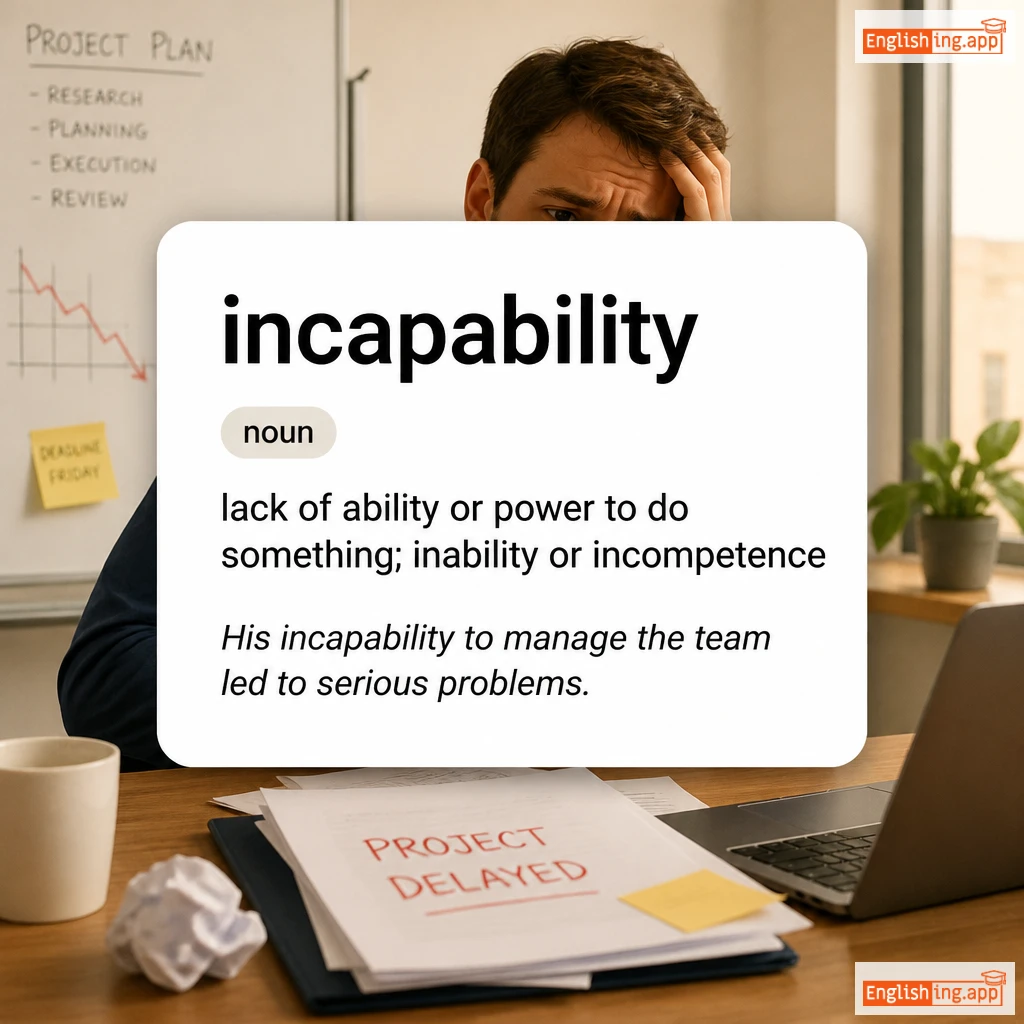
incapability definition card — visual illustration of the meaning
noun C2
/ˌɪnˌkeɪpəˈbɪləti/
неспособность (nesposobnost)

lack of ability or power to do something; inability or incompetence

"His incapability to manage the team led to serious problems."

"Его неспособность управлять командой привела к серьёзным проблемам." (ego nesposobnost upravlyat komandoi privela k seryoznym problemam)
verb C2
/ˌɪnkəˈpæsɪteɪt/
выводить из строя (vydovit' iz stroya)

to deprive someone or something of the ability or strength to function

"The severe injury incapacitated the player for the rest of the season."

"Травма вывела игрока из строя на оставшуюся часть сезона." (Travma vyvela igroka iz stroya na ostavshuyusya chast' sezona.)
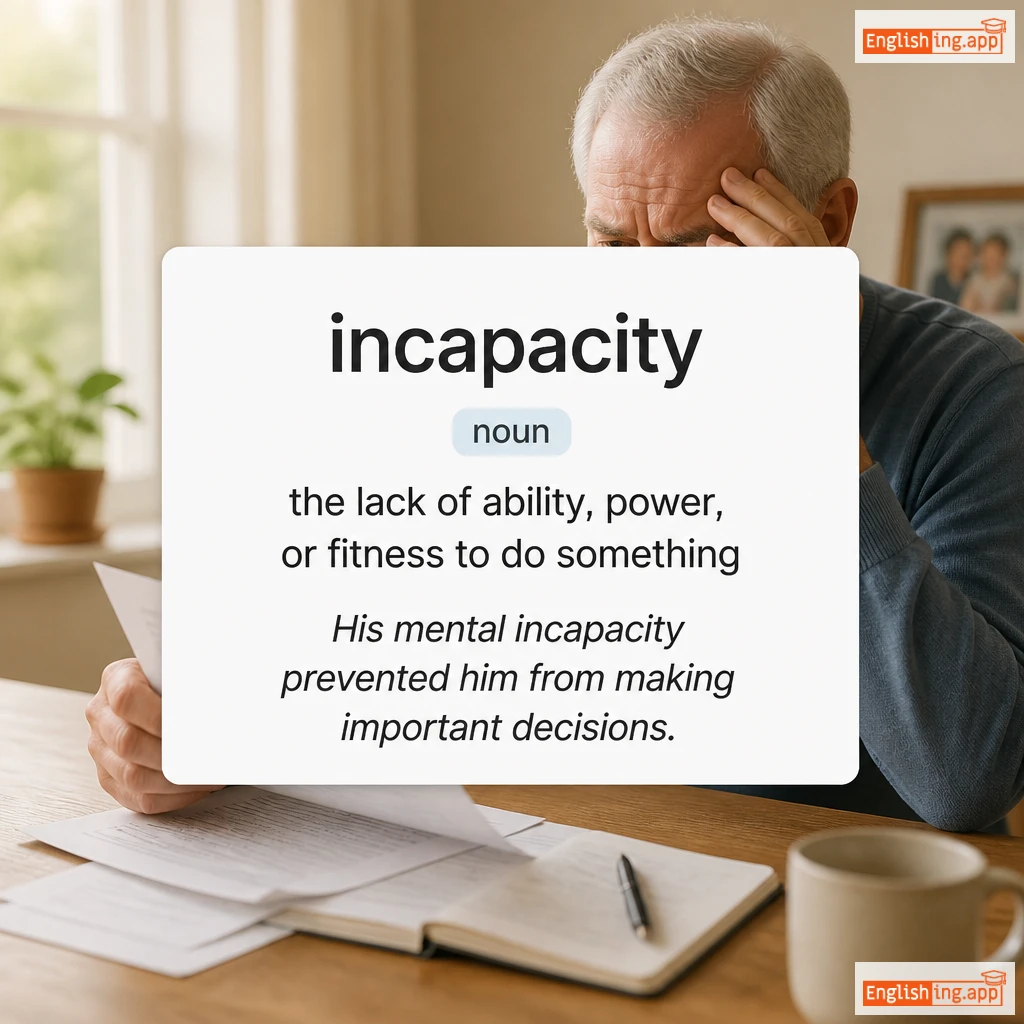
incapacity definition card — visual illustration of the meaning
noun C2
/ˌɪnkəˈpæsəti/
неспособность (nesposobnost)

the lack of ability, power, or fitness to do something

"His mental incapacity prevented him from making important decisions."

"Его умственная неспособность помешала ему принимать важные решения." (Ego umstvennaya nesposobnost pomeshala yemu prinimat' vazhnyye resheniya.)
adjective/noun C2
/ɪnˈkɑːrnədiːn/
ярко-красный (yarko-krasny)

a bright crimson or pinkish-red color

"The sky turned incarnadine at sunset."

"Небо стало ярко-красным на закате." (Nebo stalo yarko-krasnym na zakate.)
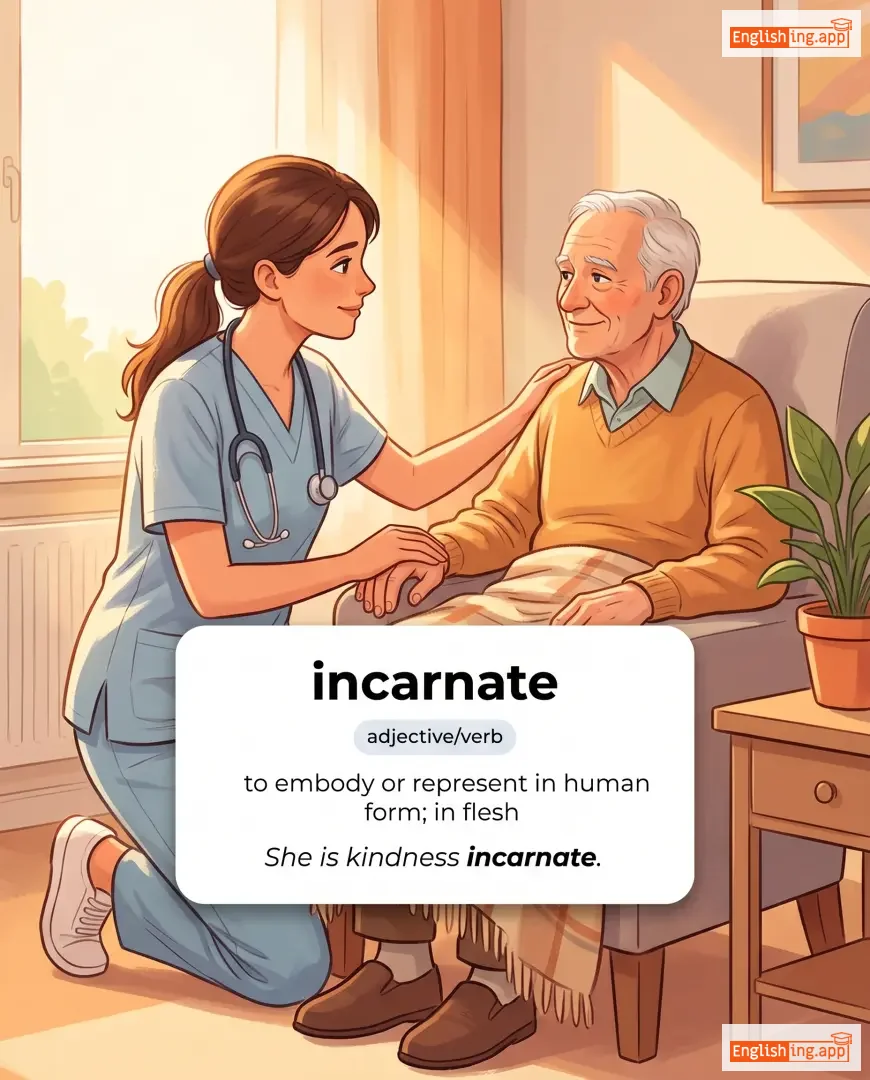
incarnate definition card — visual illustration of the meaning
adjective/verb C2
/ɪnˈkɑːrneɪt/
воплощённый (voploshchyonny)

to embody or represent in human form; in flesh

"She is kindness incarnate."

"Она - воплощение доброты." (Ona - voploshchyonie dobrotî.)
adjective C2
/ɪnˈsɛndiˌɛri/
поджигательский / провоцирующий (podzhigatel'skiy / provotsiruyushchiy)

designed to cause fires or stir up conflict

"The politician’s incendiary remarks angered the crowd."

"Инсценированные замечания политика разгневали толпу." (Inszenirovannye zamechaniya politika razgnevayli tolpu.)
adjective C2
/ɪnˈsɛptɪv/
начальный (nachalny)

Relating to or marking the beginning or initial stage of something.

"The inceptive phase of the project was marked by enthusiastic planning."

"Инициирующая фаза проекта была отмечена энтузиазмом в планировании." (Initsiirovyvayushchaya faza proyekt byla otmechena entuziazmom v planirovanie.)
adverb C2
/ˈɪntʃmiːl/
постепенно (postepenno)

Gradually, little by little.

"The old castle fell inchmeal into ruin."

"Старый замок постепенно разрушался." (Staryy zamok postepenno razrushalsya.)
inchoate definition card — visual illustration of the meaning
adjective C2
/ɪnˈkoʊ.ɪt/ or /ɪnˈkoʊ.eɪt/
незавершенный (nezavershenny)

Just begun and not fully formed; rudimentary.

"His inchoate ideas needed more research to be developed."

"Его незавершенные идеи требовали дополнительного исследования для дальнейшей разработки." (Ego nezavershennyye idei trebovali dopolnitel'nogo issledovaniya dlya dalshego razrabotki.)
adjective C2
/ɪnˈkoʊətɪv/
начальный (nachal'nyy)

relating to the beginning of something; in an initial stage

"The poet used inchoative expressions to depict the dawn of creation."

"Поэт использовал инкхоативные выражения для изображения зарождения создания." (Poet ispol'zoval inkhoativnye vyrazheniya dlya izobrazheniya zaroždeniya sozdaniya.)
verb C2
/ɪnˈsɪnəˌreɪt/
сжигать (szhigat')

to burn something completely until it is reduced to ashes

"The city decided to incinerate the medical waste for safety."

"Город решил сжигать медицинские отходы для безопасности." (Gorod reshil szhigat' meditsinskie otkhody dlya bezopasnosti.)
noun C2
/ɪnˈsɪpiəns/
начало (nachalo)

the beginning or initial stage of something

"The project was still in its incipience when funding was approved."

"Проект все еще был на своей начальной стадии, когда было одобрено финансирование." (Proyekt vse eshche byl na svoey nachal'noy stadii, kogda bylo odobreno finansirovanie.)
adjective C2
/ɪnˈsɪpiənt/
начальный (nachal'nyy)

in an initial stage; beginning to develop

"The incipient storm made the sky turn dark and heavy."

"Начальная буря заставила небо потемнеть и стать тяжелым." (Nachal'naya burya zastavila nebo potemyet' i stat' tyazhelym.)
noun C2
/ɪnˈsaɪzər/
резец (rezyets)

a narrow-edged tooth at the front of the mouth, adapted for cutting

"The dentist noted that his upper left incisor was chipped."

"Стоматолог отметил, что его верхний левый резец был сколот." (Stomatolog otmetil, chto yego verkhniy levyy rezyets byl skolot.)
adjective C2
/ɪnˈklɛmɛnt/
неблагоприятная погода (neblagopriyatnaya pogoda)

unpleasantly cold, wet, or stormy (usually weather)

"The match was canceled due to inclement weather."

"Матч был отменен из-за плохой погоды." (Match byl otmenyon iz-za plokhoy pogody.)
adjective C2
/ˌɪnkoʊˈɜːrsəbl̩/
непокорный (nepokornyy)

Not capable of being forced, compelled, or restrained.

"Her incoercible spirit inspired others to fight for justice."

"Её непокорный дух вдохновил других бороться за справедливость." (Yeyo nepokornyy dukh vdokhnovil drugikh borot'sya za spravedlivost'.)
adjective C2
/ɪnˈkɑːdʒɪtənt/
беспечный (bespechnyy)

Lacking thought; inconsiderate or thoughtless.

"It was incogitant of him to make such a rude comment."

"Это было инкожитантно с его стороны сделать такой грубый комментарий." (Eto bylo inkogitantno s yego storony sdelat' takoy grubyy kommentariy.)
adjective C2
/ˌɪnkəmˈbʌstəbl/
негорючий (negoryuchiy)

Not capable of catching fire or burning.

"This material is incombustible and safe for construction."

"Этот материал не воспламеняется и безопасен для строительства." (Etot material ne vosplamenyayetsya i bezopasen dlya stroitel'stva.)
adjective C2
/ˌɪnkəˈməʊdiəs/
неудобный (neudobny)

Uncomfortably small, cramped, or inconvenient.

"We had to stay in an incommodious room during the trip."

"Нам пришлось остаться в неудобной комнате во время поездки." (Nam prishlos' ostatsya v neudobnoj komnate vo vremya poezdki.)
adjective C2
/ˌɪnkəmˈprɛsəbl/
несжимаемый (neszhimayemiy)

Not able to be pressed or squeezed into a smaller space.

"Liquids are generally considered incompressible."

"Жидкости обычно считаются несжимаемыми." (Zhidkosti obychno schitayutsya neszhimayemymi.)
adjective C2
/ɪnˈkɒŋɡruənt/
несоответствующий (nesootvetstvuyushchiy)

Not in harmony or keeping with the surroundings or other aspects.

"His casual outfit looked incongruent at the formal dinner."

"Его повседневная одежда выглядела несоответствующей на официальном ужине." (Ego povsednevnaia odezhda vyhlyadila nesootvetstvuiushchei na ofitsial'nom uzhine.)
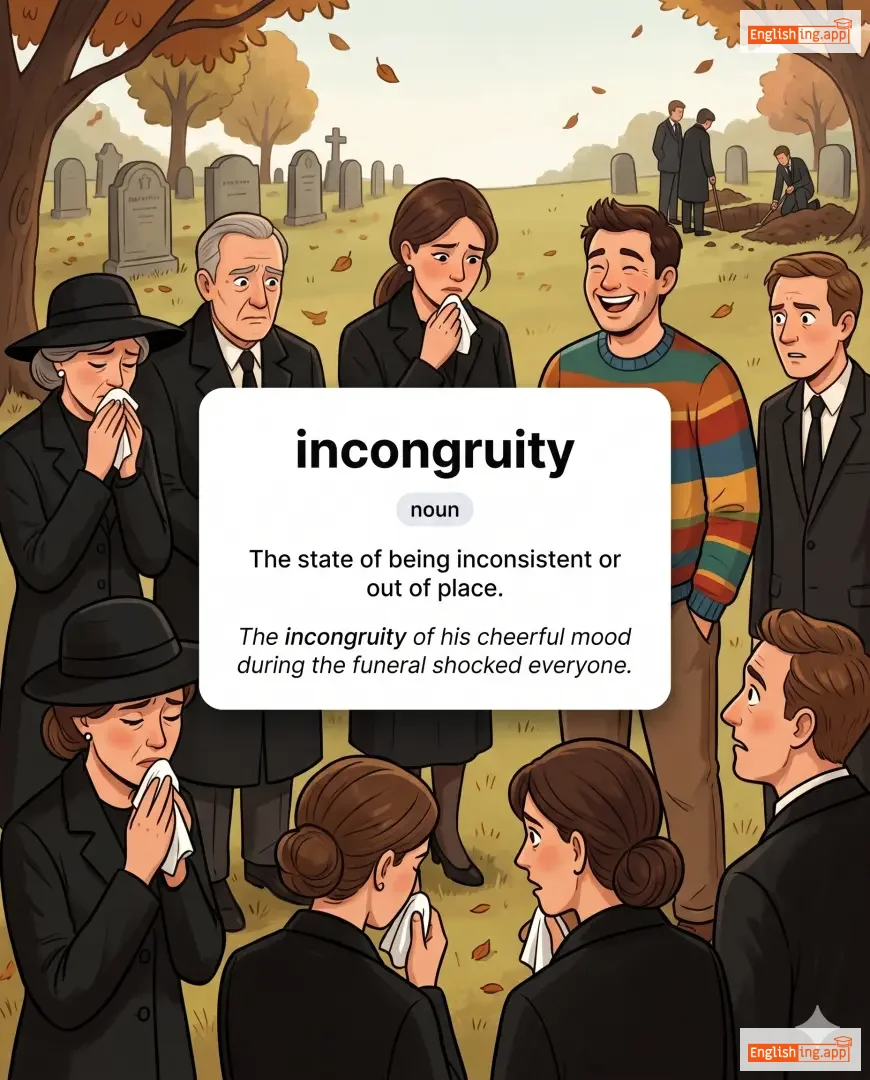
incongruity definition card — visual illustration of the meaning
noun C2
/ˌɪnkənˈɡruːəti/
неконсистентность (nekonsistennost')

The state of being inconsistent or out of place.

"The incongruity of his cheerful mood during the funeral shocked everyone."

"Неконсистентность его веселого настроения во время похорон потрясла всех." (Nekonsistennost' ego vesyologo nastroeniya vo vremya pokhoron potryasla vsekh.)
adjective C2
/ˌɪnkənˈsɪdərəbl/
незначительный (neznachitel'nyy)

Too small or unimportant to be worth considering.

"The donation was not inconsiderable, though smaller than expected."

"Пожертвование было незначительным, хотя и меньше, чем ожидалось." (Pozhertvovanie bylo neznačitel'nym, hotya i men'she, chem ozhidalos'.)
noun C2
/ɪnˈkɒnstənsi/
непостоянство (nepostoyanstvo)

The quality of changing frequently or being unreliable.

"The inconstancy of the weather makes planning difficult."

"Непостоянство погоды затрудняет планирование." (Nepostoyanstvo pogody zatrudnyaet planirovanie.)
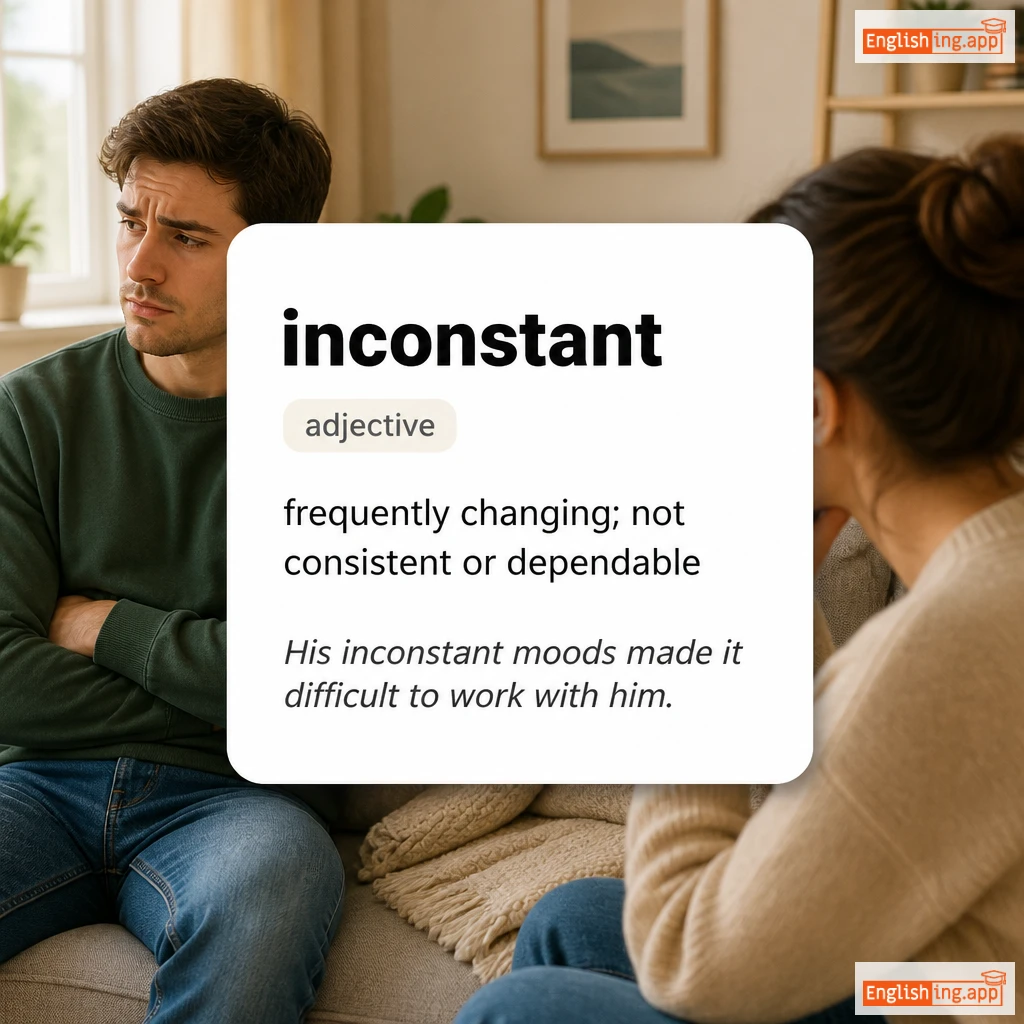
inconstant definition card — visual illustration of the meaning
adjective C2
/ɪnˈkɒnstənt/
непостоянный (nepostoyannyy)

frequently changing; not consistent or dependable

"His inconstant moods made it difficult to work with him."

"Его непостоянное настроение затрудняло работу с ним." (Yego nepostoyannoe nastroenie zatrudnyalo rabotu s nim.)
adjective C2
/ɪnˈkɒntɪnənt/
неконтролируемый (nekontroliruemyy)

lacking control over urination or defecation; lacking self-restraint

"The patient was incontinent after surgery."

"Пациент был неконтролируемым после операции." (Patsient byl nekontroliruemym posle operatsii.)
adjective C2
/ˌɪnkɒntrəˈvɜːtəbl/
неопровержимый (neopoverzhimy)

impossible to deny or dispute; unquestionable

"The evidence was incontrovertible and proved his innocence."

"Доказательства были неопровержимы и доказали его невиновность." (Dokazatel'stva byli neopoverzhimy i dokazali ego nevinovnost'.)
adjective C2
/ˌɪnkɔːrˈpɔːriəl/
бестелесный (bestelessnyy)

lacking a physical body; not composed of matter; intangible

"Ghosts are often described as incorporeal beings."

"Привидения часто описываются как невещественные существа." (Privideniya chasto opisyvayutsya kak neveshchestvennye sushchestva.)
adjective C2
/ɪnˈkɒrɪdʒəbəl/
неисправимый (neispravimy)

incapable of being corrected, improved, or reformed

"He is an incorrigible optimist who never loses hope."

"Он неисправимый оптимист, который никогда не теряет надежды." (On neispravimy optimist, kotoryy nikogda ne teryayet nadezhdy.)