Vocabulaires

Découvrez, apprenez et maîtrisez le vocabulaire anglais

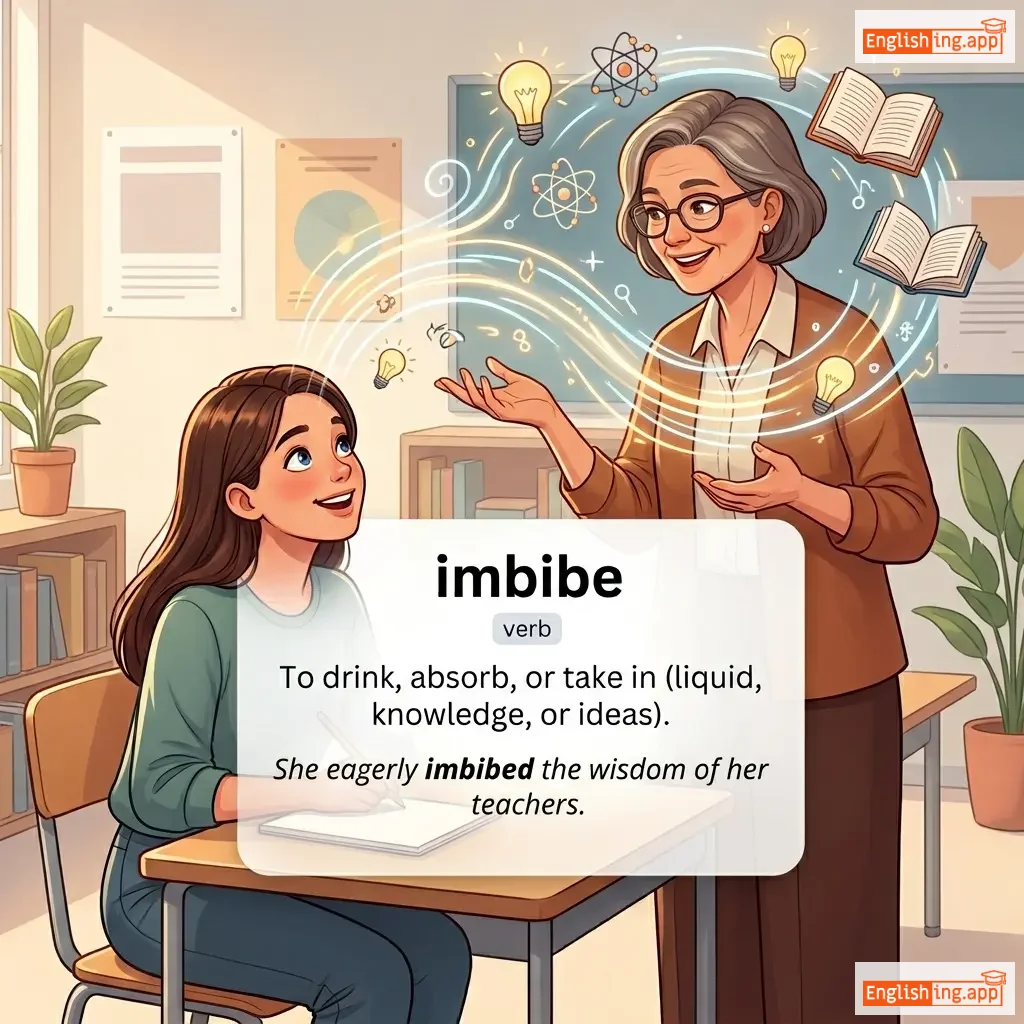
imbibe definition card — visual illustration of the meaning
verb C2
/ɪmˈbaɪb/
पान करना (pan karna)

To drink, absorb, or take in (liquid, knowledge, or ideas).

"She eagerly imbibed the wisdom of her teachers."

"वह अपने शिक्षकों से बुद्धिमता को उत्साह से आत्मसात करती थी।" (Vah apne shikshakon se buddhimta ko utsah se aatmsaat karti thi.)
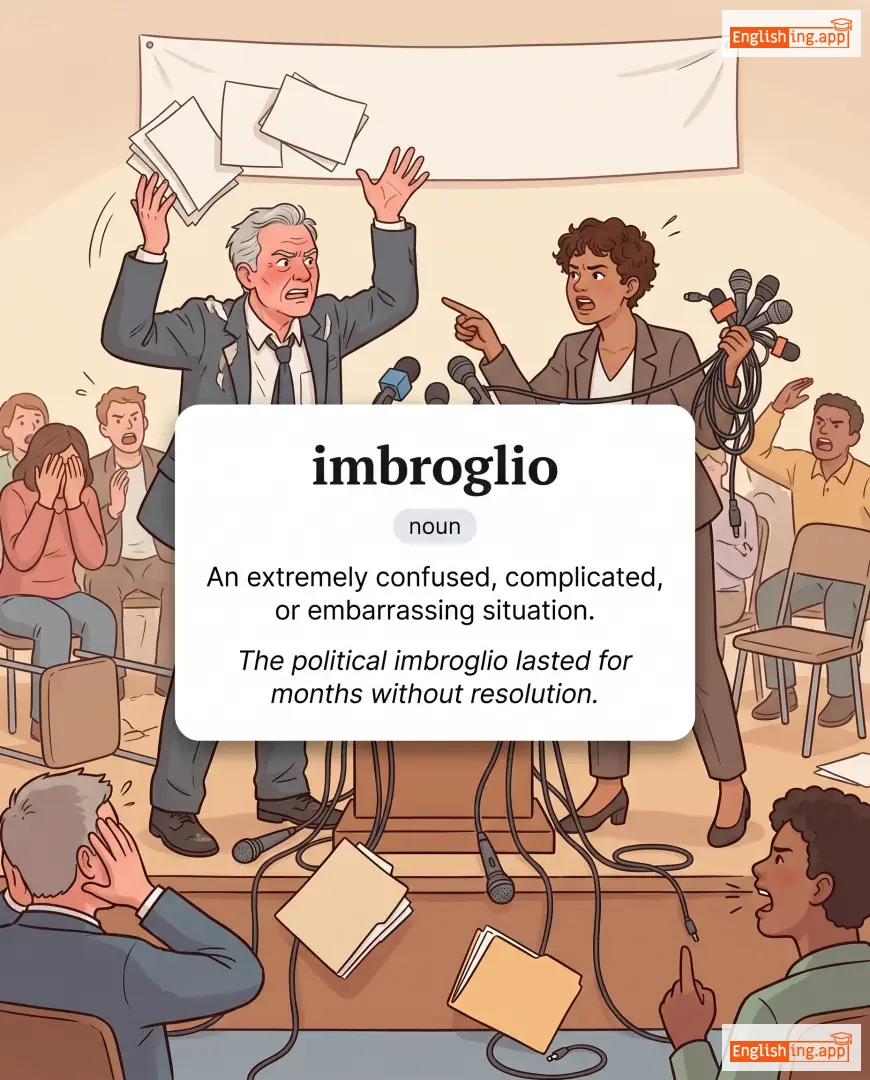
imbroglio definition card — visual illustration of the meaning
noun C2
/ɪmˈbroʊlioʊ/
उलझन (uljhan)

An extremely confused, complicated, or embarrassing situation.

"The political imbroglio lasted for months without resolution."

"राजनीतिक उलझन महीनों तक बिना किसी समाधान के चलती रही।" (Rajneetik uljhan mahino tak bina kisi samaadhan ke chalti rahi.)
verb C2
/ɪmˈbruː/
रंजित करना (ranjit karna)

To stain, especially with blood.

"His hands were imbrued with blood after the battle."

"युद्ध के बाद उसके हाथ खून से रंजित थे।" (Yudh ke baad uske haath khoon se ranjit the.)
noun C2
/ˈɪmɪˌteɪtər/
अनुकरणकर्ता (anukaranakarta)

a person who copies the behavior, style, or actions of others

"He became famous as an imitator of popular singers."

"वह एक लोकप्रिय गायक की नकल करने के कारण प्रसिद्ध हो गया।" (vah ek lokpriya gayak ki nakal karne ke kaaran prasiddh ho gaya.)
adjective C2
/ˈɪmənənt/
अंतर्निहित (antarnihit)

existing or operating within; inherent

"He believed that moral values are immanent in human nature."

"वह विश्वास करते थे कि नैतिक मूल्य मानव स्वभाव में अंतर्निहित हैं।" (Vah vishwas karte the ki naitik moolya manav swabhav mein antarnihit hain.)
adjective C2
/ˌɪməˈmɔːriəl/
प्राचीनकालीन (prachinkaleen)

Extending back beyond memory or record; ancient.

"The tradition has been followed since time immemorial."

"परंपरा समय के प्राचीन काल से अनुसरण की जाती है।" (Parampara samay ke prachin kaal se anusarhan ki jaati hai.)
adjective C2
/ɪˈmɪsəbl/
अविभाज्य (avibhajy)

Describes liquids that do not mix together.

"Oil and water are immiscible liquids."

"तेल और पानी अविभाज्य तरल पदार्थ हैं।" (Tel aur paani avibhajy taral padarth hain.)
noun C2
/ˌɪməʊˈbɪləti/
अचलता (achalata)

The state of being unable to move.

"After the accident, she suffered from immobility in her legs."

"दुर्घटना के बाद, उसे अपने पैरों में अचलता का सामना करना पड़ा।" (Durghatna ke baad, use apne pairon mein achalta ka samna karna pada.)
adjective C2
/ɪˈmɒdərət/
अत्यधिक (atyadhik)

excessive; beyond reasonable limits

"He has an immoderate love for sweets."

"उसकी मिठाइयों के प्रति अत्यधिक प्यार है।" (Uski mithaiyon ke prati atyadhik pyaar hai.)
immodest definition card — visual illustration of the meaning
adjective C2
/ɪˈmɒdɪst/
अक्खड़ / अशालीन (akkhad / ashaleen)

lacking humility or decency; excessively proud or improper

"His immodest remarks offended the audience."

"उसकी अक्खड़ टिप्पणी ने दर्शकों को आहत किया।" (Uski akkhad tipanni ne darshako ko aahat kiya.)
immodesty definition card — visual illustration of the meaning
noun C2
/ɪˈmɒdəsti/
अशालीनता (ashalinata)

lack of modesty or decency; behavior or attitude that is overly bold or improper

"The article was criticized for its tone of immodesty."

"लेख की अशालीनता के स्वर के लिए आलोचना की गई।" (lekh ki ashalinata ke swar ke liye aalochna ki gai)
verb C2
/ˈɪməleɪt/
बलिदान/आग में जलाना (balidan/aag mein jalana)

To kill or sacrifice, especially by burning.

"The protesters threatened to immolate themselves in front of the building."

"प्रदर्शनकारियों ने बिल्डिंग के सामने खुद को आग में जलाने की धमकी दी थी।" (Pradarshankariyon ne building ke samne khud ko aag mein jalane ki dhamki di thi.)
verb C2
/ɪˈmjʊər/
बंद करना (band karna)

to confine or enclose someone against their will

"The prisoner was immured in a dark cell."

"कैदी को अंधेरे सेल में बंद कर दिया गया था।" (Kaidi ko andhere sel mein band kar diya gaya tha.)
noun C2
/ɪmp/
छोटा शरारती दानव (chota shararati danav)

a small mischievous devil or sprite; a playful troublemaker

"The child was acting like a little imp, hiding his toys everywhere."

"बच्चा एक छोटे इम्प की तरह बर्ताव कर रहा था, अपने खिलौने हर जगह छिपा रहा था।" (Baccha ek chhote imp ki tarah bartav kar raha tha, apne khilone har jagah chhupa raha tha.)
verb C2
/ɪmˈpeɪl/
गो़दना (godna)

to pierce or fix something with a sharp object

"The knight was impaled by the enemy’s spear."

"योद्धा को दुश्मन के भाले से गो़द दिया गया था।" (Yoddha ko dushman ke bhale se god diya gaya tha.)
adjective C2
/ɪmˈpælpəbəl/
अस्पर्शनीय (asporshaniya)

unable to be felt by touch; difficult to grasp or understand

"There was an impalpable sense of fear in the room."

"कमरे में एक अस्पर्शनीय डर का अहसास था।" (Kamre mein ek asporshaniya dar ka ahsaas tha.)
adjective C2
/ɪmˈpæsɪbəl/
अकष्टवहनीय (akashtavahaniy)

Incapable of suffering or feeling pain (used mainly in theological or philosophical contexts).

"Some philosophers argue that God is impassible and cannot experience human emotions."

"कुछ दार्शनिकों का कहना है कि भगवान अकष्टवहनीय हैं और मानव भावनाएँ महसूस नहीं कर सकते।" (Kuch darshanikon ka kehna hai ki Bhagwan akashtavahaniy hain aur manav bhavnayein mehsoos nahi kar sakte.)
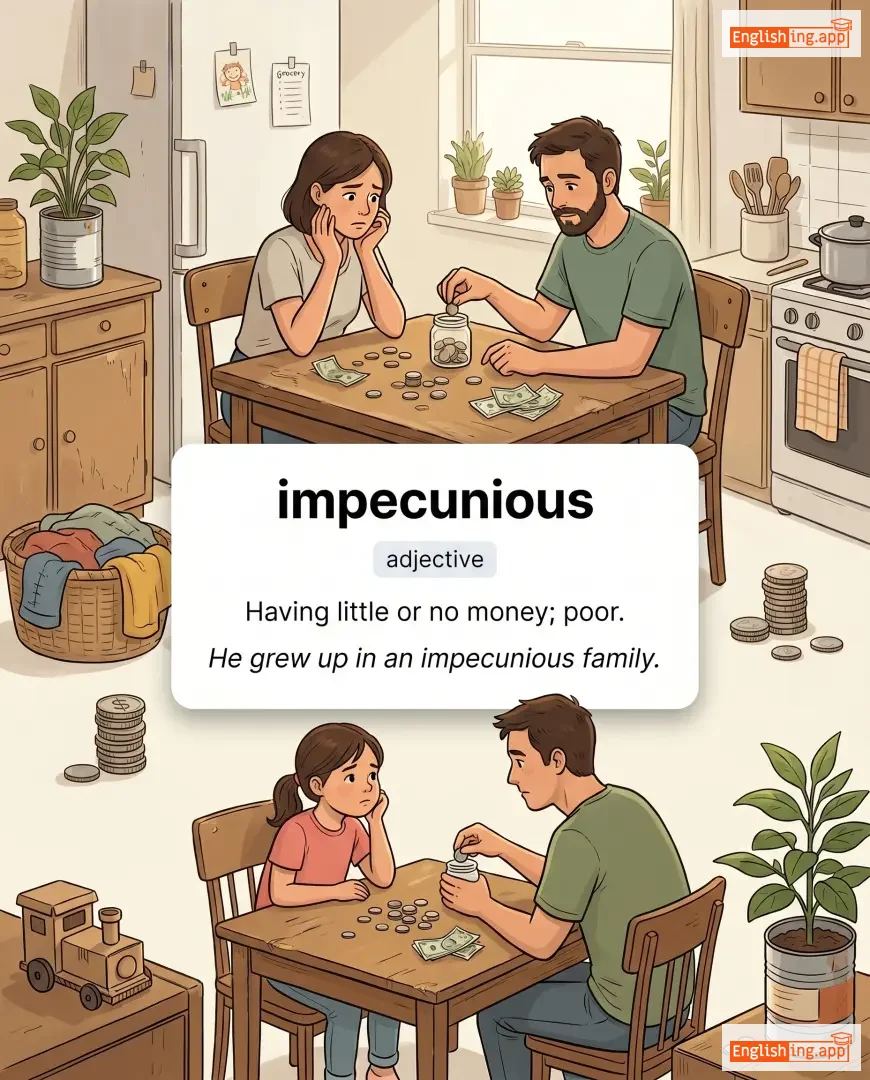
impecunious definition card — visual illustration of the meaning
adjective C2
/ˌɪmpɪˈkjuːniəs/
दरिद्र (daridr)

Having little or no money; poor.

"He grew up in an impecunious family."

"वह एक दरिद्र परिवार में पला बढ़ा।" (Vah ek daridr parivar mein pala badha.)
verb C2
/ɪmˈpɛnd/
आसन्न होना (aasann hona)

to be about to happen; to loom threateningly

"Dark clouds suggested that a storm was impeding."

"अंधेरे बादल यह सुझा रहे थे कि एक तूफान आ रहा था।" (Andhere baadal yah sujha rahe the ki ek toofan aa raha tha.)
adjective C2
/ɪmˈpɛn.ɪ.tənt/
अपराधीपूर्ण (apradhipurn)

Not feeling regret or shame about one's actions.

"The criminal remained impenitent after the trial."

"अदालत के बाद अपराधी अपराधिक रूप से अनुतप्त बना रहा।" (adalat ke baad apradhi apradhik roop se anutapt bana raha.)
adjective C2
/ˌɪm.pəˈfɛk.tə.bəl/
अपूर्णनीय (apurnaniyo)

Incapable of being made perfect or complete.

"Some human qualities are considered imperfectible."

"कुछ मानवीय गुण अपूर्णनीय माने जाते हैं।" (kuch manaviya gun apurnaniyo mane jate hain.)
adjective C2
/ɪmˈpɪəriəs/
घमंडी (ghamandi)

Arrogantly domineering or overbearing.

"Her imperious tone made it hard for others to argue."

"उसका घमंडी स्वर दूसरों के लिए तर्क करना मुश्किल बना देता था।" (Uska ghamandi swar dusron ke liye tark karna mushkil bana deta tha.)
adjective C2
/ɪmˈperɪʃəbəl/
अविनाशी; शाश्वत; अमर (avinaashi; shaashvat; amar)

not subject to decay; lasting forever; eternal

"The imperishable beauty of classical art continues to inspire generations."

"क्लासिकल कला की अविनाशी सुंदरता पीढ़ी दर पीढ़ी प्रेरित करती रहती है।" (klassikal kala ki avinaashi sundarta peedhi dar peedhi prerit karti rahti hai.)
adjective C2
/ˌɪmpəˈmɪsəbl/
अस्वीकृत (asweekrit)

Not permitted or allowed.

"Such behavior is impermissible in the workplace."

"ऐसा व्यवहार कार्यस्थल पर अस्वीकृत है।" (Aisa vyavhaar karyasthal par asweekrit hai.)
adjective C2
/ɪmˌpɜːrˈsweɪdəbl/
अप्रेर्य (apreya)

not able to be convinced or persuaded

"She remained impersuadable despite all our arguments."

"हमारे सभी तर्कों के बावजूद वह अप्रेर्य बनी रही।" (Hamare sabhi tarkon ke bawajood vah apreya bani rahi.)
noun C2
/ɪmˌpɜːrtərbəˈbɪləti/
अविचलता (avichalta)

The quality of being calm and not easily disturbed or upset.

"Her imperturbability during the crisis impressed everyone."

"संकट के दौरान उसकी अविचलता ने सभी को प्रभावित किया।" (Sankat ke dauran uski avichalta ne sabhi ko prabhavit kiya.)
imperturbable definition card — visual illustration of the meaning
adjective C2
/ɪmˈpɜːrtərbəbəl/
अडिग (adig)

Unable to be upset or excited; calm.

"He remained imperturbable even when faced with tough questions."

"वह कठिन सवालों का सामना करने के बावजूद भी शांत बना रहा।" (Vah kathin sawalon ka samna karne ke baawajood bhi shaant bana raha.)
noun C2
/ˌɪmpəˈtjuːəsəti/
आकस्मिकता (aaksmikta)

The quality of being rash or impulsive.

"His impetuosity often got him into trouble."

"उसकी आकस्मिकता अक्सर उसे मुसीबत में डाल देती थी।" (Uski aaksmikta aksar use musibat mein daal deti thi.)
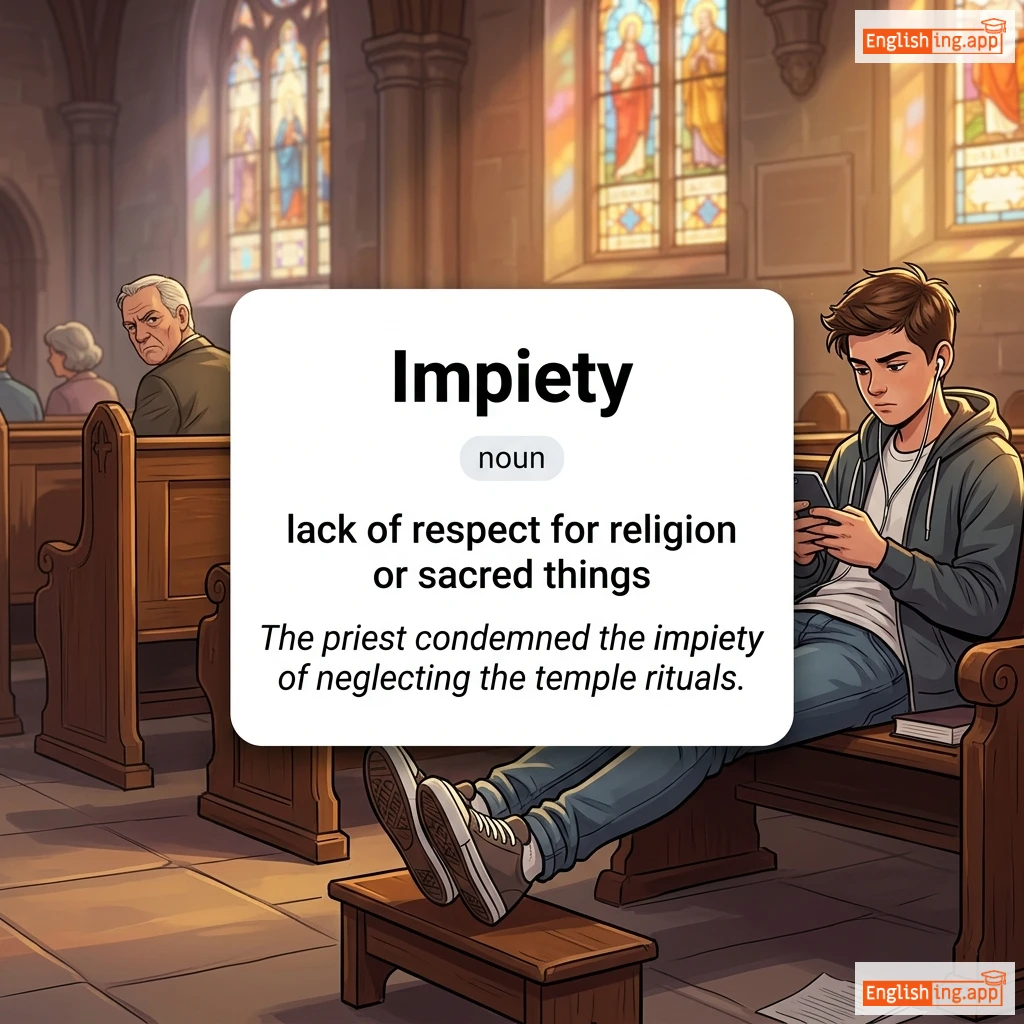
Impiety definition card — visual illustration of the meaning
noun C2
/ɪmˈpaɪəti/
अधर्मिता (adharmita)

lack of respect for religion or sacred things

"The priest condemned the impiety of neglecting the temple rituals."

"पुरोहित ने मंदिर की अनुष्ठान की उपेक्षा करने की अधर्मिता की निंदा की।" (Purohit ne mandir ki anushthan ki apeksha karne ki adharmita ki ninda ki.)
adjective C2
/ˈɪmpɪəs/
पापी (papi)

showing a lack of respect for God or religion

"It was considered impious to joke about sacred traditions."

"पवित्र परंपराओं के बारे में मजाक करना पापी माना जाता था।" (Pavitra paramparāon ke baare mein mazaak karna paapi mānā jātā thā.)
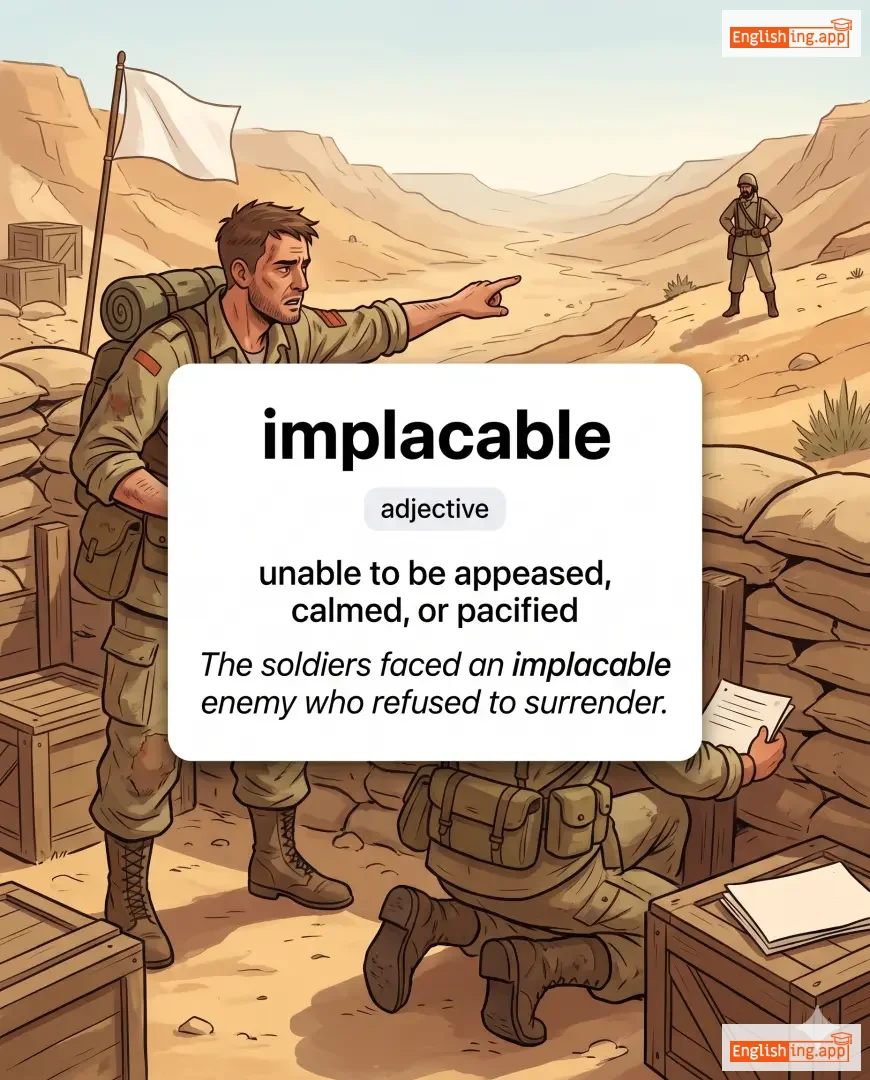
implacable definition card — visual illustration of the meaning
adjective C2
/ɪmˈplækəbl/
अडिग (adig)

unable to be appeased, calmed, or pacified

"The soldiers faced an implacable enemy who refused to surrender."

"सैनिकों को एक अडिग दुश्मन का सामना करना पड़ा जो समर्पण करने से इंकार कर दिया।" (Sainiko ko ek adig dushman ka samna karna pada jo samarpan karne se inkaar kar diya.)
adjective C2
/ɪmˈplaɪəbl/
सुझाया जा सकने योग्य (sujhaya ja sakne yogya)

Capable of being implied or suggested.

"The meaning of the statement is not directly clear but is impliable from the context."

"वह कथन का अर्थ सीधे तौर पर स्पष्ट नहीं है, लेकिन संदर्भ से सुझाया जा सकता है।" (Vah kathan ka arth sidhe taur par spashth nahi hai, lekin sandarbh se sujhaya ja sakta hai.)
adjective C2
/ɪmˈpɑːlɪtɪk/
अविचारपूर्ण (avicharpurn)

Unwise or imprudent; not showing good judgment.

"It would be impolitic to criticize them openly."

"उन्हें खुलेआम आलोचना करना अविचारपूर्ण होगा।" (Unhe khule aam aalochana karna avicharpurn hoga.)
adjective C2
/ɪmˈpɒndərəbl̩/
अपरिमेय (apariyemey)

Something difficult or impossible to estimate, assess, or understand

"The outcome of the election depends on many imponderable factors."

"चुनाव के परिणाम कई अपरिमेय कारकों पर निर्भर करते हैं।" (Chunav ke parinaam kai apariyemey kaarkon par nirbhar karte hain.)
adjective C2
/ɪmˈpɔːrtʃənət/
अत्यधिक अनुरोध करने वाला (atyadhik anurodh karne wala)

Persistent to the point of annoyance or intrusion

"The importunate salesman kept calling despite repeated refusals."

"अत्यधिक अनुरोध करने वाला विक्रेता बार-बार अस्वीकृत होने के बावजूद फोन करता रहा।" (Atyadhik anurodh karne wala vikreta baar-baar asweekrit hone ke bawajood phone karta raha.)
verb C2
/ˌɪmpɔːrˈtuːn/
जोर देकर निवेदन करना (jor dekar nivedan karna)

To ask someone persistently or pressingly for something

"The child importuned his mother for a new toy."

"बच्चे ने अपनी माँ से एक नया खिलौना लेने के लिए बार-बार निवेदन किया।" (Bacche ne apni maan se ek naya khilona lene ke liye baar-baar nivedan kiya.)
verb C2
/ˌɪmpɔːrˈtuːnd/
बार-बार विनती करना (baar-baar vinti karna)

asked someone persistently and pressingly for something

"She importuned her boss for a raise until he finally gave in."

"वह अपने बॉस से तनख्वाह बढ़ाने के लिए बार-बार विनती करती रही, जब तक कि उसने अंततः हां नहीं कह दिया।" (Vah apne boss se tankhwaah badhane ke liye baar-baar vinti karti rahi, jab tak ki usne antatah haan nahi keh diya.)
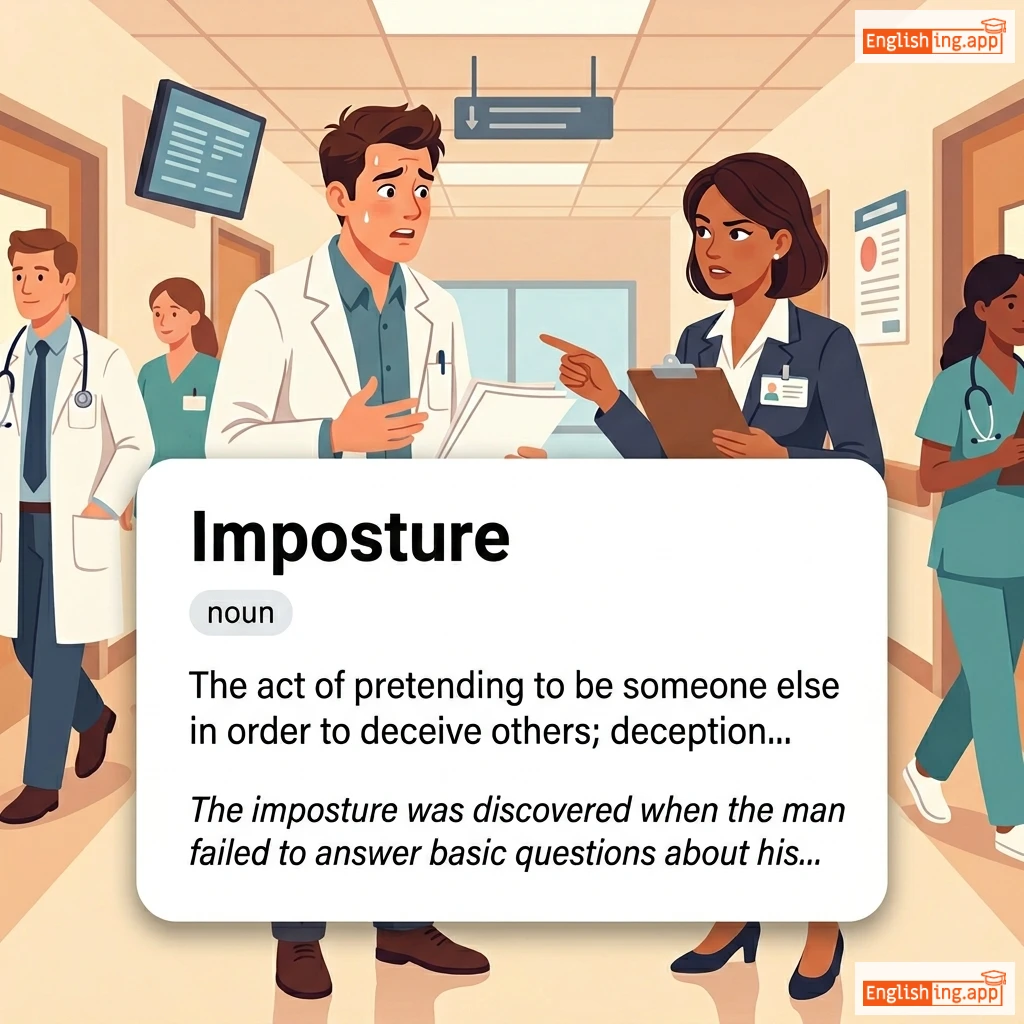
Imposture definition card — visual illustration of the meaning
noun C2
/ɪmˈpɒstʃər/
धोखाधड़ी (dhokhadhadi)

The act of pretending to be someone else in order to deceive others; deception or fraud.

"The imposture was discovered when the man failed to answer basic questions about his supposed identity."

"धोखाधड़ी का पता तब चला जब आदमी अपनी कथित पहचान के बारे में बुनियादी सवालों का उत्तर नहीं दे सका।" (Dhokhadhadi ka pata tab chala jab aadmi apni kathit pehchaan ke baare mein buniyaadi sawaalon ka uttar nahi de saka.)
adjective C2
/ɪmˈpræktɪkəbl/
अव्यवहारिक (avyavaharik)

Not capable of being carried out or put into practice.

"The plan seemed impracticable due to limited resources."

"संसाधनों की कमी के कारण योजना अव्यवहारिक प्रतीत हो रही थी।" (Sansadhanon ki kami ke karan yojna avyavaharik prateet ho rahi thi.)
verb C2
/ˈɪmprɪkeɪt/
शाप देना (shaap dena)

To utter a curse or invoke evil upon someone.

"The old woman imprecated her enemies with dark words."

"वृद्ध महिला ने अपने दुश्मनों को काले शब्दों से शाप दिया।" (Vruddh mahila ne apne dushmanon ko kaale shabdon se shaap diya.)
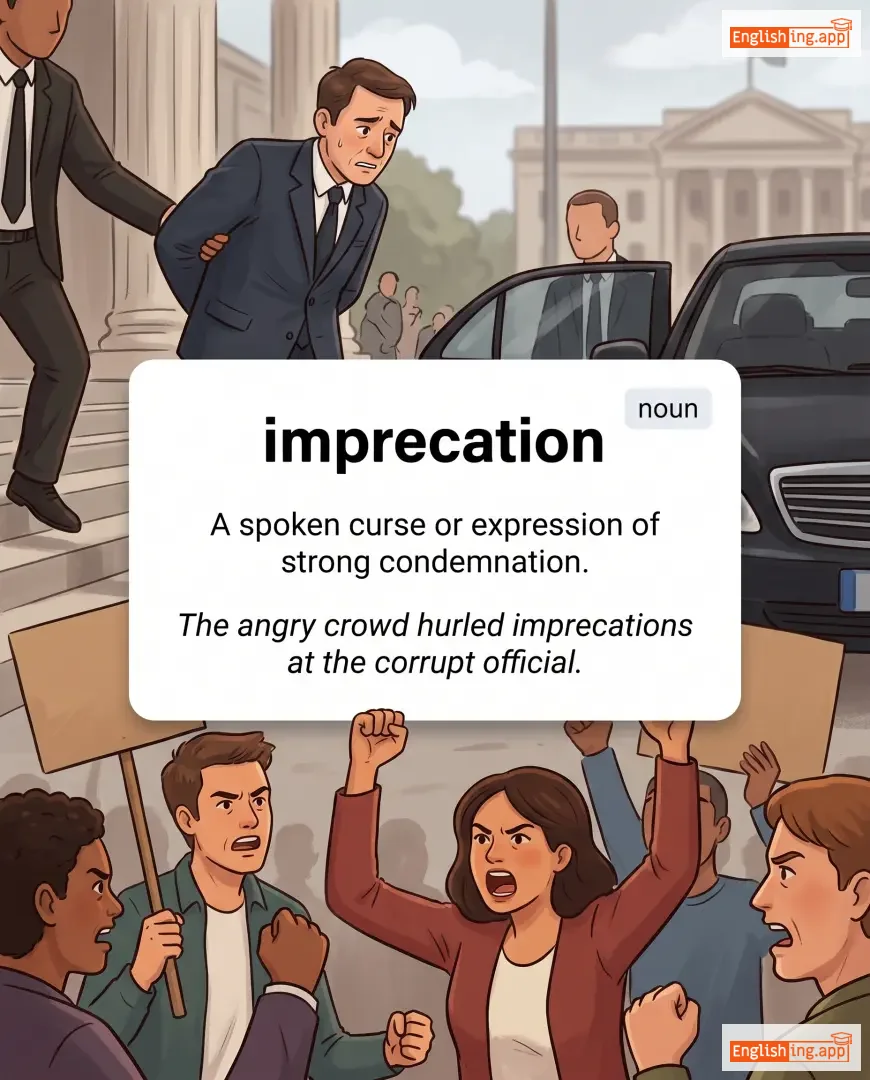
imprecation definition card — visual illustration of the meaning
noun C2
/ˌɪmprɪˈkeɪʃən/
शाप (shaap)

A spoken curse or expression of strong condemnation.

"The angry crowd hurled imprecations at the corrupt official."

"गुस्साए हुए जनसमूह ने भ्रष्ट अधिकारी पर शाप फेंके।" (Gussaye hue jansamuh ne bhrasht adhikari par shaap pheanke.)
adjective C2
/ɪmˈprɛɡnəbl̩/
अजेय (ajey)

Unable to be captured, broken into, or defeated.

"The fortress was considered impregnable by the enemy."

"किले को दुश्मन ने अजेय समझा था।" (Kile ko dushman ne ajey samjha tha.)
verb C2
/ˈɪmprɛɡneɪt/
गर्भवती करना / सिक्त करना (garbhvati karna / sikt karna)

To make pregnant; to fill or saturate with something.

"The scientist used a method to impregnate the material with resin."

"विज्ञानी ने रेजिन के साथ सामग्री को इम्प्रेगनेट करने के लिए एक विधि का उपयोग किया।" (Vigyani ne rejin ke saath samagri ko impregnet karne ke liye ek vidhi ka upyog kiya.)
noun C2
/ˌɪmprəˈsɑːrioʊ/
आयोजक (aayojak)

A person who organizes or finances concerts, plays, or operas.

"The impresario arranged a series of concerts for the rising star."

"इम्प्रेसारियो ने उभरते हुए सितारे के लिए एक श्रृंखला का आयोजन किया।" (Impresario ne ubharta hua sitare ke liye ek shrankhla ka aayojan kiya.)
noun C2
/ˌɪmprɪˈmɑːtər/
आधिकारिक स्वीकृति (aadhikaarik sweekriti)

An official license or approval, especially to publish a book.

"The book was released with the official imprimatur of the church."

"पुस्तक को चर्च की आधिकारिक स्वीकृति के साथ प्रकाशित किया गया था।" (Pustak ko church ki aadhikaarik sweekriti ke saath prakaashit kiya gaya tha.)
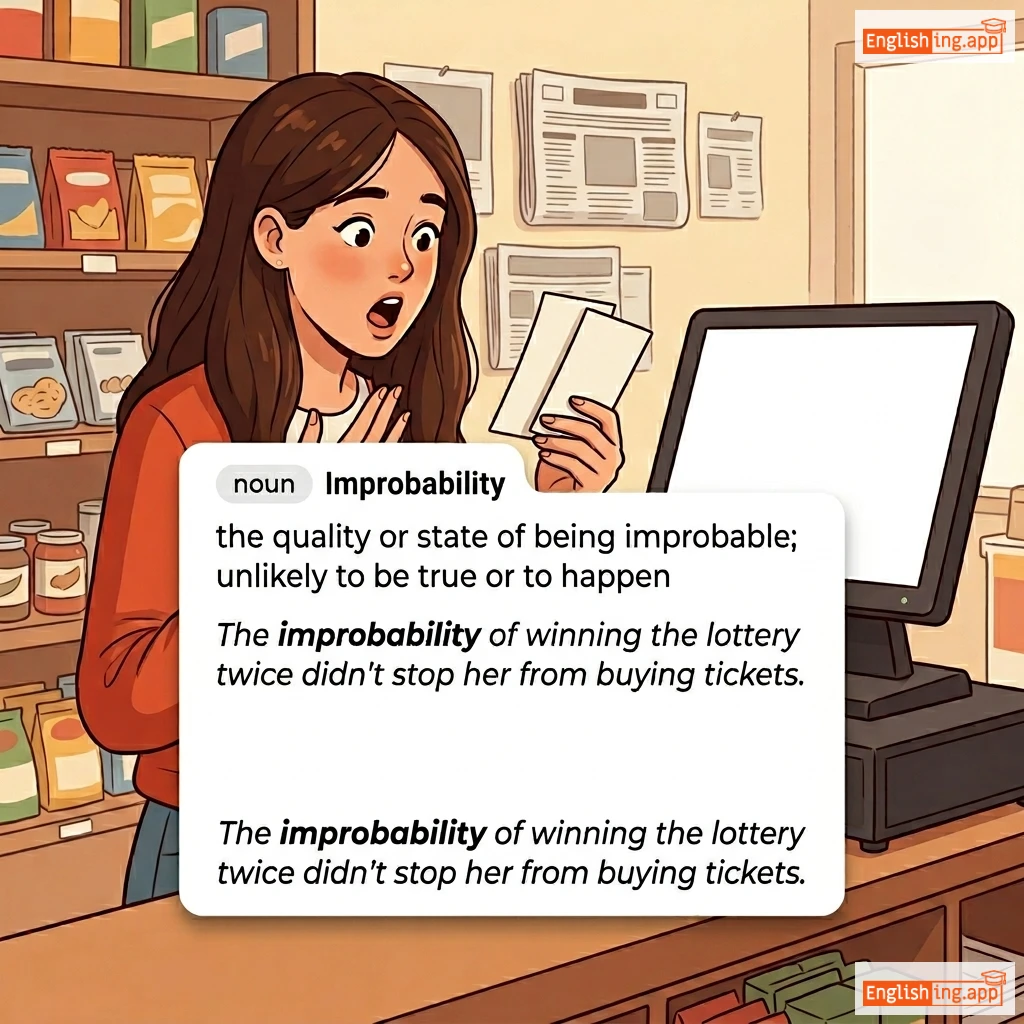
Improbability definition card — visual illustration of the meaning
noun C2
/ɪmˌprɒb.əˈbɪl.ə.ti/
असंभावना (asambhavna)

the quality or state of being improbable; unlikely to be true or to happen

"The improbability of winning the lottery twice didn't stop her from buying tickets."

"लॉटरी दोबारा जीतने की असंभावना ने उसे टिकट खरीदने से नहीं रोका।" (lottery dobaara jeetne ki asambhavna ne use ticket kharidne se nahi roka.)
noun C2
/ˌɪmprəˈpraɪəti/
अशिष्टता (ashishtata)

Failure to observe standards of honesty or modesty; improper behavior.

"The politician was accused of financial impropriety."

"राजनेता पर वित्तीय अशिष्टता का आरोप लगाया गया था।" (Rajneta par vittiya ashishtata ka aarop lagaya gaya tha.)
noun C2
/ɪmˈprɑːvɪdəns/
अविचारिता (avicharita)

Lack of foresight or care for future needs.

"His improvidence led to financial difficulties."

"उसकी अविचारिता ने उसे वित्तीय समस्याओं में डाल दिया।" (Uski avicharita ne use vittiya samasyaon mein daal diya.)
adjective C2
/ɪmˈprɒvɪdənt/
अज्ञानी (ajnyani)

Not having or showing foresight; spending wastefully or without thought for the future.

"His improvident habits left him with no savings."

"उसकी अज्ञानी आदतों ने उसे बिना बचत के छोड़ दिया।" (uski ajnyani aadaton ne use bina bachat ke chhod diya.)
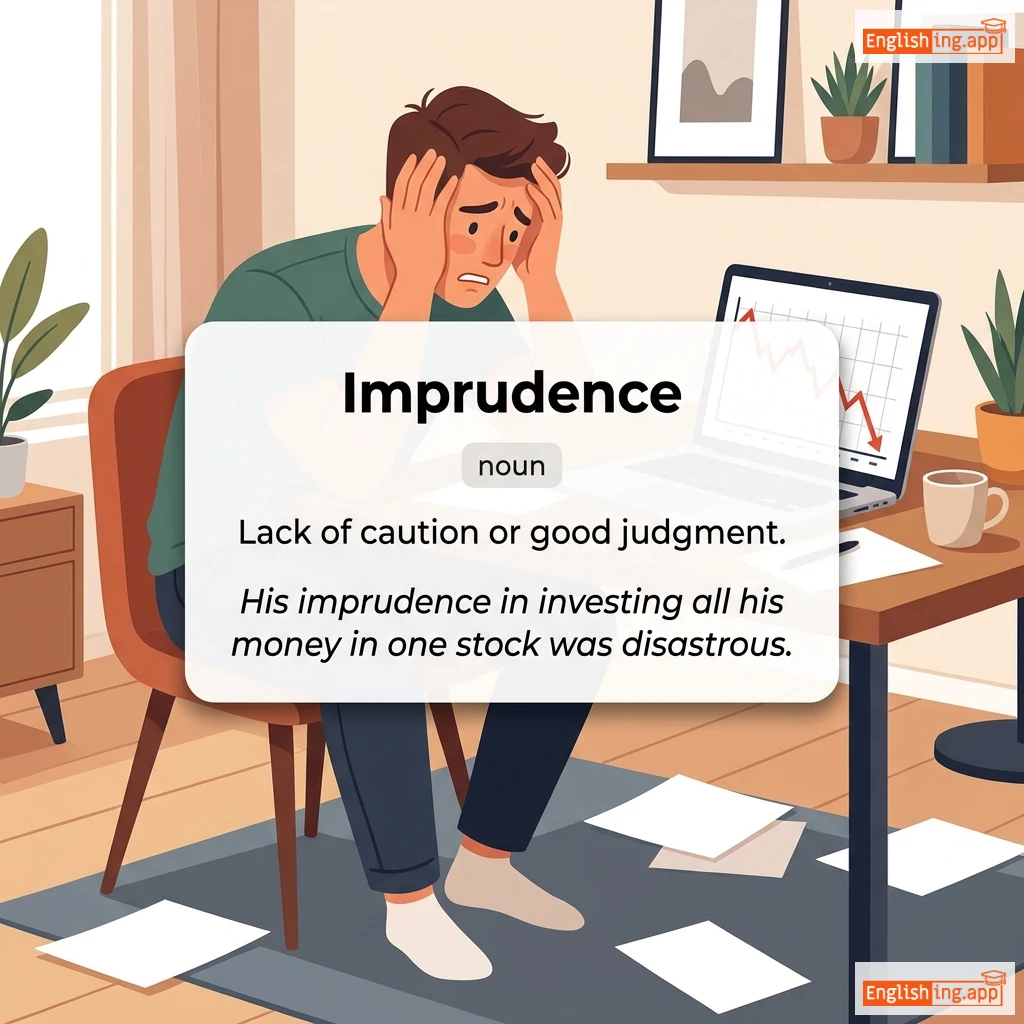
Imprudence definition card — visual illustration of the meaning
noun C2
/ɪmˈpruːdəns/
अविवेक (avivek)

Lack of caution or good judgment.

"His imprudence in investing all his money in one stock was disastrous."

"उसका एक स्टॉक में अपना सारा पैसा निवेश करने का अविवेक विनाशकारी था।" (uska ek stock mein apna saara paisa nivesh karne ka avivek vinashkari tha.)