Vocabulaires

Découvrez, apprenez et maîtrisez le vocabulaire anglais

adjective C2
/hɪk/
乡巴佬; 农民 (xiangba lao; nongmin)

unsophisticated person from a rural area; country bumpkin

"He had a hick accent from growing up in a small town."

"他有着乡巴佬的口音,因为他在一个小镇长大。" (Ta youzhe xiangba lao de kouxin, yinwei ta zai yige xiaozhen zhǎngdà.)
adjective C2
/ˈhaɪd.baʊnd/

unwilling or unable to change because of tradition or convention

"He is too hidebound to accept new ideas."

verb C2
/haɪ/
赶快去 (gankuai qu)

to go quickly; hasten

"He hied to the station to catch the train."

"他赶快去车站赶火车。" (Ta gankuai qu chezhan gan huoche.)
noun C2
/ˈhaɪərəˌɡlɪf/
象形文字 (xiangxing wenzi)

A picture or symbol used in ancient writing systems, especially Egyptian writing.

"The walls of the temple were covered in hieroglyphs."

"寺庙的墙壁上覆盖着象形文字。" (Simiào de qiángbì shàng fùgài zhe xiàngxíng wénzì.)
adjective/noun C2
/ˌhaɪərəˈɡlɪfɪk/
象形文字的 (xiangxing wenzi de)

Relating to or written in hieroglyphs; symbols or writing that is difficult to understand.

"The archaeologists studied the hieroglyphic inscriptions carefully."

"考古学家仔细研究了象形文字铭文。" (Kaoguxuejia zixi yanjiu le xiangxing wenzi mingwen.)
adjective C2
/ˌhaɪ ˈfloʊn/
夸张的 (kuāzhāng de)

Using fancy or pretentious language; lofty in style but often overblown.

"The politician gave a high-flown speech full of promises."

"那位政治家发表了一篇充满承诺的夸张演讲。" (Nà wèi zhèngzhìjiā fābiǎo le yī piān chōngmǎn chéngnuò de kuāzhāng yǎnjiǎng.)
adjective C2
/ˈhaɪˌbraʊ/
知识分子 (zhīshi fēnzǐ)

intellectually superior or cultured; often describing art, literature, or activities appealing to intellectual tastes

"The museum is known for its highbrow exhibitions."

"该博物馆以其知识分子展览而闻名。" (Gāi bówùguǎn yǐ qí zhīshi fēnzǐ zhǎnlǎn ér wénmíng.)
noun C2
/hɪˈlærɪti/
爆笑 (baoxiao)

Extreme amusement, especially when expressed by laughter.

"The movie caused great hilarity among the audience."

"这部电影在观众中引起了极大的爆笑。" (Zhè bù diànyǐng zài guānzhòng zhōng yǐnqǐle jí dà de bàoxiào.)
noun C2
/ˈhɪlək/
小丘 (xiao qiu)

A small hill or mound.

"The children climbed up the grassy hillock to watch the sunset."

"孩子们爬上了草地上的小丘去看日落。" (Haizimen pa shang le caodi shang de xiao qiu qu kan riluo.)
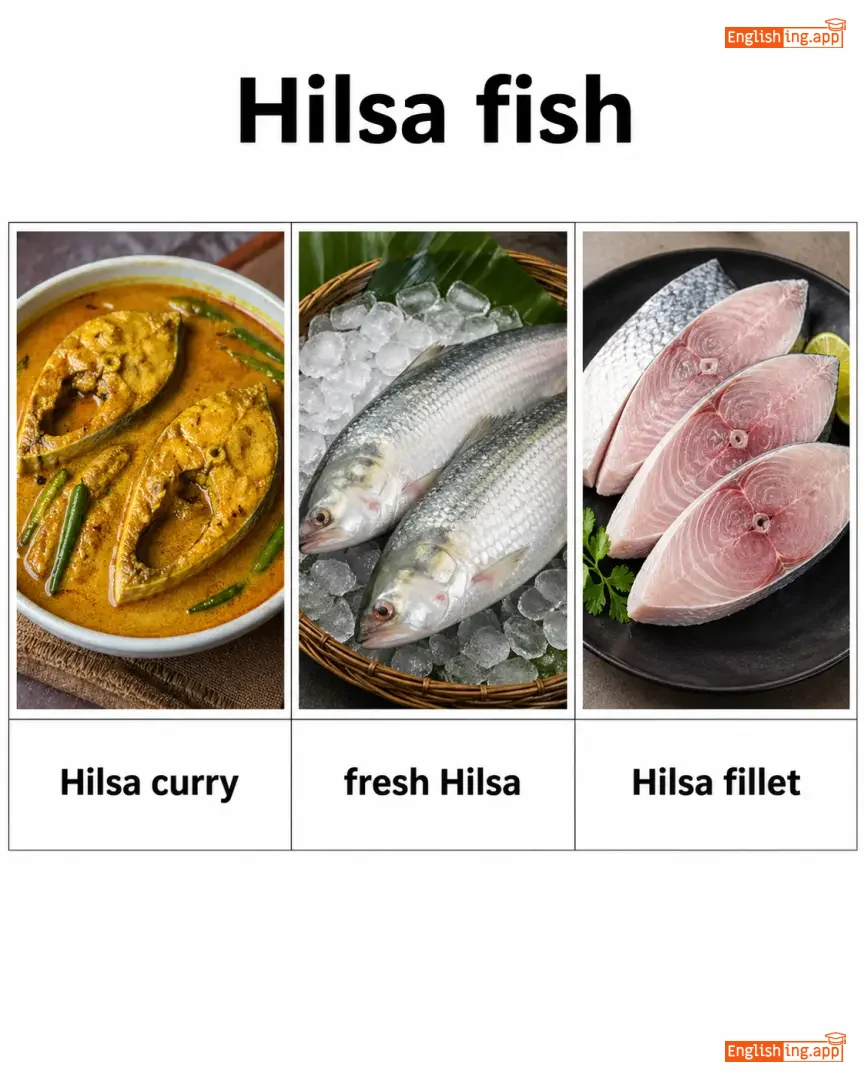
Hilsa fish definition card — visual illustration of the meaning
noun C2
/ˈhɪl.sə fɪʃ/
Hilsa鱼 (Hilsa yú)

a popular fish species found in South Asian rivers, especially prized in Bengali cuisine

"Hilsa fish is considered a delicacy in Bengali culture."

"Hilsa鱼在孟加拉文化中被视为美味佳肴。" (Hilsa yú zài mèngjiālā wénhuà zhōng bèi shì wéi měiwèi jiāyáo.)
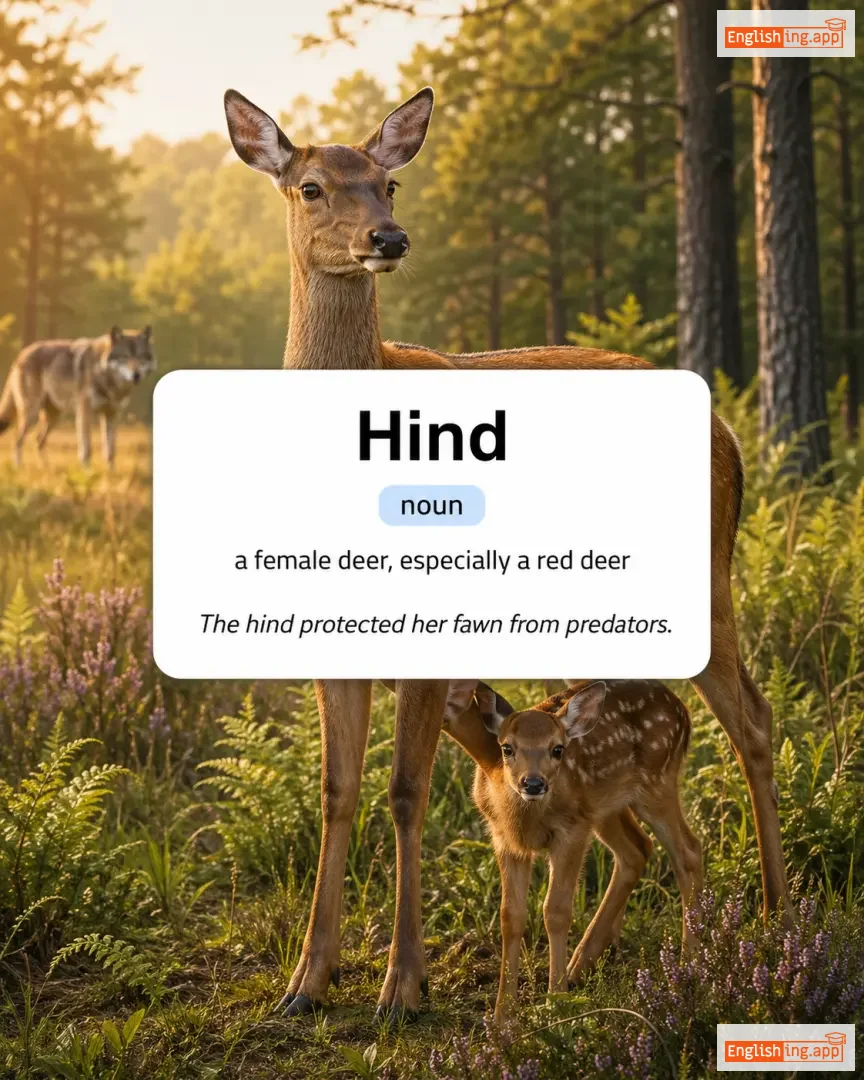
Hind definition card — visual illustration of the meaning
🦌♀️

Hind (haind)

noun C2
/haɪnd/
母鹿 (mu lu)

a female deer, especially a red deer

"The hind protected her fawn from predators."

"母鹿保护了她的小鹿免受捕食者的伤害。" (Mu lu baohu le ta de xiao lu mian shou bushizhe de shanghai.)
adjective C2
/ˈhaɪndmoʊst/
最远的 (zuì yuǎn de)

Farthest back; last in position.

"The hindmost car in the convoy broke down first."

"车队中最远的车先坏了。" (Chēduì zhōng zuì yuǎn de chē xiān huài le.)
noun C2
/ˈhaɪərlɪŋ/
雇佣者 (gù yōng zhě)

A person who works for payment only, often with little loyalty or principle.

"The mercenary was dismissed as just a hireling with no real loyalty."

"雇佣兵被解雇,只是一个没有真正忠诚的雇佣者。" (Gù yōng bīng bèi jiěgù, zhǐshì yīgè méiyǒu zhēnzhèng zhōngchéng de gù yōng zhě.)
hirsute definition card — visual illustration of the meaning
adjective C2
/ˈhɜːrsuːt/

Having a lot of hair, especially in an unusual place.

"The hirsute man stood out in the crowd with his long beard."

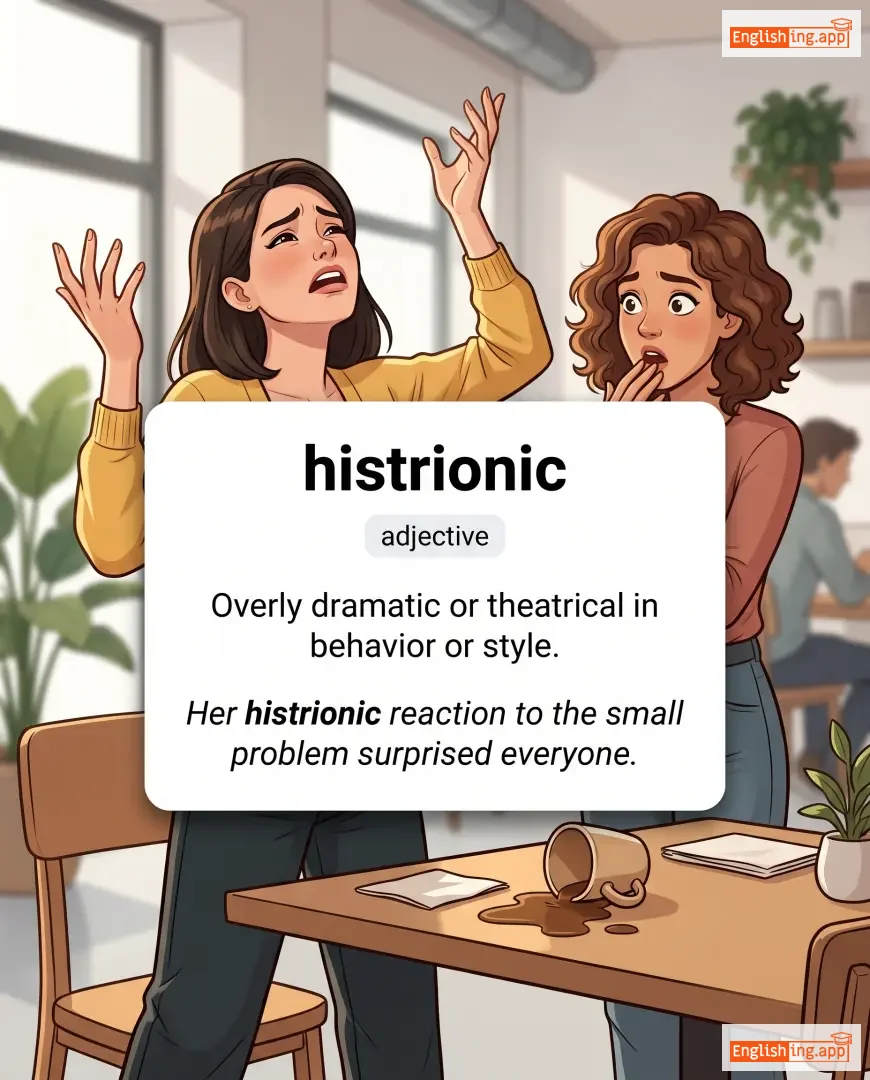
histrionic definition card — visual illustration of the meaning
adjective C2
/ˌhɪstriˈɒnɪk/

Overly dramatic or theatrical in behavior or style.

"Her histrionic reaction to the small problem surprised everyone."

adjective C2
/ˈhɔːri/
灰色的, 古老的 (huī sè de, gǔ lǎo de)

gray or white with age; very old and respected

"The hoary oak tree stood as a witness to centuries of history."

"那棵古老的橡树作为世纪历史的见证者伫立。" (Nà kē gǔlǎo de xiàng shù zuòwéi shìjì lìshǐ de jiànzhèng zhě zhù lì.)
verb C2
/ˈhɑːbəl/
蹒跚 (pán shān)

to walk awkwardly with difficulty, usually due to injury

"He hobbled across the room after twisting his ankle."

"他在扭伤脚踝后,蹒跚地走过房间。" (Tā zài niǔ shāng jiǎohuái hòu, pán shān de zǒu guò fángjiān.)
noun C2
/ˈhɒdʒ.pɒdʒ/
混杂物 (hùn zá wù)

A confusing mixture of different things; a jumble.

"The essay was a hodgepodge of unrelated ideas."

"这篇文章是一些不相关的想法的混杂物。" (Zhè piān wénzhāng shì yīxiē bù xiāngguān de xiǎngfǎ de hùn zá wù.)
noun C2
/hoʊ/
锄头 (chutou)

a gardening tool with a thin metal blade used for breaking up soil and removing weeds

"The farmer used a hoe to remove weeds from his vegetable garden."

"农夫使用锄头从他的蔬菜园中移除杂草。" (Nongfu shiyong chutou cong tade shucai yuan zhong yichu zakao.)
noun C2
/hɔːɡ plʌm/
豺果 (chái guǒ)

tropical fruit with yellow skin and sour taste

"Hog plums are often used to make pickles and chutneys."

"豺果常用于制作腌制食品和酸辣酱。" (Chái guǒ cháng yòng yú zhìzuò yānzhì shípǐn hé suānlàjiàng.)
noun C2
/ˈhɒɡz.hɛd/
大桶 (da tong)

A large cask or barrel, traditionally used for storing liquids like wine or beer.

"The cellar was filled with hogsheads of ale."

"地下室里堆满了啤酒的大桶。" (Dixia shi li dui man le pijiu de da tong.)
noun C2
/ˈhoʊl.stər/
枪套 (qiāng tào)

A holder or case for carrying a gun, typically worn on a belt or shoulder.

"The sheriff kept his revolver in a leather holster."

"警长将他的左轮手枪放在皮革枪套里。" (Jǐngzhǎng jiāng tā de zuǒlún shǒuqiāng fàng zài pígé qiāng tào lǐ.)
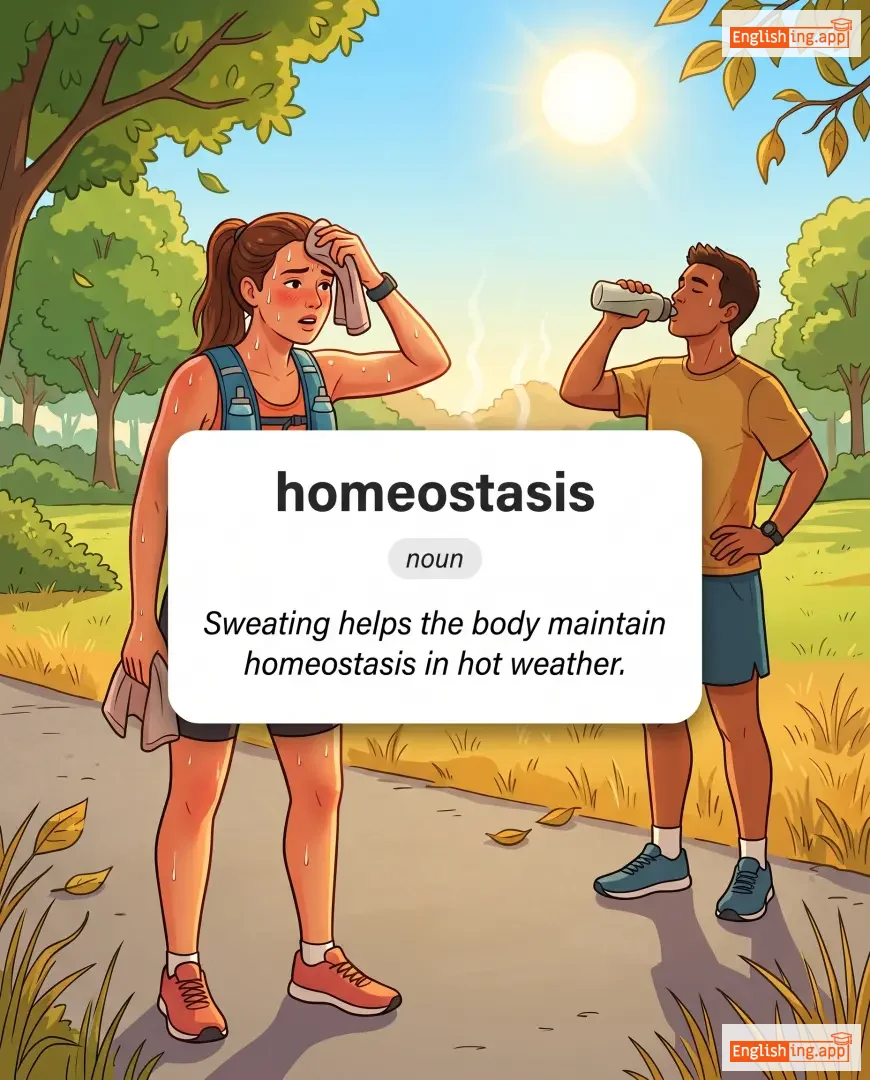
homeostasis definition card — visual illustration of the meaning
noun C2
/ˌhoʊmi.oʊˈsteɪsɪs/
体内平衡 (tǐ nèi píng héng)

The ability of a living system or organism to maintain internal stability despite changes in external conditions.

"Sweating helps the body maintain homeostasis in hot weather."

"出汗有助于身体在炎热天气中保持体内平衡。" (Chū hàn yǒuzhù yú shēntǐ zài yánrè tiānqì zhōng bǎochí tǐ nèi píng héng.)
adjective C2
/ˈhoʊm.spʌn/
家制 (jiazhi)

Simple and unsophisticated; made at home rather than in a factory.

"She wore a homespun dress to the village festival."

"她穿着家制的衣服去参加村里的节日庆典。" (Tā chuānzhuó jiāzhì de yīfú qù cānjiā cūn lǐ de jiérì qìngdiǎn.)
Homily definition card — visual illustration of the meaning
noun C2
/ˈhɑː.mə.li/
讲道 (jiangdao)

A religious or moral lecture; a sermon.

"The priest delivered a touching homily on kindness."

"牧师讲了一个感人的讲道,讲的是仁慈。" (Mùshī jiǎngle yīgè gǎn rén de jiǎngdào, jiǎng de shì réncí.)
noun C2
/ˌhoʊmə.dʒəˈniːəti/

The quality or state of being all the same or all of the same kind.

"The cultural homogeneity of the village made it feel unified."

verb C2
/həˈmɑː.dʒə.naɪz/
同质化 (tóngzhì huà)

To make uniform or similar by blending or mixing different elements.

"The company tried to homogenize its products across global markets."

"公司尝试在全球市场上使其产品同质化。" (Gōngsī chángshì zài quánqiú shìchǎng shàng shǐ qí chǎnpǐn tóngzhì huà.)
adjective C2
/həˈmɑː.lə.ɡəs/
同源的 (结构) (tóng yuán de (jié gòu))

Having the same relation, relative position, or structure, especially due to evolutionary origin.

"The wings of bats and the arms of humans are homologous structures."

"蝙蝠的翅膀和人类的手臂是同源结构。" (Biānfú de chìbǎng hé rénlèi de shǒubì shì tóngyuán jiégòu.)
noun C2
/ˌɒnəˈreəriəm/
酬金 (chóujīn)

A payment given for professional services that are rendered without a fee.

"The guest lecturer received an honorarium for her talk."

"那位客座讲师因其讲座而获得了酬金。" (Nà wèi kèzuò jiǎngshī yīn qí jiǎngzuò ér huòdéle chóujīn.)
verb C2
/ˈhʊdwɪŋk/
欺骗 (qīpiàn)

To deceive or trick someone.

"The scammer hoodwinked many people with false promises."

"骗子用虚假的承诺欺骗了许多人。" (Piànzi yòng xūjiǎ de chéngnuò qīpiànle xǔduō rén.)
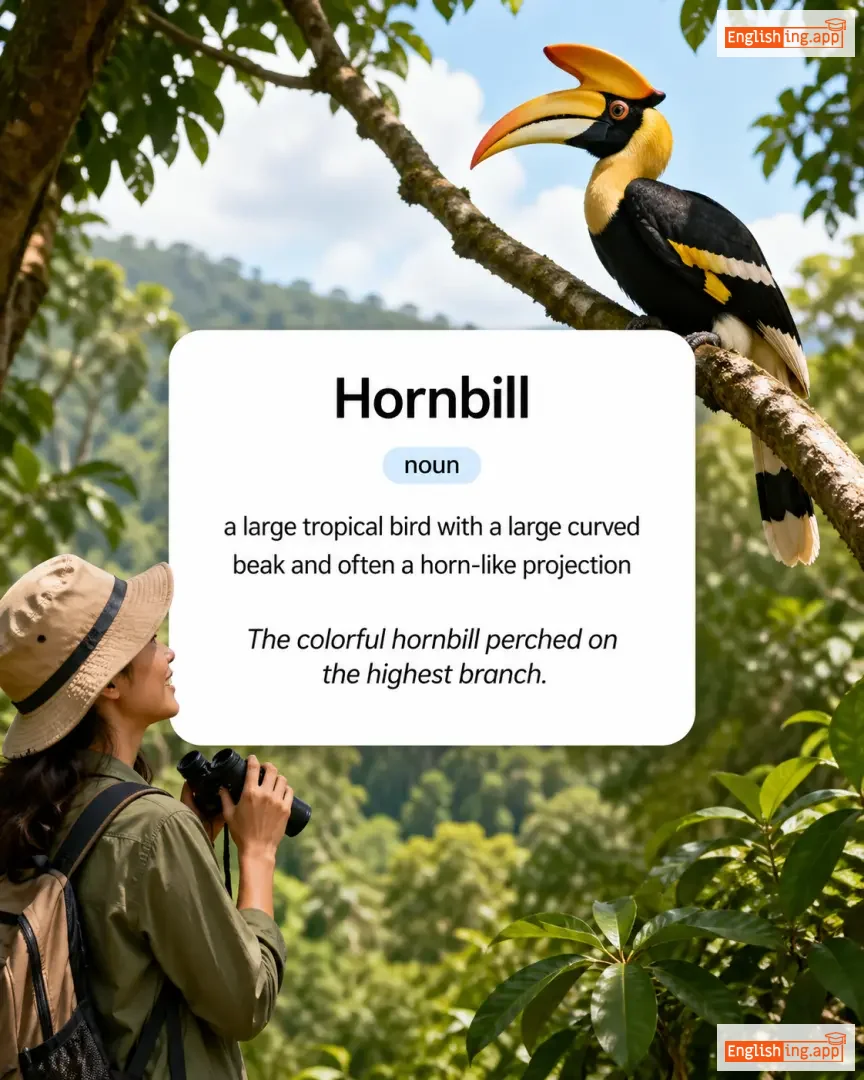
Hornbill definition card — visual illustration of the meaning
noun C2
/ˈhɔːrn.bɪl/
角嘴鸟 (jiǎo zuǐ niǎo)

a large tropical bird with a large curved beak and often a horn-like projection

"The colorful hornbill perched on the highest branch."

"五彩斑斓的霍恩比尔停在了最高的树枝上。" (wǔcǎi bānlán de huò ēn bǐ ěr tíng zài le zuìgāo de shù zhī shàng.)
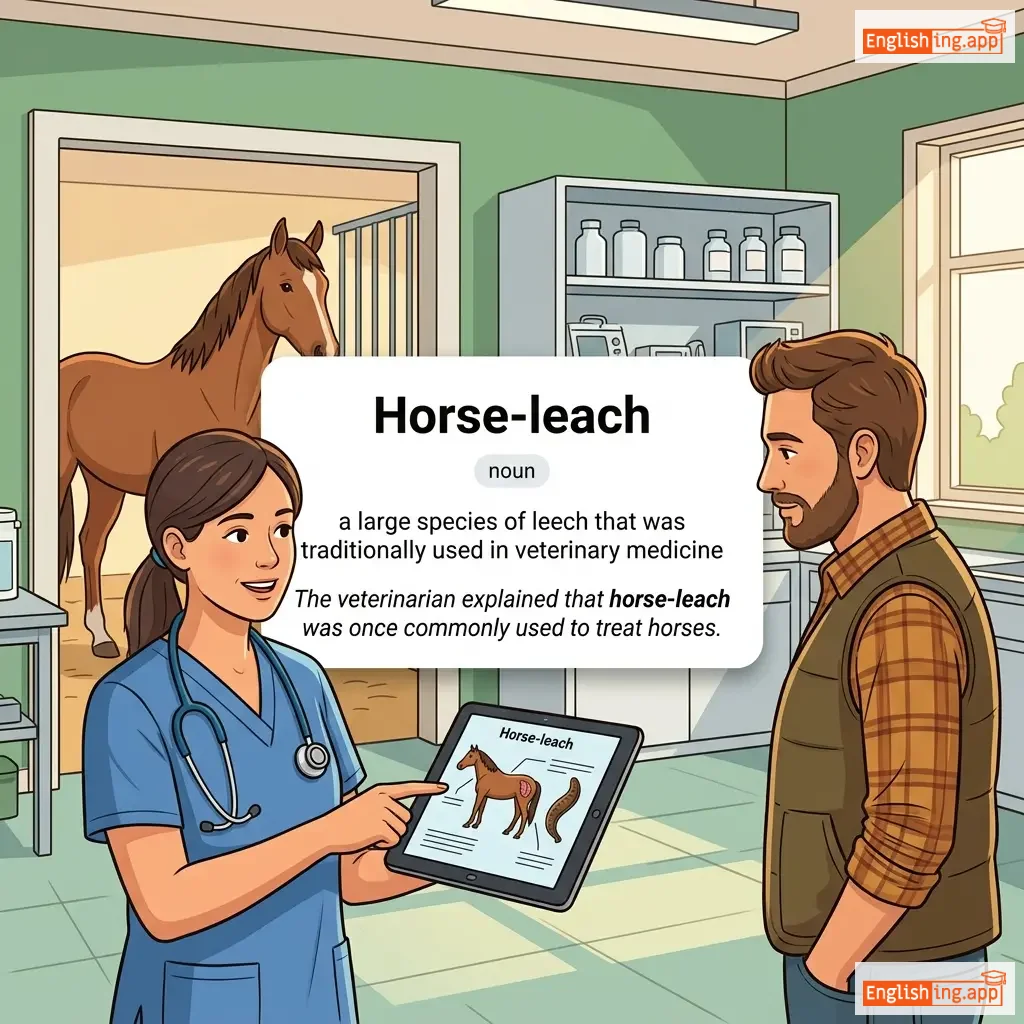
Horse-leach definition card — visual illustration of the meaning
noun C2
/ˈhɔːrs.liːt͡ʃ/
马蛭 (mǎ zhì)

a large species of leech that was traditionally used in veterinary medicine

"The veterinarian explained that horse-leach was once commonly used to treat horses."

"兽医解释说,马蛭曾广泛用于治疗马匹。" (Shòuyī jiěshì shuō, mǎ zhì céng guǎngfàn yòng yú zhìliáo mǎpǐ.)
adjective C2
/ˈhɔːrtətɪv/

Giving strong encouragement or urging.

"The teacher gave a hortative speech to motivate the students before the exam."

adjective C2
/ˈhɔːrtətɔːri/

Intended to encourage or urge to action.

"The manager’s hortatory words inspired the team to work harder."

noun C2
/ˈhoʊʒəri/
长袜和腿部衣物 (changwa he tibu yiwu)

Stockings, socks, and other knitted clothing for the legs and feet.

"She bought new hosiery for the winter season."

"她为冬季季节买了新的长袜。" (Ta wei dongji jijie maile xin de changwa.)
noun C2
/ˈhɑːstəlri/
旅馆 (lvguan)

An inn or lodging place, especially one for travelers.

"They stayed at a small hostelry near the mountains."

"他们住在山附近的一个小旅馆里。" (Tāmen zhù zài shān fùjìn de yīgè xiǎo lǚguǎn lǐ.)
Hotch potch definition card — visual illustration of the meaning
noun C2
/hɒtʃ pɒtʃ/
杂烩 (zahui)

A mixed dish; a hodgepodge of ingredients cooked together

"She made a delicious hotch potch with rice, lentils, and vegetables."

"她做了一道美味的霍奇波奇,里面有米饭、扁豆和蔬菜。" (Ta zuo le yi dao meiwei de huoqi boqi, limian you mifan, biandou he shucai.)
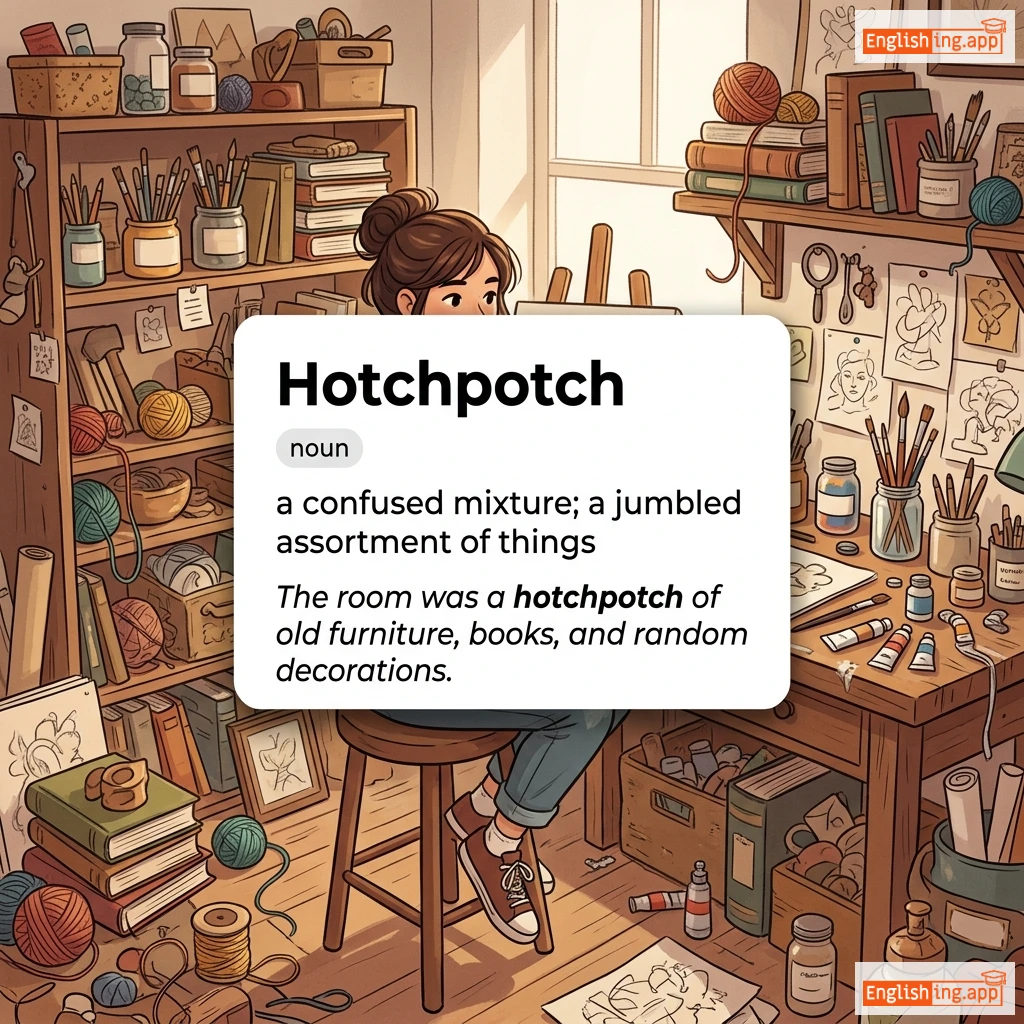
Hotchpotch definition card — visual illustration of the meaning
noun C2
/ˈhɑːtʃ.pɑːtʃ/
杂乱无章的混合物; 一堆混杂的东西 (zaluan wuzhang de hunhewu; yi dui hunza de dongxi)

a confused mixture; a jumbled assortment of things

"The room was a hotchpotch of old furniture, books, and random decorations."

"房间里堆满了旧家具、书籍和随意摆放的装饰品,杂乱无章。" (Fangjian li duimanle jiu jiaju, shūjí hé suíyì bǎifàng de zhuāngshìpǐn, záluàn wúzhāng.)
noun C2
/ˈhɒthɛd/
脾气暴躁的人 (píqì bàozào de rén)

a person who acts quickly and without thinking when angry

"He is such a hothead that he often starts arguments."

"他是个脾气暴躁的人,经常挑起争执。" (Tā shì gè píqì bàozào de rén, jīngcháng tiǎoqǐ zhēngzhí.)
noun C2
/ˈhaʊsˌbreɪkɪŋ/
入室盗窃 (rùshì dàoqiè)

the crime of breaking into a house with intent to steal

"The thief was arrested for housebreaking."

"小偷因入室盗窃被捕。" (Xiǎotōu yīn rùshì dàoqiè bèi bǔ.)
🏚️

hovel

noun C2
/ˈhʌvəl/

a small, poorly built, and dirty house

"The refugees lived in a makeshift hovel."

noun C2
/ˈhɔɪdən/
顽皮女孩 (wanpi nühai)

a boisterous or tomboyish girl

"The hoyden preferred climbing trees to playing with dolls."

"顽皮女孩更喜欢爬树而不是玩洋娃娃。" (Wanpi nühai geng xihuan pa shu er bushi wan yangwawa.)
noun C2
/ˈhʌk.stər/
小商品贩子 (xiaoshangpin fànzi)

A person who sells small items aggressively, often in a showy or dishonest way.

"The huckster loudly promoted his goods in the busy marketplace."

"小商品贩子在繁忙的市场里大声推销他的商品。" (Xiǎo shāngpǐn fànzi zài fánmáng de shìchǎng lǐ dàshēng tuīxiāo tā de shāngpǐn.)
noun phrase C2
/ˌhjuː ən ˈkraɪ/
抗议声 (kangyi sheng)

A loud public outcry or protest, often demanding action.

"There was a hue and cry over the new policy changes."

"因新政策变化,爆发了激烈的抗议声。" (Yin xin zhengce bianhua, baofa le jilie de kangyi sheng.)
noun C2
/ˈhʌmbʌɡ/
骗局, 胡说 (pianju, hushu)

Deceptive or false talk or behavior; nonsense.

"He dismissed the idea as humbug."

"他将这个想法视为胡说八道。" (Tā jiāng zhège xiǎngfǎ shì wéi húshuō bādào.)
adjective C2
/ˈhʌmdrʌm/
单调 (dantiao)

Lacking excitement or variety; dull and monotonous.

"She grew tired of the humdrum routine of office life."

"她厌倦了办公室生活的单调例行公事。" (Ta yanjuan le bangongshi shenghuo de dantiao lixing gongshi.)
noun C2
/ˌhjuː.mɪ.fɪˈkeɪ.ʃən/
腐殖作用 (fǔzhí zuòyòng)

The process of organic matter decomposition to form humus in soil.

"Humification enhances soil structure and fertility."

"腐殖作用增强了土壤的结构和肥力。" (Fǔzhí zuòyòng zēngqiángle tǔrǎng de jiégòu hé féilì.)
noun C2
/ˈhʌm.ək/
小丘 (xiao qiu)

A small hill, mound, or ridge of earth or ice.

"The hikers rested on a grassy hummock by the river."

"远足者在河边的草地小丘上休息。" (Yuanzu zhe zai he bian de caodi xiao qiu shang xiuxi.)
noun C2
/ˈhjuːməs/
腐殖土 (fǔzhí tǔ)

The dark, organic material in soil formed from decayed plants and animals.

"The gardener enriched the soil with humus to improve plant growth."

"园丁将腐殖土混入土壤中以促进植物生长。" (Yuándīng jiāng fǔzhí tǔ hùn rù tǔrǎng zhōng yǐ cùjìn zhíwù shēngzhǎng.)
verb C2
/ˈhɜːrtl/
快速行驶 (kuàisù xíngshǐ)

To move or cause to move at great speed, often in a dangerous way.

"The car hurtled down the mountain road."

"汽车快速行驶在山路上。" (Qìchē kuàisù xíngshǐ zài shānlù shàng.)