Vocabulaires

Découvrez, apprenez et maîtrisez le vocabulaire anglais

noun C2
/ˌɛksɪˈɡjuːɪti/
insuffisance (insuffisance)

the quality of being scanty or meager in amount

"The exiguity of resources made the project difficult to complete."

"L'insuffisance des ressources a rendu le projet difficile à terminer." (L'insuffisance des ressources a rendu le projet difficile à terminer.)
adjective C2
/ɛɡˈzɪɡjuəs/
exigu (exigu)

small in amount; scanty or inadequate

"They survived on exiguous rations during the journey."

"Ils ont survécu avec des rations exiguës pendant le voyage." (Ils ont survécu avec des rations exiguës pendant le voyage.)
noun C2
/ɪɡˈzɔːrbɪtəns/
exorbitance (exorbitance)

The quality of being excessive, unreasonable, or going beyond proper limits.

"The exorbitance of the hotel's prices shocked the tourists."

"L’exorbitance des prix de l’hôtel a choqué les touristes." (L’exorbitance des prix de l’hôtel a choqué les touristes.)
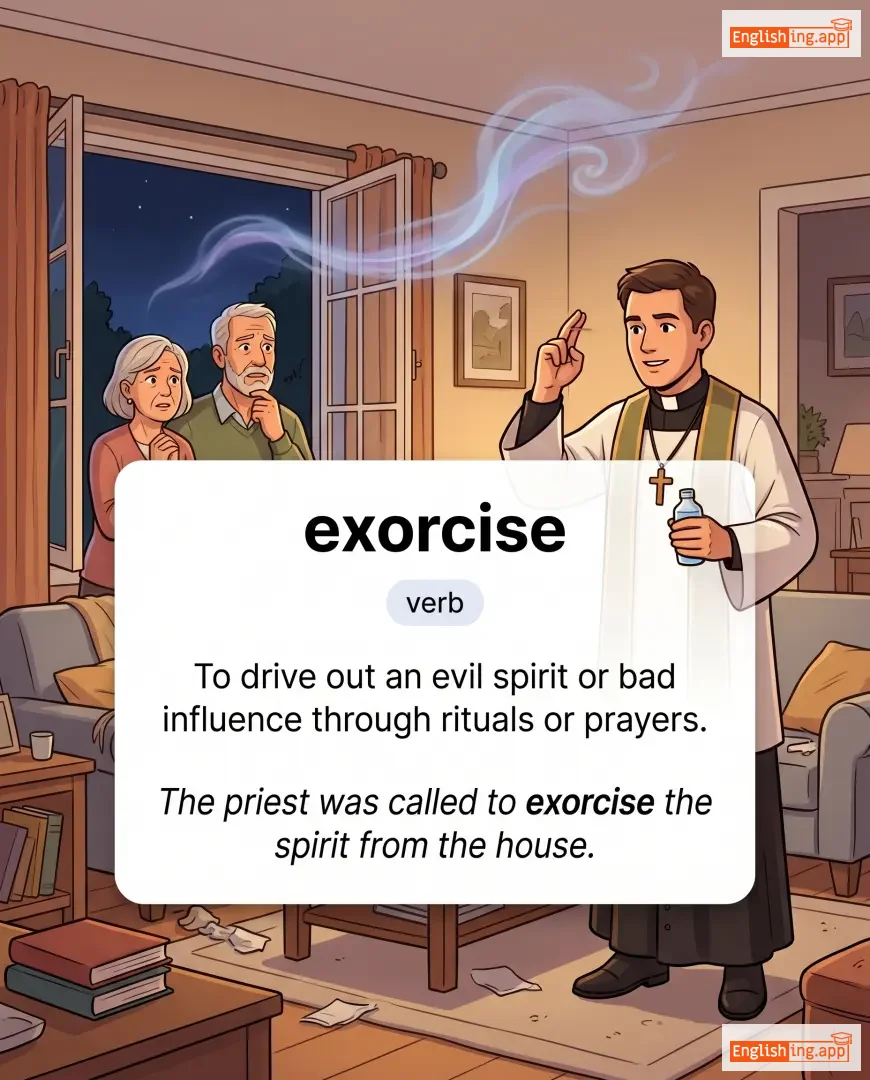
exorcise definition card — visual illustration of the meaning
verb C2
/ˈeksɔːrsaɪz/
exorciser (exorciser)

To drive out an evil spirit or bad influence through rituals or prayers.

"The priest was called to exorcise the spirit from the house."

"Le prêtre a été appelé pour exorciser l'esprit de la maison." (Le prêtre a été appelé pour exorciser l'esprit de la maison.)
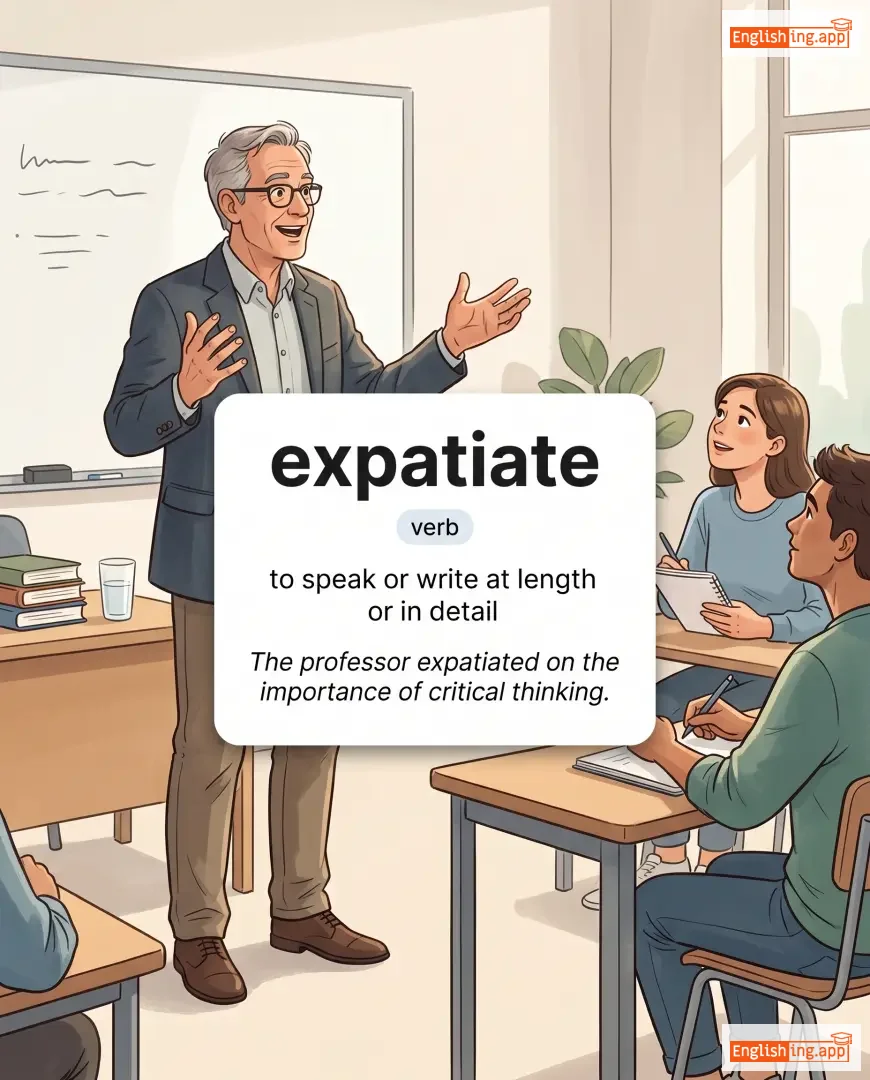
expatiate definition card — visual illustration of the meaning
verb C2
/ɪkˈspeɪʃiˌeɪt/
parler ou écrire en détail (parler ou écrire en détail)

to speak or write at length or in detail

"The professor expatiated on the importance of critical thinking."

"Le professeur a expatié sur l'importance de la pensée critique." (Le professeur a expatié sur l'importance de la pensée critique.)
verb C2
/ɪkˈspɛktəreɪt/
expectoré (expectoré)

to cough up and spit out mucus from the throat or lungs

"The patient began to expectorate thick mucus."

"Le patient a commencé à expectorer des mucosités épaisses." (Le patient a commencé à expectorer des mucosités épaisses.)
noun C2
/ɪkˈspiːdiənsi/
opportunisme (opportunisme)

the quality of being convenient and practical despite possibly being improper or immoral

"He acted out of political expediency rather than principle."

"Il a agi par opportunisme politique plutôt que par principe." (Il a agi par opportunisme politique plutôt que par principe.)
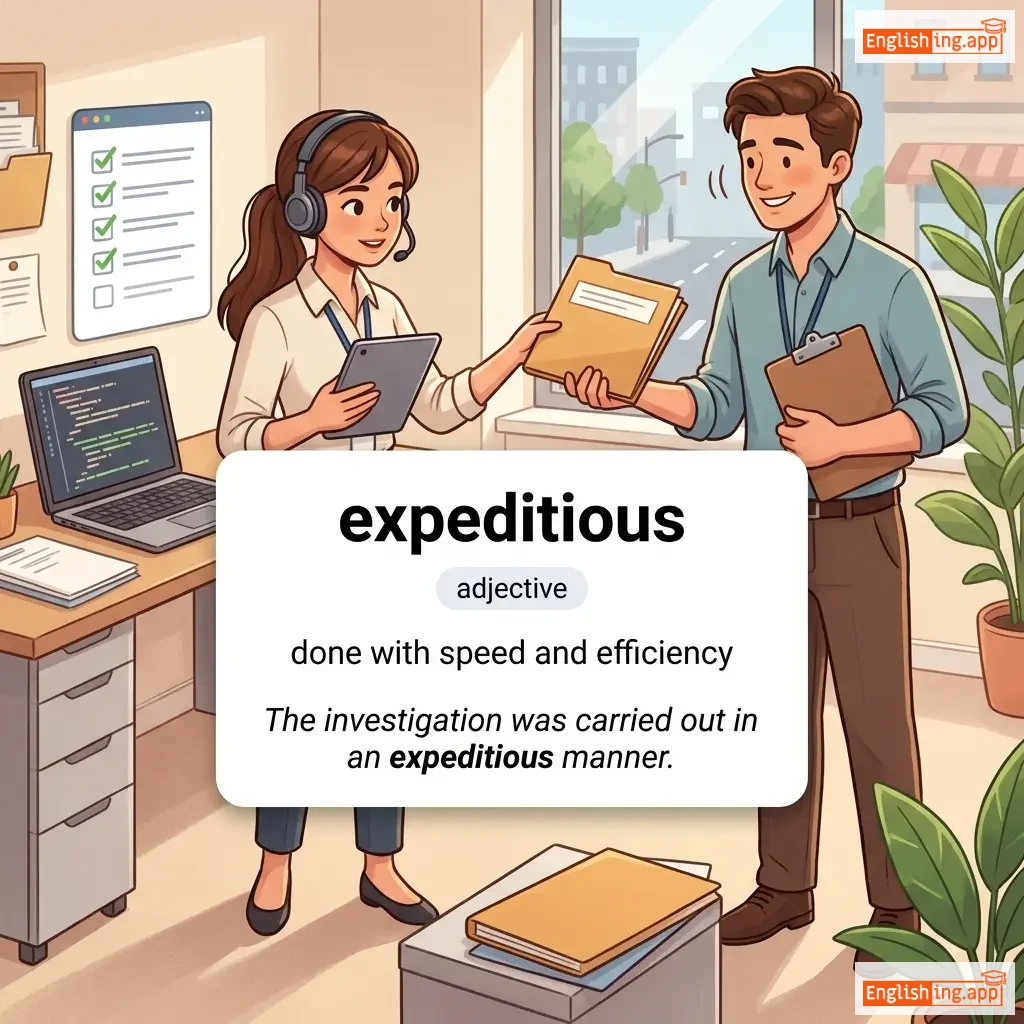
expeditious definition card — visual illustration of the meaning
adjective C2
/ˌɛkspəˈdɪʃəs/
rapide et efficace (rapide et efficace)

done with speed and efficiency

"The investigation was carried out in an expeditious manner."

"L'enquête a été réalisée de manière rapide et efficace." (L'enquete a ete realisee de maniere rapide et efficace.)
adverb C2
/ˌɛkspəˈdɪʃəsli/
de manière rapide et efficace (de maniere rapide et efficace)

in a quick and efficient manner

"The application was processed expeditiously."

"La demande a été traitée de manière rapide et efficace." (La demande a été traitee de maniere rapide et efficace.)
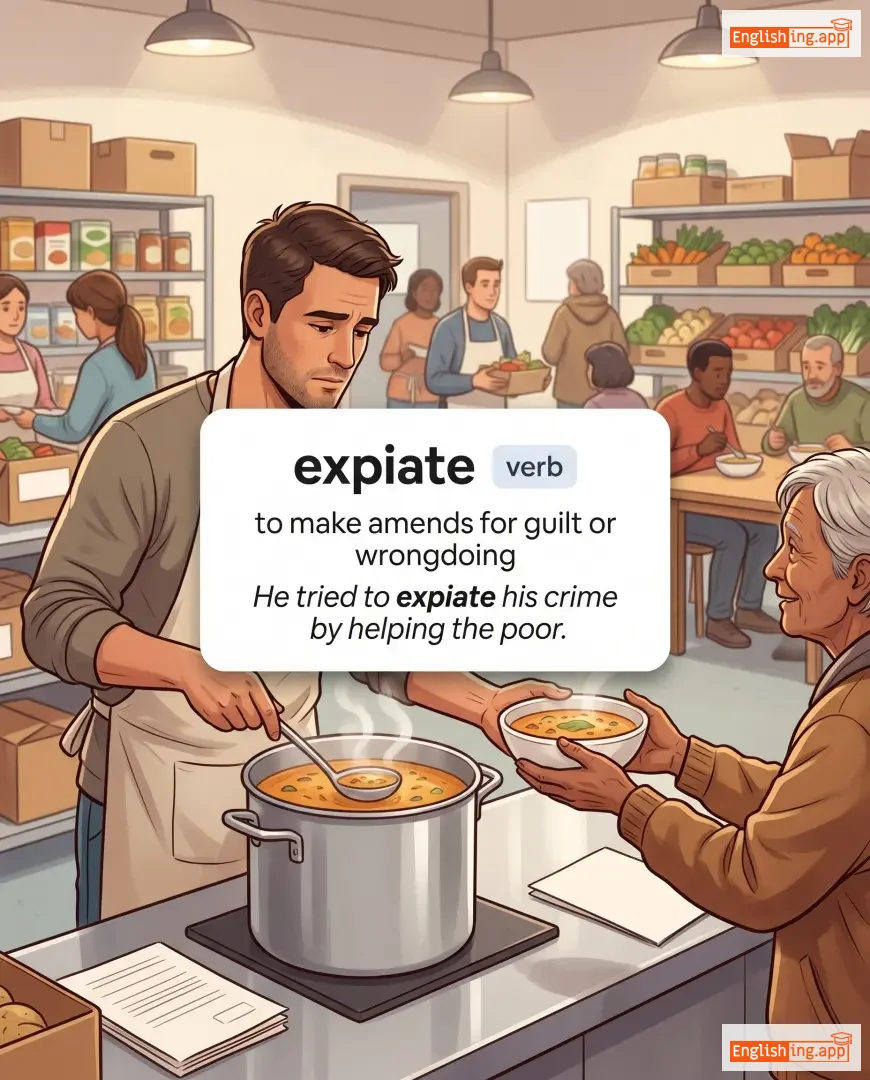
expiate definition card — visual illustration of the meaning
verb C2
/ˈɛkspieɪt/
expiation (eks-pi-a-tion)

to make amends for guilt or wrongdoing

"He tried to expiate his crime by helping the poor."

"Il a essayé d'expiation de son crime en aidant les pauvres." (Il a es-sayé d'ex-pi-a-tion de son cri-me en ai-dant les pauvres.)
noun C2
/ˈɛksplətɪv/
gros mot (gros mot)

a word or phrase used as an exclamation, often offensive or profane

"He shouted an expletive when he dropped the hammer on his foot."

"Il a crié un gros mot lorsqu'il a laissé tomber le marteau sur son pied." (Il a crié un gros mot lorsqu'il a laissé tomber le marteau sur son pied.)
adjective C2
/ˈɛksplɪkəbəl/
explicable (explicable)

able to be explained or understood

"His sudden anger was explicable given the stressful situation."

"Sa colère soudaine était explicable compte tenu de la situation stressante." (Sa colère soudaine était explicable compte tenu de la situation stressante.)
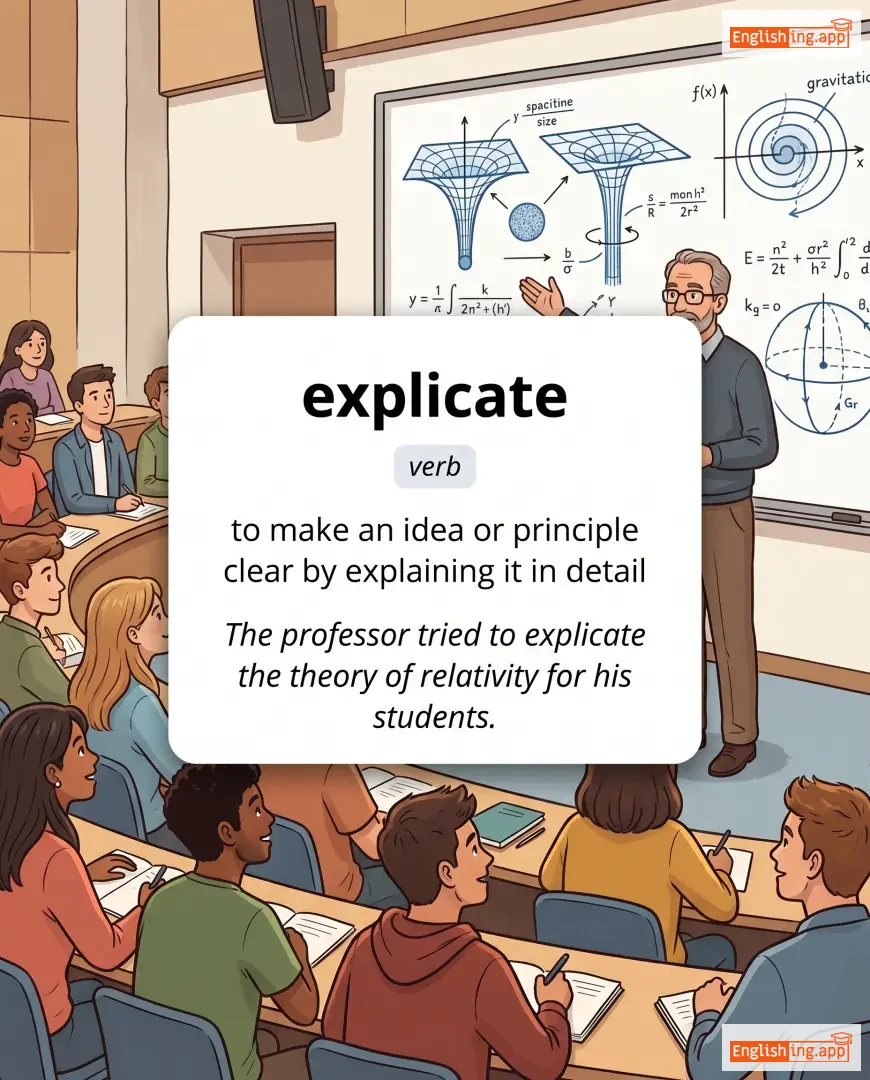
explicate definition card — visual illustration of the meaning
verb C2
/ˈɛksplɪkeɪt/
expliquer (expliquer)

to make an idea or principle clear by explaining it in detail

"The professor tried to explicate the theory of relativity for his students."

"Le professeur a essayé d'expliquer la théorie de la relativité à ses étudiants." (Le professeur a essayé d'expliquer la théorie de la relativité à ses étudiants.)
noun C2
/ˈɛksplɪkeɪtər/
explicateur (explicateur)

a person who explains or interprets something in detail

"The critic served as an explicator of the poet’s complex works."

"Le critique a servi d'explicateur des œuvres complexes du poète." (Le critique a servi d'explicateur des oeuvres complexes du poete.)
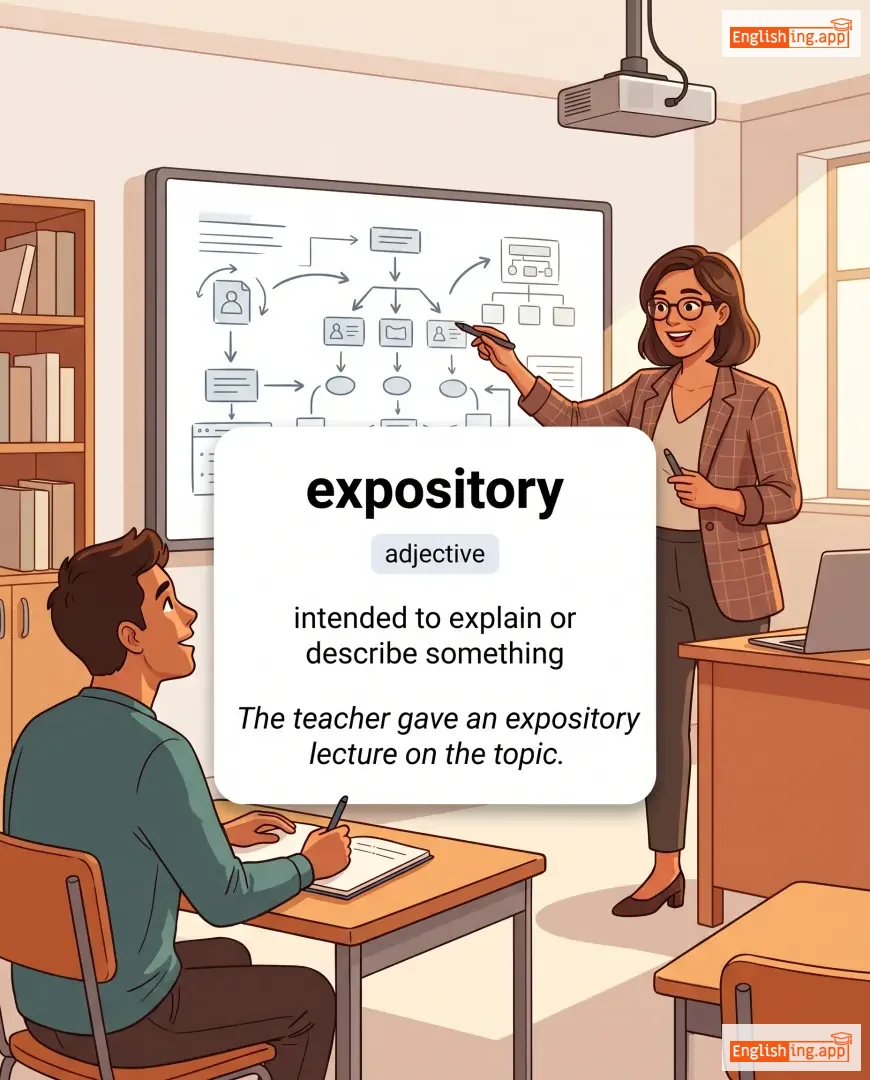
expository definition card — visual illustration of the meaning
adjective C2
/ɪkˈspɒzɪtəri/
expositif (expositif)

intended to explain or describe something

"The teacher gave an expository lecture on the topic."

"Le professeur a donné une conférence expositive sur le sujet." (Le professeur a donné une conférence expositive sur le sujet.)
verb C2
/ɪkˈspɒstjʊleɪt/
exprimer un désaccord (exprimer un désaccord)

to express strong disapproval or disagreement

"She expostulated with her friend about the risky decision."

"Elle s'est opposée à son ami au sujet de la décision risquée." (Elle s'est opposée à son ami au sujet de la décision risquée.)
noun C2
/ɪkˌspɒstjʊˈleɪʃən/
protestation (protestation)

the act of expressing protest or disagreement

"His expostulation against the unfair rules was ignored."

"Sa protestation contre les règles injustes a été ignorée." (Sa protestation contre les règles injustes a été ignorée.)
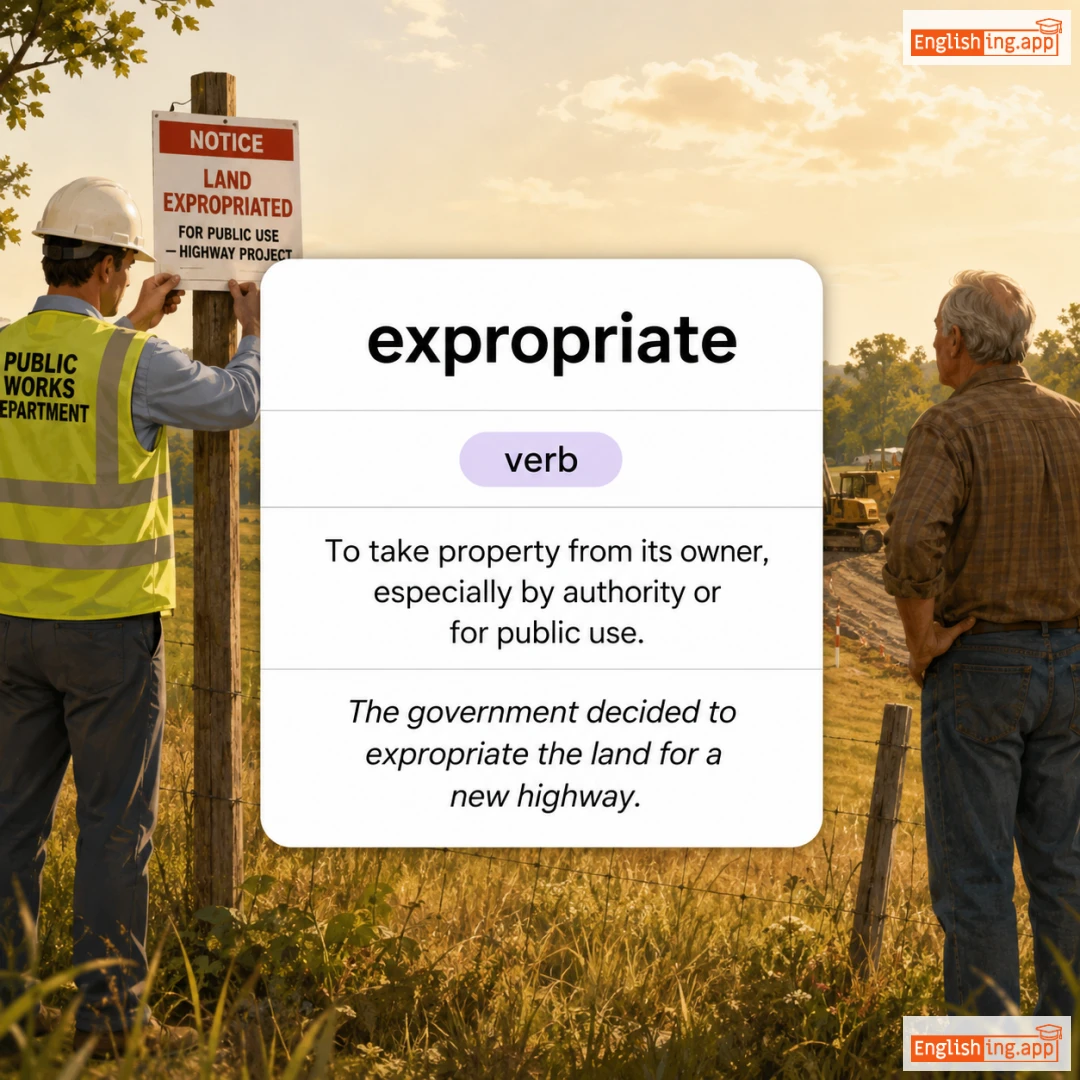
expropriate definition card — visual illustration of the meaning
verb C2
/ɛksˈproʊprieɪt/
exproprier (eksproprier)

To take property from its owner, especially by authority or for public use.

"The government decided to expropriate the land for a new highway."

"Le gouvernement a décidé d'exproprier la terre pour une nouvelle autoroute." (Le gouvernement a décidé d'exproprier la terre pour une nouvelle autoroute.)
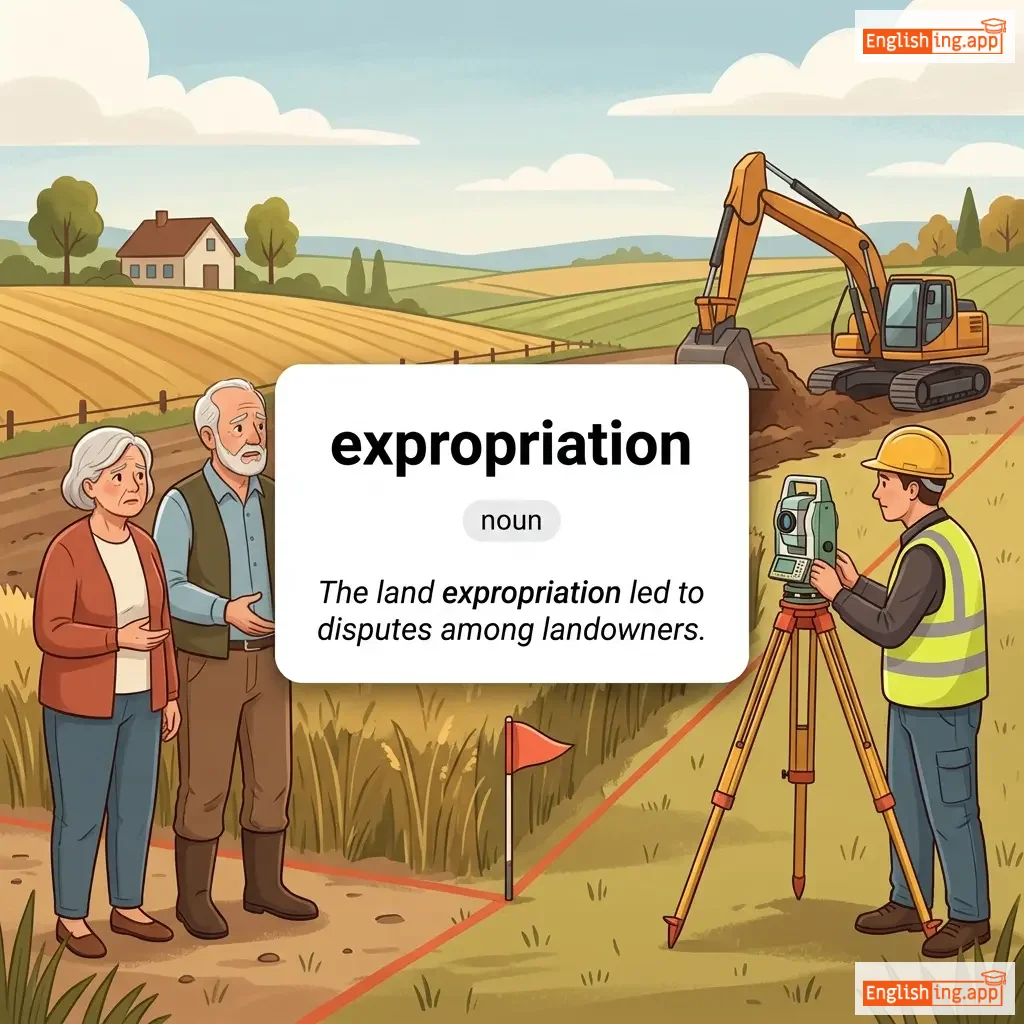
expropriation definition card — visual illustration of the meaning
noun C2
/ɪkˌsprəʊ.priˈeɪ.ʃən/
expropriation (expropriation)

The act of government taking private property, also known as confiscation, nationalization, or seizure.

"The land expropriation led to disputes among landowners."

"L'expropriation des terres a entraîné des disputes entre les propriétaires fonciers." (L'expropriation des terres a entraine des disputes entre les proprietaires fonciers.)
verb C2
/ɪkˈspʌndʒ/
effacer (effacer)

To erase or remove completely, often something unwanted.

"He managed to expunge the embarrassing memory from his mind."

"Il a réussi à effacer le souvenir embarrassant de son esprit." (Il a réussi à effacer le souvenir embarrassant de son esprit.)
verb C2
/ˈekspərˌɡeɪt/
expurger (expurger)

To remove offensive or objectionable parts from a text or speech.

"The publisher decided to expurgate the novel before reprinting it."

"L’éditeur a décidé d’expurger le roman avant de le réimprimer." (lediteur a decide de expurger le roman avant de le reimprimer)
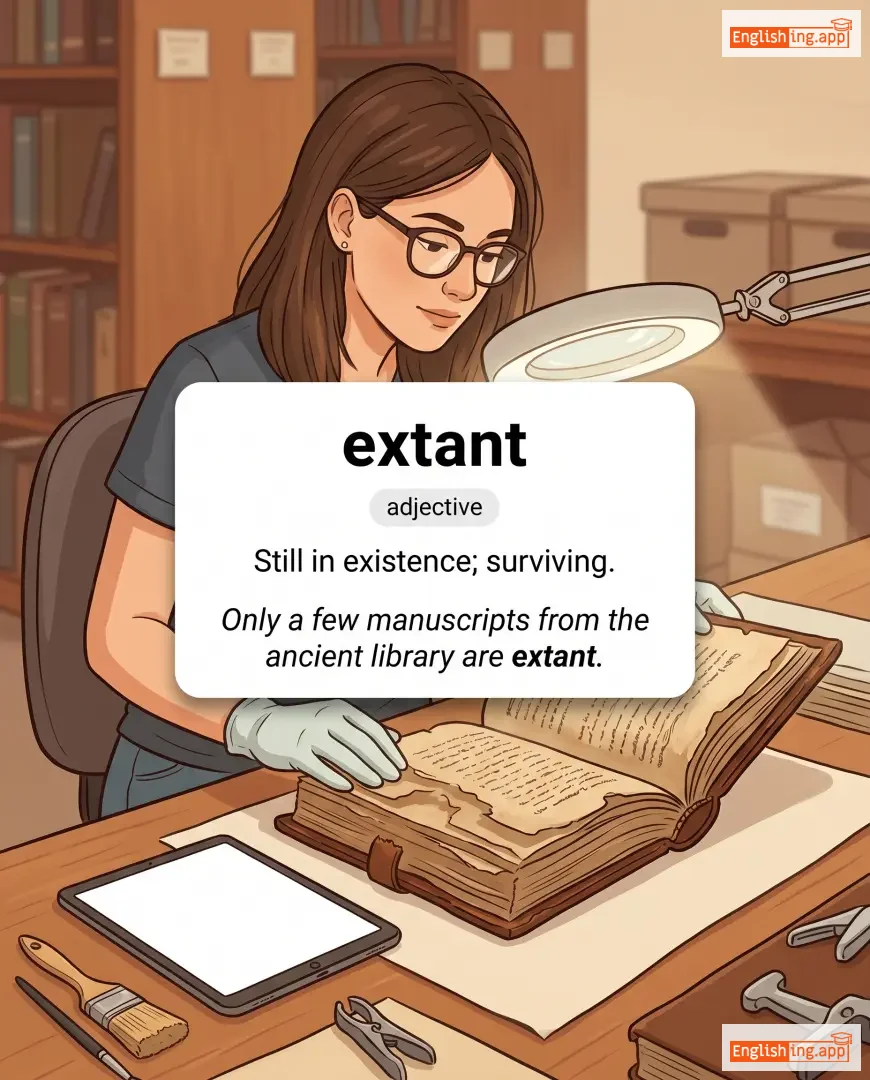
extant definition card — visual illustration of the meaning
adjective C2
/ˈɛkstənt/
existent (existent)

Still in existence; surviving.

"Only a few manuscripts from the ancient library are extant."

"Seules quelques manuscrits de l'ancienne bibliothèque sont encore existants." (Seules quelques manuscrits de l'ancienne bibliothèque sont encore existants.)
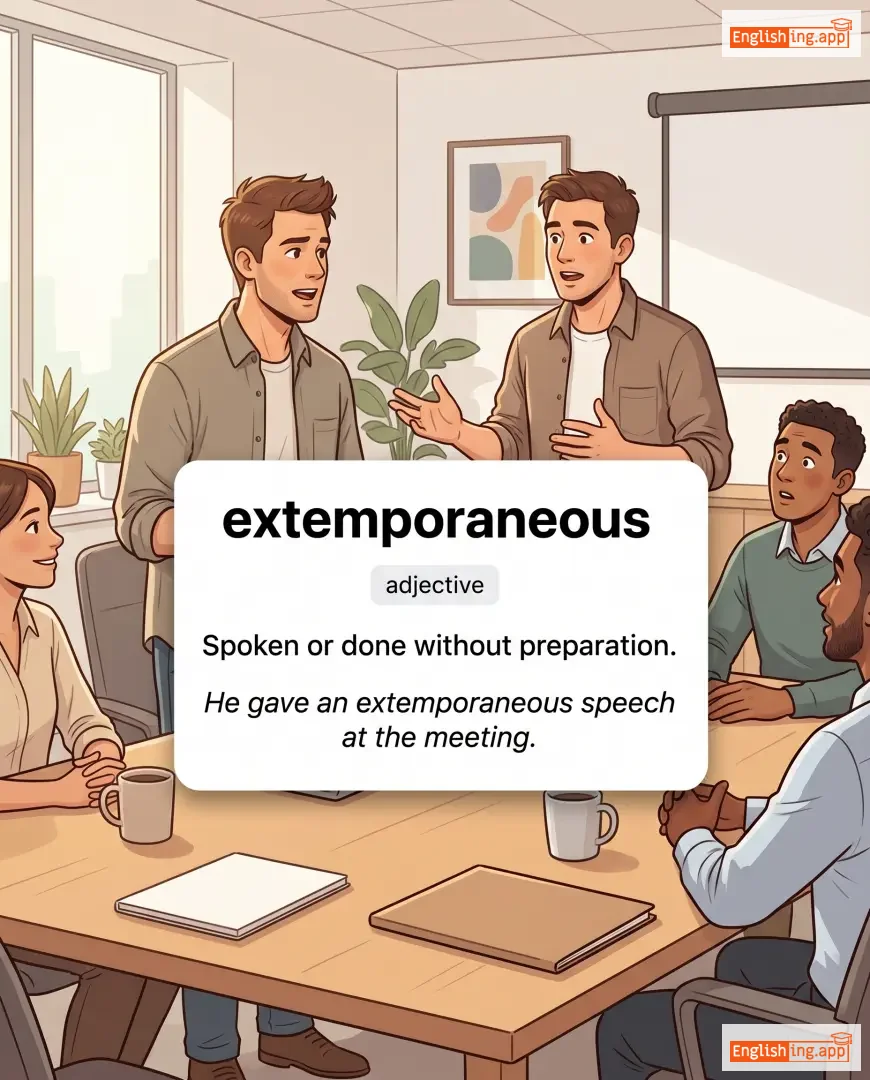
extemporaneous definition card — visual illustration of the meaning
adjective C2
/ɪkˌstɛmpəˈreɪniəs/
dit sans préparation (di san preparasyon)

Spoken or done without preparation.

"He gave an extemporaneous speech at the meeting."

"Il a fait un discours extemporané lors de la réunion." (Il a fe un discours extemporane lor de la reunion.)
adverb C2
/ɪkˈstɛmpəri/
sans préparation (sans preparation)

Spoken or done without preparation; impromptu.

"She recited the poem extempore in class."

"Elle a récité le poème sans préparation en classe." (Elle a recité le poème sans préparation en classe.)
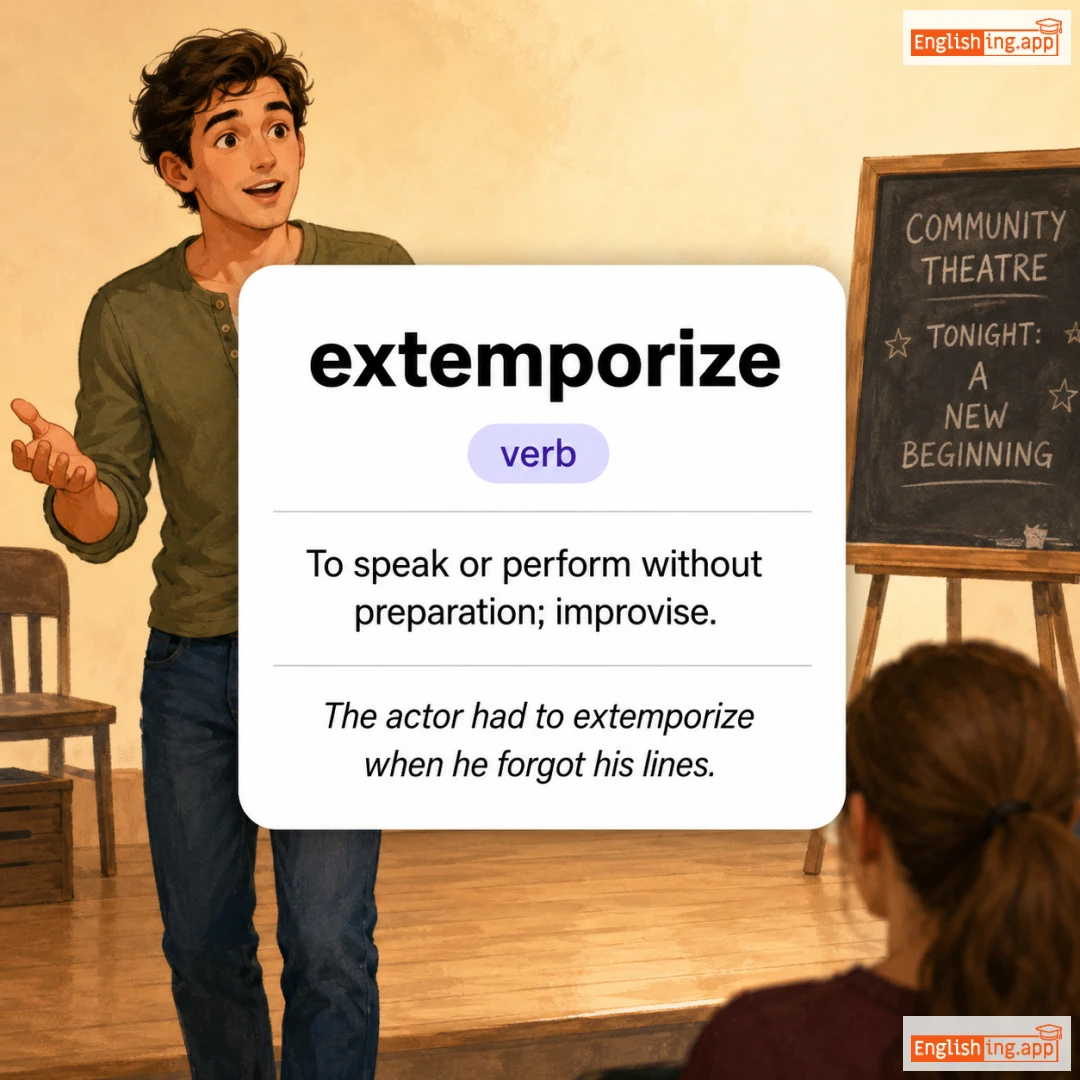
extemporize definition card — visual illustration of the meaning
verb C2
/ɪkˈstɛmpəraɪz/
improviser (improviser)

To speak or perform without preparation; improvise.

"The actor had to extemporize when he forgot his lines."

"L'acteur a dû improviser lorsqu'il a oublié ses répliques." (L'acteur a dû improviser lorsqu'il a oublié ses répliques.)
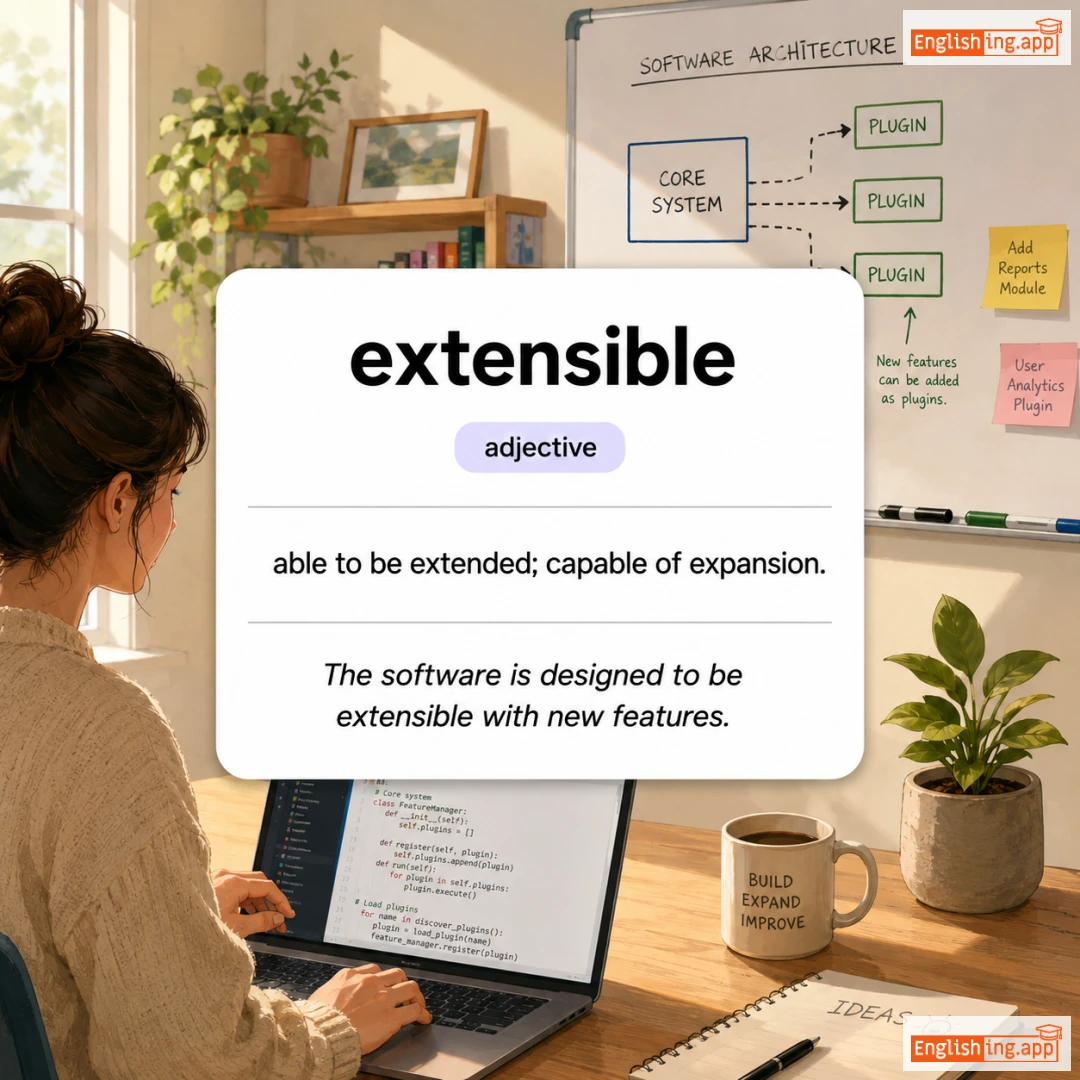
extensible definition card — visual illustration of the meaning
adjective C2
/ɪkˈstɛnsəbl/
extensible (extensible)

able to be extended; capable of expansion.

"The software is designed to be extensible with new features."

"Le logiciel est conçu pour être extensible avec de nouvelles fonctionnalités." (Le logiciel est conçu pour être extensible avec de nouvelles fonctionnalités.)
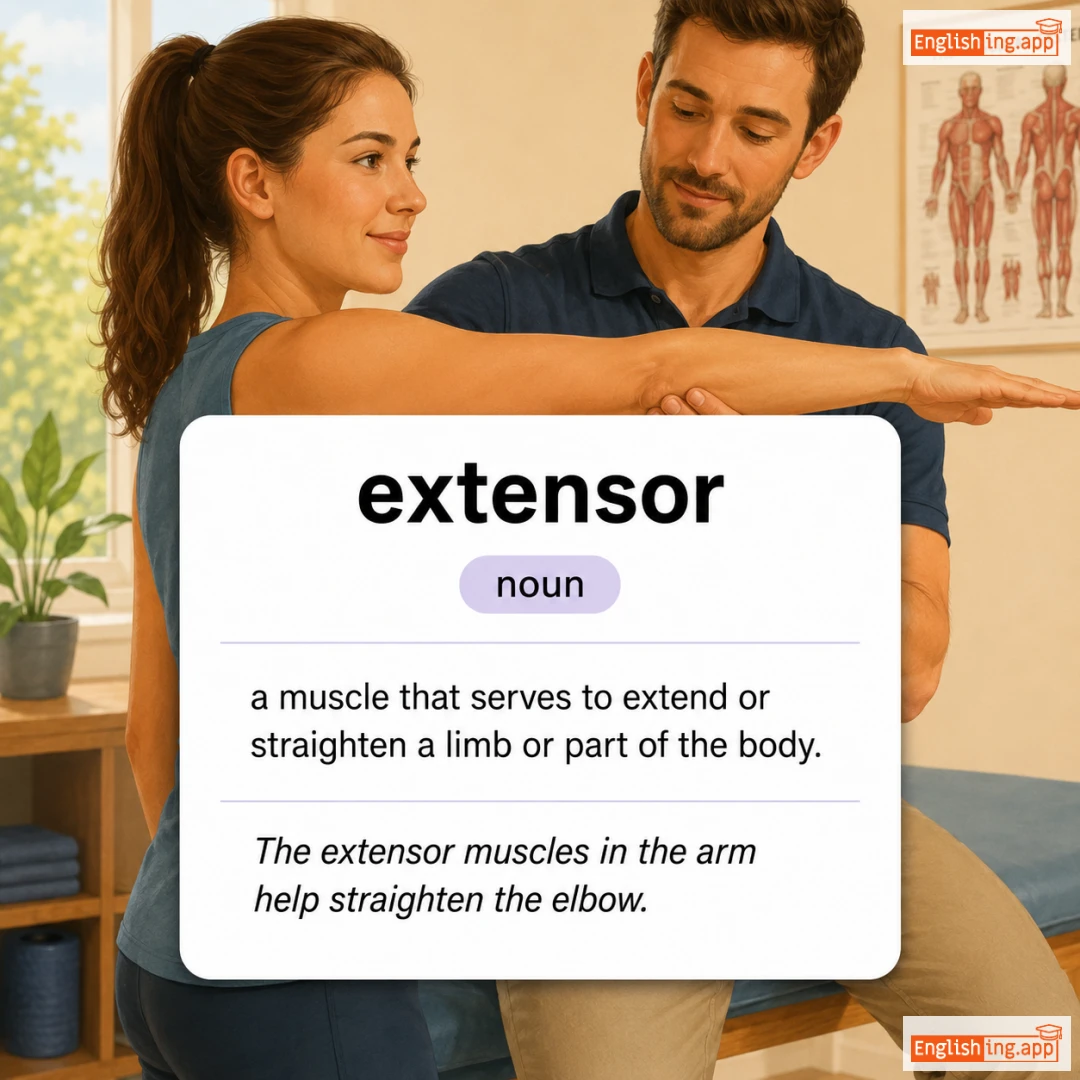
extensor definition card — visual illustration of the meaning
noun C2
/ɪkˈstɛnsər/
muscle extenseur (muscle extenseur)

a muscle that serves to extend or straighten a limb or part of the body.

"The extensor muscles in the arm help straighten the elbow."

"Les muscles extenseurs du bras aident à redresser le coude." (Les muscles extenseurs du bras aident à redresser le coude.)
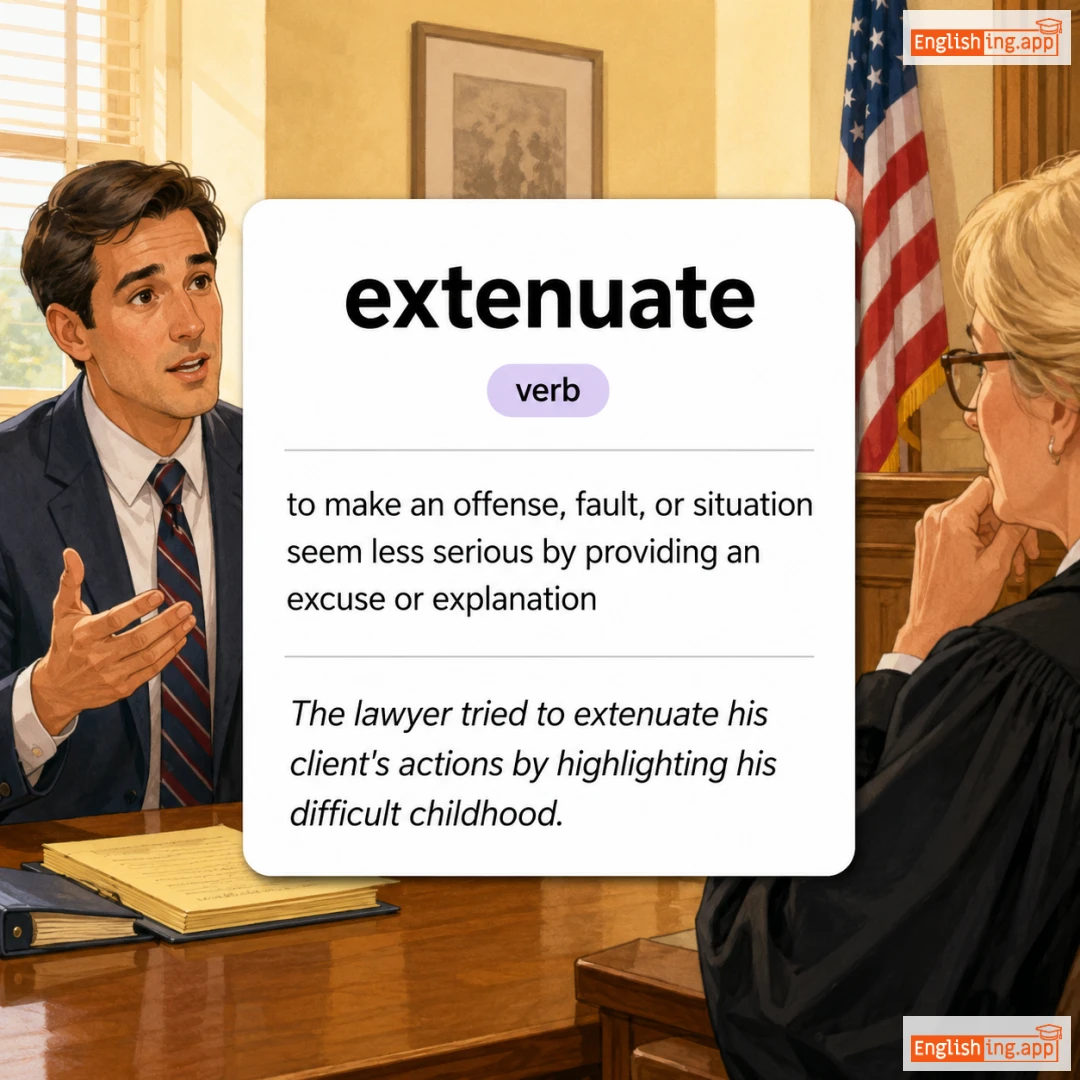
extenuate definition card — visual illustration of the meaning
verb C2
/ɪkˈstɛnjueɪt/
excuser (excuser)

to make an offense, fault, or situation seem less serious by providing an excuse or explanation

"The lawyer tried to extenuate his client's actions by highlighting his difficult childhood."

"L'avocat a essayé d'excuser les actions de son client en mettant en lumière son enfance difficile." (L'avocat a essayé d'excuser les actions de son client en mettant en lumière son enfance difficile.)
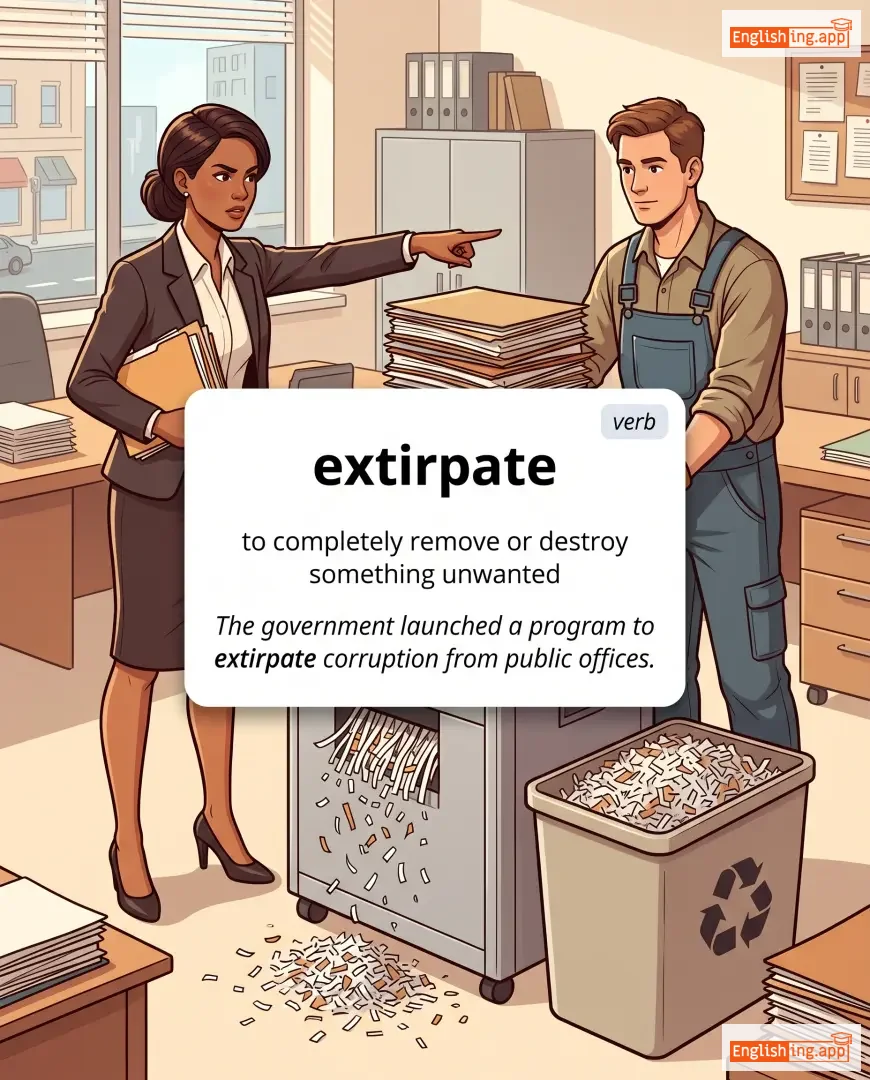
extirpate definition card — visual illustration of the meaning
verb C2
/ˈek.stər.peɪt/
extirper (extirper)

to completely remove or destroy something unwanted

"The government launched a program to extirpate corruption from public offices."

"Le gouvernement a lancé un programme pour extirper la corruption des bureaux publics." (Le gouvernement a lancé un programme pour extirper la corruption des bureaux publics.)
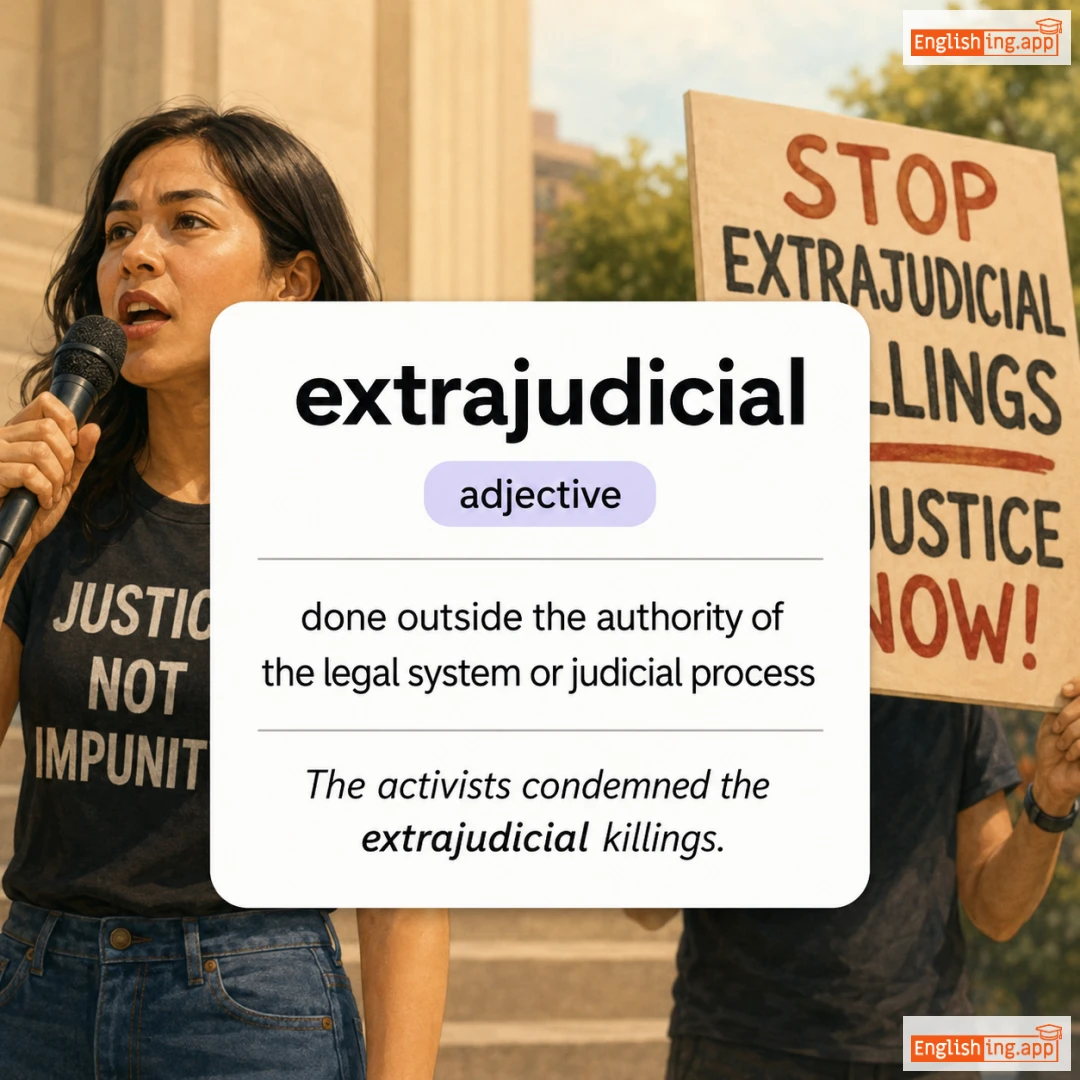
extrajudicial definition card — visual illustration of the meaning
adjective C2
/ˌɛkstrəˌdʒuːˈdɪʃəl/
extrajudiciaire (extrajudiciaire)

done outside the authority of the legal system or judicial process

"The activists condemned the extrajudicial killings."

"Les militants ont condamné les meurtres extrajudiciaires." (Les militants ont condamné les meurtres extrajudiciaires.)
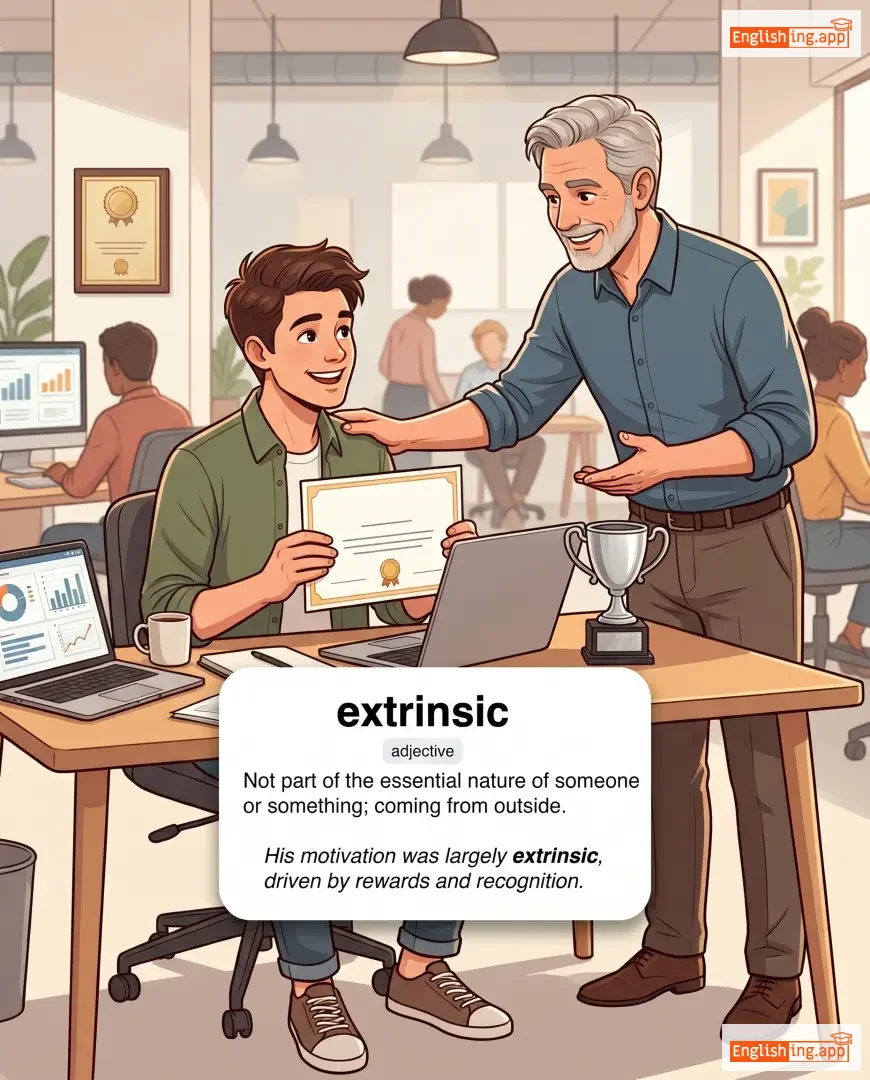
extrinsic definition card — visual illustration of the meaning
adjective C2
/ɛkˈstrɪnzɪk/
extrinsèque (extrinsèque)

Not part of the essential nature of someone or something; coming from outside.

"His motivation was largely extrinsic, driven by rewards and recognition."

"Sa motivation était en grande partie extrinsèque, motivée par des récompenses et de la reconnaissance." (Sa motivation était en grande partie extrinsèque, motivée par des récompenses et de la reconnaissance.)
verb C2
/ɪkˈstruːd/
extruder (extruder)

to force something out through a small opening; to shape by pushing material through a mold

"The factory extrudes plastic pipes using modern machines."

"L'usine extrude des tuyaux en plastique en utilisant des machines modernes." (L'usine extrude des tuyaux en plastique en utilisant des machines modernes.)
exult definition card — visual illustration of the meaning
verb C2
/ɪɡˈzʌlt/
exulter (eksulter)

to show or feel great joy, often as a result of success

"The fans exulted after their team won the championship."

"Les fans exultaient après la victoire de leur équipe au championnat." (Les fans exultaient apres la victoire de leur equipe au championnat.)
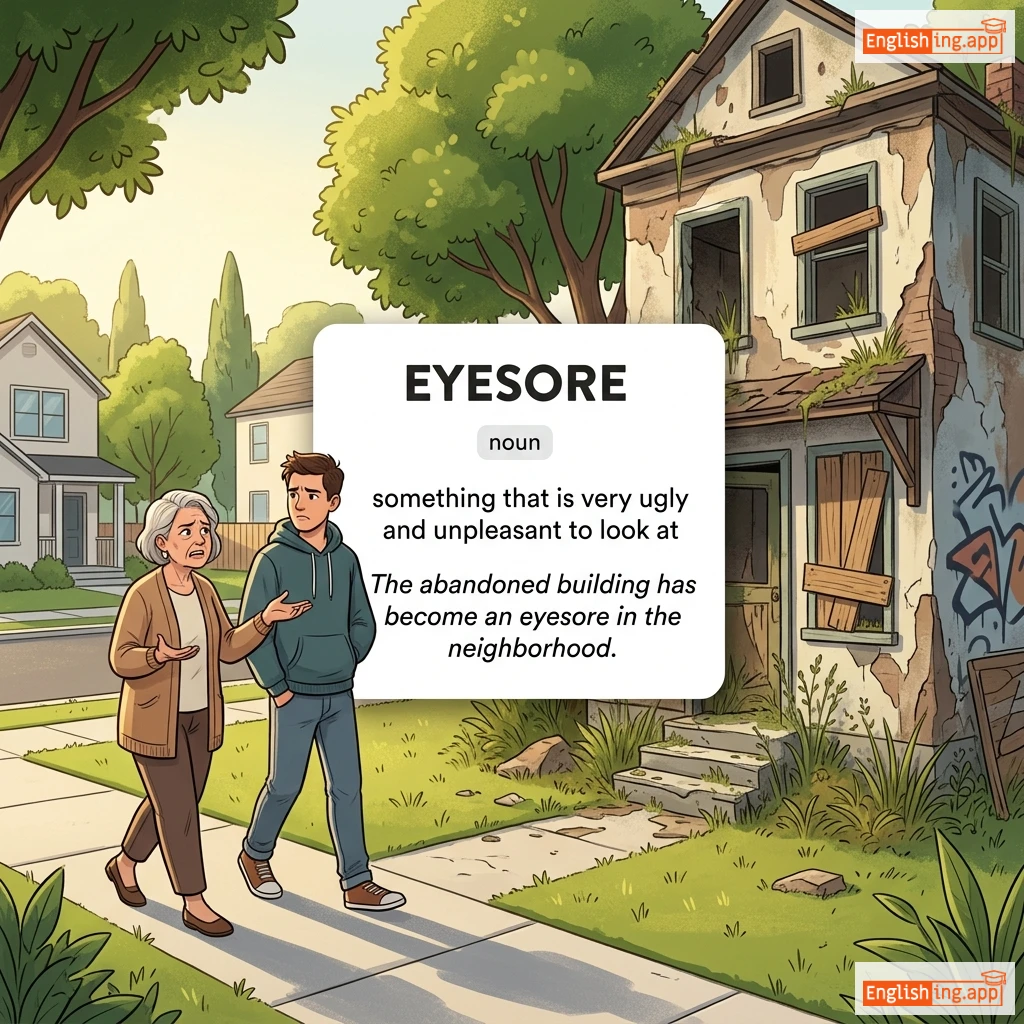
Eyesore definition card — visual illustration of the meaning
noun C2
/ˈaɪ.sɔːr/
un vrai casse-pied; une horreur visuelle (un vrai casse-pied; une horreur visuelle)

something that is very ugly and unpleasant to look at

"The abandoned building has become an eyesore in the neighborhood."

"Le bâtiment abandonné est devenu un vrai casse-pied dans le quartier." (Le bâtiment abandonné est devenu un vrai casse-pied dans le quartier.)
noun C2
/ˈɪəri/
nid d'aigle (nid d'aigle)

the nest of a bird of prey, such as an eagle, typically built high on a cliff or tree

"The eagle’s eyrie was perched high on the mountain cliff."

"Le nid d'aigle était perché au sommet de la falaise." (Le nid d'aigle etait perche au sommet de la falaise.)
noun C2
/ˈɪəri/
nid d'oiseau de proie (nid d'oiseau de proie)

an alternative spelling of eyrie; a nest of a bird of prey

"The falcon guarded its eyry fiercely."

"Le faucon a défendu son nid férocement." (Le faucon a défendu son nid férocement.)
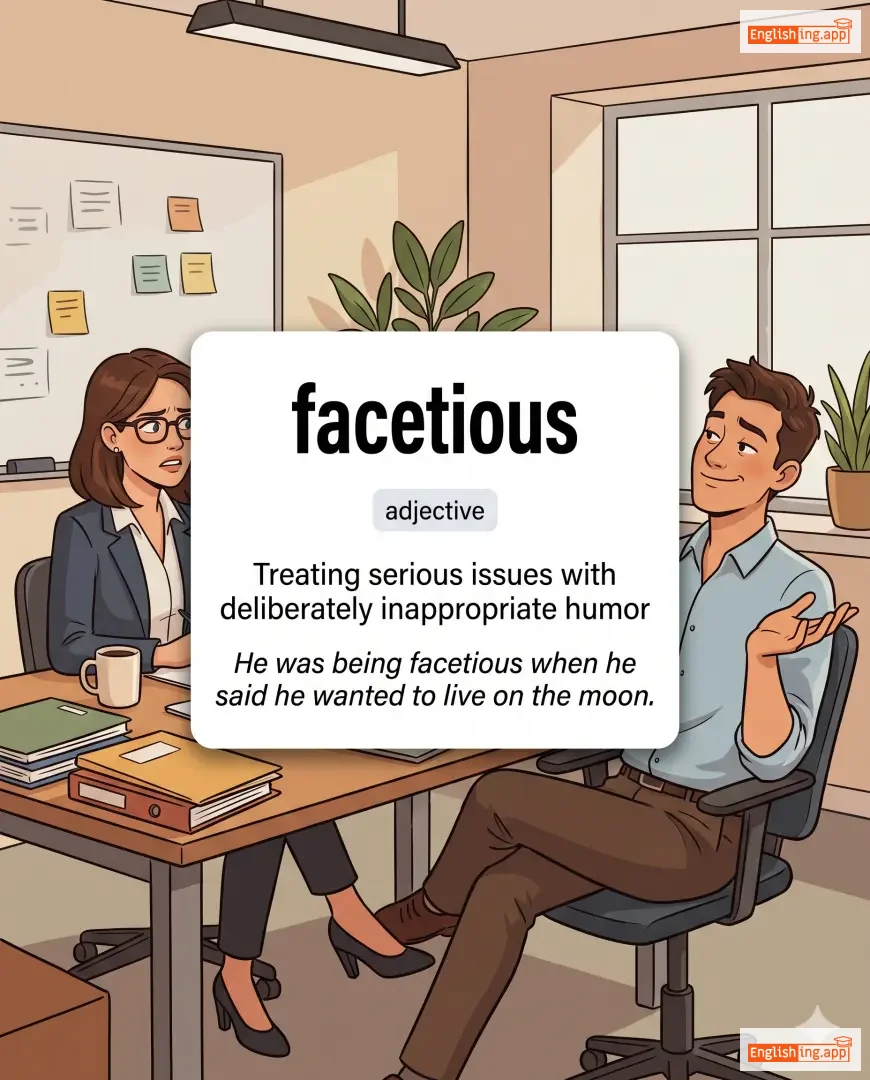
facetious definition card — visual illustration of the meaning
adjective C2
/fəˈsiːʃəs/
moqueur (moqueur)

Treating serious issues with deliberately inappropriate humor

"He was being facetious when he said he wanted to live on the moon."

"Il était moqueur quand il a dit qu'il voulait vivre sur la lune." (Il etait moqueur quand il a dit qu'il voulait vivre sur la lune.)
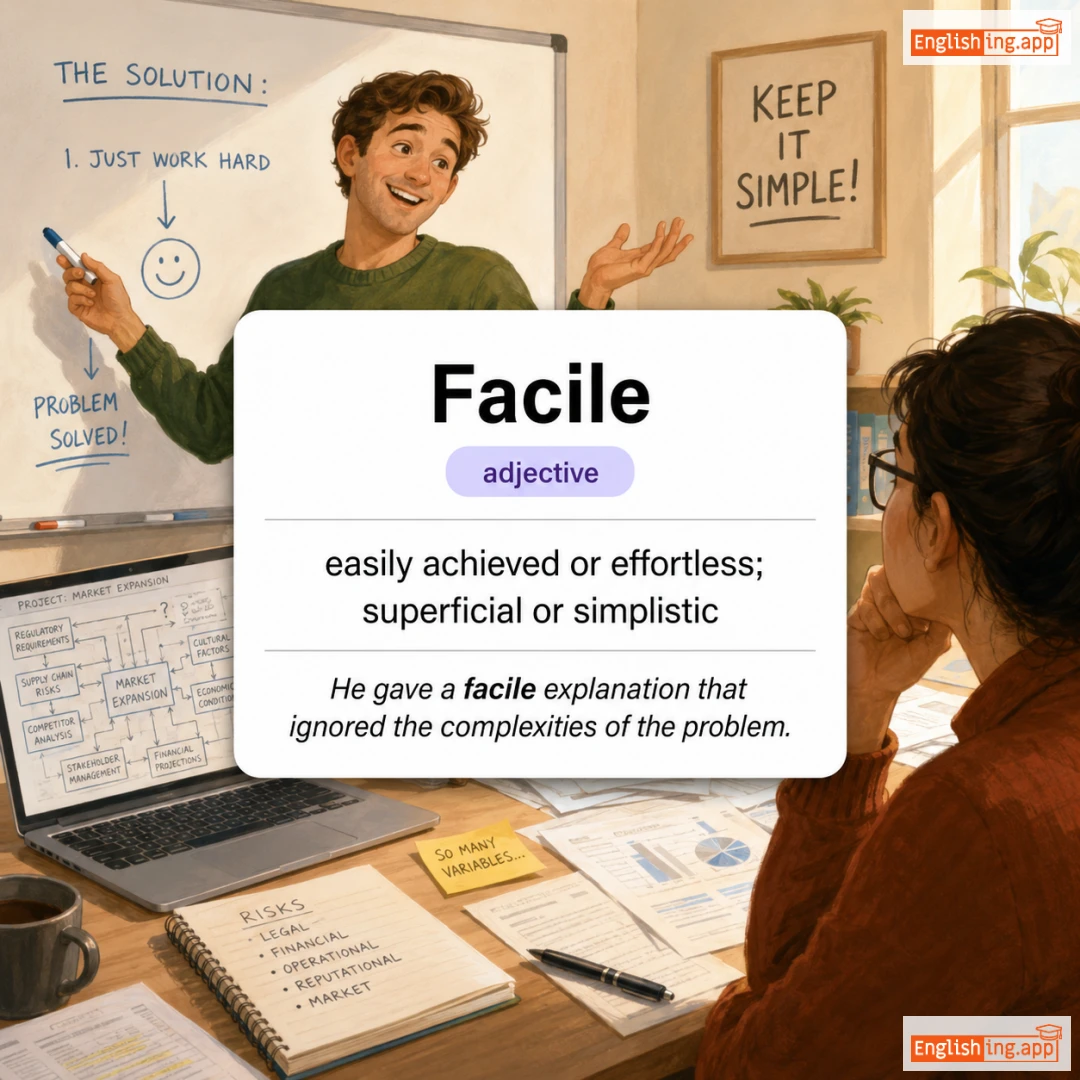
Facile definition card — visual illustration of the meaning
adjective C2
/ˈfæsɪl/
facile, simpliste, superficiel (facile, simpliste, superficiel)

easily achieved or effortless; superficial or simplistic

"He gave a facile explanation that ignored the complexities of the problem."

"Il a donné une explication facile qui ignorait les complexités du problème." (Il a donne une explication facile qui ignorait les complexites du probleme.)
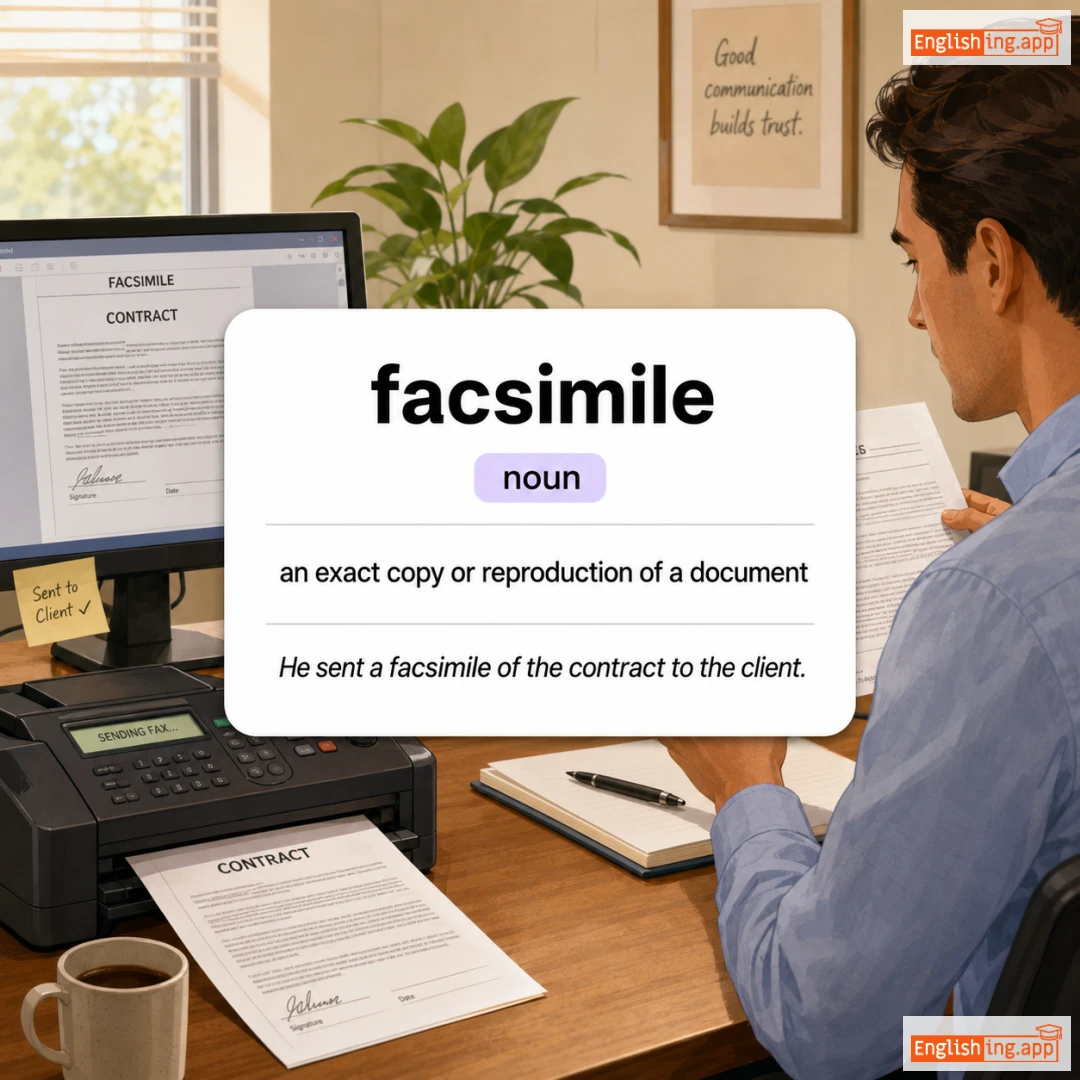
facsimile definition card — visual illustration of the meaning
noun C2
/fækˈsɪmɪli/
copie (copie)

an exact copy or reproduction of a document

"He sent a facsimile of the contract to the client."

"Il a envoyé une copie du contrat au client." (Il a envoyé une copie du contrat au client.)
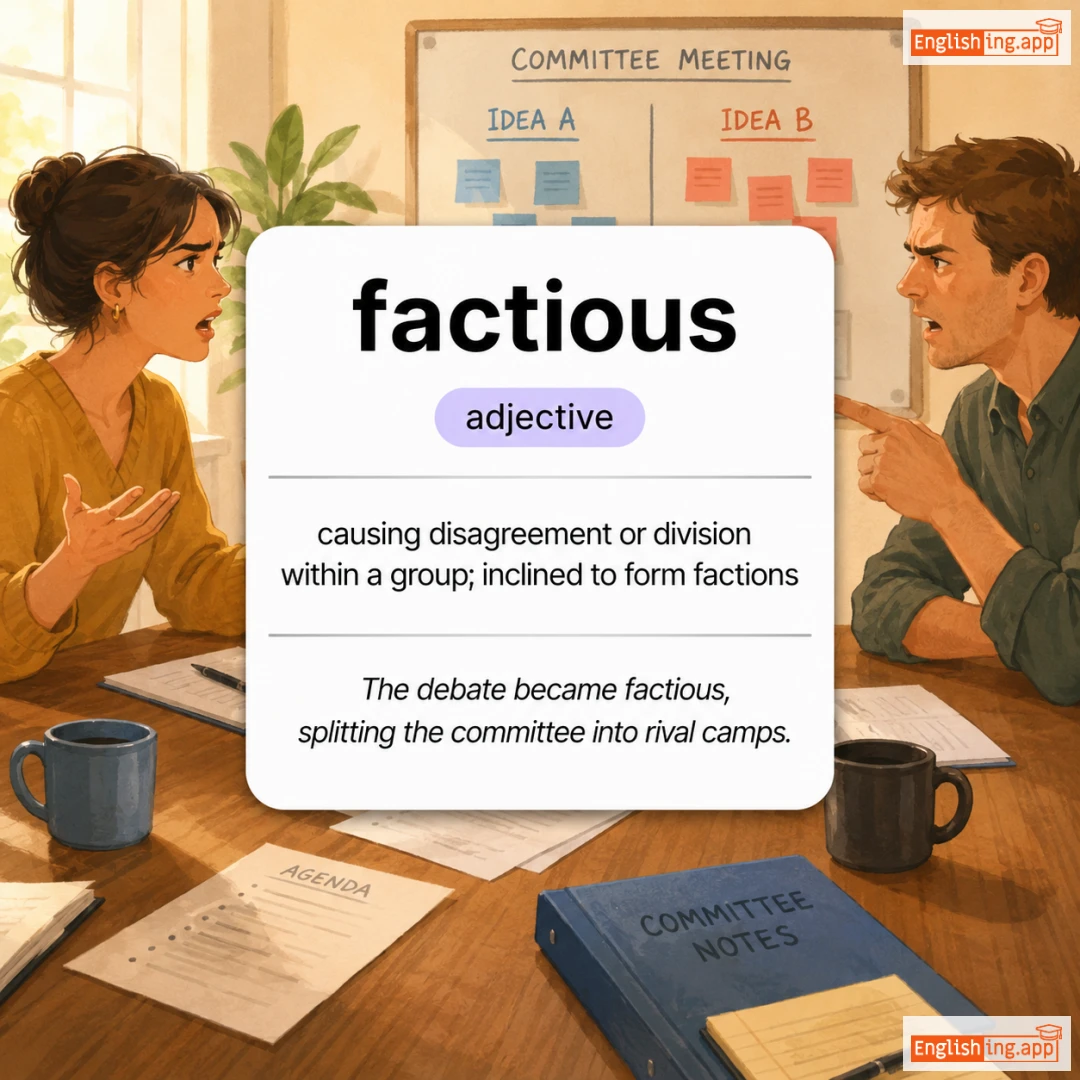
factious definition card — visual illustration of the meaning
adjective C2
/ˈfækʃəs/
factionnel (factionnel)

causing disagreement or division within a group; inclined to form factions

"The debate became factious, splitting the committee into rival camps."

"Le débat est devenu factionnel, divisant le comité en camps rivaux." (Le debat est devenu factionnel, divisant le comite en camps rivaux.)
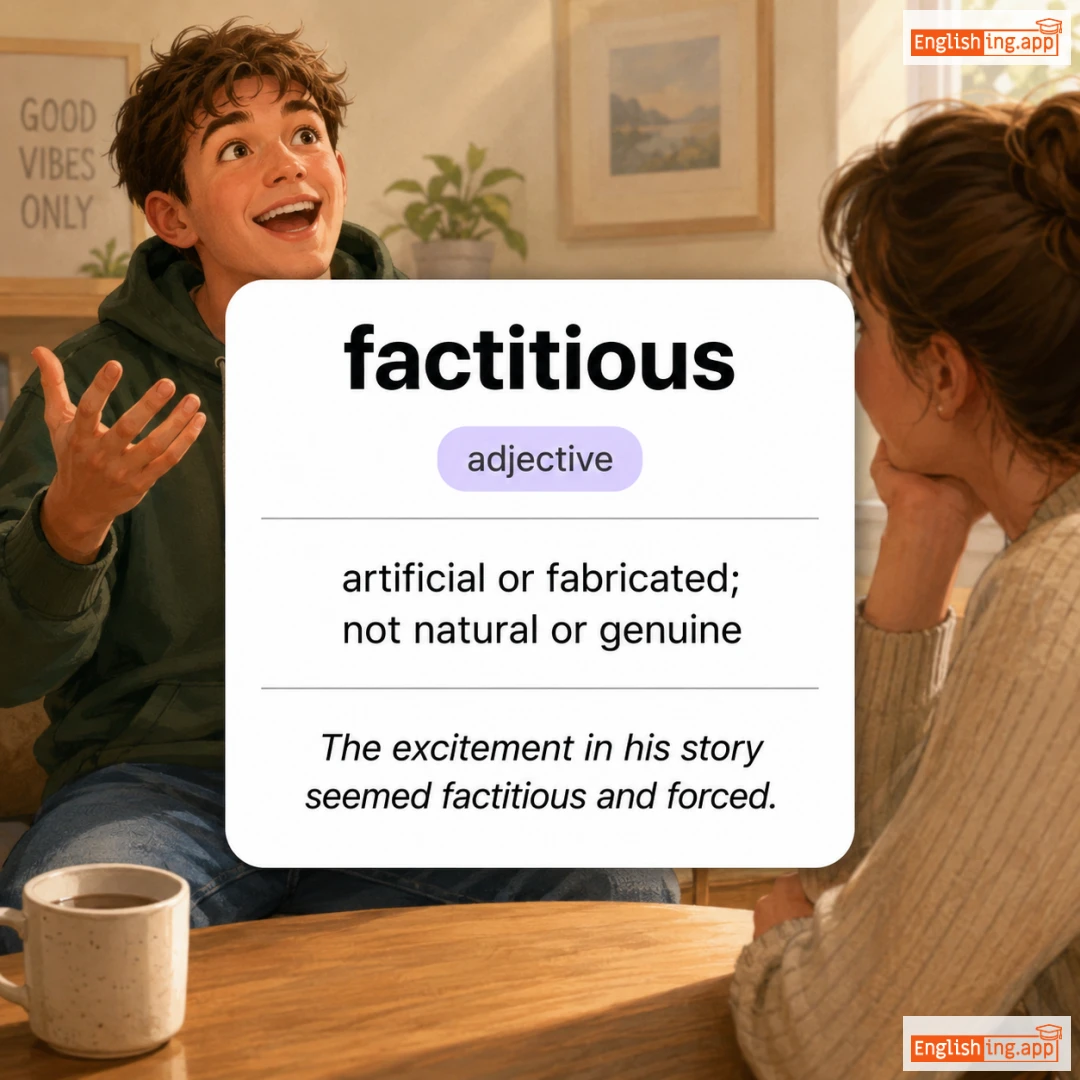
factitious definition card — visual illustration of the meaning
adjective C2
/fækˈtɪʃəs/
artificiel, non authentique (artificiel, non authentique)

artificial or fabricated; not natural or genuine

"The excitement in his story seemed factitious and forced."

"L'excitation dans son histoire semblait factice et forcée." (L'excitation dans son histoire semblait factice et forcée.)
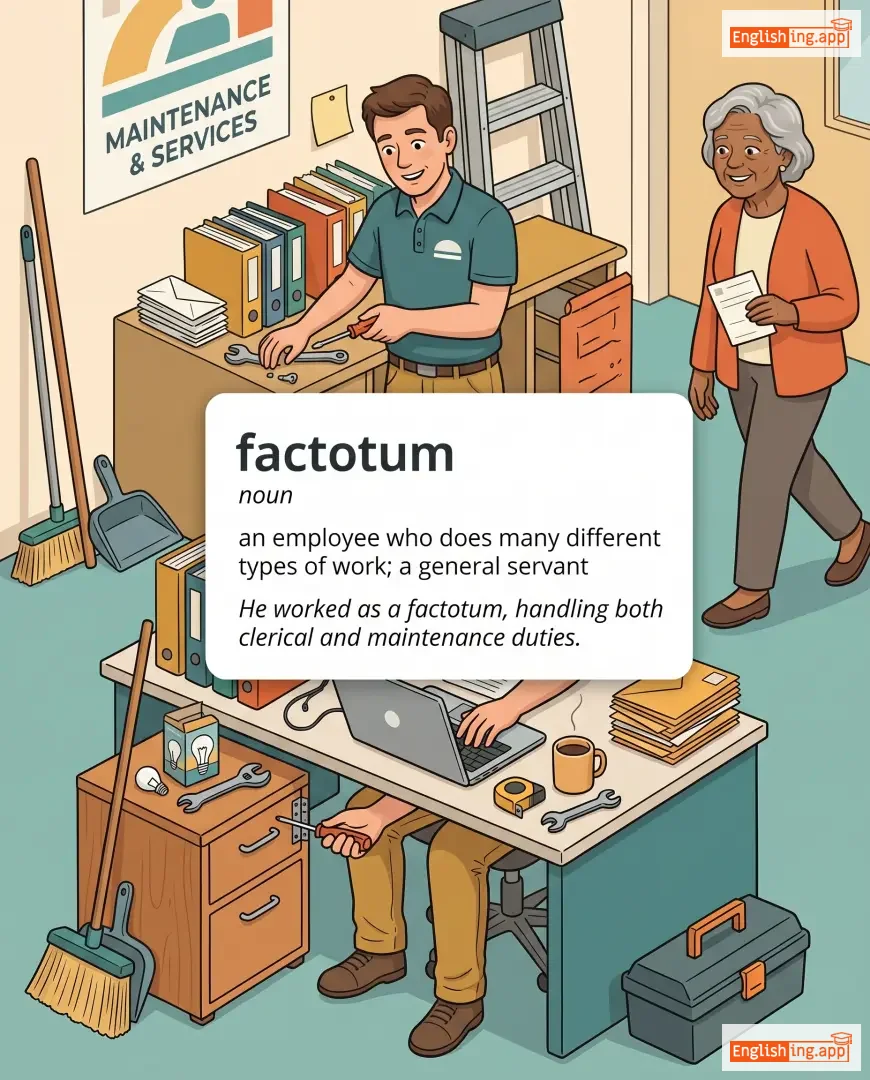
factotum definition card — visual illustration of the meaning
noun C2
/fækˈtoʊtəm/
homme à tout faire (homme a tout faire)

an employee who does many different types of work; a general servant

"He worked as a factotum, handling both clerical and maintenance duties."

"Il travaillait comme un factotum, s'occupant à la fois des tâches administratives et de maintenance." (Il travaillait comme un factotum, s'occupant a la fois des taches administratives et de maintenance.)
adjective C2
/ˈfædɪʃ/
mode éphémère (mode ephemere)

Following a temporary trend or fashion

"Wearing neon clothes was a faddish style in the 1980s."

"Porter des vêtements néon était un style fad en les années 1980." (Porter des vetements neon etait un style fad en les annees 1980.)
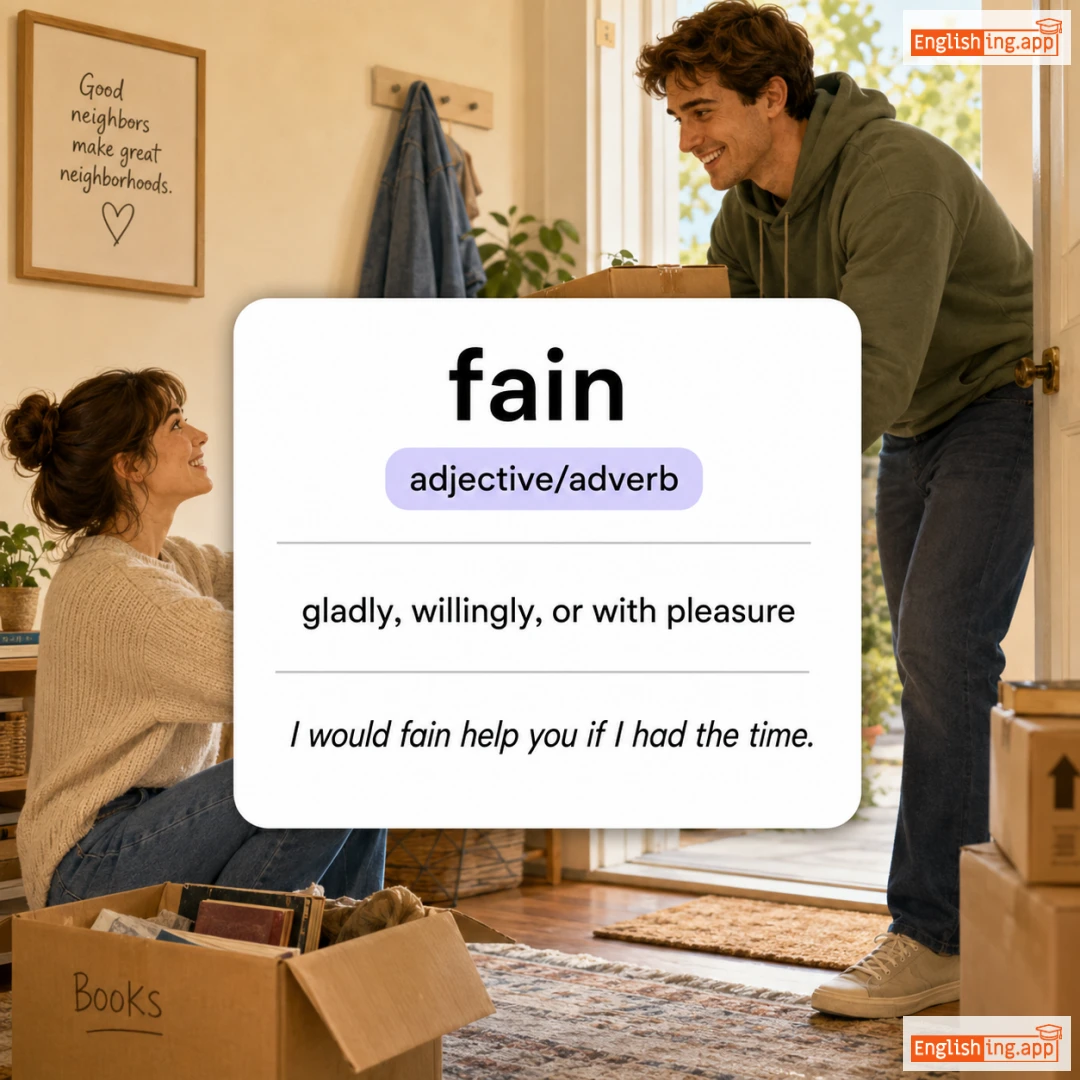
fain definition card — visual illustration of the meaning
adjective/adverb C2
/feɪn/
volontiers, avec plaisir (volontiers, avec plaisir)

gladly, willingly, or with pleasure

"I would fain help you if I had the time."

"Si j'avais le temps, je t'aiderais volontiers." (Si j'avais le temps, je t'aiderais volontiers.)
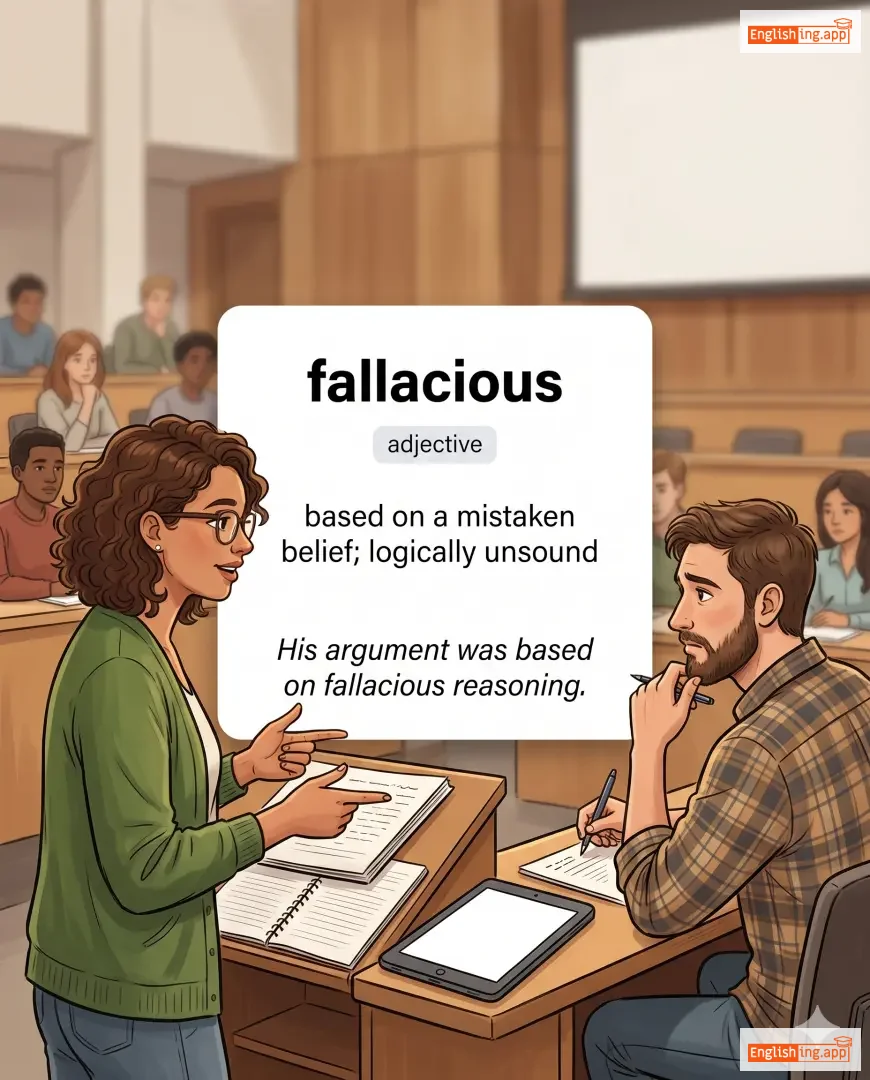
fallacious definition card — visual illustration of the meaning
adjective C2
/fəˈleɪ.ʃəs/
fallacieux (fallacieux)

based on a mistaken belief; logically unsound

"His argument was based on fallacious reasoning."

"Son argument était basé sur un raisonnement fallacieux." (Son argument était basé sur un raisonnement fallacieux.)
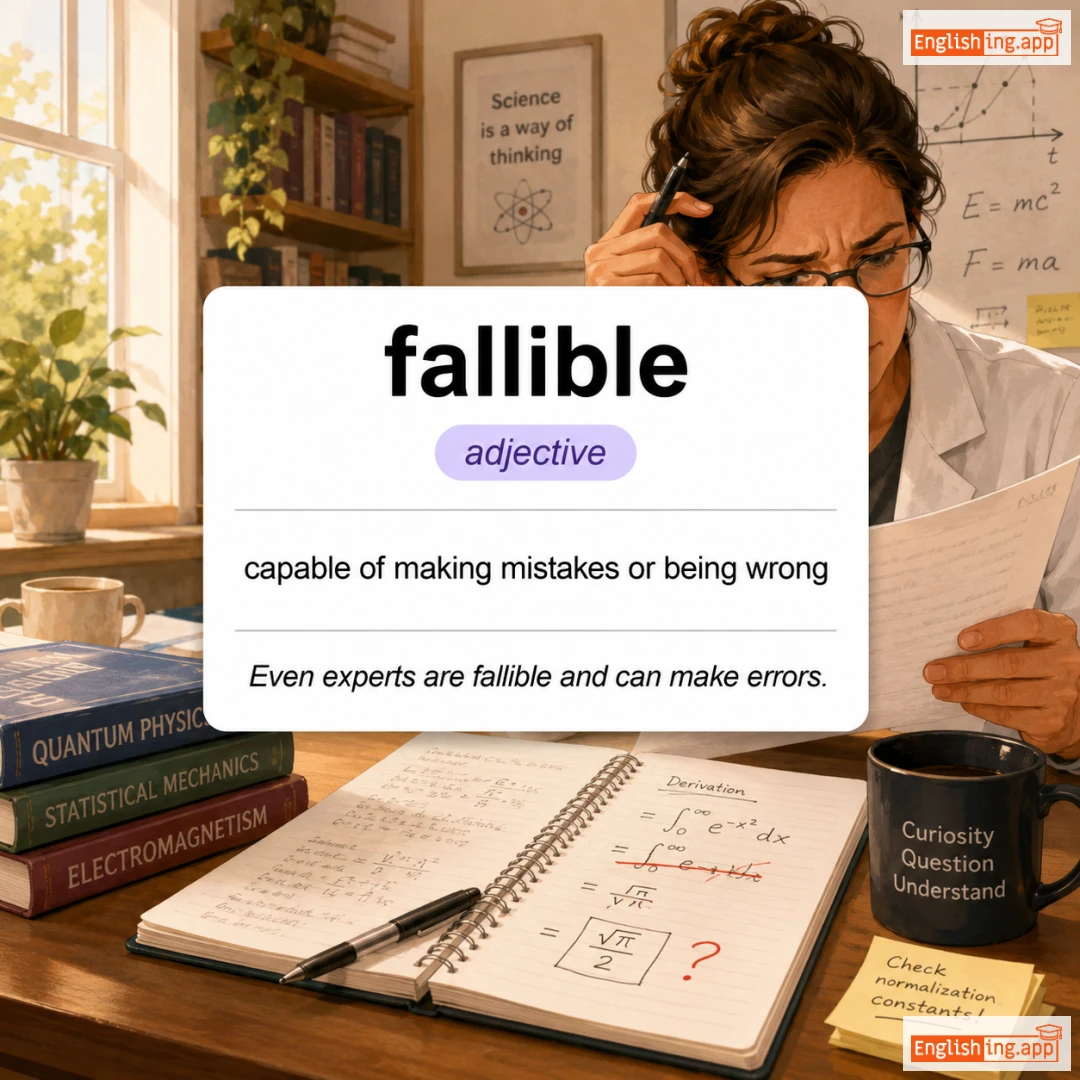
fallible definition card — visual illustration of the meaning
adjective C2
/ˈfæləbl/
capable de faire des erreurs (capable de faire des erreurs)

capable of making mistakes or being wrong

"Even experts are fallible and can make errors."

"Même les experts sont faillibles et peuvent faire des erreurs." (Même les experts sont faillibles et peuvent faire des erreurs.)
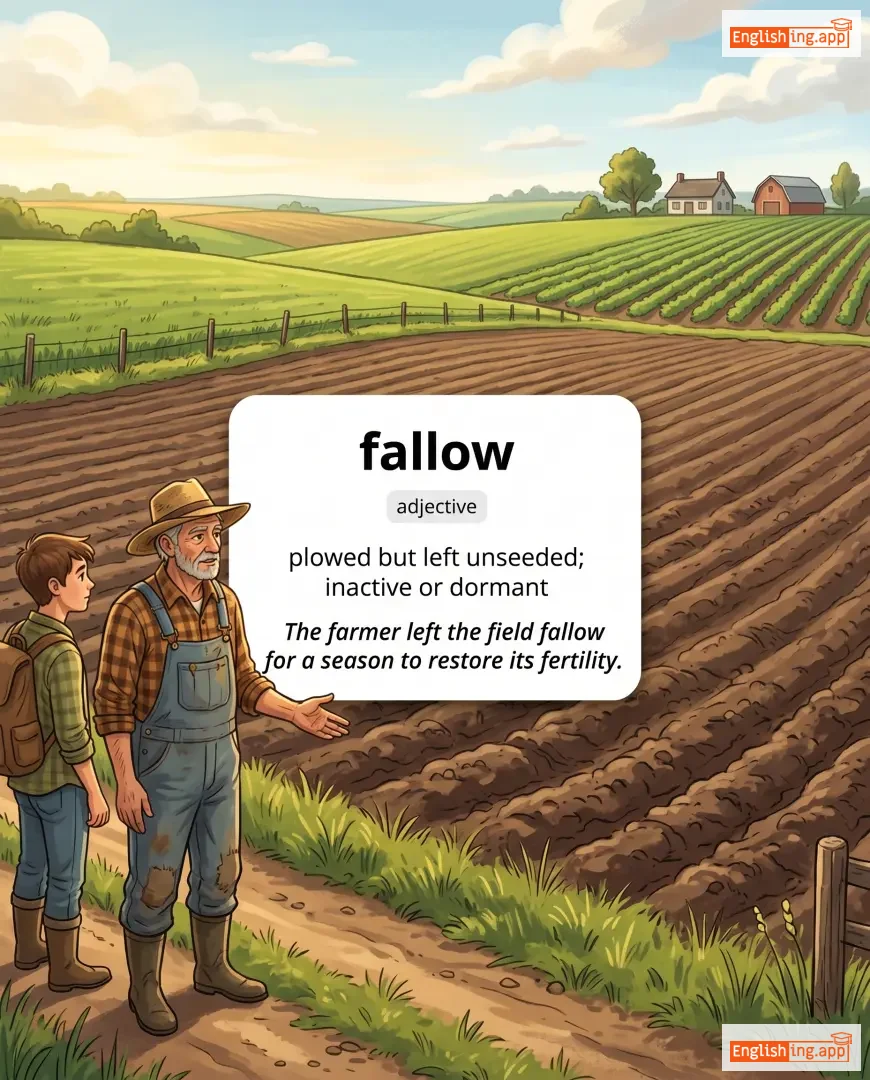
fallow definition card — visual illustration of the meaning
adjective C2
/ˈfæloʊ/
en jachère, inactif (en jachère, inactif)

plowed but left unseeded; inactive or dormant

"The farmer left the field fallow for a season to restore its fertility."

"L'agriculteur a laissé le champ en jachère pendant une saison pour restaurer sa fertilité." (L'agriculteur a laissé le champ en jachère pendant une saison pour restaurer sa fertilité.)
verb C2
/ˈfæmɪʃ/
mourir de faim (mourir de faim)

to suffer or cause to suffer from extreme hunger

"The stranded hikers began to famish after several days without food."

"Les randonneurs bloqués ont commencé à mourir de faim après plusieurs jours sans nourriture." (Les randonneurs bloqués ont commencé à mourir de faim après plusieurs jours sans nourriture.)
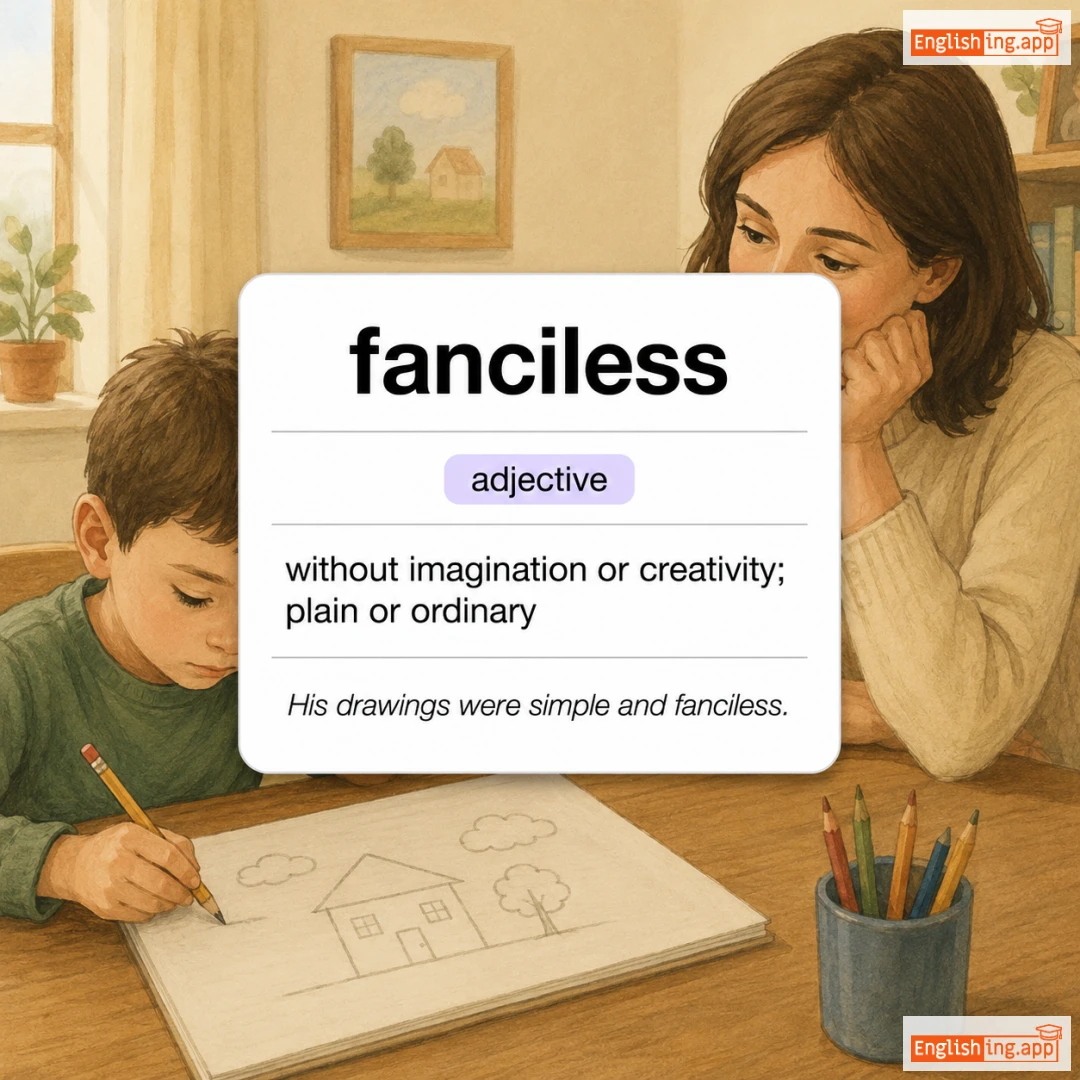
fanciless definition card — visual illustration of the meaning
adjective C2
/ˈfæn.sɪ.ləs/
sans imagination, ordinaire (sans imagination, ordinaire)

without imagination or creativity; plain or ordinary

"His drawings were simple and fanciless."

"Ses dessins étaient simples et sans imagination." (Ses dessins etaient simples et sans imagination.)
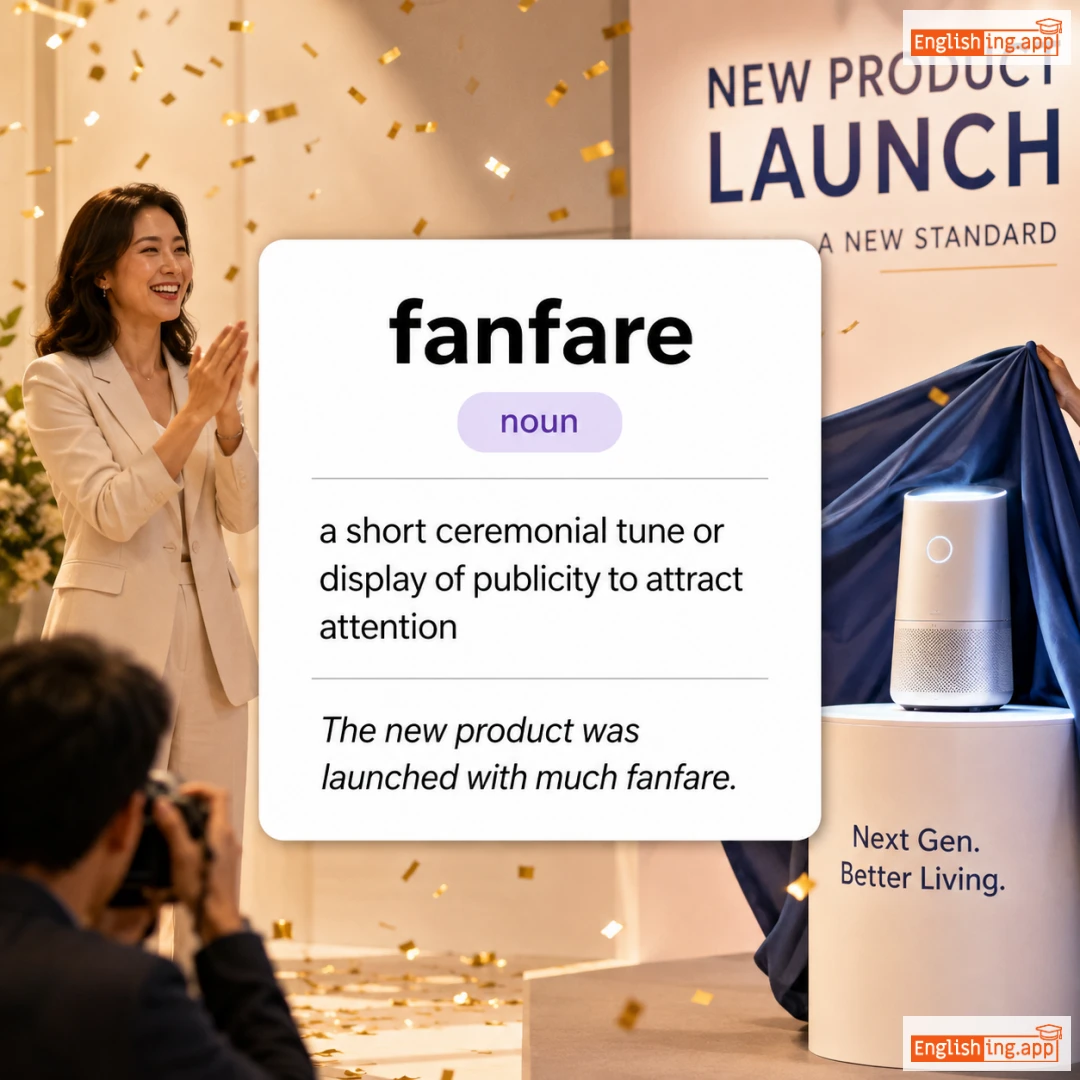
fanfare definition card — visual illustration of the meaning
noun C2
/ˈfæn.feər/
grande pompe, publicité (grande pompe, publicite)

a short ceremonial tune or display of publicity to attract attention

"The new product was launched with much fanfare."

"Le nouveau produit a été lancé avec beaucoup de fanfare." (Le nouveau produit a ete lance avec beaucoup de fanfare.)