Vocabulaires

Découvrez, apprenez et maîtrisez le vocabulaire anglais

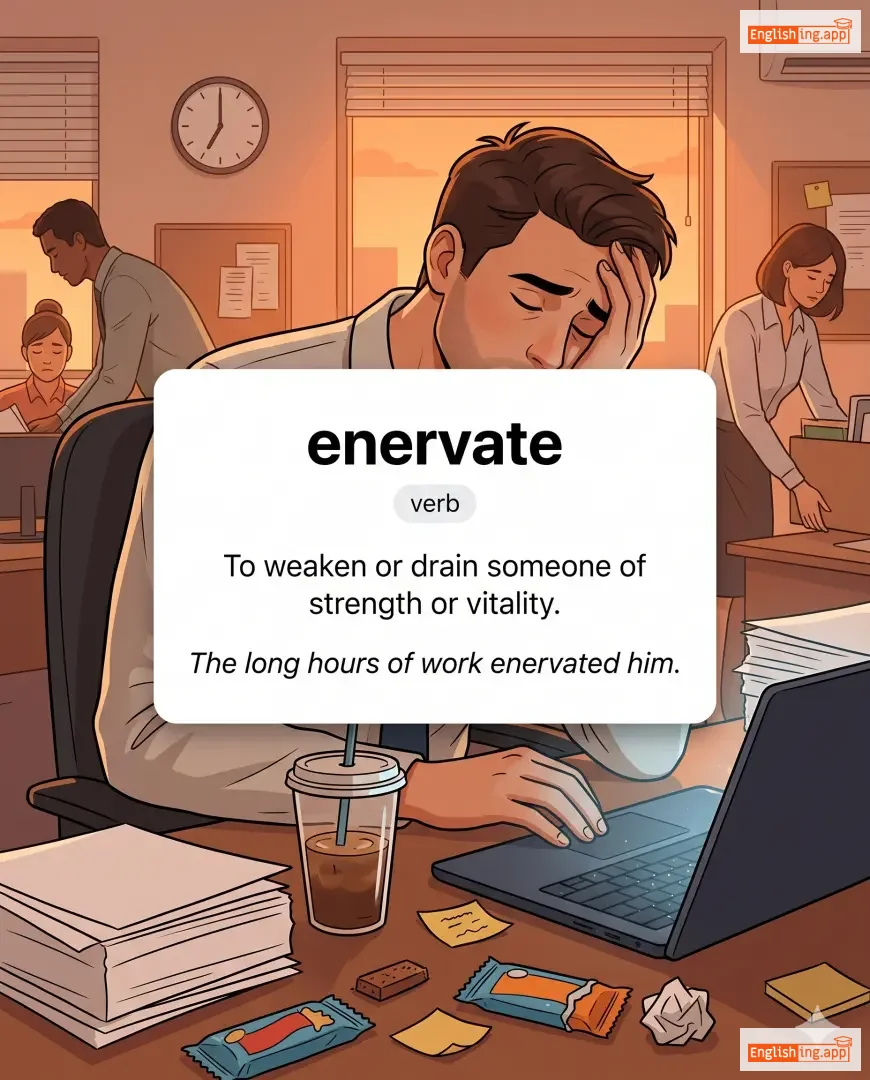
enervate definition card — visual illustration of the meaning
verb C2
/ˈɛnərˌveɪt/
弱体化する (jakutaika suru)

To weaken or drain someone of strength or vitality.

"The long hours of work enervated him."

"長時間の労働が彼を弱体化させた。" (Chōjikan no rōdō ga kare o jakutaika saseta.)
adjective C2
/ˈɛnərˌveɪtɪd/
疲れ切った (tsukare kitta)

Lacking energy, vitality, or strength; weakened or exhausted.

"After the long meeting, she felt completely enervated."

"長い会議の後、彼女は完全に疲れ切ったと感じていた。" (Nagai kaigi no ato, kanojo wa kanzen ni tsukare kitta to kanjite ita.)
verb C2
/ɛnˈfiːbəl/
弱める (yowameru)

To make weak or feeble; to deprive of strength.

"The long illness enfeebled the old man."

"長い病気で老人は弱りました。" (Nagai byōki de rōjin wa yowarimashita.)
verb C2
/ɛnˈfrænˌtʃaɪz/
幸福 (kōfuku)

To grant the right to vote or other rights of citizenship.

"The new law enfranchised thousands of people."

"彼女は賞を受け取ったとき、自分の幸福を隠せませんでした。" (Kanojo wa shō o uketotta toki, jibun no kōfuku o kakusemasendeshita.)
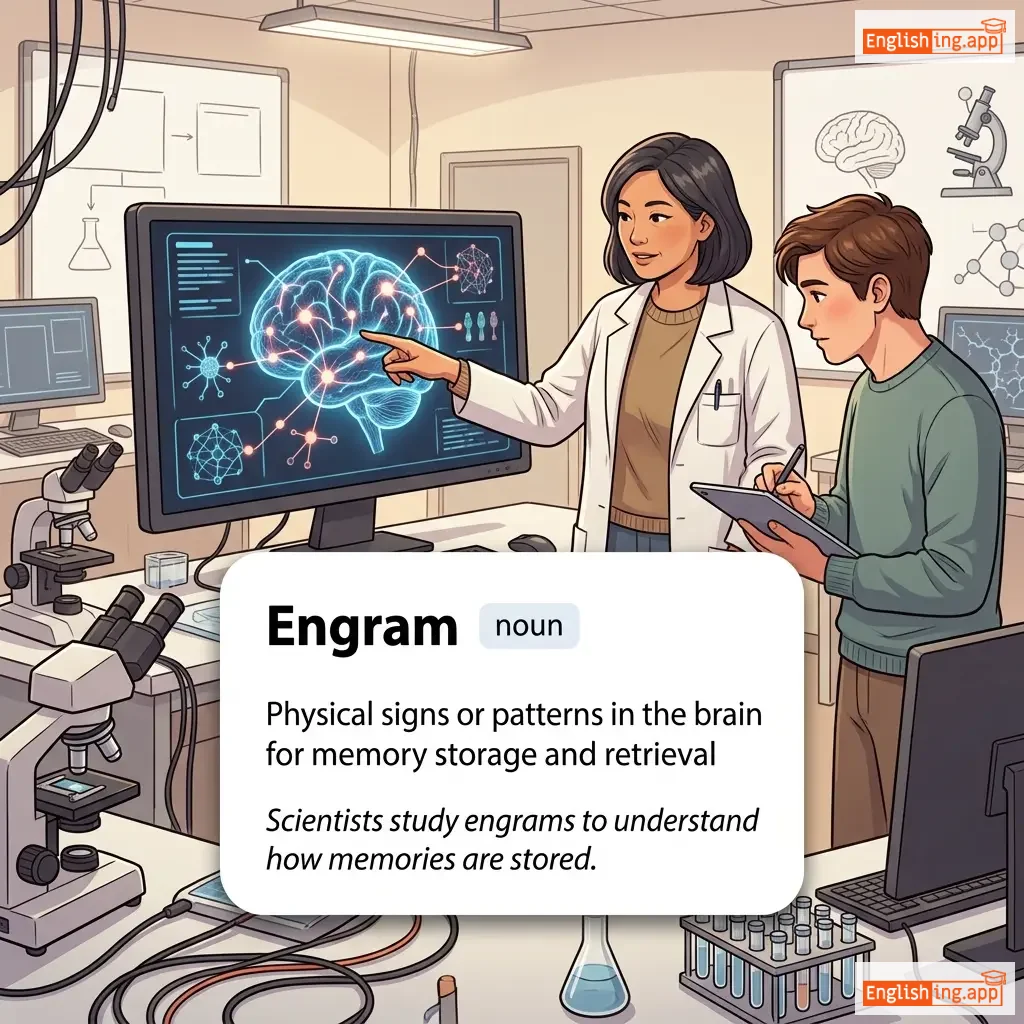
Engram definition card — visual illustration of the meaning
noun C2
ˈɛn.ɡræm
記憶の保存と検索のための脳内の物理的なサイン (Kioku no hozon to kensaku no tame no nōnai no butsuri-teki na sain)

Physical signs or patterns in the brain for memory storage and retrieval

"Scientists study engrams to understand how memories are stored."

"科学者たちはエングラムを研究して、記憶がどのように保存されるかを理解しようとしています。" (Kagakusha-tachi wa engramu o kenkyū shite, kioku ga dono yō ni hozon sareru ka o rikai shiyou to shiteimasu.)
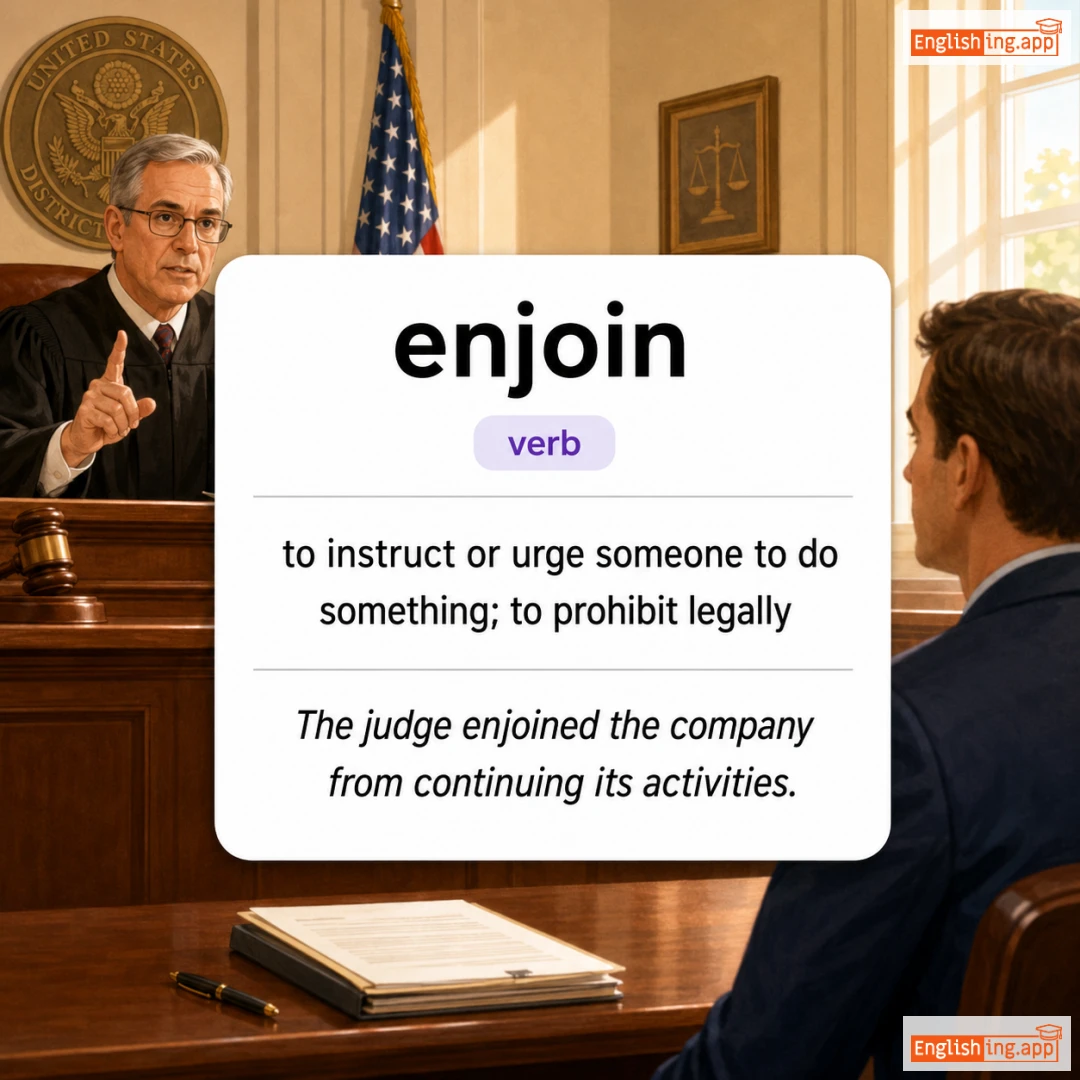
enjoin definition card — visual illustration of the meaning
verb C2
/ɛnˈdʒɔɪn/
命じる, 禁止する (meijiru, kinshi suru)

to instruct or urge someone to do something; to prohibit legally

"The judge enjoined the company from continuing its activities."

"裁判官は会社に活動を続けることを禁じました。" (Saibankan wa kaisha ni katsudō o tsudzukeru koto o kinjimashita.)
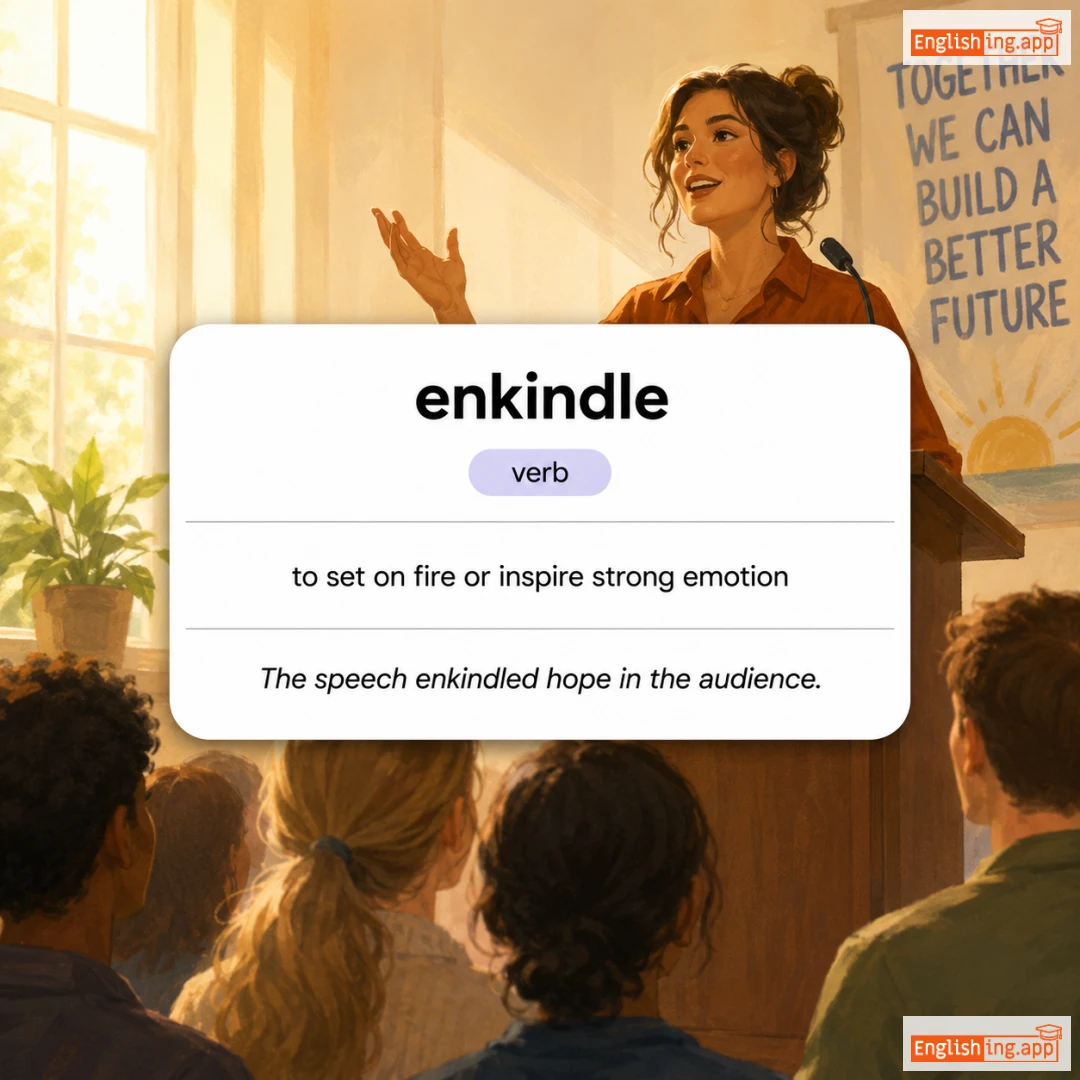
enkindle definition card — visual illustration of the meaning
verb C2
/ɛnˈkɪndl/
火をつける、感動させる (hi o tsukeru, kandō saseru)

to set on fire or inspire strong emotion

"The speech enkindled hope in the audience."

"スピーチは観客に希望を灯しました。" (Supīchi wa kankyaku ni kibō o tomoshimashita.)
verb C2
/ɪˈnəʊbəl/
高貴にする (kōki ni suru)

to give someone a noble rank or to elevate in dignity or honor

"His selfless actions ennobled his character in the eyes of others."

"彼の自己犠牲的な行動は、他の人々の目に彼の人格を高めました。" (Kare no jiko giseiteki na kōdō wa, hoka no hitobito no me ni kare no jin'kaku o takamemashita.)
noun C2
/ˈɒnwiː/ or /ˈɑːnwiː/
退屈 (taikutsu)

A feeling of boredom, listlessness, or dissatisfaction arising from lack of excitement.

"After weeks of doing nothing, he sank into a deep sense of ennui."

"何もせずに数週間後、彼は深い退屈に沈んだ。" (Nani mo sezu ni suushukan go, kare wa fukai taikutsu ni shizunda.)
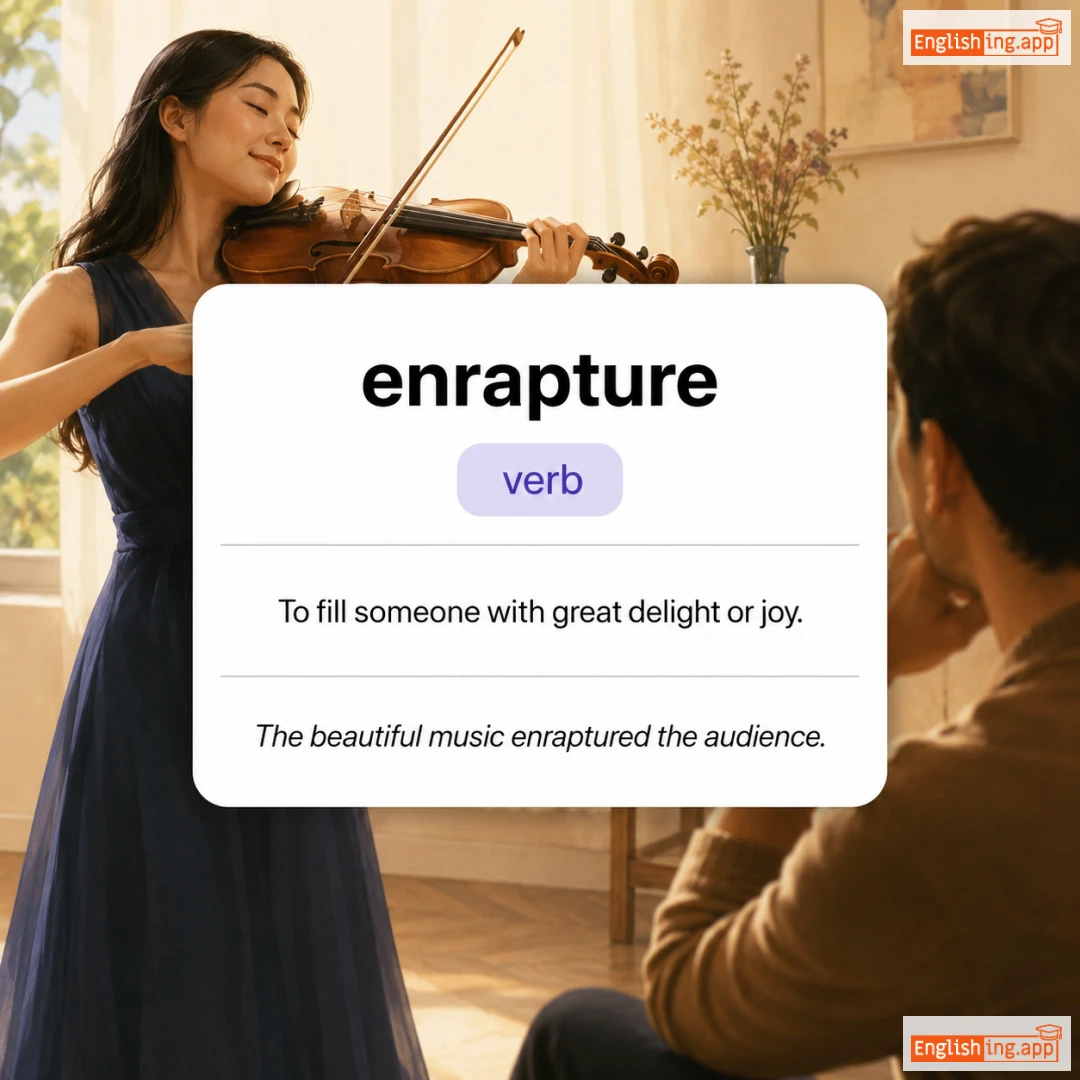
enrapture definition card — visual illustration of the meaning
verb C2
/ɪnˈræptʃər/
魅了する (miryō suru)

To fill someone with great delight or joy.

"The beautiful music enraptured the audience."

"美しい音楽は観客を魅了しました。" (Utsukushī ongaku wa kankyaku o miryō shimashita.)
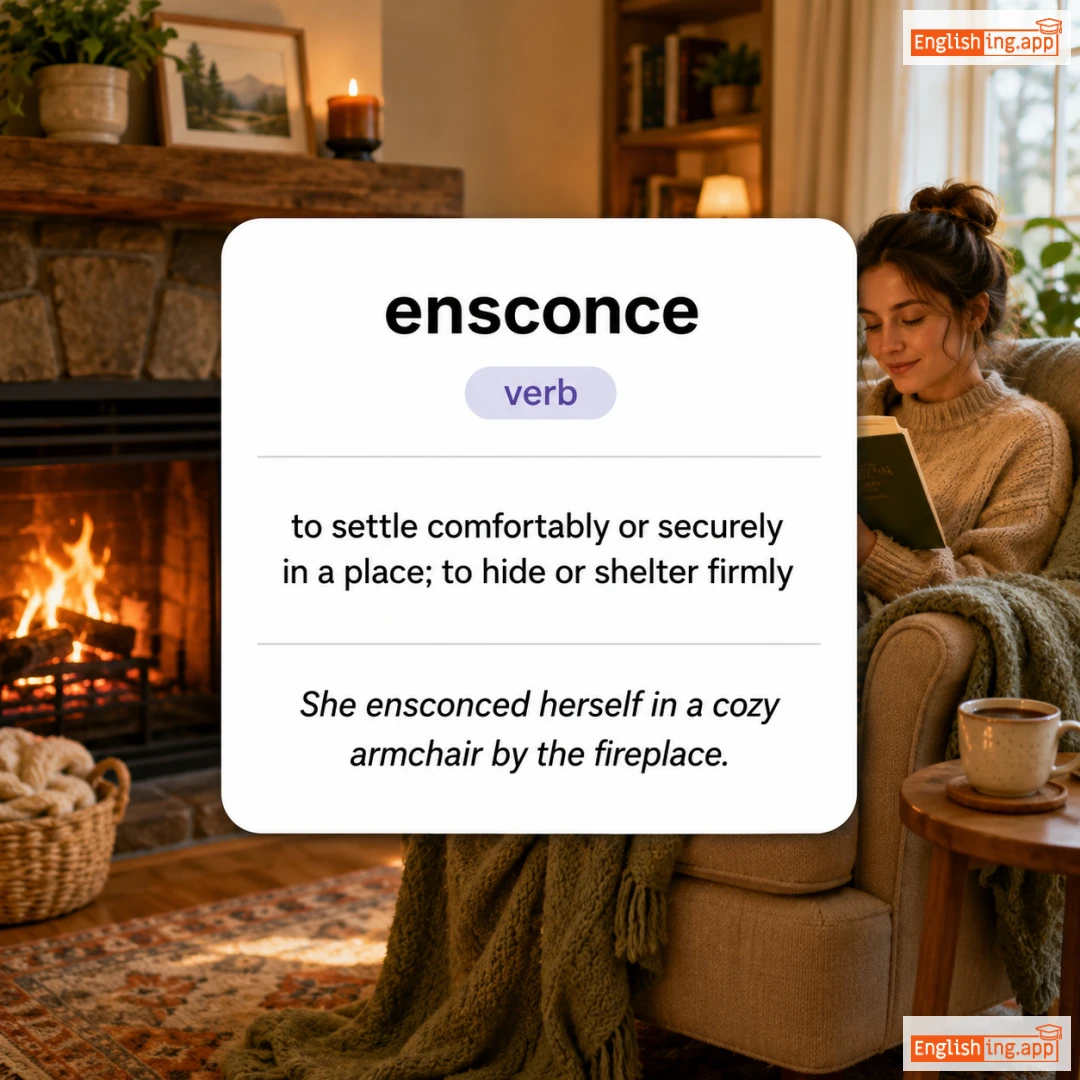
ensconce definition card — visual illustration of the meaning
verb C2
/ɪnˈskɒns/
快適に座る, 隠れる (kaiteki ni suwaru, kakureru)

to settle comfortably or securely in a place; to hide or shelter firmly

"She ensconced herself in a cozy armchair by the fireplace."

"彼女は暖炉のそばの快適な椅子に座り込んだ。" (Kanojo wa danro no soba no kaiteki na isu ni suwarikonda.)
noun C2
/ˈɛnsaɪn/
(ki)

A flag or standard, especially a military or naval one indicating nationality; also a junior officer in the navy or coast guard.

"The ship raised its national ensign before leaving the harbor."

"その船は港を出る前に国旗を掲げました。" (Sono fune wa minato o deru mae ni kokki o kake mashita.)
verb C2
/ɪnˈsnɛər/
罠にかける (wana ni kakeru)

to catch or trap, often by trickery or deceit

"The hunter ensnared the rabbit with a net."

"ハンターはネットでウサギを捕まえました。" (Hantā wa netto de usagi o tsukamaemashita.)
verb C2
/ɪnˈθrɔːl/
魅了する (miryō suru)

To captivate or hold someone’s full attention.

"The magician’s performance enthralled the audience."

"マジシャンのパフォーマンスは観客を魅了した。" (Majishan no pafōmansu wa kankyaku o miryō shita.)
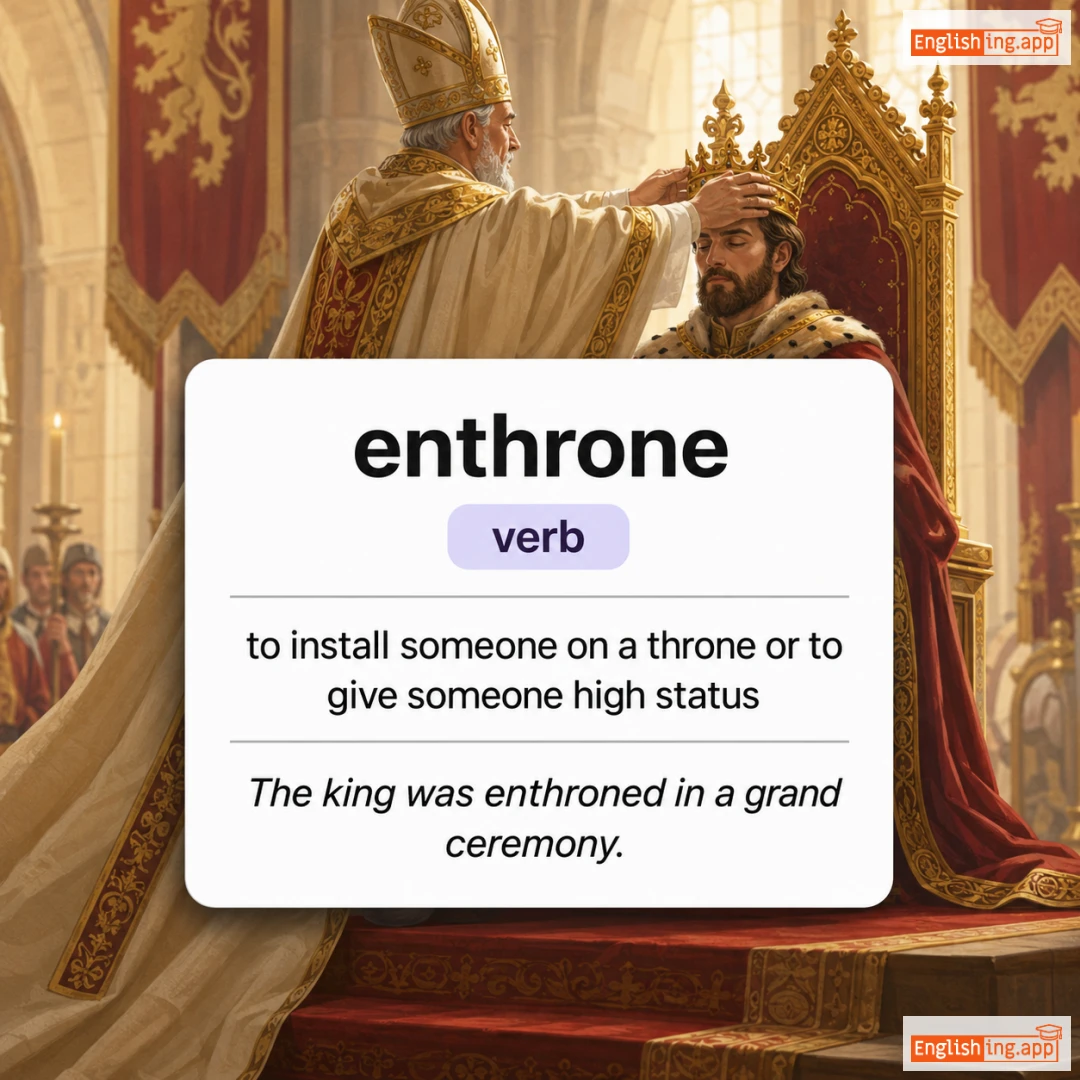
enthrone definition card — visual illustration of the meaning
verb C2
/ɪnˈθroʊn/
戴冠する (daikan suru)

to install someone on a throne or to give someone high status

"The king was enthroned in a grand ceremony."

"王は大きな儀式で即位しました。" (Ō wa ōkina gishiki de sokui shimashita.)
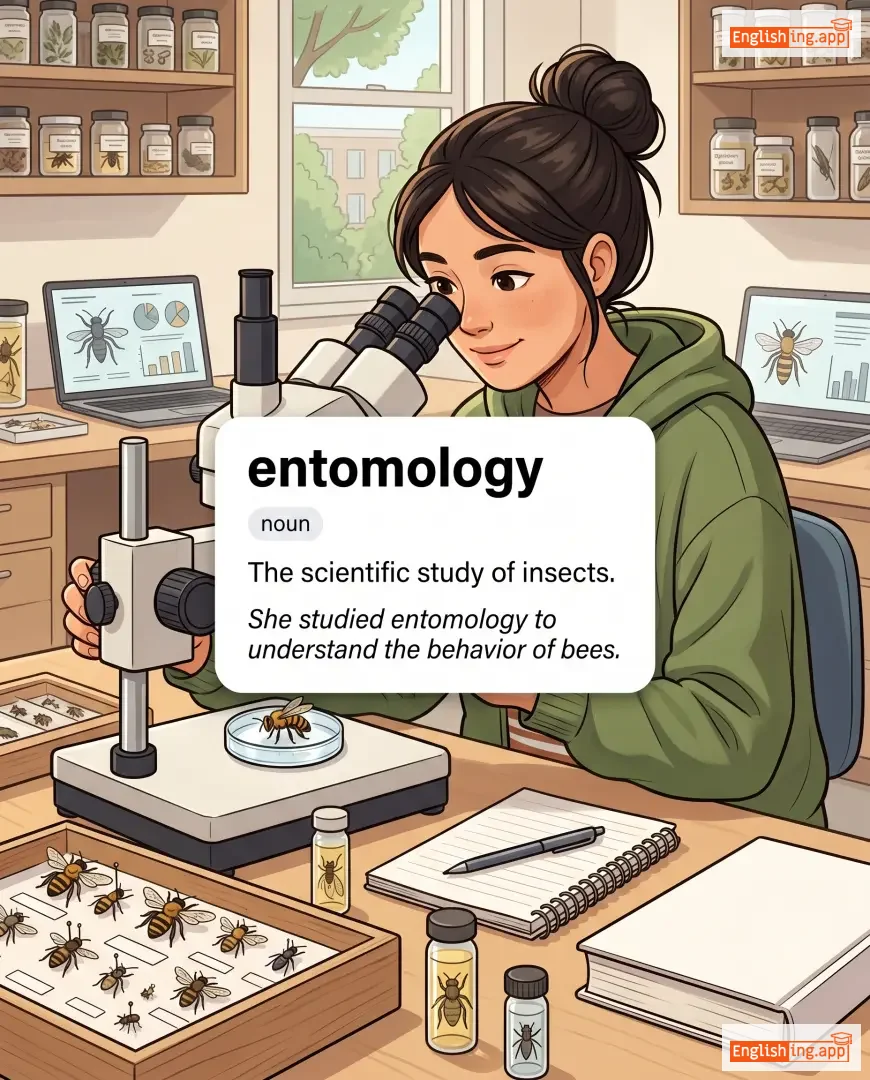
entomology definition card — visual illustration of the meaning
noun C2
/ˌɛntəˈmɒlədʒi/
昆虫学 (konchugaku)

The scientific study of insects.

"She studied entomology to understand the behavior of bees."

"彼女は蜂の行動を理解するために昆虫学を学びました。" (Kanojo wa hachi no koudou wo rikai suru tame ni konchugaku wo manabimashita.)
verb C2
/ɪnˈtræp/

To catch or trick someone into a difficult situation.

"The police tried to entrap the criminal with false evidence."

verb C2
/ɪnˈtriːt/
懇願する (kongansuru)

To ask earnestly or beg someone to do something.

"She entreated him to stay a little longer."

"彼女は彼にもう少し長くいてくれるように懇願した。" (Kanojo wa kare ni mou sukoshi nagaku itekureru you ni konganshita.)
noun C2
/ɪnˈtriːti/
請願 (seigan)

An earnest or humble request or plea.

"She made an entreaty for peace during the heated argument."

"彼女は激しい議論の中で平和を求める請願をしました。" (Kanojo wa hageshī giron no naka de heiwa o motomeru seigan o shimashita.)
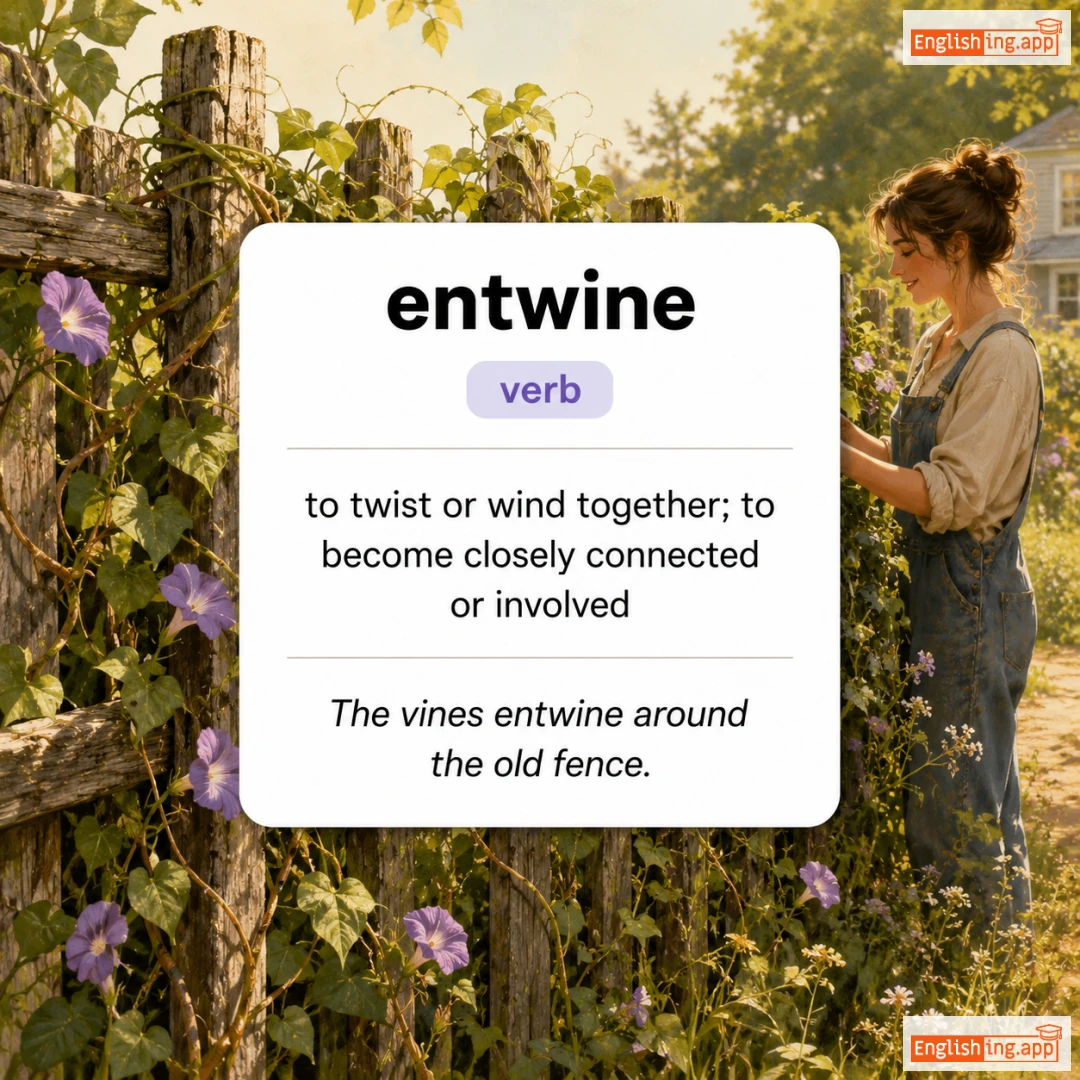
entwine definition card — visual illustration of the meaning
verb C2
/ɪnˈtwaɪn/
絡ませる (karamaseru)

to twist or wind together; to become closely connected or involved

"The vines entwine around the old fence."

"つるが古いフェンスを巻きつけている。" (Tsuru ga furui fensu o makitsukete iru.)
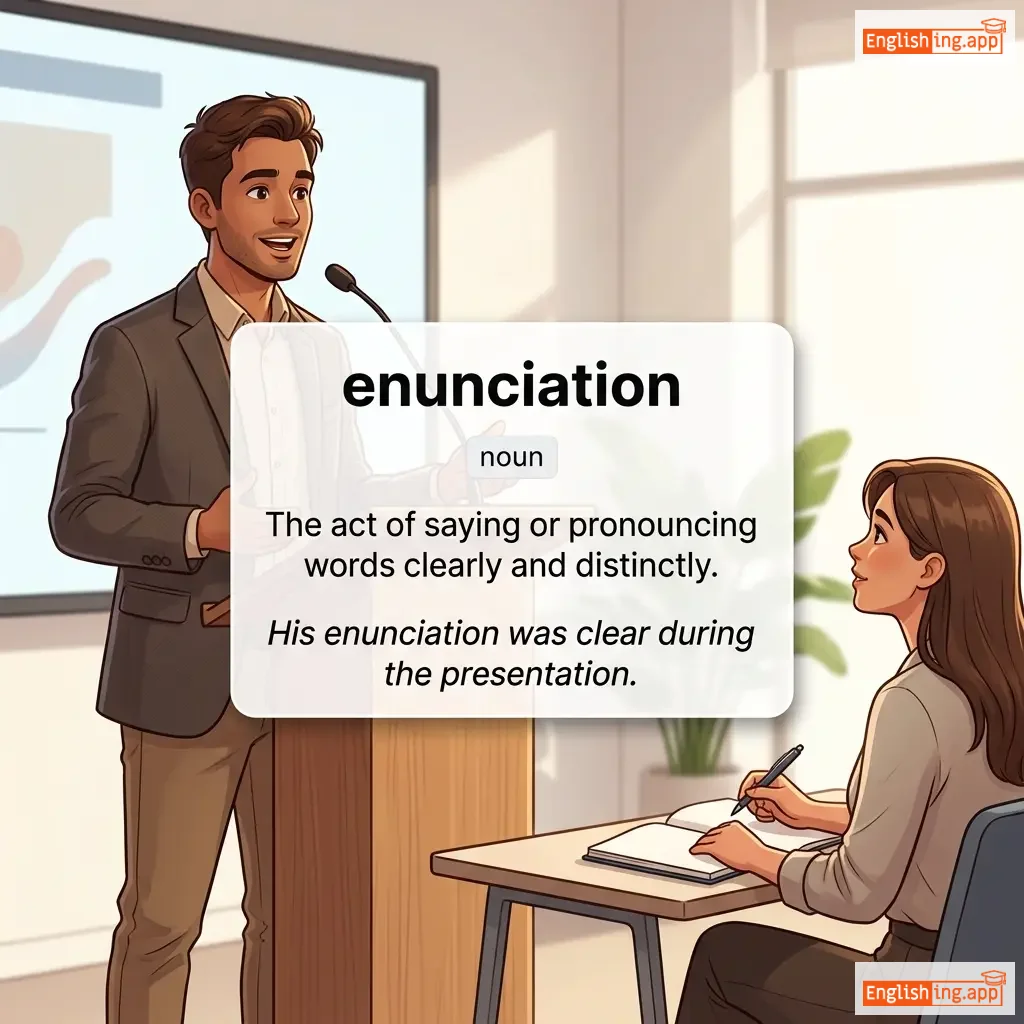
enunciation definition card — visual illustration of the meaning
noun C2
/ɪˌnʌn.siˈeɪ.ʃən/
発音, 明確な発音 (hatsuon, meikaku na hatsuon)

The act of saying or pronouncing words clearly and distinctly.

"His enunciation was clear during the presentation."

"彼の発音はプレゼンテーション中に明確でした。" (Kare no hatsuon wa purezentēshon-chū ni meikaku deshita.)
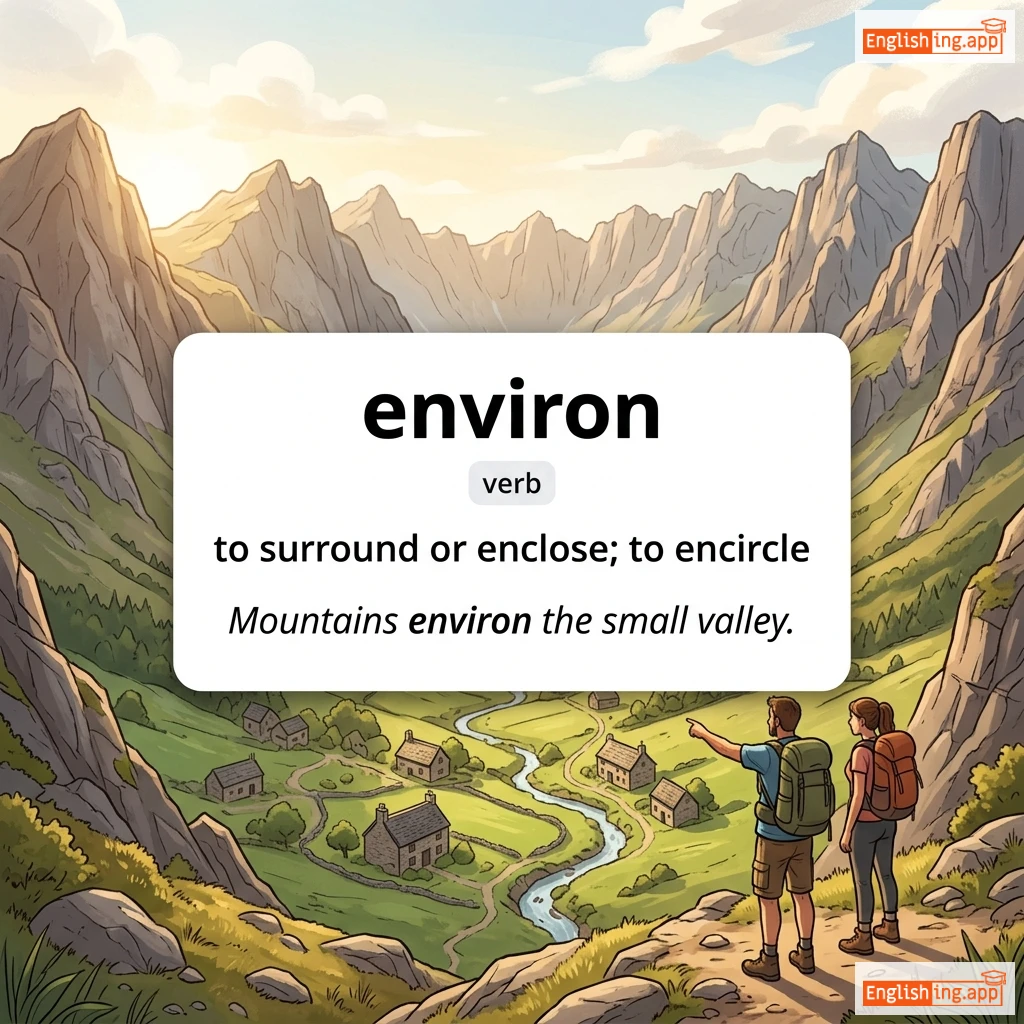
environ definition card — visual illustration of the meaning
verb C2
/ɪnˈvaɪərən/
囲む (kakomu)

to surround or enclose; to encircle

"Mountains environ the small valley."

"山々は小さな谷を囲んでいます。" (Yamayama wa chīsana tani o kakondeimasu.)
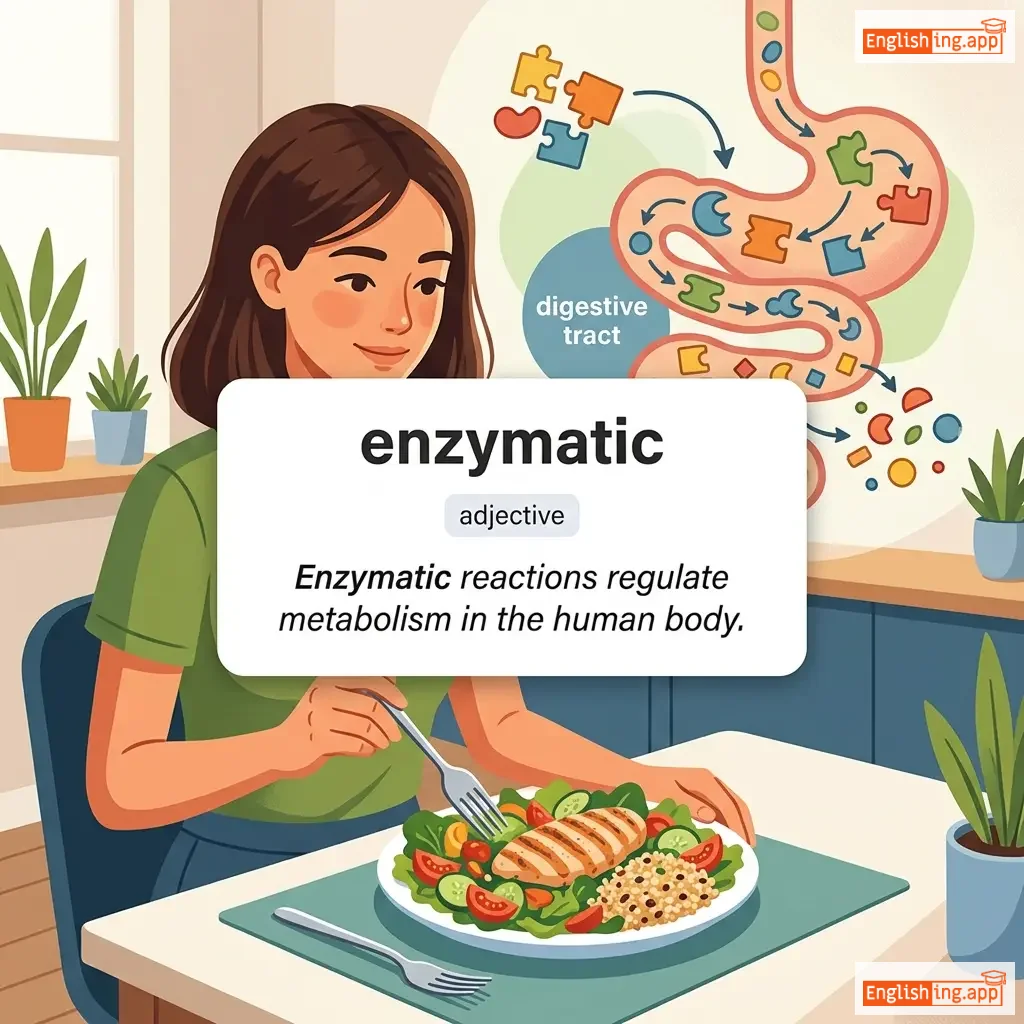
enzymatic definition card — visual illustration of the meaning
adjective C2
/ˌen.zɪˈmæt.ɪk/
酵素に関連する (kōso ni kanren suru)

Relating to or involving enzymes, which are proteins that catalyze biochemical reactions in living organisms.

"Enzymatic reactions regulate metabolism in the human body."

"酵素反応は人間の体内で代謝を調節します。" (Kōso hannō wa ningen no tainai de taisha o chōsetsu shimasu.)
noun C2
/ˈiːən/
エオン (eon)

an indefinitely long period of time; an age

"Dinosaurs lived millions of years ago, in a different eon."

"恐竜は何百万年も前に、異なるエオンで生きていました。" (Kyōryū wa nan byakuman-nen mo mae ni, kotonaru eon de ikite imashita.)
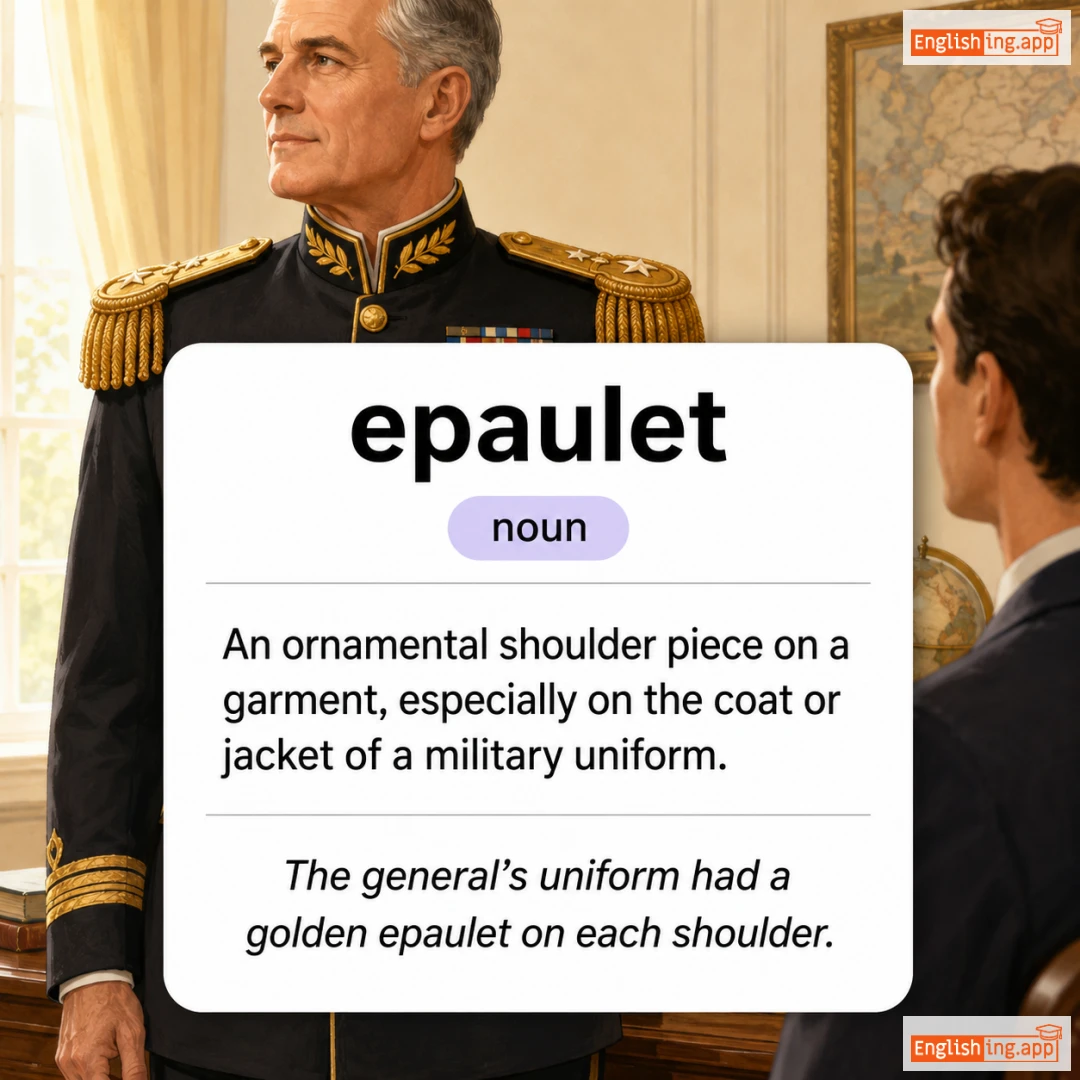
epaulet definition card — visual illustration of the meaning
noun C2
/ˈɛpəlɛt/
肩章 (kashou)

An ornamental shoulder piece on a garment, especially on the coat or jacket of a military uniform.

"The general’s uniform had a golden epaulet on each shoulder."

"将軍の制服は、両肩に金色のエポーレットが付いていた。" (Shougun no seifuku wa, ryōkata ni kin'iro no epōretto ga tsuite ita.)
noun C2
/ˈɛpəlɛt/
肩章 (ken-shou)

A variant spelling of epaulet, also meaning a shoulder ornament, especially on military uniforms.

"The officer’s epaulette shone brightly under the sunlight."

"その将校のエポレットは太陽の下で輝いていました。" (Sono shōkō no eporetto wa taiyō no shita de kagayaite imashita.)
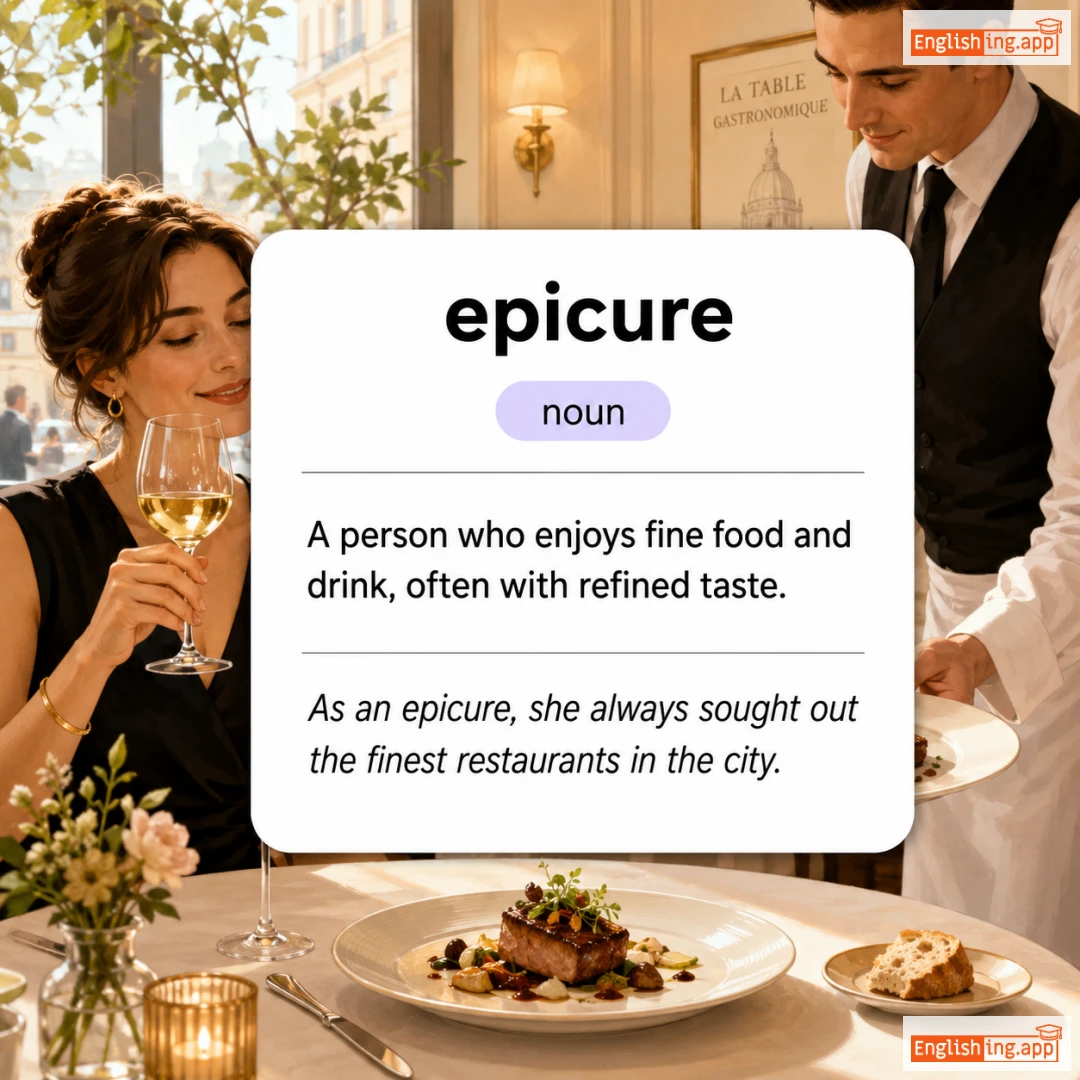
epicure definition card — visual illustration of the meaning
noun C2
/ˈɛpɪkjʊr/
美食家 (bishokka)

A person who enjoys fine food and drink, often with refined taste.

"As an epicure, she always sought out the finest restaurants in the city."

"美食家として、彼女は常に市内で最高のレストランを探していました。" (Bishokka to shite, kanojo wa jōni shinaide saikō no resutoran o sagashite imashita.)
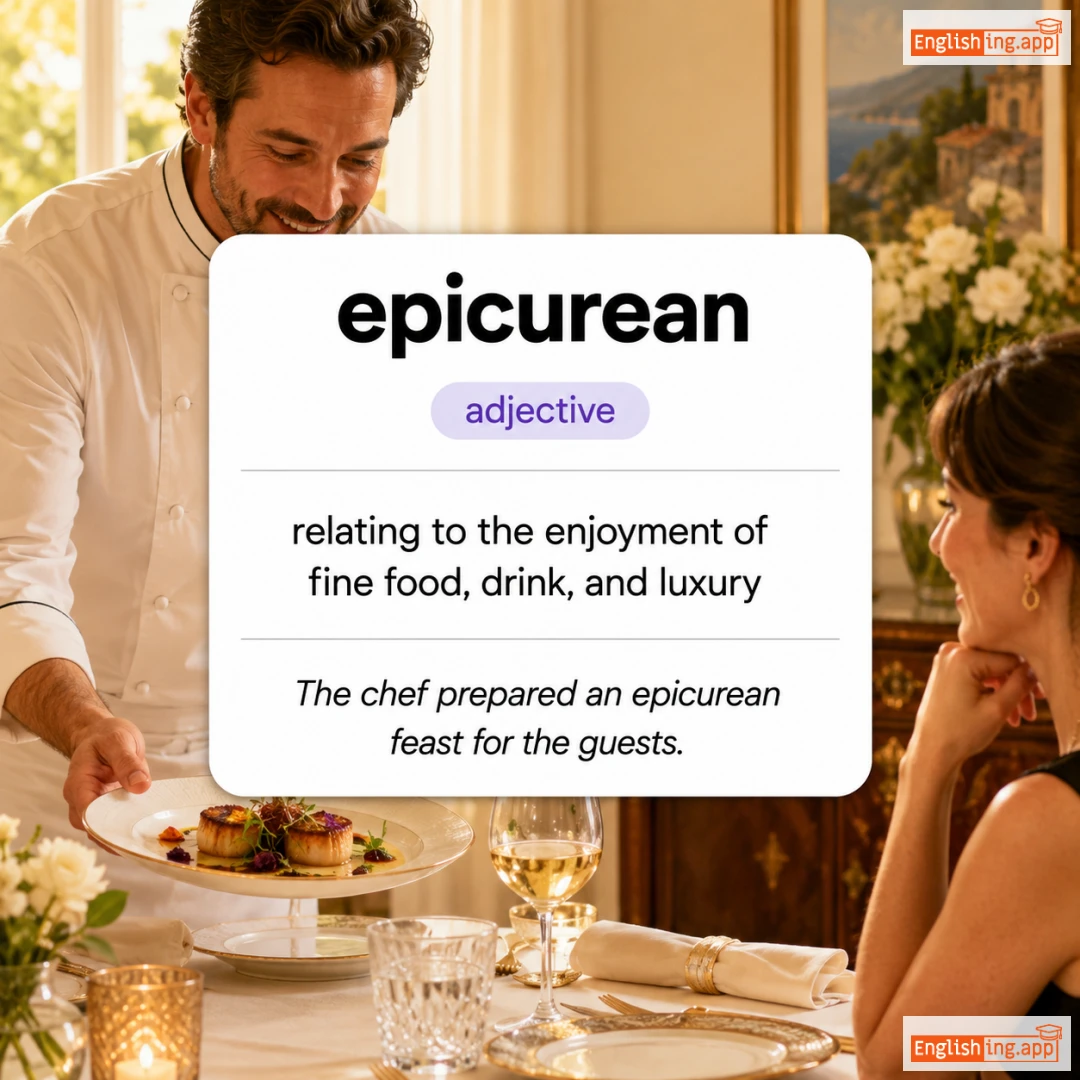
epicurean definition card — visual illustration of the meaning
adjective C2
/ˌɛpɪkjʊˈriːən/
エピキュリアン (epikyurian)

relating to the enjoyment of fine food, drink, and luxury

"The chef prepared an epicurean feast for the guests."

"シェフはゲストのためにエピキュリアンな饗宴を準備しました。" (Shefu wa gesuto no tame ni epikyuriana kyōen o junbi shimashita.)
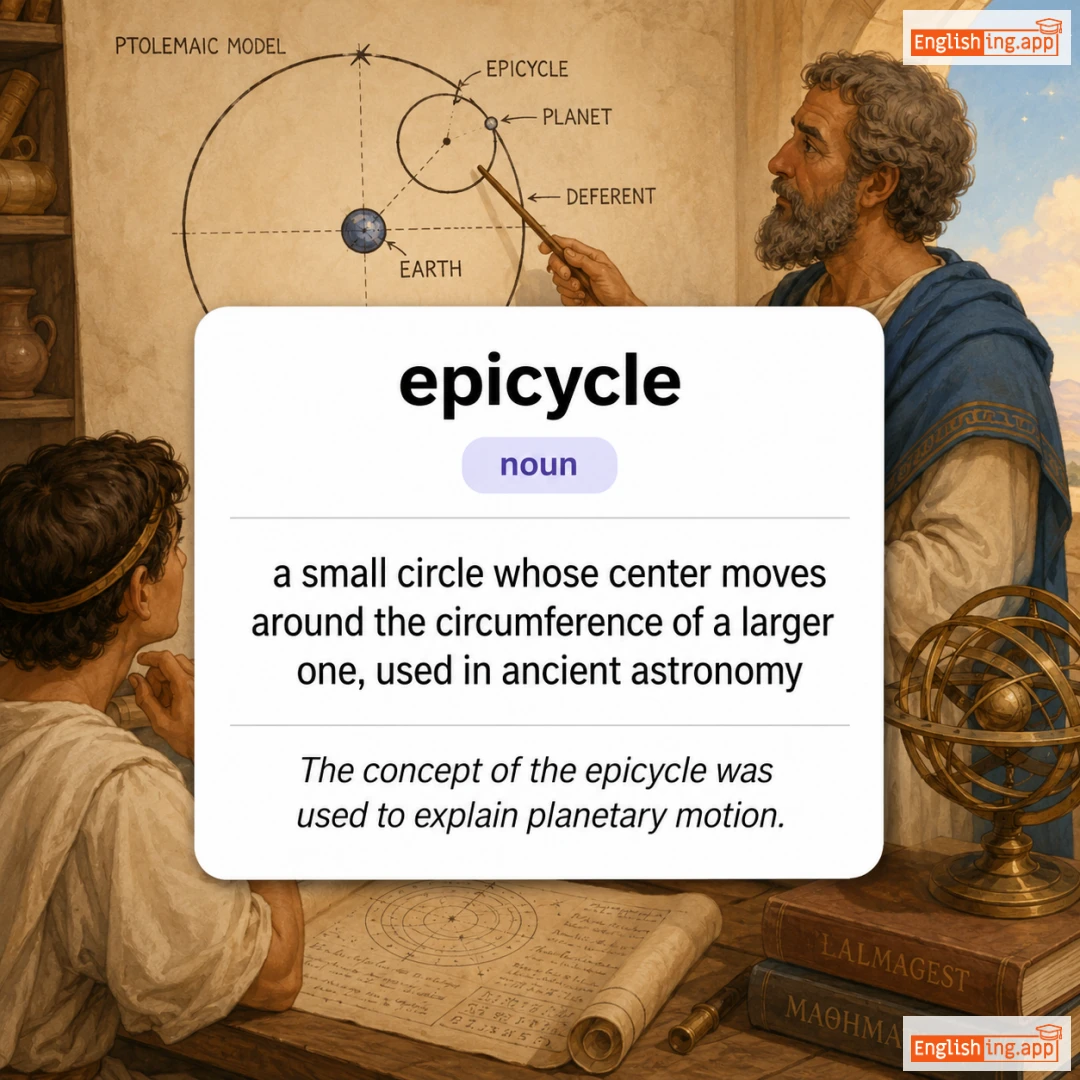
epicycle definition card — visual illustration of the meaning
noun C2
/ˈɛpɪˌsaɪkl/
外周上の小円 (gaishū-jō no shōen)

a small circle whose center moves around the circumference of a larger one, used in ancient astronomy

"The concept of the epicycle was used to explain planetary motion."

"エピサイクルの概念は惑星の運動を説明するために使用されました。" (episykuru no gainen wa wakusei no undō o setsumei suru tame ni shiyō saremashita.)
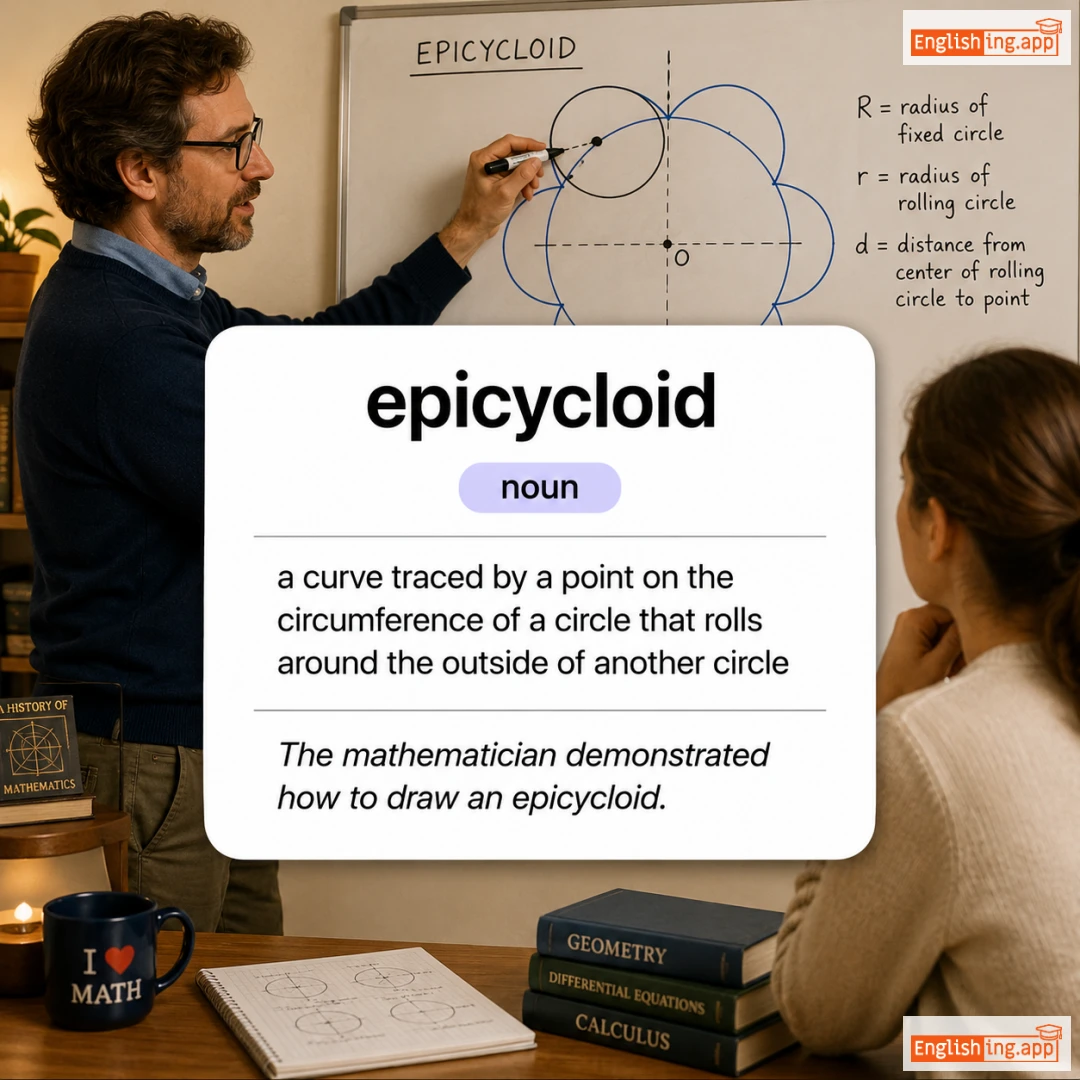
epicycloid definition card — visual illustration of the meaning
noun C2
/ˌɛpɪˈsaɪklɔɪd/
エピサイクロイド (episaykuroido)

a curve traced by a point on the circumference of a circle that rolls around the outside of another circle

"The mathematician demonstrated how to draw an epicycloid."

"数学者はエピサイクロイドの描き方を示しました。" (Sūgakusha wa episaykuroido no egikata o shimeshimashita.)
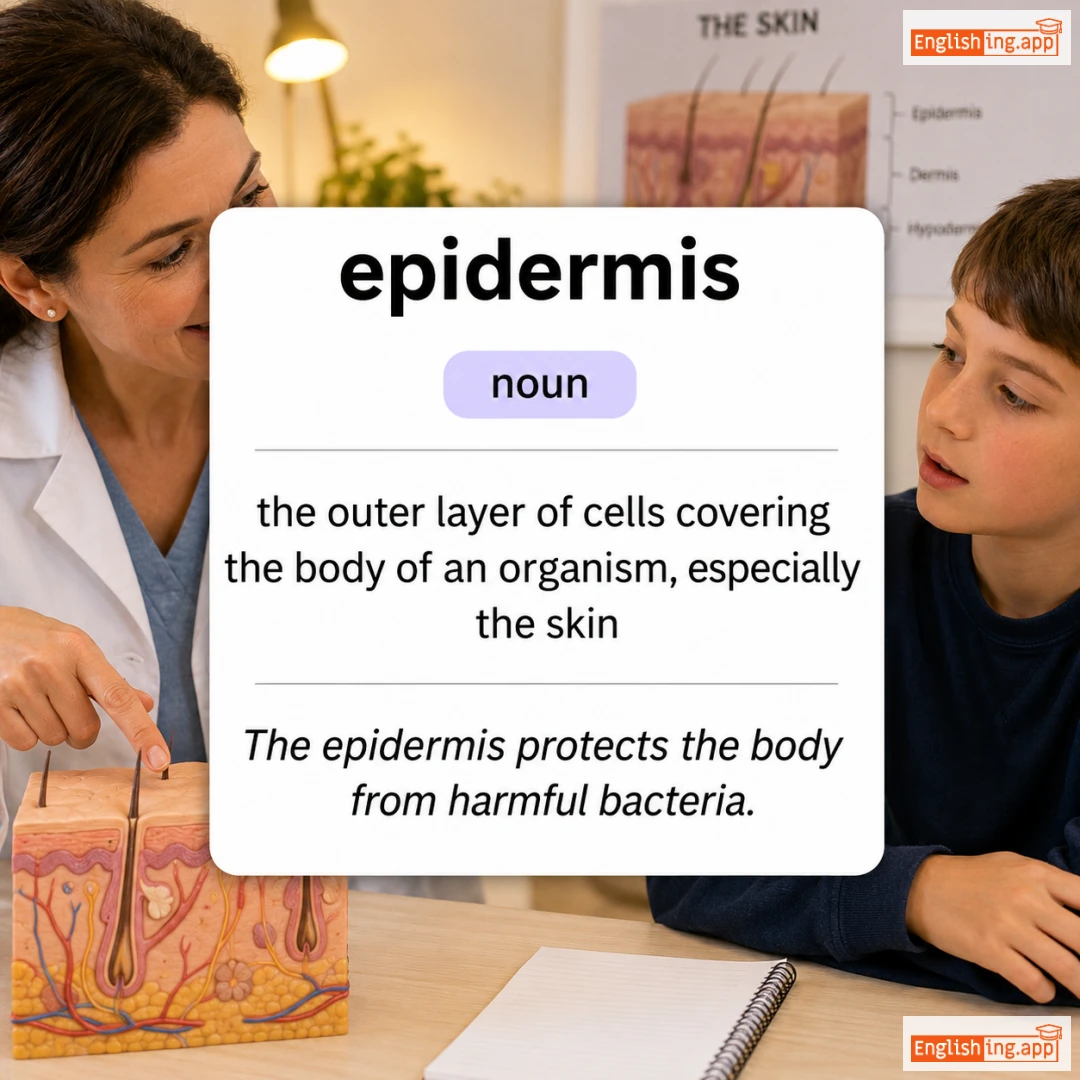
epidermis definition card — visual illustration of the meaning
noun C2
/ˌɛpɪˈdɜːrmɪs/
皮膚の外層 (hifu no gaisou)

the outer layer of cells covering the body of an organism, especially the skin

"The epidermis protects the body from harmful bacteria."

"エピデルミスは有害な細菌から体を守ります。" (Epidermisu wa yūgaina saikin kara karada o mamorimasu.)
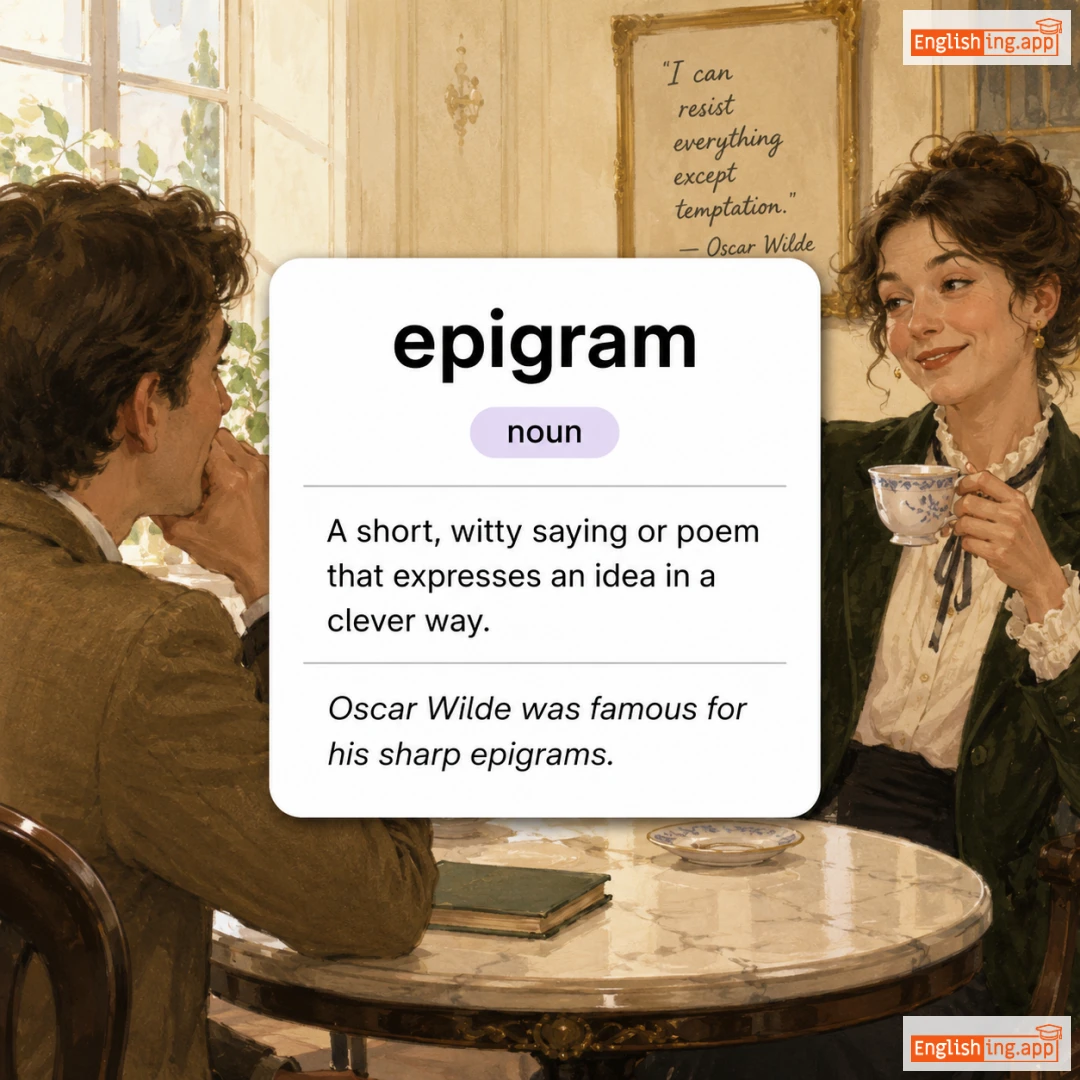
epigram definition card — visual illustration of the meaning
noun C2
/ˈɛpɪɡræm/
エピグラム (epiguramu)

A short, witty saying or poem that expresses an idea in a clever way.

"Oscar Wilde was famous for his sharp epigrams."

"オスカー・ワイルドは鋭いエピグラムで有名でした。" (Osukā Wairudo wa surudoi epiguramu de yūmei deshita.)
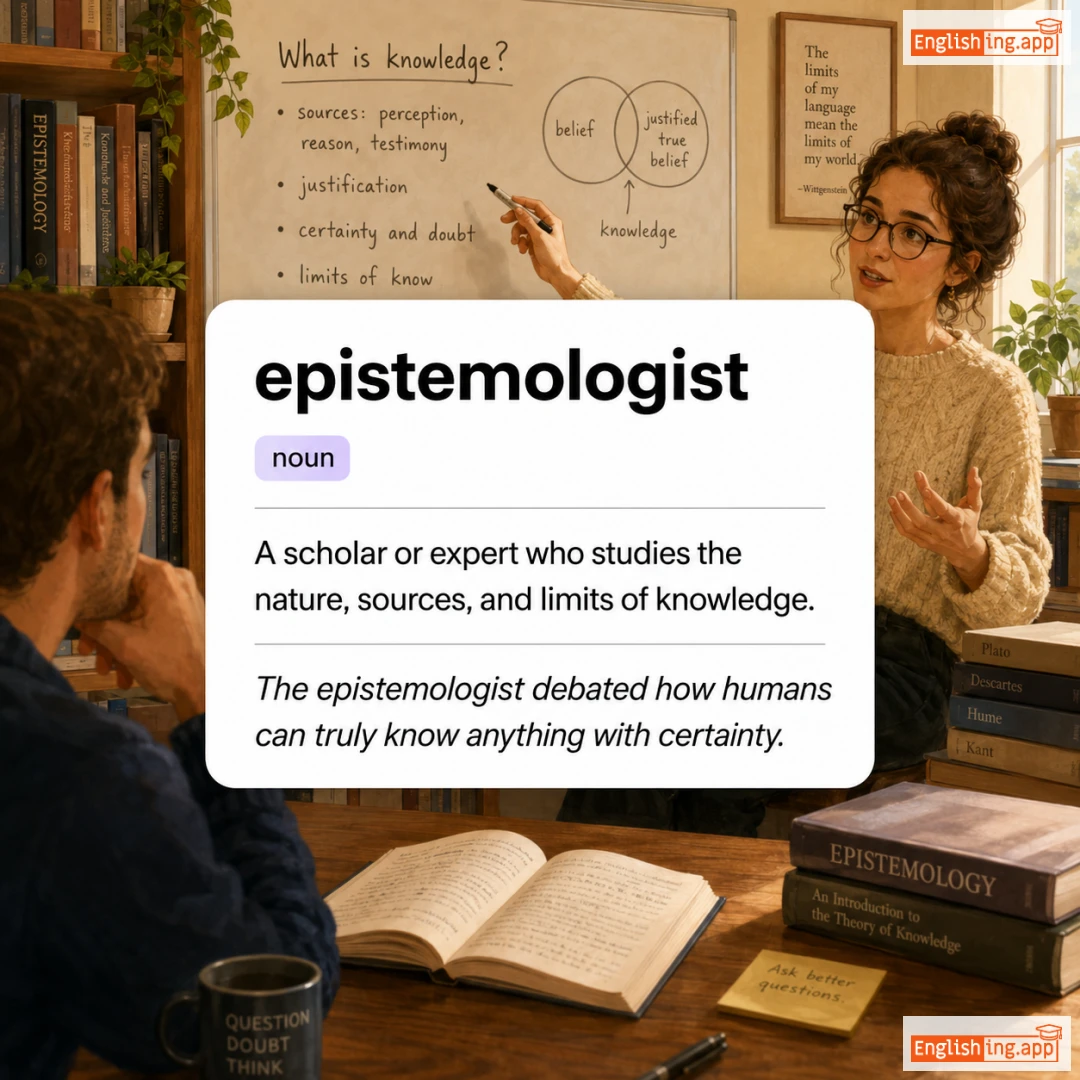
epistemologist definition card — visual illustration of the meaning
noun C2
/ɪˌpɪstəˈmɒlədʒɪst/
認識論者 (ninshikironsha)

A scholar or expert who studies the nature, sources, and limits of knowledge.

"The epistemologist debated how humans can truly know anything with certainty."

"エピステモロジストは、人間がどのようにして確実に何かを知ることができるかについて議論しました。" (Epistemologist wa, ningen ga dono yō ni shite kakujitsu ni nanika o shiru koto ga dekiru ka ni tsuite giron shimashita.)
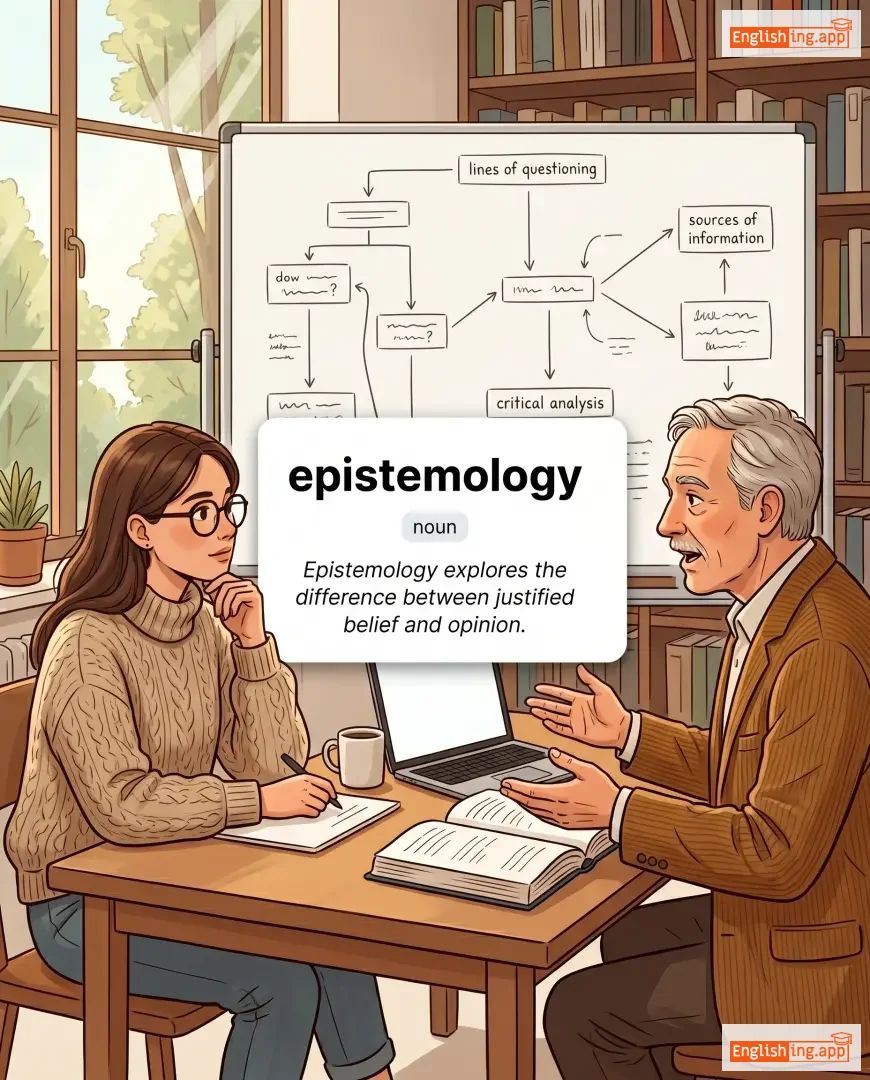
epistemology definition card — visual illustration of the meaning
noun C2
/ɪˌpɪstəˈmɒlədʒi/
認識論 (ninshikiron)

The branch of philosophy that studies the nature, origin, and scope of knowledge.

"Epistemology explores the difference between justified belief and opinion."

"認識論は正当な信念と意見との違いを探求します。" (Ninshikiron wa seitōna shinnen to iken to no chigai o tankyū shimasu.)
noun C2
/ɪˈpɪsəl/
書簡 (shokan)

A letter, especially a formal or didactic one; often used for letters in the New Testament.

"He wrote a long epistle to his friend about his travels."

"彼は自分の旅行について友人に長い手紙を書いた。" (Kare wa jibun no ryokō ni tsuite yūjin ni nagai tegami o kaita.)
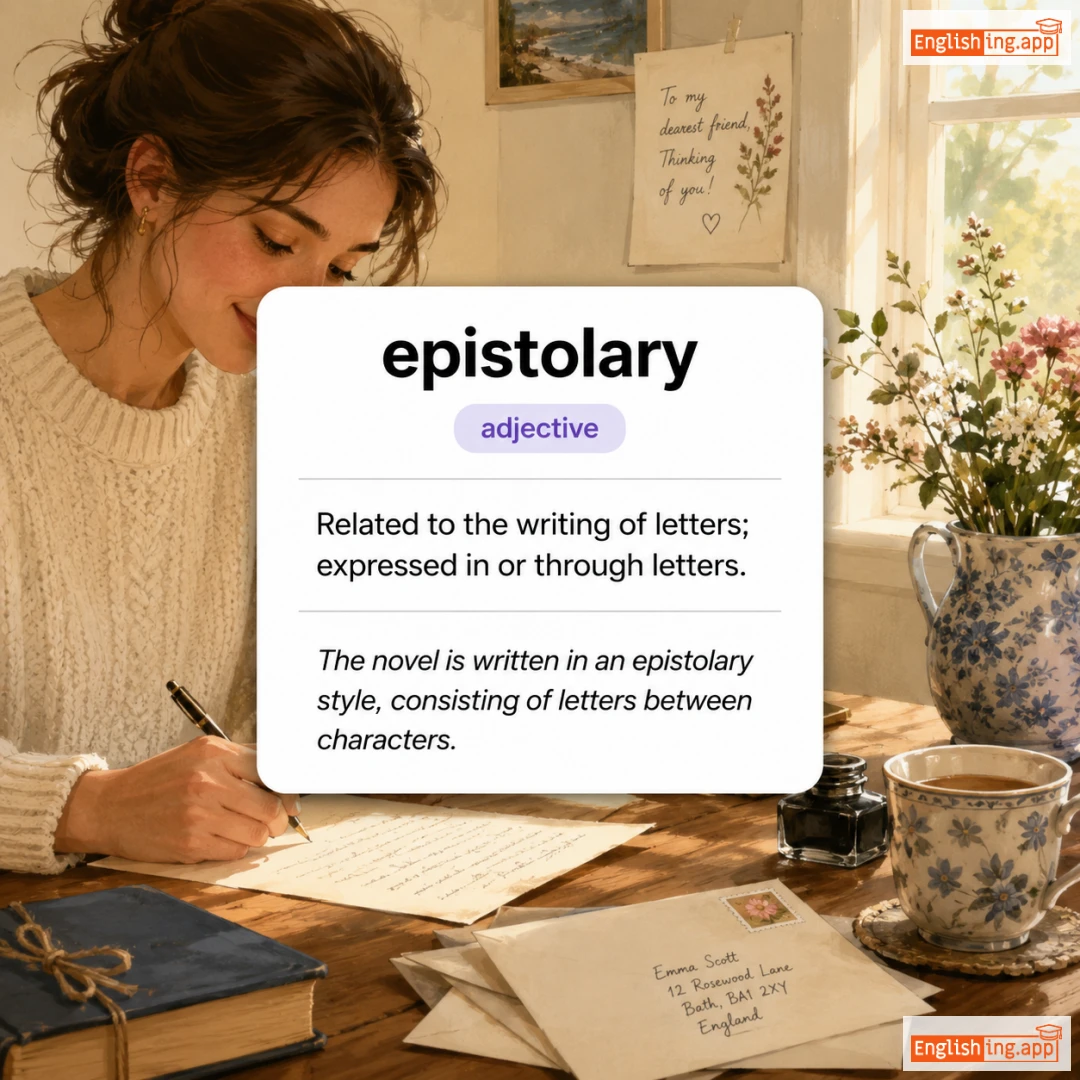
epistolary definition card — visual illustration of the meaning
adjective C2
/ɪˈpɪstələri/
書簡体 (shokantai)

Related to the writing of letters; expressed in or through letters.

"The novel is written in an epistolary style, consisting of letters between characters."

"その小説は書簡体スタイルで書かれており、登場人物間の手紙で構成されています。" (Sono shousetsu wa shokantai sutairu de kakarete ori, toujou jinbutsu kan no tegami de kousei sareteimasu.)
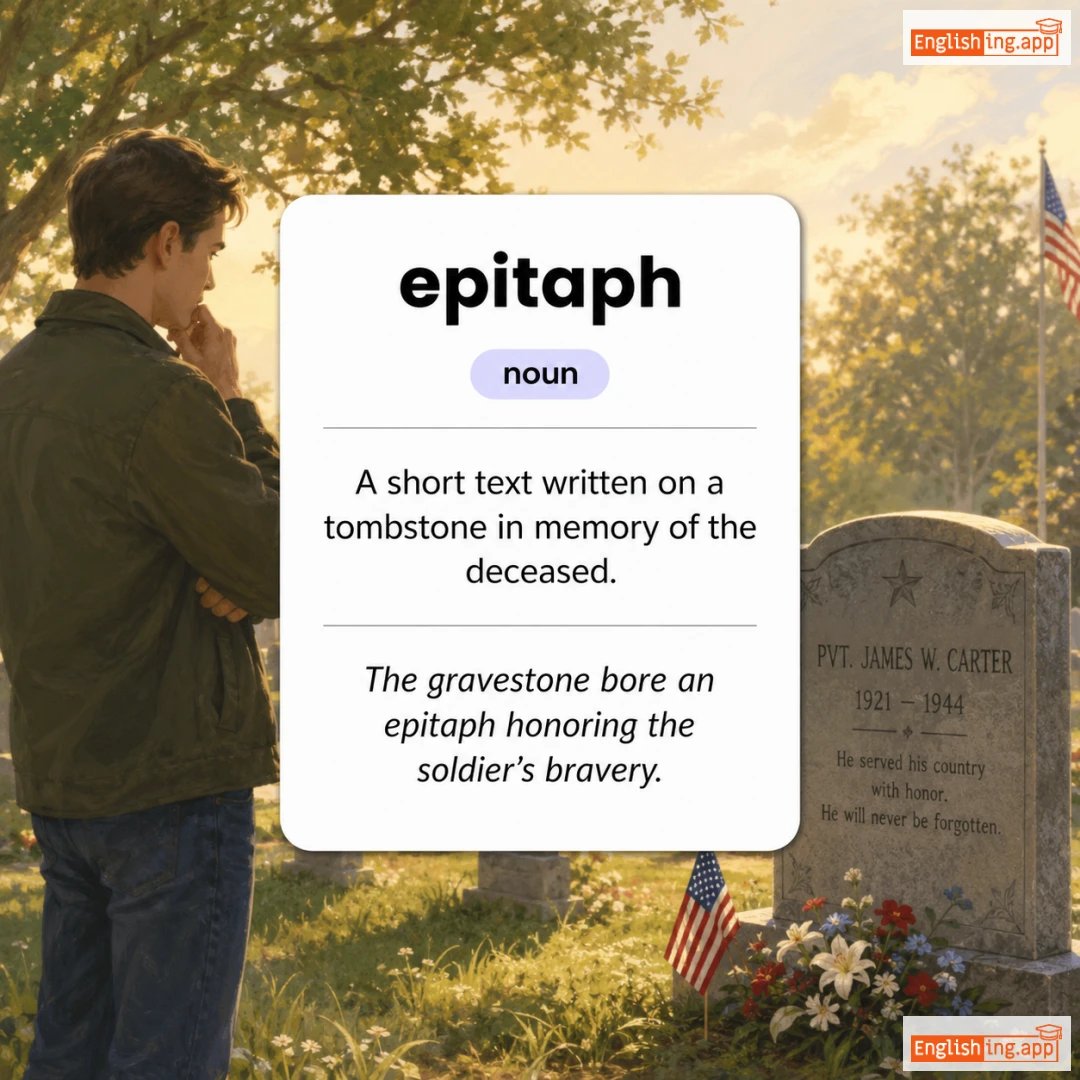
epitaph definition card — visual illustration of the meaning
noun C2
/ˈɛpɪtɑːf/
墓碑銘 (hakamimei)

A short text written on a tombstone in memory of the deceased.

"The gravestone bore an epitaph honoring the soldier’s bravery."

"墓石にはその兵士の勇気を讃える墓碑銘が刻まれていた。" (Hakoseki ni wa sono heishi no yūki o tataeru hakobimei ga kizama rete ita.)
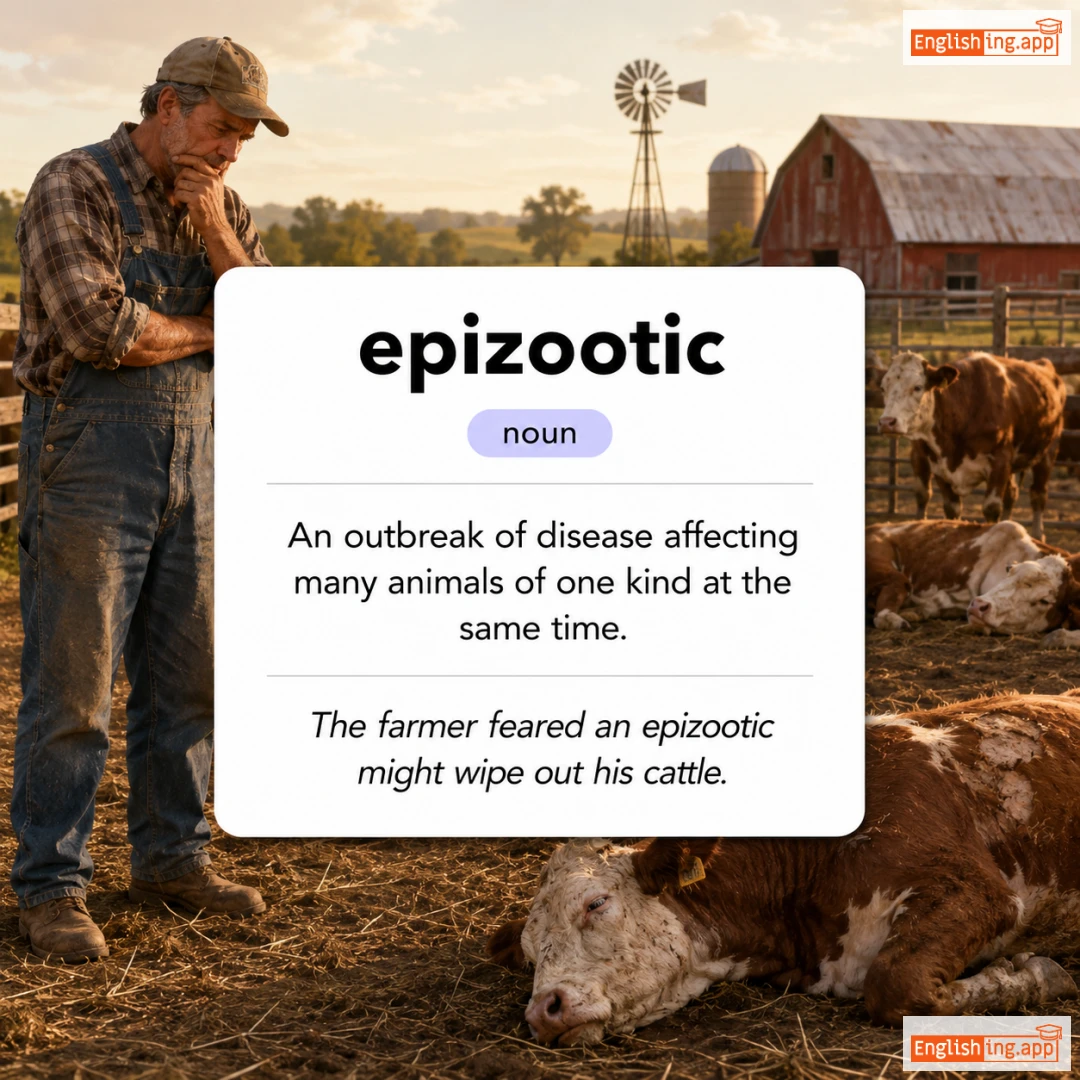
epizootic definition card — visual illustration of the meaning
noun C2
/ˌɛpɪzəʊˈɒtɪk/
動物伝染病 (dōbutsu densenbyō)

An outbreak of disease affecting many animals of one kind at the same time.

"The farmer feared an epizootic might wipe out his cattle."

"農家は、動物伝染病が彼の家畜を壊すかもしれないと恐れていました。" (Nōka wa, dōbutsu densenbyō ga kare no kachiku o kowasu kamoshirenai to osoreteimashita.)
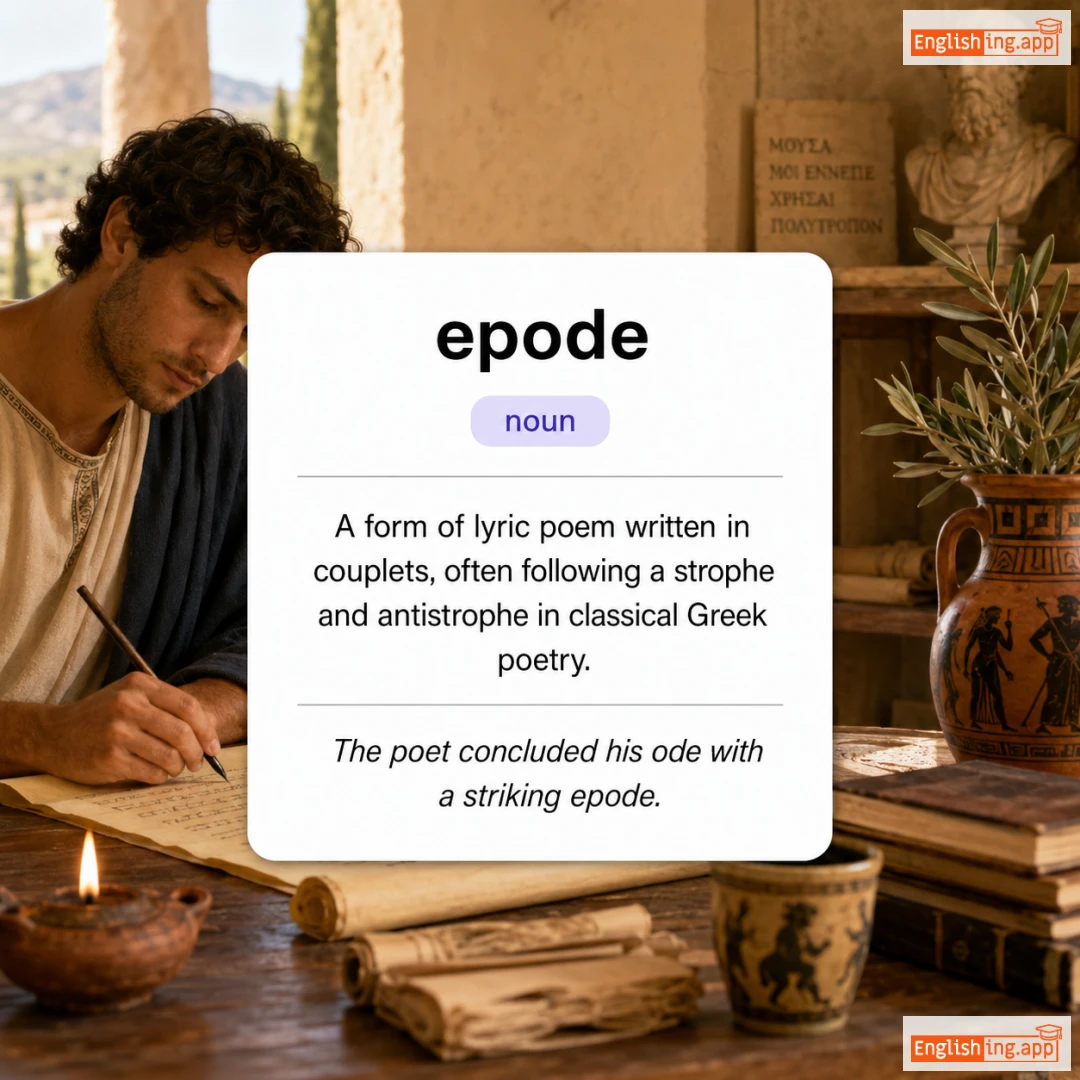
epode definition card — visual illustration of the meaning
noun C2
/ˈɛpəʊd/
抒情詩の一形式 (shūjōshi no ichikeishiki)

A form of lyric poem written in couplets, often following a strophe and antistrophe in classical Greek poetry.

"The poet concluded his ode with a striking epode."

"詩人は印象的なエポードでオードを締めくくった。" (Shijin wa inshō-teki na epōdo de ōdo o shimekutta.)
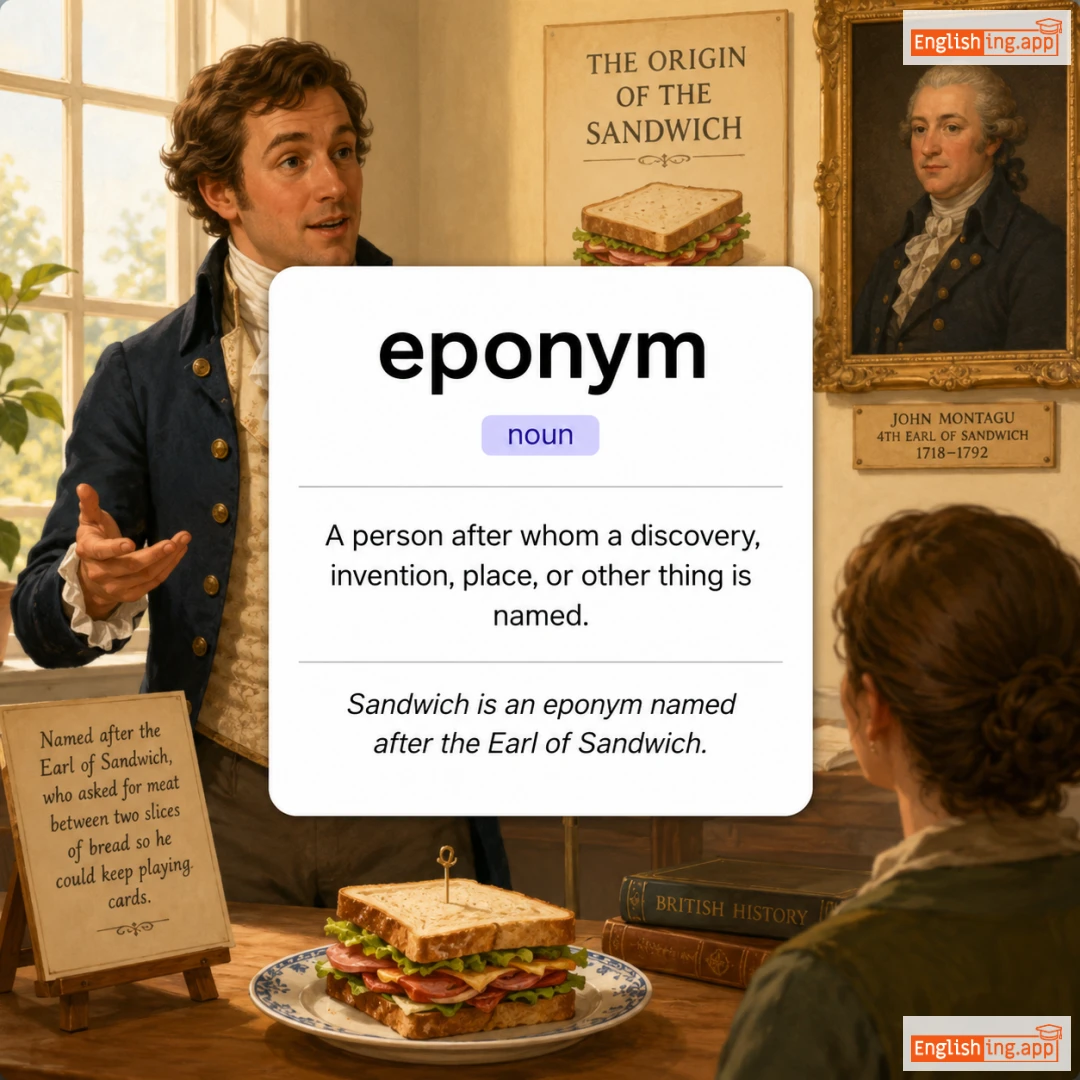
eponym definition card — visual illustration of the meaning
noun C2
/ˈɛpənɪm/
名前の由来となった人 (namae no yurai to natta hito)

A person after whom a discovery, invention, place, or other thing is named.

"Sandwich is an eponym named after the Earl of Sandwich."

"サンドイッチはサンドイッチ伯爵にちなんだエポニムです。" (Sandoicchi wa Sandoicchi Hakushaku ni chinanda eponimu desu.)
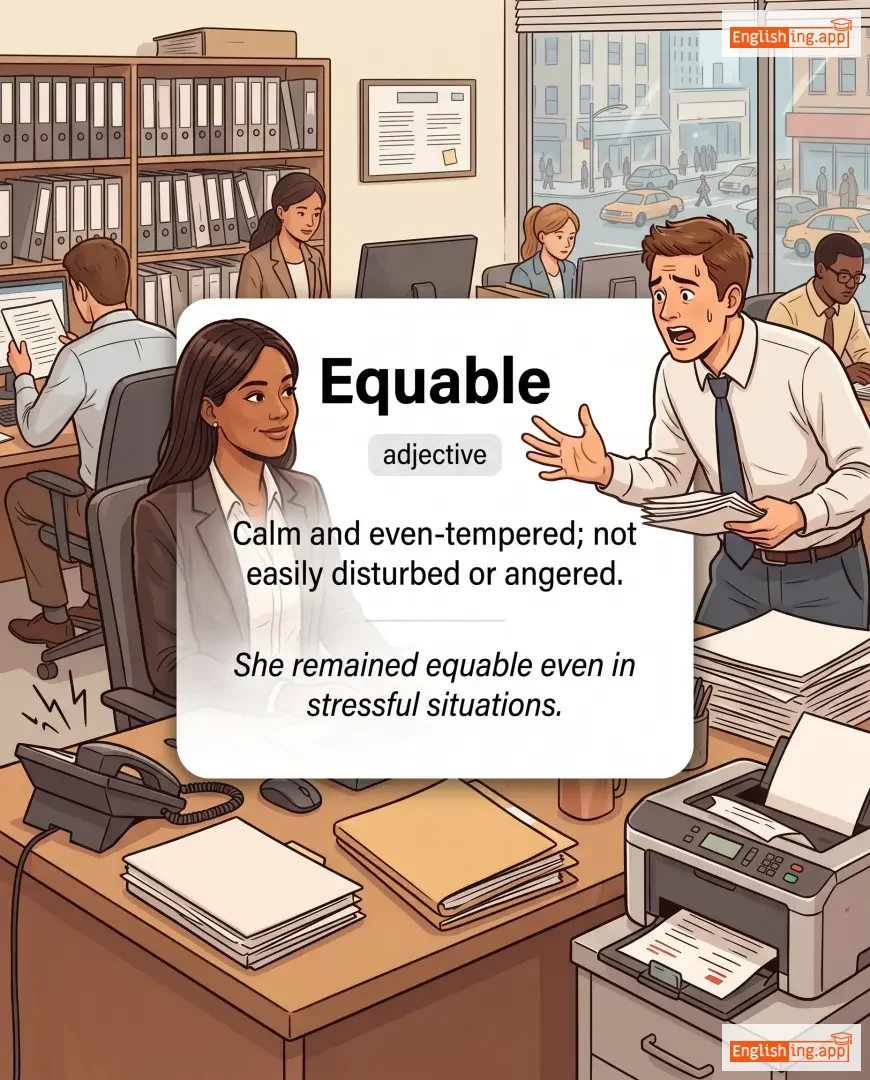
Equable definition card — visual illustration of the meaning
adjective C2
/ˈɛkwəbl̩/
冷静 (reijou)

Calm and even-tempered; not easily disturbed or angered.

"She remained equable even in stressful situations."

"彼女はストレスの多い状況でも冷静でい続けました。" (Kanojo wa sutoresu no ooi joukyou demo reijou de itsuzukemashita.)
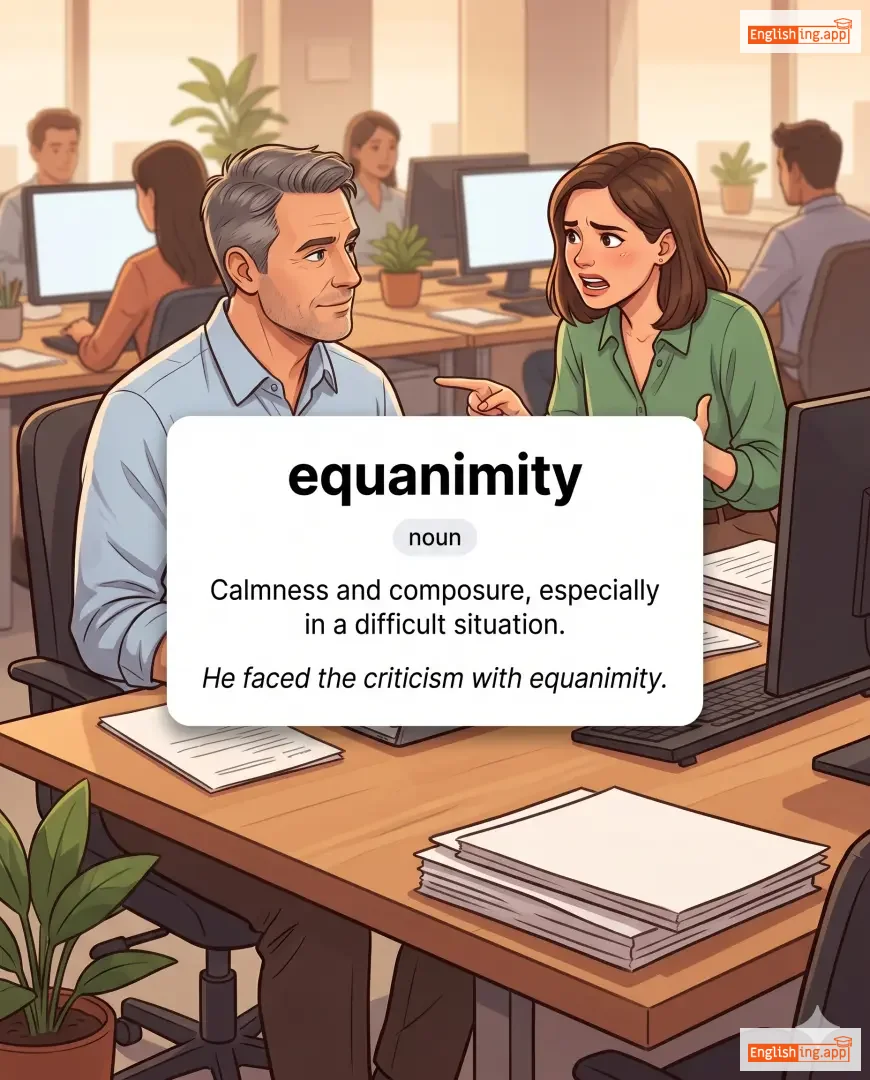
equanimity definition card — visual illustration of the meaning
noun C2
/ˌekwəˈnɪmɪti/
平静 (heisei)

Calmness and composure, especially in a difficult situation.

"He faced the criticism with equanimity."

"彼は批判に対して平静で接した。" (Kare wa hihan ni taishite heisei de sesshita.)
adjective C2
/ˈiːkwaɪn/
馬に関連する (uma ni kanren suru)

Relating to or resembling a horse.

"The veterinarian specialized in equine medicine."

"獣医は馬の医療に専門特化していました。" (Jūi wa uma no iryō ni senmon tokka shite imashita.)
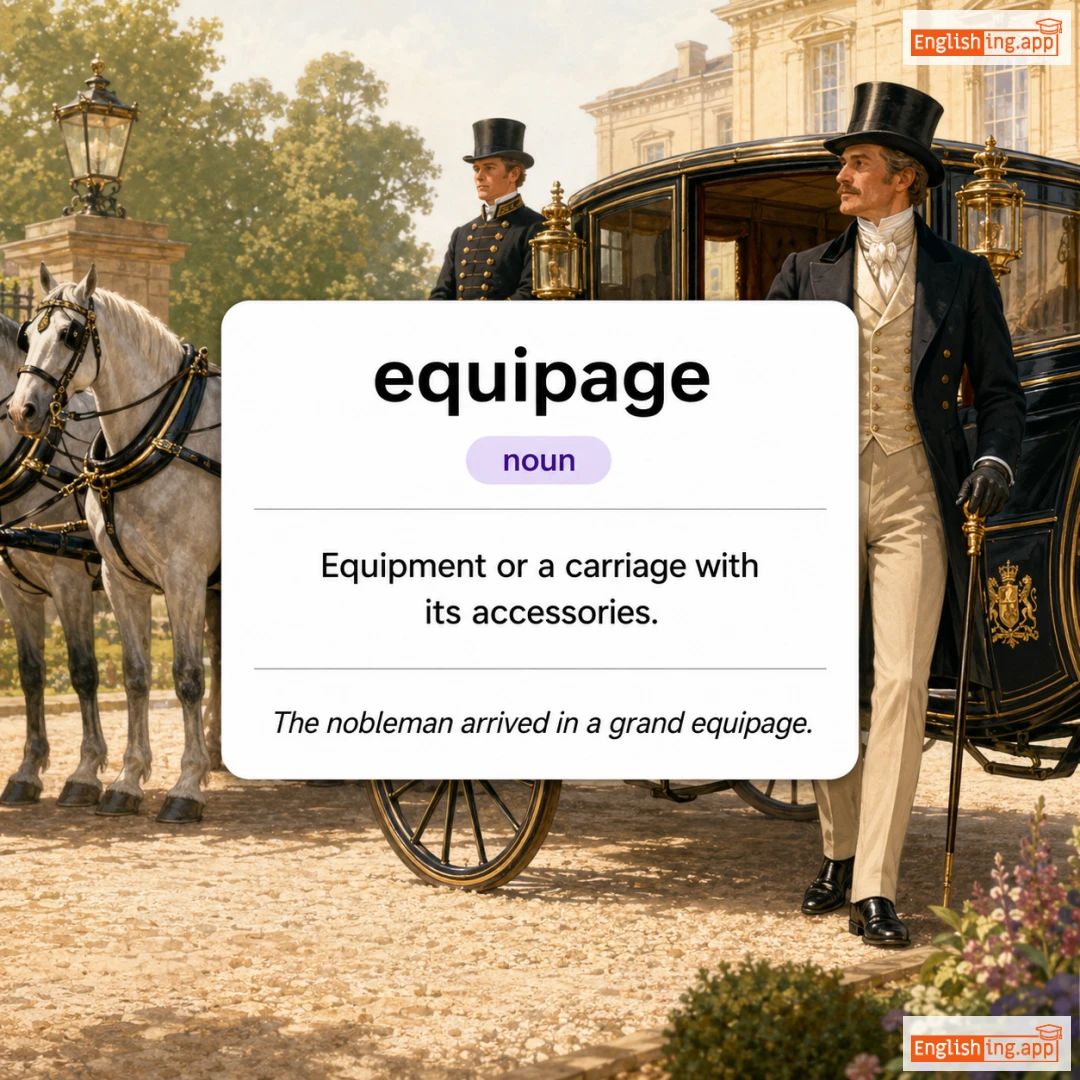
equipage definition card — visual illustration of the meaning
noun C2
/ˈɛkwɪpɪdʒ/
装備またはアクセサリー付きの馬車 (sōbi mata wa akusesarī tsuki no basha)

Equipment or a carriage with its accessories.

"The nobleman arrived in a grand equipage."

"貴族は豪華な馬車で到着しました。" (Kizoku wa gōka na basha de tōchaku shimashita.)
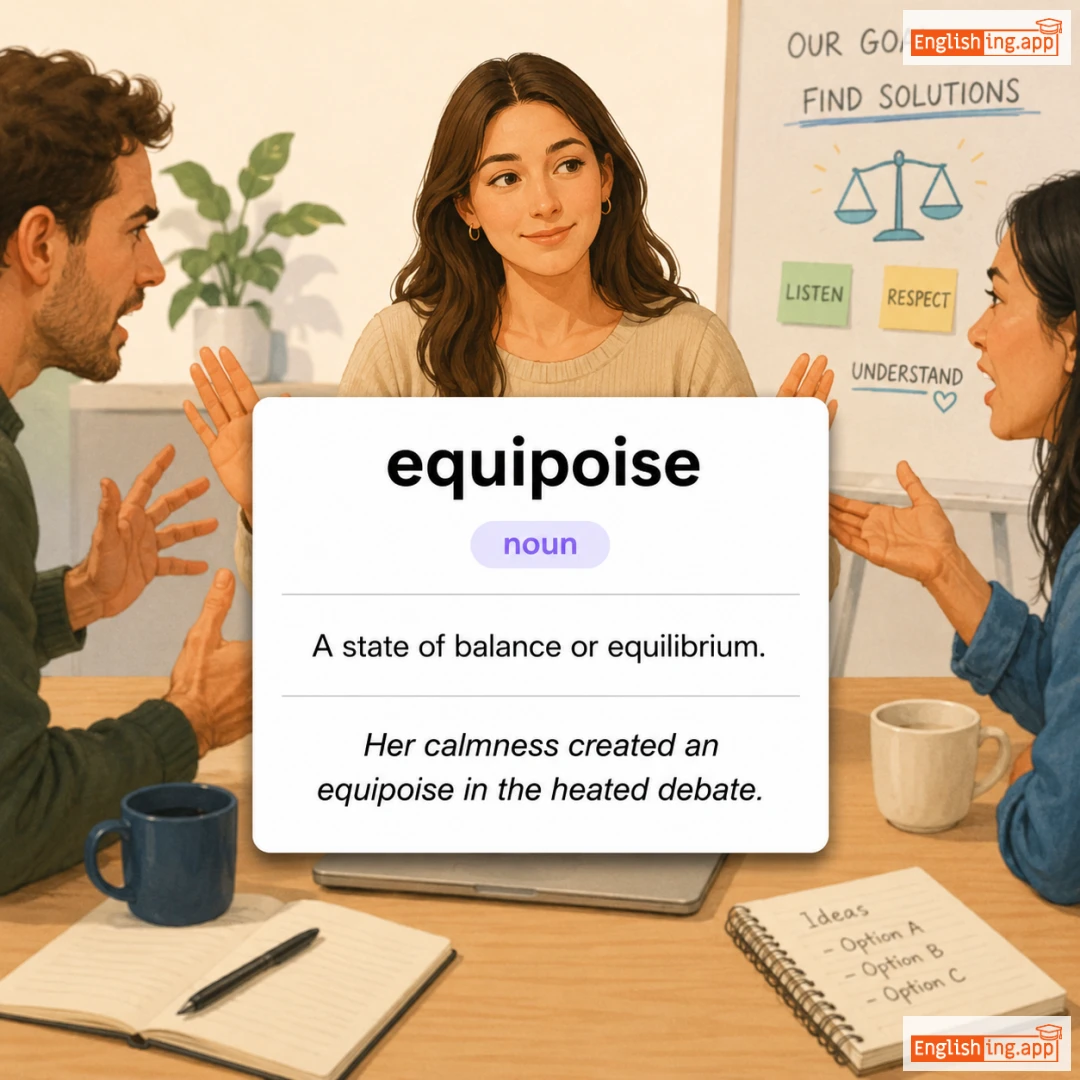
equipoise definition card — visual illustration of the meaning
noun C2
/ˈɛkwɪpɔɪz/
均衡 (kinkou)

A state of balance or equilibrium.

"Her calmness created an equipoise in the heated debate."

"彼女の落ち着きは熱い議論の中で均衡を作り出しました。" (Kanojo no ochitsuki wa atsui giron no naka de kinkou wo tsukuridashimashita.)
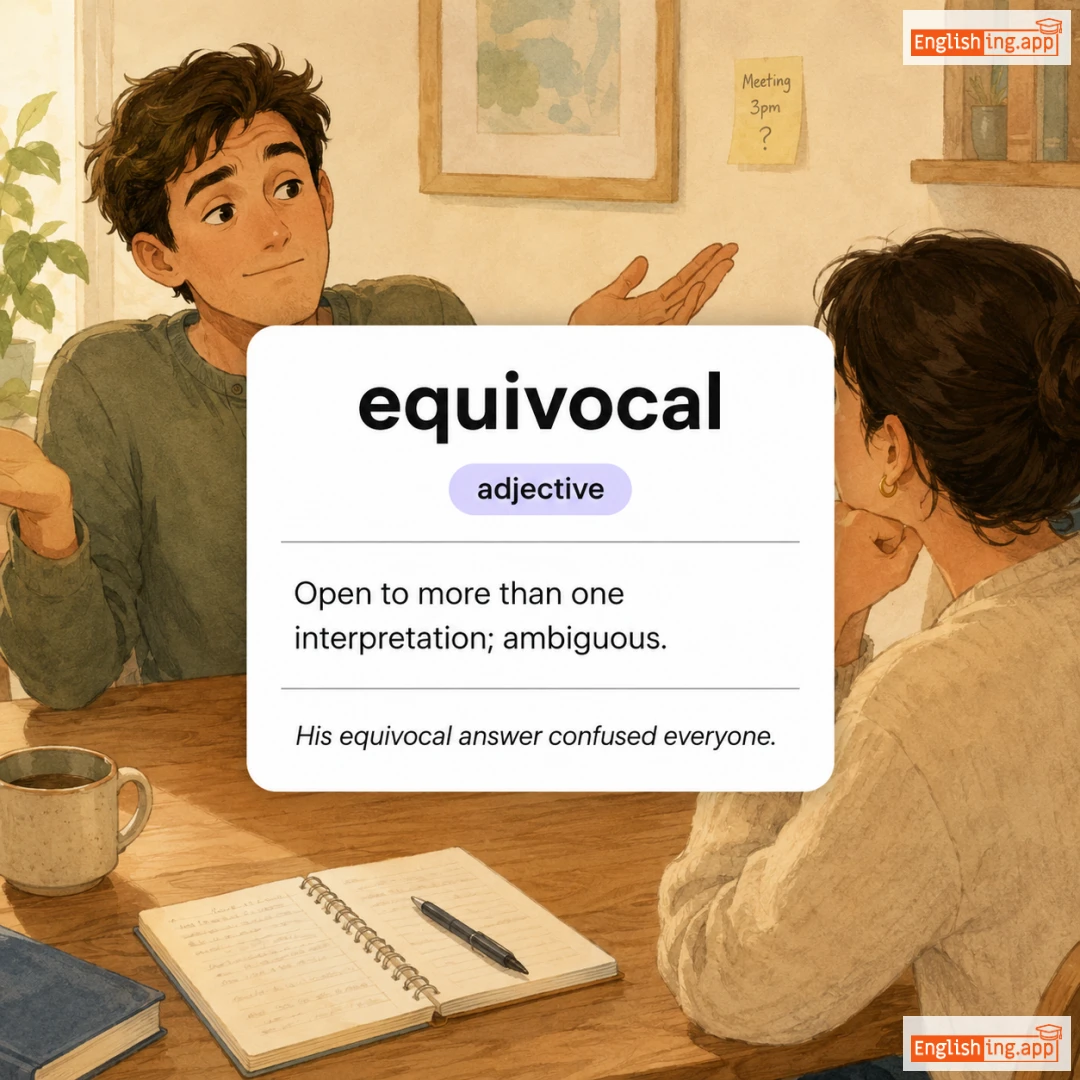
equivocal definition card — visual illustration of the meaning
adjective C2
/ɪˈkwɪvəkəl/
曖昧 (aimai)

Open to more than one interpretation; ambiguous.

"His equivocal answer confused everyone."

"彼の曖昧な答えは皆を混乱させた。" (Kare no aimai na kotae wa mina o konran saseta.)
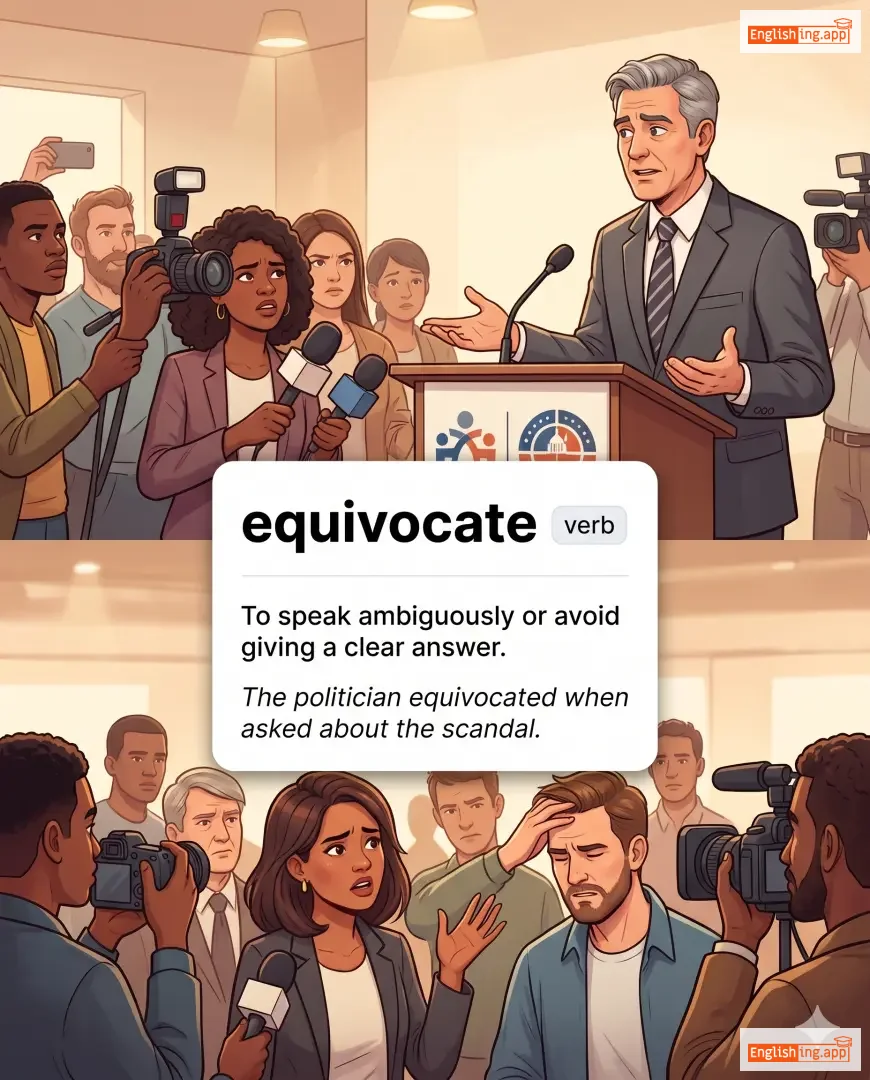
equivocate definition card — visual illustration of the meaning
verb C2
/ɪˈkwɪvəˌkeɪt/
曖昧に話す (aimai ni hanasu)

To speak ambiguously or avoid giving a clear answer.

"The politician equivocated when asked about the scandal."

"その政治家はスキャンダルについて尋ねられたとき、曖昧に話した。" (Sono seijika wa sukyandaru ni tsuite tazunerareta toki, aimai ni hanashita.)
noun C2
/ɪˌkwɪvəˈkeɪʃən/
あいまいな言葉の使用 (aimai na kotoba no shiyou)

The use of ambiguous language to conceal the truth or to avoid committing oneself.

"The politician’s equivocation frustrated voters who wanted a clear answer."

"政治家のあいまいな言葉は、明確な答えを求めていた有権者を失望させた。" (Seijika no aimai na kotoba wa, meikaku na kotae o motomete ita yūken-sha o shitsubō saseta.)
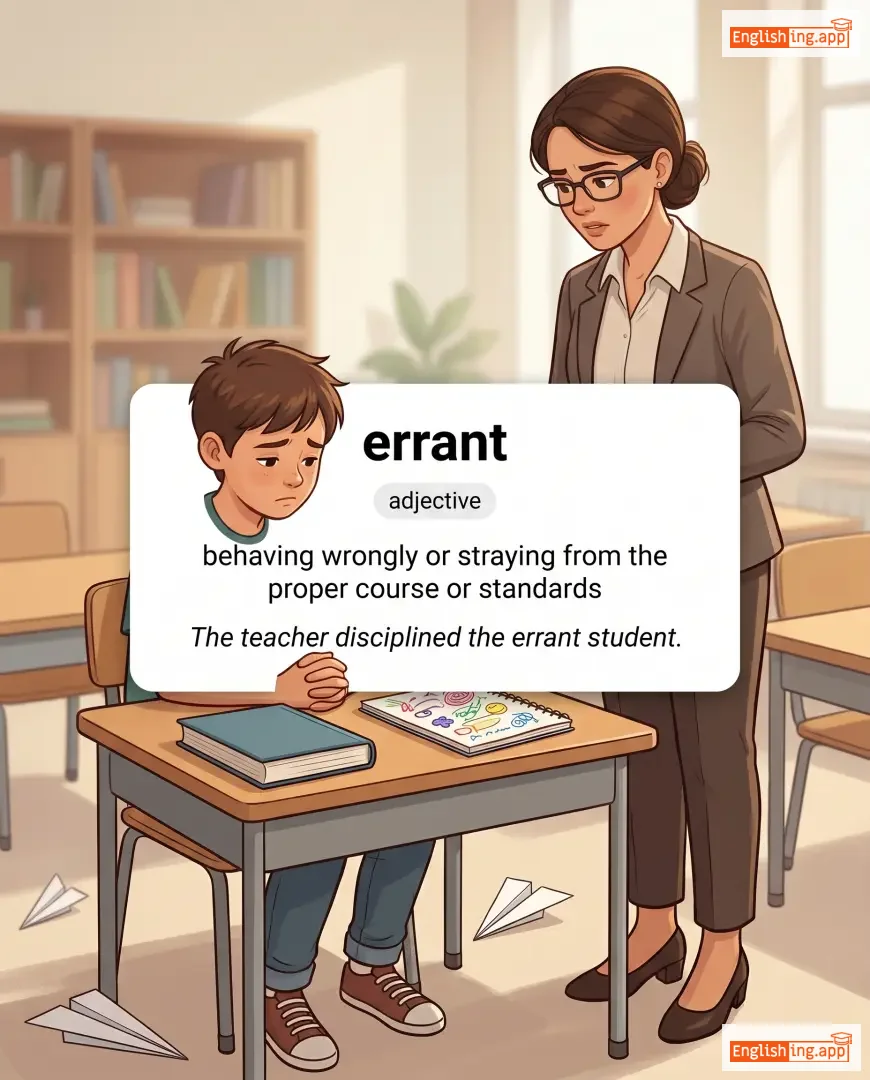
errant definition card — visual illustration of the meaning
adjective C2
/ˈɛrənt/
逸脱した (ittsudatsu shita)

behaving wrongly or straying from the proper course or standards

"The teacher disciplined the errant student."

"教師は逸脱した生徒を罰しました。" (Kyōshi wa ittsudatsu shita seito o basshimashita.)
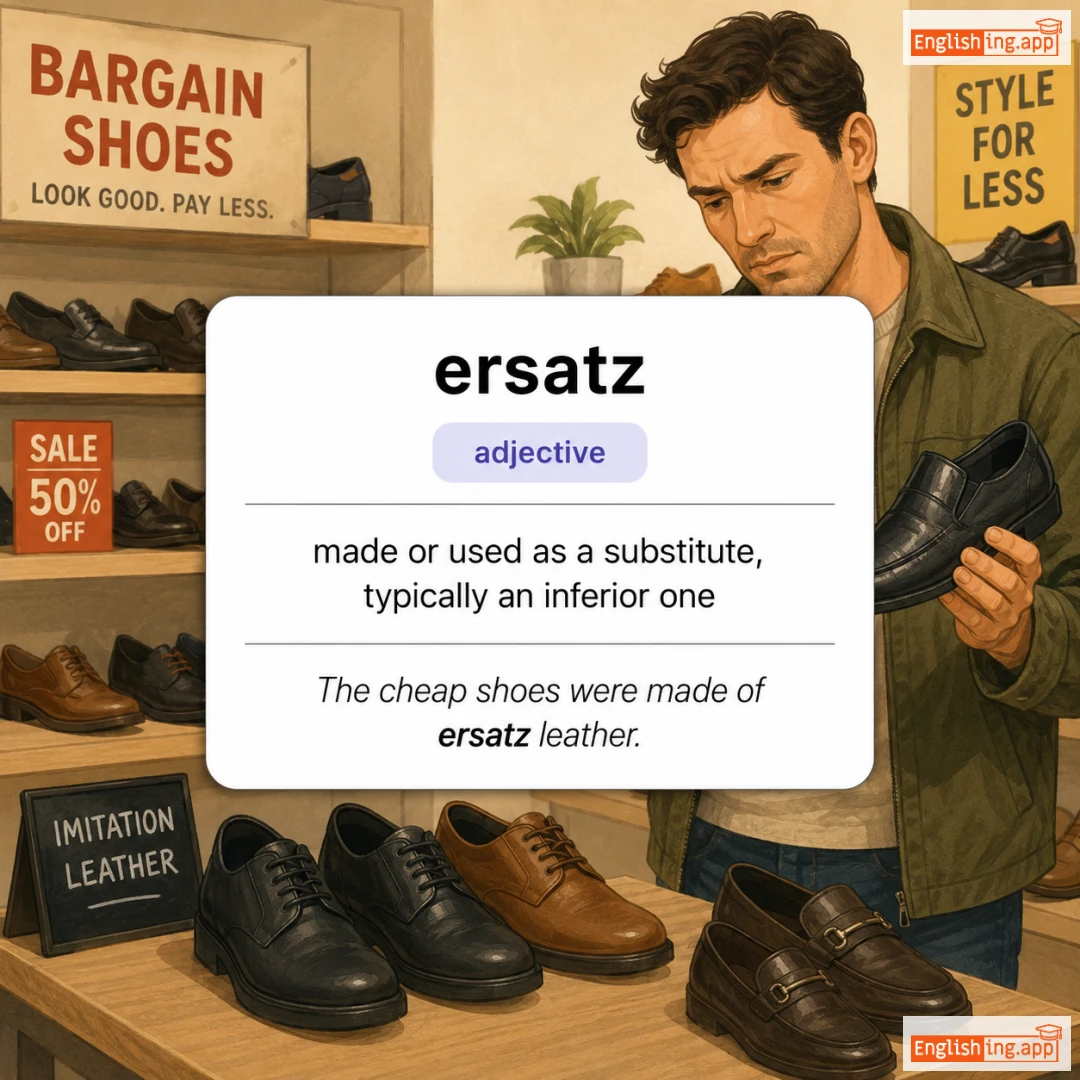
ersatz definition card — visual illustration of the meaning
adjective C2
/ˈɛrzæts/
代用品 (daiyōhin)

made or used as a substitute, typically an inferior one

"The cheap shoes were made of ersatz leather."

"安い靴は代用品の合成皮革で作られていました。" (Yasui kutsu wa daiyōhin no gōsei hikaku de tsukurarete imashita.)