Vocabulaires

Découvrez, apprenez et maîtrisez le vocabulaire anglais

adjective C2
/droʊl/
ユニーク (yuniiku)

curious or unusual in a way that provokes dry amusement

"He had a droll sense of humor that made everyone laugh."

"彼はみんなを笑わせるユニークなユーモアのセンスを持っていた。" (Kare wa minna wo warawaseru yuniiku na yu-moa no sensu wo motte ita.)
dross definition card — visual illustration of the meaning
noun C2
/drɒs/
無駄なもの (mudanamono)

worthless or unwanted material; rubbish or impurities

"Most of his early writings were considered dross."

"彼の初期のほとんどの作品は無駄なものと見なされていた。" (Kare no shoki no hotondo no sakuhin wa mudanamono to minasa reteita.)
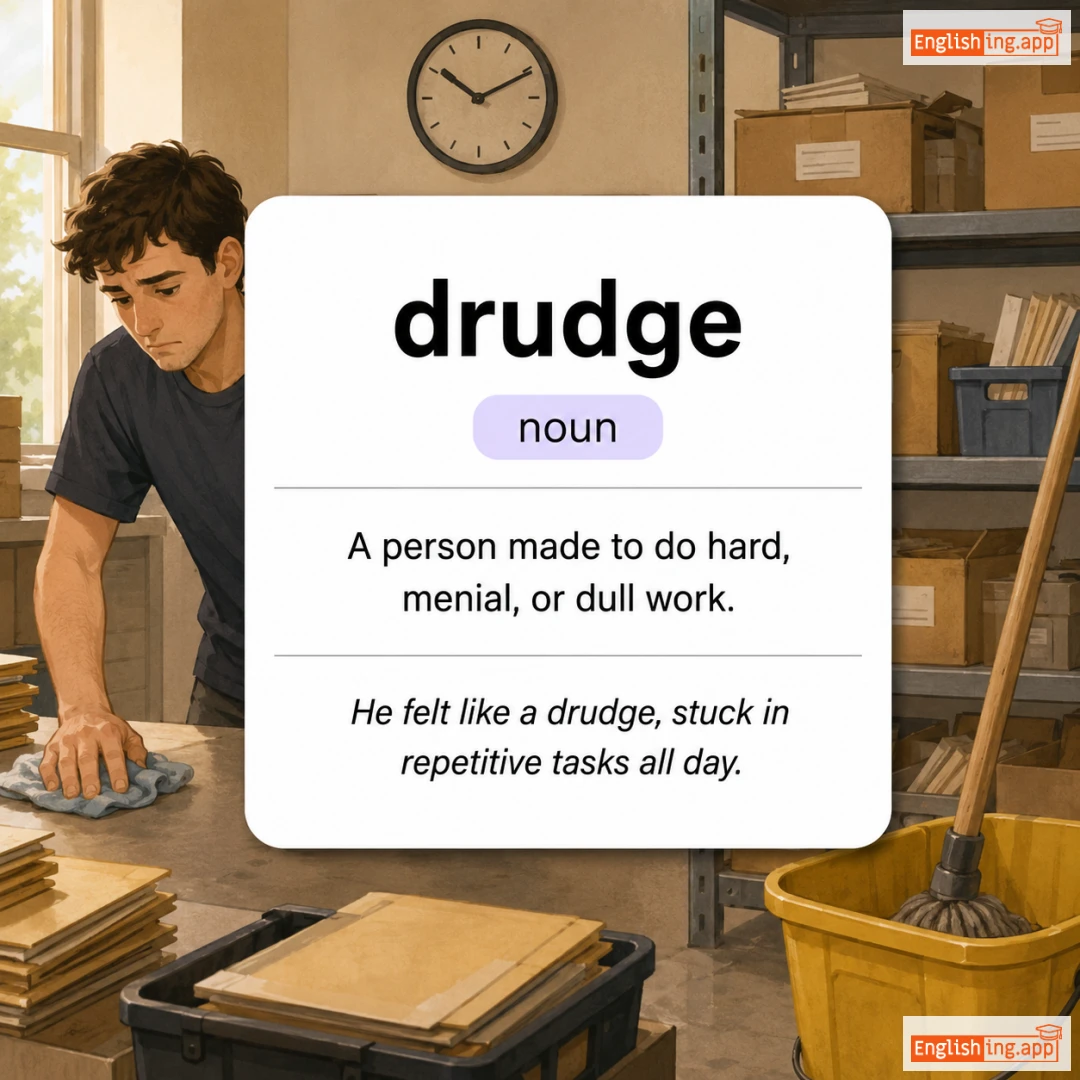
drudge definition card — visual illustration of the meaning
noun C2
/drʌdʒ/
働き者 (hatarakimono)

A person made to do hard, menial, or dull work.

"He felt like a drudge, stuck in repetitive tasks all day."

"彼は一日中、繰り返しの仕事に縛られている働き者のように感じていた。" (Kare wa ichinichijū, kurikaeshi no shigoto ni shibararete iru hatarakimono no yō ni kanjite ita.)
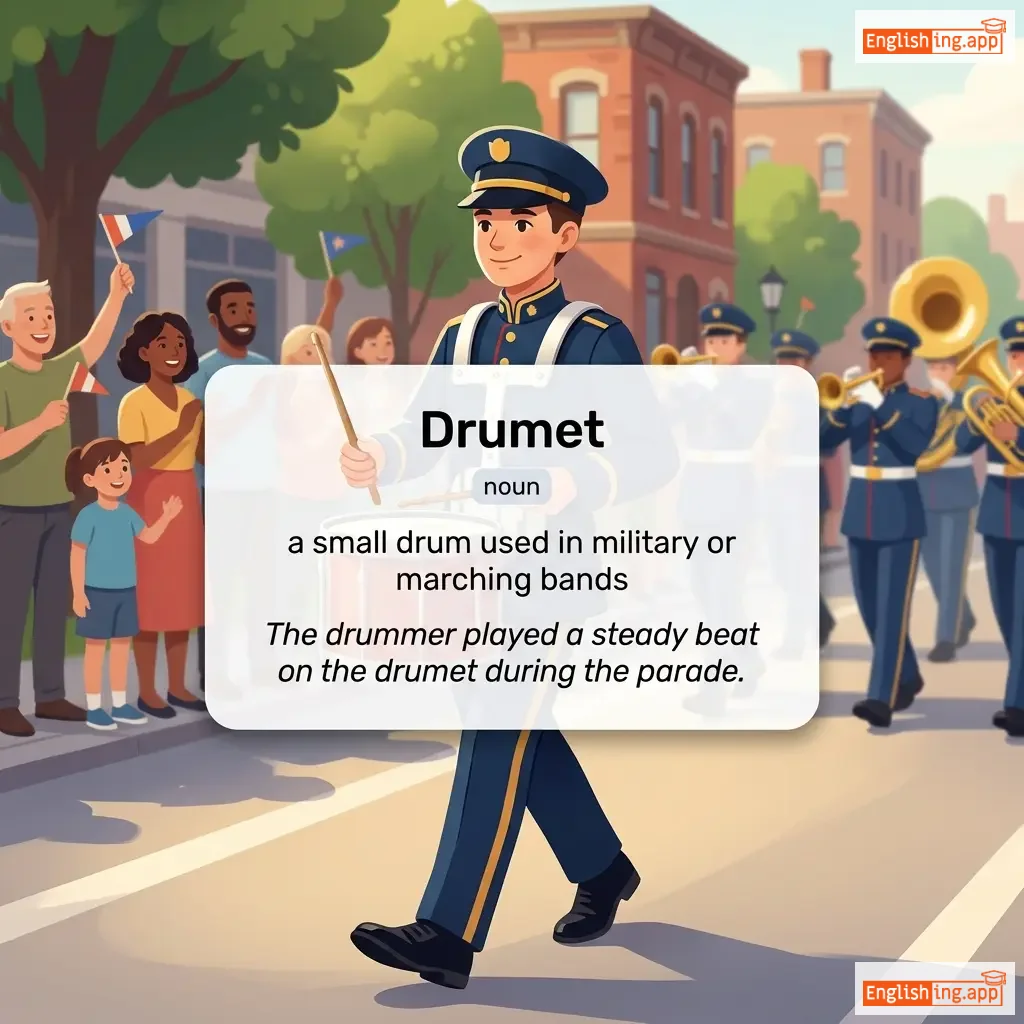
Drumet definition card — visual illustration of the meaning
noun C2
/ˈdrʌmɪt/
ドラメット (dorumetto)

a small drum used in military or marching bands

"The drummer played a steady beat on the drumet during the parade."

"ドラマーはパレード中にドゥルメットで一定のリズムを演奏しました。" (Dorama wa pareedo-chuu ni dorumetto de ittei no rizumu o ensou shimashita.)
Dry goose berry definition card — visual illustration of the meaning
noun C2
/draɪ ɡuːs ˈbɛri/
乾燥アムラ (kansou amura)

dehydrated amla fruit, rich in vitamin C and used for medicinal and culinary purposes

"Dry goose berry powder is excellent for hair growth."

"乾燥アムラの粉末は、髪の成長に優れています。" (Kansou amura no funmatsu wa, kami no seichou ni sugureteimasu)
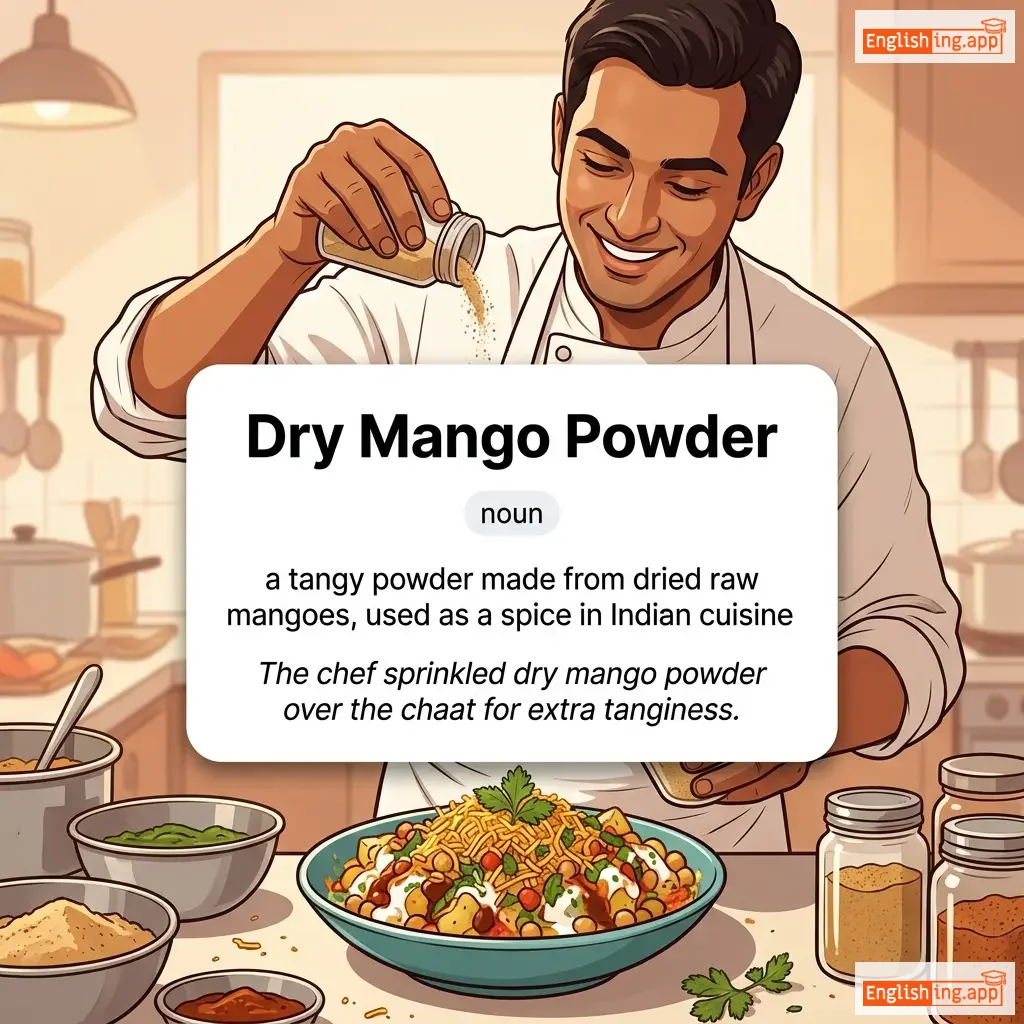
Dry Mango Powder definition card — visual illustration of the meaning
noun C2
/draɪ ˈmæŋgoʊ ˈpaʊdər/
アムチュール (amchur)

a tangy powder made from dried raw mangoes, used as a spice in Indian cuisine

"The chef sprinkled dry mango powder over the chaat for extra tanginess."

"シェフはチャートに酸味を加えるためにドライマンゴーパウダーを振りかけました。" (Shefu wa chaat ni sanmi o kuwaeru tame ni dorai mango paudā o furikakemashita.)
adjective C2
/ˈdʌktaɪl/
延性 (enshō)

capable of being stretched into a thin wire without breaking; easily influenced

"Gold is a very ductile metal."

"金は非常に延性のある金属です。" (Kin wa hijō ni enshō no aru kinzoku desu.)
noun C2
/djuːˈɛnə/
ガバーナント (gabaanto)

an older woman acting as a governess or chaperone, especially in Spanish families

"The young lady was accompanied by a duenna during the festival."

"若い女性は祭りの間、デュエナに付き添われていました。" (Wakai josei wa matsuri no aida, duena ni tsukisowarete imashita.)
adjective C2
/ˈdʌlsɪt/
甘美 (kanbi)

sweet and soothing (often used ironically)

"She was enchanted by his dulcet voice."

"彼女は彼の甘美な声に魅了されていた。" (Kanojo wa kare no kanbi na koe ni miryō sarete ita.)
noun C2
/ˈdʌlərd/
愚か者 (orokamono)

a slow or stupid person

"He was considered a dullard by his classmates."

"彼はクラスメートによって愚か者だと考えられていた。" (Kare wa kurasumēto ni yotte orokamono da to kangaerarete ita.)
verb C2
/ˈdʌmfaʊnd/
呆然とさせる (bōzen to saseru)

to greatly astonish or shock someone so they are temporarily speechless

"The magician's trick dumbfounded the audience."

"マジシャンの技は観客を呆然とさせた。" (Majishan no waza wa kankyaku o bōzen to saseta.)
verb C2
/dʌn/
借金を取り立てる (shakkin o toritateru)

to demand payment of a debt persistently

"The landlord dunned the tenant for unpaid rent."

"家主は未払いの家賃のためにテナントに何度も支払いを求めました。" (Yanoshi wa mibara'i no yachin no tame ni tenanto ni nando mo shiharai o motomemashita.)
dupe definition card — visual illustration of the meaning
verb C2
/djuːp/
だます (damasu)

To deceive or trick someone into believing or doing something.

"He was duped into buying a fake watch."

"彼は偽物の時計を買うようにだまされました。" (Kare wa nisemono no tokei o kau yō ni damasaremashita.)
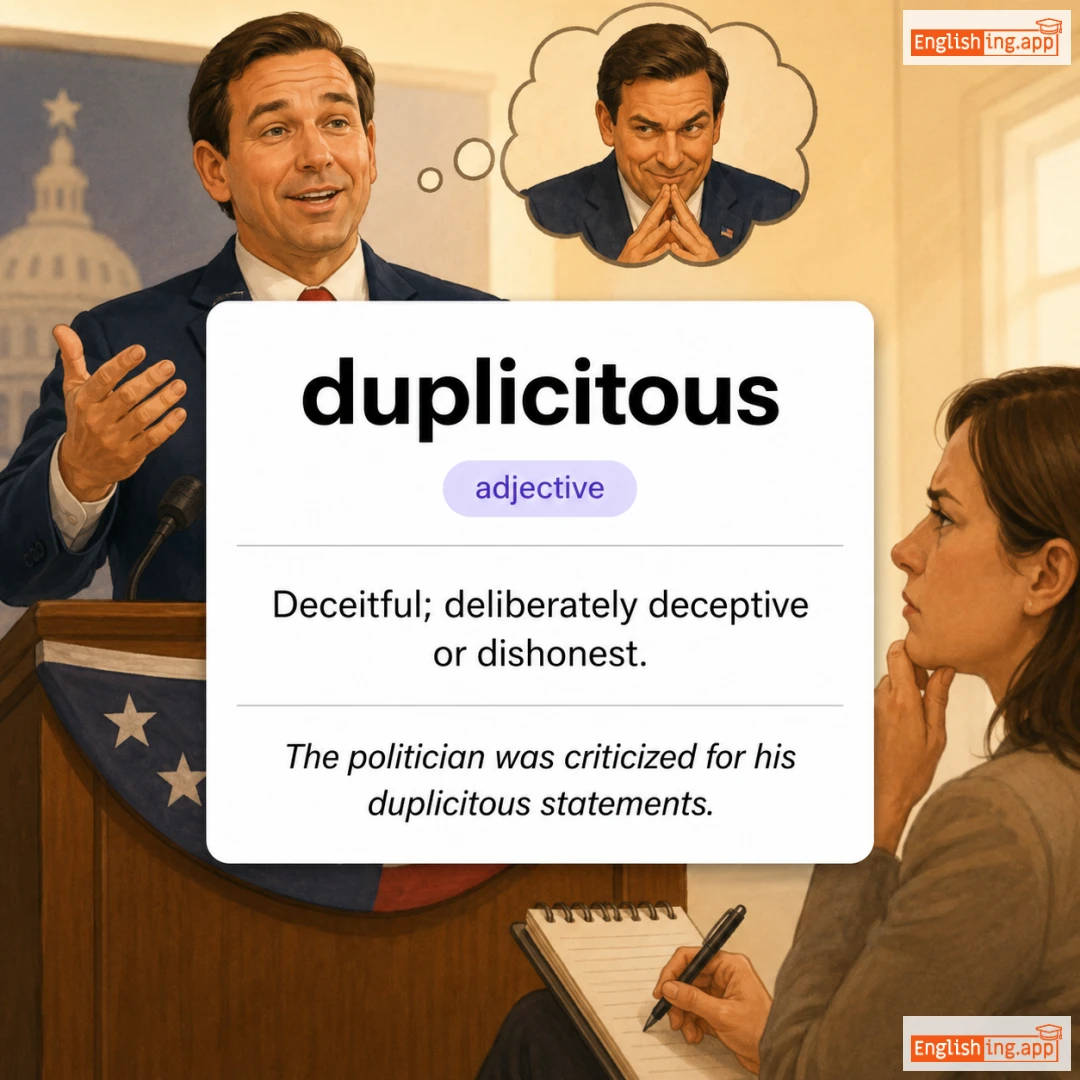
duplicitous definition card — visual illustration of the meaning
adjective C2
/djuːˈplɪsɪtəs/
裏表のある (uramoto no aru)

Deceitful; deliberately deceptive or dishonest.

"The politician was criticized for his duplicitous statements."

"その政治家は裏表のある発言で批判された。" (Sono seijika wa uramoto no aru hatsugen de hihan sareta.)
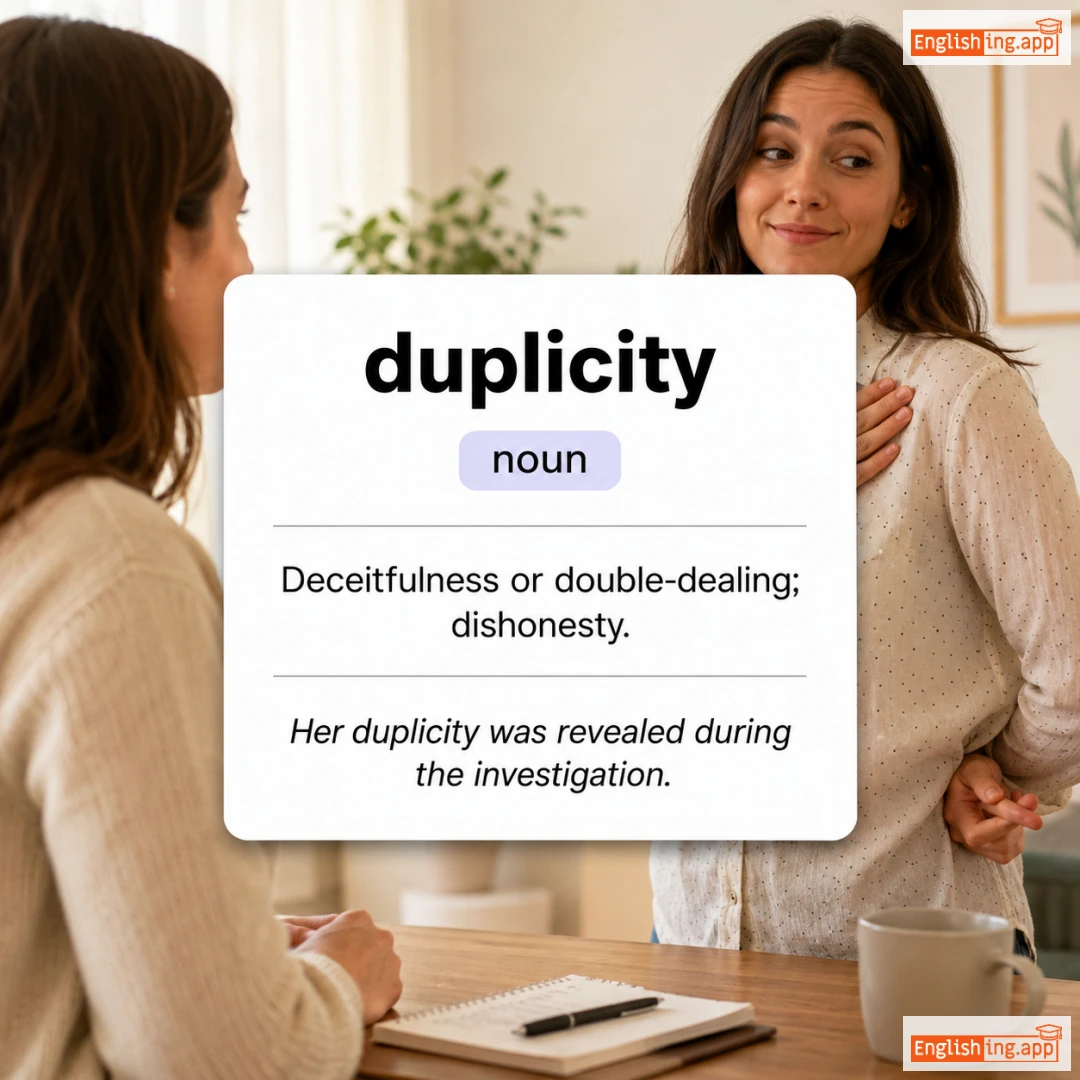
duplicity definition card — visual illustration of the meaning
noun C2
/djuːˈplɪsɪti/
二重性 (nijūsei)

Deceitfulness or double-dealing; dishonesty.

"Her duplicity was revealed during the investigation."

"調査中に彼女の二重性が明らかになった。" (Chōsa-chū ni kanojo no nijūsei ga akiraka ni natta.)
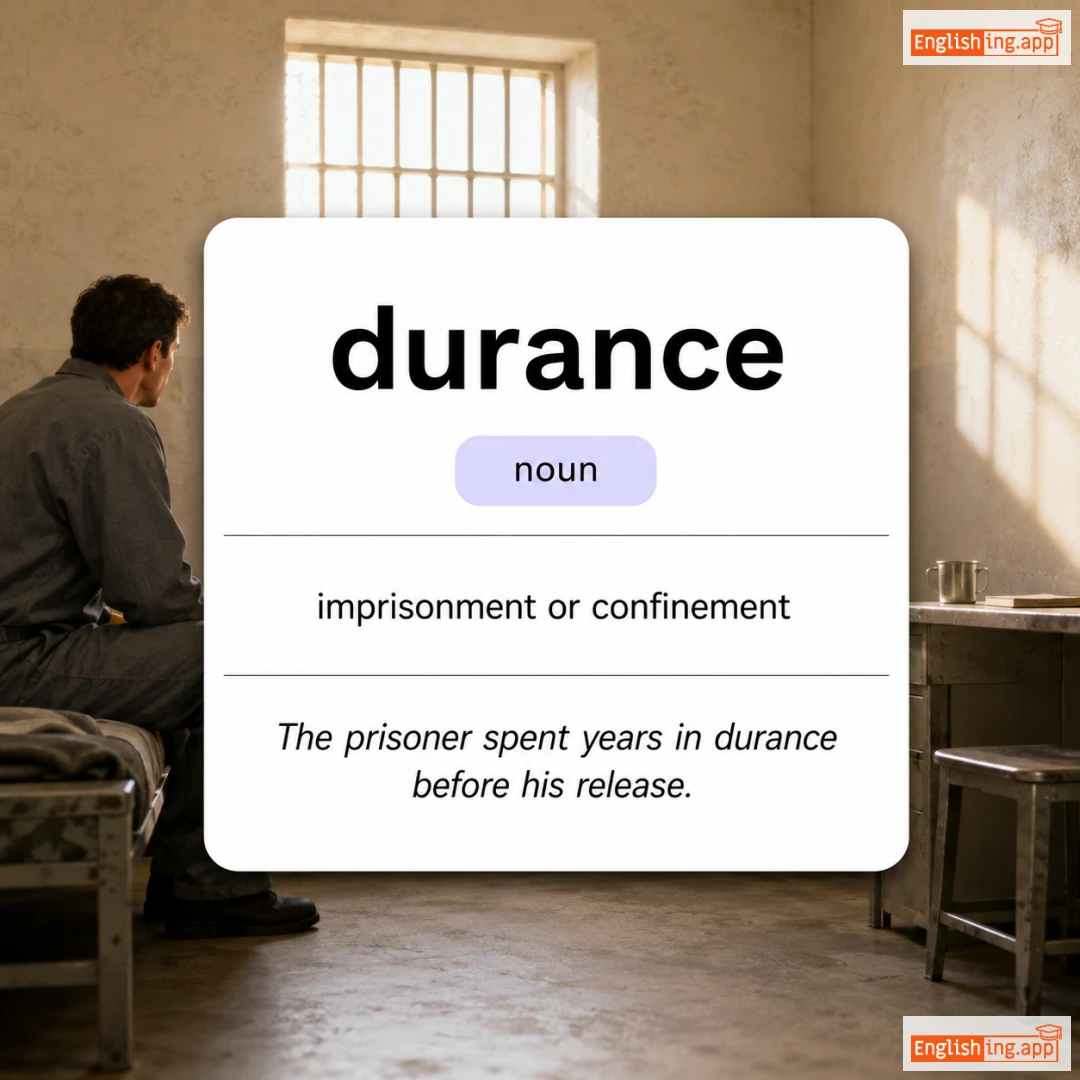
durance definition card — visual illustration of the meaning
noun C2
/ˈdjʊərəns/
監禁 (kankin)

imprisonment or confinement

"The prisoner spent years in durance before his release."

"囚人は解放される前に数年間監禁されていた。" (Shūjin wa kaihō sareru mae ni sūnenkan kankin sarete ita.)
adjective C2
/ˈdjuːtiəs/
忠実な (chuujitsuna)

dutiful; obedient and respectful

"The duteous child always followed her parents’ instructions."

"その忠実な子供は常に両親の指示に従っていました。" (Sono chuujitsuna kodomo wa tsuneni ryoushin no shiji ni shitagatte imashita.)
adjective C2
/ˈdjuːtiəbl/
課税対象 (kazei taishou)

subject to customs duty or tax

"Imported electronics are often dutiable at the border."

"輸入された電子機器はしばしば国境で課税対象となります。" (Yunyuu sareta denshi kiki wa shibashiba kokkyou de kazei taishou to narimasu.)
noun C2
/daɪn/
力の単位(センチメートル・グラム・秒の単位系) (Chikara no tan'i (senchimētoru-guramu-byō no tan'ikei))

A unit of force in the centimeter-gram-second (cgs) system equal to 10⁻⁵ newtons.

"The physicist measured the force in dynes."

"物理学者はダインで力を測定しました。" (Butsurigakusha wa dain de chikara o sokutei shimashita.)
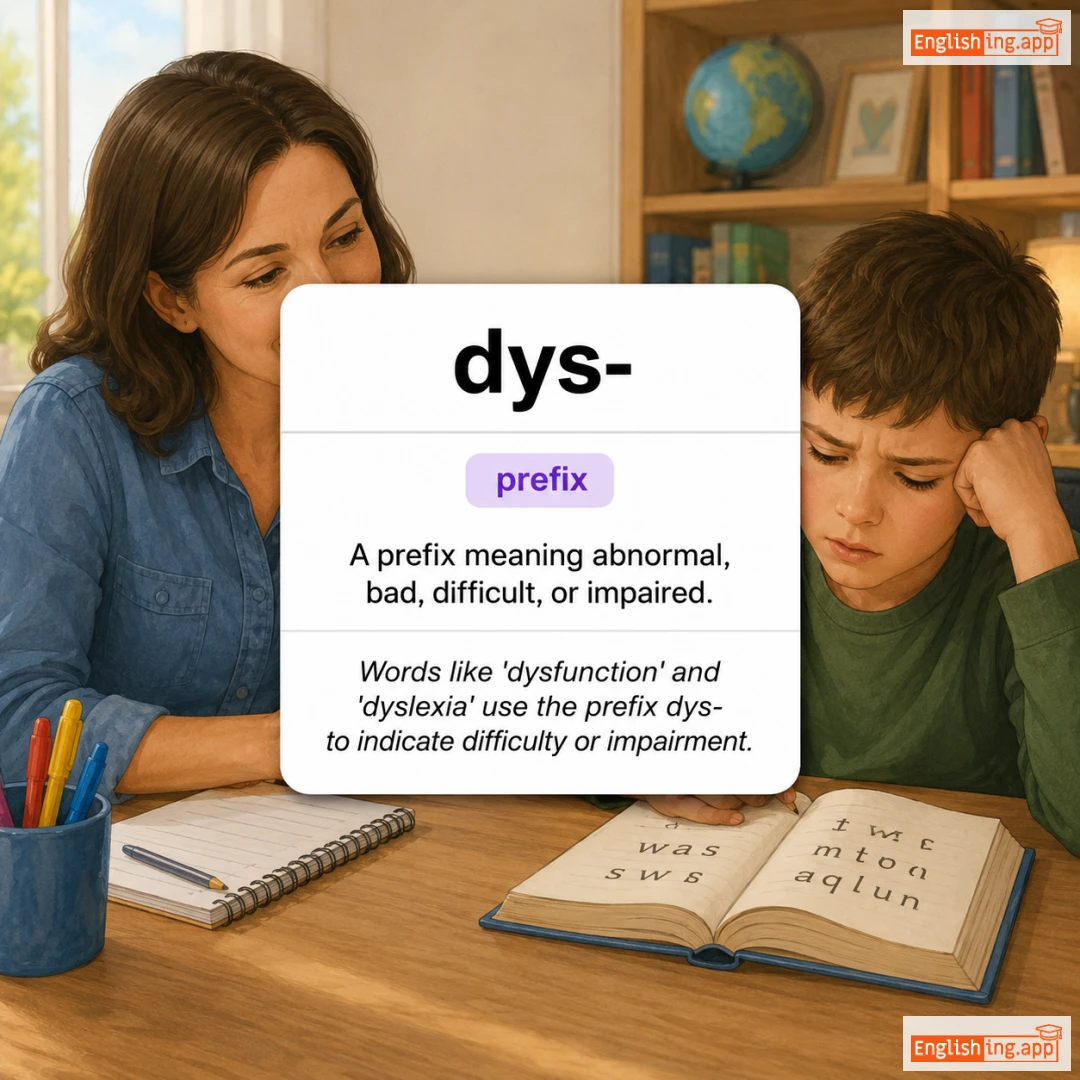
dys- definition card — visual illustration of the meaning
prefix C2
/dɪs-/
異常、悪い、困難、または欠陥を意味する接頭辞 (ijou, warui, konnan, matawa kekkan o imi suru settouji)

A prefix meaning abnormal, bad, difficult, or impaired.

"Words like 'dysfunction' and 'dyslexia' use the prefix dys- to indicate difficulty or impairment."

"'ディスファンクション'や'ディスレクシア'のような言葉は、困難や障害を示すためにディス-という接頭辞を使用します。" ('Disfankushon' ya 'Disurekushia' no you na kotoba wa, konnan ya shougai o shimesu tame ni dis- to iu settouji o shiyou shimasu.)
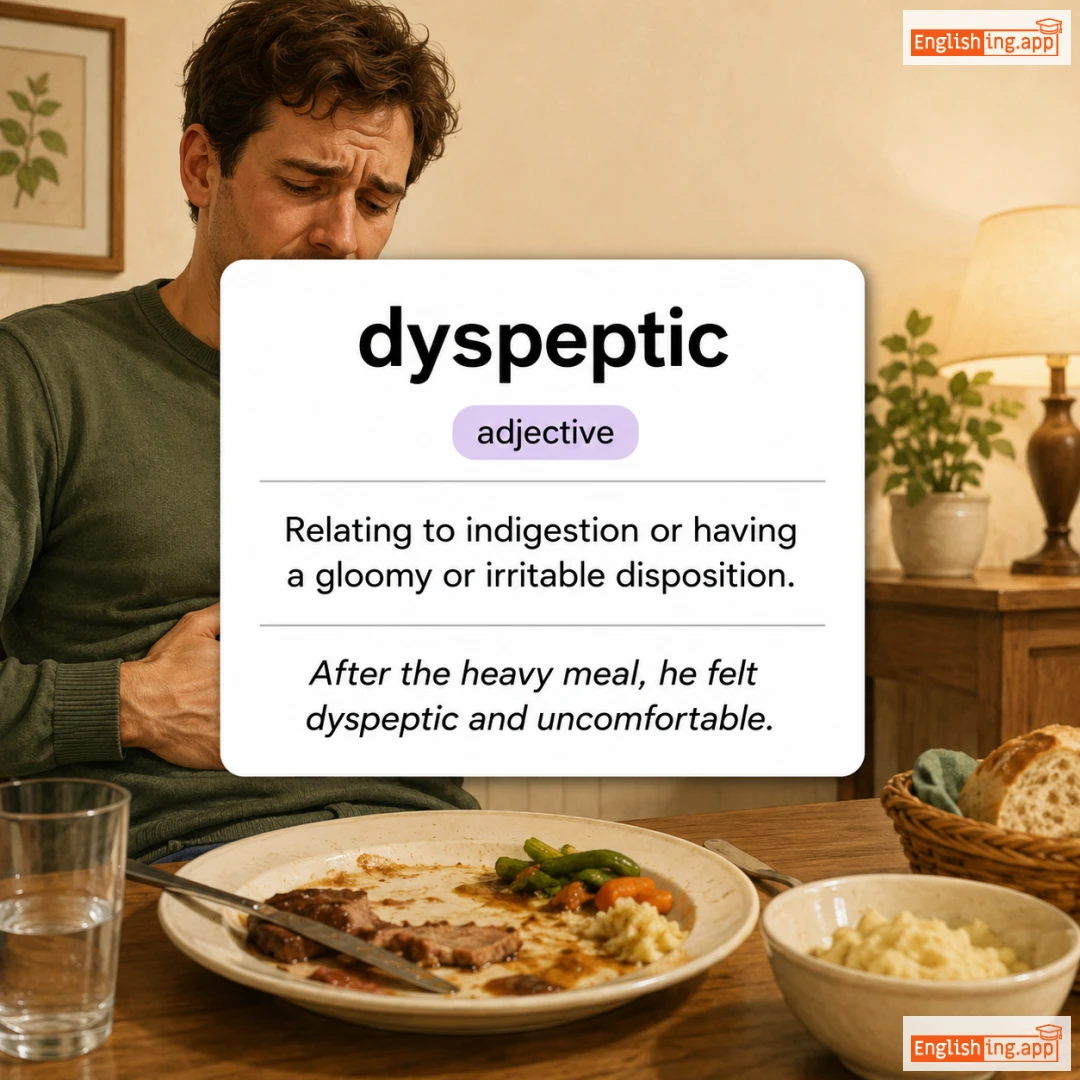
dyspeptic definition card — visual illustration of the meaning
adjective C2
/dɪsˈpɛptɪk/
消化不良, イライラした (shouka furyou, iraira shita)

Relating to indigestion or having a gloomy or irritable disposition.

"After the heavy meal, he felt dyspeptic and uncomfortable."

"重い食事の後、彼は消化不良で不快に感じました。" (Omoi shokuji no ato, kare wa shouka furyou de fukai ni kanjimashita.)
noun C2
/ˈiːɡlət/
イーグルのひな (īguru no hina)

A young eagle.

"The eaglet waited in the nest for its mother to return."

"イーグレットは巣の中で母親が戻るのを待っていた。" (Īguretto wa su no naka de hahaoya ga modoru no o matte ita.)
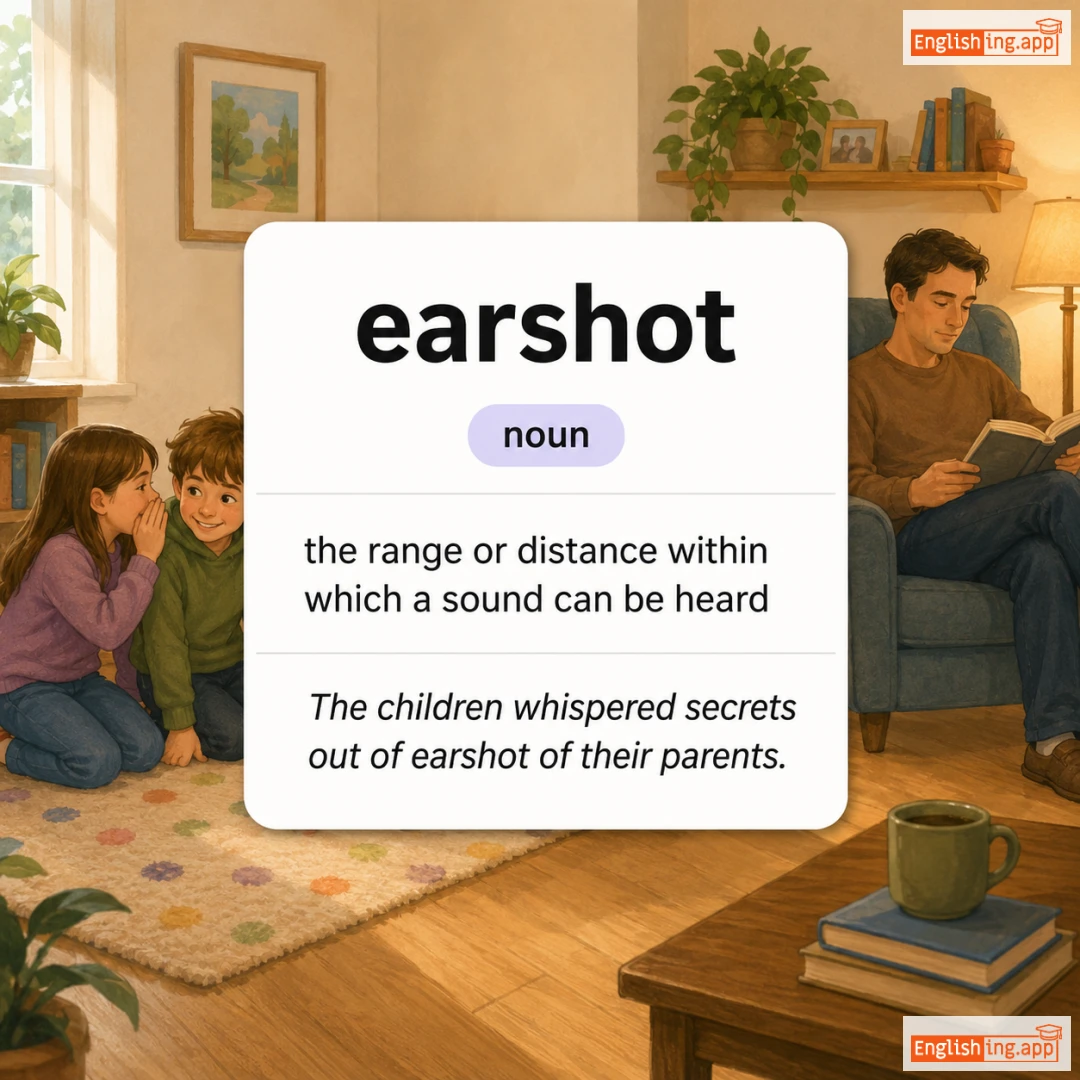
earshot definition card — visual illustration of the meaning
noun C2
/ˈɪrˌʃɑːt/
耳の届く範囲 (mimi no todoku han'i)

the range or distance within which a sound can be heard

"The children whispered secrets out of earshot of their parents."

"子供たちは親の耳の届く範囲外で秘密をささやいた。" (Kodomotachi wa oya no mimi no todoku han'i gai de himitsu wo sasayaita.)
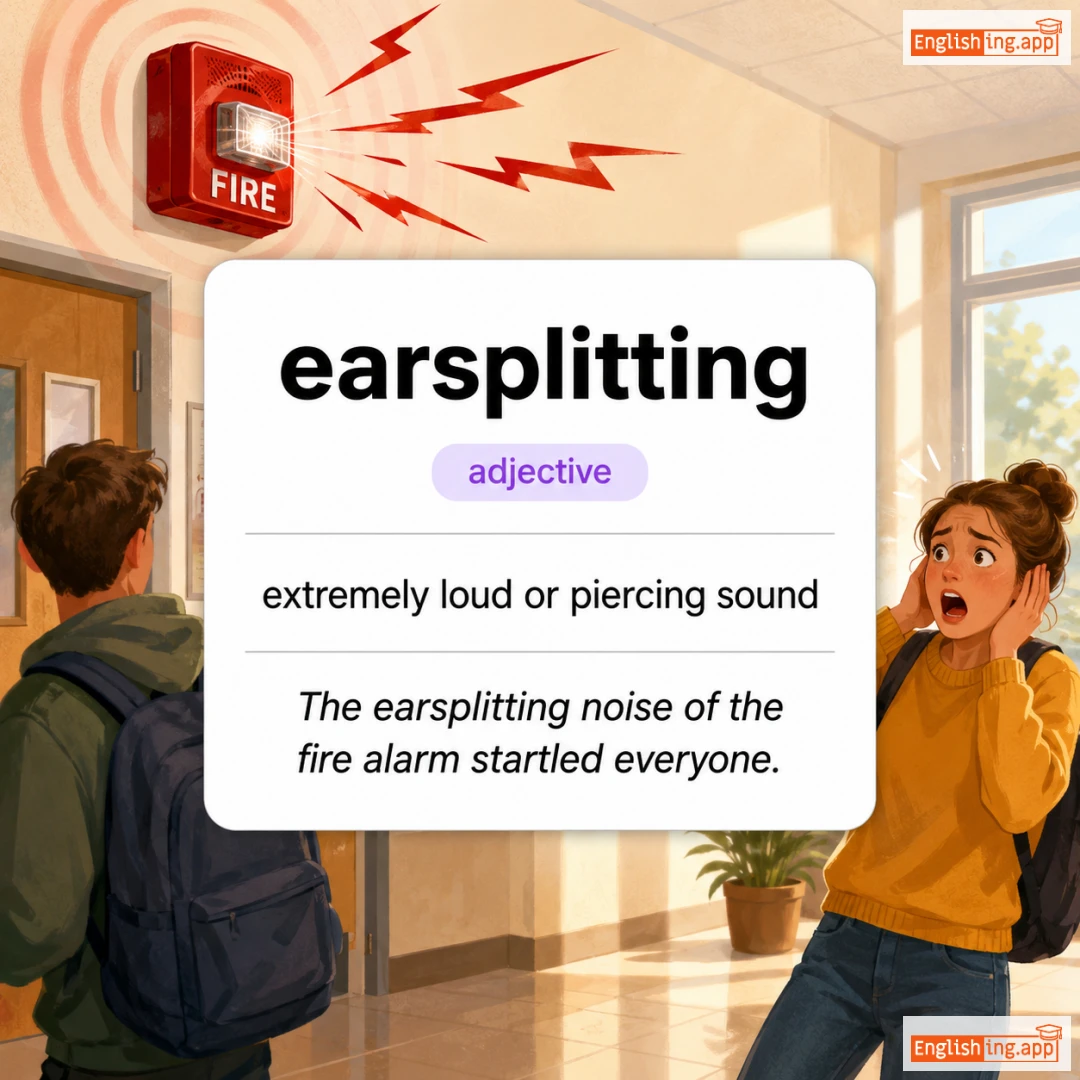
earsplitting definition card — visual illustration of the meaning
adjective C2
/ˈɪrˌsplɪtɪŋ/
耳をつんざくような (mimi o tsunzaku you na)

extremely loud or piercing sound

"The earsplitting noise of the fire alarm startled everyone."

"火災警報の耳をつんざくような音がみんなを驚かせた。" (Kasai keihou no mimi o tsunzaku you na oto ga minna o odorokaseta.)
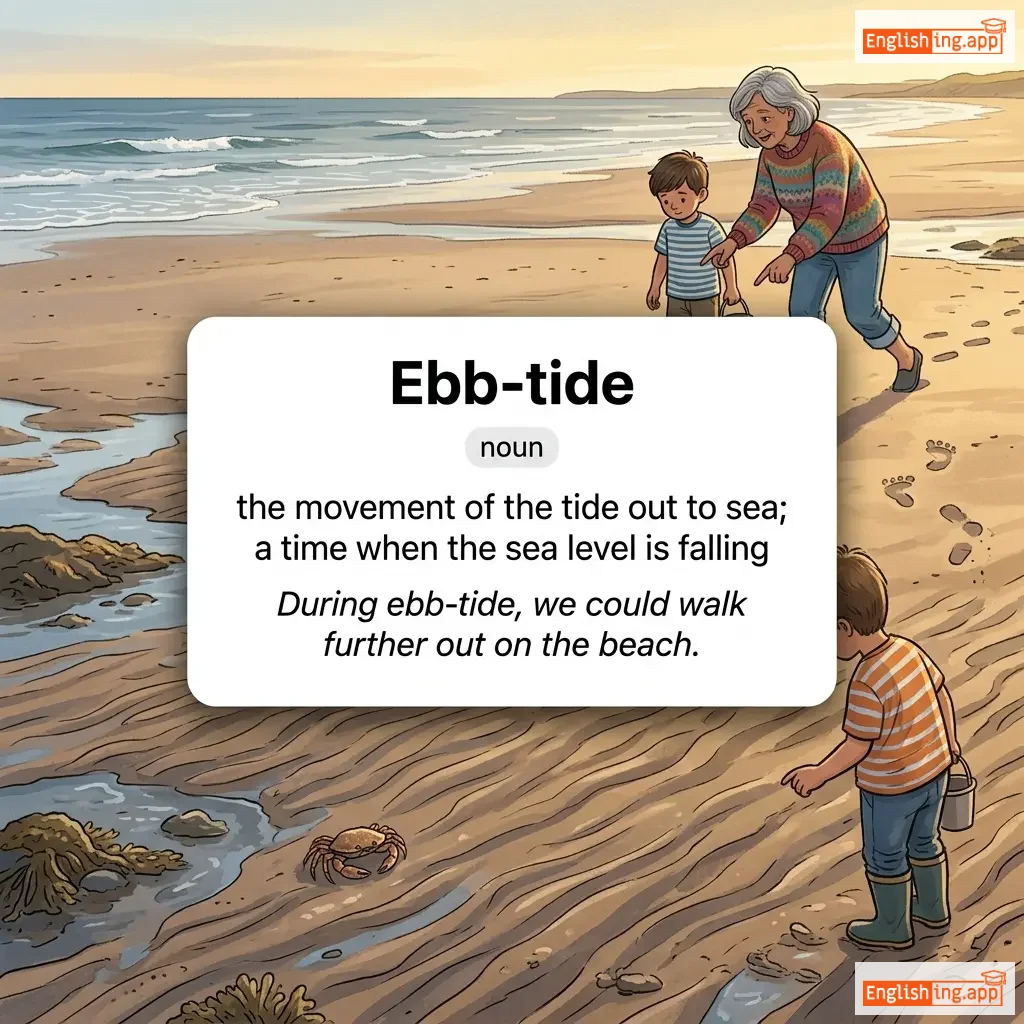
Ebb-tide definition card — visual illustration of the meaning
noun C2
/ˈeb.taɪd/
干潮 (kan-chou)

the movement of the tide out to sea; a time when the sea level is falling

"During ebb-tide, we could walk further out on the beach."

"干潮時には、ビーチでさらに遠くに歩けました。" (Kanchou-ji ni wa, bīchi de sara ni tōku ni arukemashita.)
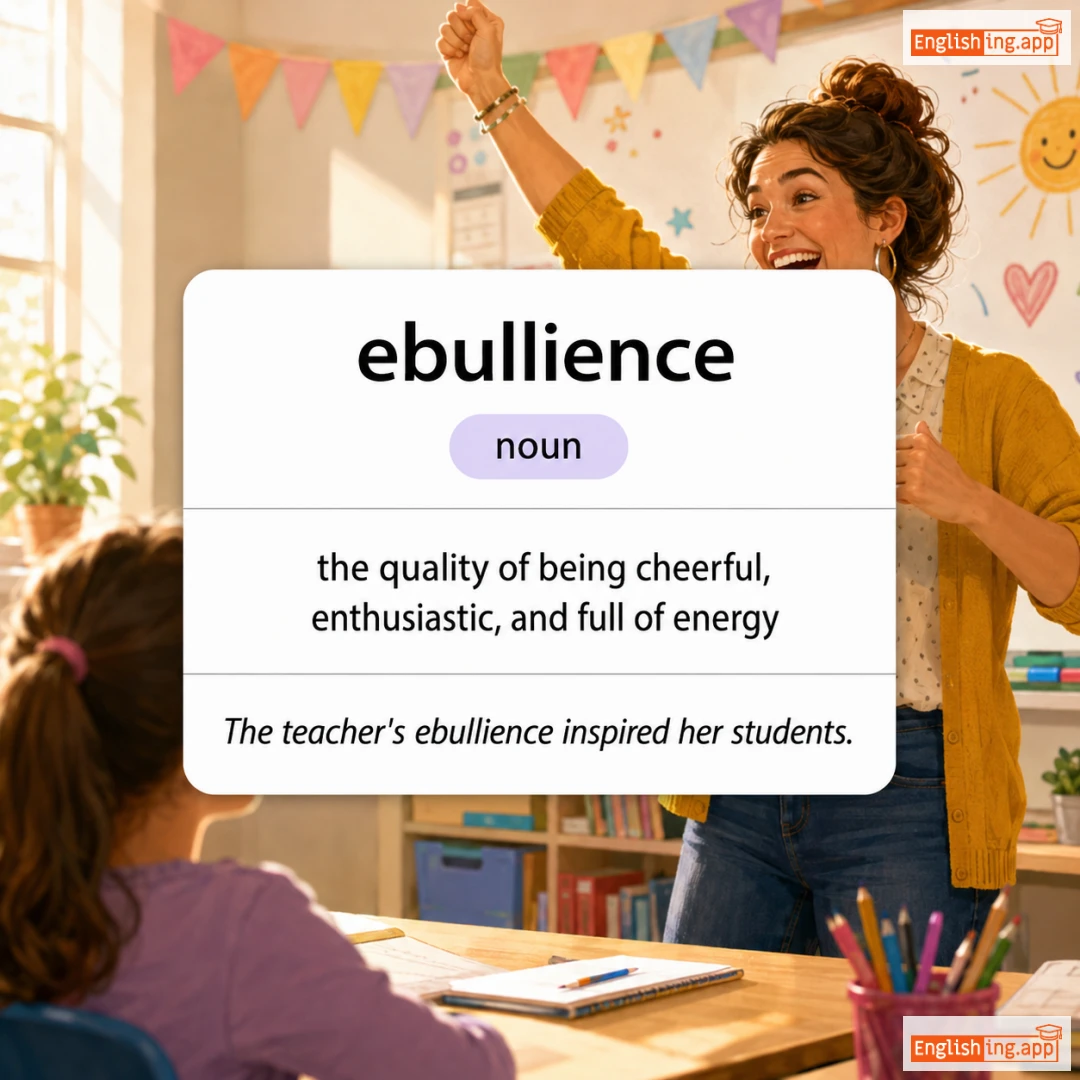
ebullience definition card — visual illustration of the meaning
noun C2
/ɪˈbʊliəns/
熱狂 (nekkyou)

the quality of being cheerful, enthusiastic, and full of energy

"The teacher's ebullience inspired her students."

"教師の熱狂が生徒たちをインスパイアしました。" (Kyoushi no nekkyou ga seitotachi wo insupaishimashita.)
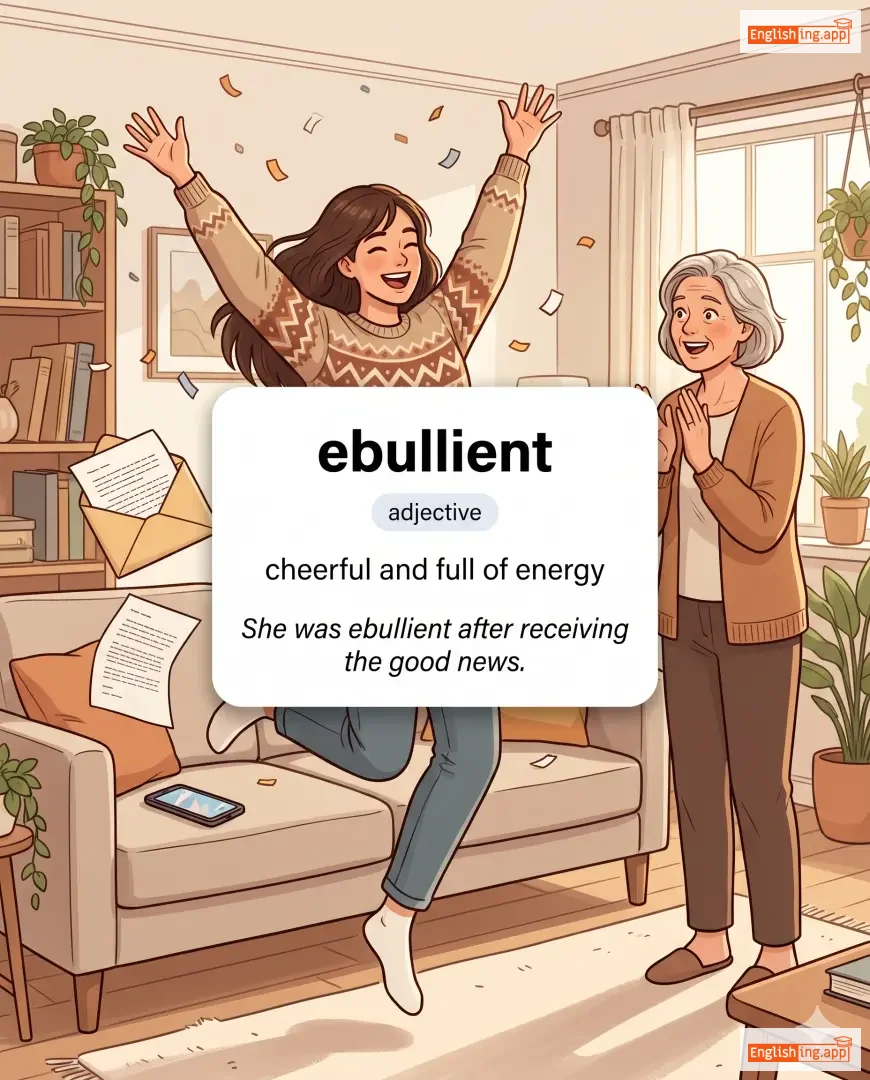
ebullient definition card — visual illustration of the meaning
adjective C2
/ɪˈbʊliənt/
陽気な (youkina)

cheerful and full of energy

"She was ebullient after receiving the good news."

"良いニュースを受け取った後、彼女は陽気でした。" (Yoi nyu-su o uketotta ato, kanojo wa youki deshita.)
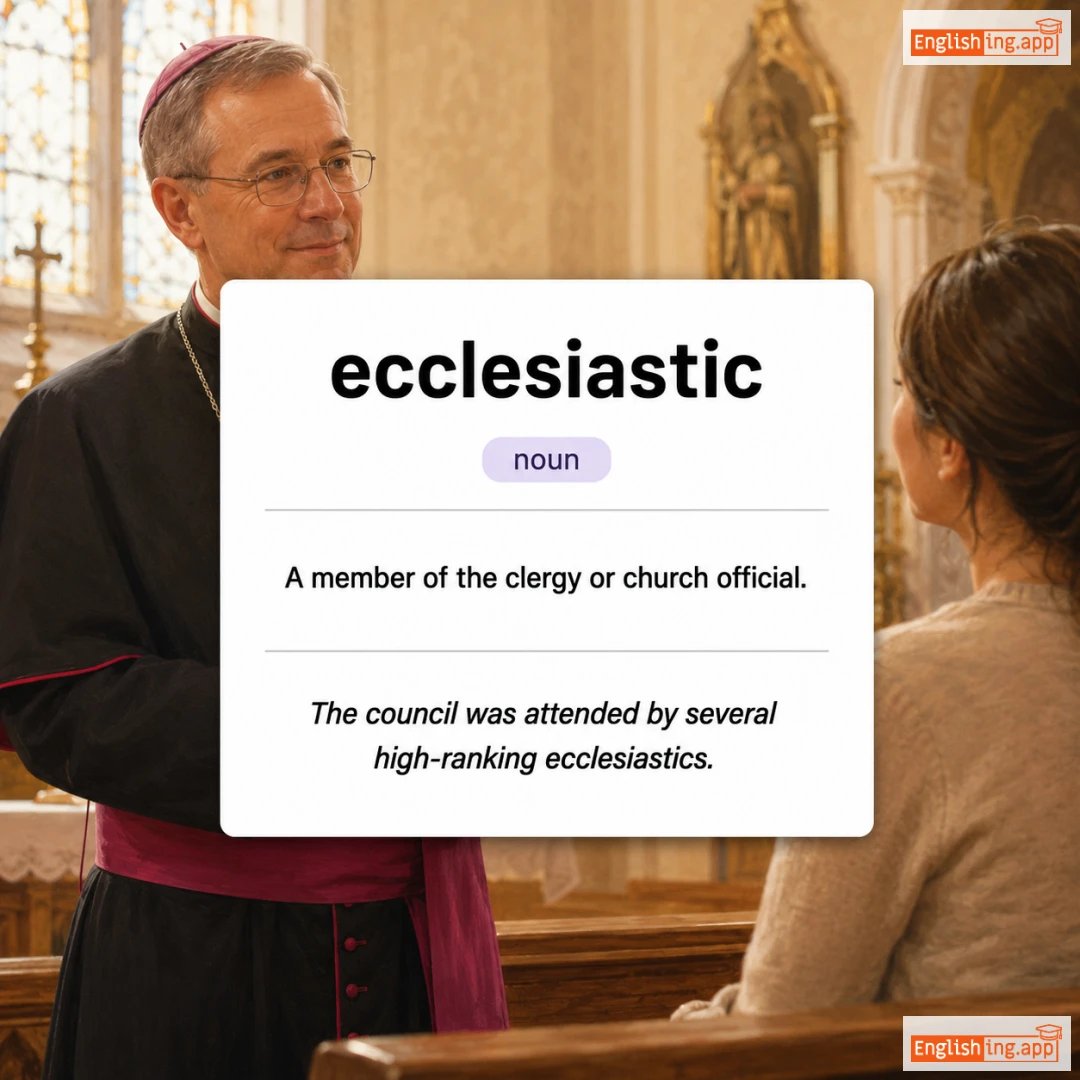
ecclesiastic definition card — visual illustration of the meaning
noun C2
/ɪˌkliːziˈæstɪk/
教会の (kyōkai no)

A member of the clergy or church official.

"The council was attended by several high-ranking ecclesiastics."

"その会議には数人の高位の教会役員が出席しました。" (Sono kaigi ni wa sūnin no kōi no kyōkai yakuin ga shusseki shimashita.)
noun C2
/eɪˈklɑː/
大成功 (daiseikou)

Brilliant success, acclaim, or great public approval.

"The artist's debut performance was met with great éclat."

"アーティストの初めてのパフォーマンスは大成功を収めました。" (Aatisuto no hajimete no pafōmansu wa daiseikou o osamemashita.)
noun C2
/ɪˈklɛktɪˌsɪzəm/
エクレクティズム (ekurekutizumu)

A method or practice of deriving ideas, style, or taste from a broad and diverse range of sources.

"The architect’s work shows eclecticism by blending modern and traditional elements."

"建築家の仕事は、現代的な要素と伝統的な要素を組み合わせてエクレクティズムを示しています。" (Kenchikuka no shigoto wa, gendaiteki na yōso to dentōteki na yōso o kumiawasete ekurekutizumu o shimeshiteimasu.)
noun, adjective C2
/ɪˈklɪptɪk/
黄道 (koudou)

The apparent path of the sun across the sky; relating to eclipses or this path.

"The ecliptic is the plane of Earth's orbit around the Sun."

"黄道は地球の太陽の周りの軌道の平面です。" (Koudou wa chikyuu no taiyou no mawari no kidou no heimen desu.)
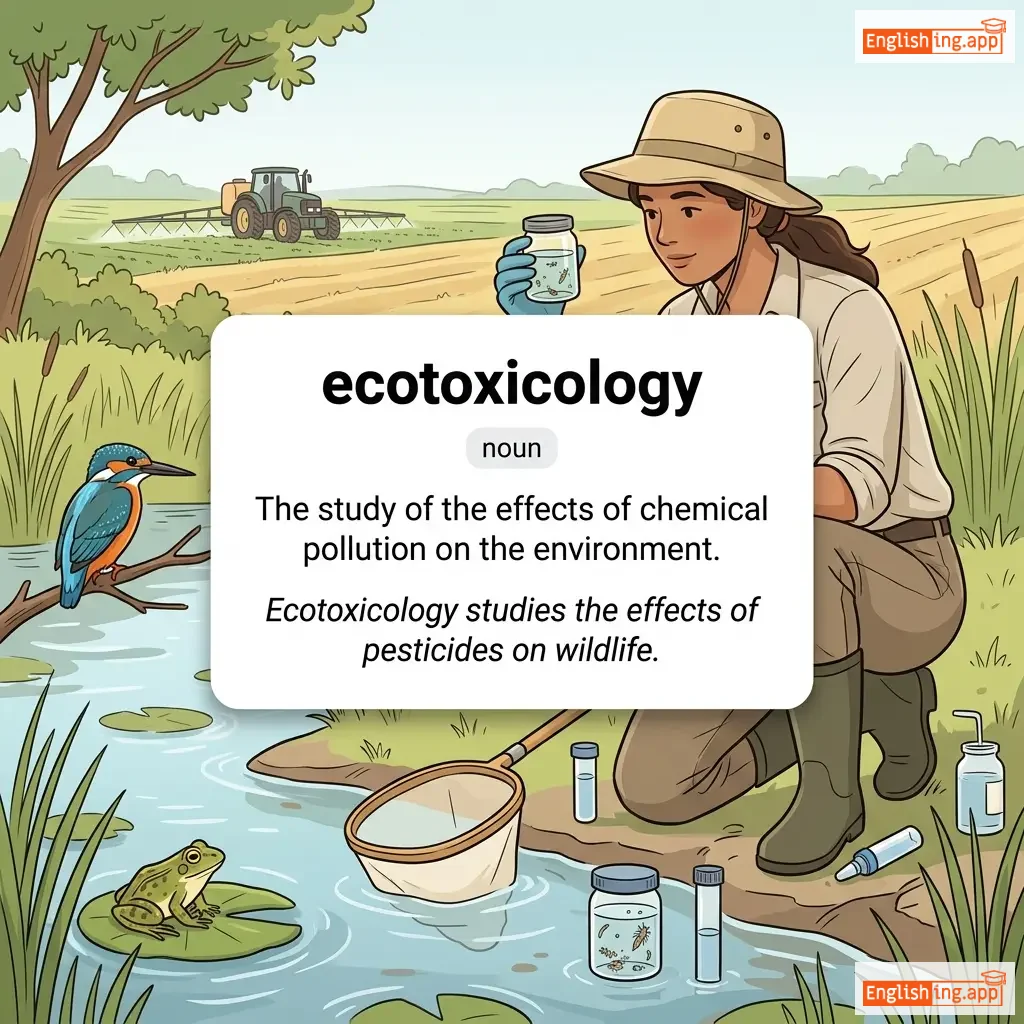
ecotoxicology definition card — visual illustration of the meaning
noun C2
/ˌiː.kəʊ.tɒkˈsɪ.kə.lə.dʒi/
エコトキシコロジー (ekotokishikoroji)

The study of the effects of chemical pollution on the environment.

"Ecotoxicology studies the effects of pesticides on wildlife."

"エコトキシコロジーは農薬が野生動物に与える影響を研究しています。" (Ekotokishikoroji wa nōyaku ga yaseidōbutsu ni ataeru eikyō o kenkyū shiteimasu.)
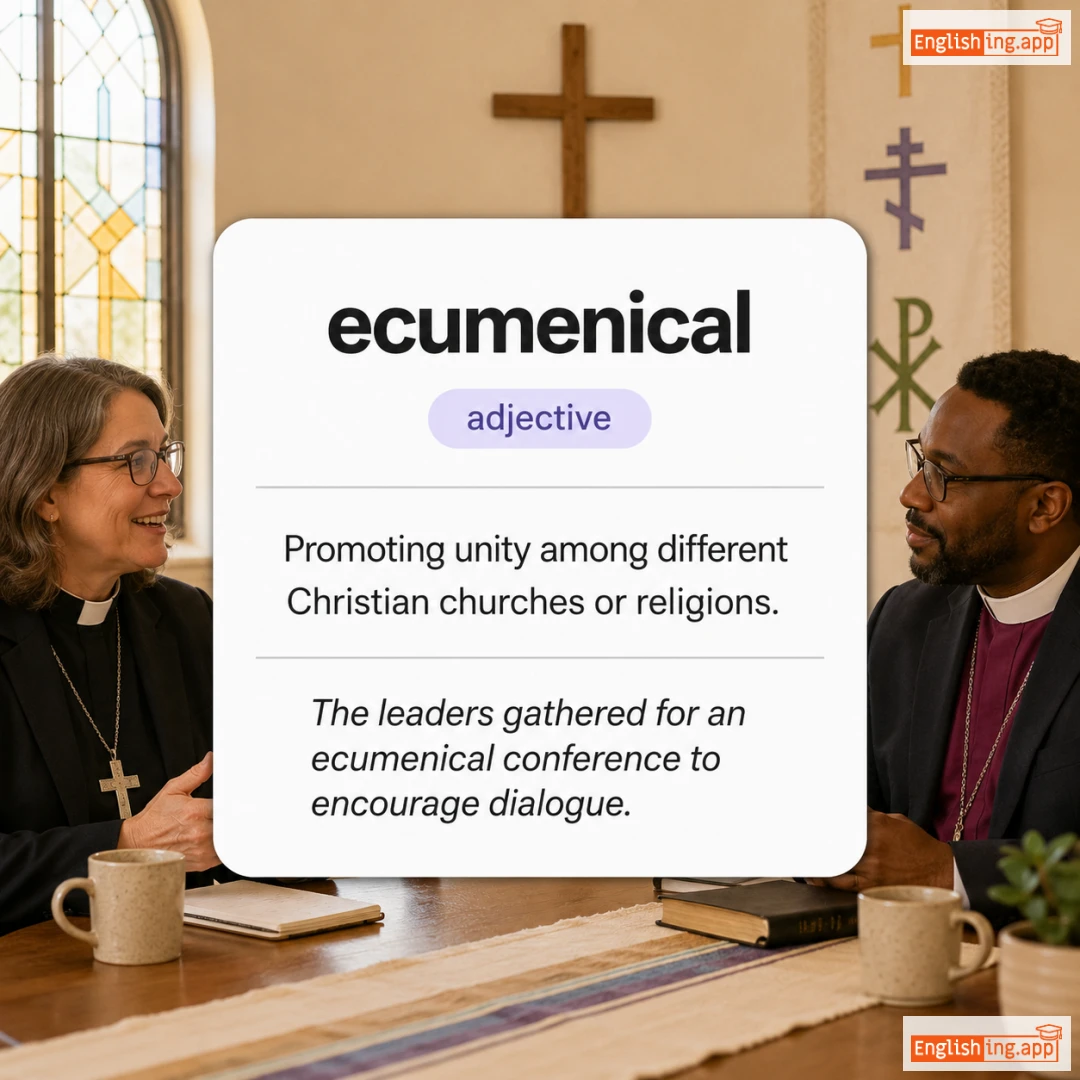
ecumenical definition card — visual illustration of the meaning
adjective C2
/ˌɛkjʊˈmɛnɪkəl/
エキュメニカルな宗教的統一 (ekyumenikaru na shuukyou-teki touitsu)

Promoting unity among different Christian churches or religions.

"The leaders gathered for an ecumenical conference to encourage dialogue."

"リーダーたちは対話を促進するためにエキュメニカルな会議に集まりました。" (Riidaa-tachi wa taiwa wo sokushin suru tame ni ekyumenikaru na kaigi ni atsumarimashita.)
noun C2
/ˈɛdi/
渦巻き (uzumaki)

A circular movement of water, air, or smoke, counter to the main current, causing a small whirlpool or turbulence.

"The canoe was caught in an eddy near the rocks."

"カヌーは岩の近くで渦巻きに巻き込まれた。" (Kanū wa iwa no chikaku de uzumaki ni makikomareta.)
📚

edify

verb C2
/ˈɛdɪfaɪ/

To instruct or improve someone morally or intellectually.

"Good books can both entertain and edify the reader."

adjective C2
/ˈɛdɪfaɪɪŋ/
啓発的な (keihatsuteki na)

Providing moral or intellectual instruction or enlightenment.

"The documentary was both entertaining and edifying."

"そのドキュメンタリーは、エンターテイメントと啓発の両方を兼ね備えていました。" (Sono dokyumentarī wa, entāteimento to keihatsu no ryōhō o kanesonaete imashita.)
verb C2
/ɪˈdjuːs/
引き出す (hikidasu)

To draw out or bring forth something latent or hidden.

"The teacher tried to educe a response from the shy student."

"教師は恥ずかしがり屋の生徒から反応を引き出そうとしました。" (Kyoushi wa hazukashigariya no seito kara hannou wo hikidasou to shimashita.)
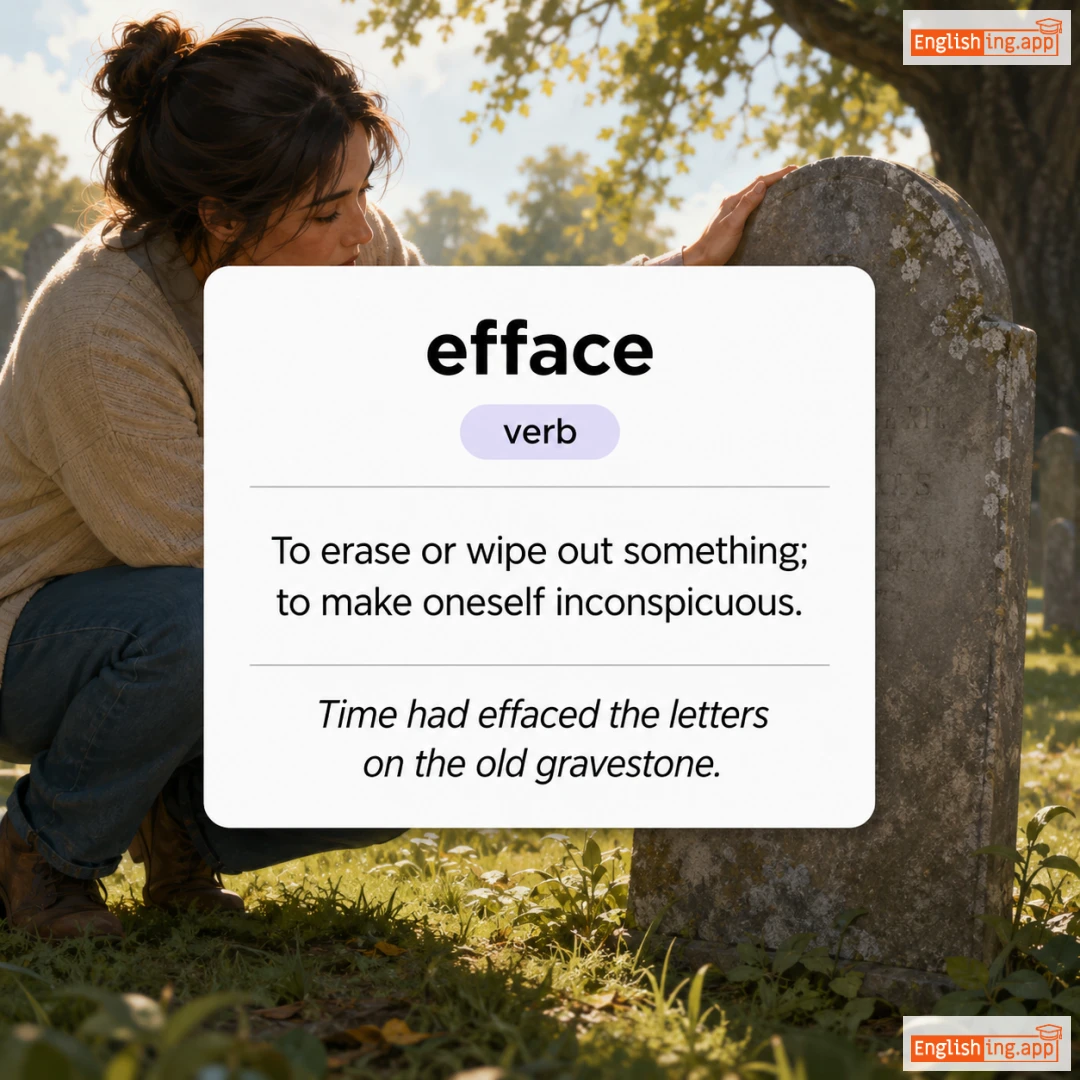
efface definition card — visual illustration of the meaning
verb C2
/ɪˈfeɪs/
消す (kesu)

To erase or wipe out something; to make oneself inconspicuous.

"Time had effaced the letters on the old gravestone."

"時間は古い墓石に刻まれた文字を消してしまいました。" (Jikan wa furui hakoseki ni kizama reta moji o keshite shimaimashita.)
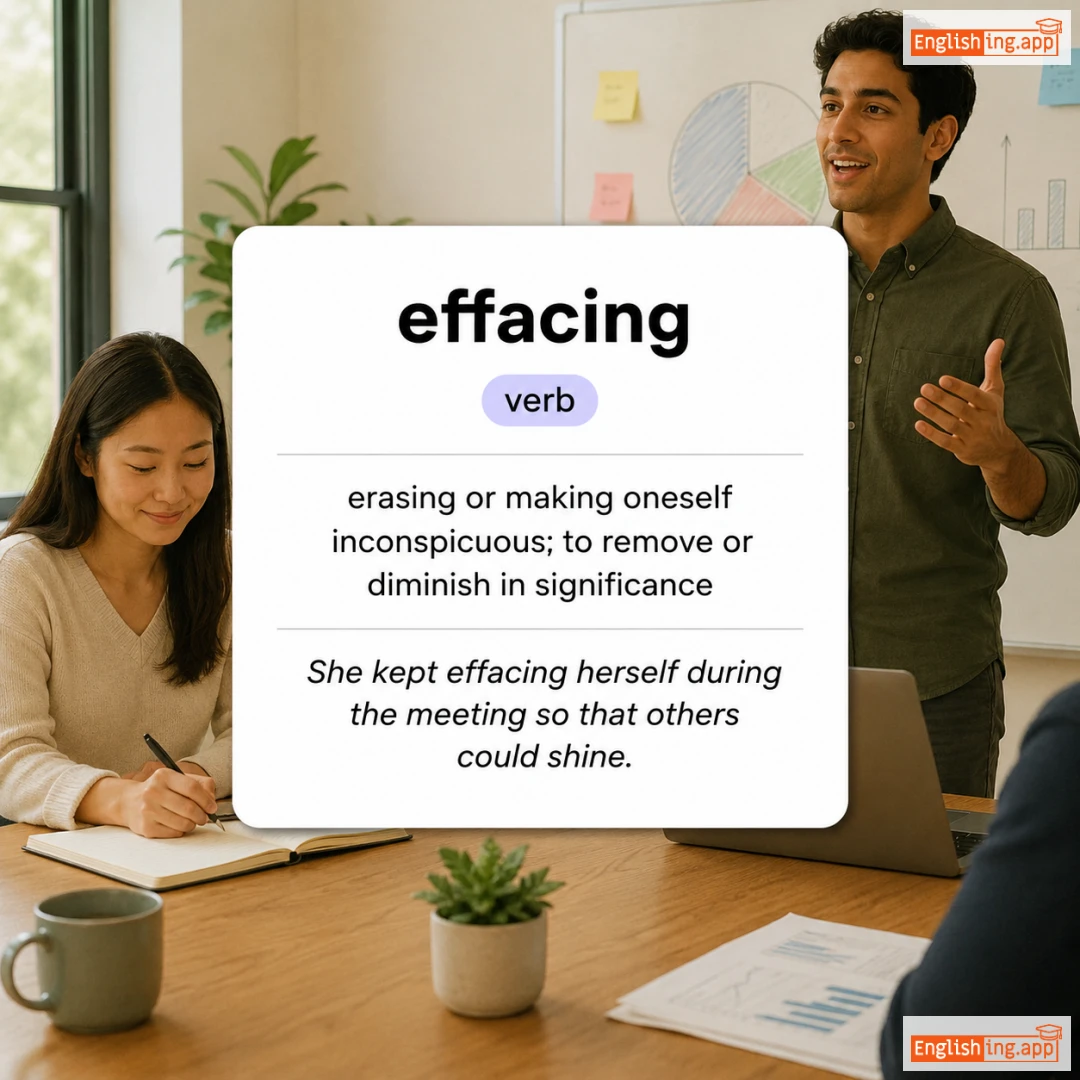
effacing definition card — visual illustration of the meaning
verb C2
/ɪˈfeɪsɪŋ/
消す / 自分を目立たなくする (kesu / jibun o medatanaku suru)

erasing or making oneself inconspicuous; to remove or diminish in significance

"She kept effacing herself during the meeting so that others could shine."

"会議中に他の人が輝けるように、自分自身を消し続けました。" (Kaigi-chū ni hoka no hito ga kagayakeru yō ni, jibun jishin o keshi tsudzukemashita.)
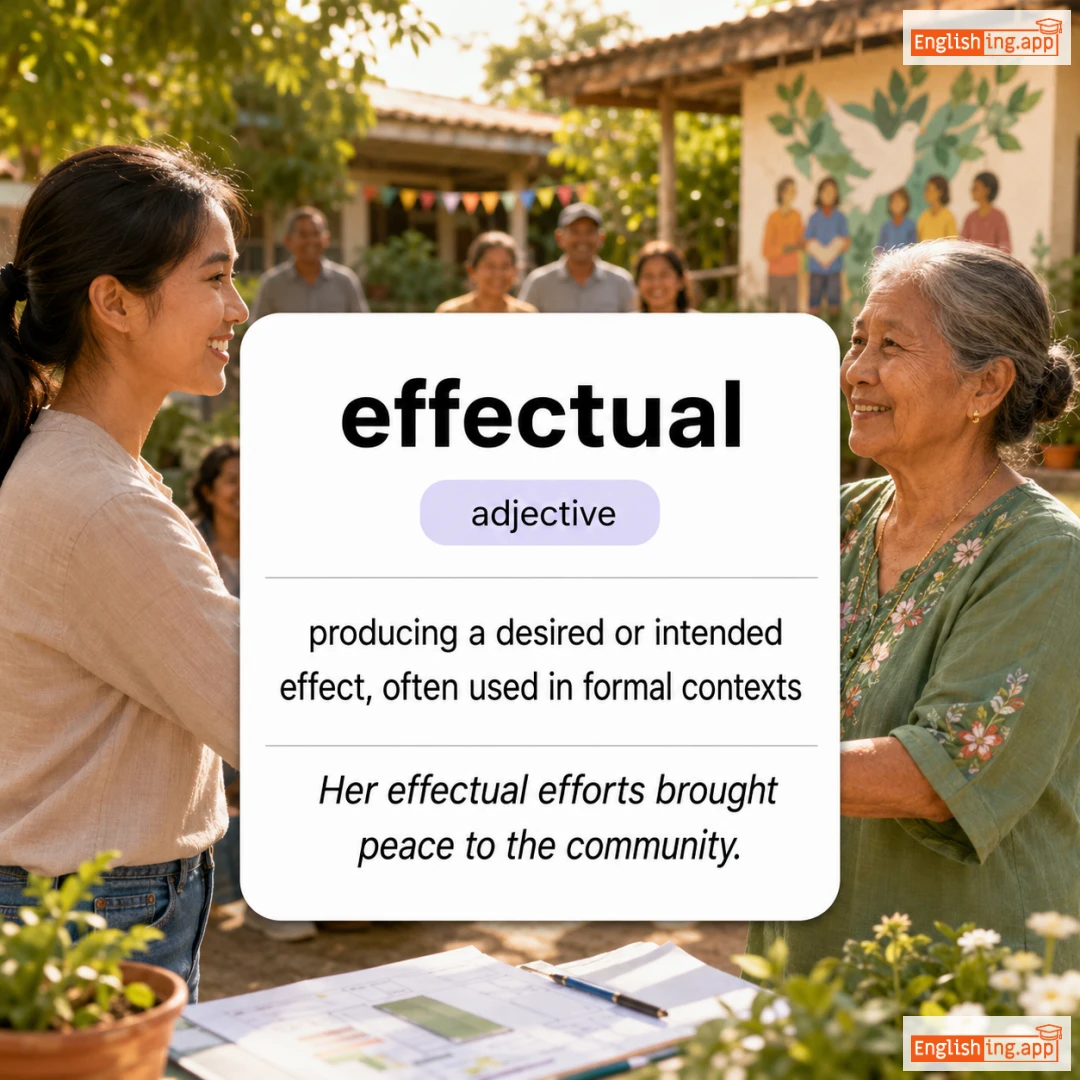
effectual definition card — visual illustration of the meaning
adjective C2
/ɪˈfɛktʃuəl/
効果的な (koukateki na)

producing a desired or intended effect, often used in formal contexts

"Her effectual efforts brought peace to the community."

"彼女の効果的な努力はコミュニティに平和をもたらしました。" (Kanojo no kōkateki na doryoku wa komyuniti ni heiwa o motarashimashita.)
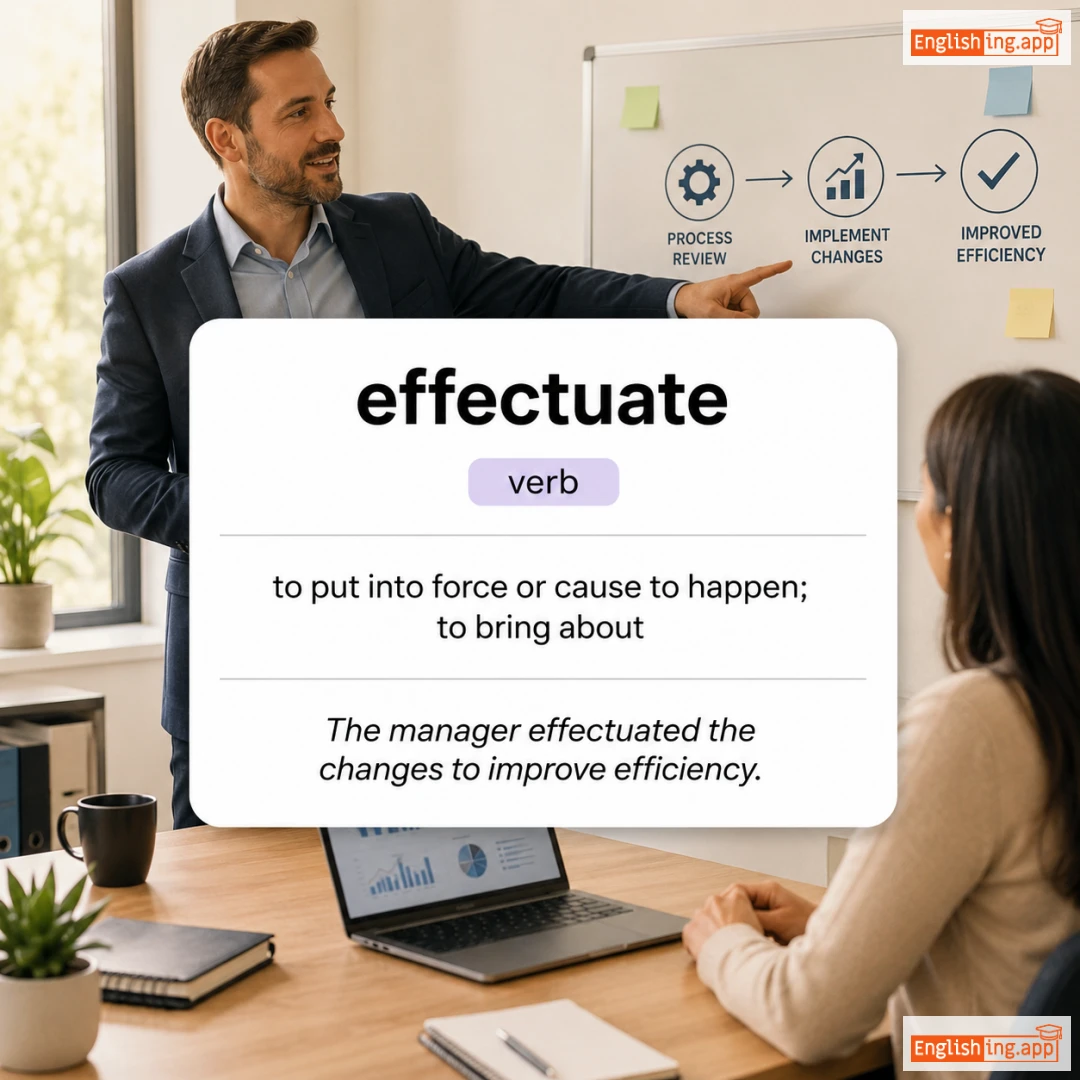
effectuate definition card — visual illustration of the meaning
verb C2
/ɪˈfɛktʃueɪt/
実行する (jikkou suru)

to put into force or cause to happen; to bring about

"The manager effectuated the changes to improve efficiency."

"マネージャーは効率を向上させるために変更を実行しました。" (Manējā wa kōritsu o kōjō saseru tame ni henkō o jikkō shimashita.)
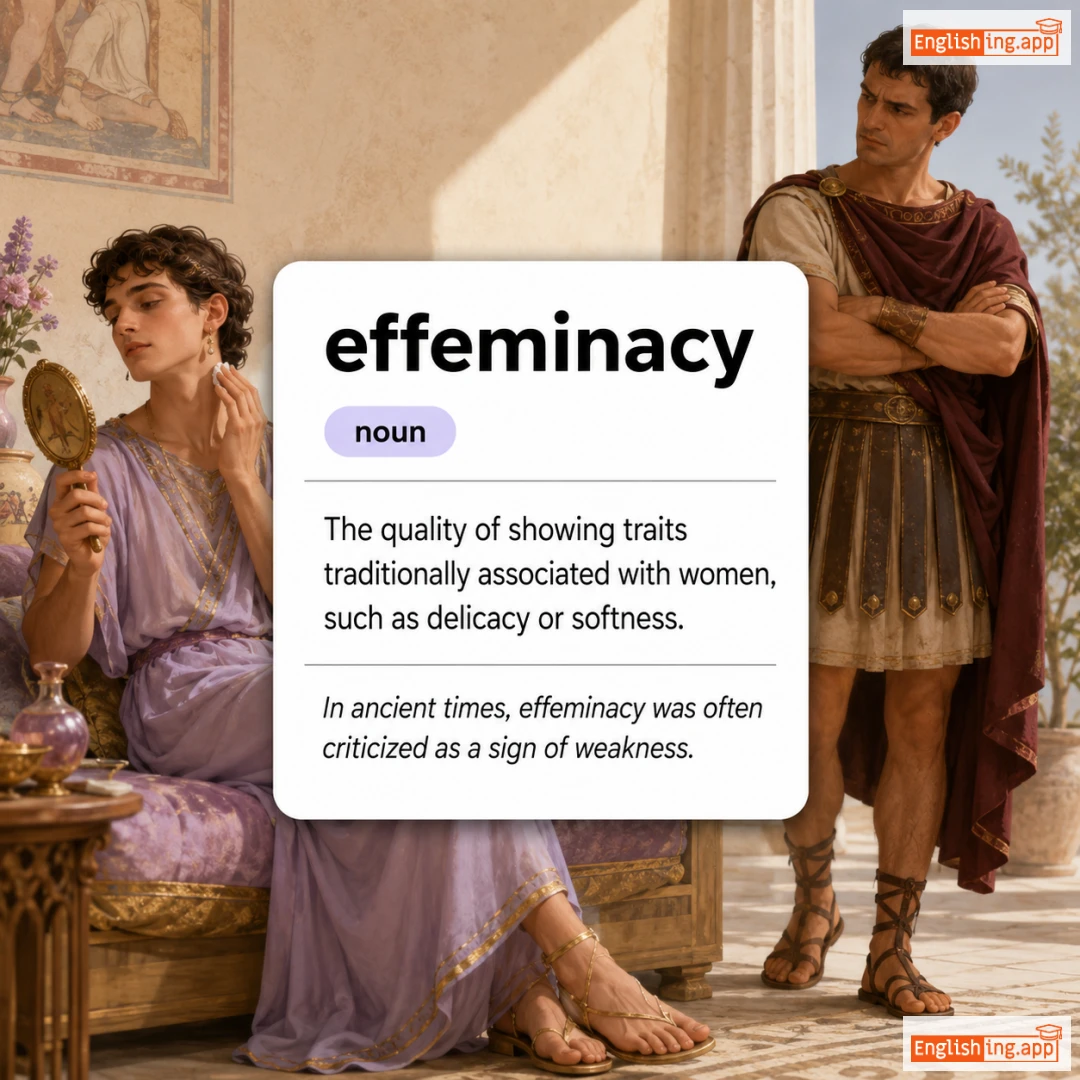
effeminacy definition card — visual illustration of the meaning
noun C2
/ɪˈfɛmɪnəsi/
女性的特質 (joseiteki tokushitsu)

The quality of showing traits traditionally associated with women, such as delicacy or softness.

"In ancient times, effeminacy was often criticized as a sign of weakness."

"古代では、女性的特質はしばしば弱さのサインとして批判されていました。" (Kodai de wa, joseiteki tokushitsu wa shibashiba yowasa no sain toshite hihan sarete imashita.)
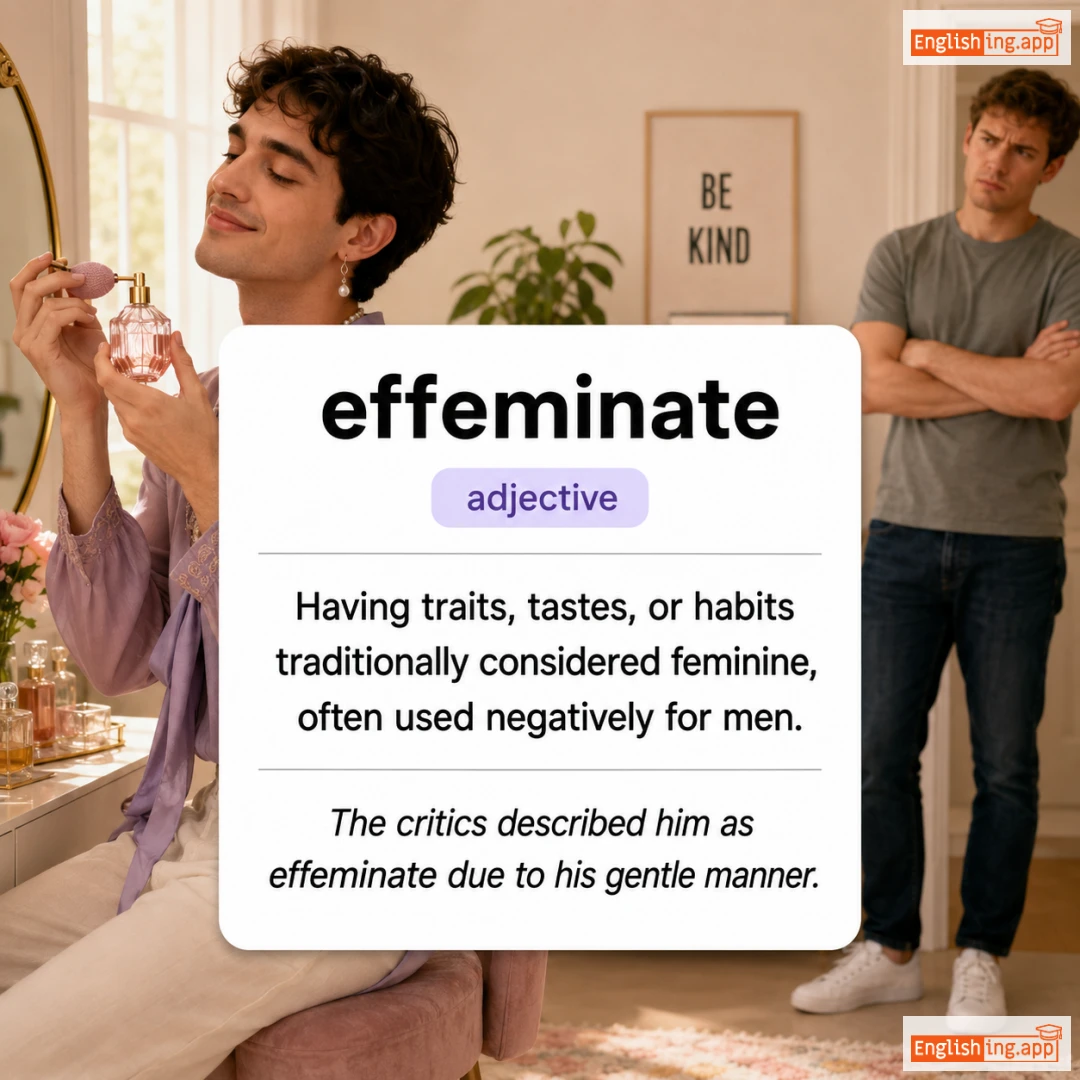
effeminate definition card — visual illustration of the meaning
adjective C2
/ɪˈfɛmɪnət/
女性的 (joseiteki)

Having traits, tastes, or habits traditionally considered feminine, often used negatively for men.

"The critics described him as effeminate due to his gentle manner."

"批評家は彼の優しい態度を理由に彼を女性的だと表現した。" (Hihyō-ka wa kare no yasashī taido o riyū ni kare o joseiteki da to hyōgen shita.)
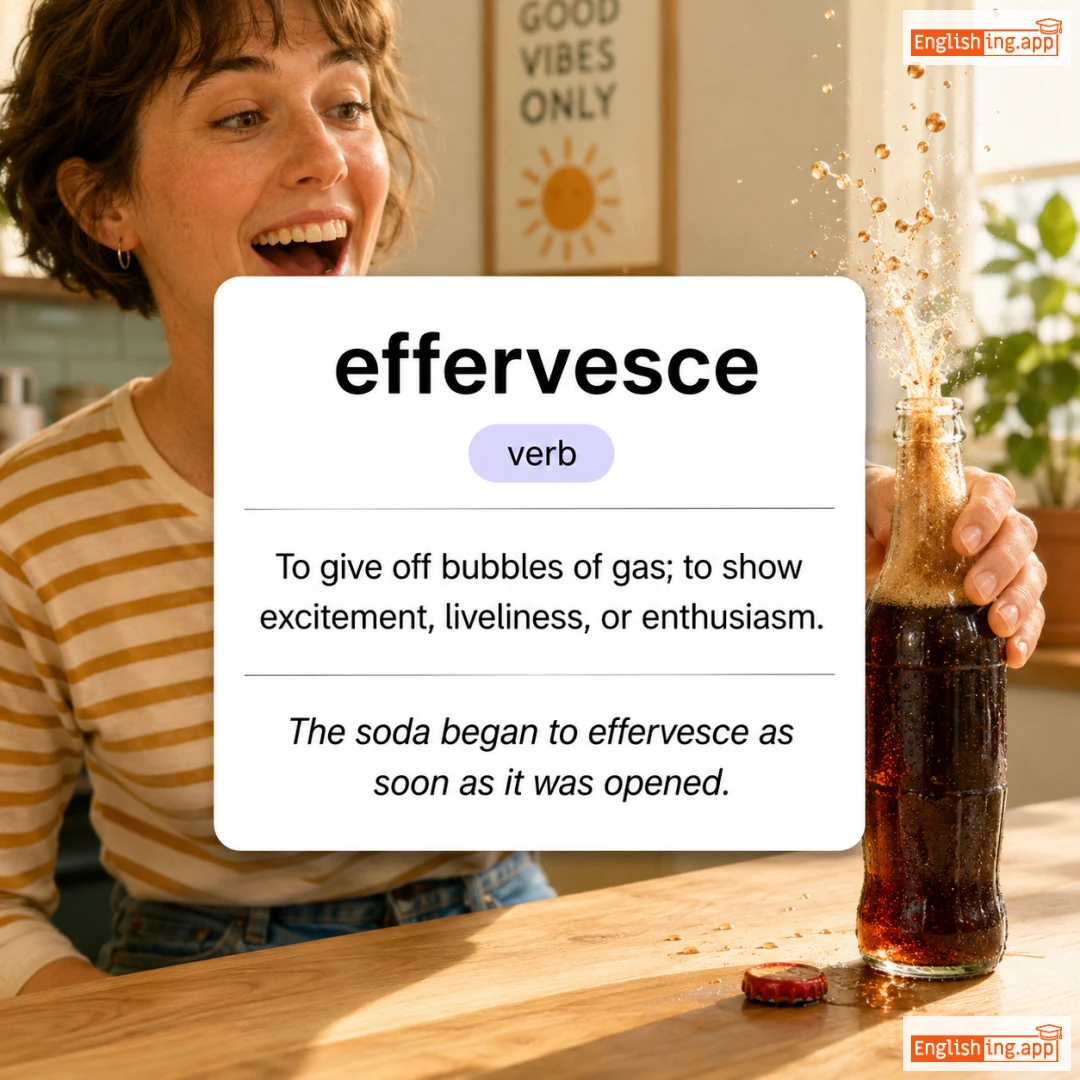
effervesce definition card — visual illustration of the meaning
verb C2
/ˌɛfəˈvɛs/
泡立つ (awadatsu)

To give off bubbles of gas; to show excitement, liveliness, or enthusiasm.

"The soda began to effervesce as soon as it was opened."

"ソーダは開けるとすぐに泡が立ち始めました。" (Soda wa akeru to sugu ni awa ga tachihajimemashita.)
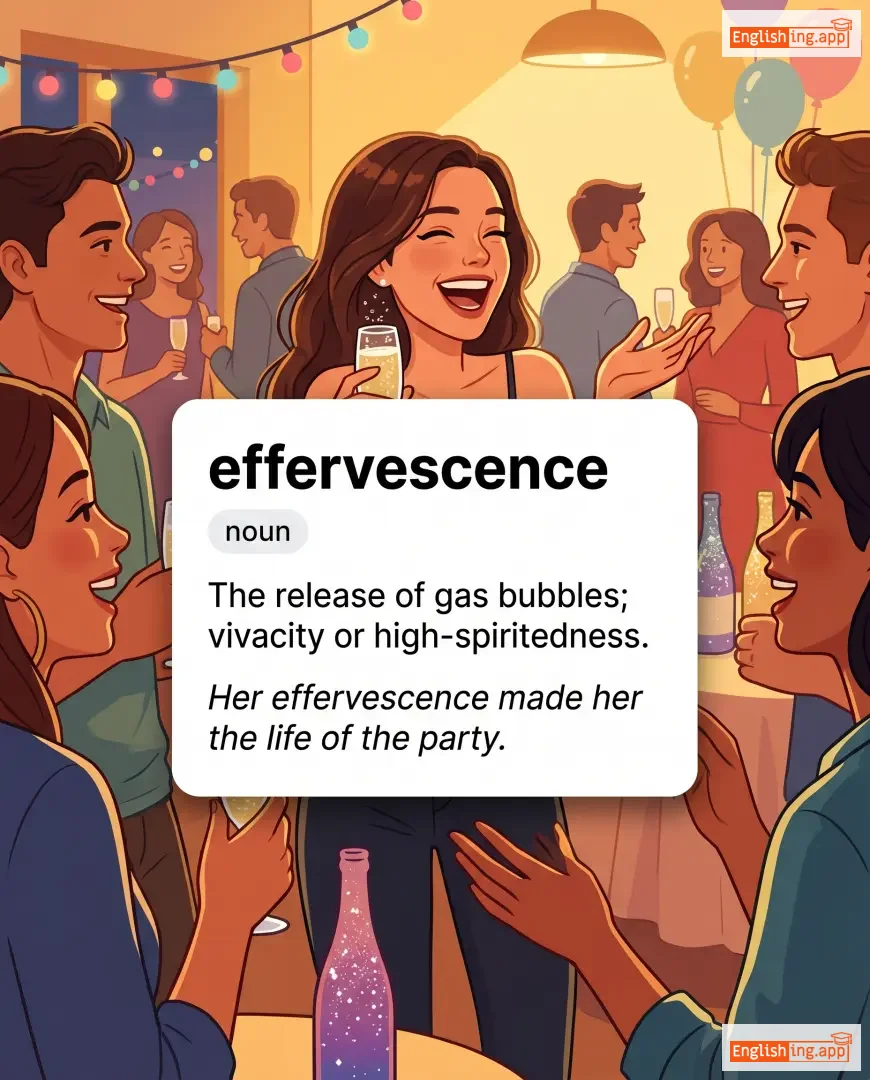
effervescence definition card — visual illustration of the meaning
noun C2
/ˌɛfəˈvɛsəns/
発泡 (happou)

The release of gas bubbles; vivacity or high-spiritedness.

"Her effervescence made her the life of the party."

"彼女の発泡はパーティーの生命となった。" (Kanojo no happou wa pātii no seimei to natta.)
adjective C2
/ˌɛfəˈvɛsənt/
活気に満ちた (kakki ni michita)

Giving off bubbles; lively, enthusiastic, and full of energy.

"She had an effervescent personality that brightened every room."

"彼女は部屋を明るく照らす活気に満ちた個性を持っていました。" (Kanojo wa heya o akaruku terasu kakki ni michita kosei o motte imashita.)
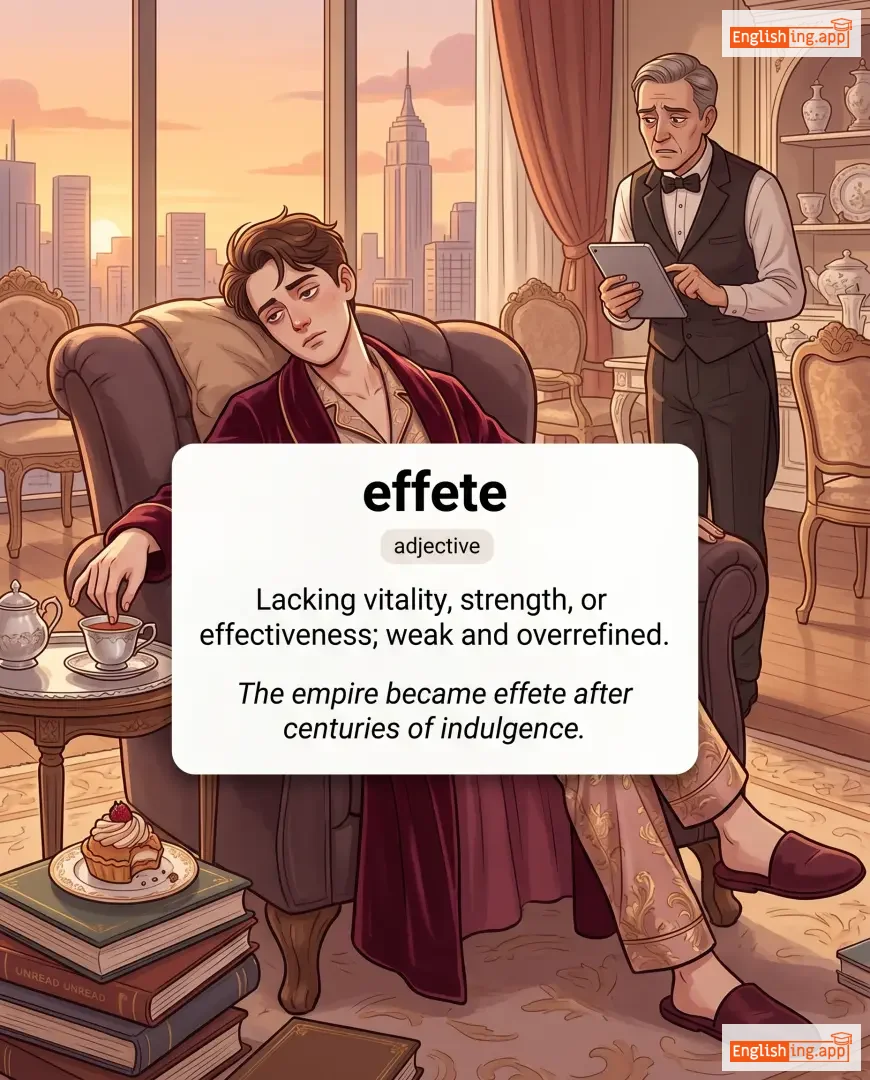
effete definition card — visual illustration of the meaning
adjective C2
/ɪˈfiːt/
無力 (muryoku)

Lacking vitality, strength, or effectiveness; weak and overrefined.

"The empire became effete after centuries of indulgence."

"帝国は何世代にもわたる享楽の後、無力になった。" (Teikoku wa nan-sedai ni mo wataru kyouraku no ato, muryoku ni natta.)
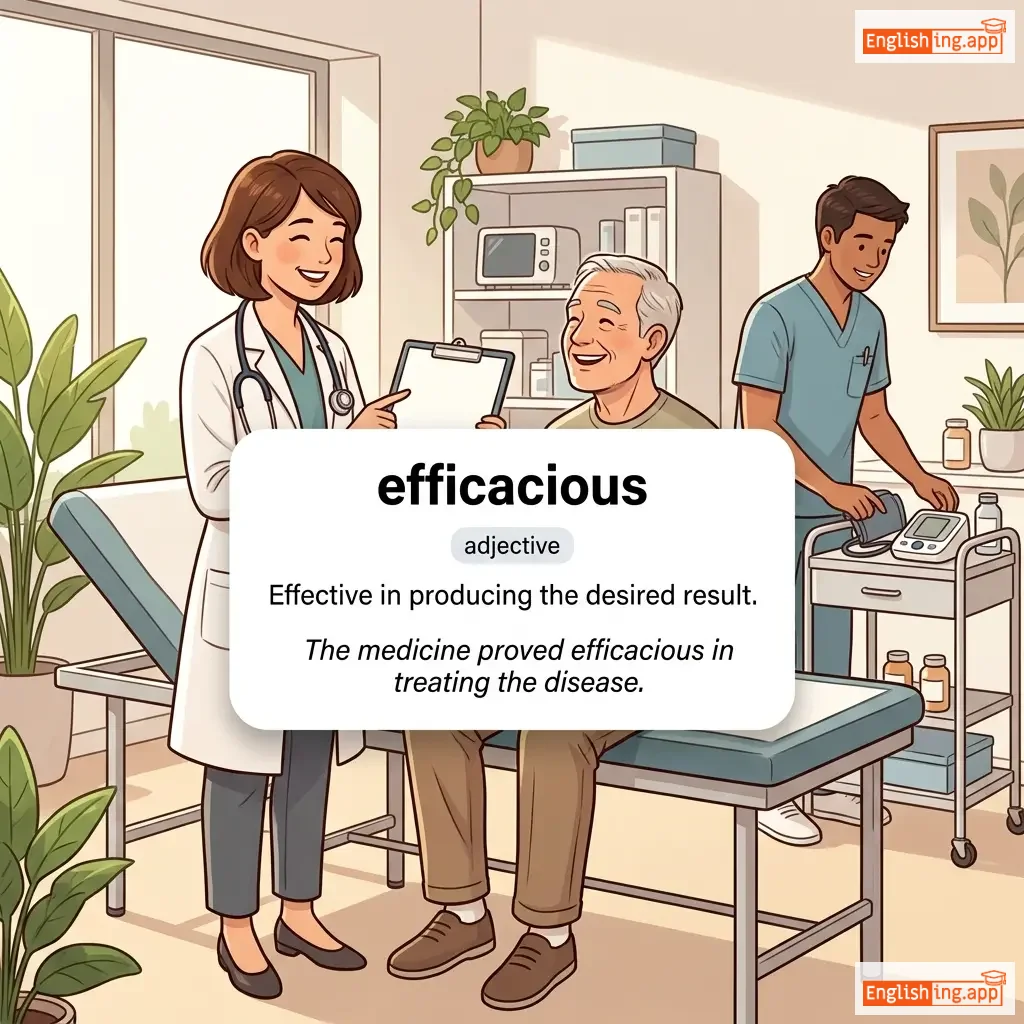
efficacious definition card — visual illustration of the meaning
adjective C2
/ˌɛfɪˈkeɪʃəs/
効果的 (koukatekina)

Effective in producing the desired result.

"The medicine proved efficacious in treating the disease."

"その薬は病気の治療に効果的であることが証明されました。" (Sono kusuri wa byouki no chiryou ni koukatekina koto ga shoumei saremashita.)
noun C2
/ˌɛfləˈrɛsəns/
開花 (kaika)

the process of flowering or reaching an optimal stage of development

"The garden was at the peak of its efflorescence in spring."

"庭は春にその開花のピークに達していました。" (Niwa wa haru ni sono kaika no piiku ni tasshite imashita.)
adjective C2
/ˌɛfləˈrɛsənt/
開花する (kaika suru)

in the process of blooming or flourishing

"The efflorescent trees made the park look beautiful."

"開花する木々は公園を美しく見せました。" (Kaika suru kigi wa kōen o utsukushiku misemashita.)