Vocabulaires

Découvrez, apprenez et maîtrisez le vocabulaire anglais

/laɪð/
гибкий и грациозный (gibkiy i gratsioznyy)

thin, supple, and graceful in movement

"The lithe dancer captivated the audience with her graceful spins."

"Гибкая танцовщица заворожила публику своими грациозными поворотами." (Gibkaya tantsovshchitsa zavorozhila publiku svoimi gratsioznymi povorotami.)
adjective C2
/ˈlaɪðsəm/
гибкий и грациозный (gibkiy i gratsioznyy)

gracefully flexible and supple

"Her lithesome figure allowed her to move like a ballerina."

"Её гибкая фигура позволяла ей двигаться как балерина." (Yeyo gibkaya figura pozvolyala yey dvigat'sya kak balerina.)
noun C2
/ˈlɪθəˌɡræf/
литография (печать на камне) (litografiya (pechat' na kamne))

a print made by lithography, often artistic

"The museum displayed a rare lithograph from the 19th century."

"Музей показал редкий литограф из 19 века." (Muzei pokazal redkiy litograf iz 19 veka.)
noun C2
/ˈlɪθəˌtaɪp/
литотип (печатающая поверхность) (litotip (pechatayushchaya poverkhnost'))

a printing surface or type made for lithography

"The printer used a lithotype to produce multiple copies of the design."

"Принтер использовал литотип для создания нескольких копий дизайна." (Printer ispol'zoval litotip dlya sozdaniya neskol'kikh kopiy dizayna.)
noun C2
/ˈlɪtɪɡənt/
истец (istec)

a person involved in a lawsuit

"The court summoned both litigants for the hearing."

"Суд вызвал обоих истцов на слушание." (Sud vyzval oboikh istsov na slushanie.)
adjective C2
/lɪˈtɪdʒəs/
судебный (sudebnyy)

prone to engage in lawsuits or overly inclined to argue legally

"He is known as a litigious neighbor who often sues people."

"Он известен как судебный сосед, который часто подает в суд на людей." (On izvesten kak sudebnyy sosed, kotoryy chasto podayet v sud na lyudey.)
noun C2
/ˈlaɪtoʊtiːz/
литота (litota)

a figure of speech in which an affirmative is expressed by the negative of its contrary

"Saying 'not bad' as a compliment is an example of litotes."

"Сказать 'не плохо' как комплимент - это пример литоты." (Skazat' 'ne plokho' kak kompliment - eto primer litoty.)
adjective C2
/ˈlɪtərəl/
прибрежный (pribrezhnyy)

Related to or situated on the shore of the sea or a lake.

"The littoral zone is home to many unique marine species."

"Прибрежная зона является домом для множества уникальных морских видов." (Pribrezhnaya zona yavlyaetsya domom dlya mnozhestva unik'al'nykh morskikh vidov.)
noun C2
/ˈlɪtərdʒi/
литургия (liturgiya)

A form or formulary according to which public religious worship is conducted.

"The priest followed the liturgy during the Sunday mass."

"Священник следовал литургии во время воскресной мессы." (Svyashchennik sleduyal liturgii vo vremya voskresnoy messy.)
noun C2
/loʊm/
плодородная почва (plodorodnaya pochva)

A fertile soil of clay and sand containing humus.

"The farmer used loam to improve the fertility of the field."

"Фермер использовал плодородную почву для улучшения урожайности поля." (Fermyer ispol'zoval plodorodnuyu pochvu dlya uluchsheniya urozhaĭnosti polya.)
adjective C2
/ˈloʊð.səm/
отвратительный (loathsome)

causing hatred or disgust; repulsive

"The loathsome smell from the garbage made everyone leave the room."

"Отвратительный запах из мусора заставил всех уйти из комнаты." (Otvratitelny zapakh iz musora zastavil vsekh uyti iz komnaty)
noun C2
/ˈlɒkətɪv/
локатив (lokativ)

a grammatical case indicating location or place

"In Latin, the locative case is used to indicate location."

"В латинском языке локативный падеж используется для указания местоположения." (V latinskom yazyke lokativnyy padezh ispol'zuyetsya dlya ukazaniya mestopolozheniya.)
noun C2
/lɒx/
озеро (ozero)

a lake or sea inlet, especially in Scotland

"Tourists visit Loch Ness to search for the legendary monster."

"Туристы посещают Лох-Несс, чтобы найти легендарного монстра." (Turisty poseshchayut Lokh-Ness, chtoby nayti legendarnogo monstra.)
noun C2
/loʊd/
рудные жилы (rudnye zhily)

A rich source of something, often a vein of valuable metal in the earth.

"The miners discovered a rich lode of silver."

"Шахтёры обнаружили богатую жилу серебра." (Shakhtyory obnaruzhili bogatuyu zhilu serebra.)
noun C2
/ˈlɒdʒ.mənt/
временное жильё (vremennoye zhilyo)

The act of lodging or a place of temporary stay; also a deposit of something.

"The soldiers found lodgment in the abandoned house."

"Солдаты нашли временное жильё в заброшенном доме." (Soldaty nashli vremennoye zhilyo v zabroshennom dome.)
noun C2
/ləˈdʒɪʃən/
логик (logik)

A person skilled in logic and reasoning.

"Aristotle is considered one of the greatest logicians in history."

"Аристотель считается одним из величайших логиков в истории." (Aristotel' schitayetsya odnim iz velikaykshikh logikov v istorii.)
verb C2
/ˈlɔɪtər/

To stand or wait around idly without apparent purpose.

"The teenagers were told not to loiter outside the shop."

noun C2
/ˈlɔɪtərər/
человек, который без цели бродит по месту (chelovek, kotoryj bez celi brodit po mestu)

A person who lingers aimlessly in a place without purpose.

"The police questioned the loiterer outside the store."

"Полиция допросила лойтерера у магазина." (Policiya doprosila loyterera u magazina.)
verb C2
/lɑːl/
лежать лениво (lezhat' lenivo)

To sit, lie, or stand in a lazy, relaxed way.

"He lolled on the sofa after a long day at work."

"После долгого рабочего дня он растянулся на диване." (Posle dolgo rabochego dnya on rastyanulsya na divane.)
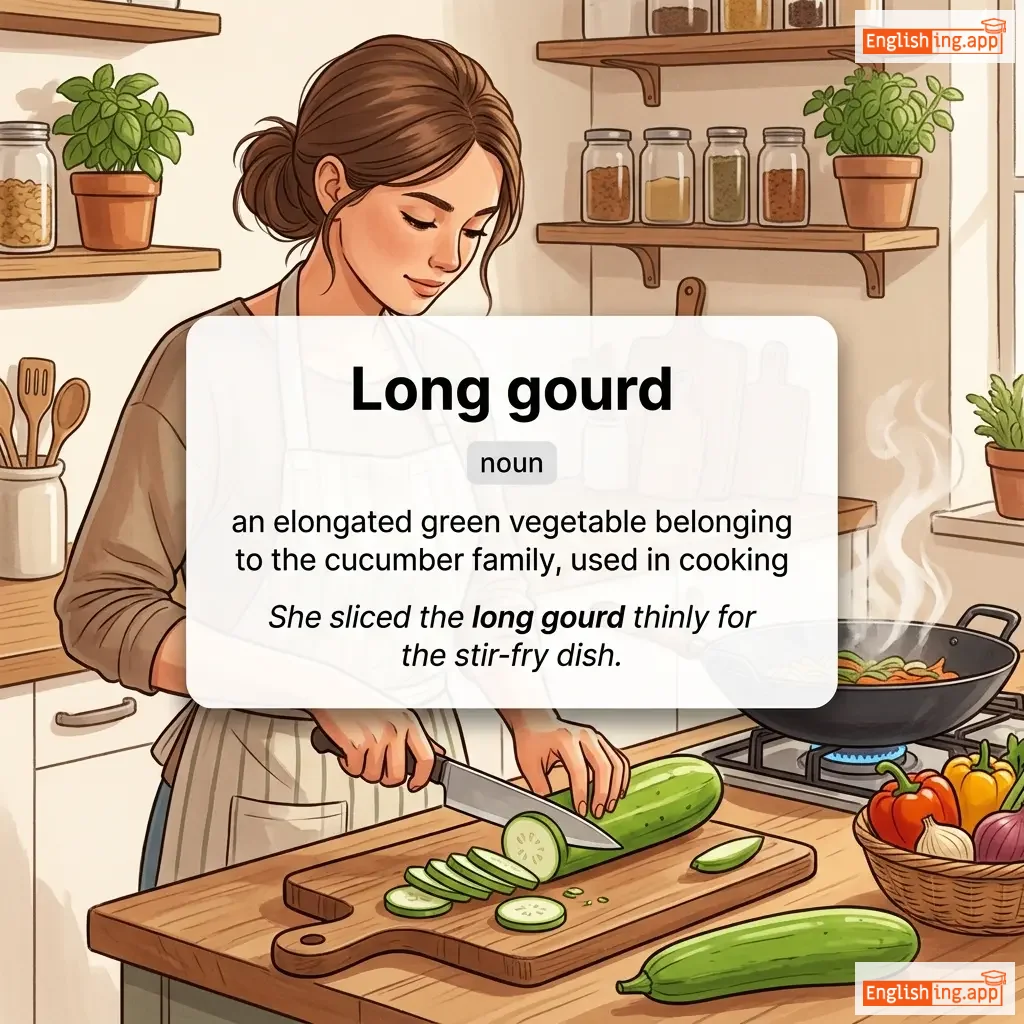
Long gourd definition card — visual illustration of the meaning
noun C2
/lɔːŋ ɡɔːrd/
длинный кабачок (dlinnyy kabachok)

an elongated green vegetable belonging to the cucumber family, used in cooking

"She sliced the long gourd thinly for the stir-fry dish."

"Она нарезала длинный кабачок тонкими ломтями для жареного блюда." (Ona narezala dlinnyy kabachok tonkimi lomtyami dlya zharenogo blyuda.)
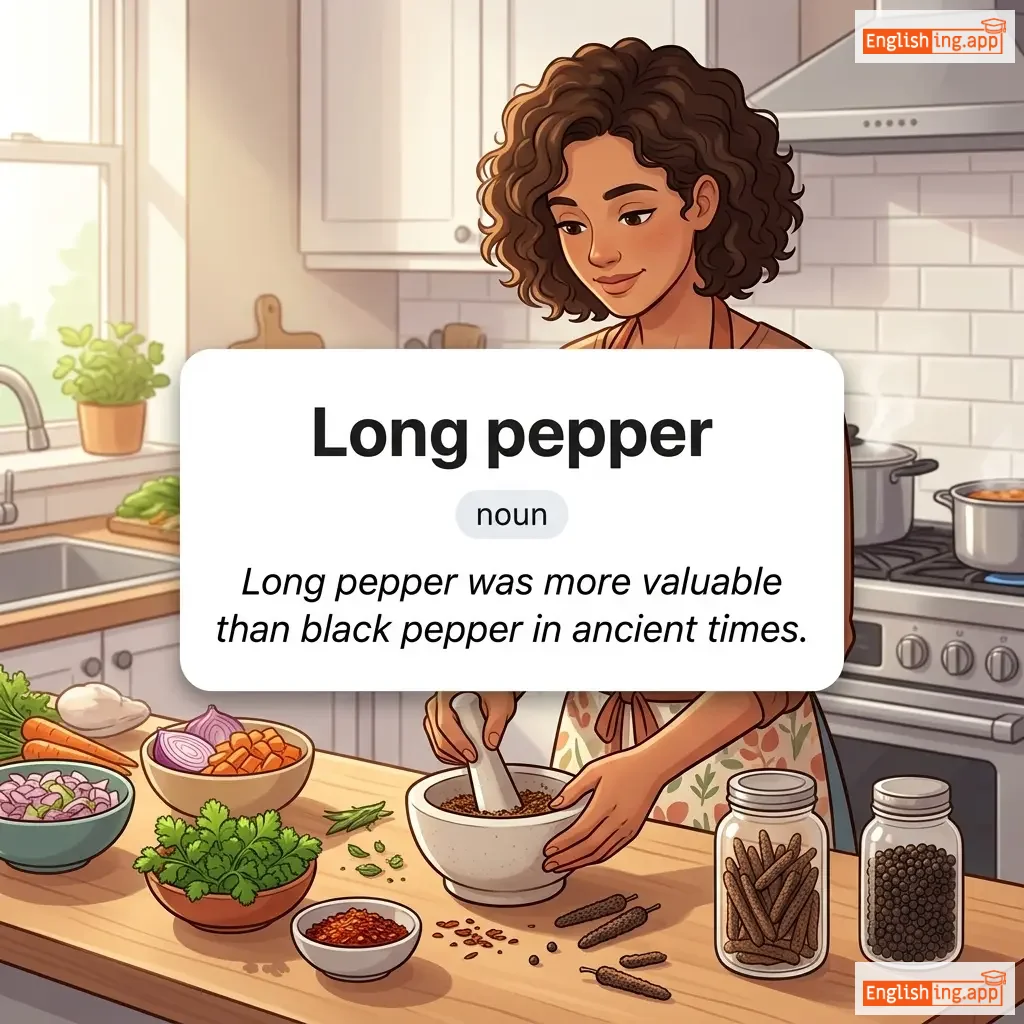
Long pepper definition card — visual illustration of the meaning
noun C2
/lɔːŋ ˈpepər/
длинный перец (dlinnyy perets)

a flowering vine in the family Piperaceae, cultivated for its fruit which is used as a spice

"Long pepper was more valuable than black pepper in ancient times."

"Длинный перец был более ценен, чем черный перец в древние времена." (Dlinnyy perets byl bolee tsenen, chem chernyy perets v drevnie vremena.)
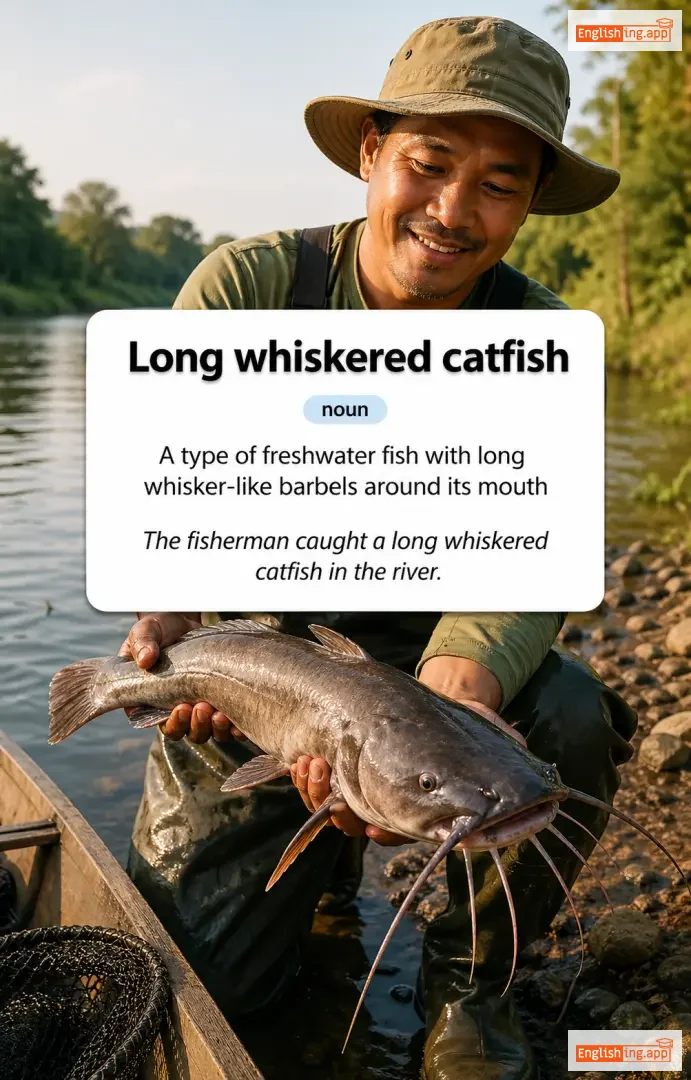
Long whiskered catfish definition card — visual illustration of the meaning
noun C2
/lɒŋ ˈwɪskəd ˈkætfɪʃ/
сом с длинными усами (som s dlinymi usami)

A type of freshwater fish with long whisker-like barbels around its mouth

"The fisherman caught a long whiskered catfish in the river."

"Рыбак поймал сома с длинными усами в реке." (rybak poimal soma s dlinymi usami v reke)
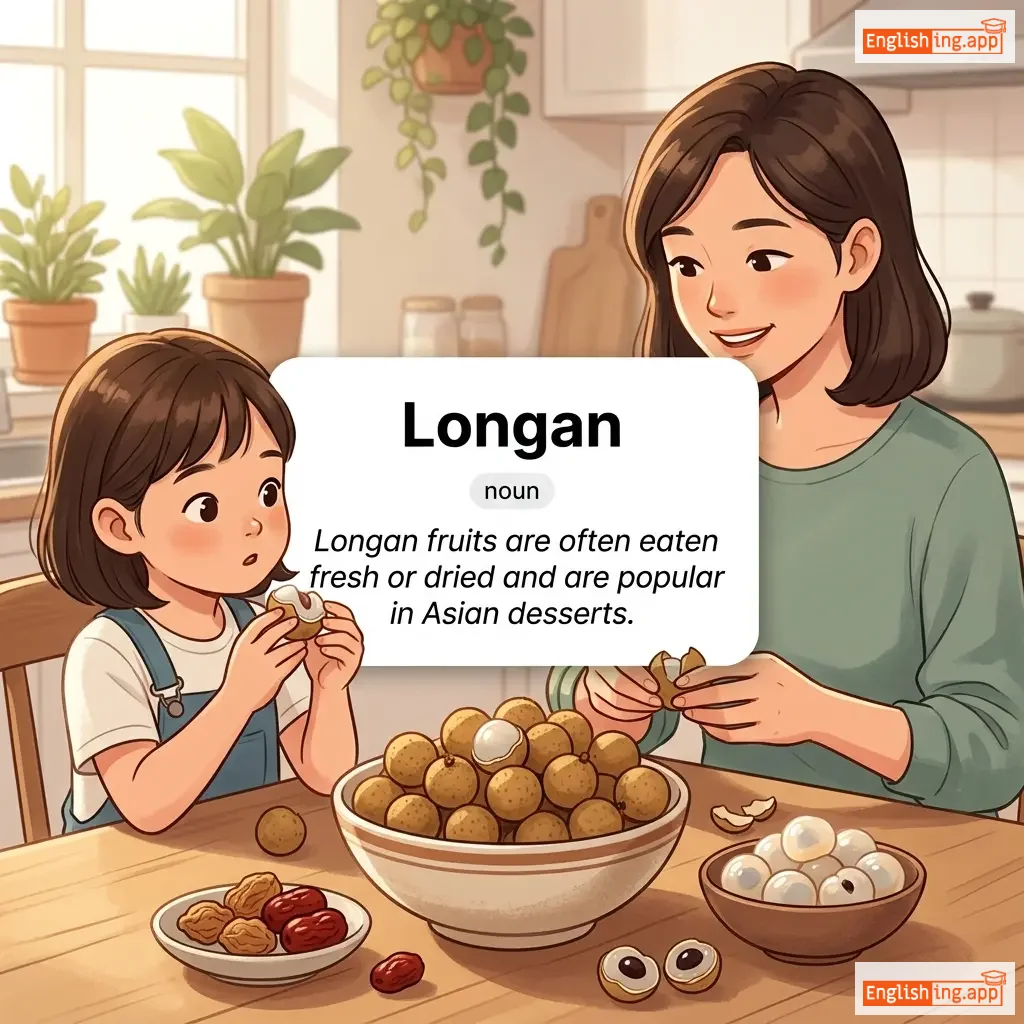
Longan definition card — visual illustration of the meaning
noun C2
/ˈlɔːŋ.ɡən/

a small round tropical fruit with translucent white flesh and sweet taste, related to lychee

"Longan fruits are often eaten fresh or dried and are popular in Asian desserts."

adjective C2
/ˈluː.ni/
сумасшедший; глупый; психически нестабильный (sumasshedshij; glupyj; psikhicheski nestabil'nyj)

crazy; silly; mentally unstable

"His loony behavior made everyone laugh."

"Его сумасшедшее поведение заставило всех смеяться." (ego sumasshedshee povedenie zastavilo vsekh smeyatsya)
adjective C2
/ˈluːpi/
сумасшедший (sumasshedshiy)

crazy, silly, or eccentric

"After working all night, he felt a little loopy."

"После работы всю ночь он почувствовал себя немного сумасшедшим." (Posle raboty vsyu noch on pochuvstvoval sebya nemnogo sumasshedshim.)
verb C2
/loʊp/
бежать с длинными, прыгающими шагами (bezhat' s dlinnyimi, prygayushchimi shagami)

to run or move with a long, bounding stride

"The horse loped gracefully across the field."

"Лошадь элегантно бежала по полю." (Loshad' elegantno bezhala po polyu.)
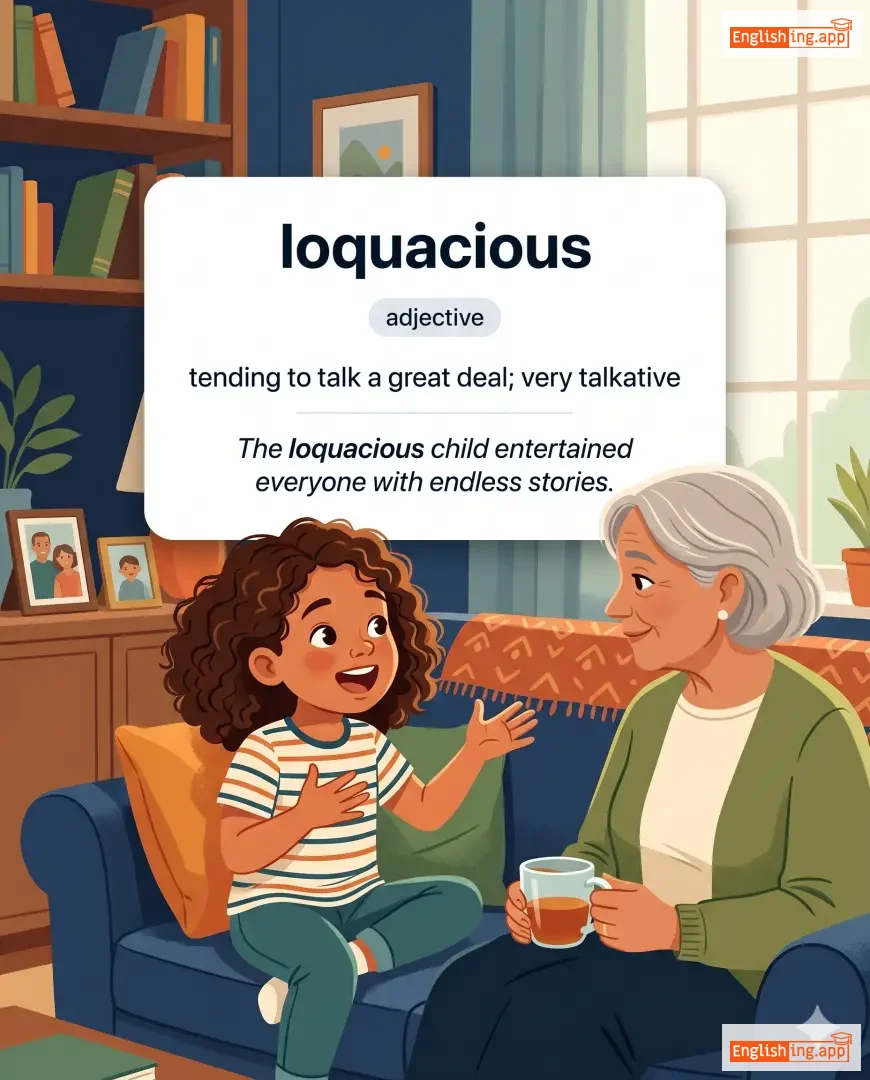
loquacious definition card — visual illustration of the meaning
adjective C2
/loʊˈkweɪʃəs/
болтливый (boltlivyy)

tending to talk a great deal; very talkative

"The loquacious child entertained everyone with endless stories."

"Болтливый ребёнок развлекал всех бесконечными историями." (Boltlivyy rebyonok razvlekal vsekh beskonechnymi istoryami.)
noun C2
/ˈlɔːrdlɪŋ/
молодой лорд (molodoy lord)

A young or petty lord; someone of minor nobility.

"The arrogant lordling demanded respect despite his lack of experience."

"Арогантный лордлинг требовал уважения, несмотря на его отсутствие опыта." (Arogantnyy lordling treboval uzhazheniya, nesmotrya na ego otsutstvie opyta.)
noun C2
/lɒx/ or /lɒk/
озеро (ozero)

An Irish or Scottish word for a lake or sea inlet.

"The fishermen lived by the lough for generations."

"Рыбаки жили у озера на протяжении поколений." (Rybaki zhili u ozera na protyazhenii pokoleniy.)
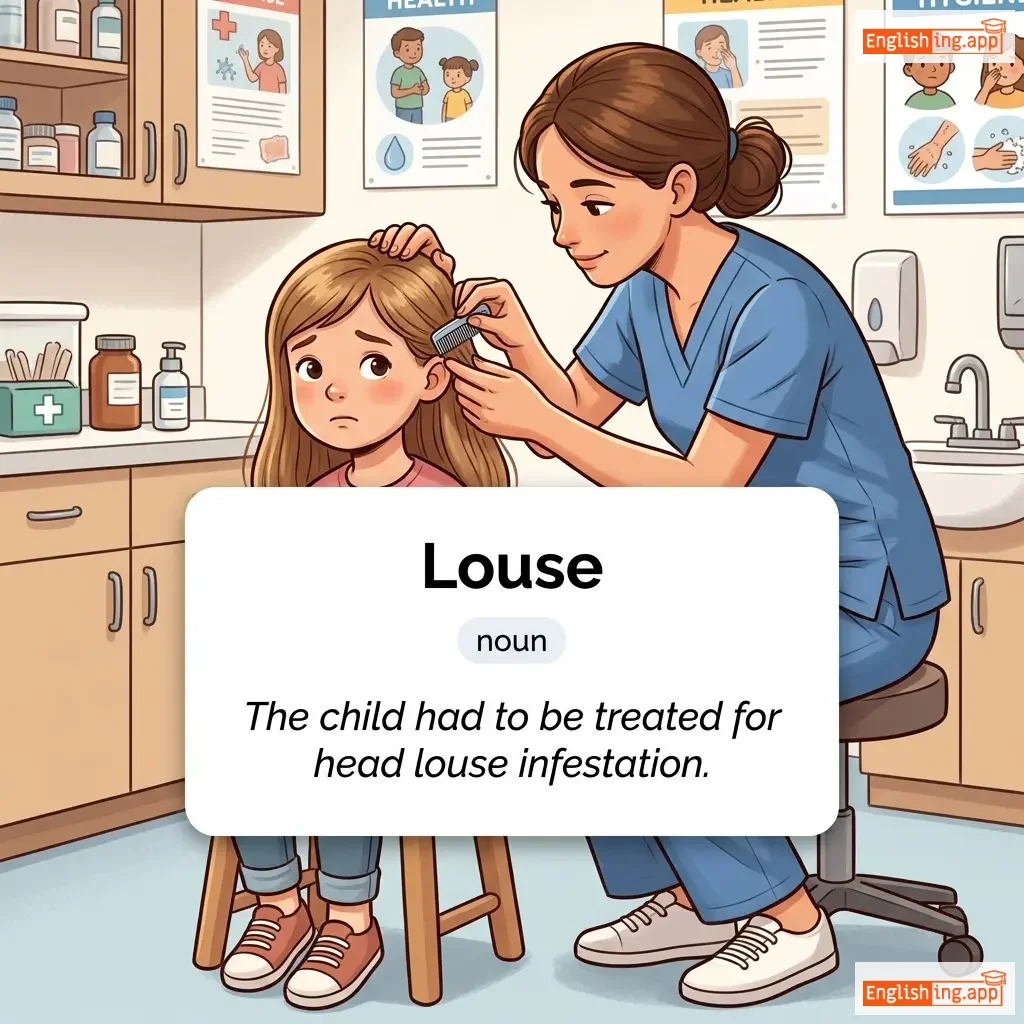
Louse definition card — visual illustration of the meaning
noun C2
/laʊs/
вошь (vosh)

A small parasitic insect that lives on the skin of mammals and birds; also used as an insult for a contemptible person.

"The child had to be treated for head louse infestation."

"Ребенка нужно было лечить от заражения головными вшами." (Rebyonka nuzhno bylo lechit' ot zaraZheniya golovnymi vshami.)
noun C2
/laʊt/
грубый человек (grubyy chelovek)

An uncouth or aggressive man or boy.

"The drunken lout caused a scene at the party."

"Пьяный грубый человек устроил скандал на вечеринке." (P'yanyy grubyy chelovek ustroil skandal na vecherinke.)
adjective C2
/ˈlaʊtɪʃ/
грубый (grubyy)

Clumsy, rude, or aggressive in behavior.

"His loutish remarks offended everyone at the meeting."

"Его грубые замечания оскорбили всех на собрании." (Yego grubye zamechaniya oskorbili vsekh na sobranie.)
noun C2
/luːˈbrɪsɪti/
скользкость (skol'zkost')

the quality of being slippery or smooth; sometimes also refers to lewdness

"The lubricity of the surface made it difficult to walk on."

"Скользкость поверхности затрудняла ходьбу по ней." (Skol'zkost' poverkhnosti zatrudnyala khod'bu po ney.)
adjective C2
/ˈluːsənt/
светящийся (svetyashchijsya)

shining or glowing with light

"The lucent stars brightened the night sky."

"Светящиеся звезды осветили ночное небо." (Svetjashchiesya zvezdy osvetili nochnoye nebo.)
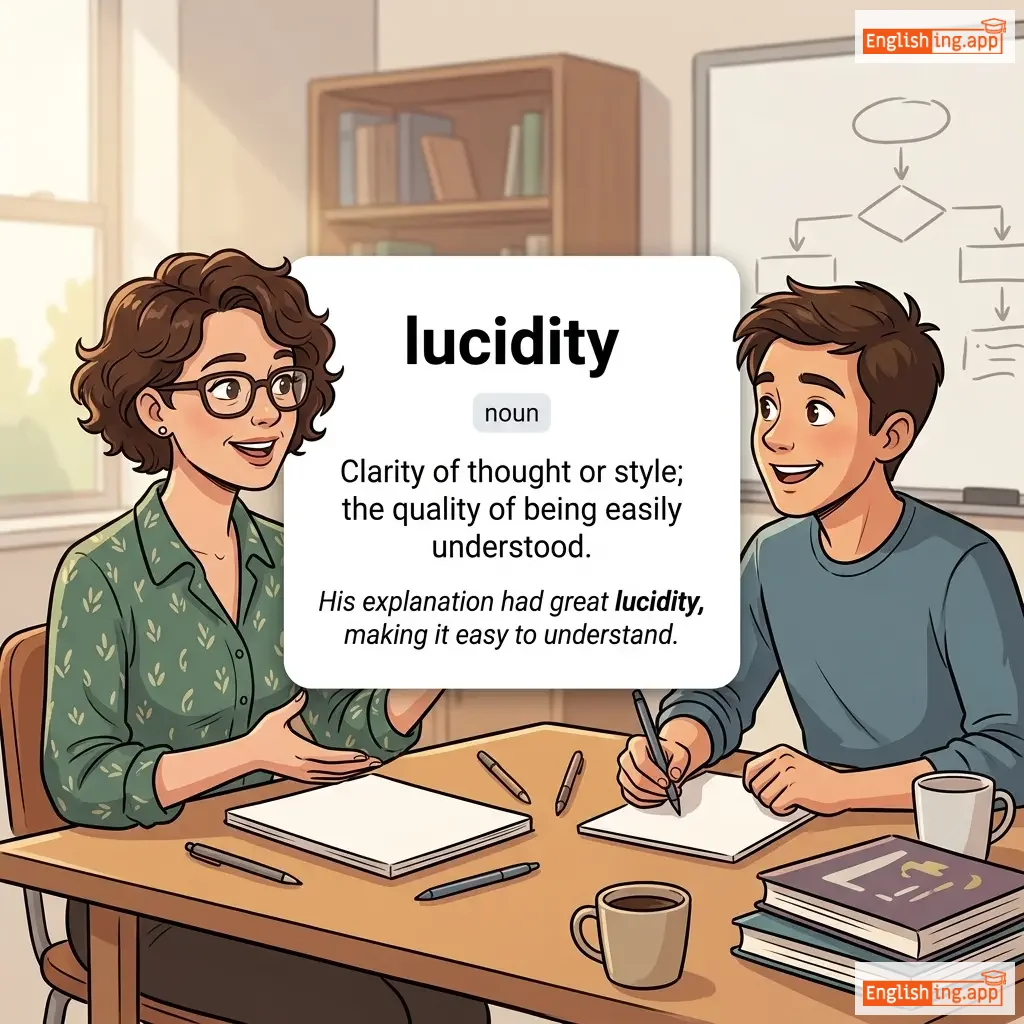
lucidity definition card — visual illustration of the meaning
noun C2
/luːˈsɪd.ə.ti/
ясность (yasnost)

Clarity of thought or style; the quality of being easily understood.

"His explanation had great lucidity, making it easy to understand."

"Его объяснение было очень ясным, что облегчало понимание." (Ego obyasnenie bylo ochen yasnym, chto oblegchalo ponyatiye.)
lucre definition card — visual illustration of the meaning
noun C2
/ˈluːkər/
прибыль (pribyl)

money, especially when regarded as sordid or gained dishonorably

"He was motivated more by lucre than by duty."

"Он был мотивирован больше прибылью, чем долгом." (On byl motivirovan bol'she pribyl'yu, chem dolgom.)
noun C2
/ˌluːkjʊˈbreɪʃən/
ночное изучение (nochnoye izucheniye)

study or meditation, especially at night

"His novel was the result of long lucubration."

"Его роман был результатом долгого ночного изучения." (Yego roman byl rezul'tatom dolgogo nochnogo izucheniya.)
🧳

lug

verb C2
/lʌɡ/

to carry or drag something heavy or cumbersome with effort

"He had to lug the suitcase up three flights of stairs."

adjective C2
/luːˈɡuːbriəs/
мрачный (mrachniy)

looking or sounding sad and dismal

"His lugubrious expression made everyone feel uneasy."

"Его мрачное выражение заставило всех почувствовать себя неловко." (Ego mrachnoe vyrazhenie zastavilo vsekh pochuvstvovat' sebya nelovko.)
noun C2
/ˈluː.mən/
люмен (lyumen)

A unit of luminous flux, measuring the amount of visible light emitted by a source.

"The bulb produces 800 lumens of light."

"Лампа производит 800 люмен света." (Lampa proizvodit 800 lyumen sveta.)
noun C2
/ˈluː.məˌnɛr.i/
выдающаяся личность (vydajushchayasya lichnost)

A person who inspires or influences others, especially in a particular field.

"He is considered a luminary in the world of science."

"Его считают выдающейся личностью в мире науки." (Ego schitayut vydajushchaysya lichnost'yu v mire nauki.)
noun C2
/ˌluː.mɪˈnɛs.əns/
люминесценция (lyuminescentsiya)

The emission of light by a substance not resulting from heat; a type of cold light.

"The luminescence of the fireflies lit up the forest."

"Люминесценция светлячков осветила лес." (Lyuminescentsiya svetlyachkov osvetila les.)
adjective C2
/ˌluː.mɪˈnɛs.ənt/
светящийся (svetyashchiesya)

Emitting light without heat, glowing softly.

"The luminescent watch dial was visible in the dark."

"Светящийся циферблат часов был виден в темноте." (Svyetyashchiesya tsiferblat chasov byl viden v temnote.)
noun C2
/ˈluː.nə.si/
безумие (bezumiye)

Extreme foolishness or madness; insanity.

"It was sheer lunacy to go hiking in the storm."

"Это было полное безумие — идти в поход в шторм." (Eto bylo polnoe bezumie — idti v pokhod v shtorm.)
noun C2
/luːn/
полумесяц (polumesyats)

A crescent-shaped figure formed by two intersecting arcs; also means 'moon' in French.

"The mathematician studied the properties of the lune."

"Математик изучал свойства полумесяца." (Matematik izuchal svoystva polumesyatsa.)
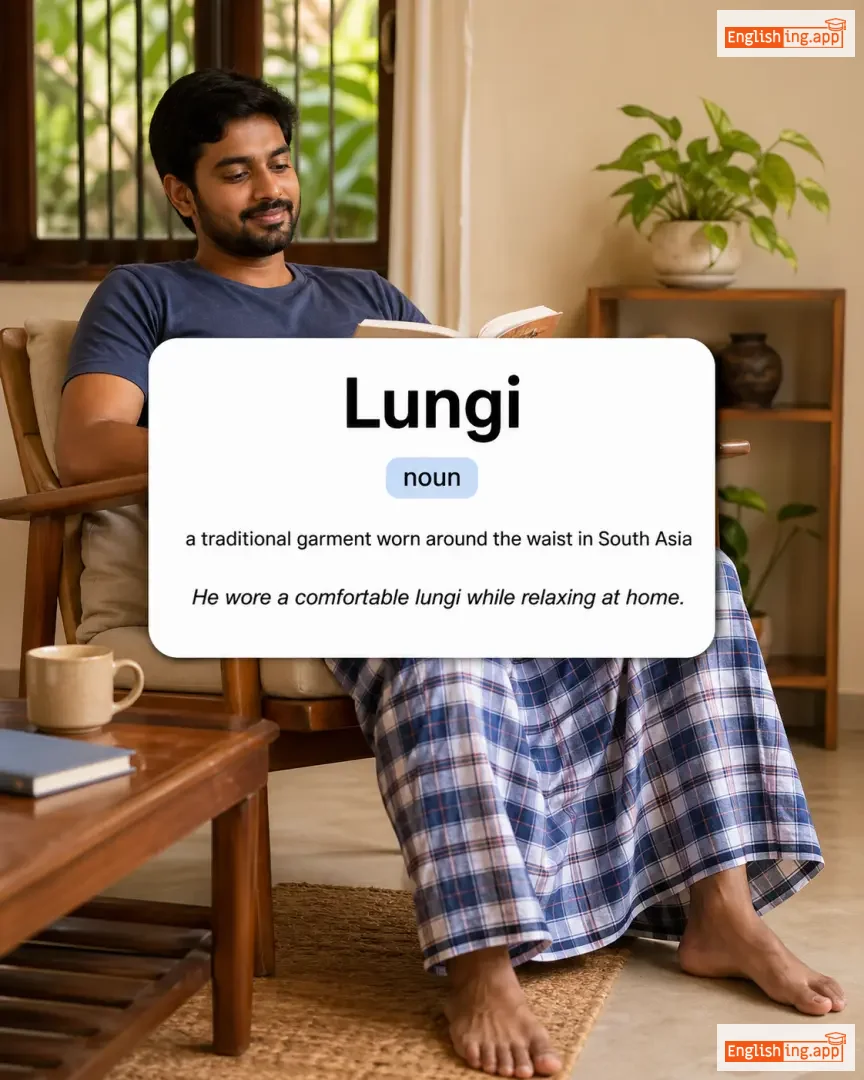
Lungi definition card — visual illustration of the meaning
noun C2
/ˈlʊŋ.gi/
лунги (lungi)

a traditional garment worn around the waist in South Asia

"He wore a comfortable lungi while relaxing at home."

"Он носил удобные лунги, отдыхая дома." (On nosil udobnye lungi, otdykhaya doma.)
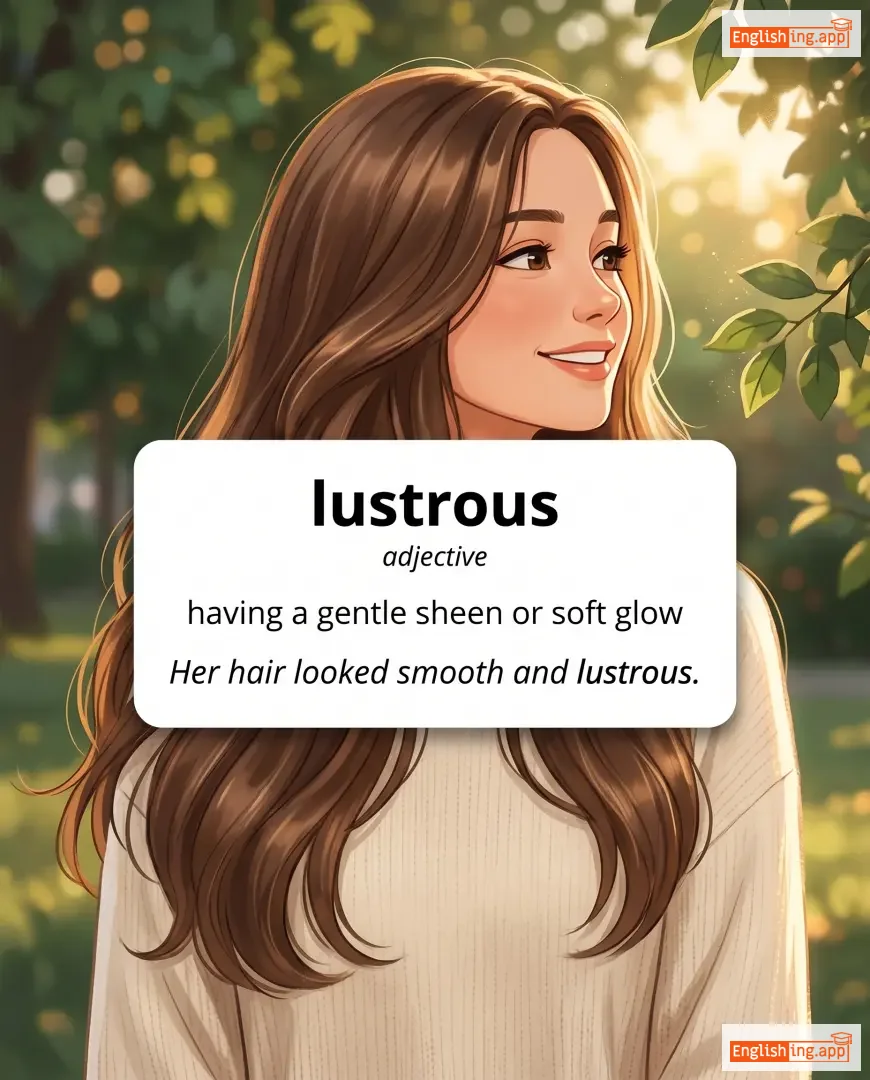
lustrous definition card — visual illustration of the meaning
adjective C2
/ˈlʌstrəs/
блестящий (blestyashchiy)

having a gentle sheen or soft glow

"Her hair looked smooth and lustrous."

"Её волосы выглядели гладкими и блестящими." (Yeyo volosy vyglyadeli glazkimi i blestyashchimi.)
noun C2
/lʌɡˈʒʊəriəns/
роскошь (roskosh)

abundant growth, richness, or elegance

"The garden was filled with the luxuriance of tropical plants."

"Сад был полон роскоши тропических растений." (Sad byl polon roskoshi tropicheskikh rasteniy.)
adjective C2
/lʌɡˈʒʊəriənt/
пышный (pyshny)

abundant in growth or richly abundant

"The luxuriant forest was teeming with life."

"Пышный лес был полон жизни." (Pyshnyy les byl polon zhizni.)
verb C2
/lʌɡˈʒʊrieɪt/
наслаждаться роскошью (naslazhdatsya roskosh'yu)

to enjoy something in a self-indulgent way; to take pleasure in great comfort

"She luxuriated in the warm bubble bath after a long day."

"Она наслаждалась теплым пузырьковым вечером после долгого дня." (Ona naslazhdalasy teplym puzyr'kovym vecherom posle dolgogo dnya.)