Vocabulaires

Découvrez, apprenez et maîtrisez le vocabulaire anglais

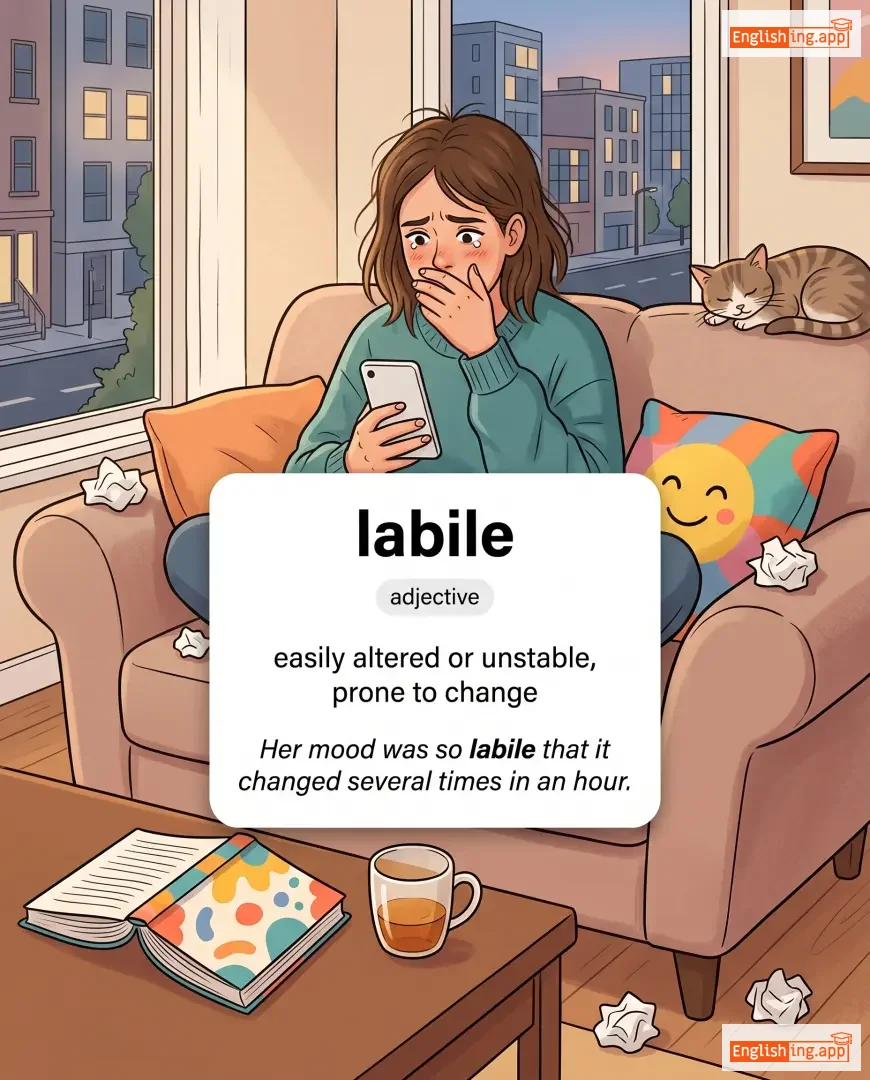
labile definition card — visual illustration of the meaning
adjective C2
/ˈleɪ.baɪl/ or /ˈlæb.aɪl/
нестабильный (nestabil'nyy)

easily altered or unstable; prone to change

"Her mood was so labile that it changed several times in an hour."

"Ее настроение было настолько нестабильным, что оно менялось несколько раз за час." (Eyo nastroenie bylo nastol'ko nestabil'nym, chto ono menyalos' neskol'ko raz za chas.)
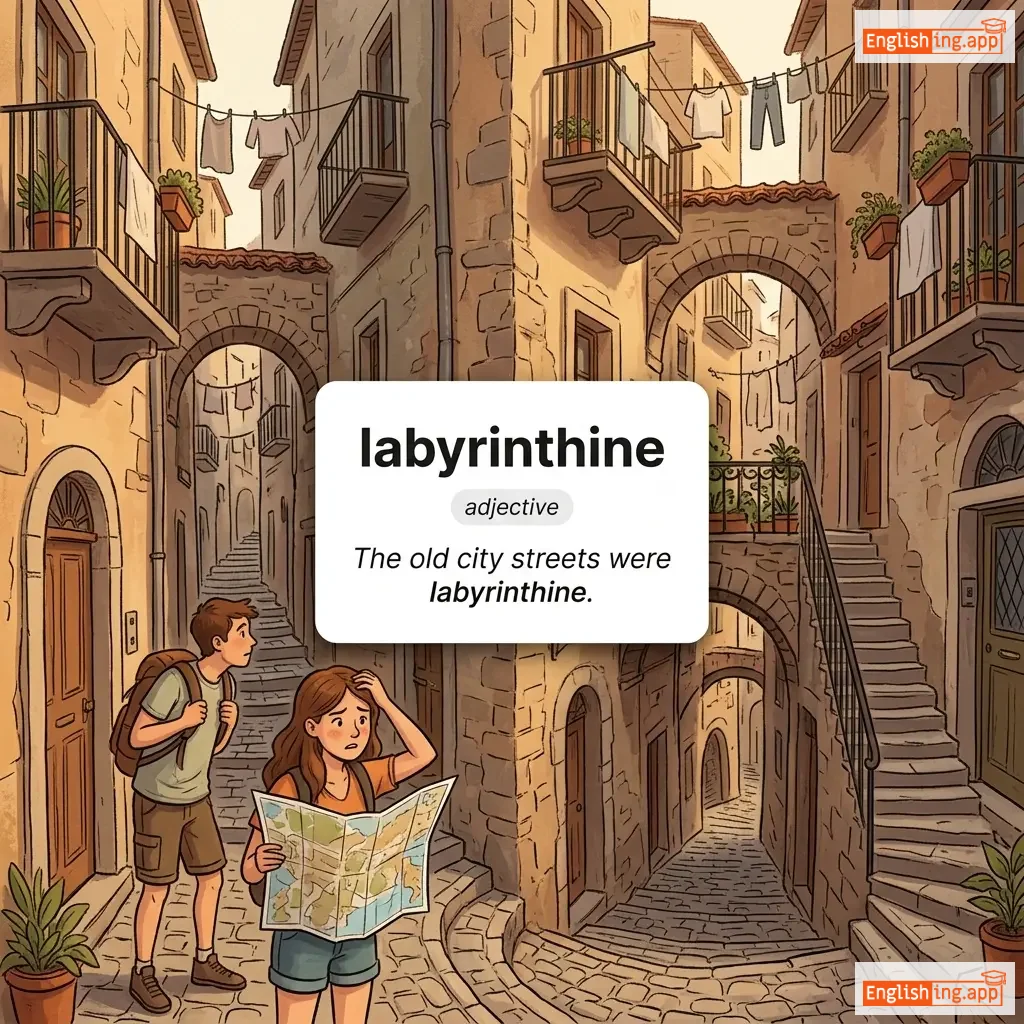
labyrinthine definition card — visual illustration of the meaning
adjective C2
ˌlæb.əˈrɪn.θaɪn
лабиринтный (labirintnyj)

Like a labyrinth; complicated and confusing; having many interconnected paths or passages.

"The old city streets were labyrinthine."

"Старые городские улицы были лабиринтными." (Starye gorodskie ulitsy byli labirintnymi.)
verb C2
/ˈlæs.ə.reɪt/
порезать, разорвать (porezat', razohrvat')

to tear or cut deeply in the skin or flesh

"The broken glass lacerated his hand."

"Разбитое стекло порезало его руку." (Razbitoe steklo porezalo ego ruku.)
noun C2
/ˌlæs.əˈreɪ.ʃən/
глубокая рана (glubokaya rana)

a deep cut or tear in skin or flesh

"He needed stitches for a laceration on his leg."

"Ему нужны были швы для глубокой раны на ноге." (Yemu nuzhny byli shvy dlya glubokoy rany na noge.)
adjective C2
/ˈlæk.rɪ.moʊs/
слезливый, грустный (slyezlivyy, grustnyy)

tearful or given to weeping; sad and mournful

"The movie's lachrymose ending left the audience in tears."

"Печальный конец фильма оставил зрителей в слезах." (Pechal'nyy konts filmya ostavil zriteley v slezakh.)
adjective C2
/ˌlækəˈdeɪzɪkəl/
небрежный или ленивый (nebrezhnyy ili lenivyy)

lacking enthusiasm, energy, or determination; careless or lazy

"His lackadaisical attitude toward work annoyed his boss."

"Его небрежное отношение к работе раздражало его начальника." (Ego nebrezhnoe otnoshenie k rabote razdrazhalo ego nachal'nika.)
noun C2
/ˈlæki/
паж (pazh)

a person who is overly willing to serve or obey someone else

"He treated his assistant like a mere lackey."

"Он относился к своему помощнику как к простому пажу." (On otnosilsya k svoemu pomoshchniku kak k prostomu pazhu.)
laconic definition card — visual illustration of the meaning
adjective C2
/ləˈkɒnɪk/
лаконичный (lakonichnyy)

using very few words; concise to the point of seeming rude or mysterious

"His laconic reply ended the conversation quickly."

"Его лаконичный ответ быстро завершил разговор." (Yego lakonichnyy otvet bystro zavershil razgovor.)
noun C2
/lækˈteɪʃən/
выработка молока (vyrabotka moloka)

the secretion of milk by the mammary glands of female mammals

"The doctor explained that lactation is a natural process after childbirth."

"Доктор объяснил, что лактация — это естественный процесс после родов." (Doktor obyasnil, chto laktaciya — eto estestvennyy protsess posle rodov.)
adjective C2
/ˈlæk.ti.əl/
связанный с молоком или похожий на молоко (svyazannyy s molokom ili pokhozhiy na moloko)

Relating to or resembling milk; conveying chyle or milky fluid.

"The lacteal vessels in the small intestine absorb dietary fats."

"Лактиальные сосуды в тонком кишечнике поглощают пищевые жиры." (Laktiyal'nye sosudy v tonkom kishechnike pogloshchayut pishchevyye zhiry.)
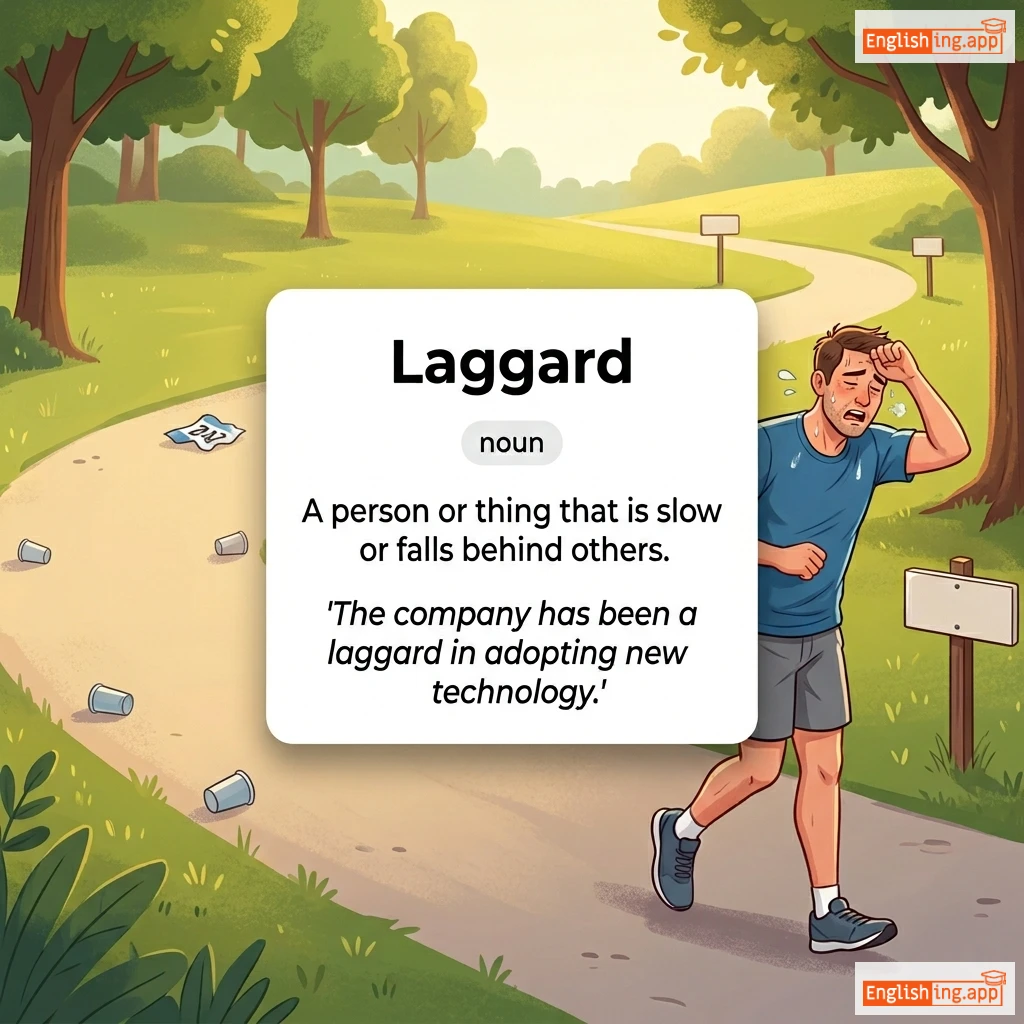
Laggard definition card — visual illustration of the meaning
noun C2
/ˈlæɡərd/
отстающий (otstajushchij)

A person or thing that is slow or falls behind others.

"The company has been a laggard in adopting new technology."

"Компания отстала в принятии новых технологий." (Kompaniya otstala v prinyatii novykh tekhnologij.)
noun C2
/ˈlænjæp/
дополнительный подарок (dopolnitel'nyy podarok)

A small gift or bonus given by a seller to a customer.

"The shopkeeper offered a piece of candy as a lagniappe."

"Продавец предложил конфету в качестве дополнительного подарка." (Prodavets predlozhil konfetu v kachestve dopolnitel'nogo podarka.)
noun C2
/ˈleɪ.ɪ.ti/
миряне (miryane)

Ordinary members of a religious community who are not clergy.

"The church welcomed the laity to participate in the event."

"Церковь приветствовала мирян, чтобы они участвовали в мероприятии." (Tserkov' privetstvovala miryan, chtoby oni uchastvovali v meropriyatii.)
verb C2
/læmˈbæst/
жестоко критиковать (zhestoko kritikovaty)

To criticize harshly or to beat severely.

"The coach lambasted the team for their poor performance."

"Тренер сильно раскритиковал команду за плохие результаты." (Trener sil'no raskritikoval komandu za plokhie rezul'taty.)
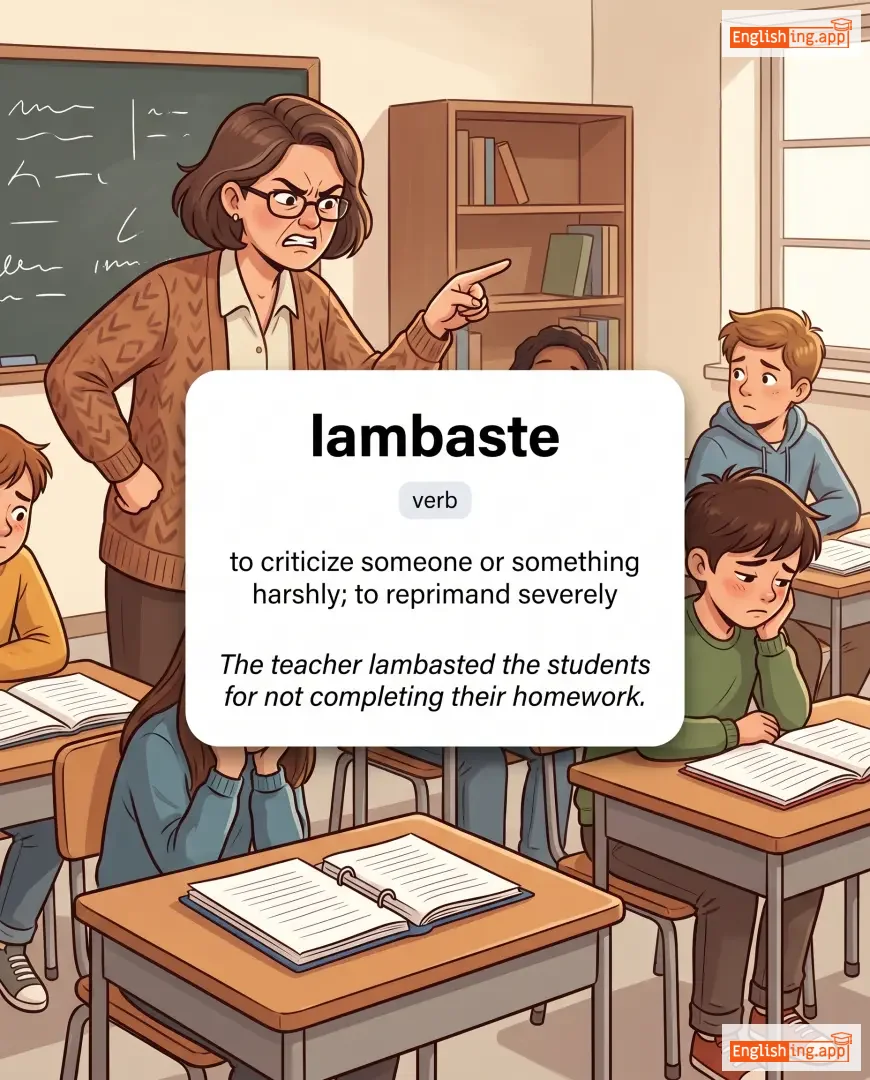
lambaste definition card — visual illustration of the meaning
verb C2
/læmˈbeɪst/
жестко критиковать (zhestko kritikovaty)

to criticize someone or something harshly; to reprimand severely

"The teacher lambasted the students for not completing their homework."

"Учитель жестко критиковал студентов за невыполнение домашнего задания." (Uchitel' zhesko kritikoval studentov za nevyplnenie domashnego zadaniya.)
adjective C2
/ˈlæmbənt/
мягко светящийся (myagko svechashchijsya)

glowing or flickering softly; having a gentle radiance

"The lambent light of the candle filled the room with warmth."

"Тусклый свет свечи наполнил комнату теплотой." (Tusklij svet svechi napolnil komnatu teplotoy.)
adjective C2
/ˈlæm.ən.tə.bəl/
плачевный (plachevny)

deserving to be criticized or regretted; unfortunate

"The team’s lamentable performance disappointed their fans."

"Плачевное выступление команды разочаровало их фанатов." (Plachevnoe vystuplenie komandy razocharovalo ikh fanatov.)
verb C2
/læmˈpuːn/
осмеивать (osmeyivat)

to publicly criticize or ridicule someone or something with humor, irony, or sarcasm

"The cartoonist lampooned the politician for his contradictory statements."

"Карикатурист осмеял политика за его противоречивые заявления." (Karikaturist osmeyal politika za ego protivorechivye zayavleniya.)
noun C2
/ˈlæn.sɪt/
хирургический нож (khirurgicheskiy nozh)

a small, sharp, two-edged surgical knife used for making small incisions

"The doctor used a lancet to prick the patient’s finger for a blood test."

"Врач использовал ланцет, чтобы проколоть палец пациента для анализа крови." (Vrach ispol'zoval lancet, chtoby prokolot' palets patsiyenta dlya analiza krovi.)
noun C2
/ˈlændˌhoʊl.dər/
землевладелец (zemlevladelets)

a person who owns land, especially in large amounts

"The landholder leased part of his property to local farmers."

"Землевладелец сдал часть своей собственности в аренду местным фермерам." (Zemlevladelets sdal chast' svoey sobstvennosti v arendu mestnym fermeram.)
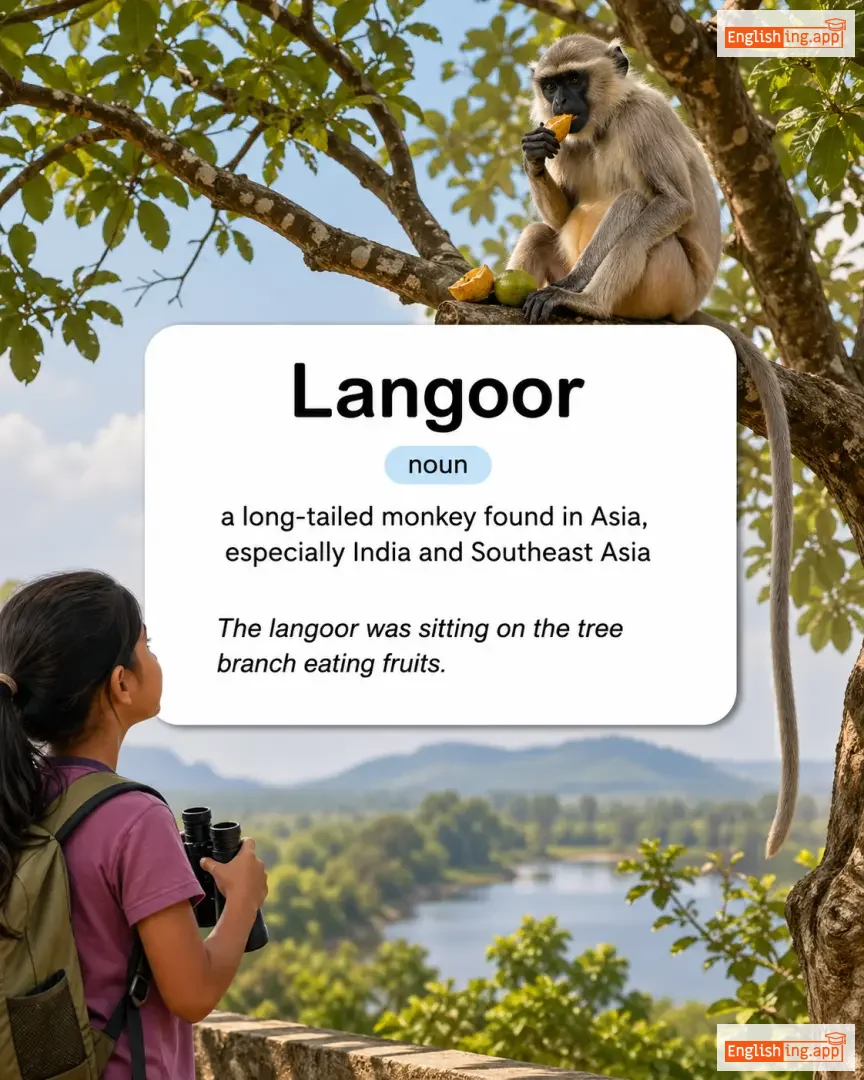
Langoor definition card — visual illustration of the meaning
noun C2
/læŋ'ɡʊər/
лангур (langur)

a long-tailed monkey found in Asia, especially India and Southeast Asia

"The langoor was sitting on the tree branch eating fruits."

"Лангур сидел на ветке дерева, поедая фрукты." (Langur siddel na vetke dereva, poyedaya frukty.)
adjective C2
/ˈlæŋɡwɪd/
вялый (vyalyj)

Displaying or having a disinclination for physical exertion; weak or faint.

"He gave a languid wave before leaving the room."

"Он сделал вялый жест, перед тем как покинуть комнату." (On sdelal vyalyj zhest, pered tem kak pokinut' komnatu.)
noun C2
/ˈlæŋɡər/
вялость (vyalost)

A state of tiredness, inertia, or dreamy relaxation.

"The hot afternoon filled her with languor."

"Жаркий полдень наполнил её вялостью." (Zharkiy polden' napolnil yeye vyalost'yu.)
adjective C2
/læŋk/
высокий и худой (vysokiy i khudoy)

Tall, thin, and often awkward in appearance.

"The lank teenager towered over his classmates."

"Этот высокий и худой подросток возвышался над своими одноклассниками." (Etot vysokiy i khudoy podrostok vozvishalsya nad svoimi odnoklassnikami.)
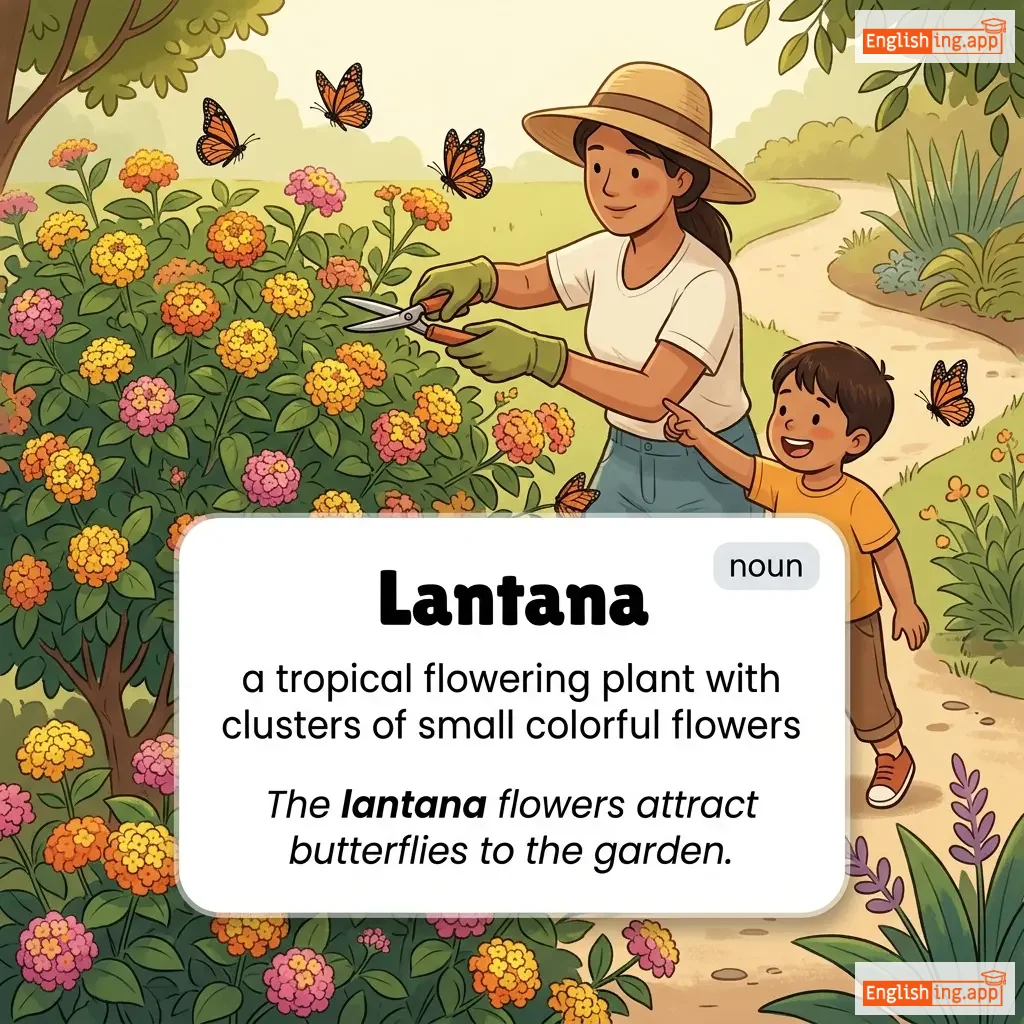
Lantana definition card — visual illustration of the meaning
noun C2
/lænˈtɑː.nə/
лантана (lantana)

a tropical flowering plant with clusters of small colorful flowers

"The lantana flowers attract butterflies to the garden."

"Цветы лантаны привлекают бабочек в сад." (Tsvety lantany privlekayut babochek v sad.)
noun/adjective C2
/ˈlæpɪˌdɛri/
геммолог (gemmolog)

As noun: a person who cuts, polishes, or engraves precious stones; As adjective: relating to such work.

"The museum displayed lapidary tools used in ancient times."

"Музей показал инструменты для работы с драгоценными камнями, использовавшиеся в древности." (Muzej pokazal instrumenty dlya raboty s dragocennymi kamnyami, ispol'zovavshiesya v drevnosti.)
noun C2
/ˈlɑːrsəni/
кража (krazha)

The unlawful taking of personal property with intent to deprive the rightful owner of it.

"He was arrested for committing larceny at the store."

"Его арестовали за совершение кражи в магазине." (Ego arestovali za soversheniye krazhi v magazine.)
noun C2
/ˈlɑːrdər/
кладовая (kladovaya)

A place, such as a pantry, where food is stored.

"The larder was full of fresh bread and cheese."

"Кладовая была полна свежего хлеба и сыра." (Kladovaya byla polna svezhogo khleba i syra.)
noun C2
/lɑːrˈʒes/
щедрость (shchedrost)

Generosity in giving gifts or money.

"The foundation survived thanks to the largess of wealthy donors."

"Фонд выжил благодаря щедрости богатых доноров." (Fond vyzhil blagodarya shchedrosti bogatykh donorov.)
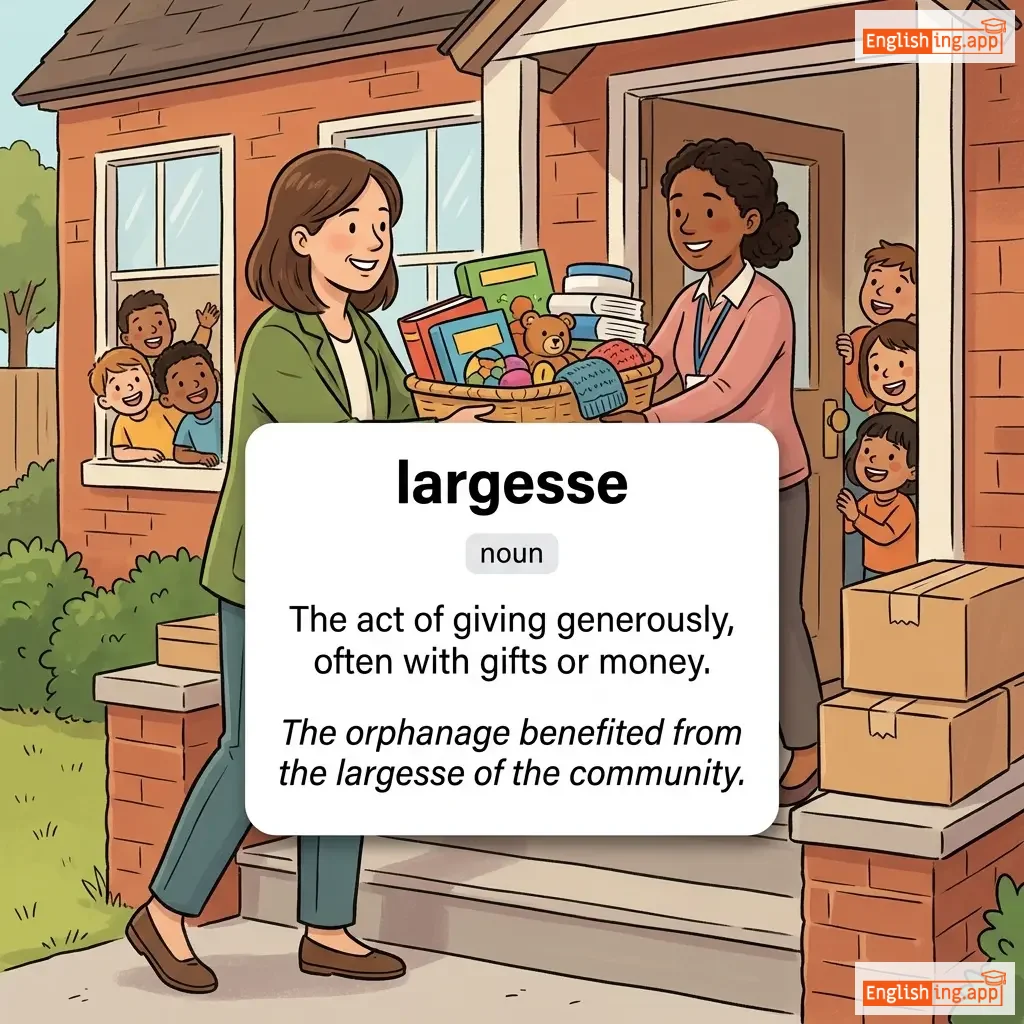
largesse definition card — visual illustration of the meaning
noun C2
/lɑːrˈʒɛs/
щедрость (shchedrost)

The act of giving generously, often with gifts or money.

"The orphanage benefited from the largesse of the community."

"Приют benefited от щедрости сообщества." (Priyut benefited ot shchedrosti soobshchestva.)
noun C2
/ˈlæriət/
петля (petlya)

A long rope with a noose at one end used to catch animals such as cattle or horses.

"The cowboy threw his lariat to catch the stray horse."

"Ковбой бросил свою петлю, чтобы поймать заблудшую лошадь." (Kovboy brosil svoyu petlyu, chtoby poymat' zabludshuyu loshad'.)
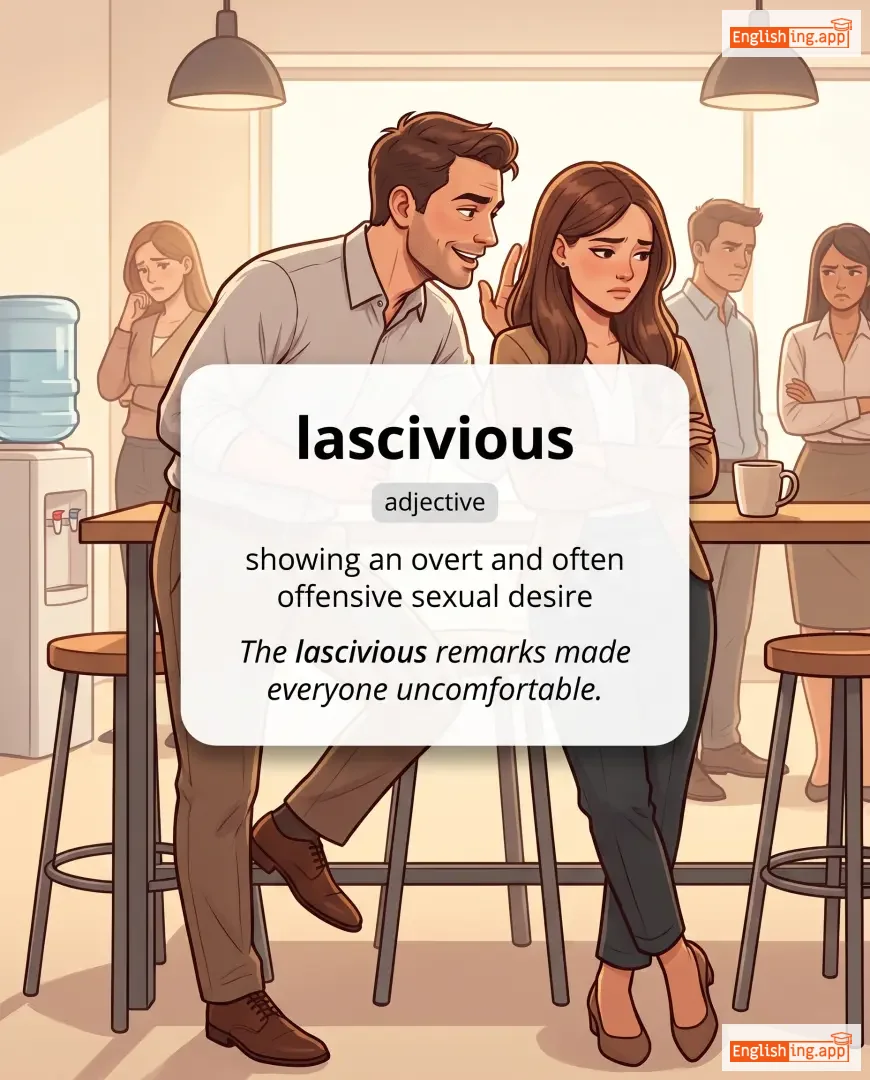
lascivious definition card — visual illustration of the meaning
adjective C2
/ləˈsɪviəs/
похотливый (pokhotlivyy)

showing an overt and often offensive sexual desire

"The lascivious remarks made everyone uncomfortable."

"Похотливые замечания заставили всех чувствовать себя неловко." (Pokhotlivye zamechaniya zastavili vsekh chuvstvovat' sebya nelovko.)
noun C2
/ˈlæsi/
молодая девушка (molodaya devushka)

a young girl (informal, mainly Scottish)

"The old man greeted the little lassie warmly."

"Старик тепло поприветствовал маленькую девушку." (Starik teplo poprevyestvoval malen'kuyu devushku.)
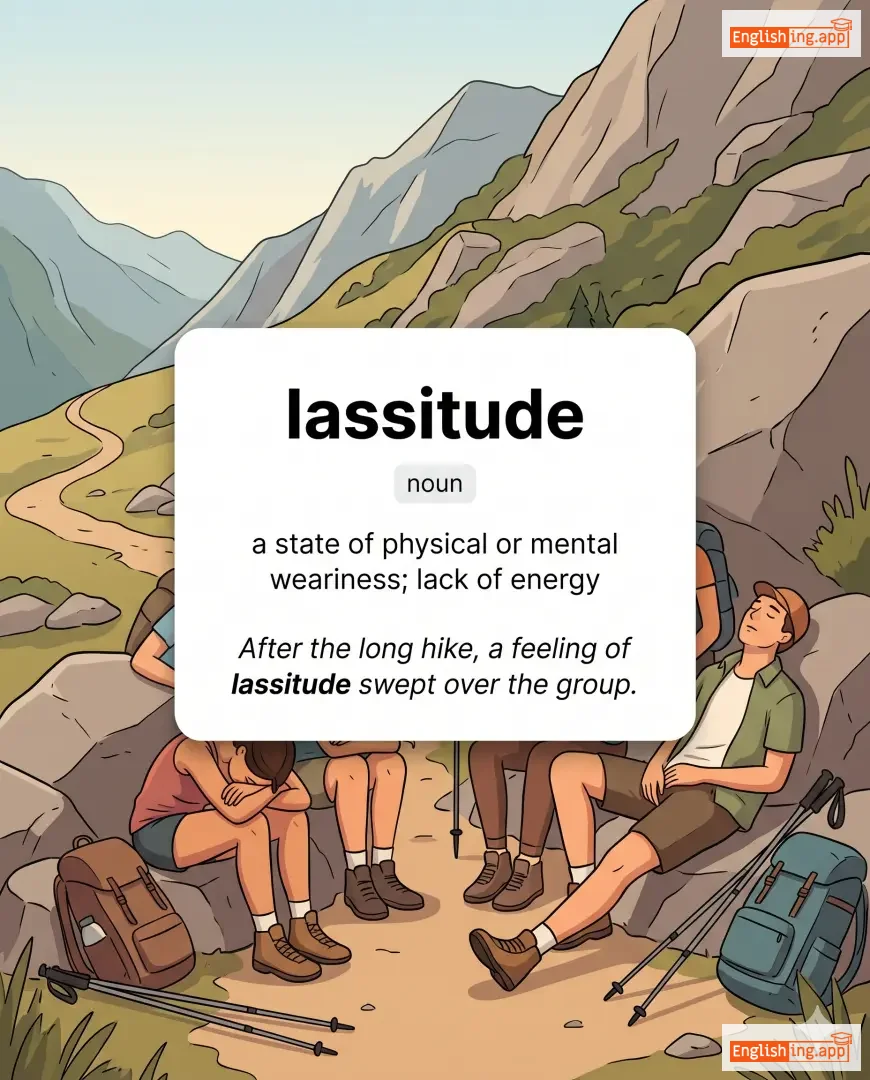
lassitude definition card — visual illustration of the meaning
noun C2
/ˈlæsɪtjuːd/
усталость (ustalost)

a state of physical or mental weariness; lack of energy

"After the long hike, a feeling of lassitude swept over the group."

"После долгого похода чувство усталости охватило группу." (Posle dolgogo pokhoda chuvstvo ustalosti okhvatilo gruppu.)
noun/verb C2
/læˈsuː/
ласко (lasko)

a rope with a loop used to catch animals; to catch with such a rope

"The cowboy lassoed the horse quickly."

"Ковбой быстро поймал лошадь с помощью лассо." (Kovboy bystro poymal loshad' s pomoshch'yu lasso.)
noun C2
/leɪð/
токарный станок (tokarnyy stanok)

A machine for shaping wood, metal, or other material by rotating it against a cutting tool.

"The carpenter used a lathe to shape the wooden bowl."

"Плотник использовал токарный станок для обработки деревянной чаши." (Plotnik ispol'zoval tokarnyy stanok dlya obrabotki derevyannoy chashi.)
adjective C2
/ˈleɪ.tɪʃ/
немного поздно (nemnogo pozdno)

Somewhat late; occurring or arriving later than usual but not very late.

"We arrived latish to the party but still caught most of the fun."

"Мы приехали немного поздно на вечеринку, но все равно успели насладиться большей частью веселья." (My priekhali nemnogo pozdno na vecherinku, no vse ravno uspelI naslazhdatsya bol'sheye chastyu veselya.)
noun C2
/ˈlætɪs/
решетчатая структура (reshetchataya struktura)

A structure of crossed strips arranged in a grid or crisscross pattern.

"The garden was decorated with a wooden lattice covered in vines."

"Сад был украшен деревянной решетчатой конструкцией, покрытой лозами." (Sad byl ukrasheny drevnyannoy reshetchatoy konstruktsiyey, pokrytoy lozami.)
laud definition card — visual illustration of the meaning
👏

laud

verb C2
/lɔːd/

To praise someone or something highly, especially in public.

"The critic lauded the actor's performance as a masterpiece."

noun C2
/lɔːˈdeɪʃən/
похвала (pokhvala)

The act of praising or expressing approval.

"The poet received much laudation for his moving verses."

"Поэт получил много похвалы за свои трогательные стихи." (Poet poluchil mnogo pokhvaly za svoi trogatelnye stikhi.)
adjective C2
/ˈlɔːdəˌtɔːri/
похвальный (pokhval'nyy)

Expressing praise or admiration.

"She wrote a laudatory review of the new book."

"Она написала похвальный обзор новой книги." (Ona napisala pokhval'nyy obzor novoy knigi.)
noun C2
/ˈlɔːndrəs/
прачка (prachka)

A woman whose job is washing clothes and linens.

"The laundress delivered the freshly cleaned clothes to the household."

"Прачка доставила только что выстираную одежду в дом." (Prachka dostavila tolkо chto vystiranuyu odezhdu v dom)
verb C2
/leɪv/
мыть (myt')

To wash or bathe.

"She laved her face with cool water."

"Она вымыла лицо холодной водой." (Ona vymyla litso kholodnoy vodoy.)
noun C2
/ˈlɔːˌɡɪvər/
законодатель (zakonodatel)

A person who creates or enforces laws; a legislator.

"Moses is often regarded as a great lawgiver in history."

"Моисей часто рассматривается как великий законодатель в истории." (Moisey chasto rassmatrivayetsya kak velikiy zakonodatel v istorii.)
noun C2
/liː/
луг (lug)

An open area of grassy or arable land; a meadow.

"The cottage was surrounded by a quiet lea."

"Коттедж был окружен тихим луговым участком." (Kottedzh byl okruzhion tikhim lugovym uchastkom.)
noun/verb C2
/ˈlɛv.ən/
дрожжи (drozhzhi)

a substance, typically yeast, that causes dough to rise; to permeate and modify

"A little yeast will leaven the bread dough."

"Немного дрожжей заставит тесто подняться." (Nemnogo drozhzhej zastavit testo podnyat'sya.)
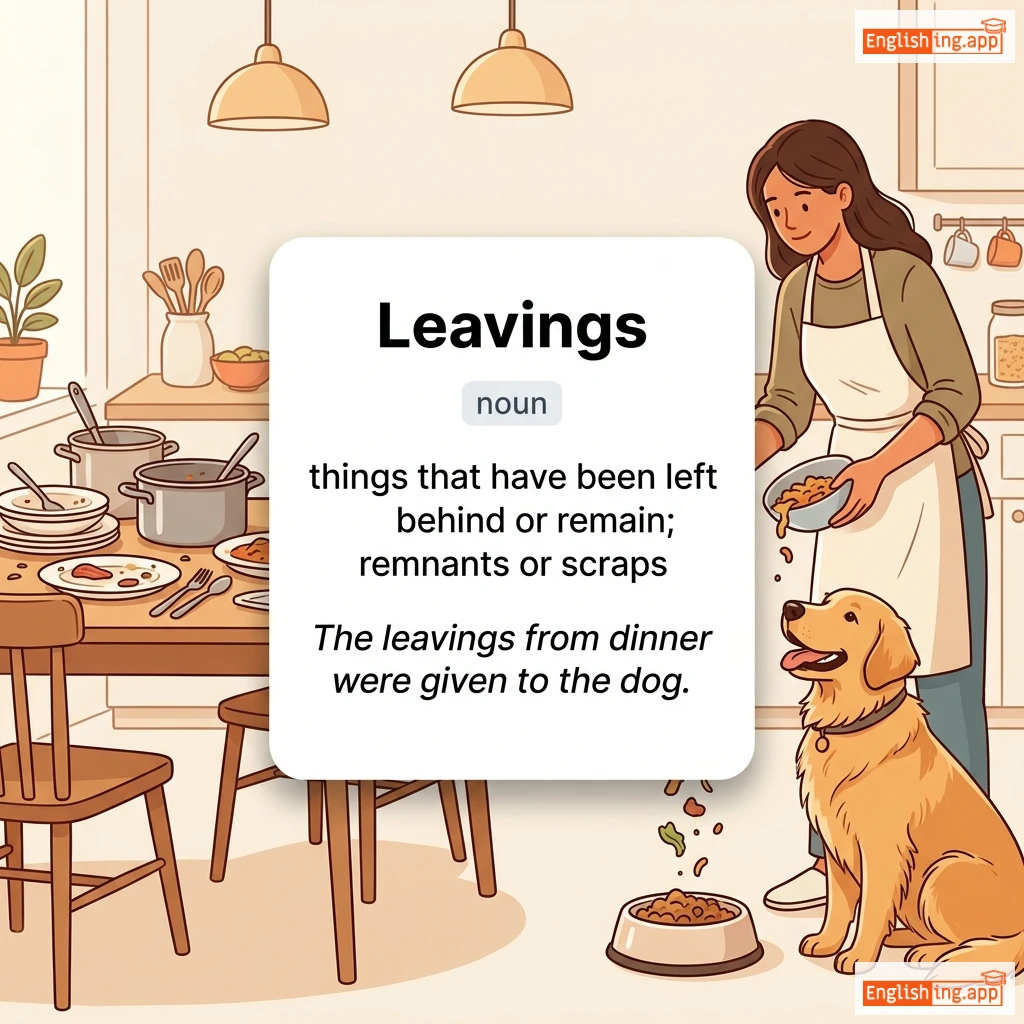
Leavings definition card — visual illustration of the meaning
noun C2
/ˈliː.vɪŋz/
остатки; пережитки (livings)

things that have been left behind or remain; remnants or scraps

"The leavings from dinner were given to the dog."

"Остатки ужина были отданы собаке." (Ostatki uzhina byli otdany sobake.)
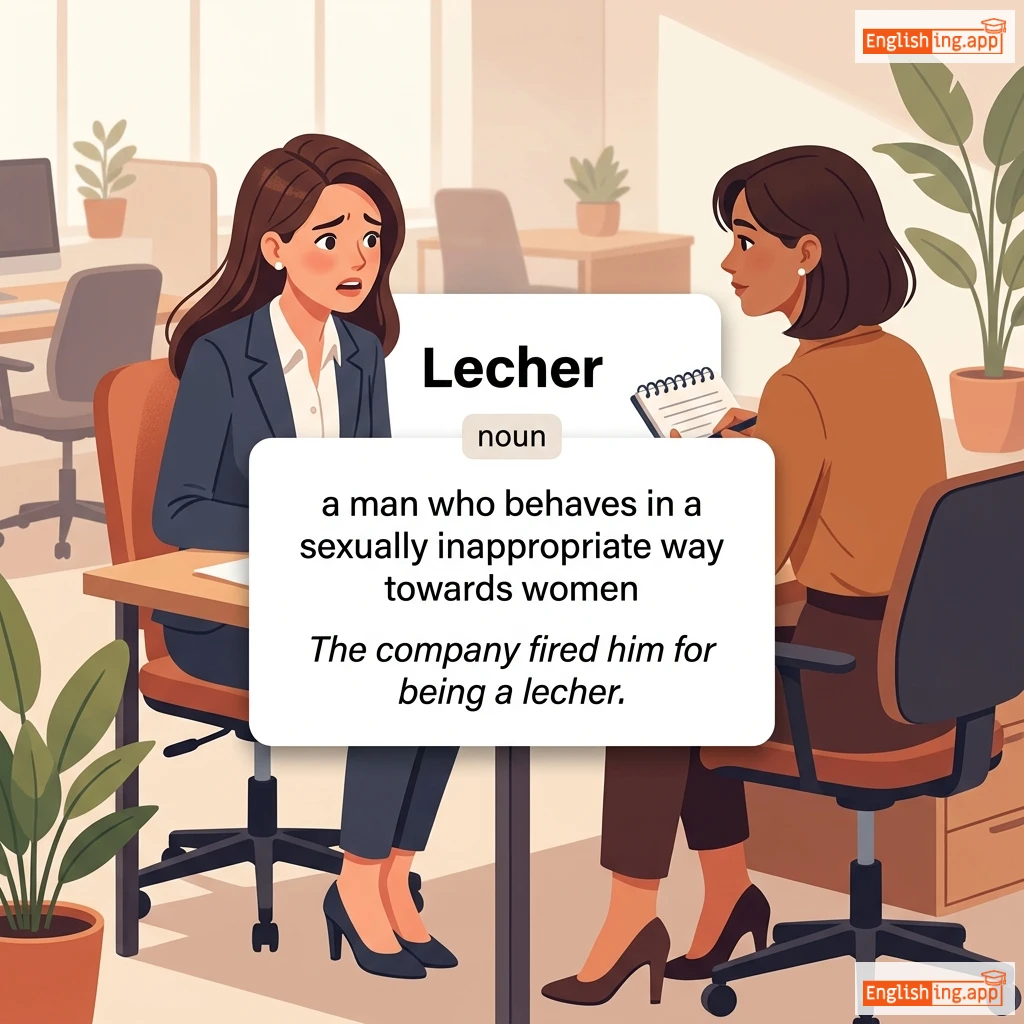
Lecher definition card — visual illustration of the meaning
noun C2
/ˈleʧ.ər/
похотливый человек (pohotlivyi chelovek)

a man who behaves in a sexually inappropriate way towards women

"The company fired him for being a lecher."

"Компания уволила его за то, что он был похотливым человеком." (kompaniya uvolila ego za to chto on byl pohotlivym chelovekom)
adjective C2
/ˈlɛtʃ.ər.əs/
похотливый (pokhotlivyy)

having or showing excessive or offensive sexual desire

"The character was portrayed as a lecherous old man."

"Персонаж был изображен как похотливый старик." (Personazh byl izobrazhen kak pokhotlivyy starik.)
noun C2
/ˈlɛtʃ.əri/
похоть (pokhot)

excessive or offensive sexual desire; lustfulness

"The novel depicted the lechery of corrupt nobles."

"Роман изображал похоть коррумпированных дворян." (Roman izobrazhal pokhot' korrumpirovannykh dvorian.)