Vocabulaires

Découvrez, apprenez et maîtrisez le vocabulaire anglais

noun C2
/ˌɪnkænˈdɛsəns/
白熱光 (hakunetsu kō)

the emission of light from a hot object; brilliance

"The incandescence of the candle filled the dark room."

"ろうそくの白熱光が暗い部屋を満たしました。" (Rōsoku no hakunetsu kō ga kurai heya o mitashimashita.)
adjective C2
/ˌɪnkænˈdɛsənt/
白熱 (hakunetsu)

emitting light as a result of being heated; extremely bright or passionate

"The incandescent lamp lit up the entire hall."

"白熱灯はホール全体を照らしました。" (Hakunetsu tou wa hooru zentai wo terashimashita.)
noun C2
/ˌɪnkænˈteɪʃən/
呪文 (jumon)

a series of words used as a magic spell or charm

"The wizard chanted an incantation to summon the spirits."

"魔法使いは霊を呼び出すために呪文を唱えました。" (Mahōtsukai wa rei o yobidasu tame ni jumon o tonaemashita.)
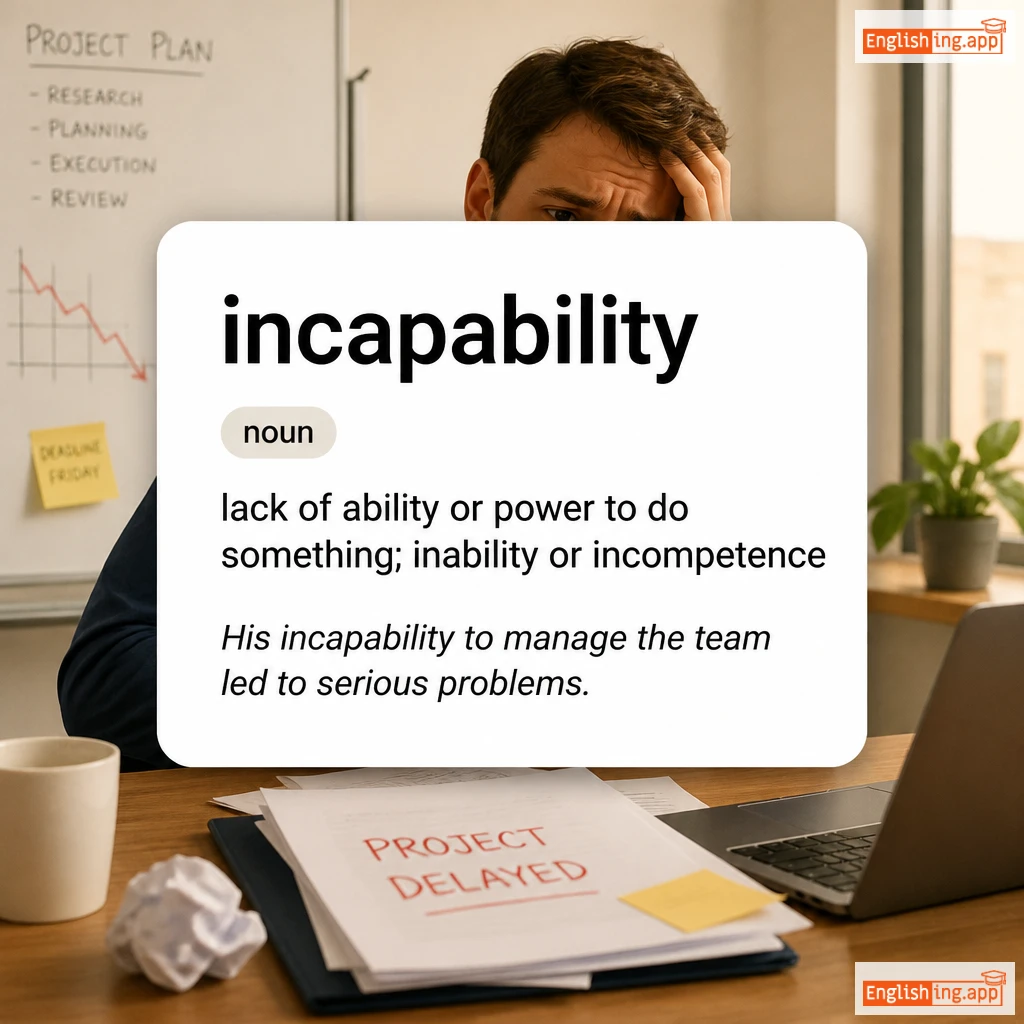
incapability definition card — visual illustration of the meaning
noun C2
/ˌɪnˌkeɪpəˈbɪləti/
無能力 (munouryoku)

lack of ability or power to do something; inability or incompetence

"His incapability to manage the team led to serious problems."

"チームを管理する彼の無能力は深刻な問題を引き起こした。" (chiimu o kanri suru kare no munouryoku wa shinkoku na mondai o hikiokoshita)
verb C2
/ˌɪnkəˈpæsɪteɪt/
無力化する (muryokuka suru)

to deprive someone or something of the ability or strength to function

"The severe injury incapacitated the player for the rest of the season."

"その重傷はプレーヤーをシーズンの残りの期間無力化させた。" (Sono juushou wa pureeaa o shiizun no nokori no kikann muryokuka saseta.)
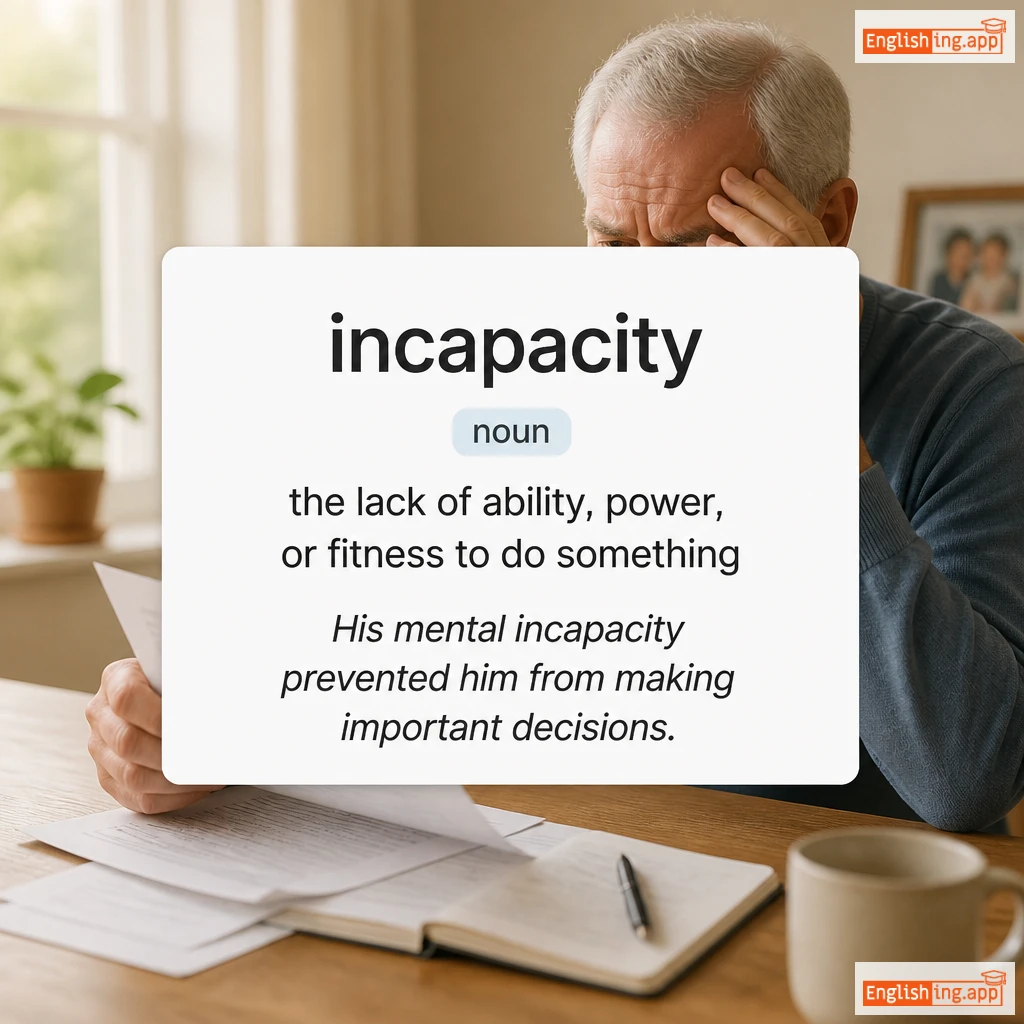
incapacity definition card — visual illustration of the meaning
noun C2
/ˌɪnkəˈpæsəti/
無能力 (munōryoku)

the lack of ability, power, or fitness to do something

"His mental incapacity prevented him from making important decisions."

"彼の精神的無能力は、重要な決定を下すのを妨げました。" (Kare no seishinteki munōryoku wa, jūyōna kettei o kudasu no o samatagemashita.)
adjective/noun C2
/ɪnˈkɑːrnədiːn/
深紅 (shinku)

a bright crimson or pinkish-red color

"The sky turned incarnadine at sunset."

"太陽が沈むと空は深紅色に変わった。" (Taiyō ga shizumu to sora wa shinku shoku ni kawatta.)
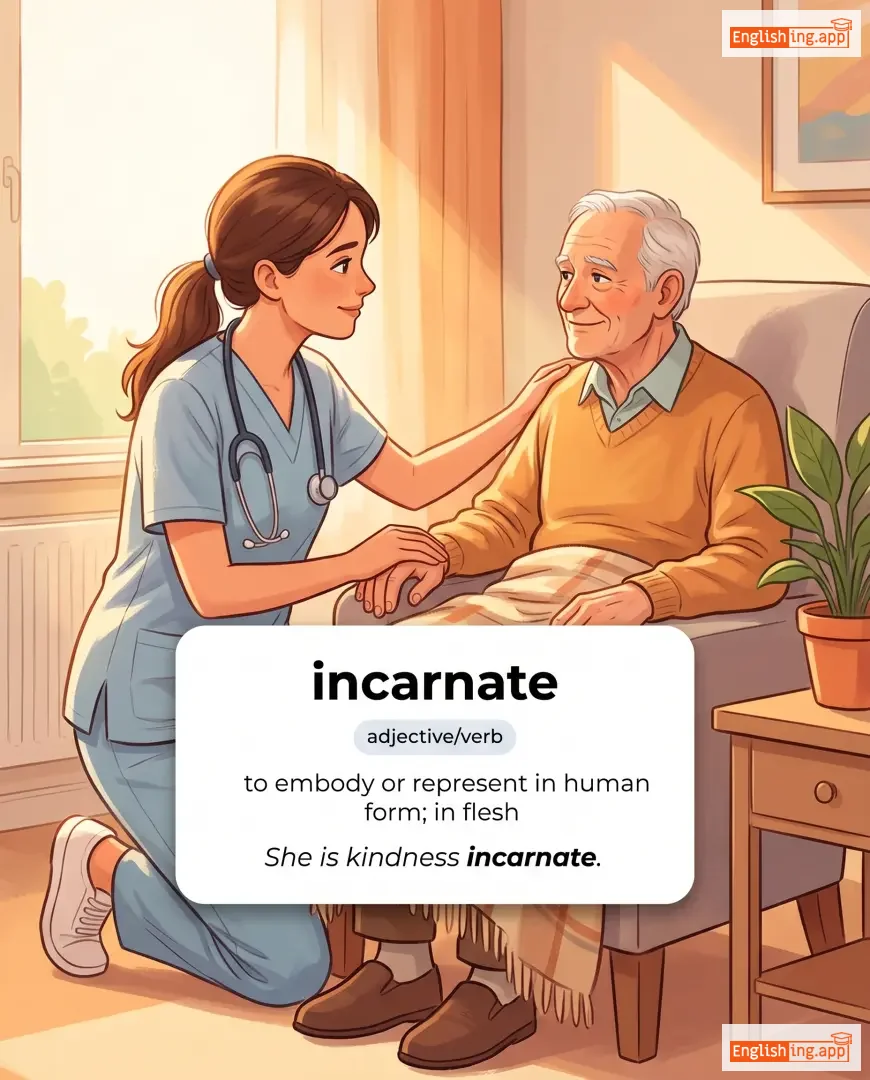
incarnate definition card — visual illustration of the meaning
adjective/verb C2
/ɪnˈkɑːrneɪt/
具現化 (gugenka)

to embody or represent in human form; in flesh

"She is kindness incarnate."

"彼女は親切さの具現化です。" (Kanojo wa shinsetsu sa no gugenka desu.)
adjective C2
/ɪnˈsɛndiˌɛri/
扇動的な / 挑発的な (sendō-teki na / chōhatsu-teki na)

designed to cause fires or stir up conflict

"The politician’s incendiary remarks angered the crowd."

"政治家の挑発的な発言が群衆を怒らせた。" (Seijika no chōhatsu-teki na hatsugen ga gunshū wo okorase ta.)
adjective C2
/ɪnˈsɛptɪv/
初期の (shoki no)

Relating to or marking the beginning or initial stage of something.

"The inceptive phase of the project was marked by enthusiastic planning."

"プロジェクトの開始段階は熱心な計画で特徴づけられました。" (Purojekuto no kaishi dankai wa nesshin na keikaku de tokuchōzukeraremashita.)
adverb C2
/ˈɪntʃmiːl/
少しずつ (sukoshizutsu)

Gradually, little by little.

"The old castle fell inchmeal into ruin."

"その古い城は少しずつ廃墟になった。" (Sono furui shiro wa sukoshizutsu haikyo ni natta.)
inchoate definition card — visual illustration of the meaning
adjective C2
/ɪnˈkoʊ.ɪt/ or /ɪnˈkoʊ.eɪt/
未完成 (mikansei)

Just begun and not fully formed; rudimentary.

"His inchoate ideas needed more research to be developed."

"彼の未完成のアイデアは、さらに開発するためにもっと研究が必要だった。" (Kare no mikansei no aidea wa, sara ni kaihatsu suru tame ni motto kenkyuu ga hitsuyou datta.)
adjective C2
/ɪnˈkoʊətɪv/
初期の (shoki no)

relating to the beginning of something; in an initial stage

"The poet used inchoative expressions to depict the dawn of creation."

"詩人は創造の夜明けを描くために初期の表現を使いました。" (Shijin wa souzou no yoake wo kaku tame ni shoki no hyougen wo tsukaimashita.)
verb C2
/ɪnˈsɪnəˌreɪt/
焼却する (shōkyaku suru)

to burn something completely until it is reduced to ashes

"The city decided to incinerate the medical waste for safety."

"その都市は安全のために医療廃棄物を焼却することを決定しました。" (Sono toshi wa anzen no tame ni iryō haikimono o shōkyaku suru koto o kettei shimashita.)
noun C2
/ɪnˈsɪpiəns/
始まり (hajimari)

the beginning or initial stage of something

"The project was still in its incipience when funding was approved."

"資金提供が承認された時、プロジェクトはまだその始まりの段階にありました。" (Shikin teikyō ga shōnin sareta toki, purojekuto wa mada sono hajimari no dankai ni arimashita.)
adjective C2
/ɪnˈsɪpiənt/
初期の (shoki no)

in an initial stage; beginning to develop

"The incipient storm made the sky turn dark and heavy."

"初期の嵐が空を暗く重くさせた。" (Shoki no arashi ga sora o kuraku omoku saseta.)
noun C2
/ɪnˈsaɪzər/
切歯 (kesshi)

a narrow-edged tooth at the front of the mouth, adapted for cutting

"The dentist noted that his upper left incisor was chipped."

"歯科医は彼の上の左側の切歯が欠けていることに気づきました。" (Shikai wa kare no ue no hidarigawa no kesshi ga kakete iru koto ni kizukimashita.)
adjective C2
/ɪnˈklɛmɛnt/
悪天候 (akutenkou)

unpleasantly cold, wet, or stormy (usually weather)

"The match was canceled due to inclement weather."

"試合は悪天候のためキャンセルされました。" (Shiai wa akutenkou no tame kyanseru saremashita.)
adjective C2
/ˌɪnkoʊˈɜːrsəbl̩/
強制できない (kyousei dekinai)

Not capable of being forced, compelled, or restrained.

"Her incoercible spirit inspired others to fight for justice."

"彼女の強制できない精神は他の人々に正義のために戦うようにインスパイアした。" (Kanojo no kyousei dekinai seishin wa hoka no hitobito ni seigi no tame ni tatakau you ni insupaia shita.)
adjective C2
/ɪnˈkɑːdʒɪtənt/
無思慮な (musiryona)

Lacking thought; inconsiderate or thoughtless.

"It was incogitant of him to make such a rude comment."

"彼がそんな失礼なコメントをするのは無思慮なことでした。" (Kare ga sonna shitsurei na komento o suru no wa musiryona koto deshita.)
adjective C2
/ˌɪnkəmˈbʌstəbl/
不燃 (funen)

Not capable of catching fire or burning.

"This material is incombustible and safe for construction."

"この材料は燃えません、安全に建設に使用できます。" (Kono zairyō wa moemasu, anzen ni kensetsu ni shiyō dekimasu.)
adjective C2
/ˌɪnkəˈməʊdiəs/
不快な (fukai na)

Uncomfortably small, cramped, or inconvenient.

"We had to stay in an incommodious room during the trip."

"旅行中に不快な部屋に泊まらなければなりませんでした。" (Ryokō-chū ni fukai na heya ni tomarana kereba narimasen deshita.)
adjective C2
/ˌɪnkəmˈprɛsəbl/
圧縮不可能 (asshuku fukanou)

Not able to be pressed or squeezed into a smaller space.

"Liquids are generally considered incompressible."

"液体は通常、圧縮不可能と見なされます。" (Ekita wa tsūjō, asshuku fukanō to minasarerumasu.)
adjective C2
/ɪnˈkɒŋɡruənt/
不一致な (fuicchi na)

Not in harmony or keeping with the surroundings or other aspects.

"His casual outfit looked incongruent at the formal dinner."

"彼のカジュアルな服装は正式なディナーで不一致に見えた。" (Kare no kajuaru na fukusō wa seishiki na dinā de fuicchi ni mieta.)
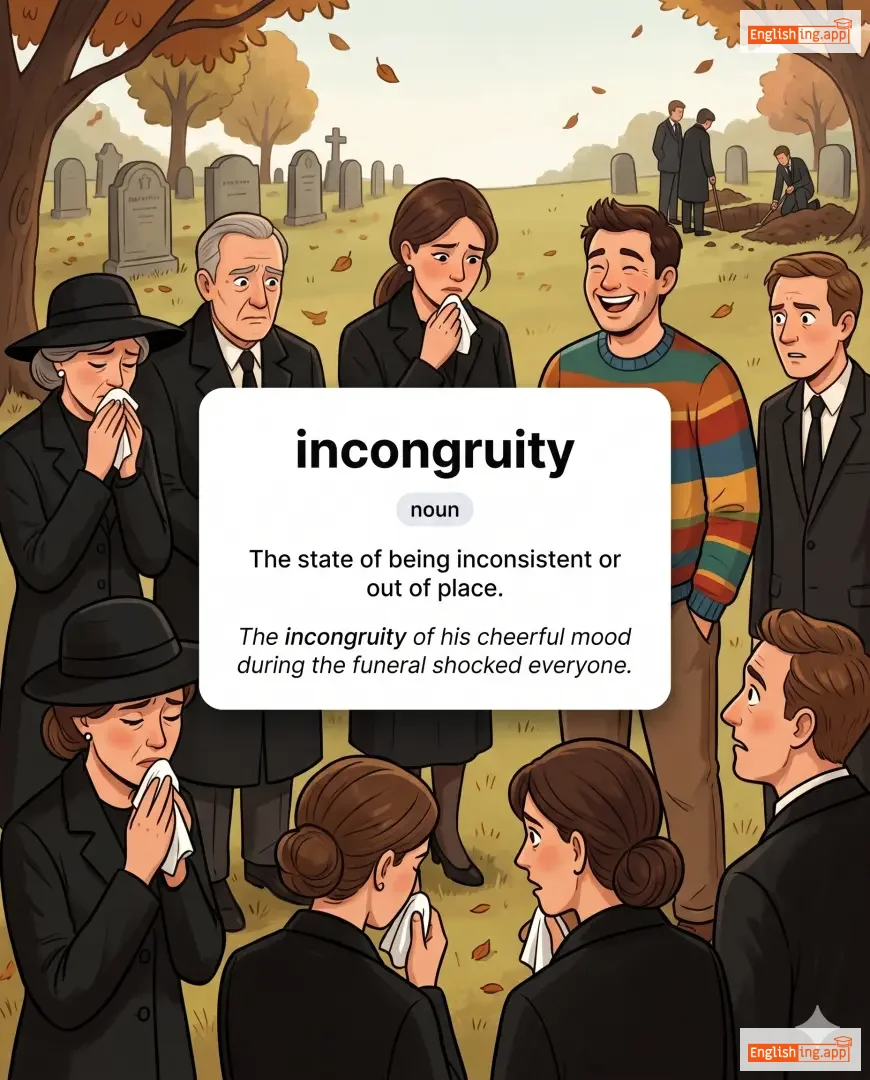
incongruity definition card — visual illustration of the meaning
noun C2
/ˌɪnkənˈɡruːəti/
不一致 (fu ichi)

The state of being inconsistent or out of place.

"The incongruity of his cheerful mood during the funeral shocked everyone."

"葬式の最中に彼の陽気な気分の不一致は、皆を驚かせました。" (Sōshiki no saichū ni kare no yōki na kibun no fu ichi wa, mina o odorokasemashita.)
adjective C2
/ˌɪnkənˈsɪdərəbl/
取るに足らない (toru ni taranai)

Too small or unimportant to be worth considering.

"The donation was not inconsiderable, though smaller than expected."

"寄付は取るに足らなかったが、予想よりも小さかった。" (Kifu wa toru ni taranakatta ga, yosō yori mo chiisakatta.)
noun C2
/ɪnˈkɒnstənsi/
不安定さ (fuantesa)

The quality of changing frequently or being unreliable.

"The inconstancy of the weather makes planning difficult."

"天候の不安定さが計画を難しくします。" (Tenkou no fuantesa ga keikaku o muzukashiku shimasu.)
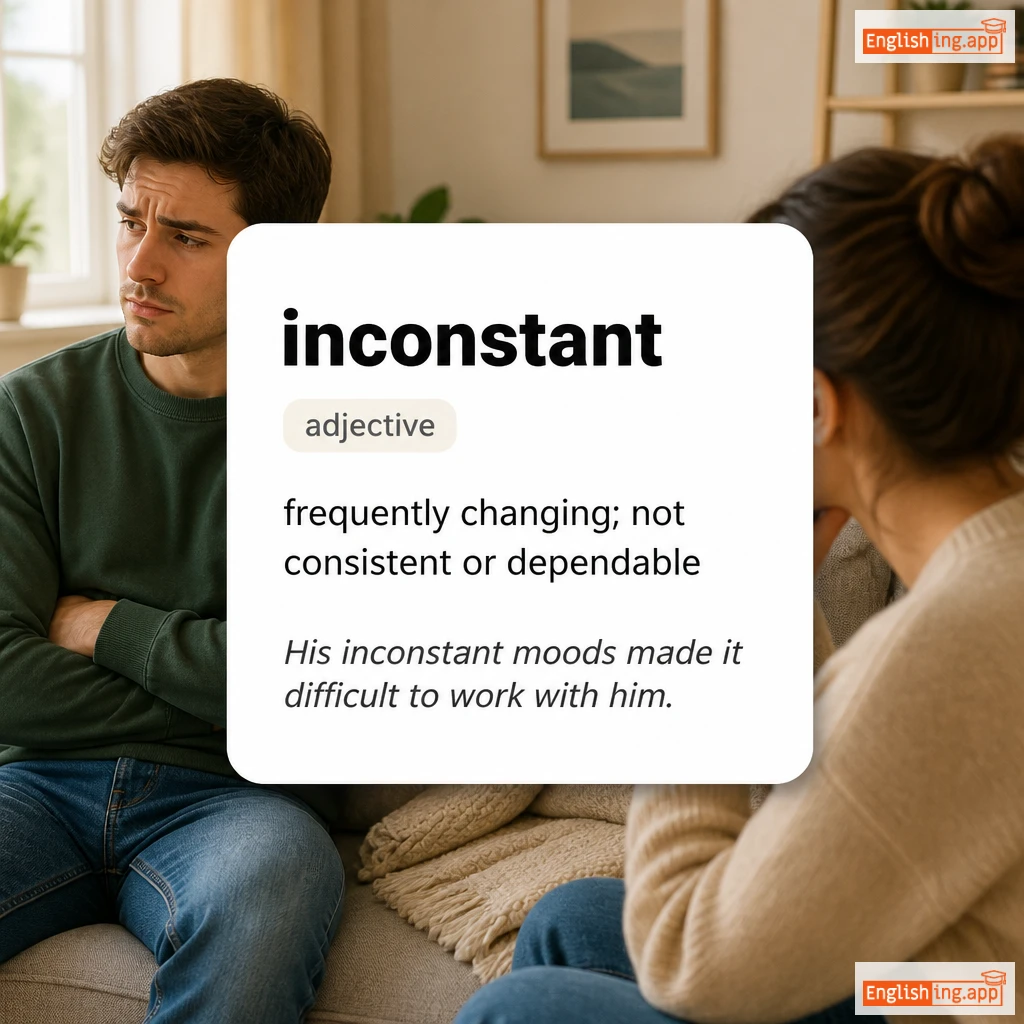
inconstant definition card — visual illustration of the meaning
adjective C2
/ɪnˈkɒnstənt/
不安定な (fuanteina)

frequently changing; not consistent or dependable

"His inconstant moods made it difficult to work with him."

"彼の不安定な気分は彼と仕事をするのを難しくした。" (Kare no fuantei na kibun wa kare to shigoto o suru no o muzukashiku shita.)
adjective C2
/ɪnˈkɒntɪnənt/
失禁 (shitsukin)

lacking control over urination or defecation; lacking self-restraint

"The patient was incontinent after surgery."

"手術後、患者は失禁していた。" (Shujutsu go, kanja wa shitsukin shite ita.)
adjective C2
/ˌɪnkɒntrəˈvɜːtəbl/
論争の余地がない (ronsou no yochi ga nai)

impossible to deny or dispute; unquestionable

"The evidence was incontrovertible and proved his innocence."

"その証拠は論争の余地がなく、彼の無罪を証明しました。" (Sono shouko wa ronsou no yochi ga naku, kare no muzai o shoumei shimashita.)
adjective C2
/ˌɪnkɔːrˈpɔːriəl/
無形 (mukei)

lacking a physical body; not composed of matter; intangible

"Ghosts are often described as incorporeal beings."

"ゴーストはしばしば無形の存在として描かれます。" (Gōsuto wa shibashiba mukei no sonzai toshite egakaremasu.)
adjective C2
/ɪnˈkɒrɪdʒəbəl/
訂正不可能な (teisei fukanō na)

incapable of being corrected, improved, or reformed

"He is an incorrigible optimist who never loses hope."

"彼は決して希望を失わない訂正不可能な楽観主義者です。" (Kare wa kesshite kibō o ushinawanai teisei fukanō na rakkan shugi-sha desu.)
noun C2
/ˌɪnkrɪˈdjuːləti/
不信 (fushin)

the state of being unwilling or unable to believe something

"She looked at him with incredulity after hearing the strange story."

"彼女はその奇妙な話を聞いた後、不信のまなざしで彼を見つめた。" (Kanojo wa sono kimyou na hanashi o kiita ato, fushin no manazashi de kare o mitsumeta.)
noun C2
/ˌɪnkrʌˈsteɪʃən/
硬化層 (koukasou)

a crust or hard coating formed on the surface of something

"The old pipes were blocked due to heavy incrustation of minerals."

"古いパイプは鉱物の重い硬化層によって詰まっていました。" (Furui paipu wa koubutsu no omoi koukasou ni yotte tsumatteimashita.)
noun C2
/ˈɪŋkjʊbəs/
悪夢のような重荷 (akumu no yō na omoni)

An oppressive or nightmarish burden; in folklore, an evil spirit that lies upon sleeping people.

"Debt became an incubus that weighed heavily on the family."

"借金は家族に重くのしかかる悪夢のような存在となった。" (Shakkin wa kazoku ni omoku noshikakaru akumu no yō na sonzai to natta.)
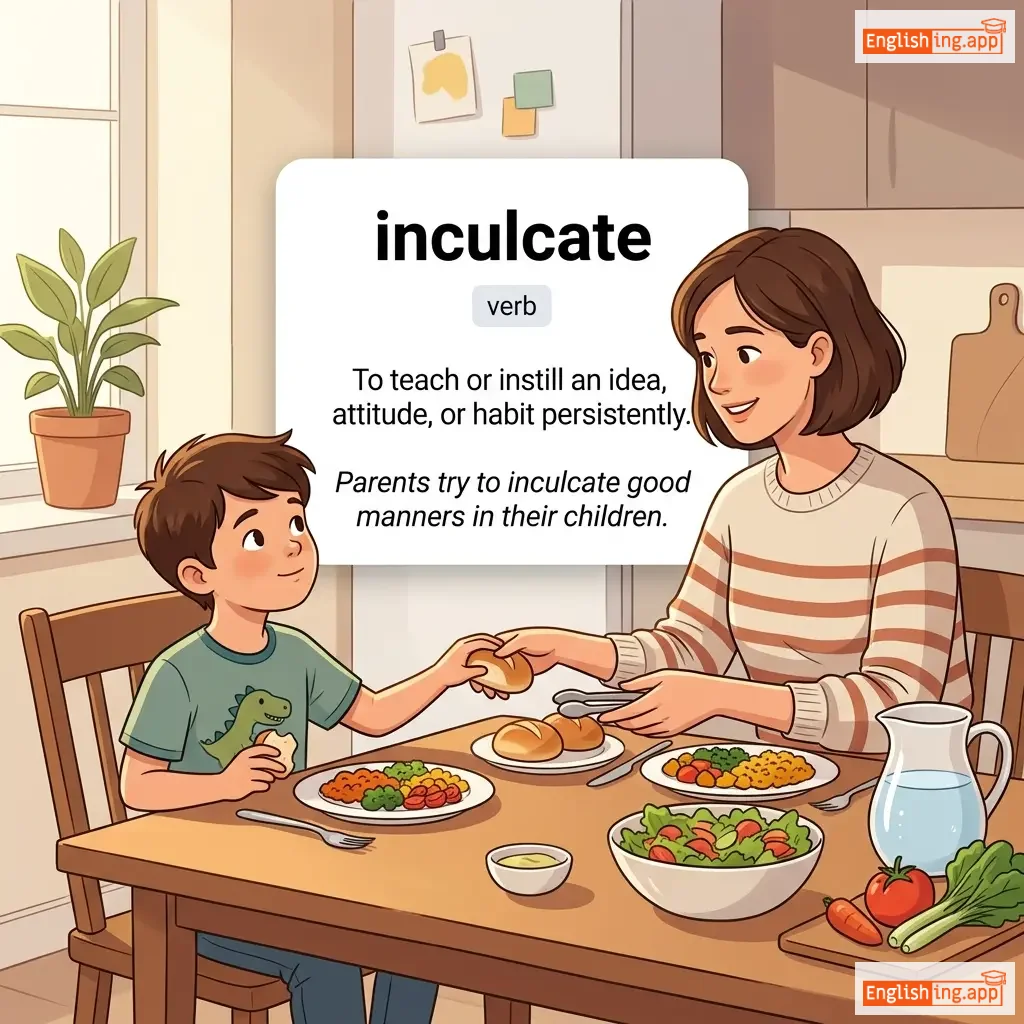
inculcate definition card — visual illustration of the meaning
verb C2
/ˈɪŋkʌlkeɪt/
教え込む (oshiekomu)

To teach or instill an idea, attitude, or habit persistently.

"Parents try to inculcate good manners in their children."

"親は子供たちに良いマナーを教え込もうとします。" (Oya wa kodomotachi ni yoi manā o oshiekomo to shimasu.)
verb C2
/ˈɪŋkʌlpeɪt/
非難する (hinan suru)

To blame or accuse someone of wrongdoing.

"The evidence seemed to inculpate the suspect in the crime."

"証拠は容疑者を犯行に巻き込んでいるように見えた。" (Shōko wa yōgisha o hankō ni makikonde iru yō ni mieta.)
adjective C2
/ɪnˈdɛkərəs/
不作法 (busahou)

Not in keeping with good taste and propriety; improper.

"His indecorous behavior shocked the audience."

"彼の不作法な振る舞いは観客を驚かせた。" (Kare no busahou na furumai wa kankyaku o odoro kaseta.)
adjective C2
/ˌɪndɪˈfætɪɡəbl̩/
疲れ知らず (tsukare shirazu)

persisting tirelessly; incapable of being fatigued

"Her indefatigable spirit kept the team motivated during the long project."

"彼女の疲れ知らずの精神が、長いプロジェクトを通してチームを励ましました。" (kanojo no tsukare shirazu no seishin ga, nagai purojekuto wo tooshite chiimu wo hagemashimashita.)
verb C2
/ɪnˈdɛmnɪfaɪ/

to compensate someone for harm or loss; to secure against future damage or cost

"The insurance company agreed to indemnify the client for the damages."

noun C2
/ˌɪndɛnˈteɪʃən/
インデント (indent)

A space left at the beginning of a line of text; a notch or deep recess on a surface.

"The teacher asked the students to use proper indentation in their essays."

"先生は学生にエッセイで適切なインデントを使用するように頼みました。" (Sensei wa gakusei ni essei de tekisetsu na indent wo shiyou suru you ni tanomimashita.)
noun C2
/ɪnˈdɛntʃər/

A formal legal agreement, contract, or document, often relating to work or service.

"In the 18th century, many workers came under indenture to work overseas."

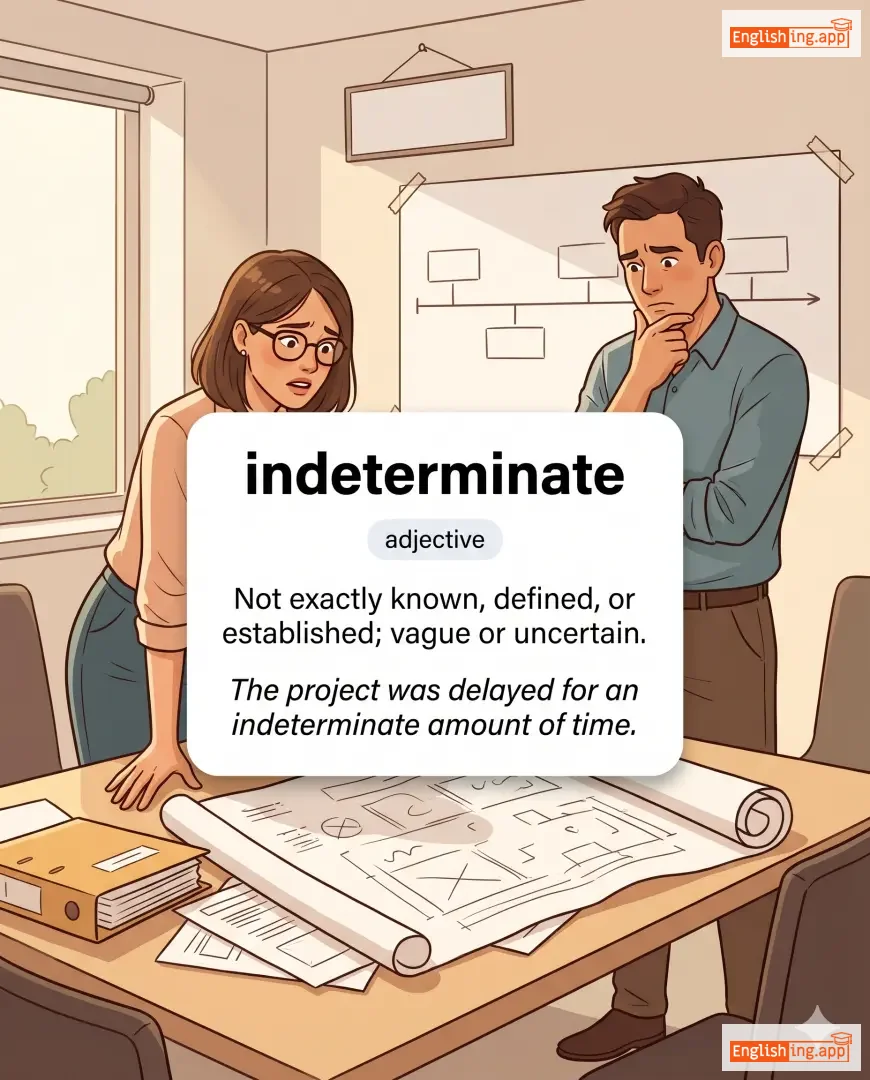
indeterminate definition card — visual illustration of the meaning
adjective C2
/ˌɪndɪˈtɜːrmənət/
不確定 (fukakutei)

Not exactly known, defined, or established; vague or uncertain.

"The project was delayed for an indeterminate amount of time."

"プロジェクトは不確定な期間に延期されました。" (Purojekuto wa fukakutei na kikan ni enki saremashita.)
noun C2
/ˈɪndɪkənt/
指標 (shihyō)

Something that indicates or points to a fact or condition.

"High fever is often an indicant of infection."

"高熱はしばしば感染の指標となります。" (Kōnetsu wa shibashiba kansen no shihyō to narimasu.)
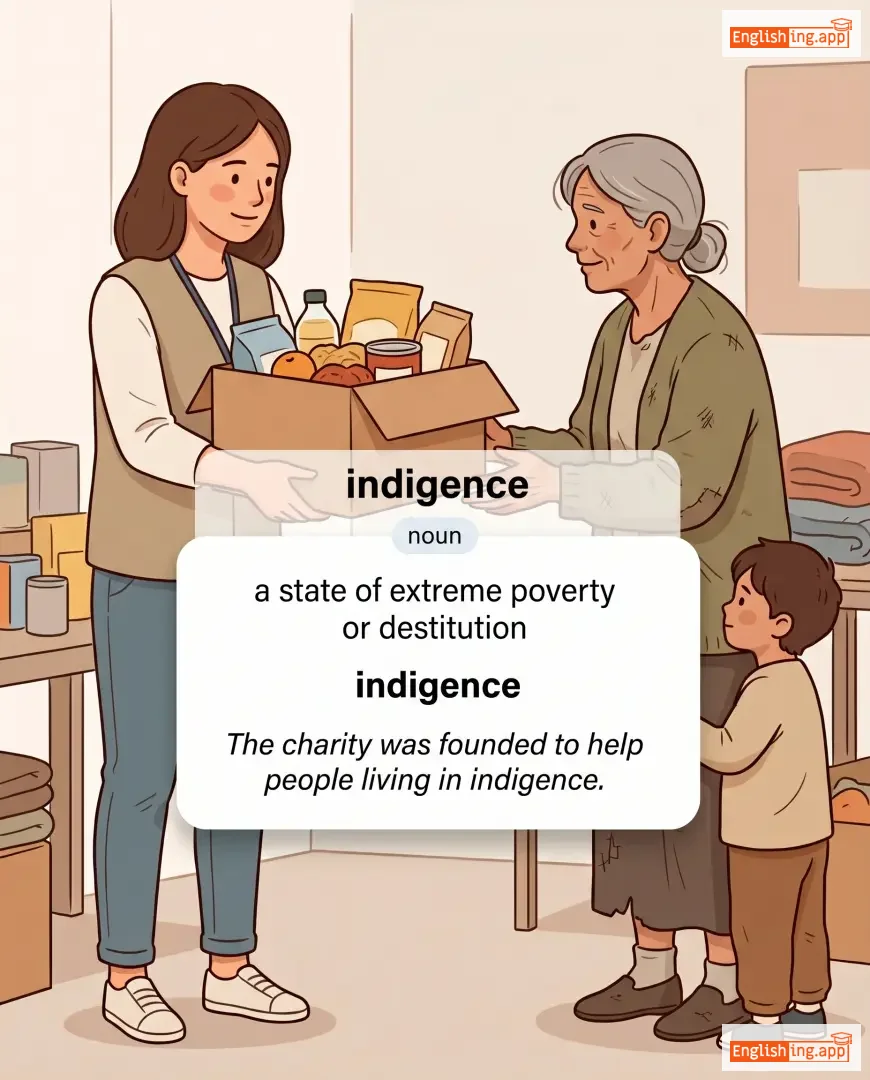
indigence definition card — visual illustration of the meaning
noun C2
/ˈɪn.dɪ.dʒəns/
貧困 (hinkon)

a state of extreme poverty or destitution

"The charity was founded to help people living in indigence."

"その慈善団体は貧困の中で生活している人々を助けるために設立されました。" (Sono jizen dantai wa hinkon no naka de seikatsu shite iru hitobito o tasukeru tame ni setsuritsu saremashita.)
adjective C2
/ˈɪn.dɪ.dʒənt/
困窮 (konkyū)

lacking the necessities of life due to poverty; very poor

"The hospital offers free care to indigent patients."

"病院は困窮した患者に無料でケアを提供しています。" (Byōin wa konkyū shita kanja ni muryō de kea o teikyō shiteimasu.)
adjective C2
/ˌɪn.daɪˈdʒes.tə.bəl/
消化不良 (shōkafuryō)

difficult or impossible to digest; hard to accept or understand

"The report was so long and detailed that it became almost indigestible."

"その報告書は非常に長くて詳細だったため、ほとんど消化不良になってしまった。" (Sono hōkokusho wa hijō ni nagakute shōsai datta tame, hotondo shōkafuryō ni natte shimatta.)
adjective C2
/ˌɪndɪˈsɜːrnəbl/
見分けがつかない (miwake ga tsukanai)

Impossible or difficult to see, notice, or distinguish.

"The difference between the two shades was almost indiscernible."

"二つの色調の違いはほとんど見分けがつかなかった。" (Futatsu no shikichou no chigai wa hotondo miwake ga tsukanakatta.)
adjective C2
/ˌɪndɪˈsɒljʊbl/
解消できない (Kaishou dekinai)

Unable to be destroyed, broken, or dissolved.

"Marriage was once considered an indissoluble bond."

"結婚はかつて解消できない絆と見なされていました。" (Kekkon wa katsute kaishou dekinai kizuna to minasareremashita.)
verb C2
/ɪnˈdaɪt/
作詞する (sakushisuru)

To write or compose (literary or formal works).

"The poet indited a heartfelt sonnet."

"詩人は心のこもったソネットを作詞した。" (Shijin wa kokoro no komotta sonetto o sakushi shita.)