Vocabulaires

Découvrez, apprenez et maîtrisez le vocabulaire anglais

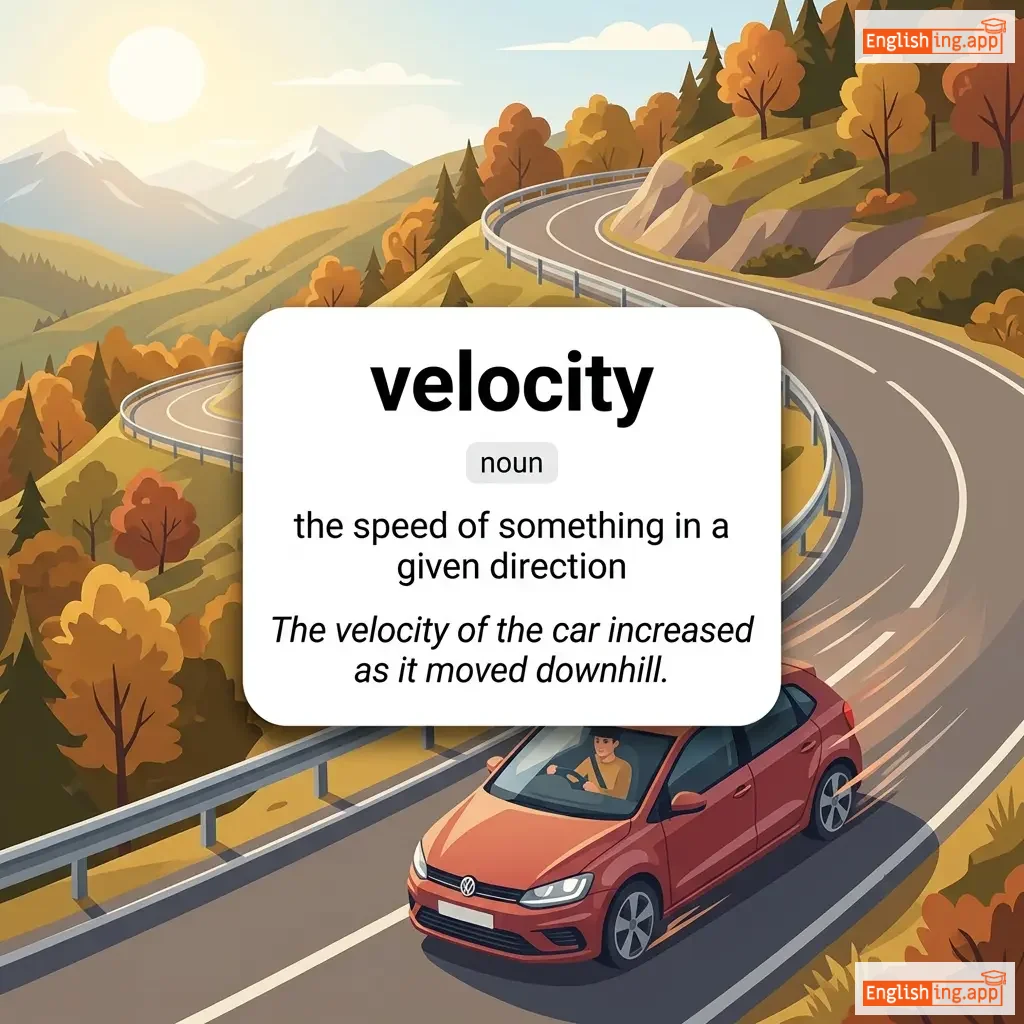
velocity definition card — visual illustration of the meaning
noun C1
/vəˈlɒsəti/
速度 (sokudo)

the speed of something in a given direction

"The velocity of the car increased as it moved downhill."

"車の速度は、丘を下るにつれて増加しました。" (Kuruma no sokudo wa, oka o kudaru ni tsurete zouka shimashita.)
adjective C1
/ˈvɛlvəti/
幸福 (kōfuku)

having a smooth, soft texture like velvet

"She spoke in a low, velvety voice."

"彼女は賞を受け取ったとき、幸せを隠すことができませんでした。" (Kanojo wa shō o uketotta toki, kōfuku o kakusu koto ga dekimasen deshita.)
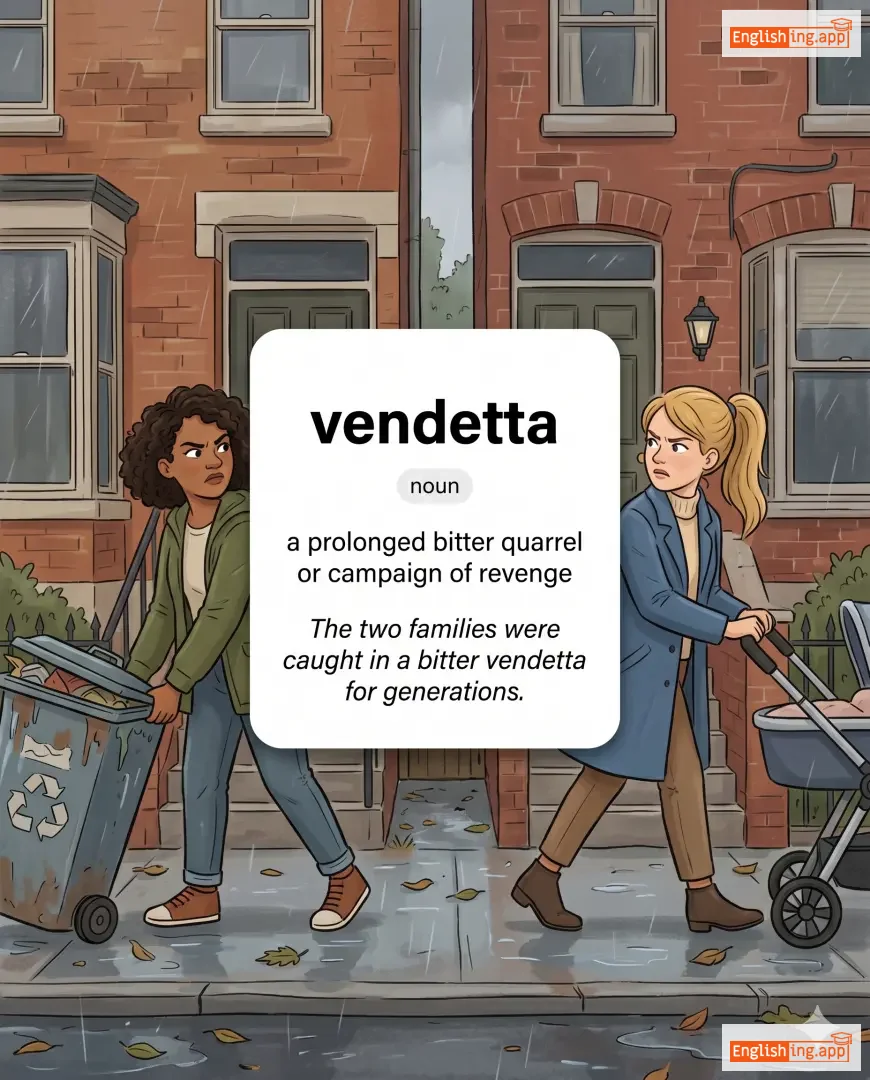
vendetta definition card — visual illustration of the meaning
noun C1
/vɛnˈdɛtə/
復讐 (fukushū)

a prolonged bitter quarrel or campaign of revenge

"The two families were caught in a bitter vendetta for generations."

"二つの家族は何世代にもわたり、苦い復讐に巻き込まれていた。" (Futatsu no kazoku wa nan se daime ni watari, nigai fukushū ni makikomarete ita.)
noun C1
/vəˈnɪər/
幸福 (kōfuku)

A thin decorative covering of fine wood applied to a coarser wood or other material; a superficially attractive appearance.

"The table was covered with a thin veneer of mahogany."

"彼女は賞を受け取ったとき、幸せを隠すことができませんでした。" (Kanojo wa shō o uketotta toki, kōfuku o kakusu koto ga dekimasen deshita.)
adjective C1
/ˈvɛnərəbl/
尊敬すべき (sonkei subeki)

Accorded a great deal of respect, especially because of age, wisdom, or character.

"The venerable professor was admired by generations of students."

"その尊敬すべき教授は、何世代にもわたる学生に賞賛されていました。" (Sono sonkei subeki kyōju wa, nan sedai ni mo wataru gakusei ni shōsan sarete imashita.)
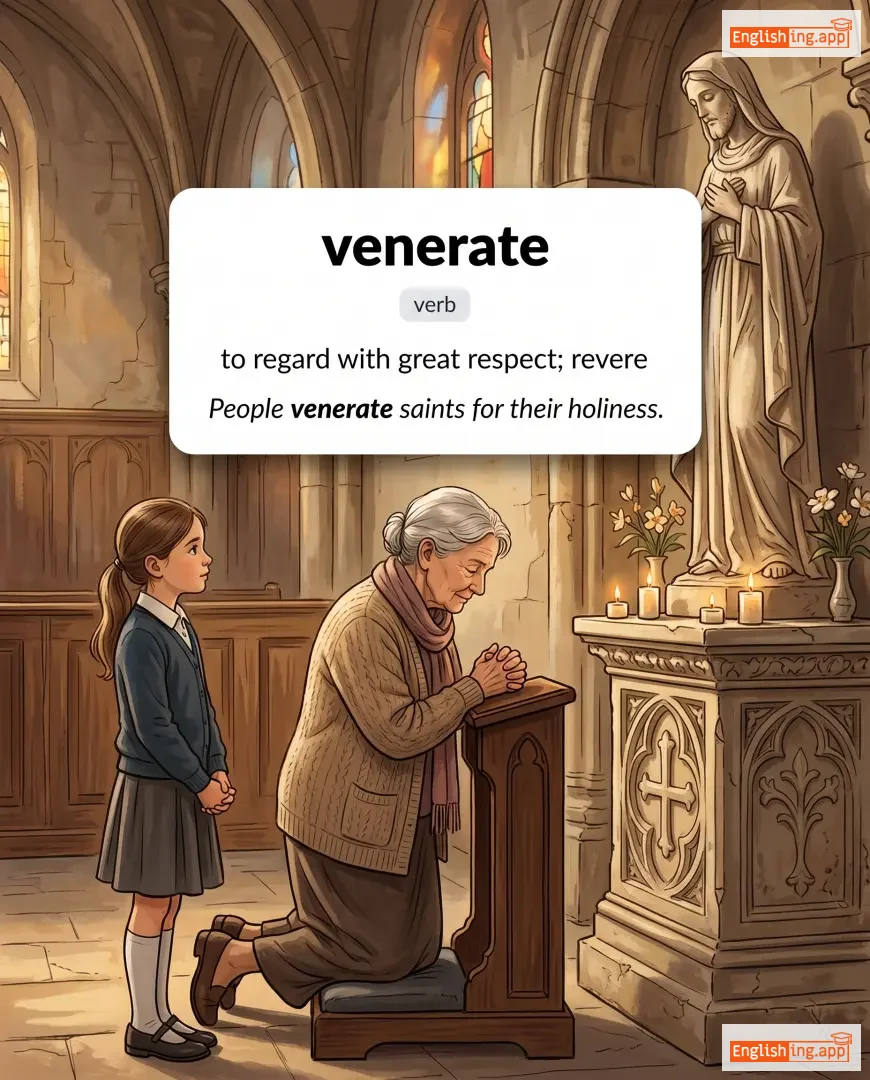
venerate definition card — visual illustration of the meaning
verb C1
/ˈvɛnəˌreɪt/
敬う (uyamau)

to regard with great respect; revere

"People venerate saints for their holiness."

"人々はその聖性のために聖人を敬う。" (Hitobito wa sono seisei no tame ni seijin o uyamau.)
adjective C1
/ˈvɛnəˌreɪtɪd/
尊敬される (sonkei sareru)

respected and admired deeply

"The venerated professor was honored with an award."

"その尊敬される教授は賞を授与されました。" (Sono sonkei sareru kyōju wa shō o juyo saremashita.)
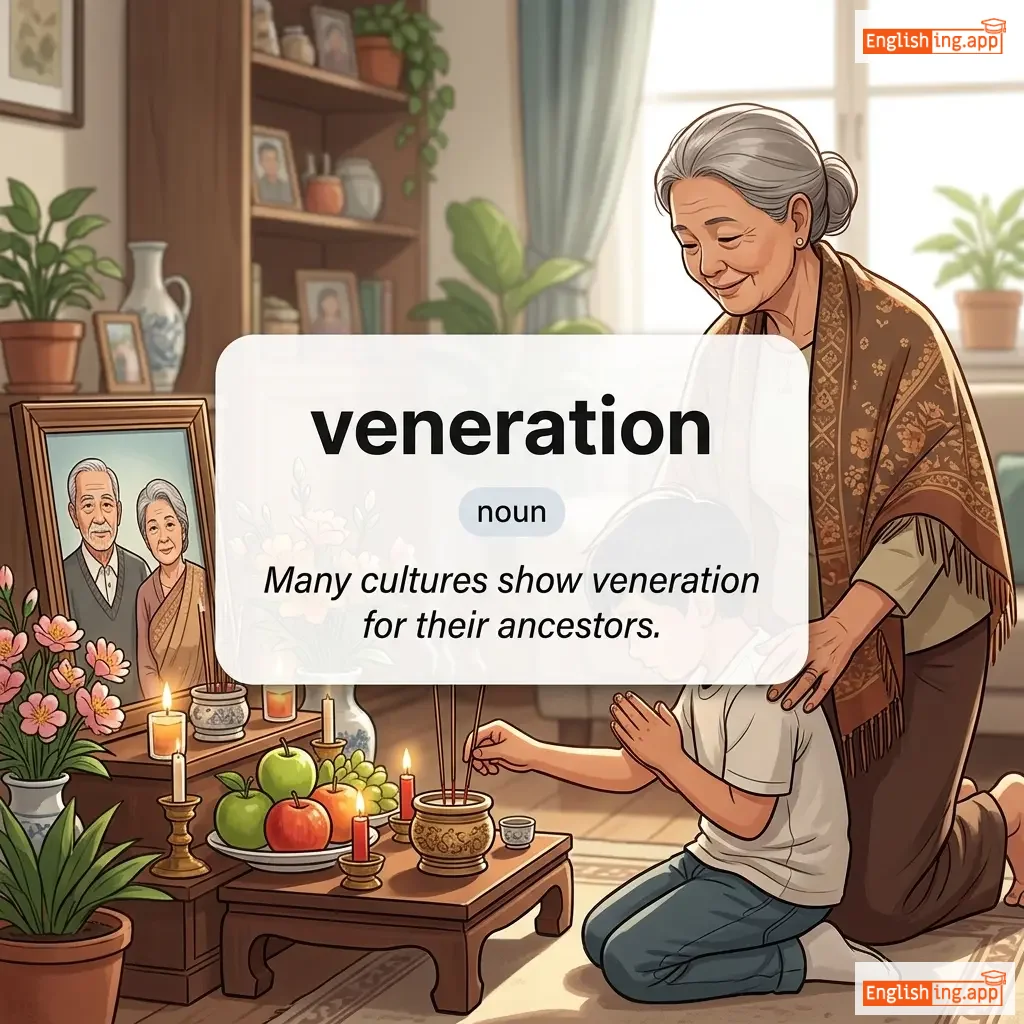
veneration definition card — visual illustration of the meaning
noun C1
ˌvɛn.əˈreɪ.ʃən
尊敬 (sonkei)

Great respect; reverence; the action of regarding with great respect or reverence.

"Many cultures show veneration for their ancestors."

"多くの文化が祖先に対して尊敬を示します。" (Ōku no bunka ga sosen ni taishite sonkei o shimeshimasu.)
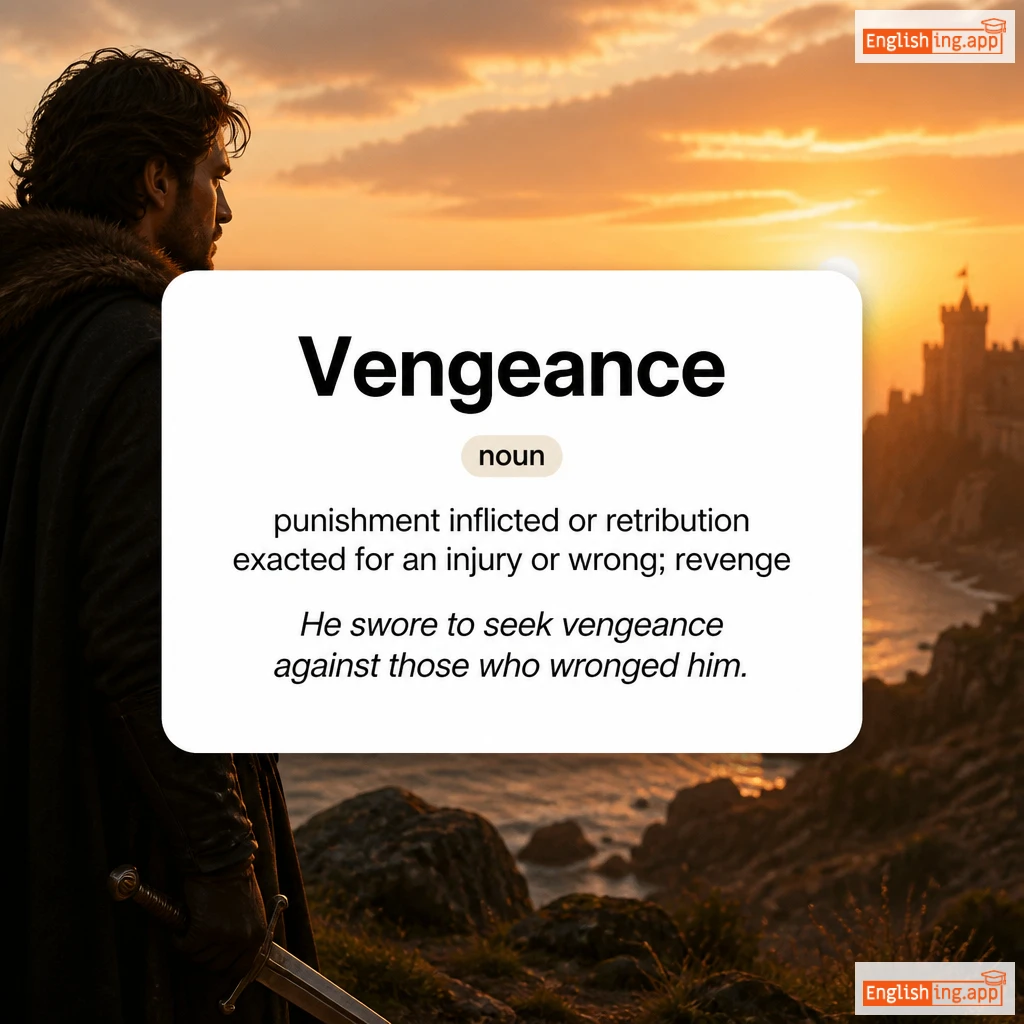
Vengeance definition card — visual illustration of the meaning
noun C1
/ˈvendʒəns/
復讐 (fukushū)

punishment inflicted or retribution exacted for an injury or wrong; revenge

"He swore to seek vengeance against those who wronged him."

"彼は自分を傷つけた者に復讐すると誓った。" (Kare wa jibun o kizutsuketa mono ni fukushū suru to chikatta.)
adjective C1
/ˈvendʒ.fəl/
復讐心の強い (fukushūshin no tsuyoi)

seeking to harm someone in return for a perceived injury; vindictive

"She felt vengeful after her friend betrayed her trust."

"彼女は友達に裏切られた後、復讐心を感じた。" (Kanojo wa tomodachi ni uragirarareta ato, fukushūshin o kanjita.)
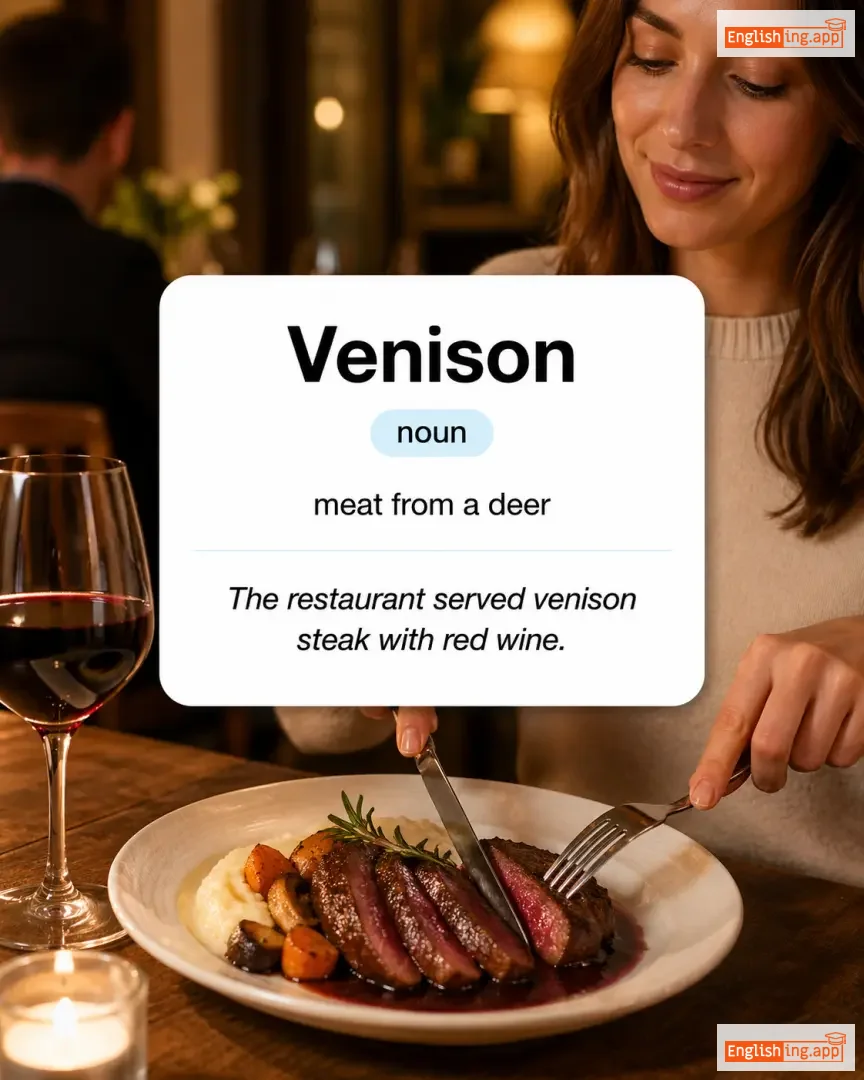
Venison definition card — visual illustration of the meaning
noun C1
/ˈvɛnɪsən/
鹿肉 (shikaniku)

meat from a deer

"The restaurant served venison steak with red wine."

"レストランは赤ワインと一緒に鹿肉のステーキを出しました。" (Resutoran wa akawain to issho ni shikaniku no sutēki o dashimashita.)
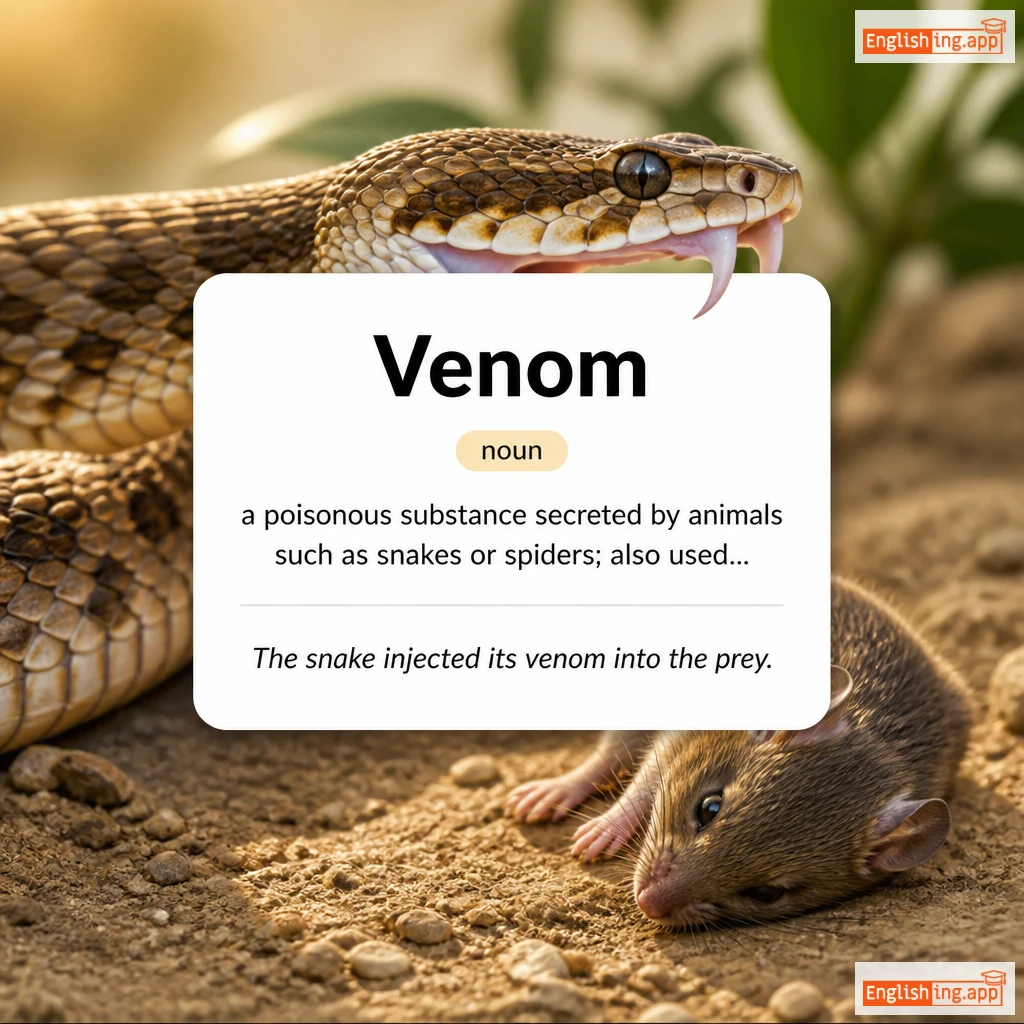
Venom definition card — visual illustration of the meaning
noun C1
/ˈvɛnəm/
毒液 (doku-eki)

a poisonous substance secreted by animals such as snakes or spiders; also used to describe intense ill will or malice

"The snake injected its venom into the prey."

"ヘビは獲物に毒液を注入した。" (Hebi wa emono ni doku-eki o chuunyuu shita.)
adjective C1
/ˈven.ə.məs/
毒性のある; 悪意のある; (dokusei no aru; akui no aru)

secreting venom; full of malice or spite; extremely hostile

"The venomous snake struck quickly at its prey."

"毒ヘビはすばやく獲物を攻撃した。" (Doku hebi wa subayaku emono wo kōgeki shita.)
adjective C1
/ˈviːnəs/
静脈の (jōmyaku no)

relating to the veins that carry blood to the heart

"The doctor examined the patient’s venous circulation."

"医者は患者の静脈循環を検査しました。" (Isha wa kanja no jōmyaku junkan o kensa shimashita.)
veracity definition card — visual illustration of the meaning
noun C1
/vəˈræsəti/
真実性 (shinjitsusei)

Conformity to truth or fact; accuracy or truthfulness.

"The lawyer questioned the veracity of the witness’s testimony."

"弁護士は証人の証言の真実性を疑った。" (bengoshi wa shōnin no shōgen no shinjitsusei o utagatta.)
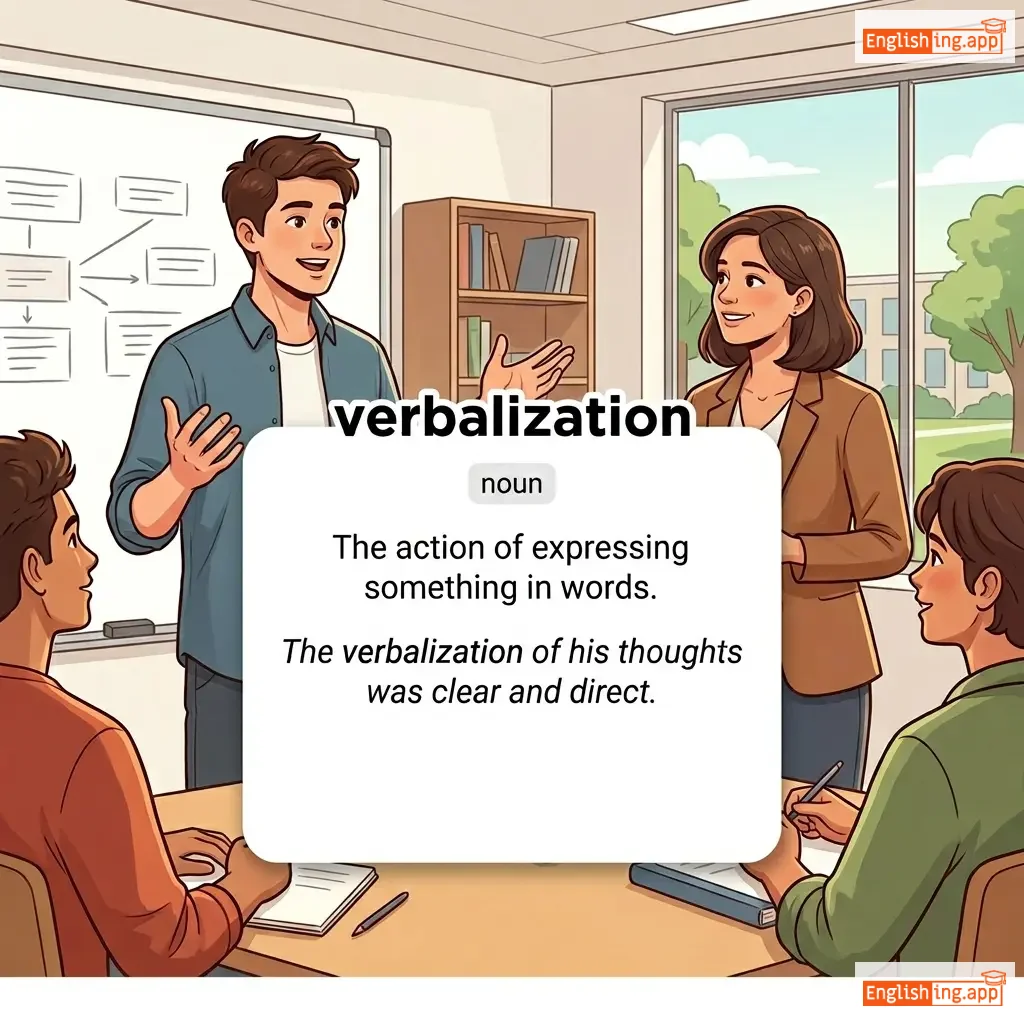
verbalization definition card — visual illustration of the meaning
noun C1
/ˌvɜːbəlɪˈzeɪʃən/
言語化 (gengoka)

The action of expressing something in words.

"The verbalization of his thoughts was clear and direct."

"彼の考えを言語化することは明確で直接的でした。" (Kare no kangae o gengoka suru koto wa meikaku de chokusetsuteki deshita.)
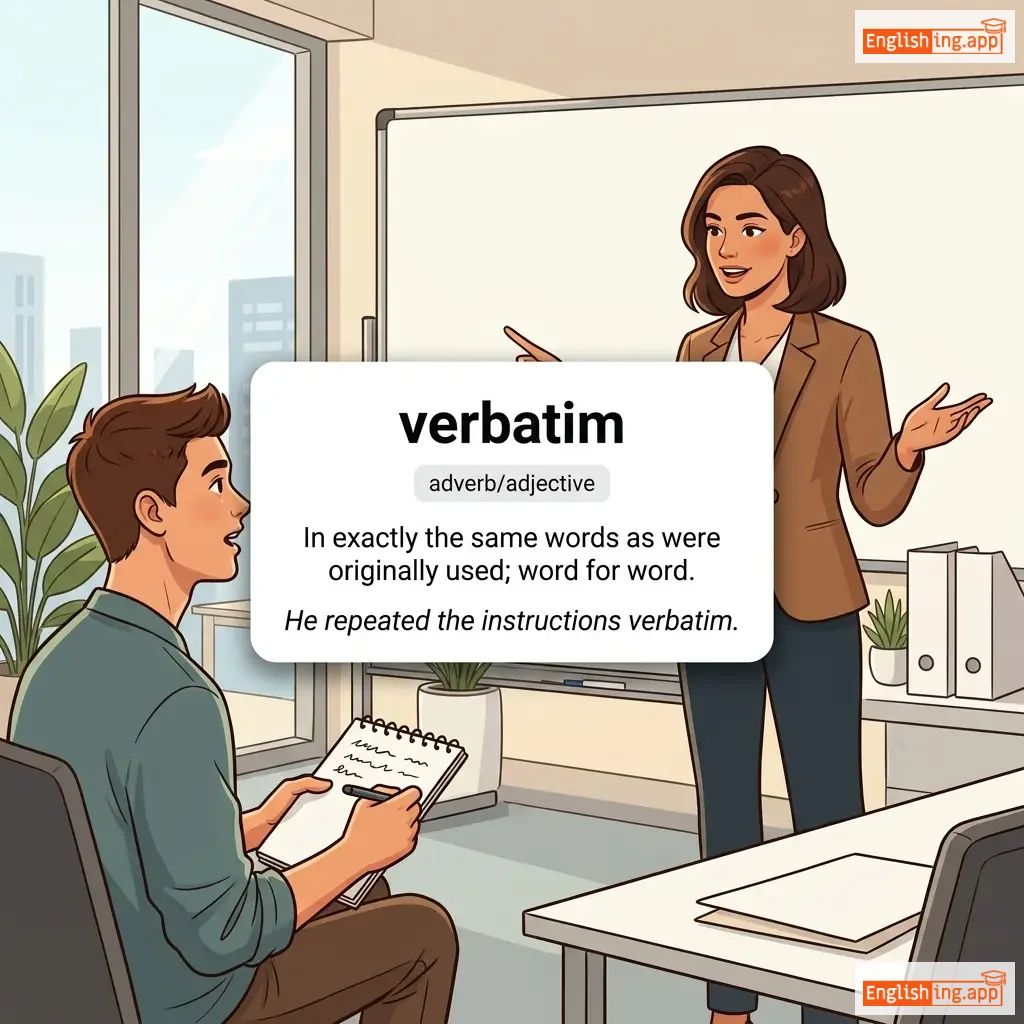
verbatim definition card — visual illustration of the meaning
adverb/adjective C1
/vərˈbeɪtɪm/
逐語的に (chikugoteki ni)

In exactly the same words as were originally used; word for word.

"He repeated the instructions verbatim."

"彼は指示を逐語的に繰り返しました。" (Kare wa shiji o chikugoteki ni kurikaeshimashita.)
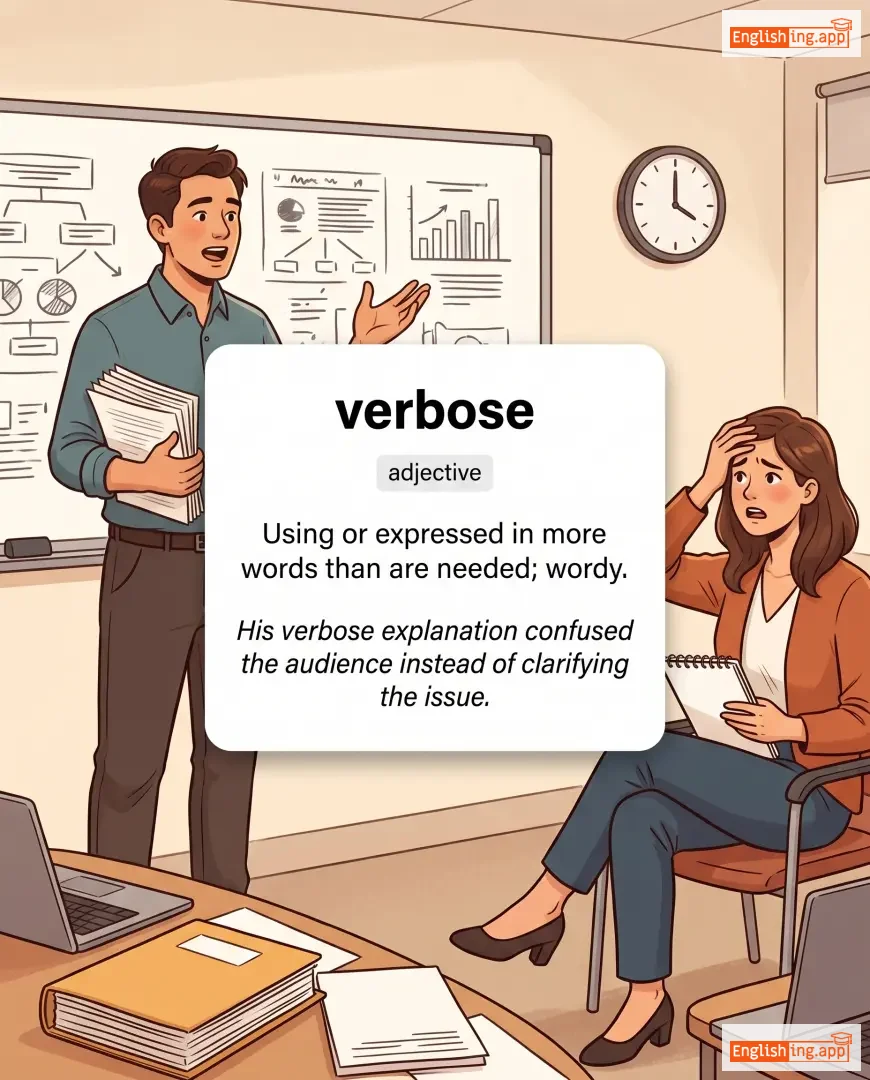
verbose definition card — visual illustration of the meaning
adjective C1
/vɜːrˈboʊs/
冗長 (jōchō)

Using or expressed in more words than are needed; wordy.

"His verbose explanation confused the audience instead of clarifying the issue."

"彼の冗長な説明は、問題を明確にするどころか、聴衆を混乱させました。" (Kare no jōchō na setsumei wa, mondai o meikaku ni suru dokoro ka, chōshū o konran sasemashita.)
adjective C1
/ˈvɛrɪtəbl/
真実の (shinjitsu no)

used to emphasize that something is genuine or true

"The house was a veritable palace compared to ours."

"その家は私たちの家と比べて、まさに本物の宮殿でした。" (Sono ie wa watashitachi no ie to kurabete, masa ni honmono no kyūden deshita.)
vermin definition card — visual illustration of the meaning
noun C1
/ˈvɜːrmɪn/
有害動物 (yūgai dōbutsu)

small animals or insects that are harmful or destructive, such as rats, lice, or fleas

"The old warehouse was overrun with vermin."

"古い倉庫は有害動物であふれていました。" (Furui sōko wa yūgai dōbutsu de afurete imashita.)
noun C1
/vərˈnækjələr/
方言 (hougen)

the language or dialect spoken by ordinary people in a particular region

"He gave his speech in the local vernacular so everyone could understand."

"彼は地元の方言でスピーチをしたので、誰でも理解できました。" (Kare wa jimoto no hougen de supiichi o shita node, dare demo rikai dekimashita.)
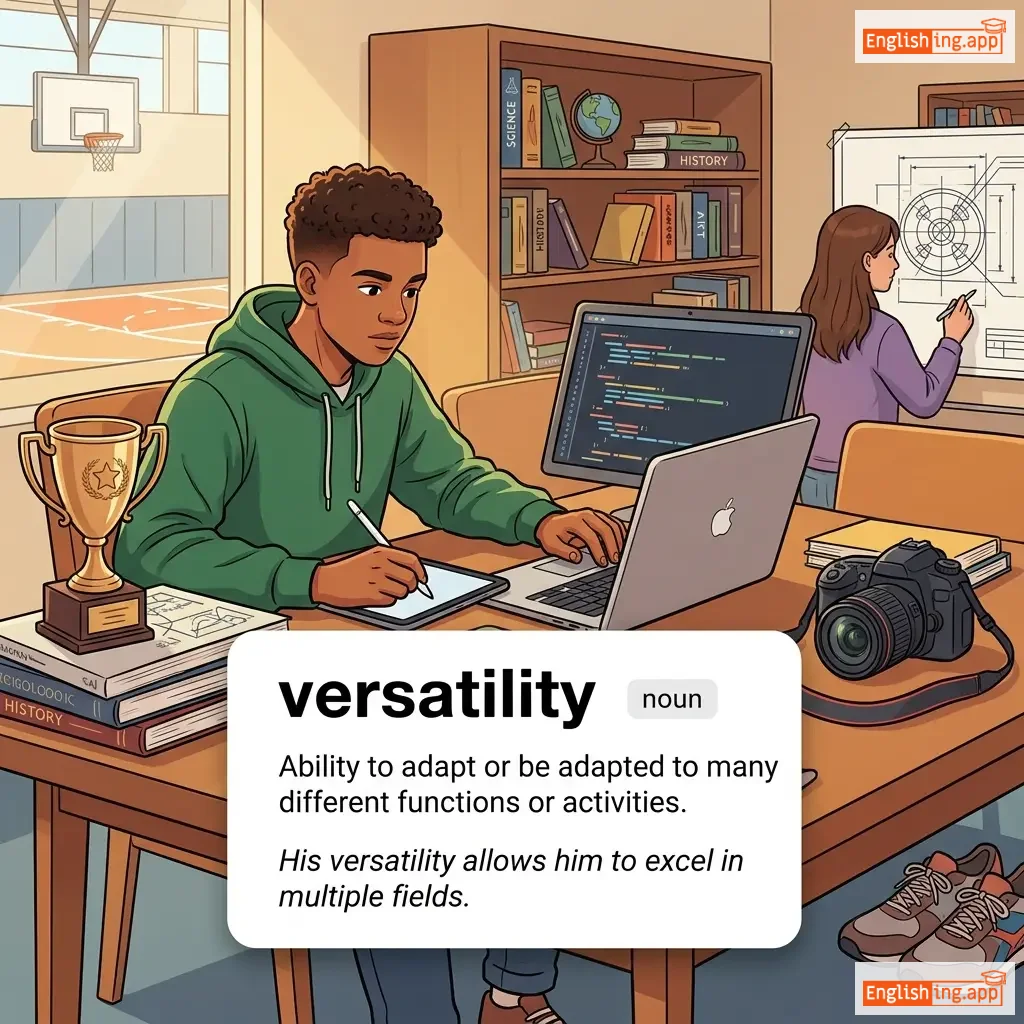
versatility definition card — visual illustration of the meaning
noun C1
ˌvɜː.səˈtɪl.ə.ti
多才 (tasai)

Ability to adapt or be adapted to many different functions or activities.

"His versatility allows him to excel in multiple fields."

"彼の多才さは、彼がさまざまな分野で優れた成果を上げることを可能にします。" (Kare no tasai-sa wa, kare ga samazama na bun'ya de sugureta seika o ageru koto o kanō ni shimasu.)
noun C1
/ˈvɜːrtɛks/
頂点 (chouten)

The highest point; the top or the apex.

"The climber reached the vertex of the mountain."

"登山者は山の頂点に達しました。" (Tōzan-sha wa yama no chōten ni tasshimashita.)
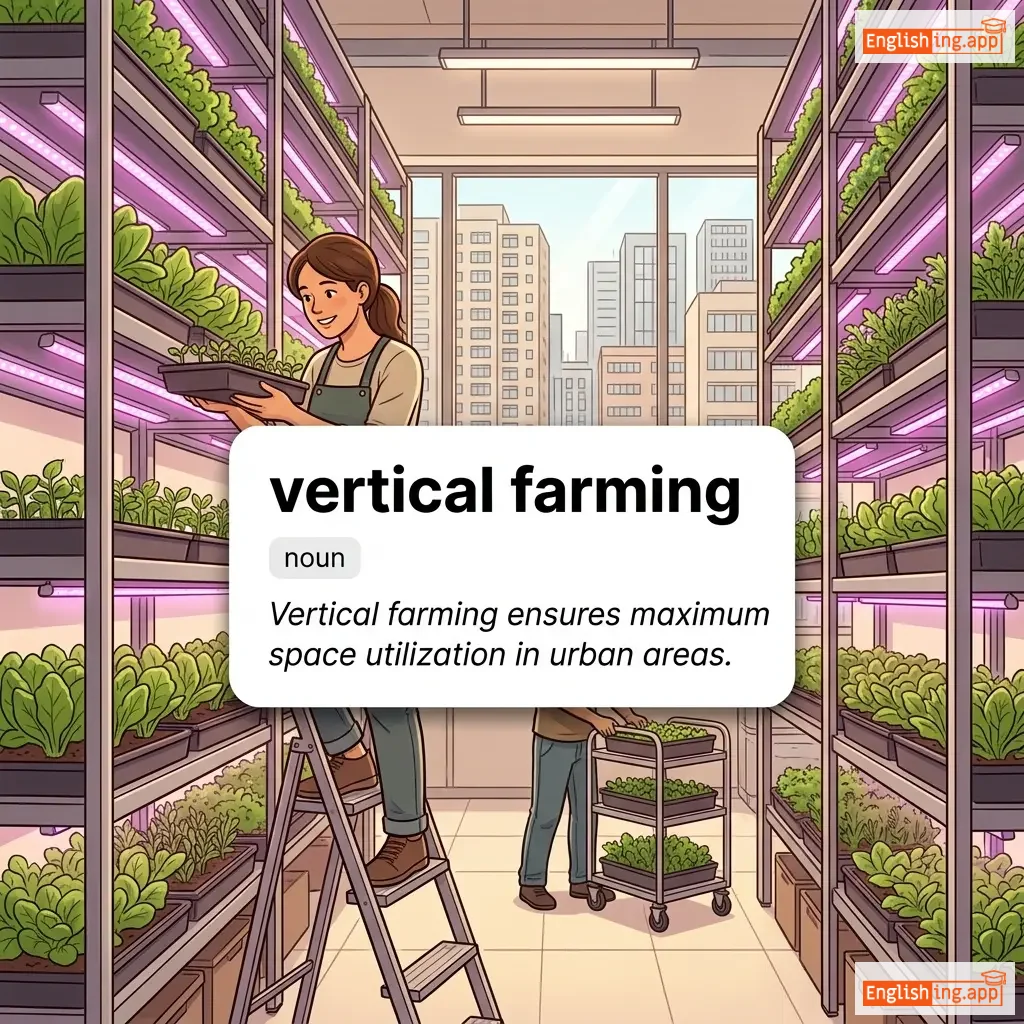
vertical farming definition card — visual illustration of the meaning
noun C1
/ˈvɜː.tɪ.kəl ˈfɑː.mɪŋ/
垂直農業 (suichoku nōgyō)

The practice of growing crops in vertically stacked layers, often incorporating controlled-environment agriculture.

"Vertical farming ensures maximum space utilization in urban areas."

"垂直農業は都市部で最大のスペース活用を確保します。" (Suichoku nōgyō wa toshibu de saidai no supēsu katsuyō o kakuho shimasu)
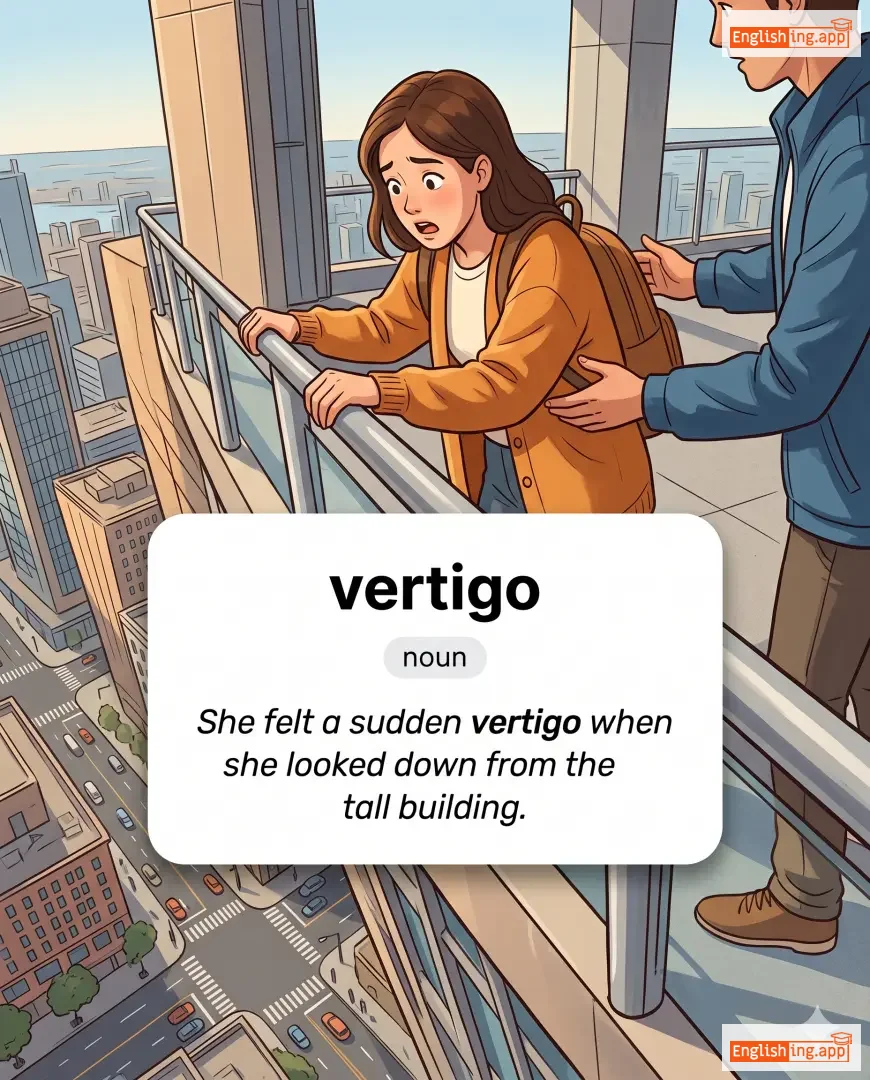
vertigo definition card — visual illustration of the meaning
noun C1
/ˈvɜːrtɪˌɡoʊ/
幸せ (shiawase)

A sensation of spinning or dizziness, often caused by problems in the inner ear or brain.

"She felt a sudden vertigo when she looked down from the tall building."

"彼女は賞を受け取ったとき、自分の幸せを隠すことができませんでした。" (Kanojo wa shō o uketotta toki, jibun no shiawase o kakusu koto ga dekimasen deshita.)
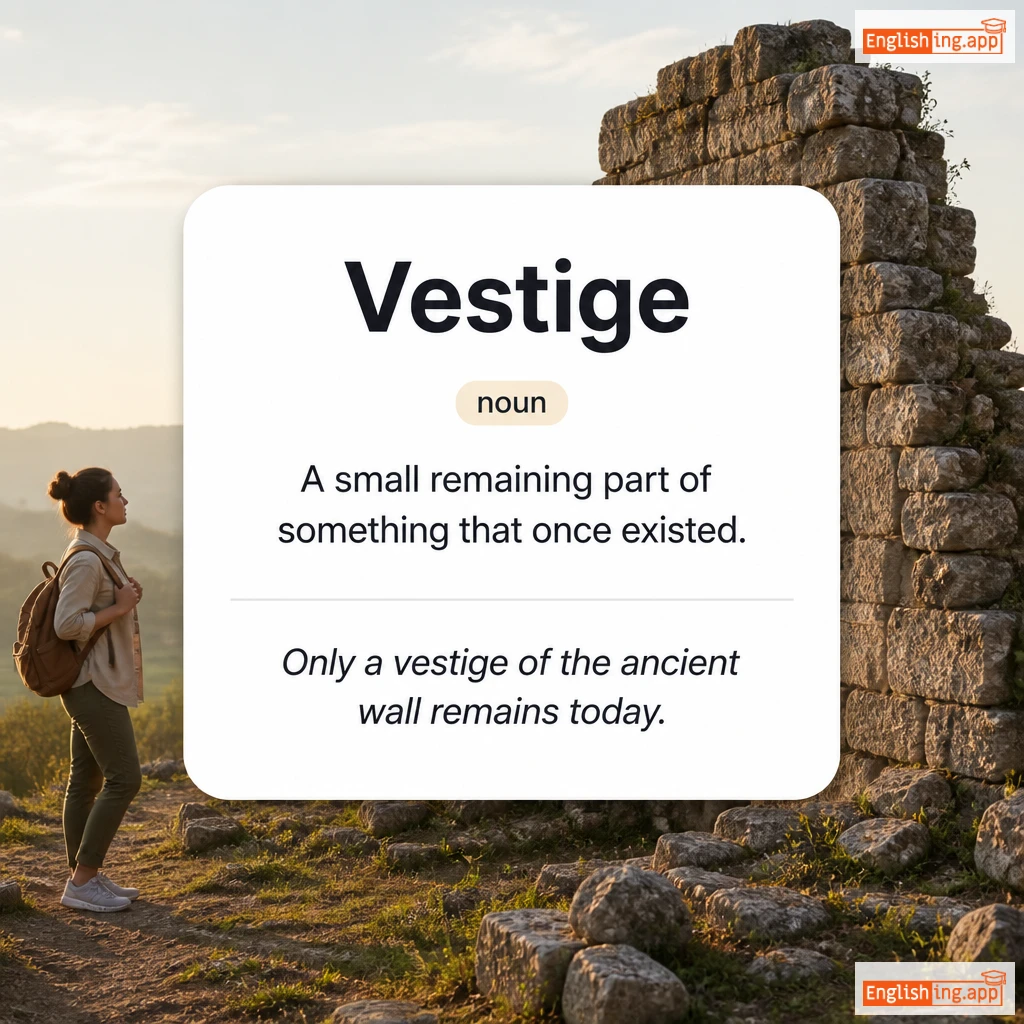
Vestige definition card — visual illustration of the meaning
noun C1
/ˈvɛstɪdʒ/
遺跡 (iseki)

A small remaining part of something that once existed.

"Only a vestige of the ancient wall remains today."

"今日、古代の壁の一部遺跡だけが残っています。" (Kyou, kodai no kabe no ichibu iseki dake ga nokotteimasu.)
verb C1
/ˈviːtoʊ/
拒否する (kyohi suru)

to reject or forbid a decision, proposal, or law

"The president decided to veto the new bill."

"大統領は新しい法案に対してヴェトーを決定しました。" (Daitōryō wa atarashī hōan ni taishite vetō o kettei shimashita.)
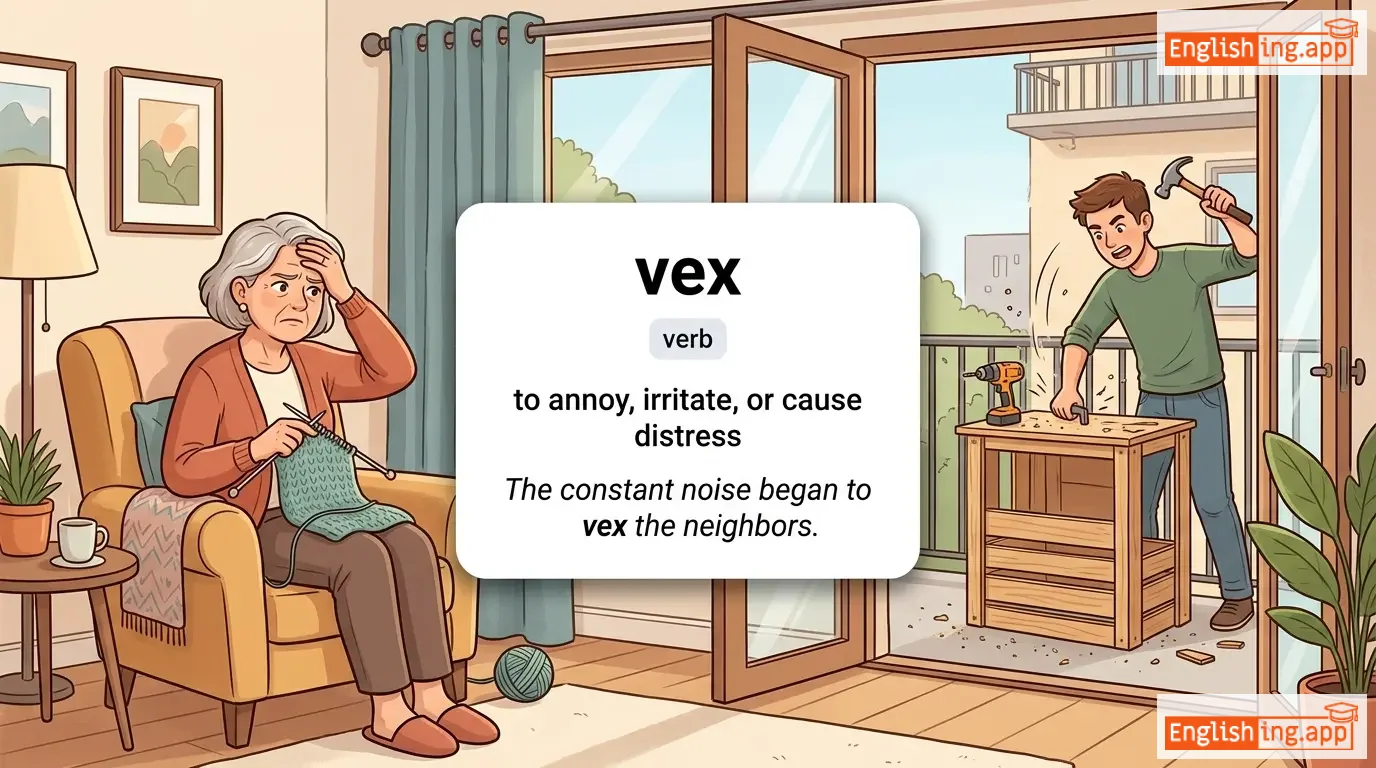
vex definition card — visual illustration of the meaning
verb C1
/vɛks/
悩ませる (nayamaseru)

to annoy, irritate, or cause distress

"The constant noise began to vex the neighbors."

"絶え間ない騒音が隣人を悩ませ始めた。" (Taemai na souon ga rinjin wo nayamasete hajimeta.)
viability definition card — visual illustration of the meaning
noun C1
/ˌvaɪ.əˈbɪl.ə.ti/
実行可能性 (jikkoukanousei)

Ability to work successfully.

"The viability of a business depends on financial stability."

"ビジネスの実行可能性は、財務の安定性に依存します。" (Bijinesu no jikkoukanousei wa, zaimu no antei ni izon shimasu.)
verb C1
/ˈvɪktɪmaɪz/
被害者にする (higaisha ni suru)

To make someone a victim, often by treating them unfairly or cruelly.

"The corrupt officials victimized the poor villagers."

"腐敗した役人たちは貧しい村人を犠牲にした。" (Fuhai shita yakunin-tachi wa mazushii murabito o gisei ni shita.)
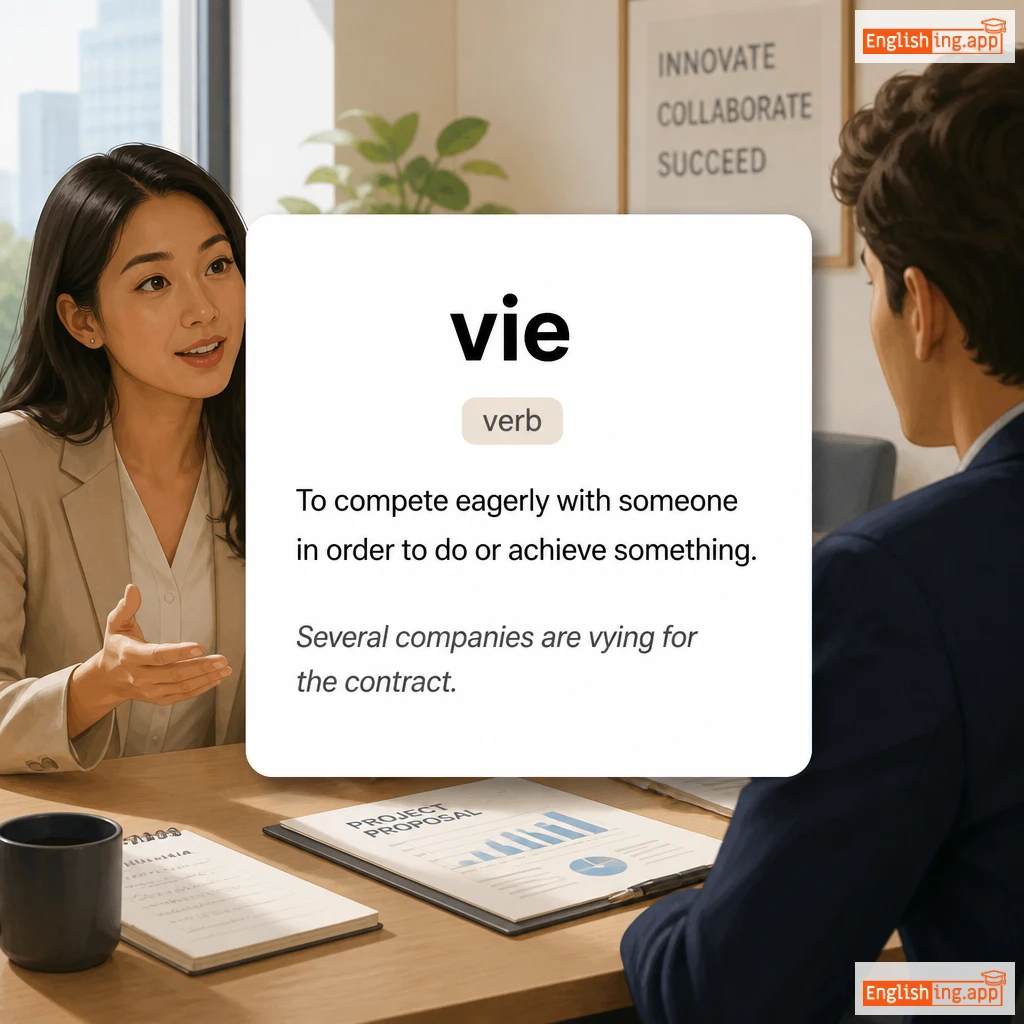
vie definition card — visual illustration of the meaning
verb C1
/vaɪ/
争う (arasou)

To compete eagerly with someone in order to do or achieve something.

"Several companies are vying for the contract."

"いくつかの企業が契約を争っています。" (Ikutsuka no kigyō ga keiyaku o arasotteimasu.)
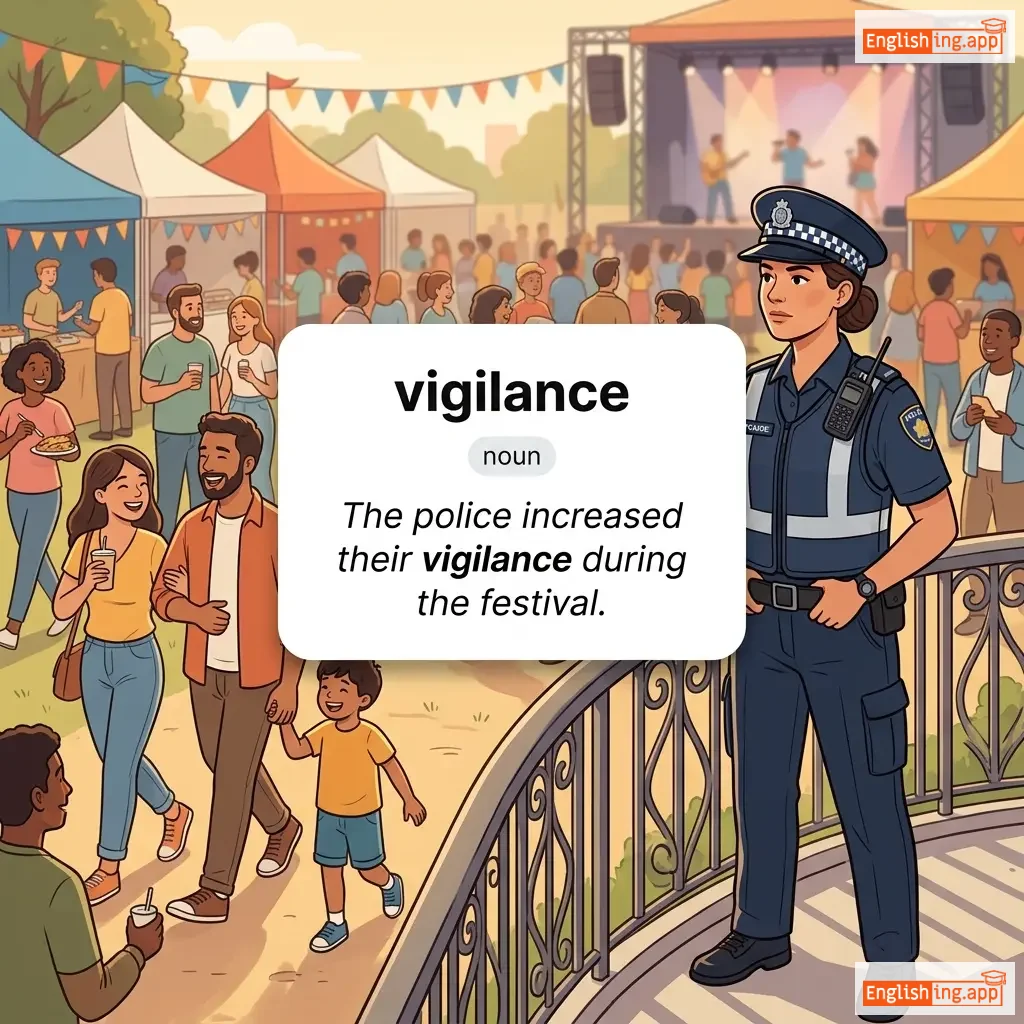
vigilance definition card — visual illustration of the meaning
noun C1
/ˈvɪdʒɪləns/
警戒 (keikai)

The action or state of keeping careful watch for possible danger or difficulties.

"The police increased their vigilance during the festival."

"警察は祭りの間、警戒を強化した。" (Keisatsu wa matsuri no aida, keikai o kyouka shita.)
vigilant definition card — visual illustration of the meaning
adjective C1
/ˈvɪdʒɪlənt/
警戒 (keikai)

Keeping careful watch for possible danger or difficulties.

"Parents must remain vigilant about their children's online activity."

"親は子供たちのオンライン活動について警戒し続けるべきです。" (Oya wa kodomotachi no onrain katsudō ni tsuite keikai shitsuzukeru beki desu.)
noun C1
/vɪnˈjɛt/
短編小説 (tanpen shōsetsu)

A short, descriptive piece of writing or a brief scene.

"The author included a poignant vignette in the introduction of the book."

"著者は本の序文に感動的な短編小説を含めた。" (Chosha wa hon no jobun ni kandō-tekina tanpen shōsetsu o fukumeta.)
noun C1
/ˈvɪɡər/
活力 (katsuryoku)

Physical strength, energy, or enthusiasm.

"She tackled the project with great vigor and determination."

"彼女は大きな活力と決意を持ってそのプロジェクトに取り組んだ。" (Kanojo wa ōkina katsuryoku to ketsui o motte sono purojekuto ni torikunda.)
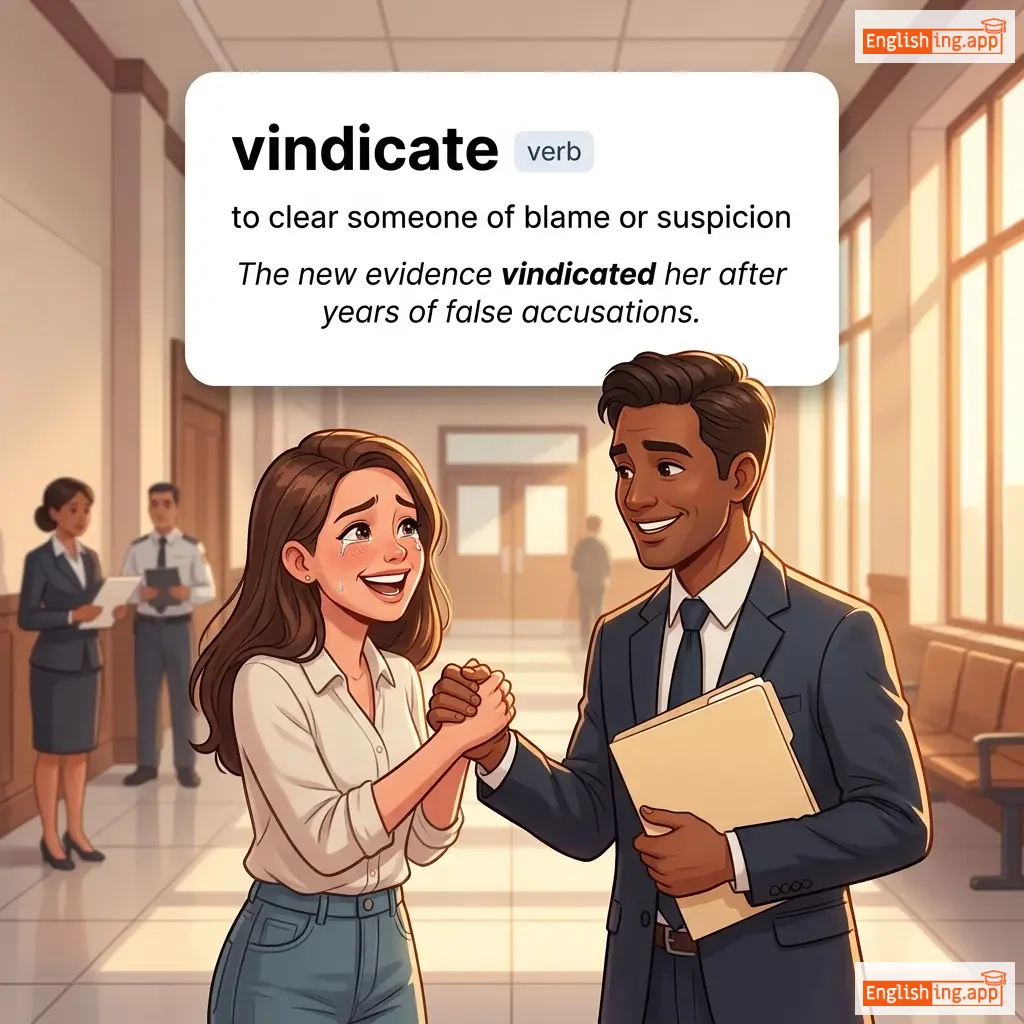
vindicate definition card — visual illustration of the meaning
verb C1
/ˈvɪndɪkeɪt/

to clear someone of blame or suspicion

"The new evidence vindicated her after years of false accusations."

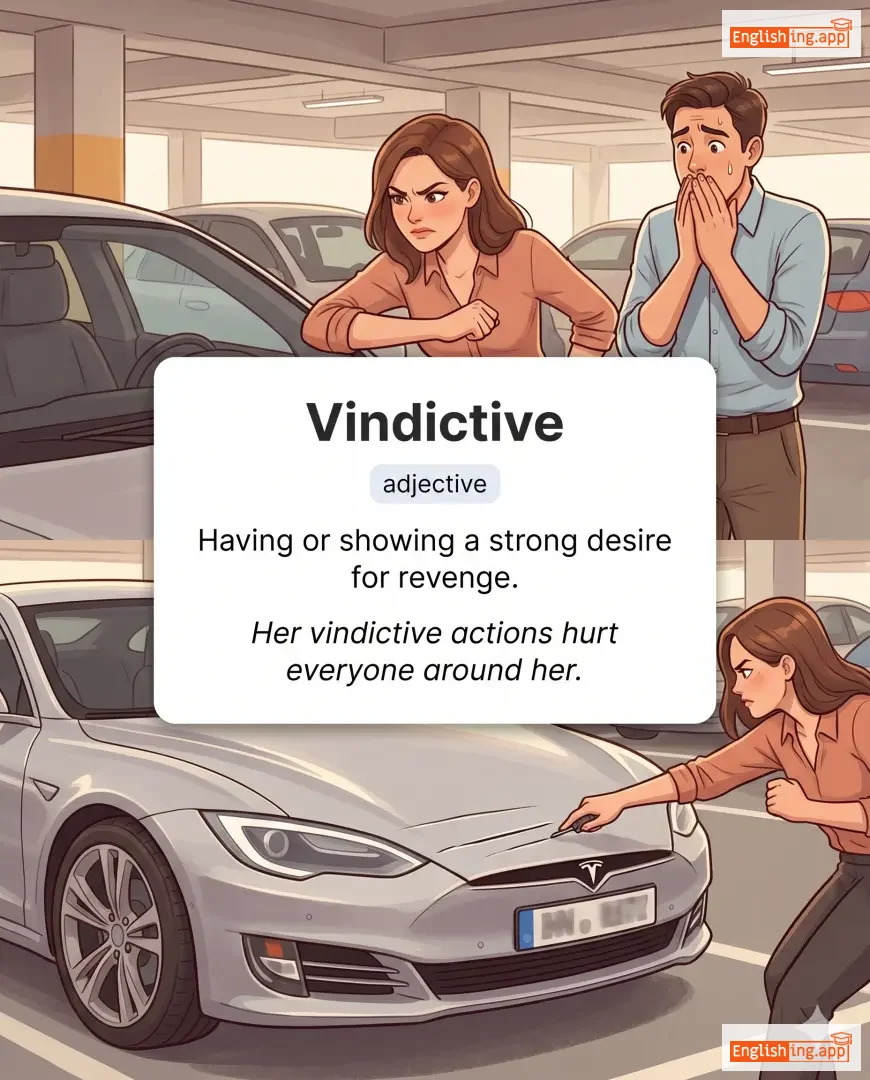
Vindictive definition card — visual illustration of the meaning
adjective C1
/vɪnˈdɪktɪv/
復讐心の強い (fukushūshin no tsuyoi)

Having or showing a strong desire for revenge.

"Her vindictive actions hurt everyone around her."

"彼女の復讐心の強い行動は、周りのすべての人々を傷つけた。" (Kanojo no fukushūshin no tsuyoi kōdō wa, mawari no subete no hitobito o kizutsuketa.)
noun C1
/viˈoʊlə/ or /ˈvaɪələ/
ヴィオラ (viola)

A stringed instrument slightly larger than a violin, with a deeper and mellower tone.

"She chose to play the viola in the school orchestra."

"彼女は学校のオーケストラでヴィオラを演奏することを選びました。" (Kanojo wa gakkou no ookesutora de viola o ensou suru koto o erabimashita.)
noun C1
/ˈvaɪəˌleɪtər/
違反者 (ihan-sha)

A person who breaks or disregards a law, rule, or agreement.

"The police caught the traffic violator at the intersection."

"警察は交差点で交通違反者を捕まえました。" (Keisatsu wa kōsaten de kōtsū ihan-sha o tsukamaemashita.)
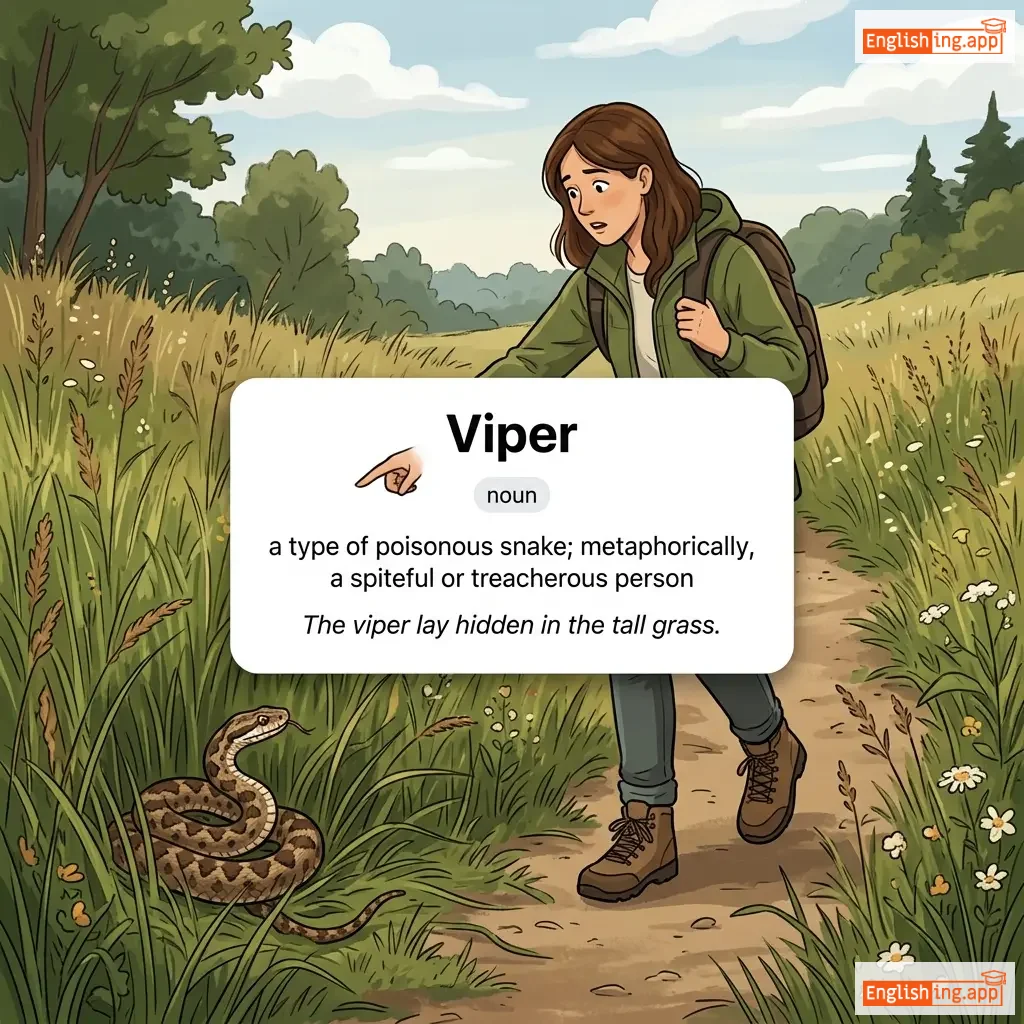
Viper definition card — visual illustration of the meaning
noun C1
/ˈvaɪpər/
毒蛇 (dokuhebi)

a type of poisonous snake; metaphorically, a spiteful or treacherous person

"The viper lay hidden in the tall grass."

"そのヴァイパーは高い草の中に隠れていた。" (Sono vaipā wa takai kusa no naka ni kakurete ita.)
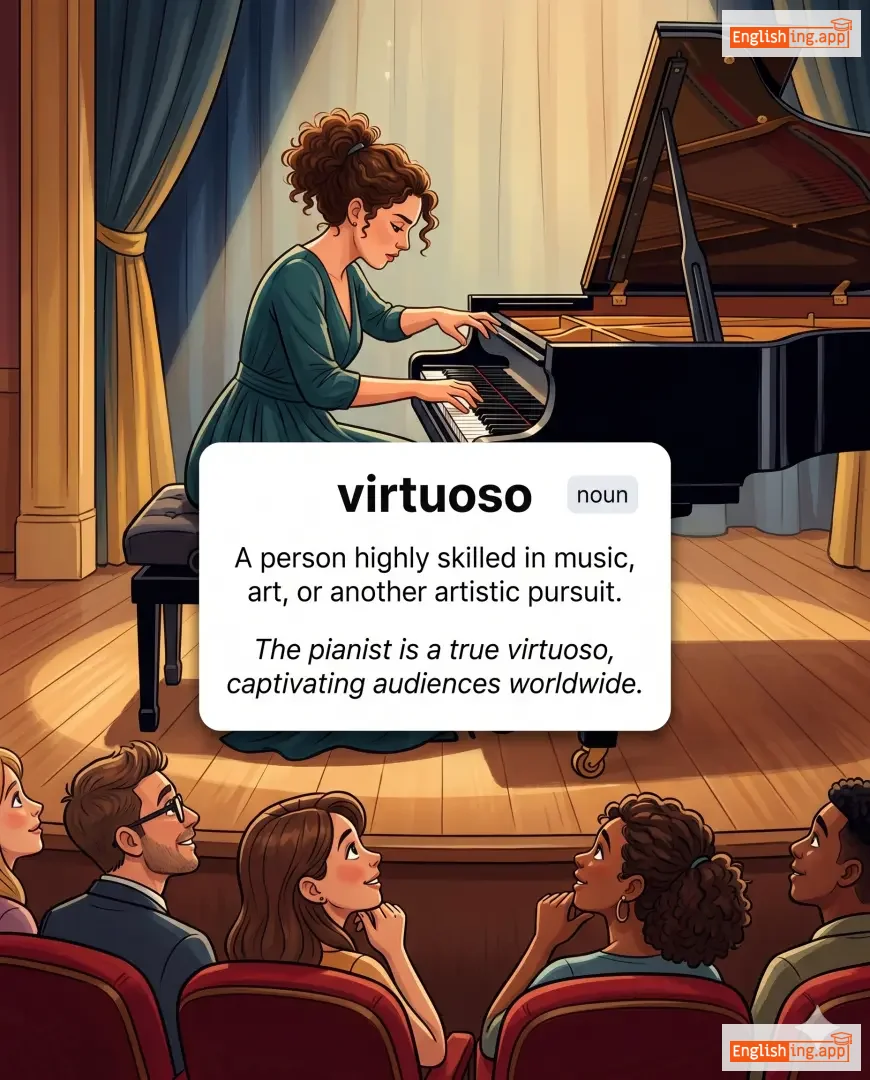
virtuoso definition card — visual illustration of the meaning
noun C1
/ˌvɜːrtʃuˈoʊsoʊ/
名人 (meijin)

A person highly skilled in music, art, or another artistic pursuit.

"The pianist is a true virtuoso, captivating audiences worldwide."

"そのピアニストは真の名人であり、世界中の観客を魅了しています。" (Sono pianisuto wa shin no meijin de ari, sekaijū no kankyaku o miryō shiteimasu.)
adjective C1
/ˈvɪrjʊlənt/
非常に有害 (hijou ni yuugai)

Extremely severe or harmful in its effects.

"The virulent disease spread rapidly across the region."

"そのウイルス性の病気は地域全体に急速に広がりました。" (Sono uirusu-sei no byouki wa chiiki zentai ni kyūsoku ni hirogarimashita.)
viscous definition card — visual illustration of the meaning
adjective C1
/ˈvɪskəs/
粘性の (nensei no)

Having a thick, sticky consistency between solid and liquid.

"Honey is a viscous liquid that flows slowly."

"蜂蜜は遅く流れる粘性の液体です。" (Hachimitsu wa osoku nagareru nensei no ekitai desu.)
adjective C1
/ˈvɪʒəneri/
ビジョナリー (bijonarii)

Thinking about or planning the future with imagination and wisdom.

"She is considered a visionary leader in technology."

"彼女は技術分野でのビジョナリーなリーダーと見なされています。" (Kanojo wa gijutsu bunya de no bijonarii na rīdā to minasa reteimasu.)
noun C1
/ˈvɪstə/
景色 (keshiki)

A pleasing view, especially one seen through a long, narrow opening.

"From the mountain top, we admired the breathtaking vista of the valley below."

"山の頂上から、私たちは谷底の息を呑むような景色を堪能しました。" (Yama no chōjō kara, watashitachi wa tani soko no iki o nomu yō na keshiki o tannō shimashita.)
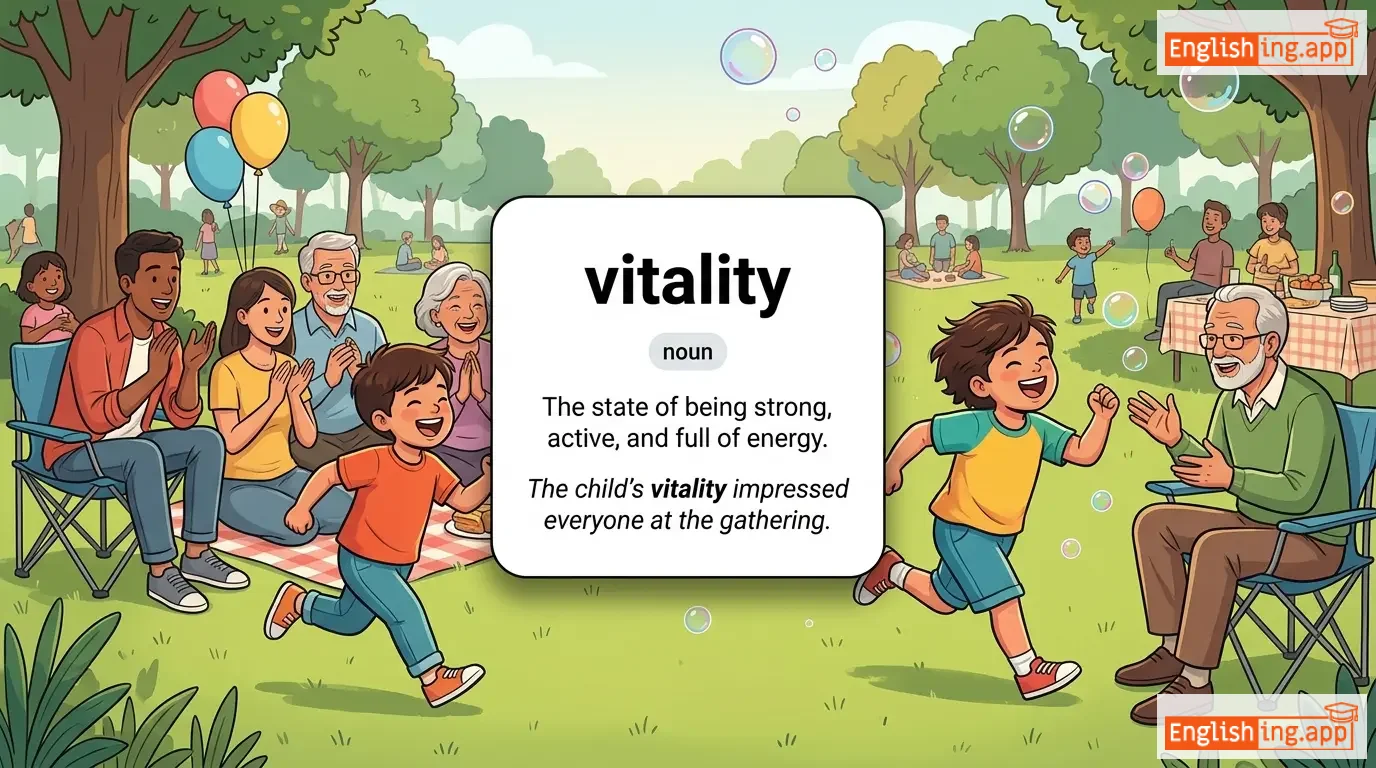
vitality definition card — visual illustration of the meaning
noun C1
/vaɪˈtæləti/
活力 (katsuryoku)

The state of being strong, active, and full of energy.

"The child’s vitality impressed everyone at the gathering."

"その子供の活力は集まりで皆を感動させました。" (Sono kodomo no katsuryoku wa atsumari de mina o kandō sasemashita.)
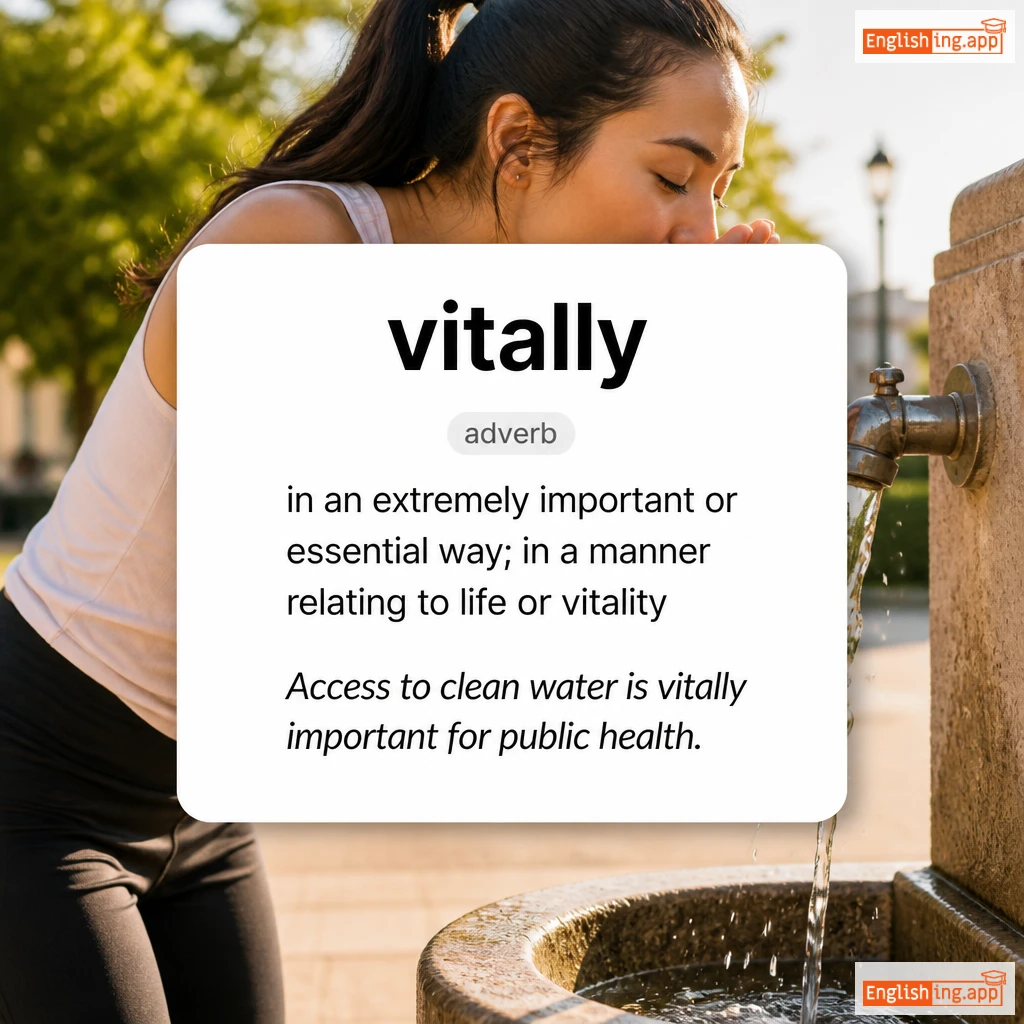
vitally definition card — visual illustration of the meaning
adverb C1
/ˈvaɪtəli/
極めて重要に (kiwamete juuyo ni)

in an extremely important or essential way; in a manner relating to life or vitality

"Access to clean water is vitally important for public health."

"清潔な水へのアクセスは公衆衛生にとって極めて重要です。" (Seiketsu na mizu e no akusesu wa koshu eisei ni totte kiwamete juuyo desu)
adjective C1
/vɪˈveɪʃəs/
活発 (kappatsu)

Attractively lively and animated.

"She was admired for her vivacious personality."

"彼女はその活発な性格で賞賛された。" (Kanojo wa sono kappatsu na seikaku de shōsan sareta.)
noun C1
/vɪˈvæsɪti/
活力 (katsuryoku)

The quality of being lively, animated, and full of energy.

"The child’s vivacity brightened the entire room."

"子供の活力は部屋全体を明るくしました。" (Kodomo no katsuryoku wa heya zentai o akaruku shimashita.)
vocalization definition card — visual illustration of the meaning
noun C1
/ˌvəʊ.kəl.aɪˈzeɪ.ʃən/
発声、言葉での感情や考えの表現 (hassē, kotoba de no kanjō ya kangae no hyōgen)

The action of producing sounds with the voice; the expression of thoughts or feelings in spoken words.

"The vocalization of the singer captivated the audience."

"歌手のボカライゼーションは観客を魅了した。" (Kashu no bokaraizēshon wa kankyaku wo miryō shita.)