Vocabulaires

Découvrez, apprenez et maîtrisez le vocabulaire anglais

adjective C1
/ˌtɒpsi ˈtɜːvi/
désordonné (désordonné)

in a state of confusion, disorder, or upside down

"The sudden announcement left the office in a topsy-turvy state."

"L'annonce soudaine a laissé le bureau dans un état complètement désordonné." (L'annonce soudaine a laissé le bureau dans un état complètement désordonné.)
noun/verb C1
/tɔːrˈpiːdoʊ/
torpille (torpille)

A self-propelled underwater missile; to attack or destroy something suddenly and forcefully.

"The submarine launched a torpedo at the enemy ship."

"Le sous-marin a lancé un torpille contre le navire ennemi." (Le sous-marin a lancé un torpille contre le navire ennemi.)
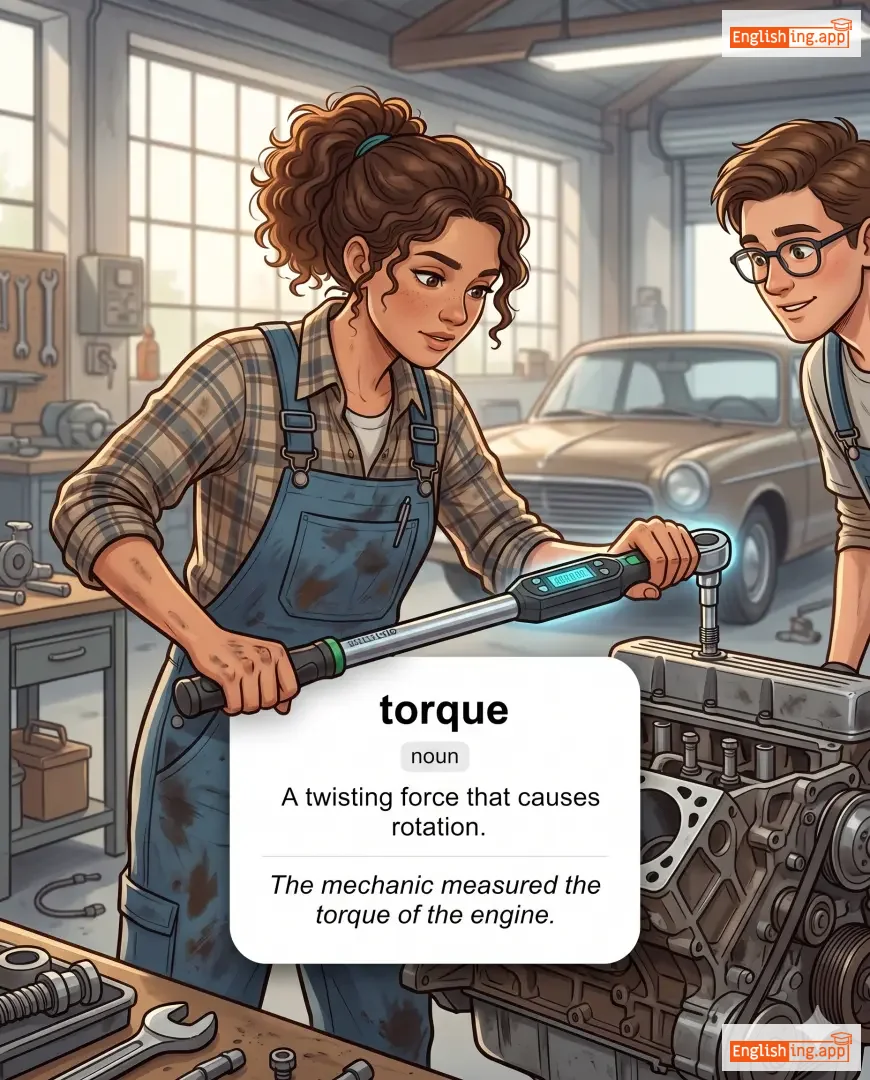
torque definition card — visual illustration of the meaning
noun C1
/tɔːrk/
couple (tork)

A twisting force that causes rotation.

"The mechanic measured the torque of the engine."

"Le mecanicien a mesure le couple du moteur." (Le mecanicien a mesure le couple du moteur)
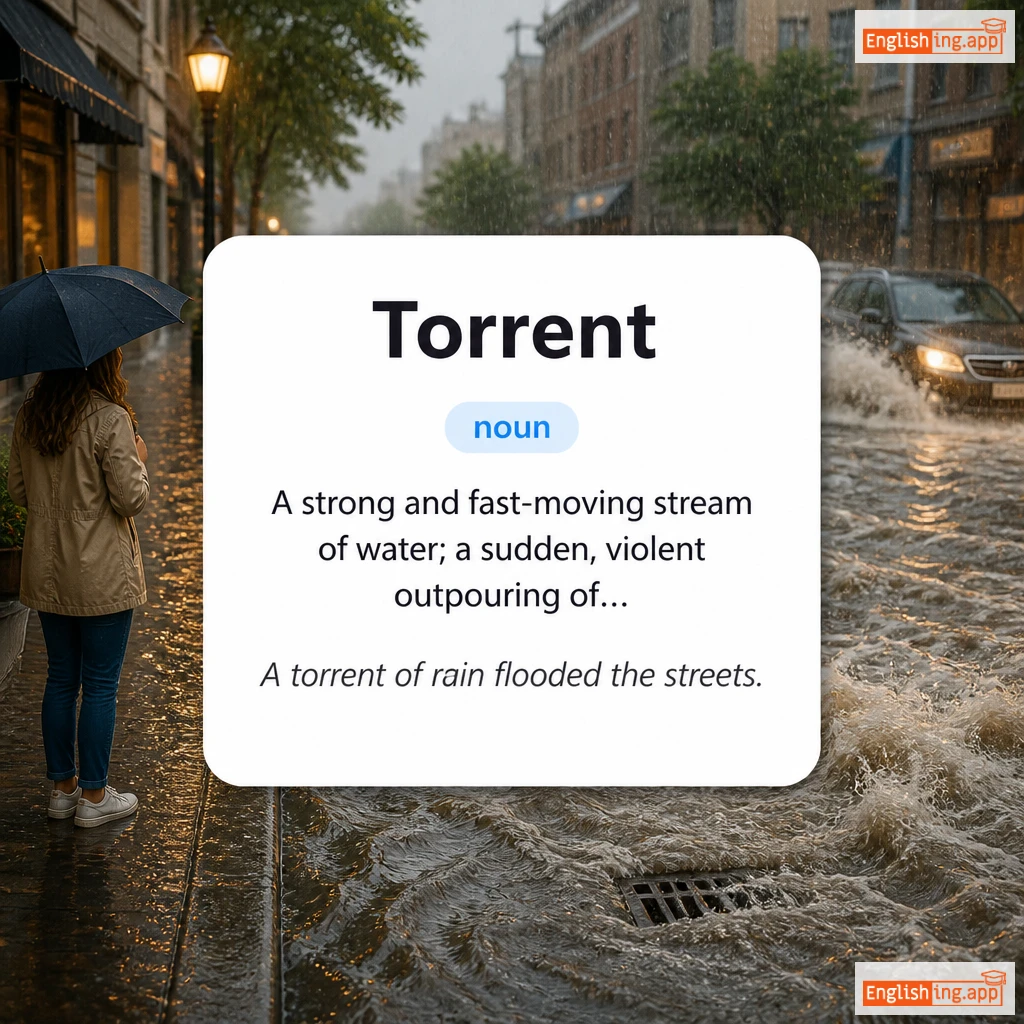
Torrent definition card — visual illustration of the meaning
noun C1
/ˈtɔːrənt/
torrent (torrent)

A strong and fast-moving stream of water; a sudden, violent outpouring of something.

"A torrent of rain flooded the streets."

"Un torrent de pluie a inondé les rues." (Un torrent de pluie a inondé les rues.)
adjective C1
/təˈrɛnʃəl/
torrentiel (torrentiel)

Relating to or resembling a torrent; very heavy and fast flowing.

"The hikers were caught in torrential rain."

"Les randonneurs ont été pris dans une pluie torrentielle." (Les randonneurs ont été pris dans une pluie torrentielle.)
adjective C1
/ˈtɒrɪd/
très chaud et sec; rempli d'émotions ou de passions fortes (tres chaud et sec; rempli d'emotions ou de passions fortes)

Very hot and dry; full of strong emotions or passion.

"The desert heat was torrid during the day."

"La chaleur du désert était torride pendant la journée." (La chaleur du désert était torride pendant la journée.)
adjective C1
/ˈtɔːrtʃuəs/
tortueux, complexe (tortueux, complexe)

Full of twists and turns; excessively complex or complicated.

"The tortuous mountain road made driving very difficult."

"La route tortueuse de montagne rendait la conduite très difficile." (La route tortueuse de montagne rendait la conduite très difficile.)
adjective C1
/ˈtɔːrtʃərəs/
tortueux (tortueux)

Extremely painful or causing great suffering; relating to or involving torture.

"The journey through the desert was long and torturous."

"Le voyage à travers le désert était long et tortueux." (Le voyage a travers le desert etait long et tortueux.)
noun C1
/ˈtoʊtəm/
symbole sacré (symbole sacre)

A natural object, animal, or symbol that is revered as a spiritual emblem by a group or tribe.

"The eagle is considered a sacred totem in many cultures."

"L'aigle est considéré comme un totem sacré dans de nombreuses cultures." (L'aigle est considere comme un totem sacre dans de nombreuses cultures.)
🚶‍♂️

totter (tôtter)

verb C1
/ˈtɑːtər/
tituber (tituber)

To move unsteadily, as if about to fall; to be on the point of collapse.

"The old man tottered across the street with a cane."

"Le vieil homme a titubé à travers la rue avec une canne." (Le vieil homme a titubé à travers la rue avec une canne.)
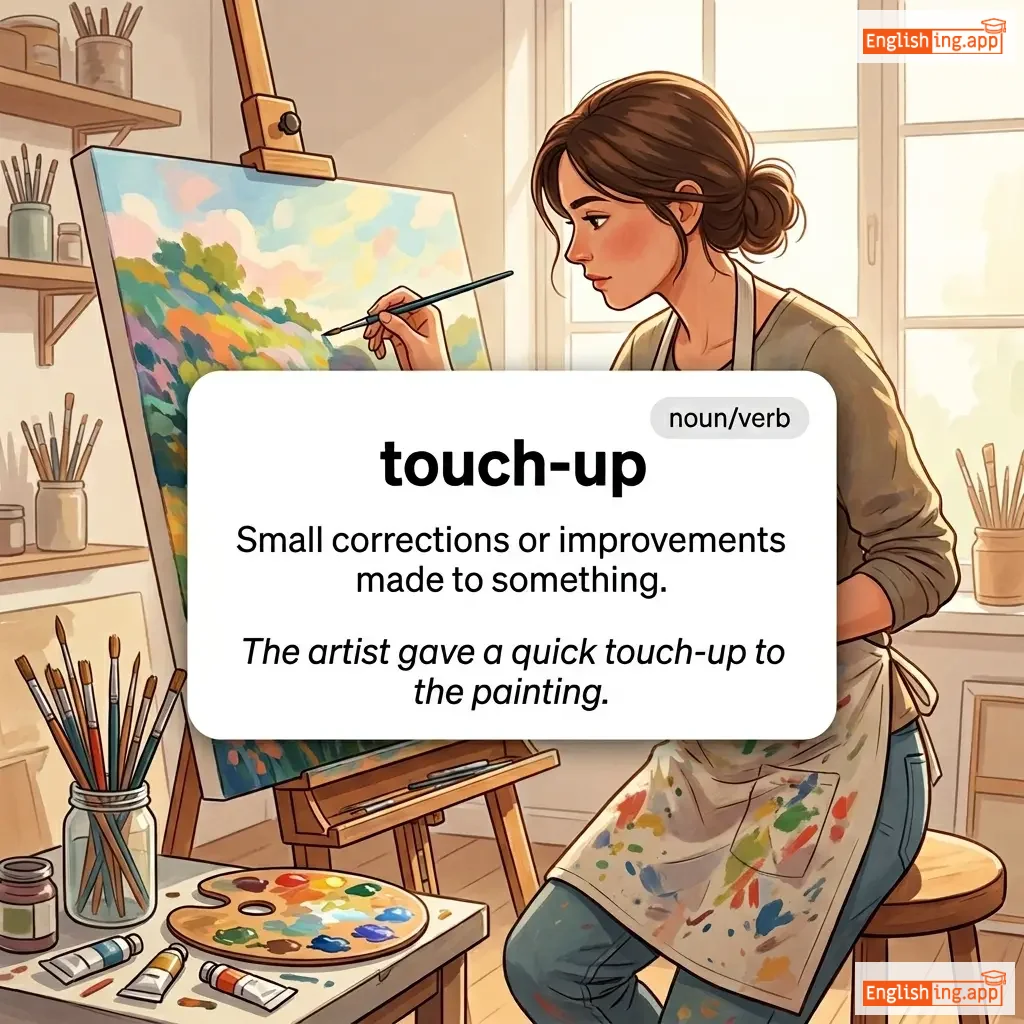
touch-up definition card — visual illustration of the meaning
noun/verb C1
/ˈtʌtʃ.ʌp/
correction ou petite amélioration (correction ou petite amelioration)

Small corrections or improvements made to something.

"The artist gave a quick touch-up to the painting."

"L'artiste a fait une retouche rapide de la peinture." (L'artiste a fait une retouche rapide de la peinture.)
adjective C1
/ˈtʌtʃi/
sensible (sensible)

easily offended or sensitive to criticism or remarks

"Be careful what you say, he's very touchy about his work."

"Faites attention à ce que vous dites, il est très sensible à son travail." (Faites attention à ce que vous dites, il est très sensible à son travail.)
verb C1
/taʊt/
promouvoir (promouvor)

to promote, praise, or advertise aggressively

"The company touted its new product as a game-changer."

"L'entreprise a fait la promotion de son nouveau produit comme un changeur de jeu." (L'entreprise a fait la promotion de son nouveau produit comme un changeur de jeu.)
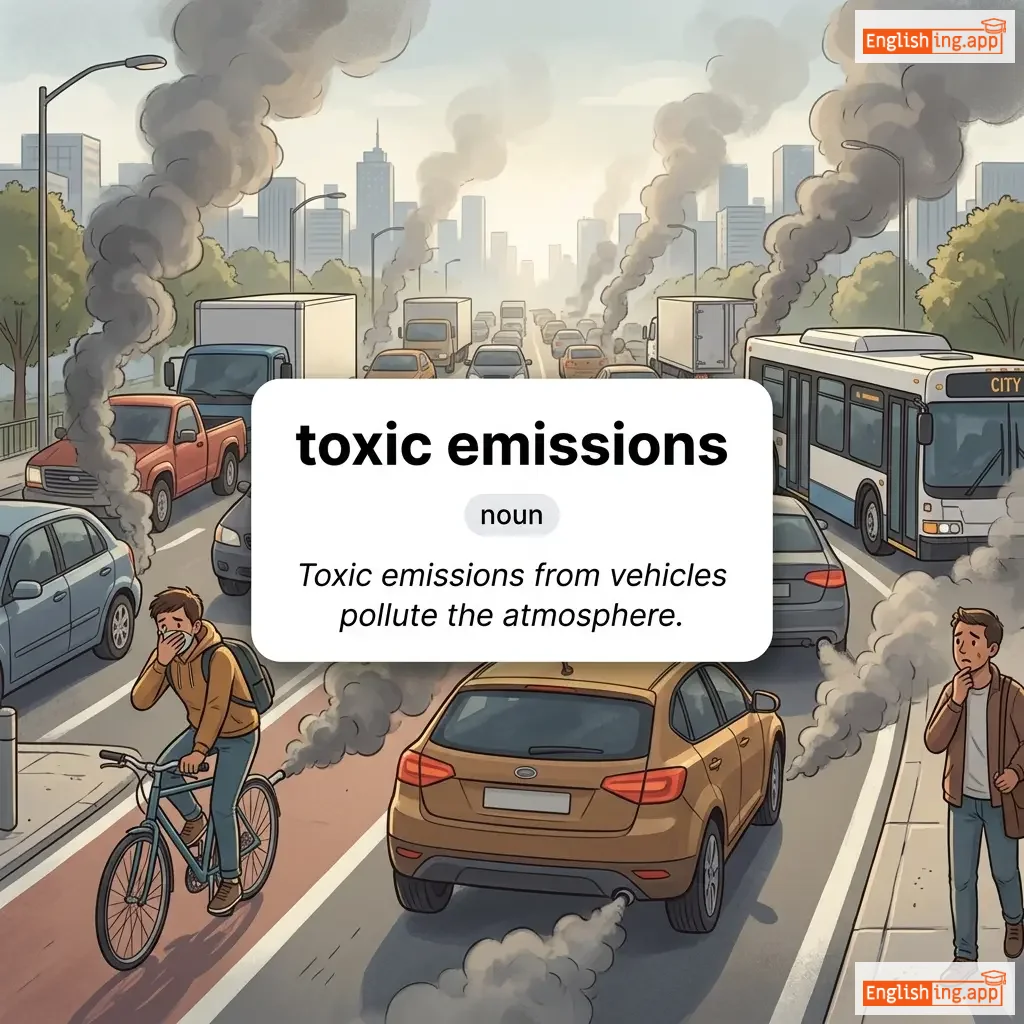
toxic emissions definition card — visual illustration of the meaning
noun C1
ˈtɑksɪk ɪˈmɪʃənz
émissions toxiques (emissions toxiques)

Harmful or poisonous substances released into the environment, especially the atmosphere.

"Toxic emissions from vehicles pollute the atmosphere."

"Les émissions toxiques des véhicules polluent l'atmosphère." (Les emissions toxiques des vehicules polluent l'atmosphere.)
noun C1
/ˈtreɪ.ki.ə/
trachée (trachee)

the tube that carries air from the throat to the lungs; windpipe

"The trachea is protected by cartilage rings that keep it open."

"La trachée est protégée par des anneaux de cartilage qui la maintiennent ouverte." (La trachee est protegee par des anneaux de cartilage qui la maintiennent ouverte.)
noun C1
/trækt/
terrain (terrain)

an area of land; a system of organs in the body; a written pamphlet

"The forest tract was preserved as a wildlife sanctuary."

"Le terrain forestier a été préservé en tant que sanctuaire pour la faune." (Le terrain forestier a été préservé en tant que sanctuaire pour la faune.)
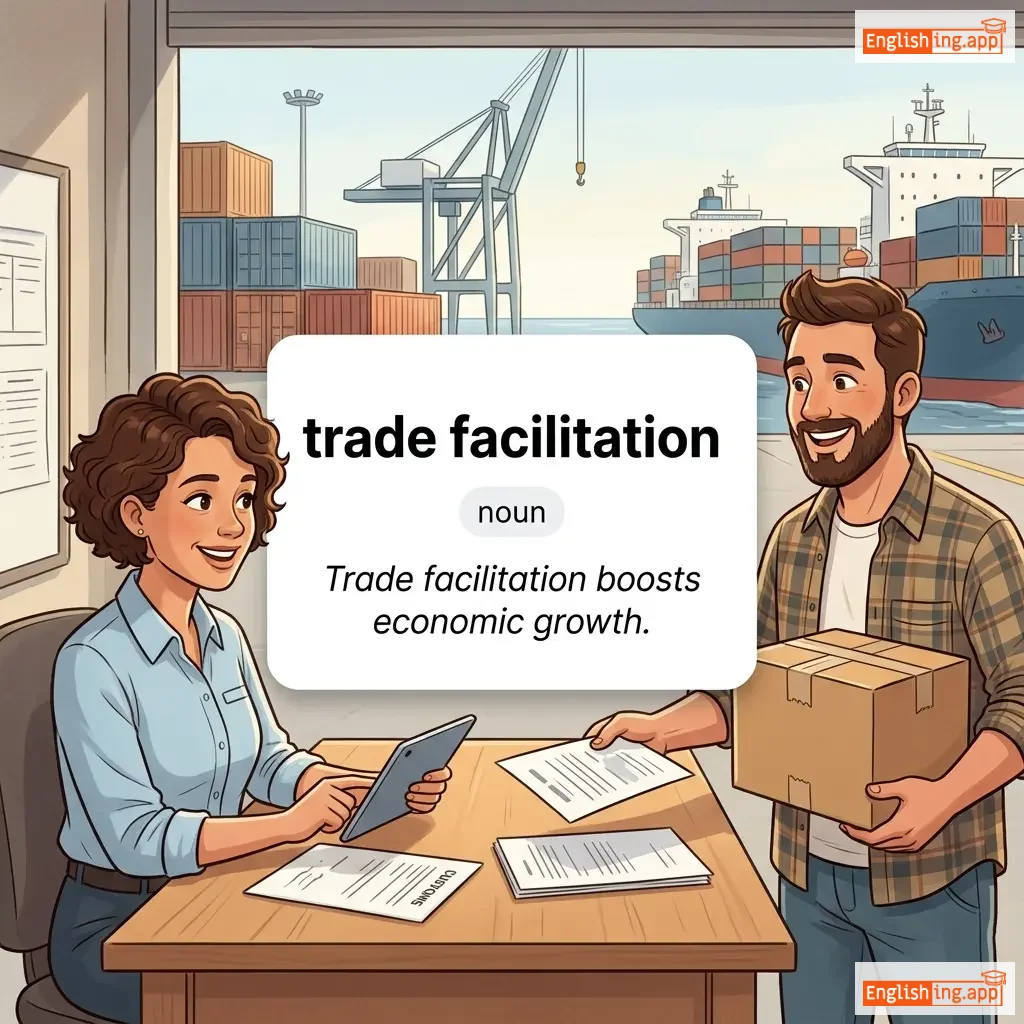
trade facilitation definition card — visual illustration of the meaning
noun C1
/treɪd fəˌsɪl.ɪˈteɪ.ʃən/
facilitation du commerce (facilitation du commerce)

The simplification, modernization and harmonization of export and import processes.

"Trade facilitation boosts economic growth."

"La facilitation du commerce stimule la croissance économique." (La facilitation du commerce stimule la croissance economique.)
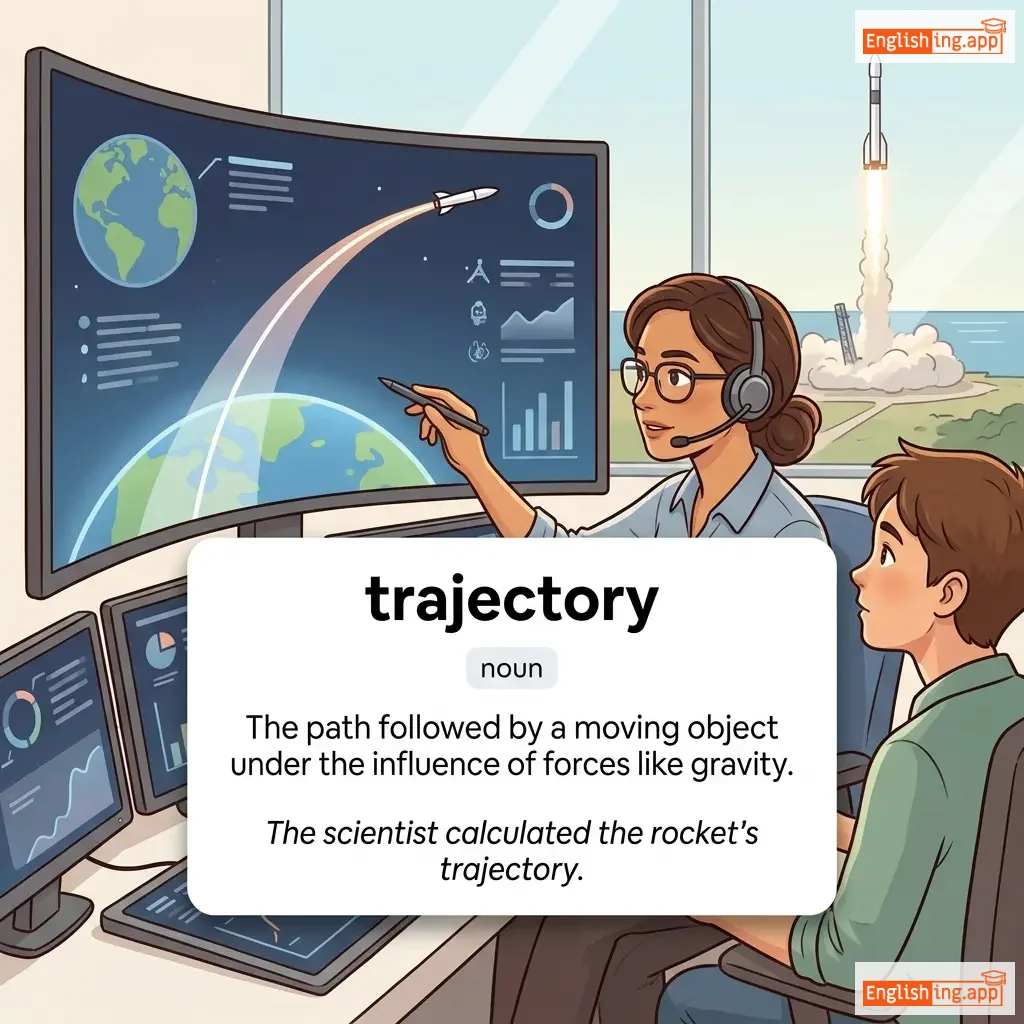
trajectory definition card — visual illustration of the meaning
noun C1
/trəˈdʒɛktəri/
trajectoire (trajectoire)

The path followed by a moving object under the influence of forces like gravity.

"The scientist calculated the rocket's trajectory."

"Le scientifique a calculé la trajectoire de la fusée." (Le scientifique a calculé la trajectoire de la fusée.)
verb, noun C1
/træmp/
vagabond / marcher lourdement (vagabond / marcher lourdement)

to walk heavily or noisily; a person who travels from place to place on foot, often homeless

"They tramped through the forest in heavy boots."

"Ils ont marché à travers la forêt avec des bottes épaisses." (Ils ont marché à travers la forêt avec des bottes épaisses.)
verb C1
/ˈtræmpəl/
piétiner (pietiner)

to tread heavily on something and cause damage or injury

"The crowd trampled the flowers in the park."

"La foule a piétiné les fleurs dans le parc." (La foule a piétiné les fleurs dans le parc.)
noun C1
/træns/
transe (transe)

a half-conscious state like dreaming, often with loss of awareness of surroundings

"She stared out of the window as if in a trance."

"Elle regardait par la fenêtre comme si elle était en transe." (Elle regardait par la fenêtre comme si elle était en transe.)
verb C1
/ˈtræŋ.kwɪ.laɪz/
tranquilliser (tranquilliser)

to make someone or something calm or less anxious, often by using drugs

"The veterinarian had to tranquilize the tiger before moving it."

"Le vétérinaire a dû tranquilliser le tigre avant de le déplacer." (Le vétérinaire a dû tranquilliser le tigre avant de le déplacer.)
verb C1
/trænˈzækt/
effectuer (effectuer)

to conduct or carry out business, a deal, or activity

"Customers can transact their banking online."

"Les clients peuvent effectuer leurs transactions bancaires en ligne." (Les clients peuvent effectuer leurs transactions bancaires en ligne.)
adjective C1
/ˌtræn.zətˈlæn.tɪk/
traverser l'océan Atlantique (traverser l'ocean Atlantique)

crossing or spanning the Atlantic Ocean

"They took a transatlantic flight from New York to London."

"Ils ont pris un vol transatlantique de New York à Londres." (Ils ont pris un vol transatlantique de New York a Londres.)
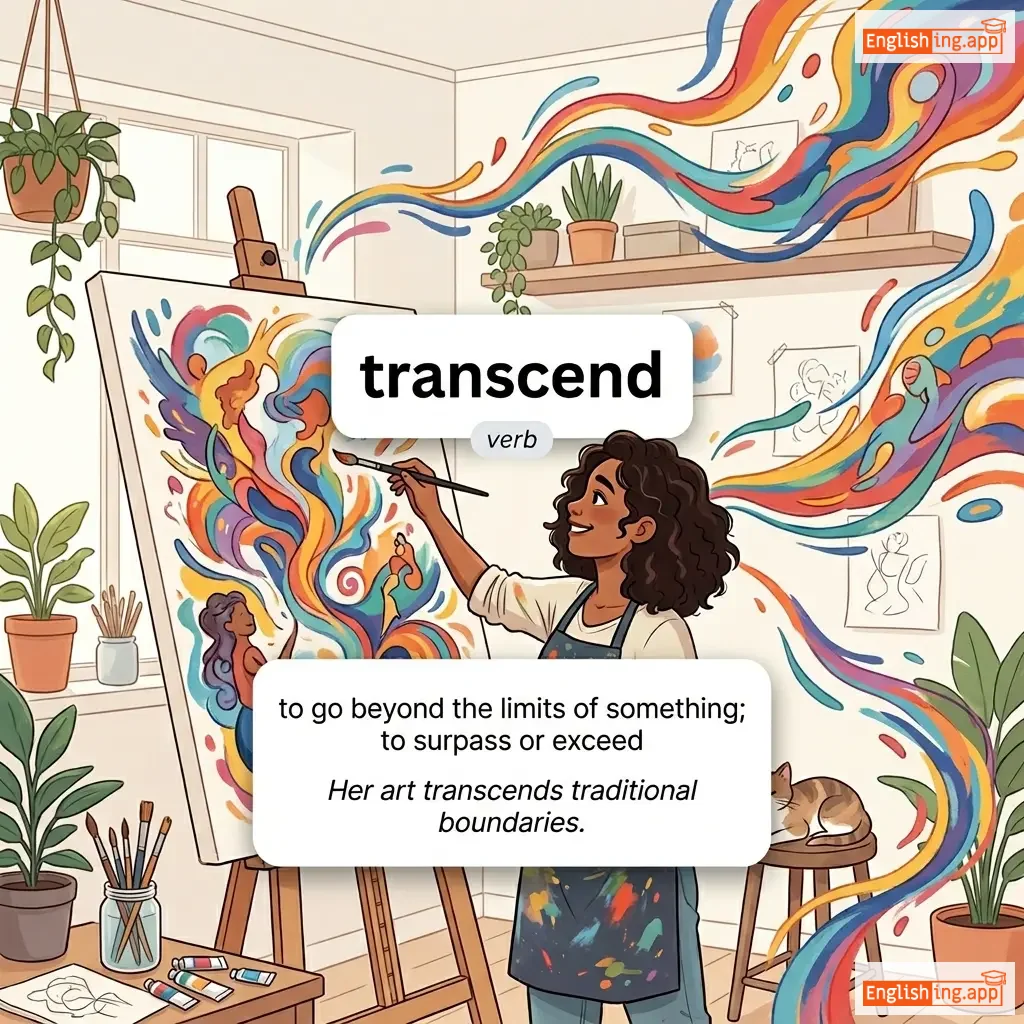
transcend definition card — visual illustration of the meaning
verb C1
/trænˈsɛnd/
transcender (transcender)

to go beyond the limits of something; to surpass or exceed

"Her art transcends traditional boundaries."

"Son art transcende les limites traditionnelles." (Son art transcende les limites traditionnelles.)
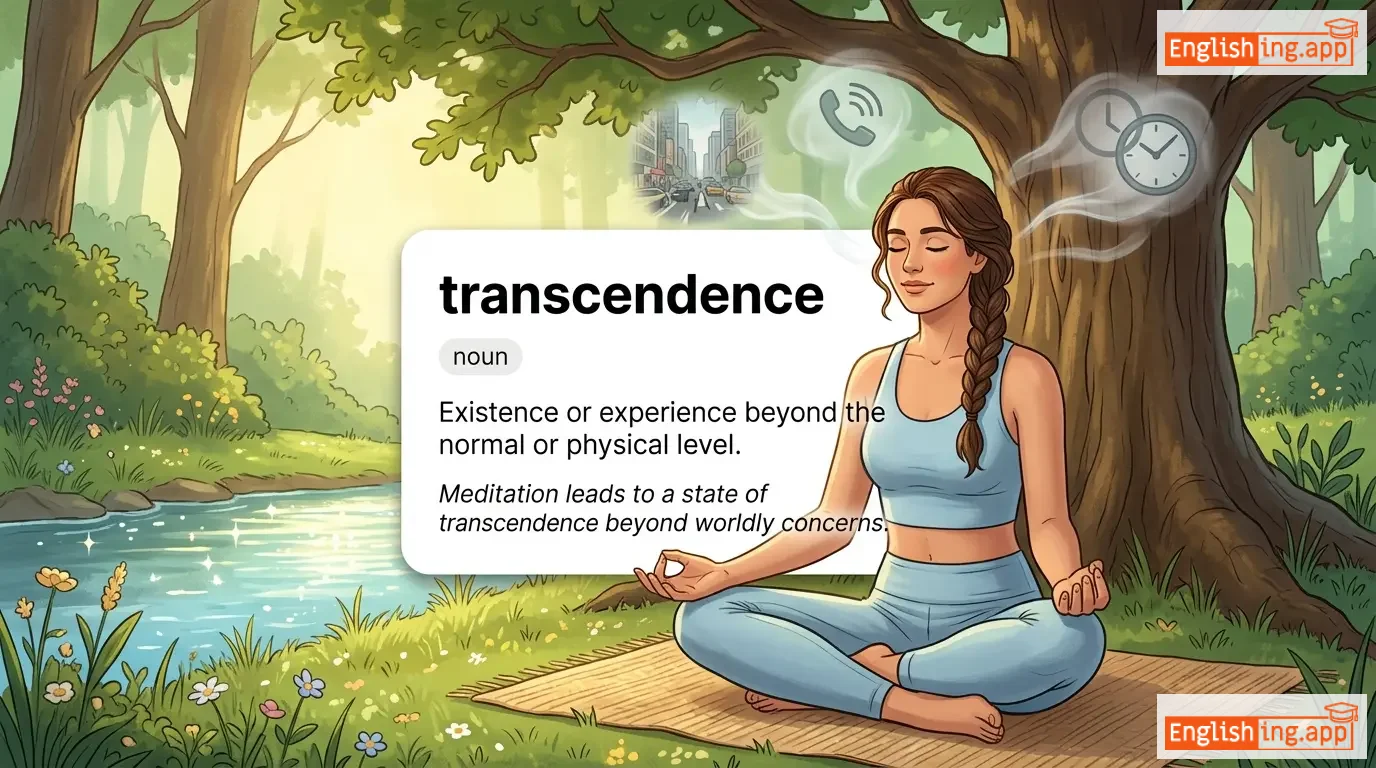
transcendence definition card — visual illustration of the meaning
noun C1
/trænˈsɛnd.əns/
existence ou expérience au-delà du niveau normal ou physique (existence ou experience au-dela du niveau normal ou physique)

Existence or experience beyond the normal or physical level.

"Meditation leads to a state of transcendence beyond worldly concerns."

"La méditation conduit à un état de transcendance au-delà des préoccupations mondaines." (La meditation conduit a un etat de transcendence au-dela des preoccupations mondaines.)
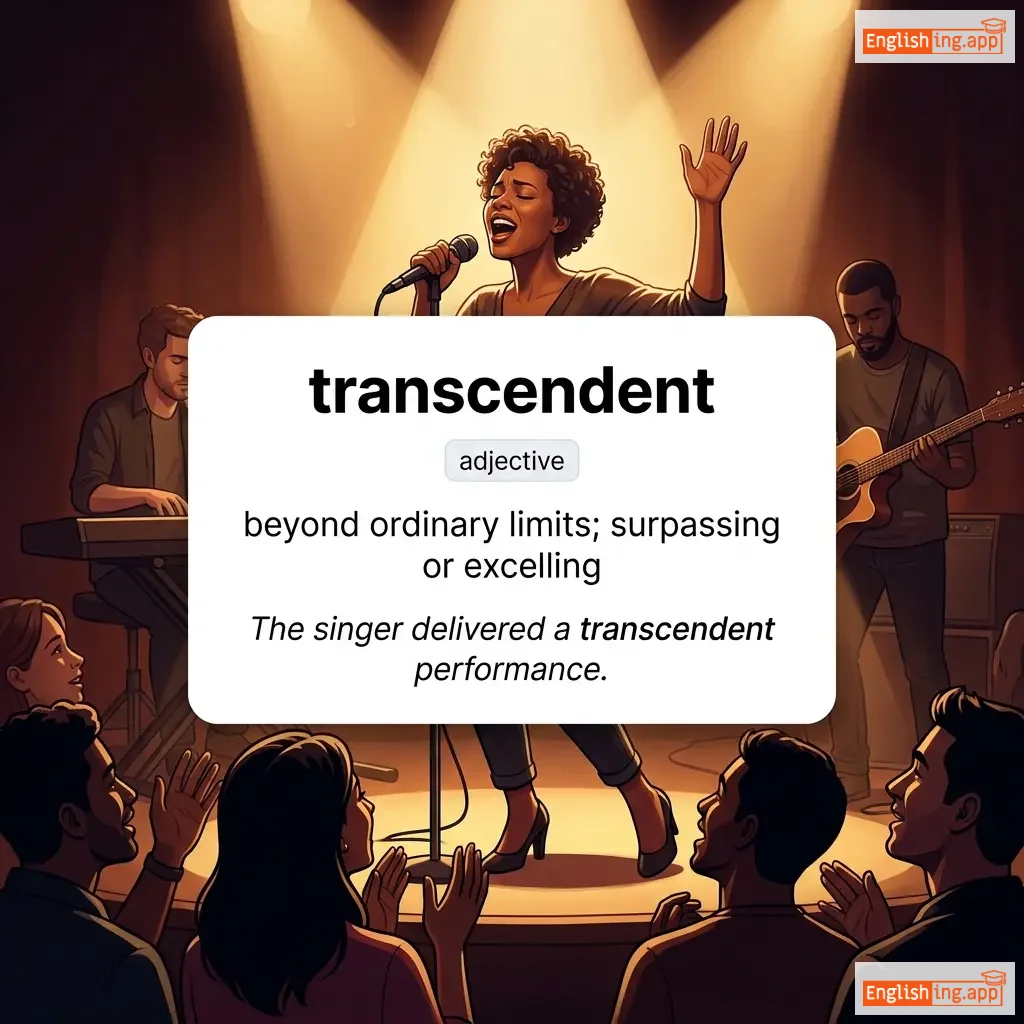
transcendent definition card — visual illustration of the meaning
adjective C1
/trænˈsɛndənt/
transcendant (transcendant)

beyond ordinary limits; surpassing or excelling

"The singer delivered a transcendent performance."

"Le chanteur a donné une performance transcendante." (Le chanteur a donne une performance transcendante.)
adjective C1
/ˌtræn.senˈdɛn.təl/
transcendantal (transcendantal)

relating to the spiritual or non-physical realm; surpassing ordinary experience

"Meditation can lead to transcendental experiences."

"La méditation peut mener à des expériences transcendantes." (La meditation peut mener a des experiences transcendantes.)
verb C1
/trænˈskraɪb/
transcrire (transcrire)

to make a written copy of spoken words or notes

"The secretary transcribed the meeting minutes."

"La secrétaire a transcrit les procès-verbaux de la réunion." (La secrétaire a transcrit les procès-verbaux de la réunion.)
adjective C1
/ˈtrænsfərəbl/
transférable (transferable)

Able to be moved, passed, or changed from one person, place, or situation to another.

"The ticket is transferable to another passenger."

"Le billet est transférable à un autre passager." (Le billet est transférable à un autre passager.)
noun C1
/ˈtrænsfərəns/
transfert (transfert)

The act of moving something from one place, person, or situation to another.

"The transference of knowledge is essential in education."

"Le transfert de connaissances est essentiel dans l'éducation." (Le transfert de connaissances est essentiel dans l'éducation.)
noun C1
/trænsˈfɜːrər/
transfert (transfert)

A person who transfers something, such as property, rights, or responsibilities, to another.

"The transferrer is responsible for ensuring the property is legally passed on."

"Le transferrer est responsable de s'assurer que la propriété est transférée légalement." (Le transferrer est responsable de s'assurer que la propriété est transférée légalement.)
noun C1
/trænsˈfjuːʒən/
transfusion sanguine (transfusion sanguine)

the process of transferring blood or another fluid into a person's vein

"The patient received a blood transfusion after the accident."

"Le patient a reçu une transfusion sanguine après l'accident." (Le patient a reçu une transfusion sanguine après l'accident.)
verb C1
/trænsˈɡrɛs/
transgresser (transgresser)

to go beyond the limits of a moral law, command, or boundary; to sin

"He apologized after realizing he had transgressed the community's rules."

"Il s'est excusé après avoir réalisé qu'il avait transgressé les règles de la communauté." (Il s'est excuse apres avoir realise qu'il avait transgresse les regles de la communaute.)
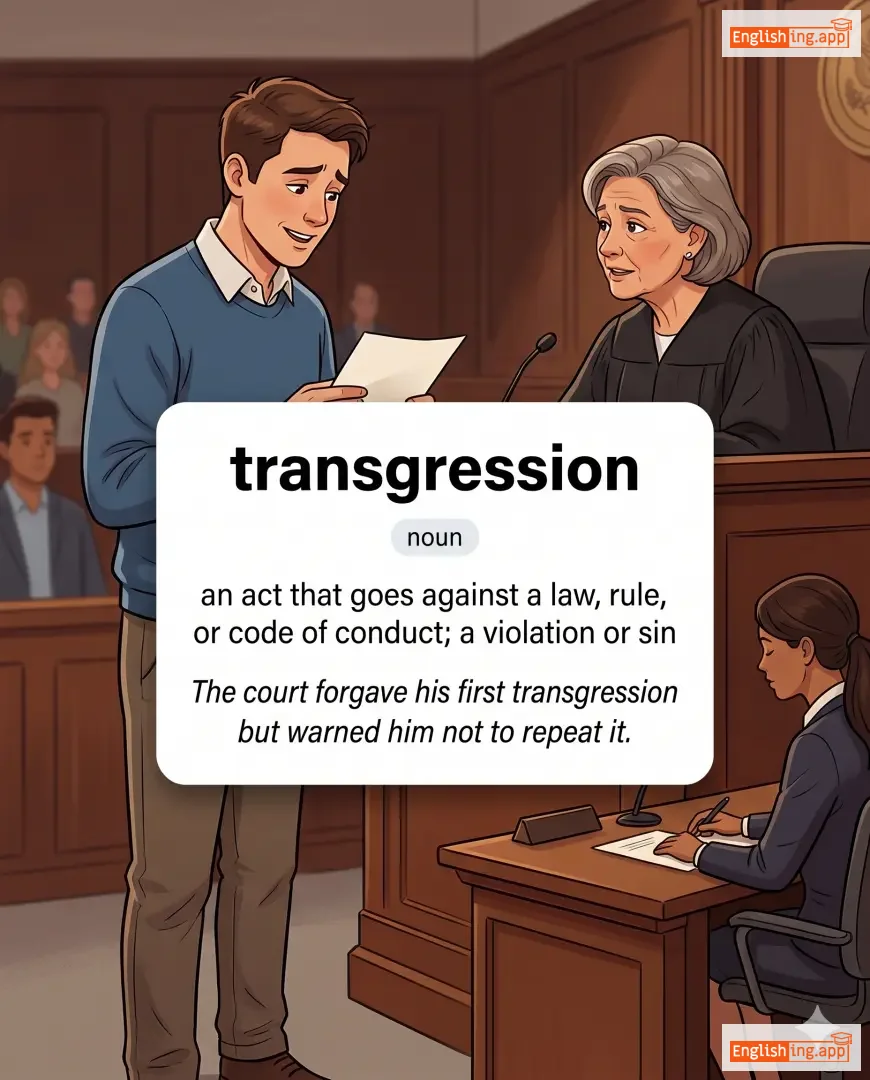
transgression definition card — visual illustration of the meaning
noun C1
/trænsˈɡrɛʃən/
transgression, infraction (transgression, infraction)

an act that goes against a law, rule, or code of conduct; a violation or sin

"The court forgave his first transgression but warned him not to repeat it."

"Le tribunal a pardonné sa première transgression, mais l'a averti de ne pas la répéter." (Le tribunal a pardonne sa premiere transgression, mais l'a averti de ne pas la repeter.)
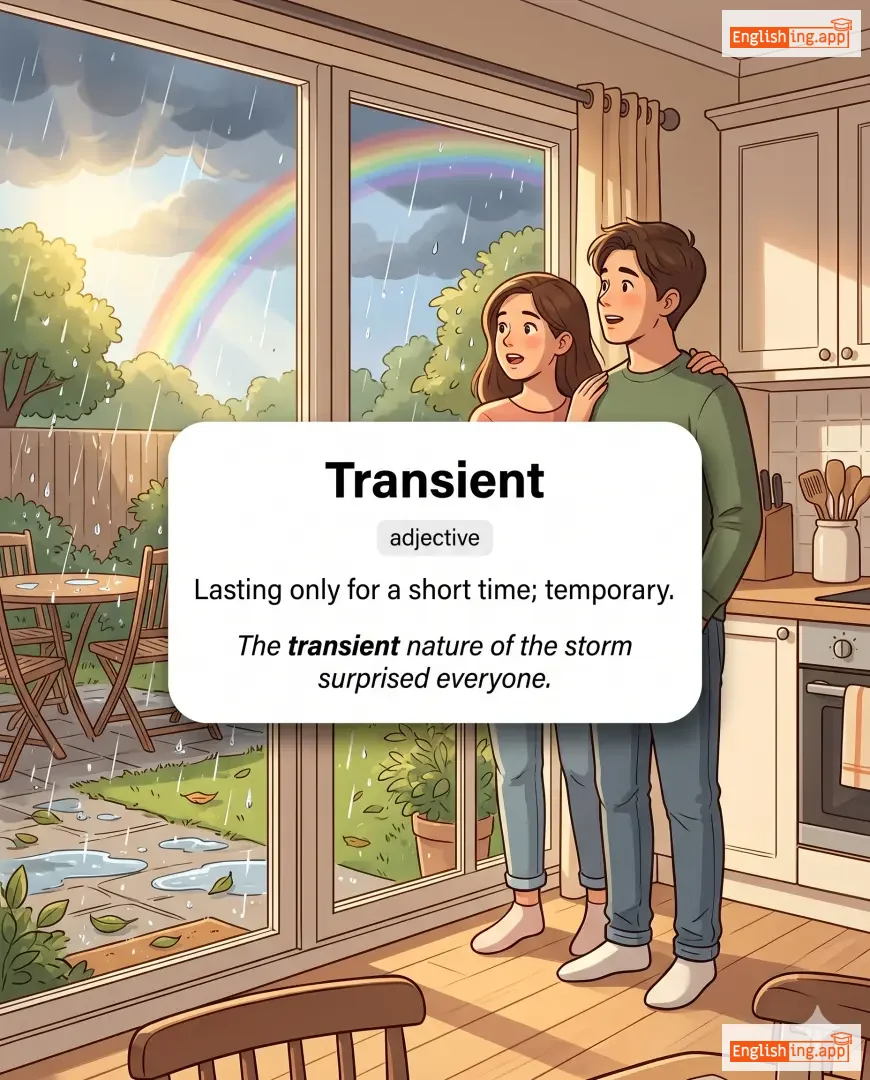
Transient definition card — visual illustration of the meaning
adjective C1
/ˈtrænziənt/
transitoire (transitoire)

Lasting only for a short time; temporary.

"The transient nature of the storm surprised everyone."

"La nature transitoire de la tempête a surpris tout le monde." (La nature transitoire de la tempête a surpris tout le monde.)
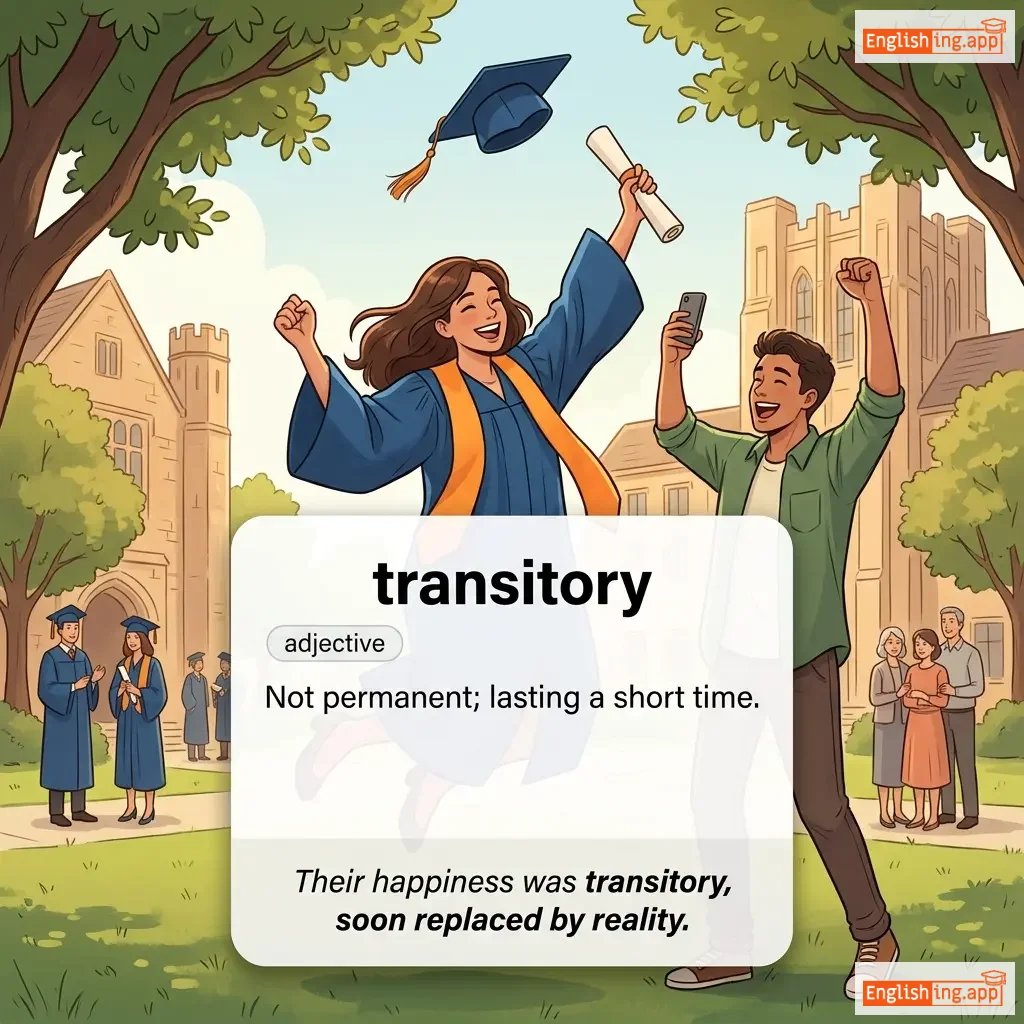
transitory definition card — visual illustration of the meaning
adjective C1
/ˈtrænzɪtɔːri/
éphémère (ephemere)

Not permanent; lasting a short time.

"Their happiness was transitory, soon replaced by reality."

"Leur bonheur était éphémère, bientôt remplacé par la réalité." (Leur bonheur était éphémère, bientôt remplacé par la réalité.)
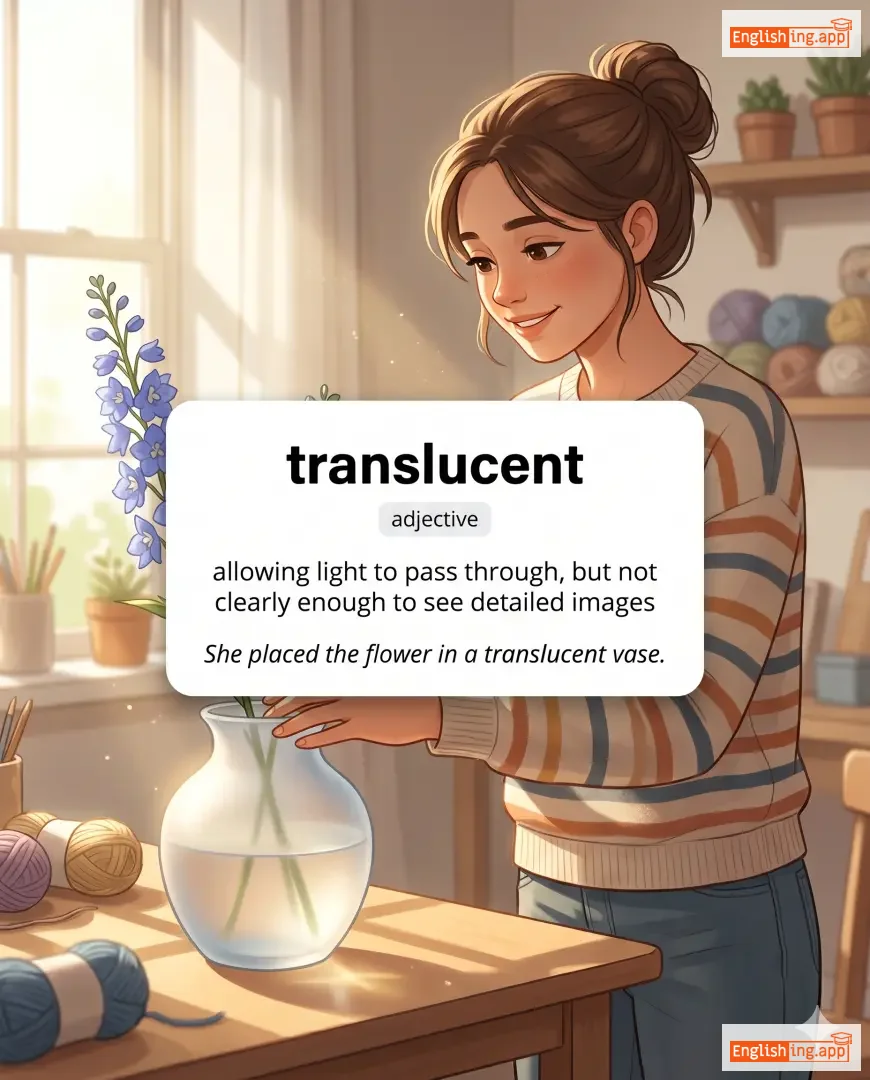
translucent definition card — visual illustration of the meaning
adjective C1
/trænsˈluːsənt/
semi-transparent (semi-transparent)

allowing light to pass through, but not clearly enough to see detailed images

"She placed the flower in a translucent vase."

"Elle a placé la fleur dans un vase semi-transparent." (Elle a placé la fleur dans un vase semi-transparent.)
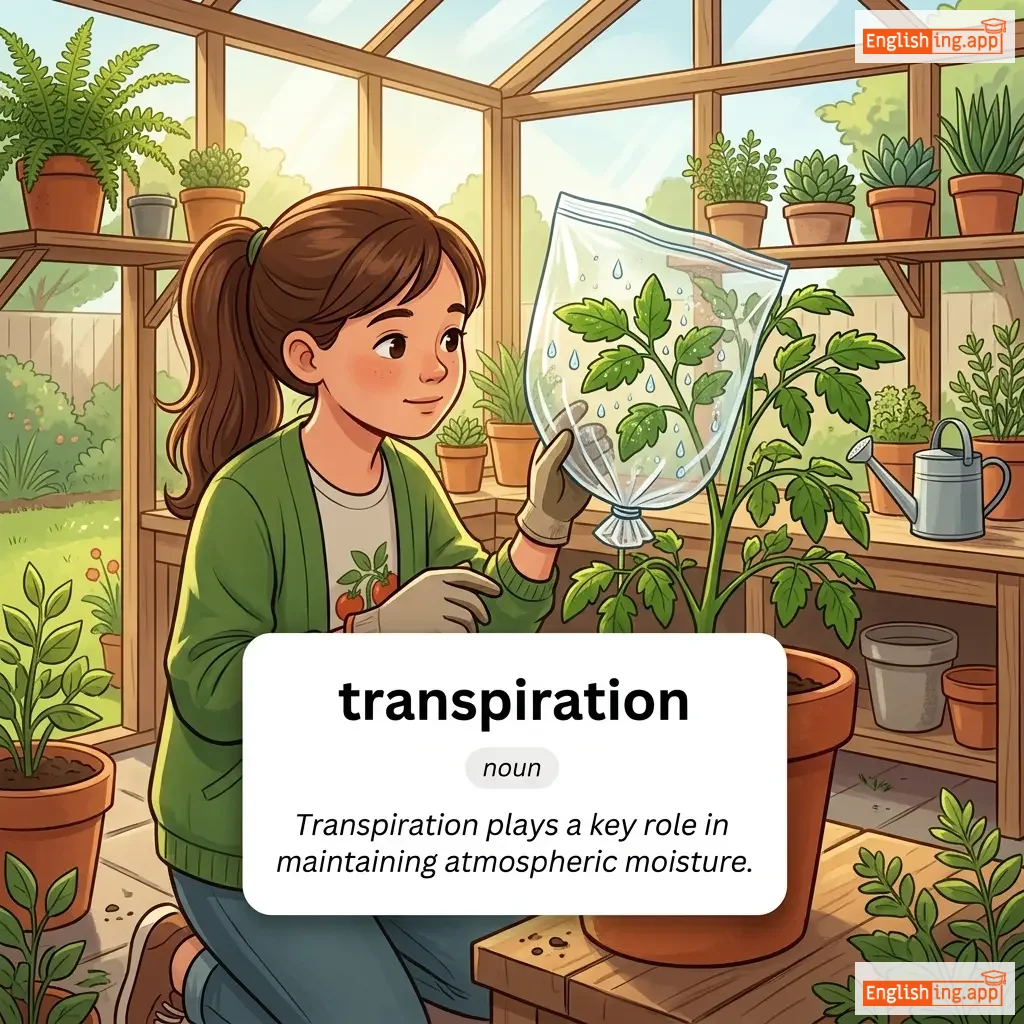
transpiration definition card — visual illustration of the meaning
noun C1
ˌtræn.spɪˈreɪ.ʃən
transpiration (transpiration)

The process by which moisture is carried through plants from roots to small pores on the underside of leaves, where it changes to vapor and is released to the atmosphere.

"Transpiration plays a key role in maintaining atmospheric moisture."

"La transpiration joue un rôle clé dans le maintien de l'humidité atmosphérique." (La transpiration joue un rôle clé dans le maintien de l'humidité atmosphérique.)
verb C1
/trænˈspaɪər/
arriver (arriver)

to occur, happen, or become known

"It transpired that he had lied about his age."

"Il est apparu qu'il avait menti sur son âge." (Il est apparu qu'il avait menti sur son âge.)
adjective C1
/ˈtrænzvɜːrs/
transversal (transversal)

situated or lying across something

"The transverse road connects two highways."

"La route transversale relie deux autoroutes." (La route transversale relie deux autoroutes.)
noun C1
/ˈtræpɪŋz/
attributs (attributs)

the outward signs, features, or objects associated with a role, event, or status

"The king appeared with all the trappings of royalty."

"Le roi est apparu avec tous les attributs de la royauté." (Le roi est apparu avec tous les attributs de la royaute.)
verb C1
/trəˈvɜːrs/
traverser (traverser)

To travel across or through something.

"They traversed the desert on camels."

"Ils ont traversé le désert à dos de chameau." (Ils ont traverse le desert a dos de chameau.)
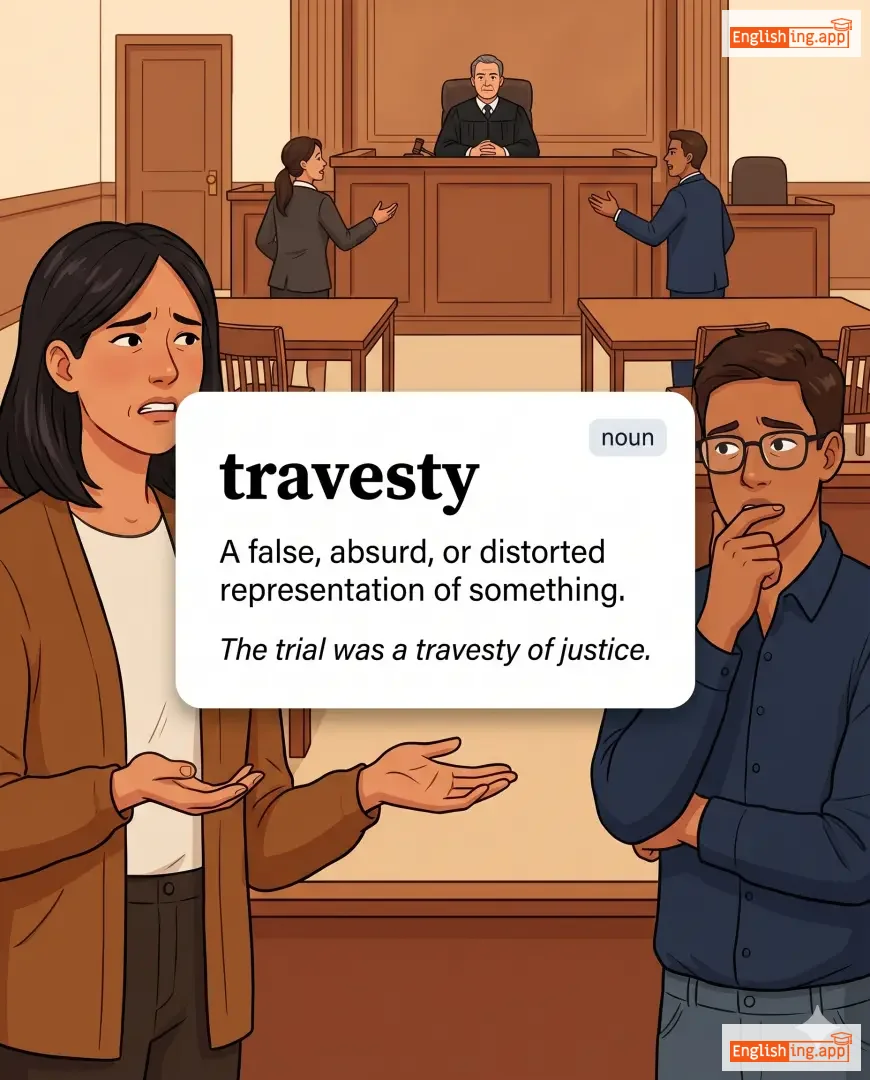
travesty definition card — visual illustration of the meaning
noun C1
/ˈtrævɪsti/
parodie (travestee)

A false, absurd, or distorted representation of something.

"The trial was a travesty of justice."

"Le procès était une parodie de justice." (Le proces etait une parodie de justice.)
adjective C1
/ˈtrɛtʃərəs/
traître (traitre)

Dangerously unstable or deceptive; likely to betray trust.

"The treacherous road made driving difficult."

"La route traître a rendu la conduite difficile." (La route traître a rendu la conduite difficile.)
noun C1
/ˈtrɛtʃəri/
trahison (trahison)

Betrayal of trust; deceptive action or nature.

"His treachery was revealed when he sided with the enemy."

"Sa trahison a été révélée lorsqu'il a pris parti pour l'ennemi." (Sa trahison a été révélée lorsqu'il a pris parti pour l'ennemi.)
noun C1
/ˈtriːkəl/
sirop épais et sucré (sirop epais et sucre)

A thick, sweet syrup; excessively sentimental speech or writing.

"She poured treacle over the pancakes."

"Elle a versé le sirop sur les crêpes." (Elle a versé le sirop sur les crêpes.)
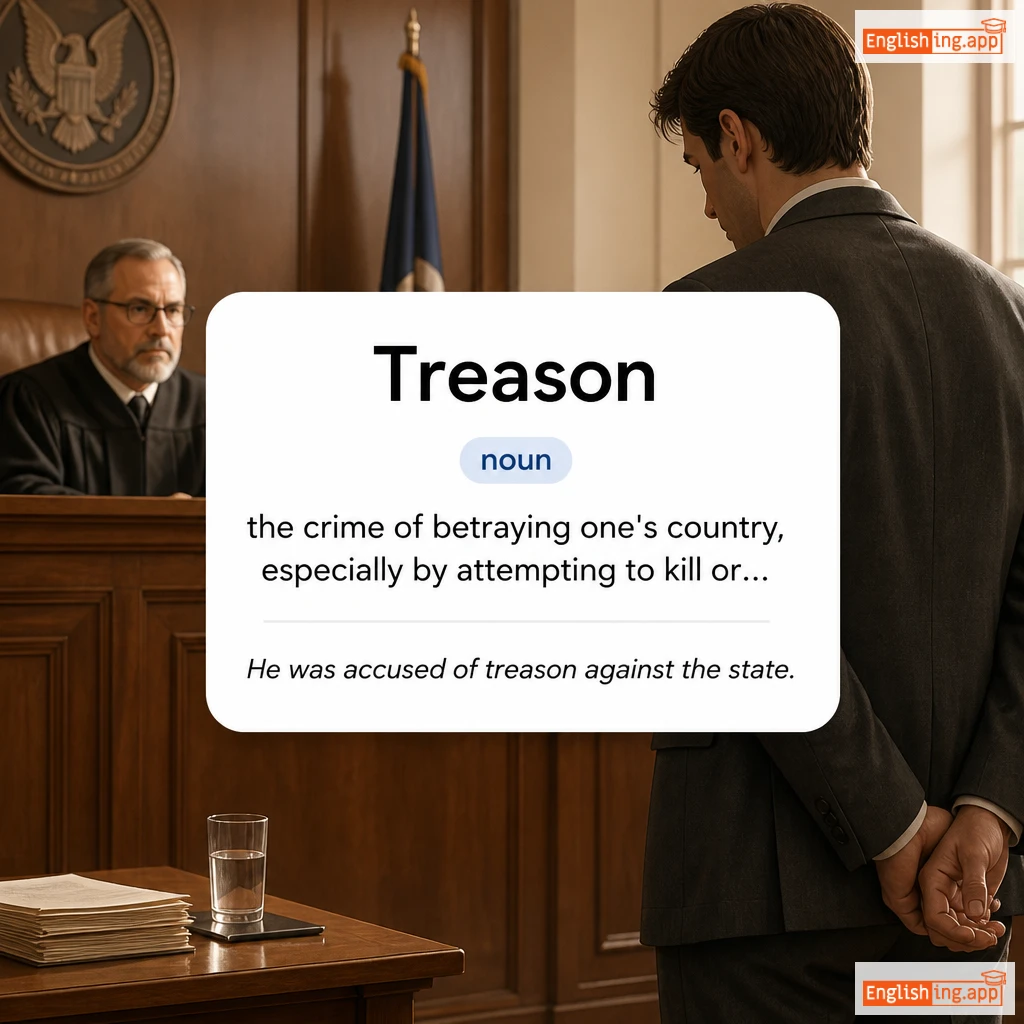
Treason definition card — visual illustration of the meaning
noun C1
/ˈtriːzən/
trahison (trahison)

the crime of betraying one's country, especially by attempting to kill or overthrow the sovereign or government

"He was accused of treason against the state."

"Il a été accusé de trahison contre l'état." (Il a ete accuse de trahison contre l'etat.)
noun C1
/ˈtrɛʒərər/
trésorier (tresorier)

a person responsible for managing the financial affairs of an organization

"The treasurer presented the annual financial report."

"Le trésorier a présenté le rapport financier annuel." (Le tresorier a presente le rapport financier annuel.)
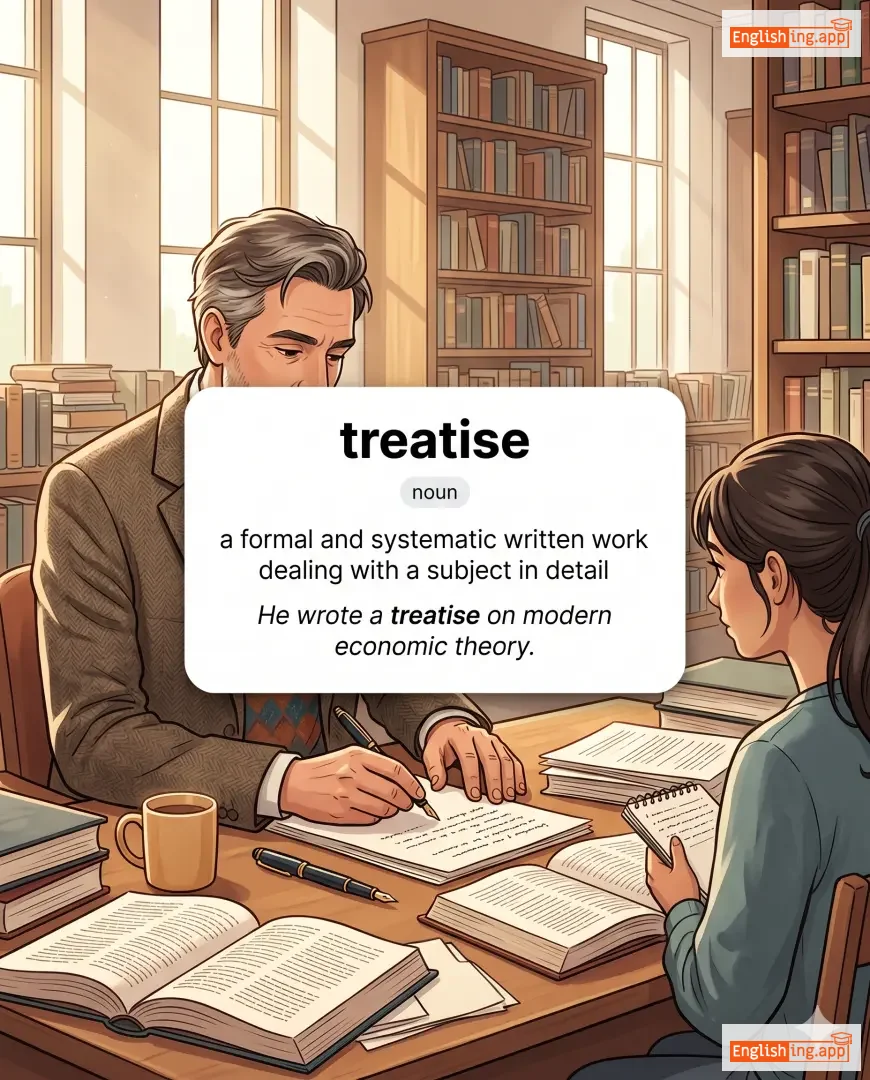
treatise definition card — visual illustration of the meaning
noun C1
/ˈtriːtɪs/
traité (traite)

a formal and systematic written work dealing with a subject in detail

"He wrote a treatise on modern economic theory."

"Il a écrit un traité sur la théorie économique moderne." (Il a écrit un traité sur la théorie économique moderne.)