Vocabulaires

Découvrez, apprenez et maîtrisez le vocabulaire anglais

noun C1
/ˈmɒŋ.ɡuːs/
Manguste (Manguste)

a small carnivorous mammal known for its ability to kill venomous snakes

"The mongoose quickly attacked the cobra to protect its young."

"Die Manguste griff schnell die Kobra an, um ihre Jungen zu schützen." (Die Manguste griff schnell die Kobra an, um ihre Jungen zu schützen.)
noun/adjective C1
/ˈmɒnəkrəʊm/
monochrom (monochrom)

A photograph, painting, or screen image in black and white or varying tones of one color.

"The old film was shot entirely in monochrome."

"Der alte Film wurde vollständig in Monochrom aufgenommen." (Der alte Film wurde vollständig in Monochrom aufgenommen.)
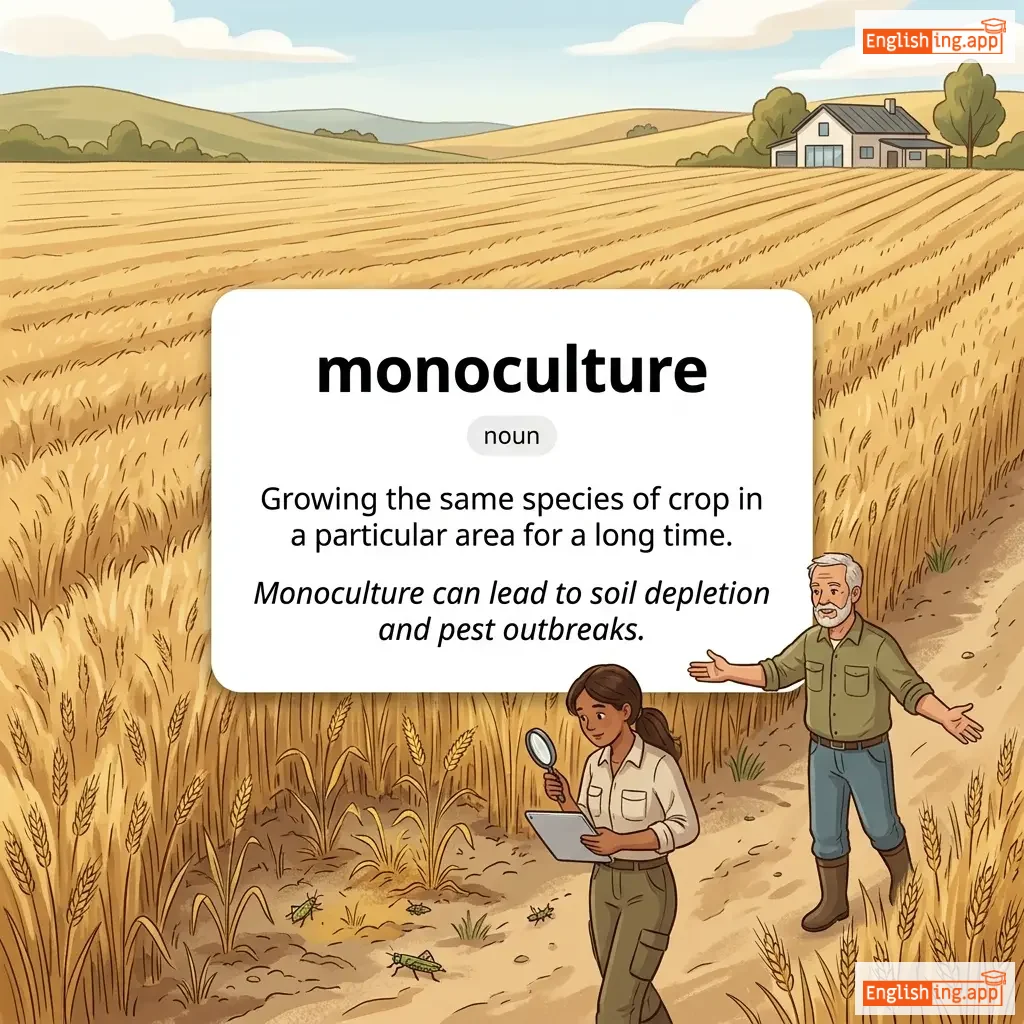
monoculture definition card — visual illustration of the meaning
noun C1
ˈmɒn.əˌkʌl.tʃər
monokultur (monokultur)

Growing the same species of crop in a particular area for a long time.

"Monoculture can lead to soil depletion and pest outbreaks."

"Monokultur kann zu einer Verringerung der Bodenfruchtbarkeit und zu Schädlingen führen." (Monokultur kann zu einer Verringerung der Bodenfruchtbarkeit und zu Schädlingen führen.)
noun C1
/məˈnɒɡəmi/
Monogamie (Monogamie)

The practice of being married to or in a relationship with only one person at a time.

"Many cultures encourage monogamy as the ideal form of marriage."

"Viele Kulturen fördern Monogamie als die ideale Form der Ehe." (Viele Kulturen foerdern Monogamie als die ideale Form der Ehe.)
noun C1
/ˈmɒnəlɪθ/
Monolith (Monolith)

A large single upright block of stone, or a large, powerful, indivisible organization or system.

"The ancient monolith stood in the desert for centuries."

"Das alte Monolith stand für Jahrhunderte in der Wüste." (Das alte Monolith stand für Jahrhunderte in der Wüste.)
adjective C1
/ˌmɒnəˈlɪθɪk/
monolithisch (monolithisch)

Massive, uniform, and indivisible; resembling a large single stone or structure.

"The company maintained a monolithic structure resistant to change."

"Das Unternehmen behielt eine monolithische Struktur bei, die gegen Veränderungen resistent war." (Das Unternehmen behielt eine monolithische Struktur bei, die gegen Veränderungen resistent war.)
noun C1
/ˈmɒnəˌlɒɡ/
Monolog (monolog)

A long speech by one person, often in a play or performance.

"The actor delivered a powerful monologue on stage."

"Der Schauspieler hielt einen kraftvollen Monolog auf der Bühne." (Der Schauspieler hielt einen kraftvollen Monolog auf der Bühne.)
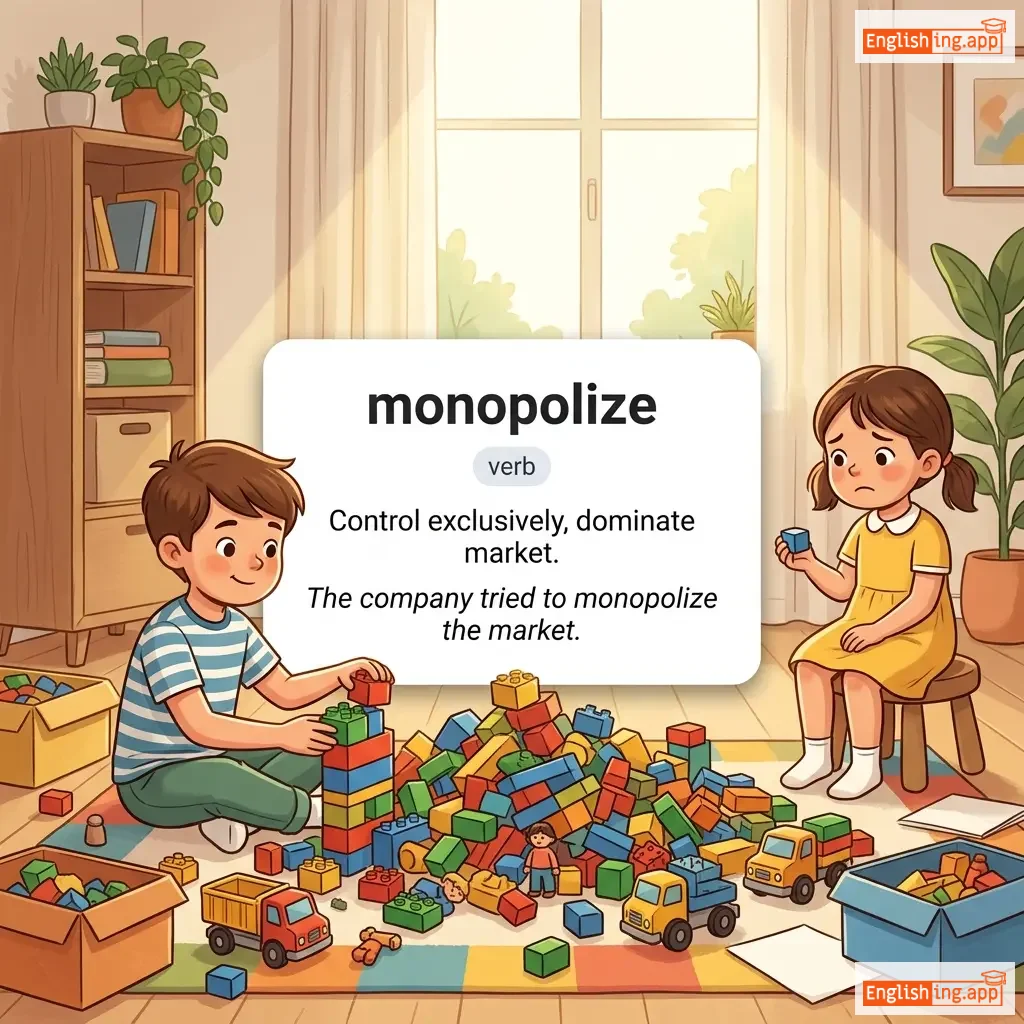
monopolize definition card — visual illustration of the meaning
verb C1
məˈnɒp.ə.laɪz
monopolisieren (monopolisieren)

Control exclusively, dominate market.

"The company tried to monopolize the market."

"Das Unternehmen versuchte, den Markt zu monopolisieren." (Das Unternehmen versuchte, den Markt zu monopolisieren.)
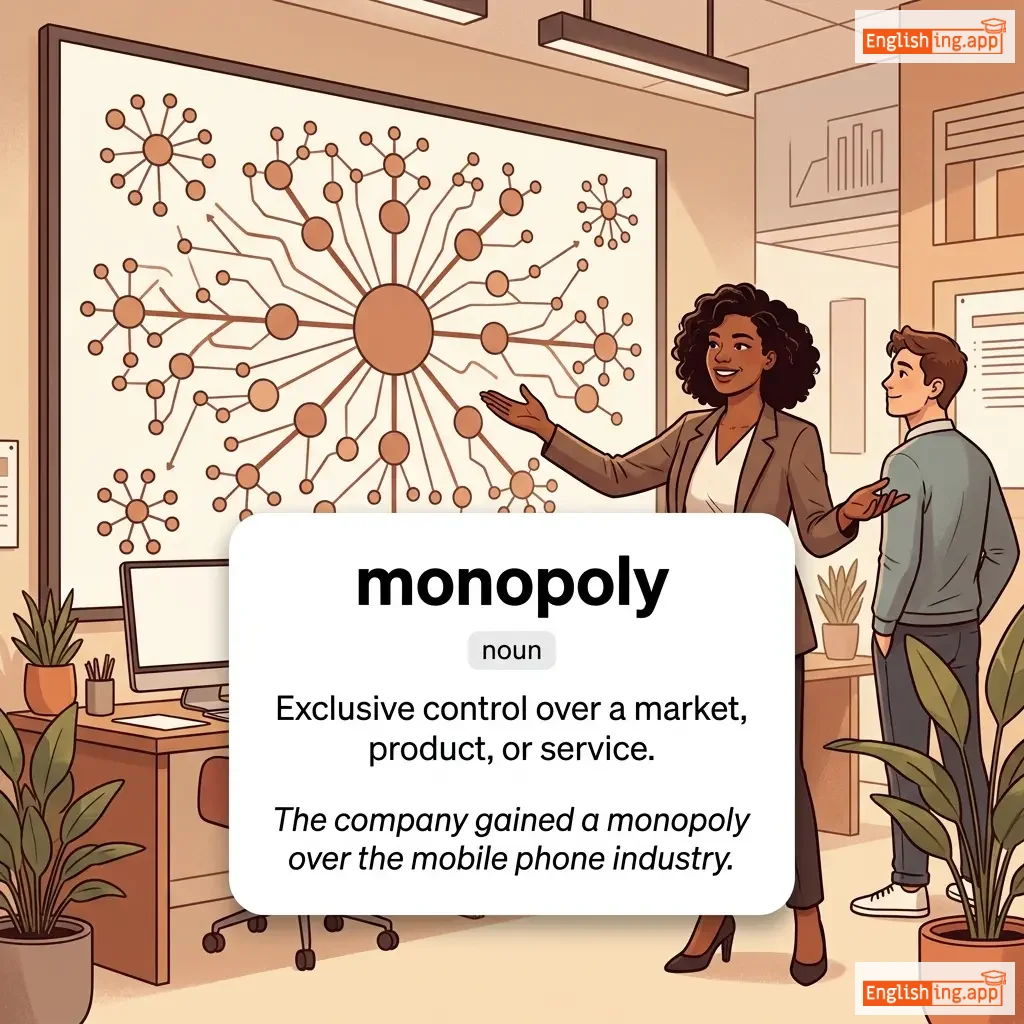
monopoly definition card — visual illustration of the meaning
noun C1
/məˈnɒpəli/
Monopol (monopol)

Exclusive control over a market, product, or service.

"The company gained a monopoly over the mobile phone industry."

"Das Unternehmen erlangte ein Monopol auf die Mobilfunkbranche." (Das Unternehmen erlangte ein Monopol auf die Mobilfunkbranche.)
noun C1
/ˈmɒnəˌθiːɪzəm/
Monotheismus (monotheismus)

The belief in the existence of only one God.

"Islam and Christianity are religions based on monotheism."

"Islam und Christentum sind Religionen, die auf dem Monotheismus basieren." (Islam und Christentum sind Religionen, die auf dem Monotheismus basieren.)
noun C1
/ˈmɒn.ə.təʊn/
monoton (monoton)

A continuous sound, especially of a person's voice, that does not rise and fall in pitch.

"The teacher's monotone made the lecture hard to follow."

"Der monoton klingende Lehrer machte es schwer, der Vorlesung zu folgen." (Der monoton klingende Lehrer machte es schwer, der Vorlesung zu folgen.)
adjective C1
/məˈnɒt.ən.əs/
monoton (monoton)

Dull, tedious, and repetitious; lacking in variety and interest.

"The monotonous routine of office work tired him out."

"Die monotone Routine der Büroarbeit erschöpfte ihn." (Die monotone Routine der Buroarbeit erschoepfte ihn.)
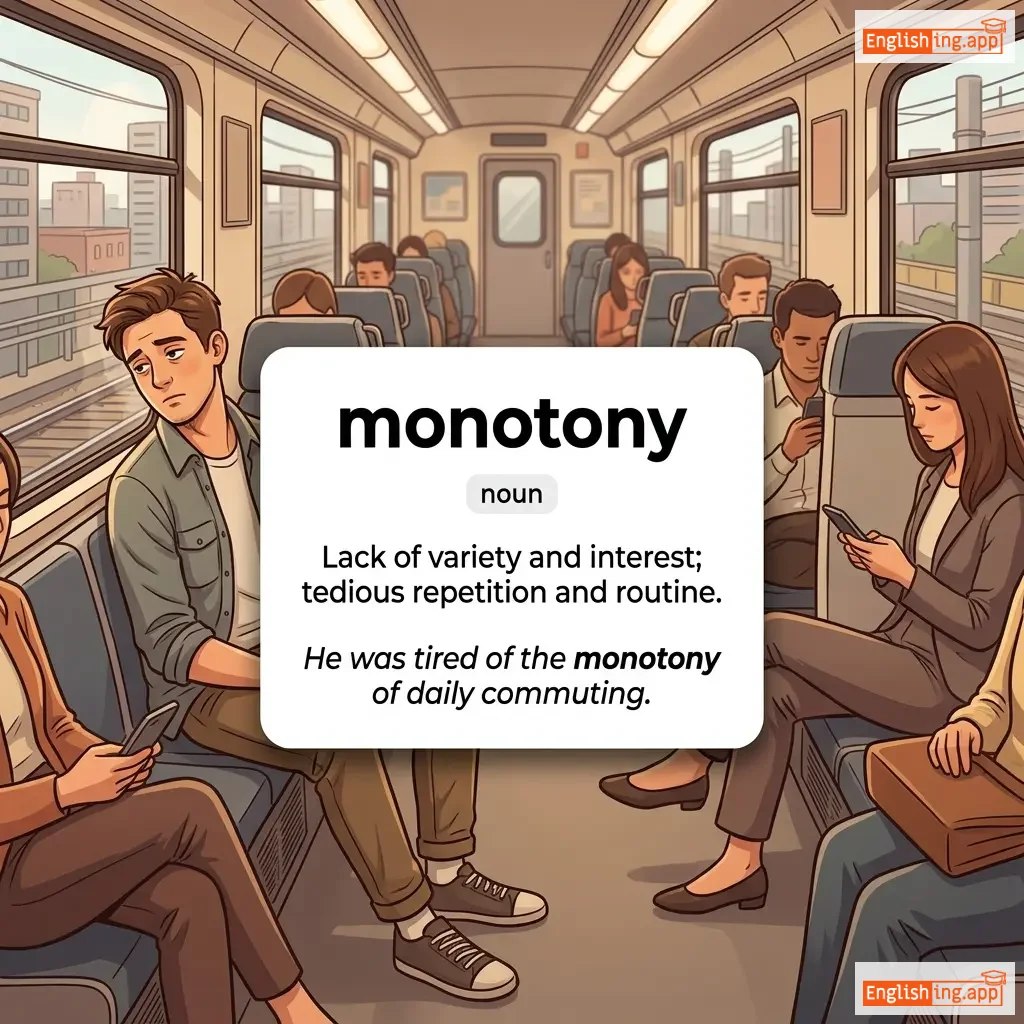
monotony definition card — visual illustration of the meaning
noun C1
/məˈnɒt.ə.ni/
Monotonie (monotonie)

Lack of variety and interest; tedious repetition and routine.

"He was tired of the monotony of daily commuting."

"Er war müde von der Monotonie des täglichen Pendelns." (Er war mude von der Monotonie des taglichen Pendelns.)
adjective C1
/ˈmɒnstrəs/
unheimlich groß; schockierend böse oder falsch; unnatürlich oder abnormal (monströs)

extremely large; shockingly evil or wrong; abnormal or unnatural

"The monstrous crime shocked the entire community."

"Das monströse Verbrechen erschütterte die ganze Gemeinschaft." (Das monströse Verbrechen erschütterte die ganze Gemeinschaft.)
noun C1
/mɒnˈtɑːʒ/
Montage (Montage)

A sequence of film editing or a composite image made by combining several separate pictures.

"The film opened with a montage of city life."

"Der Film begann mit einem Montage von Stadtleben." (Der Film begann mit einem Montage von Stadtleben.)
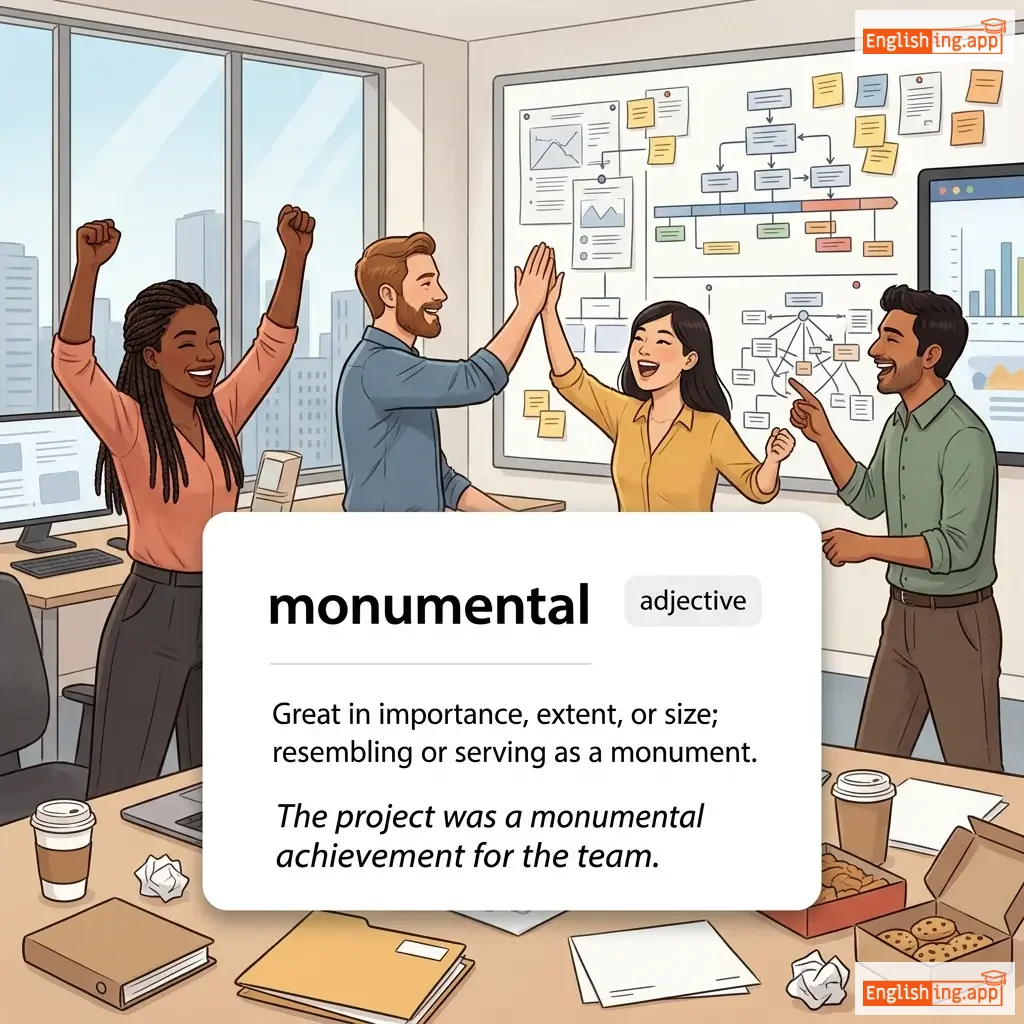
monumental definition card — visual illustration of the meaning
adjective C1
/ˌmɒn.jʊˈmen.təl/
monumental (monumental)

Great in importance, extent, or size; resembling or serving as a monument.

"The project was a monumental achievement for the team."

"Das Projekt war ein monumentaler Erfolg für das Team." (Das Projekt war ein monumentaler Erfolg für das Team.)
noun C1
/ˈmuːdi.nəs/
Stimmungsschwankungen (stimmungsschwankungen)

The state of being frequently subject to changes in mood, especially irritability or sadness.

"Her moodiness made it difficult to predict how she would react."

"Ihre Stimmungsschwankungen machten es schwer vorherzusagen, wie sie reagieren würde." (Ihre Stimmungsschwankungen machten es schwer vorherzusagen, wie sie reagieren würde.)
verb, noun C1
/mʊər/
festmachen / unbebautes land (festmachen / unbebautes land)

As a verb: to tie a ship so that it stays in place. As a noun: open, uncultivated land.

"The sailors moored the ship at the dock."

"Die matrosen haben das schiff am dock vertäut." (Die matrosen haben das schiff am dock vertäut.)
adjective, verb C1
/muːt/
irrelevant / umstritten (irrelevant / umstritten)

Adjective: subject to debate or irrelevant. Verb: to suggest an idea for discussion.

"The issue of funding became a moot point after the project was canceled."

"Das Thema der Finanzierung wurde nach der Absage des Projekts zu einem irrelevanten Punkt." (Das Thema der Finanzierung wurde nach der Absage des Projekts zu einem irrelevanten Punkt.)
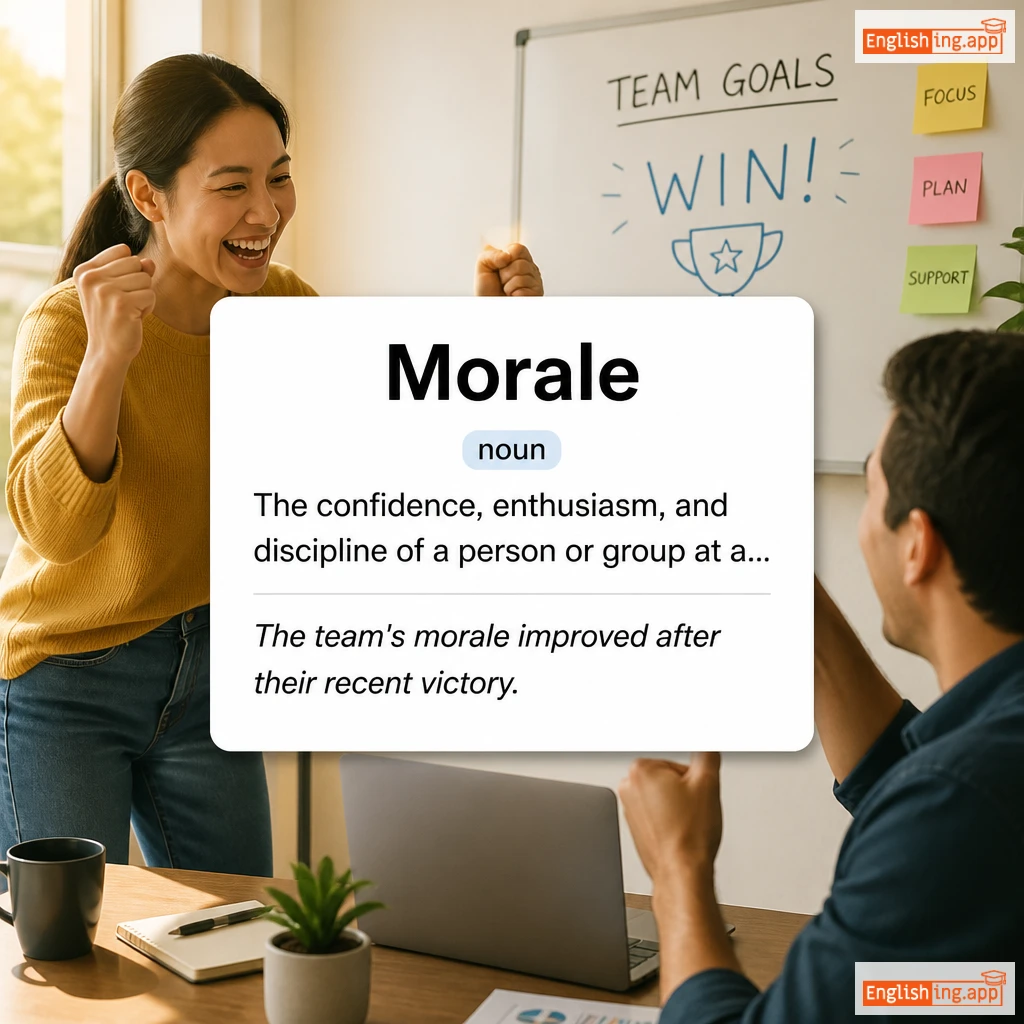
Morale definition card — visual illustration of the meaning
noun C1
/məˈræl/
Moral (Moral)

The confidence, enthusiasm, and discipline of a person or group at a particular time.

"The team's morale improved after their recent victory."

"Die Moral des Teams verbesserte sich nach ihrem jüngsten Sieg." (Die Moral des Teams verbesserte sich nach ihrem jüngsten Sieg.)
noun C1
/ˌmɔːrəˈtɔːriəm/
Moratorium (Moratorium)

A temporary suspension or delay of an activity, law, or obligation.

"The government announced a moratorium on new mining licenses."

"Die Regierung kündigte ein Moratorium für neue Bergbau-Lizenzen an." (Die Regierung kuendigte ein Moratorium fuer neue Bergbau-Lizenzen an.)
adjective C1
/ˈmɔːrbɪd/
unnatürliches Interesse an störenden oder unangenehmen Themen (unnaturliches interesse an storenden oder unangenehmen themen)

Having an abnormal interest in disturbing or unpleasant subjects such as death or disease.

"She had a morbid fascination with crime stories."

"Sie hatte eine morbide Faszination für Kriminalgeschichten." (Sie hatte eine morbide Faszination fur Kriminalgeschichten.)
noun C1
/mɔːrɡ/
Leichenschauhaus (Leichenschauhaus)

a place where dead bodies are kept, especially to be identified or claimed

"The police took the body to the morgue for identification."

"Die Polizei brachte den Leichnam zur Identifizierung ins Leichenschauhaus." (Die Polizei brachte den Leichnam zur Identifizierung ins Leichenschauhaus.)
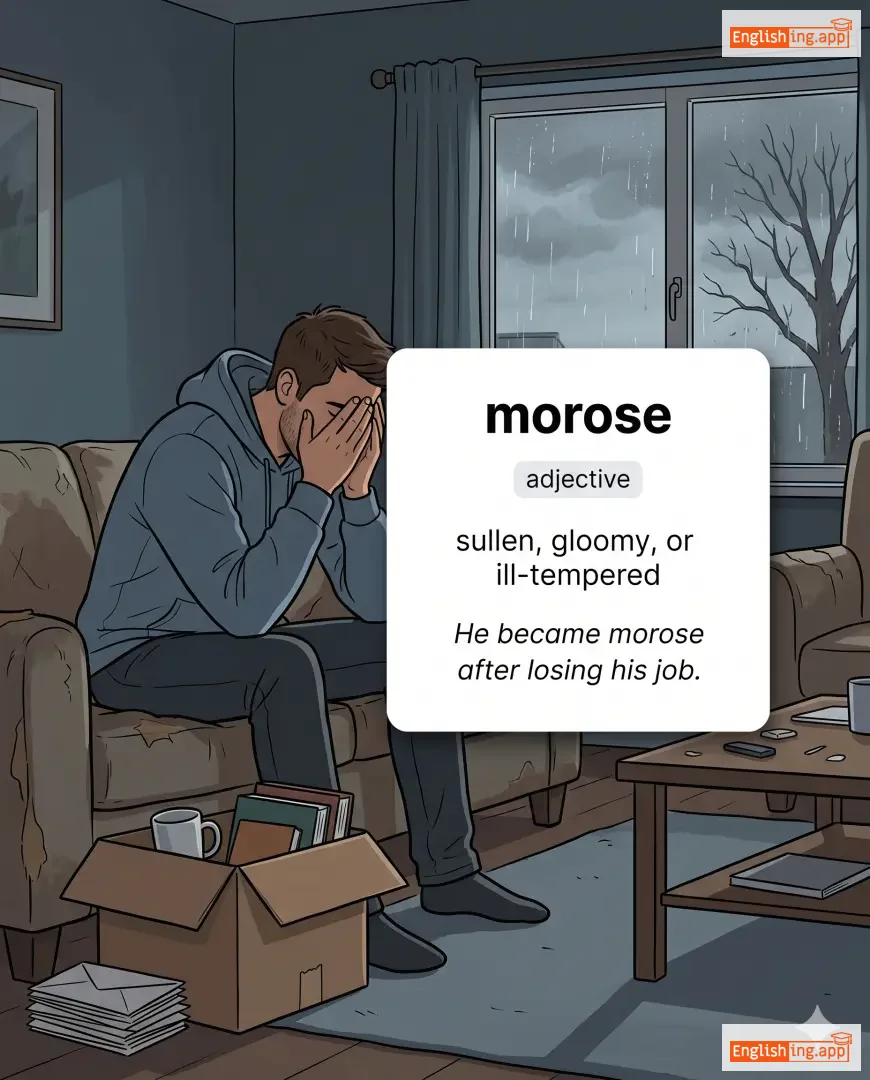
morose definition card — visual illustration of the meaning
adjective C1
/məˈroʊs/
grüblerisch (grublerisch)

sullen, gloomy, or ill-tempered

"He became morose after losing his job."

"Er wurde grüblerisch nach dem Verlust seines Jobs." (Er wurde grublerisch nach dem Verlust seines Jobs.)
verb C1
/mɔːrf/
verwandeln (verwandeln)

to change smoothly from one form, shape, or character into another

"The caterpillar will morph into a butterfly."

"Die Raupe wird sich in einen Schmetterling verwandeln." (Die Raupe wird sich in einen Schmetterling verwandeln.)
noun C1
/mɔːrˈfɑːlədʒi/
Morphologie (morphologie)

the study of the form and structure of things, especially in language and biology

"Morphology studies the structure of words and how they are formed."

"Die Morphologie untersucht die Struktur von Wörtern und wie sie gebildet werden." (Die Morphologie untersucht die Struktur von Wörtern und wie sie gebildet werden.)
adjective C1
/ˈmɔːtəl/
sterblich; vergänglich; menschlich (sterblich; vergaenglich; menschlich)

subject to death; having a limited lifespan; human

"All human beings are mortal and will eventually die."

"Alle Menschen sind sterblich und werden schließlich sterben." (Alle Menschen sind sterblich und werden schließlich sterben.)
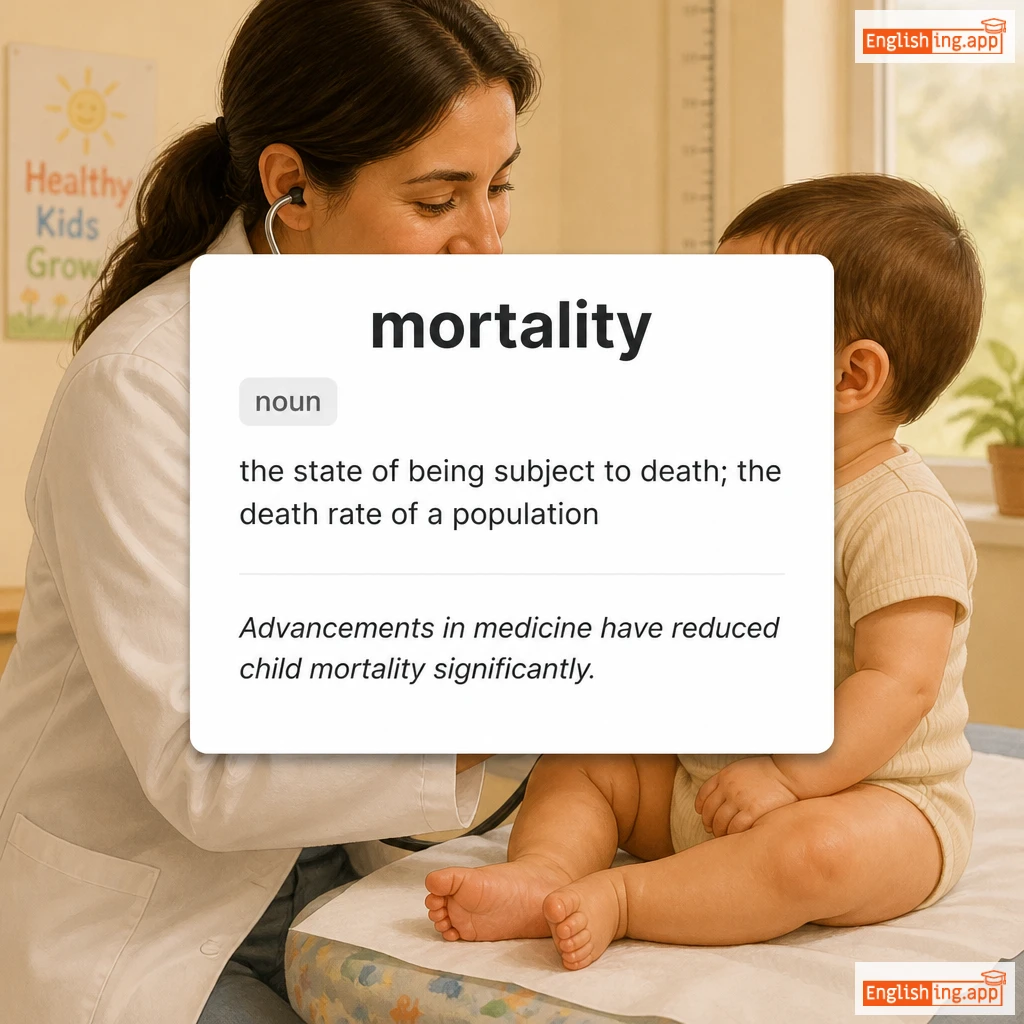
mortality definition card — visual illustration of the meaning
noun C1
/mɔːˈtæləti/
Sterblichkeit (Sterblichkeit)

the state of being subject to death; the death rate of a population

"Advancements in medicine have reduced child mortality significantly."

"Fortschritte in der Medizin haben die Kindersterblichkeit erheblich reduziert." (Fortschritte in der Medizin haben die Kindersterblichkeit erheblich reduziert.)
noun C1
/ˈmɔːrtər/
Mischung zum Verbinden von Ziegeln / kleine Kanone (mischung zum verbinden von ziegeln / kleine kanone)

a mixture used in building to bond bricks or stones together; also, a small cannon for firing shells

"The workers applied mortar between the bricks."

"Die Arbeiter trugen Mörtel zwischen die Ziegel." (Die Arbeiter trugen Moertel zwischen die Ziegel.)
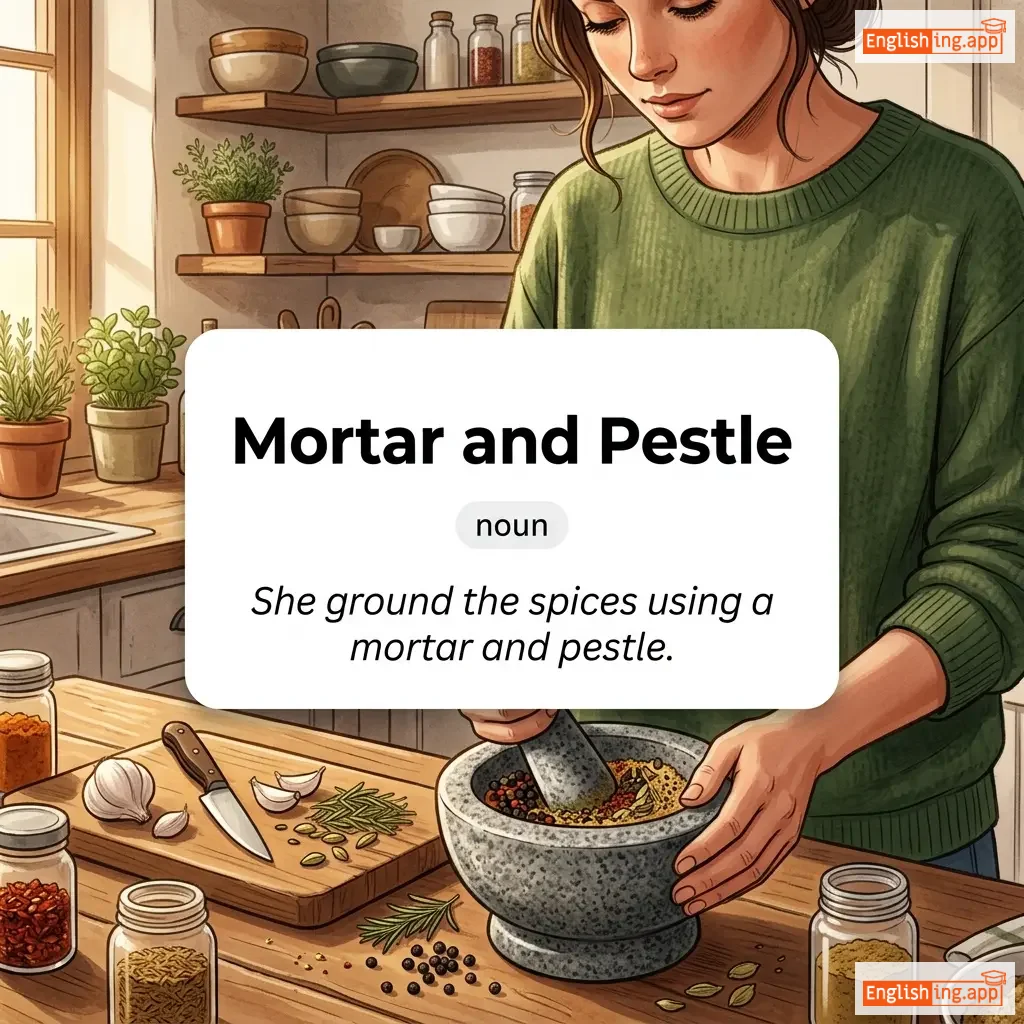
Mortar and Pestle definition card — visual illustration of the meaning
noun C1
/ˈmɔː.tər ænd ˈpes.əl/
Mörser und Stößel (Moerser und Stoeßel)

a bowl and grinding tool used to crush and grind spices, herbs, and other substances

"She ground the spices using a mortar and pestle."

"Sie mahlte die Gewürze mit einem Mörser und Stößel." (Sie mahlte die Gewürze mit einem Moerser und Stoeßel.)
Mortgage definition card — visual illustration of the meaning
noun C1
/ˈmɔːrɡɪdʒ/
Hypothekendarlehen (hypothekendarlehen)

a legal agreement where a person borrows money to buy property and pays it back over time

"They applied for a mortgage to buy their new house."

"Sie haben ein Hypothekendarlehen beantragt, um ihr neues Haus zu kaufen." (Sie haben ein Hypothekendarlehen beantragt, um ihr neues Haus zu kaufen.)
noun C1
/moʊˈzeɪɪk/
Mosaik (Mosaik)

A picture or pattern produced by arranging together small pieces of stone, tile, or glass.

"The church ceiling was decorated with a beautiful mosaic."

"Die Decke der Kirche war mit einem wunderschönen Mosaik geschmückt." (Die Decke der Kirche war mit einem wunderschoenen Mosaik geschmueckt.)
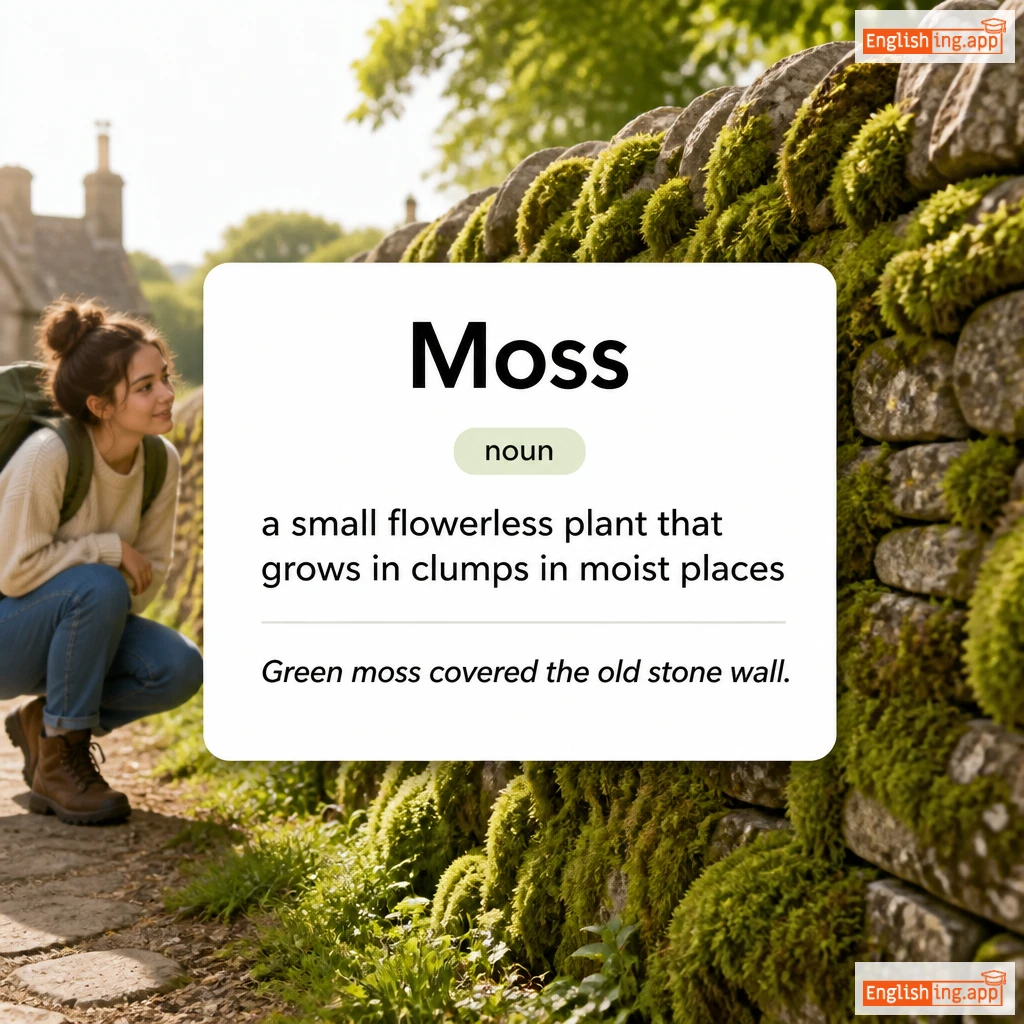
Moss definition card — visual illustration of the meaning
noun C1
/mɔːs/
Moos (Moos)

a small flowerless plant that grows in clumps in moist places

"Green moss covered the old stone wall."

"Das grüne Moos bedeckte die alte Steinmauer." (Das grüne Moos bedeckte die alte Steinmauer.)
adjective C1
/ˈmɒsi/
mit Moos bedeckt; Mooswachsend (mit Moos bedeckt; Mooswachsend)

covered with moss; having moss growing on it

"The old tree trunk was mossy and covered with green vegetation."

"Der alte Baumstamm war moosig und mit grüner Vegetation bedeckt." (Der alte Baumstamm war moosig und mit grüner Vegetation bedeckt.)
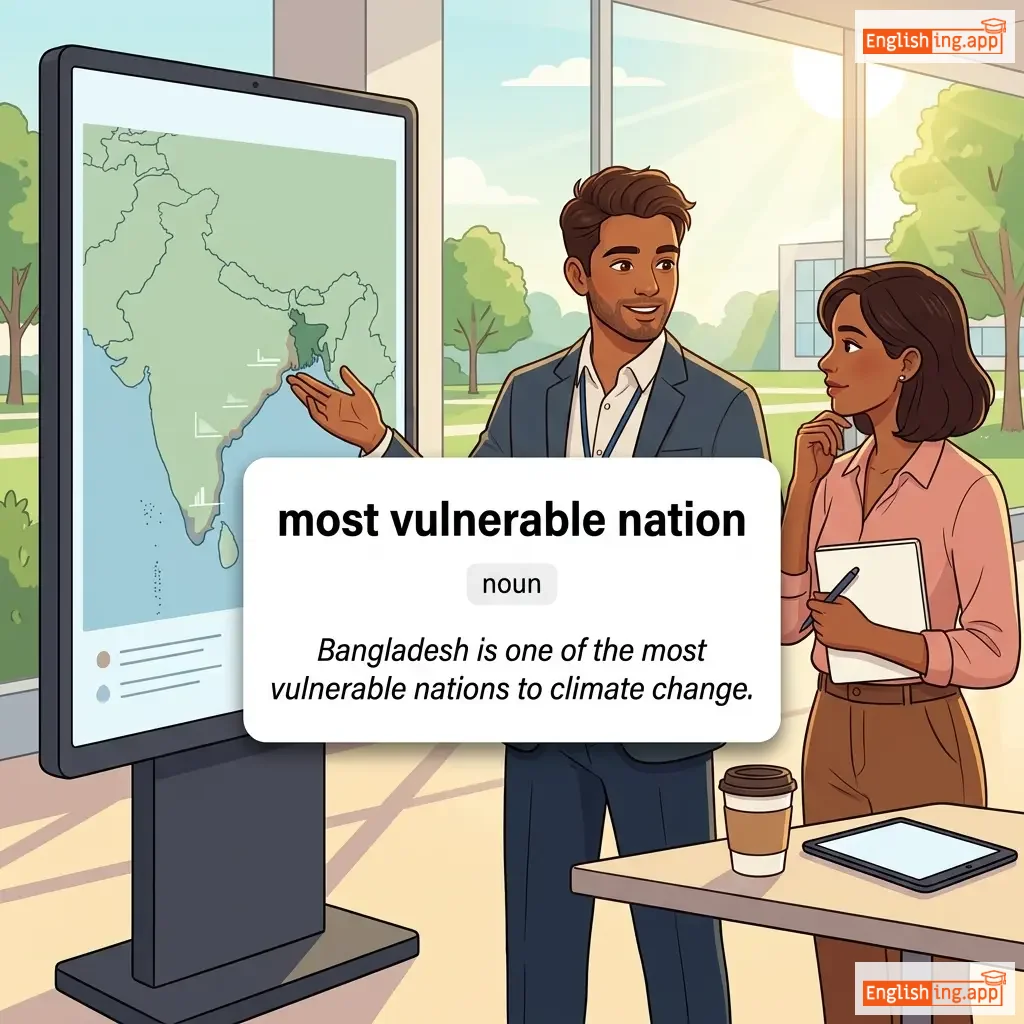
most vulnerable nation definition card — visual illustration of the meaning
noun C1
moʊst ˈvʌlnərəbəl ˈneɪʃən
am stärksten gefährdete Nation (am starksten gefaehrdete nation)

A country that is highly exposed to risks and lacks adequate protection or resilience.

"Bangladesh is one of the most vulnerable nations to climate change."

"Bangladesch ist eines der verwundbarsten Länder gegenüber dem Klimawandel." (Bangladesch ist eines der verwundbarsten Laender gegenueber dem Klimawandel.)
👩‍👧‍👦

Motherly (madərli)

adjective C1
/ˈmʌðərli/
mütterlich (muetterlich)

having qualities characteristic of a mother; caring and protective

"She showed motherly care and affection towards all the children."

"Sie zeigte mütterliche Fürsorge und Zuneigung gegenüber allen Kindern." (Sie zeigte muetterliche Fuersorge und Zuneigung gegenueber allen Kindern.)
noun C1
/moʊˈtiːf/
Motiv (motiif)

A recurring theme, subject, or idea in a work of art or literature.

"The motif of love is central to the novel."

"Das Motiv der Liebe steht im Zentrum des Romans." (das motiv der liebe steht im zentrum des romans)
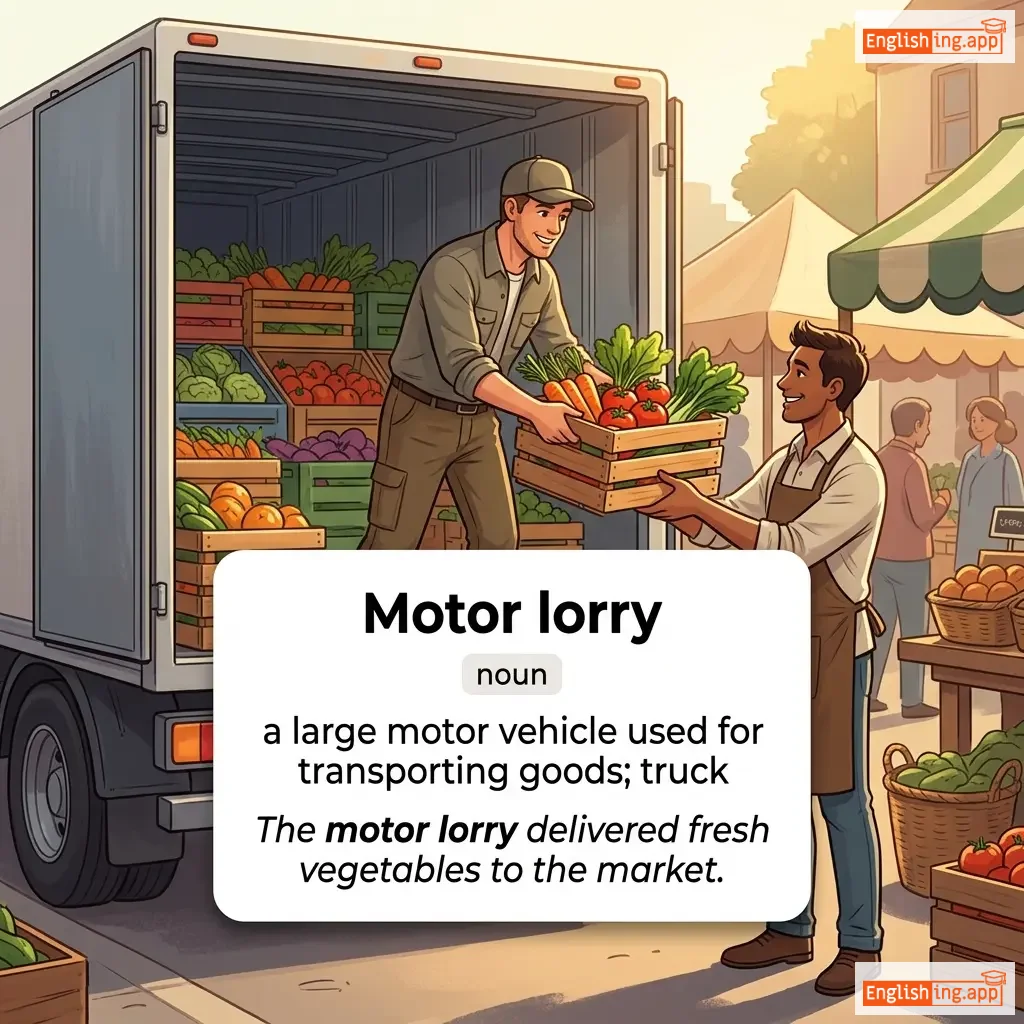
Motor lorry definition card — visual illustration of the meaning
noun C1
/ˈmoʊ.tər ˈlɔː.ri/
Lkw (Lkw)

a large motor vehicle used for transporting goods; truck

"The motor lorry delivered fresh vegetables to the market."

"Der Lastwagen lieferte frisches Gemüse auf den Markt." (Der Lastwagen lieferte frisches Gemüse auf den Markt.)
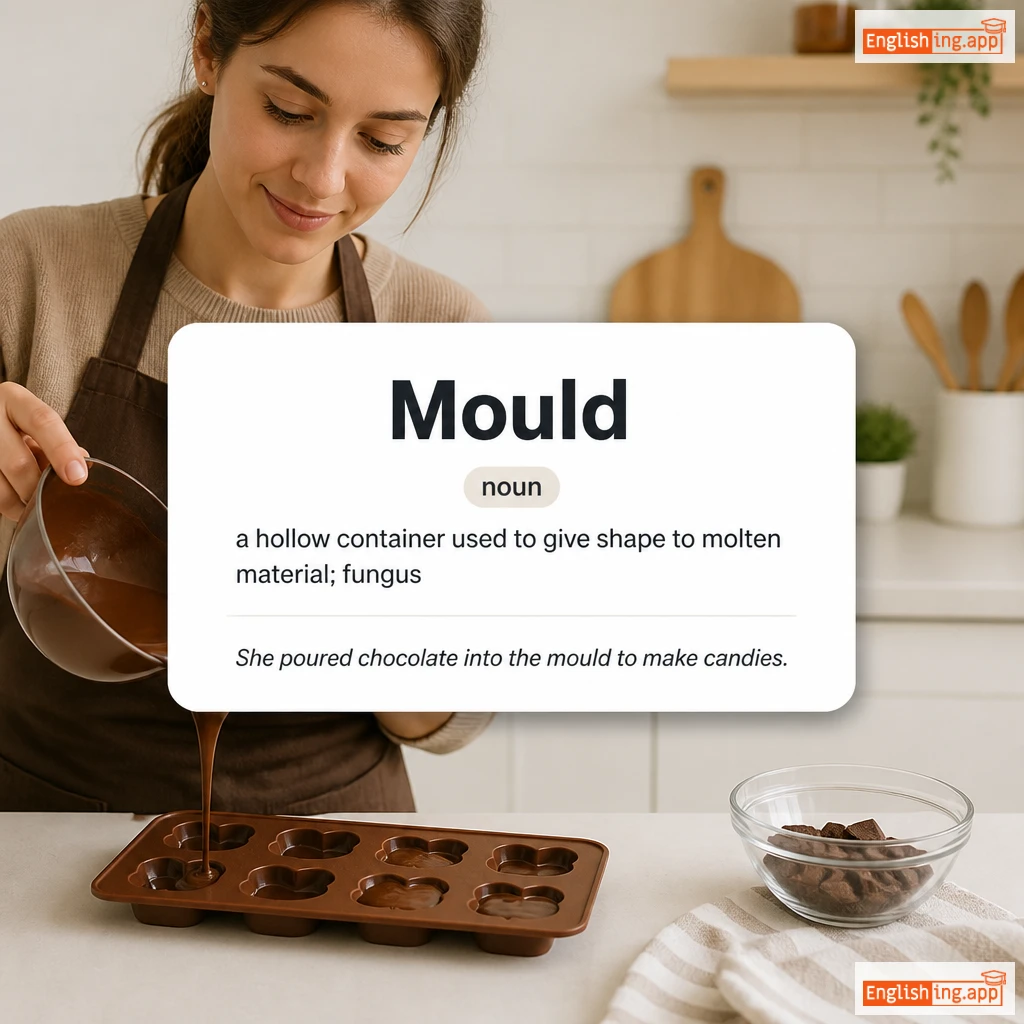
Mould definition card — visual illustration of the meaning
noun C1
/moʊld/
Gussform / Schimmel (goossform / schimmel)

a hollow container used to give shape to molten material; fungus

"She poured chocolate into the mould to make candies."

"Sie goss Schokolade in die Form, um Bonbons herzustellen." (Sie goss Schokolade in die Form um Bonbons herzustellen)
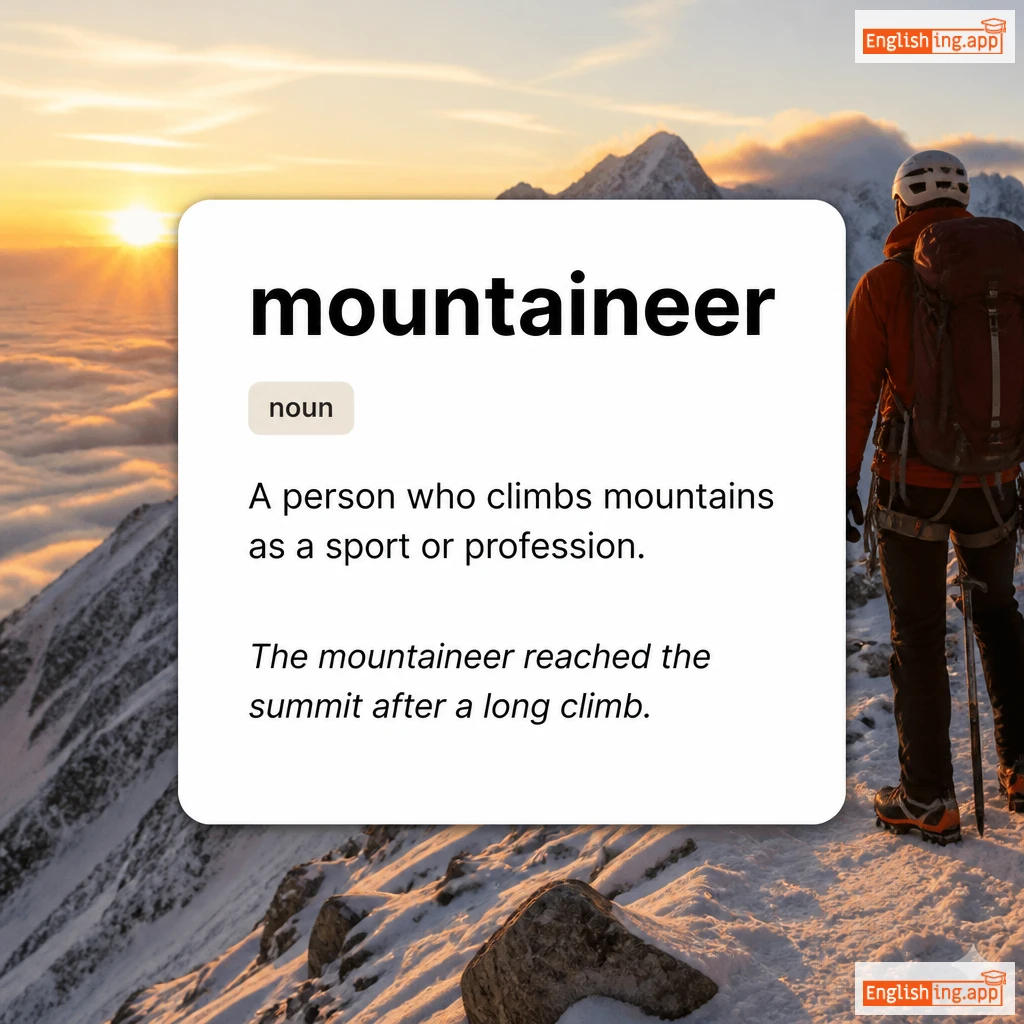
mountaineer definition card — visual illustration of the meaning
noun C1
/ˌmaʊntəˈnɪə/
Bergsteiger (Bergsteiger)

A person who climbs mountains as a sport or profession.

"The mountaineer reached the summit after a long climb."

"Der Bergsteiger erreichte den Gipfel nach einem langen Aufstieg." (Der Bergsteiger erreichte den Gipfel nach einem langen Aufstieg.)
adjective C1
/ˈmaʊntənəs/
bergig (bergig)

Having many mountains; very large or huge in size.

"They traveled through a mountainous region of Nepal."

"Sie reisten durch eine bergige Region in Nepal." (Sie reisten durch eine bergige Region in Nepal.)
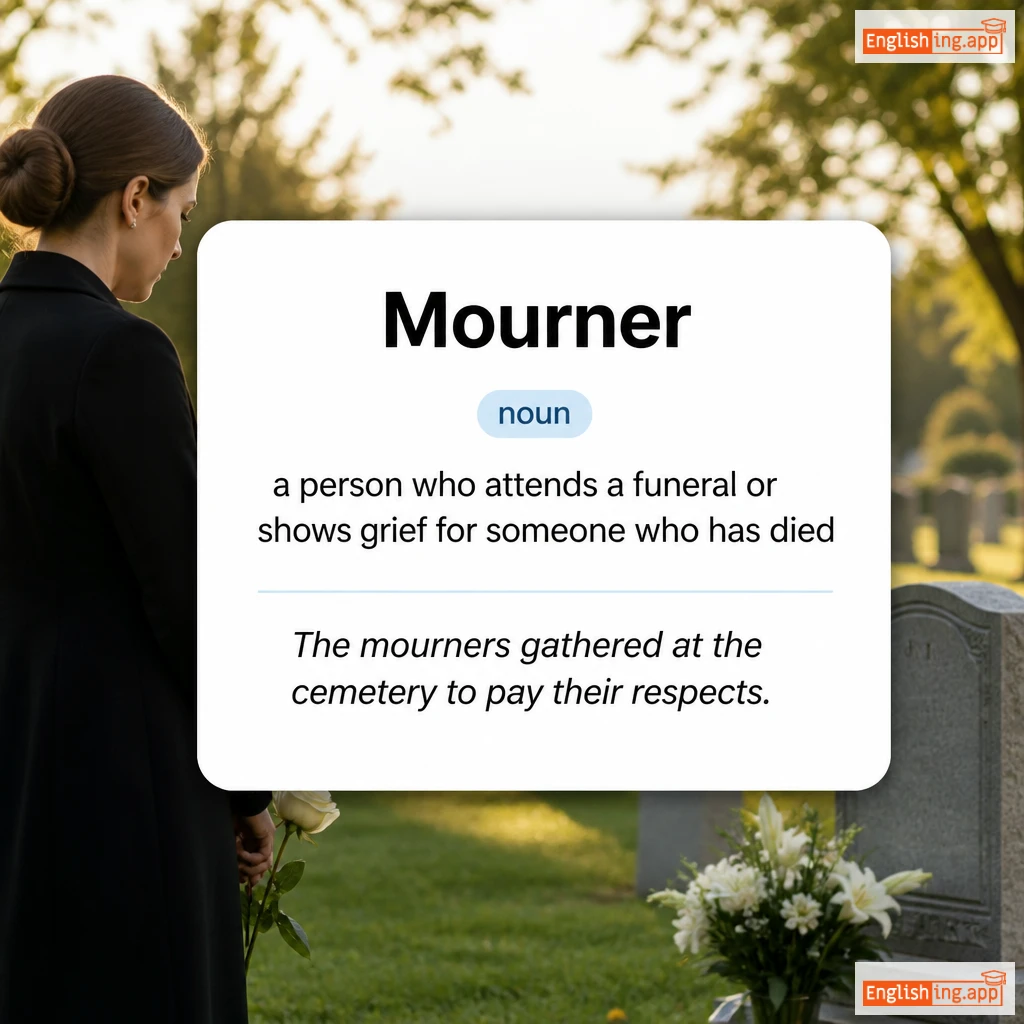
Mourner definition card — visual illustration of the meaning
noun C1
/ˈmɔːr.nər/
Trauernde Person (trauernde person)

a person who attends a funeral or shows grief for someone who has died

"The mourners gathered at the cemetery to pay their respects."

"Die Trauernden versammelten sich auf dem Friedhof, um ihre Respekte zu erweisen." (Die trauernden versammelten sich auf dem Friedhof, um ihre Respekte zu erweisen.)
adjective C1
/ˈmɔːrn.fəl/
traurig (traurig)

feeling, expressing, or causing sadness or grief

"The mournful song reminded her of lost loved ones."

"Das traurige Lied erinnerte sie an ihre verlorenen Liebsten." (Das traurige Lied erinnerte sie an ihre verlorenen Liebsten.)
noun C1
/ˈmaʊθ.fʊl/
Bissen (Bissen)

the amount of food or drink that fills the mouth, or a long and difficult word or phrase

"He took a big mouthful of water after the run."

"Er nahm einen großen Bissen Wasser nach dem Lauf." (Er nahm einen großen Bissen Wasser nach dem Lauf.)
adjective C1
/ˈmuː.və.bl̩/
beweglich; tragbar; versetzbar (beweglich; tragbar; versetzbar)

capable of being moved; not fixed in position

"The furniture is movable so we can rearrange the room easily."

"Das Mobiliar ist beweglich, sodass wir den Raum leicht neu anordnen können." (Das Mobiliar ist beweglich, sodass wir den Raum leicht neu anordnen koennen.)
verb C1
/ˈmʌd.əl/
verwirren (verwirren)

to mix things up in a confused way or to make a mess of something

"He muddled the papers and couldn’t find the report."

"Er hat die Papiere durcheinander gebracht und konnte den Bericht nicht finden." (Er hat die Papiere durcheinander gebracht und konnte den Bericht nicht finden.)
Muffler definition card — visual illustration of the meaning
noun C1
/ˈmʌflər/
Schalldämpfer (schalldaempfer)

a device on a vehicle's exhaust to reduce noise; also a scarf worn around the neck for warmth

"The car's muffler needs to be replaced."

"Der Auspuff des Autos muss ersetzt werden." (Der Auspuff des Autos muss ersetzt werden.)
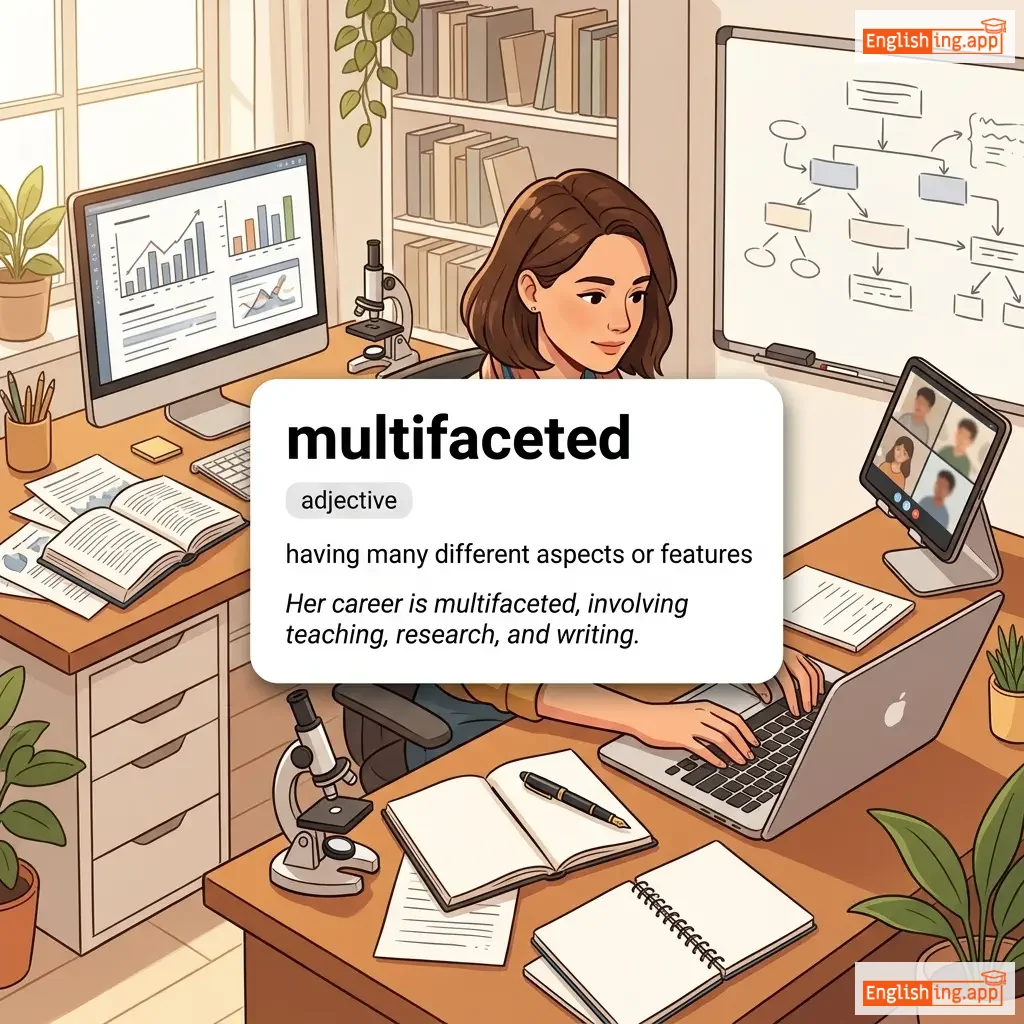
multifaceted definition card — visual illustration of the meaning
adjective C1
/ˌmʌltiˈfæsɪtɪd/
vielseitig (vielseitig)

having many different aspects or features

"Her career is multifaceted, involving teaching, research, and writing."

"Ihre Karriere ist vielseitig, sie umfasst Lehre, Forschung und Schreiben." (Ihre Karriere ist vielseitig, sie umfasst Lehre, Forschung und Schreiben.)
noun C1
/ˌmʌltɪˈplɪsɪti/
Vielfalt (Vielfelt)

A large number or variety of something.

"The project faced a multiplicity of challenges."

"Das Projekt stieß auf eine Vielzahl von Herausforderungen." (Das Projekt stiess auf eine Vielzahl von Herausforderungen.)
multiplier definition card — visual illustration of the meaning
noun C1
/ˈmʌltɪplaɪər/
Multiplikator (Multiplikator)

a number or factor by which another number is multiplied; something that increases the effect or value of something else

"In economics, government spending can act as a multiplier for economic growth."

"In der Wirtschaft können staatliche Ausgaben ein Multiplikator für Wachstum sein." (in der wirtschaft koennen staatliche ausgaben ein multiplikator fuer wachstum sein)