Vocabulaires

Découvrez, apprenez et maîtrisez le vocabulaire anglais

adjective C1
/ˈlɒf.ti/
高い (takai)

Of great height; elevated in character or style; noble.

"He set himself the lofty goal of ending poverty."

"彼は貧困を終わらせるというloftyな目標を設定した。" (Kare wa hinkon o owaraseru to iu lofty na mokuhyō o settei shita.)
noun C1
/lɔnˈdʒɛvəti/
長寿 (chouju)

Long life or long existence of something.

"Good habits contribute to health and longevity."

"良い習慣は健康と長寿に貢献します。" (Yoi shuukan wa kenkou to chouju ni kouken shimasu.)
noun C1
/ˈlʊkaʊt/
監視, 見張り (kanshi, mihari)

A place for watching; a person keeping watch.

"The guard kept a lookout for suspicious activity."

"ガードは怪しい活動に目を光らせていました。" (Gaado wa ayashii katsudou ni me wo hikarasete imashita.)
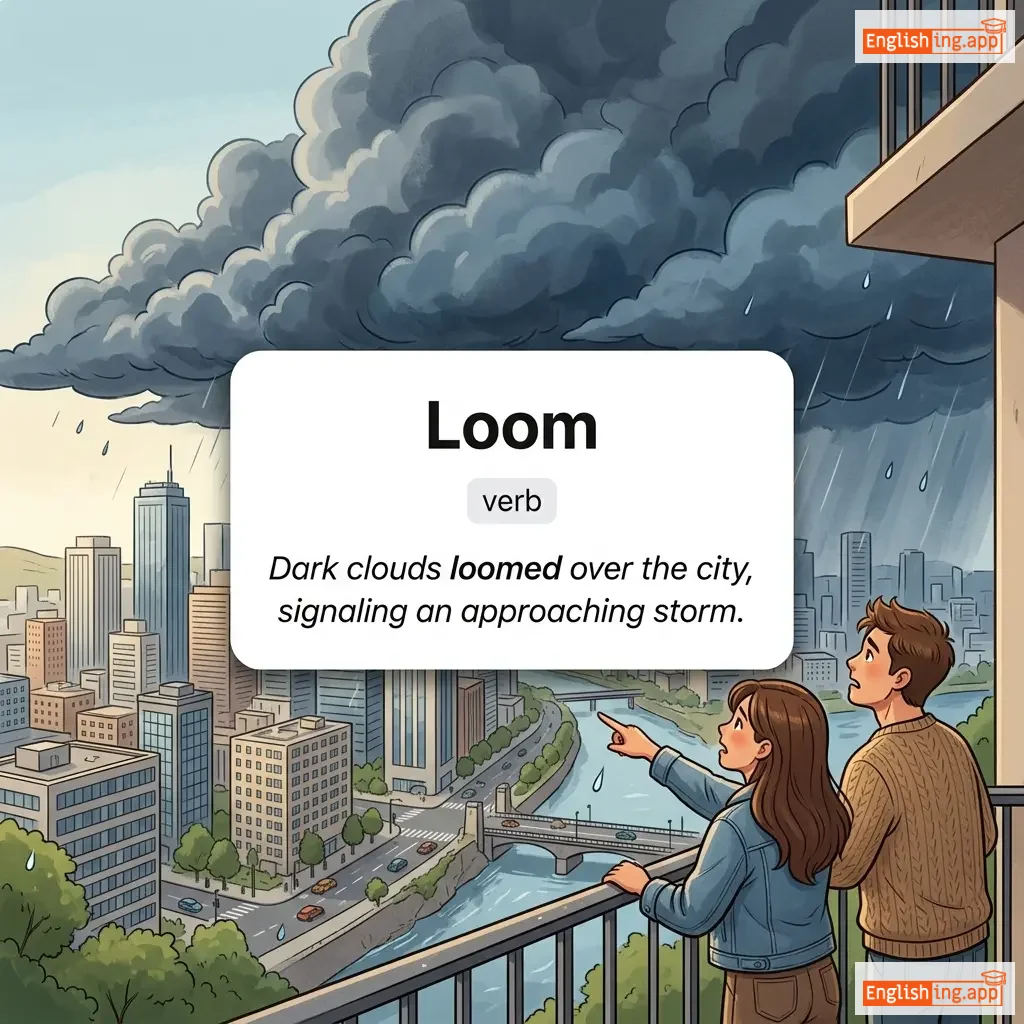
Loom definition card — visual illustration of the meaning
🌩️

Loom

verb C1
/luːm/

to appear as a large, often frightening or unclear shape, usually something threatening or about to happen

"Dark clouds loomed over the city, signaling an approaching storm."

verb C1
/luːt/
略奪する (ryakudatsu suru)

to steal goods, typically during war, riot, or chaos

"The rioters looted several shops during the protest."

"抗議の間に暴動者たちはいくつかの店を略奪した。" (Kougi no aida ni boudou-sha tachi wa ikutsuka no mise o ryakudatsu shita.)
adjective C1
/ˈlɑːpˌsaɪdɪd/
片側が低い、または不均衡な (katasokoga hikui, matawa fukinoukan)

with one side lower, larger, or different from the other; uneven or imbalanced

"The cake looked lopsided after being decorated in a hurry."

"急いで飾った後、ケーキは不均衡に見えた。" (Isoide kazatta ato, kēki wa fukinou ni mieta.)
adjective C1
/ˈlaʊzi/
ひどい (hidoi)

of very poor quality; bad or unpleasant

"He felt lousy after catching the flu."

"インフルエンザにかかった後、彼はひどく感じた。" (Infuruenza ni kakatta ato, kare wa hidoku kanjita.)
adjective C1
/ˌloʊ ˈspɪrɪtɪd/
落ち込んだ (ochikonda)

feeling sad, depressed, or lacking enthusiasm

"He felt low-spirited after hearing the bad news."

"悪いニュースを聞いて、彼は落ち込んでいた。" (Warui nyūsu o kiite, kare wa ochikonde ita.)
adjective C1
/ˈloʊli/
謙虚 (kenkyo)

humble in status, position, or manner

"She rose from a lowly position to become the company's CEO."

"彼女は低い地位から会社のCEOに昇進しました。" (Kanojo wa hikui chii kara kaisha no CEO ni shoushin shimashita.)
verb C1
/ˈluːbrɪkeɪt/
潤滑する (junkatsu suru)

to apply oil or grease to reduce friction between surfaces

"The mechanic lubricated the car engine parts."

"整備士は車のエンジンパーツに潤滑油を塗布しました。" (Seibishi wa kuruma no enjin pātsu ni junkatsu-yu o tofushimashita.)
lubrication definition card — visual illustration of the meaning
noun C1
ˌluː.brɪˈkeɪ.ʃən
潤滑 (junkatsu)

The application of a substance such as oil or grease to reduce friction between moving parts.

"Lubrication reduces wear and tear in machines."

"潤滑は機械の摩耗を軽減します。" (junkatsu wa kikai no masatsu o keigen shimasu)
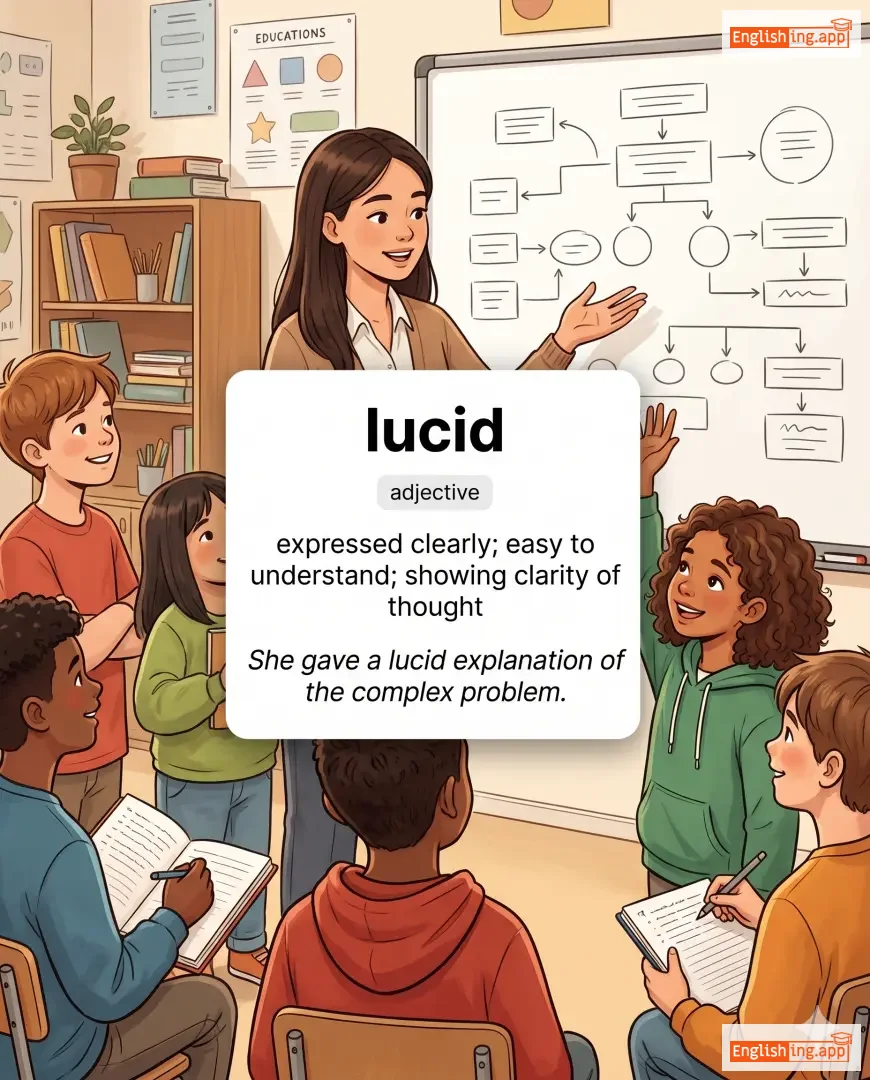
lucid definition card — visual illustration of the meaning
adjective C1
/ˈluːsɪd/
明晰 (meiseki)

expressed clearly; easy to understand; showing clarity of thought

"She gave a lucid explanation of the complex problem."

"彼女は複雑な問題の明確な説明をしました。" (Kanojo wa fukuzatsu na mondai no meikaku na setsumei o shimashita.)
lucrative definition card — visual illustration of the meaning
adjective C1
/ˈluːkrətɪv/
利益を生む (rieki o umu)

producing a great deal of profit

"He left his job for a more lucrative business opportunity."

"彼はより利益を生むビジネスチャンスのために仕事を辞めた。" (Kare wa yori rieki o umu bijinesu chansu no tame ni shigoto o yameta.)
adjective C1
/ˈluːdɪkrəs/
ばかげた (bakageta)

so foolish, unreasonable, or out of place as to be amusing

"It is ludicrous to think the Earth is flat."

"地球が平らだと思うのはばかげている。" (Chikyuu ga hirada to omou no wa bakageteiru.)
Luggage van definition card — visual illustration of the meaning
noun C1
/ˈlʌɡ.ɪdʒ væn/
荷物車 (nimotsu-sha)

a vehicle designed for carrying luggage and cargo

"The luggage van carried all the passengers' suitcases."

"荷物車はすべての乗客のスーツケースを運びました。" (Nimotsu-sha wa subete no jōkyaku no sūtsukēsu o hakomimashita)
lull definition card — visual illustration of the meaning
😴

lull

verb C1
/lʌl/

to calm or send to sleep, typically with soothing sounds or movements

"The mother lulled the baby to sleep with a gentle song."

noun C1
/ˈlʌləˌbaɪ/
子守唄 (komoriuta)

a soothing song sung to help a child fall asleep

"She sang a lullaby to her baby every night."

"彼女は毎晩赤ちゃんに子守唄を歌っていた。" (Kanojo wa maiban akachan ni komoriuta o utatte ita)
verb C1
/ˈlʌmbər/
重い足取りで歩く (omoi ashidori de aruku)

to move in a slow, heavy, awkward way

"The bear lumbered through the forest in search of food."

"クマは食べ物を探して森を重い足取りで歩いた。" (Kuma wa tabemono o sagashite mori o omoi ashidori de aruita.)
noun C1
/ˌluː.mɪˈnɒs.ɪ.ti/
光度 (kōdo)

The intrinsic brightness of a celestial object; the quality of emitting light.

"The luminosity of the star was measured with advanced instruments."

"星の光度は高度な機器で測定されました。" (Hoshi no kōdo wa kōdo na kiki de sokutei saremashita.)
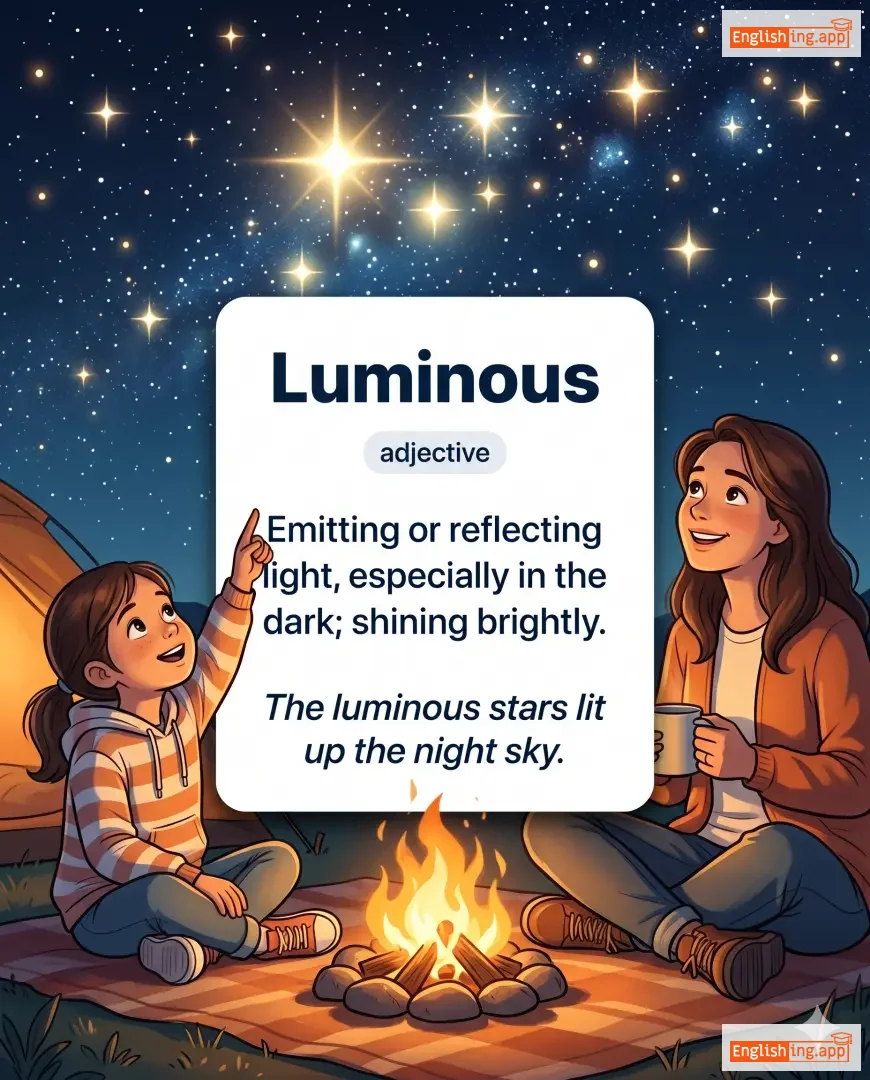
Luminous definition card — visual illustration of the meaning
adjective C1
/ˈluː.mɪ.nəs/
光輝の (kōki no)

Emitting or reflecting light, especially in the dark; shining brightly.

"The luminous stars lit up the night sky."

"光輝の星々が夜空を照らした。" (Kōki no hoshiboshi ga yozora o terashita.)
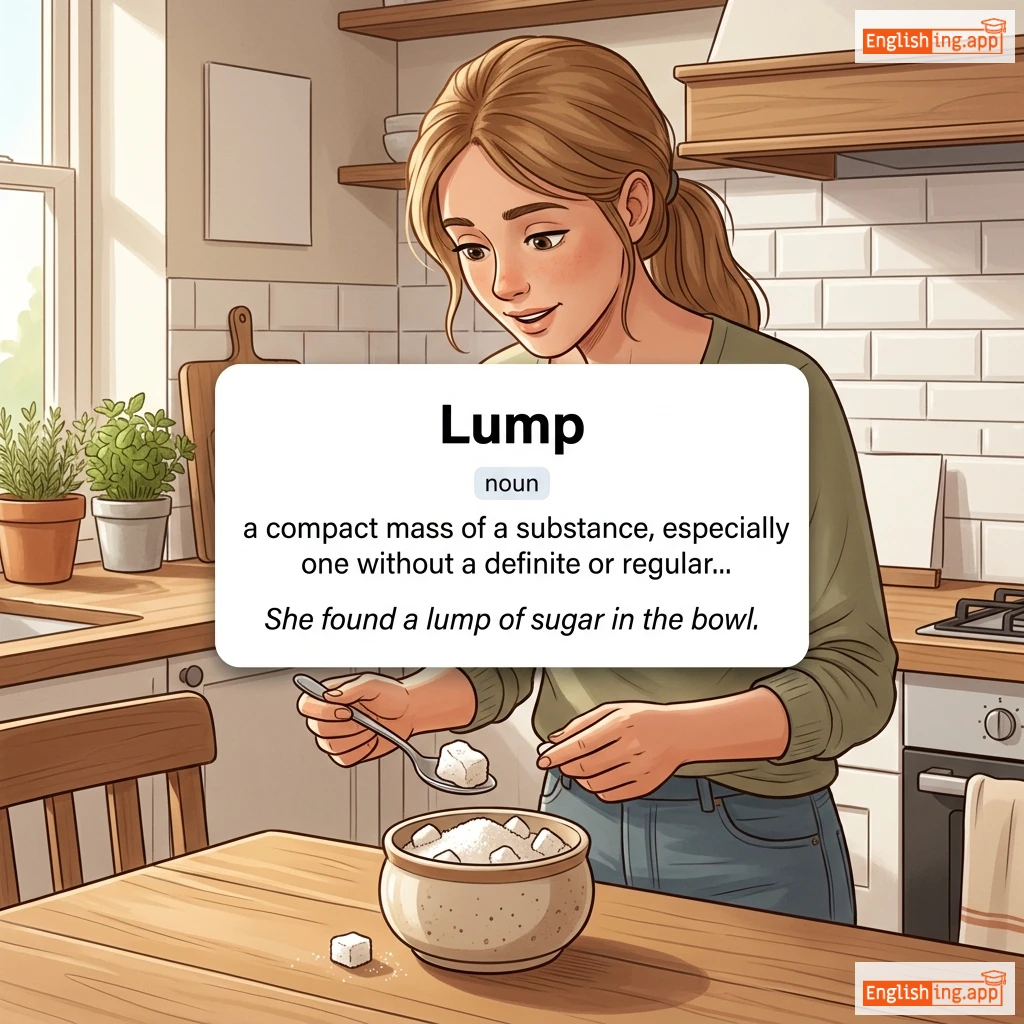
Lump definition card — visual illustration of the meaning
noun C1
/lʌmp/
かたまり; ぶつかり; こぶ (katamari; butsukari; kobu)

a compact mass of a substance, especially one without a definite or regular shape

"She found a lump of sugar in the bowl."

"彼女はボウルの中で砂糖の塊を見つけました。" (Kanojo wa bōru no naka de satō no katamari o mitsukemashita.)
noun/adjective C1
/ˈluː.nə.tɪk/
狂人 (kyoujin)

A person who is insane or acting in a foolish or reckless way; also used as an adjective meaning insane.

"The driver was driving like a lunatic on the highway."

"運転手は高速道路で狂人のように運転していた。" (Untenshu wa kousokudouro de kyoujin no you ni unten shite ita.)
🤢

lurch

verb, noun C1
/lɜːrtʃ/

to make an abrupt, unsteady, or uncontrolled movement; a sudden movement or stagger

"The bus lurched forward as the driver hit the brakes."

verb C1
/lʊər/
誘惑する (yūwaku suru)

to attract or tempt someone, often by offering something appealing

"The advertisement lured customers with promises of discounts."

"広告は割引の約束で顧客を引き寄せました。" (Kōkoku wa waribiki no yakusoku de kokyaku o hikiyosemashita.)
adjective C1
/ˈljʊərɪd/
衝撃的で生々しいセンセーショナル (shōgeki-teki de namamashī sensēshonaru)

shocking or sensational in a vivid way, often involving crime or violence

"The newspaper published a lurid account of the crime."

"新聞は犯罪について衝撃的な詳細を掲載した。" (Shimbun wa hanzai ni tsuite shōgeki-teki na shōsai o keisai shita.)
verb C1
/lɜːrk/
潜む (hisomu)

to remain hidden so as to wait for an opportunity to attack or observe

"A stranger lurked in the shadows."

"見知らぬ人が影の中に潜んでいた。" (Mishiranu hito ga kage no naka ni hison de ita.)
adjective C1
/ˈlʌʃəs/
美味しい (oishii)

deliciously sweet or rich; highly appealing to the senses

"She served a luscious chocolate cake."

"彼女は美味しいチョコレートケーキを出しました。" (Kanojo wa oishii chokoreeto keeki o dashimashita.)
adjective C1
/lʌʃ/
豊かで豊富で贅沢な、特に植物に関して (yutaka de hōfu de zeitakuna, tokuni shokubutsu ni kanshite)

rich, abundant, and luxurious, especially referring to vegetation

"The valley was filled with lush green fields."

"谷は緑豊かな畑で満たされていました。" (tani wa midori yutakana hatake de mitasareteimashita.)
Lust definition card — visual illustration of the meaning
noun C1
/lʌst/
欲望 (yokubou)

a very strong sexual desire or an intense craving for something

"His mind was clouded by lust for power."

"彼の心は権力への欲望に覆われていた。" (kare no kokoro wa kenryoku e no yokubou ni owarete ita.)
noun C1
/ˈlʌstər/
光沢 (koutaku)

a gentle sheen or soft glow, especially from a polished surface

"The diamond had a brilliant luster."

"ダイヤモンドは輝く光沢を持っていた。" (Daiyamondo wa kagayaku koutaku o motte ita.)
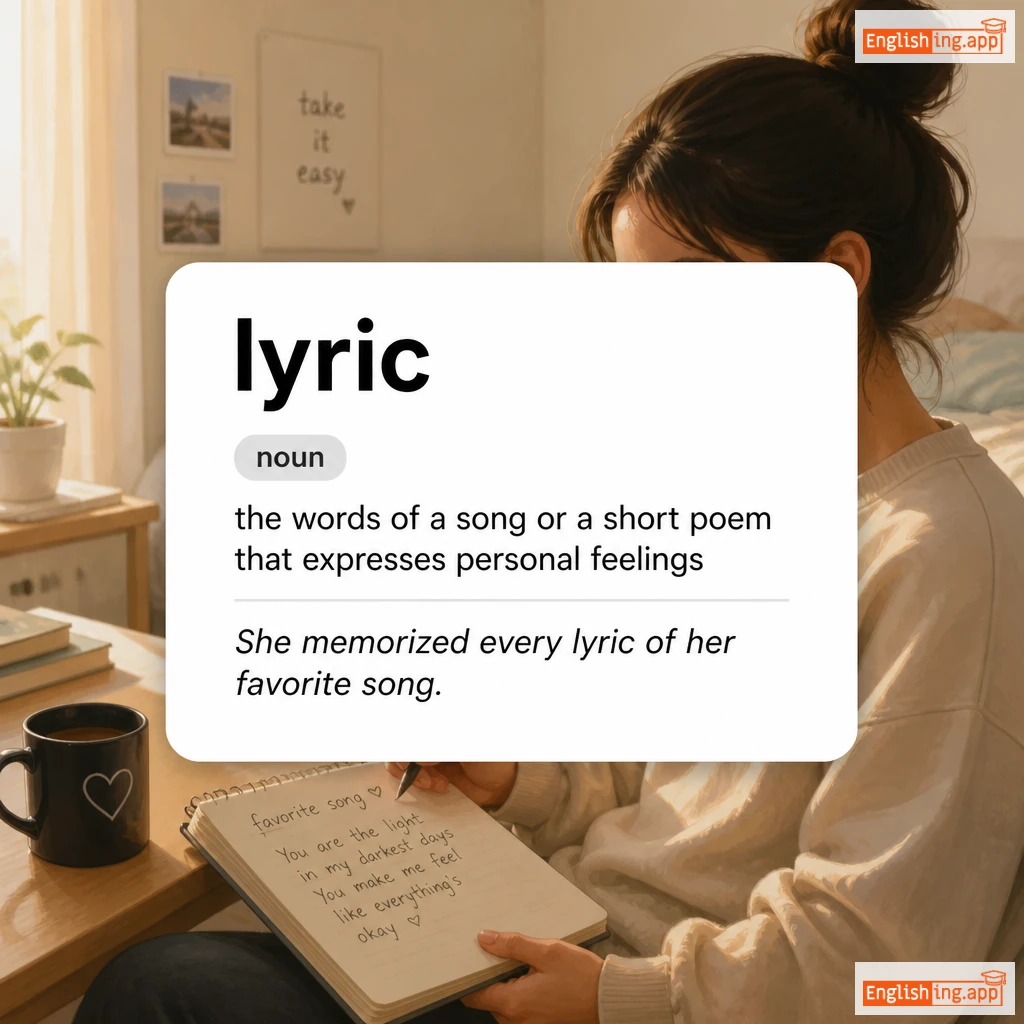
lyric definition card — visual illustration of the meaning
noun C1
/ˈlɪrɪk/
歌詞 (kashi)

the words of a song or a short poem that expresses personal feelings

"She memorized every lyric of her favorite song."

"彼女はお気に入りの歌の歌詞をすべて覚えていました。" (Kanojo wa okiniiri no uta no kashi o subete oboeteimashita.)
adjective C1
/məˈkɑːbrə/
恐ろしい (osoroshii)

disturbing and horrifying because of involvement with or depiction of death and injury

"The horror movie had a macabre ending."

"ホラー映画には恐ろしい結末がありました。" (Horā eiga ni wa osoroshī ketsumatsu ga arimashita.)
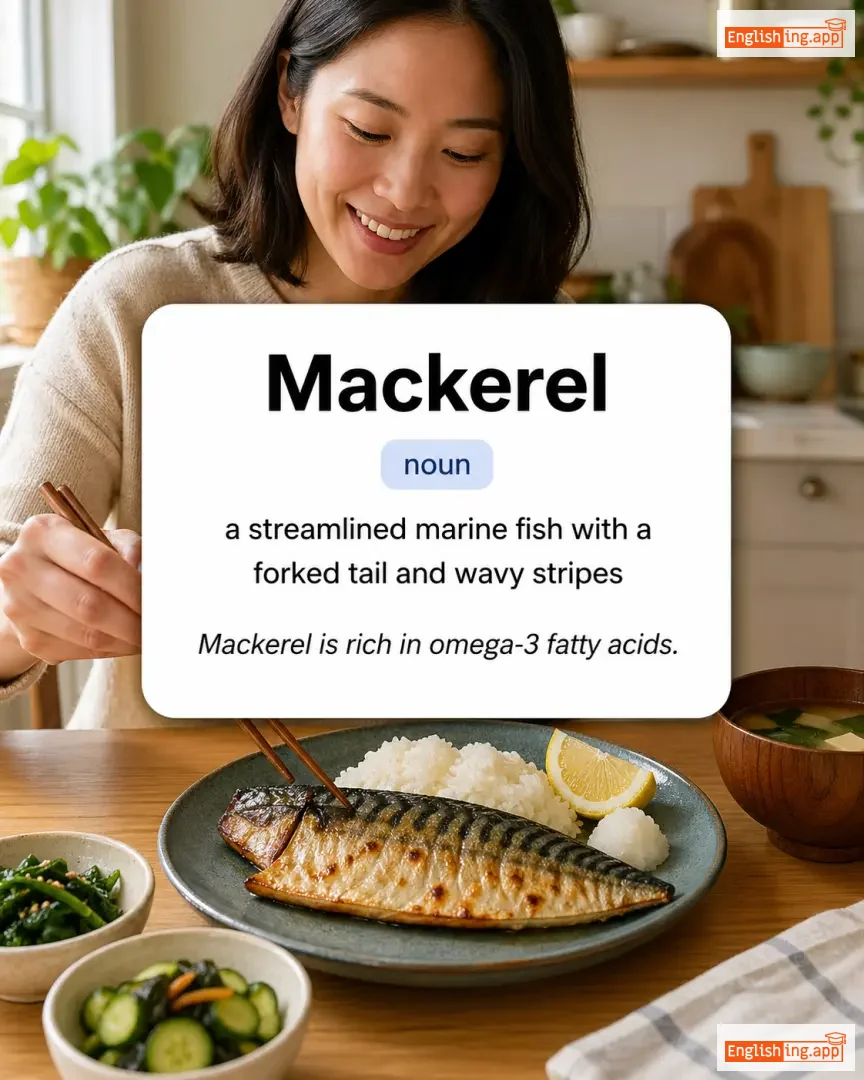
Mackerel definition card — visual illustration of the meaning
noun C1
/ˈmæk.ər.əl/
サバ (saba)

a streamlined marine fish with a forked tail and wavy stripes

"Mackerel is rich in omega-3 fatty acids."

"サバはオメガ3脂肪酸が豊富です。" (saba wa omega suri shibo san ga ho fu desu)
macroeconomic definition card — visual illustration of the meaning
adjective C1
/ˌmæk.rəʊ.iː.kəˈnɒm.ɪk/
マクロ経済学的 (makuro keizaigakuteki)

Relating to macroeconomics or the large-scale or general economic factors, such as interest rates and national productivity.

"Macroeconomic policies influence inflation and employment rates."

"マクロ経済政策はインフレと雇用率に影響を与えます。" (Makuro keizai seisaku wa infure to koyō ritsu ni eikyō o ataemasu.)
macronutrients definition card — visual illustration of the meaning
noun C1
/ˈmæk.rəʊˌnjuː.tri.ənts/
マクロン栄養素 (makuron eiyouso)

Nutrients that are needed in large amounts to provide energy and building materials for the body, including carbohydrates, proteins, and fats.

"Proteins, fats, and carbohydrates are vital macronutrients."

"タンパク質、脂肪、炭水化物は重要なマクロン栄養素です。" (Tanpakushitsu, shibou, tansuikabutsu wa juuyou na makuron eiyouso desu.)
verb C1
/ˈmæd.ən/
怒らせる (okoraseru)

To make someone very angry or extremely annoyed.

"The constant noise maddened him."

"絶え間ない音が彼を怒らせた。" (Taemanai oto ga kare o okoraseta.)
adjective C1
/məˈdʒen.tə/
マゼンタ色 (majenta iro)

a bright purplish-red color

"She wore a beautiful magenta dress to the party."

"彼女はパーティーに美しいマジェンタ色のドレスを着て行った。" (Kanojo wa pātī ni utsukushī majenta iro no doresu o kite itta.)
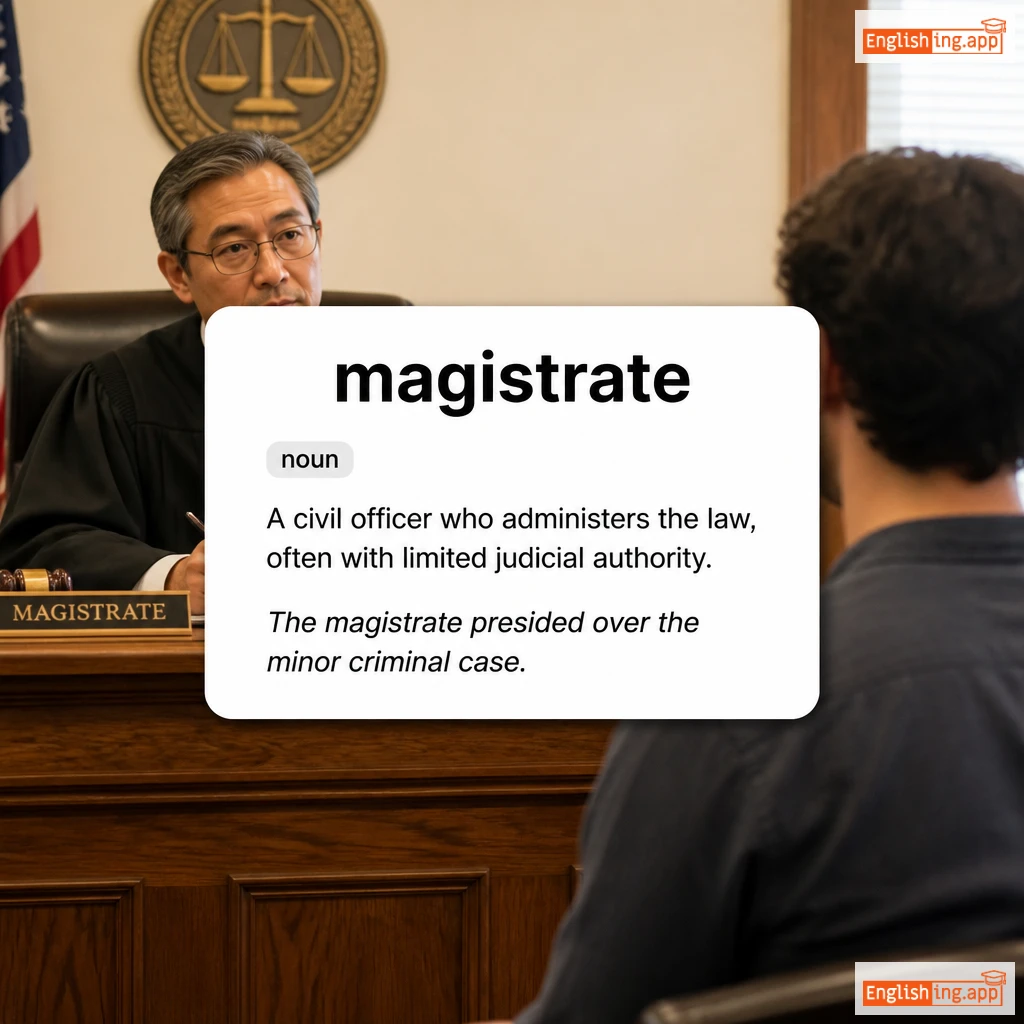
magistrate definition card — visual illustration of the meaning
noun C1
/ˈmædʒɪstreɪt/
裁判官 (saibankan)

A civil officer who administers the law, often with limited judicial authority.

"The magistrate presided over the minor criminal case."

"裁判官は軽犯罪の事件を審理しました。" (Saibankan wa keihanzai no jiken o shinri shimashita.)
Magnate definition card — visual illustration of the meaning
noun C1
/ˈmæɡneɪt/
富豪 (fugou)

A wealthy and influential person, especially in business or industry.

"The oil magnate donated millions to charity."

"石油の富豪は慈善活動に何百万ドルも寄付しました。" (Sekiyu no fugou wa jizen katsudō ni nan byakuman doru mo kifushimashita.)
noun C1
/mæɡˈnɪfɪsəns/
壮麗 (sōrei)

splendor, grandeur, or impressive beauty

"The magnificence of the palace left everyone speechless."

"宮殿の壮麗さに誰もが言葉を失った。" (Kyūden no sōrei-sa ni daremo ga kotoba o ushinatta.)
verb C1
/ˈmæɡnɪfaɪ/
拡大する (kakudai suru)

to make something appear larger or more important than it really is

"The microscope can magnify tiny cells."

"顕微鏡は小さな細胞を拡大できます。" (Kenbikyō wa chiisana saibo o kakudai dekimasu.)
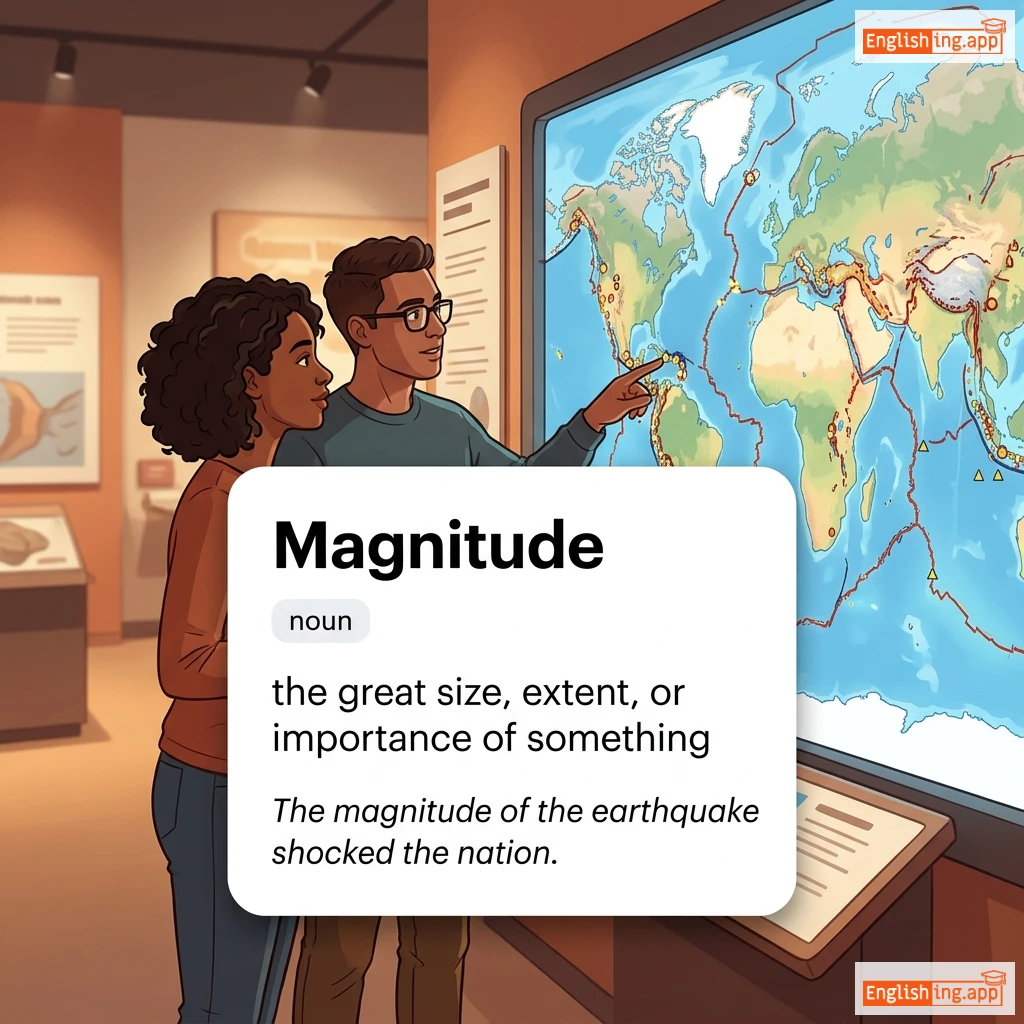
Magnitude definition card — visual illustration of the meaning
noun C1
/ˈmæɡnɪtuːd/
規模 (kibo)

the great size, extent, or importance of something

"The magnitude of the earthquake shocked the nation."

"地震の規模は国を驚かせました。" (Jishin no kibo wa kuni o odorokasemashita.)
Mail train definition card — visual illustration of the meaning
noun C1
/meɪl treɪn/
郵便列車 (yūbin ressha)

a train that carries mail and postal packages

"The mail train departs every evening to deliver letters across the country."

"メール列車は毎晩、国内中に手紙を届けるために出発します。" (Mēru ressha wa maiban, kokunai jū ni tegami o todokeru tame ni shuppatsu shimasu.)
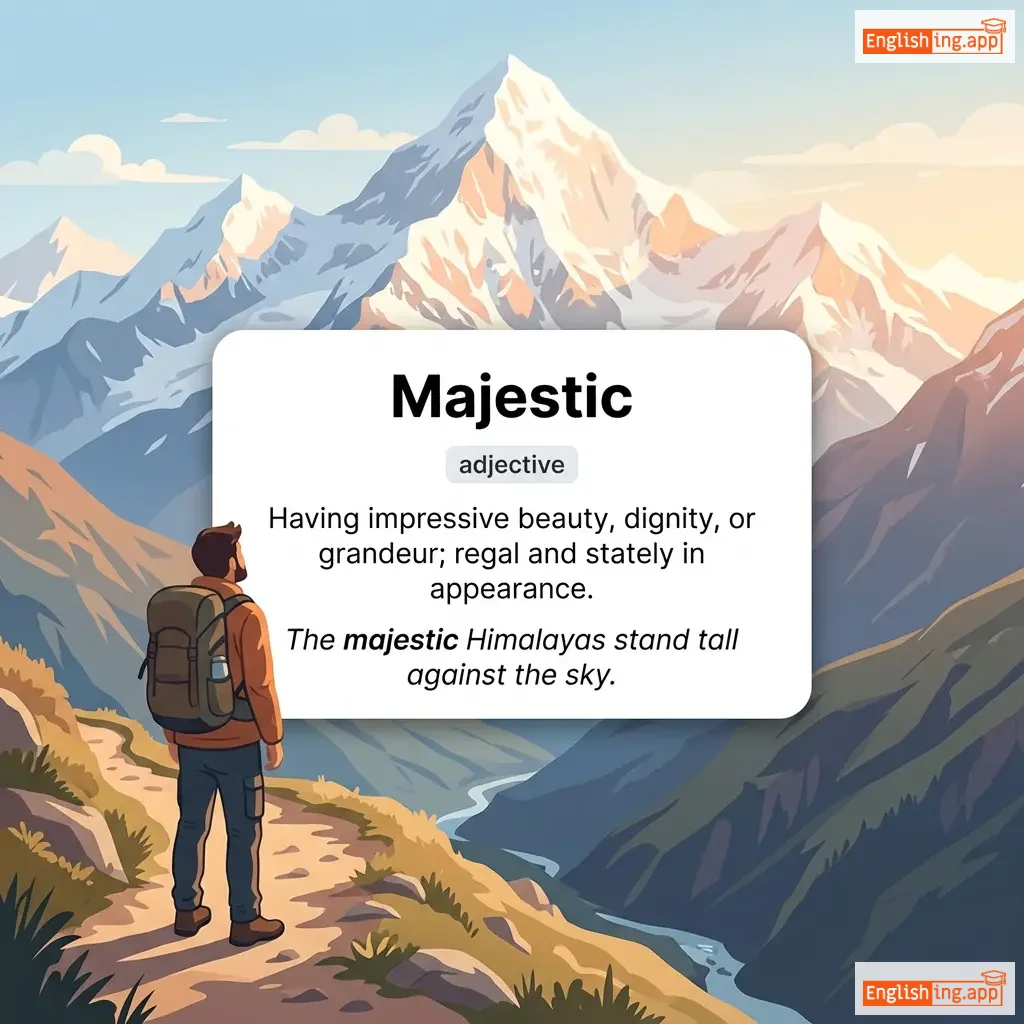
Majestic definition card — visual illustration of the meaning
adjective C1
məˈdʒes.tɪk
壮大な (sōdaina)

Having impressive beauty, dignity, or grandeur; regal and stately in appearance.

"The majestic Himalayas stand tall against the sky."

"壮大なヒマラヤ山脈は空に向かって高くそびえ立っています。" (Sōdaina Himaraya sanmyaku wa sora ni mukatte takaku sobietatteimasu.)
adjective C1
/ˈmeɪkˌʃɪft/
即席の (sokuseki no)

used as a temporary substitute; improvised

"They used boxes as a makeshift table."

"彼らは箱を即席のテーブルとして使った。" (Karera wa hako o sokuseki no tēburu to shite tsukatta.)
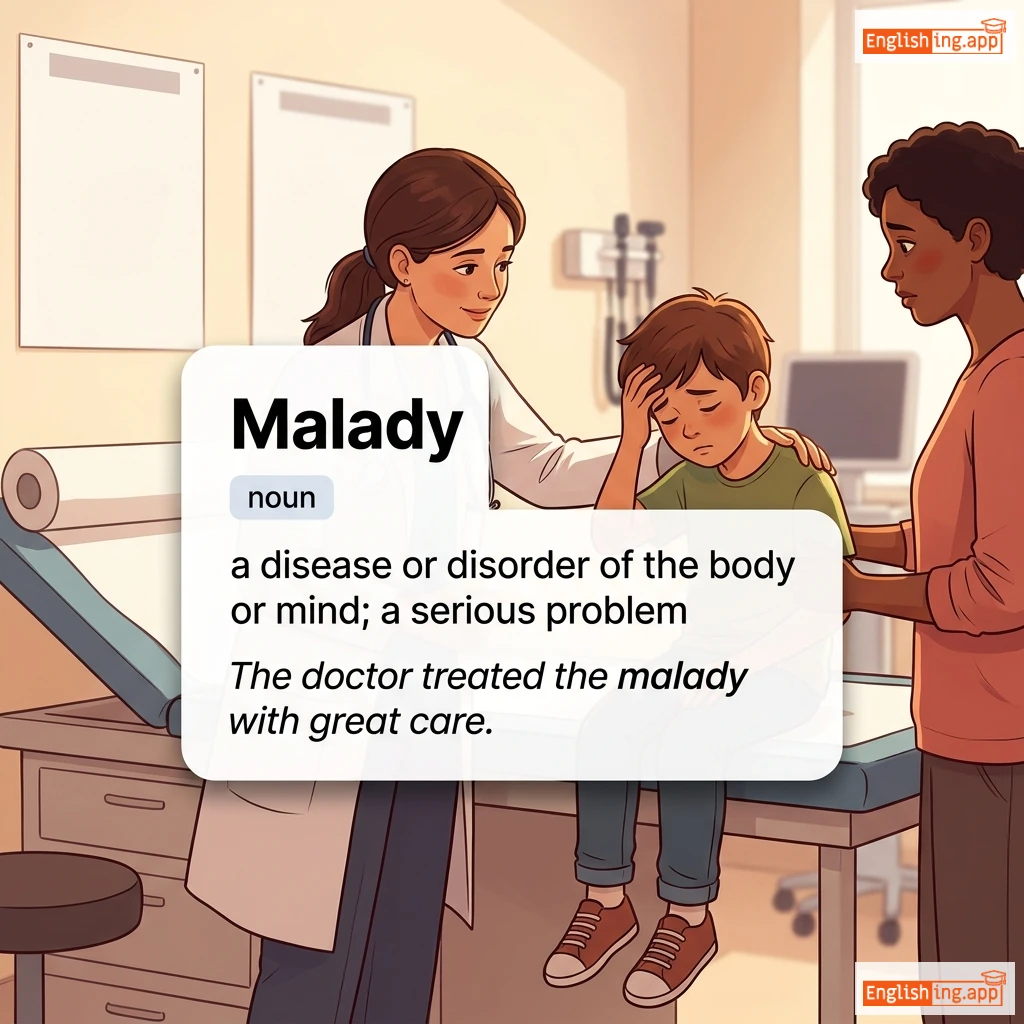
Malady definition card — visual illustration of the meaning
noun C1
/ˈmælədi/
病気 (byouki)

a disease or disorder of the body or mind; a serious problem

"The doctor treated the malady with great care."

"医者は病気を慎重に治療しました。" (Isha wa byouki wo shinchou ni chiryou shimashita.)
noun C1
/məˈleɪz/
不調 (fuchou)

a general feeling of discomfort, illness, or unease whose exact cause is difficult to identify

"After the long journey, she felt a general malaise."

"長時間の旅行の後、彼女は一般的な不調を感じました。" (Choujikan no ryokou no ato, kanojo wa ippan-teki na fuchou o kanjimashita.)
adjective C1
/məˈlɛvələnt/
悪意のある (akui no aru)

Having or showing a wish to do evil or harm to others.

"The malevolent glare in his eyes frightened the children."

"彼の目に浮かぶ悪意のある視線は子供たちを怖がらせた。" (Kare no me ni ukabu akui no aru shisen wa kodomotachi o kowagaraseta.)
malfunction definition card — visual illustration of the meaning
noun/verb C1
mælˈfʌŋk.ʃən
故障 (koshou)

A failure to function normally or satisfactorily; a defect or breakdown.

"The engine malfunctioned due to overheating."

"エンジンは過熱のため故障しました。" (Enjin wa kanetsu no tame koshou shimashita.)