Vocabulaires

Découvrez, apprenez et maîtrisez le vocabulaire anglais

verb C1
/ɪnˈvælɪdeɪt/
invalidar (invalidar)

To make something not valid or legally acceptable.

"The new evidence may invalidate the previous ruling."

"La nueva evidencia puede invalidar el fallo anterior." (La nueva evidencia puede invalidar el fallo anterior.)
adjective C1
/ɪnˈvæljʊəbl/
invaluable (invaluable)

Extremely useful or indispensable.

"Her advice proved invaluable to my success."

"Su consejo resultó invaluable para mi éxito." (Su consejo resulto invaluable para mi exito.)
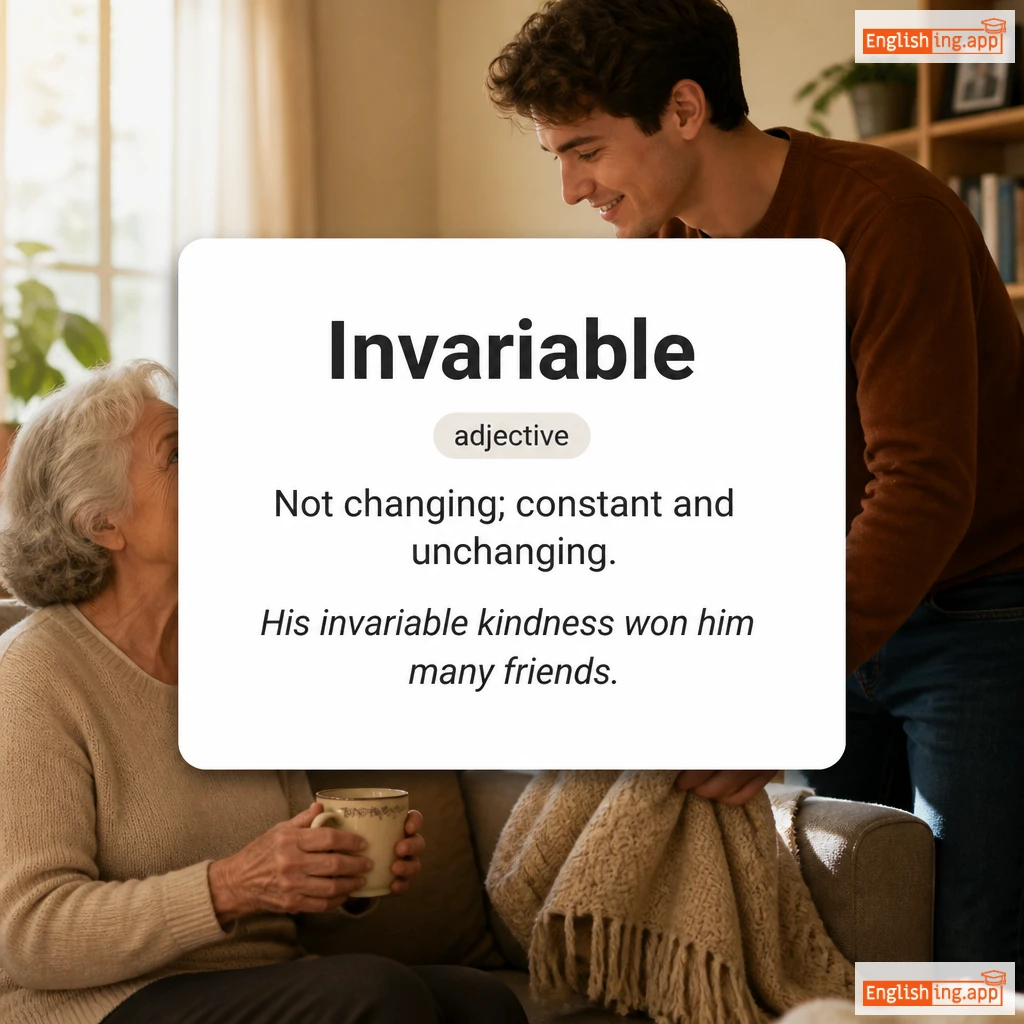
Invariable definition card — visual illustration of the meaning
adjective C1
/ɪnˈvɛəriəbl/
invariable (invariable)

Not changing; constant and unchanging.

"His invariable kindness won him many friends."

"Su amabilidad invariable le ganó muchos amigos." (Su amabilidad invariable le ganó muchos amigos.)
adjective C1
/ɪnˈveɪsɪv/
invasivo (invasivo)

Tending to spread harmfully, intruding aggressively, or encroaching beyond proper boundaries.

"The doctor explained that the procedure was minimally invasive."

"El doctor explicó que el procedimiento era mínimamente invasivo." (El doktor ekspliko ke el prosedimiento era minimamente invasivo.)
adjective C1
/ɪnˈvɛntɪv/
inventivo (inventivo)

Having the ability to create or design new things or to think originally.

"The inventor was known for his inventive solutions to everyday problems."

"El inventor era conocido por sus soluciones inventivas para los problemas cotidianos." (El inventor era conocido por sus soluciones inventivas para los problemas cotidianos.)
adjective C1
/ˌɪnˈvɜːrs/
inverso (inverso)

Opposite in position, direction, order, or effect.

"There is an inverse relationship between price and demand."

"Hay una relación inversa entre el precio y la demanda." (Hay una relacion inversa entre el precio y la demanda.)
adverb C1
/ɪnˈvɜːrs.li/
inversamente; en sentido opuesto (inversamente; en sentido opuesto)

in a way that is opposite or contrary; in reverse order or manner

"The price of goods is inversely related to their availability in the market."

"El precio de los productos está inversamente relacionado con su disponibilidad en el mercado." (El precio de los productos está inversamente relacionado con su disponibilidad en el mercado.)
noun C1
/ɪnˈvɜːrʒən/
inversión (inversion)

A reversal of the normal order, position, or relationship.

"In poetry, inversion is often used to create emphasis."

"En poesía, la inversión se usa a menudo para crear énfasis." (En poesia, la inversion se usa a menudo para crear enfasis.)
verb C1
/ɪnˈvɜːrt/
invertir (invertir)

To turn something upside down or in the opposite position, order, or direction.

"He inverted the glass to let the water drain out."

"Él invirtió el vaso para dejar que el agua se drenara." (Él invirtió el vaso para dejar que el agua se drenara.)
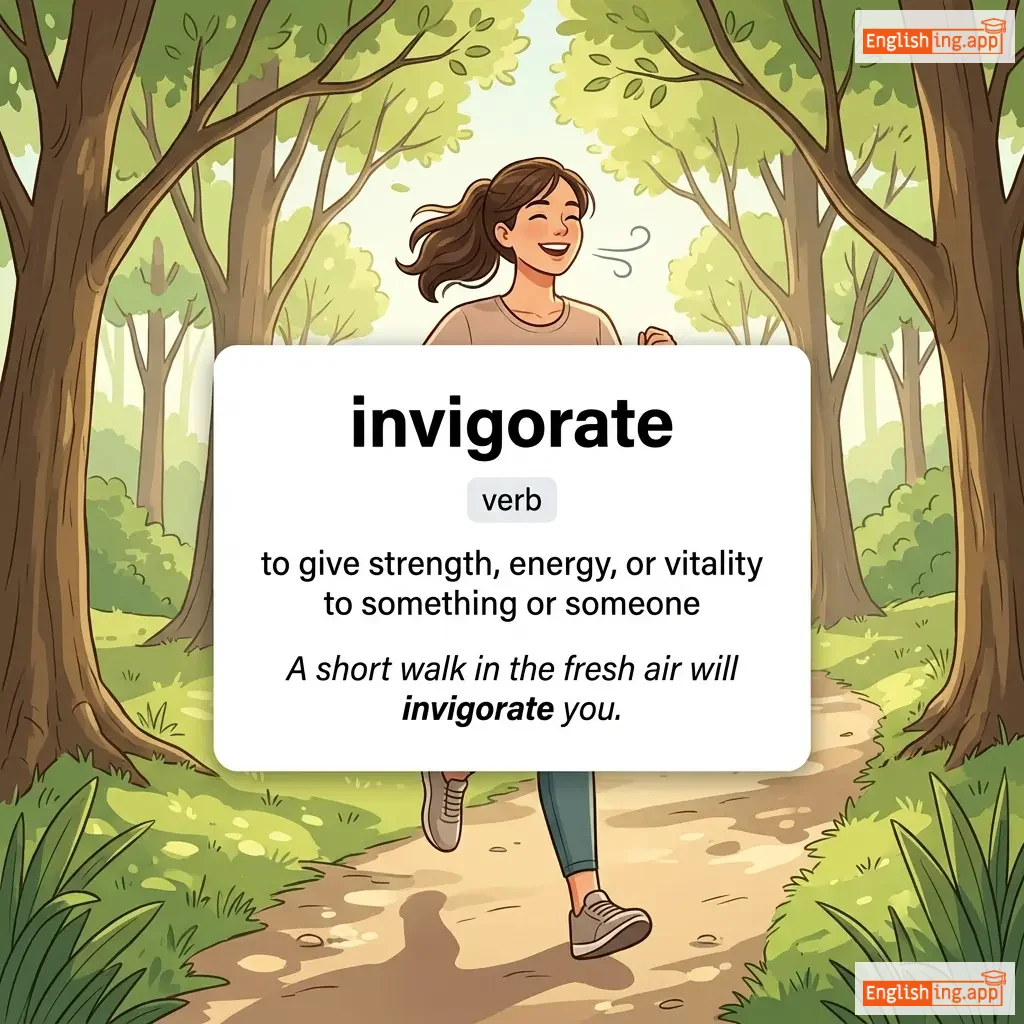
invigorate definition card — visual illustration of the meaning
verb C1
/ɪnˈvɪɡəreɪt/
estimular (estimular)

to give strength, energy, or vitality to something or someone

"A short walk in the fresh air will invigorate you."

"Una caminata corta en el aire fresco te invigora." (Una caminata corta en el aire fresco te invigora.)
adjective C1
/ɪnˈvɪnsəbl/
invencible (invencible)

too powerful to be defeated or overcome

"The team seemed invincible after winning ten matches in a row."

"El equipo parecía invencible después de ganar diez partidos consecutivos." (El equipo parecia invencible despues de ganar diez partidos consecutivos.)
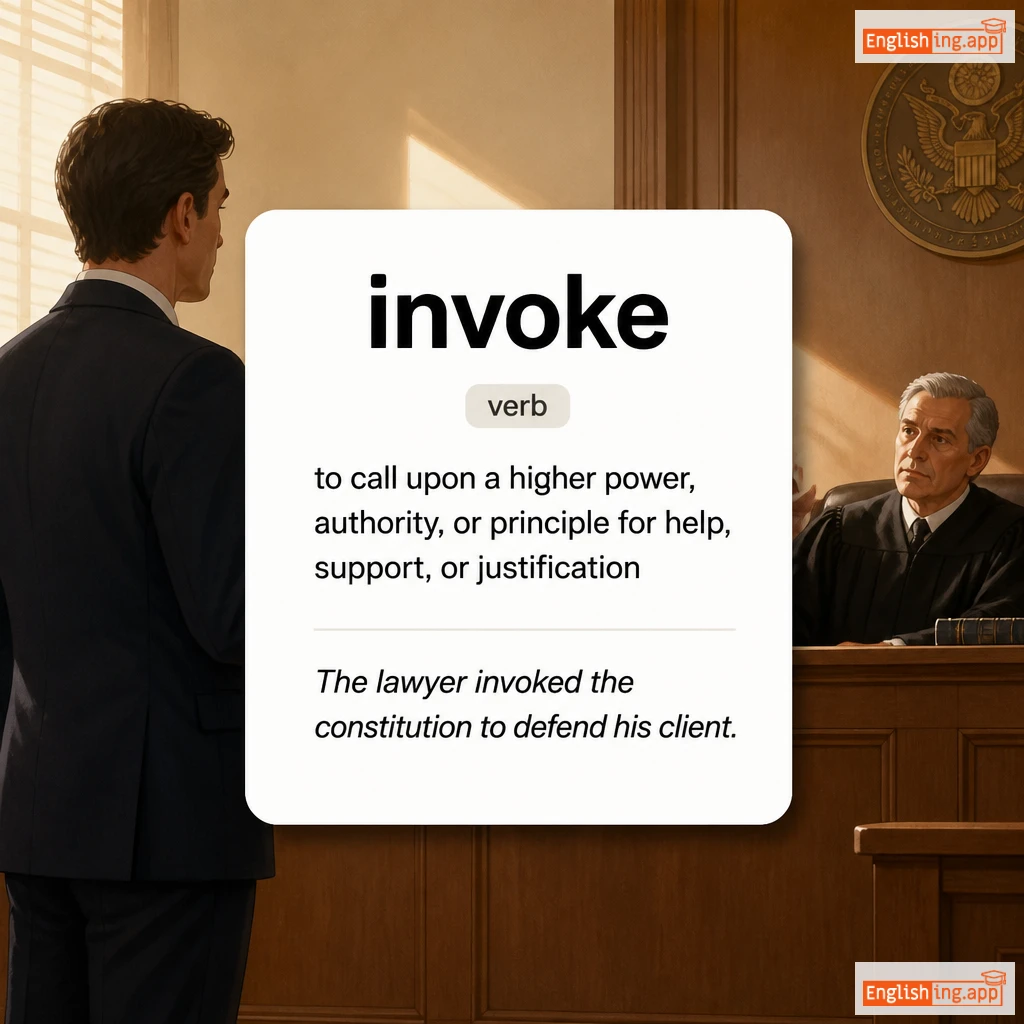
invoke definition card — visual illustration of the meaning
verb C1
/ɪnˈvoʊk/
invocar (invocar)

to call upon a higher power, authority, or principle for help, support, or justification

"The lawyer invoked the constitution to defend his client."

"El abogado invocó la constitución para defender a su cliente." (El abogado invocó la constitución para defender a su cliente.)
adjective C1
/ɪnˈvɑːlənˌtɛri/
involuntario (involuntario)

done without will or conscious control

"He gave an involuntary shiver when he heard the loud noise."

"Él dio un escalofrío involuntario cuando escuchó el ruido fuerte." (Él dio un escalofrío involuntario cuando escuchó el ruido fuerte.)
adverb C1
/ˈɪnwərdli/
por dentro (por dentro)

In the mind or spirit; not outwardly visible.

"She smiled outwardly but inwardly she was worried."

"Ella sonrió por fuera, pero por dentro estaba preocupada." (Ella sonrió por fuera, pero por dentro estaba preocupada.)
adjective C1
/aɪˈreɪt/
iracundo (iracundo)

Extremely angry.

"The customer became irate after waiting for hours."

"El cliente se puso iracundo después de esperar durante horas." (El cliente se puso iracundo después de esperar durante horas.)
adjective C1
/ˈɜːrksəm/
molesto (molesto)

annoying or irritating

"Waiting in a long line is one of the most irksome tasks."

"Esperar en una larga fila es una de las tareas más molestas." (Esperar en una larga fila es una de las tareas más molestas.)
adjective C1
/ˈaɪərnˌklæd/
inquebrantable (ironclad)

impossible to change, break, or dispute; very strong and firm

"The company had an ironclad contract with its suppliers."

"La empresa tenía un contrato inquebrantable con sus proveedores." (La empresa tenía un contrato inquebrantable con sus proveedores.)
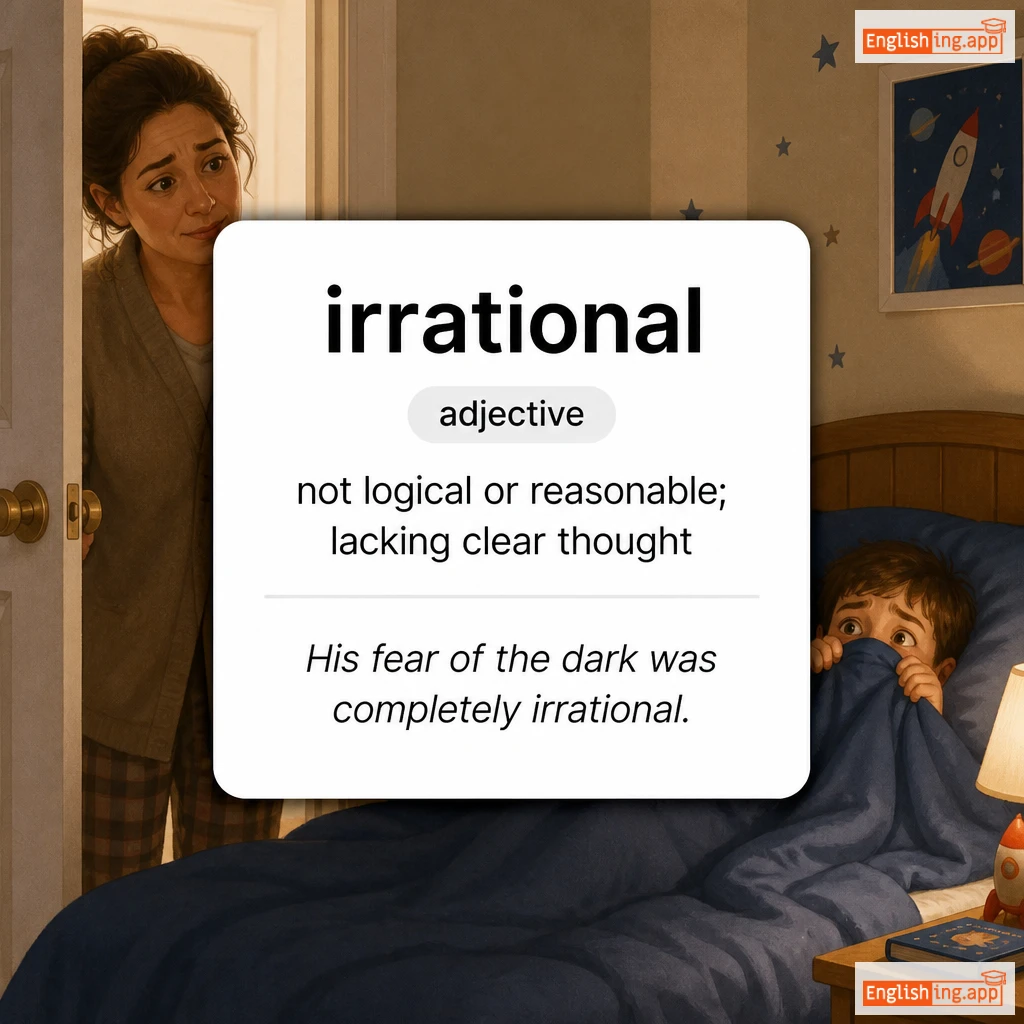
irrational definition card — visual illustration of the meaning
adjective C1
/ɪˈræʃənəl/
irracional (irracional)

not logical or reasonable; lacking clear thought

"His fear of the dark was completely irrational."

"Su miedo a la oscuridad era completamente irracional." (Su miedo a la oscuridad era completamente irracional.)
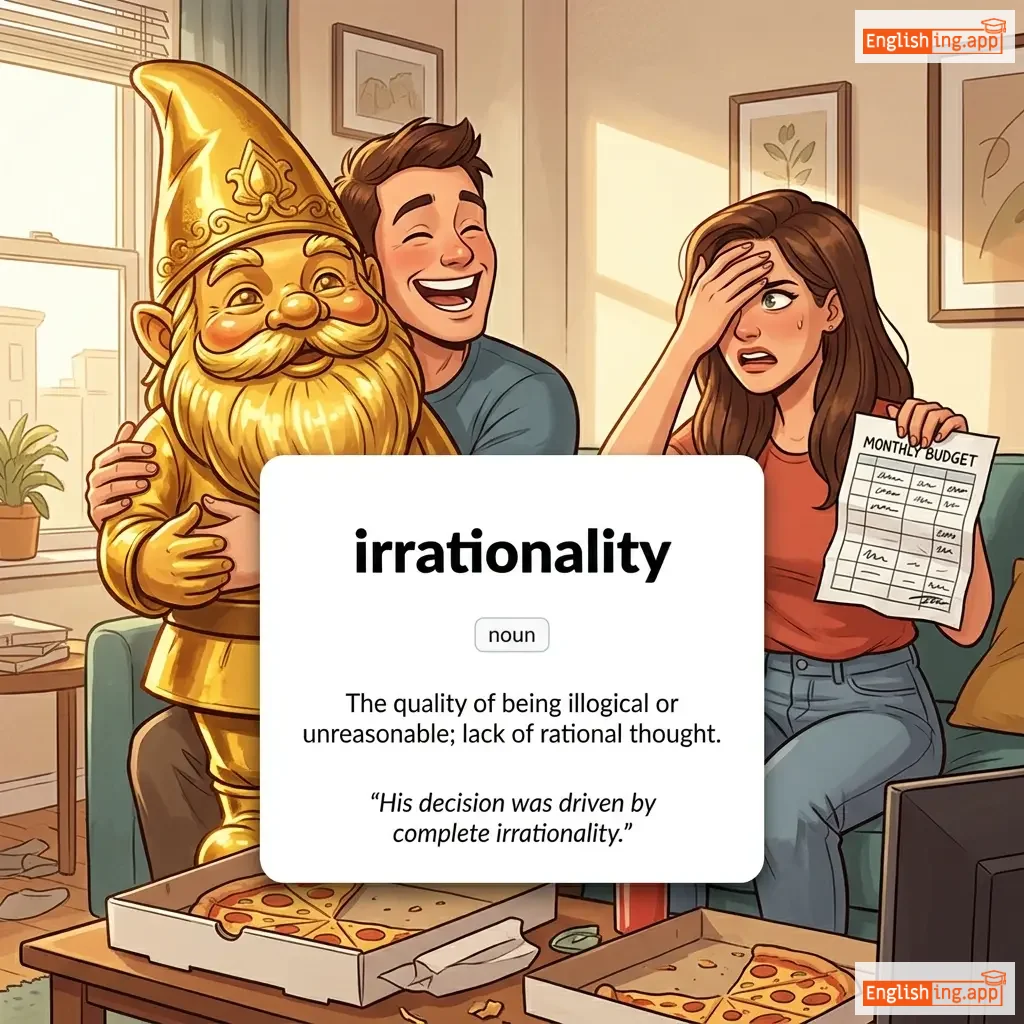
irrationality definition card — visual illustration of the meaning
noun C1
ɪˌræʃ.ənˈæl.ɪ.ti
irracionalidad, falta de lógica, irrazonabilidad (irracionalidad, falta de logica, irrazonabilidad)

The quality of being illogical or unreasonable; lack of rational thought.

"His decision was driven by complete irrationality."

"Su decisión fue impulsada por una irracionalidad completa." (Su decision fue impulsada por una irracionalidad completa.)
adjective C1
/ˌɪrɪˈfjuːtəbəl/
irrefutable (irrefutable)

Impossible to deny or disprove

"The scientist provided irrefutable proof of the theory."

"El científico proporcionó una prueba irrefutable de la teoría." (El cientifico proporciono una prueba irrefutable de la teoria.)
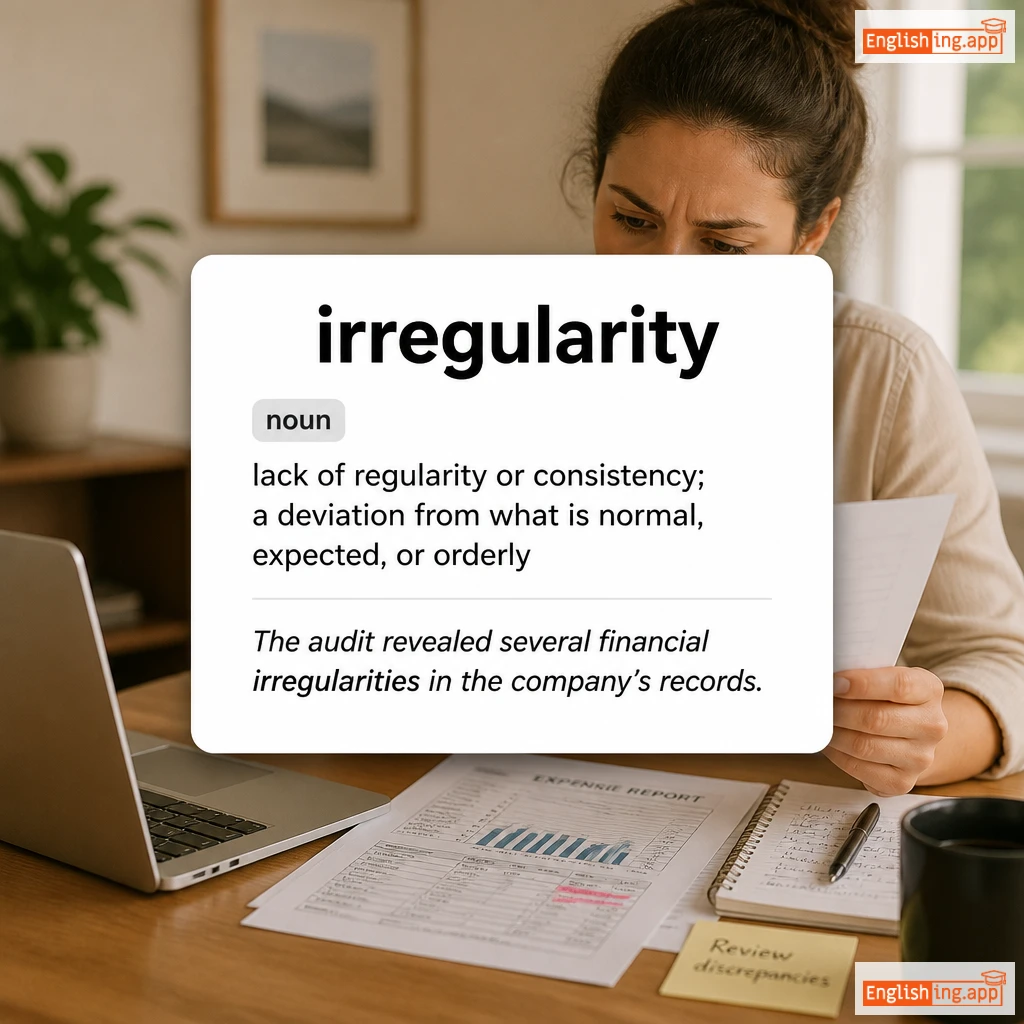
irregularity definition card — visual illustration of the meaning
noun C1
/ɪˌreɡjəˈlærɪti/
irregularidad (irregularidad)

lack of regularity or consistency; a deviation from what is normal, expected, or orderly

"The audit revealed several financial irregularities in the company’s records."

"La auditoría reveló varias irregularidades financieras en los registros de la empresa." (La auditoria revelo varias irregularidades financieras en los registros de la empresa)
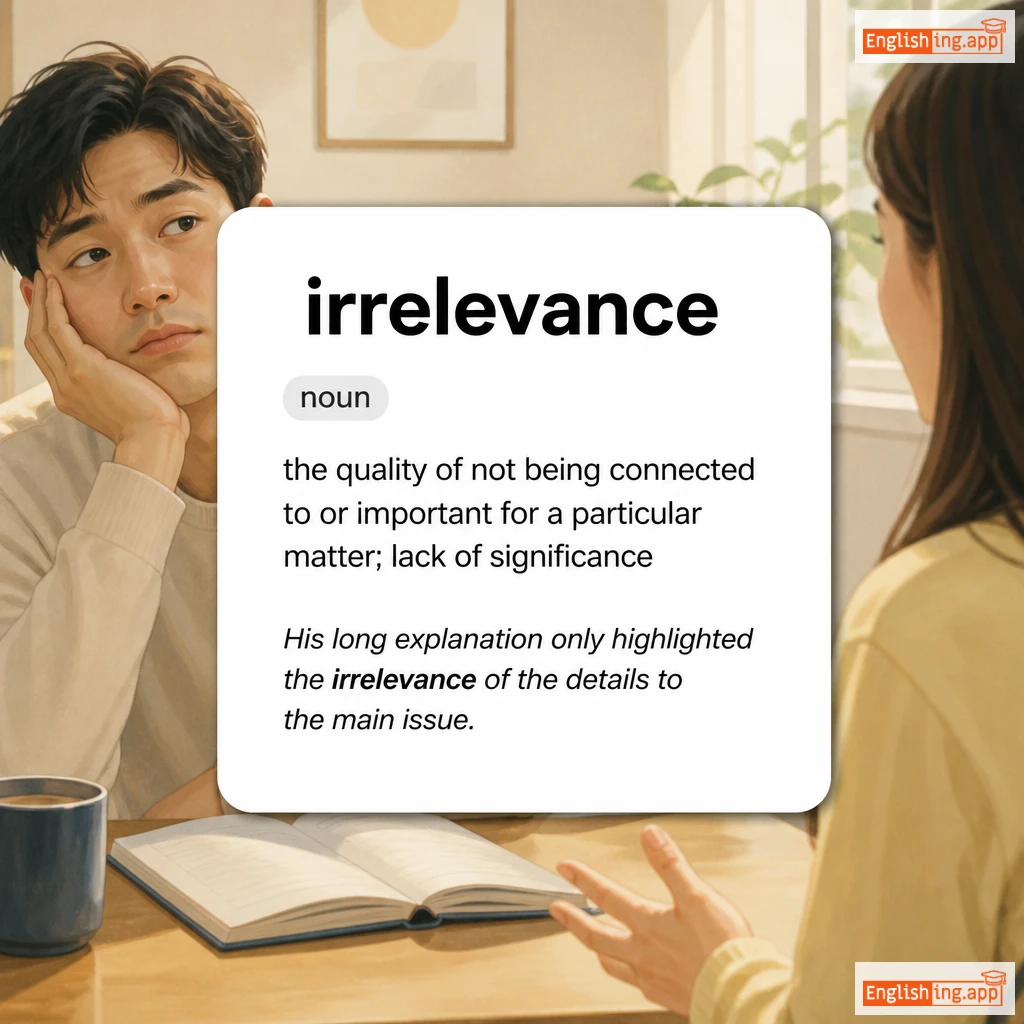
irrelevance definition card — visual illustration of the meaning
noun C1
/ɪˈreləvəns/
irrelevancia (irrelevancia)

the quality of not being connected to or important for a particular matter; lack of significance

"His long explanation only highlighted the irrelevance of the details to the main issue."

"Su larga explicación solo resaltó la irrelevancia de los detalles para el tema principal." (su larga explicacion solo resalto la irrelevancia de los detalles para el tema principal)
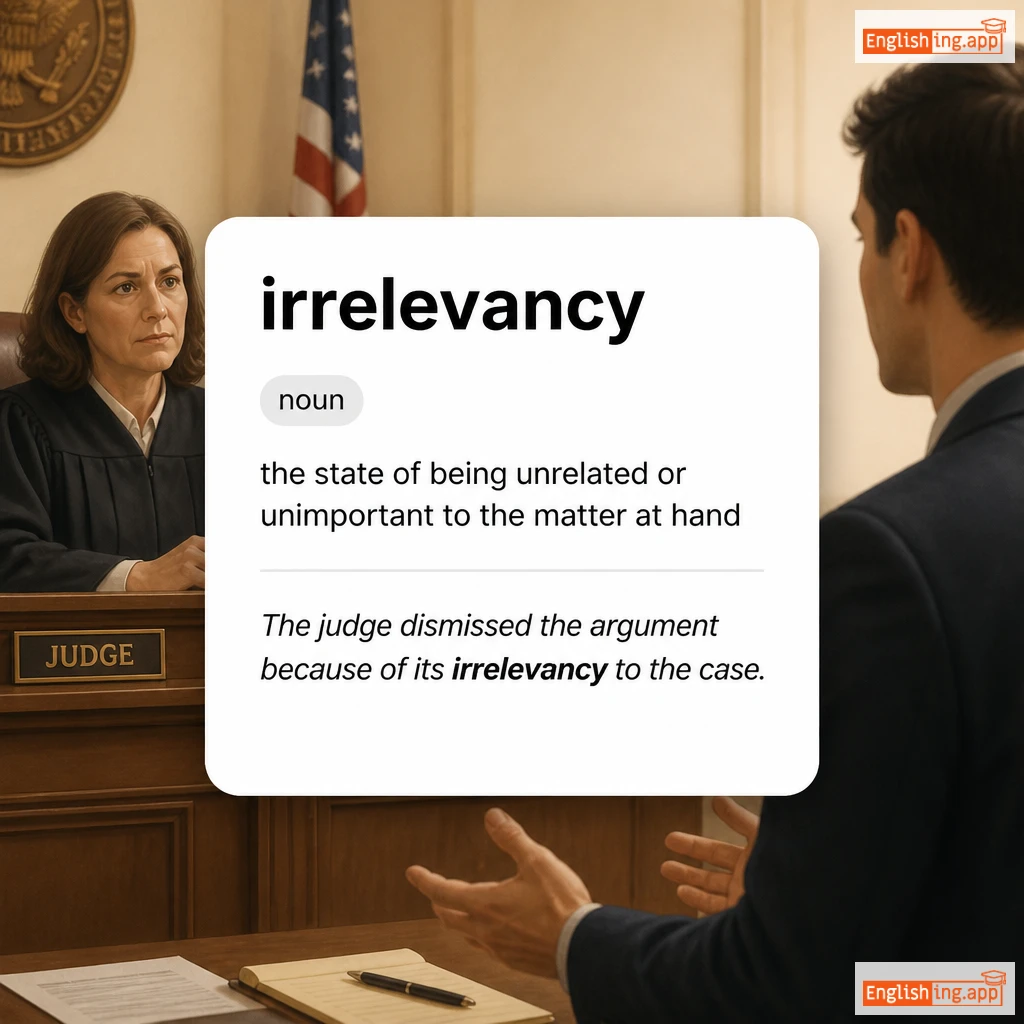
irrelevancy definition card — visual illustration of the meaning
noun C1
/ɪˈrɛlɪvənsi/
irrelevancia (irrelevancia)

the state of being unrelated or unimportant to the matter at hand

"The judge dismissed the argument because of its irrelevancy to the case."

"El juez rechazó el argumento por su irrelevancia para el caso." (el juez rechazo el argumento por su irrelevancia para el caso)
adjective C1
/ɪˈrɛpərəbl̩/
irreparable (irreparable)

Too severe to be corrected or repaired.

"The earthquake caused irreparable damage to the village."

"El terremoto causó daños irreparables en el pueblo." (El terremoto causó daños irreparables en el pueblo.)
adjective C1
/ˌɪrɪˈprɛsəbl̩/
irresistible (irresistible)

Impossible to control or restrain.

"She had an irrepressible urge to laugh during the speech."

"Ella no pudo ocultar su irresistible deseo de reír durante el discurso." (Ella no pudo ocultar su irresistible deseo de reír durante el discurso.)
adjective C1
/ˌɪrɪˈspɛktɪv/
irrespetuoso; sin tener en cuenta (irrespetuoso; sin tener en cuenta)

without taking something into account; regardless of

"All students will be treated equally, irrespective of their background."

"Todos los estudiantes serán tratados por igual, independientemente de su origen." (Todos los estudiantes serán tratados por igual, independientemente de su origen.)
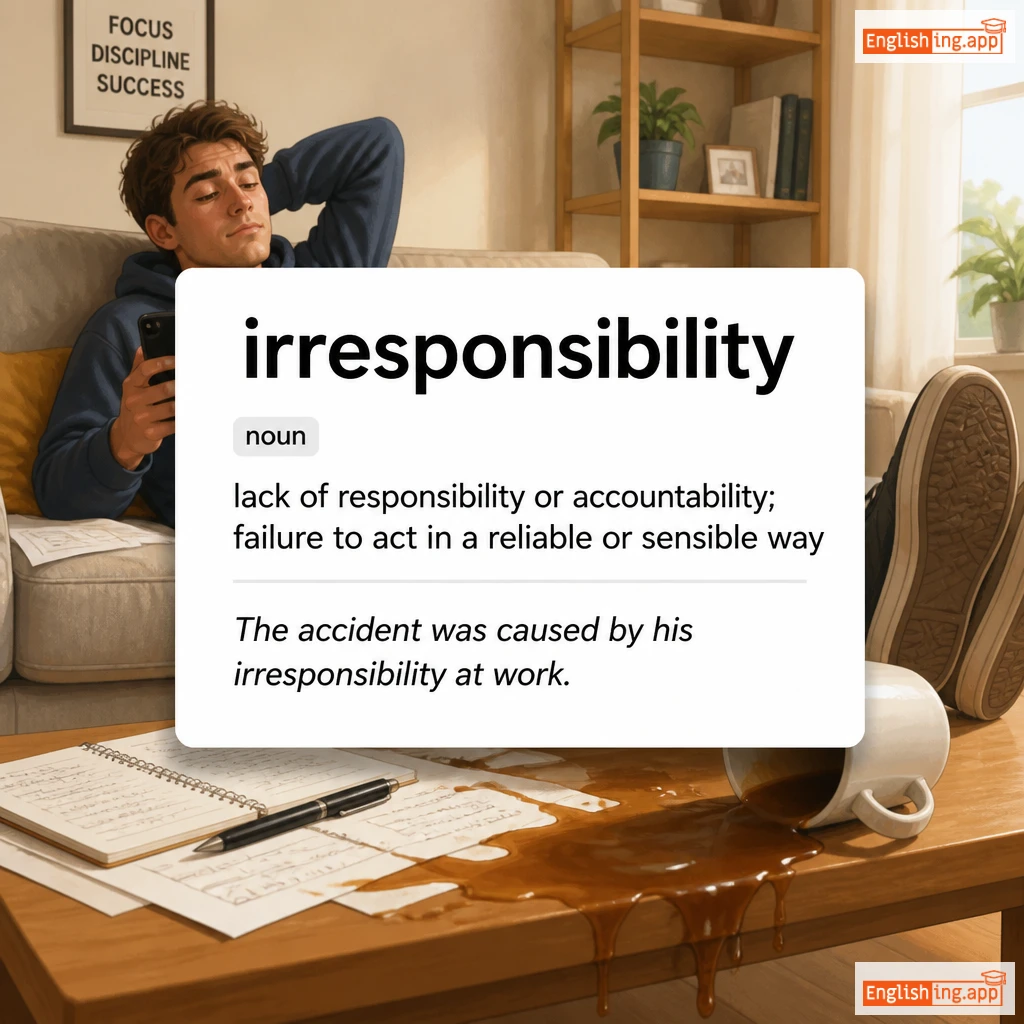
irresponsibility definition card — visual illustration of the meaning
noun C1
/ˌɪrɪˌspɒnsəˈbɪləti/
irresponsabilidad (irresponsabilidad)

lack of responsibility or accountability; failure to act in a reliable or sensible way

"The accident was caused by his irresponsibility at work."

"El accidente fue causado por su irresponsabilidad en el trabajo." (El accidente fue causado por su irresponsabilidad en el trabajo)
adjective C1
/ɪˈrɛvərənt/
irreverente (irreverente)

showing a lack of respect for people or things that are usually respected

"The comedian’s irreverent jokes offended some of the audience."

"Los chistes irreverentes del comediante ofendieron a algunos de la audiencia." (Los chistes irreverentes del comediante ofendieron a algunos de la audiencia.)
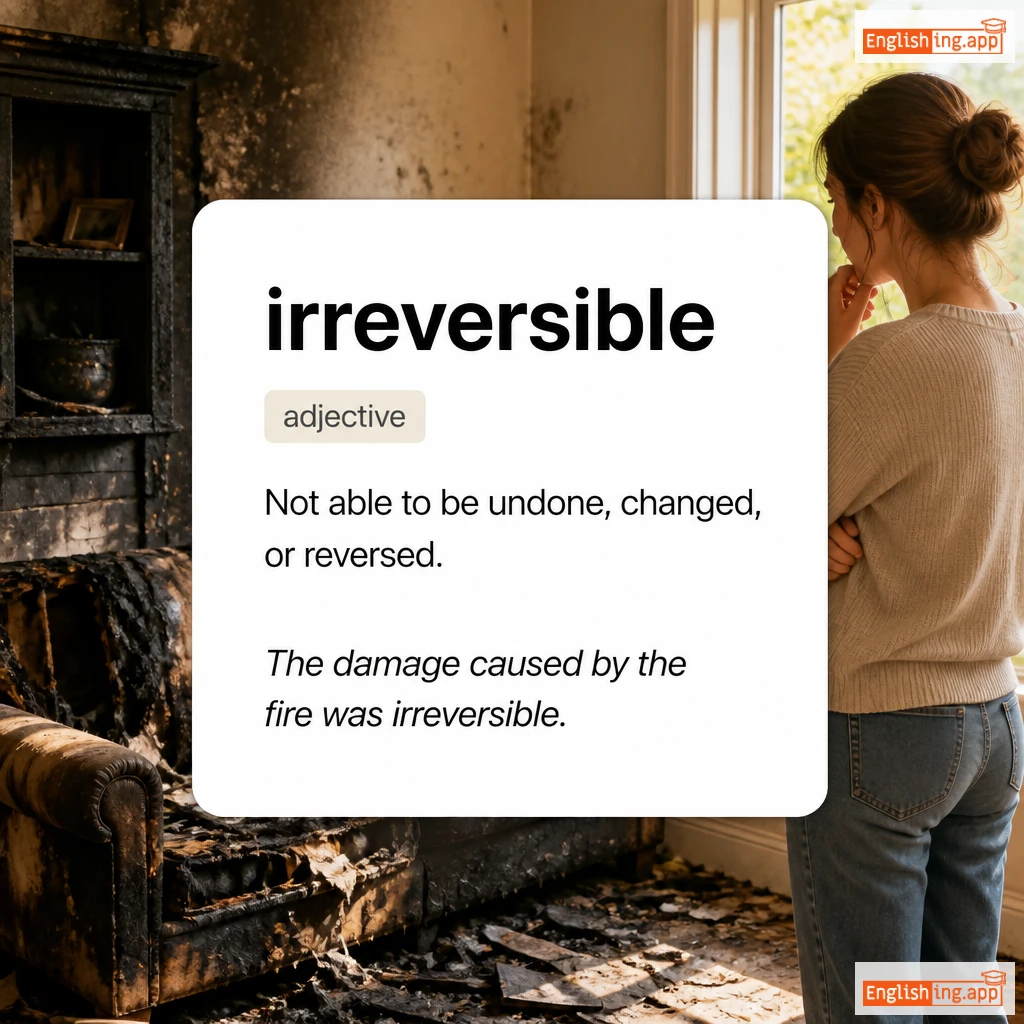
irreversible definition card — visual illustration of the meaning
adjective C1
/ˌɪrɪˈvɜːrsəbl/
irreversible (irreversible)

Not able to be undone, changed, or reversed.

"The damage caused by the fire was irreversible."

"El daño causado por el fuego fue irreversible." (El daño causado por el fuego fue irreversible.)
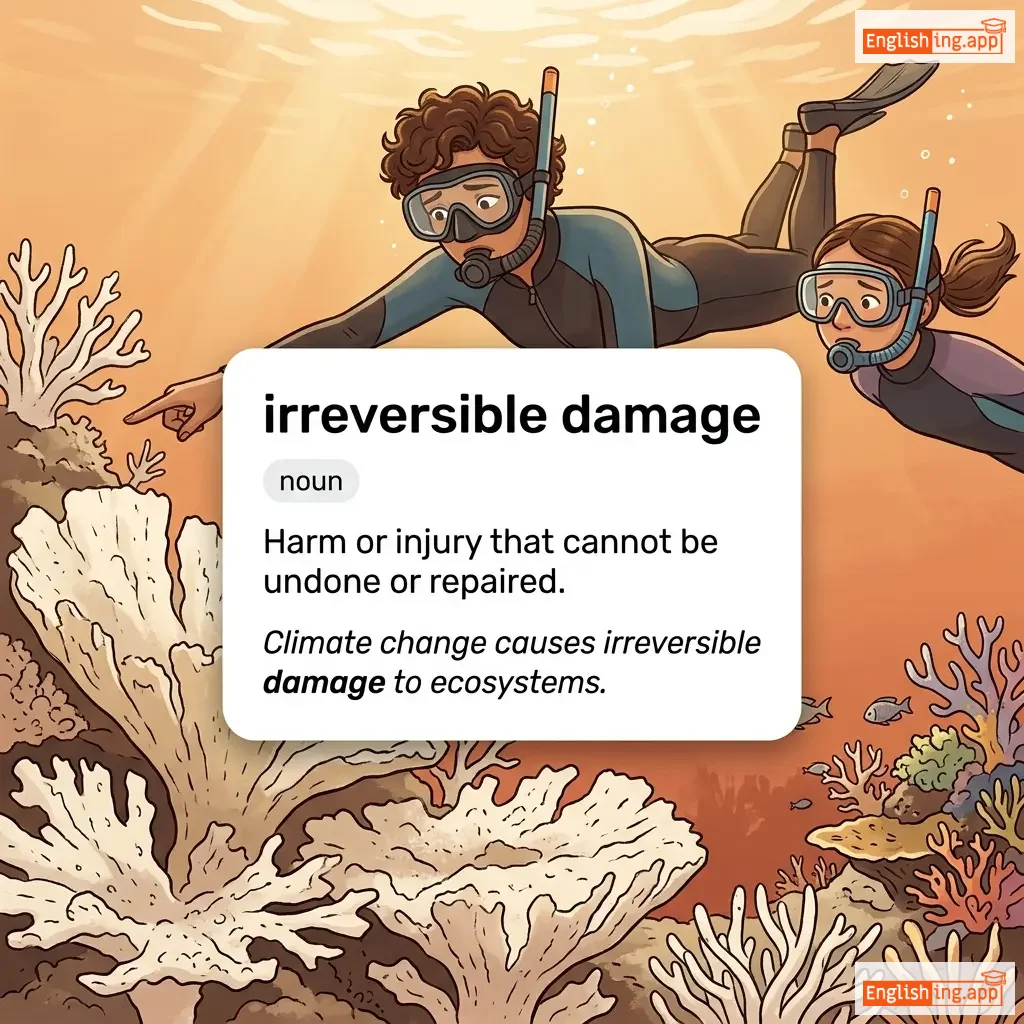
irreversible damage definition card — visual illustration of the meaning
noun C1
ˌɪrɪˈvɜːrsəbl ˈdæmɪdʒ
daño irreversible (danyo irreversible)

Harm or injury that cannot be undone or repaired.

"Climate change causes irreversible damage to ecosystems."

"El cambio climático causa daño irreversible a los ecosistemas." (El cambio climatico causa dano irreversible a los ecosistemas.)
adjective C1
/ɪˈrɛvəkəbl/
irreversible (irreversible)

Not able to be revoked, changed, or undone.

"She made an irrevocable decision to leave the company."

"Ella tomó una decisión irreversible de dejar la empresa." (Ella tomó una decisión irreversible de dejar la empresa.)
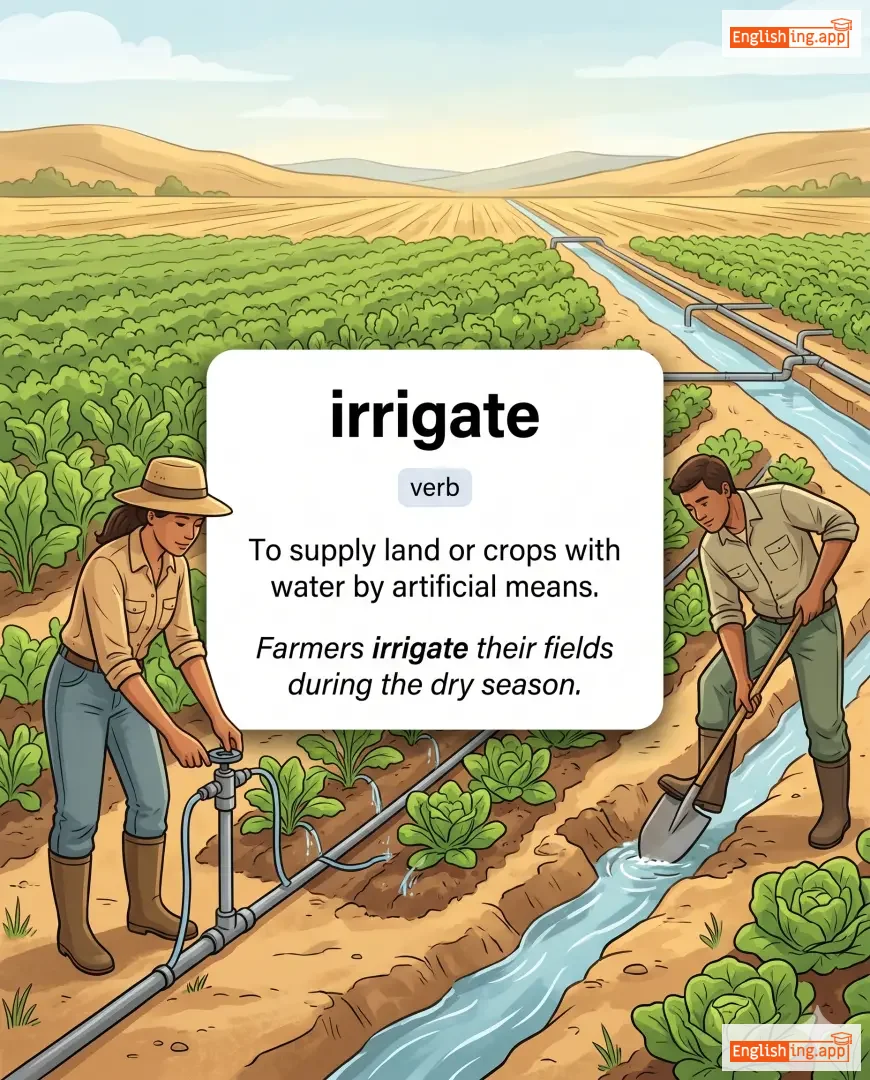
irrigate definition card — visual illustration of the meaning
verb C1
/ˈɪrɪɡeɪt/
regar (regar)

To supply land or crops with water by artificial means.

"Farmers irrigate their fields during the dry season."

"Los agricultores riegan sus campos durante la temporada seca." (Los agricultores riegan sus campos durante la temporada seca.)
adjective C1
/ˈɪrɪtəbl/
irritable (irritable)

easily annoyed or made angry

"She became irritable after working long hours without rest."

"Ella se volvió irritable después de trabajar muchas horas sin descanso." (Ella se volvio irritable despues de trabajar muchas horas sin descanso.)
noun C1
/ˈɪrɪtənt/
sustancia irritante (sustansia irritante)

something that causes irritation or discomfort

"Dust is a common irritant for people with allergies."

"El polvo es un irritante común para las personas con alergias." (El polvo es un irritante comun para las personas con alergias.)
noun C1
/aɪl/
pequeña isla (pequena isla)

A small island or peninsula, often poetic or literary.

"They spent their honeymoon on a beautiful tropical isle."

"Pasaron su luna de miel en una hermosa isla tropical." (pasaron su luna de miel en una hermosa isla tropical.)
noun C1
/ˈaɪsətəʊp/
isótopo (isotopo)

Atoms of the same element with equal number of protons but different numbers of neutrons.

"Carbon-14 is a radioactive isotope used in dating fossils."

"El carbono-14 es un isótopo radiactivo utilizado en la datación de fósiles." (El carbono-14 es un isotopo radiactivo utilizado en la datacion de fosiles.)
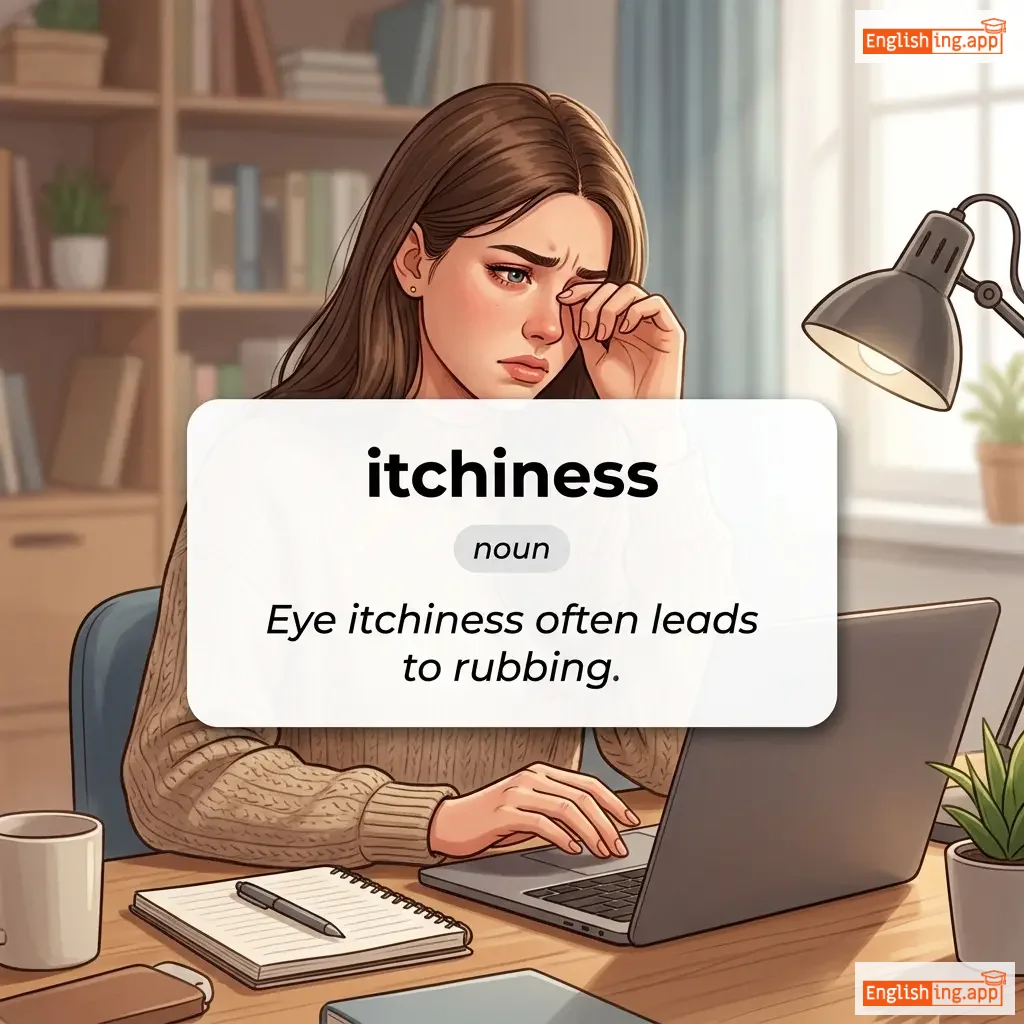
itchiness definition card — visual illustration of the meaning
noun C1
/ˈɪtʃ.i.nəs/
picazón (picazon)

The quality or condition of feeling an irritating sensation on the skin that causes a desire to scratch.

"Eye itchiness often leads to rubbing."

"La picazón en los ojos a menudo conduce a frotarse." (La picazon en los ojos a menudo conduce a frotarse.)
verb C1
/ˈɪtəreɪt/
iterar (iterar)

To repeat a process or statement, often to improve or refine.

"The software team will iterate the design until it meets user needs."

"El equipo de software iterará el diseño hasta que cumpla con las necesidades del usuario." (El equipo de software iterará el diseño hasta que cumpla con las necesidades del usuario.)
itinerary definition card — visual illustration of the meaning
noun C1
/aɪˈtɪnərɛri/
itinerario (itinerario)

A planned route or schedule of a journey or trip.

"The travel agent gave us a detailed itinerary for our vacation."

"El agente de viajes nos dio un itinerario detallado para nuestras vacaciones." (El agente de viajes nos dio un itinerario detallado para nuestras vacaciones.)
verb C1
/dʒæb/
dar un golpe (dar un golpe)

To poke or thrust quickly, often with a finger or something pointed.

"He jabbed his finger at the map to show the location."

"Él dio un golpe con el dedo en el mapa para mostrar la ubicación." (El dio un golpe con el dedo en el mapa para mostrar la ubicación.)
noun C1
/ˈdʒækˌfruːt/
jackfruit (jackfruit)

a large tropical fruit with a spiky exterior and sweet flesh inside

"The jackfruit is the largest tree fruit in the world."

"El jackfruit es la fruta de árbol más grande del mundo." (El jackfruit es la fruta de árbol más grande del mundo.)
adjective C1
/ˈdʒeɪ.dɪd/
cansado, indiferente (cansado, indiferente)

Tired, bored, or lacking enthusiasm, typically after having had too much of something.

"After years of traveling, she felt jaded by the constant movement."

"Después de años de viajar, se sintió cansada por el constante movimiento." (Despues de anos de viajar, se sintio cansada por el constante movimiento.)
Jamboree definition card — visual illustration of the meaning
noun C1
/ˌdʒæm.bəˈriː/
fiesta; reunión festiva; (fiesta, reunion festiva)

a large celebration or party; a gathering with entertainment; a festive event

"The scout jamboree brought together thousands of young people from around the world."

"El jamboree scout reunió a miles de jóvenes de todo el mundo." (El jamboree scout reunio a miles de jovenes de todo el mundo.)
noun C1
/ˈdʒɑːr.ɡən/
jerga (jerga)

Specialized or technical language used by a particular group or profession.

"The lawyer’s explanation was full of legal jargon."

"La explicación del abogado estaba llena de jerga legal." (La explicacion del abogado estaba llena de jerga legal.)
adjective C1
/ˈdʒɑː.rɪŋ/
desagradable, impactante (desagradable, impactante)

Striking or shocking in a way that creates a strong contrast or clash.

"The sudden loud noise was jarring to everyone in the room."

"El ruido fuerte y repentino fue impactante para todos en la sala." (El ruido fuerte y repentino fue impactante para todos en la sala.)
noun C1
/ˈdʒɔːn.dɪs/
ictericia (ictericia)

A medical condition in which the skin and eyes become yellow due to liver problems.

"The doctor diagnosed the baby with jaundice."

"El doctor diagnosticó al bebé con ictericia." (El doctor diagnostico al bebe con ictericia.)
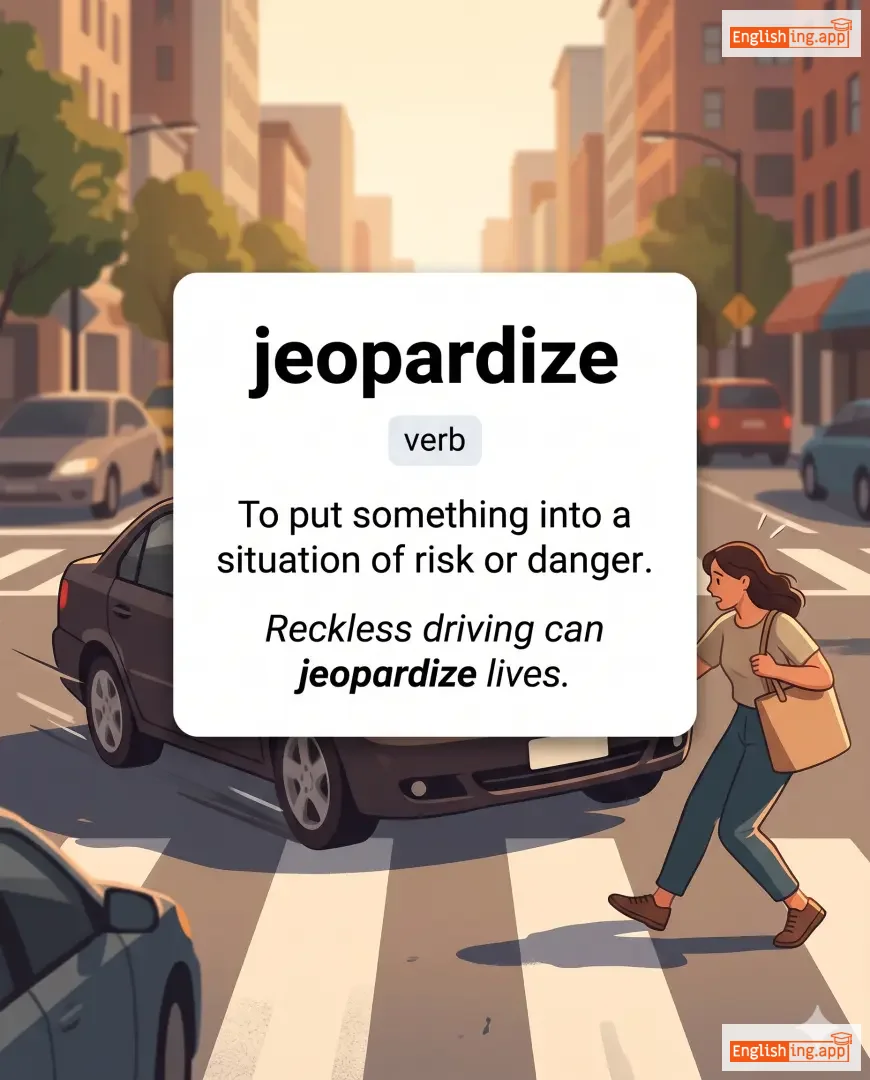
jeopardize definition card — visual illustration of the meaning
verb C1
/ˈdʒɛpərdaɪz/
poner en peligro (poner en peligro)

To put something into a situation of risk or danger.

"Reckless driving can jeopardize lives."

"La conducción imprudente puede poner en peligro vidas." (La conduccion imprudente puede poner en peligro vidas.)
noun C1
/ˈdʒɛpərdi/
peligro (peligro)

Danger of loss, harm, or failure.

"His careless driving put everyone in jeopardy."

"Su conducción imprudente puso a todos en peligro." (Su conduccion imprudente puso a todos en peligro.)
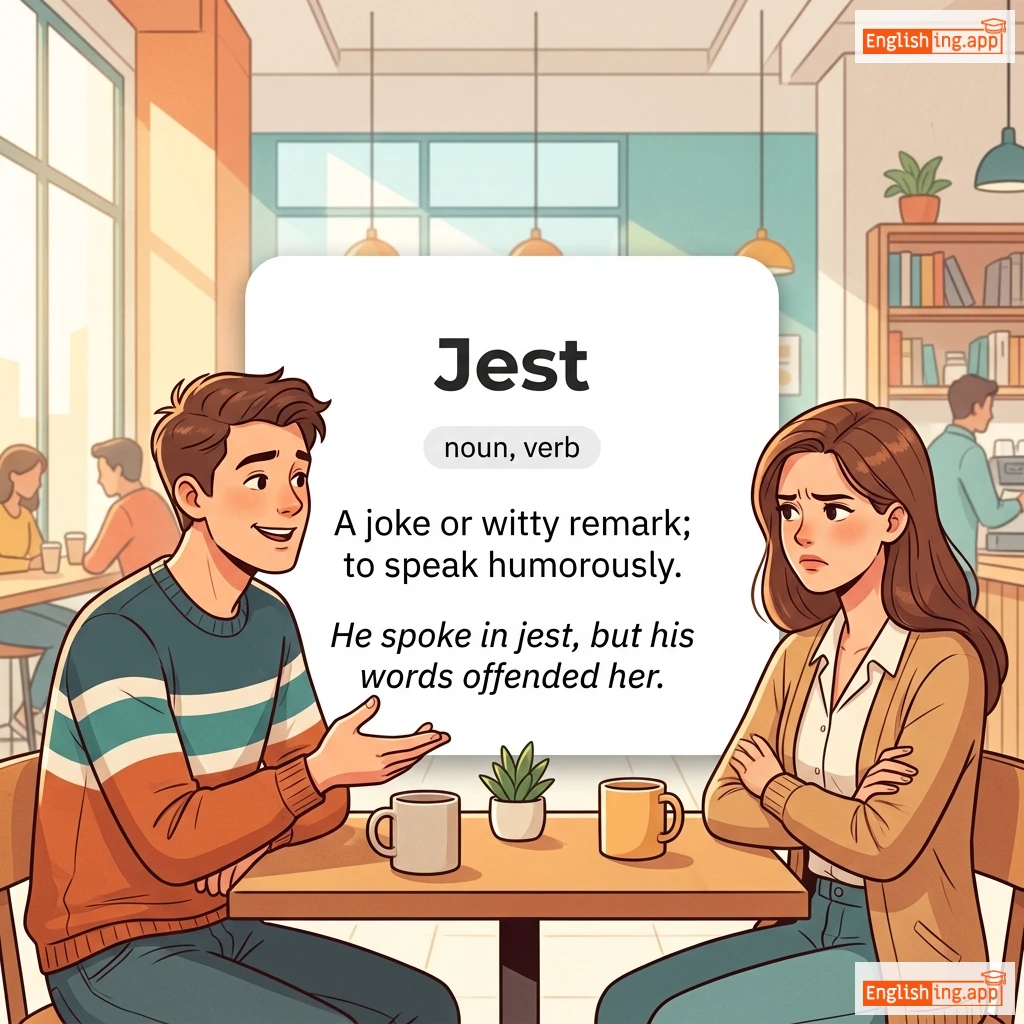
Jest definition card — visual illustration of the meaning
noun, verb C1
/dʒɛst/
broma (broma)

A joke or witty remark; to speak humorously.

"He spoke in jest, but his words offended her."

"Él habló en broma, pero sus palabras la ofendieron." (El habló en broma, pero sus palabras la ofendieron.)
/ˈdʒɛtɪsən/
abandonar (abandonar)

to throw or drop something from a ship, aircraft, or vehicle to lighten the load; to abandon something no longer wanted

"The crew had to jettison cargo to save the sinking ship."

"La tripulación tuvo que abandonar la carga para salvar el barco que se hundía." (La tripulacion tuvo que abandonar la carga para salvar el barco que se hundia.)