Vocabulaires

Découvrez, apprenez et maîtrisez le vocabulaire anglais

noun C1
/ɪnˈdʒʌŋkʃən/
差止命令 (sashitome meirei)

A judicial order restraining a person from an action or compelling a certain act.

"The court issued an injunction to stop the company from polluting the river."

"裁判所は、会社が河川を汚染するのを防ぐために差止命令を出した。" (Saibansho wa, kaisha ga kasen o osen suru no o fusegu tame ni sashitome meirei o dashita.)
adjective C1
/ɪnˈdʒʊəriəs/
有害な (yūgaina)

Causing or likely to cause harm or damage.

"Smoking is injurious to health."

"喫煙は健康に有害です。" (Kitsuen wa kenkō ni yūgaina desu.)
noun C1
/ˈɪŋklɪŋ/
予感 (yokan)

A slight idea, hint, or suspicion about something.

"She had an inkling that he was planning a surprise."

"彼女は彼がサプライズを計画しているという予感を持っていた。" (Kanojo wa kare ga sapuraizu o keikaku shite iru to iu yokan o motte ita.)
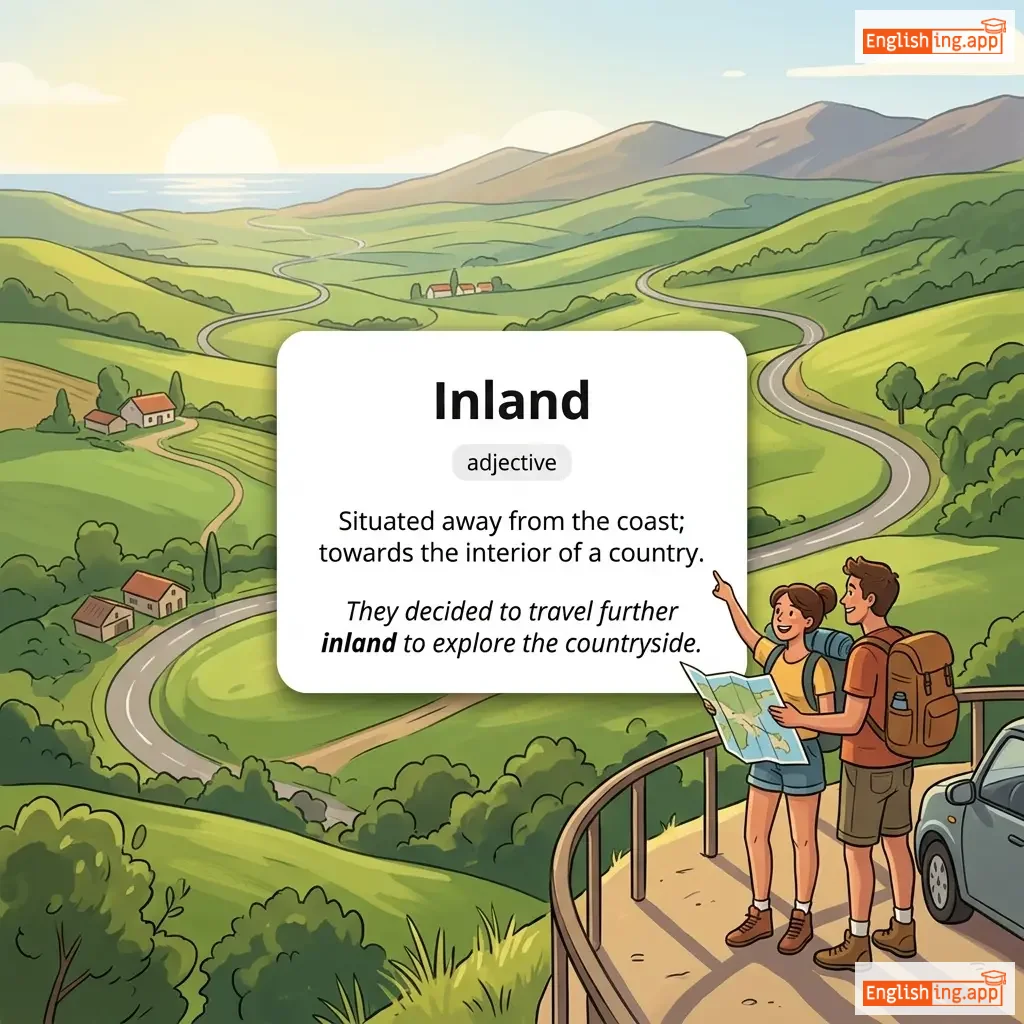
Inland definition card — visual illustration of the meaning
adjective C1
/ˈɪnlənd/
内陸 (nairiku)

Situated away from the coast; towards the interior of a country.

"They decided to travel further inland to explore the countryside."

"彼らは田舎を探索するためにさらに内陸へ進むことに決めました。" (Karera wa inaka o tansaku suru tame ni sara ni nairiku e susumu koto ni kimemashita.)
noun C1
/ˈɪnlɛt/
入り江 (irieki)

A small arm of the sea, a lake, or a river; an opening or passage for entry.

"The boat entered a narrow inlet along the coast."

"船は海岸沿いの狭い入り江に入った。" (Fune wa kaigan-zoi no semai irieki ni haitta.)
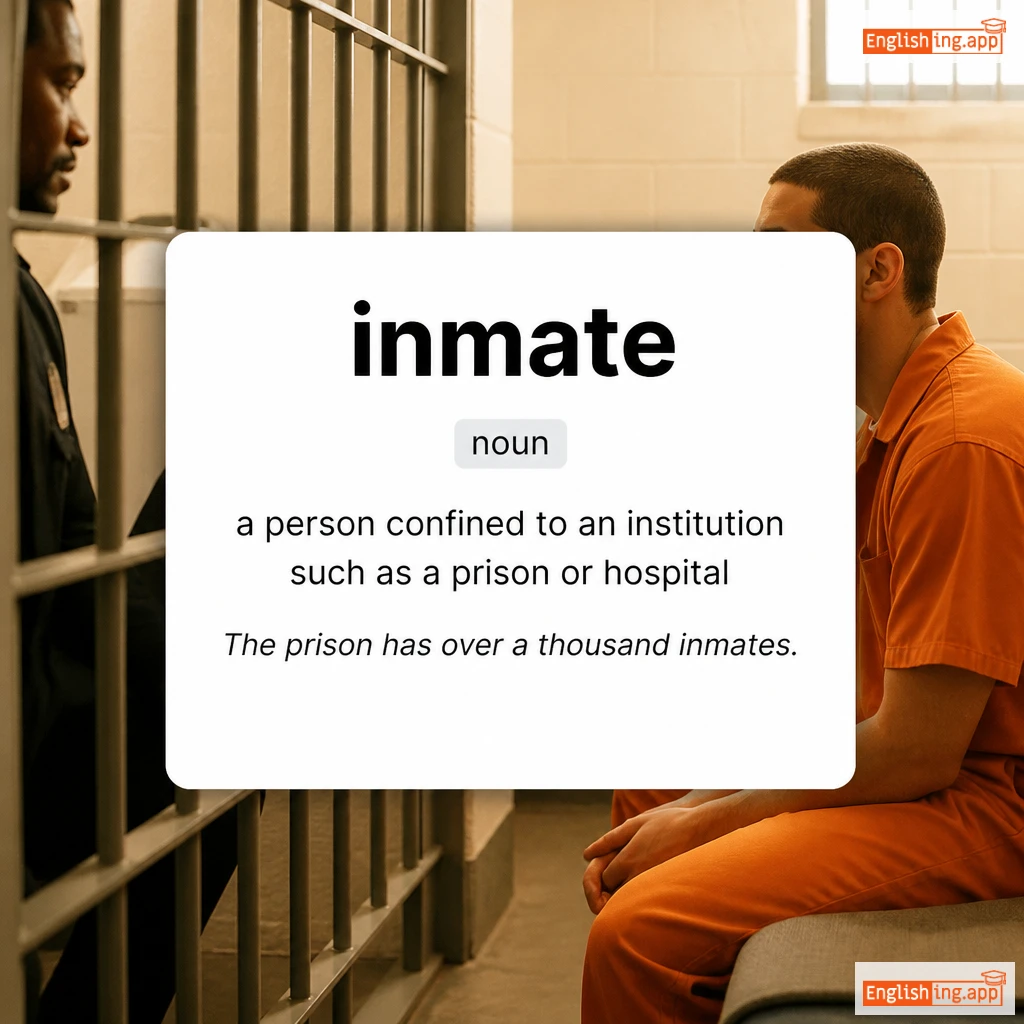
inmate definition card — visual illustration of the meaning
noun C1
/ˈɪnˌmeɪt/
囚人 (shuujin)

a person confined to an institution such as a prison or hospital

"The prison has over a thousand inmates."

"刑務所には千人以上の囚人がいます。" (Keimusho ni wa sen'nin ijou no shuuji ga imasu.)
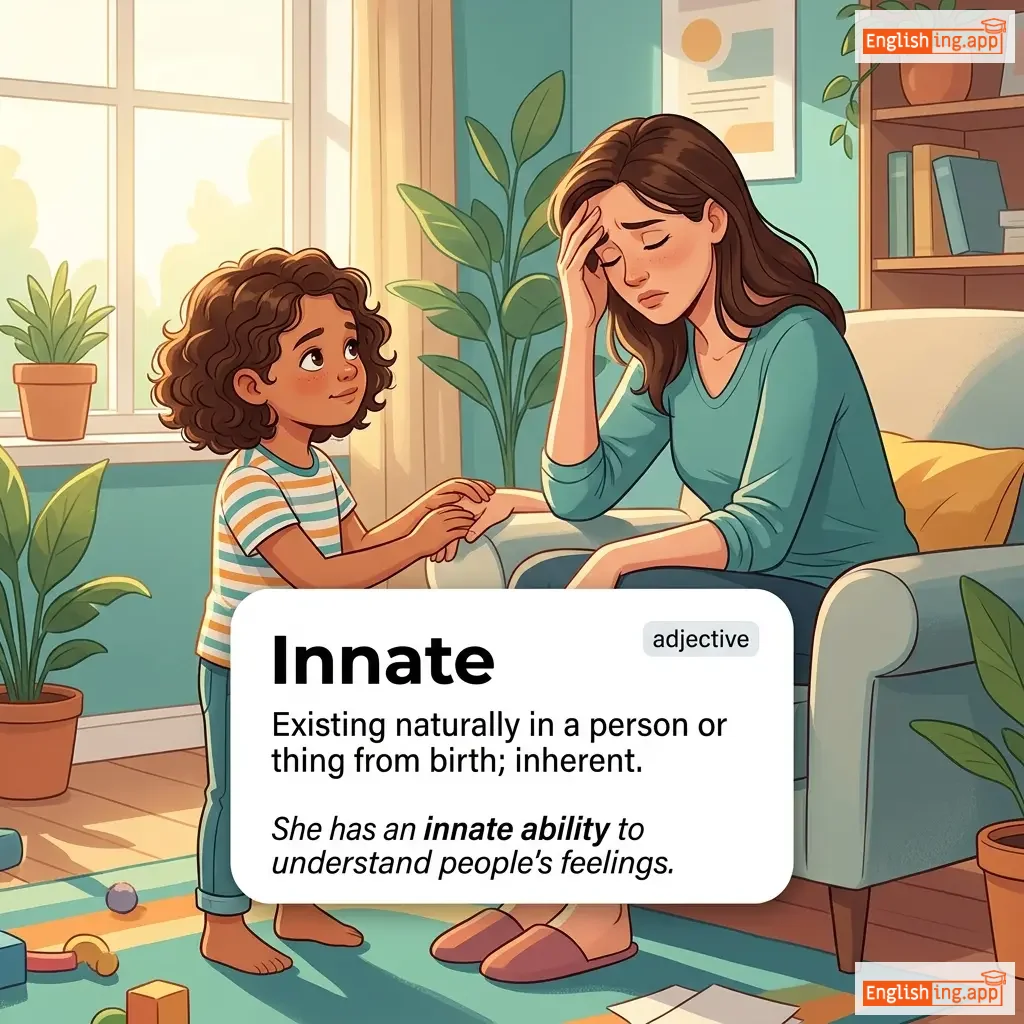
Innate definition card — visual illustration of the meaning
adjective C1
/ɪˈneɪt/
生得的 (shōtōteki)

Existing naturally in a person or thing from birth; inherent.

"She has an innate ability to understand people's feelings."

"彼女は人々の感情を理解する生まれつきの能力を持っている。" (Kanojo wa hitobito no kanjō o rikai suru umaretsuki no nōryoku o motte iru.)
adjective C1
/ˈɪnərmoʊst/
最も深い; 最も個人的な (mottomo fukai; mottomo kojinteki na)

most private and secret; deepest; most personal

"She shared her innermost feelings with her closest friend."

"彼女は最も深い感情を最も親しい友人と共有しました。" (Kanojo wa mottomo fukai kanjō o mottomo shitashī yūjin to kyōyū shimashita.)
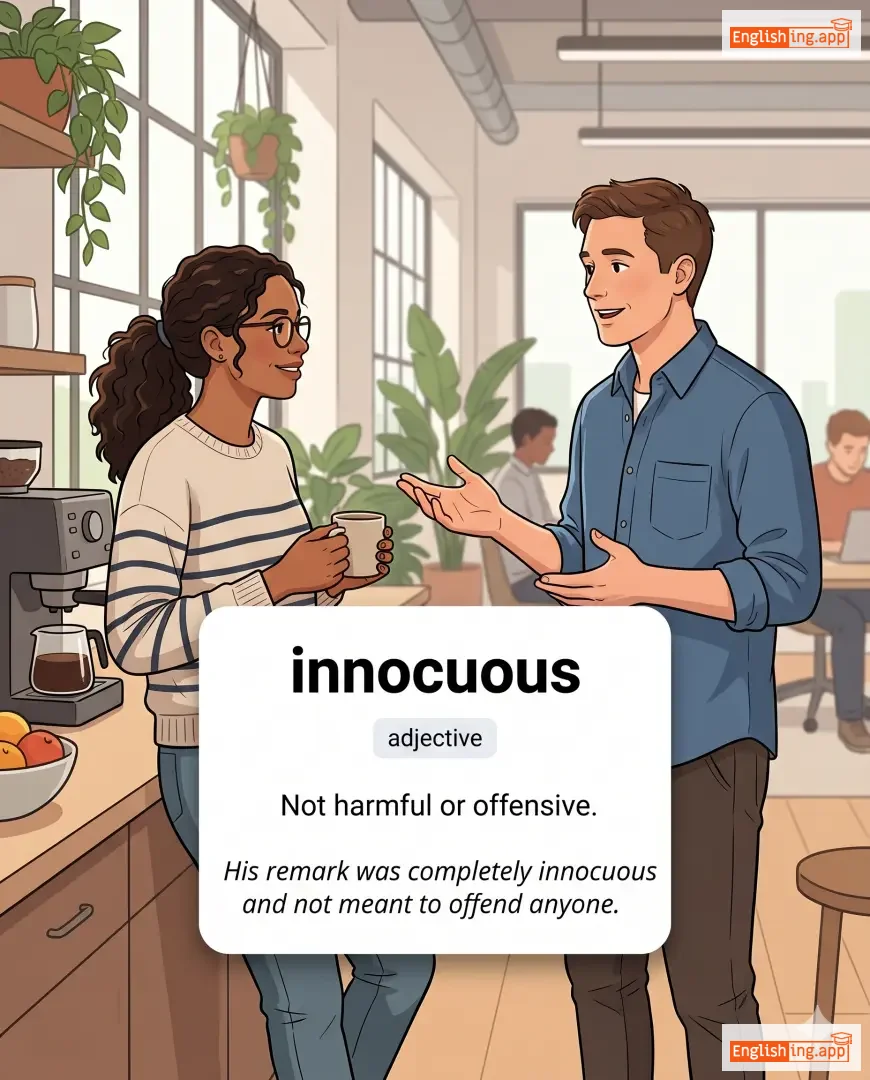
innocuous definition card — visual illustration of the meaning
adjective C1
/ɪˈnɒkjuəs/
無害な (mugaina)

Not harmful or offensive.

"His remark was completely innocuous and not meant to offend anyone."

"彼の発言は完全に無害で、誰かを傷つける意図はなかった。" (Kare no hatsugen wa kanzen ni mugai de, dareka o kizutsukeru ito wa nakatta.)
adjective C1
/ɪˈnuːm(ə)rəbəl/
無数の (musū no)

Too many to be counted.

"She has innumerable memories of her childhood."

"彼女は子供時代の無数の思い出を持っています。" (Kanojo wa kodomojidai no musū no omoide o motteimasu.)
adjective C1
/ˌɪnəˈfɛnsɪv/
無害な (mugai na)

Not likely to offend or provoke; harmless.

"His inoffensive remarks kept the conversation friendly."

"彼の無害なコメントは会話を友好的に保ちました。" (Kare no mugai na komento wa kaiwa o yūkō-teki ni tamochimashita.)
adjective C1
/ɪˈnɔːrdənət/
過度の (kado no)

Excessive or unusually large in degree.

"She spent an inordinate amount of time on her phone."

"彼女は電話に過度の時間を費やしました。" (Kanojo wa denwa ni kado no jikan o tsuiyashimashita.)
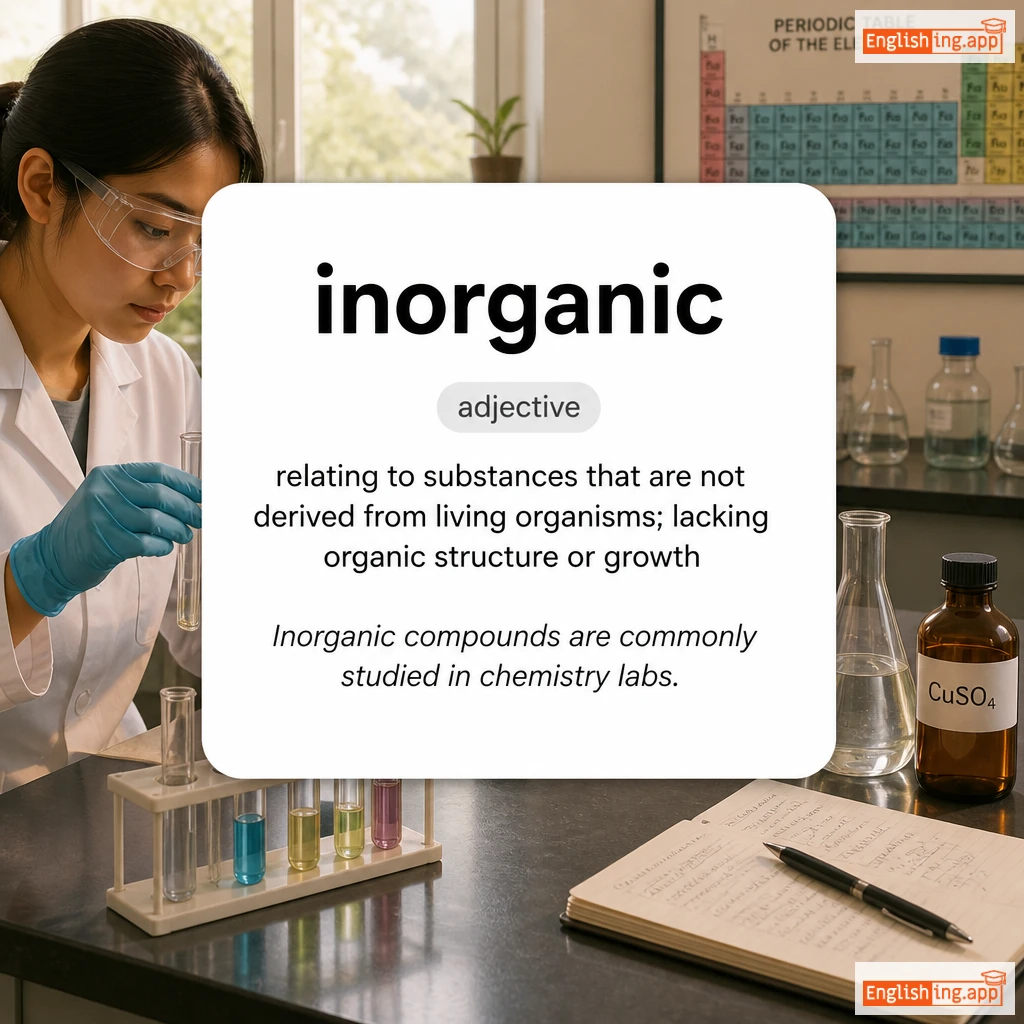
inorganic definition card — visual illustration of the meaning
adjective C1
/ˌɪnɔːrˈɡænɪk/
無機の (muki no)

relating to substances that are not derived from living organisms; lacking organic structure or growth

"Inorganic compounds are commonly studied in chemistry labs."

"無機化合物は化学の基本です。" (muki kagobutsu wa kagaku no kihon desu)
noun C1
/ˈɪnkwest/
調査 (chousa)

A legal or official inquiry, especially into the cause of a death.

"The inquest revealed the cause of the accident."

"調査は事故の原因を明らかにしました。" (Chousa wa jiko no gen'in wo akiraka ni shimashita.)
noun C1
/ˌɪnkwɪˈzɪʃən/
尋問 (jinmon)

A prolonged and intense questioning or investigation, often harsh in nature.

"The journalist faced an inquisition from the panel about his sources."

"ジャーナリストは、自分の情報源に関するパネルからの厳しい尋問に直面した。" (Jānarisuto wa, jibun no jōhōgen ni kansuru paneru kara no kibishii jinmon ni chokumen shita.)
adjective C1
/ɪnˈkwɪzɪtɪv/
好奇心旺盛な (koukishin ōseina)

Curious or eager to learn and ask questions.

"The inquisitive child asked endless questions about the stars."

"好奇心旺盛な子供は星について無限に質問をしました。" (Koukishin ōseina kodomo wa hoshi ni tsuite mugen ni shitsumon o shimashita.)
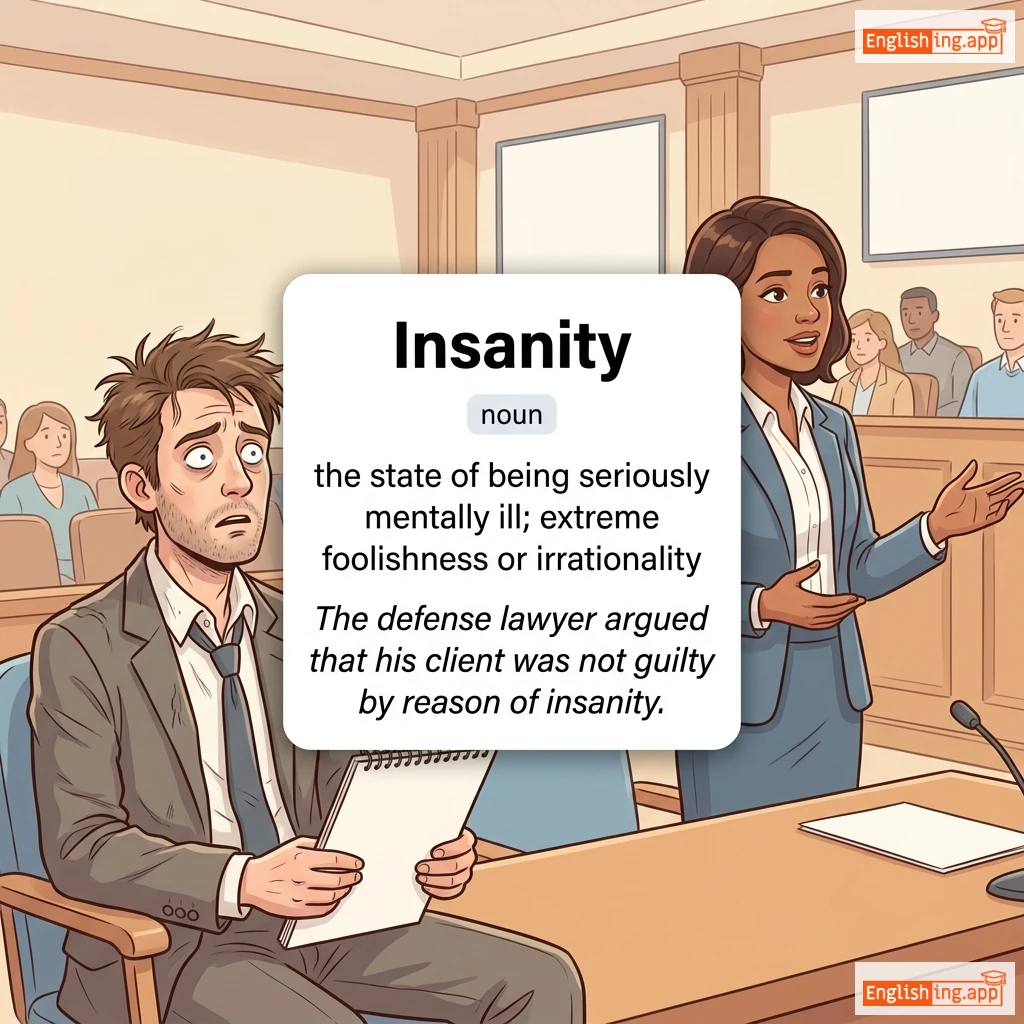
Insanity definition card — visual illustration of the meaning
noun C1
/ɪnˈsæn.ə.ti/
狂気; 精神疾患 (kyōki; seishin shikkan)

the state of being seriously mentally ill; extreme foolishness or irrationality

"The defense lawyer argued that his client was not guilty by reason of insanity."

"弁護人は、被告人が狂気によって無罪であると主張した。" (Bengonin wa, hikokunin ga kyōki ni yotte muzai de aru to shuchō shita.)
adjective C1
/ɪnˈseɪʃəbl̩/
満たされない (mitasarenai)

impossible to satisfy; always wanting more

"Her insatiable curiosity drove her to read every book in the library."

"彼女の満たされない好奇心は、図書館のすべての本を読むように彼女を駆り立てた。" (Kanojo no mitasarenai koukishin wa, toshokan no subete no hon o yomu you ni kanojo o karitate ta.)
verb C1
/ɪnˈskraɪb/
刻む (kizamu)

to write or carve words or symbols on a surface

"They inscribed her name on the trophy."

"彼らはトロフィーに彼女の名前を刻みました。" (Karera wa torofī ni kanojo no namae o kizamimashita.)
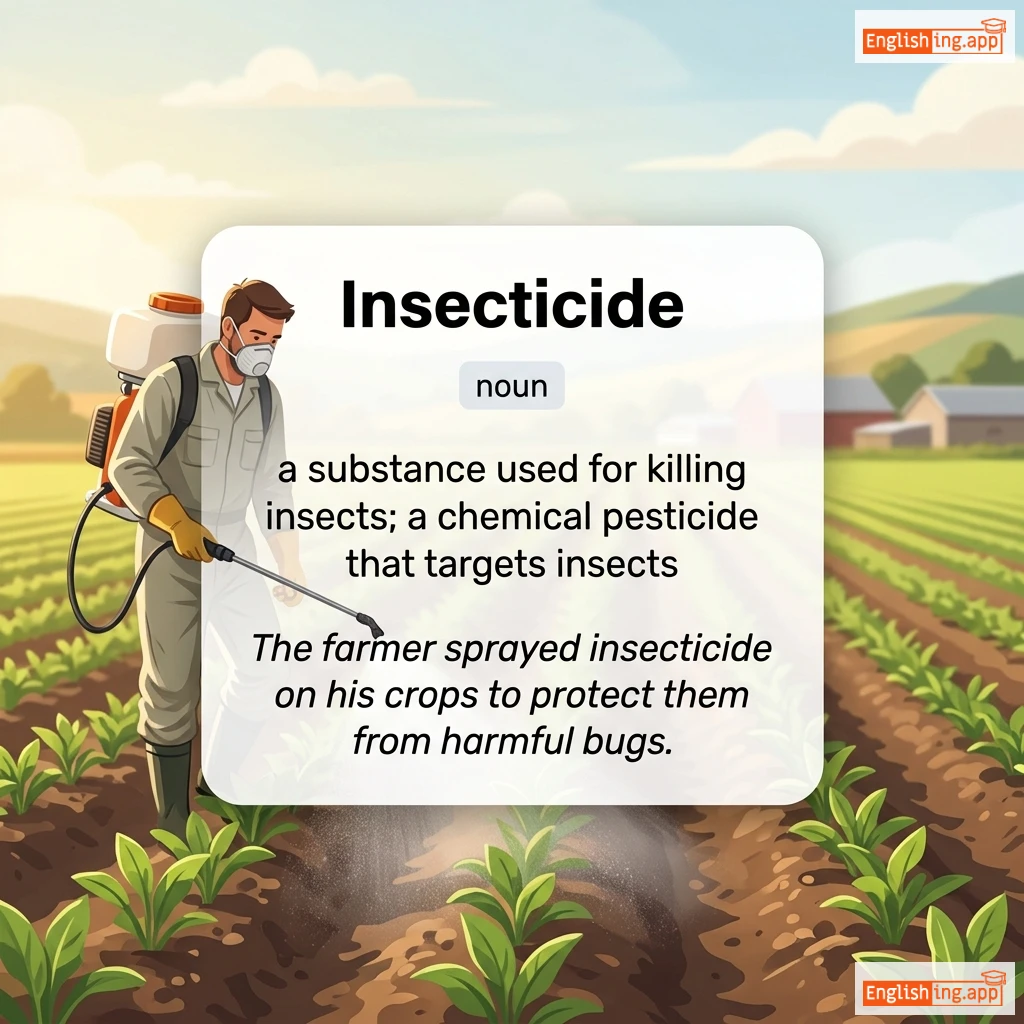
Insecticide definition card — visual illustration of the meaning
noun C1
/ɪnˈsek.tɪ.saɪd/
殺虫剤 (sasshuuzai)

a substance used for killing insects; a chemical pesticide that targets insects

"The farmer sprayed insecticide on his crops to protect them from harmful bugs."

"農夫は作物を有害な虫から守るために殺虫剤を噴霧しました。" (noufu wa sakumotsu o yuugaina mushi kara mamoru tame ni sasshuuzai o funmu shimashita.)
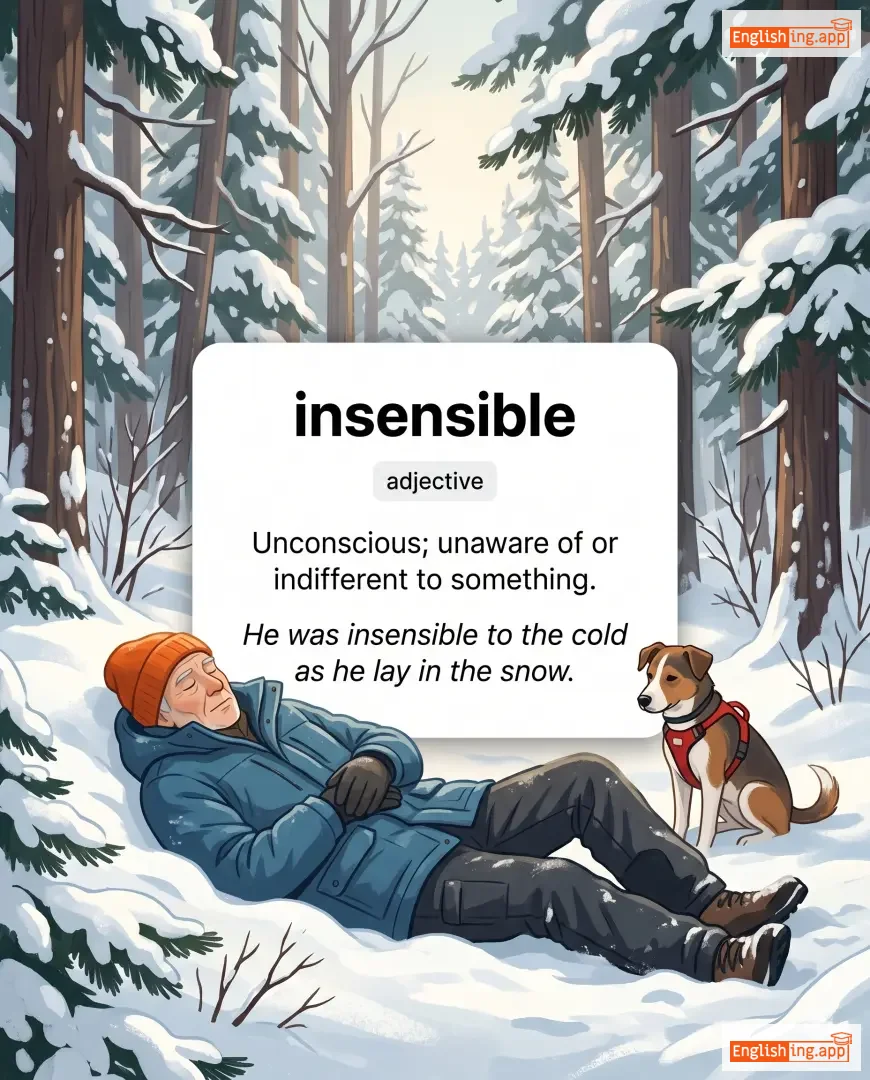
insensible definition card — visual illustration of the meaning
adjective C1
/ɪnˈsɛnsəbl/
無意識 (muishiki)

Unconscious; unaware of or indifferent to something.

"He was insensible to the cold as he lay in the snow."

"彼は雪の中で横たわっているとき、寒さに無意識でした。" (Kare wa yuki no naka de yokotawatte iru toki, samusa ni muishiki deshita.)
adjective C1
/ɪnˈsɛp(ə)rəbəl/
切り離せない (kirihanasenai)

Unable to be separated or always together.

"The two friends have been inseparable since childhood."

"二人の友達は子供の頃から切り離せないです。" (Futari no tomodachi wa kodomo no koro kara kirihanasenai desu.)
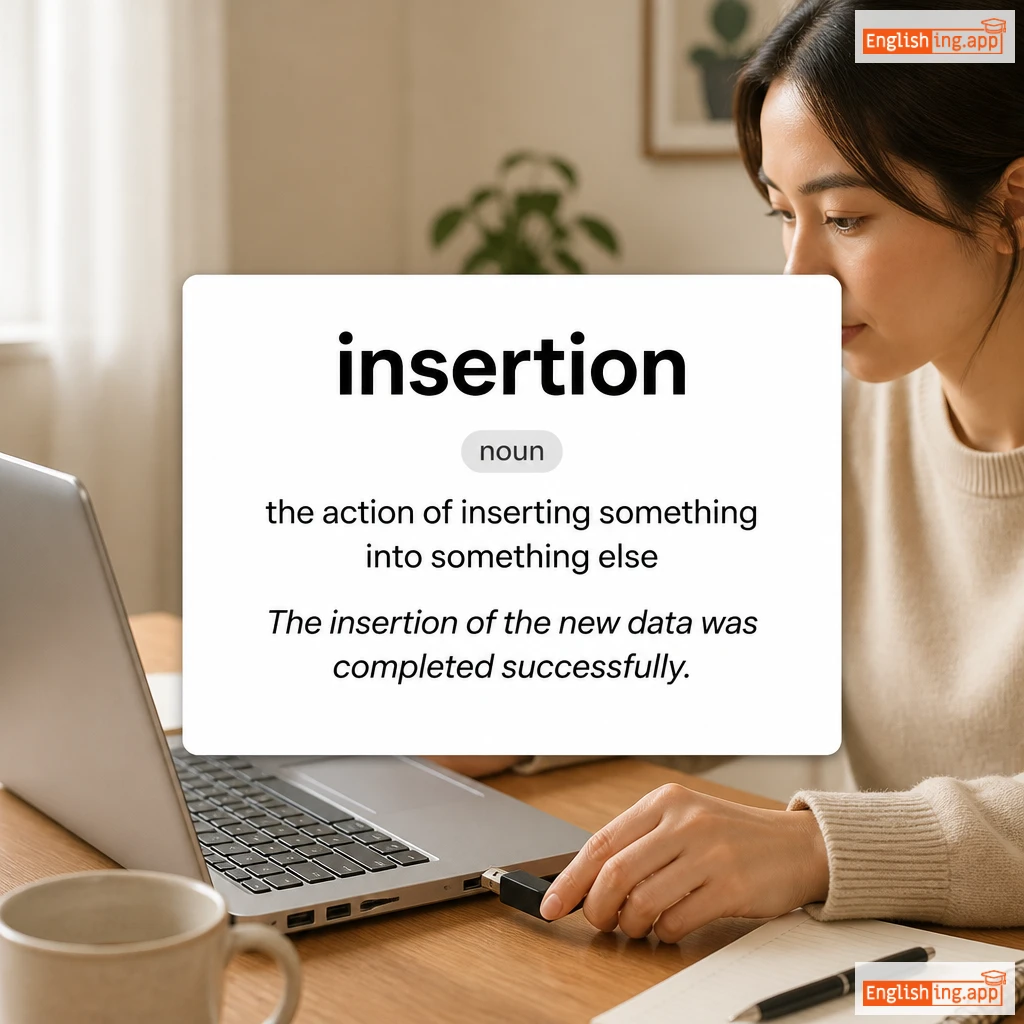
insertion definition card — visual illustration of the meaning
noun C1
/ɪnˈsɜːʃən/
挿入 (sounyuu)

the action of inserting something into something else

"The insertion of the new data was completed successfully."

"新しいデータの挿入は成功裏に完了しました。" (Atarashī dēta no sōnyū wa seikōri ni kanryō shimashita.)
adjective C1
/ɪnˈsɪdiəs/
陰険な (inken na)

Proceeding in a gradual, subtle way but with harmful effects.

"The insidious spread of misinformation can damage trust."

"誤った情報の陰険な広がりは信頼を傷つける可能性がある。" (Ayamatta jouhou no inken na hirogari wa shinrai wo kizutsukeru kanousei ga aru.)
insightfulness definition card — visual illustration of the meaning
noun C1
ˌɪnˈsaɪtfʊlnɪs
洞察力、分析能力 (dōsatsuryoku, bunseki nōryoku)

The capacity to gain an accurate and deep intuitive understanding of a person or thing.

"His insightfulness helped solve the complex problem."

"彼の洞察力は複雑な問題を解決するのに役立ちました。" (Kare no dōsatsuryoku wa fukuzatsu na mondai o kaiketsu suru no ni yakudachimashita.)
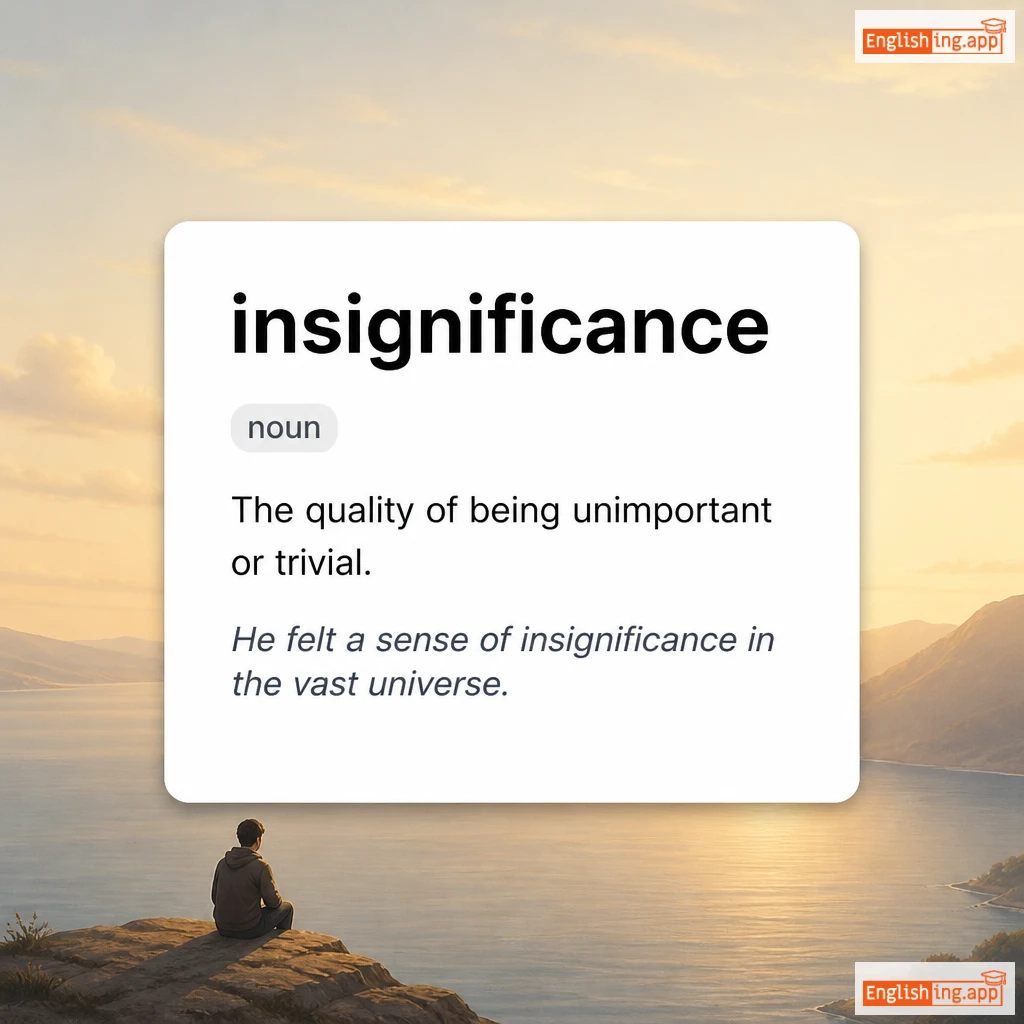
insignificance definition card — visual illustration of the meaning
noun C1
/ˌɪnsɪɡˈnɪfɪkəns/
重要でないこと (juuyou denai koto)

The quality of being unimportant or trivial.

"He felt a sense of insignificance in the vast universe."

"彼は広大な宇宙で重要でないことを感じました。" (Kare wa koudai na uchuu de juuyou denai koto o kanjimashita.)
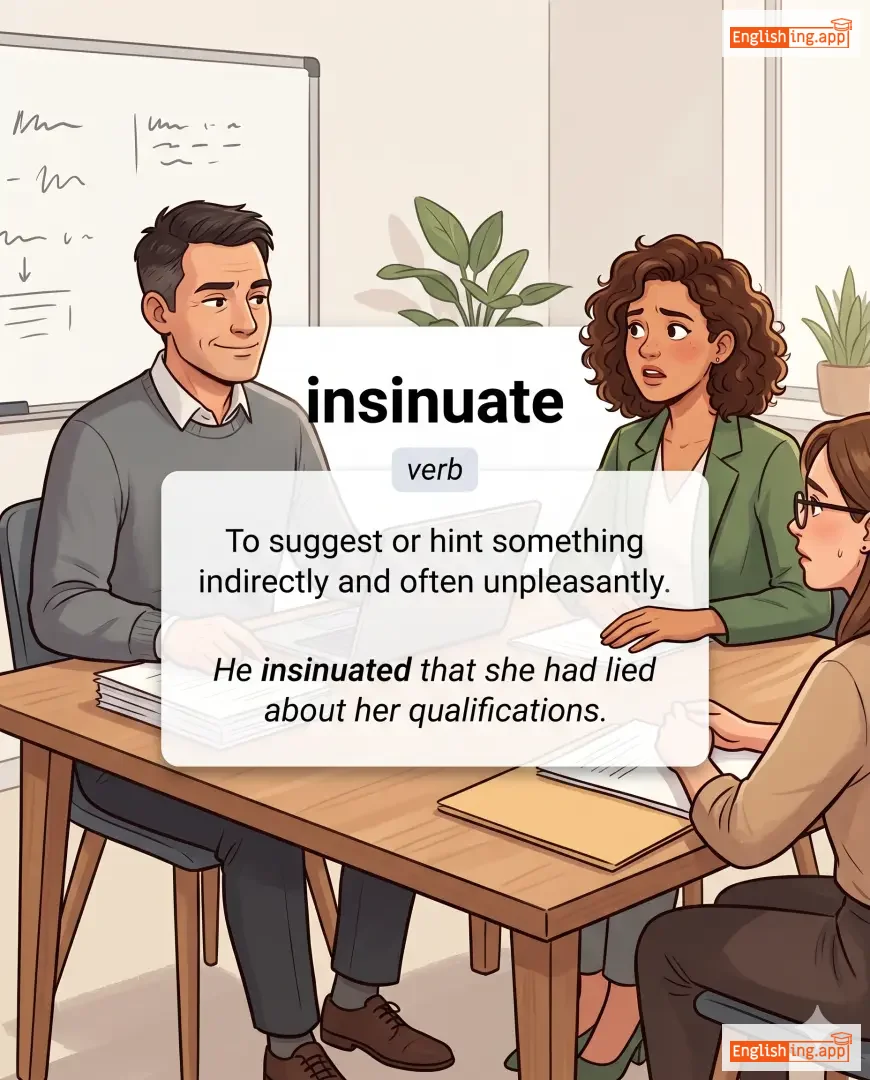
insinuate definition card — visual illustration of the meaning
verb C1
/ɪnˈsɪnjueɪt/

To suggest or hint something indirectly and often unpleasantly.

"He insinuated that she had lied about her qualifications."

adjective C1
/ɪnˈsɪstənt/
執拗な (shuchou na)

demanding something firmly and refusing to accept no

"The child was insistent on getting a new toy."

"その子供は新しいおもちゃを手に入れることに執拗だった。" (Sono kodomo wa atarashī omocha o te ni ireru koto ni shuchō datta.)
adjective C1
/ˈɪnsələnt/
無礼な、傲慢な (burei na, gōman na)

showing a rude and arrogant lack of respect

"The insolent student refused to follow the teacher's instructions."

"その無礼な学生は教師の指示に従うことを拒否した。" (Sono burei na gakusei wa kyōshi no shiji ni shitagau koto o kyohi shita.)
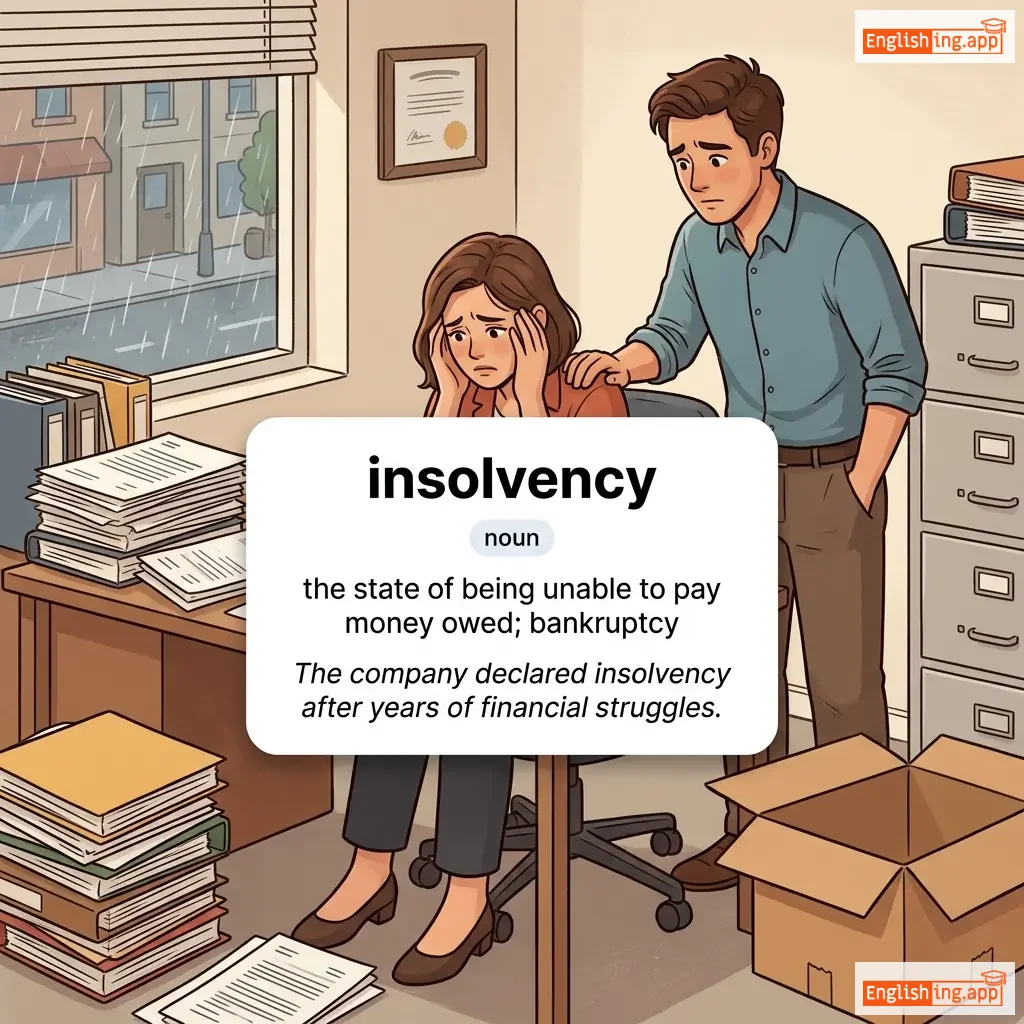
insolvency definition card — visual illustration of the meaning
noun C1
/ɪnˈsɒlvənsi/
破産 (hasan)

the state of being unable to pay money owed; bankruptcy

"The company declared insolvency after years of financial struggles."

"会社は長年の財務的な問題の後、破産を宣言しました。" (Kaisha wa naganen no zaimuteki na mondai no ato, hasan o sengen shimashita.)
adjective C1
/ɪnˈsɒlvənt/
破産 (hasan)

unable to pay debts owed

"The insolvent firm could not meet its financial obligations."

"破産した企業は財務義務を果たせなかった。" (Hasan shita kigyō wa zaimu gimu o hatase nakatta.)
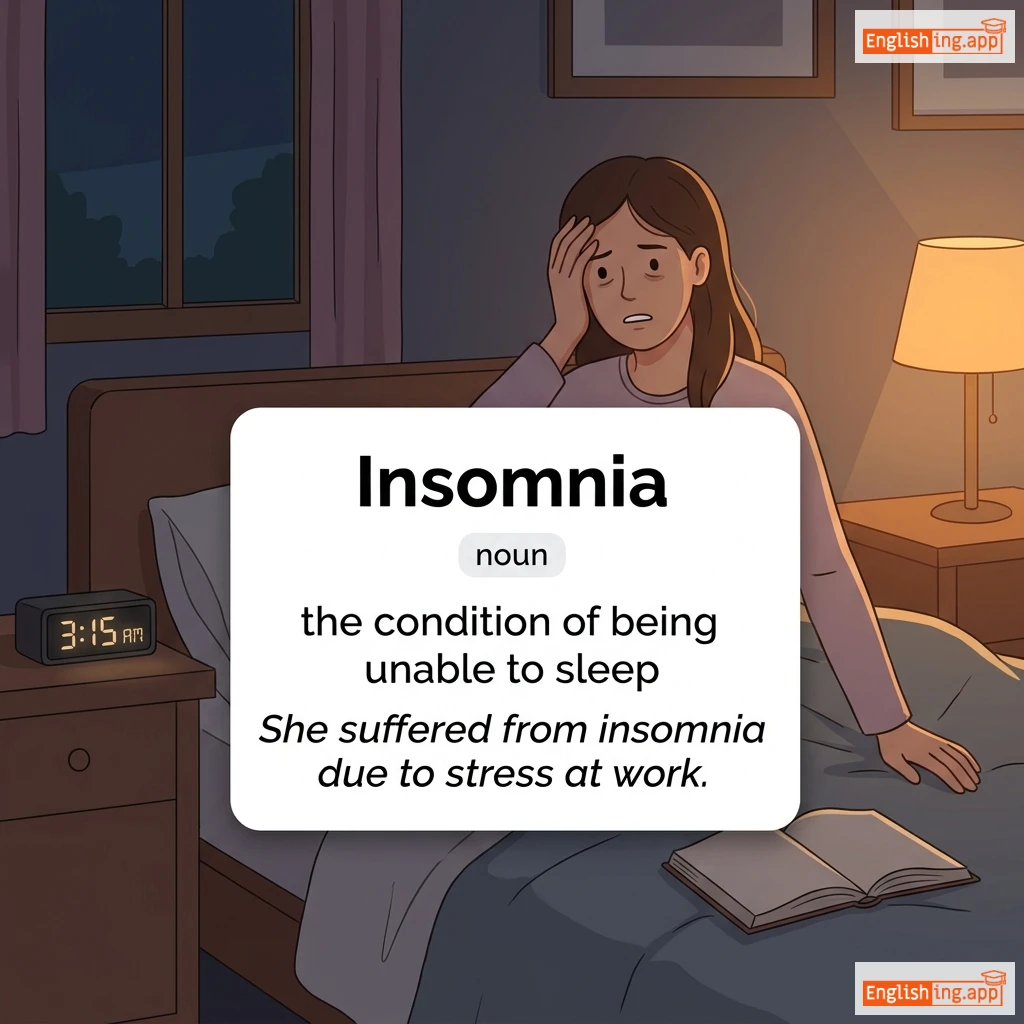
Insomnia definition card — visual illustration of the meaning
noun C1
/ɪnˈsɒmniə/
不眠症 (fuminsyou)

the condition of being unable to sleep

"She suffered from insomnia due to stress at work."

"彼女は仕事のストレスで不眠症に苦しんでいました。" (Kanojo wa shigoto no sutoresu de fuminsyou ni kurushindeimashita.)
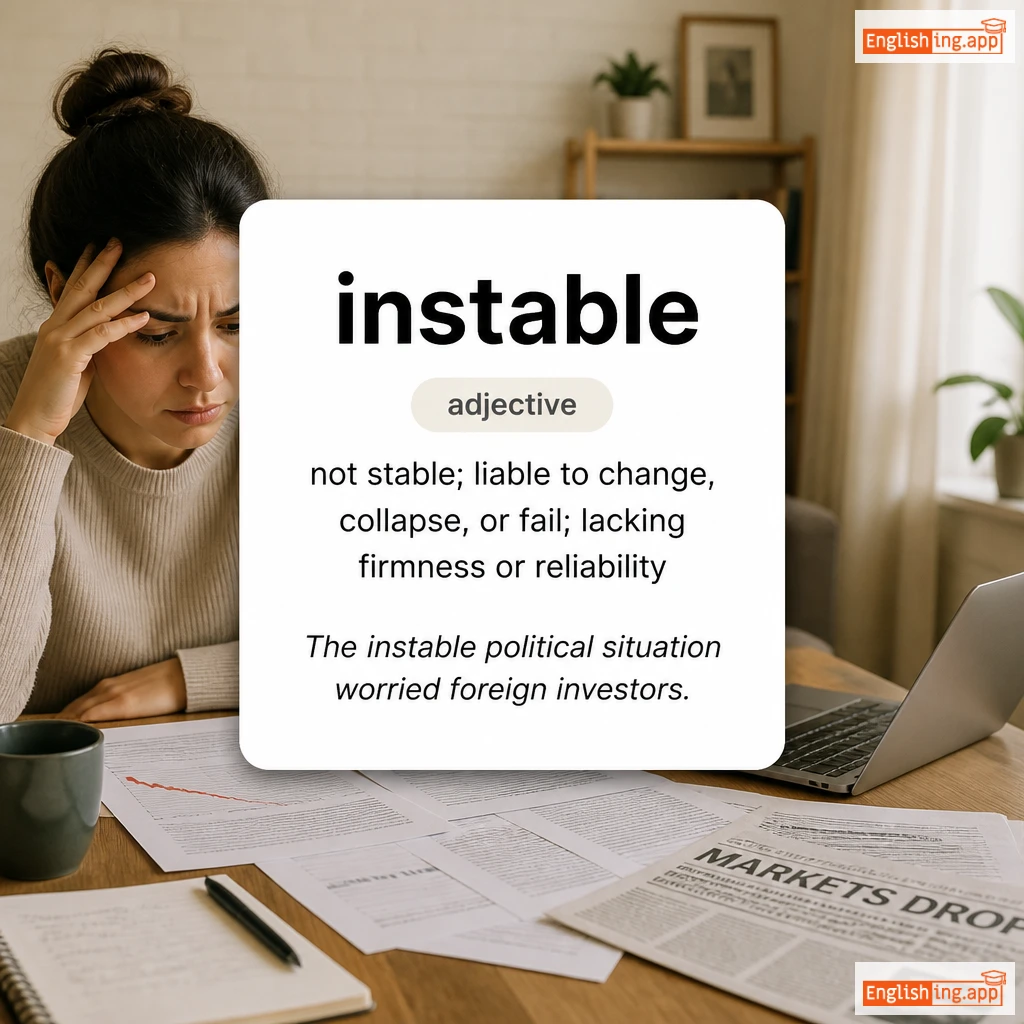
instable definition card — visual illustration of the meaning
adjective C1
/ɪnˈsteɪbəl/
不安定な (fuantei na)

not stable; liable to change, collapse, or fail; lacking firmness or reliability

"The instable political situation worried foreign investors."

"不安定な政治状況が外国の投資家を心配させた。" (Fuantei na seiji joukyou ga gaikoku no toushika o shinpai saseta)
adjective C1
/ˌɪnstənˈteɪniəs/
即時 (sokushi)

Happening immediately, without any delay.

"The change in temperature was almost instantaneous."

"温度の変化はほぼ即時でした。" (Ondo no henka wa hobo sokushi deshita.)
verb C1
/ˈɪnstɪˌɡeɪt/
扇動する (sendou suru)

To bring about or initiate an action, often something negative.

"He was accused of instigating the riot."

"彼は暴動を扇動したとして告発された。" (Kare wa boudou wo sendou shita to shite kokuhatsu sareta.)
noun C1
/ˈɪnstɪˌɡeɪtər/
扇動者 (sendōsha)

A person who brings about or initiates something, usually something bad.

"The police identified him as the instigator of the violence."

"警察は彼を暴力の扇動者として特定しました。" (Keisatsu wa kare o bōryoku no sendōsha to shite tokutei shimashita.)
verb C1
/ɪnˈstɪl/
植え付ける (ueukeru)

to gradually but firmly establish an idea, attitude, or habit in someone's mind

"Parents try to instill good values in their children."

"親は子供に良い価値観を植え付けようとしています。" (Oya wa kodomo ni yoi kachikan o ueukeyou to shiteimasu.)
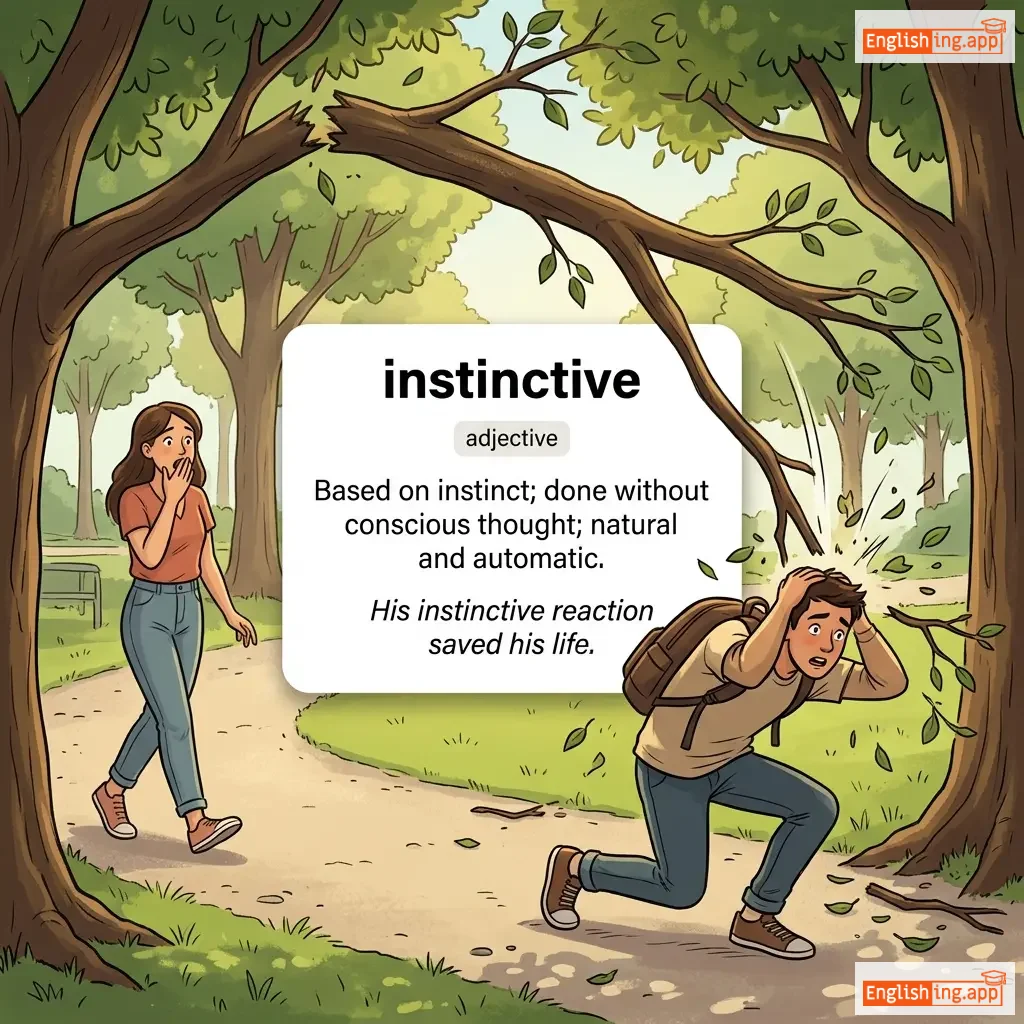
instinctive definition card — visual illustration of the meaning
adjective C1
/ɪnˈstɪŋk.tɪv/
本能的, 自然な, 自動的 (honnōteki, shizen na, jidōteki)

Based on instinct; done without conscious thought; natural and automatic.

"His instinctive reaction saved his life."

"彼の本能的な反応は彼の命を救った。" (Kare no hon'nōteki na hannō wa kare no inochi o sukutta.)
verb C1
/ˌɪnstɪˈtjuːʃənəlaɪz/
制度化する (seido-ka suru)

to establish something as a formal institution, custom, or practice

"The government seeks to institutionalize environmental protection."

"政府は環境保護を制度化しようとしています。" (Seifu wa kankyō hogo o seido-ka shiyou to shiteimasu.)
adjective C1
/ɪnˈstrʌktɪv/
教育的 (kyōikuteki)

useful and informative; providing knowledge or instruction

"The lecture was highly instructive and engaging."

"その講義は非常に教育的で魅力的でした。" (Sono kōgi wa hijō ni kyōikuteki de miryokuteki deshita.)
adjective C1
/ˌɪn.səˈbɔːr.dɪ.nət/
命令不服従 (meirei fukujū)

Defiant of authority; disobedient to orders.

"The insubordinate employee refused to follow the manager's instructions."

"命令不服従の従業員は、マネージャーの指示に従うことを拒否した。" (Meirei fukujū no jūgyōin wa, manējā no shiji ni shitagau koto o kyohi shita.)
noun C1
/ˌɪn.səˌbɔːr.dɪˈneɪ.ʃən/
反抗 (hankou)

Defiance of authority; refusal to obey orders.

"The soldier was punished for insubordination during the mission."

"その兵士はミッション中の反抗で罰せられました。" (Sono heishi wa misshon-chuu no hankou de bassaremashita.)
adjective C1
/ˌɪn.səbˈstæn.ʃəl/
不十分な (fujūbun na)

Lacking strength, substance, or solidity.

"The evidence provided was insubstantial and unconvincing."

"提供された証拠は不十分で説得力がなかった。" (Teikyō sareta shōko wa fujūbun de settoku-ryoku ga nakatta.)
adjective C1
/ɪnˈsʌf.ər.ə.bəl/
耐え難い (taegatai)

Too extreme to bear; intolerable.

"The heat during the summer was insufferable."

"夏の暑さは耐え難かった。" (Natsu no atsusa wa tae gakatta.)
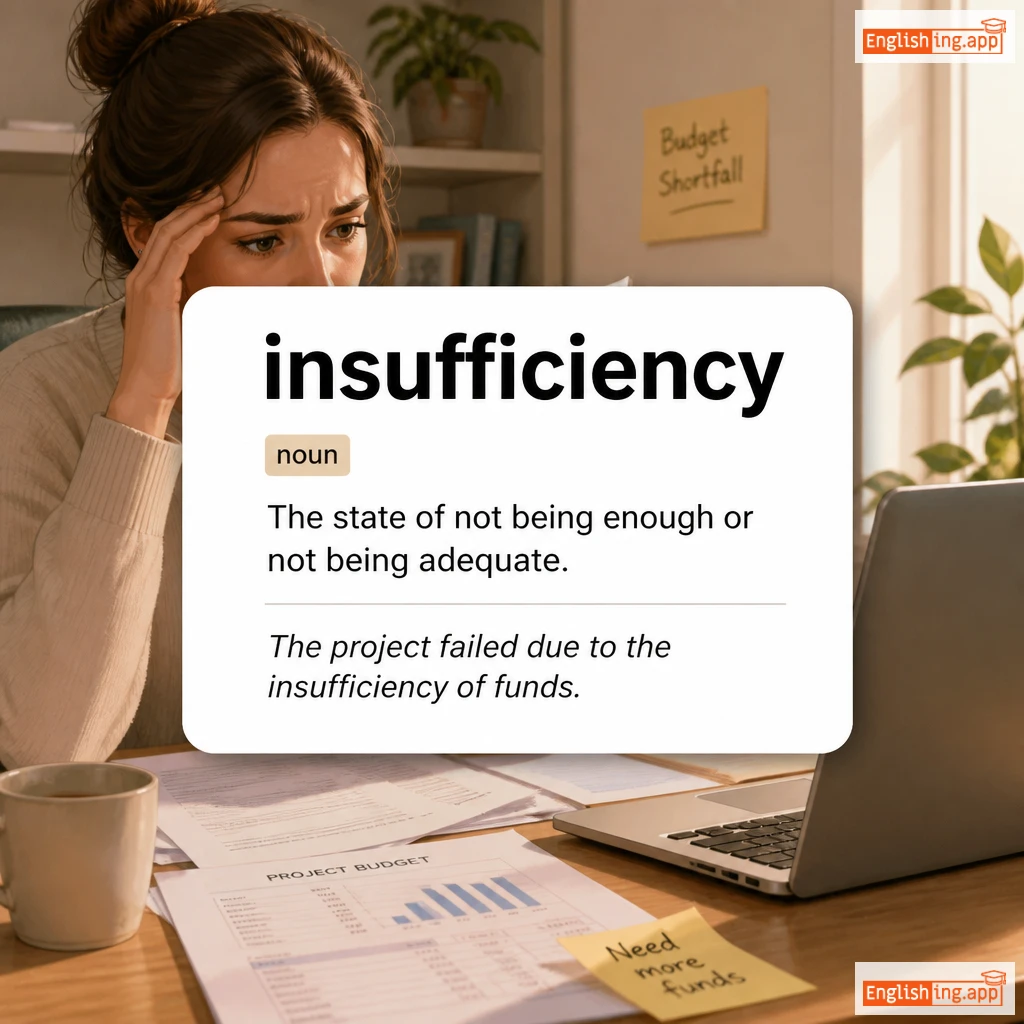
insufficiency definition card — visual illustration of the meaning
noun C1
/ˌɪnsəˈfɪʃənsi/
不足 (fusoku)

The state of not being enough or not being adequate.

"The project failed due to the insufficiency of funds."

"プロジェクトは資金不足のため失敗しました。" (Purojekuto wa shikin fusoku no tame shippai shimashita.)
adjective C1
/ˈɪnsjələr/
狭い心の、島に関連する (semai kokoro no, shima ni kanren suru)

Narrow-minded, isolated, or relating to an island.

"The community was criticized for its insular attitudes toward outsiders."

"そのコミュニティは外部の人々に対する狭量な態度で批判されました。" (Sono komyuniti wa gaibu no hitobito ni taisuru kyōryōna taido de hihan saremashita.)
🛡️

insulate

verb C1
/ˈɪnsjuleɪt/

To protect something by covering it, especially to prevent heat, sound, or electricity from escaping or entering.

"The house was insulated to reduce heating costs."

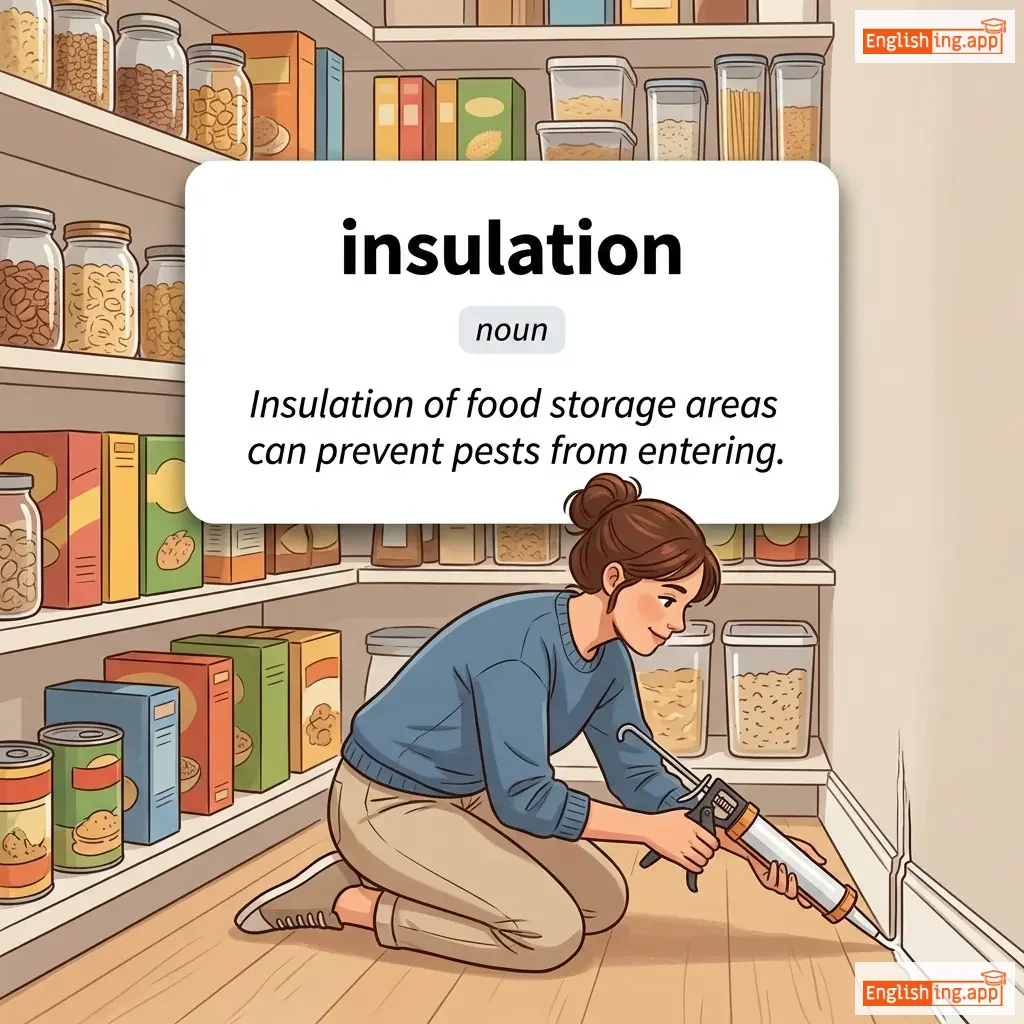
insulation definition card — visual illustration of the meaning
noun C1
ˌɪnsjʊˈleɪʃən
絶縁 (zetsuen)

Material used to prevent heat, sound, or electricity from being transmitted from one area to another.

"Insulation of food storage areas can prevent pests from entering."

"食品保管エリアの絶縁は、害虫が侵入するのを防ぐことができます。" (Shokuhin hokan eria no zetsuen wa, gaichū ga shin'nyū suru no o fusu koto ga dekimasu.)
noun C1
/ɪnˈsɜːrdʒəns/
反乱 (hanran)

An act of rebellion or uprising against authority.

"The government struggled to contain the growing insurgence."

"政府は増大する反乱を抑制するのに苦労した。" (Seifu wa zōdaisuru hanran o yokusei suru no ni kurō shita.)
noun C1
/ɪnˈsɜːrdʒənt/
反乱者 (hanran sha)

A person who rises in revolt against authority or government.

"The army arrested several insurgents after the attack."

"軍隊は攻撃後、数人の反乱者を逮捕した。" (Guntai wa kōgeki go, sūnin no hanran sha o taiho shita.)