Vocabulaires

Découvrez, apprenez et maîtrisez le vocabulaire anglais

verb C1
/ɪmˈpɑːrt/
transmettre (transmettre)

to make information known; to bestow or communicate

"The teacher imparted valuable knowledge to her students."

"L'enseignant a imparté des connaissances précieuses à ses élèves." (L'enseignant a imparté des connaissances précieuses à ses élèves.)
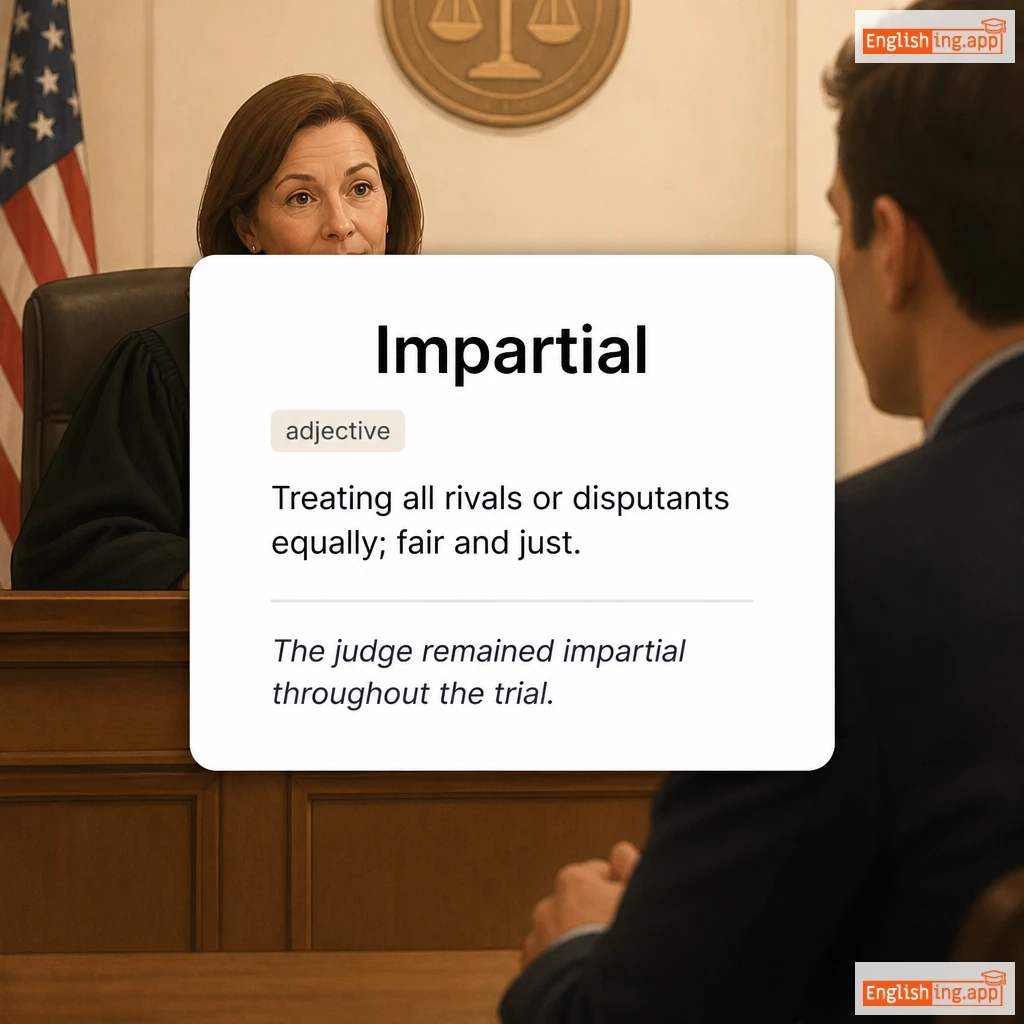
Impartial definition card — visual illustration of the meaning
adjective C1
/ɪmˈpɑːrʃəl/
impartial (impartial)

Treating all rivals or disputants equally; fair and just.

"The judge remained impartial throughout the trial."

"Le juge est resté impartial tout au long du procès." (Le juge est resté impartial tout au long du procès.)
adjective C1
/ɪmˈpæsəbəl/
impraticable (impraticable)

Impossible to travel along or over.

"The road became impassable after the heavy snowfall."

"La route est devenue impraticable après la forte neige." (La route est devenue impraticable après la forte neige.)
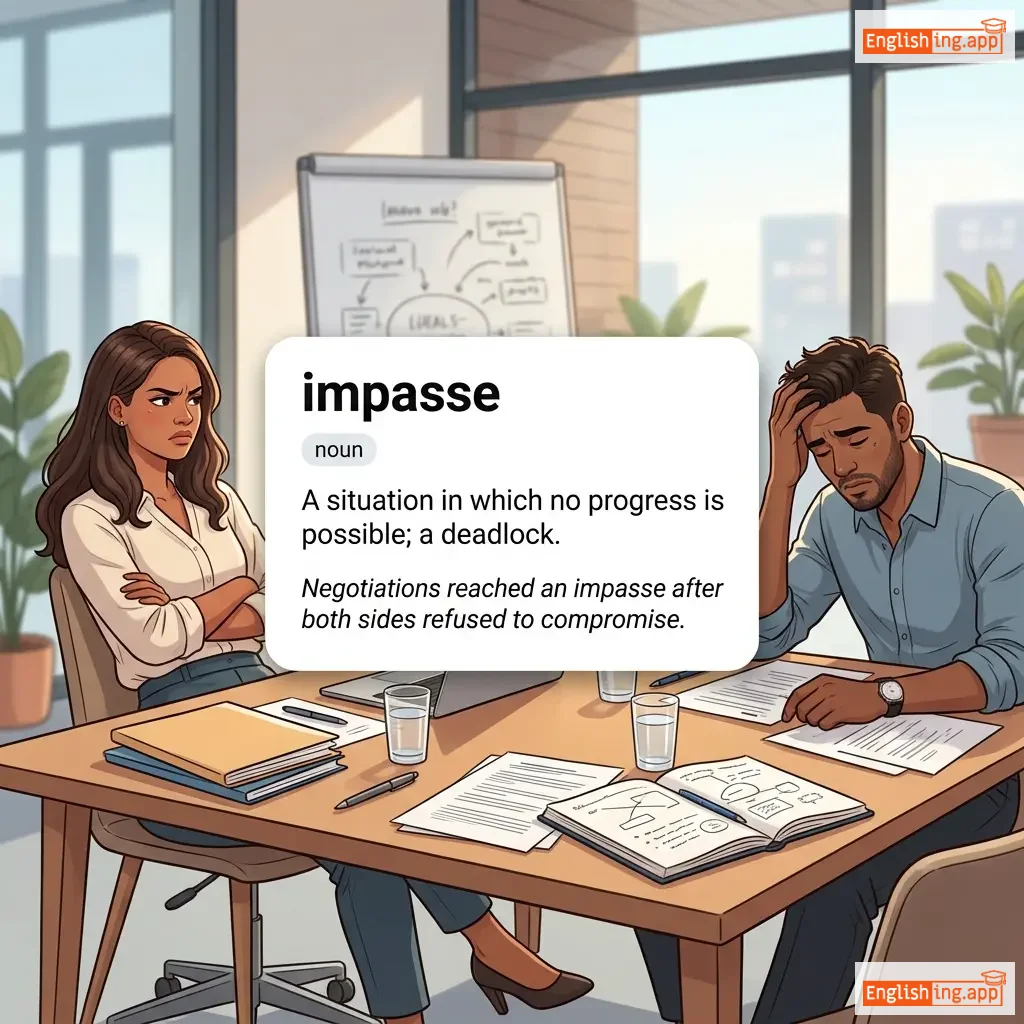
impasse definition card — visual illustration of the meaning
noun C1
/ˈɪmpæs/
impasse (impasse)

A situation in which no progress is possible; a deadlock.

"Negotiations reached an impasse after both sides refused to compromise."

"Les négociations ont atteint une impasse après que les deux parties aient refusé de faire des compromis." (Les negociations ont atteint une impasse apres que les deux parties aient refuse de faire des compromis.)
adjective C1
/ɪmˈpæʃənd/
passionné (passionné)

Filled with or showing great emotion.

"She gave an impassioned speech about human rights."

"Elle a prononcé un discours passionné sur les droits de l'homme." (Elle a prononcé un discours passionné sur les droits de l'homme.)
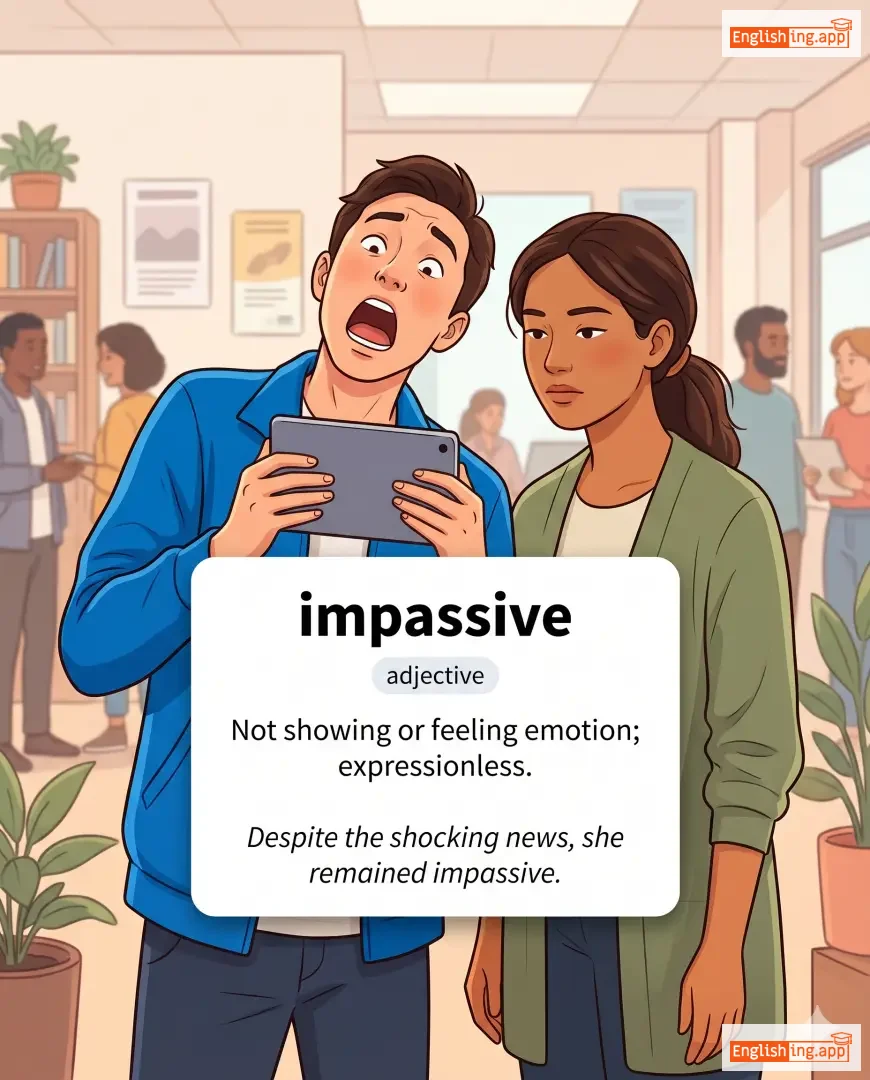
impassive definition card — visual illustration of the meaning
adjective C1
/ɪmˈpæsɪv/
impassible (impassible)

Not showing or feeling emotion; expressionless.

"Despite the shocking news, she remained impassive."

"Malgré les nouvelles choquantes, elle est restée impassible." (Malgré les nouvelles choquantes, elle est restée impassible.)
verb C1
/ɪmˈpiːtʃ/
destituer (destituer)

To charge a public official with misconduct while in office.

"The parliament voted to impeach the president."

"Le parlement a voté pour destituer le président." (Le parlement a voté pour destituer le président.)
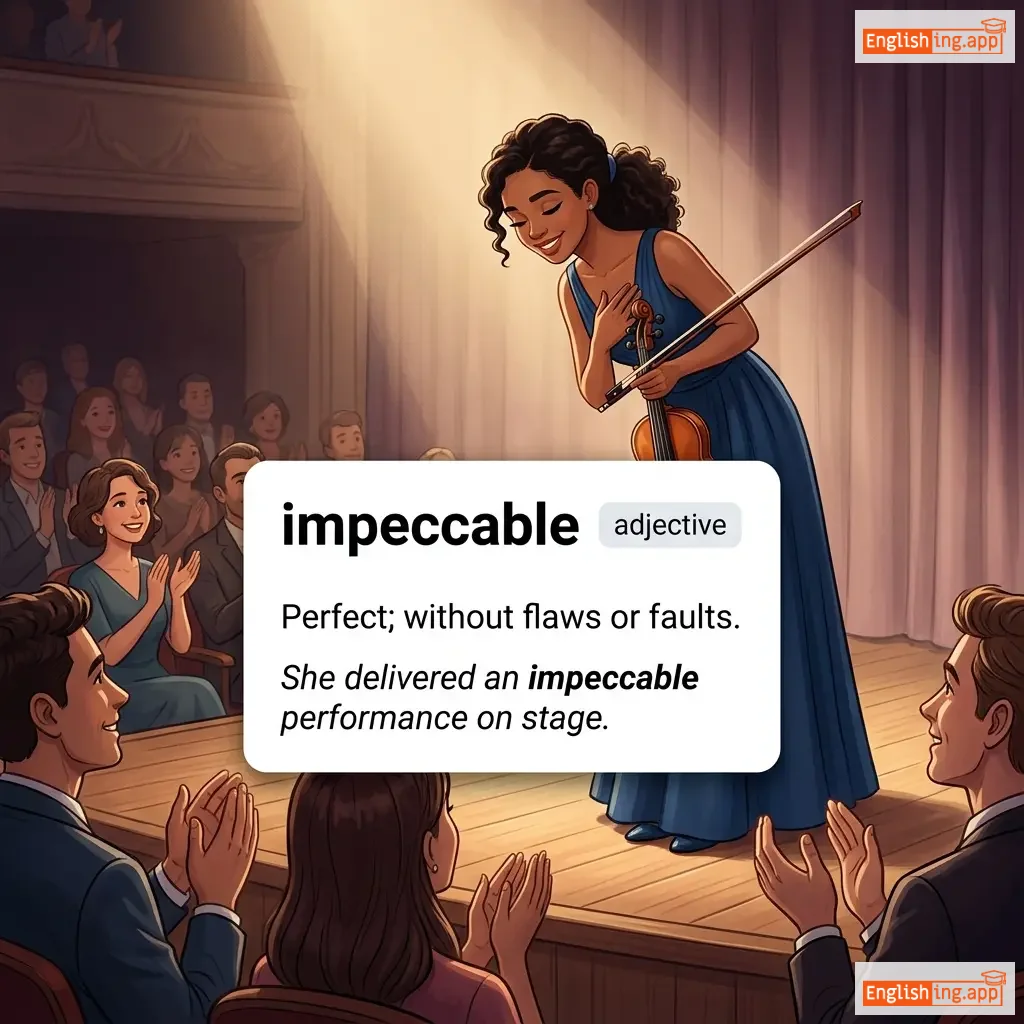
impeccable definition card — visual illustration of the meaning
adjective C1
/ɪmˈpɛkəbl̩/
impeccable (impeccable)

Perfect; without flaws or faults.

"She delivered an impeccable performance on stage."

"Elle a donné une performance impeccable sur scène." (Elle a donne une performance impeccable sur scene.)
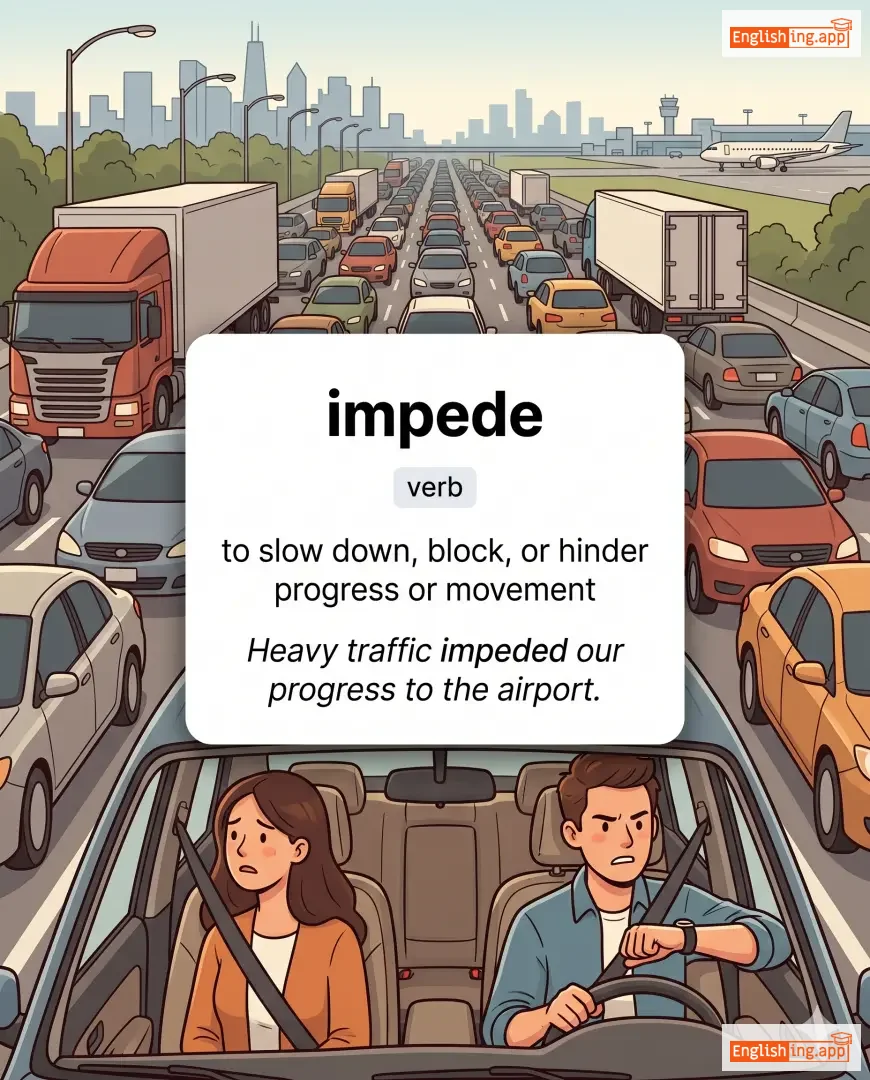
impede definition card — visual illustration of the meaning
verb C1
/ɪmˈpiːd/
entraver (entraver)

to slow down, block, or hinder progress or movement

"Heavy traffic impeded our progress to the airport."

"Le trafic dense a entravé notre progression vers l'aéroport." (Le trafic dense a entravé notre progression vers l'aéroport.)
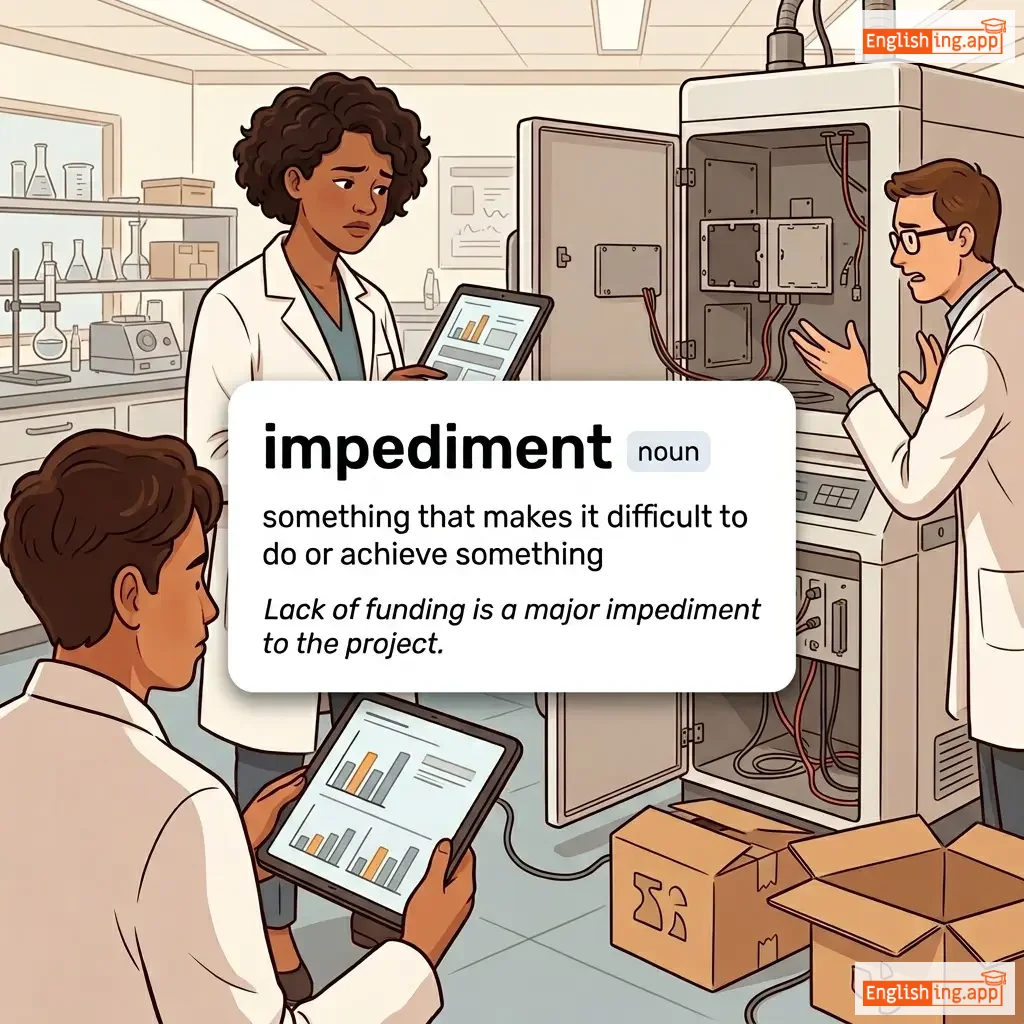
impediment definition card — visual illustration of the meaning
noun C1
/ɪmˈpɛdɪmənt/
empêchement (impediment)

something that makes it difficult to do or achieve something

"Lack of funding is a major impediment to the project."

"Le manque de financement est un obstacle majeur au projet." (Le manque de financement est un obstacle majeur au projet.)
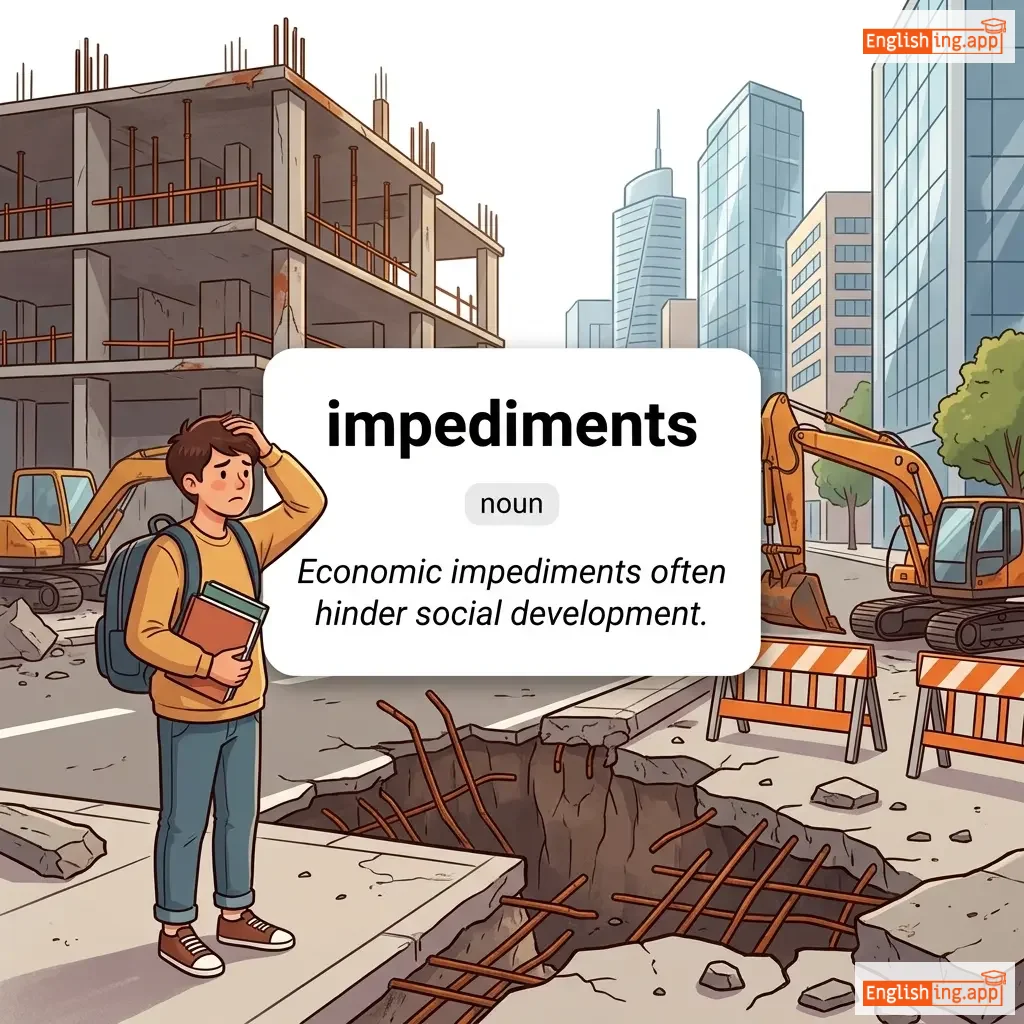
impediments definition card — visual illustration of the meaning
noun C1
/ɪmˈpɛdɪmənt/
obstacles (obstacles)

A hindrance or obstruction in doing something; things that prevent progress or achievement.

"Economic impediments often hinder social development."

"Les obstacles économiques entravent souvent le développement social." (Les obstacles economiques entravent souvent le developpement social.)
verb C1
/ɪmˈpɛl/
inciter (inciter)

to drive, force, or urge someone to do something

"Her curiosity impelled her to open the mysterious box."

"Sa curiosité l'a poussée à ouvrir la boîte mystérieuse." (Sa curiosité l'a poussée à ouvrir la boîte mystérieuse.)
adjective C1
/ɪmˈpɛndɪŋ/
imminent (imminent)

about to happen soon, usually something unpleasant or threatening

"The villagers were worried about the impending flood."

"Les villageois étaient inquiets de l'inondation imminente." (Les villageois étaient inquiets de l'inondation imminente.)
adjective C1
/ɪmˈpɛn.ɪ.trə.bəl/
impénétrable (impenetrable)

Impossible to pass through or enter; impossible to understand.

"The dense forest was nearly impenetrable."

"La forêt dense était presque impénétrable." (La foret dense etait presque impenetrable.)
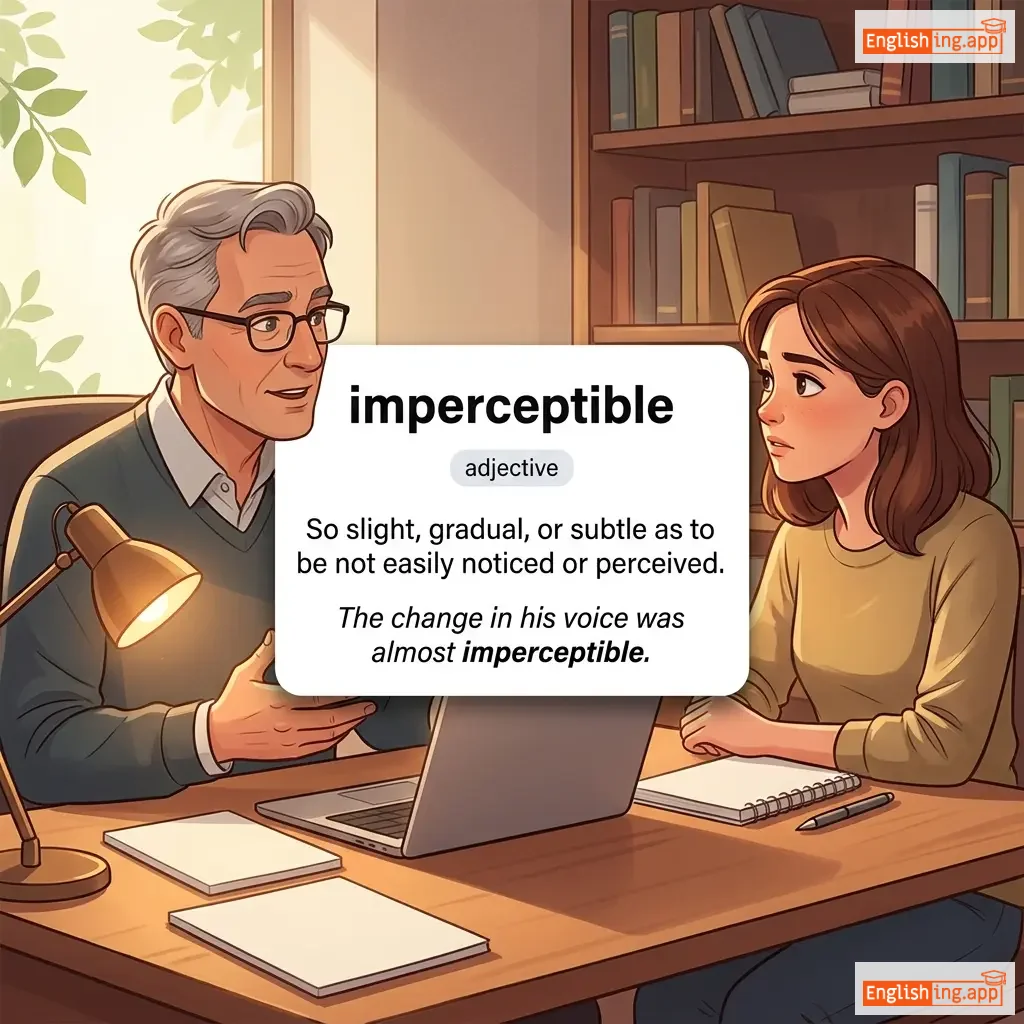
imperceptible definition card — visual illustration of the meaning
adjective C1
/ˌɪm.pəˈsɛp.tə.bəl/
imperceptible (imperceptible)

So slight, gradual, or subtle as to be not easily noticed or perceived.

"The change in his voice was almost imperceptible."

"Le changement dans sa voix était presque imperceptible." (Le changement dans sa voix était presque imperceptible.)
verb C1
/ɪmˈpɛrɪl/
mettre en danger (mettre en danger)

To put in danger or at risk.

"Reckless driving can imperil the lives of others."

"La conduite imprudente peut mettre la vie des autres en danger." (La conduite imprudente peut mettre la vie des autres en danger.)
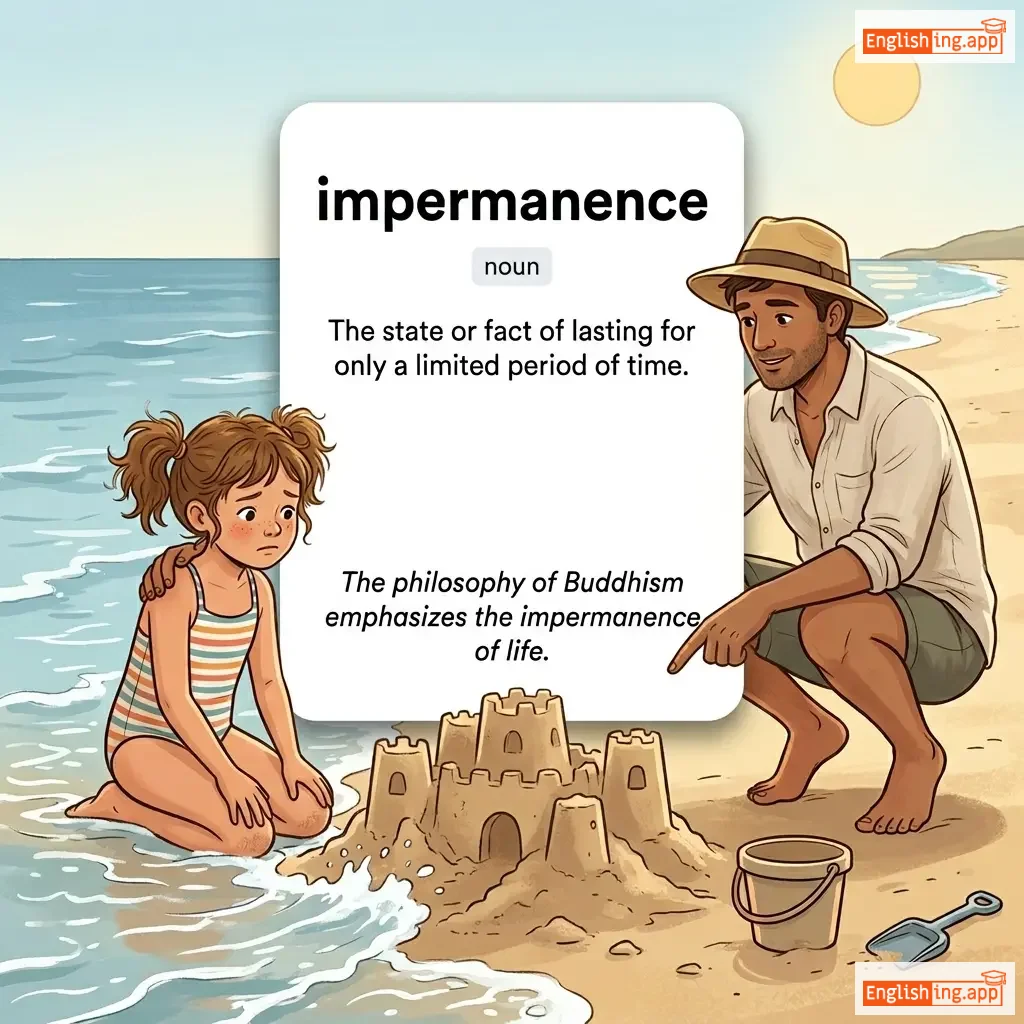
impermanence definition card — visual illustration of the meaning
noun C1
/ɪmˈpɜː.mə.nəns/
impermanence (impermanence)

The state or fact of lasting for only a limited period of time.

"The philosophy of Buddhism emphasizes the impermanence of life."

"La philosophie bouddhiste met l'accent sur l'impermanence de la vie." (La philosophie bouddhiste met l'accent sur l'impermanence de la vie.)
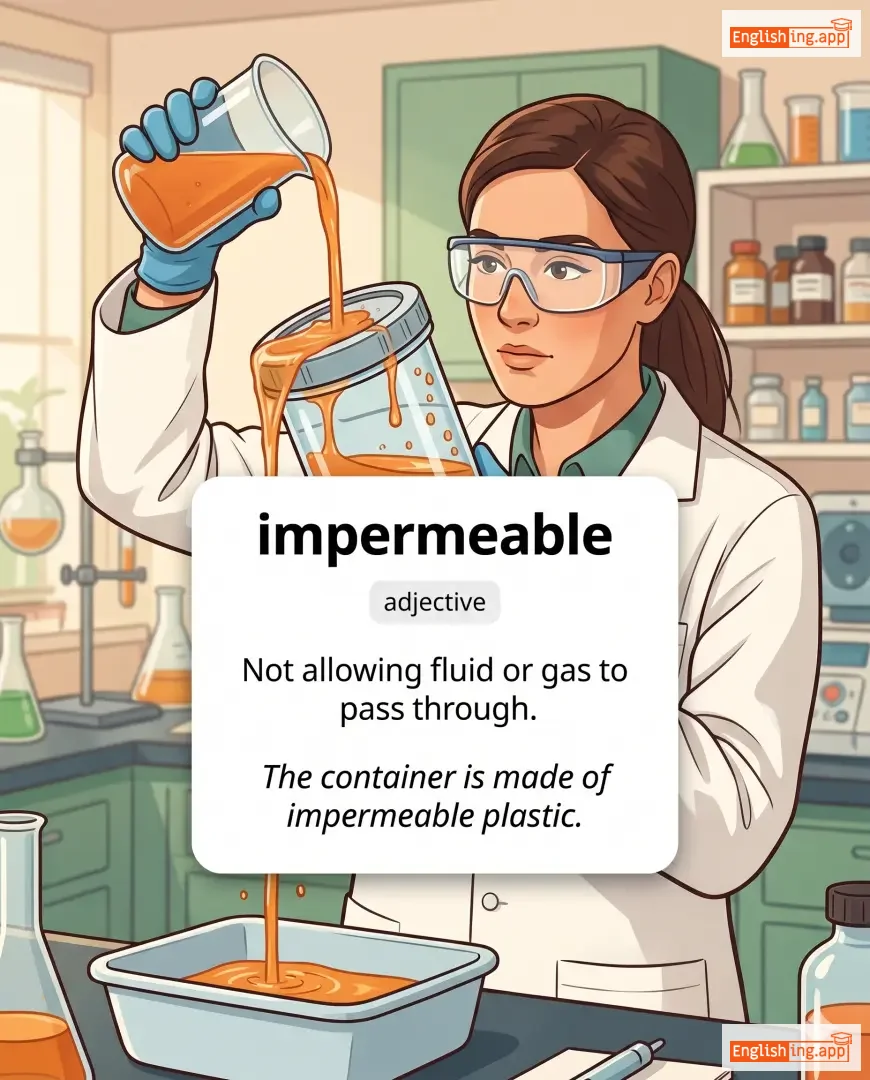
impermeable definition card — visual illustration of the meaning
adjective C1
/ɪmˈpɜːmiəbl/
imperméable (impermeable)

Not allowing fluid or gas to pass through.

"The container is made of impermeable plastic."

"Le conteneur est fabriqué en plastique imperméable." (Le conteneur est fabrique en plastique impermeable.)
adjective C1
/ɪmˈpɜːrsənl/
impersonnel (impersonnel)

not influenced by, showing, or involving personal feelings; lacking human warmth or emotion

"The letter was written in a very impersonal style."

"La lettre a été écrite dans un style très impersonnel." (La lettre a été écrite dans un style très impersonnel.)
verb C1
/ɪmˈpɜːrsəneɪt/
imiter (imiter)

to pretend to be another person in order to entertain or deceive

"He was arrested for trying to impersonate a police officer."

"Il a été arrêté pour avoir tenté d'usurper l'identité d'un policier." (Il a ete arrete pour avoir tente d'usurper l'identite d'un policier.)
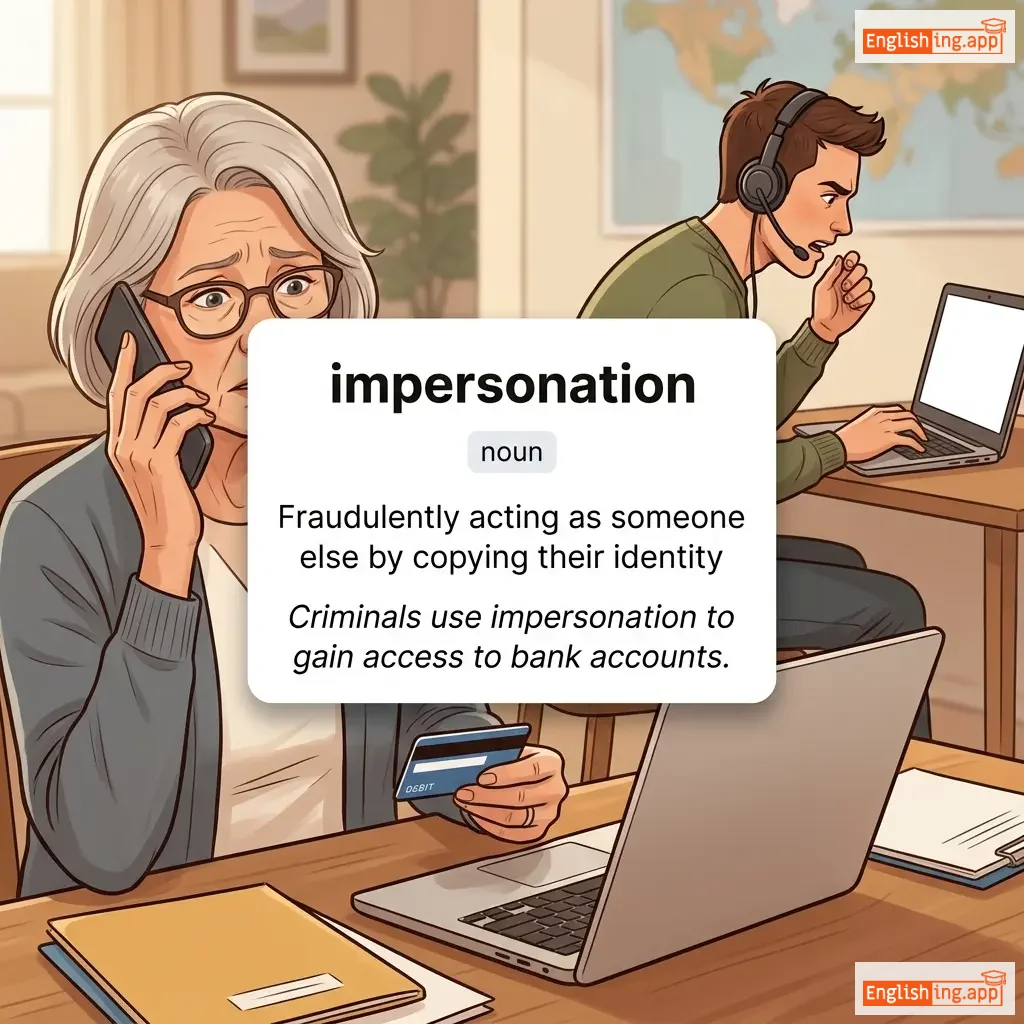
impersonation definition card — visual illustration of the meaning
noun C1
/ɪmˌpɜː.səˈneɪ.ʃən/
usurpation d'identité (usurpation d'identite)

Fraudulently acting as someone else by copying their identity

"Criminals use impersonation to gain access to bank accounts."

"Les criminels utilisent l'usurpation d'identité pour accéder aux comptes bancaires." (Les criminels utilisent l'usurpation d'identite pour acceder aux comptes bancaires.)
noun C1
/ɪmˈpɜːrtɪnəns/
impertinence (impertinence)

lack of respect; rudeness

"The teacher was shocked by the student's impertinence."

"Le professeur a été choqué par l'impertinence de l'étudiant." (Le professeur a été choqué par l'impertinence de l'étudiant.)
adjective C1
/ɪmˈpɜːrtɪnənt/
impertinent (impertinent)

rude and showing a lack of respect

"It was impertinent of him to question the manager's decision."

"C'était impertinent de sa part de remettre en question la décision du manager." (C'était impertinent de sa part de remettre en question la décision du manager.)
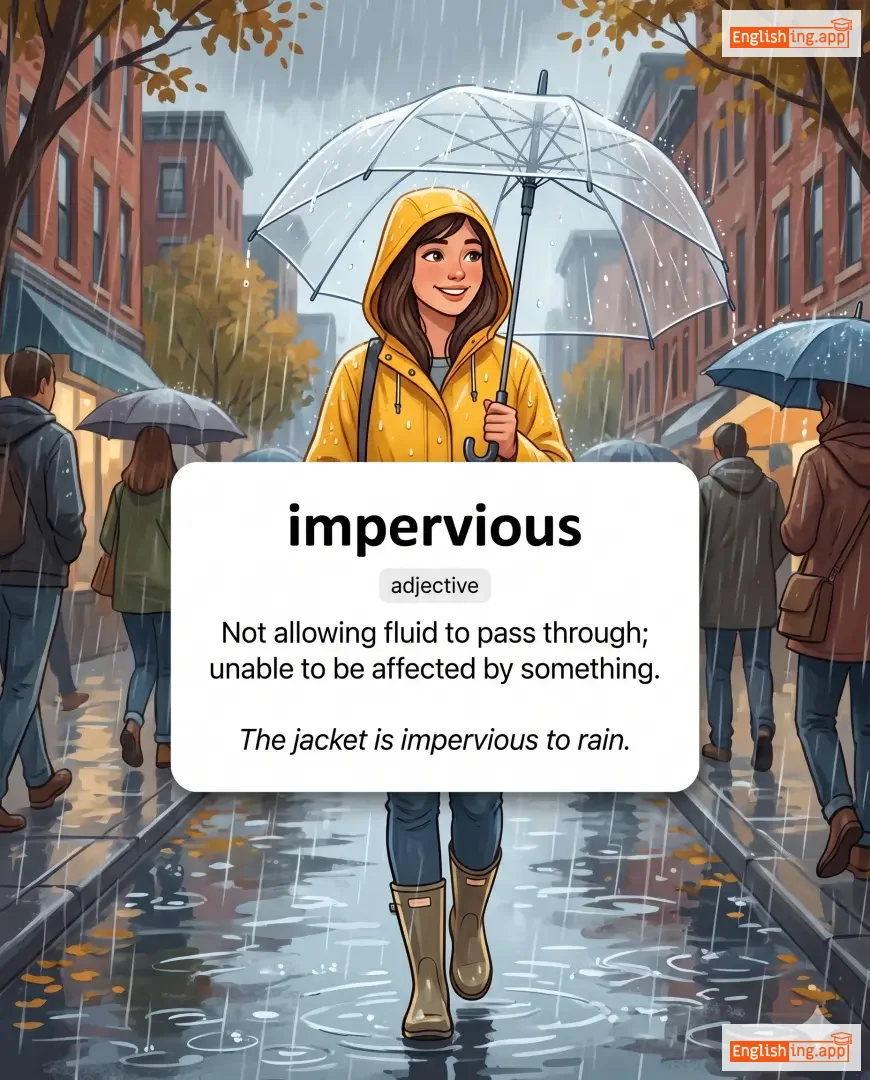
impervious definition card — visual illustration of the meaning
adjective C1
/ɪmˈpɜːrviəs/
imperméable (impermeable)

Not allowing fluid to pass through; unable to be affected by something.

"The jacket is impervious to rain."

"La veste est imperméable à la pluie." (La veste est imperméable à la pluie.)
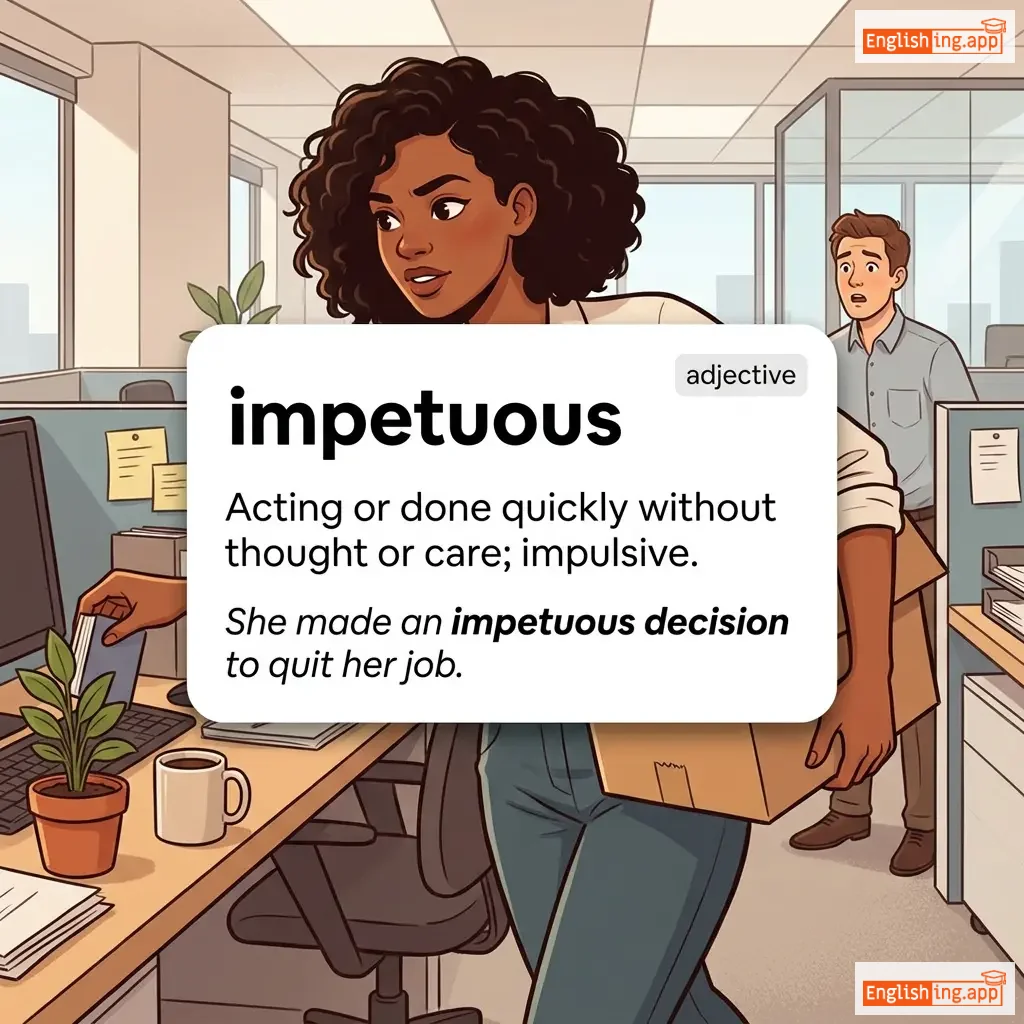
impetuous definition card — visual illustration of the meaning
adjective C1
/ɪmˈpetʃuəs/
impétueux (impetueux)

Acting or done quickly without thought or care; impulsive.

"She made an impetuous decision to quit her job."

"Elle a pris une décision impétueuse de quitter son travail." (Elle a pris une decision impetueuse de quitter son travail.)
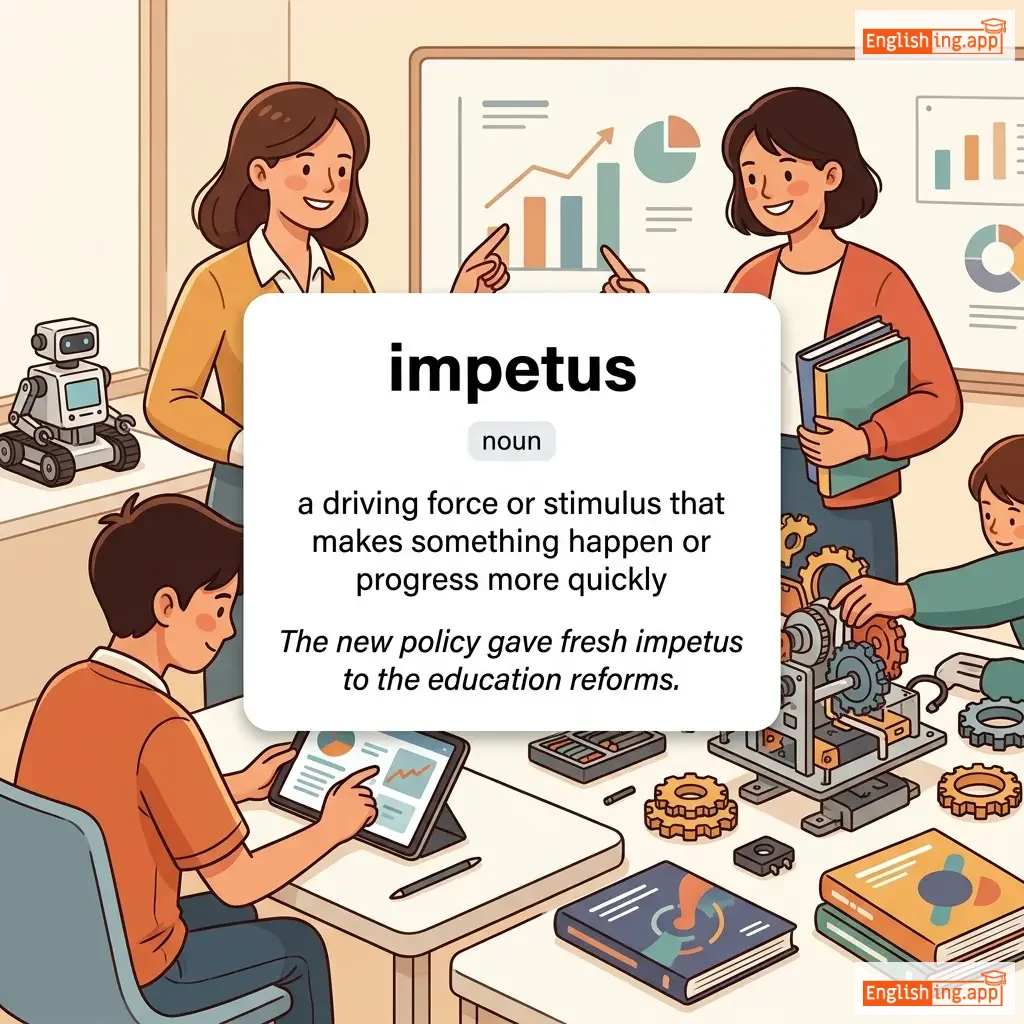
impetus definition card — visual illustration of the meaning
noun C1
/ˈɪmpɪtəs/
impulsion (impulsion)

a driving force or stimulus that makes something happen or progress more quickly

"The new policy gave fresh impetus to the education reforms."

"La nouvelle politique a donné un nouvel élan aux réformes éducatives." (La nouvelle politique a donne un nouvel elan aux reformes educatives.)
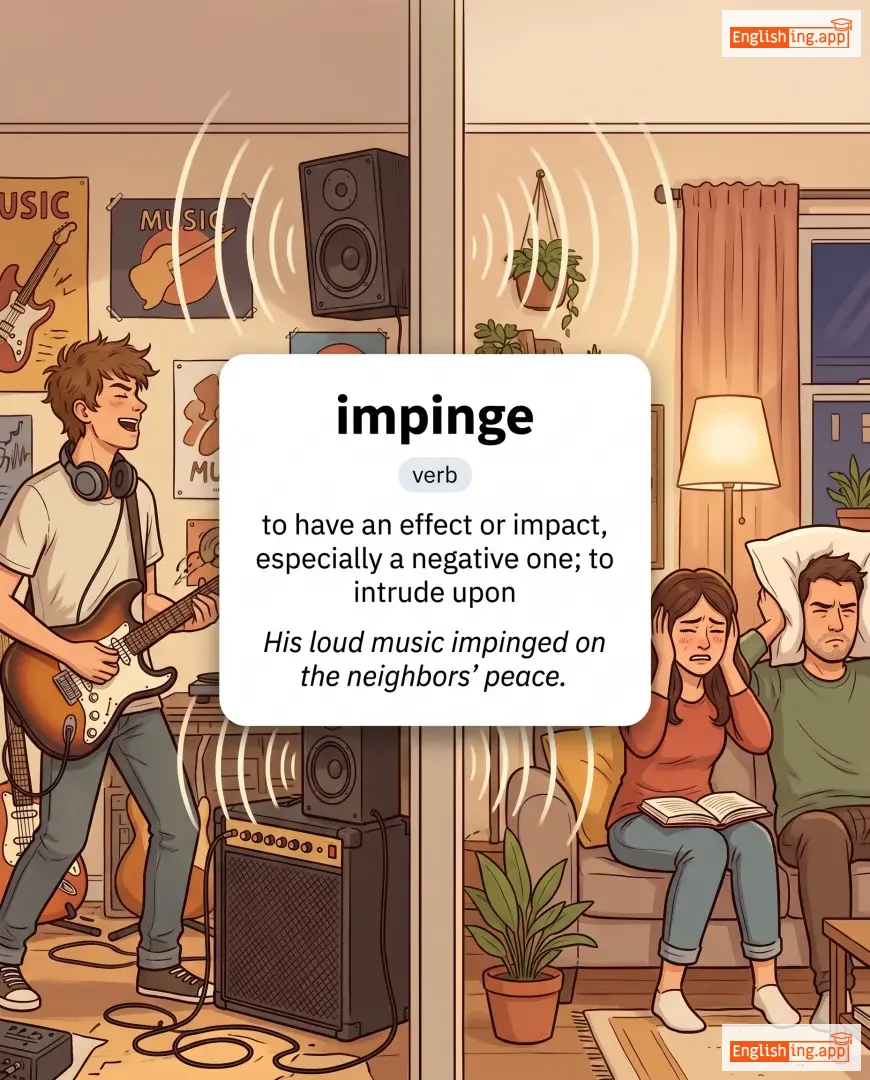
impinge definition card — visual illustration of the meaning
verb C1
/ɪmˈpɪndʒ/
empiéter (empiéter)

to have an effect or impact, especially a negative one; to intrude upon

"His loud music impinged on the neighbors’ peace."

"Sa musique forte a empiété sur la tranquillité des voisins." (Sa musique forte a empiété sur la tranquillité des voisins.)
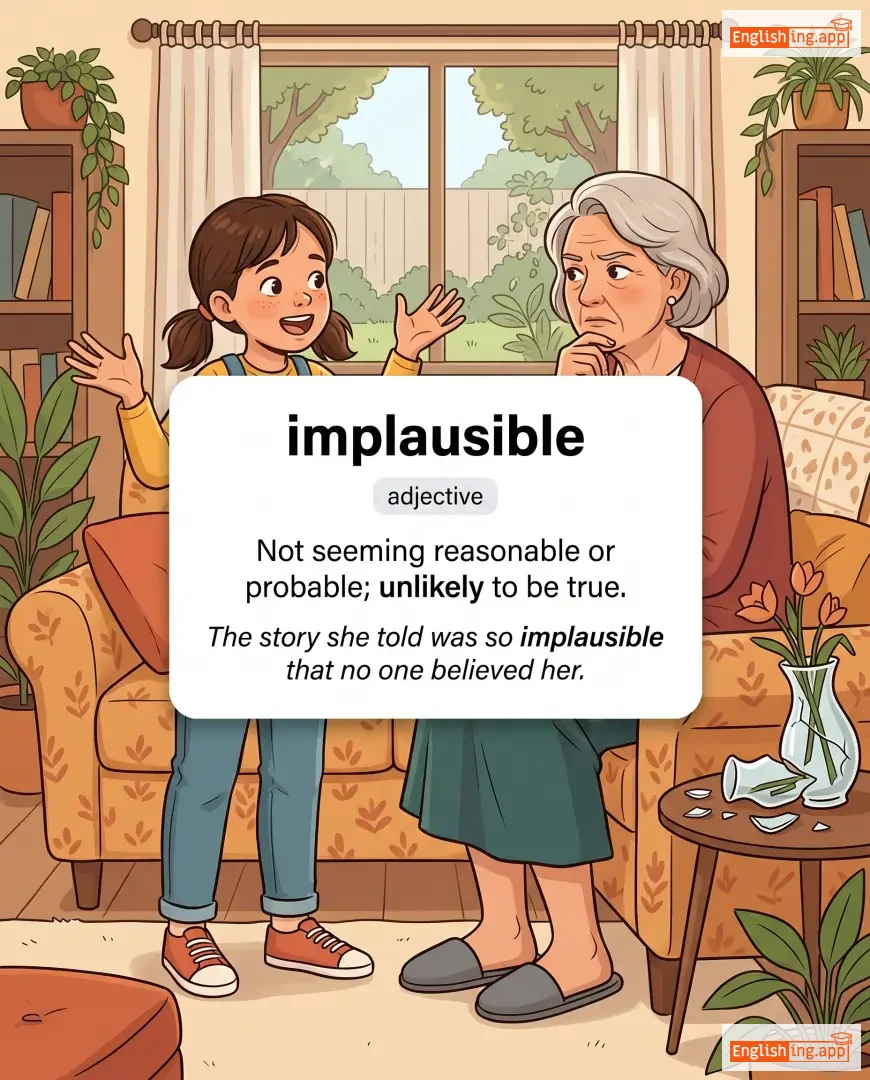
implausible definition card — visual illustration of the meaning
adjective C1
/ɪmˈplɔːzəbl/
implausible (implausible)

Not seeming reasonable or probable; unlikely to be true.

"The story she told was so implausible that no one believed her."

"L'histoire qu'elle a racontée était tellement implausible que personne ne l'a cru." (L'histoire qu'elle a racontée était tellement implausible que personne ne l'a cru.)
verb C1
/ˈɪmplɪˌkeɪt/
impliquer (impliquer)

To show someone’s involvement in a crime or wrongdoing.

"The evidence implicated several officials in the scandal."

"Les preuves ont impliqué plusieurs responsables dans le scandale." (Les preuves ont impliqué plusieurs responsables dans le scandale.)
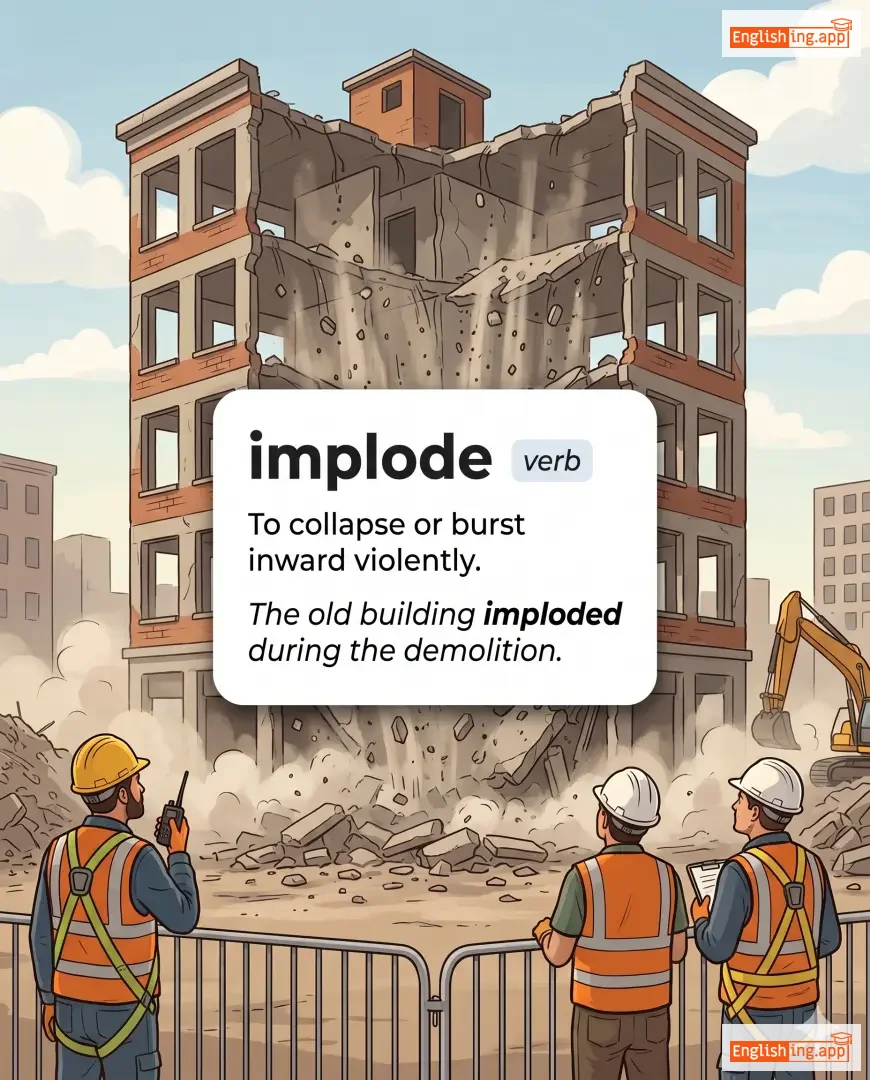
implode definition card — visual illustration of the meaning
verb C1
/ɪmˈploʊd/
imploser (imploser)

To collapse or burst inward violently.

"The old building imploded during the demolition."

"Le vieux bâtiment a implosé pendant la démolition." (Le vieux bâtiment a implosé pendant la démolition.)
verb C1
/ɪmˈplɔːr/
implorer (implorer)

To beg someone earnestly or desperately to do something.

"She implored him to stay with her."

"Elle lui implora de rester avec elle." (Elle lui implora de rester avec elle.)
noun C1
/ˌɪmpɔːrˈteɪʃən/
importation (importation)

The act of bringing goods or services into a country from abroad

"The importation of luxury goods is strictly regulated."

"L'importation de produits de luxe est strictement régulée." (L'importation de produits de luxe est strictement regulée.)
adjective C1
/ɪmˈpoʊzɪŋ/
imposant (imposant)

having an appearance that is grand, impressive, or commanding

"The castle is an imposing structure overlooking the valley."

"Le château est une structure imposante qui surplombe la vallée." (Le château est une structure imposante qui surplombe la vallée.)
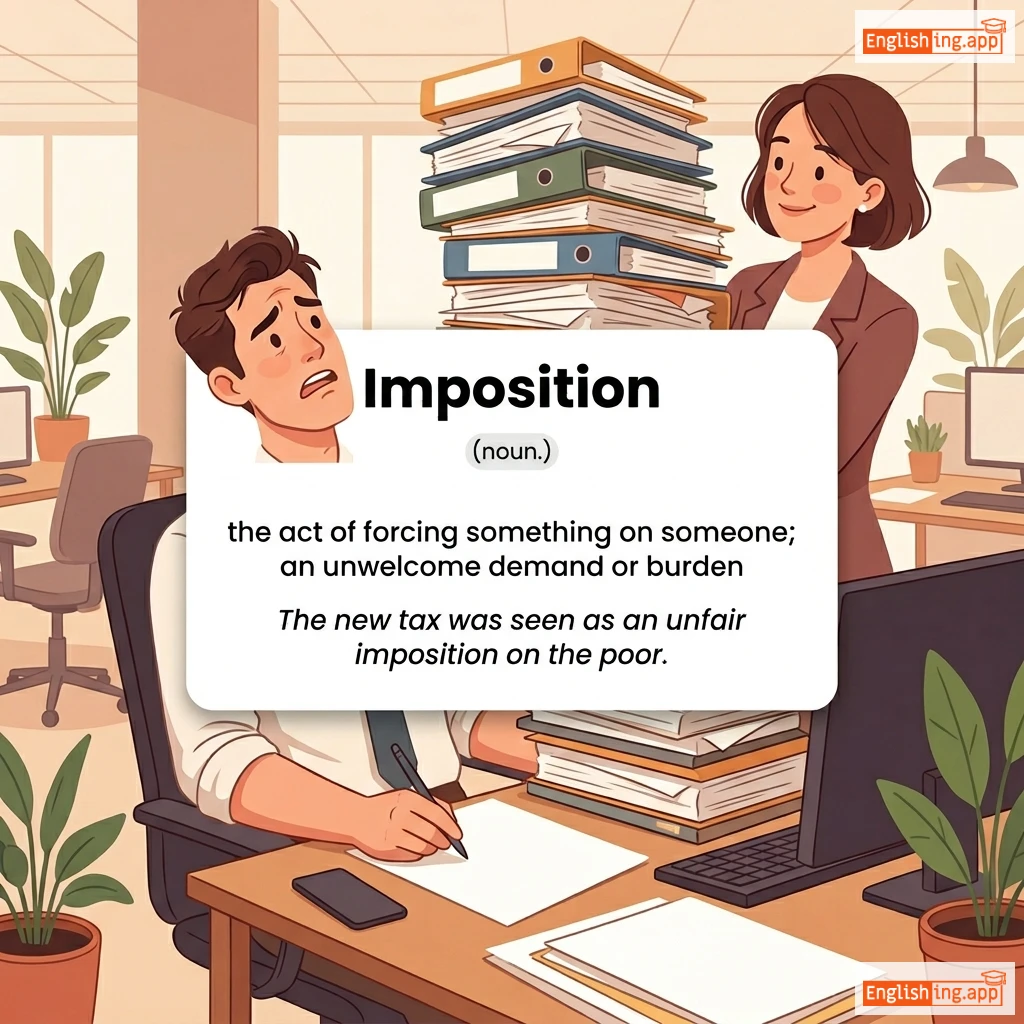
Imposition definition card — visual illustration of the meaning
noun C1
/ˌɪmpəˈzɪʃən/
imposition (imposition)

the act of forcing something on someone; an unwelcome demand or burden

"The new tax was seen as an unfair imposition on the poor."

"La nouvelle taxe a été perçue comme une imposition injuste sur les pauvres." (La nouvelle taxe a été perçue comme une imposition injuste sur les pauvres.)
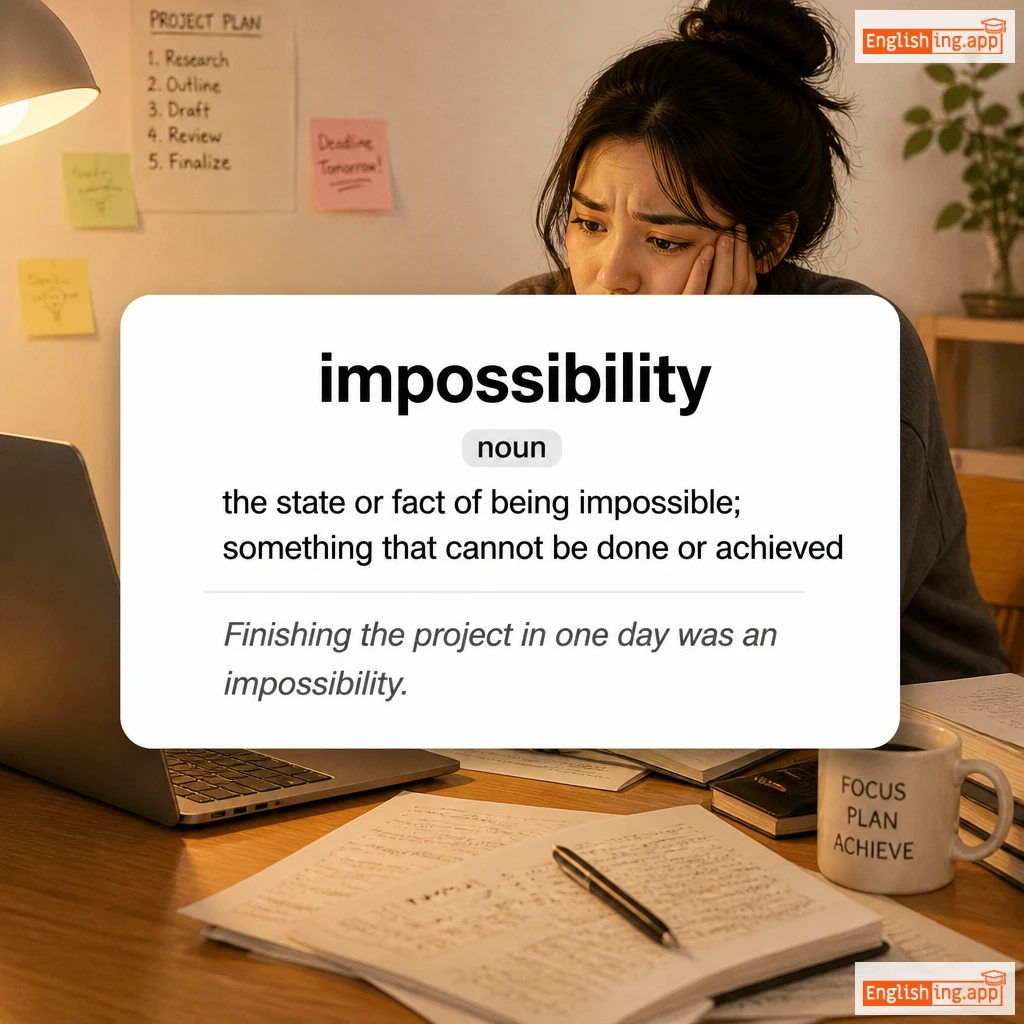
impossibility definition card — visual illustration of the meaning
noun C1
/ɪmˌpɒsəˈbɪlɪti/
impossibilité (impossibilite)

the state or fact of being impossible; something that cannot be done or achieved

"Finishing the project in one day was an impossibility."

"Finir le projet en un jour était une impossibilité." (finir le projet en un jour etait une impossibilite)
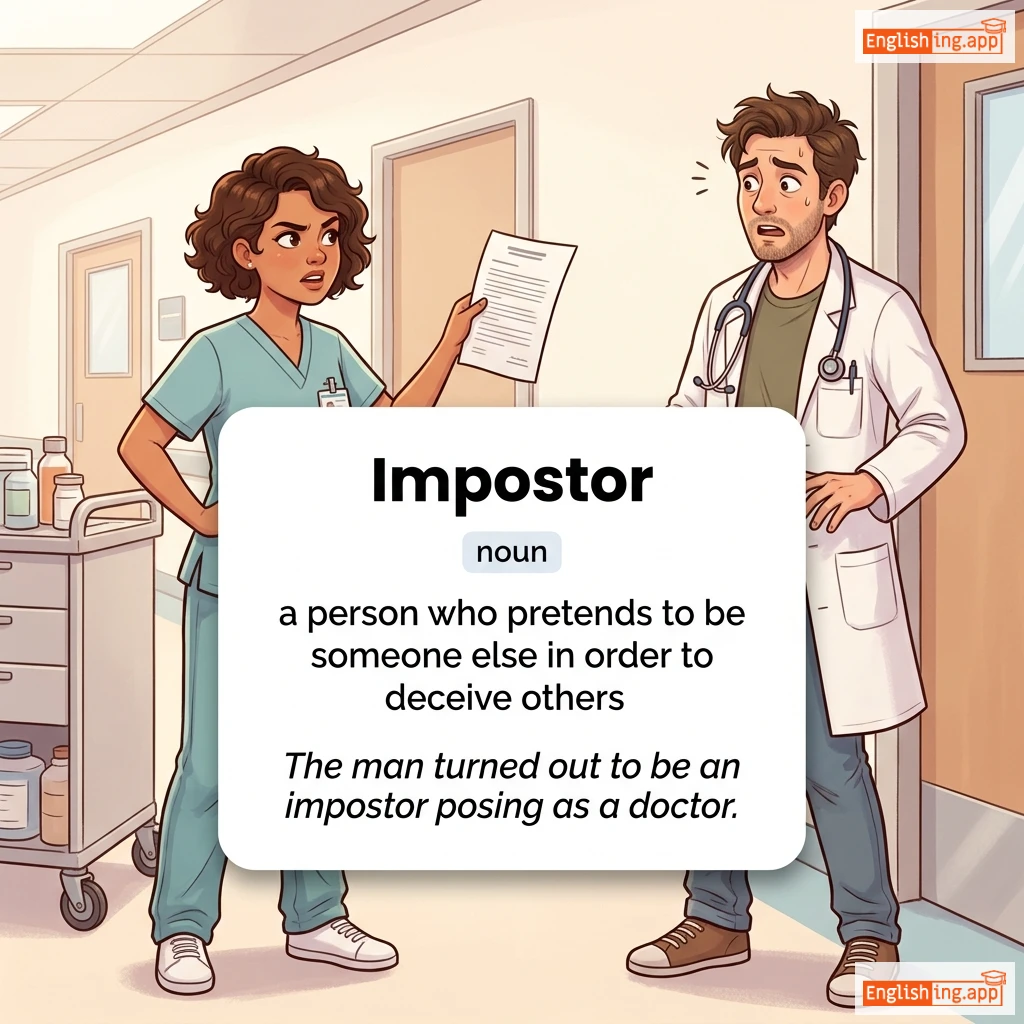
Impostor definition card — visual illustration of the meaning
noun C1
/ɪmˈpɑːstər/
imposteur, fraudeur (imposteur, fraudeur)

a person who pretends to be someone else in order to deceive others

"The man turned out to be an impostor posing as a doctor."

"L'homme s'est avéré être un imposteur se faisant passer pour un docteur." (L'homme s'est avéré être un imposteur se faisant passer pour un docteur.)
adjective C1
/ˈɪmpətənt/
impotent (impotent)

Lacking power, ability, or strength to take effective action.

"The citizens felt impotent against the corrupt system."

"Les citoyens se sont sentis impuissants face au système corrompu." (Les citoyens se sont sentis impuissants face au systeme corrompu.)
verb C1
/ɪmˈpɒvərɪʃ/
appauvrir (appauvrir)

To make someone poor or reduce the quality or richness of something.

"The long war impoverished the entire nation."

"La longue guerre a appauvri toute la nation." (La longue guerre a appauvri toute la nation.)
adjective C1
/ˌɪmprɪˈsaɪs/
imprécis (impresis)

Not exact or accurate; vague.

"His explanation was too imprecise to be helpful."

"Son explication était trop imprécise pour être utile." (Son explication etait trop imprecise pour etre utile.)
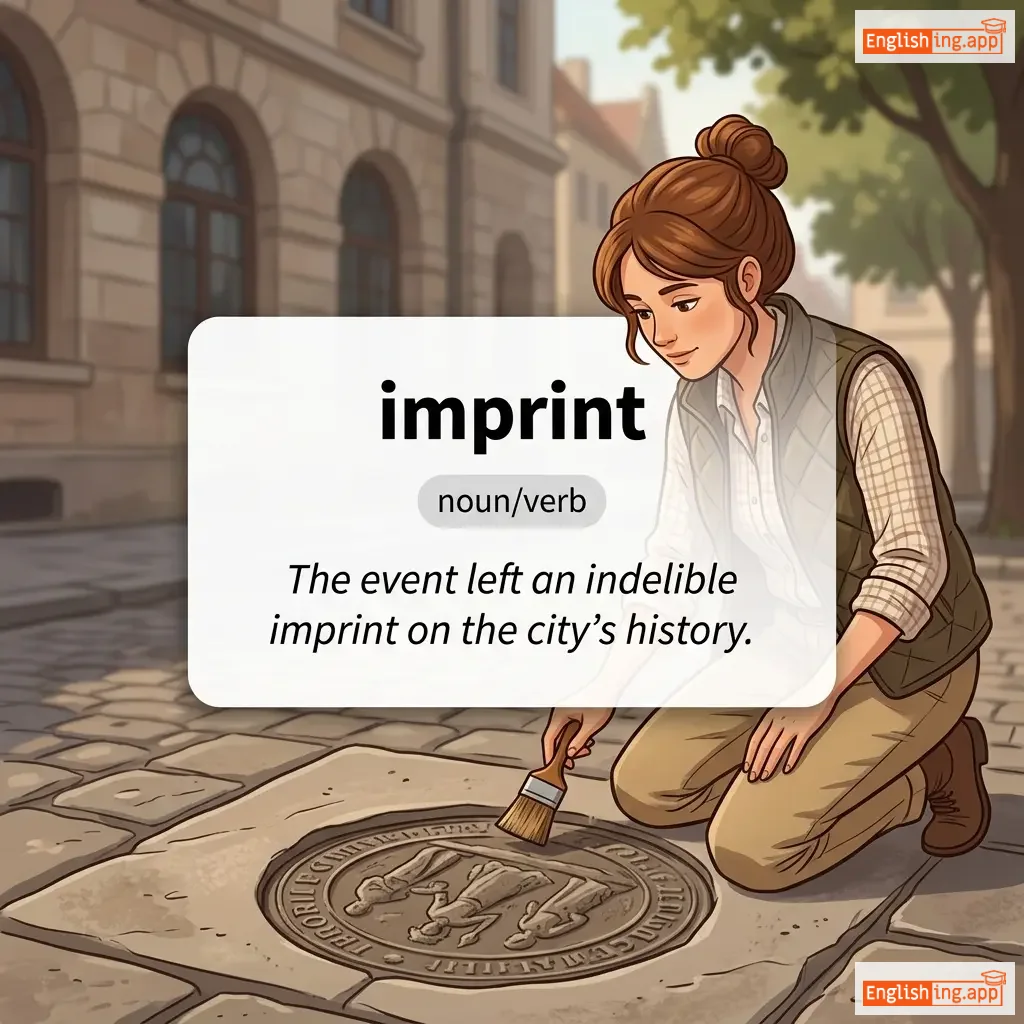
imprint definition card — visual illustration of the meaning
noun/verb C1
/ˈɪmprɪnt/
empreinte (imprint)

A mark or impression made by pressure; to establish or fix firmly in someone's mind.

"The event left an indelible imprint on the city's history."

"L'événement a laissé une empreinte indélébile dans l'histoire de la ville." (Levenement a laisse une empreinte indelebile dans lhistoire de la ville)
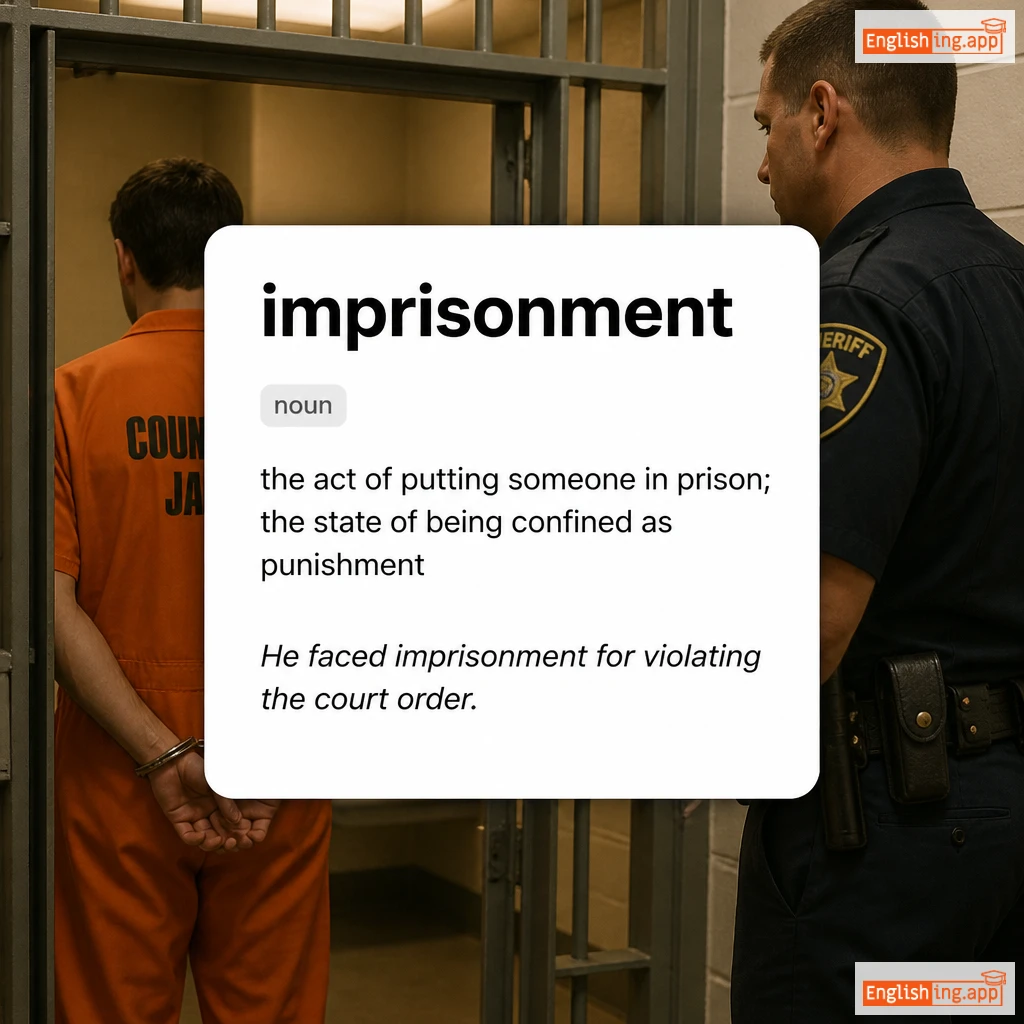
imprisonment definition card — visual illustration of the meaning
noun C1
/ɪmˈprɪzənmənt/
emprisonnement (emprisonnement)

the act of putting someone in prison; the state of being confined as punishment

"He faced imprisonment for violating the court order."

"Il a fait face à l'emprisonnement pour avoir violé l'ordre du tribunal." (Il a fait face a l emprisonnement pour avoir viole l ordre du tribunal)
adjective C1
/ɪmˈprɒbəbl/
improbable (improbable)

Not likely to be true or to happen.

"It seems improbable that he will arrive on time."

"Il semble improbable qu'il arrive à l'heure." (Il semble improbable qu'il arrive à l'heure.)
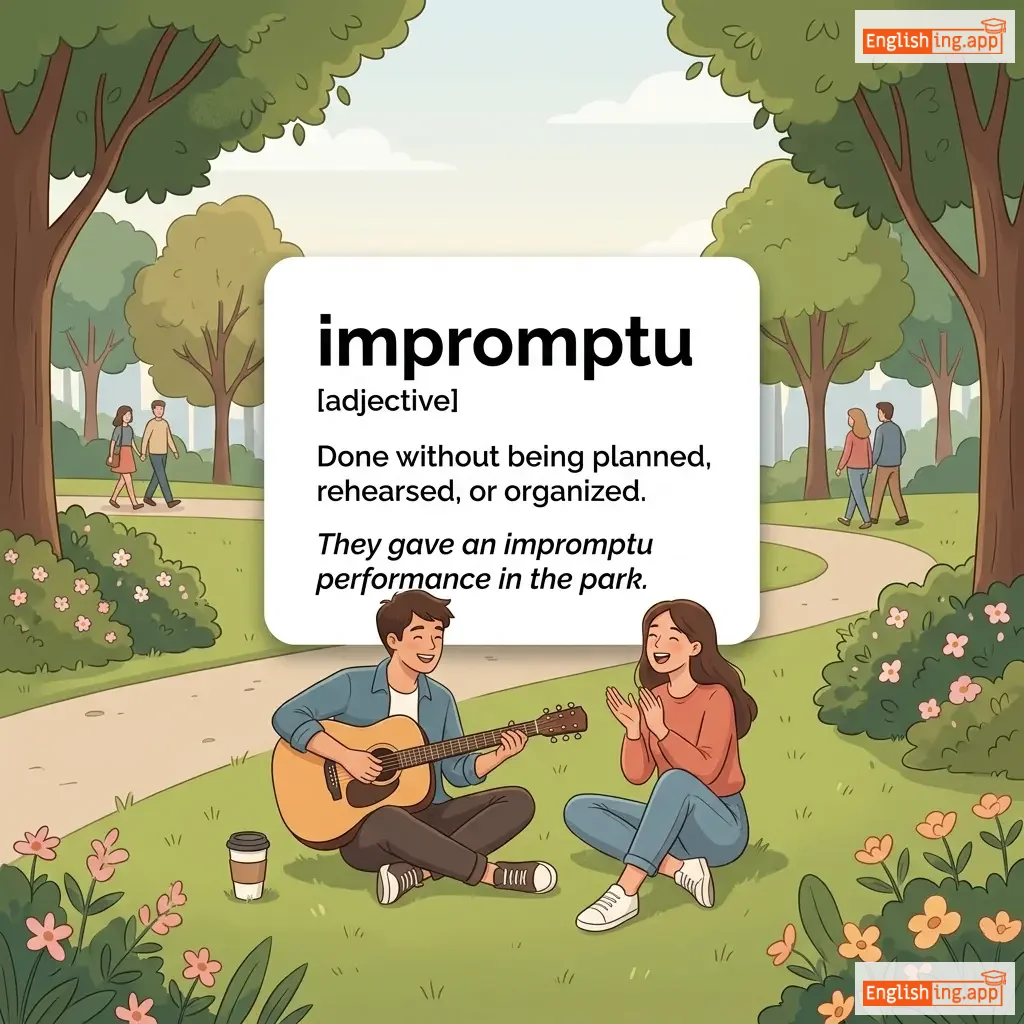
impromptu definition card — visual illustration of the meaning
adjective C1
/ɪmˈprɒmptjuː/
improvisé (improvize)

Done without being planned, rehearsed, or organized.

"They gave an impromptu performance in the park."

"Ils ont donné une performance improvisée dans le parc." (Ils ont donne une performance improvisee dans le parc.)
verb C1
/ˈɪmprəvaɪz/
improviser (improviser)

To create or perform something spontaneously without preparation.

"The actor had to improvise his lines when he forgot the script."

"L'acteur a dû improviser ses répliques lorsqu'il a oublié le script." (L'acteur a dû improviser ses répliques lorsqu'il a oublié le script.)
adjective C1
/ˈɪmpjəd(ə)nt/
imprudent, insolent (imprudent, insolent)

not showing due respect for another person; rude

"The impudent child talked back to the teacher."

"L'enfant impudent a répondu au professeur." (L'enfant impudent a répondu au professeur.)
adjective C1
/ɪmˈpʌlsɪv/
impulsif, spontané (impulsif, spontané)

acting suddenly without careful thought

"She made an impulsive decision to buy the car."

"Elle a pris une décision impulsive d'acheter la voiture." (Elle a pris une décision impulsive d'acheter la voiture.)
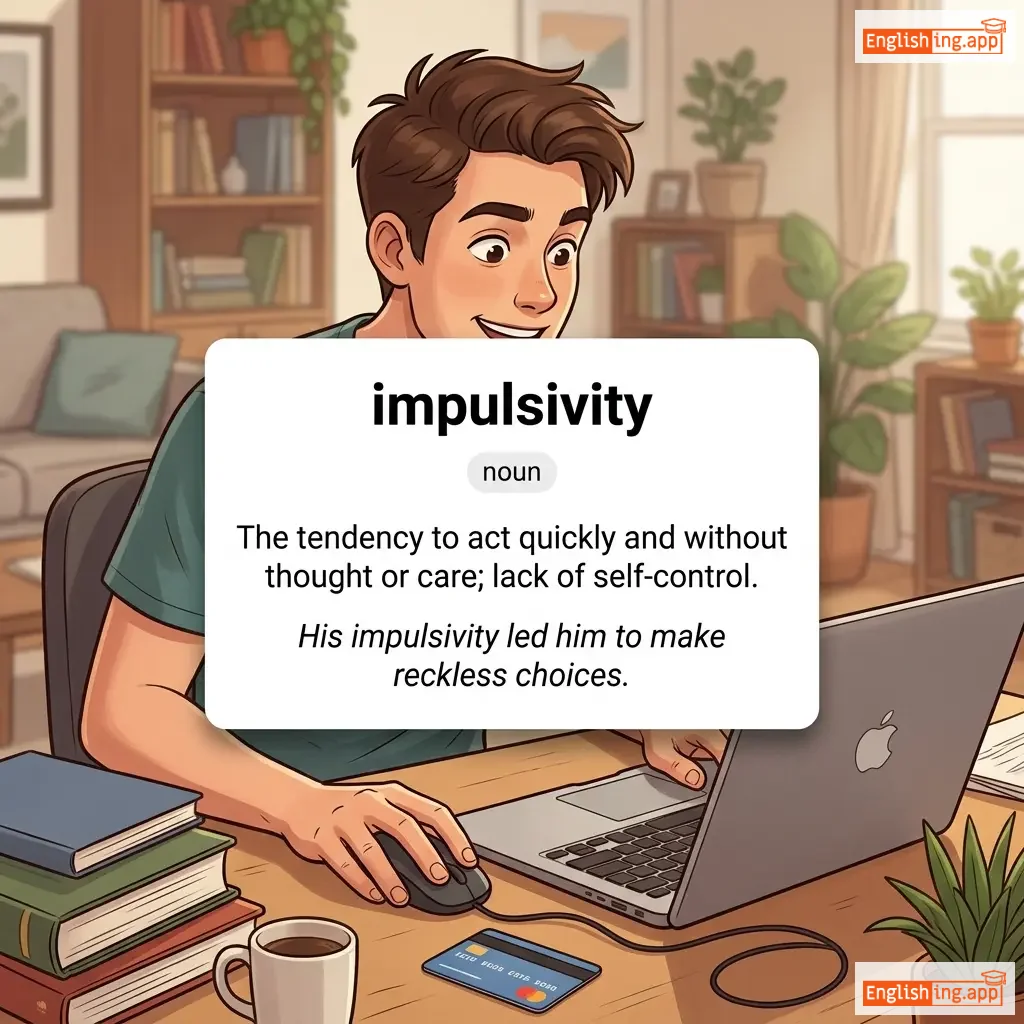
impulsivity definition card — visual illustration of the meaning
noun C1
ˌɪm.pʌlˈsɪv.ɪ.ti
impulsivité (impulsivite)

The tendency to act quickly and without thought or care; lack of self-control.

"His impulsivity led him to make reckless choices."

"Son impulsivité l'a conduit à prendre des décisions imprudentes." (Son impulsivité l'a conduit à prendre des décisions imprudentes.)
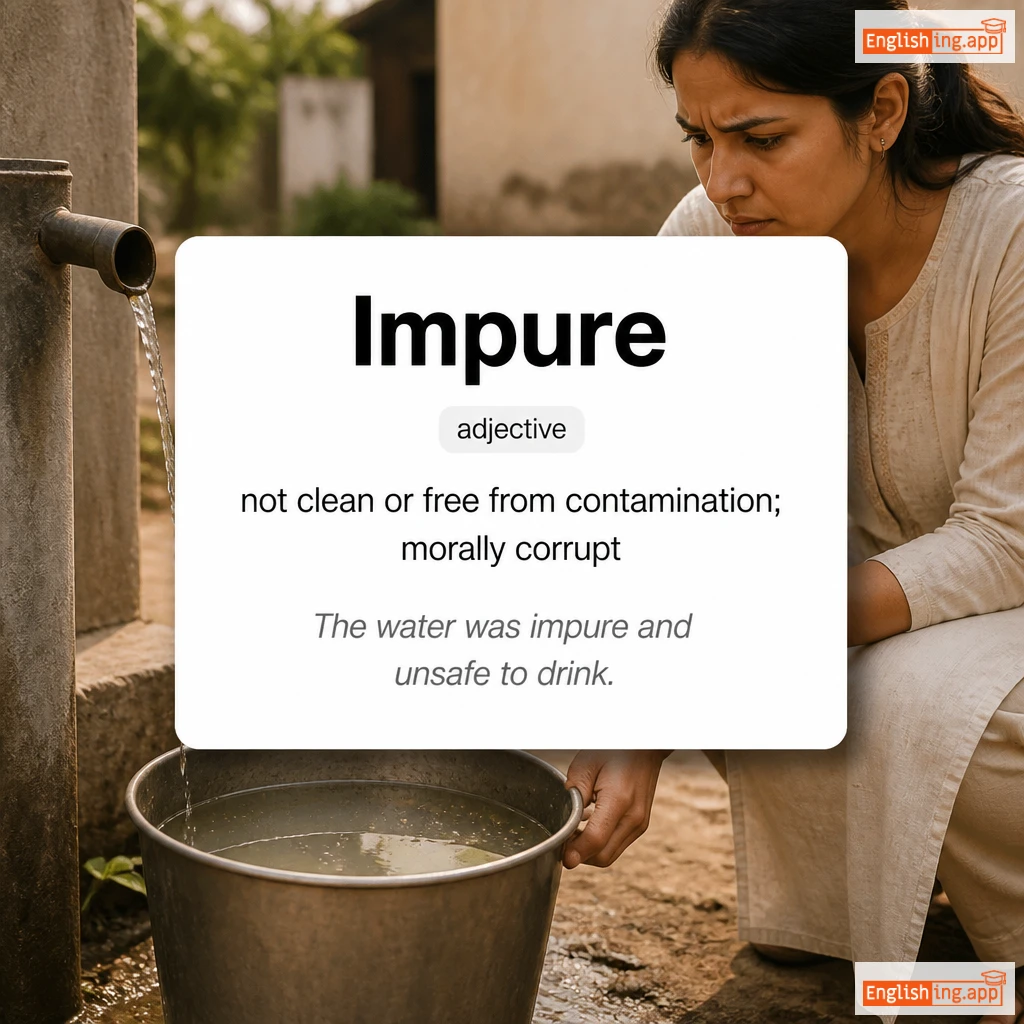
Impure definition card — visual illustration of the meaning
adjective C1
/ɪmˈpjʊər/
impur (impur)

not clean or free from contamination; morally corrupt

"The water was impure and unsafe to drink."

"L'eau était impure et dangereuse à boire." (L'eau était impure et dangereuse à boire.)
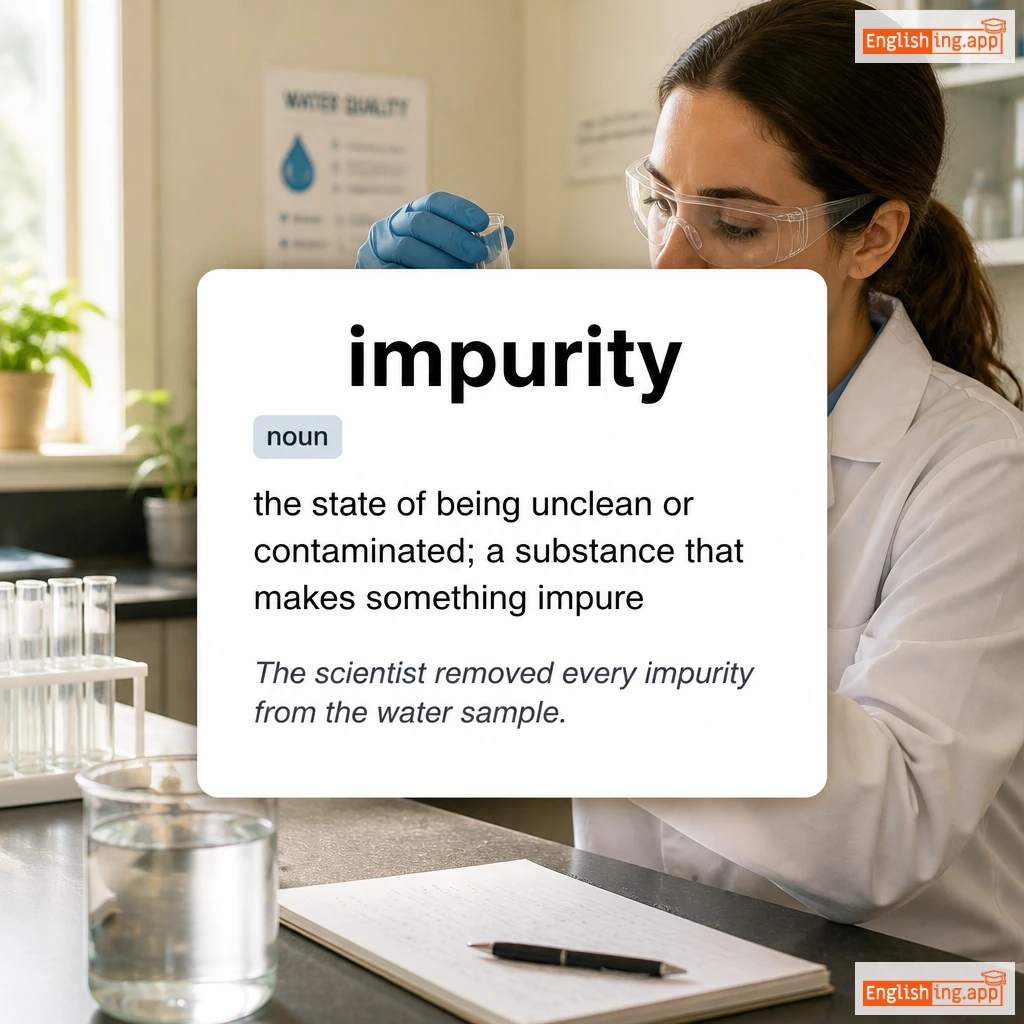
impurity definition card — visual illustration of the meaning
noun C1
/ɪmˈpjʊərəti/
impureté (impurete)

the state of being unclean or contaminated; a substance that makes something impure

"The scientist removed every impurity from the water sample."

"Le scientifique a éliminé chaque impureté de l’échantillon d’eau." (le scientifique a elimine chaque impurete de lechantillon deau)
adjective C1
/ˌɪnækˈsɛsəbl/
inaccessible (inaccessible)

unable to be reached, entered, or understood

"The remote village is almost inaccessible during the rainy season."

"Le village éloigné est presque inaccessible pendant la saison des pluies." (Le village eloigné est presque inaccessible pendant la saison des pluies.)