Vocabulaires

Découvrez, apprenez et maîtrisez le vocabulaire anglais

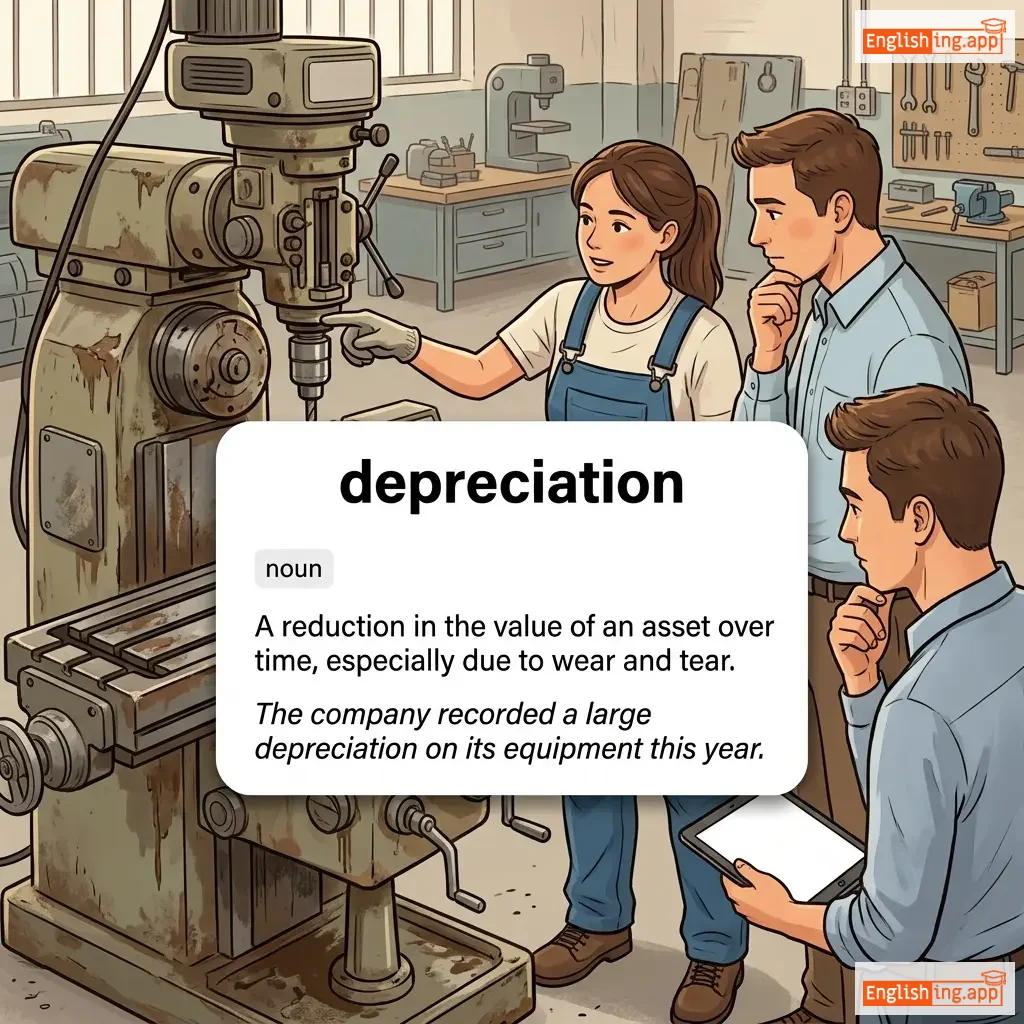
depreciation definition card — visual illustration of the meaning
noun C1
/dɪˌpriːʃiˈeɪʃən/
減価償却 (genka shoukyaku)

A reduction in the value of an asset over time, especially due to wear and tear.

"The company recorded a large depreciation on its equipment this year."

"会社は今年、機器の大きな減価償却を記録しました。" (Kaisha wa kotoshi, kiki no ookina genka shoukyaku o kiroku shimashita.)
noun C1
/dɪˈprɛsənt/
抑制剤 (yokuseizai)

A drug that reduces functional or nervous activity in the body.

"Alcohol acts as a depressant on the central nervous system."

"アルコールは中枢神経系に抑制剤として作用します。" (Arukōru wa chūsū shinkei-kei ni yokuseizai to shite sayō shimasu.)
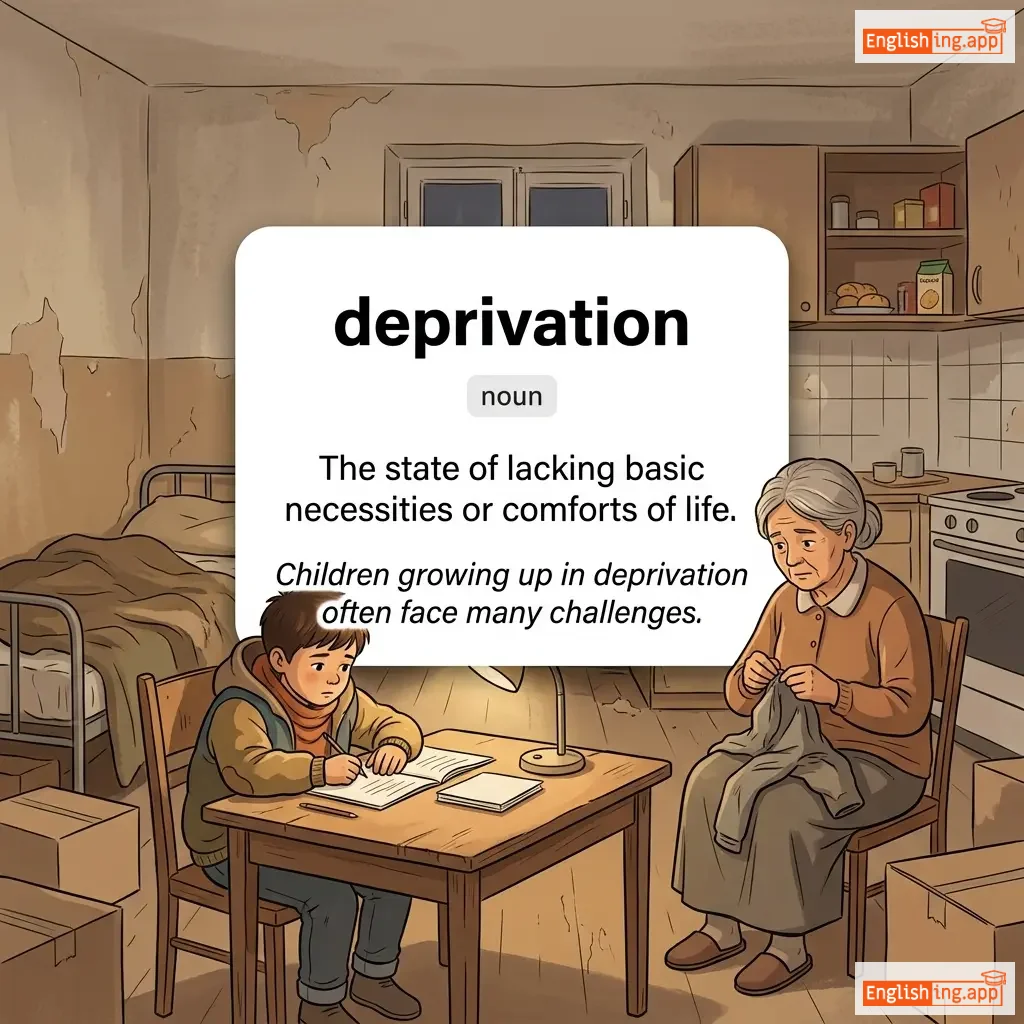
deprivation definition card — visual illustration of the meaning
noun C1
/ˌdɛprɪˈveɪʃən/
欠乏 (ketsubou)

The state of lacking basic necessities or comforts of life.

"Children growing up in deprivation often face many challenges."

"欠乏状態で育った子供たちは、多くの課題に直面することがよくあります。" (Ketsubou joutai de sodatta kodomotachi wa, ooku no kadai ni chokumen suru koto ga yoku arimasu.)
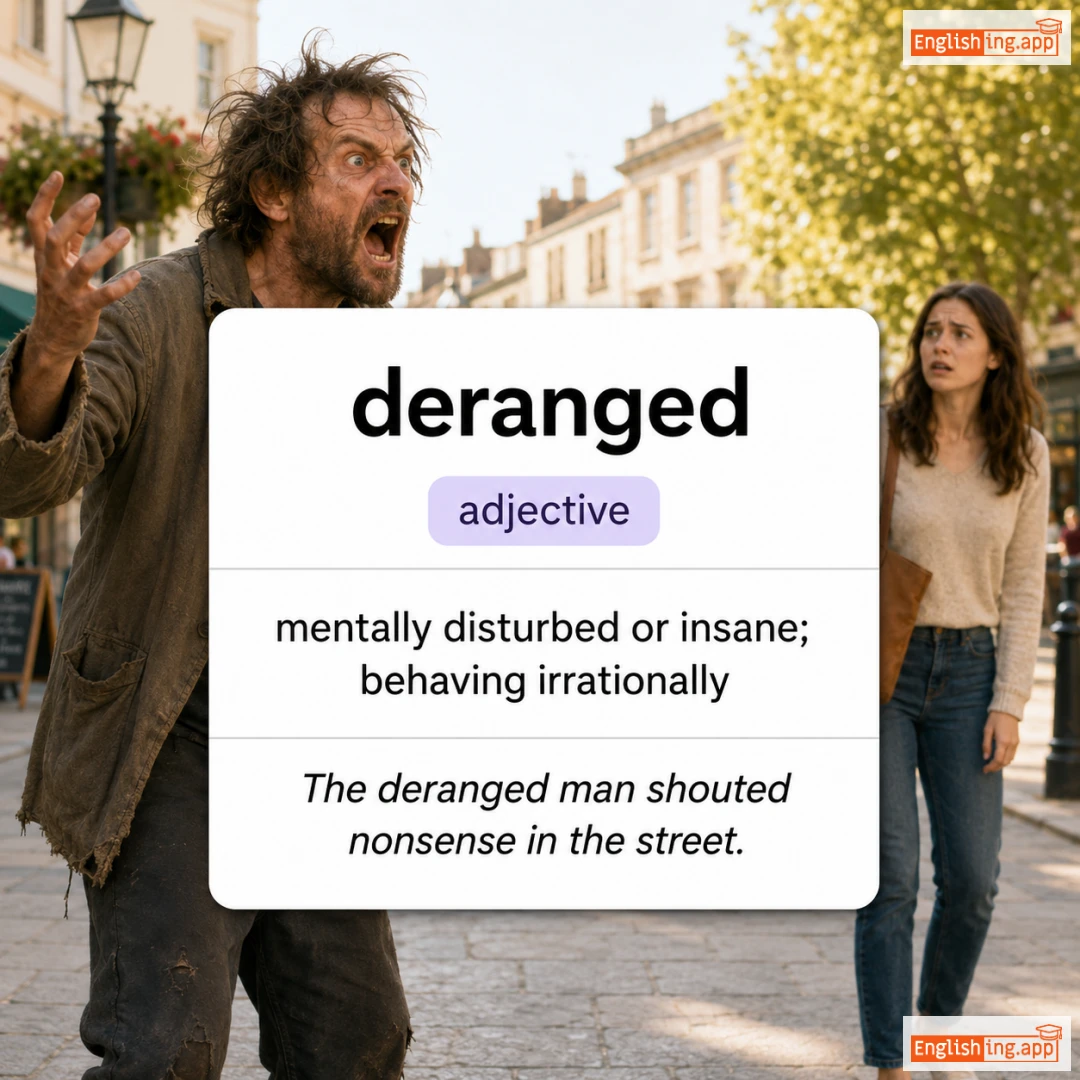
deranged definition card — visual illustration of the meaning
adjective C1
/dɪˈreɪndʒd/
狂気 (kyouki)

mentally disturbed or insane; behaving irrationally

"The deranged man shouted nonsense in the street."

"狂った男が街で無意味なことを叫んでいた。" (Kurutta otoko ga machi de muimi na koto o sakendete ita.)
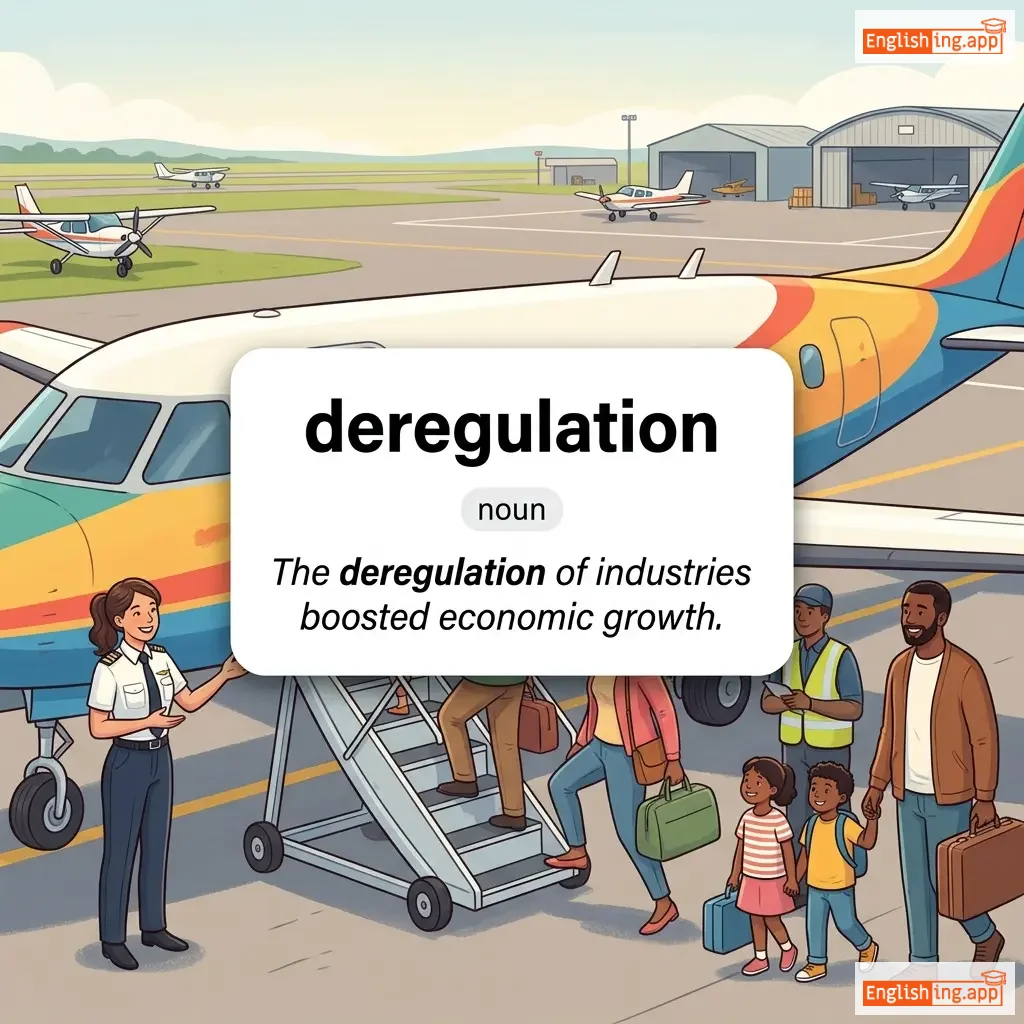
deregulation definition card — visual illustration of the meaning
noun C1
/ˌdiː.rɛɡ.jʊˈleɪ.ʃən/
規制緩和 (kisei kanwa)

The removal or reduction of government regulations and controls, often involving liberalization, free market policies, or privatization.

"The deregulation of industries boosted economic growth."

"産業の規制緩和は経済成長を促進した。" (Sangyō no kisei kanwa wa keizai seichō o sokushin shita.)
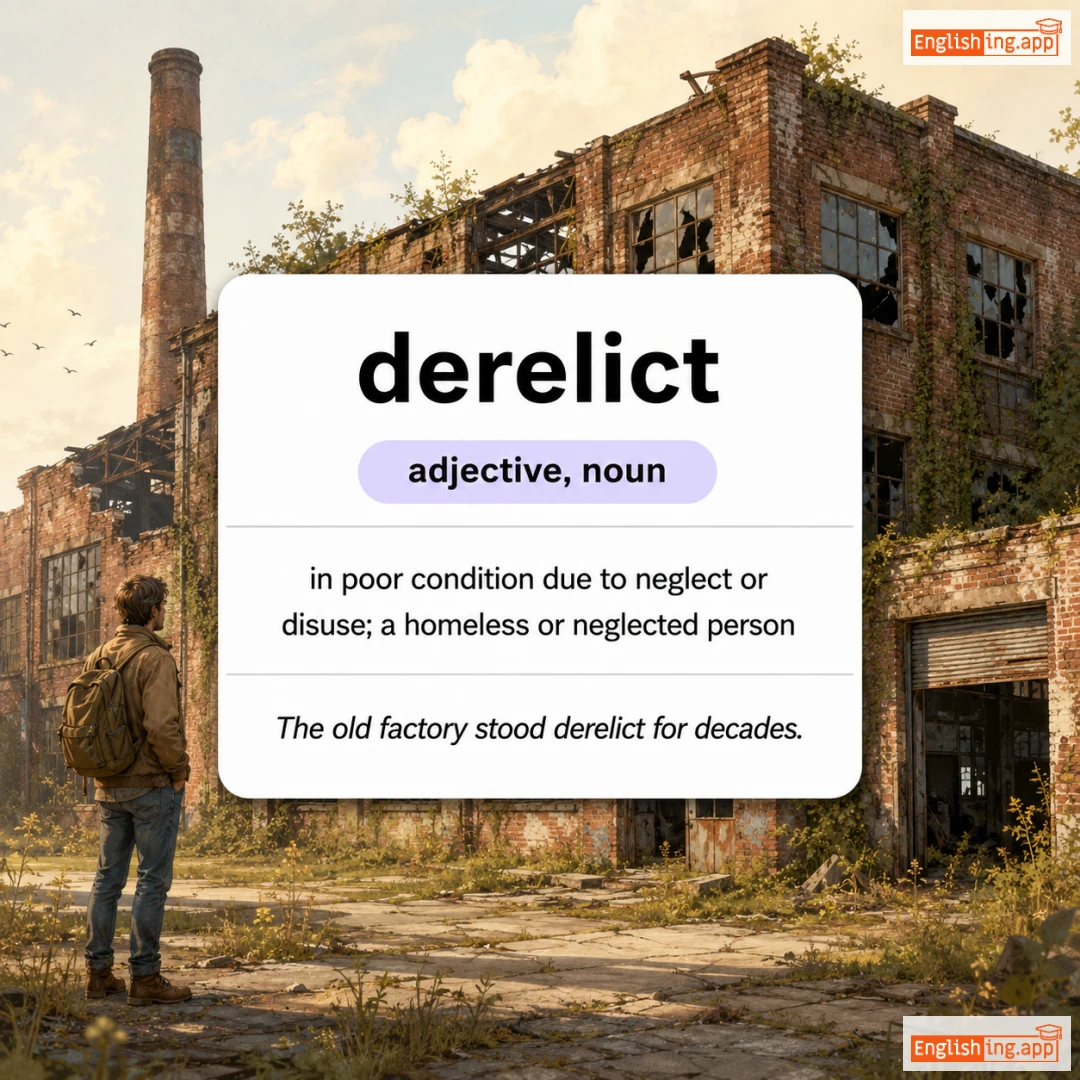
derelict definition card — visual illustration of the meaning
adjective, noun C1
/ˈdɛrəlɪkt/
放棄された (houkisareta)

in poor condition due to neglect or disuse; a homeless or neglected person

"The old factory stood derelict for decades."

"古い工場は何十年も放置されていました。" (Furui koujou wa nanshūnen mo houchi sarete imashita.)
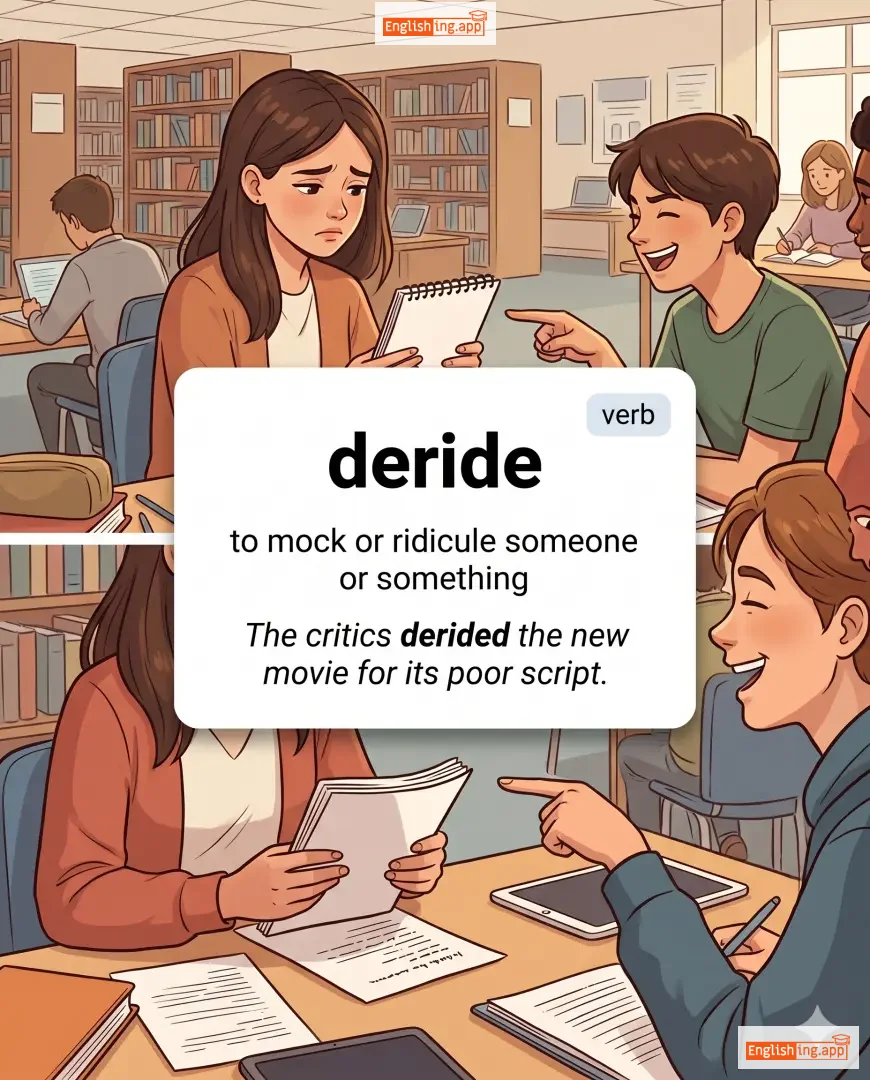
deride definition card — visual illustration of the meaning
verb C1
/dɪˈraɪd/
嘲笑する (choushou suru)

to mock or ridicule someone or something

"The critics derided the new movie for its poor script."

"批評家たちはその新しい映画を悪い脚本のせいで嘲笑した。" (Hihyōka-tachi wa sono atarashī eiga wo warui kyakuhon no sei de chōshō shita.)
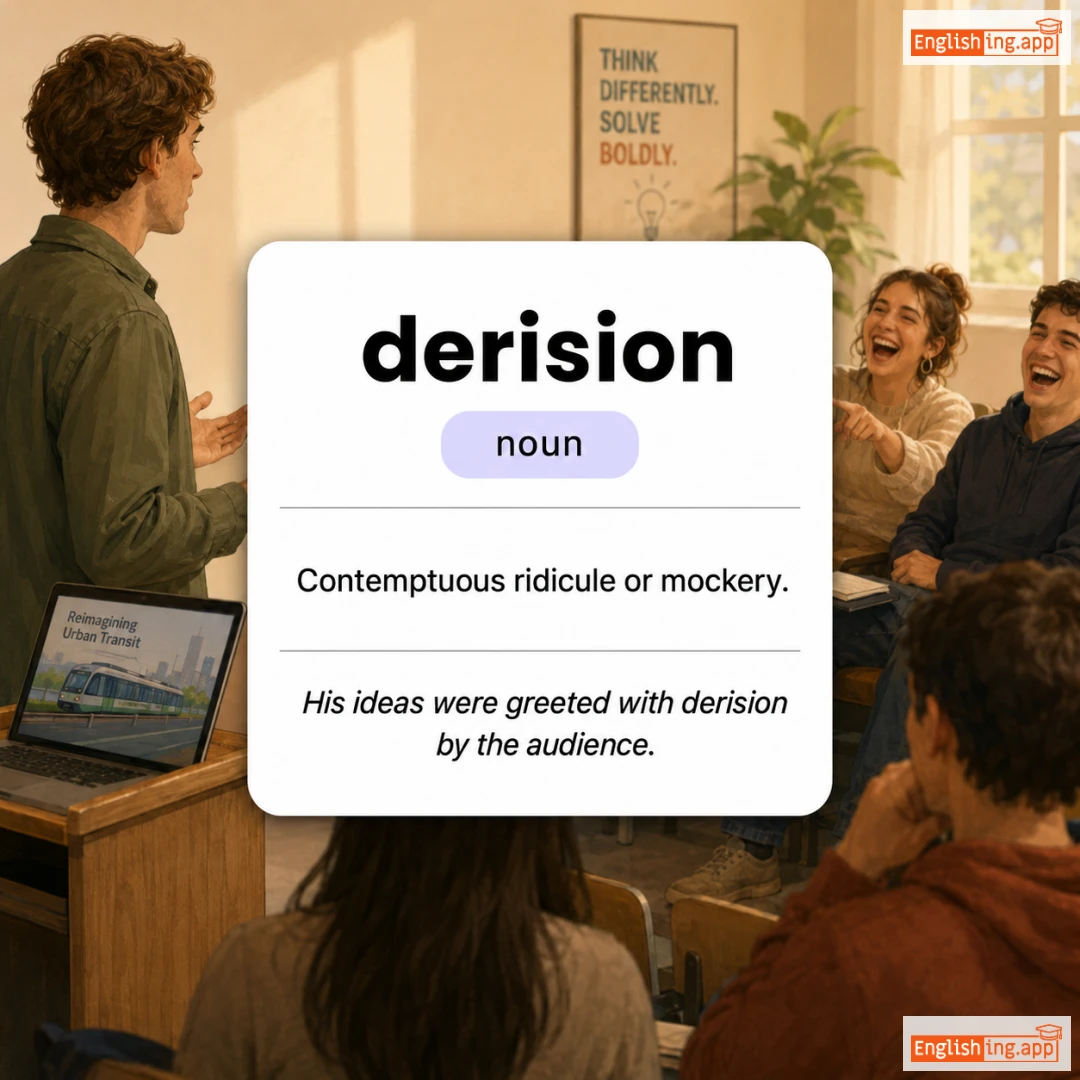
derision definition card — visual illustration of the meaning
noun C1
/dɪˈrɪʒən/
嘲笑 (choushou)

Contemptuous ridicule or mockery.

"His ideas were greeted with derision by the audience."

"彼のアイデアは観客によって嘲笑された。" (Kare no aidea wa kankyaku ni yotte choushou sareta.)
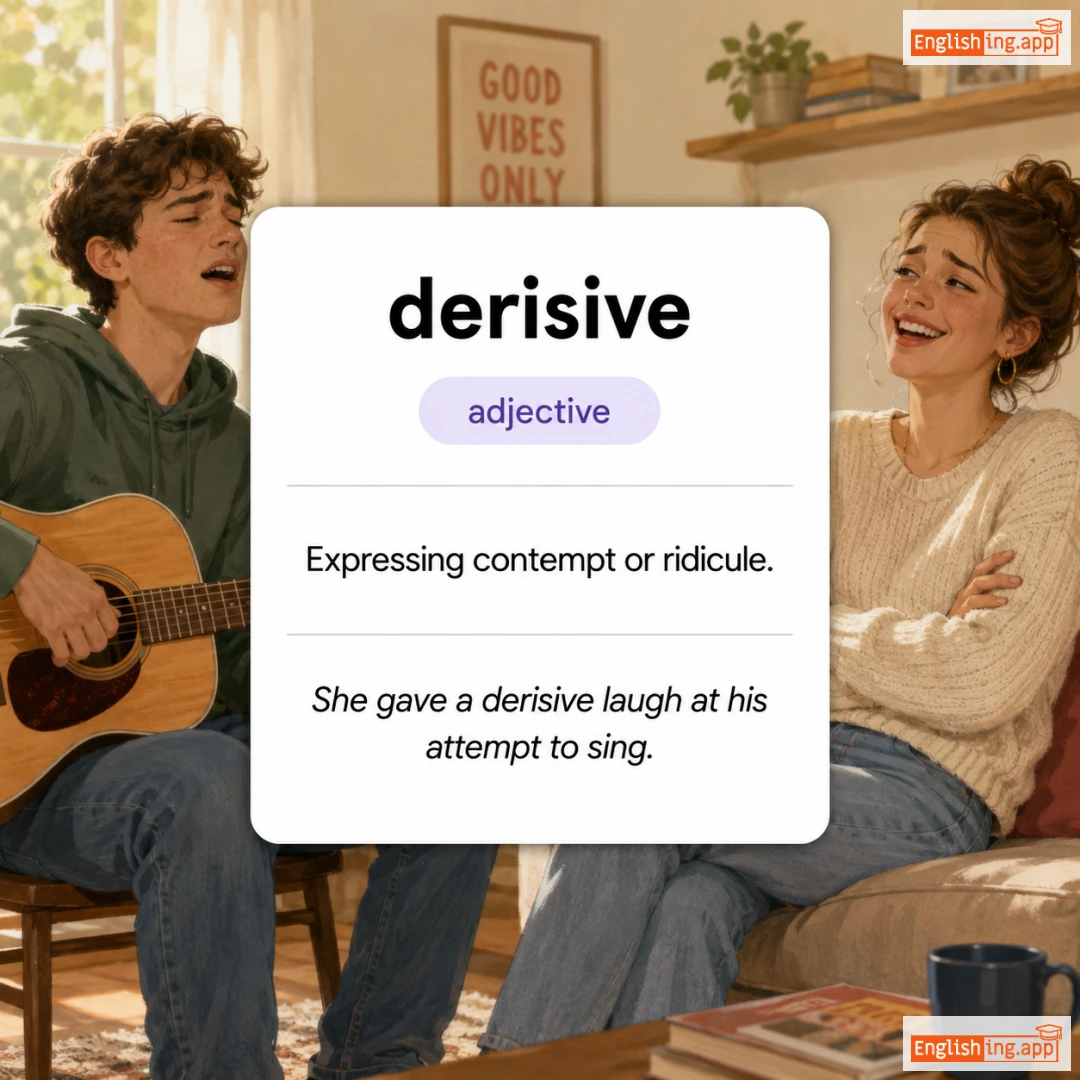
derisive definition card — visual illustration of the meaning
adjective C1
/dɪˈraɪsɪv/
軽蔑的な (keibetsuteki na)

Expressing contempt or ridicule.

"She gave a derisive laugh at his attempt to sing."

"彼女は彼の歌おうとする試みに対して軽蔑的な笑い声を上げた。" (Kanojo wa kare no utaou to suru kokoromi ni taishite keibetsuteki na waraigoe wo ageta.)
noun C1
/ˌdɛrɪˈveɪʃən/
派生 (hasei)

The origin or development of something from a source.

"The derivation of the word comes from Latin."

"その単語の起源はラテン語から来ている。" (Sono tango no kigen wa raten-go kara kite iru.)
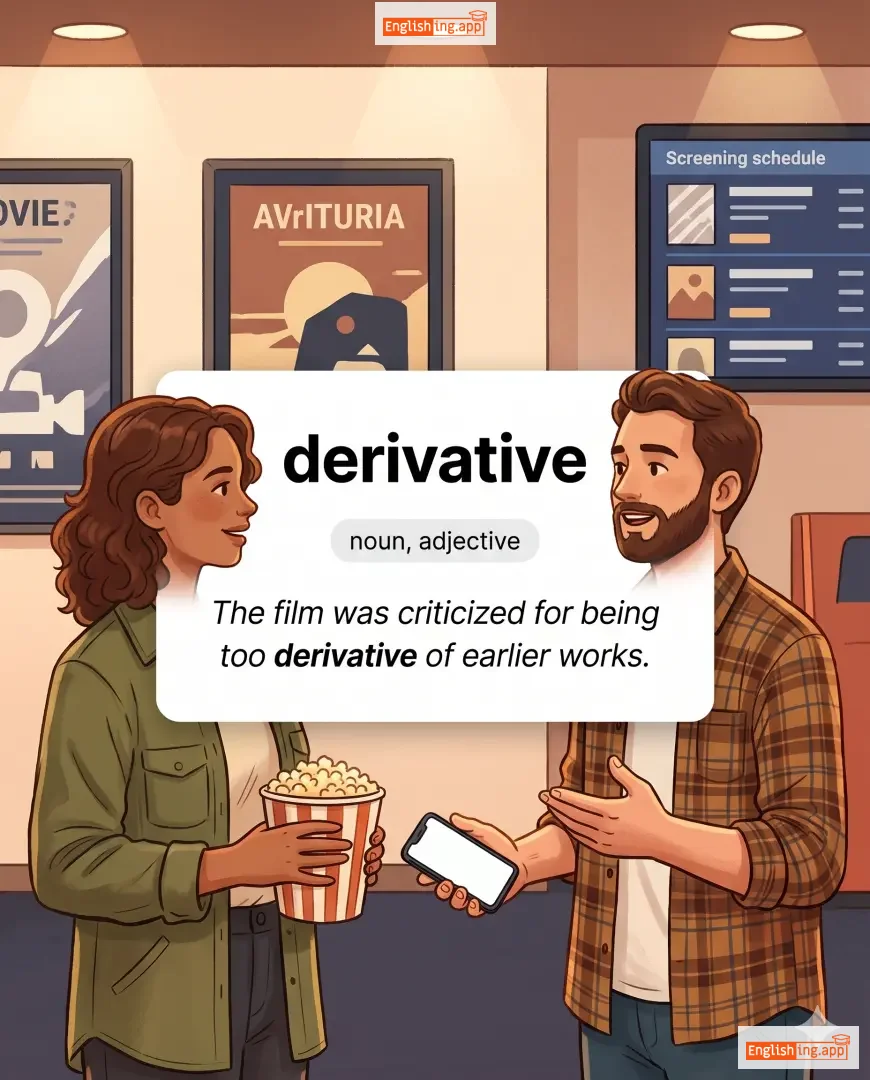
derivative definition card — visual illustration of the meaning
noun, adjective C1
/dɪˈrɪvətɪv/
派生物 (haseibutsu)

Something that is based on another source; in math, a measure of how a function changes.

"The film was criticized for being too derivative of earlier works."

"その映画は、前の作品を模倣しすぎて批判されました。" (Sono eiga wa, mae no sakuhin o mohō shisugite hihan saremashita.)
dermatologist definition card — visual illustration of the meaning
noun C1
/ˌdɜːrməˈtɑːlədʒɪst/
皮膚科医 (hifuka-i)

A doctor who specializes in the treatment of skin diseases.

"She consulted a dermatologist for her skin allergy."

"彼女は皮膚のアレルギーのために皮膚科医に相談した。" (Kanojo wa hifu no arerugī no tame ni hifuka-i ni soudan shita.)
dermatology definition card — visual illustration of the meaning
noun C1
/ˌdɜːrməˈtɑːlədʒi/
皮膚科学 (hifu kagaku)

The branch of medicine concerned with the skin and its diseases.

"He studied dermatology at medical school."

"彼は医学部で皮膚科学を学んだ。" (Kare wa igakubu de hifukagaku o mananda.)
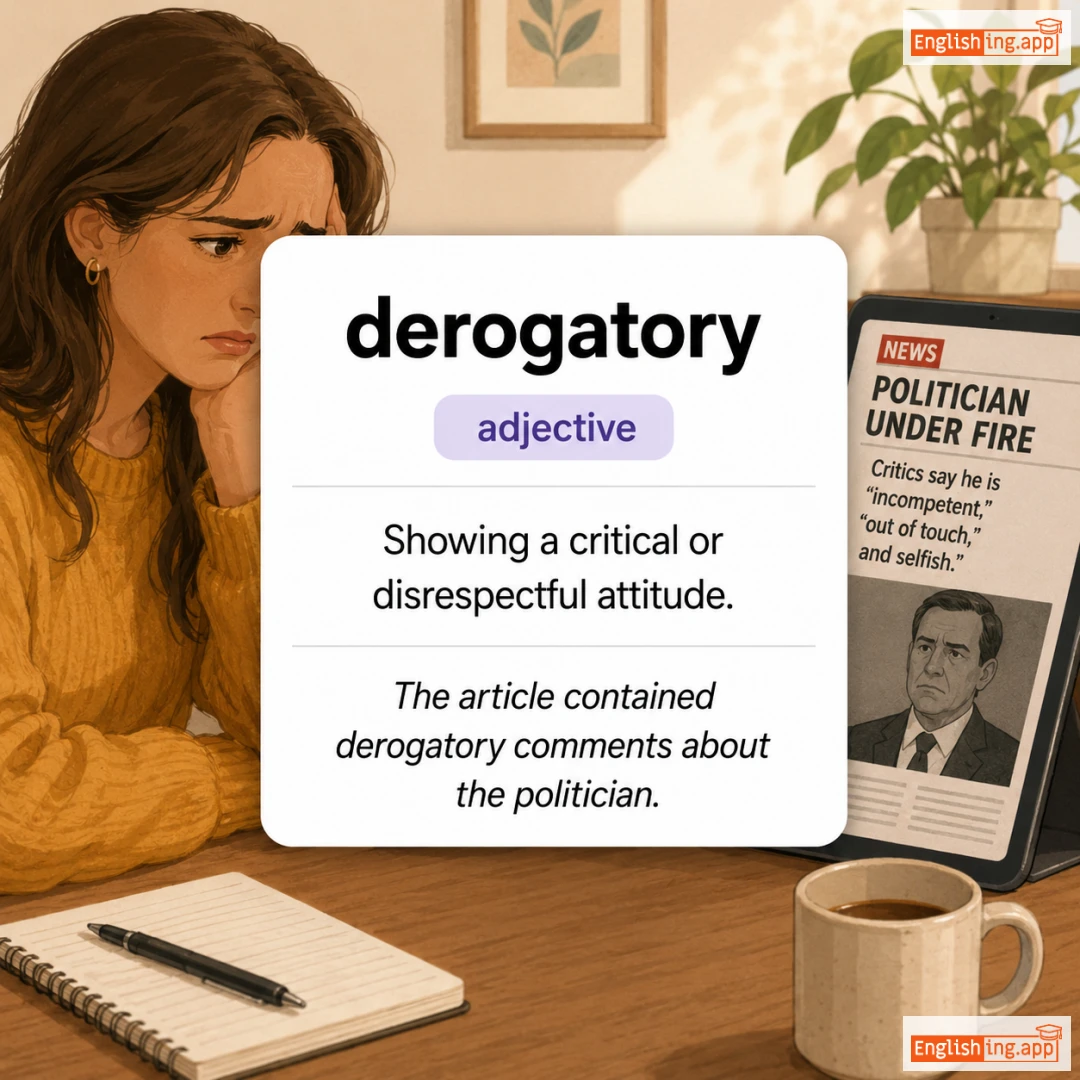
derogatory definition card — visual illustration of the meaning
adjective C1
/dɪˈrɒɡətɔːri/
侮辱的 (bujokuteki)

Showing a critical or disrespectful attitude.

"The article contained derogatory comments about the politician."

"その記事には政治家について侮辱的なコメントが含まれていました。" (Sono kiji ni wa seijika ni tsuite bujokuteki na komento ga fukumarete imashita.)
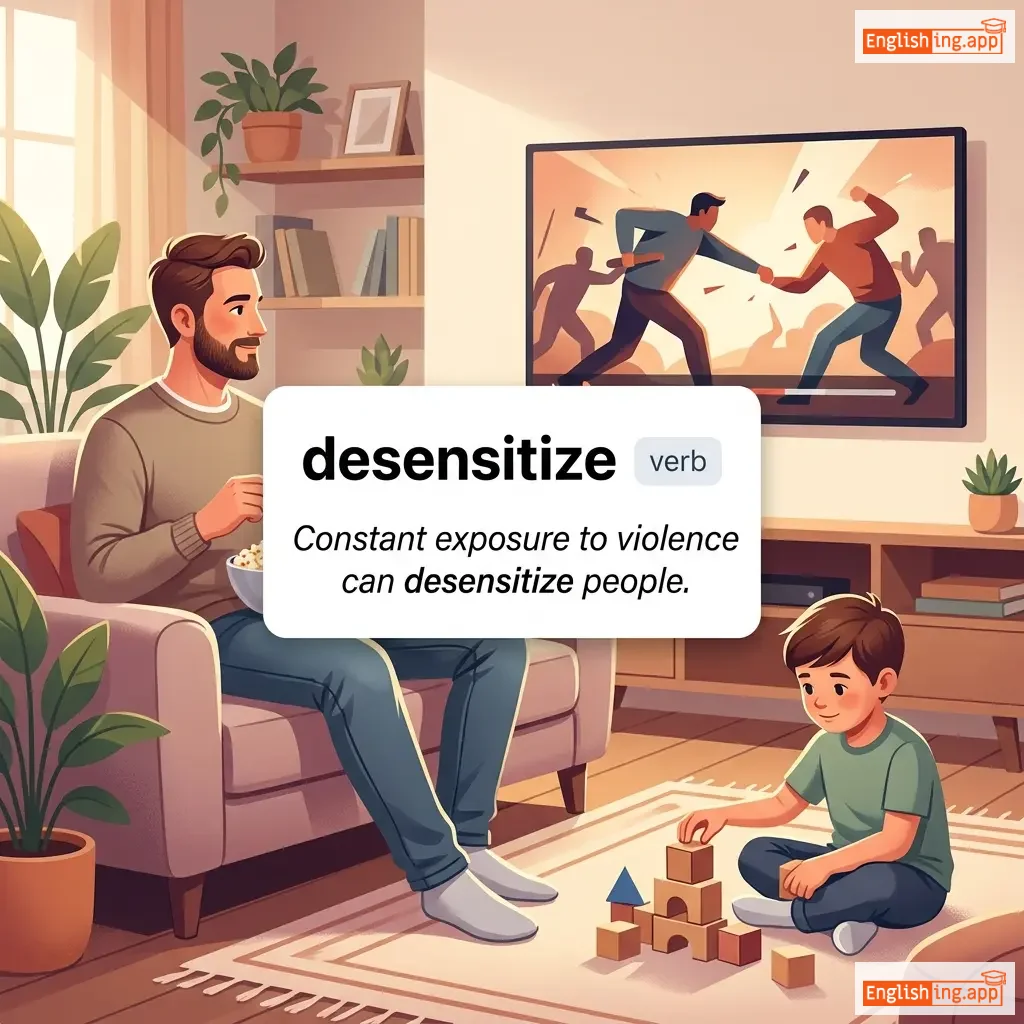
desensitize definition card — visual illustration of the meaning
verb C1
diːˈsɛn.sɪ.taɪz
脱感作 (datsukansaku)

To make someone less sensitive or reactive to something through repeated exposure.

"Constant exposure to violence can desensitize people."

"継続的な暴力の露出は人々を鈍感にする可能性があります。" (Keizokuteki na bouryoku no rokutsu wa hitobito o donkan ni suru kanousei ga arimasu.)
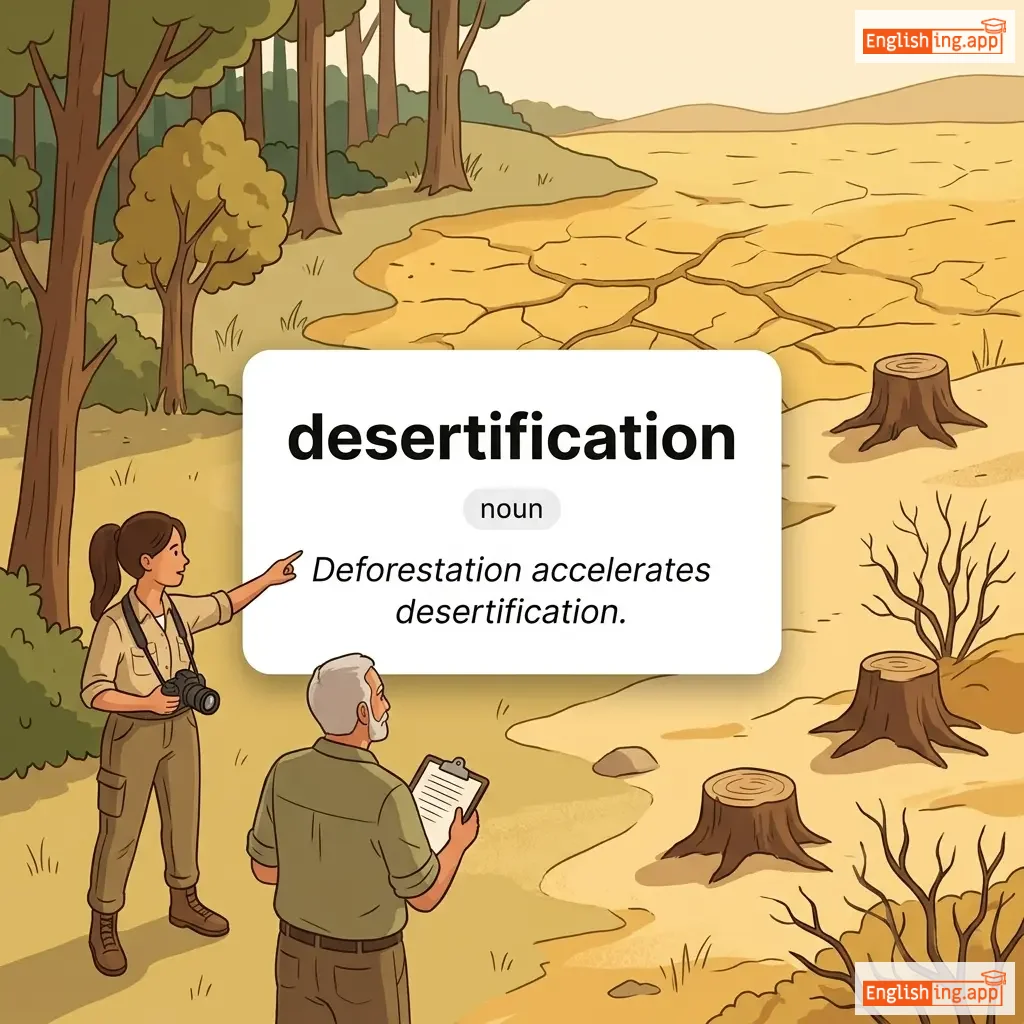
desertification definition card — visual illustration of the meaning
noun C1
dɪˌzɝː.t̬ə.fɪˈkeɪ.ʃən
砂漠化 (sabaku ka)

The process by which fertile land becomes desert, typically as a result of drought, deforestation, or inappropriate agriculture.

"Deforestation accelerates desertification."

"森林伐採は砂漠化を加速させます。" (Shinrin bassai wa sabaku ka wo kasoku sasemasu.)
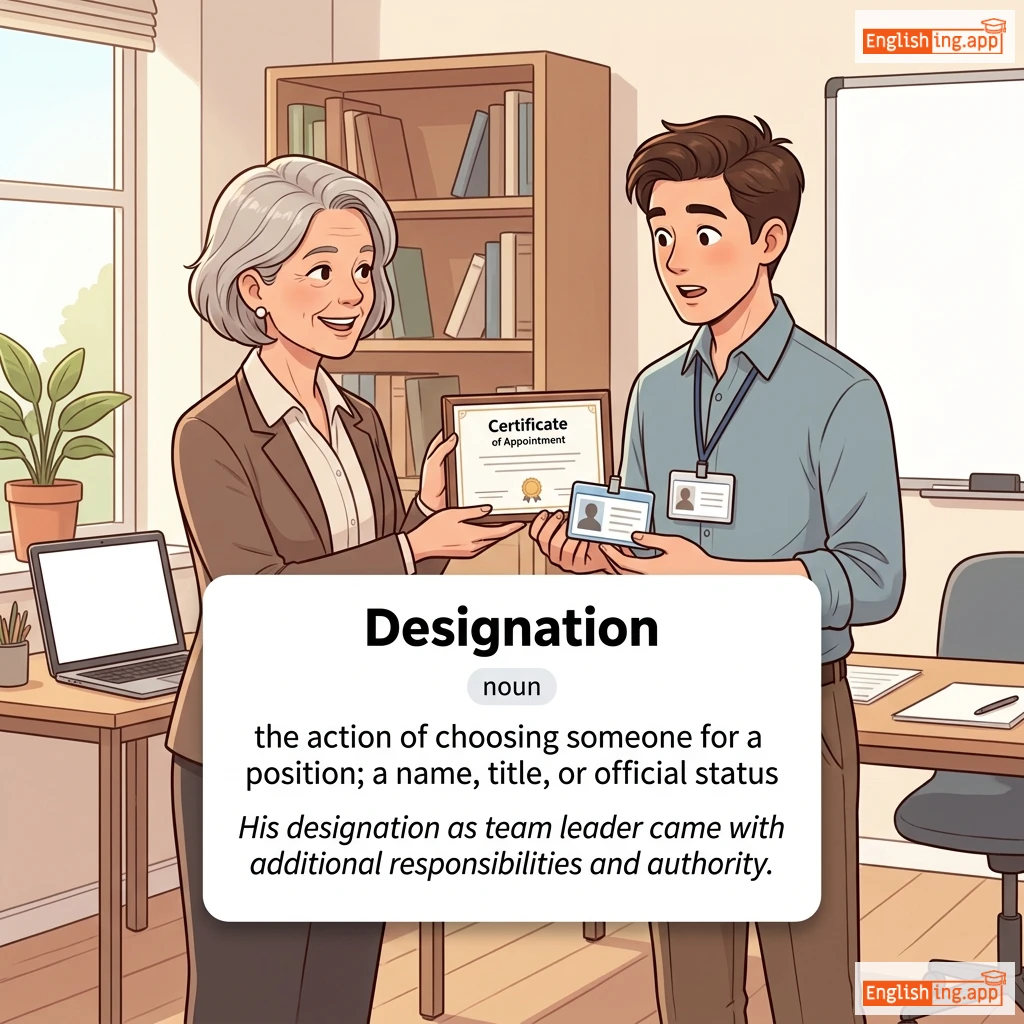
Designation definition card — visual illustration of the meaning
noun C1
/ˌdez.ɪɡˈneɪ.ʃən/
任命; 役職; 職位; ステータス (ninmei, yakushoku, shokui, suteetasu)

the action of choosing someone for a position; a name, title, or official status

"His designation as team leader came with additional responsibilities and authority."

"チームリーダーとしての彼の任命は、追加の責任と権限を伴っていました。" (chiimu riidaa toshite no kare no ninmei wa, tsuika no sekinin to kenri o tomonatte imashita.)
verb C1
/dɪˈzɪst/

to stop doing something, especially an action considered wrong or undesirable

"The judge ordered the company to desist from unfair practices."

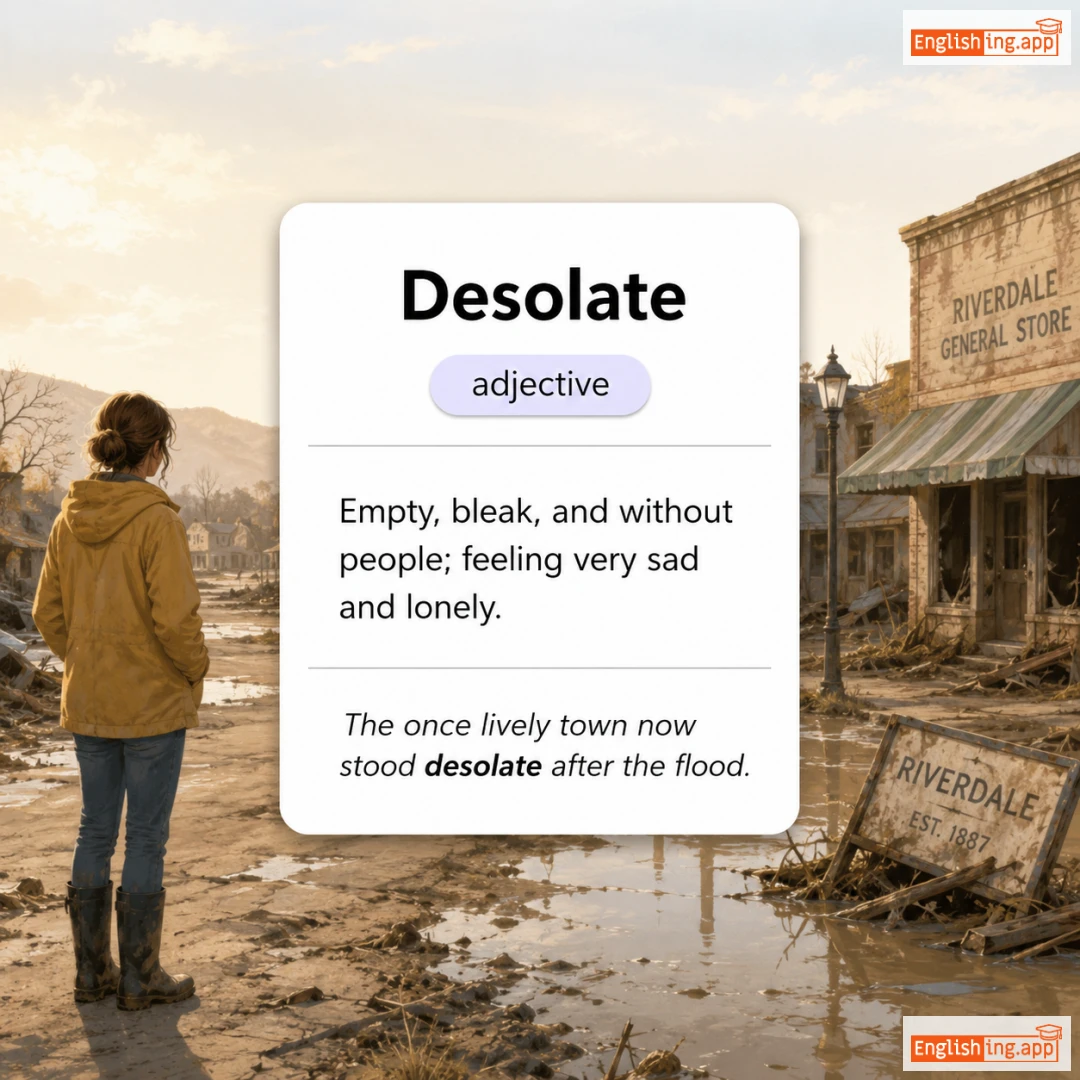
Desolate definition card — visual illustration of the meaning
adjective C1
/ˈdɛsələt/
荒廃した (kouhai shita)

Empty, bleak, and without people; feeling very sad and lonely.

"The once lively town now stood desolate after the flood."

"かつて賑やかだった町は洪水の後、荒廃して立っていた。" (Katsute nigiyaka datta machi wa kouzui no ato, kouhai shite tatte ita.)
adjective C1
/dɪˈsperɪŋ/
絶望的な (zetsubō-teki na)

feeling hopeless; in despair

"She felt despairing after losing her job."

"彼女は仕事を失った後、絶望的な気持ちだった。" (Kanojo wa shigoto o ushinatta ato, zetsubō-teki na kimochi datta.)
adjective C1
/dɪˈspɪkəbl/
卑劣な (hiretsuna)

Deserving hatred and contempt; vile or shameful.

"His despicable actions shocked the entire community."

"彼の卑劣な行動はコミュニティ全体を驚かせました。" (Kare no hiretsuna kōdō wa komyuniti zentai o odorokasemashita.)
adjective C1
/dɪˈspɒndənt/

feeling or showing deep hopelessness or discouragement

"She felt despondent after losing her job."

noun C1
/ˈdɛspɒt/
暴君 (bōkun)

a ruler with absolute power, often ruling in a cruel or oppressive way

"The despot ruled the nation with fear and violence."

"暴君は恐怖と暴力で国を支配した。" (Bōkun wa kyōfu to bōryoku de kuni o shihai shita.)
noun C1
/ˈdɛspətɪzəm/
専制政治 (sensei seiji)

absolute power exercised in a cruel and oppressive way

"The people revolted against the era of despotism."

"人々は専制政治の時代に反乱を起こしました。" (Hitobito wa sensei seiji no jidai ni hanran o okoshimashita.)
adjective C1
/ˈdɛstɪˌtuːt/
困窮した (konkyū shita)

extremely poor and lacking the means to provide for oneself

"The earthquake left many families destitute."

"地震は多くの家族を困窮させた。" (Jishin wa ōku no kazoku o konkyū saseta.)
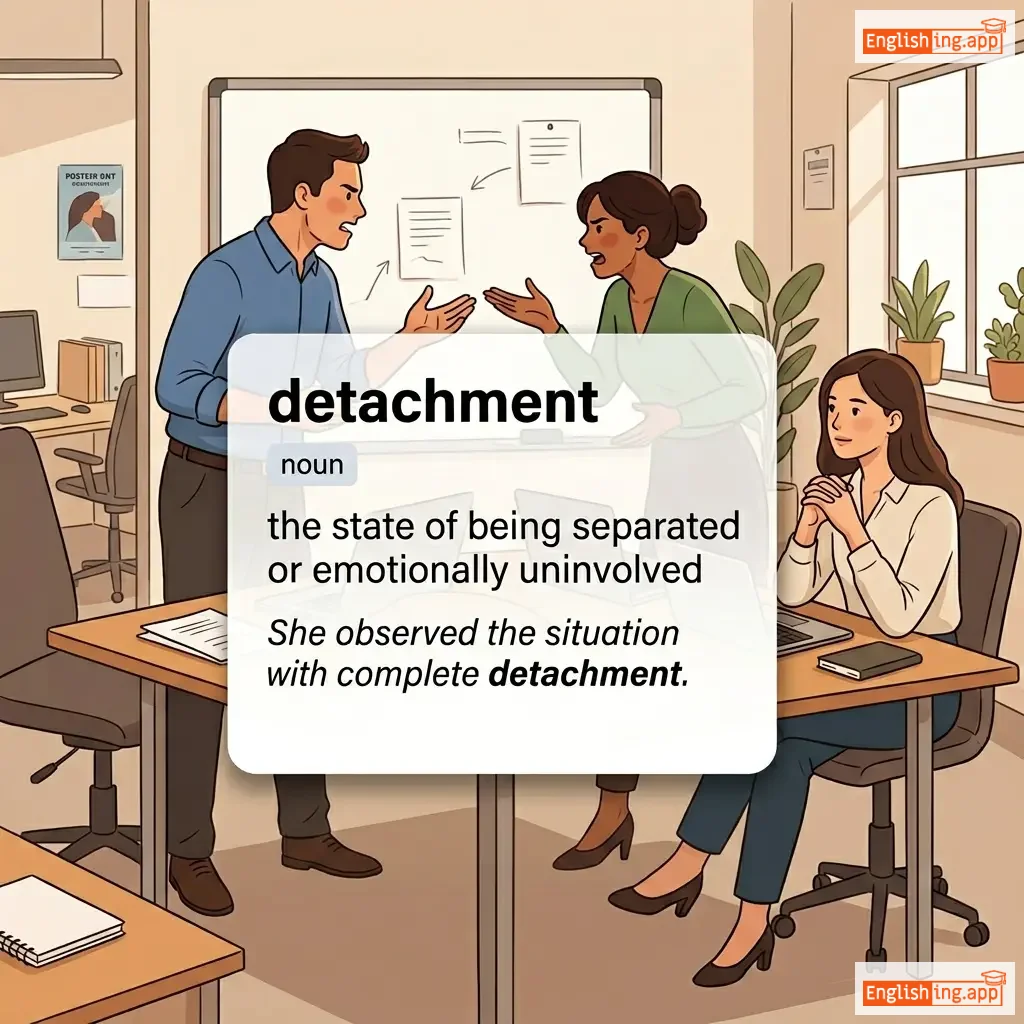
detachment definition card — visual illustration of the meaning
noun C1
/dɪˈtætʃmənt/
切り離し (kirihashi)

the state of being separated or emotionally uninvolved

"She observed the situation with complete detachment."

"彼女は完全なデタッチメントで状況を観察していた。" (Kanojo wa kanzen na detatchimento de joukyou o kansatsu shiteita.)
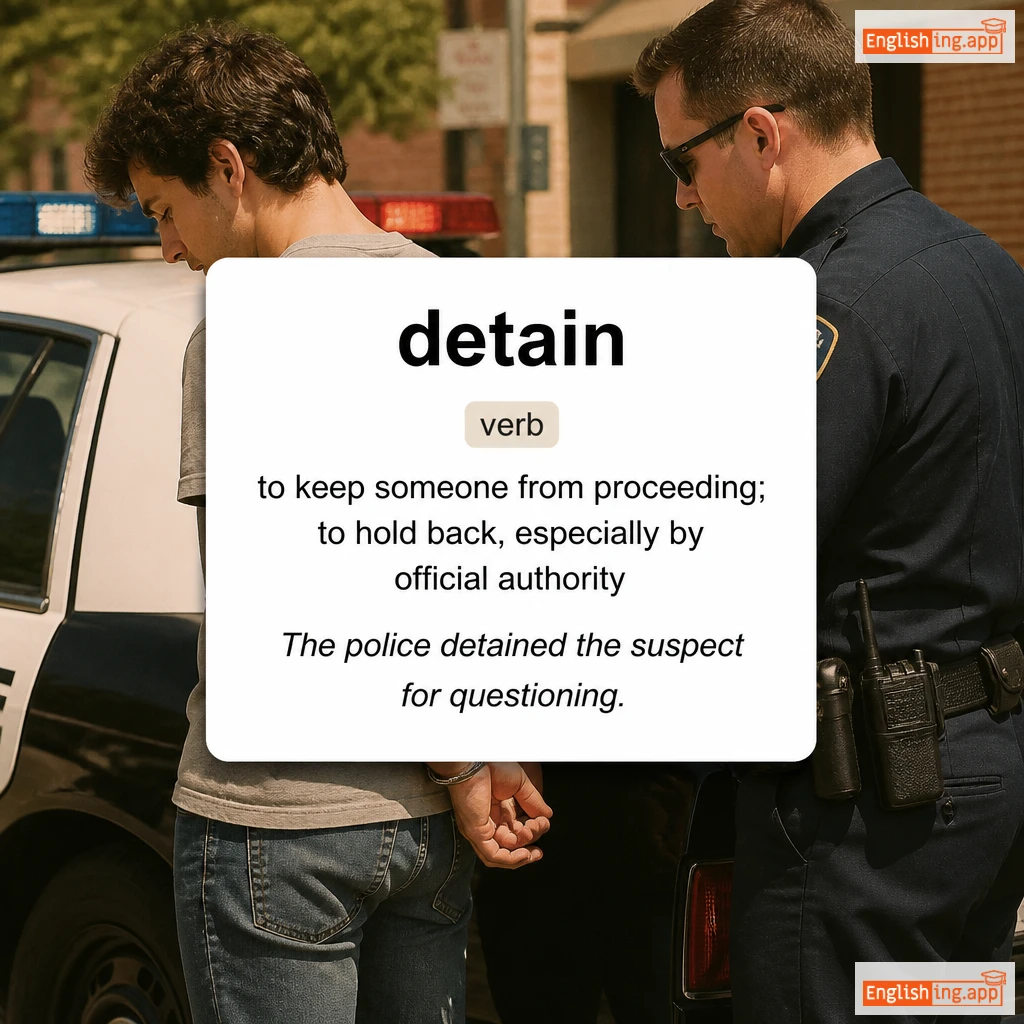
detain definition card — visual illustration of the meaning
verb C1
/dɪˈteɪn/

to keep someone from proceeding; to hold back, especially by official authority

"The police detained the suspect for questioning."

noun C1
/deɪˈtɒnt/
緊張関係の緩和 (kinchou kankei no kanwa)

the easing of strained relations, especially between countries

"The treaty helped bring about a détente between the two nations."

"その条約は、二国間の緊張関係を緩和するのに役立ちました。" (Sono jouyaku wa, nikokukan no kinchou kankei o kanwa suru no ni yakudachimashita.)
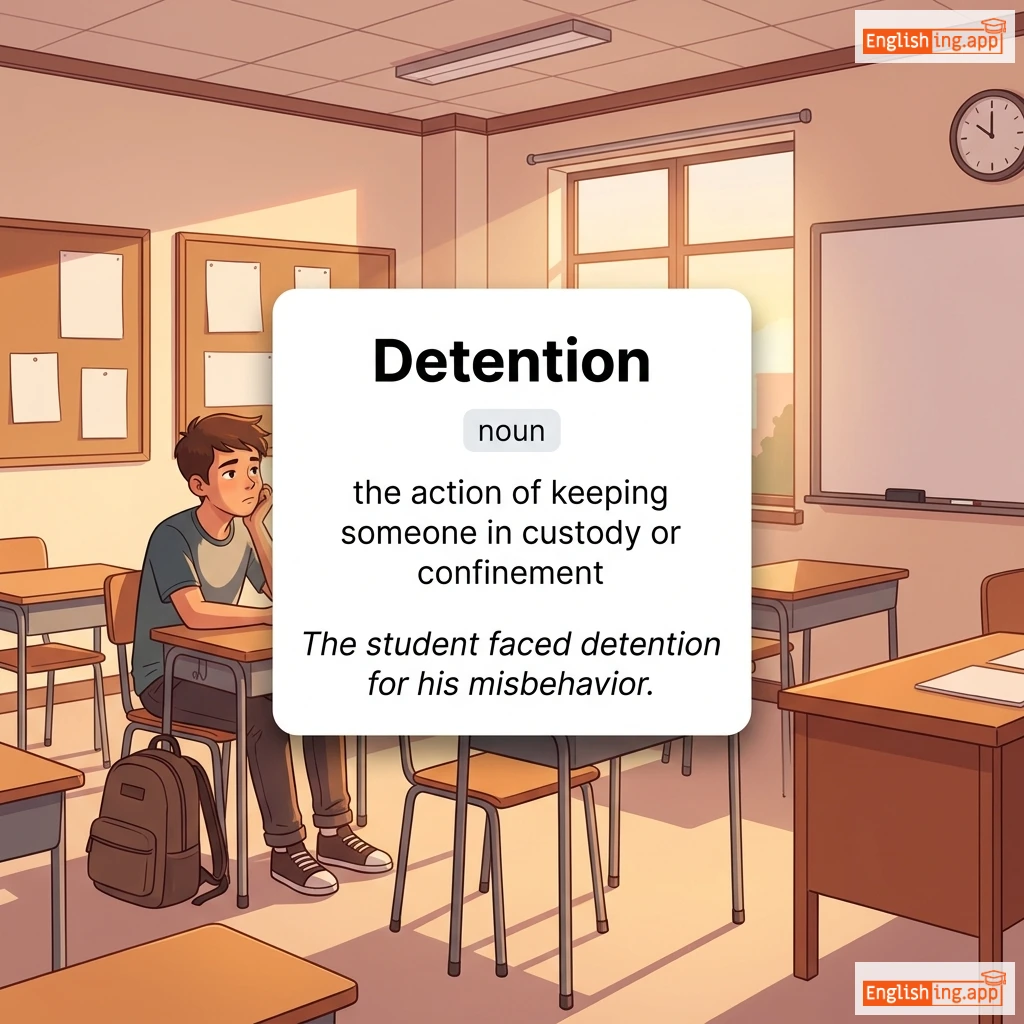
Detention definition card — visual illustration of the meaning
noun C1
/dɪˈtɛnʃən/
拘束 (kousoku)

the action of keeping someone in custody or confinement

"The student faced detention for his misbehavior."

"学生は不正行為で拘束を受けました。" (Gakusei wa fusei koui de kousoku wo ukemashita.)
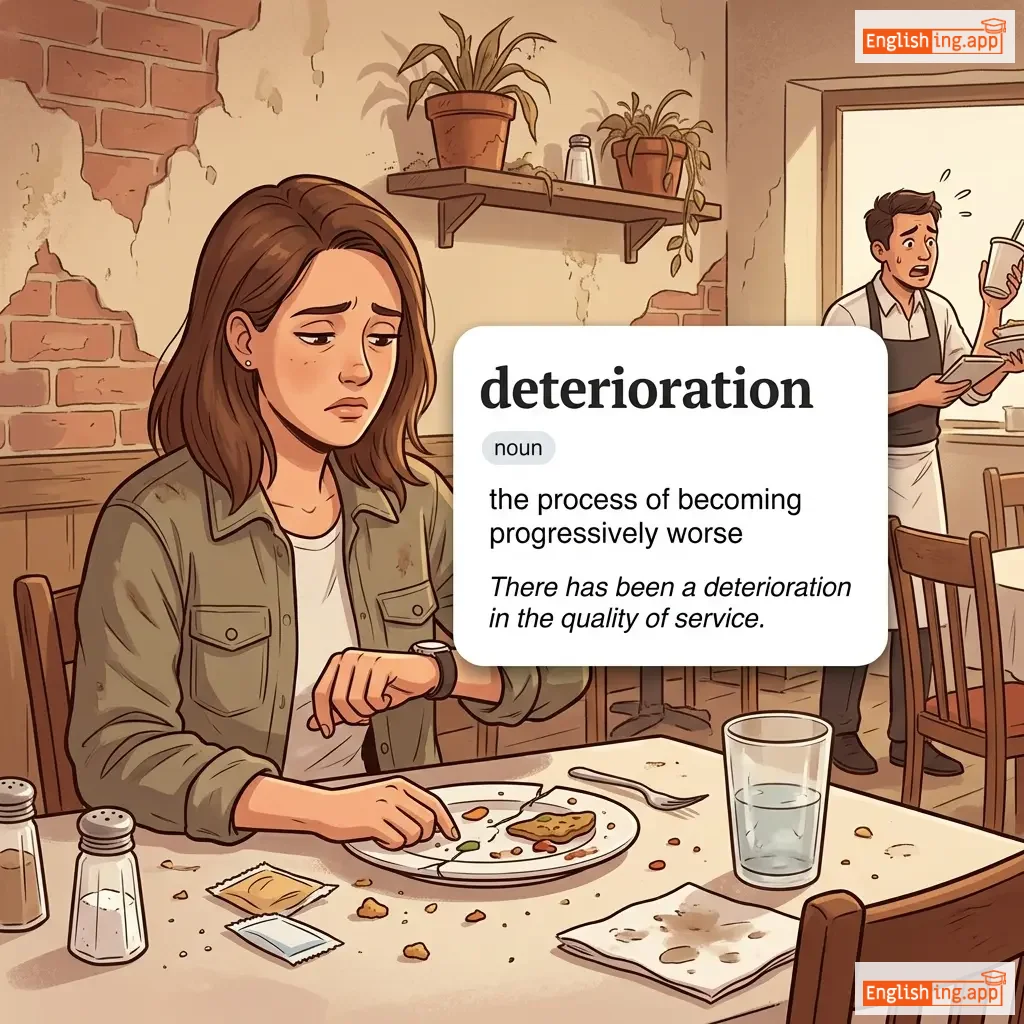
deterioration definition card — visual illustration of the meaning
noun C1
/dɪˌtɪriəˈreɪʃən/
悪化 (akka)

the process of becoming progressively worse

"There has been a deterioration in the quality of service."

"サービスの質が悪化しました。" (Sābisu no shitsu ga akka shimashita.)
determinant definition card — visual illustration of the meaning
noun C1
/dɪˈtɜːrmɪnənt/
決定要因 (kettei yōin)

a factor that decisively affects the nature or outcome of something

"Education is a key determinant of economic growth."

"教育は経済成長の主要な決定要因です。" (Kyōiku wa keizai seichō no shuyō na kettei yōin desu.)
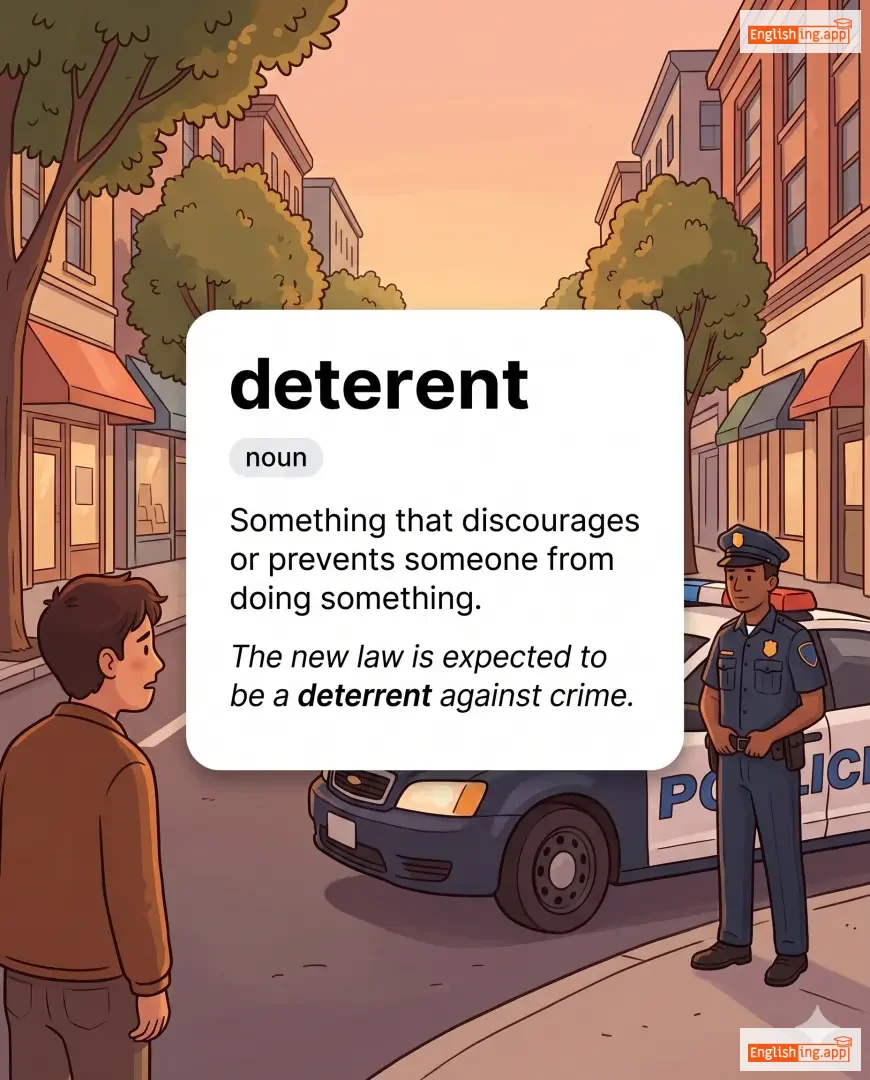
deterrent definition card — visual illustration of the meaning
noun C1
/dɪˈtɜːrənt/
抑止力 (yokushiryoku)

Something that discourages or prevents someone from doing something.

"The new law is expected to be a deterrent against crime."

"新しい法律は犯罪に対する抑止力になると予想されています。" (Atarashī hōritsu wa hanzai ni taisuru yokushiryoku ni naru to yosō sareteimasu.)
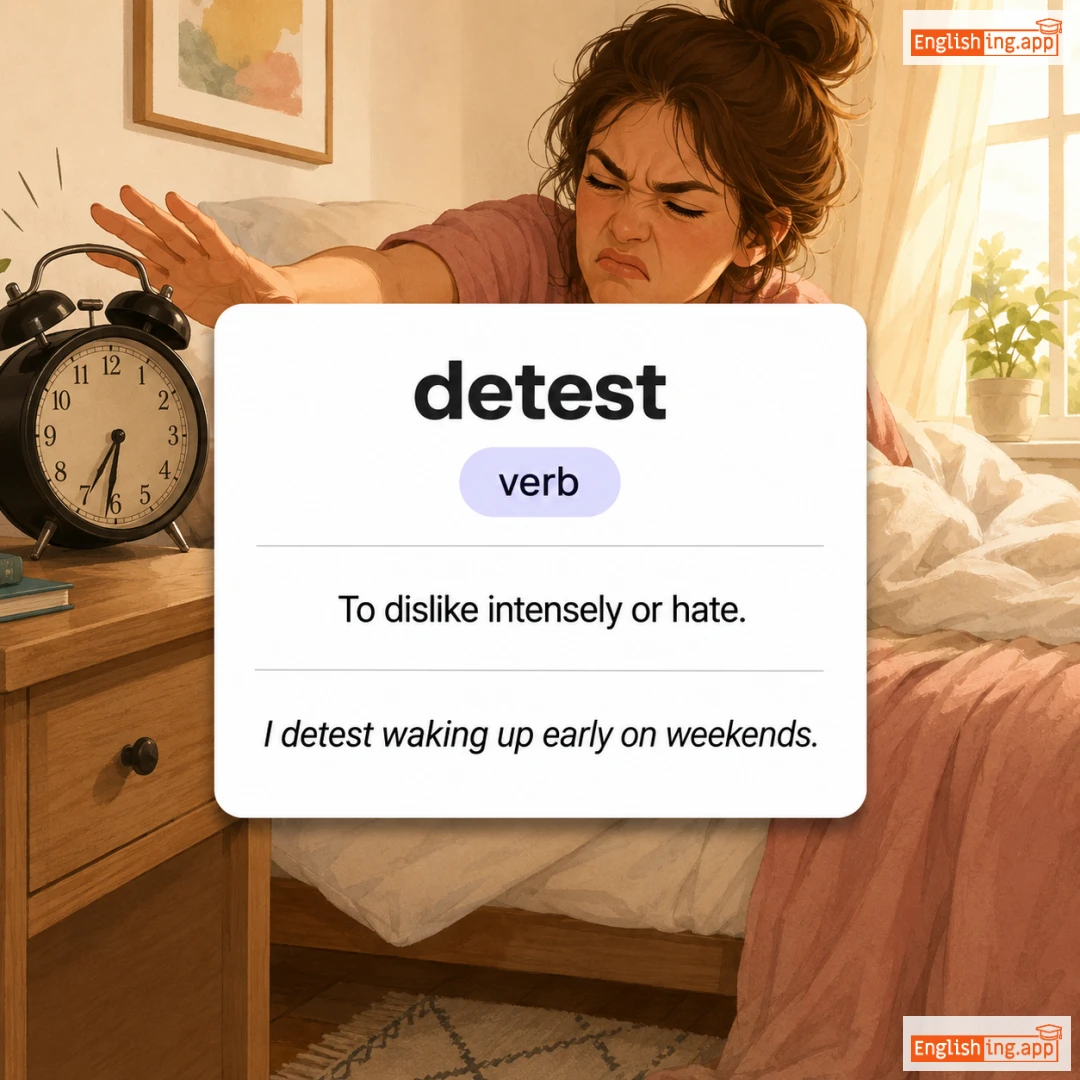
detest definition card — visual illustration of the meaning
verb C1
/dɪˈtɛst/
嫌う (kirau)

To dislike intensely or hate.

"I detest waking up early on weekends."

"私は週末に早起きするのが嫌いです。" (Watashi wa shuumatsu ni hayaoki suru no ga kirai desu.)
noun C1
/ˌdɛtəˈneɪʃən/
爆発 (bakuhatsu)

The act of exploding or causing something to explode.

"The sudden detonation shook the entire building."

"突然の爆発が建物全体を揺さぶった。" (Totsuzen no bakuhatsu ga tatemono zentai o yusabutta.)
detoxification definition card — visual illustration of the meaning
noun C1
/dɪˌtɒksɪfɪˈkeɪʃən/
解毒 (gedoku)

The process of removing toxic substances or effects from the body.

"Detoxification is often the first step in treating drug addiction."

"解毒はしばしば薬物依存症治療の最初のステップです。" (Gedoku wa shibashiba yakubutsu izonshou chiryou no saisho no suteppu desu.)
verb C1
/dɪˈtrækt/

To reduce or take away the worth or value of something.

"His rude behavior will detract from his good reputation."

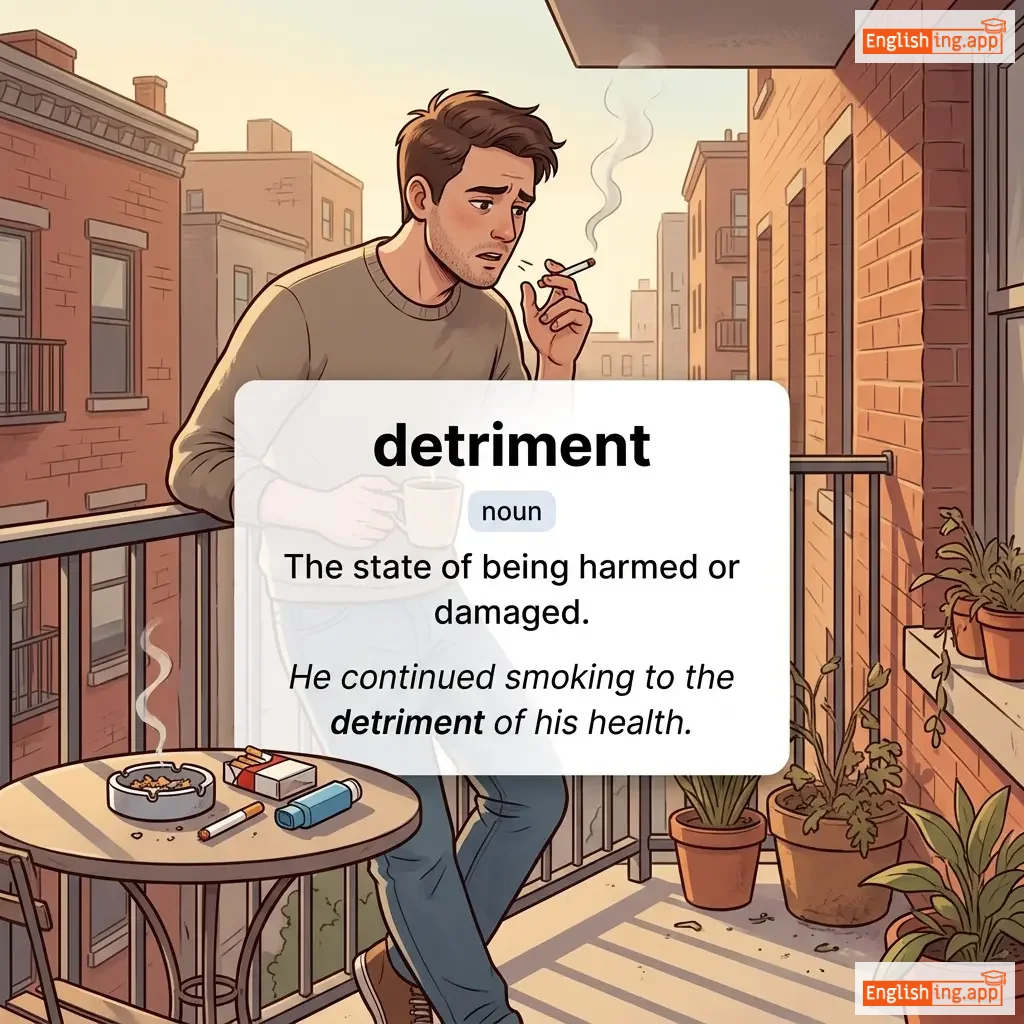
detriment definition card — visual illustration of the meaning
noun C1
/ˈdɛtrɪmənt/
損害 (songai)

The state of being harmed or damaged.

"He continued smoking to the detriment of his health."

"彼は健康に損害を与えるにもかかわらず、喫煙を続けました。" (Kare wa kenkou ni songai wo ataeru nimokakawarazu, kitsuen wo tsuzukemashita.)
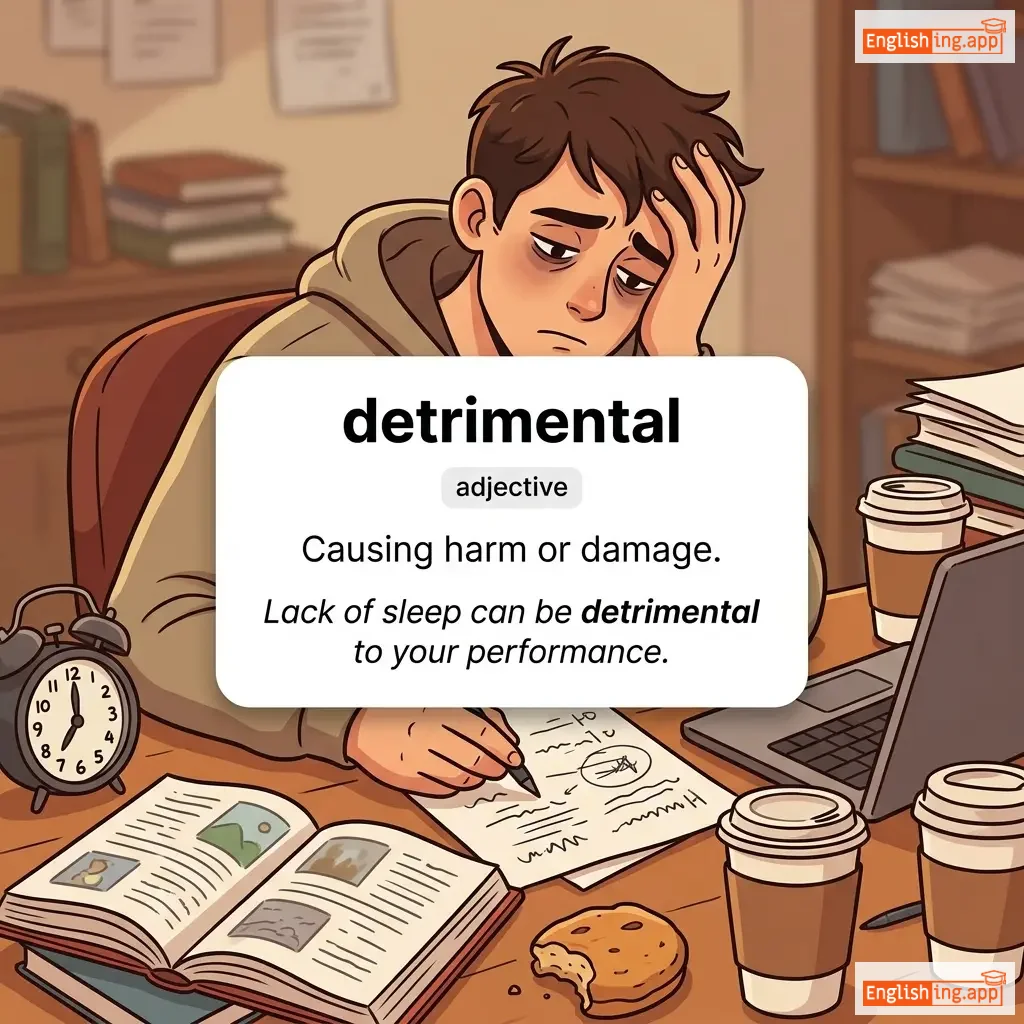
detrimental definition card — visual illustration of the meaning
adjective C1
/ˌdɛtrɪˈmɛntəl/

Causing harm or damage.

"Lack of sleep can be detrimental to your performance."

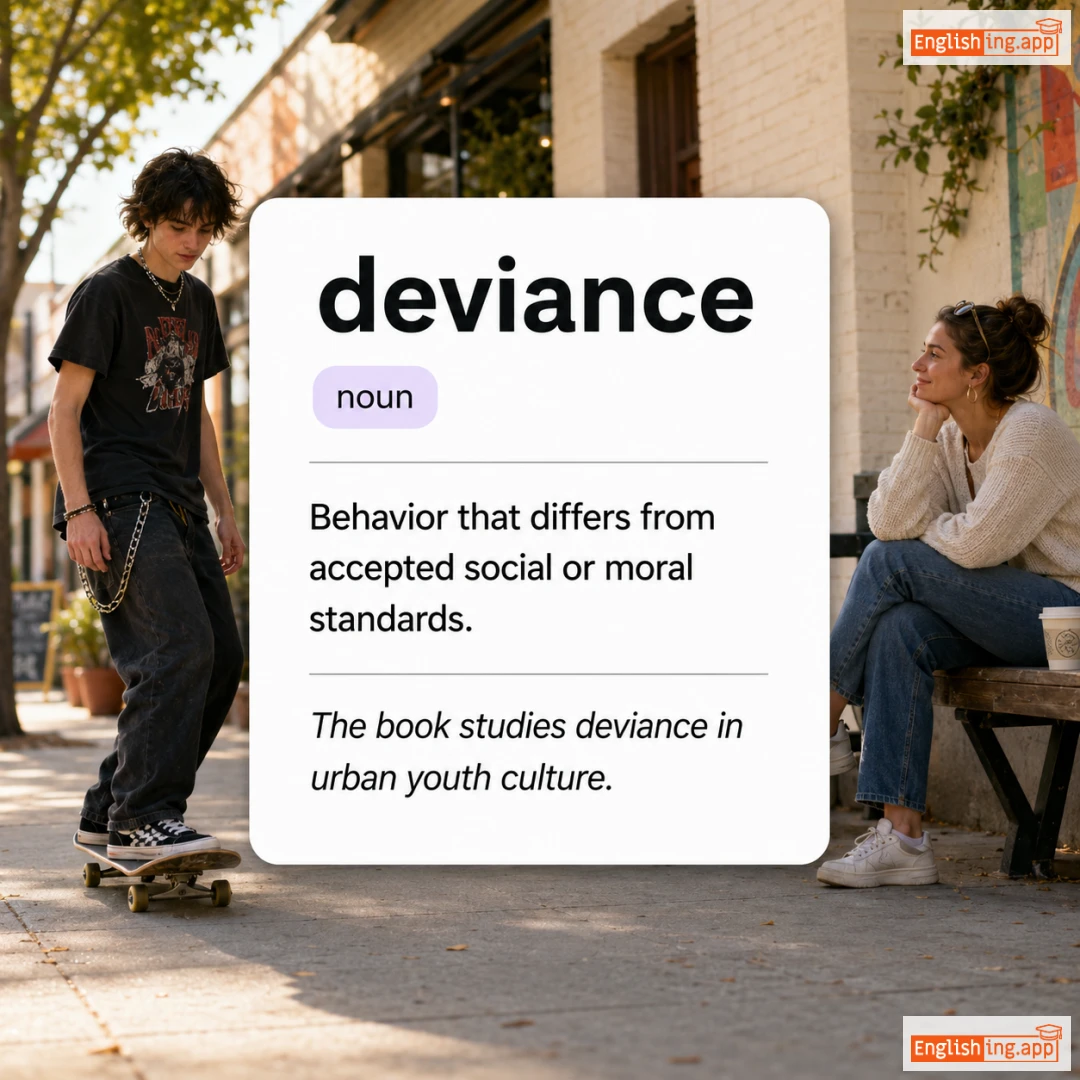
deviance definition card — visual illustration of the meaning
noun C1
/ˈdiːviəns/
逸脱 (itsudatsu)

Behavior that differs from accepted social or moral standards.

"The book studies deviance in urban youth culture."

"その本は都市の若者文化における逸脱を研究しています。" (Sono hon wa toshi no wakamono bunka ni okeru itsudatsu o kenkyu shiteimasu.)
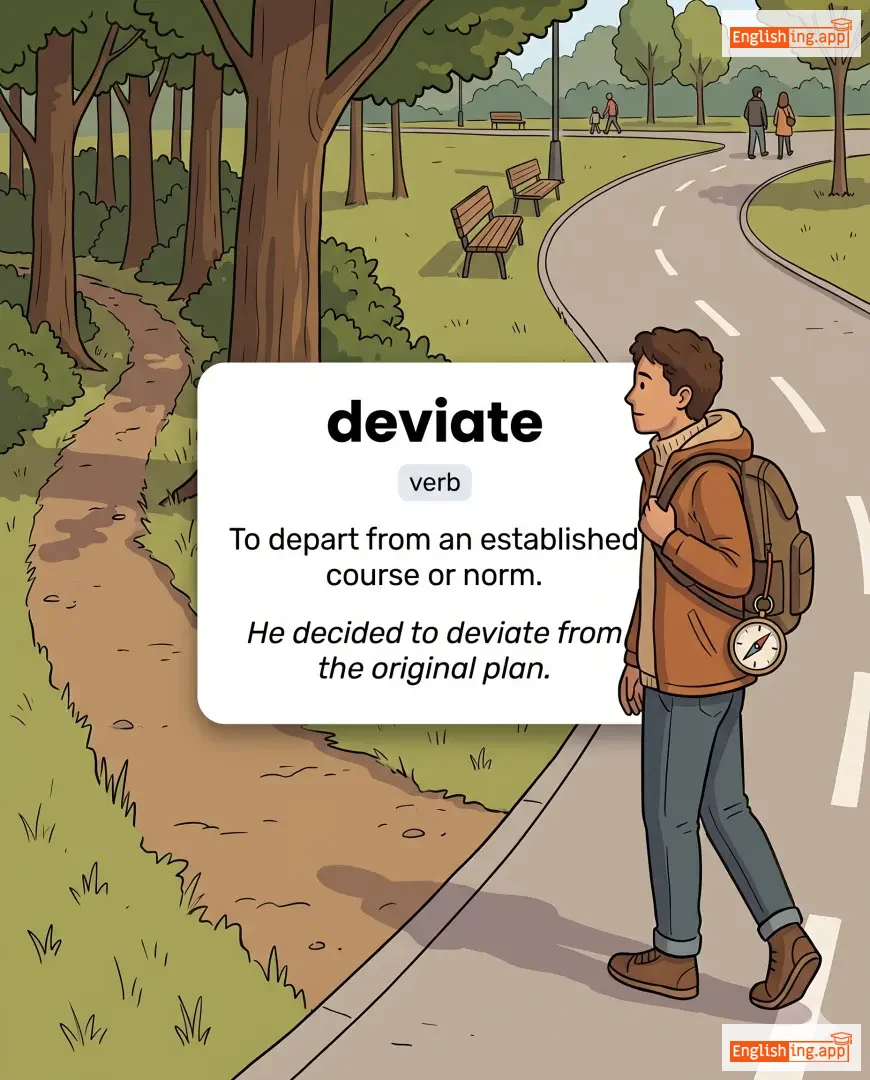
deviate definition card — visual illustration of the meaning
verb C1
/ˈdiːvieɪt/
逸脱する (itsudatsu suru)

To depart from an established course or norm.

"He decided to deviate from the original plan."

"彼は元の計画から逸脱することに決めました。" (Kare wa moto no keikaku kara itsudatsu suru koto ni kimemashita.)
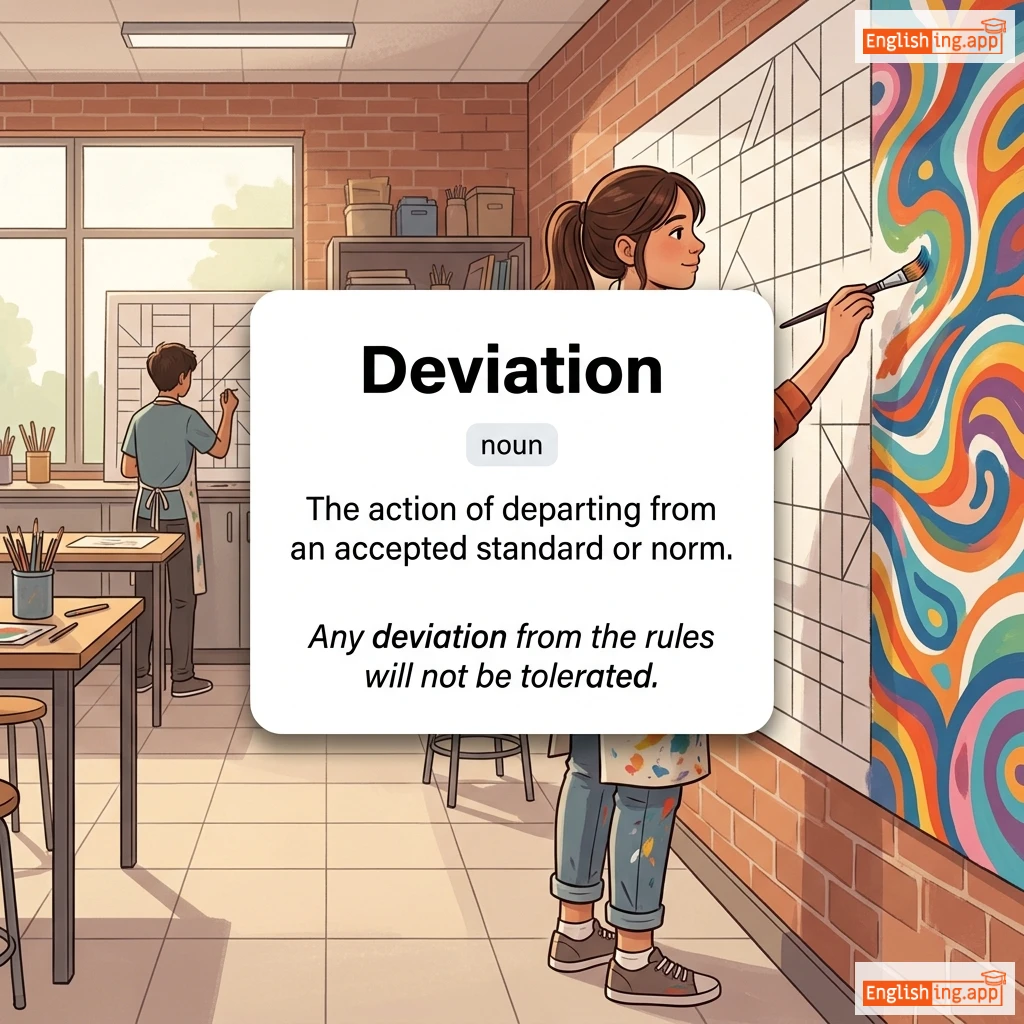
Deviation definition card — visual illustration of the meaning
noun C1
/ˌdiːviˈeɪʃn/
偏差 (hensha)

The action of departing from an accepted standard or norm.

"Any deviation from the rules will not be tolerated."

"規則からのいかなる偏差も許されません。" (Kisoku kara no ikannaru hensha mo yurusaremasen.)
adjective C1
/ˈdiːviəs/
狡猾な (kōkatsu na)

Skillful at using underhanded tactics to achieve goals; not straightforward.

"He used a devious plan to gain control of the company."

"彼は会社の支配権を握るために、狡猾な計画を使いました。" (Kare wa kaisha no shihai ken o nigiru tame ni, kōkatsu na keikaku o tsukaimashita.)
adjective C1
/dɪˈvɔɪd/
空虚 (kūkyō)

Completely lacking or without something.

"His speech was devoid of any real emotion."

"彼のスピーチは実際の感情が空虚だった。" (Kare no supīchi wa jissai no kanjō ga kūkyō datta.)
verb C1
/dɪˈvɒlv/
委譲する (いじょうする)

To pass power, responsibility, or duties to another person or group.

"The responsibility will devolve on the new manager."

"責任は新しいマネージャーに委譲されます。" (Sekinin wa atarashī manējā ni ijō saremasu.)
noun C1
/ˌdɛvəˈtiː/
献身者 (kenshinsha)

A person who is very enthusiastic about or strongly dedicated to something or someone.

"He is a great devotee of classical music."

"彼はクラシック音楽の大きな献身者です。" (kare wa kurashikku ongaku no ookina kenshinsha desu)
adjective C1
/dɪˈvaʊt/
献身的 (kenshin-teki)

Deeply religious or sincere.

"He is a devout believer who prays every day."

"彼は毎日祈る献身的な信者です。" (Kare wa mainichi inoru kenshin-teki na shinja desu.)
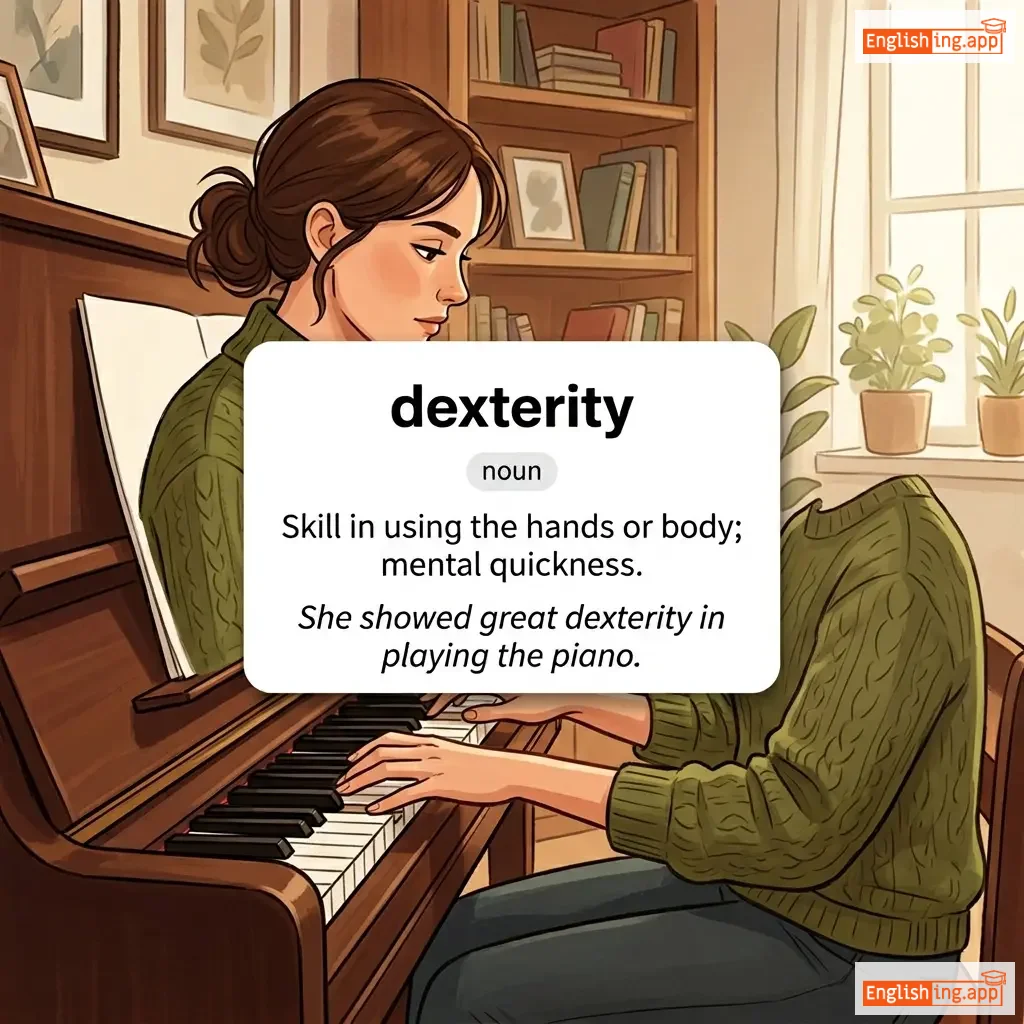
dexterity definition card — visual illustration of the meaning
noun C1
/dɛkˈstɛrɪti/
器用さ (kiyousa)

Skill in using the hands or body; mental quickness.

"She showed great dexterity in playing the piano."

"彼女はピアノを弾く際に優れた器用さを示しました。" (Kanojo wa piano o hiku sai ni sugureta kiyousa o shimeshimashita.)
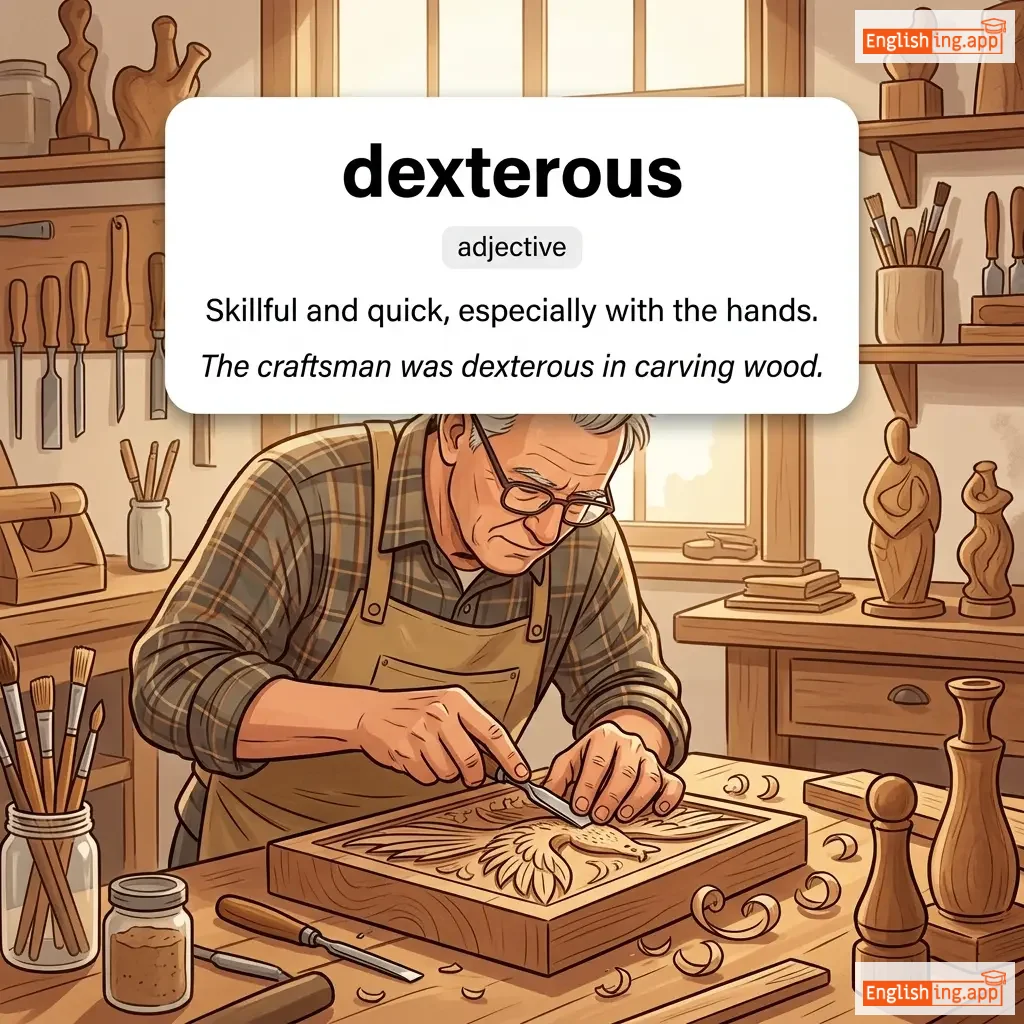
dexterous definition card — visual illustration of the meaning
adjective C1
/ˈdɛkstrəs/
器用 (kiyou)

Skillful and quick, especially with the hands.

"The craftsman was dexterous in carving wood."

"職人は木を彫るのが器用だった。" (Shokunin wa ki o horu no ga kiyou datta.)
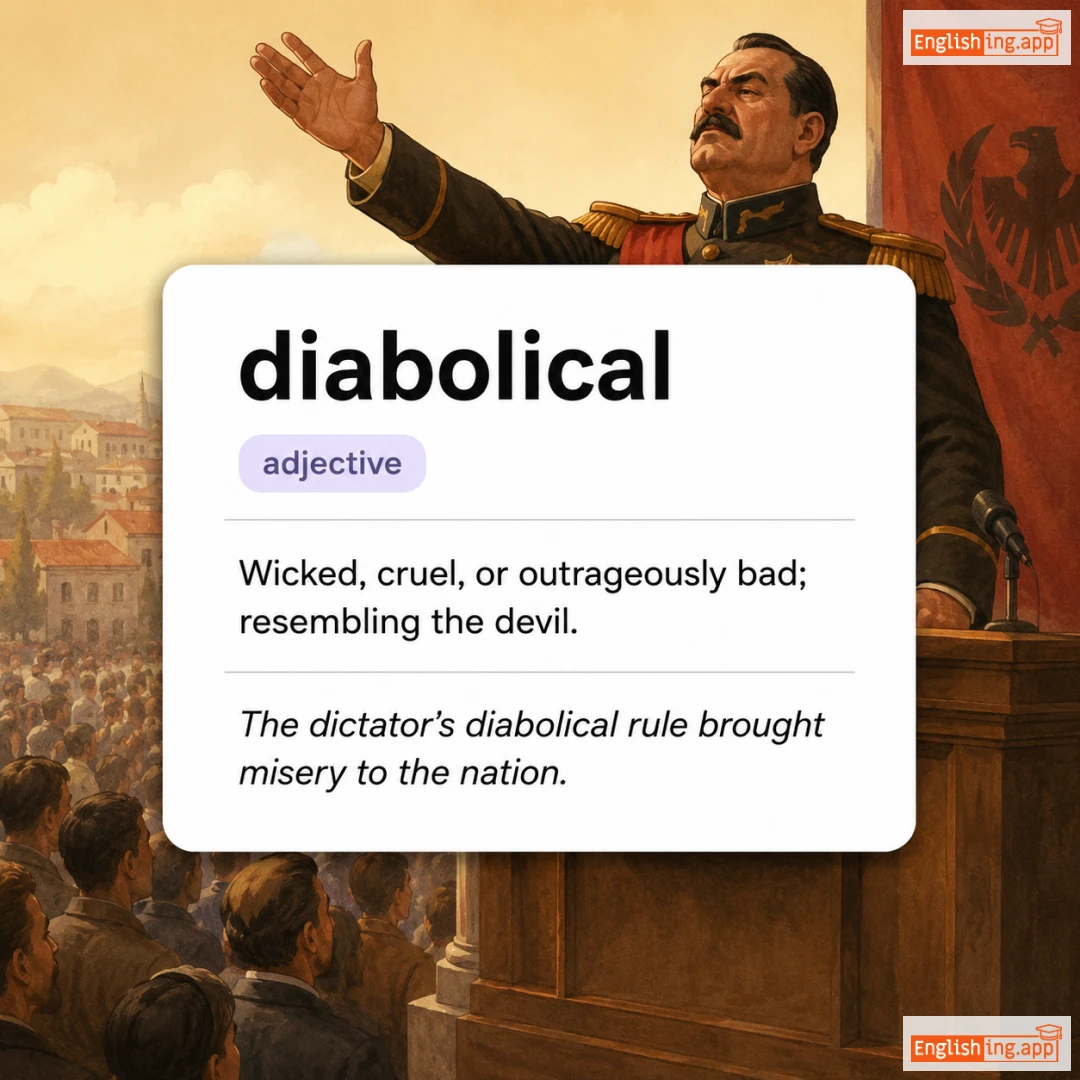
diabolical definition card — visual illustration of the meaning
adjective C1
/ˌdaɪəˈbɒlɪkəl/
悪魔的 (akumateki)

Wicked, cruel, or outrageously bad; resembling the devil.

"The dictator’s diabolical rule brought misery to the nation."

"独裁者の悪魔的な支配は国に苦しみをもたらした。" (Dokusaisha no akumateki na shihai wa kuni ni kurushimi o motarashita.)
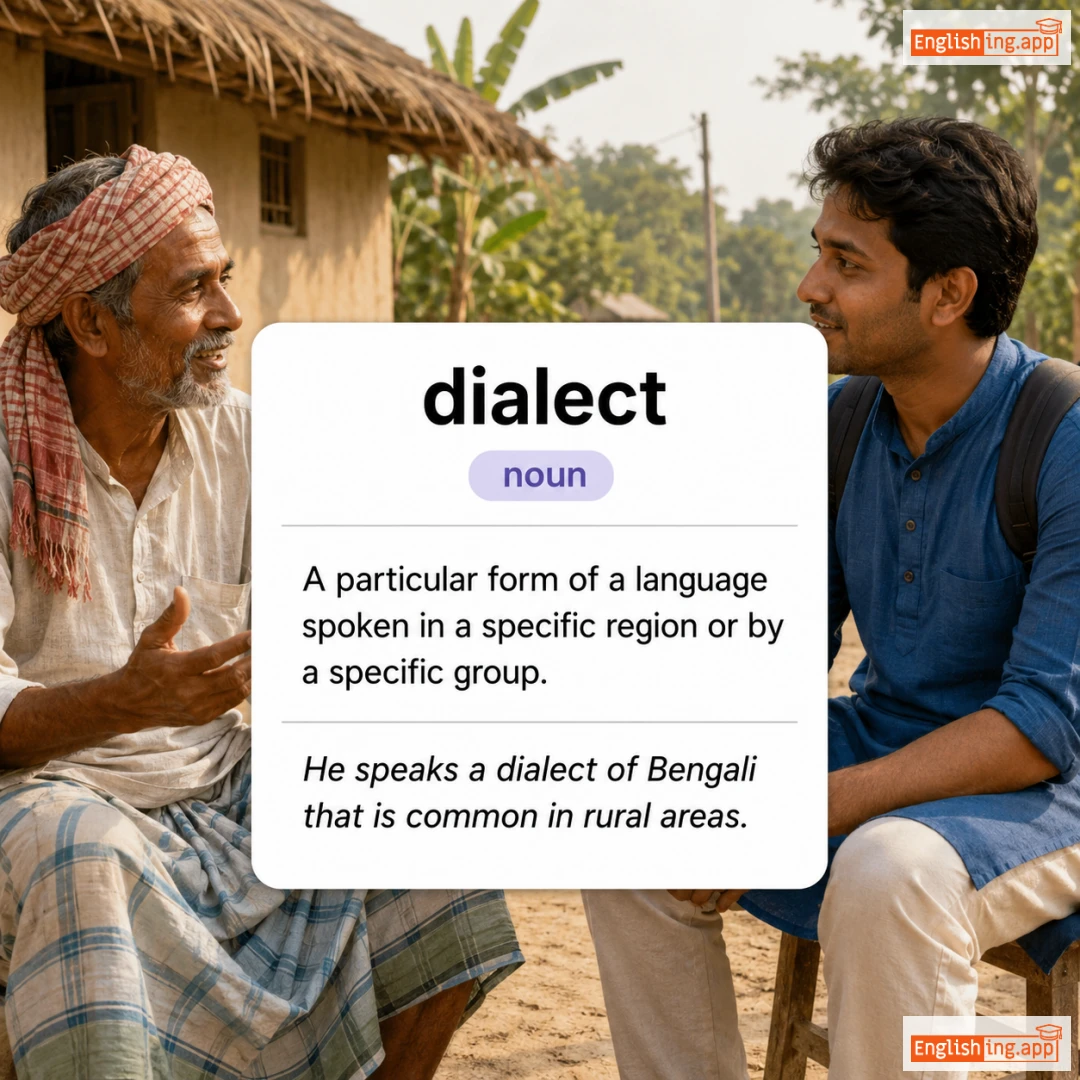
dialect definition card — visual illustration of the meaning
noun C1
/ˈdaɪəˌlɛkt/
方言 (hougen)

A particular form of a language spoken in a specific region or by a specific group.

"He speaks a dialect of Bengali that is common in rural areas."

"彼は田舎で一般的なベンガル語の方言を話します。" (Kare wa inaka de ippantekina bengarugo no hōgen o hanashimasu.)