Vocabulaires

Découvrez, apprenez et maîtrisez le vocabulaire anglais

noun C1
/ˈspɔɪlˌspɔːrt/
зануда (zanuda)

A person who ruins other people's enjoyment or fun.

"Don't be a spoilsport and let us enjoy the party."

"Не будь занудой и позволь нам наслаждаться вечеринкой." (Ne bud' zanudoy i pozvol' nam naslazhdat'sya vecherinkoy.)
adjective C1
/ˈspʌndʒi/
пористый (poristyy)

soft and full of holes like a sponge; porous

"The cake had a light and spongy texture."

"Пирог имел легкую и пористую текстуру." (Pirog imel legkuyu i poristuyu teksturu.)
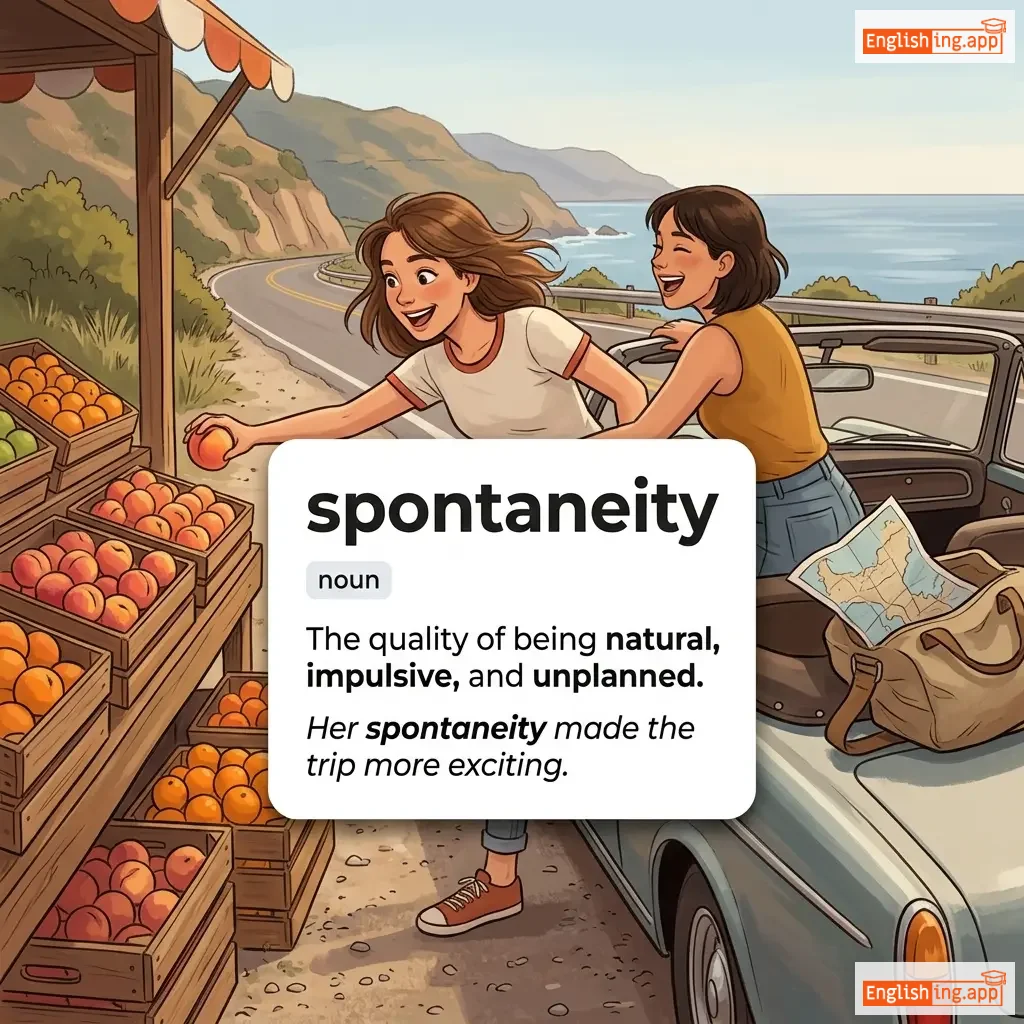
spontaneity definition card — visual illustration of the meaning
noun C1
/ˌspɑːntəˈneɪəti/
спонтанность (spontannost)

The quality of being natural, impulsive, and unplanned.

"Her spontaneity made the trip more exciting."

"Ее спонтанность сделала поездку более захватывающей." (ee spontannost sdelala poezdku bolee zakhvatyvayuschey.)
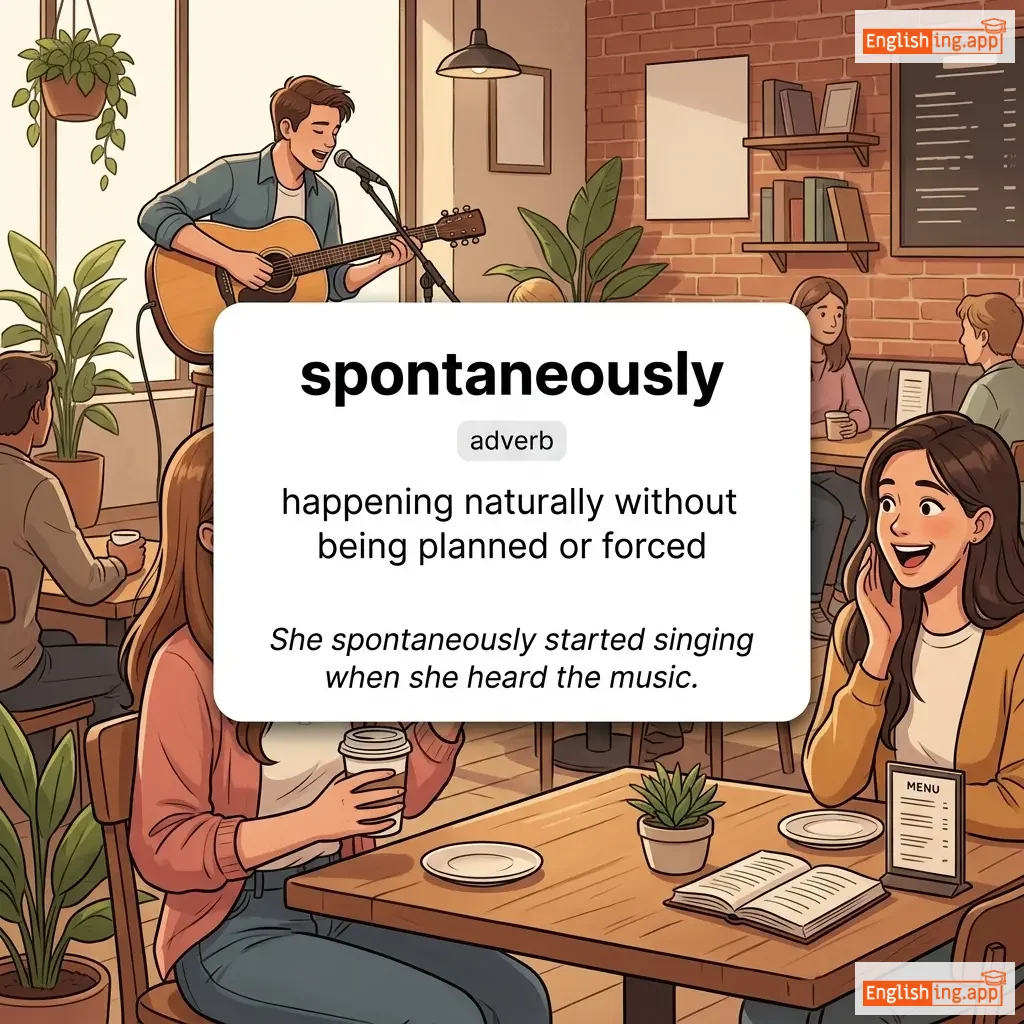
spontaneously definition card — visual illustration of the meaning
adverb C1
/spɒnˈteɪ.ni.əs.li/
спонтанно (spontanno)

happening naturally without being planned or forced

"She spontaneously started singing when she heard the music."

"Она начала петь спонтанно, когда услышала музыку." (Ona nachala pet' spontanno, kogda uslyshala muzyku.)
noun/verb C1
/spuːf/
юмористическое подражание (yumoristicheskoe podradanie)

A humorous imitation of something, or to trick or parody someone or something.

"The comedian spoofed the politician’s speech to entertain the audience."

"Комик пародировал речь политика, чтобы развеселить публику." (Komik parodiroval rech' politika, chtoby razveselet' publiku.)
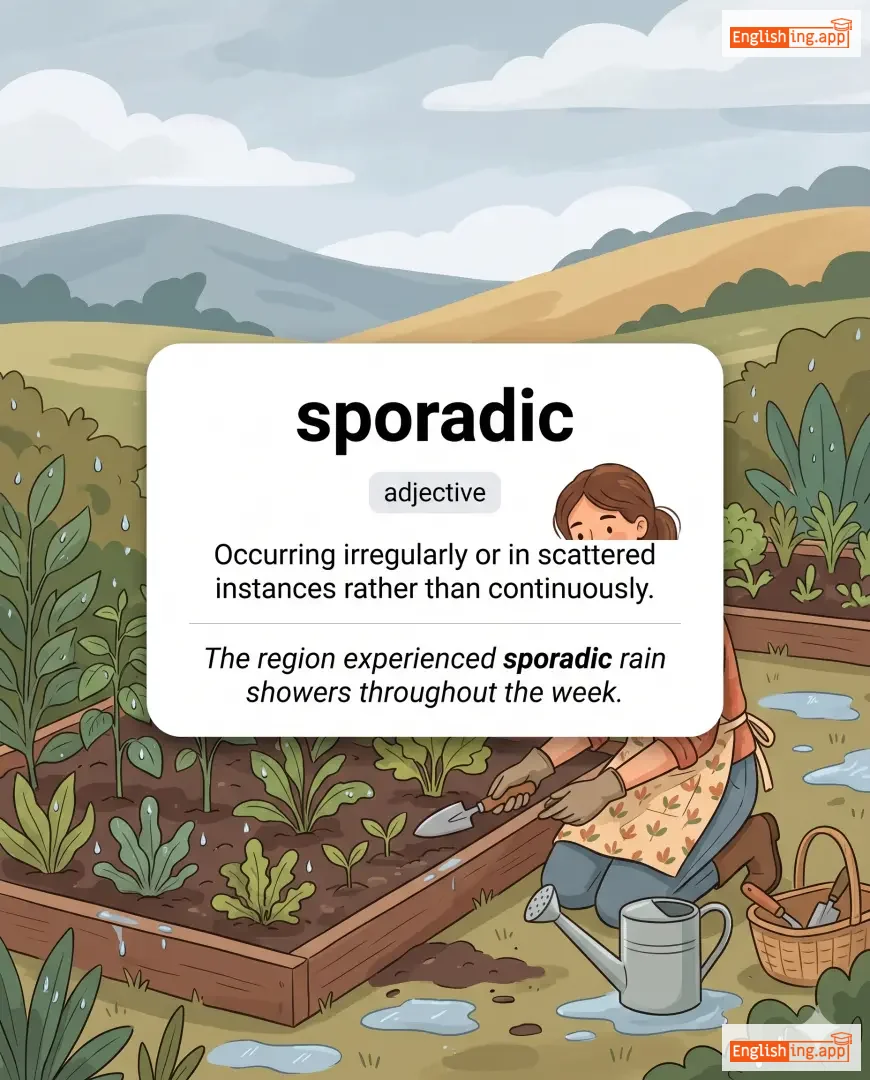
sporadic definition card — visual illustration of the meaning
adjective C1
/spəˈrædɪk/
спорадический (sporadicheskiy)

Occurring irregularly or in scattered instances rather than continuously.

"The region experienced sporadic rain showers throughout the week."

"Регион испытал спорадические дожди в течение недели." (Region ispyltal sporadicheskie dozhdi v techeniye nedeli.)
noun, verb C1
/spreɪn/
растяжение (rastyazhenie)

an injury to a joint in which the ligaments are stretched or torn

"She sprained her ankle while running in the park."

"Она вывихнула лодыжку, когда бегала в парке." (Ona vyvihnula lodyzhku, kogda begala v parke.)
adjective C1
/ˈspraɪtli/
живой (zhivoy)

full of energy and life; lively

"The sprightly old man danced with joy at the wedding."

"Живой старик танцевал с радостью на свадьбе." (Zhivoy starik tantseval s radost'yu na svad'be.)
verb, noun C1
/spraʊt/
прорастать (prorastat')

to begin to grow; to produce new leaves or shoots

"The seeds began to sprout after a few days of rain."

"Семена начали прорастать после нескольких дней дождя." (Semena nachali prorastat' posle neskol'kikh dney dozhdya.)
verb, adjective, noun C1
/spruːs/
привести в порядок / тип дерева (privedi v poryadok / tip dereva)

to make neat or tidy in appearance; also refers to an evergreen tree

"He spruced up his room before the guests arrived."

"Он привел свою комнату в порядок до того, как пришли гости." (On privedi svoju komnatu v poryadok do togo, kak prishli gosti.)
verb C1
/spɜːr/
побуждать / мотивировать (pobuzhdat / motivirovat)

To encourage or motivate someone to take action.

"The teacher's praise spurred him to study harder."

"Похвала учителя побудила его учиться усерднее." (Pokhvala uchitelya pobudila ego uchit'sya usyerdneye.)
adjective C1
/ˈspjʊəriəs/
ложный / фальшивый (lozhny / fal'shivy)

Not genuine, authentic, or true; false or fake.

"The report was based on spurious claims."

"Отчет был основан на ложных утверждениях." (Otchet byl osnovan na lozhnykh utverzhdeniyakh.)
verb C1
/spɜːrn/
отвергать с презрением (otvergat' s prezreniem)

To reject something or someone with disdain or contempt.

"She spurned his offer of help."

"Она отвергла его предложение о помощи с презрением." (Ona otvergla ego predlozhenie o pomoshchi s prezreniem.)
verb C1
/ˈskwɒbəl/
ссориться по пустякам (ssoritsya po pustyakam)

To argue noisily over something small or unimportant.

"The children squabbled over the last piece of cake."

"Дети спорили из-за последнего кусочка торта." (Deti sporyli iz-za poslednego kusochka torta.)
adjective C1
/ˈskwɒlɪd/
крайне грязный (kraine gryaznyy)

extremely dirty and unpleasant, often due to poverty or neglect

"He lived in a squalid room with broken furniture."

"Он жил в грязной комнате с поломанной мебелью." (On zhil v gryaznoy komnate s polomannoy mebel'yu.)
noun C1
/skwɔːl/
штормовой порыв (shtormovoy poryv)

a sudden violent gust of wind, often accompanied by rain, snow, or sleet

"A sudden squall caught the sailors off guard."

"Внезапный штормовой порыв застал моряков врасплох." (Vnezapnyy shtormovoy poryv zastal moryakov vrasploh.)
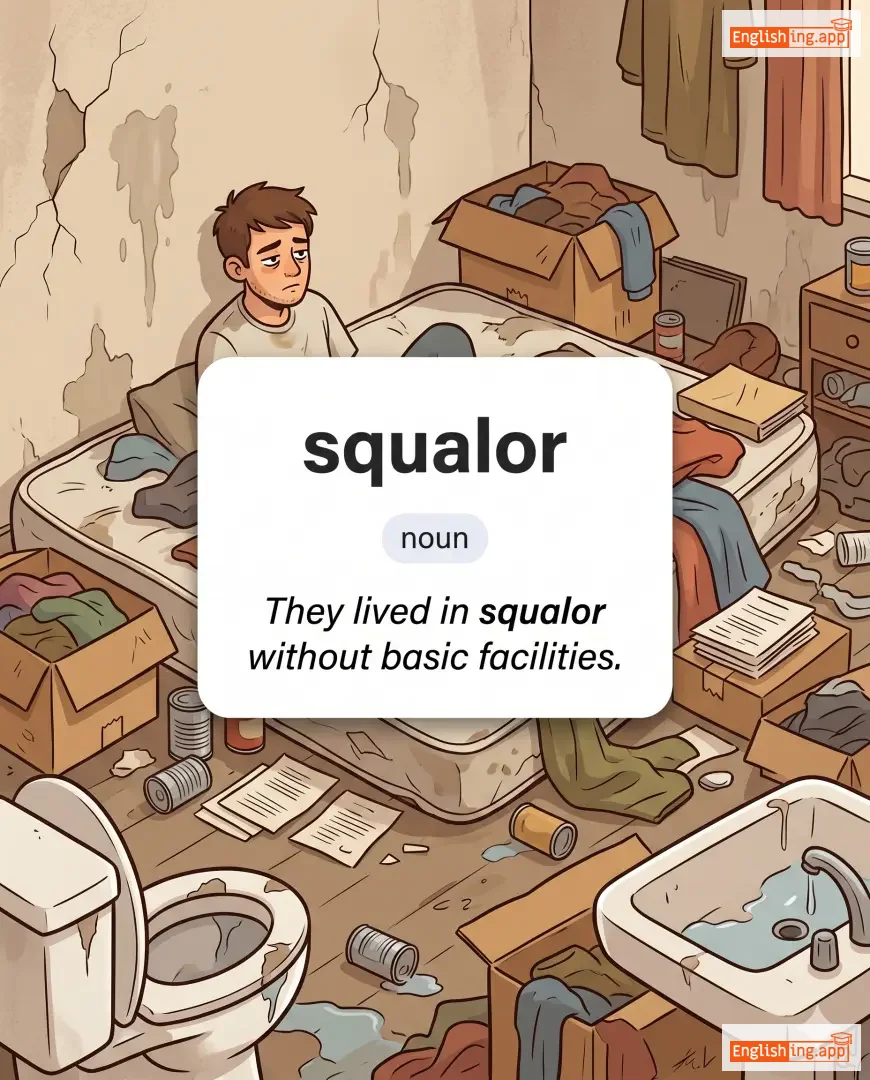
squalor definition card — visual illustration of the meaning
noun C1
/ˈskwɒlər/
нищета (nishcheta)

the state of being extremely dirty and unpleasant, especially due to poverty or neglect

"They lived in squalor without basic facilities."

"Они жили в нищете без базовых удобств." (Oni zhili v nishchete bez bazovykh udobstv.)
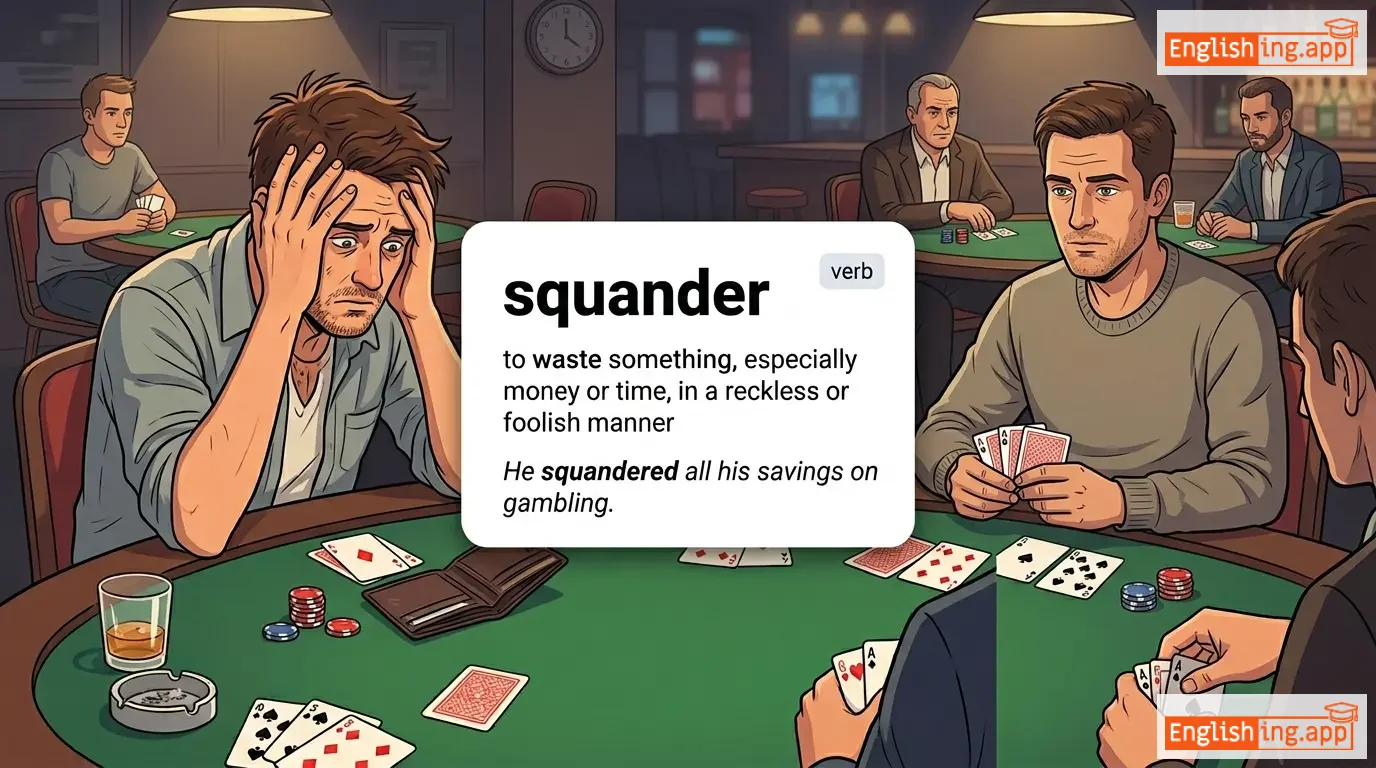
squander definition card — visual illustration of the meaning
verb C1
/ˈskwɒndər/
расточать (rastochat')

to waste something, especially money or time, in a reckless or foolish manner

"He squandered all his savings on gambling."

"Он растратил все свои сбережения на азартные игры." (On rastatil vse svoi sberegeniya na azartnye igry.)
/skwɒt/
приседать (prisedat)

to crouch or sit with knees bent and body close to the ground

"He squatted down to tie his shoes."

"Он присел, чтобы завязать шнурки." (On prisel, chtoby zavyazat' shnurchiki.)
noun C1
/ˈskwɒtər/
незаконный поселенец (nezakonnyy poselenets)

a person who unlawfully occupies an uninhabited building or unused land

"The police removed the squatters from the abandoned house."

"Полиция вывела незаконных поселенцев из заброшенного дома." (Politsiya vyyvela nezakonnykh poselentsev iz zabroshennogo doma.)
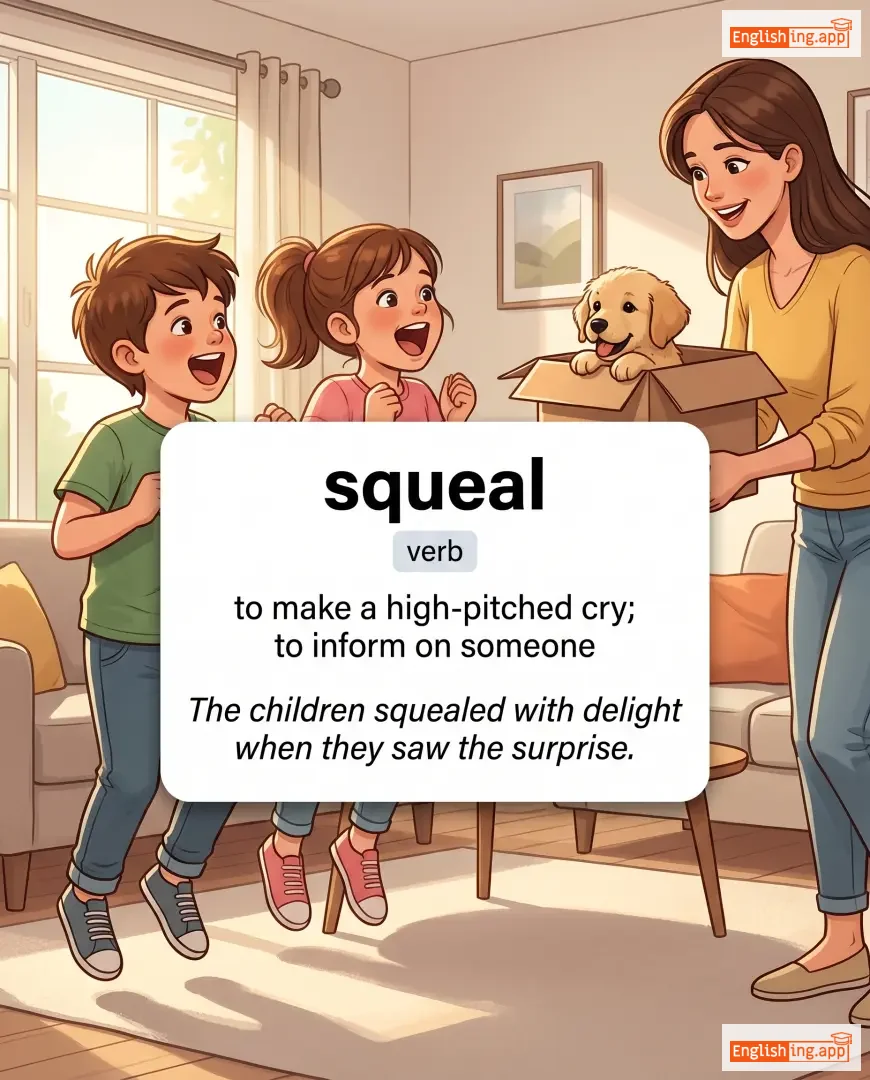
squeal definition card — visual illustration of the meaning
verb C1
/skwiːl/
вскрикнуть (vskriknut)

to make a high-pitched cry; to inform on someone

"The children squealed with delight when they saw the surprise."

"Дети вскрикнули от радости, когда они увидели сюрприз." (Deti vskriknuli ot radosti, kogda oni uvideli syurpriz.)
adjective C1
/ˈskwiːmɪʃ/
легко вызывающий тошноту, головокружение или отвращение (legko vyzyvayushchiy toshnotu, golovokruzhenie ili otvrashchenie)

easily made to feel sick, faint, or disgusted

"She felt squeamish at the sight of blood."

"Ей стало плохо при виде крови." (Eyi stalo plokho pri vide krovi.)
verb C1
/skwɪnt/
прищуриться (prishchurit'sya)

to look with partly closed eyes

"She squinted at the bright sunlight."

"Она прищурилась от яркого солнечного света." (Ona prishchurilas' ot yarkogo solnechnogo sveta.)
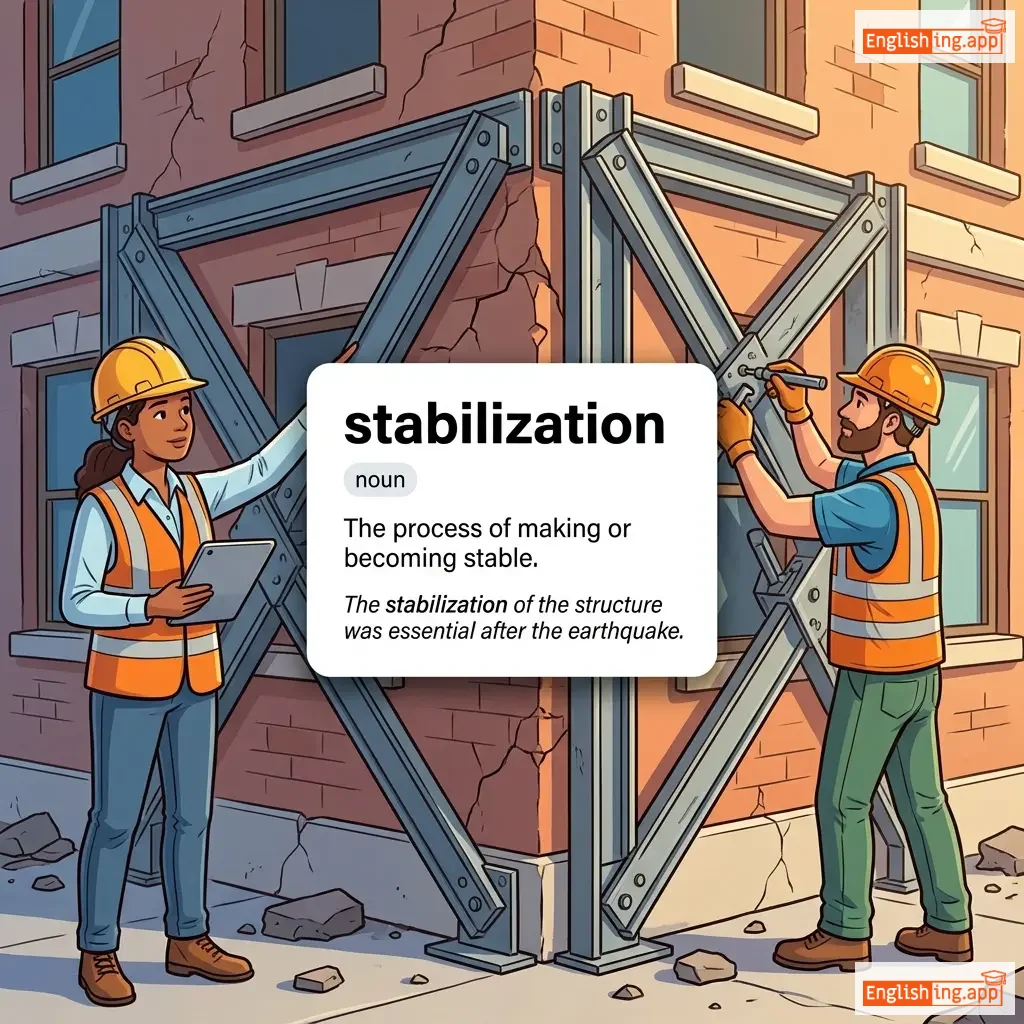
stabilization definition card — visual illustration of the meaning
noun C1
ˌsteɪbəlaɪˈzeɪʃən
стабилизация (stabilizatsiya)

The process of making or becoming stable.

"The stabilization of the structure was essential after the earthquake."

"Стабилизация структуры была необходима после землетрясения." (Stabilizatsiya struktury byla neobkhodima posle zemletryaseniya.)
adjective C1
/ˈstæɡ.nənt/
стоячий (stoyachiy)

not moving, changing, or developing; inactive

"The company’s growth remained stagnant for several years."

"Рост компании оставался стагнирующим в течение нескольких лет." (Rost kompanii ostavalsya stagniruyushchim v techeniye neskol'kikh let.)
verb C1
/ˈstæɡ.neɪt/
стагнировать (stagnirovat)

to stop developing, progressing, or moving

"Without innovation, the business will stagnate."

"Без инноваций бизнес будет стагнировать." (Bez innovatsiy biznes budet stagnirovat'.)
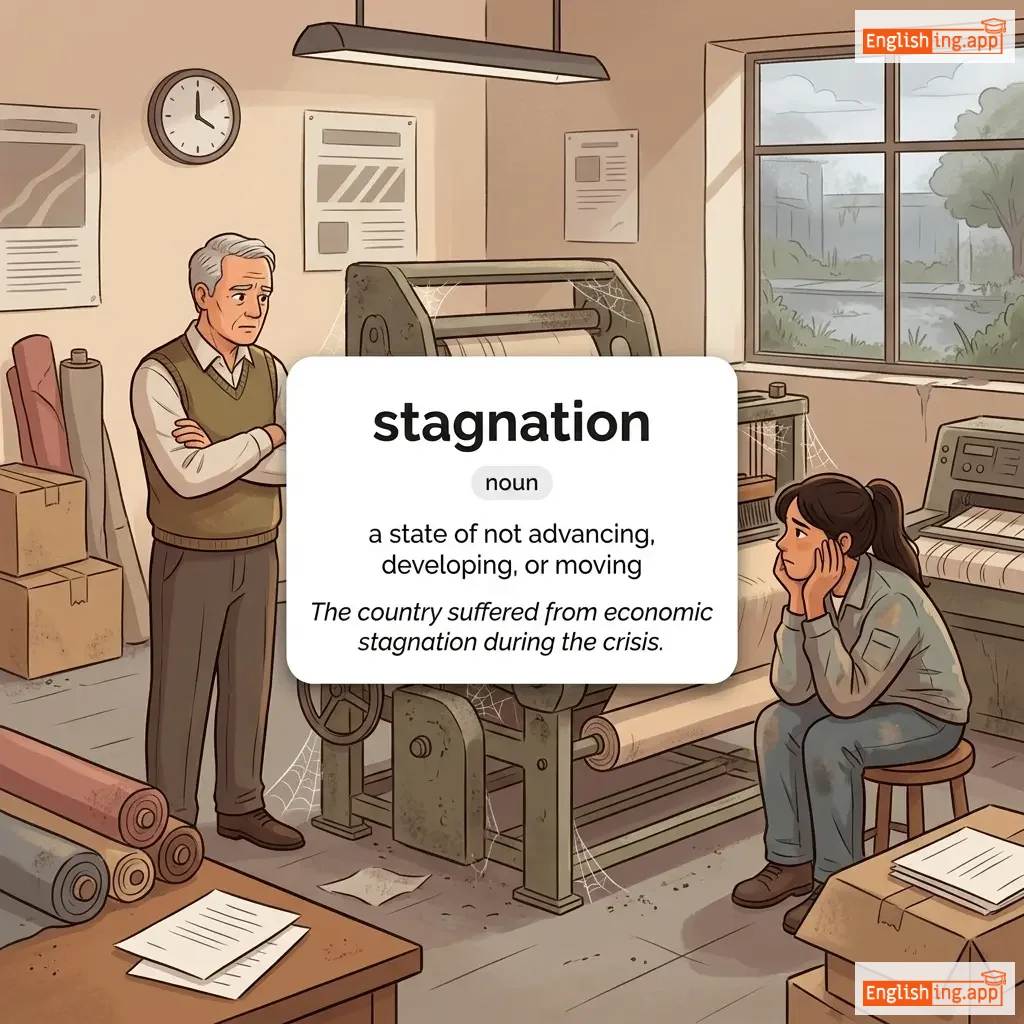
stagnation definition card — visual illustration of the meaning
noun C1
/stæɡˈneɪ.ʃən/
стагнация (stagnatsiya)

a state of not advancing, developing, or moving

"The country suffered from economic stagnation during the crisis."

"Страна страдала от экономической стагнации во время кризиса." (Strana stradala ot ekonomicheskoy stagnatsii vo vremya krizisa.)
adjective C1
/steɪd/
серьезный, уважаемый (seryozny, uvazhayemyy)

Serious, respectable, and unadventurous.

"He came from a staid family background."

"Он пришел из серьезной семьи." (On prishel iz seryoznoy sem'i.)
noun C1
/ˈsteɪl.meɪt/
тупик (tupik)

A situation in which no progress can be made or no party can win.

"Negotiations ended in a stalemate."

"Переговоры закончились тупиком." (Peregovory zakonchilis' tupikom.)
noun C1
/ˈstæl.i.ən/
жеребец для разведения (zherebets dlya razvedeniya)

An adult male horse that is not castrated, often used for breeding.

"The farm owns a powerful stallion for breeding purposes."

"Ферма владеет мощным жеребцом для разведения." (Ferma vladeet moshchnym zherebtsom dlya razvedeniya.)
adjective C1
/ˈstɔːlwərt/
непоколебимый, верный (nepokolebimy, verny)

Loyal, reliable, and hardworking; strongly built or sturdy.

"She has always been a stalwart supporter of the community."

"Она всегда была непоколебимым сторонником сообщества." (Ona vsegda byla nepokolebimym storonnikom soobshchestva.)
verb C1
/ˈstæmər/
заикаться (zaikatsya)

To speak with sudden involuntary pauses and a tendency to repeat the initial letters of words.

"The nervous student began to stammer during his speech."

"Нервный студент начал заикаться во время своей речи." (Nervnyy student nachal zaikatsya vo vremya svoey rechi.)
noun/verb C1
/stæmˈpiːd/
паника (panika)

A sudden, uncontrolled rush of people or animals; to cause a mass movement.

"The loud noise caused a stampede of the crowd."

"Громкий звук вызвал панику в толпе." (Gromkiy zvuk vyzval paniku v tolpe.)
noun C1
/ˈstændˌstɪl/
застой (zastoy)

a situation in which all movement or activity stops

"The traffic came to a standstill after the accident."

"Движение остановилось после аварии." (Dvizheniye ostanovilos' posle avarii.)
noun C1
/ˈstænzə/
строфа (strofa)

a group of lines forming a unit in a poem or song

"The poem begins with a stanza describing nature."

"Стихотворение начинается с строфы, описывающей природу." (Stikhotvoreniye nachinayetsya s strophy, opisivayushchey prirodu.)
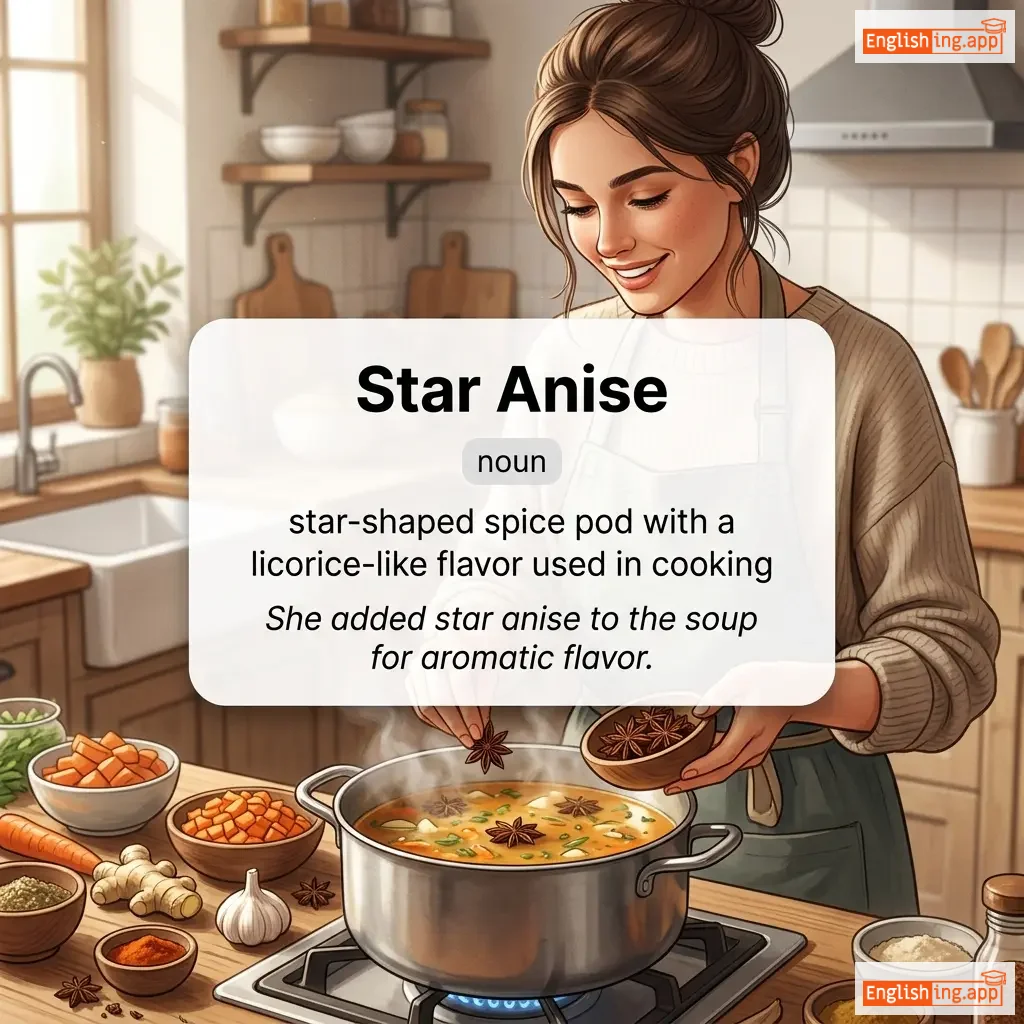
Star Anise definition card — visual illustration of the meaning
noun C1
/stɑːr ˈæn.ɪs/
звездчатый анис (zvezdchatyy anis)

star-shaped spice pod with a licorice-like flavor used in cooking

"She added star anise to the soup for aromatic flavor."

"Она добавила звездчатый анис в суп для аромата." (Ona dobavila zvezdchatyy anis v sup dlya aromata.)
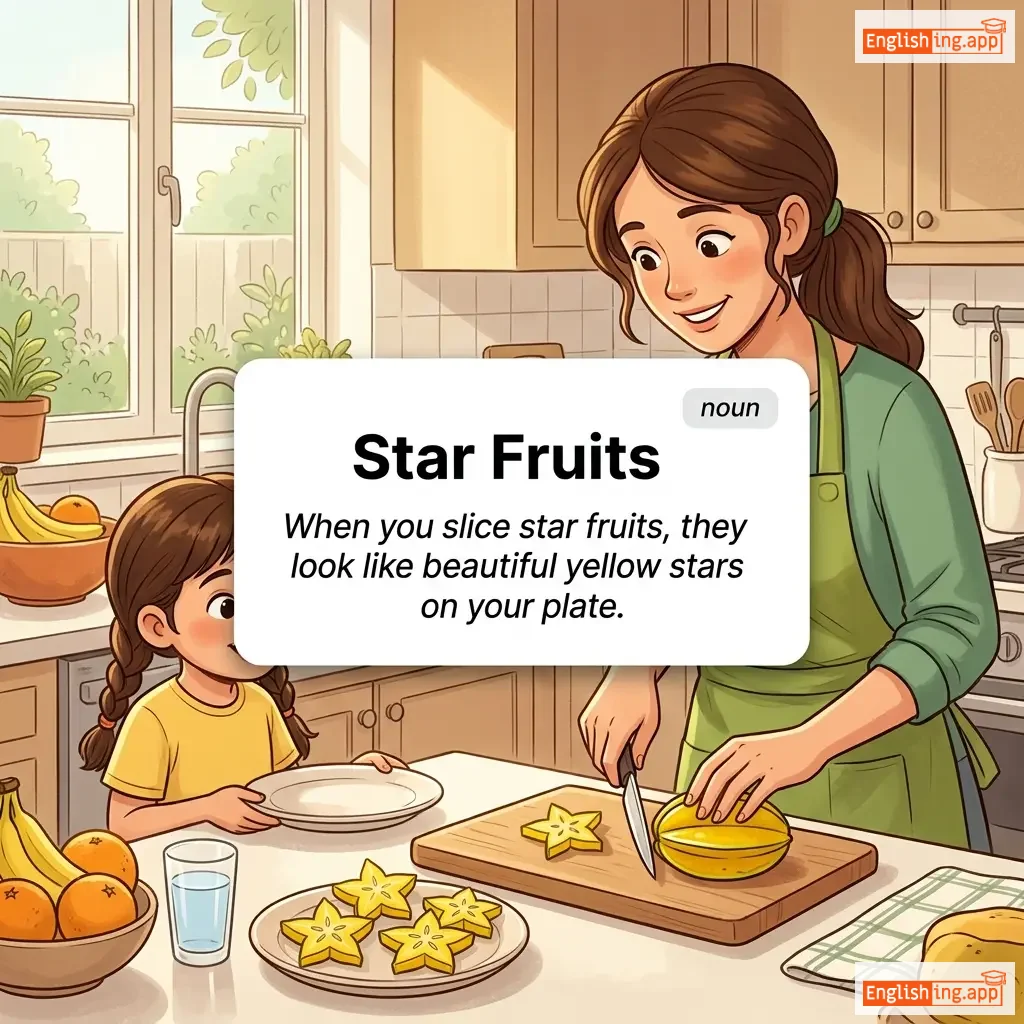
Star Fruits definition card — visual illustration of the meaning
noun C1
/stɑːr fruːts/
звездные фрукты (zvezdnyye frukty)

yellow tropical fruits that form a star shape when sliced crosswise; tangy and crisp taste

"When you slice star fruits, they look like beautiful yellow stars on your plate."

"Когда вы нарезаете звездные фрукты, они выглядят как красивые желтые звезды на вашей тарелке." (Kogda vy narezayete zvezdnyye frukty, oni vyglyadyat kak krasivyye zheltyye zvezdy na vashiy tarelke.)
adjective C1
/ˈsteɪtli/
величественный и достойный (velichestvennyy i dostoynyy)

Having a dignified, majestic, and impressive appearance or manner.

"The stately mansion stood at the end of the long driveway."

"Величественный особняк стоял в конце длинной подъездной дороги." (Velichestvennyy osobodnyak stoyal v kontse dlinnoi pod'yezdnoi dorogi.)
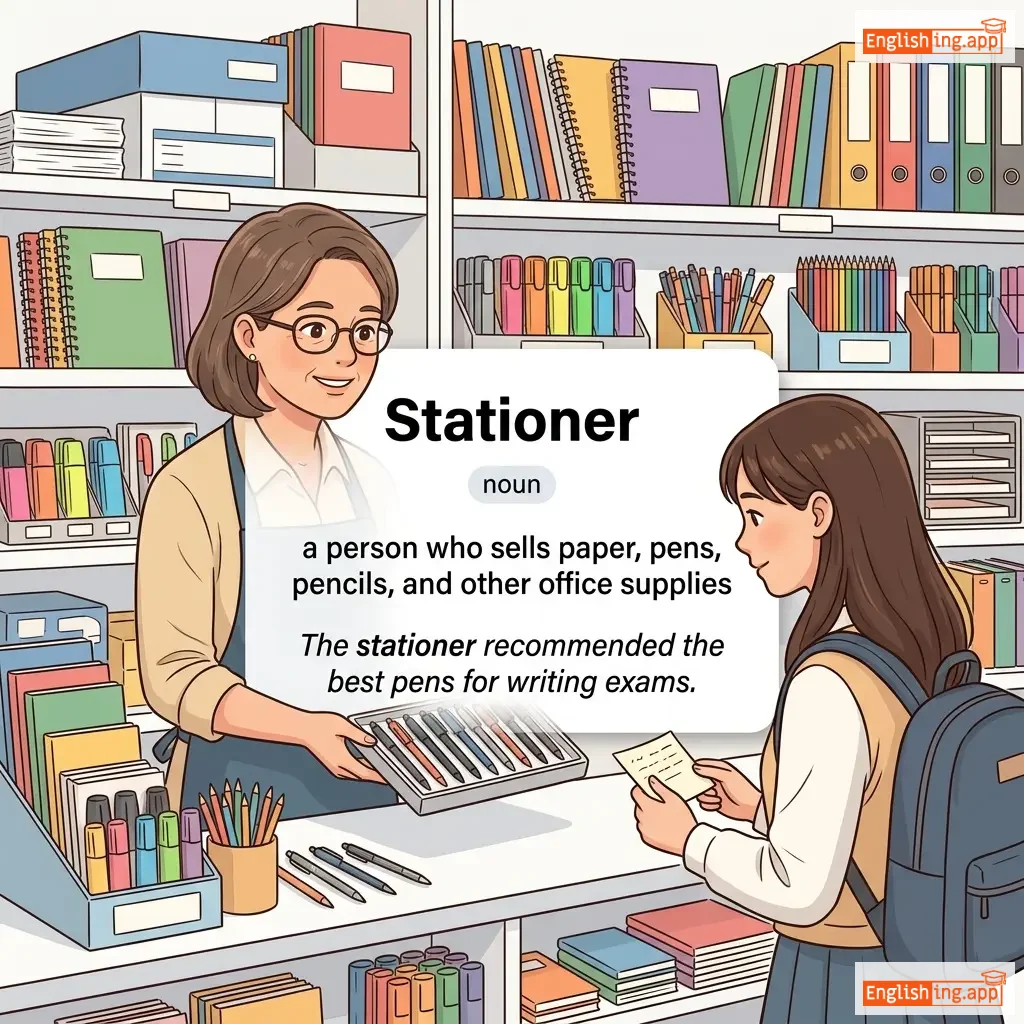
Stationer definition card — visual illustration of the meaning
noun C1
/ˈsteɪ.ʃən.ər/
канцтовары (kantsovary)

a person who sells paper, pens, pencils, and other office supplies

"The stationer recommended the best pens for writing exams."

"Канцеляр рекомендовал лучшие ручки для экзаменов." (Kantselyar rekomendoval luchshiye ruchki dlya ekzamenov.)
noun C1
/ˌstætɪˈstɪʃən/
статистик (statistik)

A person who specializes in collecting, analyzing, and interpreting numerical data.

"The statistician presented the survey results with great clarity."

"Статистик представил результаты опроса с большой ясностью." (Statistik predstavил rezul'taty opros s bol'shoy yasnost'yu.)
noun C1
/ˌstætʃuˈɛt/
маленькая статуэтка (malenkaya statuëtka)

A small statue, usually decorative or artistic.

"The artist won a gold statuette for his work."

"Художник выиграл золотую маленькую статуэтку за свою работу." (Khudozhnik viigral zolotuyu malen'kuyu statuëtku za svoyu rabotu.)
noun C1
/ˈstætʃər/
рост, статус (rost, status)

A person's natural height or their reputation and importance.

"Her intellectual stature made her a respected figure in academia."

"Ее интеллектуальный статус сделал ее уважаемой фигурой в академических кругах." (Eyo intellektualnyi status sdelal yeye uvazhaemoi figuroi v akademicheskikh krugakh.)
noun C1
/ˈsteɪtəs kwoʊ/
статус кво (status kvo)

The existing state of affairs, especially regarding social or political issues.

"The government decided to maintain the status quo until further review."

"Правительство решило сохранить статус кво до дальнейшего рассмотрения." (Pravitel'stvo reshilo sokhranit' status kvo do dal'neyshego rassmotreniya.)
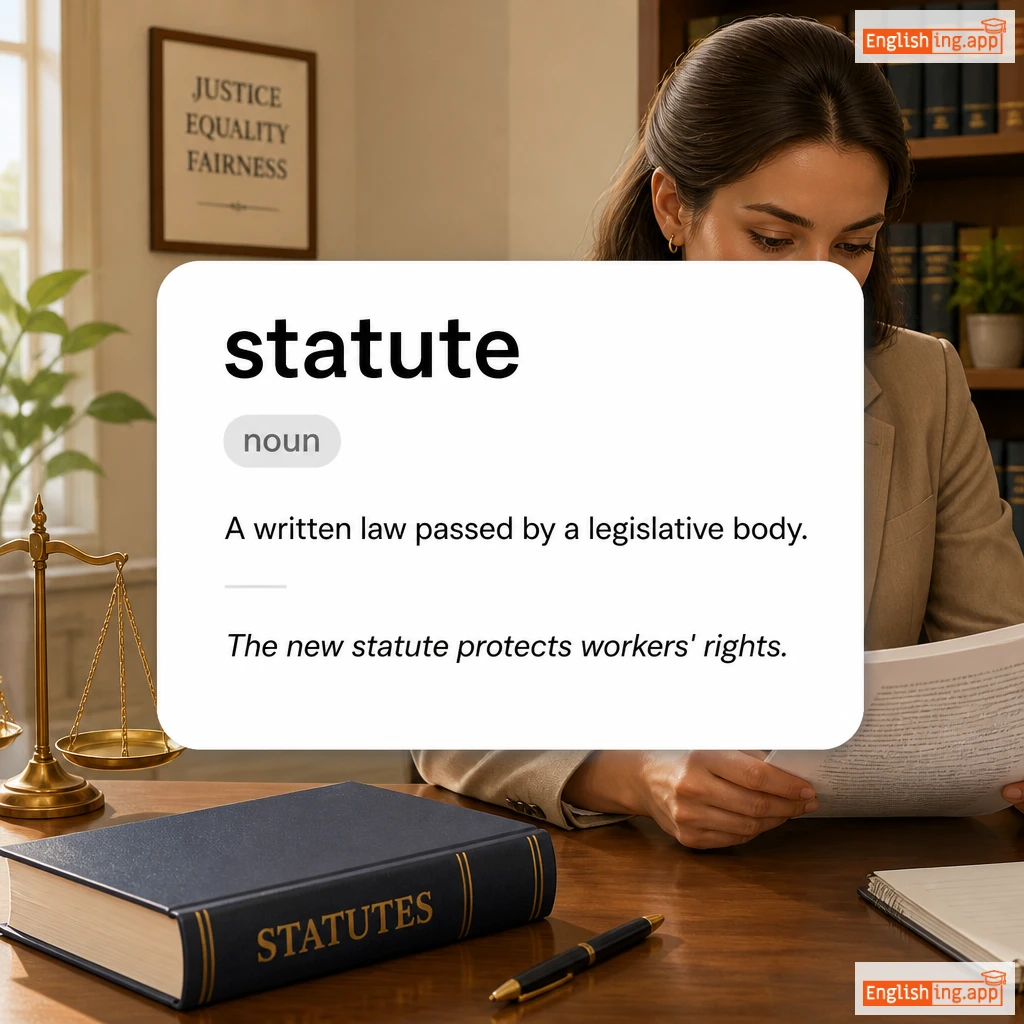
statute definition card — visual illustration of the meaning
noun C1
/ˈstætʃuːt/
закон (zakon)

A written law passed by a legislative body.

"The new statute protects workers' rights."

"Новый закон защищает права рабочих." (Novyy zakon zashchishchayet prava rabochikh.)
adjective C1
/ˈstætʃətɔːri/
обязательный по закону (obyazatel'nyy po zakonu)

Required, permitted, or enacted by law.

"The company must comply with all statutory regulations."

"Компания должна соблюдать все обязательные по закону правила." (Kompaniya dolzhna soblyudat' vse obyazatel'nye po zakonu pravila.)
adjective C1
/stɔːntʃ/
стойкий, верный (stoykiy, vernyy)

Loyal, committed, and firm in support.

"She is a staunch supporter of environmental protection."

"Она стойкий сторонник защиты окружающей среды." (Ona stoykiy storonnik zashchity okruzhayushchey sredy.)
adjective C1
/ˈstɛdfæst/
непоколебимый, верный (nepokolebimyj, vernyj)

Firm, loyal, and unwavering in purpose or support.

"He remained steadfast in his determination to succeed."

"Он оставался непоколебимым в своем стремлении к успеху." (On ostavalsya nepokolebimyj v svoem stremlenii k uspekhu.)
noun C1
/stɛlθ/
скрытность, тихое движение (skrytnoct', tikhoye dviženiye)

The act of moving, doing, or achieving something quietly and secretly.

"The cat moved with stealth towards its prey."

"Кошка двигалась скрытно к своей добыче." (Koška dvižilas' skrytno k svoej dobyče.)
adjective C1
/stiːpt/
пропитанный (propitanny)

Completely surrounded by or filled with a particular quality, influence, or experience.

"The town is steeped in history and tradition."

"Город пропитан историей и традициями." (Gorod propitan istoriey i traditsiyami.)
adjective C1
/ˈstɛlər/
выдающийся (vydajushchijsya)

Relating to stars; outstanding or excellent.

"She gave a stellar performance in the play."

"Она дала выдающееся представление в пьесе." (Ona dala vydajushchijsya predstavlenie v p'ese.)