Vocabulaires

Découvrez, apprenez et maîtrisez le vocabulaire anglais

noun C1
/sɛkt/
secta (secta)

a subgroup of a larger religious or political group, often with differing beliefs

"The group split into different sects due to doctrinal differences."

"El grupo se dividió en diferentes sectas debido a las diferencias doctrinales." (El grupo se dividió en diferentes sectas debido a las diferencias doctrinales.)
adjective C1
/sɛkˈtɛəriən/
sectario (sectario)

relating to or characterized by the differences between sects, often leading to conflict

"The region has been troubled by sectarian violence for decades."

"La región ha estado atormentada por la violencia sectaria durante décadas." (La región ha estado atormentada por la violencia sectaria durante décadas.)
sector-specific definition card — visual illustration of the meaning
adjective C1
ˈsek.tər spəˈsɪf.ɪk
específico del sector (especifico del sector)

Relating to or designed for a particular sector or industry.

"Sector-specific policies attract targeted investments."

"Las políticas específicas del sector atraen inversiones dirigidas." (Las politicas especificas del sector atraen inversiones dirigidas.)
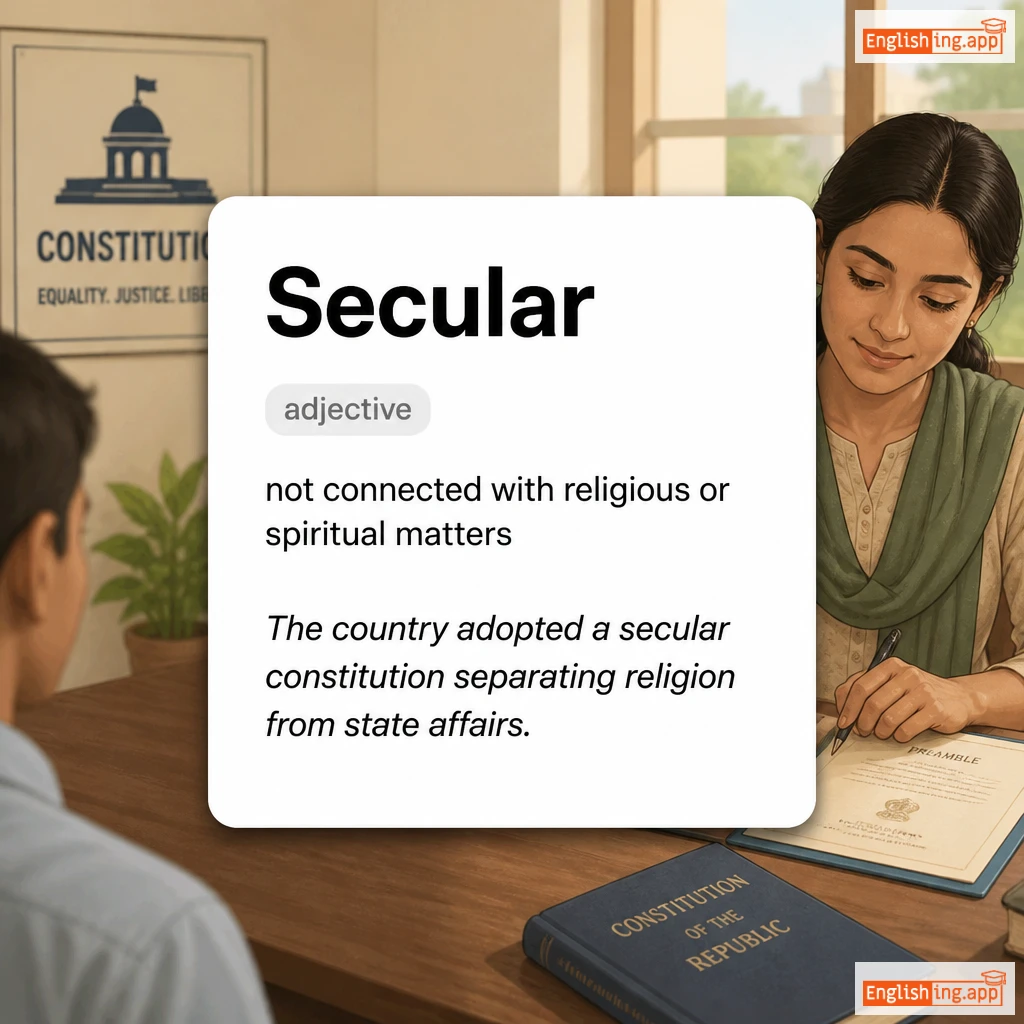
Secular definition card — visual illustration of the meaning
adjective C1
/ˈsɛkjʊlər/
laico (laiko)

not connected with religious or spiritual matters

"The country adopted a secular constitution separating religion from state affairs."

"El país adoptó una constitución laica separando la religión de los asuntos del estado." (El pais adoptó una constitución laica separando la religión de los asuntos del estado.)
adjective, verb C1
/sɪˈdeɪt/
sedar (sedar)

calm, quiet, and composed; or to administer a drug to make someone calm or sleep

"The nurse sedated the patient before the operation."

"La enfermera sedó al paciente antes de la operación." (La enfermera sedó al paciente antes de la operación.)
noun C1
/ˈsɛdətɪv/
sedante (sedante)

A substance that calms the nerves or induces sleep.

"The doctor prescribed a sedative to help the patient sleep."

"El doctor recetó un sedante para ayudar al paciente a dormir." (El doctor recetó un sedante para ayudar al paciente a dormir.)
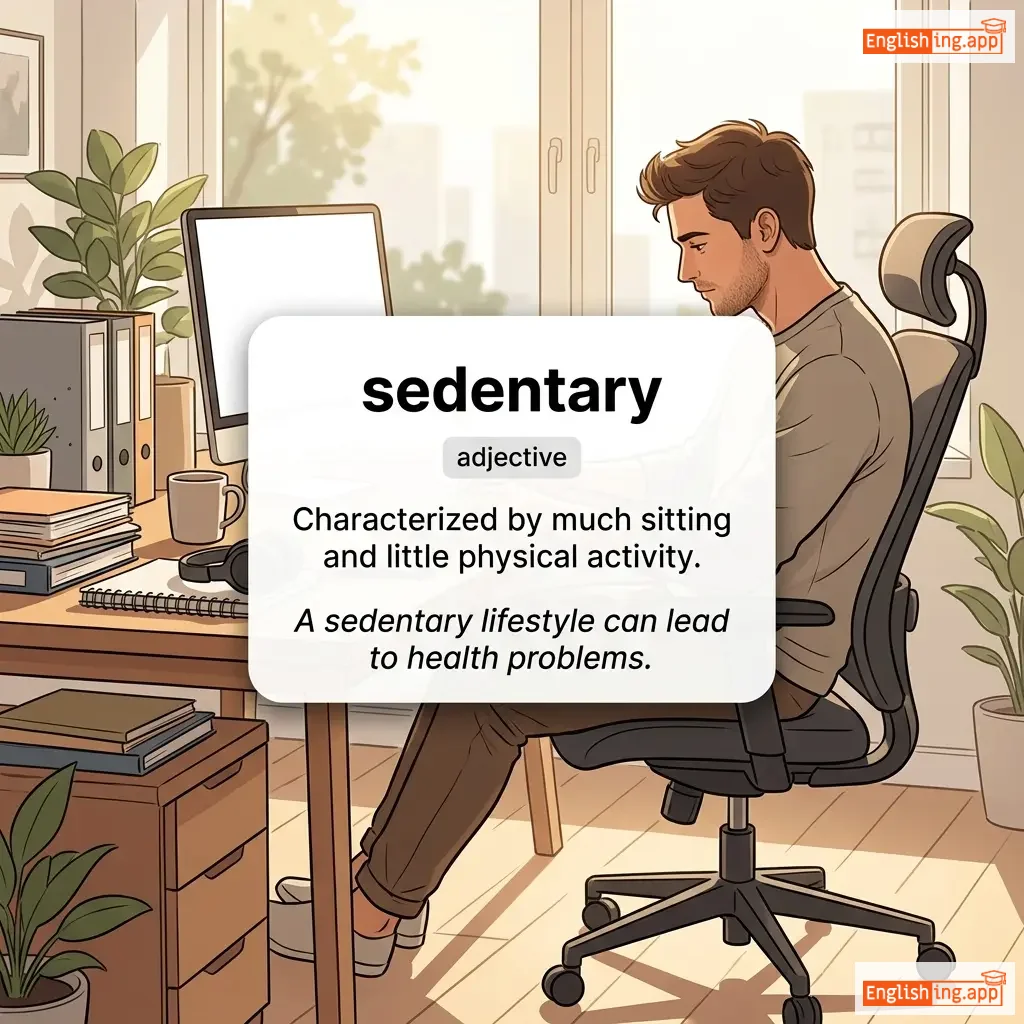
sedentary definition card — visual illustration of the meaning
adjective C1
/ˈsɛdntɛri/
sedentario (sedentario)

Characterized by much sitting and little physical activity.

"A sedentary lifestyle can lead to health problems."

"Un estilo de vida sedentario puede causar problemas de salud." (un estilo de vida sedentario puede causar problemas de salud)
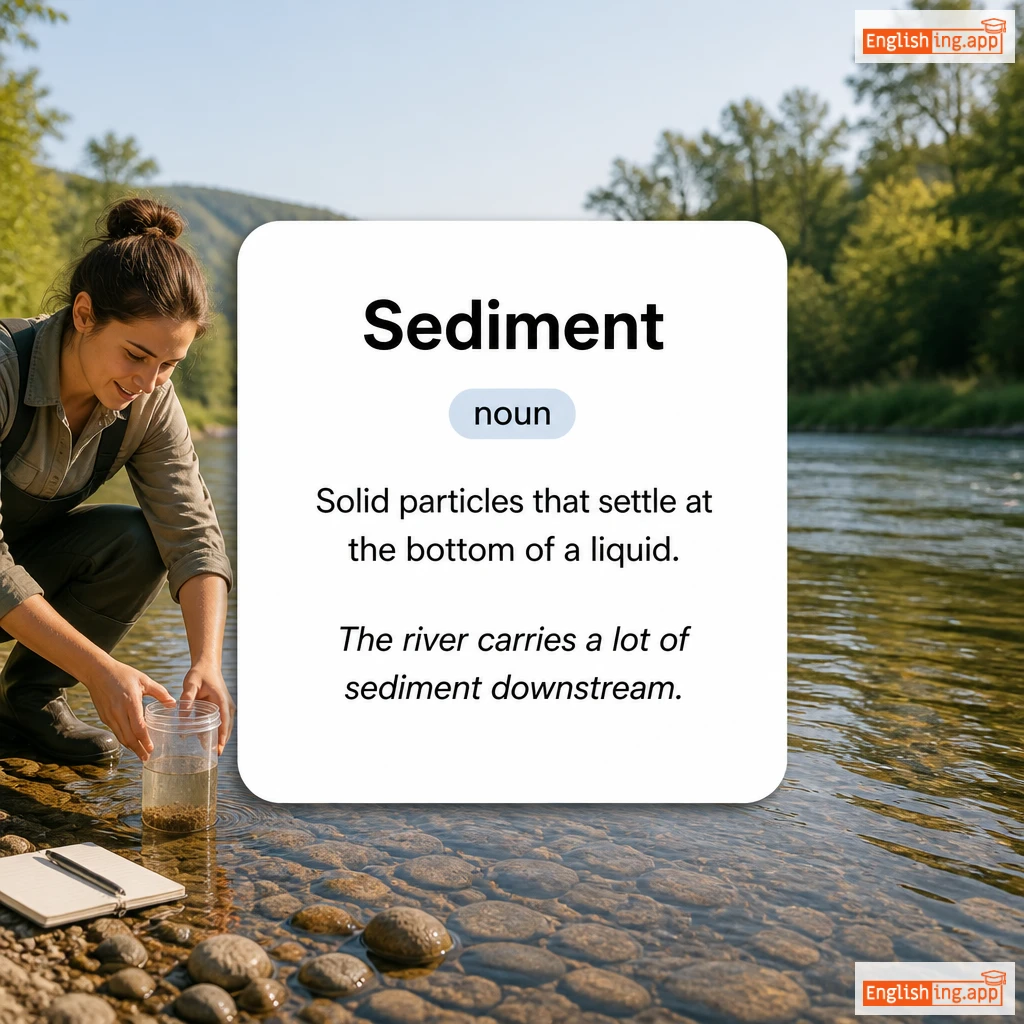
Sediment definition card — visual illustration of the meaning
noun C1
/ˈsɛdəmənt/
sedimento (sedimento)

Solid particles that settle at the bottom of a liquid.

"The river carries a lot of sediment downstream."

"El río lleva mucho sedimento corriente abajo." (El río lleva mucho sedimento corriente abajo.)
verb C1
/sɪˈdjuːs/
seducir (seducir)

to attract someone into doing something, especially something they might not normally do

"The advertisement was designed to seduce customers into buying luxury products."

"El anuncio estaba diseñado para seducir a los clientes a comprar productos de lujo." (El anuncio estaba diseñado para seducir a los clientes a comprar productos de lujo.)
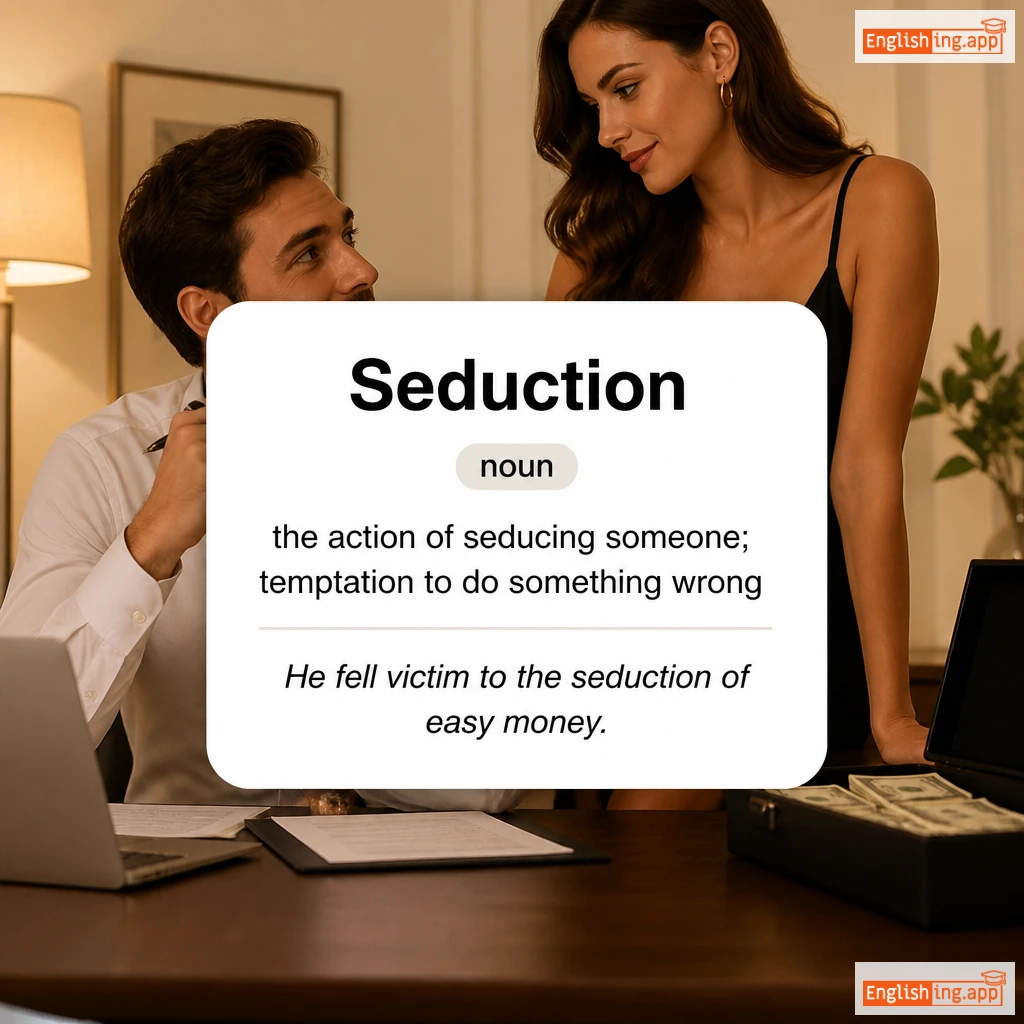
Seduction definition card — visual illustration of the meaning
noun C1
/sɪˈdʌk.ʃən/
seducción; tentación (sedukcion; tentacion)

the action of seducing someone; temptation to do something wrong

"He fell victim to the seduction of easy money."

"Cayó víctima de la seducción del dinero fácil." (Cayo victima de la seduccion del dinero facil.)
adjective C1
/ˈsiːdi/
sucio / deteriorado (sucio / deteriorado)

dirty, shabby, or in bad condition; also feeling slightly unwell

"He stayed in a seedy motel near the bus station."

"Él se alojó en un motel barato cerca de la estación de autobuses." (Él se alojó en un motel barato cerca de la estación de autobuses.)
verb C1
/siːp/
filtrarse lentamente (filtrarse lentamente)

to flow or leak slowly through small openings or pores

"Water began to seep through the cracks in the wall."

"El agua comenzó a filtrarse a través de las grietas en la pared." (El agua comenzó a filtrarse a través de las grietas en la pared.)
noun C1
/sɪr/
vidente (vidente)

A person who is supposed to be able to see what will happen in the future; a prophet.

"The seer predicted a great change in the kingdom."

"El vidente predijo un gran cambio en el reino." (El vidente predijo un gran cambio en el reino.)
verb C1
/siːð/
hirviendo de rabia (hirviendo de rabia)

To be filled with intense but unexpressed anger or agitation.

"She was seething with anger after the unfair decision."

"Ella estaba hirviendo de rabia después de la decisión injusta." (Ella estaba hirviendo de rabia después de la decisión injusta.)
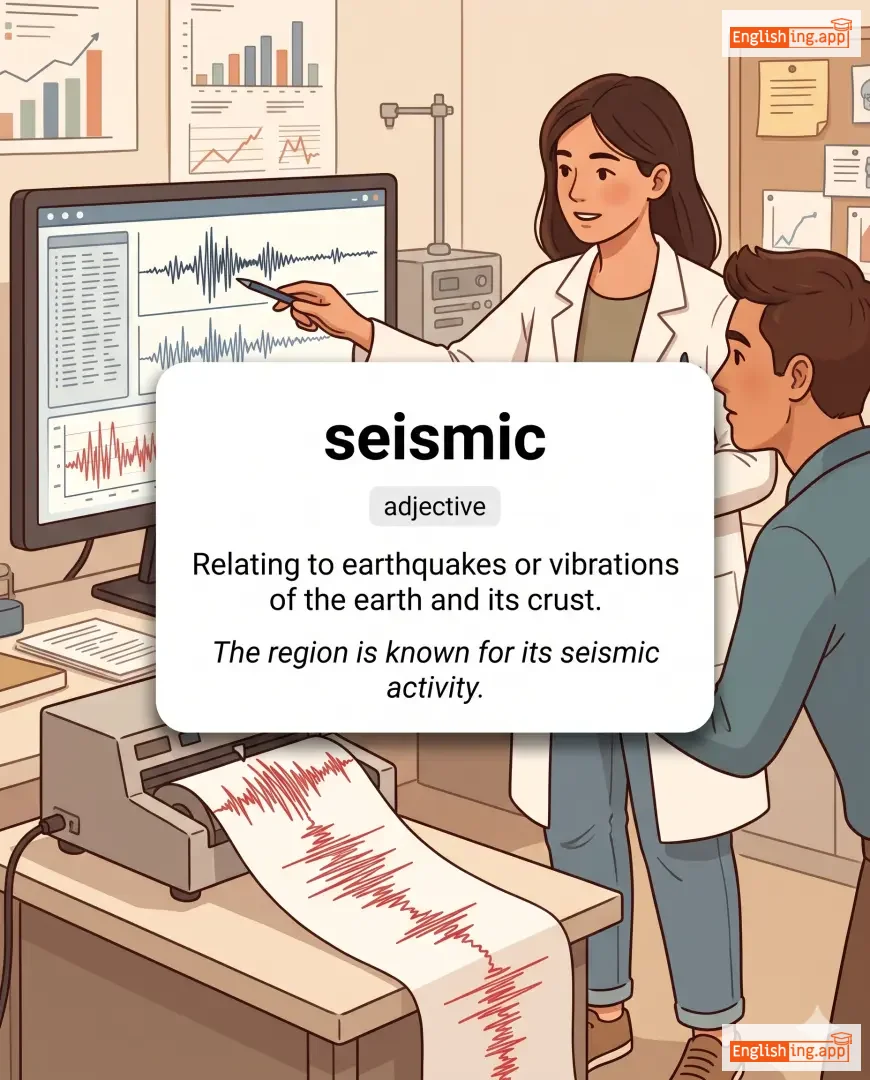
seismic definition card — visual illustration of the meaning
adjective C1
/ˈsaɪz.mɪk/
sísmico (simiko)

Relating to earthquakes or vibrations of the earth and its crust.

"The region is known for its seismic activity."

"La región es conocida por su actividad sísmica." (La región es conocida por su actividad sísmica.)
adjective C1
/ˌsɛlf əbˈzɔːrbd/
egocéntrico (egocentrico)

Excessively preoccupied with oneself and one’s own thoughts, feelings, or interests.

"He was too self-absorbed to notice his friend's distress."

"Estaba demasiado egocéntrico para notar la angustia de su amigo." (Estaba demasiado egocéntrico para notar la angustia de su amigo.)
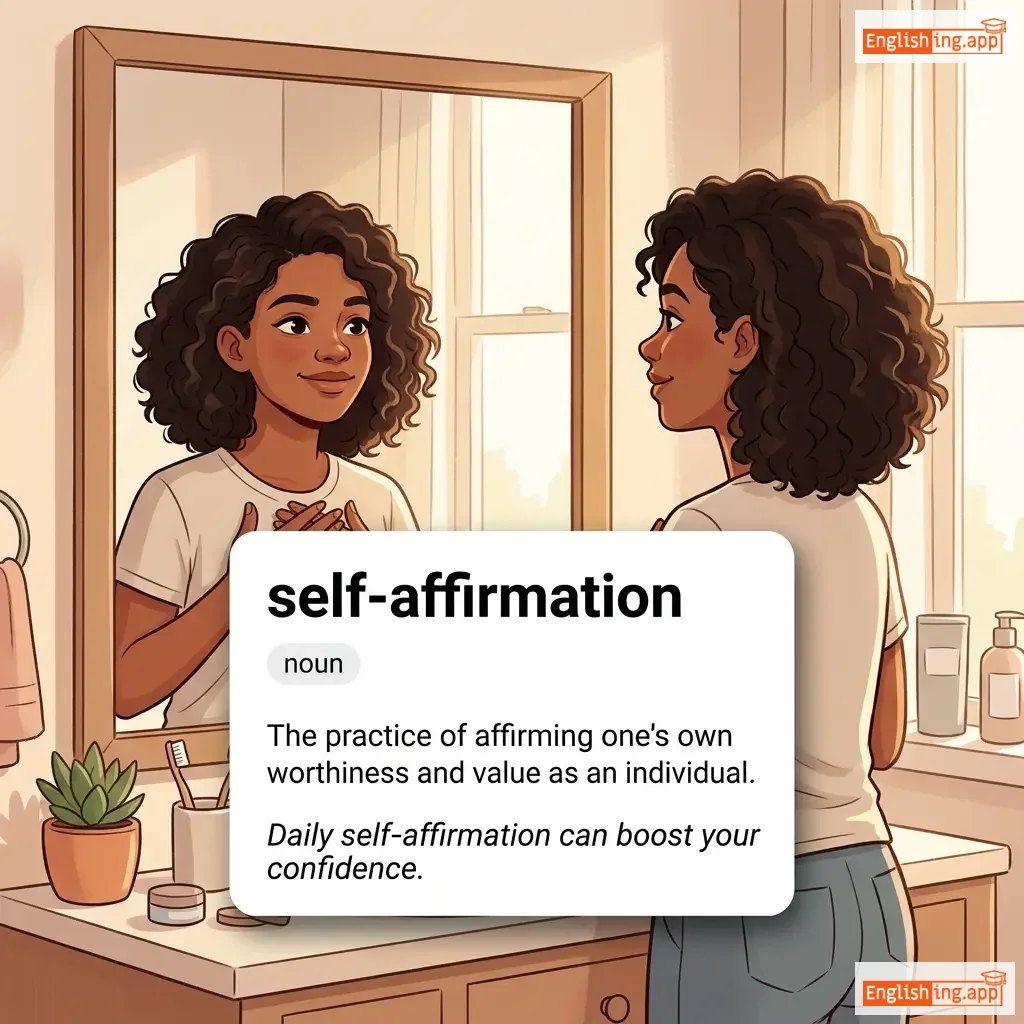
self-affirmation definition card — visual illustration of the meaning
noun C1
/ˌsɛlf əˌfɜːˈmeɪʃən/
autoafirmación (autoafirmacion)

The practice of affirming one's own worthiness and value as an individual.

"Daily self-affirmation can boost your confidence."

"La autoafirmación diaria puede aumentar tu confianza." (La autoafirmacion diaria puede aumentar tu confianza.)
adjective C1
/ˌsɛlf ɪˈfeɪsɪŋ/
modesto (modesto)

not drawing attention to oneself; modest

"Despite his success, he remained self-effacing and humble."

"A pesar de su éxito, él se mantuvo modesto y humilde." (A pesar de su exito, el se mantuvo modesto y humilde.)
noun C1
/ˌsɛlf ɪnˈdʌldʒəns/
autoindulgencia (autoindulgencia)

The act of allowing oneself to enjoy pleasures or desires excessively.

"His weekend of self-indulgence included eating sweets and watching movies nonstop."

"Su fin de semana de autoindulgencia incluyó comer dulces y ver películas sin parar." (Su fin de semana de autoindulgencia incluyó comer dulces y ver películas sin parar.)
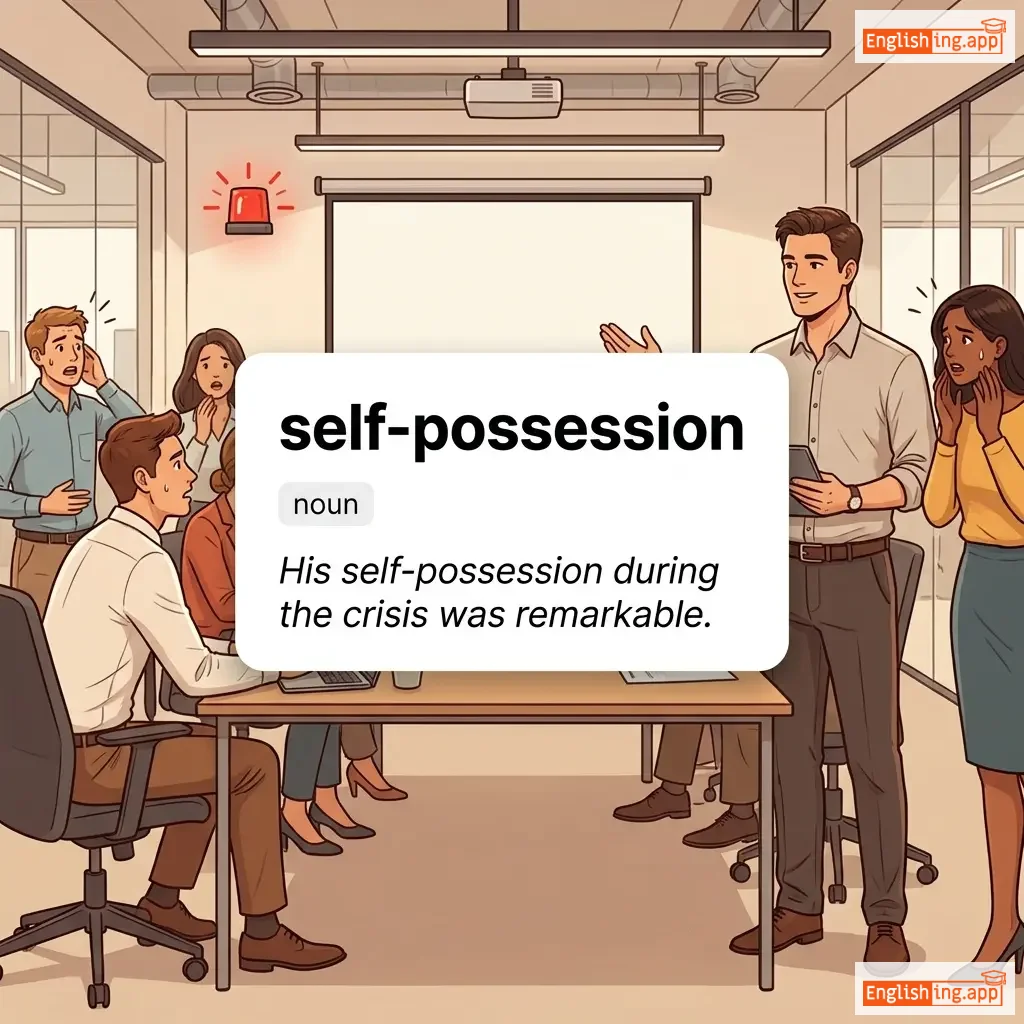
self-possession definition card — visual illustration of the meaning
noun C1
ˈsɛlf pəˈzɪʃən
autocontrol (autocontrol)

The quality of being calm and confident and in control of one's emotions; composure.

"His self-possession during the crisis was remarkable."

"Su autocontrol durante la crisis fue notable." (Su autocontrol durante la crisis fue notable.)
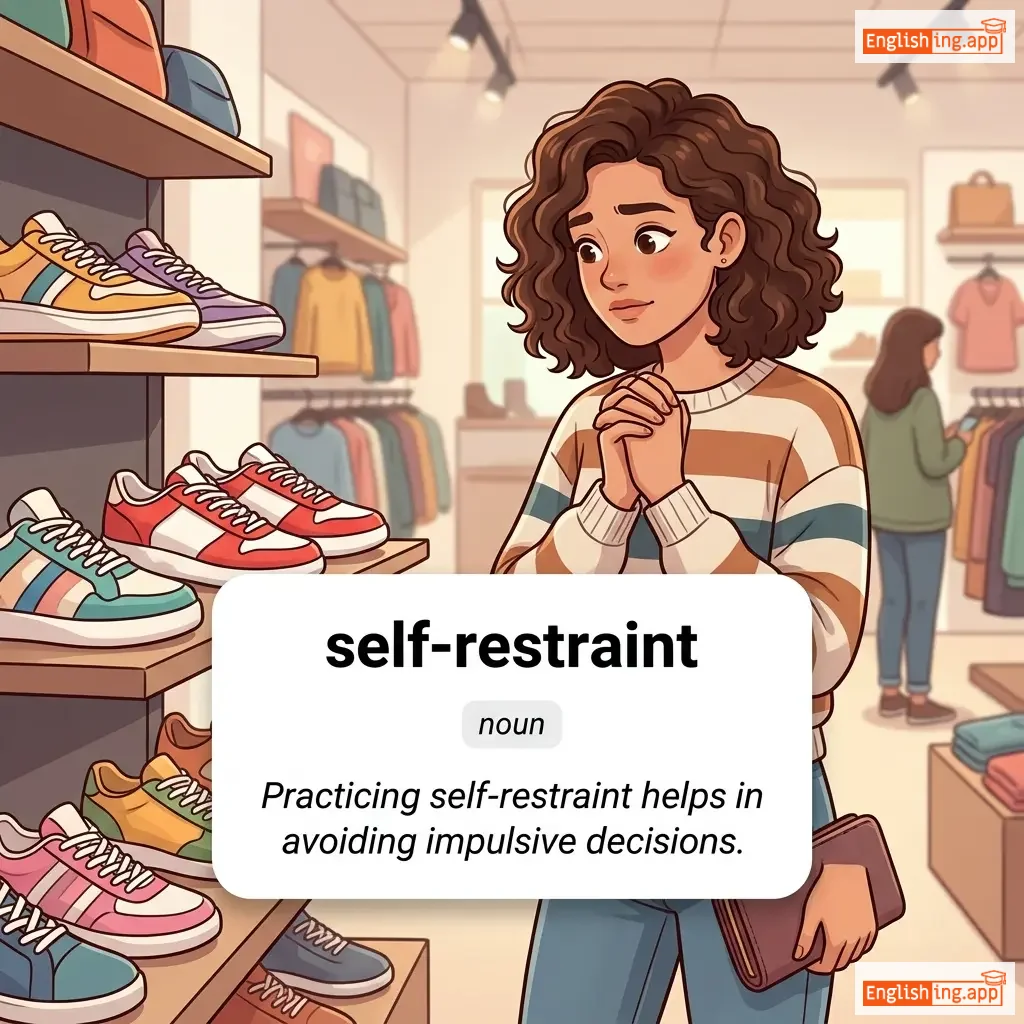
self-restraint definition card — visual illustration of the meaning
noun C1
ˌsɛlf.rɪˈstreɪnt
autocontrol (autocontrol)

The practice of restraining oneself from indulging in something, typically an impulse or desire.

"Practicing self-restraint helps in avoiding impulsive decisions."

"Practicar el autocontrol ayuda a evitar decisiones impulsivas." (Practicar el autocontrol ayuda a evitar decisiones impulsivas.)
adjective C1
/ˌsɛlf ˈraɪtʃəs/
autojustificado (autojus-ti-fi-ka-do)

Having or showing an attitude of moral superiority; believing one’s own beliefs are the only right ones.

"His self-righteous comments made everyone uncomfortable."

"Sus comentarios autojustificados hicieron que todos se sintieran incómodos." (Sus ko-men-ta-rios au-to-jus-ti-fi-ca-dos hi-ce-ron que to-dos se sin-tie-ran in-có-mo-dos.)
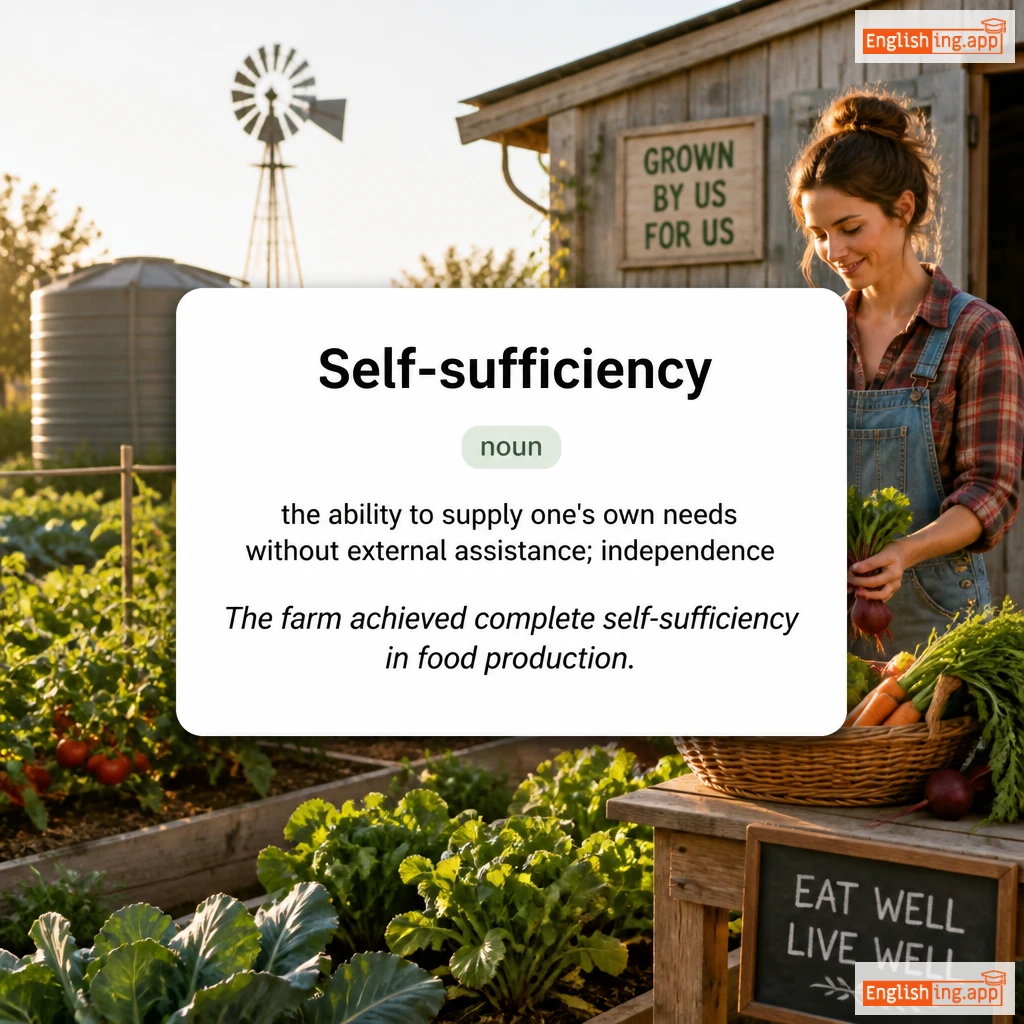
Self-sufficiency definition card — visual illustration of the meaning
noun C1
/ˌsɛlfsəˈfɪʃənsi/
autosuficiencia (autosuficiencia)

the ability to supply one's own needs without external assistance; independence

"The farm achieved complete self-sufficiency in food production."

"La granja logró la autosuficiencia completa en la producción de alimentos." (La granja logró la autosuficiencia completa en la producción de alimentos.)
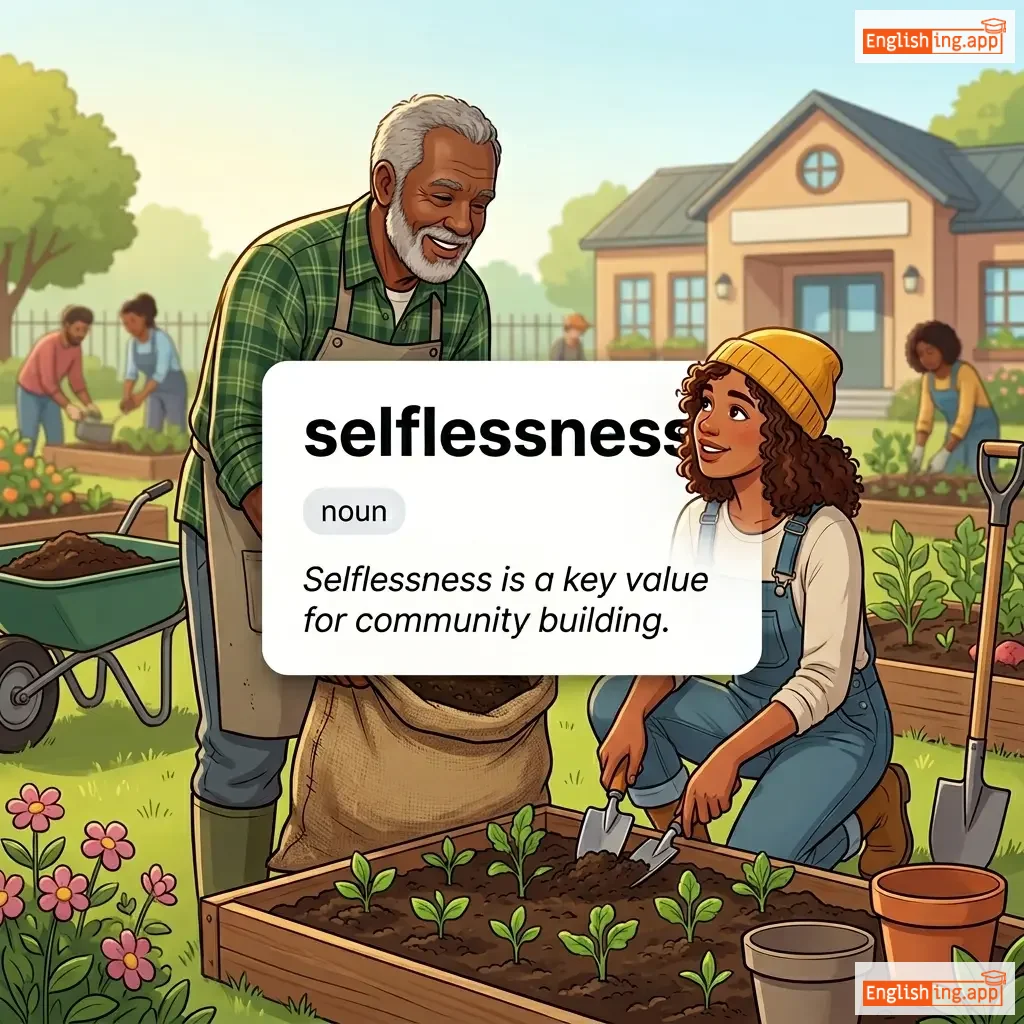
selflessness definition card — visual illustration of the meaning
noun C1
ˈsɛlfləsnɪs
desinterés (desinteres)

The quality of being concerned more with the needs of others than with one's own.

"Selflessness is a key value for community building."

"El desinterés es un valor clave para la construcción de la comunidad." (El desinteres es un valor clave para la construccion de la comunidad.)
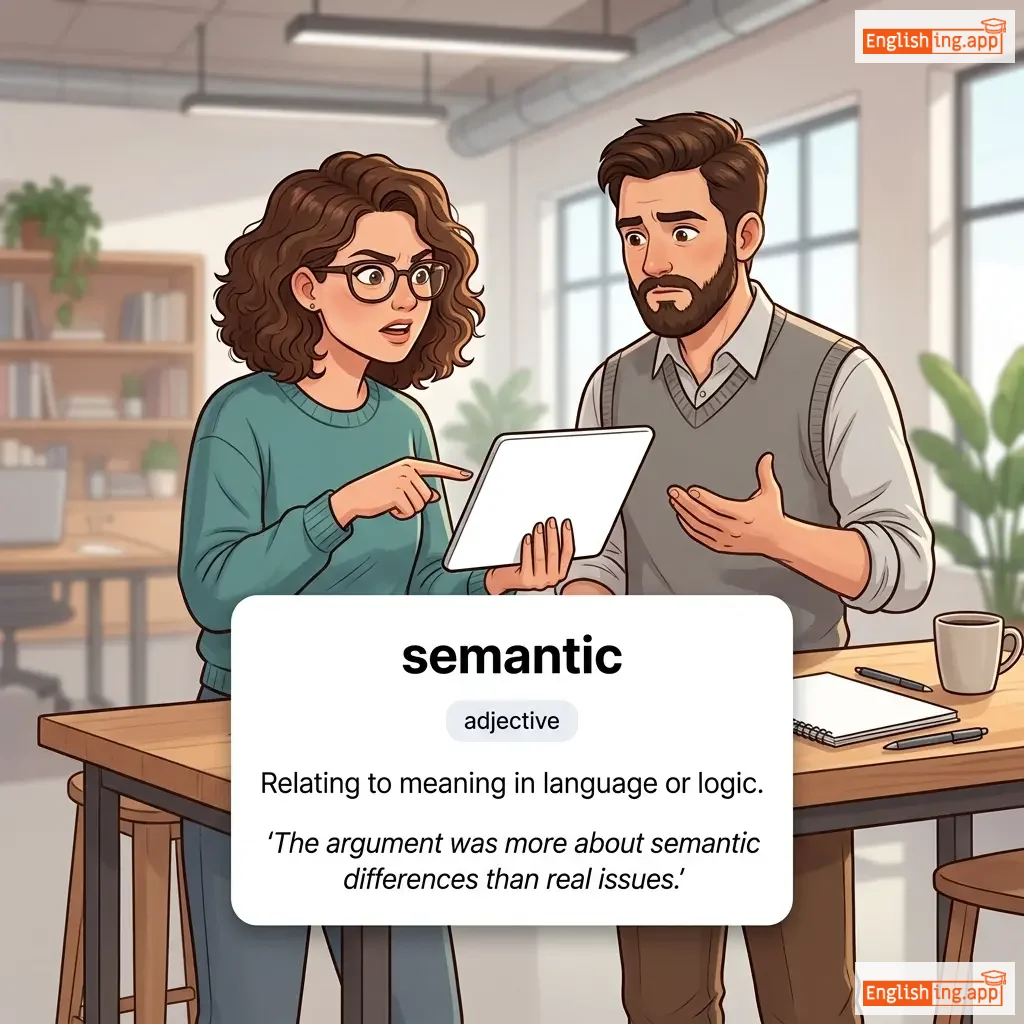
semantic definition card — visual illustration of the meaning
adjective C1
/sɪˈmæntɪk/
semántico (semantico)

Relating to meaning in language or logic.

"The argument was more about semantic differences than real issues."

"El argumento era más sobre las diferencias semánticas que sobre problemas reales." (El argumento era más sobre las diferencias semánticas que sobre problemas reales.)
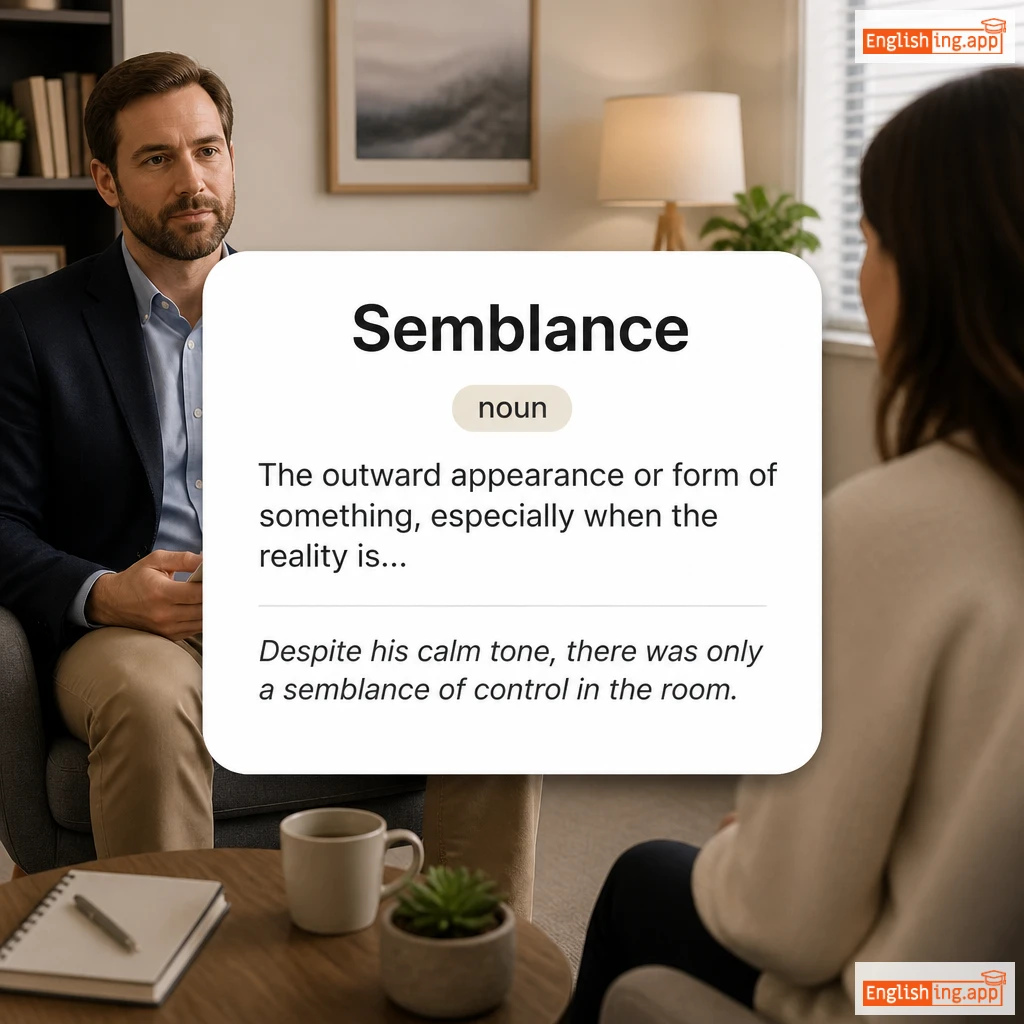
Semblance definition card — visual illustration of the meaning
noun C1
/ˈsɛm.bləns/
apariencia, apariencia externa (apariencia, apariencia externa)

The outward appearance or form of something, especially when the reality is different.

"Despite his calm tone, there was only a semblance of control in the room."

"A pesar de su tono tranquilo, solo había una apariencia de control en la sala." (A pesar de su tono tranquilo, solo había una apariencia de control en la sala.)
adjective C1
/ˌsɛm.iˈæn.ju.əl/
semi-anual (semi-anual)

Occurring twice a year; every six months.

"The company holds a semiannual meeting with all employees."

"La empresa organiza una reunión semi-anual con todos los empleados." (La empresa organiza una reunión semi-anual con todos los empleados.)
adjective C1
/ˈsɛm.ɪ.nəl/
felicidad (felicidad)

Strongly influencing later developments; highly original and influential.

"His seminal book changed the course of modern philosophy."

"No pudo ocultar su felicidad cuando recibió el premio." (No pudo ocultar su felicidad cuando recibio el premio.)
adjective C1
/ˈsiː.naɪl/
debilidad relacionada con la vejez (debilidad relacionada con la vejez)

Showing the weaknesses of old age, especially mental decline.

"The old man became senile and forgot familiar faces."

"El hombre viejo se volvió senil y olvidó rostros familiares." (El hombre viejo se volvió senil y olvidó rostros familiares.)
noun C1
/sɪˈnɪləti/
senilidad (senilidad)

The state of being old and showing the weaknesses of age, especially mental decline.

"His forgetfulness was attributed to senility."

"Su olvido fue atribuido a la senilidad." (Su olvido fue atribuido a la senilidad.)
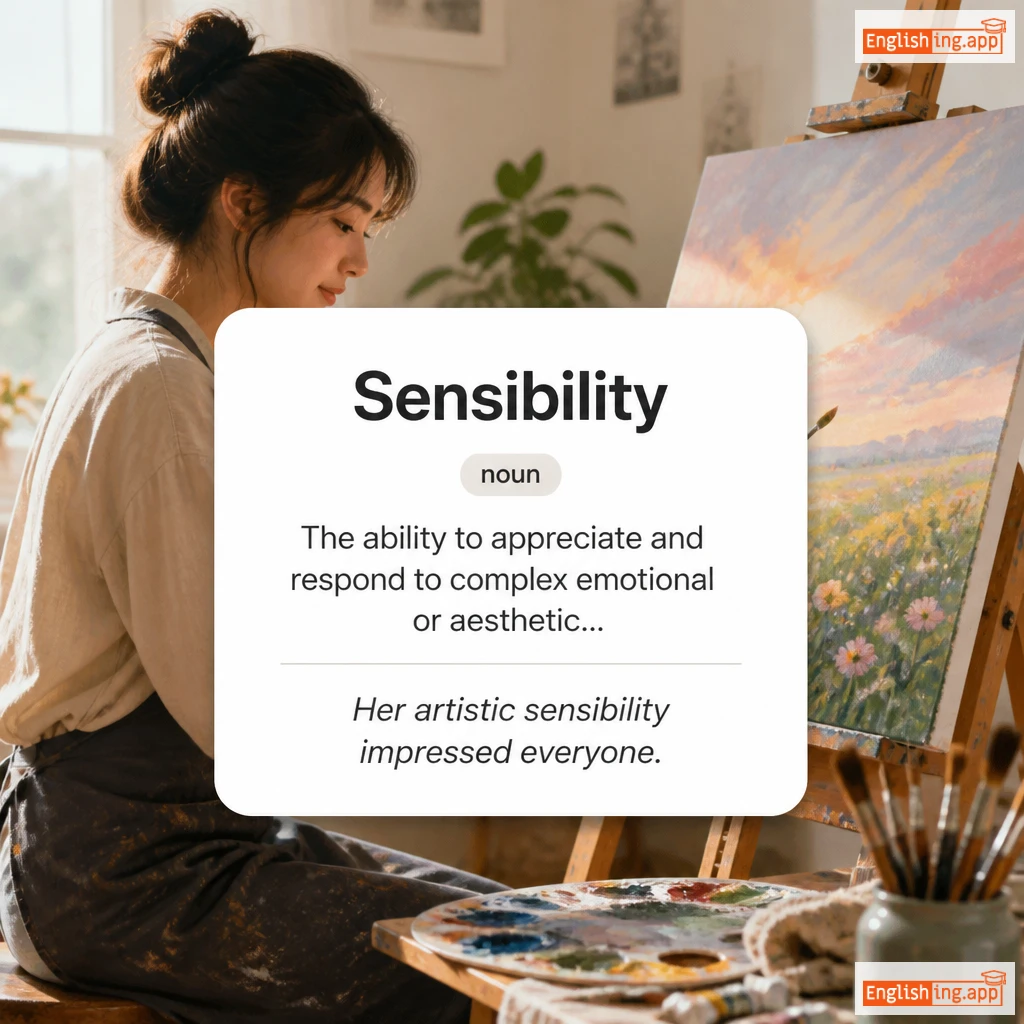
Sensibility definition card — visual illustration of the meaning
noun C1
/ˌsɛnsəˈbɪləti/
sensibilidad (sensibilidad)

The ability to appreciate and respond to complex emotional or aesthetic influences; sensitivity.

"Her artistic sensibility impressed everyone."

"Su sensibilidad artística impresionó a todos." (Su sensibilidad artística impresionó a todos.)
noun C1
/ˌsɛnsɪtaɪˈzeɪʃən/
sensibilización (sensibilizacion)

The process of becoming sensitive to a substance, situation, or influence.

"The doctor warned about the sensitization caused by repeated exposure to chemicals."

"El doctor advirtió sobre la sensibilización causada por la exposición repetida a productos químicos." (El doctor advirtio sobre la sensibilizacion causada por la exposicion repetida a productos quimicos.)
sensory definition card — visual illustration of the meaning
adjective C1
/ˈsɛn.sər.i/
sensorial (sensorial)

Related to the five human senses (sight, hearing, taste, touch, smell).

"Sensory feedback enhances the VR experience."

"La retroalimentación sensorial mejora la experiencia de VR." (La retroalimentación sensorial mejora la experiencia de VR.)
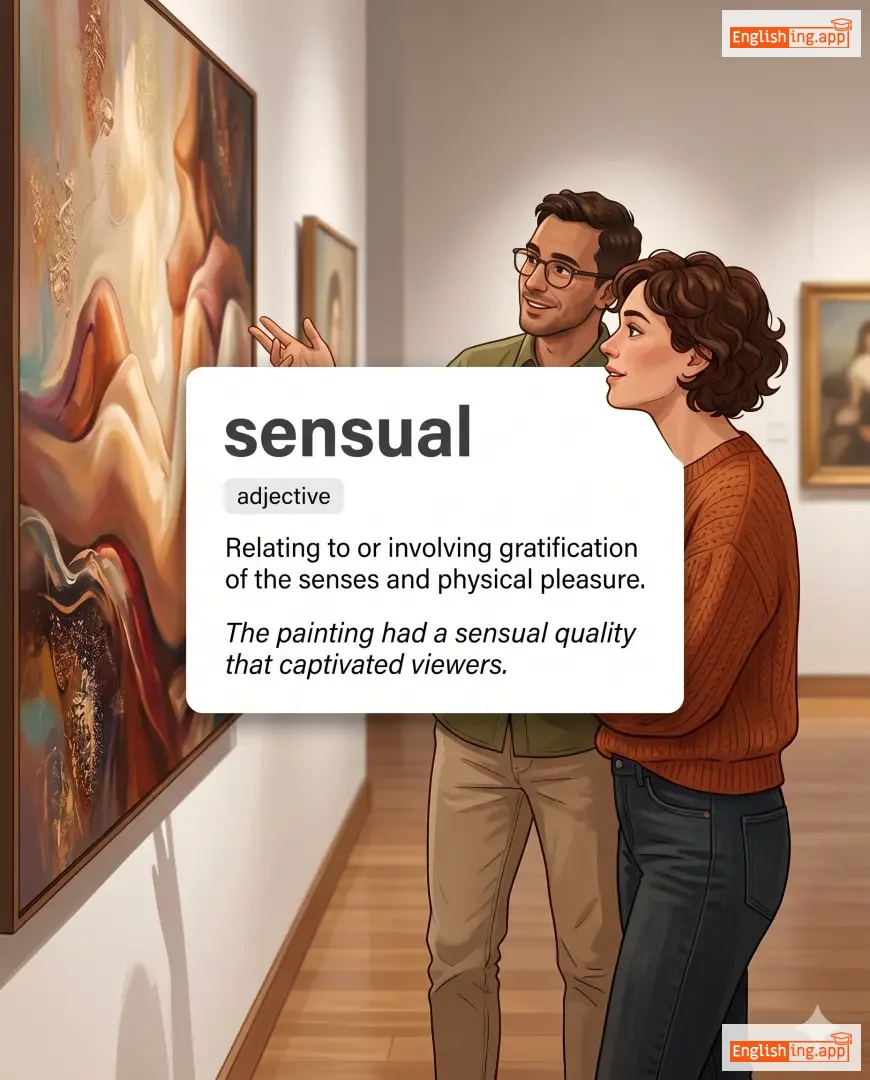
sensual definition card — visual illustration of the meaning
adjective C1
/ˈsɛnʃuəl/
sensual (sensual)

Relating to or involving gratification of the senses and physical pleasure.

"The painting had a sensual quality that captivated viewers."

"La pintura tenía una cualidad sensual que cautivó a los espectadores." (La pintura tenía una cualidad sensual que cautivó a los espectadores.)
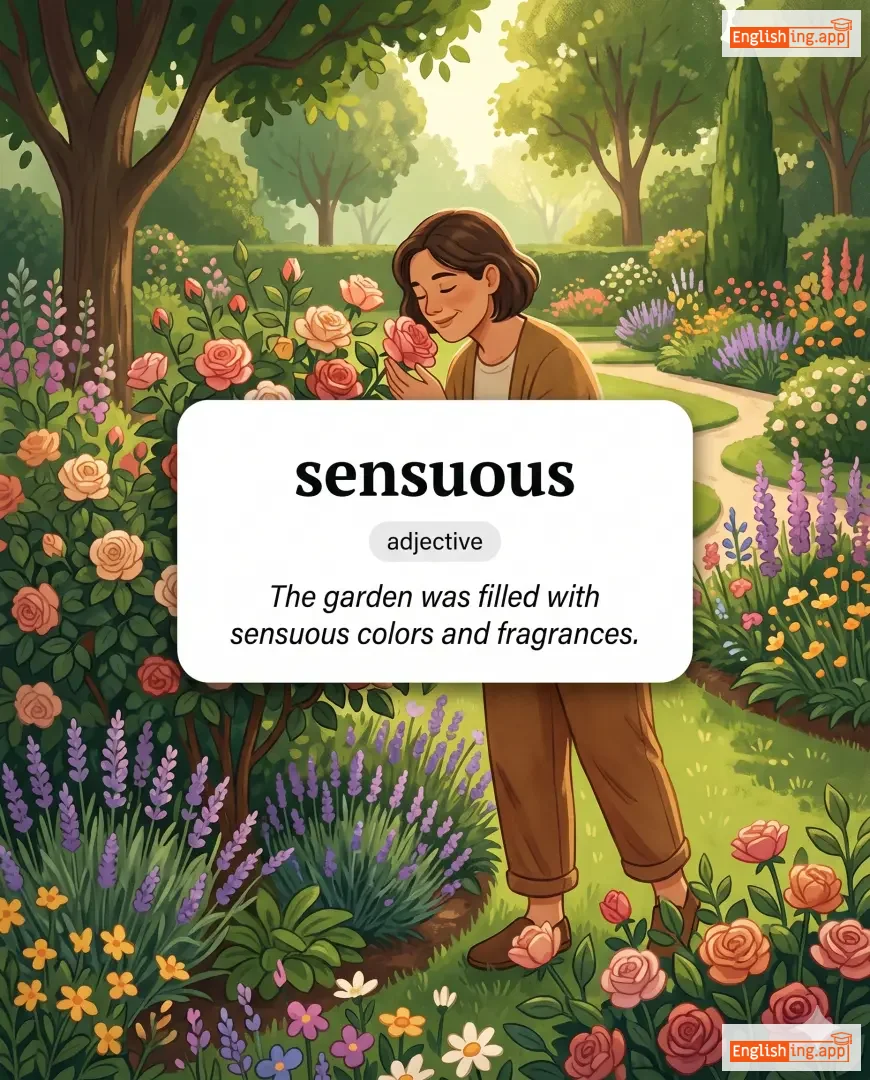
sensuous definition card — visual illustration of the meaning
adjective C1
/ˈsɛnʃuəs/
sensual (sensual)

Relating to or affecting the senses rather than the intellect; pleasing to the senses.

"The garden was filled with sensuous colors and fragrances."

"El jardín estaba lleno de colores y fragancias sensuales." (El jardin estaba lleno de colores y fragancias sensuales.)
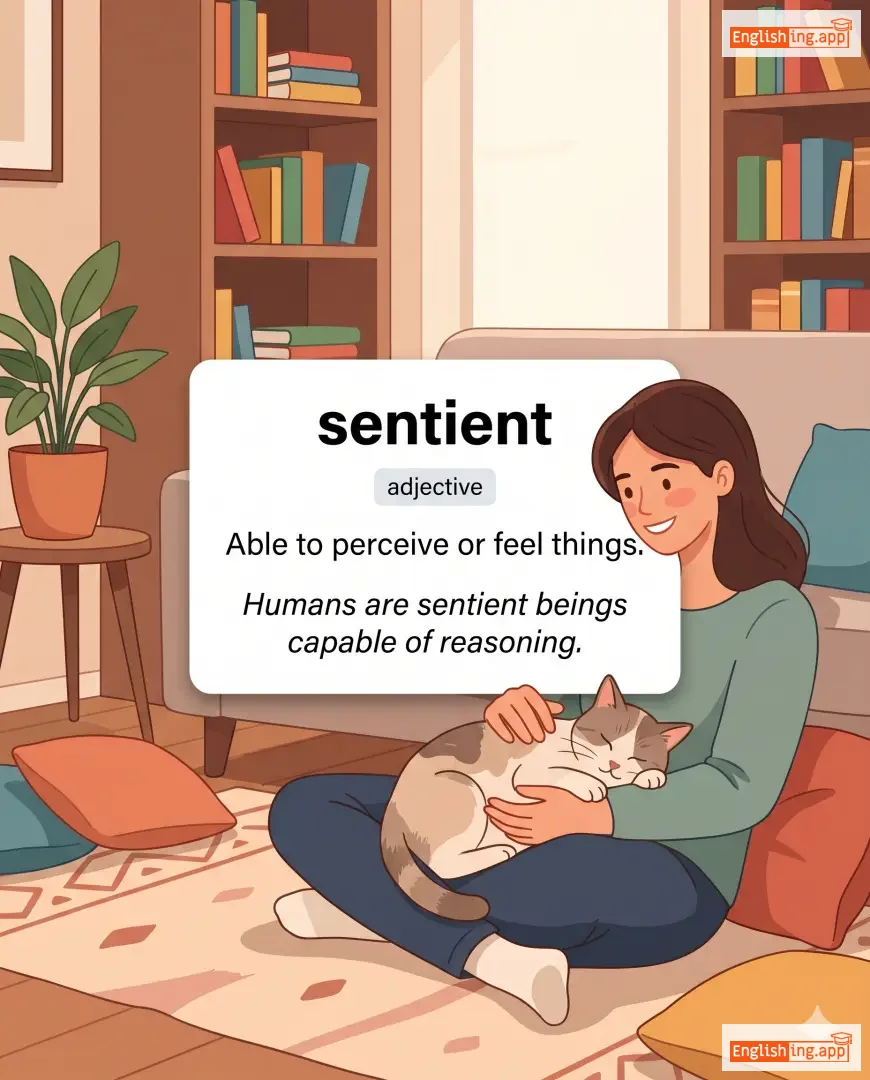
sentient definition card — visual illustration of the meaning
adjective C1
/ˈsɛnʃənt/
sensible (sensible)

Able to perceive or feel things.

"Humans are sentient beings capable of reasoning."

"Los humanos son seres sentientes capaces de razonar." (Los humanos son seres sentientes capaces de razonar.)
noun C1
/ˈsɛntɪnəl/
centinela (sentinela)

A soldier or guard whose job is to stand and keep watch.

"A sentinel stood at the entrance of the camp."

"Un centinela estaba de pie en la entrada del campamento." (Un centinela estaba de pie en la entrada del campamento.)
noun C1
/ˈsɛpərətɪst/
separatista (separatista)

A person who supports the separation of a group from a larger body, often for political or cultural independence.

"The separatist group demanded independence from the central government."

"El grupo separatista exigió la independencia del gobierno central." (El grupo separatista exigió la independencia del gobierno central.)
adjective C1
/ˈsɛptɪk/
infectado (infectado)

Infected with harmful bacteria; relating to or causing infection.

"The doctor treated the patient's septic wound immediately."

"El doctor trató la herida séptica del paciente de inmediato." (El doctor trato la herida septica del paciente de inmediato.)
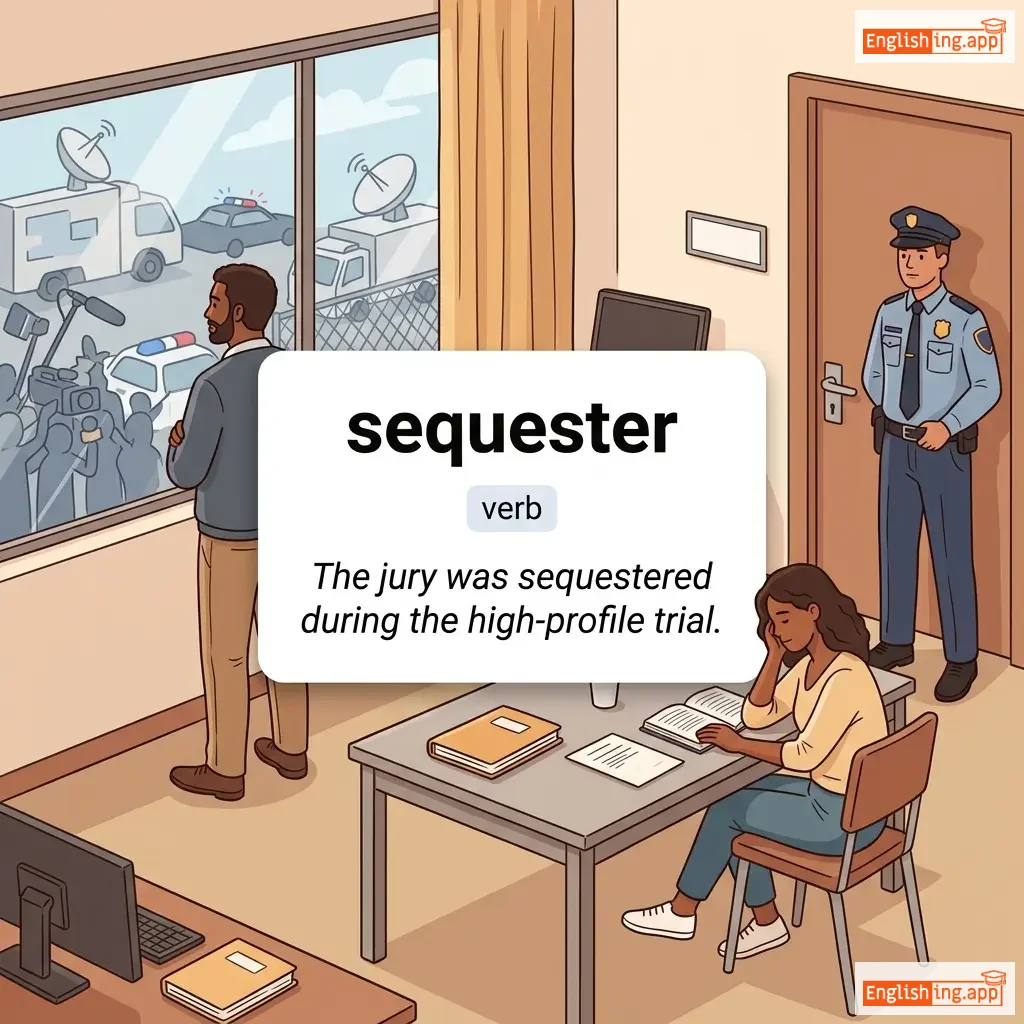
sequester definition card — visual illustration of the meaning
verb C1
/sɪˈkwɛstər/
secuestrar (sekwestrar)

To isolate or hide away; to take possession of assets until a debt has been paid.

"The jury was sequestered during the high-profile trial."

"El jurado fue aislado durante el juicio de alto perfil." (El jurado fue aislado durante el juicio de alto perfil.)
adjective C1
/ˌsɛrənˈdɪpɪtəs/
afortunado inesperado (afortunado inesperado)

Occurring or discovered by chance in a happy or beneficial way.

"Their meeting at the café was purely serendipitous."

"Su encuentro en el café fue completamente afortunado." (Su encuentro en el café fue completamente afortunado.)
noun C1
/ˌsɛrənˈdɪpɪti/
serendipia (serendipia)

The occurrence of events by chance in a happy or beneficial way.

"Finding that old photo album was pure serendipity."

"Encontrar ese viejo álbum de fotos fue pura serendipia." (Encontrar ese viejo álbum de fotos fue pura serendipia.)
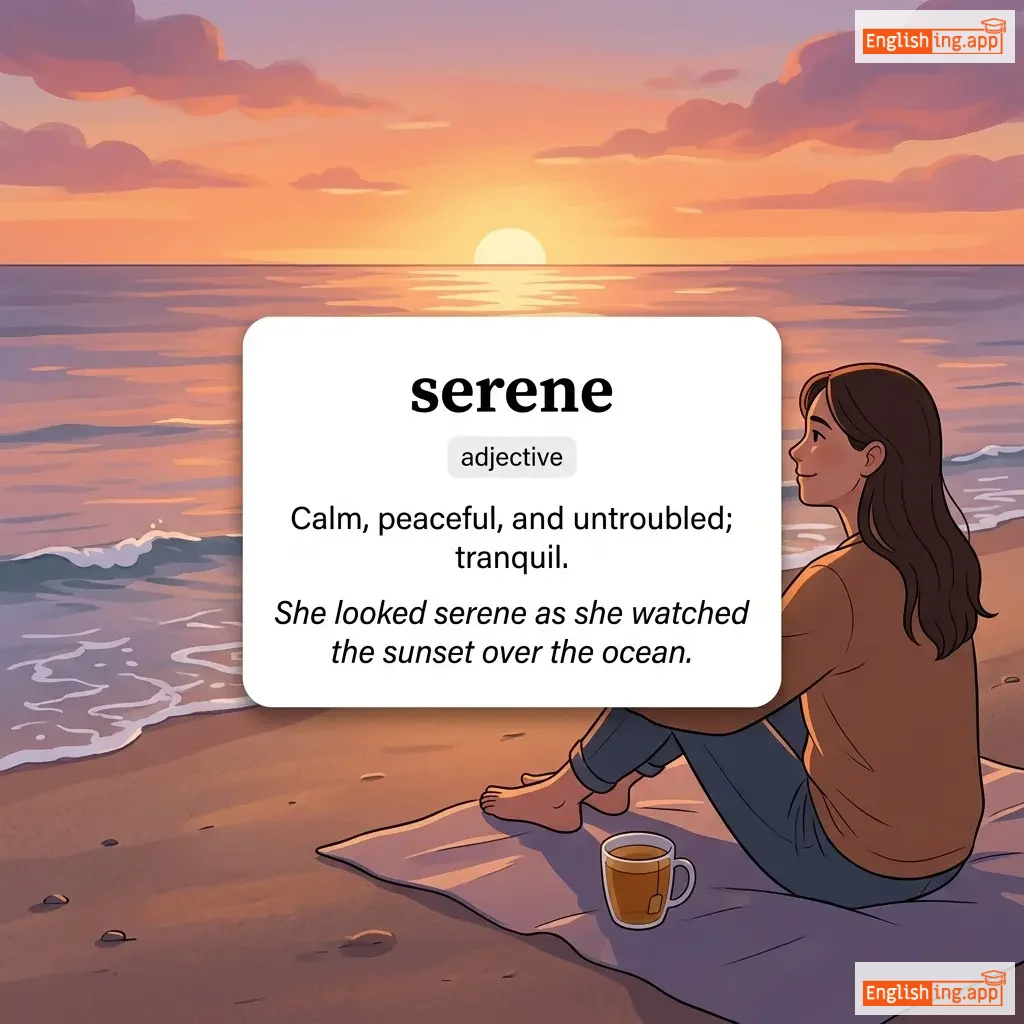
serene definition card — visual illustration of the meaning
adjective C1
/səˈriːn/
sereno (sereno)

Calm, peaceful, and untroubled; tranquil.

"She looked serene as she watched the sunset over the ocean."

"Ella se veía serena mientras miraba la puesta de sol sobre el océano." (Ella se veia serena mientras miraba la puesta de sol sobre el oceano.)
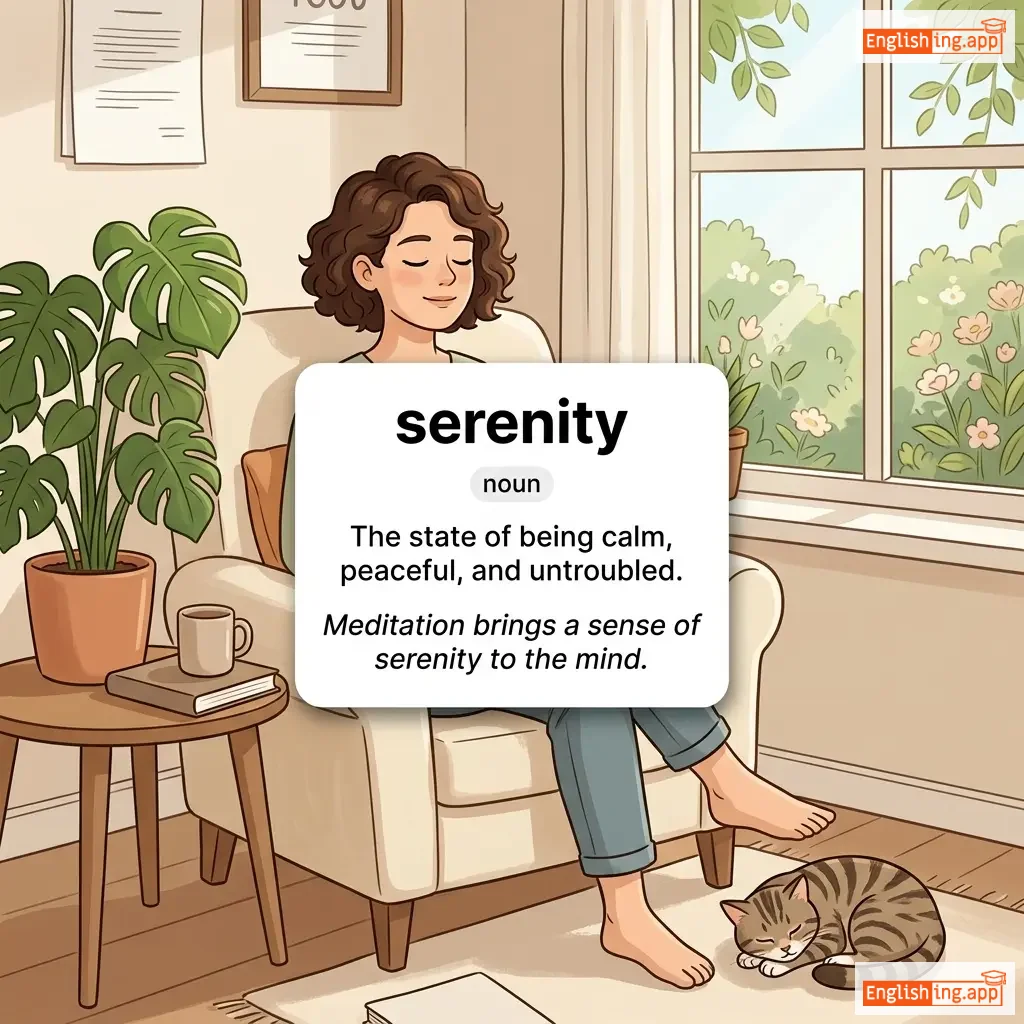
serenity definition card — visual illustration of the meaning
noun C1
/səˈrɛnɪti/
serenidad (serenidad)

The state of being calm, peaceful, and untroubled.

"Meditation brings a sense of serenity to the mind."

"La meditación trae un sentido de serenidad a la mente." (La meditacion trae un sentido de serenidad a la mente.)
noun C1
/ˌsɑːrdʒənt ˈmeɪdʒər/
sargento-mayor (sargento-mayor)

A senior non-commissioned officer in the army responsible for discipline and administration within a unit.

"The sergeant-major inspected the troops before the parade."

"El sargento-mayor inspeccionó a las tropas antes del desfile." (El sargento-mayor inspecciono a las tropas antes del desfile.)
noun C1
/ˈsɜːrmən/
sermón (sermon)

A religious discourse delivered by a preacher, often offering moral instruction or spiritual guidance.

"The pastor gave a moving sermon about compassion and forgiveness."

"El pastor dio un sermón conmovedor sobre la compasión y el perdón." (El pastor dio un sermón conmovedor sobre la compasión y el perdón.)
adjective C1
/ˈsɜːrpənˌtiːn/
serpenteante (serpenteante)

Having the shape, movement, or qualities of a serpent; winding or twisting.

"The road took a serpentine path through the mountains."

"El camino tomaba una ruta serpenteante a través de las montañas." (El camino tomaba una ruta serpenteante a través de las montañas.)
adjective C1
/ˈsɛreɪtɪd/
dentado (dentado)

Having a notched or saw-toothed edge.

"The bread knife had a serrated blade."

"El cuchillo de pan tenía una hoja dentada." (El cuchillo de pan tenía una hoja dentada.)
adjective C1
/ˈsɜːrvɪsəbl/
utilizable (utilizable)

fit for use; usable; in working order

"The old bicycle is still serviceable despite its age."

"La bicicleta vieja sigue siendo utilizable a pesar de su edad." (La bicicleta vieja sigue siendo utilizable a pesar de su edad.)
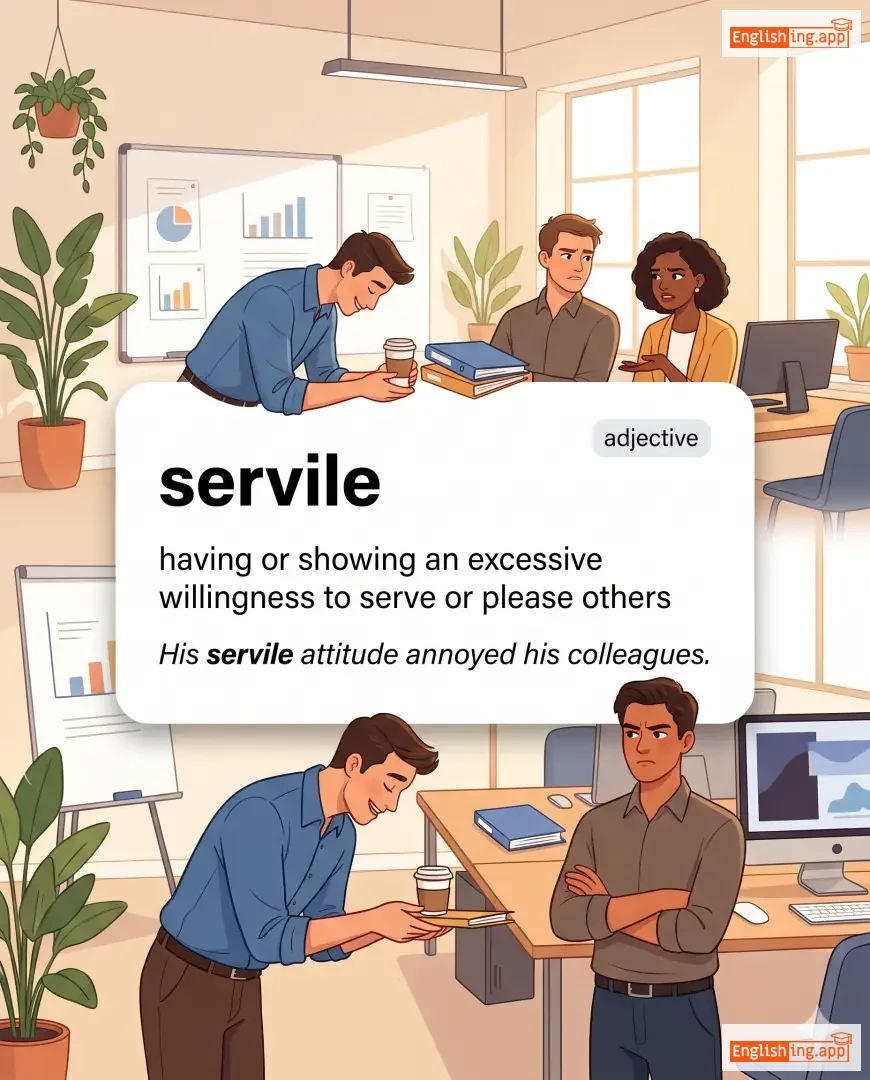
servile definition card — visual illustration of the meaning
adjective C1
/ˈsɜːrvaɪl/ or /ˈsɜːrvəl/
servil (servil)

having or showing an excessive willingness to serve or please others

"His servile attitude annoyed his colleagues."

"Su actitud servil molestaba a sus compañeros." (Su actitud servil molestaba a sus companeros.)