Vocabulaires

Découvrez, apprenez et maîtrisez le vocabulaire anglais

noun C1
/ˈəʊ.nəs/
責任 (sekinin)

A duty or responsibility, especially a heavy one.

"The onus is on the government to provide relief to the victims."

"犠牲者に支援を提供する責任は政府にあります。" (Giseisha ni shien o teikyō suru sekinin wa seifu ni arimasu.)
verb C1
/uːz/
にじみ出る (nijimideru)

to slowly flow or leak out through small openings or pores

"Blood began to ooze from the small cut."

"血が小さな切り傷からにじみ出た。" (Chi ga chiisana kirikizu kara nijimideta.)
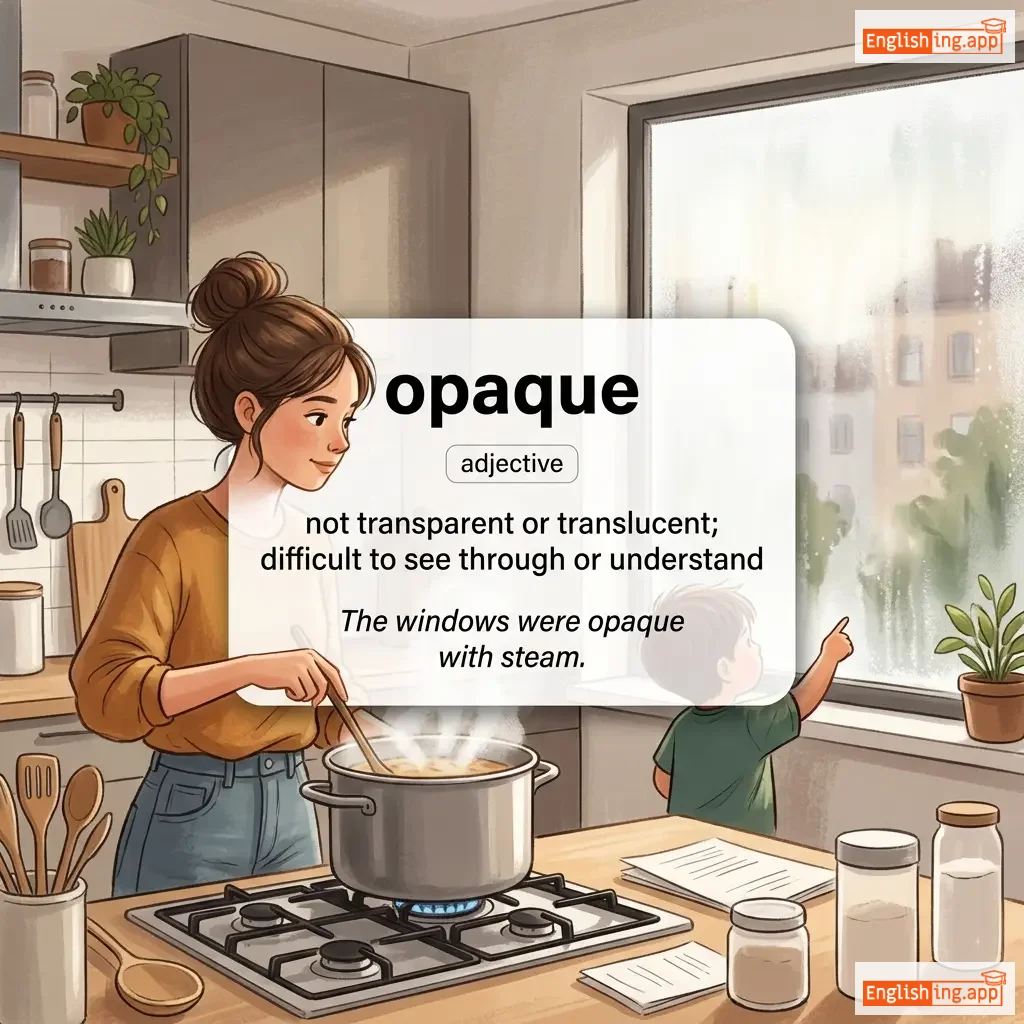
opaque definition card — visual illustration of the meaning
adjective C1
/oʊˈpeɪk/
不透明 (futōmei)

not transparent or translucent; difficult to see through or understand

"The windows were opaque with steam."

"窓は蒸気で不透明になっていた。" (Mado wa jōki de futōmei ni natte ita.)
adjective C1
/ˈɒpərətɪv/
操作的 (sousateki)

functioning, having effect, or relating to a secret agent or worker

"The new law is now operative across the country."

"新しい法律は今、国内全体で施行されています。" (Atarashii houritsu wa ima, kokunai zentai de shikou sareteimasu.)
adjective C1
/ˌɑːpərˈtuːn/
適切な瞬間 (tekisetsu na shunkan)

Happening at a suitable or convenient time.

"She arrived at an opportune moment to help."

"彼女は助けるために適切な瞬間に到着しました。" (Kanojo wa tasukeru tame ni tekisetsu na shunkan ni touchakushimashita.)
noun C1
/ˌɑːpərˈtuːnɪst/
機会主義者 (kikai shugi-sha)

A person who takes advantage of situations for personal gain, often disregarding principles.

"He is seen as an opportunist who always puts his interests first."

"彼は常に自分の利益を第一に考える機会主義者として見られています。" (Kare wa tsuneni jibun no rieki o daiichi ni kangaeru kikai shugi-sha toshite mirarareteimasu.)
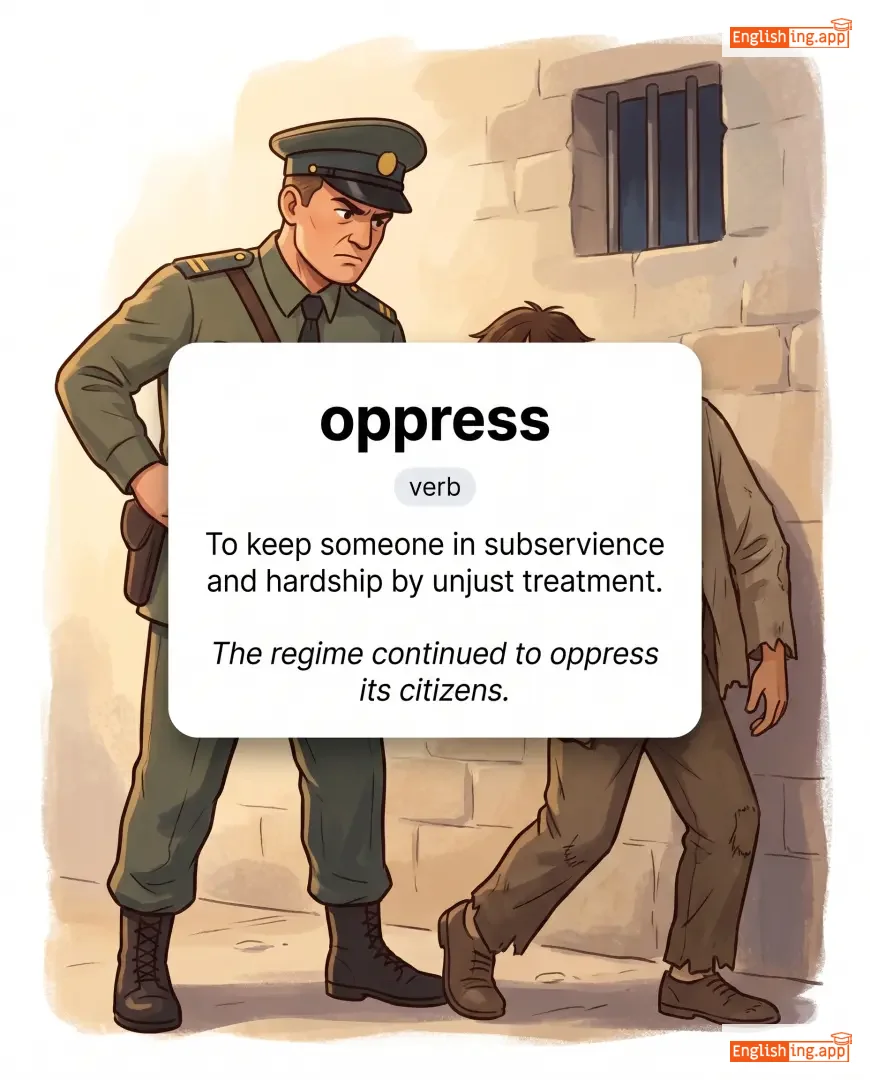
oppress definition card — visual illustration of the meaning
verb C1
/əˈprɛs/

To keep someone in subservience and hardship by unjust treatment.

"The regime continued to oppress its citizens."

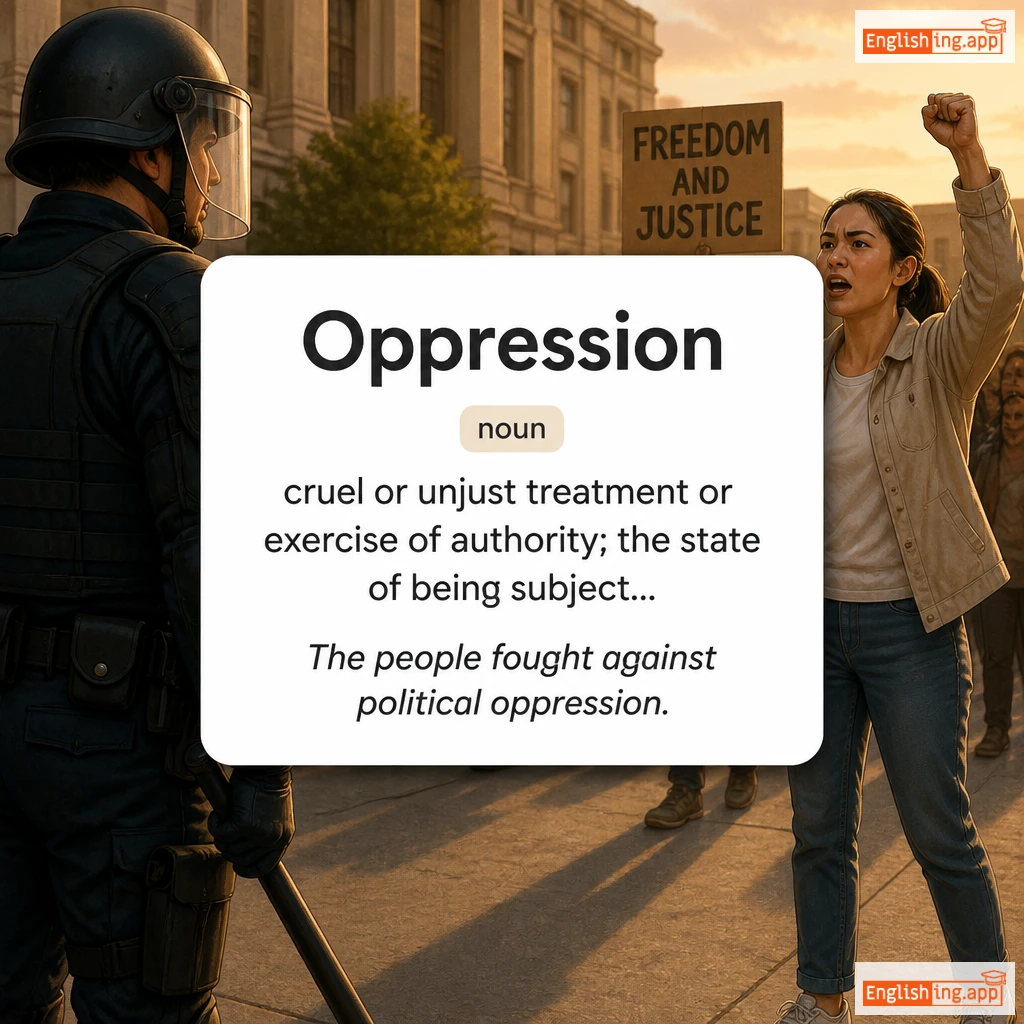
Oppression definition card — visual illustration of the meaning
noun C1
/əˈpreʃ.ən/
抑圧; 虐待; 圧政; (yokatsu; gyakutai; assoku;)

cruel or unjust treatment or exercise of authority; the state of being subject to harsh treatment

"The people fought against political oppression."

"人々は政治的な抑圧に反対して戦った。" (Hitobito wa seijiteki na yokatsu ni hantai shite tatakatta.)
adjective C1
/əˈprɛs.ɪv/
抑圧的 (yokuatsuteki)

Harsh and authoritarian; overwhelming; causing distress; tyrannical;

"The oppressive heat made it difficult to work outside during the summer."

"厳しい暑さは夏の間外で働くのを難しくした。" (Kibishī atsusa wa natsu no aida soto de hataraku no o muzukashiku shita.)
adjective C1
/ˈɒptɪk/
視覚の (shikaku no)

Relating to the eye or vision.

"The optic nerve carries signals from the eye to the brain."

"視神経は目から脳に信号を伝達します。" (Shishinkei wa me kara nō ni shingō o dentatsu shimasu.)
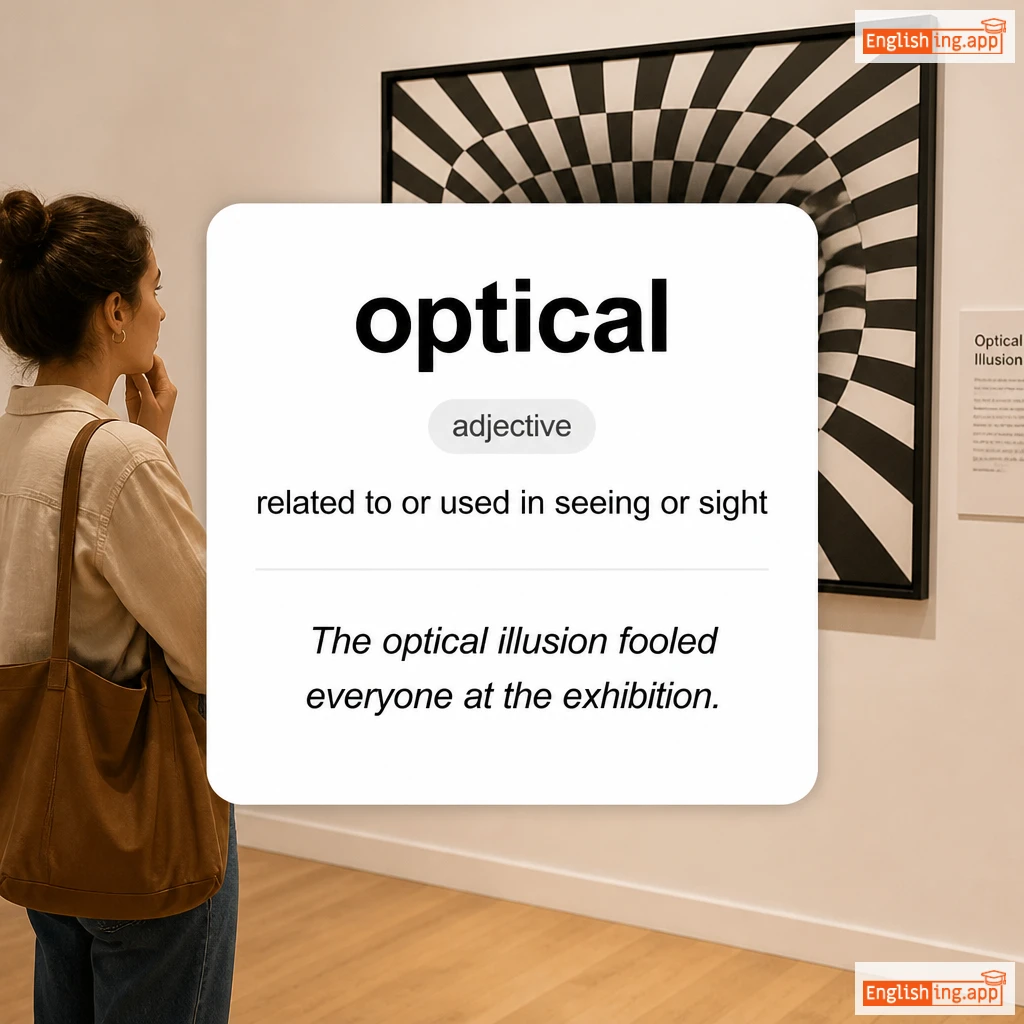
optical definition card — visual illustration of the meaning
adjective C1
/ˈɒptɪkəl/
光学的 (kōgakuteki)

related to or used in seeing or sight

"The optical illusion fooled everyone at the exhibition."

"その光学的錯覚は展示会で皆を騙した。" (Sono kōgakuteki sakaku wa tenjikai de mina o damashita.)
noun C1
/ˈɒptɪks/
光学 (kōgaku)

The branch of physics dealing with light and vision.

"She studied optics to understand how lenses work."

"彼女はレンズがどのように機能するかを理解するために光学を学びました。" (Kanojo wa renzu ga dono yō ni kinō suru ka o rikai suru tame ni kōgaku o manabimashita.)
optimally definition card — visual illustration of the meaning
adverb C1
/ˈɒp.tɪ.məl.i/
最適に (saiteki ni)

In the most effective or efficient way possible.

"Tasks should be allocated optimally for maximum output."

"タスクは最大の成果を上げるために最適に割り当てるべきです。" (Tasukusu wa saidai no seika o ageru tame ni saiteki ni wariante subeki desu.)
optimization definition card — visual illustration of the meaning
noun C1
ˌɒp.tɪ.mɪˈzeɪ.ʃən
最適化 (saitekika)

The action of making the best or most effective use of a situation or resource.

"The company focused on optimization of resources to maximize profits."

"会社は利益を最大化するためにリソースの最適化に焦点を当てました。" (Kaisha wa rieki o saidaika suru tame ni risōsu no saitekika ni shōten o atemashita.)
optimize definition card — visual illustration of the meaning
verb C1
ˈɒptɪmaɪz
最適化する, 改善する (saitekika suru, kaizen suru)

Make the best or most effective use of a situation, opportunity, or resource.

"They optimized the software for faster performance."

"彼らはパフォーマンス向上のためにソフトウェアを最適化しました。" (Karera wa pafōmansu kōjō no tame ni sofutowea o saitekika shimashita.)
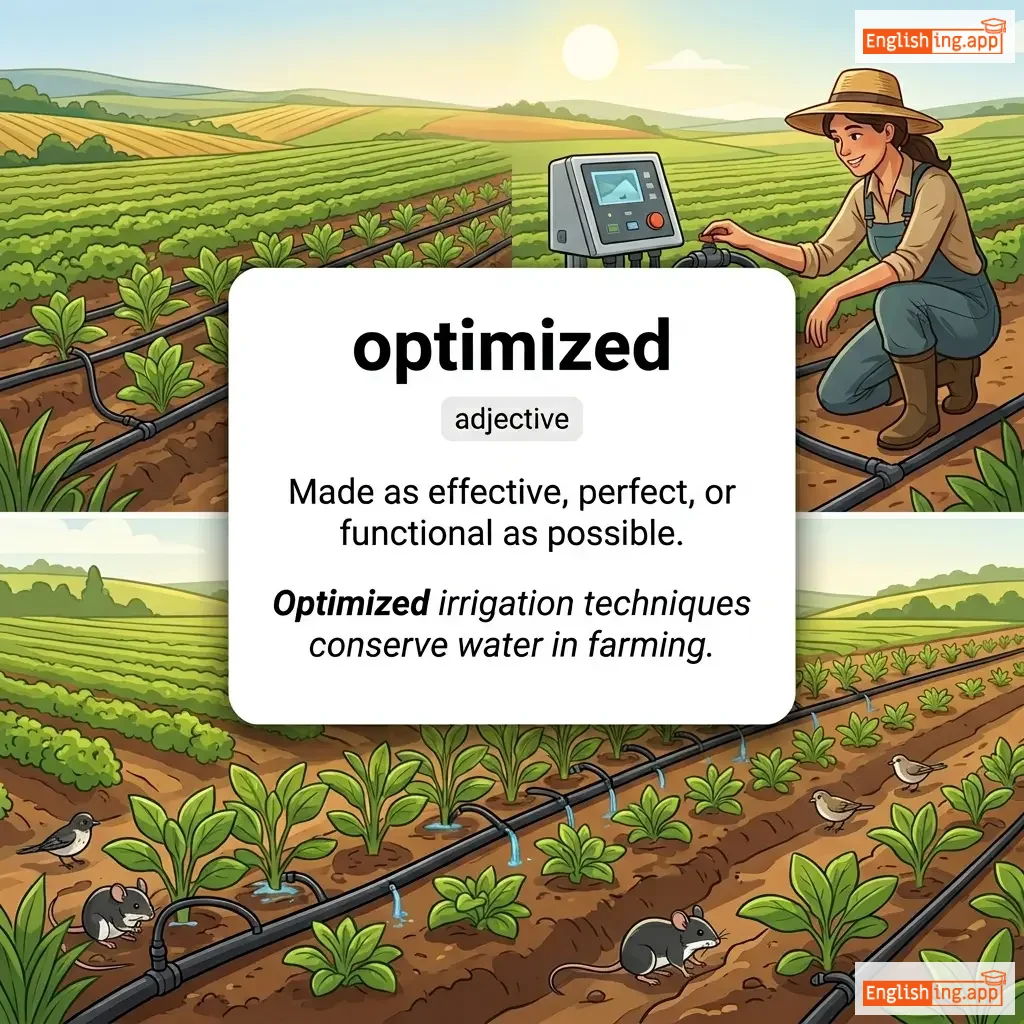
optimized definition card — visual illustration of the meaning
adjective C1
/ˈɒp.tɪ.maɪzd/
最適化された (optimized)

Made as effective, perfect, or functional as possible.

"Optimized irrigation techniques conserve water in farming."

"最適化された灌漑技術は農業で水を節約します。" (Saitekika sareta kankai gijutsu wa nougyou de mizu o setsuyaku shimasu.)
optimum definition card — visual illustration of the meaning
noun/adjective C1
/ˈɒptɪməm/
最適 (saiteki)

The most favorable condition or level for growth, success, or productivity.

"This room temperature provides the optimum conditions for plant growth."

"この部屋の温度は植物の成長に最適な条件を提供します。" (Kono heya no ondo wa shokubutsu no seichō ni saiteki na jōken o teikyō shimasu.)
noun C1
/ɒpˈtɒmɪtrɪst/
オプトメトリスト (oputometorisuto)

A healthcare professional who examines eyes and prescribes corrective lenses.

"The optometrist prescribed new glasses for her."

"オプトメトリストは彼女に新しい眼鏡を処方しました。" (Oputometorisuto wa kanojo ni atarashī megane o shohō shimashita.)
noun C1
/ɒpˈtɒmətri/
視力検査学 (shiryoku kensa gaku)

The practice or profession of examining the eyes and prescribing corrective lenses.

"She studied optometry at the university to become an eye specialist."

"彼女は大学でオプトメトリーを学び、眼科専門医になりました。" (Kanojo wa daigaku de optometry o manabi, ganka senmoni ni narimashita.)
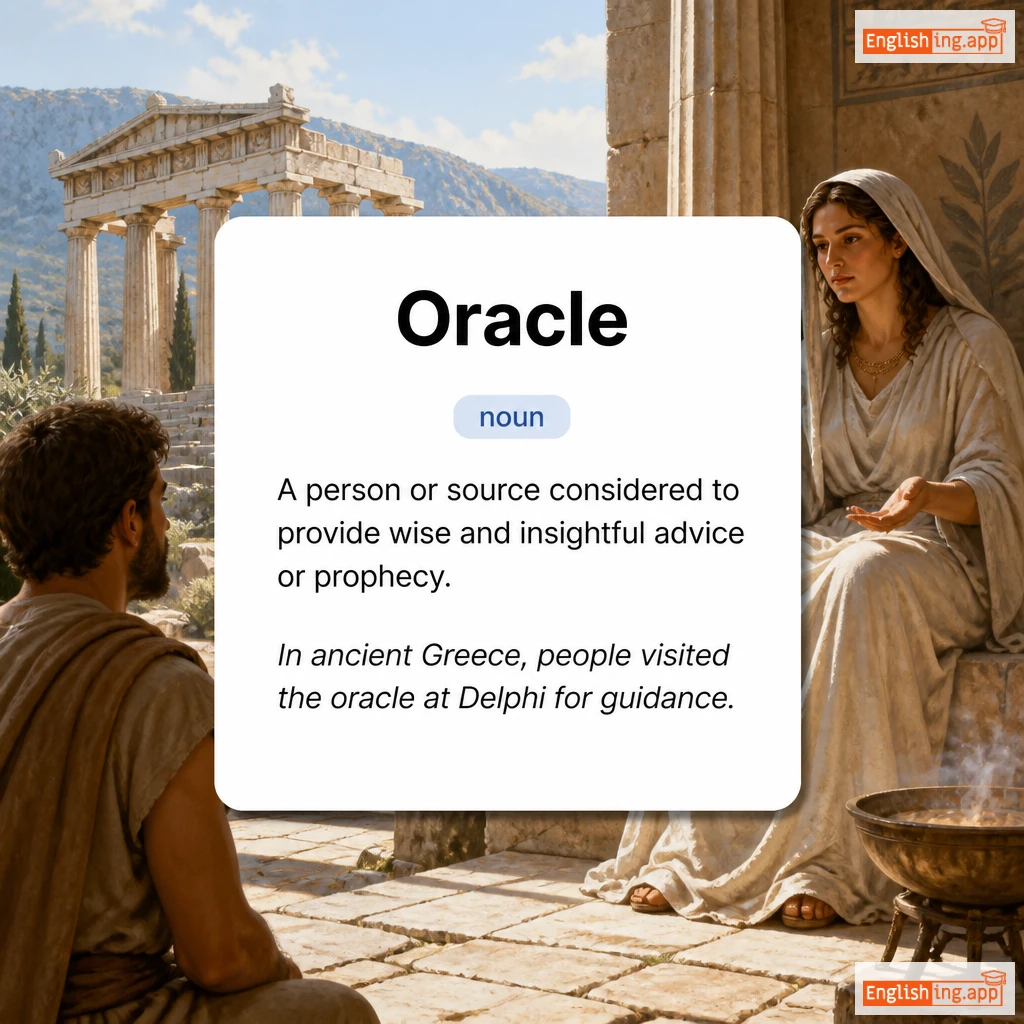
Oracle definition card — visual illustration of the meaning
noun C1
/ˈɒrəkəl/
幸福 (kōfuku)

A person or source considered to provide wise and insightful advice or prophecy.

"In ancient Greece, people visited the oracle at Delphi for guidance."

"彼女は賞を受け取ったとき、自分の幸福を隠すことができませんでした。" (Kanojo wa shō o uketotta toki, jibun no kōfuku o kakusu koto ga dekimasen deshita.)
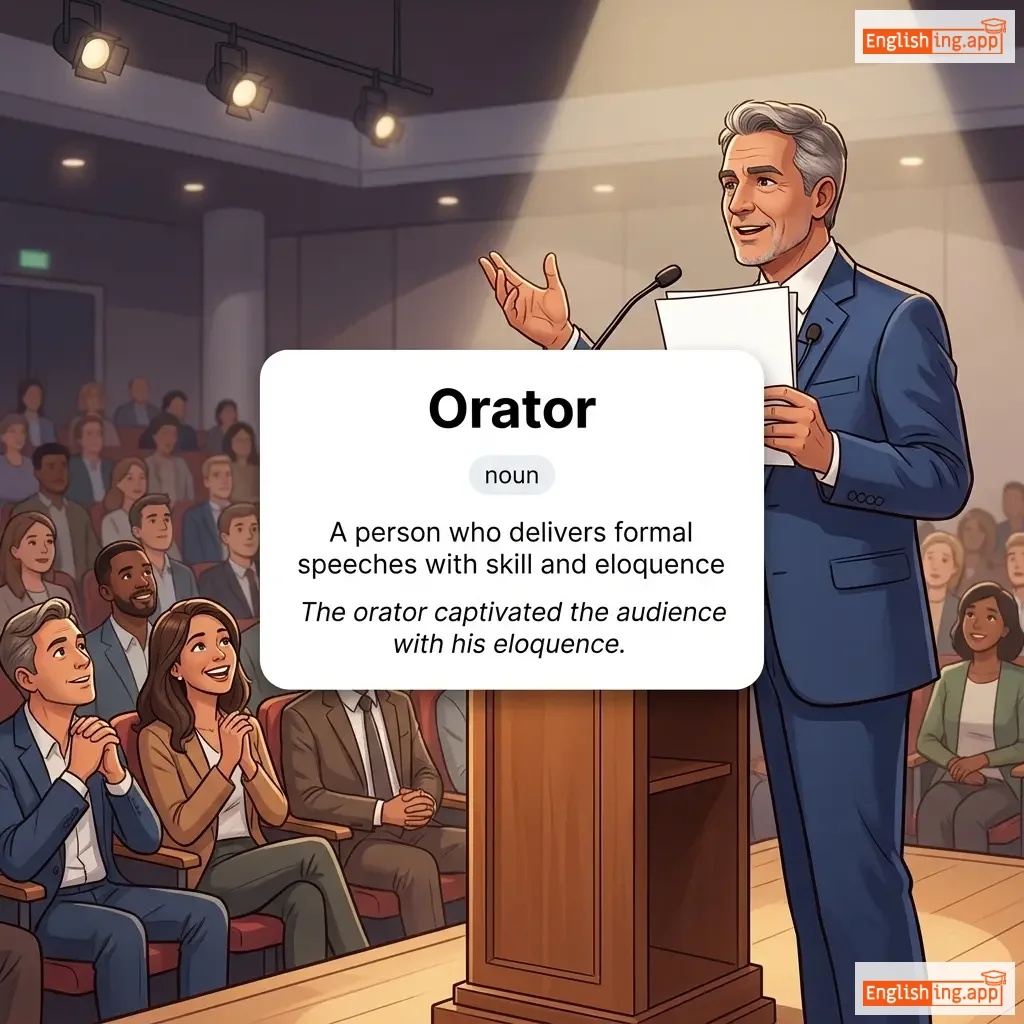
Orator definition card — visual illustration of the meaning
noun C1
/ˈɔːrətər/
演説者 (enzetsusha)

A person who delivers formal speeches with skill and eloquence

"The orator captivated the audience with his eloquence."

"演説者はその雄弁で聴衆を魅了しました。" (Enzetsusha wa sono yūben de chōshū o miryō shimashita.)
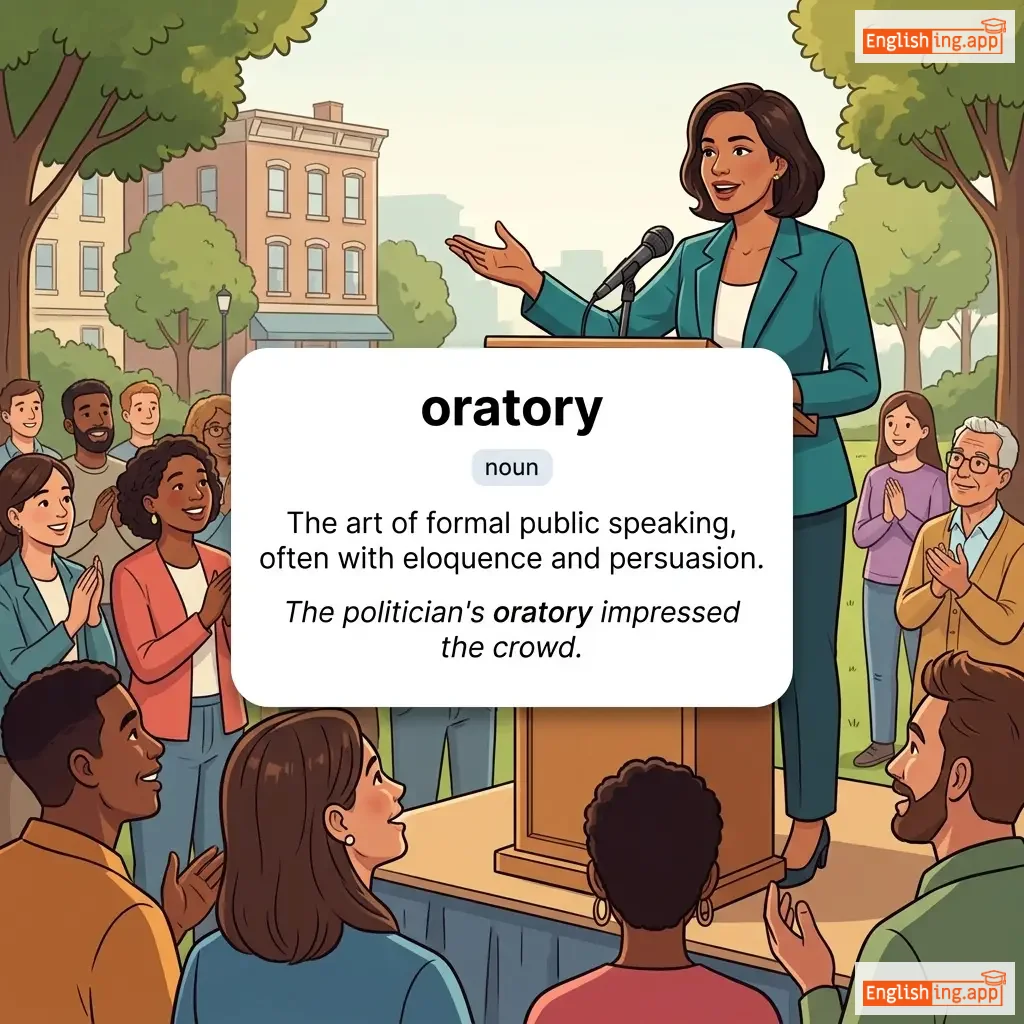
oratory definition card — visual illustration of the meaning
noun C1
/ˈɔːrəˌtɔːri/
雄弁術 (kyōbenshutsu)

The art of formal public speaking, often with eloquence and persuasion.

"The politician's oratory impressed the crowd."

"その政治家の雄弁術は群衆を感動させた。" (Sono seijika no kyōbenshutsu wa gunshū o kandō saseta.)
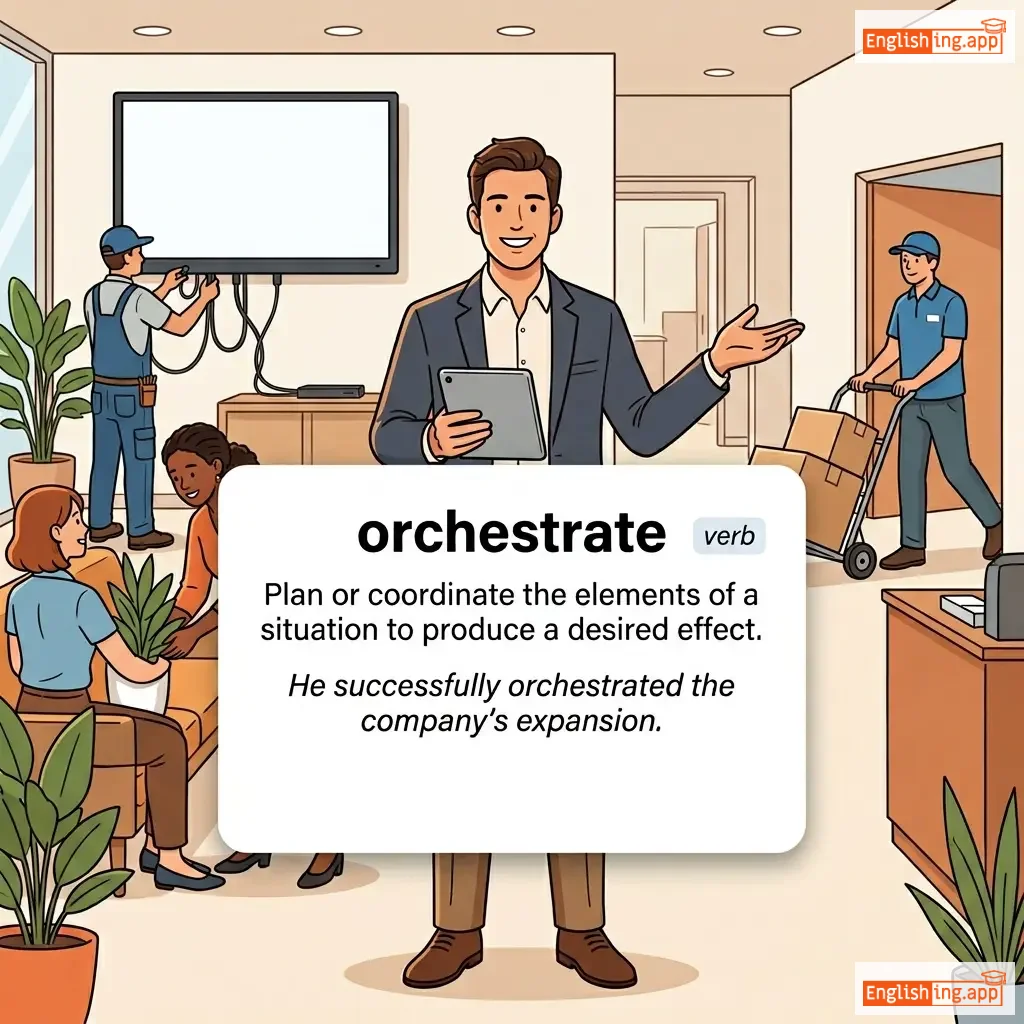
orchestrate definition card — visual illustration of the meaning
verb C1
/ˈɔːr.kɪ.streɪt/
指揮する (shiki suru)

Plan or coordinate the elements of a situation to produce a desired effect.

"He successfully orchestrated the company's expansion."

"彼は会社の拡張をうまく指揮した。" (Kare wa kaisha no kakuchō o umaku shiki shita.)
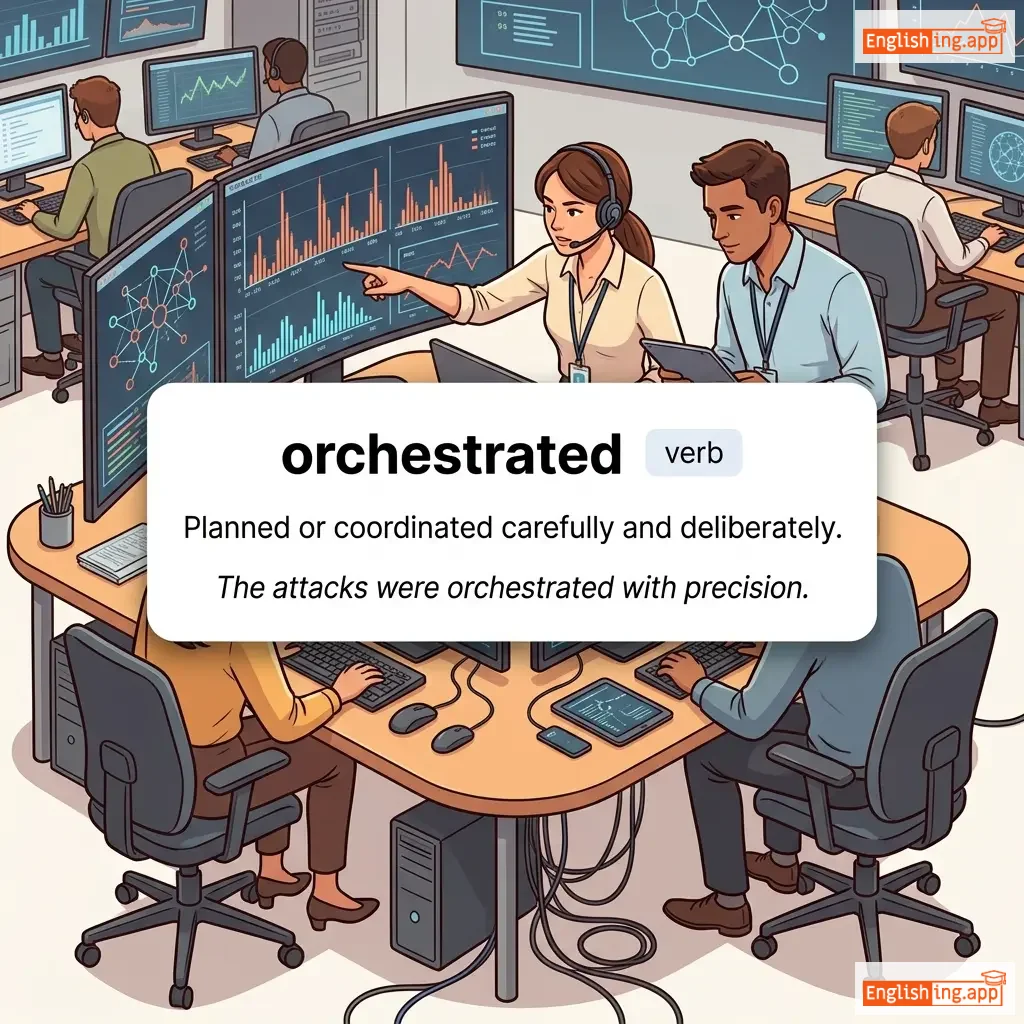
orchestrated definition card — visual illustration of the meaning
verb C1
ˈɔː.kɪ.streɪ.tɪd
精巧に組織された (seikou ni soshiki sareta)

Planned or coordinated carefully and deliberately.

"The attacks were orchestrated with precision."

"攻撃は正確に組織されていた。" (Kougeki wa seikaku ni soshiki sarete ita.)
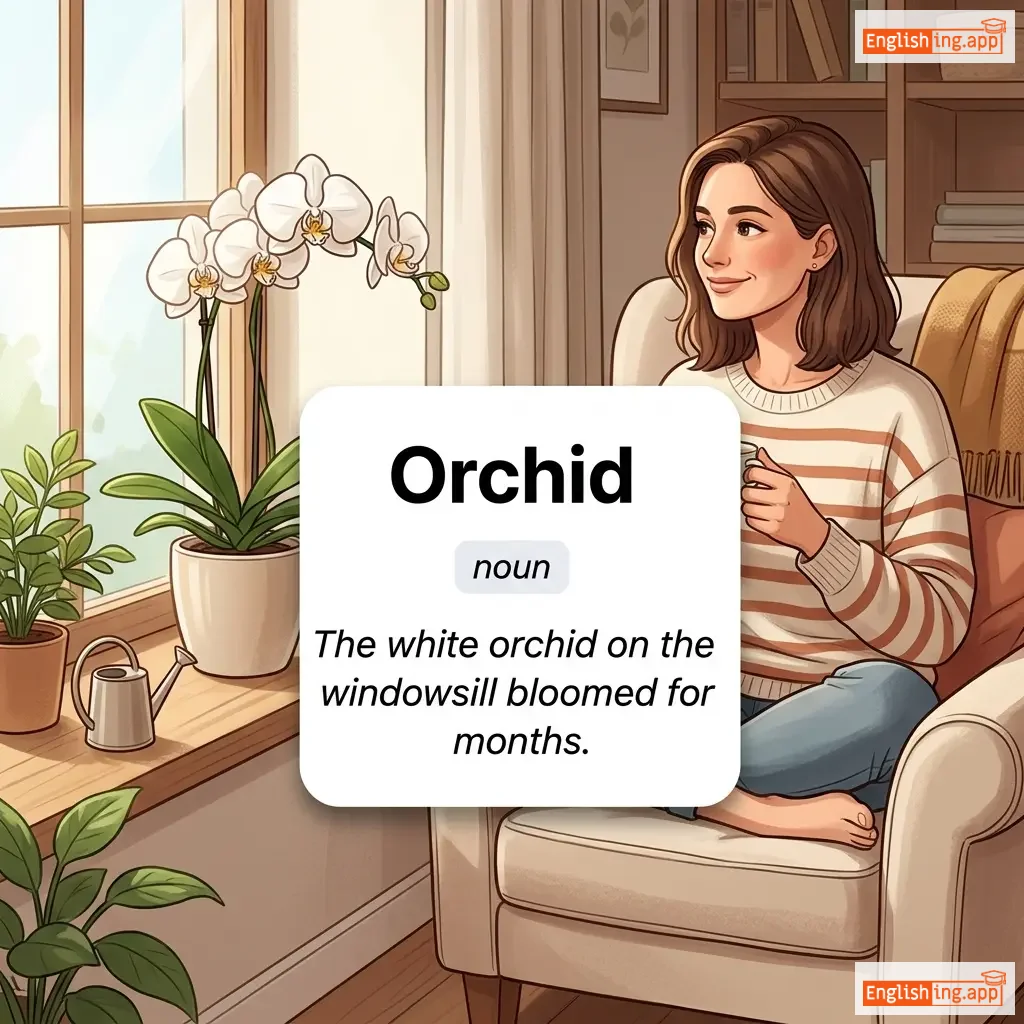
Orchid definition card — visual illustration of the meaning
noun C1
/ˈɔːrkɪd/
オーキッド (ookiddo)

a diverse family of flowering plants known for their exotic and often fragrant flowers

"The white orchid on the windowsill bloomed for months."

"窓辺の白いオーキッドは何ヶ月も咲き続けました。" (Madobe no shiroi ookiddo wa nan-kagetsu mo sakitsudzukemashita.)
verb C1
/ɔːrˈdeɪn/

To officially make someone a priest or minister; to decree or order something officially.

"The bishop will ordain three new priests this Sunday."

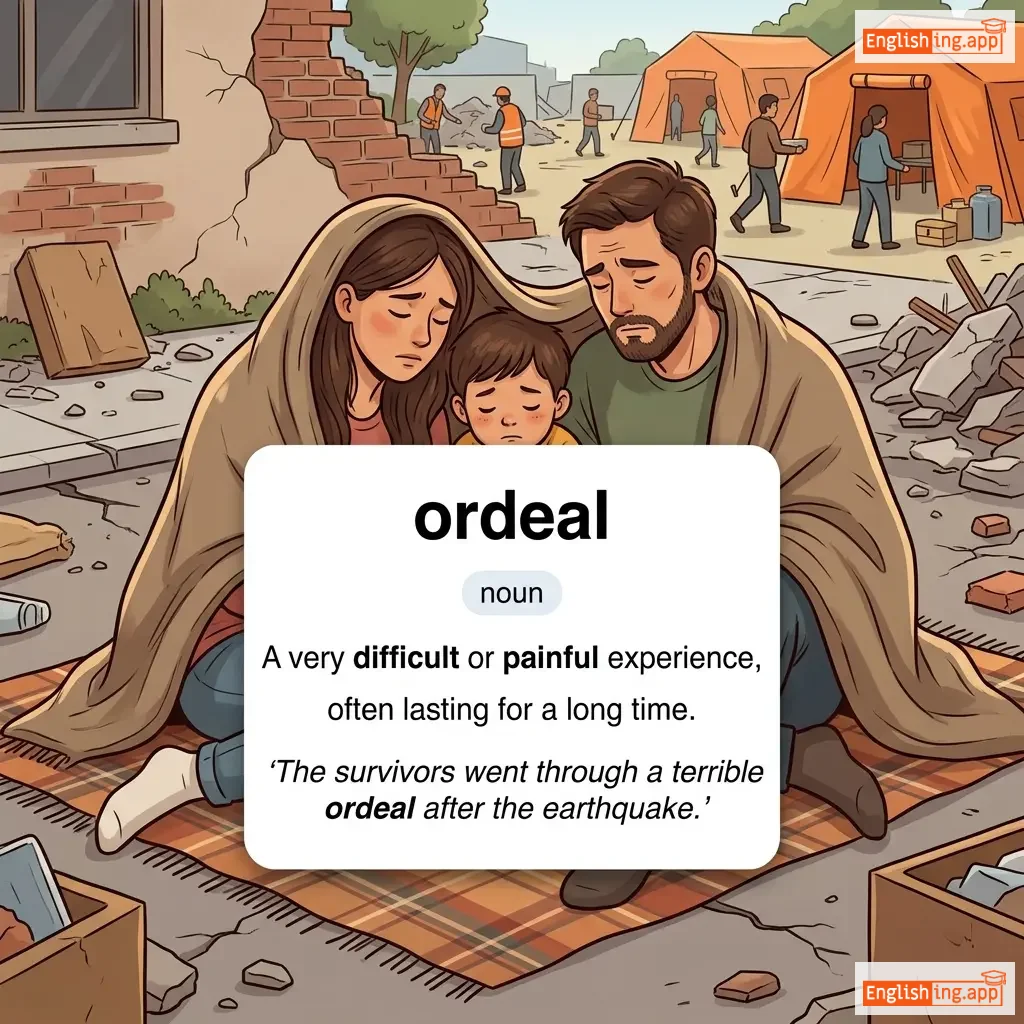
ordeal definition card — visual illustration of the meaning
noun C1
/ɔːrˈdiːl/
試練 (shiren)

A very difficult or painful experience, often lasting for a long time.

"The survivors went through a terrible ordeal after the earthquake."

"地震後、生存者は恐ろしい試練を乗り越えました。" (Jishin go, seizon-sha wa osoroshī shiren o norikoemashita.)
adjective C1
/ˈɔːrdɪnəl/
順序数 (junjosu)

Relating to the order or position of something in a sequence (first, second, third, etc.).

"The ordinal number 'third' indicates position in a sequence."

"'第三'の順序数は、順番での位置を示します。" ('Dai san' no junjosu wa, junban de no ichi o shimeshimasu.)
noun C1
/ˈɔːrdɪnəns/
条例 (jōrei)

An authoritative rule, law, or decree issued by a city, town, or authority.

"The city council passed an ordinance banning smoking in public parks."

"市議会は公共公園での喫煙を禁じる条例を可決しました。" (Shigikai wa kōkyō kōen de no kitsuen o kinjiru jōrei o kaketsu shimashita.)
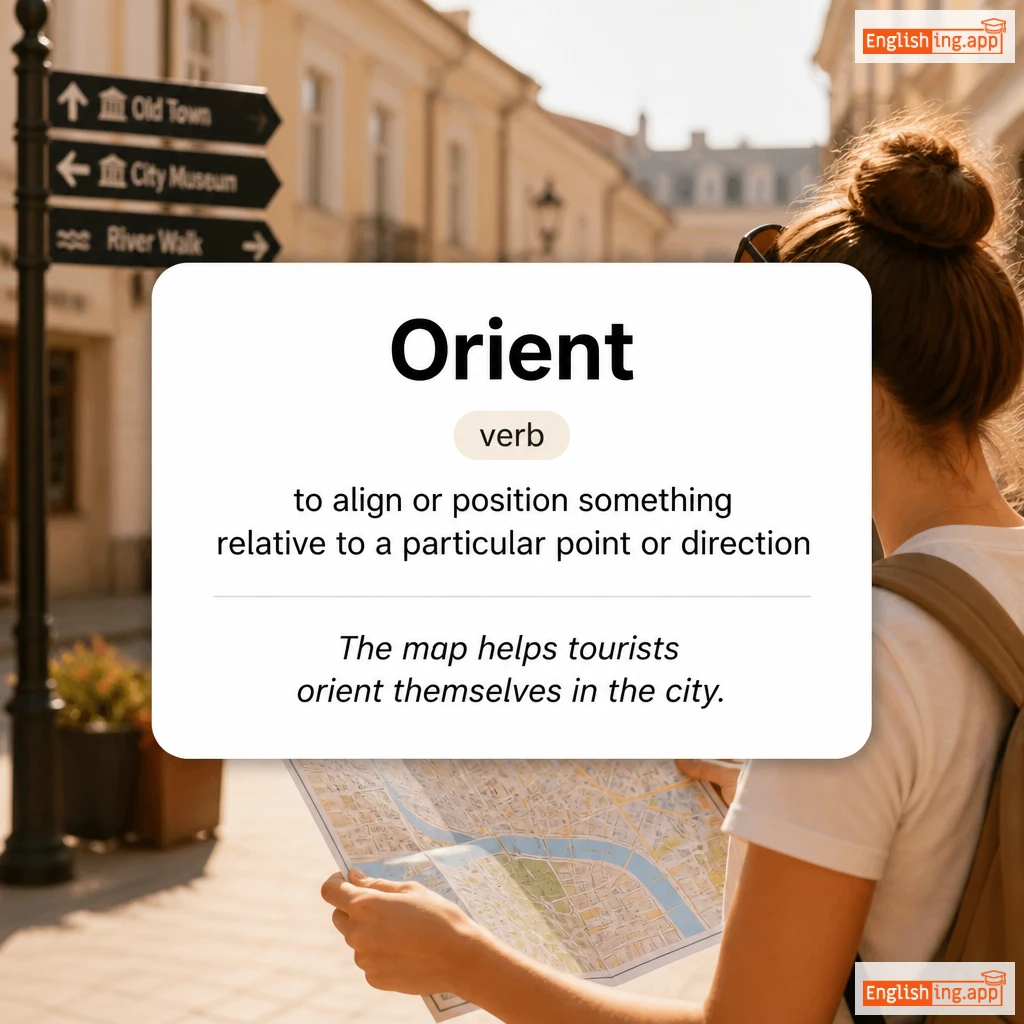
Orient definition card — visual illustration of the meaning
verb C1
/ˈɔː.ri.ənt/

to align or position something relative to a particular point or direction

"The map helps tourists orient themselves in the city."

adjective C1
/ˌɔː.riˈen.təl/
東アジアの国々に関連する; 東方 (oriental)

relating to the countries of East Asia; eastern

"The museum has a beautiful collection of oriental art."

"博物館には美しいオリエンタルアートのコレクションがあります。" (Hakubutsukan ni wa utsukushī oriental āto no korekushon ga arimasu)
adjective C1
/ˌɔːrnəˈmɛntl/
装飾的な (shōshokuteki na)

Serving as decoration; decorative rather than functional.

"The garden was filled with ornamental plants."

"庭は装飾的な植物でいっぱいだった。" (Niwa wa shōshokuteki na shokubutsu de ippai datta.)
adjective C1
/ɔːˈneɪt/
華やかな (hanayakana)

elaborately or highly decorated

"The palace hall was filled with ornate furniture and paintings."

"宮殿のホールは華やかな家具と絵画でいっぱいだった。" (Kyuuden no hōru wa hanayakana kagu to kaiga de ippai datta.)
adjective C1
/ˈɔːrθədɑːks/

conforming to traditional beliefs or practices

"He comes from a very orthodox family."

noun C1
/ˈɔːrθədɑːksi/
正統 (seito)

traditional or generally accepted beliefs and practices

"The religious leader defended the orthodoxy of the faith."

"宗教指導者は信仰の正統性を守った。" (Shūkyō shidōsha wa shinkō no seitō-sei o mamotta.)
adjective C1
/ˌɔːrθəˈpiːdɪk/
骨や筋肉の変形の修正に関連する (kotsu ya kinniku no henkei no shūsei ni kanren suru)

Relating to the correction of deformities of bones or muscles.

"She visited an orthopedic surgeon for her back pain."

"彼女は背中の痛みのために整形外科医に行った。" (Kanojo wa senaka no itami no tame ni seikeigeka-i ni itta.)
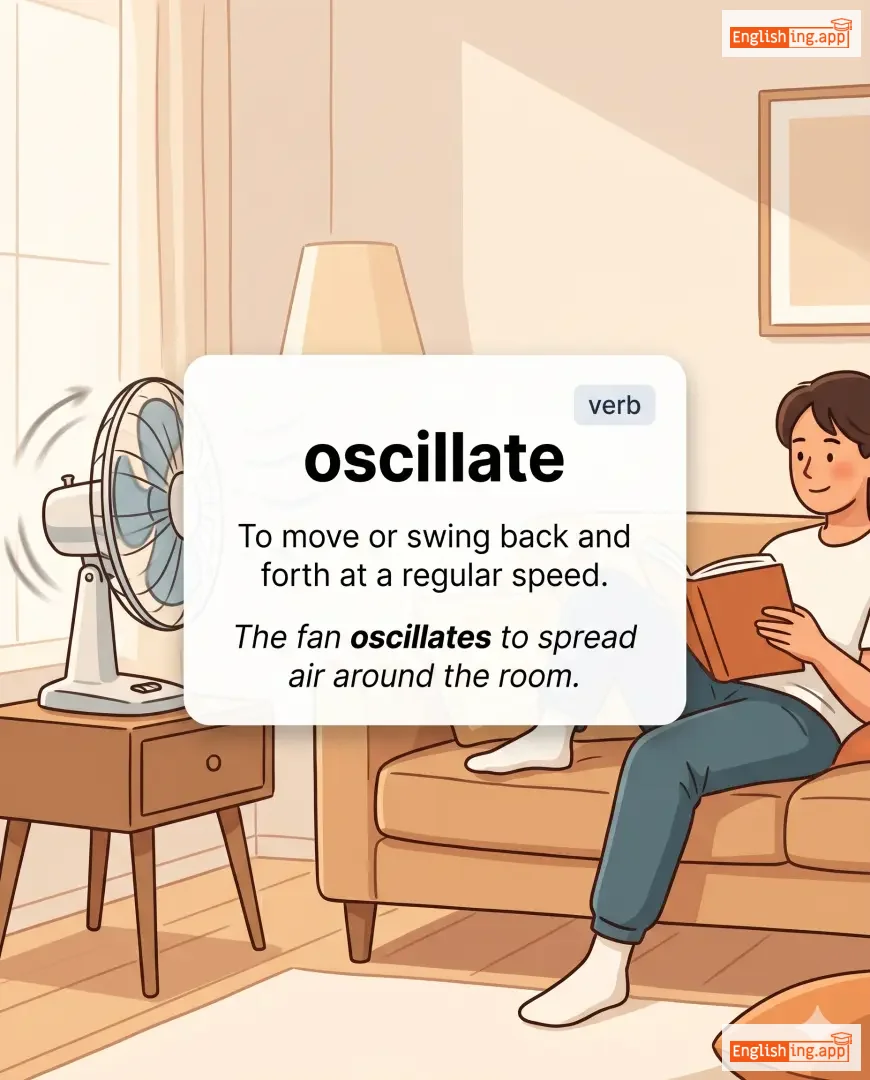
oscillate definition card — visual illustration of the meaning
verb C1
/ˈɑːsɪleɪt/
幸福 (koufuku)

To move or swing back and forth at a regular speed.

"The fan oscillates to spread air around the room."

"彼女は賞を受け取ったとき、喜びを隠せなかった。" (Kanojo wa shou wo uketotta toki, yorokobi wo kakusenakatta.)
noun C1
/ˌɑːsɪˈleɪʃən/
振動 (shindou)

The movement back and forth at a regular speed.

"The oscillation of the pendulum controls the clock."

"振り子の振動が時計を制御します。" (Furiko no shindou ga tokei o seigyo shimasu.)
adjective C1
/ɒˈstɛnsəbl/
見せかけの (misekake no)

stated or appearing to be true, but not necessarily so

"His ostensible reason for leaving was illness, but many doubted it."

"彼の出発の見せかけの理由は病気だったが、多くの人がそれを疑っていた。" (Kare no shuppatsu no misekake no riyū wa byōki datta ga, ōku no hito ga sore o utagatte ita.)
ostentatious definition card — visual illustration of the meaning
adjective C1
/ˌɒstɛnˈteɪʃəs/
見せびらかしの (misebirakashi no)

Characterized by a showy or pretentious display intended to impress others.

"He wore an ostentatious gold chain to the party."

"彼はパーティーで見せびらかしの金のチェーンをしていました。" (Kare wa pātī de misebirakashi no kin no chēn o shite imashita.)
noun C1
/ˈɒstrəsɪzəm/
追放 (tsuihou)

The act of excluding someone from a group or society.

"The student faced ostracism after breaking the rules."

"その学生は規則を破った後、追放に直面しました。" (Sono gakusei wa kisoku o yabutta ato, tsuihō ni chokumen shimashita.)
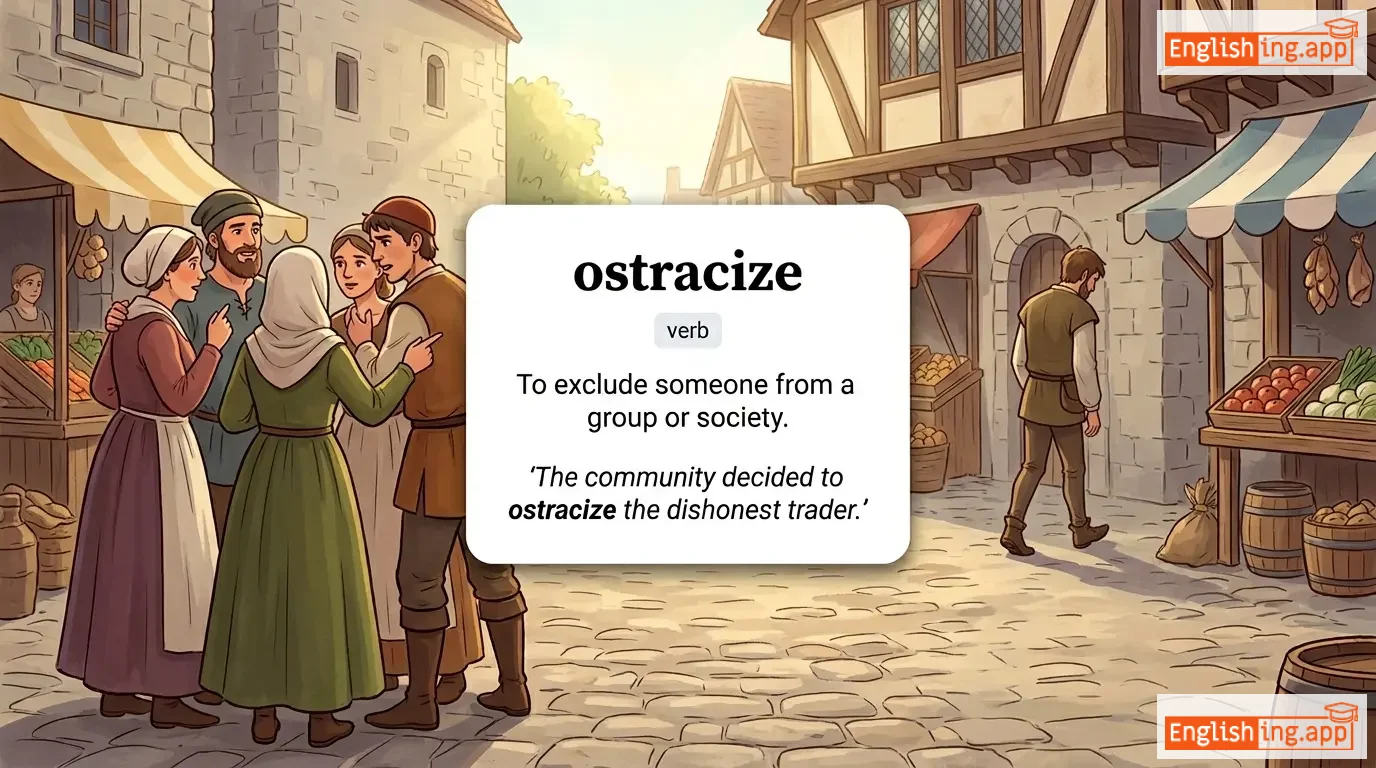
ostracize definition card — visual illustration of the meaning
verb C1
/ˈɒstrəsaɪz/
追放する (tsuihou suru)

To exclude someone from a group or society.

"The community decided to ostracize the dishonest trader."

"コミュニティは不正な商人を追放することを決定しました。" (Komyuniti wa fusei na shounin o tsuihou suru koto o kettei shimashita.)
verb C1
/aʊst/
追放する (tsuihousuru)

To remove someone from a position or place of power or authority.

"The rebels ousted the dictator from power."

"反乱者は独裁者を権力から追い出しました。" (Hanran-sha wa dokusaisha o kenryoku kara oidasimashita.)
adjective C1
/ˌaʊt ən ˈaʊt/
完全な (kanzenna)

complete; absolute; used to emphasize something extreme

"The speech was an out-and-out lie."

"そのスピーチは完全な嘘だった。" (Sono supiichi wa kanzenna uso datta.)
adjective C1
/ˌaʊt əv ðə ˈweɪ/
人里離れた場所 (hitozato hanareta basho)

remote or unusual; not in a convenient or usual location

"They stayed in an out-of-the-way village."

"彼らは人里離れた村に滞在しました。" (Karera wa hitozato hanareta mura ni taizai shimashita.)
noun C1
/ˈaʊtkæst/
社会的に排除された人 (shakaiteki ni haijo sareta hito)

a person who is rejected or excluded from society or a group

"He felt like an outcast at school."

"彼は学校でアウトカストのように感じた。" (Kare wa gakkō de autokasuto no yō ni kanjita.)
noun C1
/ˈaʊtˌkraɪ/
抗議 (kougi)

A strong expression of public anger or disapproval.

"The decision sparked an outcry among the citizens."

"その決定は市民の間で抗議を引き起こしました。" (Sono kettei wa shimin no aida de kougi wo hikiokoshimashita.)
verb C1
/ˌaʊtˈduː/
超える (koeru)

To do better than someone else; to surpass.

"She always tries to outdo her classmates in exams."

"彼女は試験でクラスメートを常に超えようとします。" (Kanojo wa shiken de kurasumeeto wo jōni koeyou to shimasu.)
noun C1
/ˈaʊtˌɡroʊθ/
成長 (seichou)

something that grows out of something else; a natural development or result

"The new policy was an outgrowth of years of debate."

"新しい政策は数年の議論の成長でした。" (Atarashii seisaku wa suunen no giron no seichou deshita.)
adjective C1
/ˌaʊtˈlændɪʃ/
奇妙 (kimyō)

Looking or sounding bizarre or unfamiliar; strange.

"He wore an outlandish costume to the festival."

"彼は祭りに奇妙な衣装を着ていました。" (Kare wa matsuri ni kimyō na ishō o kite imashita.)