Vocabulaires

Découvrez, apprenez et maîtrisez le vocabulaire anglais

noun C1
/naɪˈiːvteɪ/

The quality of being naive; lack of experience, wisdom, or judgment.

"His naivete made him an easy target for manipulation."

noun C1
/naɪˈiːvɪti/
無邪気 (muzaki)

The quality of being innocent, simple, and lacking experience or sophistication.

"Her naivety made her trust people too easily."

"彼女の無邪気は、彼女が人々をあまりにも簡単に信頼させました。" (Kanojo no muzaki wa, kanojo ga hitobito o amari ni mo kantan ni shinrai sasemashita.)
adjective C1
/ˈneɪmləs/
無名 (mumei)

Without a name or not known by name.

"A nameless fear crept over him in the dark room."

"無名の恐怖が暗い部屋で彼を襲った。" (Mumei no kyōfu ga kurai heya de kare o osotta.)
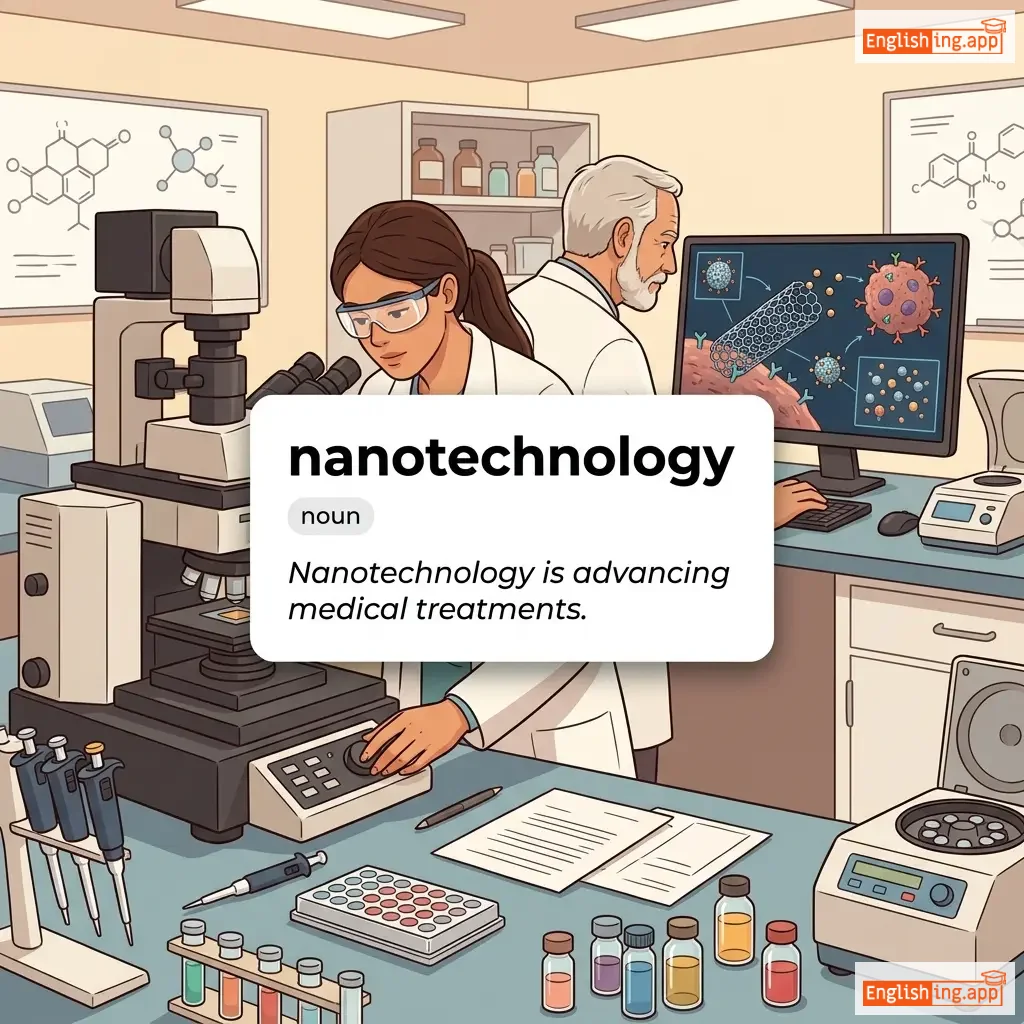
nanotechnology definition card — visual illustration of the meaning
noun C1
ˌnæn.oʊ.tekˈnɒl.ə.dʒi
ナノテクノロジー (nanotekunorojī)

The branch of technology that deals with dimensions and tolerances of less than 100 nanometers.

"Nanotechnology is advancing medical treatments."

"ナノテクノロジーは医療治療の進歩を促進しています。" (Nanotekunorojī wa iryō chiryō no shinpo o sokushin shiteimasu.)
narcissism definition card — visual illustration of the meaning
noun C1
/ˈnɑːrsɪsɪzəm/
自己愛 (jikoi)

Excessive interest in or admiration of oneself.

"His constant selfies were a sign of his narcissism."

"彼の絶え間ない自撮りは、彼の自己愛の表れだった。" (kare no taemajanai jidorii wa, kare no jikoi no araware datta.)
noun C1
/ˈnɑːrsɪsɪst/
ナルシシスト (narushisuto)

A person who has an excessive interest in or admiration of themselves.

"Everyone avoided him because he was a narcissist."

"みんな彼を避けていた、なぜなら彼はナルシシストだったから。" (Minna kare o sakete ita, nazenara kare wa narushisuto datta kara.)
noun C1
/nɑːrˈkɒtɪk/
麻薬 (mayaku)

A drug that dulls the senses and relieves pain, often causing sleep and sometimes addiction.

"The police seized a large amount of narcotic substances."

"警察は大量の麻薬を押収した。" (Keisatsu wa tairyo no mayaku o oshū shita.)
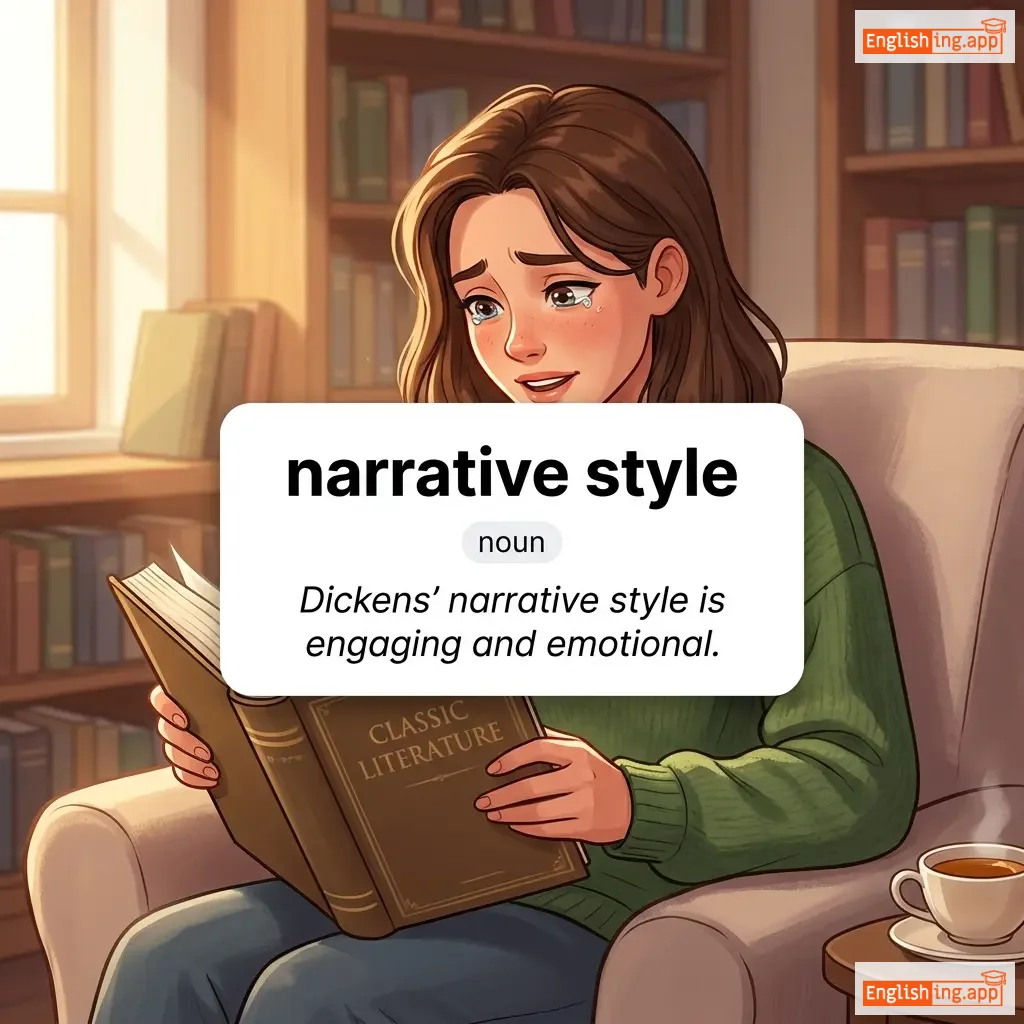
narrative style definition card — visual illustration of the meaning
noun C1
ˈnærətɪv staɪl
物語のスタイル (monogatari no sutairu)

The way in which a story is told, including the point of view and the voice of the narrator.

"Dickens' narrative style is engaging and emotional."

"ディケンズの物語のスタイルは魅力的で感情的です。" (Dikenzu no monogatari no sutairu wa miryokuteki de kanjō-teki desu.)
adjective C1
/ˌnæroʊˈmaɪndɪd/

Having a limited outlook or unwillingness to accept different opinions or ideas.

"She was too narrow-minded to consider other perspectives."

adverb C1
/ˈnæroʊli/
かろうじて; 辛うじて (karōjite; karōjite)

by a small margin; barely; in a limited way

"She narrowly escaped the accident."

"彼女は事故をかろうじて避けた。" (Kanojo wa jiko o karōjite saketa.)
adjective C1
/ˈneɪzl/
鼻音の (bion no)

Relating to the nose; a sound produced through the nose.

"He spoke with a nasal voice due to his cold."

"風邪で彼は鼻声で話した。" (Kaze de kare wa hanagoe de hanashita.)
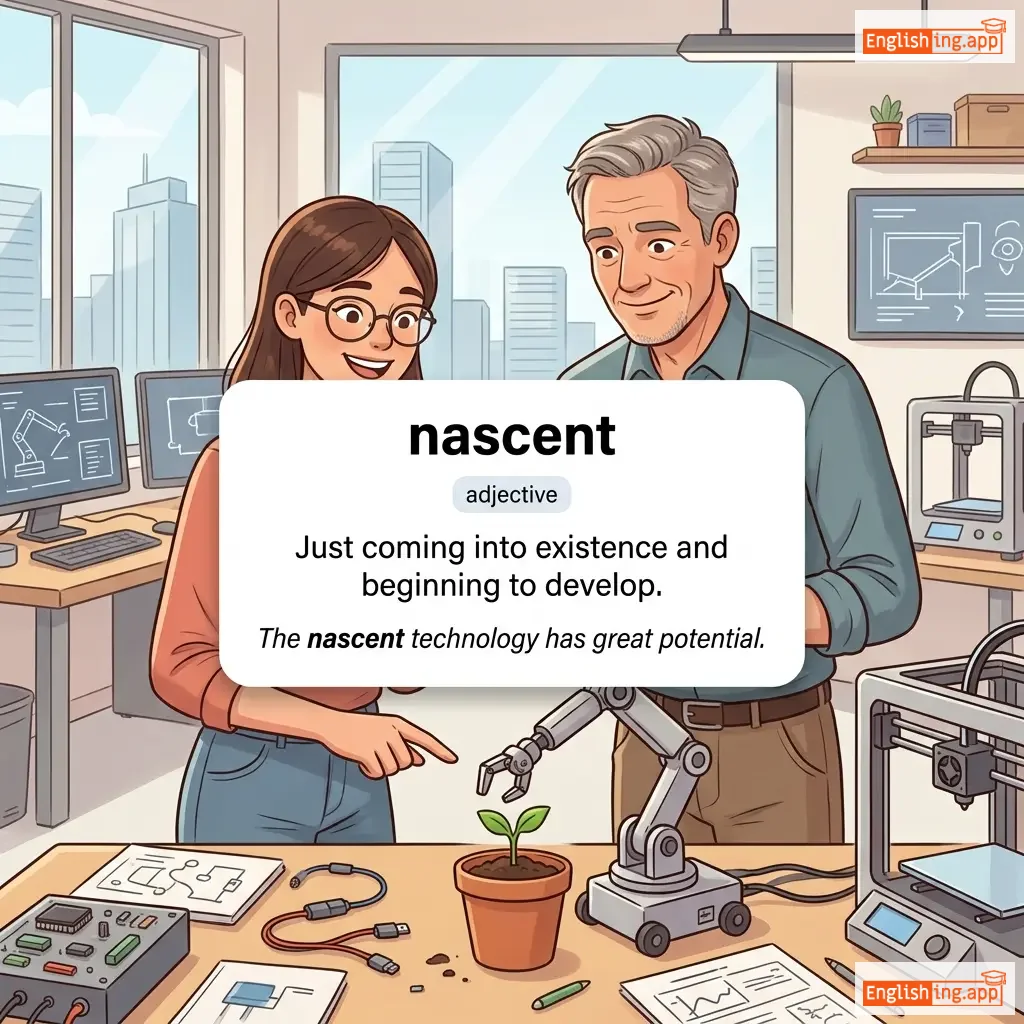
nascent definition card — visual illustration of the meaning
adjective C1
/ˈneɪsnt/
萌芽 (hōga)

Just coming into existence and beginning to develop.

"The nascent technology has great potential."

"萌芽中の技術は大きな可能性を持っています。" (Hōgachū no gijutsu wa ōkina kanōsei o motteimasu.)
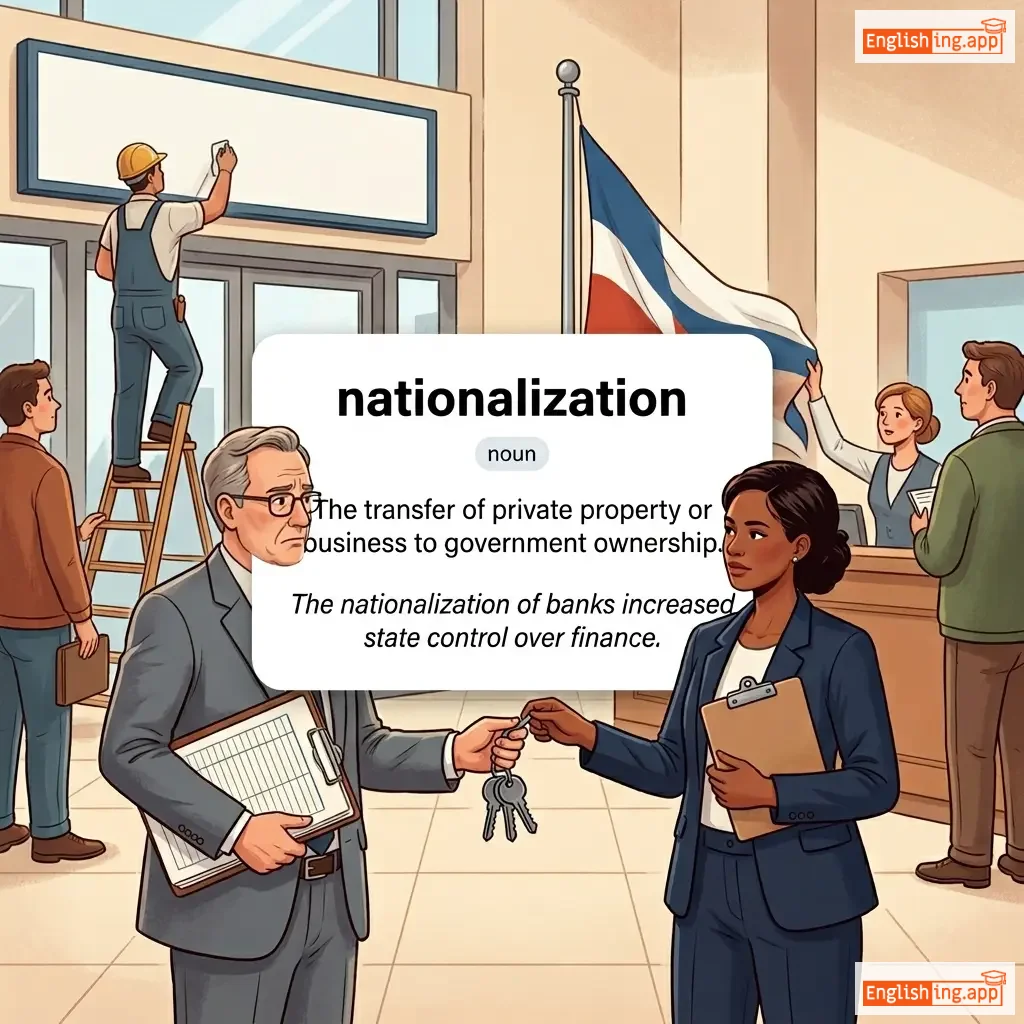
nationalization definition card — visual illustration of the meaning
noun C1
/ˌnæʃ.ən.ə.laɪˈzeɪ.ʃən/
国有化 (kokuyuka)

The transfer of private property or business to government ownership.

"The nationalization of banks increased state control over finance."

"銀行の国有化は、金融への国家の管理を強化した。" (Ginkou no kokuyuka wa, kin'yu e no kokka no kanri o kyōka shita.)
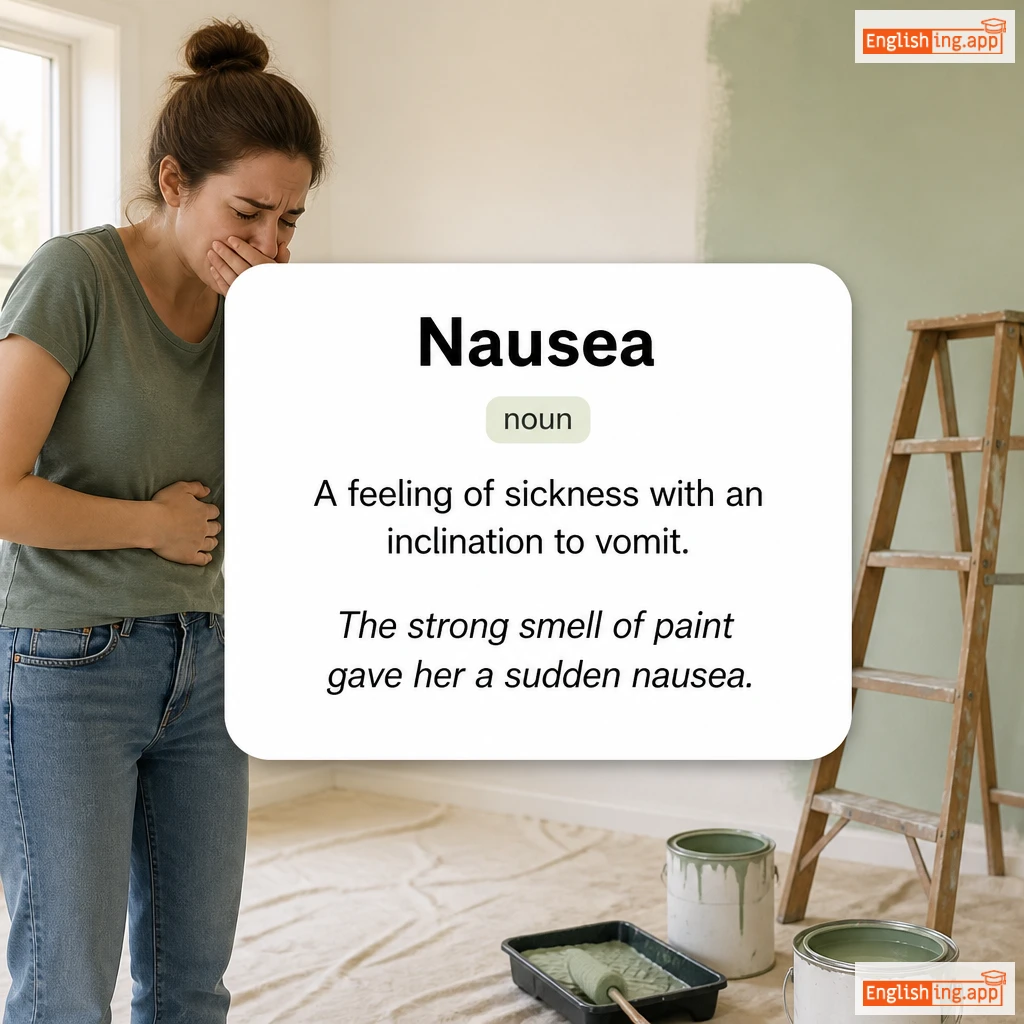
Nausea definition card — visual illustration of the meaning
noun C1
/ˈnɔːziə/
吐き気 (hakike)

A feeling of sickness with an inclination to vomit.

"The strong smell of paint gave her a sudden nausea."

"強いペンキの匂いが彼女に突然吐き気を与えた。" (Tsuyoi penki no nioi ga kanojo ni totsuzen hakike o ataeta.)
adjective C1
/ˈnɔːʃəs/
吐き気を感じる (hakike o kanjiru)

feeling like you are about to vomit; causing a feeling of sickness

"The smell of rotten food made her feel nauseous."

"腐った食べ物の匂いが彼女に吐き気を感じさせた。" (kusatta tabemono no nioi ga kanojo ni hakike o kanjiraseta.)
adjective C1
/ˈnɔːtɪkəl/
航海 (koukai)

relating to ships, sailors, or navigation on water

"He studied nautical charts before setting sail."

"彼は出航前に海図を勉強しました。" (Kare wa shukkou mae ni kaizu wo benkyou shimashita.)
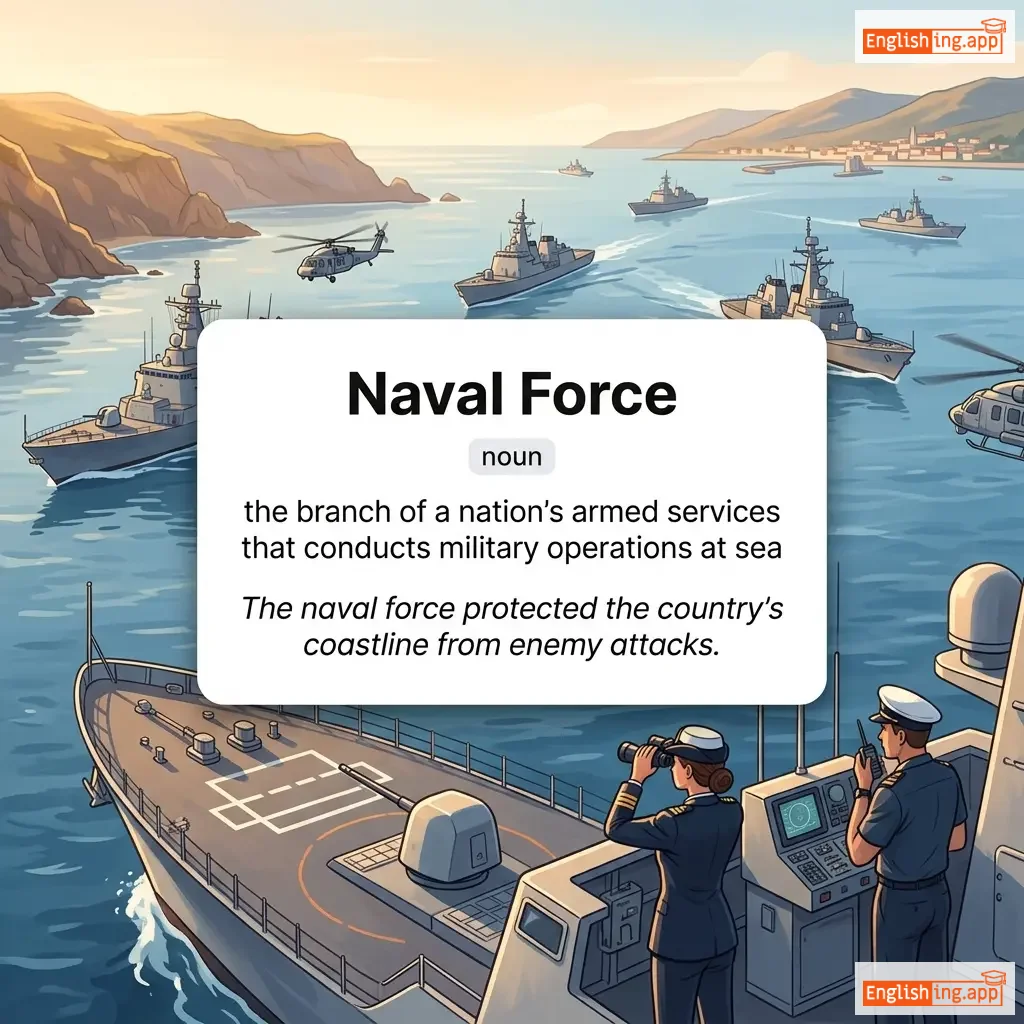
Naval Force definition card — visual illustration of the meaning
noun C1
/ˈneɪ.vəl fɔːrs/
海軍 (Kaigun)

the branch of a nation's armed services that conducts military operations at sea

"The naval force protected the country's coastline from enemy attacks."

"海軍は敵の攻撃から国の海岸線を守った" (Kaigun wa teki no kougeki kara kuni no kaiganssen o mamotta)
👶

Navel

noun C1
/ˈneɪvəl/

the small hollow or raised area in the middle of the stomach, also called the belly button

"The baby’s navel was carefully cleaned after birth."

adjective C1
/ˈnæv.ɪ.ɡə.bəl/
航行可能 (kōkō kanō)

Able to be sailed on or through by ships or boats.

"The river is navigable for large cargo ships."

"その川は大型貨物船にとって航行可能です。" (Sono kawa wa ōgata kamotsusen ni totte kōkō kanō desu.)
noun C1
/ˈneb.jʊ.lə/
星雲 (seiun)

A cloud of gas and dust in outer space, sometimes visible in the night sky.

"The Orion Nebula is one of the brightest in the sky."

"オリオン星雲は空で最も明るいものの一つです。" (Orion seiun wa sora de mottomo akarui mono no hitotsu desu.)
verb C1
/nəˈsɛsɪteɪt/
必要とする (hitsuyou to suru)

To make something necessary or unavoidable.

"The heavy rains necessitated the cancellation of the event."

"激しい雨はイベントのキャンセルを避けられないものにしました。" (Hageshī ame wa ibento no kyansel o sakerarenai mono ni shimashita.)
noun C1
/ˈnɛkˌlaɪn/
ネックライン (nekkurain)

the edge of a garment around the neck, especially as cut to form a particular shape

"The dress has a beautiful V-shaped neckline."

"そのドレスには美しいV字型のネックラインがあります。" (Sono doresu ni wa utsukushī V-ji-gata no nekkurain ga arimasu.)
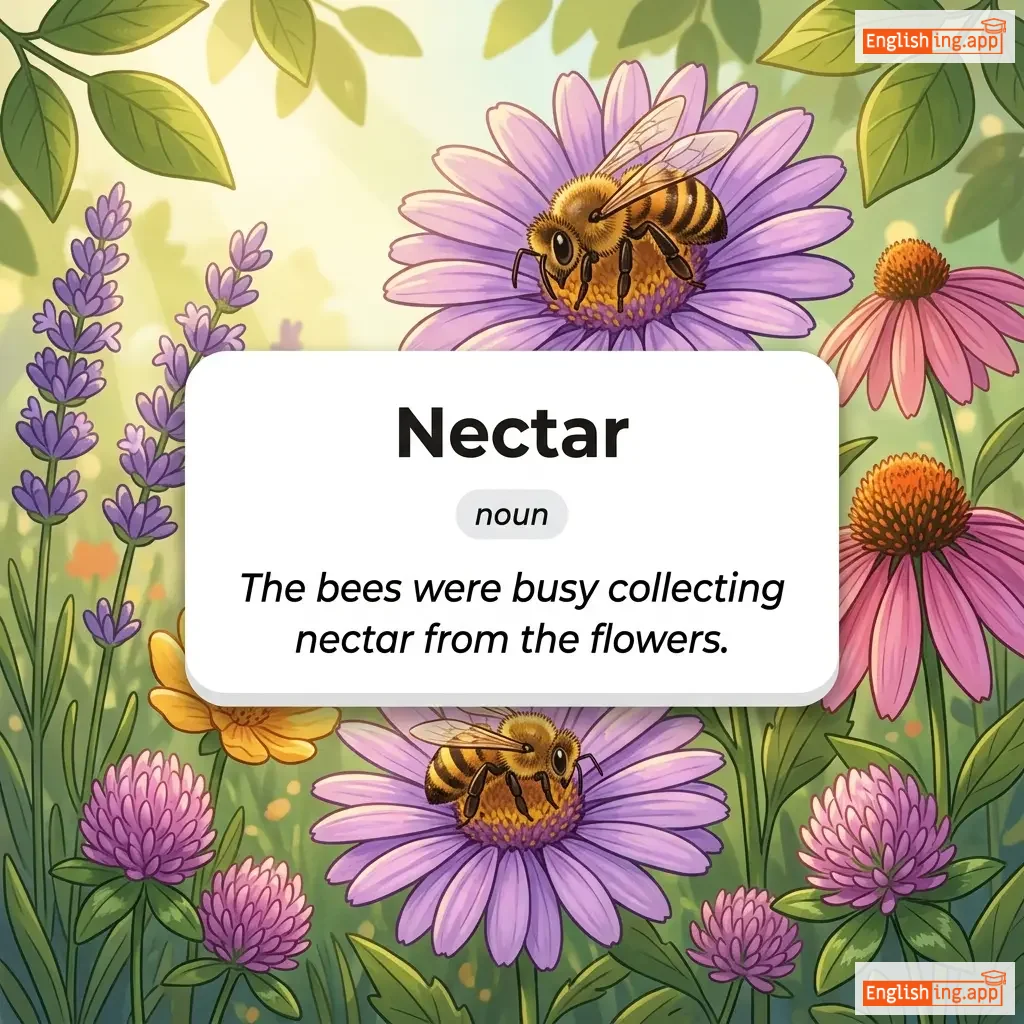
Nectar definition card — visual illustration of the meaning
noun C1
/ˈnɛktər/
甘露 (kanro)

a sweet liquid produced by flowers and collected by bees; in mythology, the drink of the gods

"The bees were busy collecting nectar from the flowers."

"蜂たちは花からネクターを集めるのに忙しかった。" (Hachitachi wa hana kara nekutā o atsumeru no ni isogashikatta.)
noun C1
/ˈnɛktəriːn/
ネクタリン (滑らかな皮の桃の一種) (nekutarin)

A smooth-skinned variety of peach.

"She bought a basket of fresh nectarines from the market."

"彼女は市場から新鮮なネクタリンのバスケットを買いました。" (Kanojo wa shijou kara shinzen na nekutarin no basuketto o kaimashita.)
adjective C1
/ˈniːd.ləs/
不必要な (nidoresu)

unnecessary; not required; without purpose

"The argument was needless and could have been avoided."

"その議論は不必要で、避けることができたはずだ。" (Sono giron wa fuhitsuyou de, sakeru koto ga dekita hazu da.)
noun C1
/ˈniːdəlwɜːrk/
刺繍, 手芸 (shishū, shugei)

The craft of sewing, embroidery, or knitting done with a needle.

"Her grandmother taught her the art of needlework."

"彼女の祖母は彼女にニードルワークの技術を教えました。" (Kanojo no sobo wa kanojo ni needlework no gijutsu o oshiemashita.)
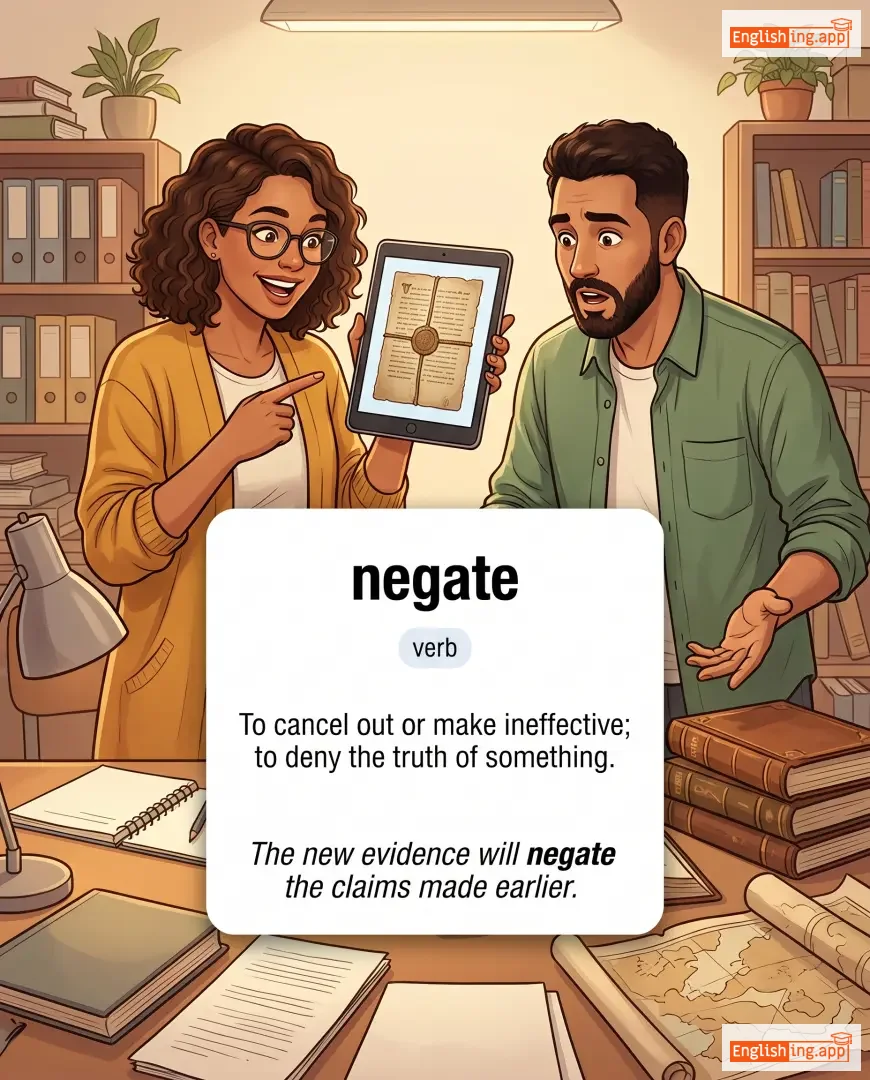
negate definition card — visual illustration of the meaning
verb C1
/nɪˈɡeɪt/

To cancel out or make ineffective; to deny the truth of something.

"The new evidence will negate the claims made earlier."

noun C1
/nɪˈɡeɪʃən/
否定 (hitei)

The act of denying something; the contradiction or absence of something.

"The theory is built on the negation of traditional beliefs."

"理論は伝統的な信念の否定に基づいています。" (Riron wa dentō-teki na shinnen no hitei ni motozuite imasu.)
adjective C1
/nɪˈɡlɛktfʊl/
無関心 (mukanshin)

Failing to give proper care or attention.

"The neglectful parent left the child alone for hours."

"無関心な親は子供を何時間も一人で放置した。" (Mukanshin na oya wa kodomo o nan-jikan mo hitori de hōchi shita.)
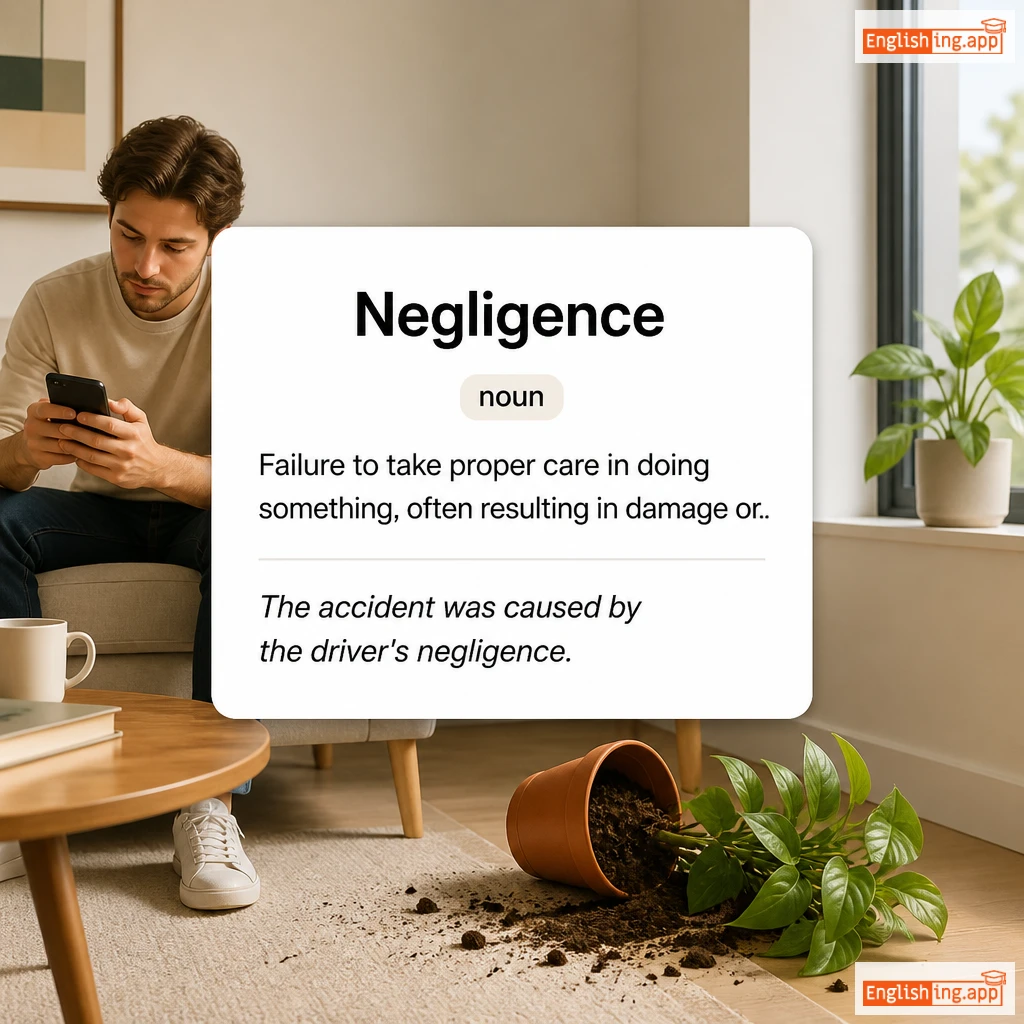
Negligence definition card — visual illustration of the meaning
noun C1
/ˈnɛɡlɪdʒəns/
怠慢 (taiman)

Failure to take proper care in doing something, often resulting in damage or harm.

"The accident was caused by the driver's negligence."

"その事故は運転手の怠慢によって引き起こされました。" (Sono jiko wa untenshu no taiman ni yotte hikiokosaremashita.)
adjective C1
/ˈnɛɡ.lɪ.dʒənt/
不注意 (fuchūi)

Failing to take proper care in doing something; careless.

"The company was found negligent in providing workplace safety."

"その会社は職場での安全対策を提供する際に不注意だと判定されました。" (Sono kaisha wa shokuba de no anzen taisaku o teikyō suru sai ni fuchūi da to hantei saremashita.)
adjective C1
/ˈnɛɡ.lɪ.dʒə.bəl/
取るに足らない (toru ni taranai)

So small or unimportant as to be not worth considering; insignificant.

"The cost of the error was negligible."

"その誤りのコストは取るに足らないものでした。" (Sono ayamari no kosuto wa toru ni taranai mono deshita.)
adjective C1
/nɪˈɡoʊ.ʃi.ə.bəl/
交渉可能 (koushou kanou)

Open to discussion or modification; capable of being bargained for.

"The salary offered is negotiable."

"提供された給与は交渉可能です。" (Teikyou sareta kyūyo wa koushou kanou desu.)
noun C1
/ˈnɛm.ə.sɪs/
敵 / ライバル (teki / raibaru)

A long-standing rival or an inescapable agent of downfall.

"For years, he considered his colleague to be his nemesis."

"何年もの間、彼は同僚を自分の敵だと思っていた。" (Nanen mono aida, kare wa douryou wo jibun no teki da to omotte ita.)
adjective C1
/ˌniːoʊˈlɪθɪk/
新石器時代の (shin sekkī jidai no)

Relating to the later part of the Stone Age, when ground or polished stone weapons and tools prevailed.

"Neolithic communities began practicing agriculture and domesticating animals."

"新石器時代のコミュニティは農業を行い、動物を飼いならし始めた。" (Shin sekkī jidai no komyuniti wa nōgyō o okonai, dōbutsu o kainarashi hajimeta.)
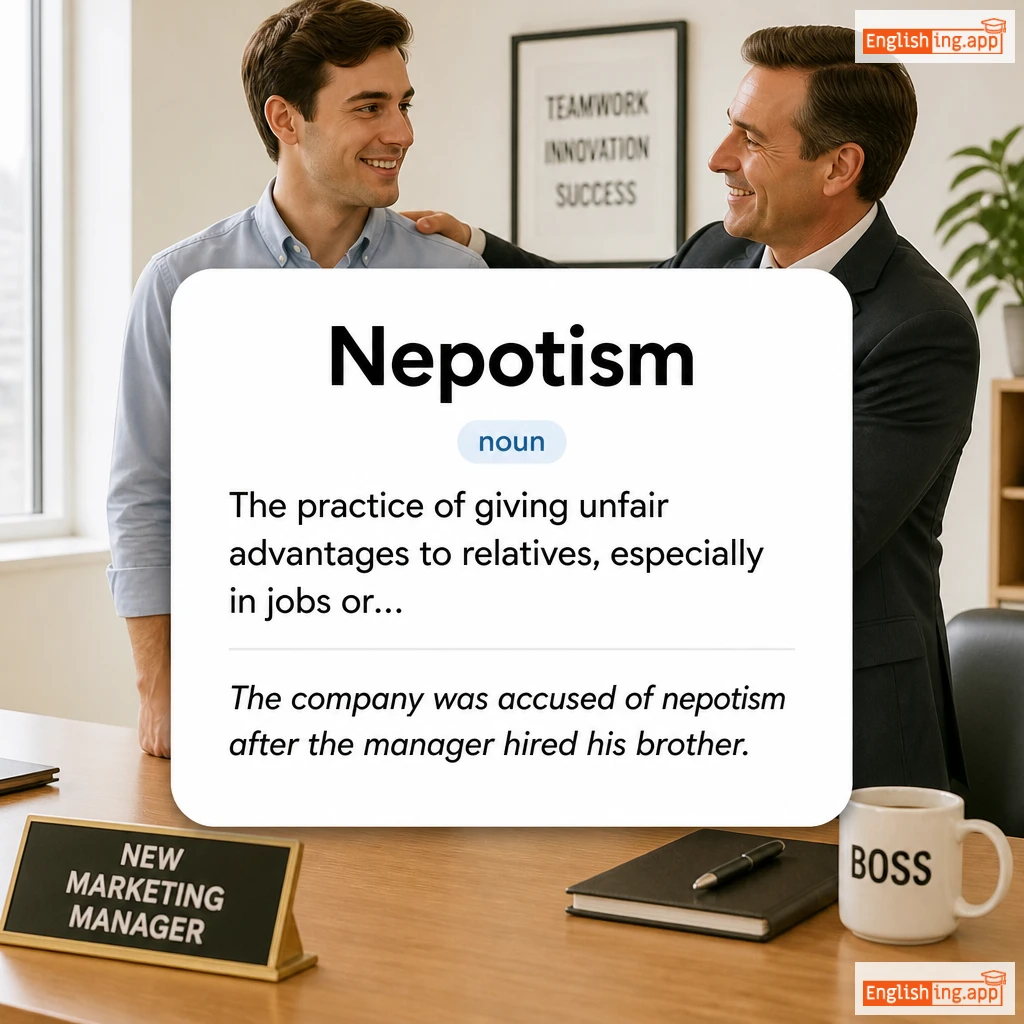
Nepotism definition card — visual illustration of the meaning
noun C1
/ˈnɛpətɪzəm/
縁故主義 (enkoshugi)

The practice of giving unfair advantages to relatives, especially in jobs or positions of power.

"The company was accused of nepotism after the manager hired his brother."

"マネージャーが兄弟を雇った後、会社は縁故主義で告発されました。" (Manējā ga kyōdai o yatotta ato, kaisha wa enkoshugi de kokuhatsu saremashita.)
verb C1
/ˈnɛsəl/
寄り添う (yorisou)

to settle or lie comfortably within or against something

"The child nestled into her mother's arms."

"その子供は母親の腕に寄り添いました。" (Sono kodomo wa hahaoya no ude ni yorisoumashita.)
adjective C1
/ˈnjʊrəl/

Relating to nerves or the nervous system.

"Scientists study neural connections in the brain."

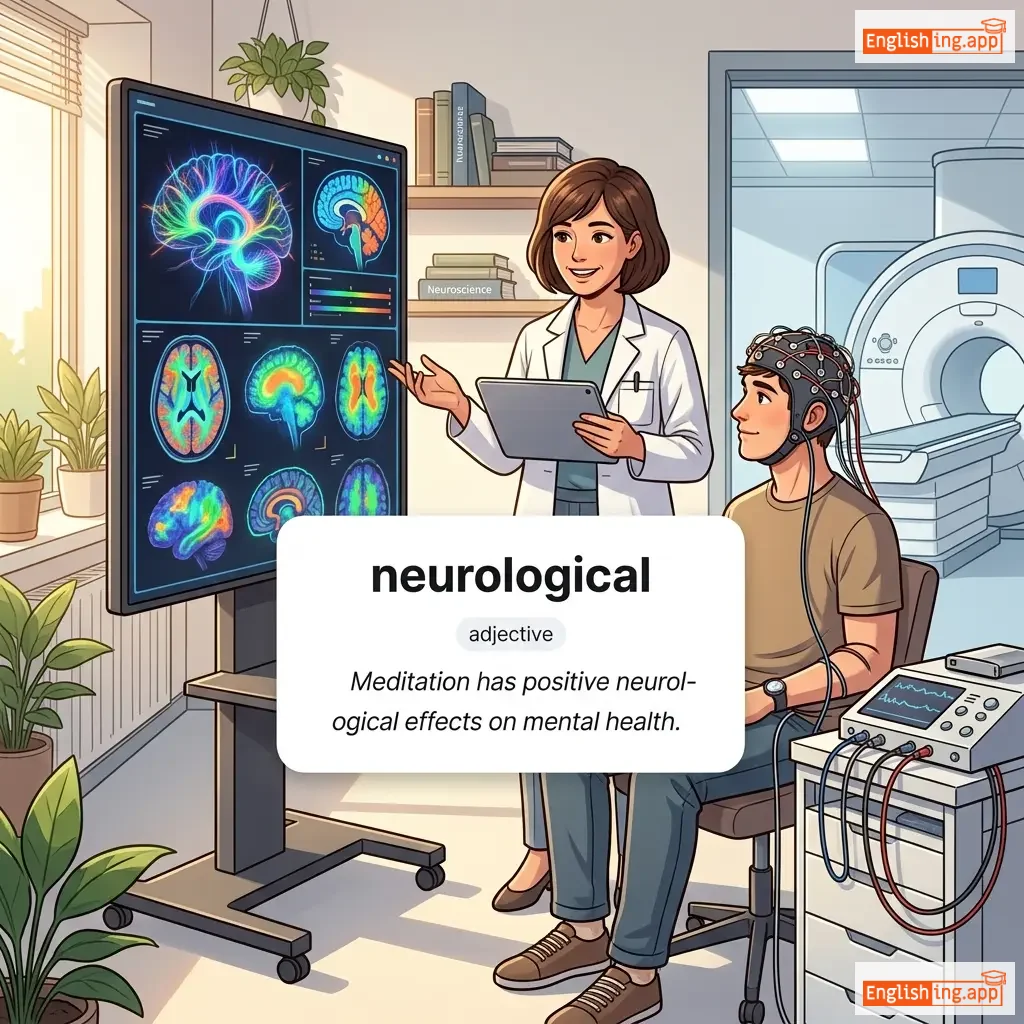
neurological definition card — visual illustration of the meaning
adjective C1
/ˌnjʊə.rəˈlɒdʒ.ɪ.kəl/
神経学的 (shinkei-gakuteki)

Relating to the anatomy, functions, and organic disorders of nerves and the nervous system.

"Meditation has positive neurological effects on mental health."

"瞑想は精神的健康に対して積極的な神経学的影響を与えます。" (Meisou wa seishinteki kenko ni taishite sekkyokuteki na shinkeigakuteki eikyō o ataemasu.)
noun C1
/njʊˈrɑːlədʒi/

The branch of medicine that deals with disorders of the nervous system.

"She specializes in neurology and treats patients with brain diseases."

neuroplasticity definition card — visual illustration of the meaning
noun C1
ˌnjʊə.rəʊ.plæsˈtɪ.sɪ.ti
神経可塑性 (shinkei kasosei)

The ability of the brain to reorganize itself by forming new neural connections throughout life.

"Meditation enhances neuroplasticity, improving memory and focus."

"瞑想はニューロプラスチック性を高め、記憶力と集中力を改善します。" (Meisou wa nyuuro purasuchikkusei o takame, kiokuryoku to shuuchuuryoku o kaizen shimasu.)
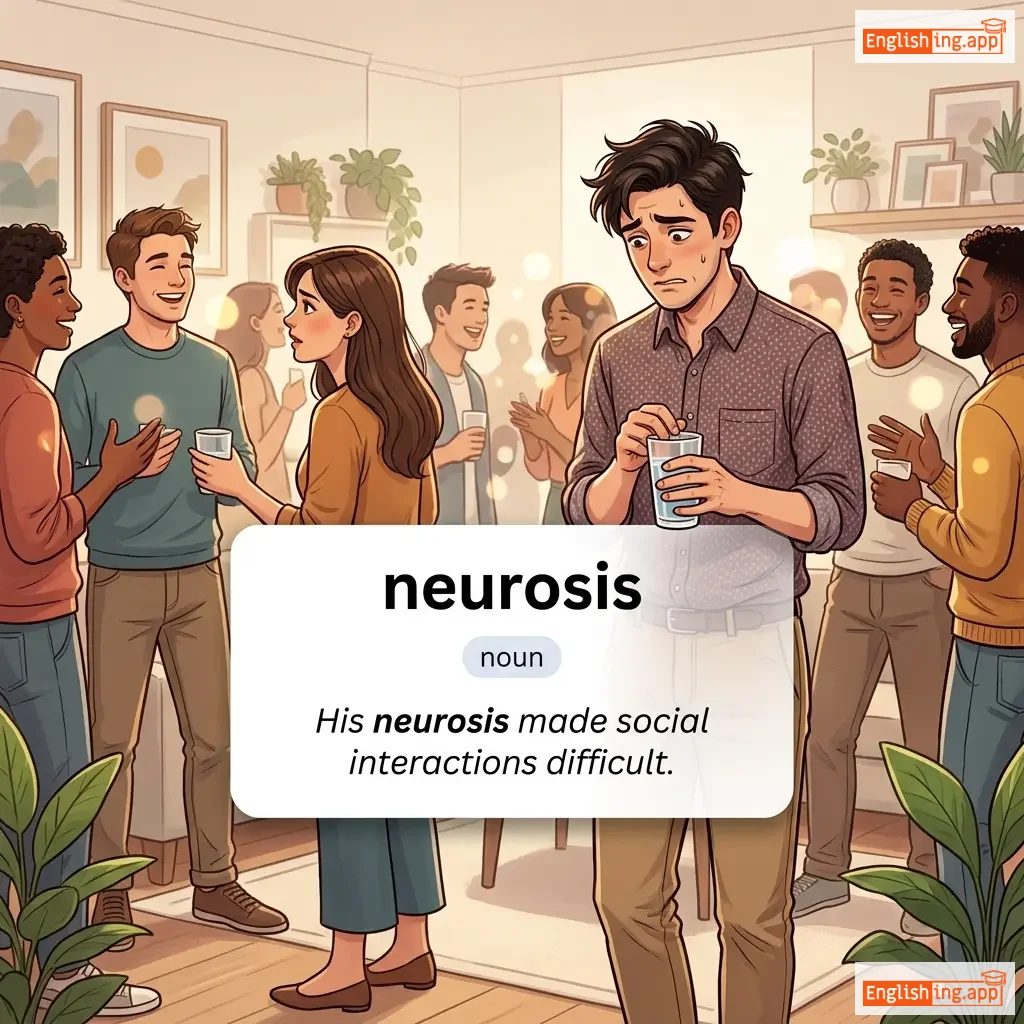
neurosis definition card — visual illustration of the meaning
noun C1
/njʊəˈrəʊ.sɪs/
神経症 (shinkeishou)

A relatively mild mental illness that is not caused by organic disease, involving symptoms of stress.

"His neurosis made social interactions difficult."

"彼の神経症は社会的な相互作用を困難にした。" (Kare no shinkeishou wa shakaiteki na sōgo sayō o kon'nan ni shita.)
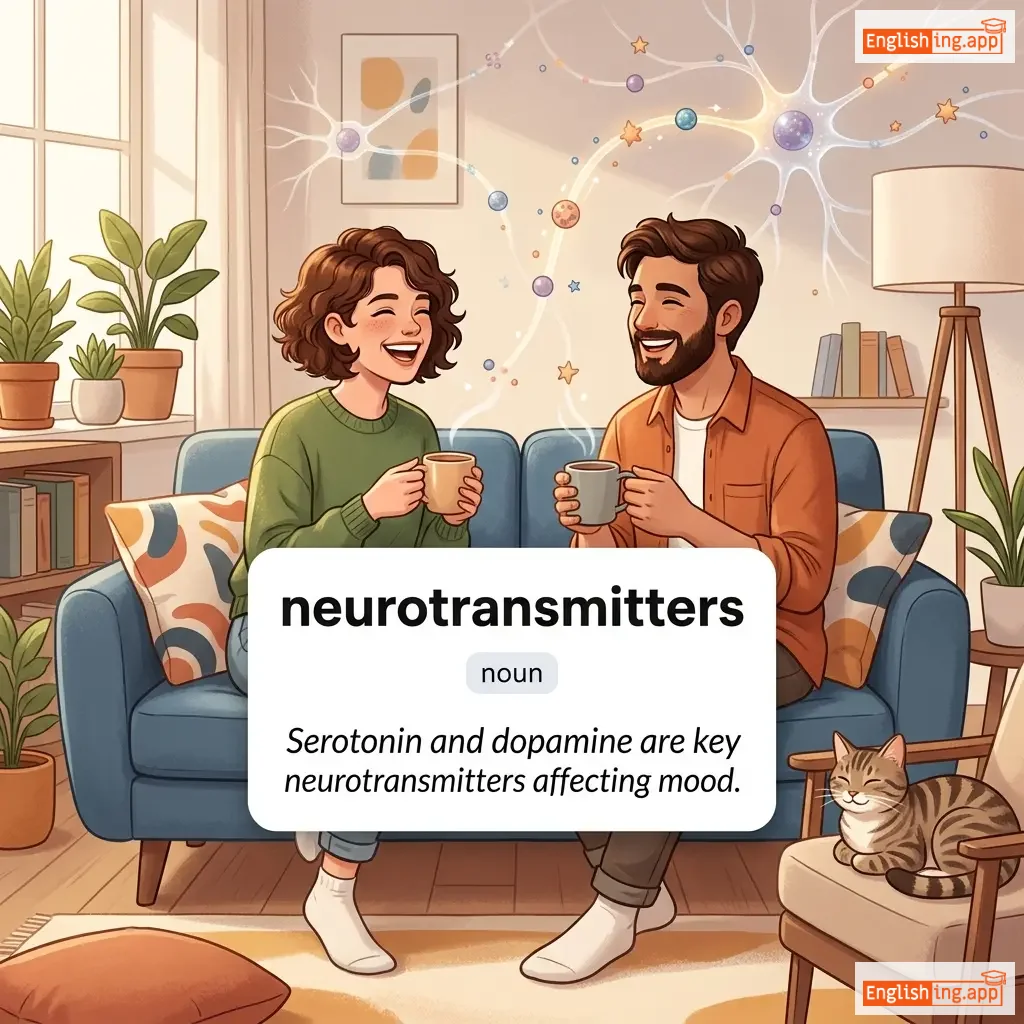
neurotransmitters definition card — visual illustration of the meaning
noun C1
/ˈnjʊə.rəʊ.trænsˌmɪt.ərs/
神経伝達物質 (shinkei dentatsu busshitsu)

Chemical messengers that transmit signals across nerve synapses, affecting mood, behavior, and cognitive functions.

"Serotonin and dopamine are key neurotransmitters affecting mood."

"セロトニンとドーパミンは気分に影響を与える主要な神経伝達物質です。" (Serotonin to Dopamine wa kibun ni eikyou wo ataeru shuyou na shinkei dentatsu busshitsu desu.)
verb C1
/ˈnuːtər/
去勢する (kyosei suru)

To remove the reproductive organs of an animal; or having no gender.

"They decided to neuter their cat to prevent more kittens."

"彼らは、もっと子猫が生まれないように、猫を去勢することに決めました。" (Karera wa, motto koneko ga umarenai you ni, neko wo kyosei suru koto ni kimemashita.)
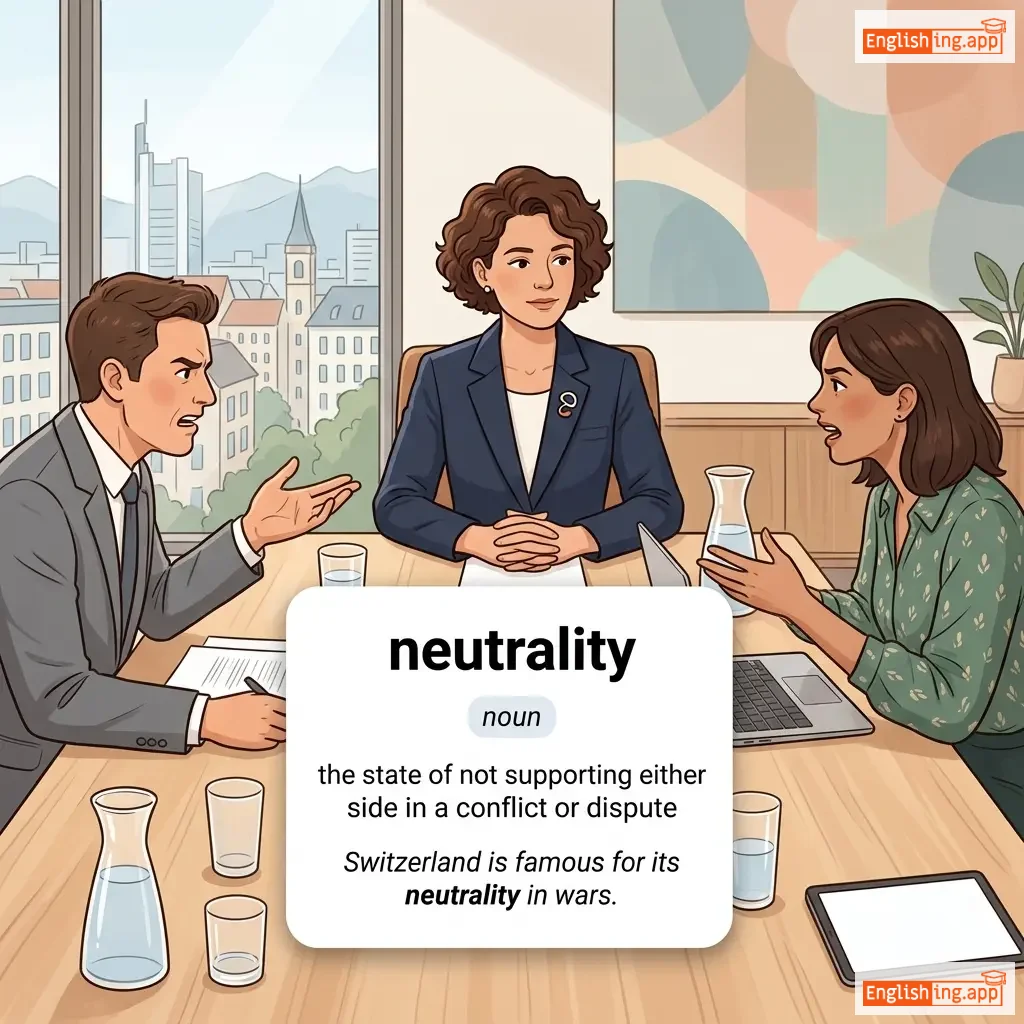
neutrality definition card — visual illustration of the meaning
noun C1
/nuːˈtræl.ə.ti/
中立 (chūritsu)

the state of not supporting either side in a conflict or dispute

"Switzerland is famous for its neutrality in wars."

"スイスは戦争での中立で有名です。" (Suisu wa sensō de no chūritsu de yūmei desu.)
verb C1
/ˈnjuːtrəlaɪz/
無力化する (muryokuka suru)

to make something ineffective or harmless

"The medicine helped neutralize the poison in his system."

"その薬は彼の体内の毒を無効にするのを助けました。" (Sono kusuri wa kare no tainai no doku o mukō ni suru no o tasukemashita.)
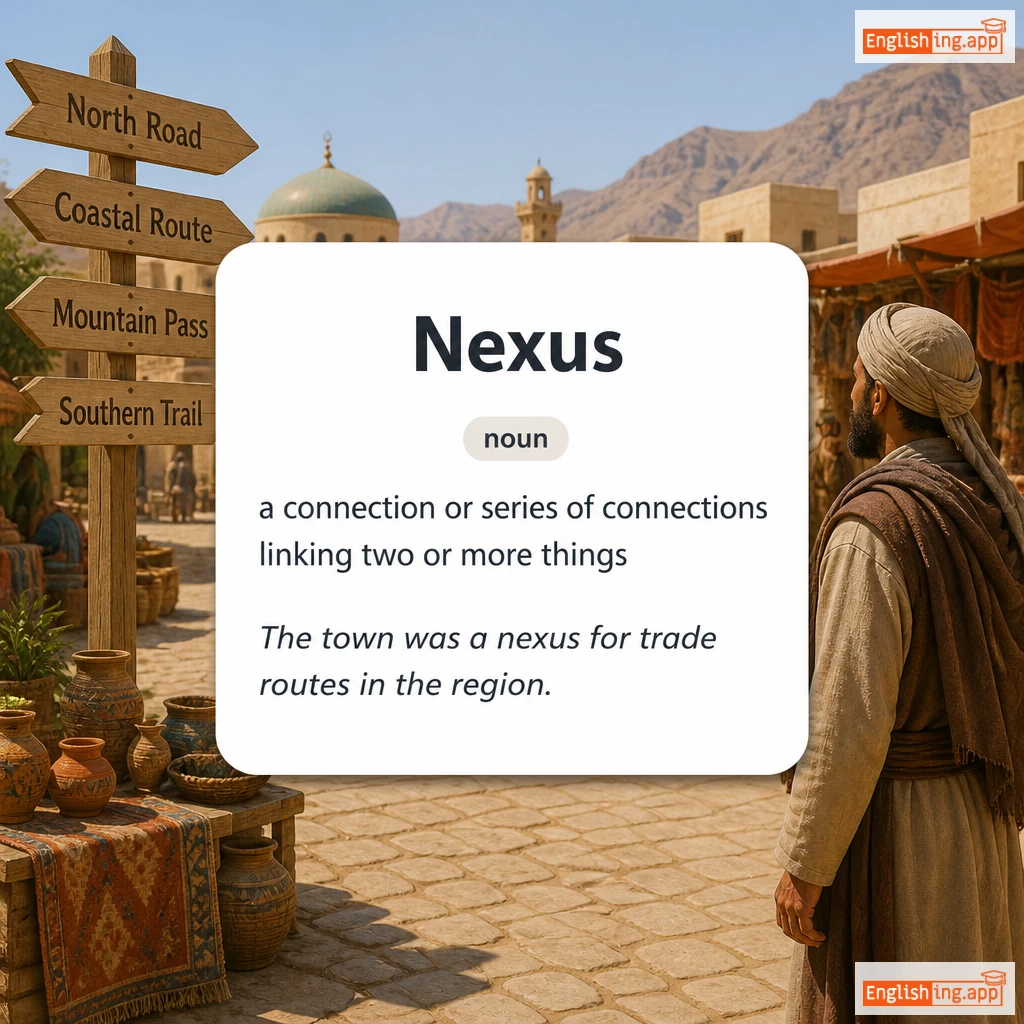
Nexus definition card — visual illustration of the meaning
noun C1
/ˈnɛksəs/
接続 (setsuzoku)

a connection or series of connections linking two or more things

"The town was a nexus for trade routes in the region."

"その街は地域の貿易ルートの接続点でした。" (Sono machi wa chiiki no boueki ruuto no setsuzoku ten deshita.)
verb C1
/ˈnɪbəl/
かじる (kajiru)

to take small bites of food

"The rabbit nibbled on a carrot."

"うさぎはにんじんをかじった。" (Usagi wa ninjin o kajitta.)
Niche definition card — visual illustration of the meaning
noun C1
/niːʃ/
ニッチ (nicchi)

a comfortable or suitable position in life or employment

"He has found his niche in the marketing industry."

"彼はマーケティング業界で自分のニッチを見つけました。" (Kare wa maketingu gyoukai de jibun no nicchi wo mitsukemashita.)
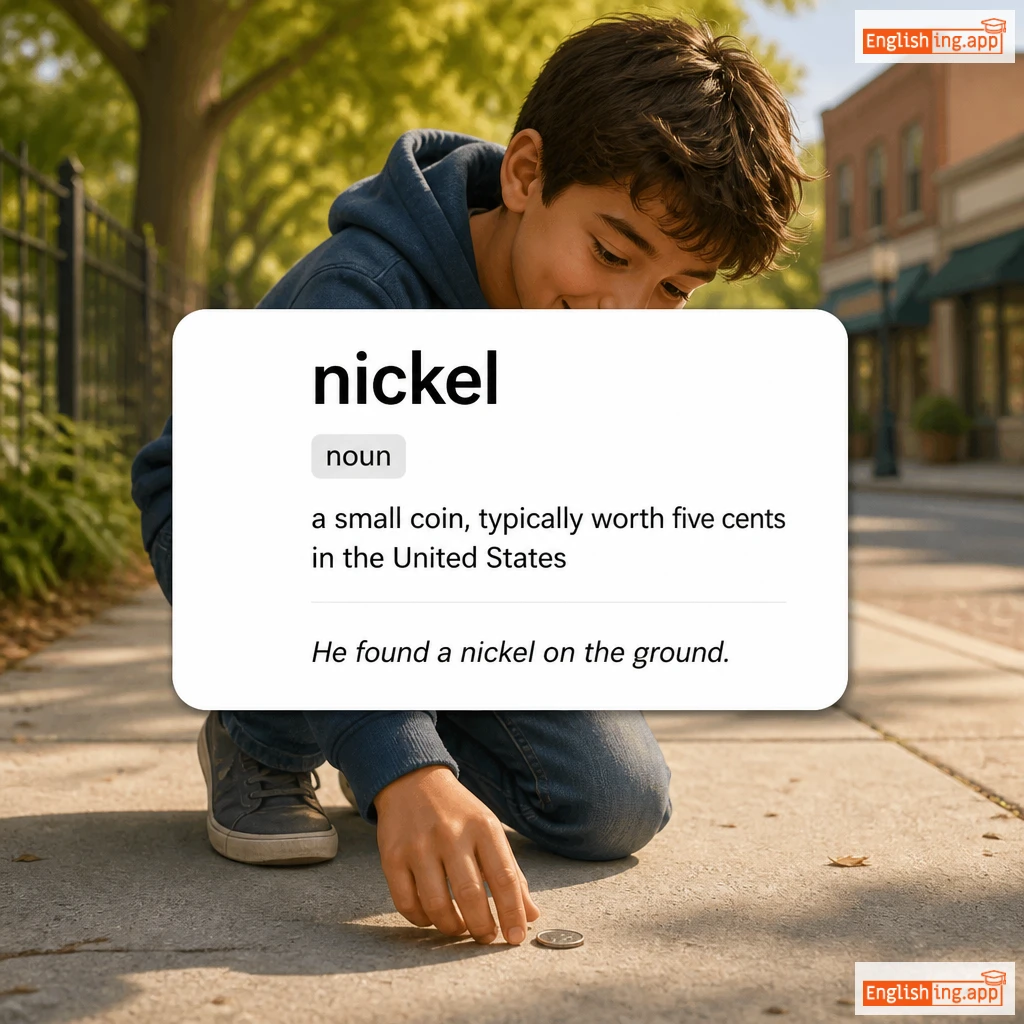
nickel definition card — visual illustration of the meaning
noun C1
/ˈnɪkəl/
ニッケル (nikkeru)

a small coin, typically worth five cents in the United States

"He found a nickel on the ground."

"彼は地面でニッケルを見つけた。" (Kare wa jimen de nikkeru o mitsuketa.)