Vocabulaires

Découvrez, apprenez et maîtrisez le vocabulaire anglais

noun C1
/naɪˈiːvteɪ/
ingenuidad (ingenuidad)

The quality of being naive; lack of experience, wisdom, or judgment.

"His naivete made him an easy target for manipulation."

"Su ingenuidad lo convirtio en un blanco facil para la manipulacion." (Su ingenuidad lo convirtio en un blanco facil para la manipulacion.)
noun C1
/naɪˈiːvɪti/
ingenuidad (ingenuidad)

The quality of being innocent, simple, and lacking experience or sophistication.

"Her naivety made her trust people too easily."

"Su ingenuidad la hizo confiar en las personas demasiado fácilmente." (Su ingenuidad la hizo confiar en las personas demasiado fácilmente.)
adjective C1
/ˈneɪmləs/
sin nombre (sin nombre)

Without a name or not known by name.

"A nameless fear crept over him in the dark room."

"Un miedo sin nombre se apoderó de él en la oscura habitación." (Un miedo sin nombre se apoderó de él en la oscura habitación.)
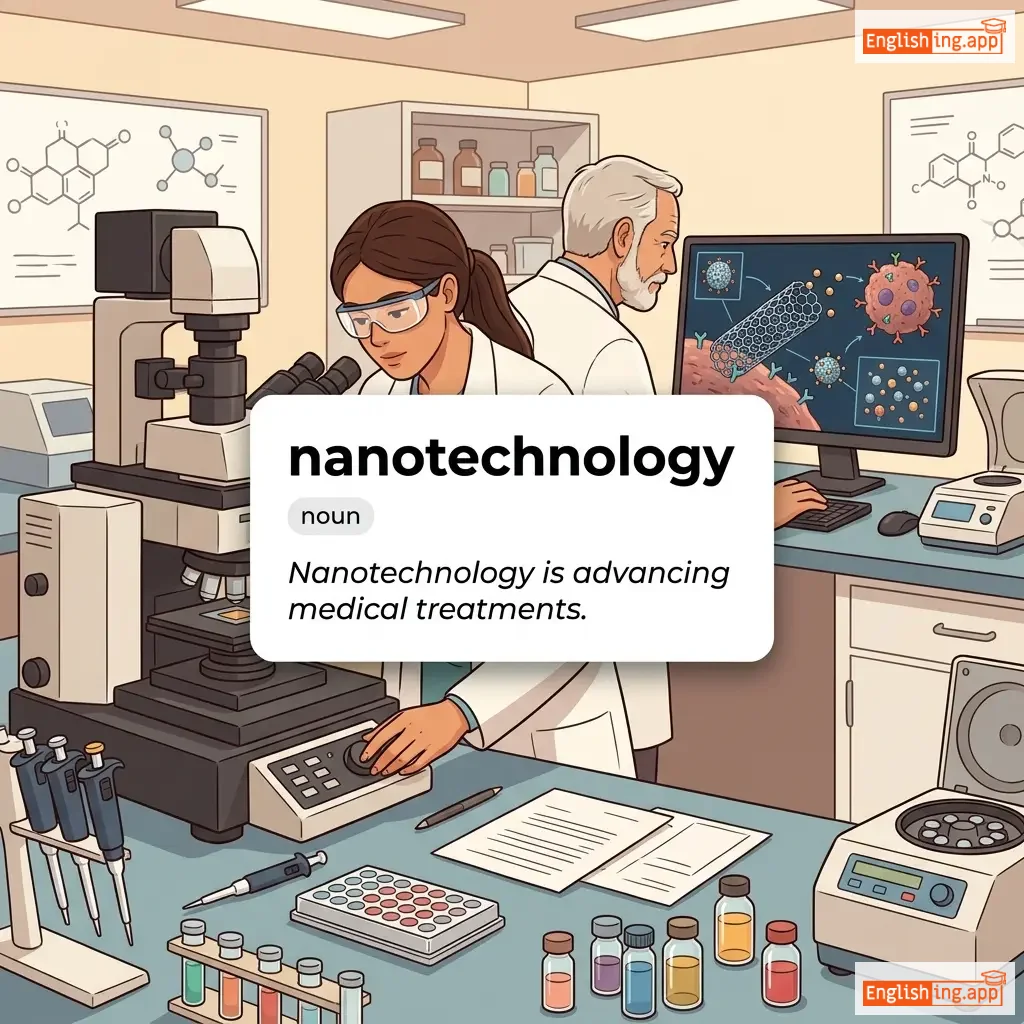
nanotechnology definition card — visual illustration of the meaning
noun C1
ˌnæn.oʊ.tekˈnɒl.ə.dʒi
nanotecnología (nanotecnologia)

The branch of technology that deals with dimensions and tolerances of less than 100 nanometers.

"Nanotechnology is advancing medical treatments."

"La nanotecnología está avanzando en los tratamientos médicos." (La nanotecnología está avanzando en los tratamientos médicos.)
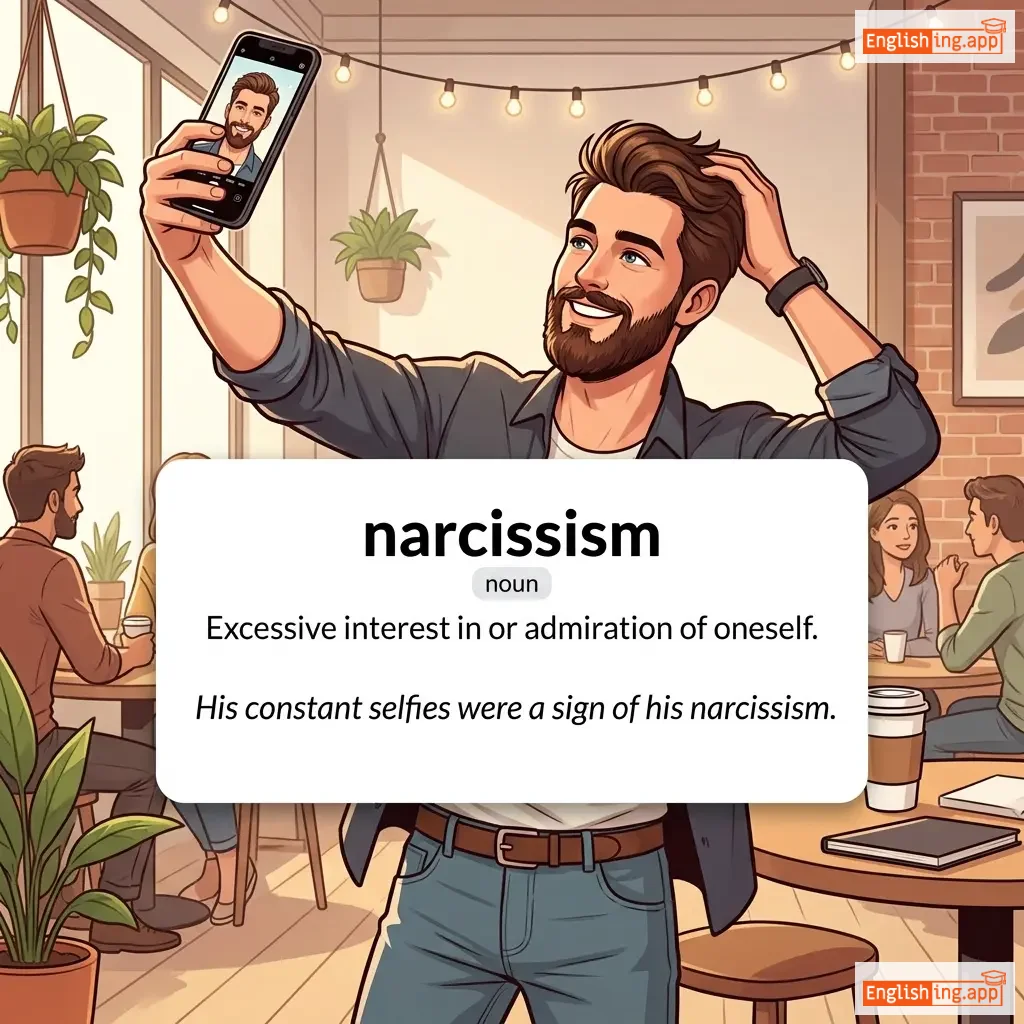
narcissism definition card — visual illustration of the meaning
noun C1
/ˈnɑːrsɪsɪzəm/
narcisismo (narcisismo)

Excessive interest in or admiration of oneself.

"His constant selfies were a sign of his narcissism."

"Sus selfies constantes eran una señal de su narcisismo." (Sus selfies constantes eran una senal de su narcisismo.)
noun C1
/ˈnɑːrsɪsɪst/
narcisista (narcisista)

A person who has an excessive interest in or admiration of themselves.

"Everyone avoided him because he was a narcissist."

"Todos lo evitaban porque era un narcisista." (Todos lo evitaban porque era un narcisista.)
noun C1
/nɑːrˈkɒtɪk/
narcótico (narkotiko)

A drug that dulls the senses and relieves pain, often causing sleep and sometimes addiction.

"The police seized a large amount of narcotic substances."

"La policía incautó una gran cantidad de sustancias narcóticas." (La policia incauto una gran cantidad de sustancias narcoticas.)
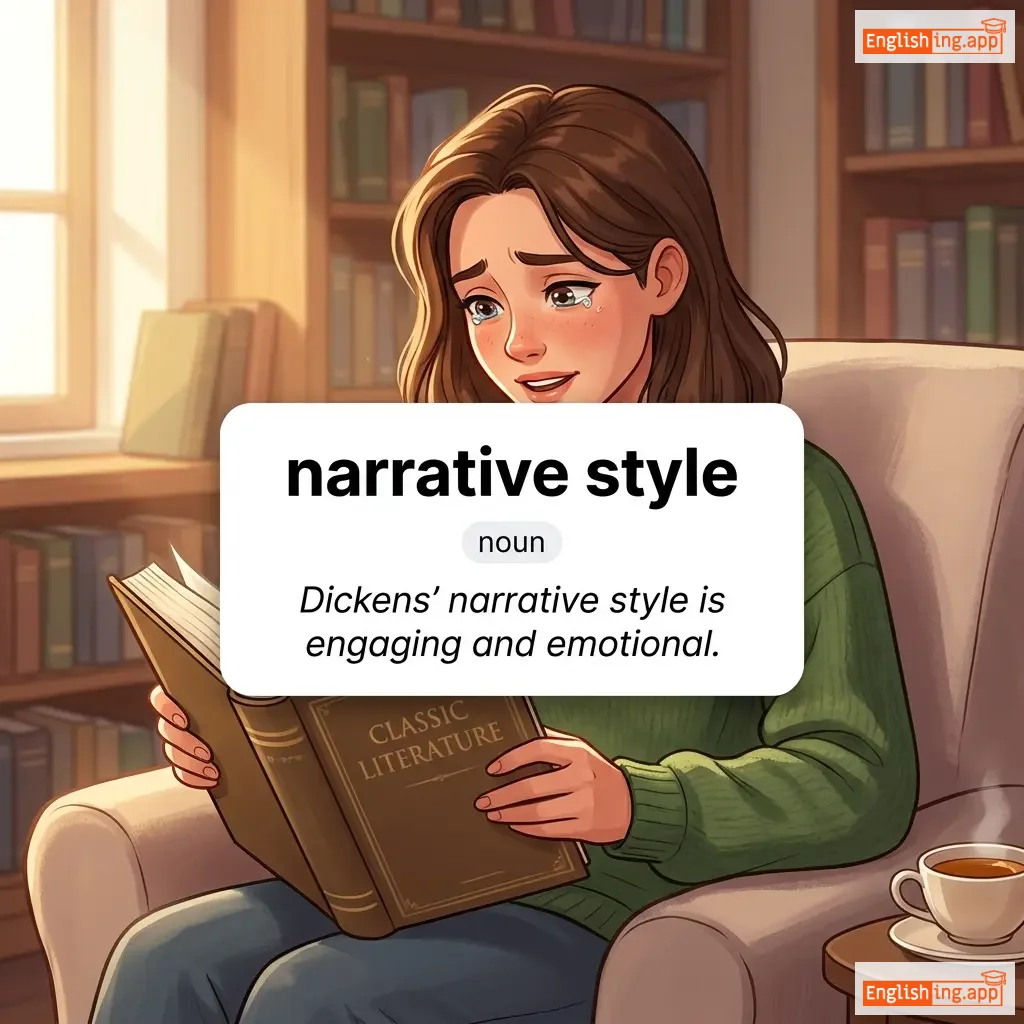
narrative style definition card — visual illustration of the meaning
noun C1
ˈnærətɪv staɪl
estilo narrativo (estilo narrativo)

The way in which a story is told, including the point of view and the voice of the narrator.

"Dickens' narrative style is engaging and emotional."

"El estilo narrativo de Dickens es cautivador y emocional." (El estilo narrativo de Dickens es cautivador y emocional.)
adjective C1
/ˌnæroʊˈmaɪndɪd/
cerrado de mente (narromind)

Having a limited outlook or unwillingness to accept different opinions or ideas.

"She was too narrow-minded to consider other perspectives."

"Ella era demasiado cerrada de mente para considerar otras perspectivas." (Ellaerademasiadocerradadementeparaconsiderarotrasperspectivas)
adverb C1
/ˈnæroʊli/
por un pequeño margen; apenas (por un pequeno margen; apenas)

by a small margin; barely; in a limited way

"She narrowly escaped the accident."

"Ella escapó por poco del accidente." (Ella escapo por poco del accidente.)
adjective C1
/ˈneɪzl/
nasal (nasal)

Relating to the nose; a sound produced through the nose.

"He spoke with a nasal voice due to his cold."

"Él habló con voz nasal debido a su resfriado." (Él habló con voz nasal debido a su resfriado.)
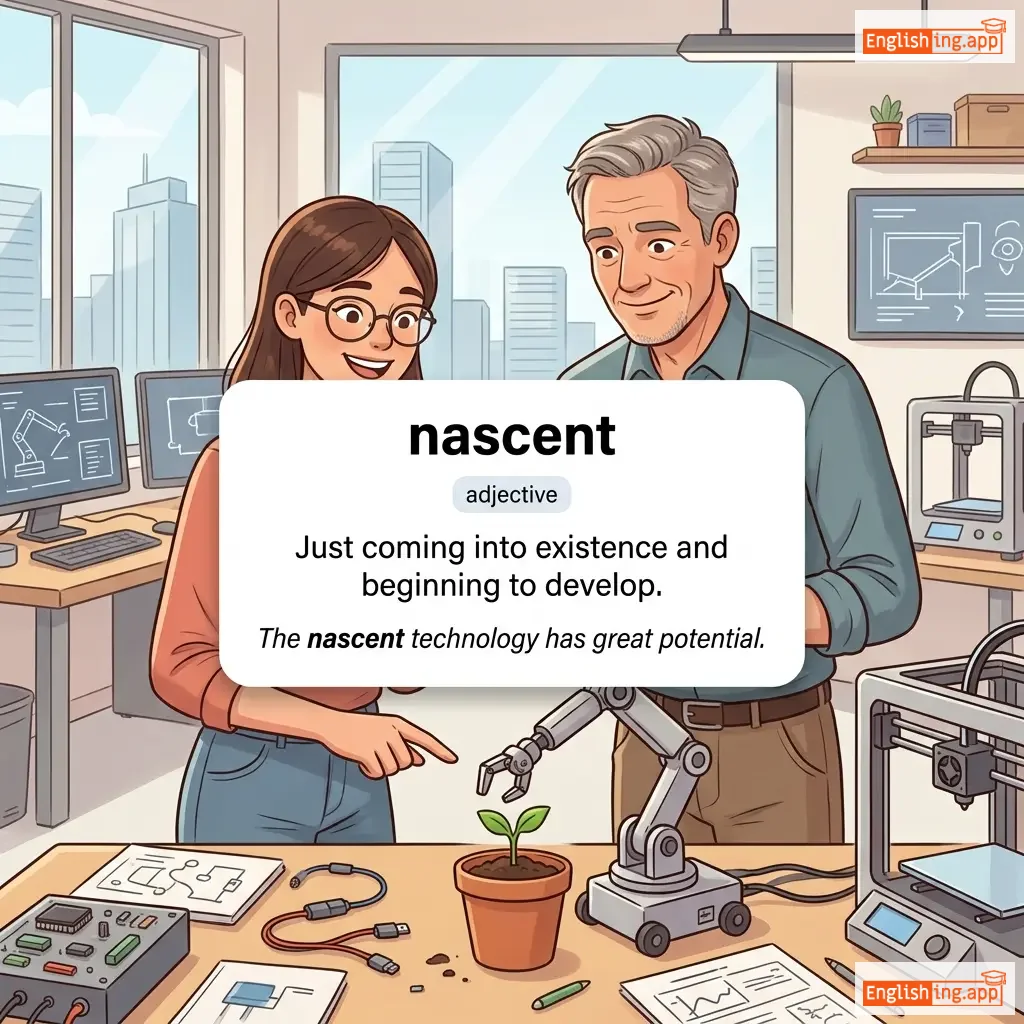
nascent definition card — visual illustration of the meaning
adjective C1
/ˈneɪsnt/
naciente (naciente)

Just coming into existence and beginning to develop.

"The nascent technology has great potential."

"La tecnología naciente tiene un gran potencial." (La tecnologia naciente tiene un gran potencial.)
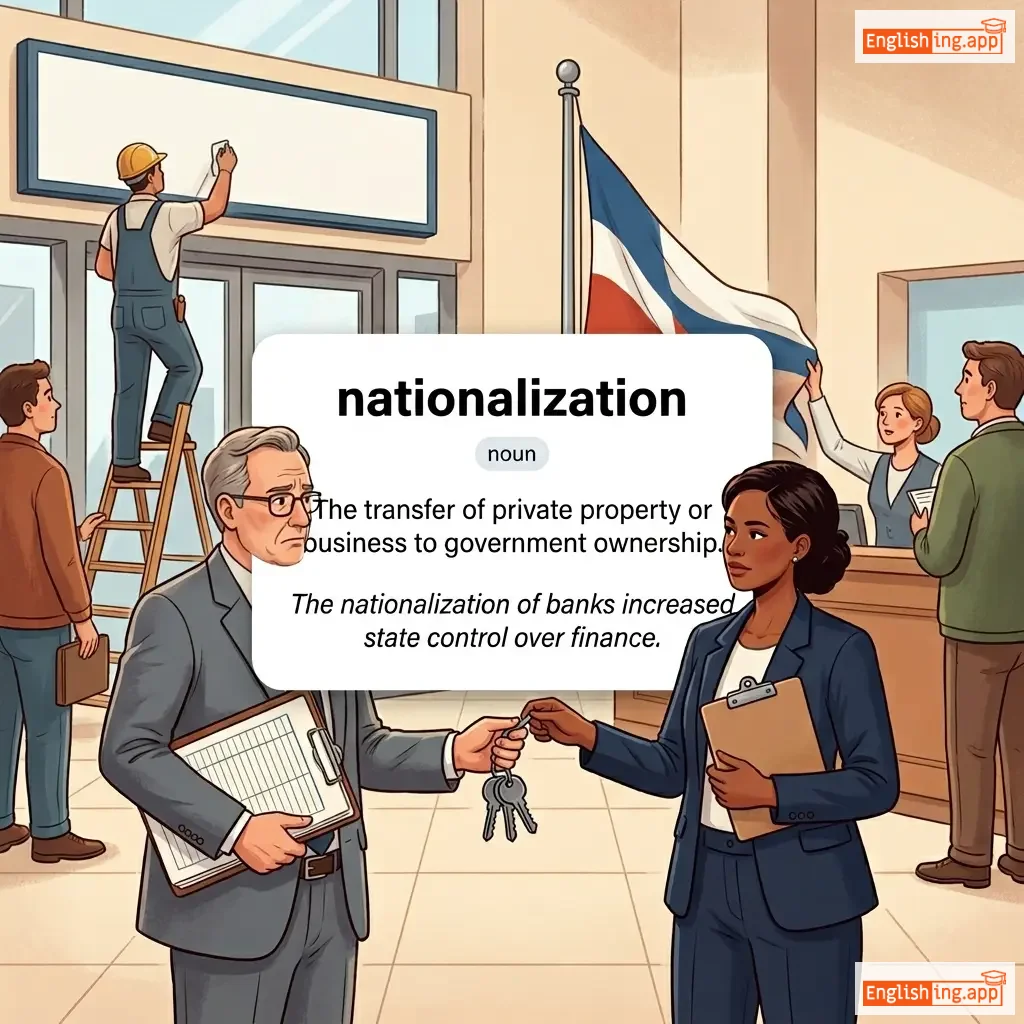
nationalization definition card — visual illustration of the meaning
noun C1
/ˌnæʃ.ən.ə.laɪˈzeɪ.ʃən/
nacionalización (nacionalizacion)

The transfer of private property or business to government ownership.

"The nationalization of banks increased state control over finance."

"La nacionalización de los bancos aumentó el control estatal sobre las finanzas." (La nacionalizacion de los bancos aumento el control estatal sobre las finanzas.)
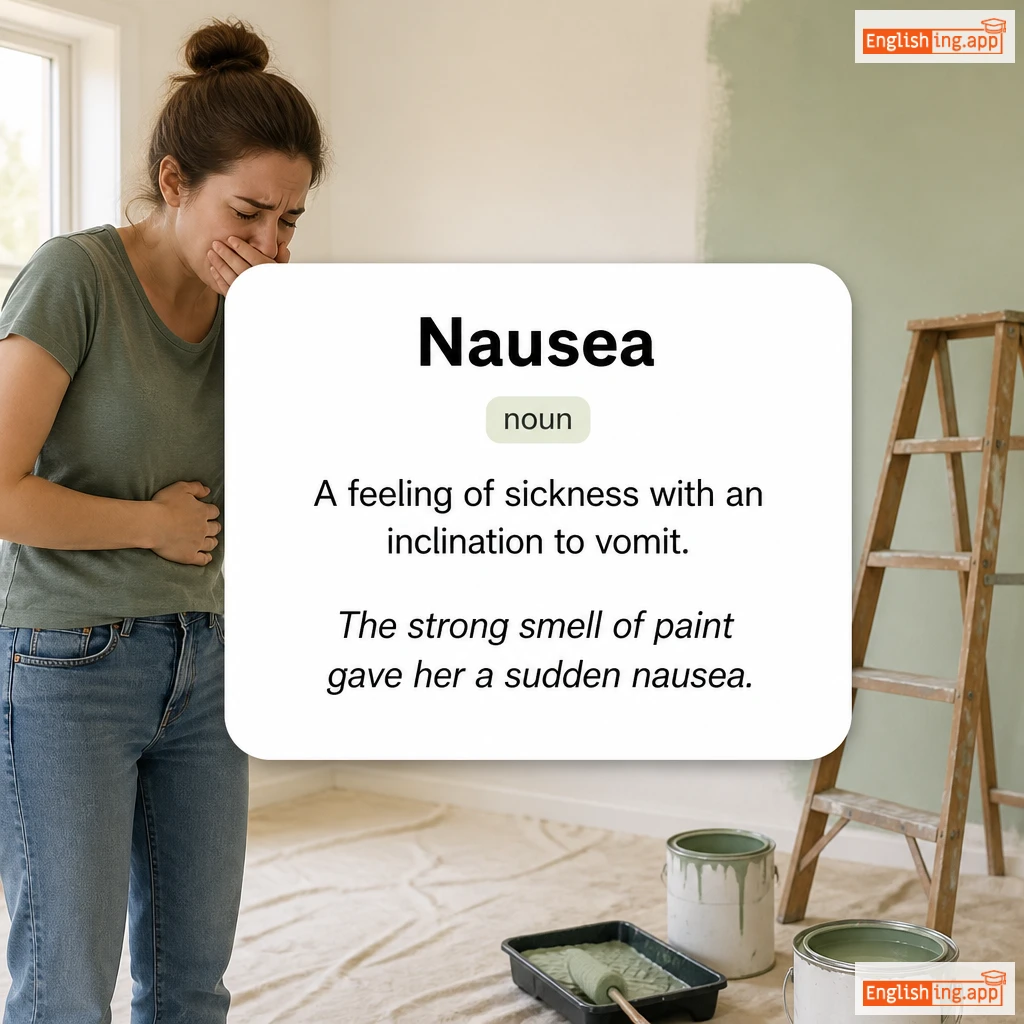
Nausea definition card — visual illustration of the meaning
noun C1
/ˈnɔːziə/
náusea (nausea)

A feeling of sickness with an inclination to vomit.

"The strong smell of paint gave her a sudden nausea."

"El fuerte olor a pintura le dio una repentina náusea." (El fuerte olor a pintura le dio una repentina nausea.)
adjective C1
/ˈnɔːʃəs/
sentirse como si estuvieras a punto de vomitar (sentirse como si estuvieras a punto de vomitar)

feeling like you are about to vomit; causing a feeling of sickness

"The smell of rotten food made her feel nauseous."

"El olor a comida en descomposición le hizo sentir como si fuera a vomitar." (El olor a comida en descomposición le hizo sentir como si fuera a vomitar.)
adjective C1
/ˈnɔːtɪkəl/
náutico (nautico)

relating to ships, sailors, or navigation on water

"He studied nautical charts before setting sail."

"Estudió mapas náuticos antes de zarpar." (Estudió mapas náuticos antes de zarpar.)
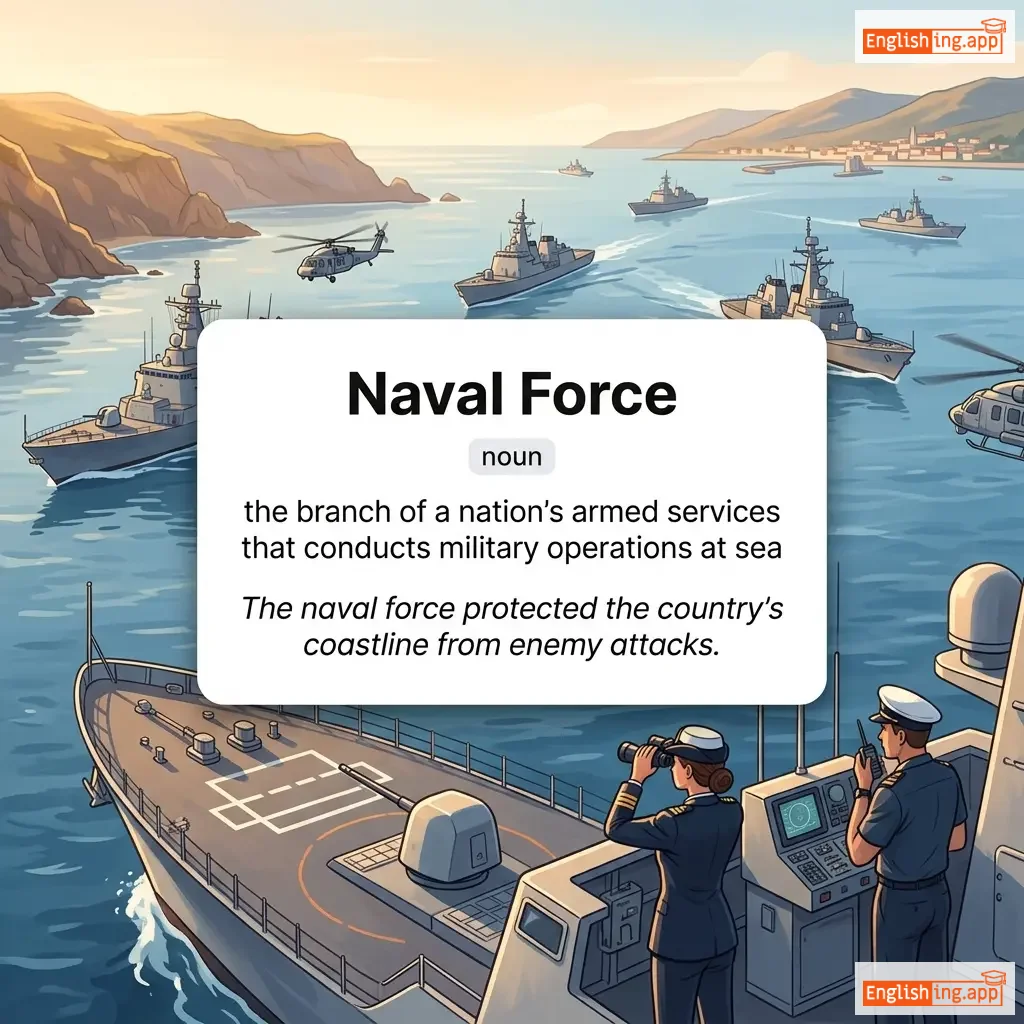
Naval Force definition card — visual illustration of the meaning
noun C1
/ˈneɪ.vəl fɔːrs/
fuerzas navales (fuerzas navales)

the branch of a nation's armed services that conducts military operations at sea

"The naval force protected the country's coastline from enemy attacks."

"Las fuerzas navales protegieron la costa del país de los ataques enemigos" (Las fuerzas navales protegieron la costa del pais de los ataques enemigos)
noun C1
/ˈneɪvəl/
ombligo (ombligo)

the small hollow or raised area in the middle of the stomach, also called the belly button

"The baby’s navel was carefully cleaned after birth."

"El ombligo del bebé fue limpiado cuidadosamente después del nacimiento." (El ombligo del bebe fue limpiado cuidadosamente despues del nacimiento.)
adjective C1
/ˈnæv.ɪ.ɡə.bəl/
navegable (navegable)

Able to be sailed on or through by ships or boats.

"The river is navigable for large cargo ships."

"El río es navegable para grandes barcos de carga." (El río es navegable para grandes barcos de carga.)
noun C1
/ˈneb.jʊ.lə/
nebulosa (nebulosa)

A cloud of gas and dust in outer space, sometimes visible in the night sky.

"The Orion Nebula is one of the brightest in the sky."

"La Nebulosa de Orión es una de las más brillantes en el cielo." (La Nebulosa de Orión es una de las más brillantes en el cielo.)
verb C1
/nəˈsɛsɪteɪt/
hacer necesario (hacer necesario)

To make something necessary or unavoidable.

"The heavy rains necessitated the cancellation of the event."

"Las fuertes lluvias hicieron inevitable la cancelación del evento." (Las fuertes lluvias hicieron inevitable la cancelación del evento.)
noun C1
/ˈnɛkˌlaɪn/
escote (escote)

the edge of a garment around the neck, especially as cut to form a particular shape

"The dress has a beautiful V-shaped neckline."

"El vestido tiene un hermoso escote en forma de V." (El vestido tiene un hermoso escote en forma de V.)
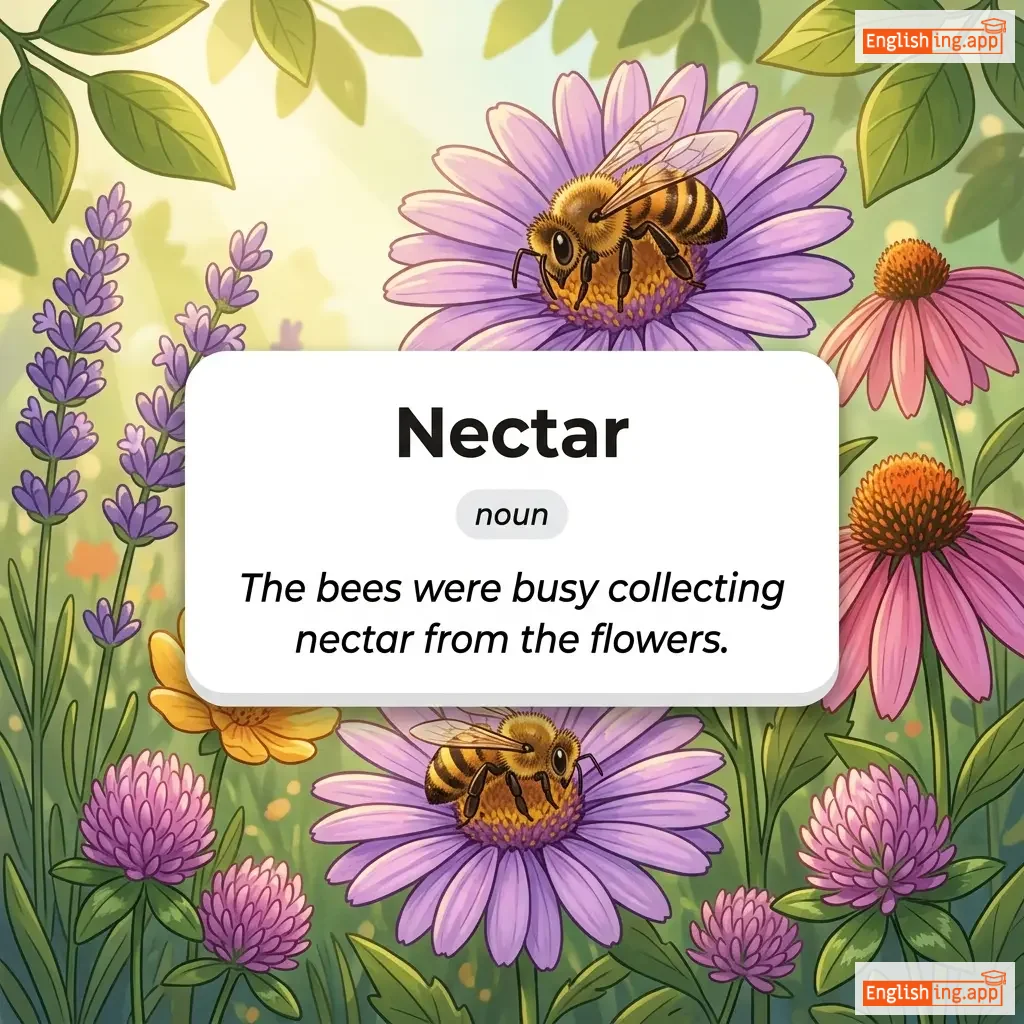
Nectar definition card — visual illustration of the meaning
noun C1
/ˈnɛktər/
néctar (nectar)

a sweet liquid produced by flowers and collected by bees; in mythology, the drink of the gods

"The bees were busy collecting nectar from the flowers."

"Las abejas estaban ocupadas recolectando néctar de las flores." (Las abejas estaban ocupadas recolectando nectar de las flores.)
noun C1
/ˈnɛktəriːn/
néctarina (variedad de durazno de piel lisa) (nectarina)

A smooth-skinned variety of peach.

"She bought a basket of fresh nectarines from the market."

"Ella compró una canasta de nectarinas frescas del mercado." (Ella compro una canasta de nectarinas frescas del mercado.)
adjective C1
/ˈniːd.ləs/
innecesario (innecesario)

unnecessary; not required; without purpose

"The argument was needless and could have been avoided."

"La discusión fue innecesaria y podría haberse evitado." (La discusion fue innecesaria y podria haberse evitado.)
noun C1
/ˈniːdəlwɜːrk/
trabajo de aguja, bordado (trabajo de aguja, bordado)

The craft of sewing, embroidery, or knitting done with a needle.

"Her grandmother taught her the art of needlework."

"Su abuela le enseñó el arte del trabajo a mano." (Su abuela le enseñó el arte del trabajo a mano.)
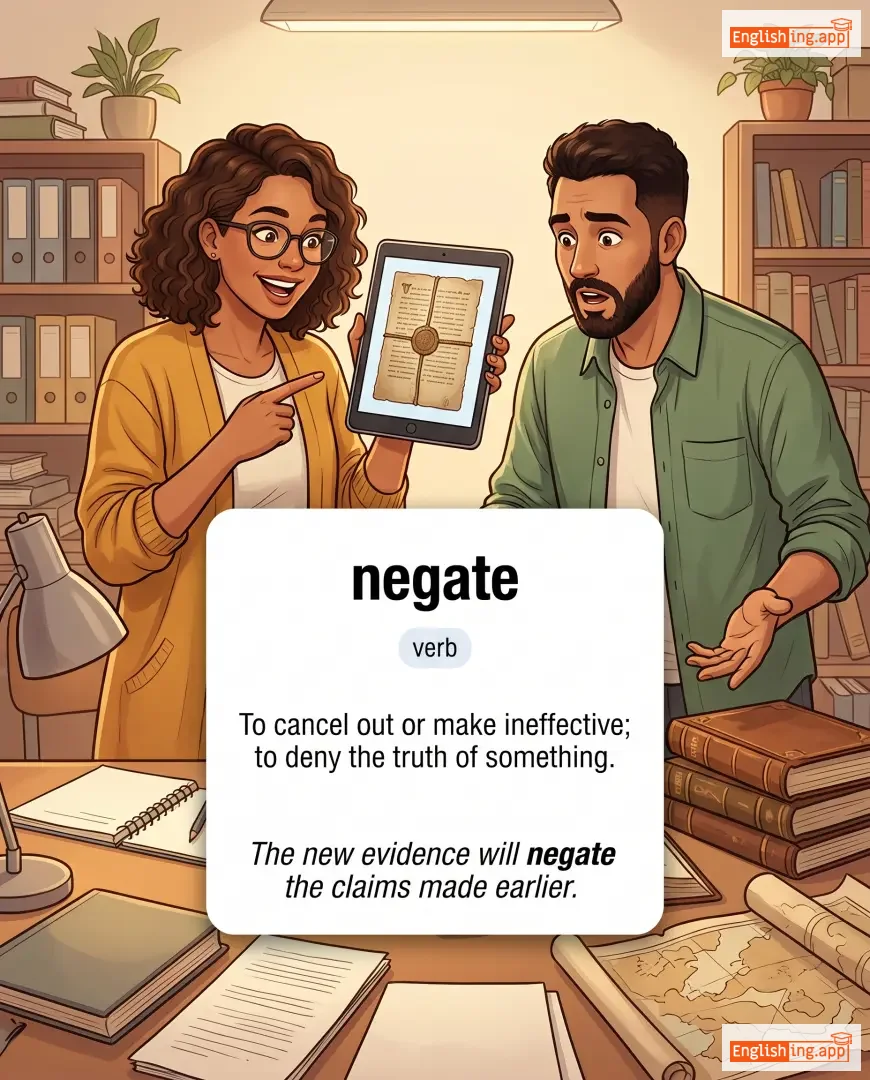
negate definition card — visual illustration of the meaning
verb C1
/nɪˈɡeɪt/
negar, invalidar (negar, invalidar)

To cancel out or make ineffective; to deny the truth of something.

"The new evidence will negate the claims made earlier."

"Las nuevas pruebas invalidarán las afirmaciones hechas anteriormente." (Las nuevas pruebas invalidarán las afirmaciones hechas anteriormente.)
noun C1
/nɪˈɡeɪʃən/
negación (negacion)

The act of denying something; the contradiction or absence of something.

"The theory is built on the negation of traditional beliefs."

"La teoría se basa en la negación de las creencias tradicionales." (La teoria se basa en la negacion de las creencias tradicionales.)
adjective C1
/nɪˈɡlɛktfʊl/
desatento (desatento)

Failing to give proper care or attention.

"The neglectful parent left the child alone for hours."

"El padre desatento dejó al niño solo durante horas." (El padre desatento dejo al nino solo durante horas.)
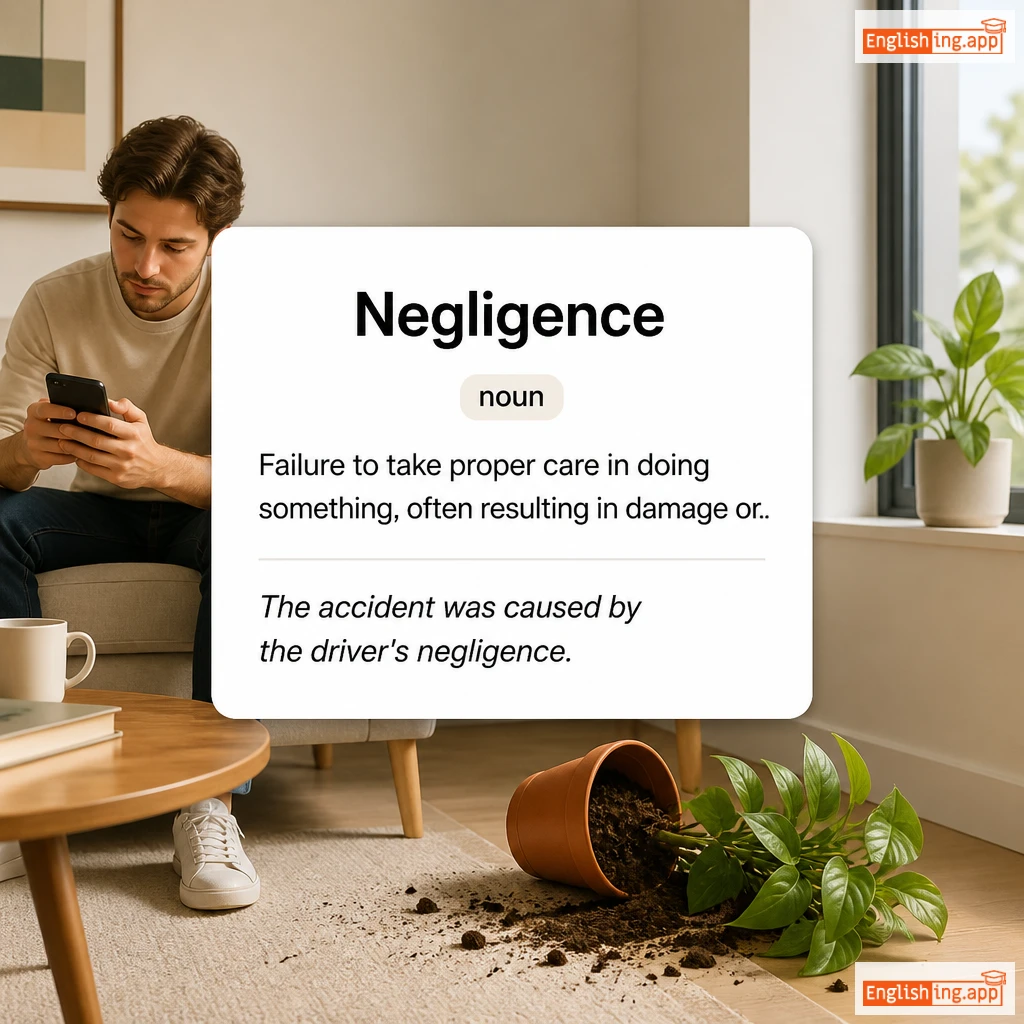
Negligence definition card — visual illustration of the meaning
noun C1
/ˈnɛɡlɪdʒəns/
negligencia (negligencia)

Failure to take proper care in doing something, often resulting in damage or harm.

"The accident was caused by the driver's negligence."

"El accidente fue causado por la negligencia del conductor." (El accidente fue causado por la negligencia del conductor.)
adjective C1
/ˈnɛɡ.lɪ.dʒənt/
negligente (negligente)

Failing to take proper care in doing something; careless.

"The company was found negligent in providing workplace safety."

"La empresa fue considerada negligente al proporcionar seguridad en el lugar de trabajo." (La empresa fue considerada negligente al proporcionar seguridad en el lugar de trabajo.)
adjective C1
/ˈnɛɡ.lɪ.dʒə.bəl/
insignificante (insignificante)

So small or unimportant as to be not worth considering; insignificant.

"The cost of the error was negligible."

"El costo del error fue insignificante." (El costo del error fue insignificante.)
adjective C1
/nɪˈɡoʊ.ʃi.ə.bəl/
negociable (negociable)

Open to discussion or modification; capable of being bargained for.

"The salary offered is negotiable."

"El salario ofrecido es negociable." (El salario ofrecido es negociable.)
noun C1
/ˈnɛm.ə.sɪs/
enemigo / rival (enemigo / rival)

A long-standing rival or an inescapable agent of downfall.

"For years, he considered his colleague to be his nemesis."

"Durante años, consideró a su colega como su enemigo." (Durante años, consideró a su colega como su enemigo.)
adjective C1
/ˌniːoʊˈlɪθɪk/
neolítico (neolitico)

Relating to the later part of the Stone Age, when ground or polished stone weapons and tools prevailed.

"Neolithic communities began practicing agriculture and domesticating animals."

"Las comunidades neolíticas comenzaron a practicar la agricultura y a domesticar animales." (Las comunidades neolíticas comenzaron a practicar la agricultura y a domesticar animales.)
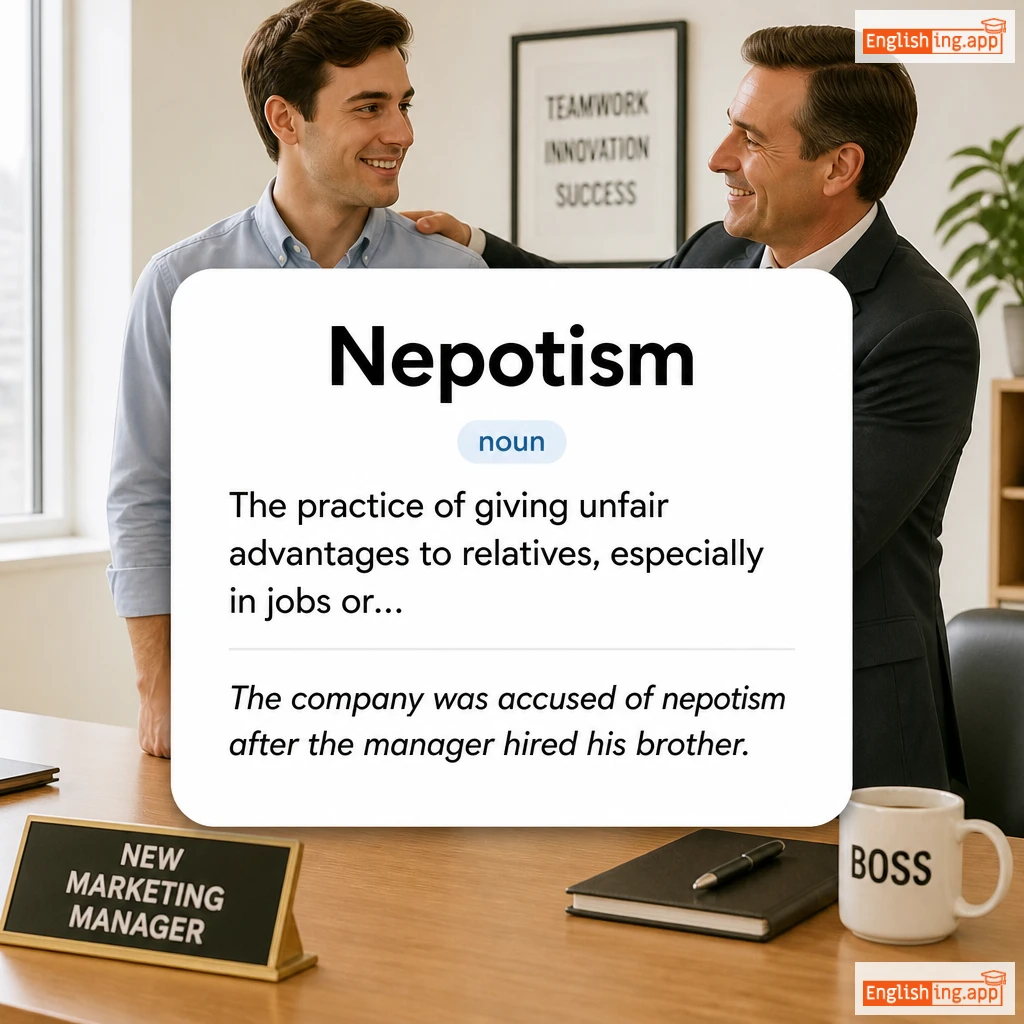
Nepotism definition card — visual illustration of the meaning
noun C1
/ˈnɛpətɪzəm/
nepotismo (nepotismo)

The practice of giving unfair advantages to relatives, especially in jobs or positions of power.

"The company was accused of nepotism after the manager hired his brother."

"La empresa fue acusada de nepotismo después de que el gerente contratara a su hermano." (La empresa fue acusada de nepotismo despues de que el gerente contratara a su hermano.)
verb C1
/ˈnɛsəl/
acurrucarse (acurrucarse)

to settle or lie comfortably within or against something

"The child nestled into her mother's arms."

"El niño se acurrucó en los brazos de su madre." (El niño se acurrucó en los brazos de su madre.)
adjective C1
/ˈnjʊrəl/
neuronal (neuronal)

Relating to nerves or the nervous system.

"Scientists study neural connections in the brain."

"Los científicos estudian las conexiones neuronales en el cerebro." (Loscientificosestudianlasconexionesneuronalesenelcerebro)
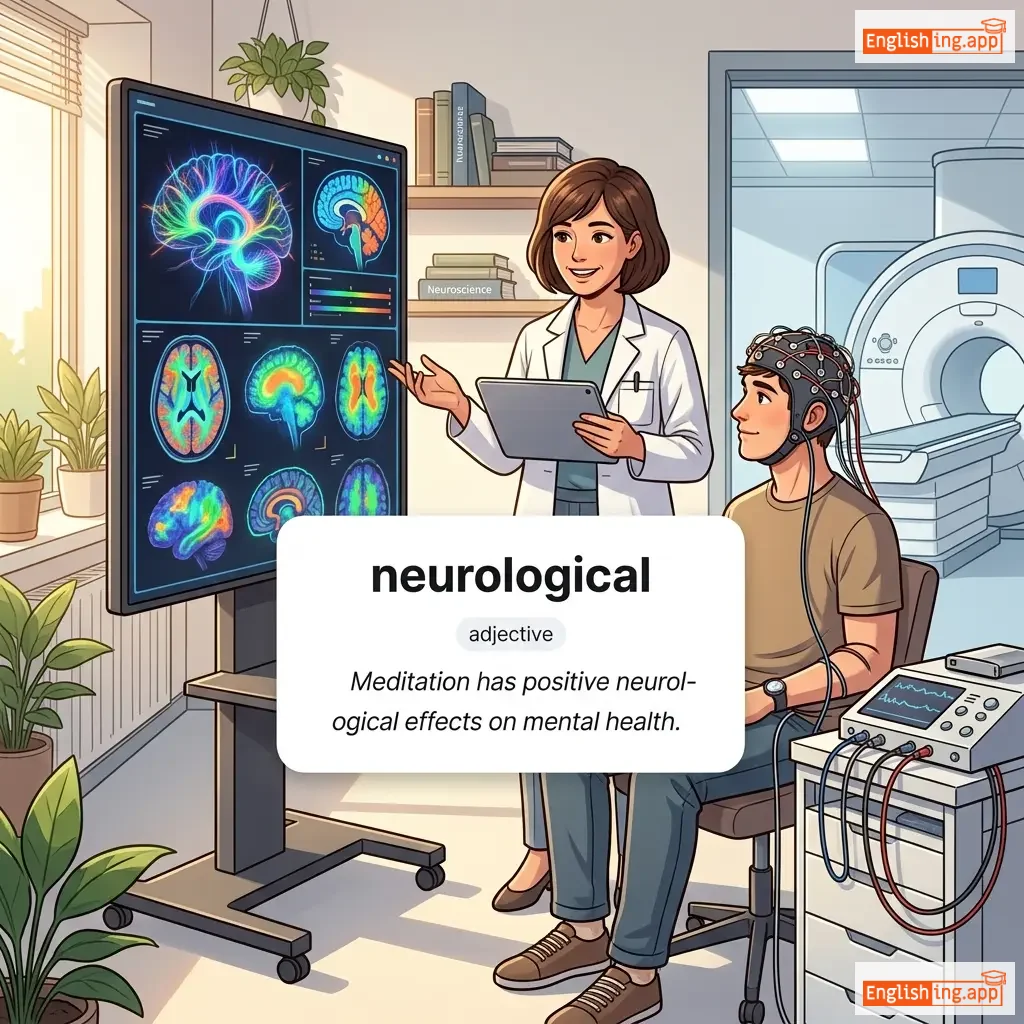
neurological definition card — visual illustration of the meaning
adjective C1
/ˌnjʊə.rəˈlɒdʒ.ɪ.kəl/
neurológico (neurologico)

Relating to the anatomy, functions, and organic disorders of nerves and the nervous system.

"Meditation has positive neurological effects on mental health."

"La meditación tiene efectos neurológicos positivos en la salud mental." (La meditacion tiene efectos neurologicos positivos en la salud mental.)
noun C1
/njʊˈrɑːlədʒi/
neurología (neurologia)

The branch of medicine that deals with disorders of the nervous system.

"She specializes in neurology and treats patients with brain diseases."

"Ella se especializa en neurología y trata a pacientes con enfermedades del cerebro." (Ella se especializa en neurologia y trata a pacientes con enfermedades del cerebro.)
neuroplasticity definition card — visual illustration of the meaning
noun C1
ˌnjʊə.rəʊ.plæsˈtɪ.sɪ.ti
neuroplasticidad (neuroplasticidad)

The ability of the brain to reorganize itself by forming new neural connections throughout life.

"Meditation enhances neuroplasticity, improving memory and focus."

"La meditación aumenta la neuroplasticidad, mejorando la memoria y la concentración." (La meditacion aumenta la neuroplasticidad, mejorando la memoria y la concentracion.)
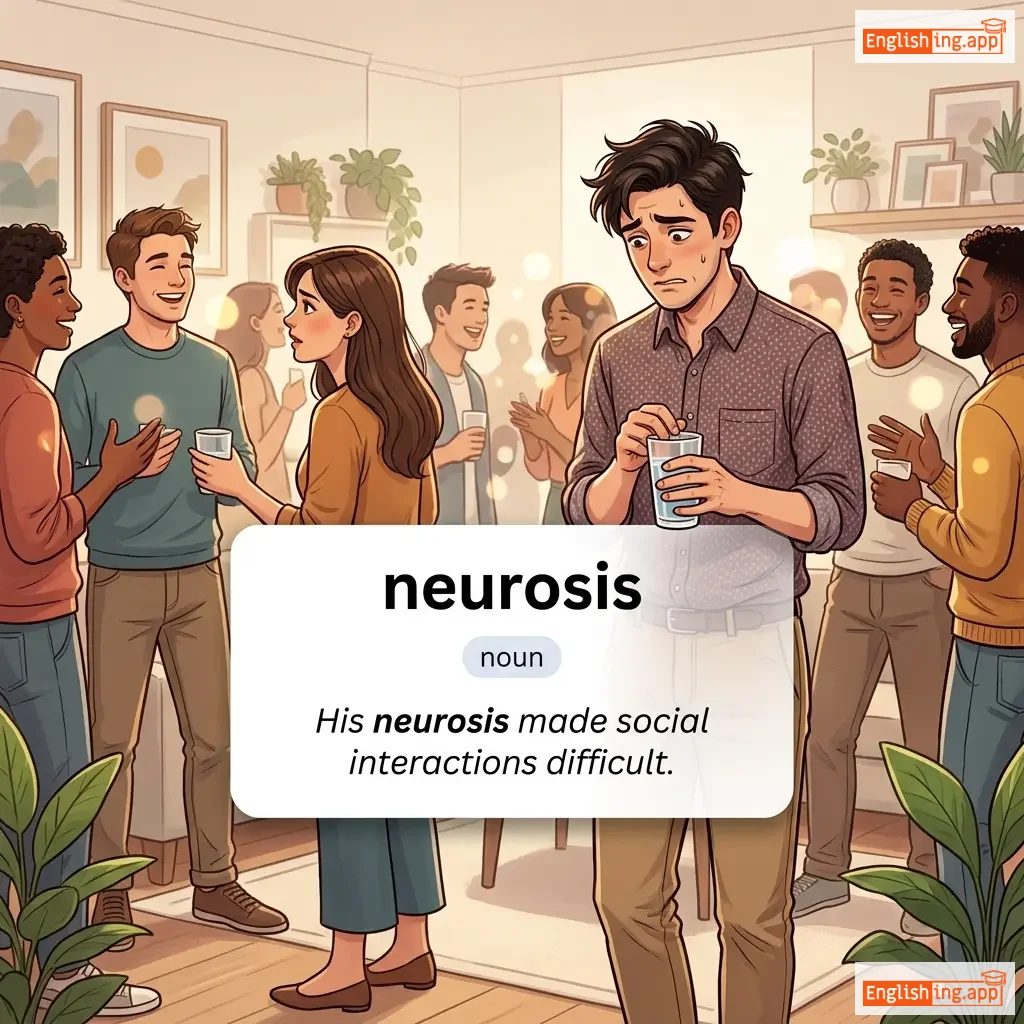
neurosis definition card — visual illustration of the meaning
noun C1
/njʊəˈrəʊ.sɪs/
trastorno neurótico (trastorno neurotico)

A relatively mild mental illness that is not caused by organic disease, involving symptoms of stress.

"His neurosis made social interactions difficult."

"Su neurosis hizo que las interacciones sociales fueran difíciles." (Su neurosis hizo que las interacciones sociales fueran dificiles.)
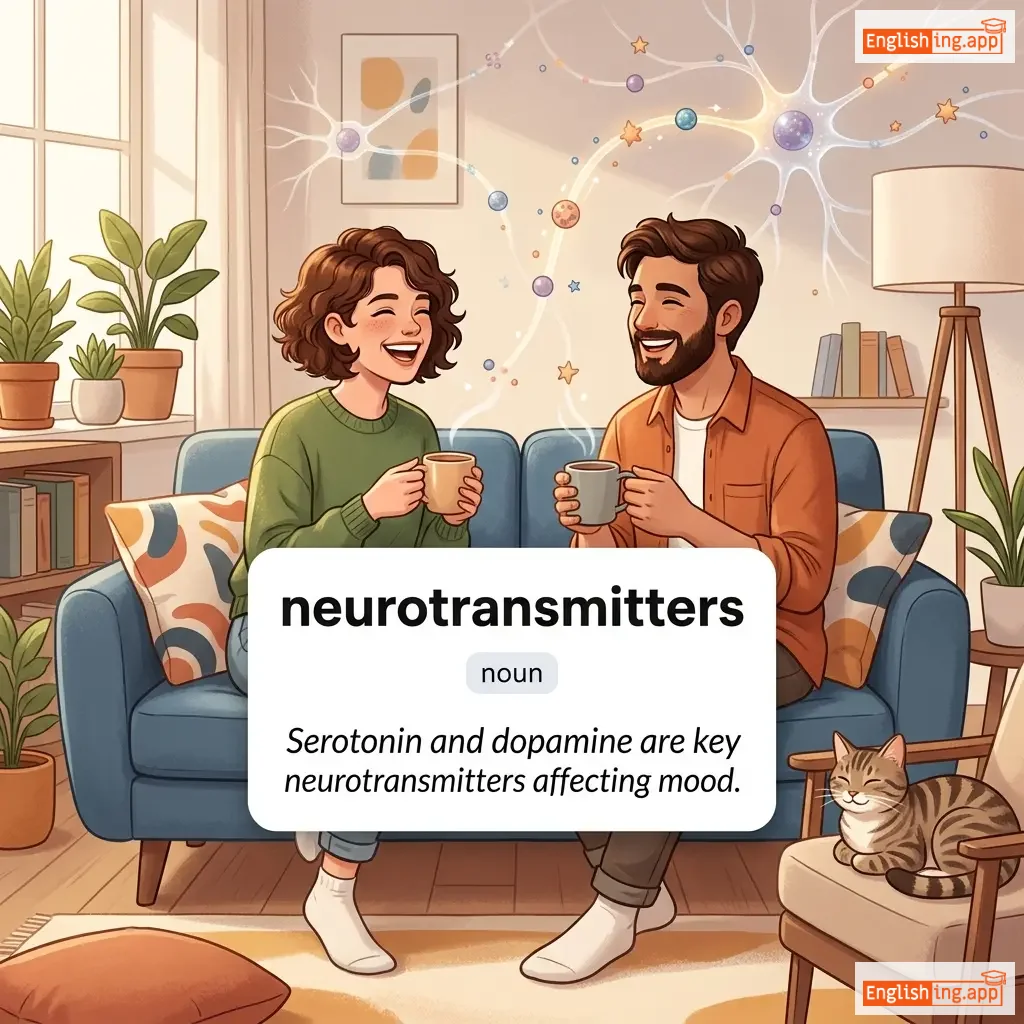
neurotransmitters definition card — visual illustration of the meaning
noun C1
/ˈnjʊə.rəʊ.trænsˌmɪt.ərs/
neurotransmisores (neurotransmisores)

Chemical messengers that transmit signals across nerve synapses, affecting mood, behavior, and cognitive functions.

"Serotonin and dopamine are key neurotransmitters affecting mood."

"La serotonina y la dopamina son neurotransmisores clave que afectan el estado de ánimo." (La serotonina y la dopamina son neurotransmisores clave que afectan el estado de animo.)
verb C1
/ˈnuːtər/
esterilizar (esterilizar)

To remove the reproductive organs of an animal; or having no gender.

"They decided to neuter their cat to prevent more kittens."

"Decidieron esterilizar a su gato para evitar más gatitos." (Decidieron esterilizar a su gato para evitar más gatitos.)
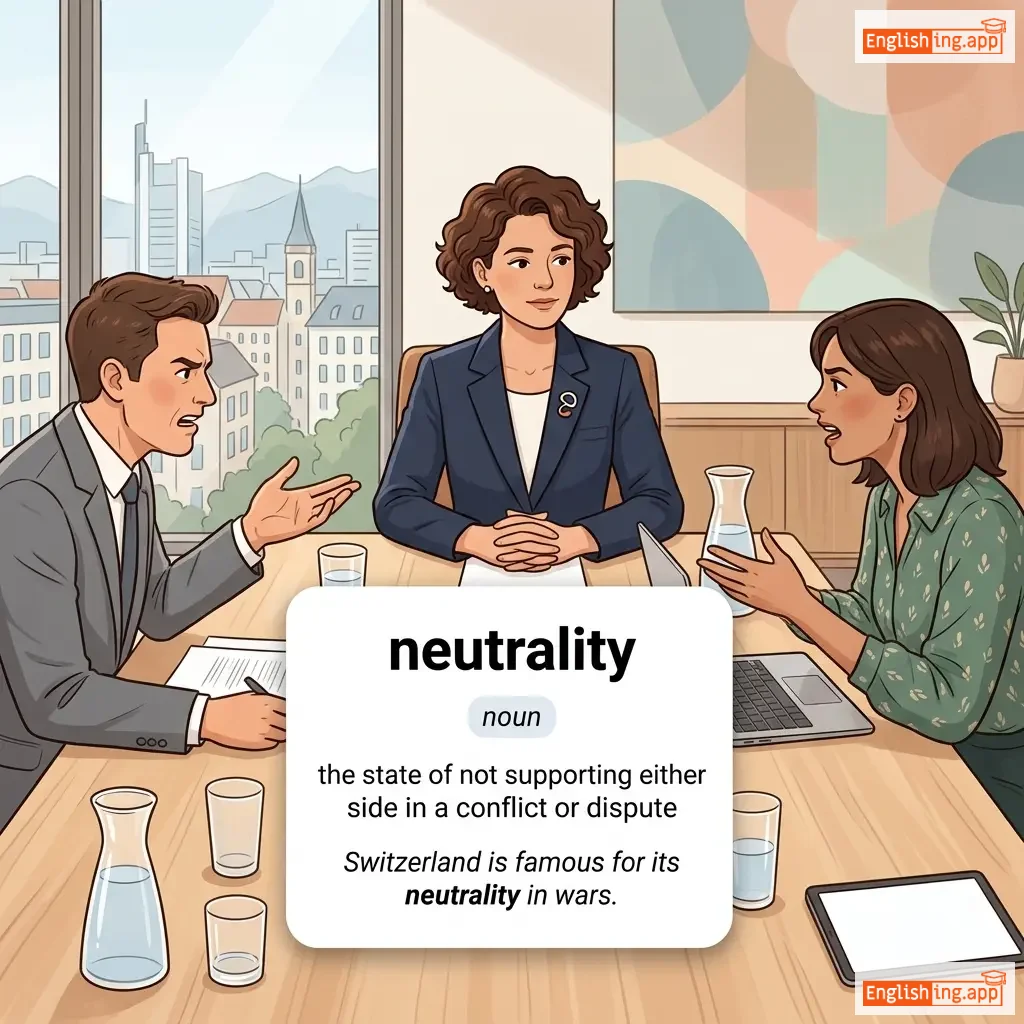
neutrality definition card — visual illustration of the meaning
noun C1
/nuːˈtræl.ə.ti/
neutralidad (neutralidad)

the state of not supporting either side in a conflict or dispute

"Switzerland is famous for its neutrality in wars."

"Suiza es famosa por su neutralidad en las guerras." (Suiza es famosa por su neutralidad en las guerras.)
verb C1
/ˈnjuːtrəlaɪz/
neutralizar (neutralizar)

to make something ineffective or harmless

"The medicine helped neutralize the poison in his system."

"La medicina ayudó a neutralizar el veneno en su sistema." (La medicina ayudo a neutralizar el veneno en su sistema.)
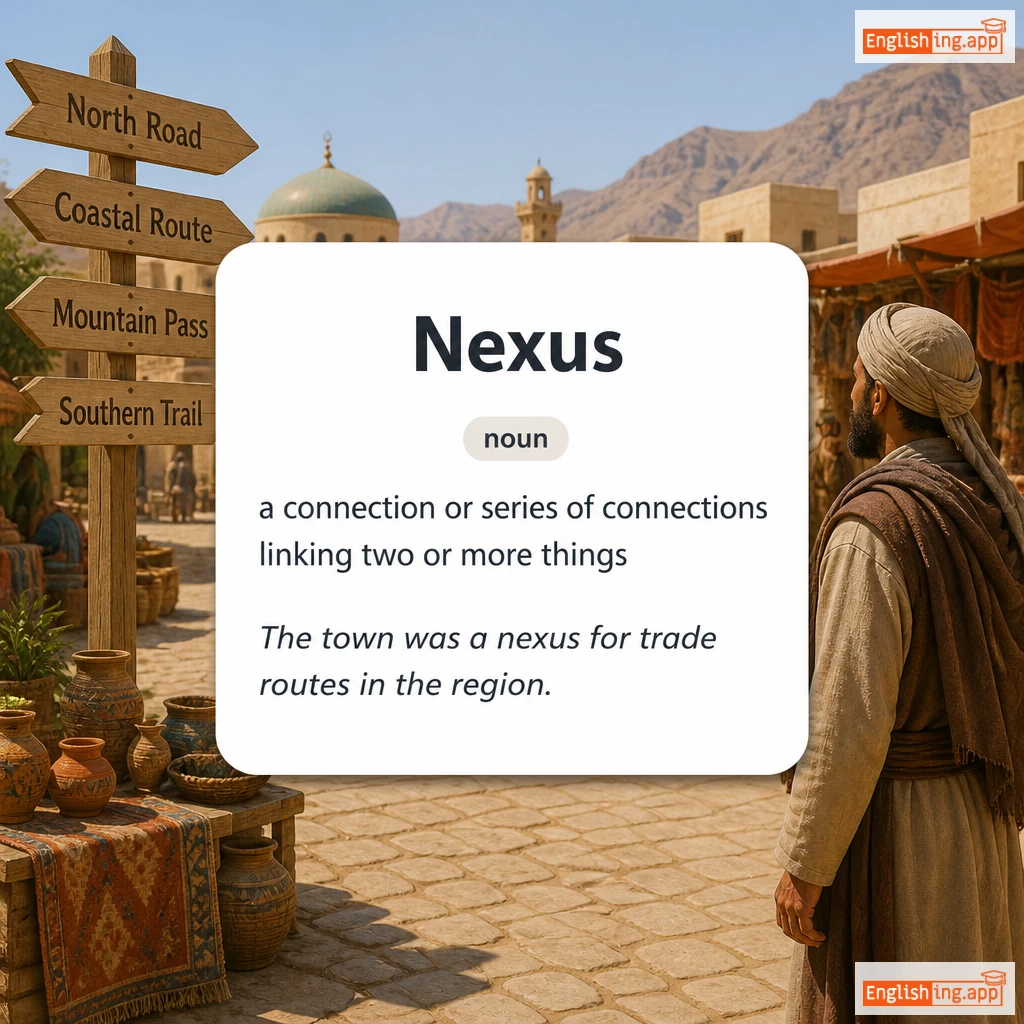
Nexus definition card — visual illustration of the meaning
noun C1
/ˈnɛksəs/
nexo (nexo)

a connection or series of connections linking two or more things

"The town was a nexus for trade routes in the region."

"La ciudad era un nexo para las rutas comerciales en la región." (La ciudad era un nexo para las rutas comerciales en la region.)
verb C1
/ˈnɪbəl/
mordisquear (mordisquear)

to take small bites of food

"The rabbit nibbled on a carrot."

"El conejo mordisqueó una zanahoria." (El conejo mordisqueó una zanahoria.)
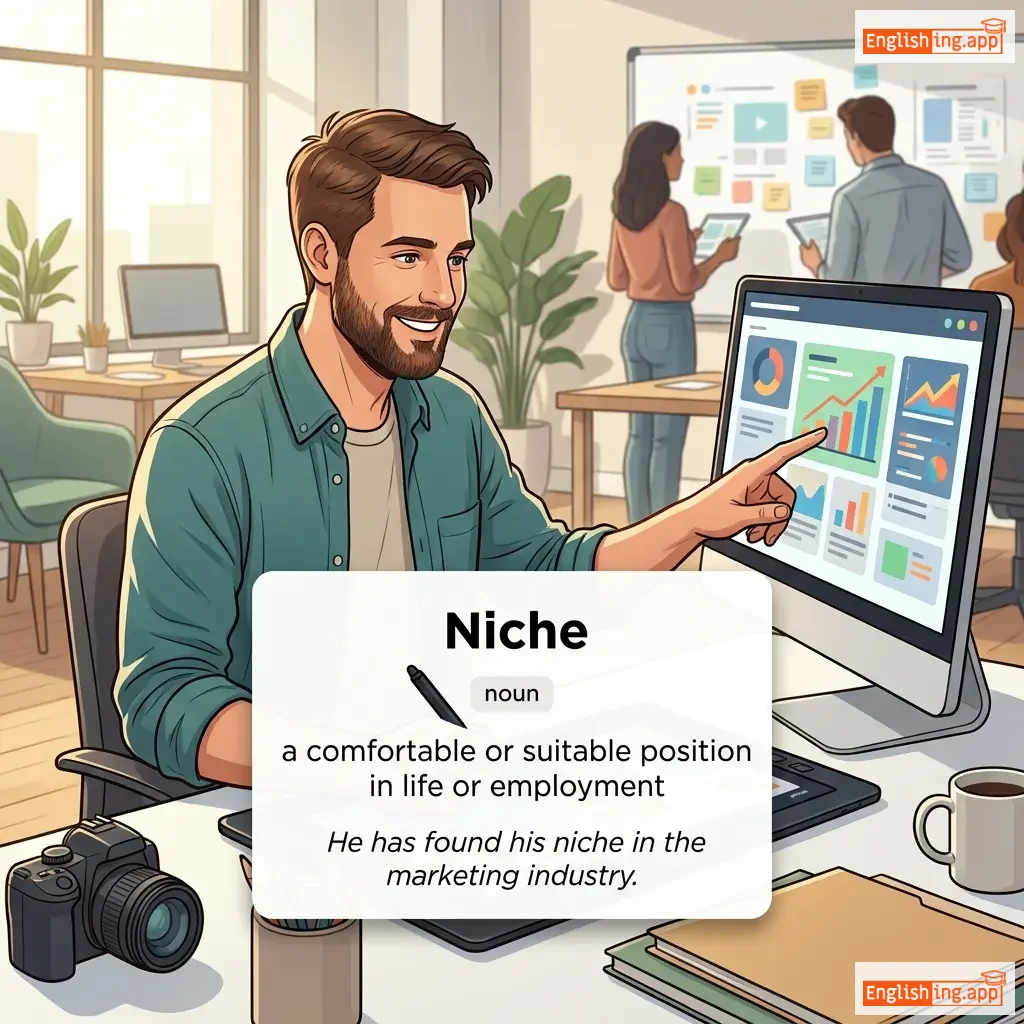
Niche definition card — visual illustration of the meaning
noun C1
/niːʃ/
nicho (nicho)

a comfortable or suitable position in life or employment

"He has found his niche in the marketing industry."

"Ha encontrado su nicho en la industria del marketing." (Ha encontrado su nicho en la industria del marketing.)
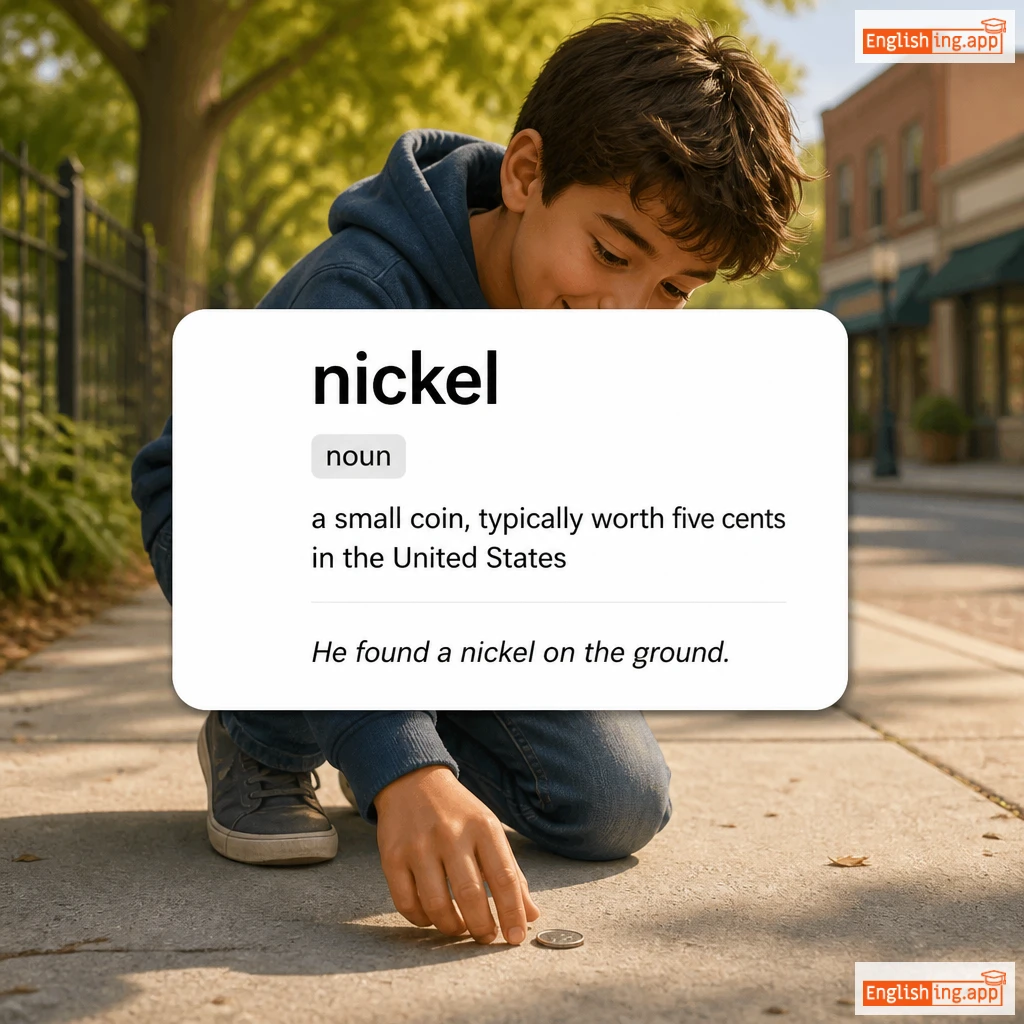
nickel definition card — visual illustration of the meaning
noun C1
/ˈnɪkəl/
níquel (niquel)

a small coin, typically worth five cents in the United States

"He found a nickel on the ground."

"Él encontró un níquel en el suelo." (Él encontró un níquel en el suelo.)