Vocabularios

Descubra, aprenda y domine el vocabulario en inglés

adjective C2
/juːˈbɪkwɪtəs/
遍在 (henzai)

Present, appearing, or found everywhere.

"Smartphones have become ubiquitous in modern society."

"スマートフォンは現代社会で遍在しています。" (Sumātofon wa gendai shakai de henzai shiteimasu.)
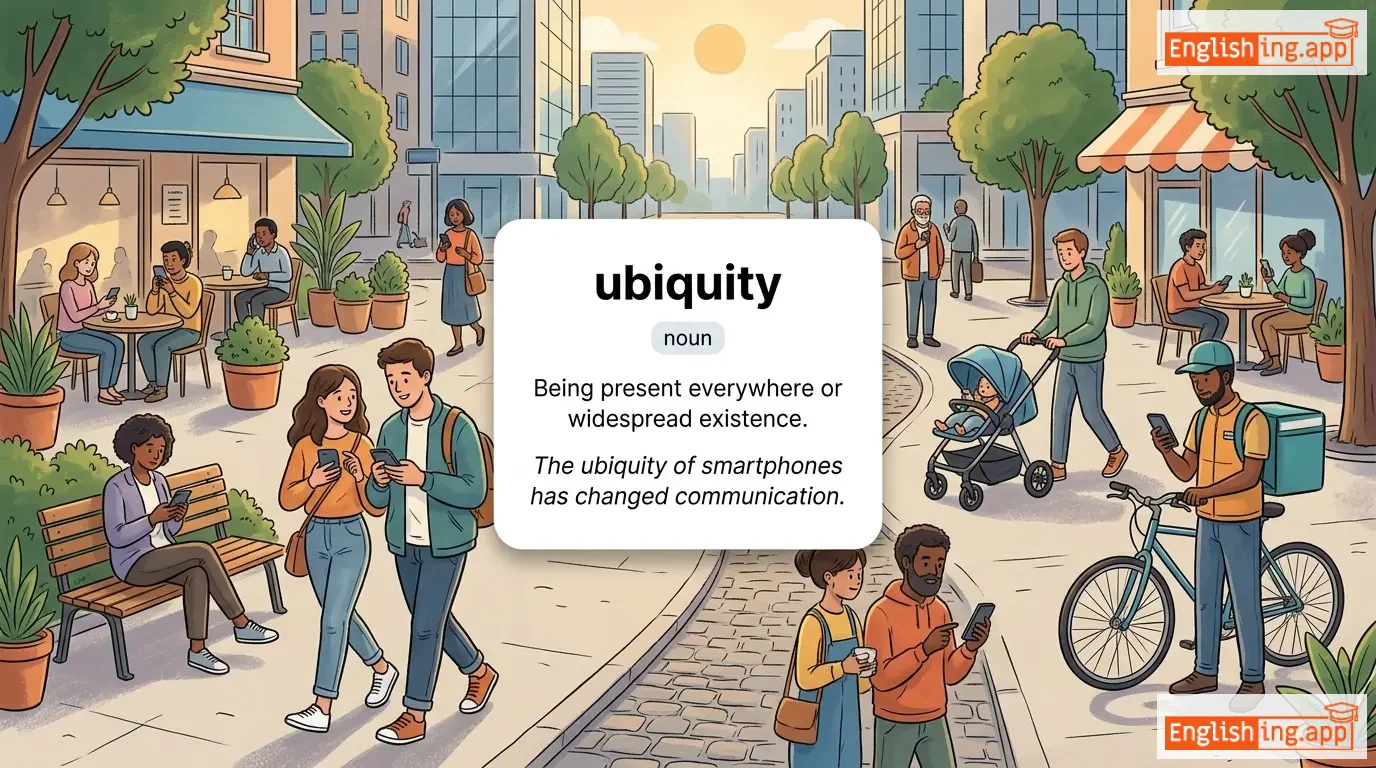
ubiquity definition card — visual illustration of the meaning
noun C2
/juːˈbɪk.wɪ.ti/
遍在 (henzai)

Being present everywhere or widespread existence.

"The ubiquity of smartphones has changed communication."

"スマートフォンの遍在はコミュニケーションを変えました。" (Sumātofon no henzai wa komyunikēshon o kaemashita.)
noun C2
/juːˈkeɪs/
命令 (meirei)

An authoritative decree or order, especially one issued by a sovereign or government.

"The czar issued a ukase restricting the freedom of the press."

"ツァーは報道の自由を制限する命令を出しました。" (Tsuā wa hōdō no jiyū o seigen suru meirei o dashimashita.)
adjective C2
/ˌʌltrəˈmɒnteɪn/
教皇支持者 (kyoukou shishisha)

beyond the mountains, especially referring to support for the Pope over local church authority

"The debate highlighted the ultramontane position in church politics."

"その討論は教会政治におけるウルトラモンタンの立場を浮き彫りにした。" (Sono touron wa kyoukai seiji ni okeru urutoramontan no tachiba wo ukibori ni shita.)
adjective C2
/ˌʌltrəˈmʌndeɪn/
超越的 (chouetsuteki)

Relating to things beyond the physical world; supernatural or transcendental.

"Philosophers often discuss ultramundane realities beyond human perception."

"哲学者たちはしばしば人間の知覚を超えたウルトラムンデインな現実について議論します。" (Tetsugakusha-tachi wa shibashiba ningen no chikaku o koeta urutoramundein na genjitsu ni tsuite giron shimasu.)
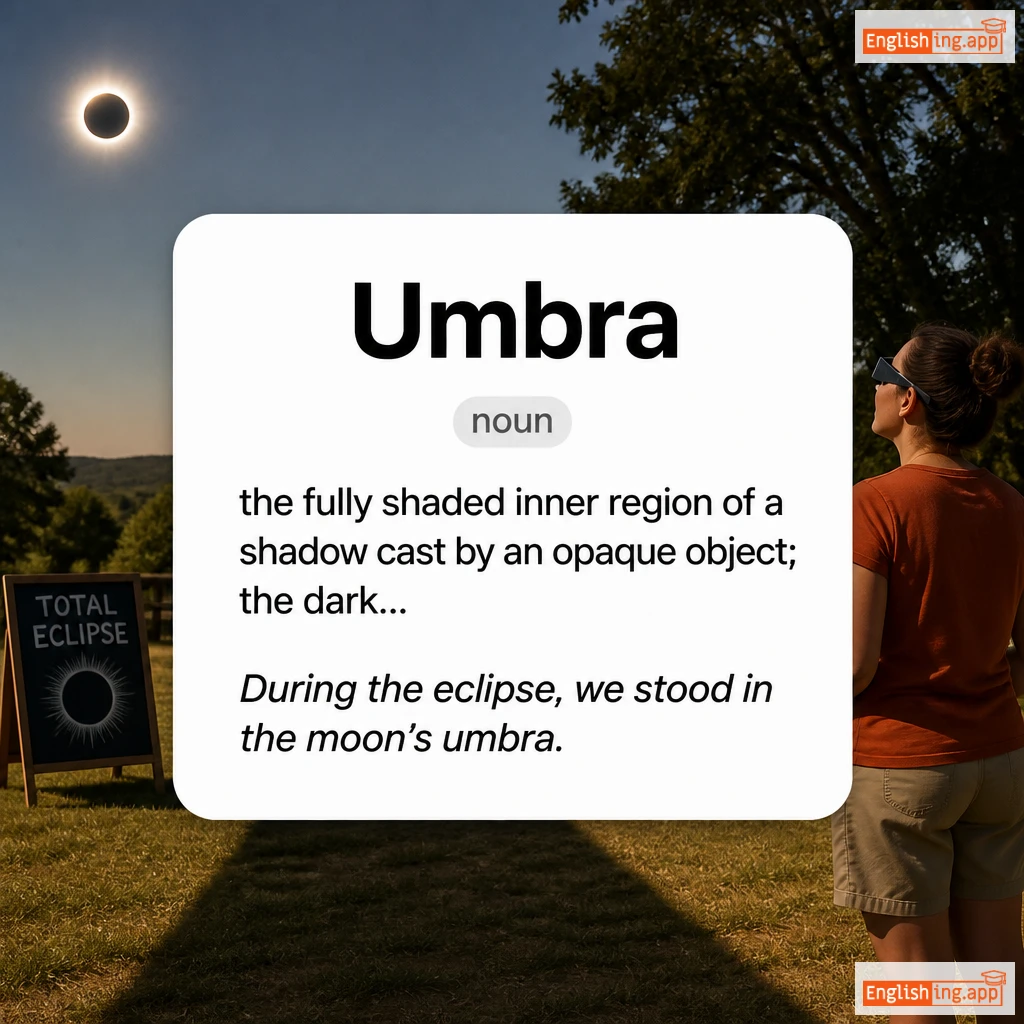
Umbra definition card — visual illustration of the meaning
noun C2
/ˈʌm.brə/
完全な影、太陽黒点の暗い中心 (kanzen na kage, taiyō kokuten no kurai chūshin)

the fully shaded inner region of a shadow cast by an opaque object; the dark center of a sunspot

"During the eclipse, we stood in the moon's umbra."

"日食の際、私たちは月のアンブラの中に立っていました。" (nisshoku no sai, watashitachi wa tsuki no anburā no naka ni tatteimashita)
noun C2
/ˈʌmbrɪdʒ/
怒り, 不満 (ikari, fuman)

A feeling of resentment or offense.

"She took umbrage at his rude remark."

"彼女は彼の無礼な発言に怒りを感じた。" (Kanojo wa kare no burei na hatsugen ni ikari wo kanjita.)
adjective C2
/ʌnˈælɔɪd/
純粋 (junsui)

Pure, complete, and not mixed with anything else.

"She felt unalloyed joy at the news of her success."

"彼女は成功のニュースを聞いて純粋な喜びを感じた。" (Kanojo wa seikou no nyuusu wo kiite junsui na yorokobi wo kanjita.)
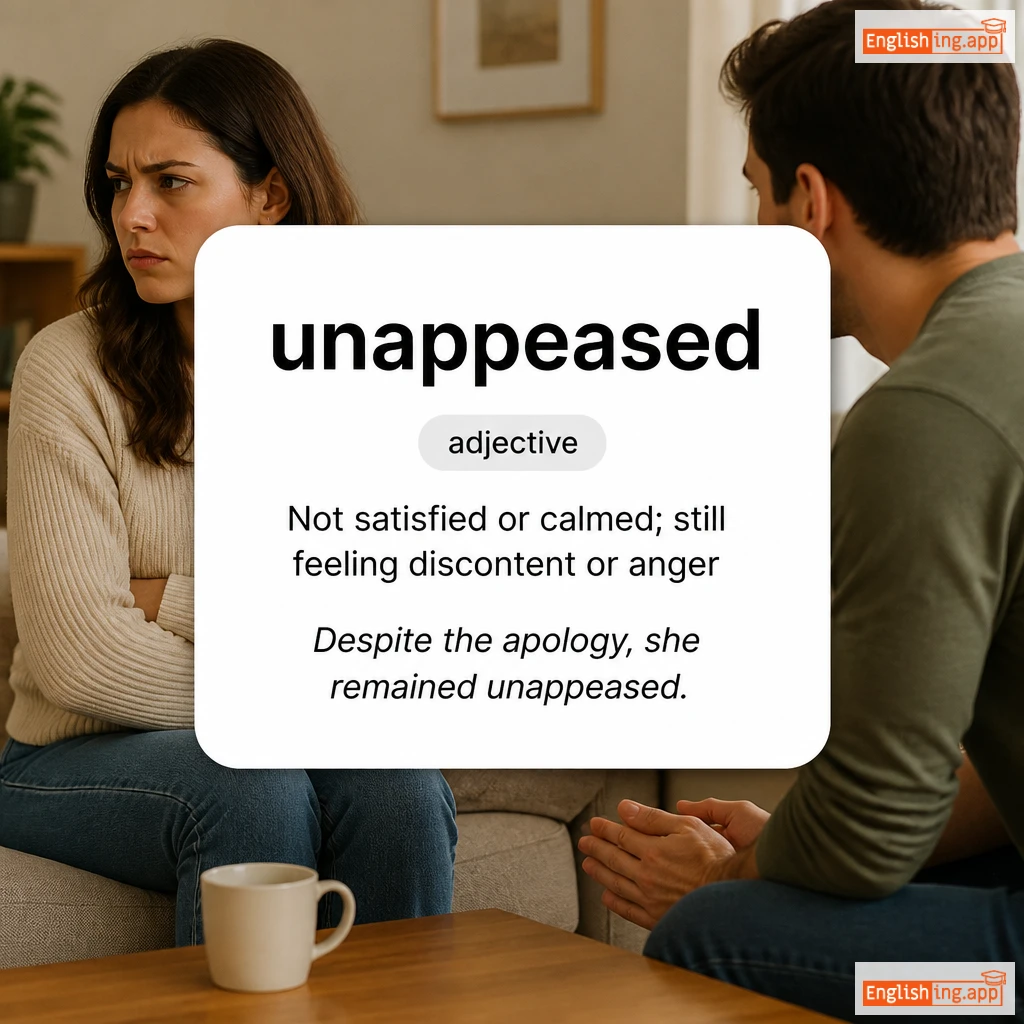
unappeased definition card — visual illustration of the meaning
adjective C2
/ʌnəˈpiːzd/
満足していない (manzoku shite inai)

Not satisfied or calmed; still feeling discontent or anger

"Despite the apology, she remained unappeased."

"謝罪にもかかわらず、彼女は満足していなかった。" (Shazai ni mo kakawarazu, kanojo wa manzoku shite inakatta)
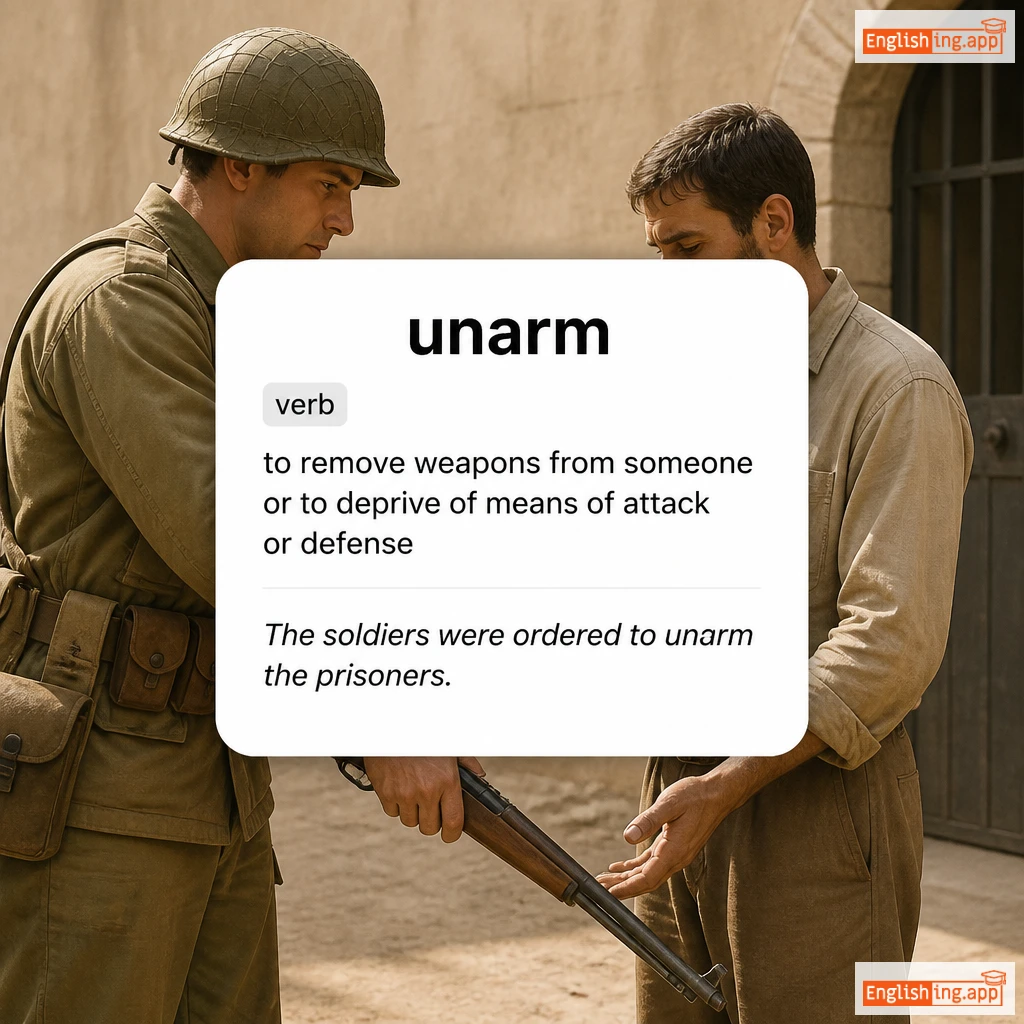
unarm definition card — visual illustration of the meaning
verb C2
/ʌnˈɑːrm/
武装解除する (busou kaijo suru)

to remove weapons from someone or to deprive of means of attack or defense

"The soldiers were ordered to unarm the prisoners."

"兵士たちは囚人の武装を解除するよう命じられた。" (Heishitachi wa shuujin no busou o kaijo suru you meijirareta)
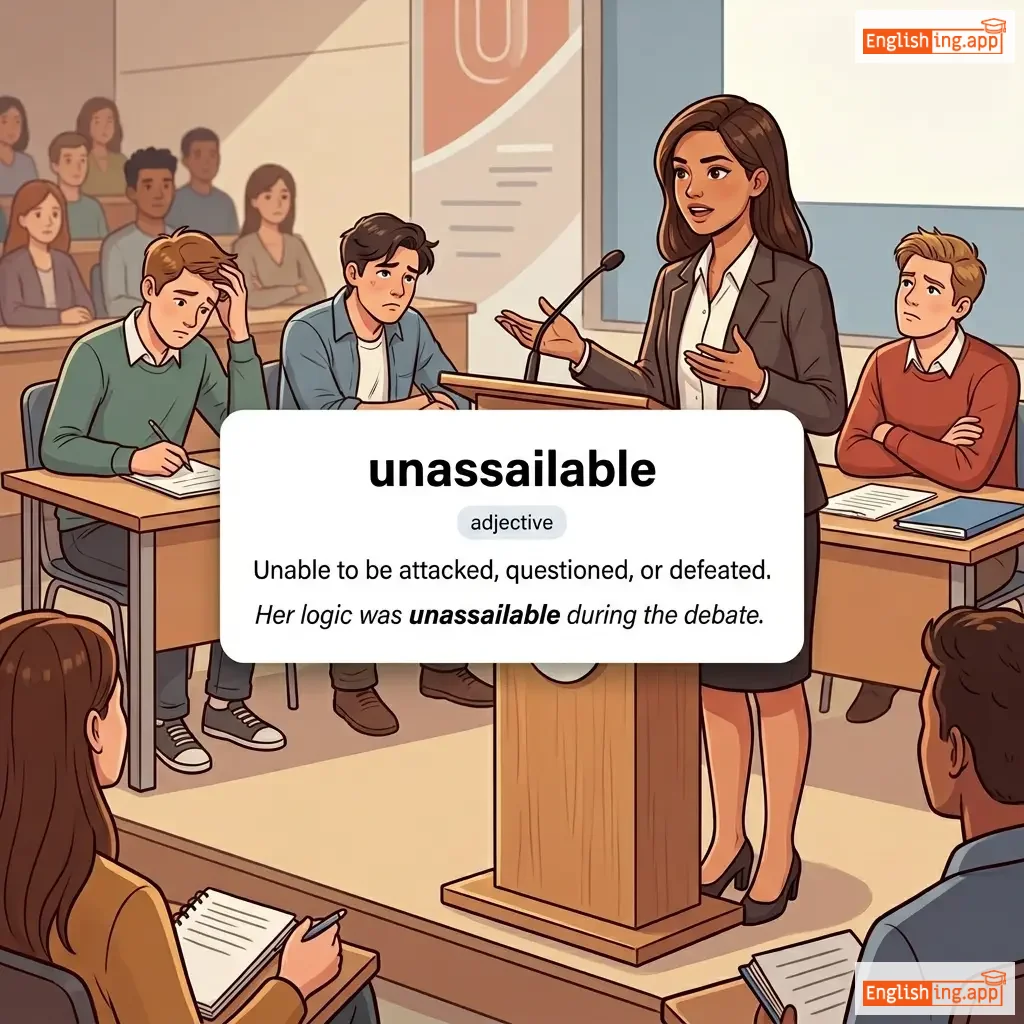
unassailable definition card — visual illustration of the meaning
adjective C2
/ˌʌnəˈseɪləbl/
反論できない (hanron dekinai)

Unable to be attacked, questioned, or defeated.

"Her logic was unassailable during the debate."

"彼女の論理は討論中に反論できないものでした。" (Kanojo no ronri wa tōron-chū ni hanron dekinai mono deshita.)
adjective C2
/ˌʌnəˈsweɪdʒd/
解消されていない (kaishou sareteinai)

Not made less intense or relieved; unrelieved.

"His grief remained unassuaged despite the passage of time."

"彼の悲しみは時間が経っても解消されていなかった。" (Kare no kanashimi wa jikan ga tattemo kaishou sareteinakatta.)
adjective C2
/ˌʌnəˈʃʊəd/
自信のない (jishin no nai)

Lacking confidence or certainty.

"She gave an unassured answer during the interview."

"彼女は面接で自信のない答えをしました。" (Kanojo wa mensetsu de jishin no nai kotae o shimashita.)
adjective C2
/ʌnˈblʌʃɪŋ/
恥知らずな; 図々しい (haji shirazu na; zu zu shii)

showing no shame or embarrassment; boldly shameless

"He told the unblushing lie without any hesitation."

"彼はためらうことなく無恥な嘘をついた。" (Kare wa tamerau koto naku muchina uso o tsuita.)
adjective C2
/ˌʌnsɛrəˈmoʊniəs/
儀式なし/無礼 (gishiki nashi/burei)

Done without formality or courtesy; abrupt or rude.

"He made an unceremonious exit from the party."

"彼はパーティーから儀式なしで退出しました。" (Kare wa pātii kara gishiki nashi de taishutsu shimashita.)
adjective C2
/ʌnˈtʃeɪst/
不道徳な; 不潔な; (fudōtoku na; fuketsu na;)

not celibate; having engaged in sexual relations; lacking moral purity

"The conservative society considered her behavior unchaste and improper."

"保守的な社会は彼女の行動を不道徳で不適切だと考えた。" (Hoshū-teki na shakai wa kanojo no kōdō o fudōtoku de futekisetsu da to kangaeta.)
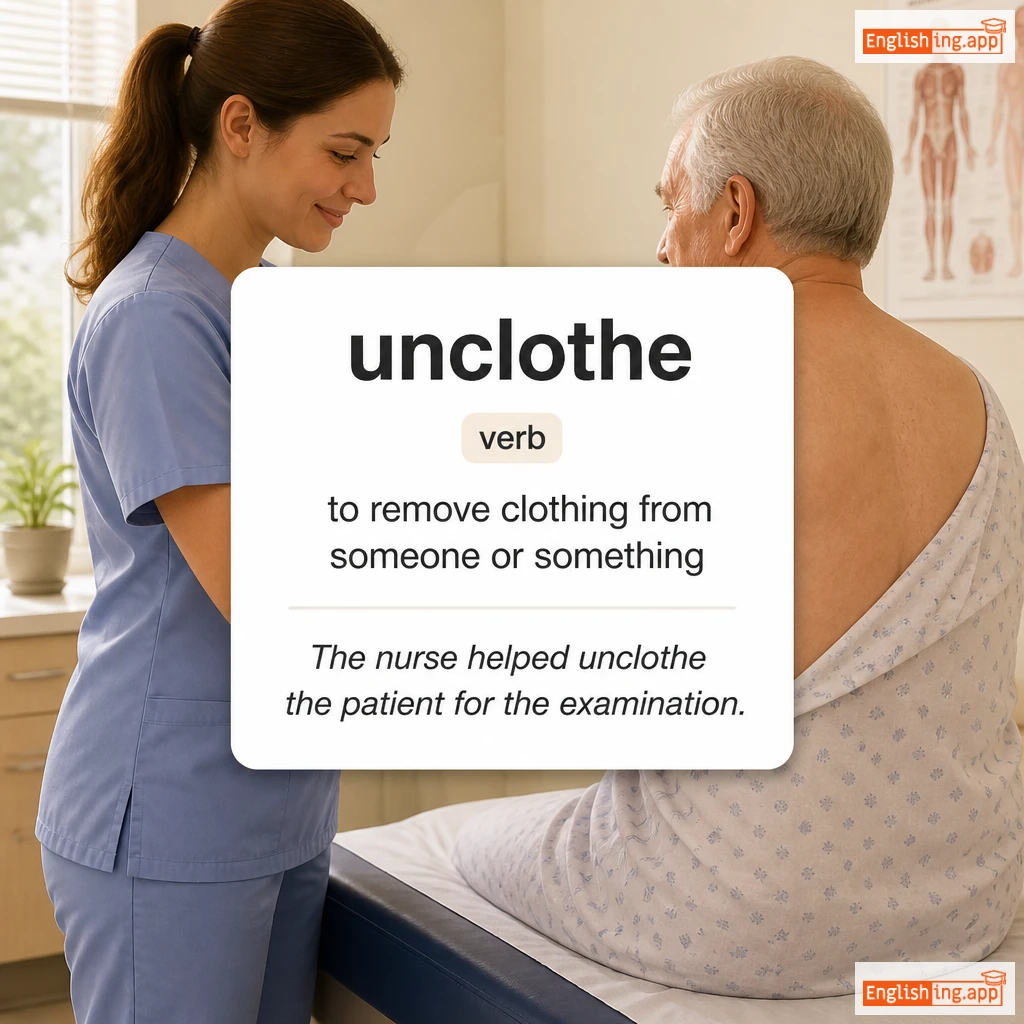
unclothe definition card — visual illustration of the meaning
verb C2
/ʌnˈkloʊð/
服を脱がせる; 衣服を取り除く (fuku o nugaseru; ifuku o torinozoku)

to remove clothing from someone or something

"The nurse helped unclothe the patient for the examination."

"看護師は検査のために患者の服を脱がせる手伝いをした。" (Kangoshi wa kensa no tame ni kanja no fuku o nugaseru tetsudai o shita)
noun C2
/ʌnˈkloʊðɪŋ/
服を脱ぐこと (fuku o nugu koto)

the act or process of removing clothing

"The child quickly ran inside for unclothing after playing in the mud."

"子供は泥遊びの後、服を脱ぐことのためにすぐに家の中に走った。" (kodomo wa doroyubi no ato, fuku o nugu koto no tame ni sugu ni ie no naka ni hashitta)
adjective C2
/ʌnˈkɒnʃənəbl/
不正当な (fuseitōna)

shockingly unfair or unreasonable

"The company made unconscionable profits from the crisis."

"その会社は危機から不正当な利益を得ました。" (Sono kaisha wa kiki kara fuseitōna rieki o emashita.)
verb C2
/ʌnˈkaʊtʃ/
ソファから取り除く(稀な意味) (sofa kara torinozoku)

to remove from a couch or to release from being laid down (rare/archaic usage)

"The surgeon attempted to uncouch the cataract."

"外科医は白内障を取り除こうとしました。" (Geka-i wa hakunai-shō o torinozoku to shimashita.)
noun C2
/ˈʌŋkʃən/
聖別 (seibetsu)

The act of anointing as part of a religious or ceremonial ritual; excessive or insincere flattery.

"The priest performed the holy unction with solemnity."

"司祭は厳粛に聖別の儀式を行った。" (Shisai wa genshuku ni seibetsu no gishiki o okonatta.)
adjective C2
/ˈʌŋk.tʃu.əs/
お世辞 (oseshi)

Excessively flattering or ingratiating; oily in texture.

"His unctuous tone made everyone uncomfortable."

"彼のお世辞な口調は皆を不快にさせた。" (Kare no o seshi na kuchou wa mina o fukai ni sasen.)
verb C2
/ˌʌn.dɪˈsiːv/
誤解を解く (gokai o toku)

To free someone from a misconception or false belief.

"She tried to undeceive him about the false rumors."

"彼女は嘘の噂について彼を誤解を解こうとしました。" (kanojo wa uso no uwasa ni tsuite kare o gokai o tokou to shimashita.)
verb C2
/ˌʌndərˈɡɜːrd/
支える、強化する (sasaeru, kyōka suru)

to provide support or foundation for; to strengthen

"Strong values undergird a healthy society."

"強い価値観は健康な社会を支えています。" (Tsuyoi kachikan wa kenko na shakai o sasaeteimasu.)
noun C2
/ˈʌndərlɪŋ/
部下 (buka)

a person of low rank or importance; a subordinate

"The manager ordered his underlings to finish the task quickly."

"マネージャーは部下に仕事を迅速に終わらせるよう命じました。" (Manējā wa buka ni shigoto o jinsoku ni owaraseru yō meijimashita.)
verb C2
/ˈʌndərˌmæn/
人手不足 (hito de busoku)

to supply with fewer workers or personnel than needed

"The hospital was undermanned during the flu outbreak."

"インフルエンザの流行時に病院は人手不足でした。" (Infuru enza no ryūkō-ji ni byōin wa hitode busoku deshita.)
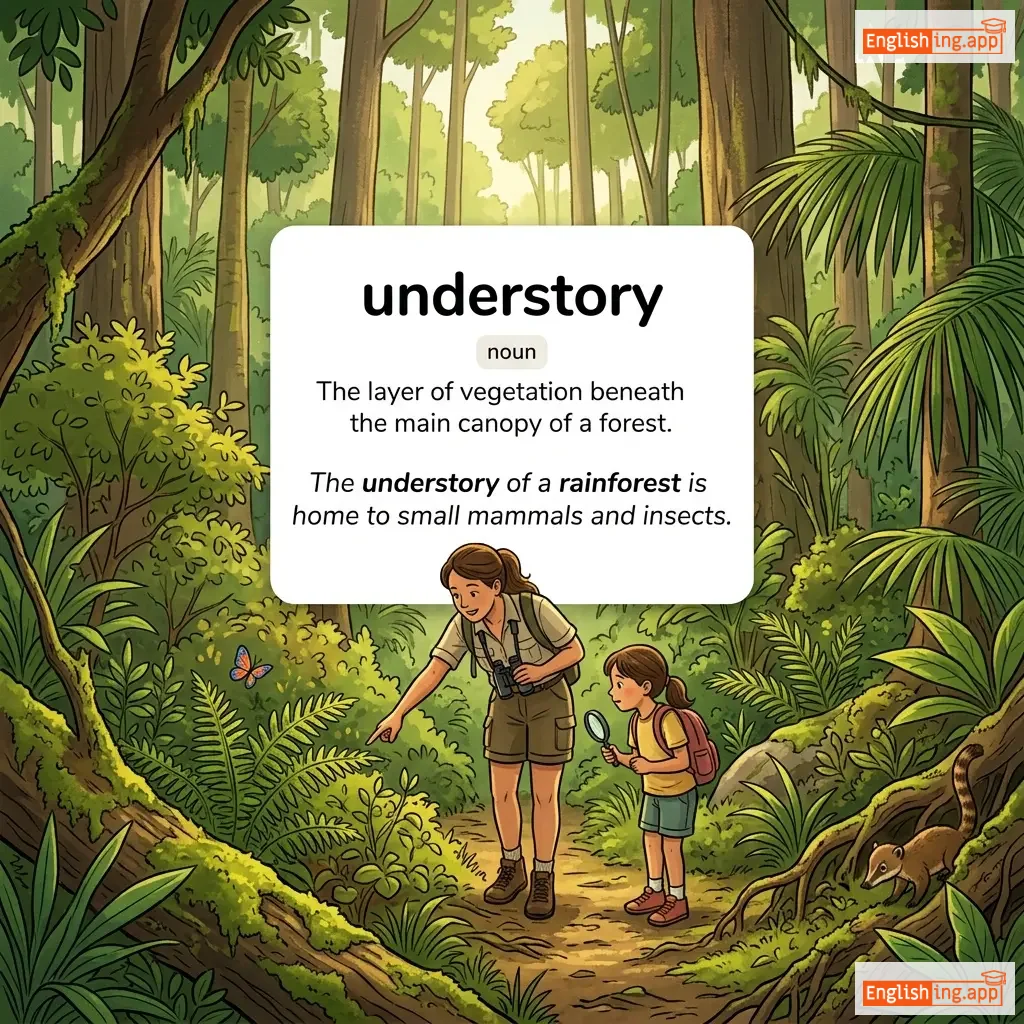
understory definition card — visual illustration of the meaning
noun C2
/ˈʌn.dɚˌstɔː.ri/
下層植物 (kasou shokubutsu)

The layer of vegetation beneath the main canopy of a forest.

"The understory of a rainforest is home to small mammals and insects."

"熱帯雨林の下層植物は小さな哺乳動物や昆虫の家です。" (Nettai urin no kasou shokubutsu wa chiisana honnyuudoubutsu ya konchuu no ie desu.)
verb C2
/ˈʌndərˌraɪt/

To guarantee financial support, especially by agreeing to cover losses or risks; in insurance, to assess and accept risks.

"The bank agreed to underwrite the company's new bond issue."

verb C2
/ˈʌndjʊleɪt/
波打つ (namiutsu)

To move with a smooth, wave-like motion.

"The snake undulated across the sand."

"ヘビは砂の上をうねうねと進んでいった。" (Hebi wa suna no ue o uneune to susunde itta.)
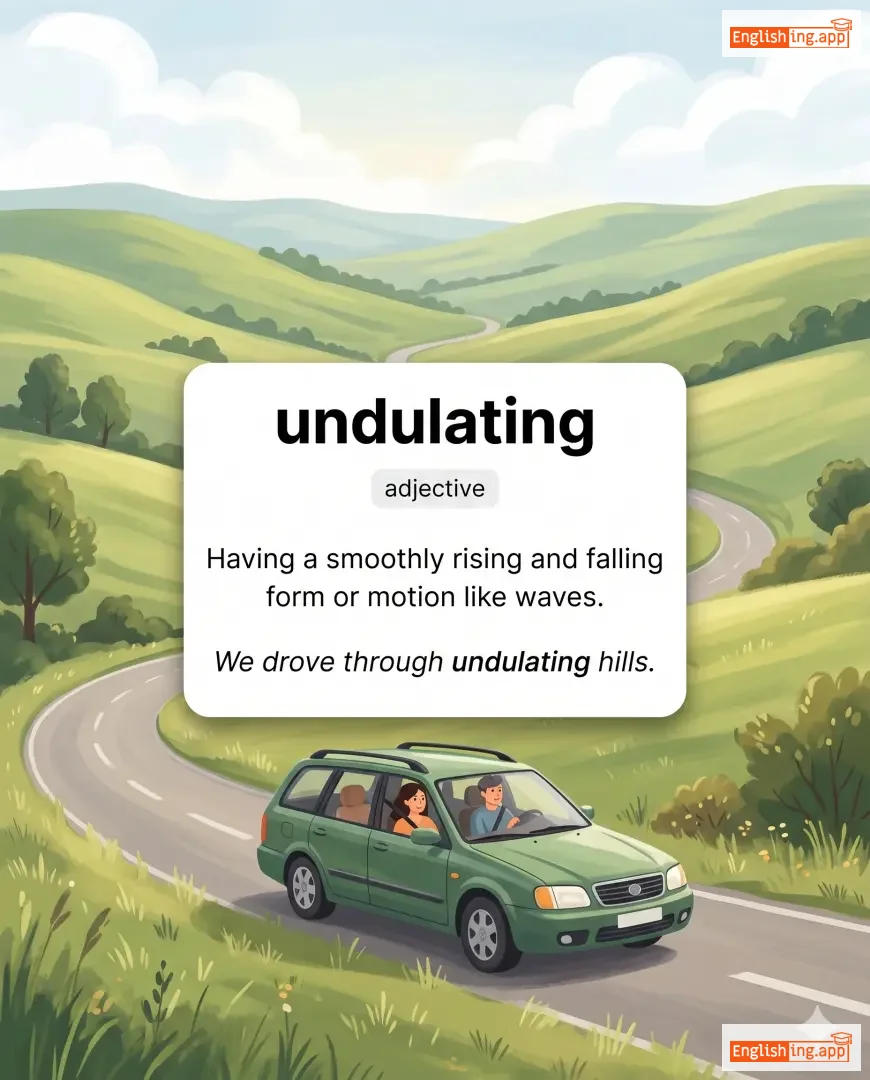
undulating definition card — visual illustration of the meaning
adjective C2
/ˈʌndjʊleɪtɪŋ/
波打つ (namiutsu)

Having a smoothly rising and falling form or motion like waves.

"We drove through undulating hills."

"私たちは起伏のある丘をドライブしました。" (Watashitachi wa kifuku no aru oka o doraibu shimashita.)
adjective C2
/ˈʌndjʊləs/
波打つ (namiutsu)

Having a wavy surface or form.

"The artist painted the undulous sea at sunset."

"アーティストは夕日に照らされた波打つ海を描きました。" (Ātisuto wa yūhi ni terasareta namiutsu umi o egakimashita.)
adverb C2
/ʌnˈɜːrɪŋli/
間違いなく (machigainaku)

Without making any mistakes; always accurate

"The archer aimed unerringly at the target."

"弓矢は間違いなくターゲットに向かって狙いを定めた。" (Yumiya wa machigainaku tāgetto ni mukatte nerai o sadameta.)
adjective C2
/ˌʌnɪkˈsɛpʃənəbl/
非の打ち所がない (hi no uchi tokoro ga nai)

Not open to objection; acceptable and unobjectionable

"His behavior was unexceptionable throughout the event."

"彼の行動はイベント中ずっと非の打ち所がなかった。" (Kare no koudou wa ibento-chuu zutto hi no uchi tokoro ga nakatta.)
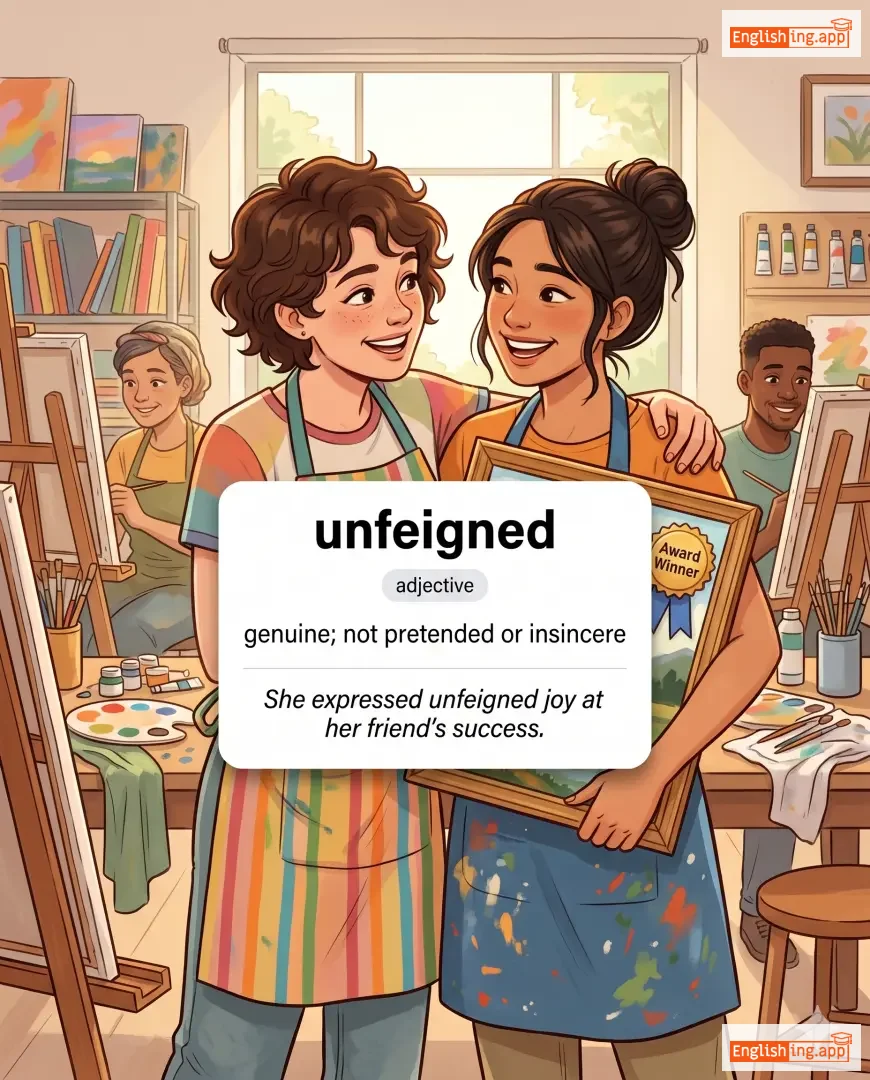
unfeigned definition card — visual illustration of the meaning
adjective C2
/ʌnˈfeɪnd/
本物 (honmono)

genuine; not pretended or insincere

"She expressed unfeigned joy at her friend's success."

"彼女は友達の成功に対して本物の喜びを表現しました。" (Kanojo wa tomodachi no seikou ni taishite honmono no yorokobi o hyougen shimashita.)
verb C2
/ʌnˈfɛtər/
制約から解放する (seiyaku kara kaihō suru)

to release from restraint or restriction; to free

"The new law will unfetter small businesses from excessive regulations."

"新しい法律は小規模なビジネスを過剰な規制から解放します。" (Atarashī hōritsu wa shōkibō na bijinesu o kajō na kisei kara kaihō shimasu.)
adjective C2
/ʌnˈflæpəbəl/
冷静沈着 (reisei chinchou)

calm and composed, especially in difficult situations

"Despite the crisis, he remained unflappable and confident."

"危機にもかかわらず、彼は冷静沈着で自信に満ちていた。" (Kiki ni mo kakawarazu, kare wa reisei chinchou de jishin ni michite ita.)
adjective C2
/ʌnˈflɛdʒd/
未熟な (mijukuna)

Inexperienced, immature, or not fully developed.

"The unfledged writer struggled to complete his first novel."

"未熟な作家は、最初の小説を完成させるのに苦労しました。" (Mijukuna sakka wa, saisho no shousetsu o kansei saseru no ni kurou shimashita.)
verb C2
/ʌnˈfrɒk/
神父の職を剥奪する (shinpu no shoku o hadatsu suru)

To remove a priest from his position or deprive someone of a rank.

"The corrupt priest was unfrocked after the investigation."

"腐敗した神父は調査後に職を剥奪されました。" (fuhai shita shinpu wa chousa go ni shoku o hadatsu saremashita.)
adjective C2
/ʌnˈɡeɪnli/
不器用 (bukiyou)

Awkward, clumsy, or lacking grace in movement or appearance.

"The tall boy moved in an ungainly manner."

"背の高い男の子は不器用な仕草で動いた。" (Se no takai otokonoko wa bukiyou na shigusa de uita.)
noun C2
/ˈʌŋɡwənt/
軟膏 (nankou)

A soothing or healing ointment applied to the skin.

"The doctor applied an unguent to heal the burn."

"医者は火傷を治すために軟膏を塗った。" (Isha wa yakedo o naosu tame ni nankou o nutta.)
adjective C2
/ˌʌnɪmˈpiːtʃəbl/
非難の余地がない (hinan no yochi ga nai)

Not able to be doubted, questioned, or criticized; completely trustworthy.

"She is known for her unimpeachable honesty."

"彼女はその非難の余地がない誠実さで知られています。" (Kanojo wa sono hinan no yochi ga nai seijitsusa de shirareteimasu.)
adjective C2
/juːˈnɪsənənt/
調和の取れた (chōwa no toreta)

Sounding together or in harmony.

"The unisonant voices created a powerful effect."

"調和の取れた声が強力な効果を生み出した。" (Chōwa no toreta koe ga kyōryoku na kōka o umidashita.)
noun C2
/ˌjuːnɪˈtɛəriən/
ユニタリアン (Unitarian)

A person who believes that God exists as one entity rather than as a Trinity; a member of a religious denomination that emphasizes individual freedom of belief.

"The Unitarian church is known for its inclusive and open-minded approach."

"ユニタリアン教会は、その包括的で開かれた考え方で知られています。" (Yunitarian kyōkai wa, sono hōkatsu-teki de hirakareta kangaekata de shirareteimasu.)
noun C2
/ˈjuːnɪvəˌlɛns/
単価性 (tanka-sei)

The state of having a single valence or combining power, especially in chemistry.

"Hydrogen is characterized by its univalence in chemical reactions."

"水素は化学反応においてその単価性によって特徴づけられています。" (Suiso wa kagaku hannō ni oite sono tanka-sei ni yotte tokuchōdzukerareteimasu.)
adjective C2
/ʌnˈlɛtəd/
識字障害者 (shikiji shougai sha)

lacking education or the ability to read and write; illiterate

"The unlettered villagers relied on oral traditions to preserve their history."

"識字障害者の村人たちは口承伝承に頼って歴史を保存していた。" (Shikiji shougai sha no murabito-tachi wa koushou denshou ni tayotte rekishi wo hozon shite ita.)
adjective C2
/ʌnˈmɪtɪɡeɪtɪd/
完全な (kanzen na)

absolute; not lessened or moderated

"The meeting was an unmitigated disaster."

"会議は完全な災害でした。" (Kaigi wa kanzen na saigai deshita.)
adjective C2
/ˌʌnpriːpəˈzɛsɪŋ/
魅力的でない (miryokuteki de nai)

not attractive or appealing in appearance

"Despite his unprepossessing looks, he was very kind and intelligent."

"彼は魅力的でない外見にもかかわらず、非常に親切で賢かった。" (Kare wa miryokuteki de nai gaiken ni mo kakawarazu, hijō ni shinsetsu de kashikokatta.)
adjective C2
/ˌʌnprəˈpɪʃəs/
不運な (fuunna)

Not giving or indicating a good chance of success; unfavorable.

"The team began their journey under unpropitious weather conditions."

"チームは不運な天候の中で旅を始めました。" (Chiimu wa fuunna tenkou no naka de tabi o hajimemashita.)
adjective C2
/ˌʌn.rɪˈdʒɛn.ər.ət/
頑固 (ganko)

Not reformed or showing no signs of change; stubbornly refusing to reform or repent.

"He remained an unregenerate opponent of progress."

"彼は進歩の頑固な反対者であり続けた。" (Kare wa shinpo no ganko na hantai-sha de ari tsudzuketa.)
adjective C2
/ˌʌnrɪˈmɪtɪŋ/
絶え間ない (taemanai)

Never relaxing or stopping; persistent.

"Her unremitting efforts finally paid off."

"彼女の絶え間ない努力は最終的に報われた。" (Kanojo no taemanai doryoku wa saishūteki ni mukuwarimashita.)