Vocabularios

Descubra, aprenda y domine el vocabulario en inglés

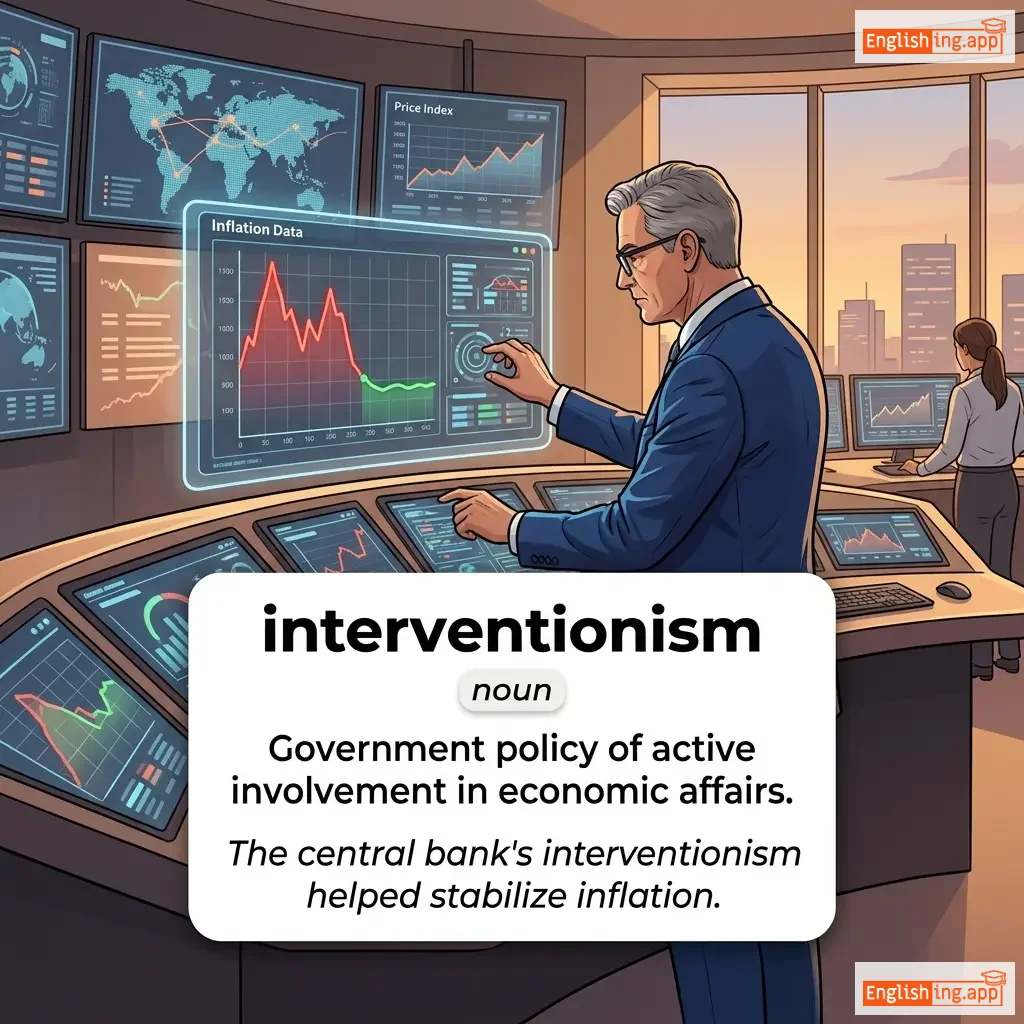
interventionism definition card — visual illustration of the meaning
noun C2
/ˌɪn.təˈvɛn.ʃə.nɪ.zəm/
介入主義 (kainyū shugi)

Government policy of active involvement in economic affairs.

"The central bank's interventionism helped stabilize inflation."

"中央銀行の介入主義はインフレの安定に役立った。" (Chūō ginkō no kainyū shugi wa infure no antei ni yakudatta.)
noun C2
/ɪnˈtɛstəsi/
遺言なしで死亡 (yigon nashi de shibou)

The condition of dying without having made a valid will.

"His estate was divided according to the laws of intestacy."

"彼の財産は遺言なしでの法則に従って分けられた。" (kare no zaisan wa yigon nashi de no hōsoku ni shitagatte wakerareta.)
adjective C2
/ɪnˈtɛsteɪt/
遺言なしで死亡 (igon nashi de shibou)

Having died without leaving a valid will.

"She died intestate, so her assets were distributed by law."

"彼女は遺言なしで死亡したため、財産は法に従って分配されました。" (Kanojo wa igon nashi de shibou shita tame, zaisan wa hō ni shitagatte bunpai saremashita.)
noun C2
/ɪnˈtɒksɪkənt/
酔わせる物質 (yowaseru busshitsu)

a substance, especially alcohol or a drug, that causes intoxication

"Alcohol is the most commonly used intoxicant in many cultures."

"アルコールは多くの文化で最も一般的に使用される酔わせる物質です。" (Arukōru wa ōku no bunka de mottomo ippanteki ni shiyō sareru yowaseru busshitsu desu.)
adjective C2
/ˌɪn.trəˈsɛl.jʊ.lər/
細胞内 (saibōnai)

Located or occurring within a cell.

"The drug works by targeting intracellular bacteria."

"薬は細胞内の細菌をターゲットにして作用します。" (Kusuri wa saibōnai no saikin o tāgetto ni shite sayō shimasu.)
adjective C2
/ˌɪn.trəˈmjʊə.rəl/
学内 (gakunai)

Occurring within the walls of a single institution, especially a school or college.

"The college organizes intramural sports competitions every semester."

"大学は毎学期、学内スポーツ競技を開催しています。" (Daigaku wa mai gakki, gakunai supōtsu kyōgi o kaisai shiteimasu.)
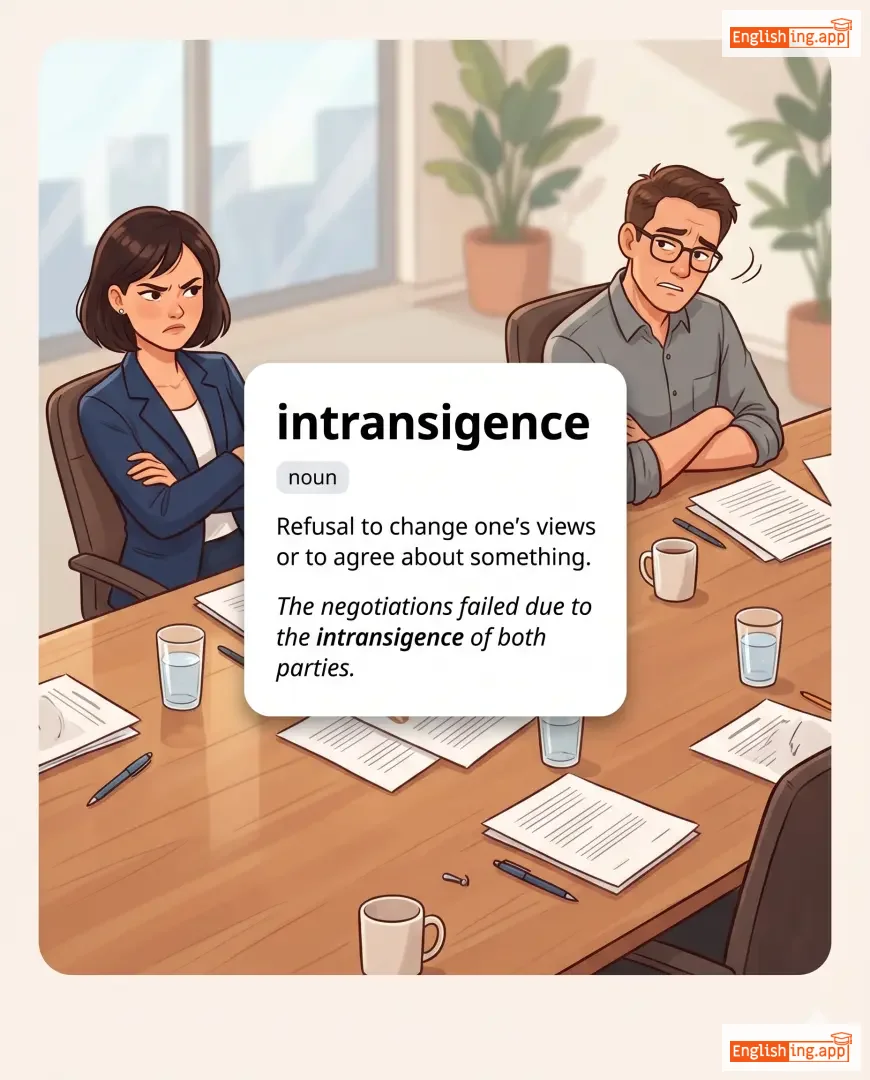
intransigence definition card — visual illustration of the meaning
noun C2
/ɪnˈtræn.sɪ.dʒəns/
不屈 (fukutsu)

Refusal to change one's views or to agree about something.

"The negotiations failed due to the intransigence of both parties."

"両者の不屈の姿勢のために交渉は失敗した。" (Ryōsha no fukutsu no shisei no tame ni kōshō wa shippai shita.)
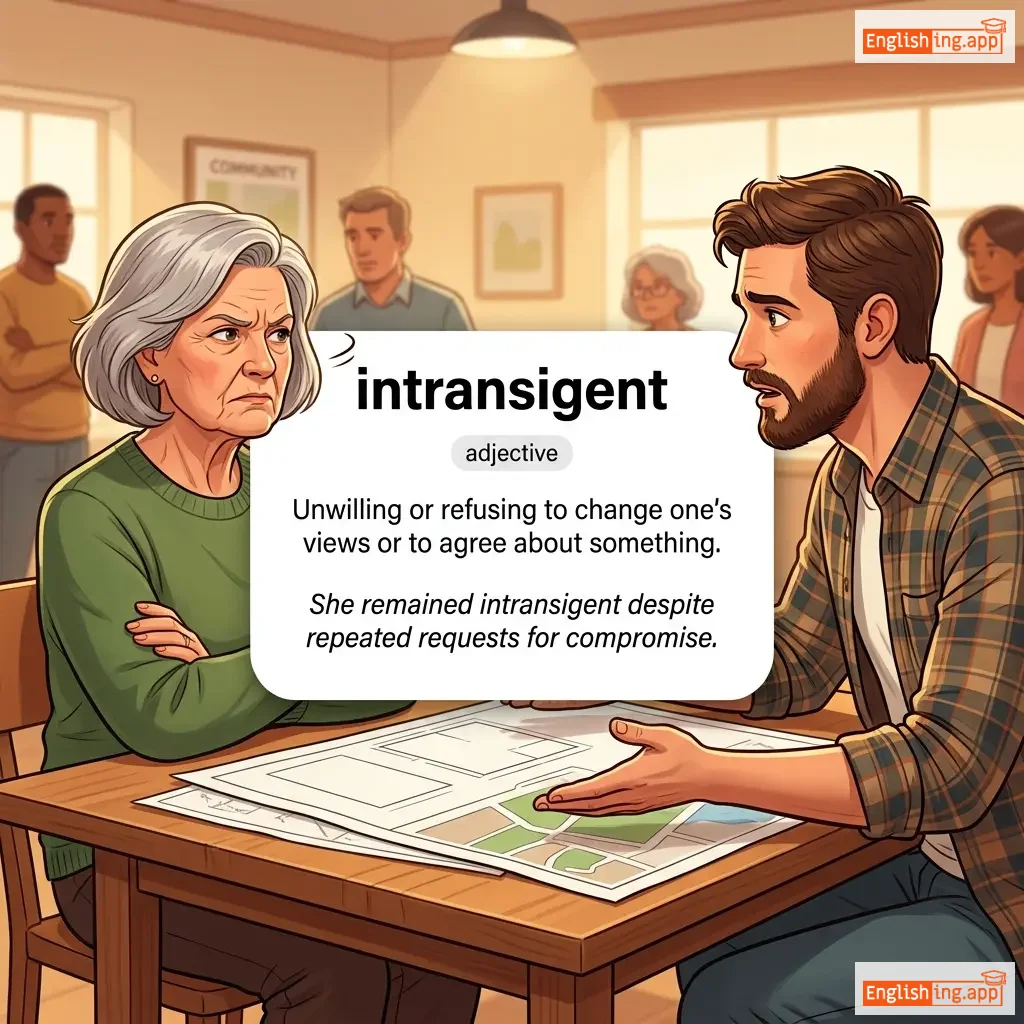
intransigent definition card — visual illustration of the meaning
adjective C2
/ɪnˈtræn.sɪ.dʒənt/
譲らない (yuzuranai)

Unwilling or refusing to change one's views or to agree about something.

"She remained intransigent despite repeated requests for compromise."

"妥協の繰り返しのお願いにもかかわらず、彼女は譲らなかった。" (Dakyō no kurikaeshi no onegai ni mo kakawarazu, kanojo wa yuzuranakatta.)
noun C2
/ˌɪn.trəˈɡreʃ.ən/
遺伝子流入 (idenshi ryūnyū)

The transfer of genetic information from one species to another through repeated backcrossing.

"Introgression plays a significant role in plant breeding."

"イントログレッションは植物育種において重要な役割を果たします。" (Introgresshon wa shokubutsu ikushu ni oite jūyō na yakuwari o hatashimasu.)
verb C2
/ˌɪn.trəˈmɪt/
挿入する (sounyuu suru)

To insert or introduce something into a place or body.

"The doctor carefully intromitted the instrument into the wound."

"医者は慎重に器具を傷口に挿入しました。" (Isha wa shinchou ni kigu wo kizu ni sounyuu shimashita.)
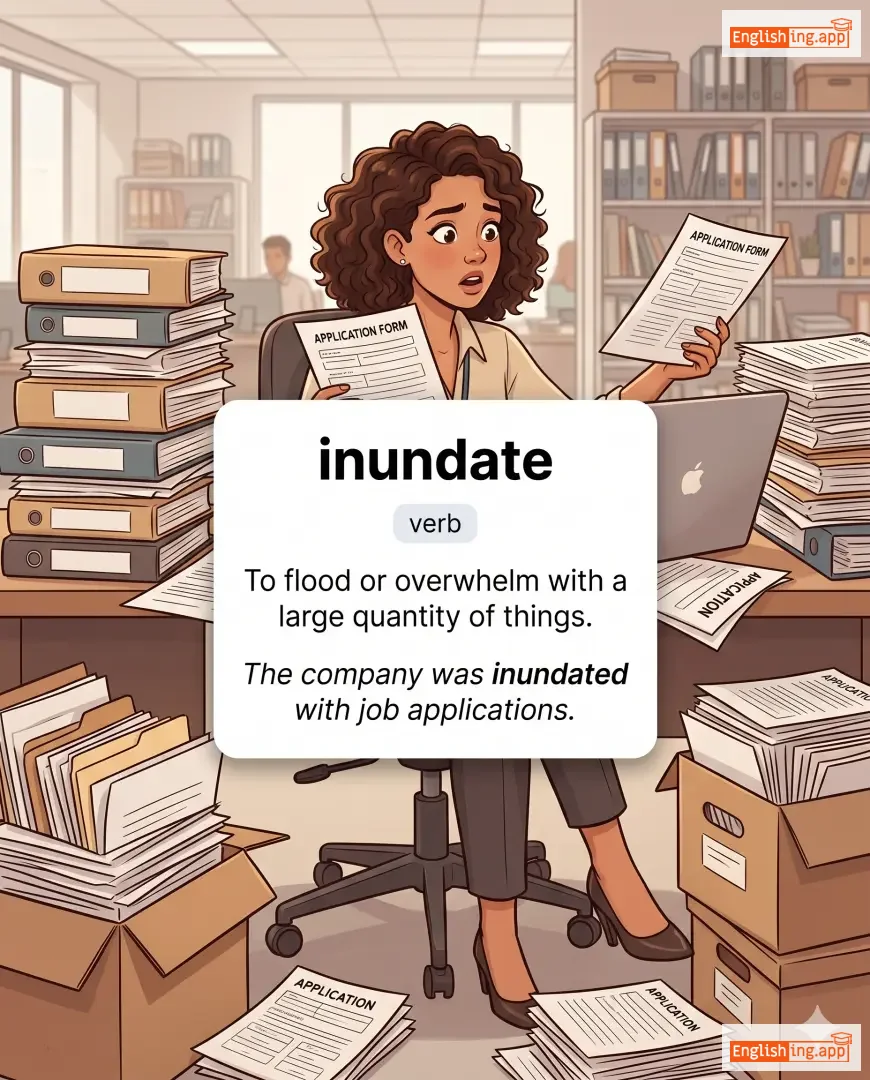
inundate definition card — visual illustration of the meaning
verb C2
/ˈɪn.ʌn.deɪt/
氾濫する / 溢れかえる (hanran suru / afurekaeru)

To flood or overwhelm with a large quantity of things.

"The company was inundated with job applications."

"その会社は求人応募で溢れていた。" (Sono kaisha wa kyūjin ōbo de afurete ita.)
noun C2
/ˌɪn.ʌnˈdeɪ.ʃən/
洪水 (kōzui)

The act of flooding or overwhelming with water or things.

"The town suffered from a severe inundation after the heavy rains."

"町は大雨後にひどい洪水に見舞われました。" (Machi wa ōamego ni hidoi kōzui ni mimawaremashita.)
verb C2
/ɪˈnjʊər/
慣れる (nareru)

To become accustomed to something, especially something unpleasant.

"Soldiers quickly became inured to the harsh conditions."

"兵士たちはすぐに過酷な状況に慣れました。" (Heishi-tachi wa sugu ni kakoku na joukyou ni naremashita.)
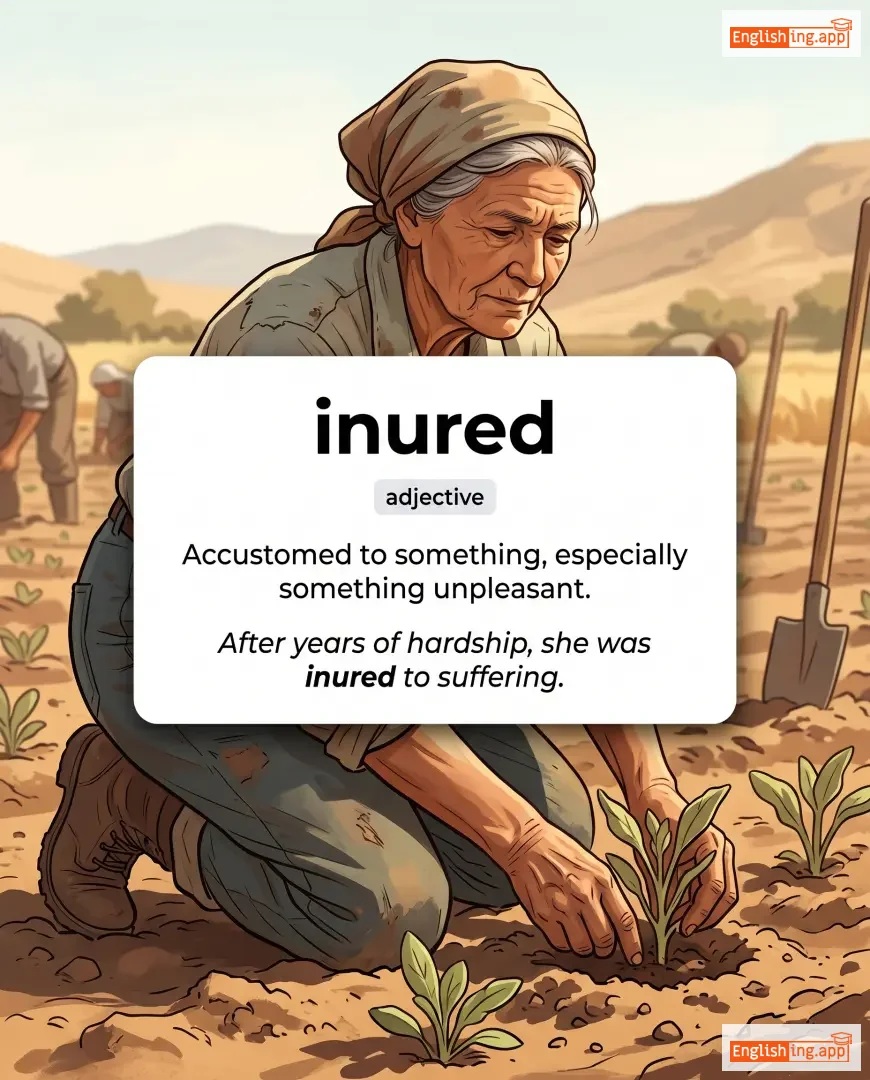
inured definition card — visual illustration of the meaning
adjective C2
/ɪˈnjʊərd/
慣れた (nareta)

Accustomed to something, especially something unpleasant.

"After years of hardship, she was inured to suffering."

"長年の苦しみの後、彼女は苦しみに慣れていた。" (Naganen no kurushimi no ato, kanojo wa kurushimi ni narete ita.)
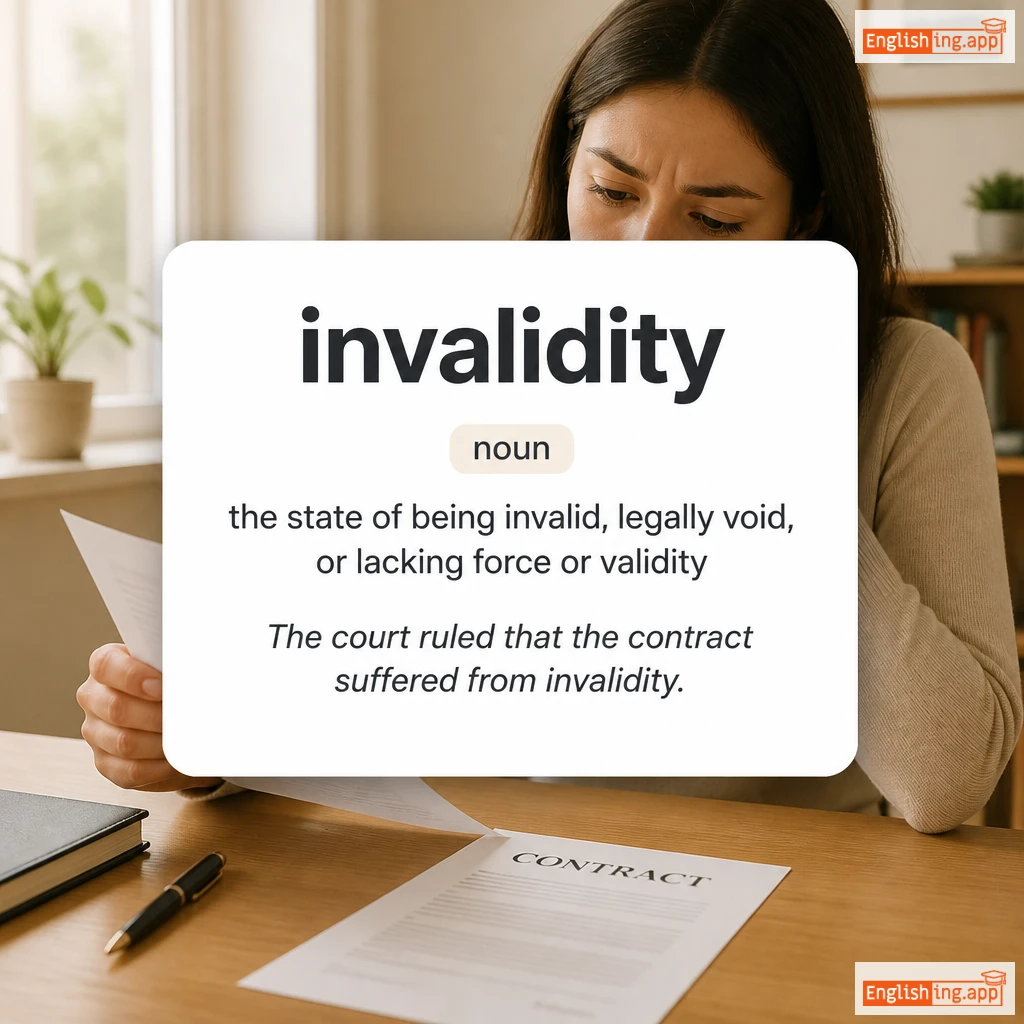
invalidity definition card — visual illustration of the meaning
noun C2
/ˌɪnvəˈlɪdɪti/
無効性 (mukousei)

the state of being invalid, legally void, or lacking force or validity

"The court ruled that the contract suffered from invalidity."

"裁判所はその契約に無効性があると判断した。" (saibansho wa sono keiyaku ni mukousei ga aru to handan shita)
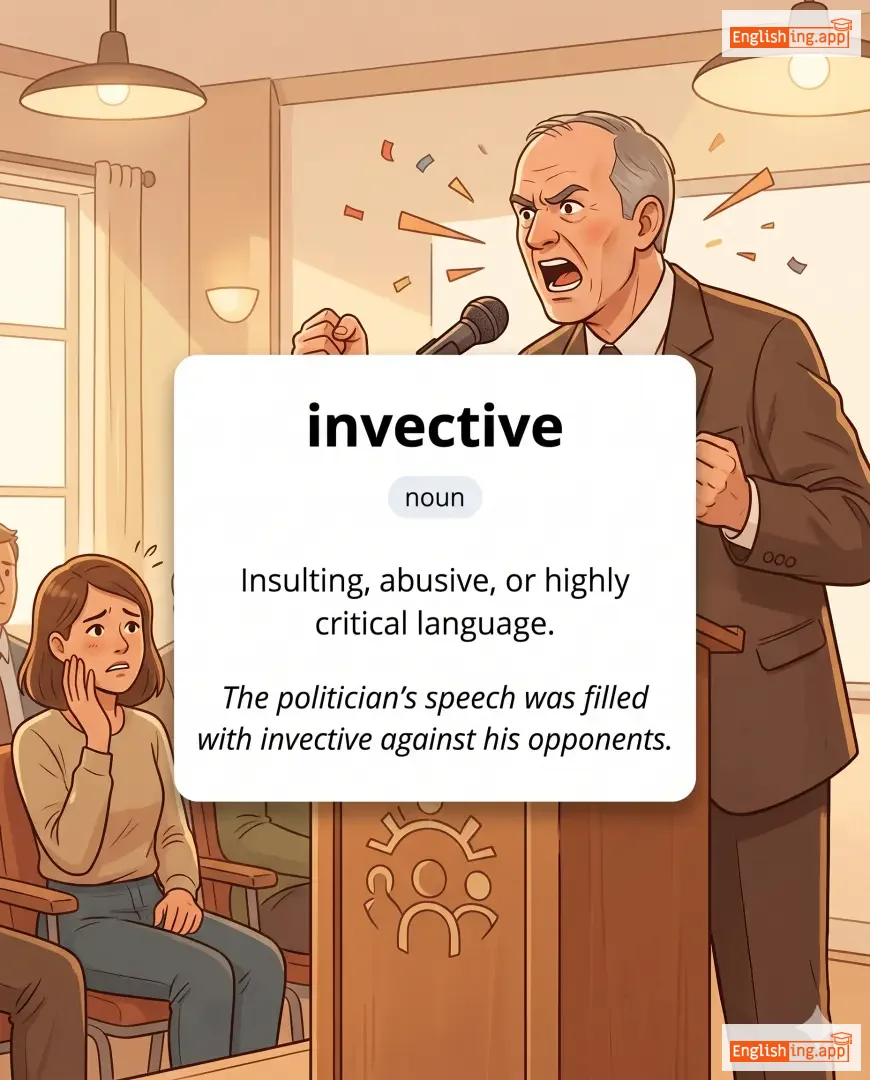
invective definition card — visual illustration of the meaning
noun C2
/ɪnˈvɛktɪv/
侮辱的な言葉 (būryokuteki na kotoba)

Insulting, abusive, or highly critical language.

"The politician’s speech was filled with invective against his opponents."

"その政治家の演説は、対立候補に対する侮辱的な言葉で満ちていた。" (Sono seijika no enzetsu wa, tairitsukōho ni taisuru būryokuteki na kotoba de michite ita.)
verb C2
/ɪnˈveɪ/
激しく批判する (hageshiku hihan suru)

To speak or write about something with great hostility and criticism.

"He inveighed against the corruption in government."

"彼は政府の腐敗に対して激しく批判した。" (Kare wa seifu no fuhai ni taishite hageshiku hihan shita.)
inveigle definition card — visual illustration of the meaning
verb C2
/ɪnˈveɪɡəl/
誘惑する (yūwaku suru)

To persuade someone to do something by deception or flattery.

"She inveigled him into signing the contract."

"彼女は彼に契約書に署名させた。" (Kanojo wa kare ni keiyaku-sho ni shomei saseta.)
noun C2
/ɪnˈvɛstɪtʃər/
任命式 (ninmei-shiki)

the formal ceremony of conferring authority, rank, or office

"The king held an investiture ceremony for the new knight."

"王は新しい騎士のために任命式を開催しました。" (Ō wa atarashī kishi no tame ni ninmei-shiki o kaisai shimashita.)
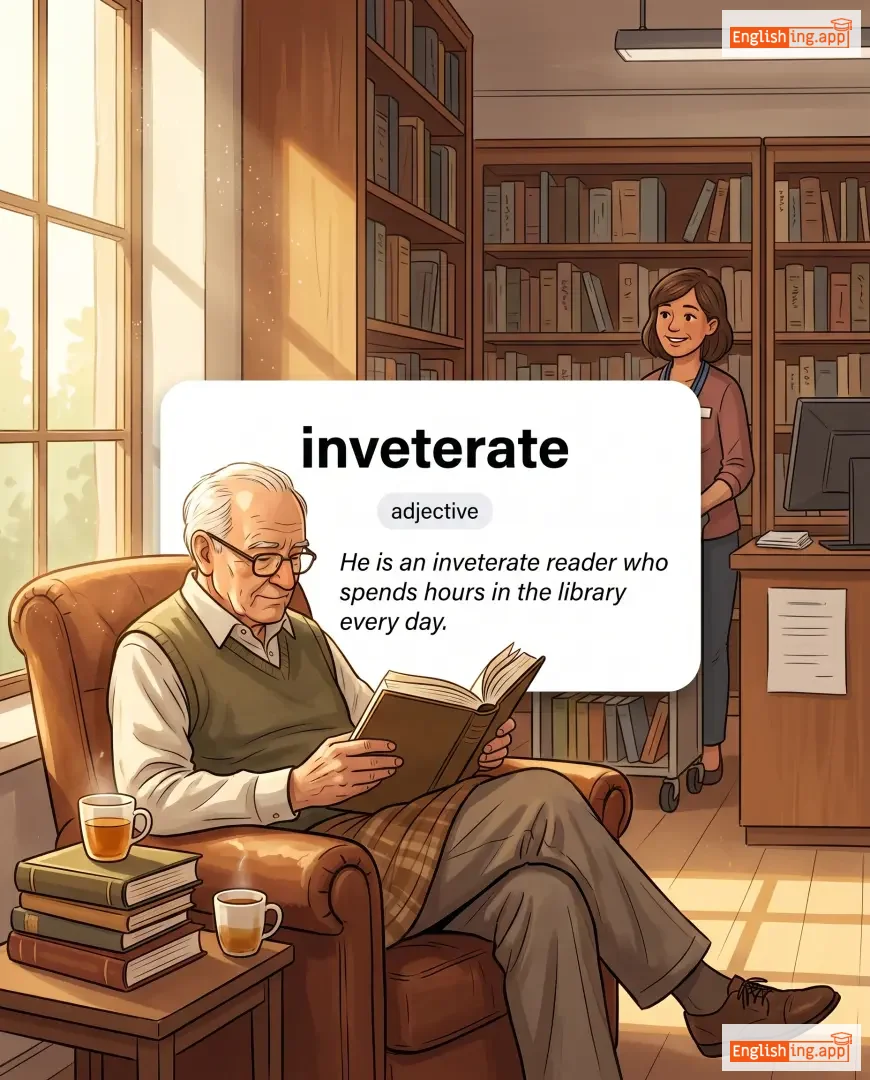
inveterate definition card — visual illustration of the meaning
adjective C2
/ɪnˈvɛtərət/
常習的な (joushuuteki na)

having a long-established habit, activity, or interest that is unlikely to change

"He is an inveterate reader who spends hours in the library every day."

"彼は毎日数時間を図書館で過ごす常習的な読者です。" (Kare wa mainichi suujikan wo toshokan de sugosu joushuuteki na dokusha desu.)
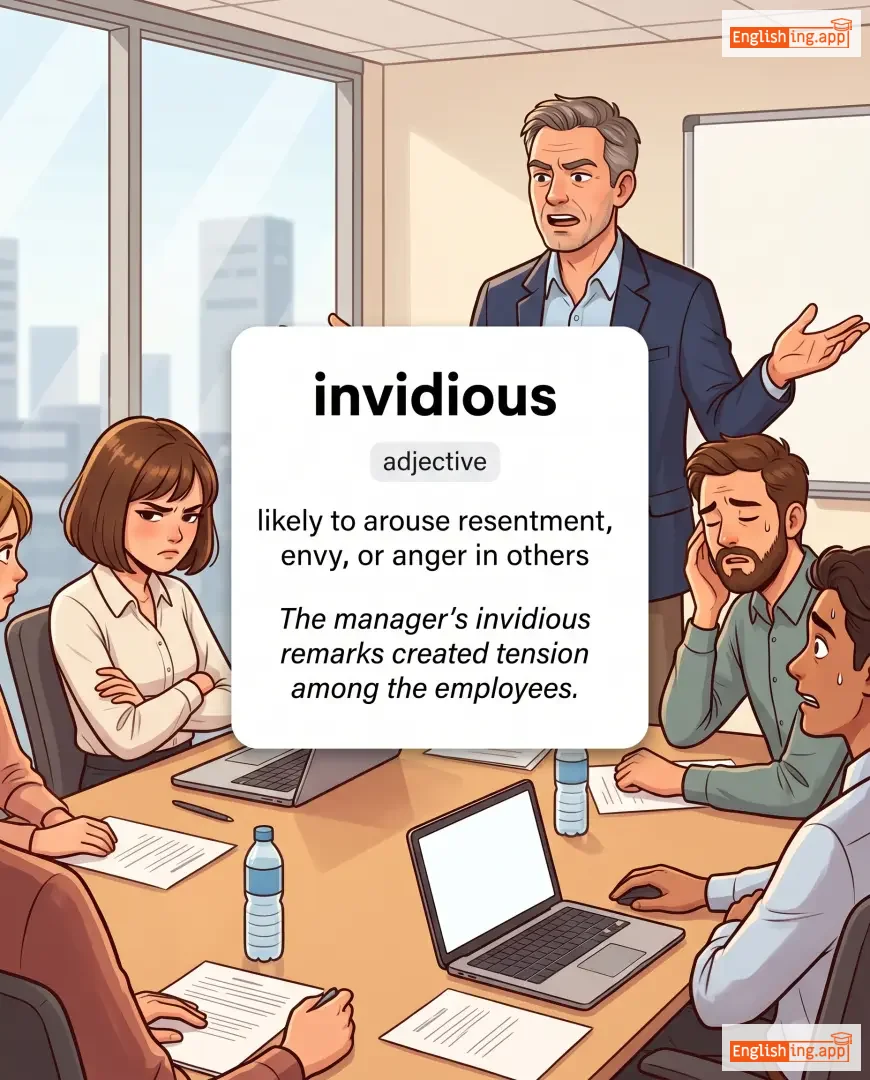
invidious definition card — visual illustration of the meaning
adjective C2
/ɪnˈvɪdiəs/
妬ましい (netamashii)

likely to arouse resentment, envy, or anger in others

"The manager's invidious remarks created tension among the employees."

"マネージャーの妬ましいコメントは、従業員の間に緊張を生み出しました。" (Manējā no netamashī komento wa, jūgyōin no aida ni kinchō o umidashimashita.)
adjective C2
/ɪnˈvaɪələbl/
侵害できない (shingai dekinai)

never to be broken, dishonored, or violated

"Human rights are considered inviolable in modern democracies."

"人権は現代の民主主義において侵害できないと見なされています。" (Jinken wa gendai no minshushugi ni oite shingai dekinai to minasarateimasu.)
adjective C2
/ɪnˈvaɪələt/
汚されていない (kagasareteinai)

free from violation, injury, or desecration; kept safe and untouched

"The ancient temple remained inviolate for centuries."

"古代の寺院は何世紀にもわたって汚されることなく保たれました。" (Kodai no jiin wa nan seiki ni mo watatte kegasarenakatta tamotaremashita.)
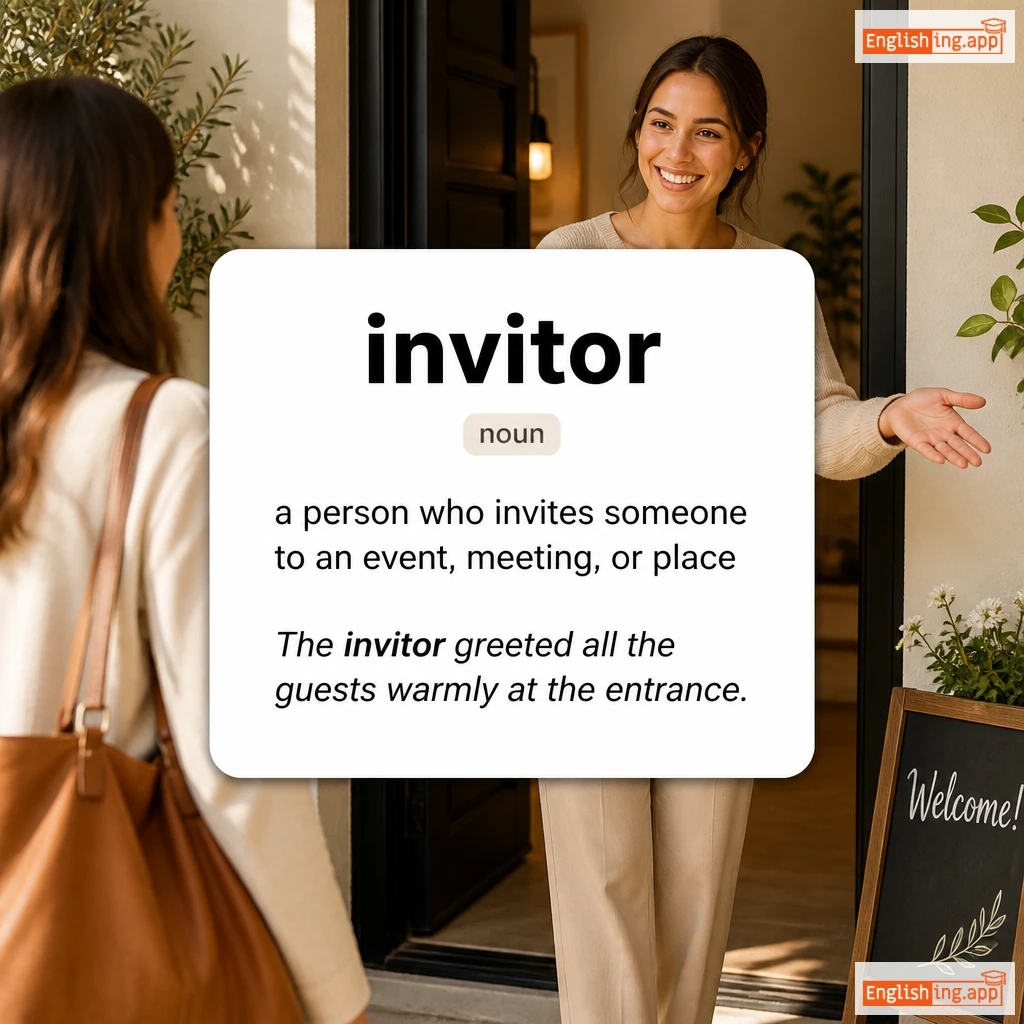
invitor definition card — visual illustration of the meaning
noun C2
/ɪnˈvaɪtər/
招待者 (shoutaisha)

a person who invites someone to an event, meeting, or place

"The invitor greeted all the guests warmly at the entrance."

"招待者は入口で客を温かく迎えた。" (Shoutaisha wa iriguchi de kyaku o atatakaku mukaeta)
noun C2
/ˌɪnvəˈkeɪʃən/
祈願 (kigen)

the act of calling upon a higher power for help, blessing, or inspiration

"The ceremony began with an invocation to the gods."

"儀式は神々への祈願から始まりました。" (Gishiki wa kamigami e no kigen kara hajimari mashita.)
noun C2
/ˌɪnvəˈluːʃən/
インヴォリューション (invoriyuushon)

a complicated or intricate form or state; in biology, the shrinking of an organ after its function has finished

"The story was full of involution, making it hard to follow."

"その話はインヴォリューションで満ちており、追うのが難しかった。" (Sono hanashi wa invoriyuushon de michite ori, ou no ga muzukashikatta.)
adjective C2
/ɪnˈvʌlnərəbl/
無敵 (muteki)

Impossible to harm, damage, or defeat.

"The fortress was thought to be invulnerable to attack."

"その要塞は攻撃に対して無敵だと考えられていた。" (Sono yousai wa kougeki ni taishite muteki da to kangaerareteita.)
noun C2
/aɪˈoʊtə/
微小な量 (bishou na ryou)

An extremely small amount.

"He did not show an iota of fear."

"彼は恐怖の一片も見せませんでした。" (Kare wa kyoufu no ippen mo misemasen deshita.)
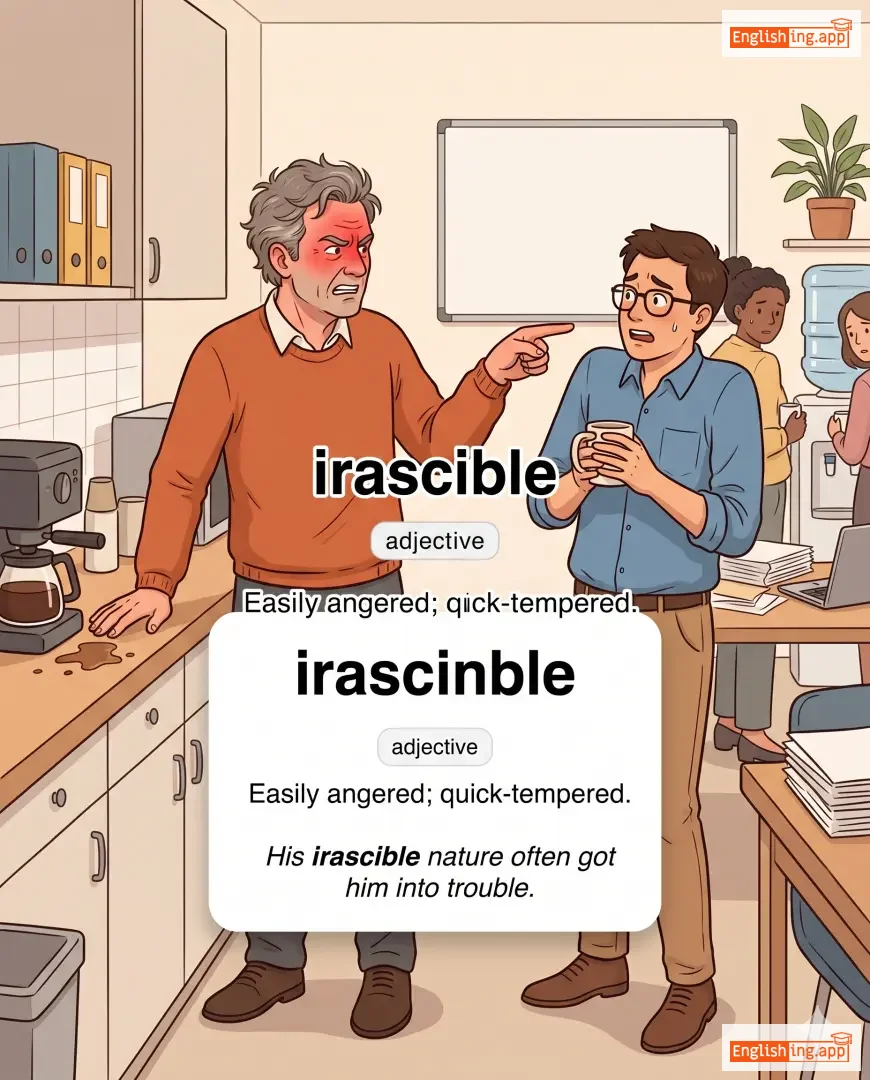
irascible definition card — visual illustration of the meaning
adjective C2
/ɪˈræsɪbl/
怒りっぽい (okorippoi)

Easily angered; quick-tempered.

"His irascible nature often got him into trouble."

"彼の怒りっぽい性格はよくトラブルを引き起こしていた。" (Kare no okorippoi seikaku wa yoku toraburu o hikiokoshite ita.)
noun C2
/aɪər/
怒り, 激怒 (ikari, gekido)

intense anger or rage

"The new policy provoked the ire of the employees."

"新しい政策は従業員の怒りを引き起こした。" (Atarashī seisaku wa jūgyōin no ikari o hikiokoshita.)
noun C2
/ˌɪrɪˈdɛsəns/
虹色の輝き (niji iro no kagayaki)

a play of lustrous, changing colors like those of a rainbow

"The butterfly's wings shimmered with iridescence."

"蝶の羽は虹色の輝きで輝いていました。" (Chou no hane wa niji iro no kagayaki de kagayaite imashita.)
adjective C2
/ˌɪrɪˈdɛsənt/
虹色の (niji iro no)

showing luminous colors that seem to change when seen from different angles

"She wore an iridescent dress that sparkled in the light."

"彼女は光の中で輝く虹色のドレスを着ていました。" (Kanojo wa hikari no naka de kagayaku niji iro no doresu o kite imashita.)
verb C2
/ɜːrk/
苛立たせる (iradataseru)

to annoy or irritate someone

"It irks me when people are late without calling."

"人々が電話をかけずに遅れると、私はイライラします。" (Hitobito ga denwa wo kakezu ni okureru to, watashi wa iraira shimasu.)
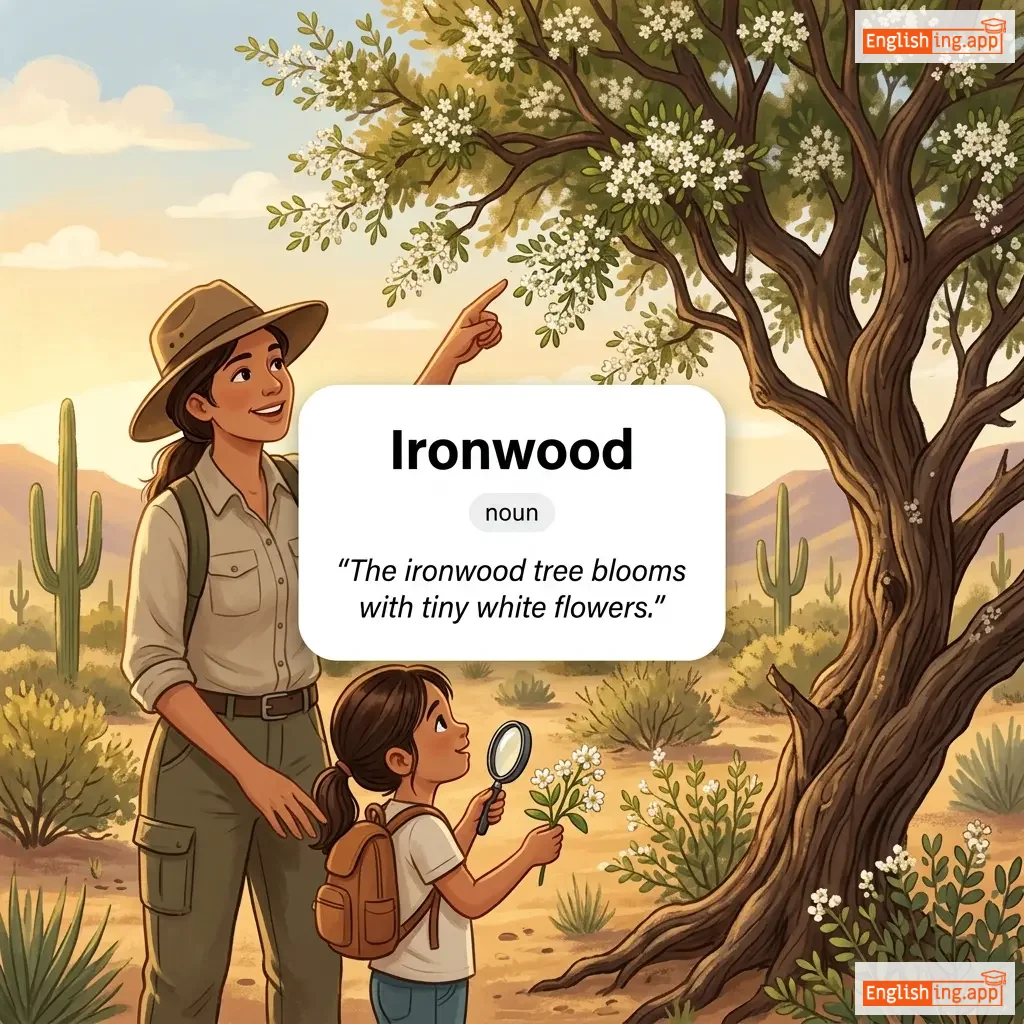
Ironwood definition card — visual illustration of the meaning
noun C2
/ˈaɪ.ərn.wʊd/
アイアンウッド (aianuddo)

a hard, dense wood from various trees; also the tree itself that produces small flowers

"The ironwood tree blooms with tiny white flowers."

"アイアンウッドの木は小さな白い花を咲かせます。" (Aianuddo no ki wa chiisana shiroi hana o sakasemasu.)
noun C2
/ɪˈreɪdiəns/
放射輝度 (iradiansu)

the quality of shining brightly; the intensity of light falling on a surface

"The irradiance of the sun at noon was overwhelming."

"正午の太陽の放射輝度は圧倒的でした。" (Shōgo no taiyō no hōsha kidō wa attō-teki deshita.)
verb C2
/ɪˈreɪdieɪt/
照射する (shōsha suru)

to shine light on something; to expose to radiation; to illuminate or brighten

"The scientist used a lamp to irradiate the sample."

"科学者はランプを使ってサンプルを照射しました。" (Kagakusha wa ranpu o tsukatte sanpuru o shōsha shimashita.)
adjective C2
/ɪˈrædɪkəbəl/
根絶不可能な (konzetsu fukanō na)

not able to be eradicated; impossible to destroy or remove completely

"The love of a mother for her child is irradicable."

"母親の子供への愛は根絶不可能です。" (Hahaoya no kodomo e no ai wa konzetsu fukanō desu.)
adjective C2
/ˌɪrɪˈkɒnsɪləbl/
和解できない (wakai dekinai)

impossible to make compatible or bring into harmony; unable to resolve differences

"The couple separated due to irreconcilable differences."

"そのカップルは和解できない違いのために別れました。" (Sono kappuru wa wakai dekinai chigai no tame ni wakaremashita.)
adjective C2
/ˌɪrɪˈdjuːsəbl/
不可約 (fukayaku)

impossible to reduce or simplify further

"The fraction 3/7 is irreducible."

"分数 3/7 は不可約です。" (Bunsū 3/7 wa fukayaku desu.)
adjective C2
/ɪˈrɛfrəɡəbəl/
反論できない (hanron dekinai)

Impossible to refute, deny, or break

"The lawyer presented irrefragable evidence that proved his client’s innocence."

"弁護士は彼のクライアントの無実を証明する反論できない証拠を提示しました。" (Bengoshi wa kare no kuraianto no mujitsu o shōmei suru hanron dekinai shōko o teiji shimashita.)
adjective C2
/ˌɪrɪˈfrændʒɪbəl/
侵害できない (shingai dekinai)

Not to be broken, violated, or infringed

"The constitution guarantees certain irrefrangible rights to every citizen."

"憲法はすべての市民にいくつかの侵害できない権利を保証します。" (Kenpō wa subete no shimin ni ikutsuka no shingai dekinai kenri o hoshō shimasu.)
adjective C2
/ˌɪrɪˈlɪdʒəs/
無宗教 (musūkyō)

Indifferent or hostile to religion

"Some people in the community consider him irreligious because he never attends religious services."

"コミュニティの中で、彼は宗教的なサービスに一度も参加しないため、無宗教だと考えられています。" (Komyuniti no naka de, kare wa shūkyō-teki na sābisu ni ichido mo sanka shinai tame, musūkyō da to kangaerareteimasu.)
adjective C2
/ˌɪrɪˈmiːdiəbl̩/
修復不可能 (shūfuku fukanō)

Impossible to cure, repair, or remedy.

"The damage to the ancient manuscript was irremediable."

"古代の写本への損傷は修復不可能でした。" (Kodai no shahon e no sonshō wa shūfuku fukanō deshita.)
adjective C2
/ˌɪrɪˈprəʊtʃəbl̩/
非の打ち所がない (hi no uchi tokoro ga nai)

Beyond criticism; faultless.

"The judge was known for his irreproachable integrity."

"その裁判官は非の打ち所がない誠実さで知られていた。" (sono saiban-kan wa hi no uchi tokoro ga nai seijitsu-sa de shirarete ita.)
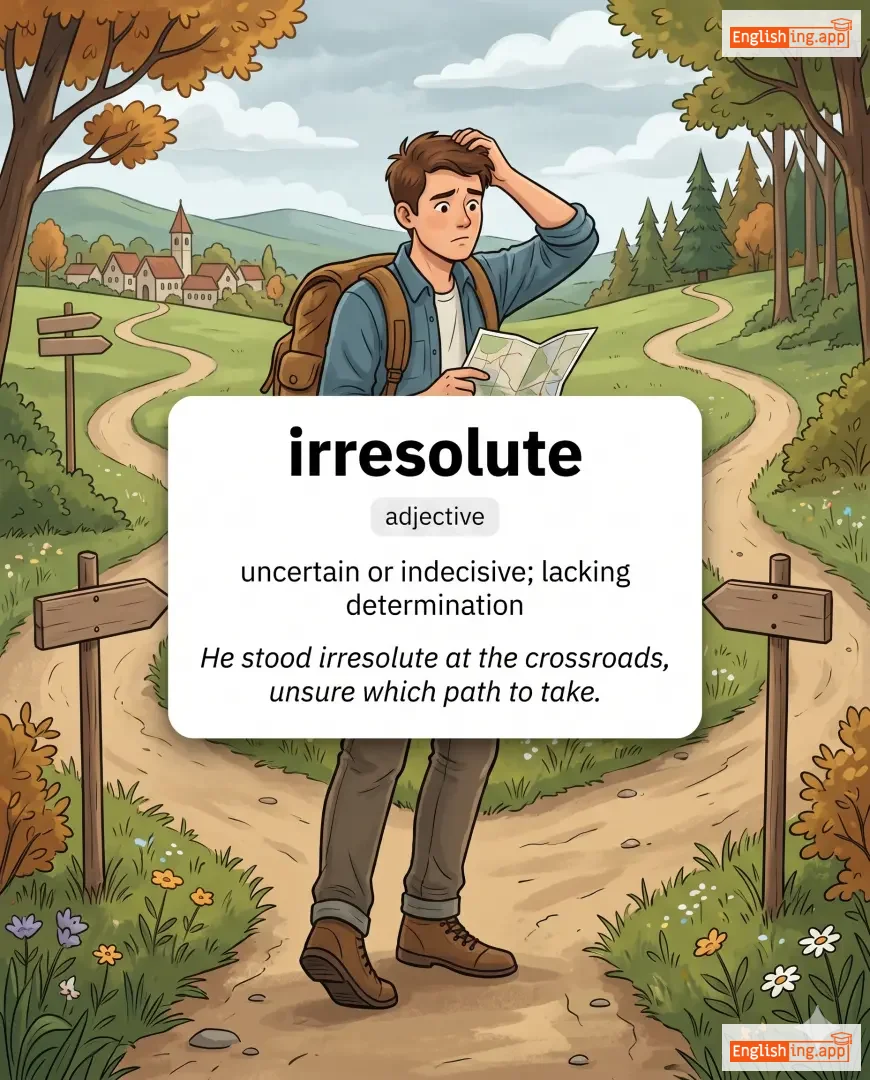
irresolute definition card — visual illustration of the meaning
adjective C2
/ɪˈrɛzəluːt/
優柔不断 (yūyūfudan)

uncertain or indecisive; lacking determination

"He stood irresolute at the crossroads, unsure which path to take."

"彼は交差点で優柔不断に立ち、どの道を取るべきか決められなかった。" (Kare wa kōsaten de yūyūfudan ni tachi, dono michi o torubeki ka kimerarenakatta.)
adjective C2
/ˌɪrɪˈtriːvəbl/
回復不可能 (kaifuku fukanou)

impossible to recover or regain

"The documents were lost in an irretrievable way after the fire."

"火事の後、文書は回復不可能な方法で失われました。" (Kaji no ato, bunsho wa kaifuku fukanou na houhou de ushinaware mashita.)
noun C2
/ɪˈrɛvərəns/
不敬 (fukei)

a lack of respect for people or things that are generally taken seriously

"His jokes about religion showed irreverence to the sacred traditions."

"宗教についての彼の冗談は、神聖な伝統に対する不敬を示していました。" (Shūkyō ni tsuite no kare no jōdan wa, shinsei na dentō ni taisuru fukei o shimeshite imashita.)
adjective C2
/ˌɪrɛvəˈrɛnʃəl/
無礼な (burei na)

Showing a lack of respect for things that are generally taken seriously.

"His irreverential humor often shocked traditional audiences."

"彼の無礼なユーモアはしばしば伝統的な観客を驚かせました。" (Kare no burei na yūmoa wa shibashiba dentō-teki na kankyaku o odorokasemashita.)
noun C2
/ˈɪrɪɡənt/
灌漑液 (kangai eki)

A liquid used for irrigation, especially in medical or agricultural contexts.

"The doctor used a sterile irrigant during the procedure."

"医師は手術中に無菌の灌漑液を使用しました。" (Ishi wa shujutsuchuu ni mukin no kangai eki o shiyou shimashita.)
noun C2
/ˈɪrɪtənsi/
苛立ち (iradachi)

the quality or state of causing irritation; legal or formal invalidation

"The constant noise became an irritancy to the neighbors."

"絶え間ない騒音は隣人にとって苛立ちの原因となりました。" (Taemanai souon wa rinjin ni totte iradachi no gen'in to narimashita.)