CEFR Level
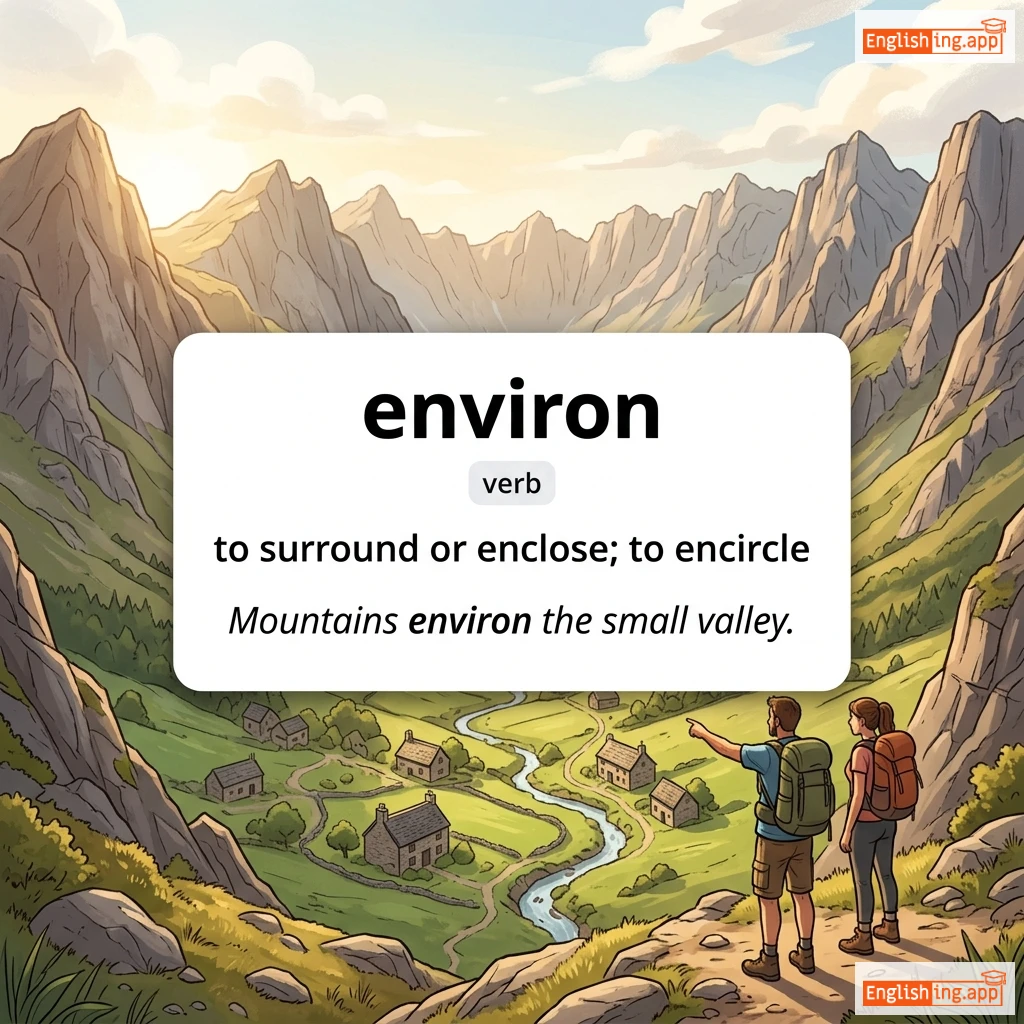
to surround or enclose; to encircle
"Mountains environ the small valley."
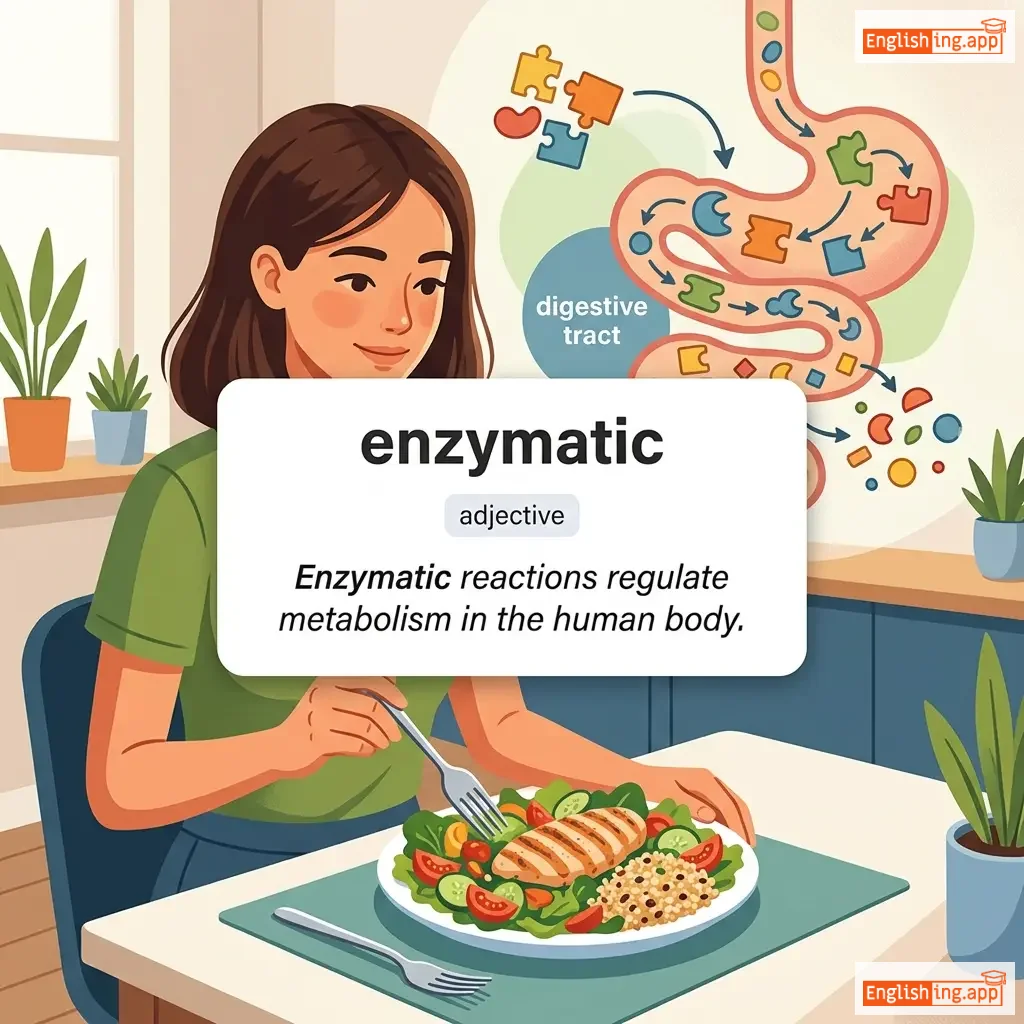
Relating to or involving enzymes, which are proteins that catalyze biochemical reactions in living organisms.
"Enzymatic reactions regulate metabolism in the human body."
an indefinitely long period of time; an age
"Dinosaurs lived millions of years ago, in a different eon."
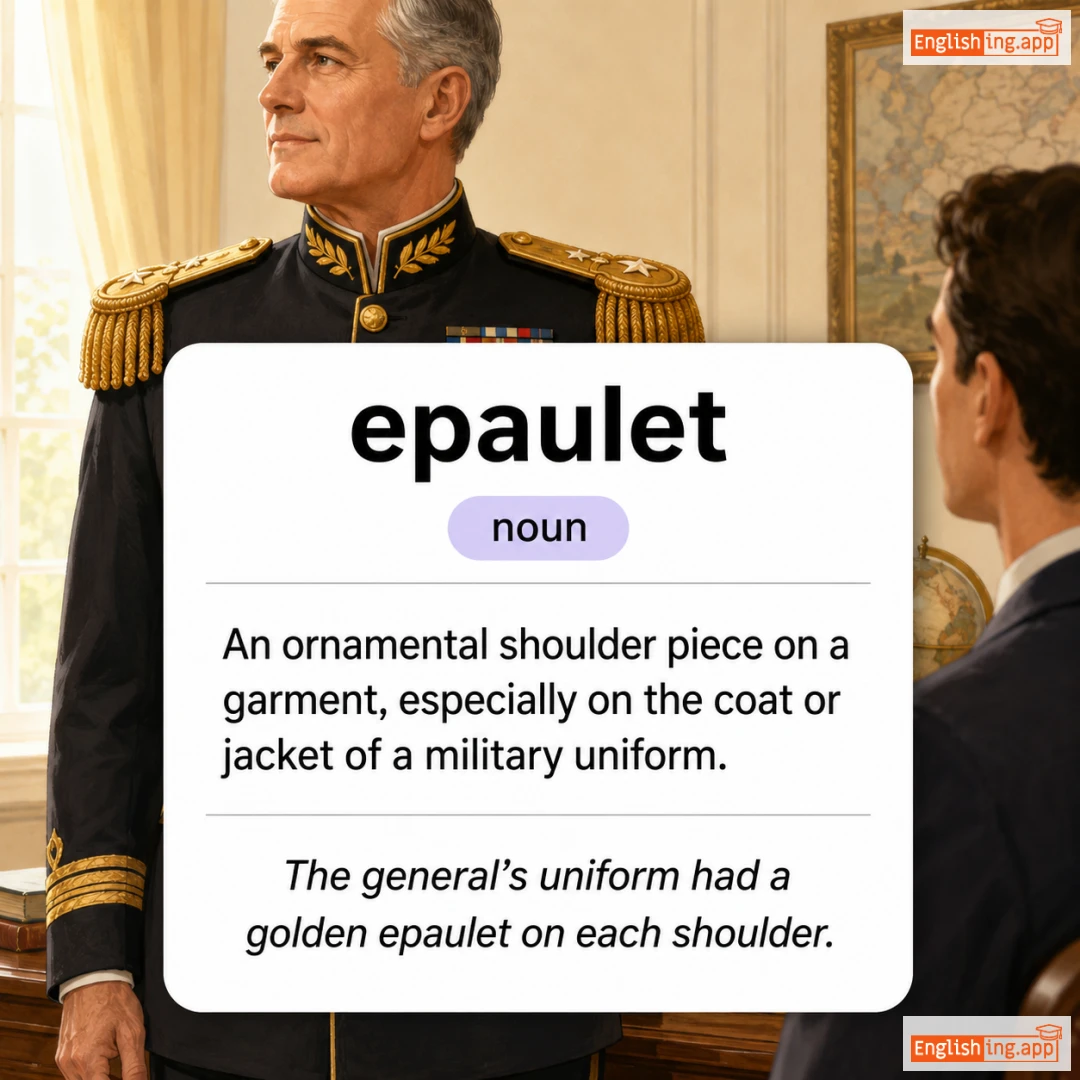
An ornamental shoulder piece on a garment, especially on the coat or jacket of a military uniform.
"The general’s uniform had a golden epaulet on each shoulder."
A variant spelling of epaulet, also meaning a shoulder ornament, especially on military uniforms.
"The officer’s epaulette shone brightly under the sunlight."
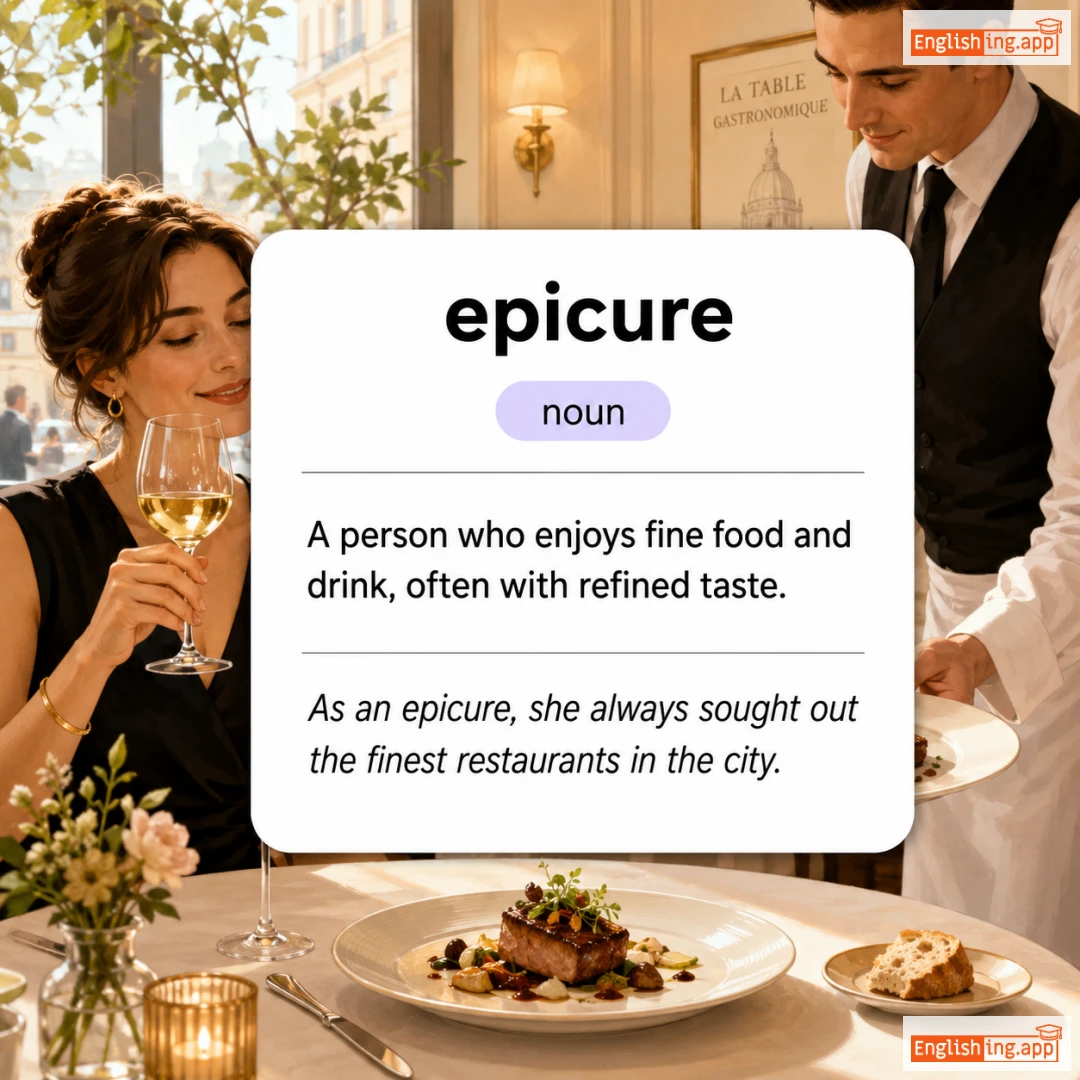
A person who enjoys fine food and drink, often with refined taste.
"As an epicure, she always sought out the finest restaurants in the city."
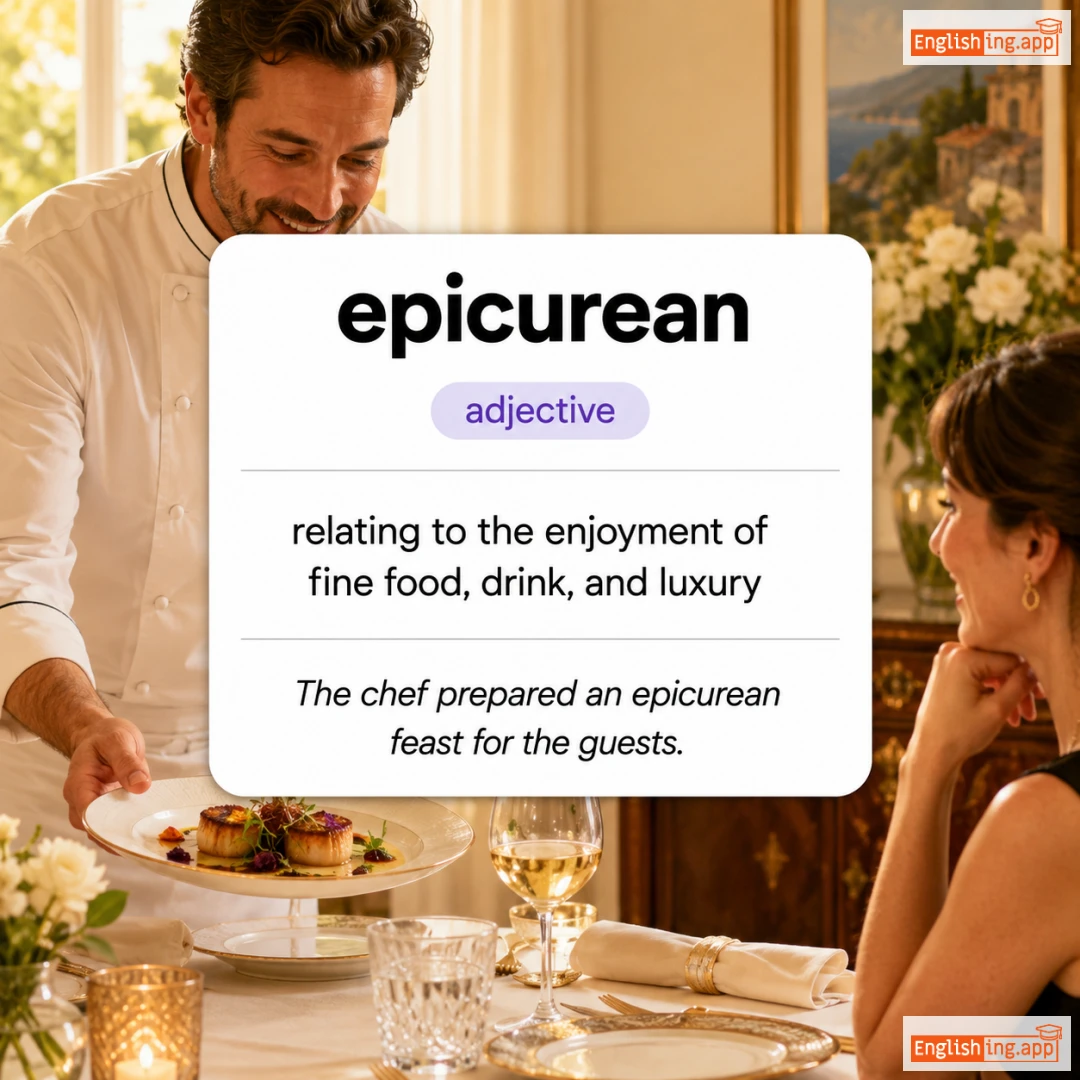
relating to the enjoyment of fine food, drink, and luxury
"The chef prepared an epicurean feast for the guests."
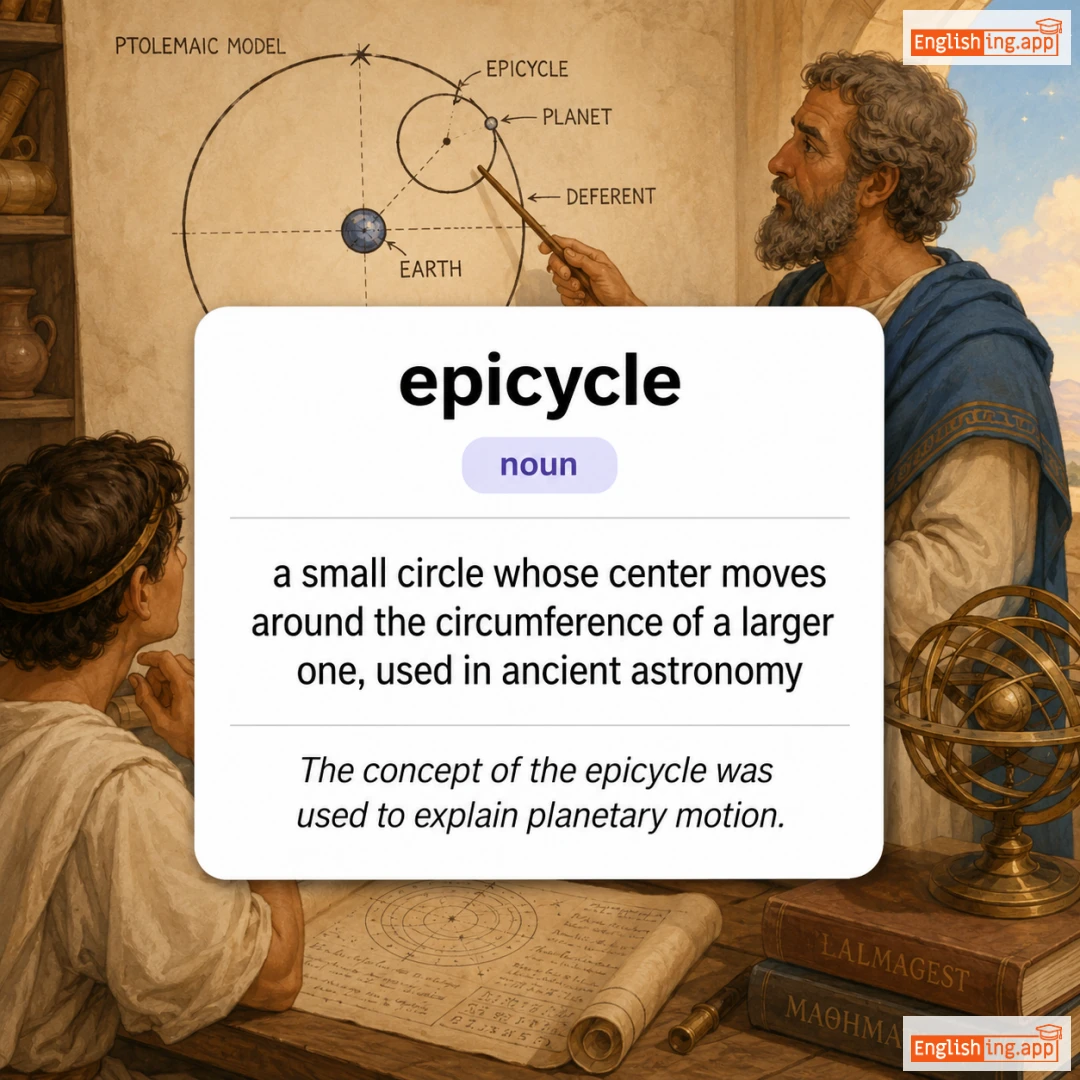
a small circle whose center moves around the circumference of a larger one, used in ancient astronomy
"The concept of the epicycle was used to explain planetary motion."
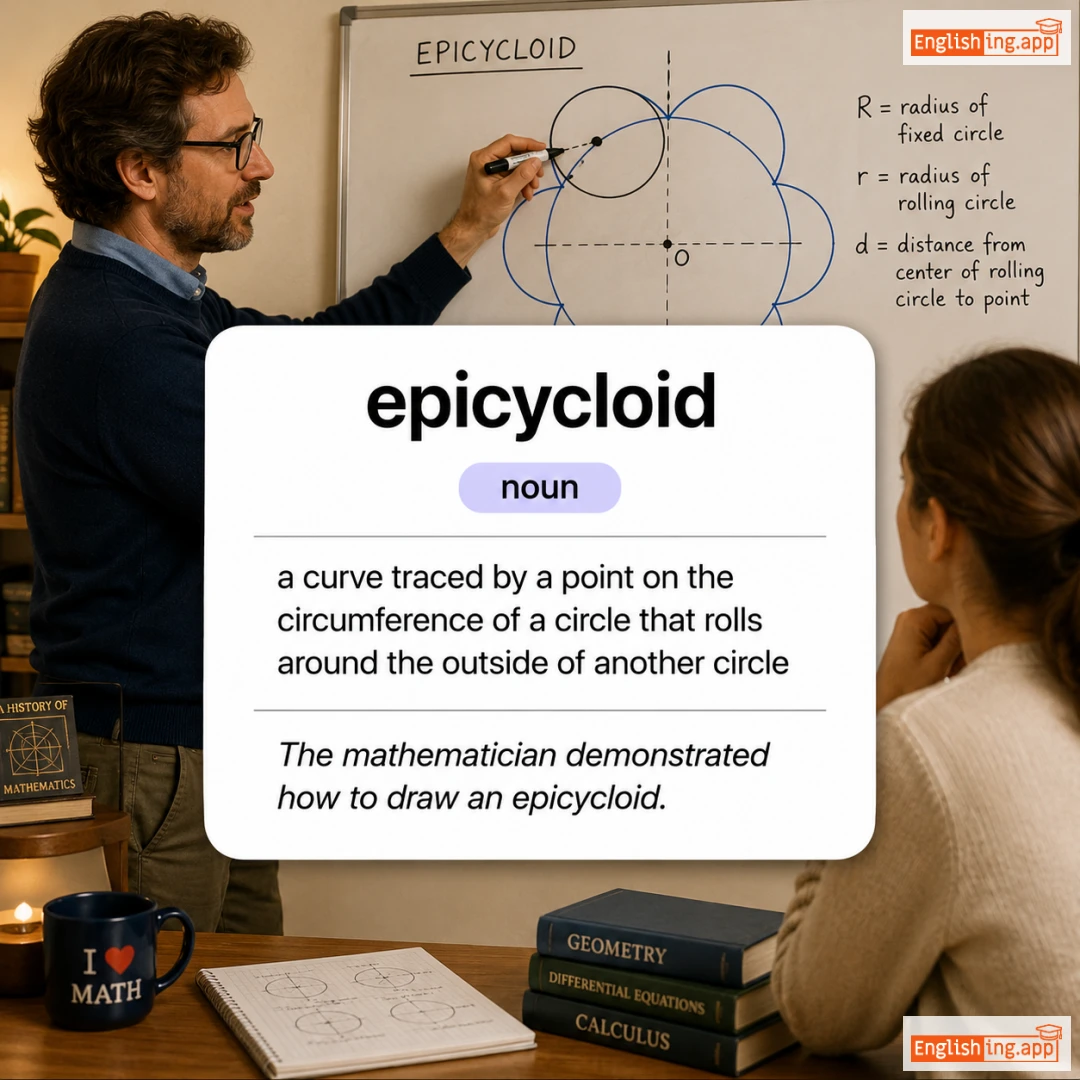
a curve traced by a point on the circumference of a circle that rolls around the outside of another circle
"The mathematician demonstrated how to draw an epicycloid."
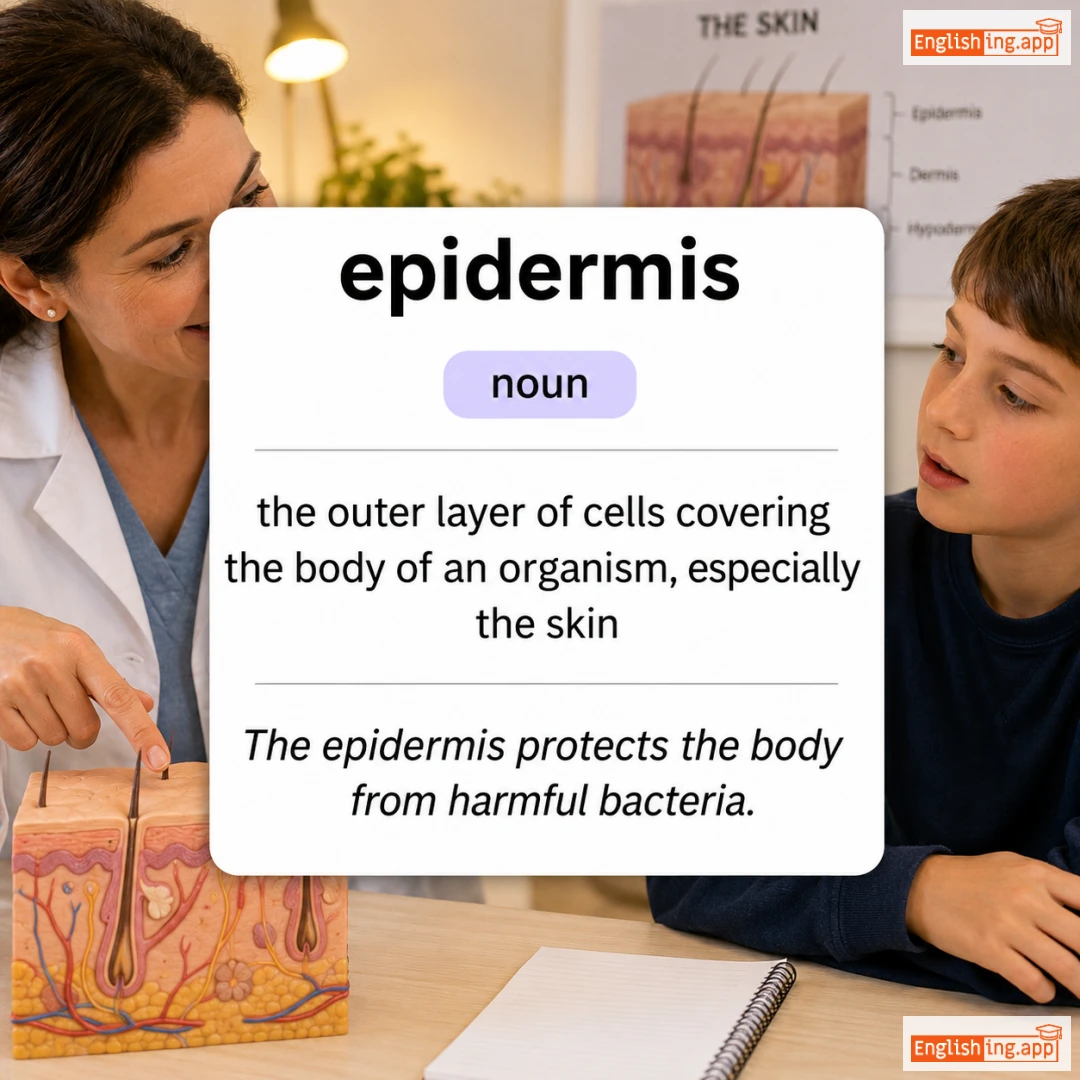
the outer layer of cells covering the body of an organism, especially the skin
"The epidermis protects the body from harmful bacteria."
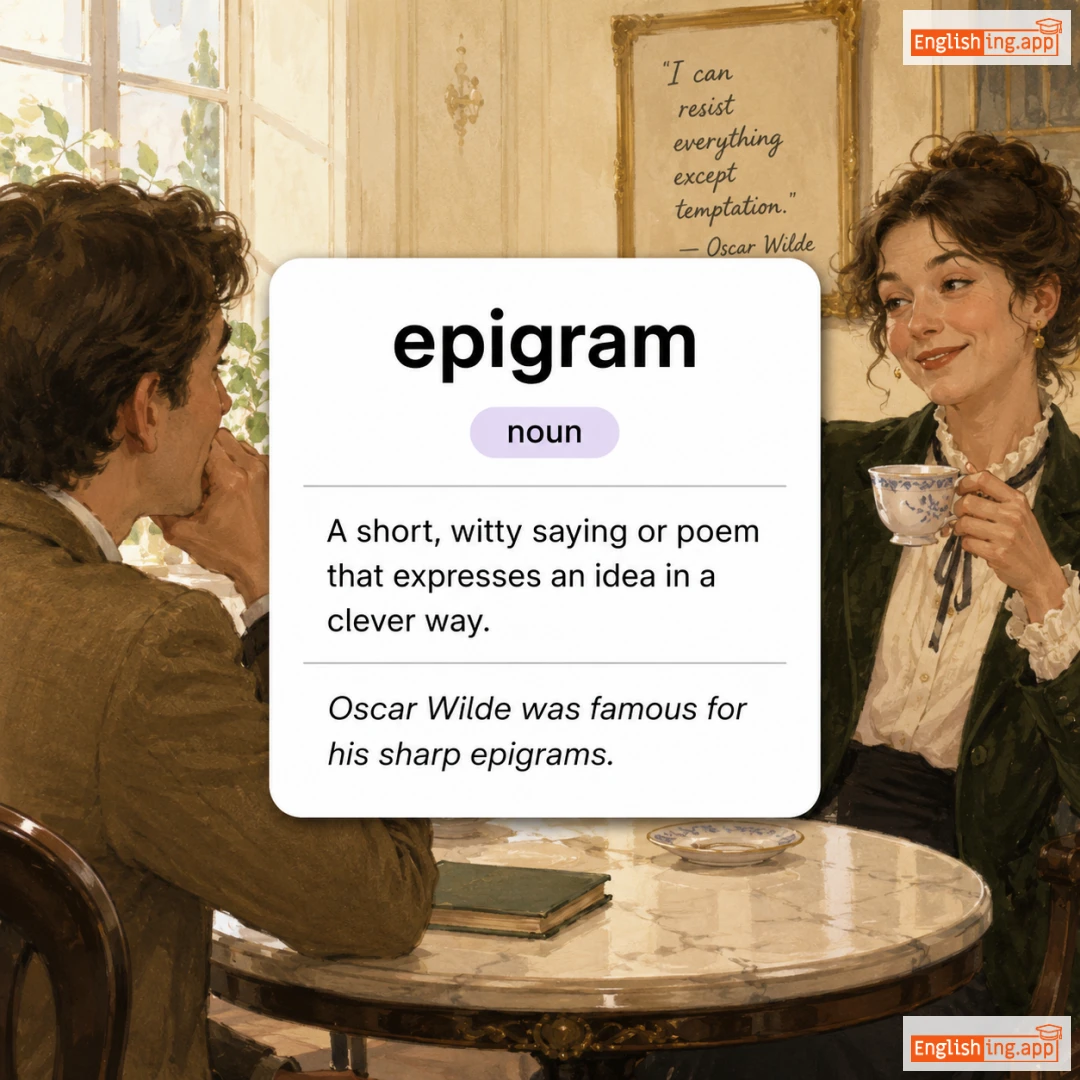
A short, witty saying or poem that expresses an idea in a clever way.
"Oscar Wilde was famous for his sharp epigrams."
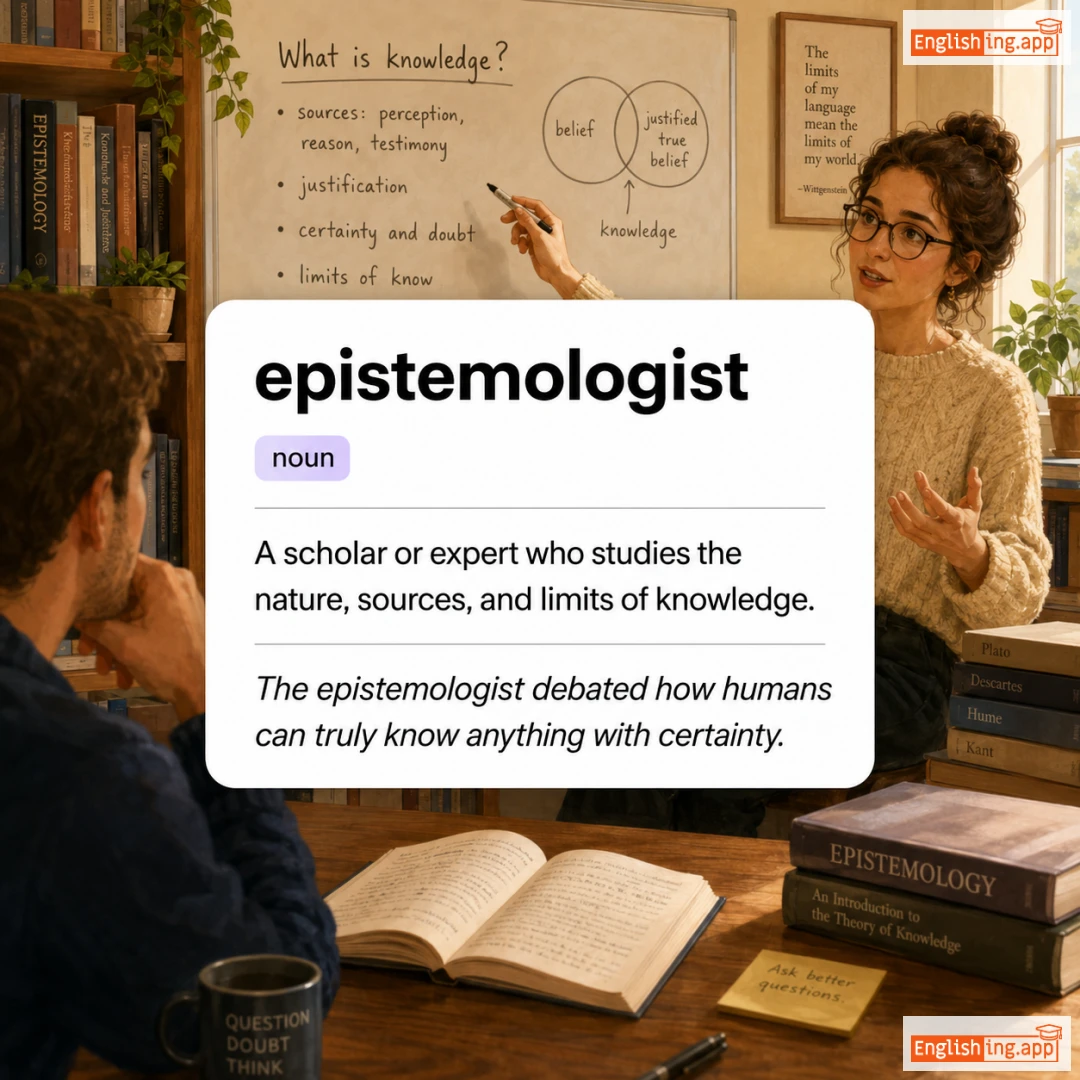
A scholar or expert who studies the nature, sources, and limits of knowledge.
"The epistemologist debated how humans can truly know anything with certainty."
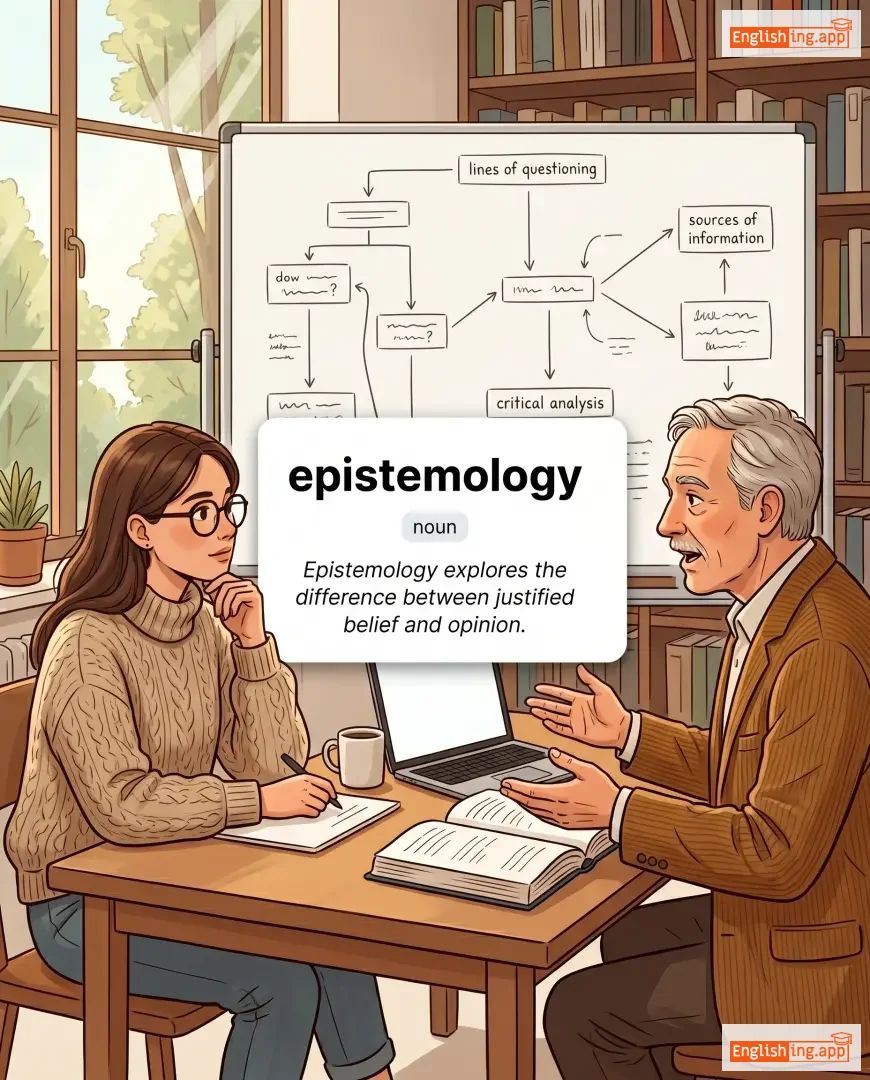
The branch of philosophy that studies the nature, origin, and scope of knowledge.
"Epistemology explores the difference between justified belief and opinion."
A letter, especially a formal or didactic one; often used for letters in the New Testament.
"He wrote a long epistle to his friend about his travels."
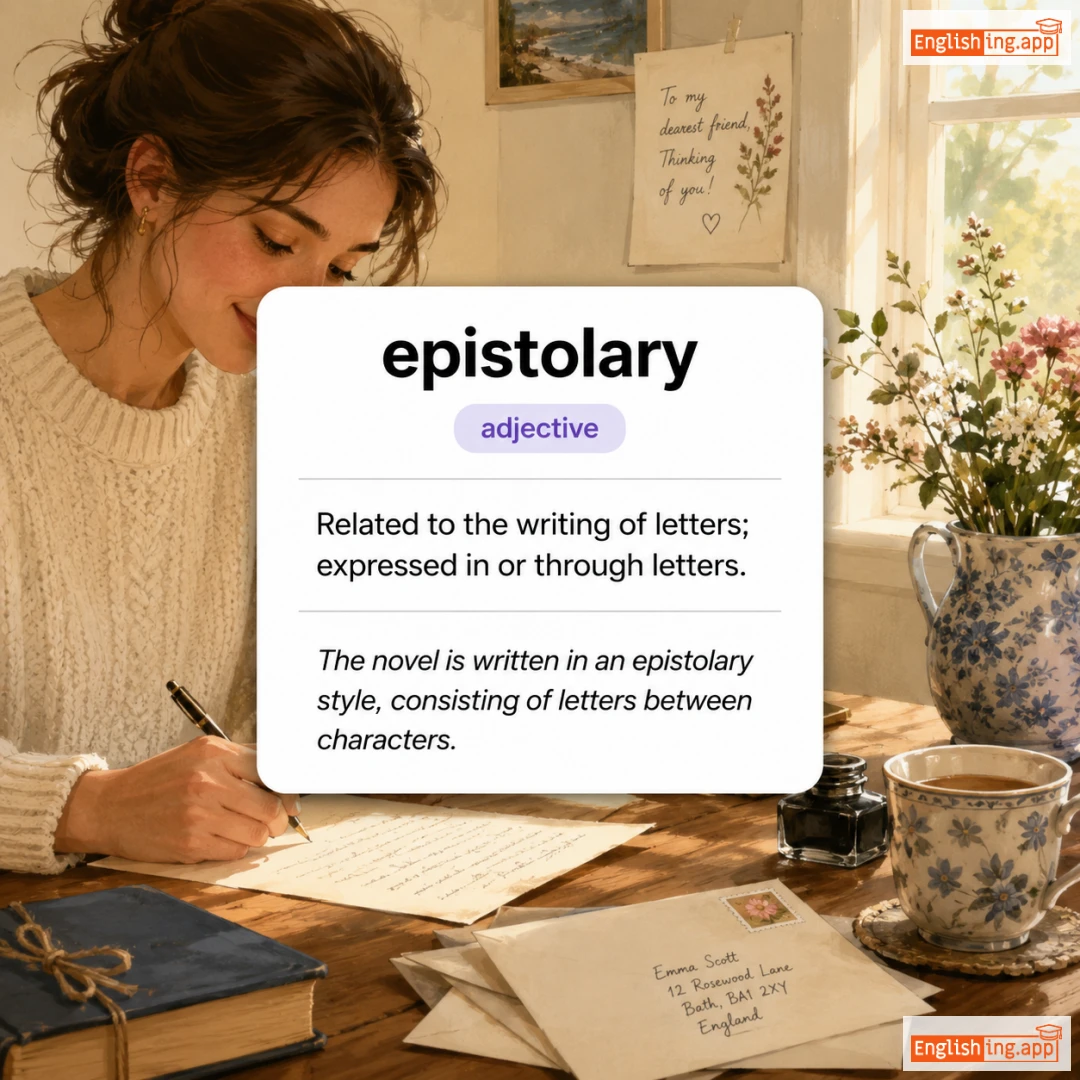
Related to the writing of letters; expressed in or through letters.
"The novel is written in an epistolary style, consisting of letters between characters."
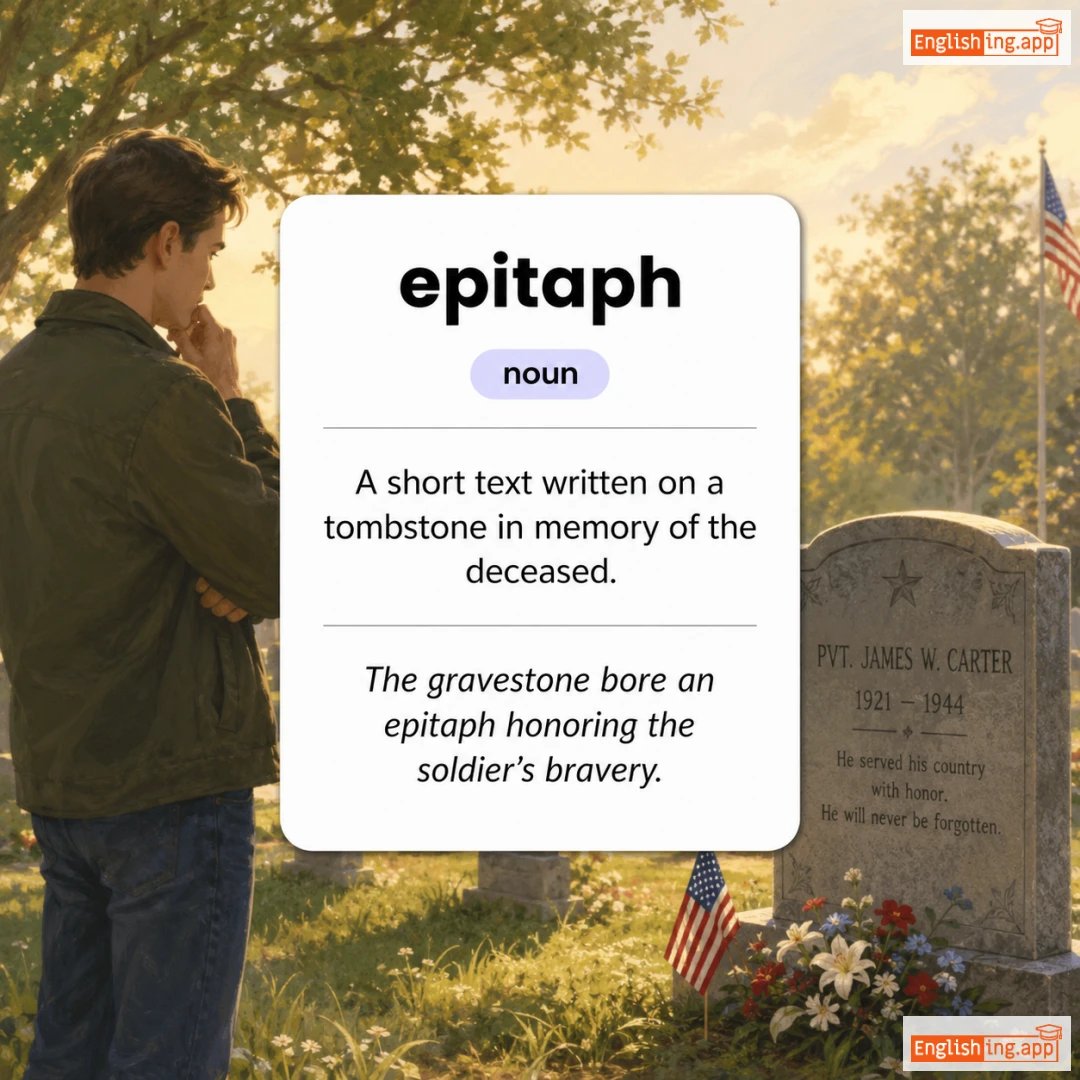
A short text written on a tombstone in memory of the deceased.
"The gravestone bore an epitaph honoring the soldier’s bravery."
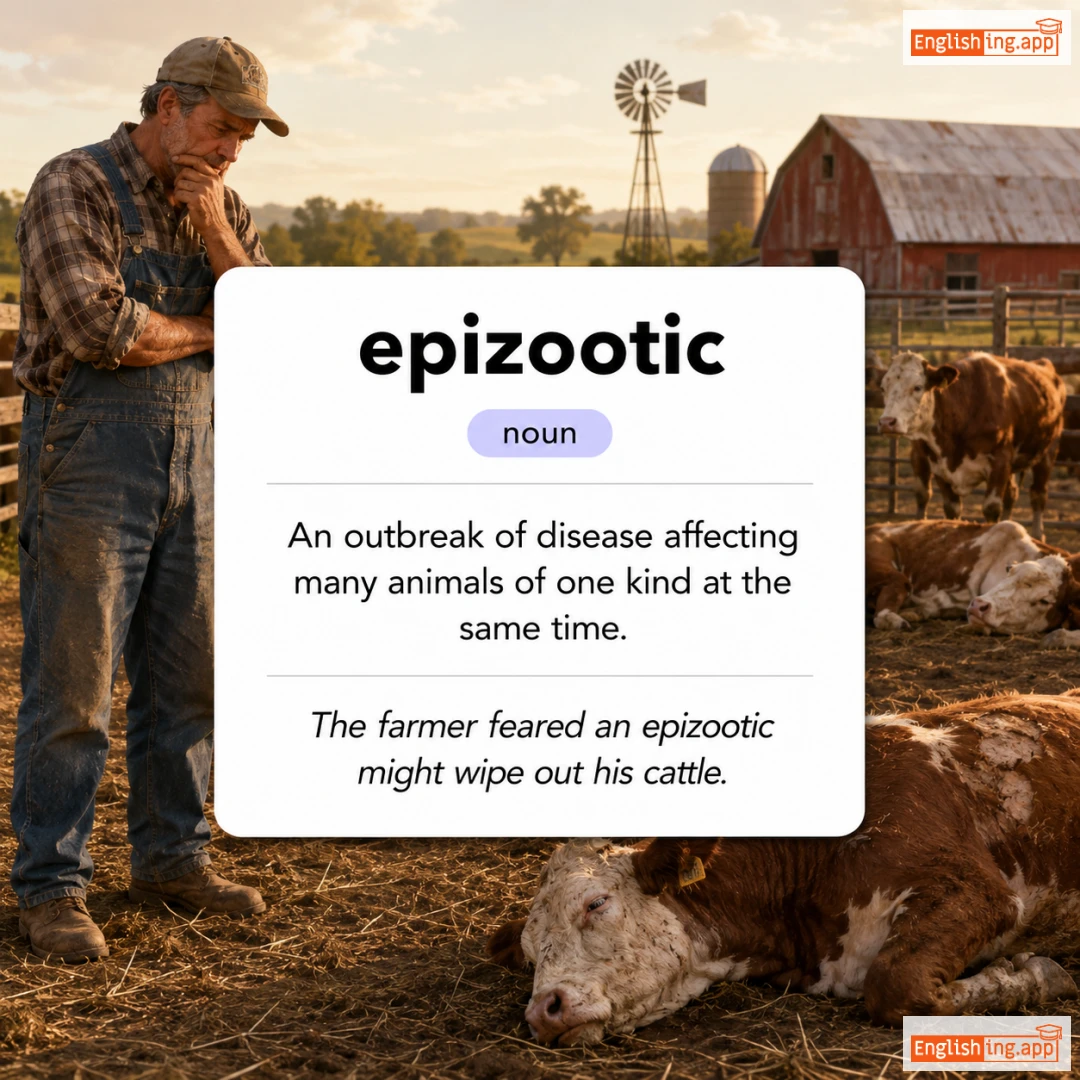
An outbreak of disease affecting many animals of one kind at the same time.
"The farmer feared an epizootic might wipe out his cattle."
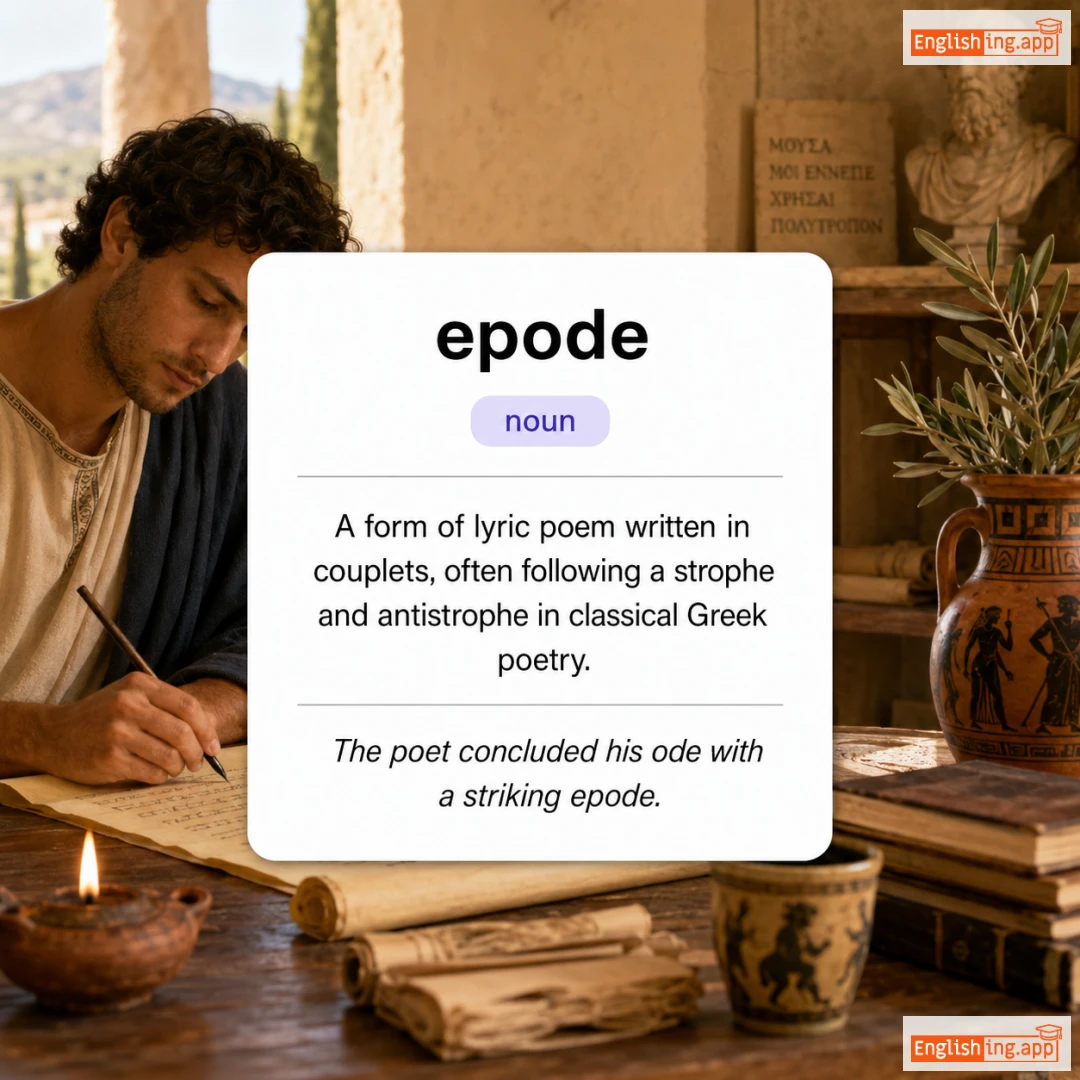
A form of lyric poem written in couplets, often following a strophe and antistrophe in classical Greek poetry.
"The poet concluded his ode with a striking epode."
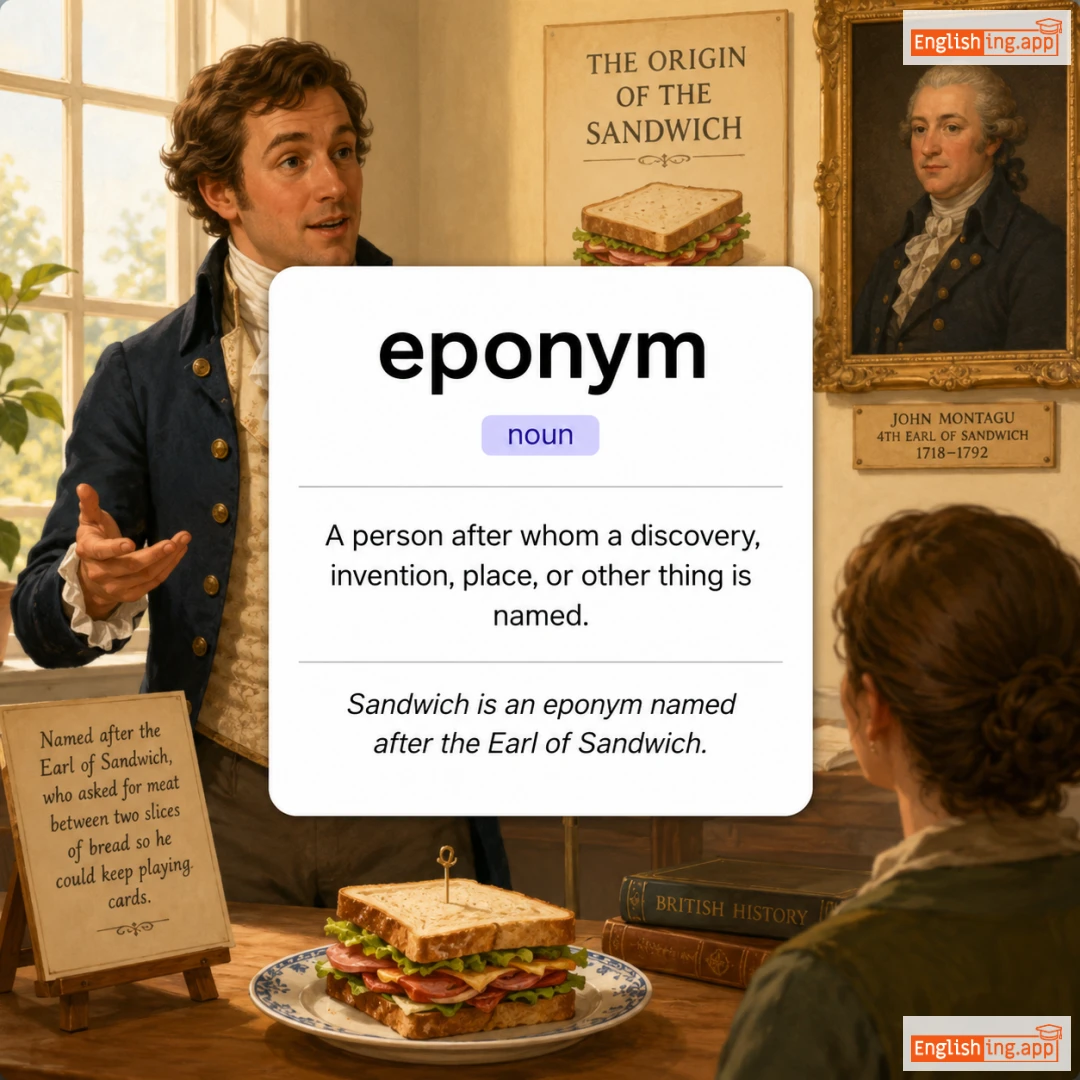
A person after whom a discovery, invention, place, or other thing is named.
"Sandwich is an eponym named after the Earl of Sandwich."
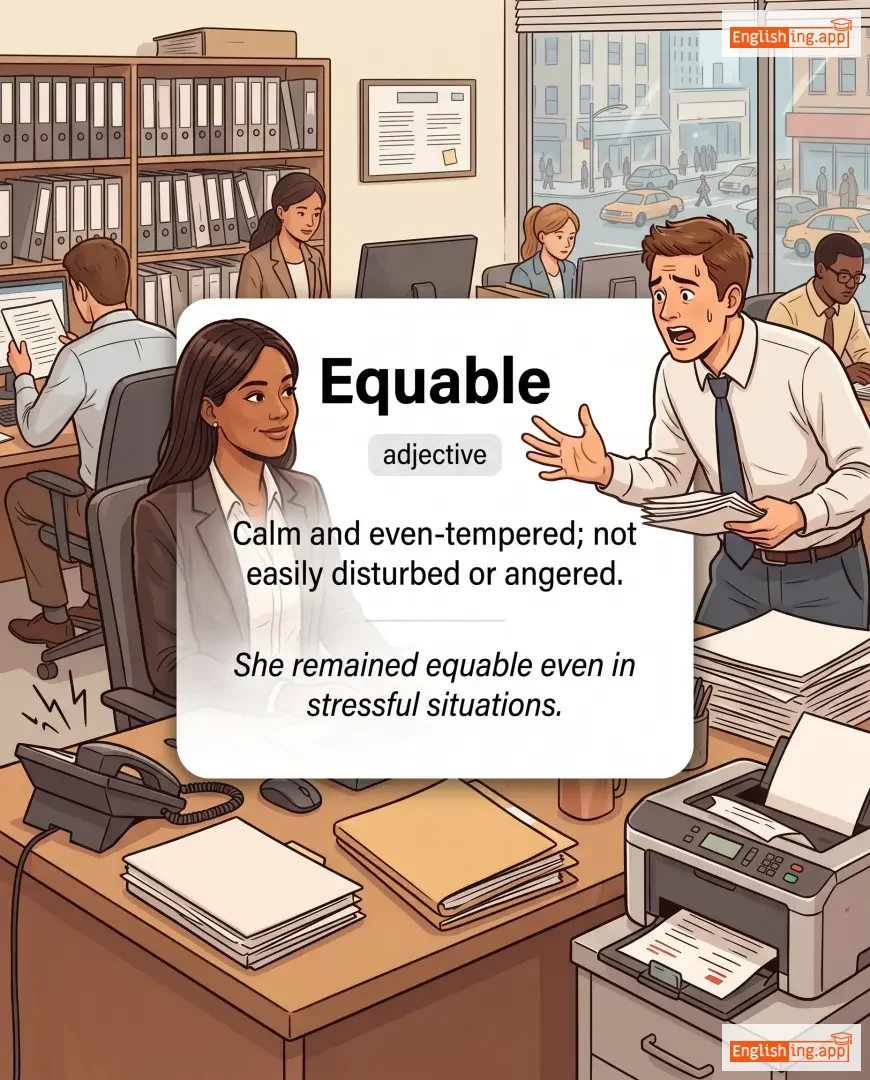
Calm and even-tempered; not easily disturbed or angered.
"She remained equable even in stressful situations."
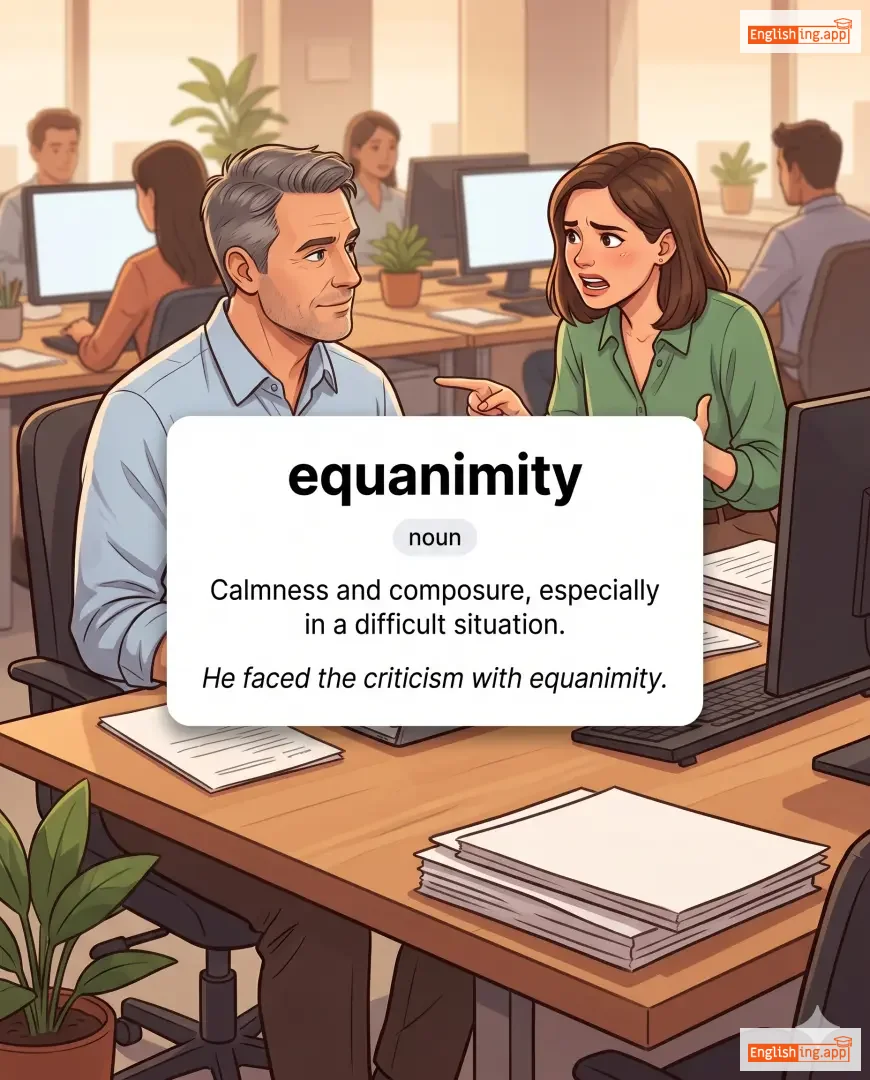
Calmness and composure, especially in a difficult situation.
"He faced the criticism with equanimity."
Relating to or resembling a horse.
"The veterinarian specialized in equine medicine."
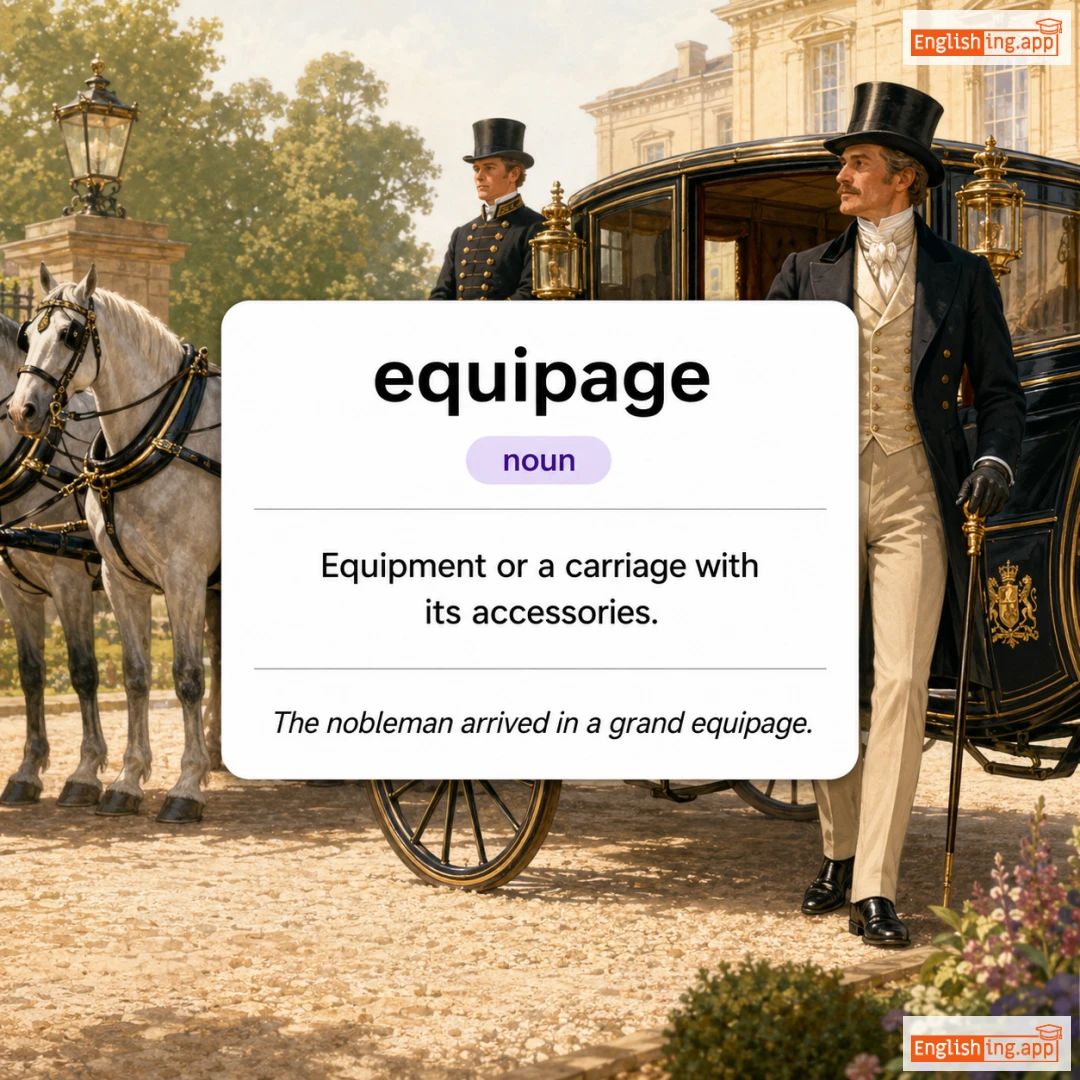
Equipment or a carriage with its accessories.
"The nobleman arrived in a grand equipage."
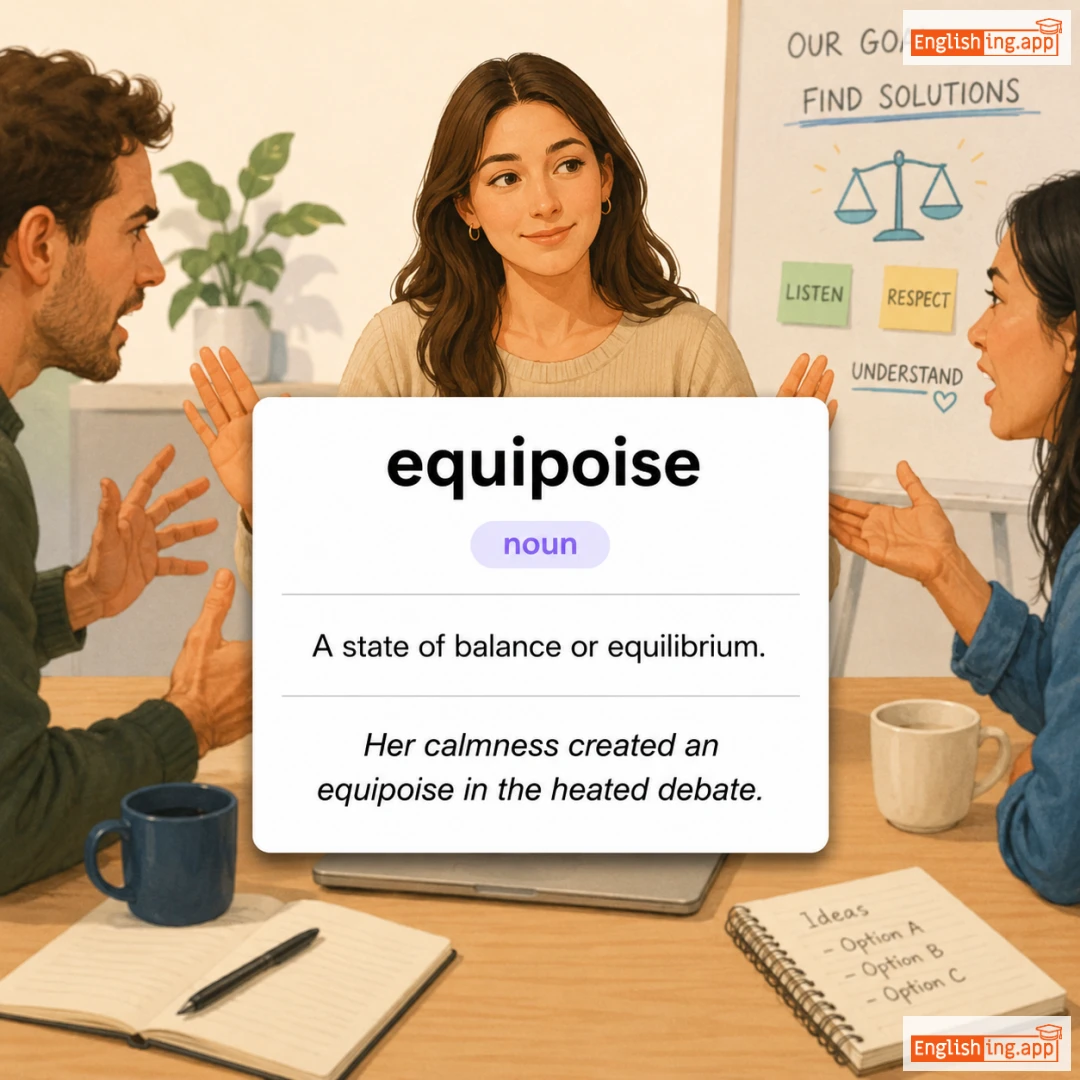
A state of balance or equilibrium.
"Her calmness created an equipoise in the heated debate."
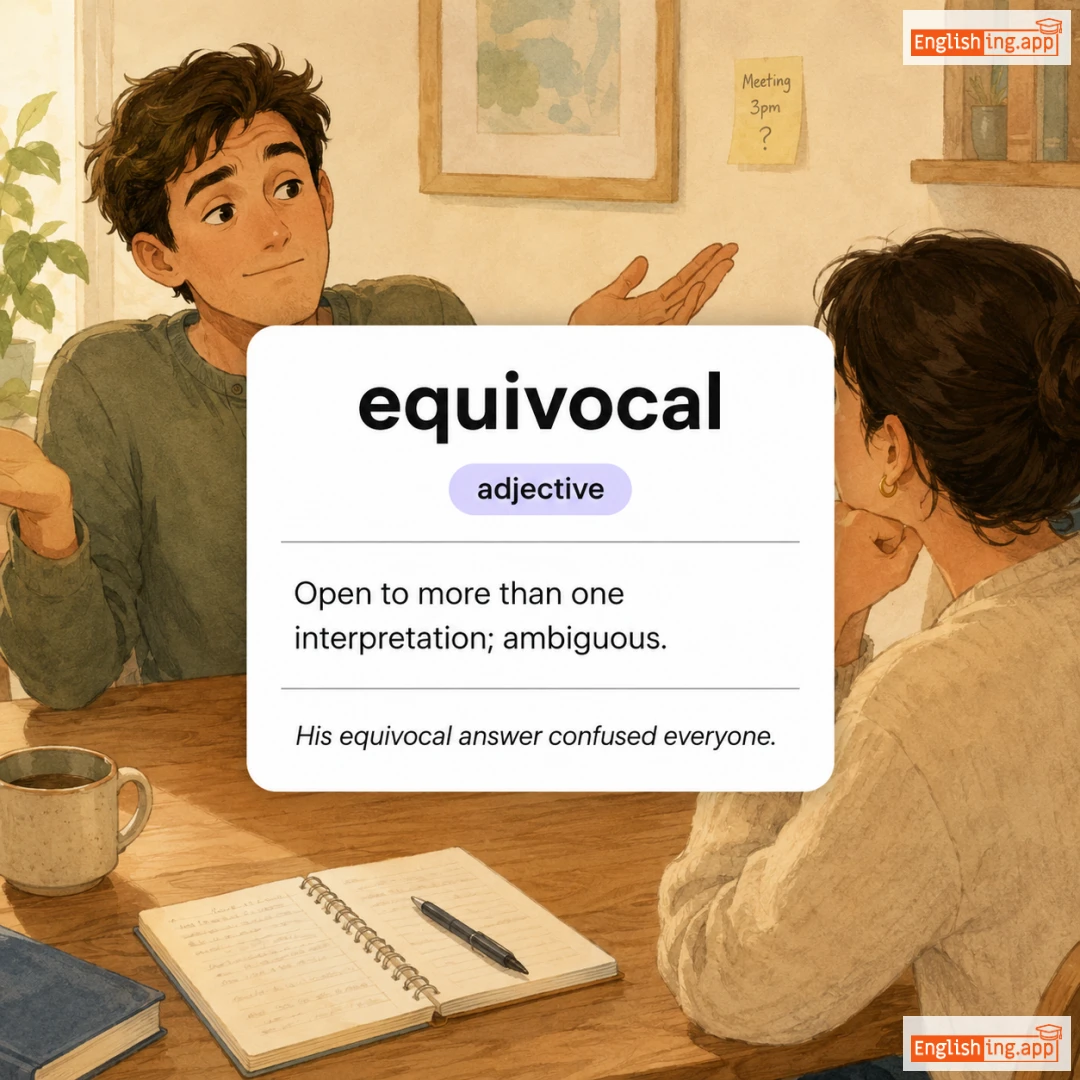
Open to more than one interpretation; ambiguous.
"His equivocal answer confused everyone."
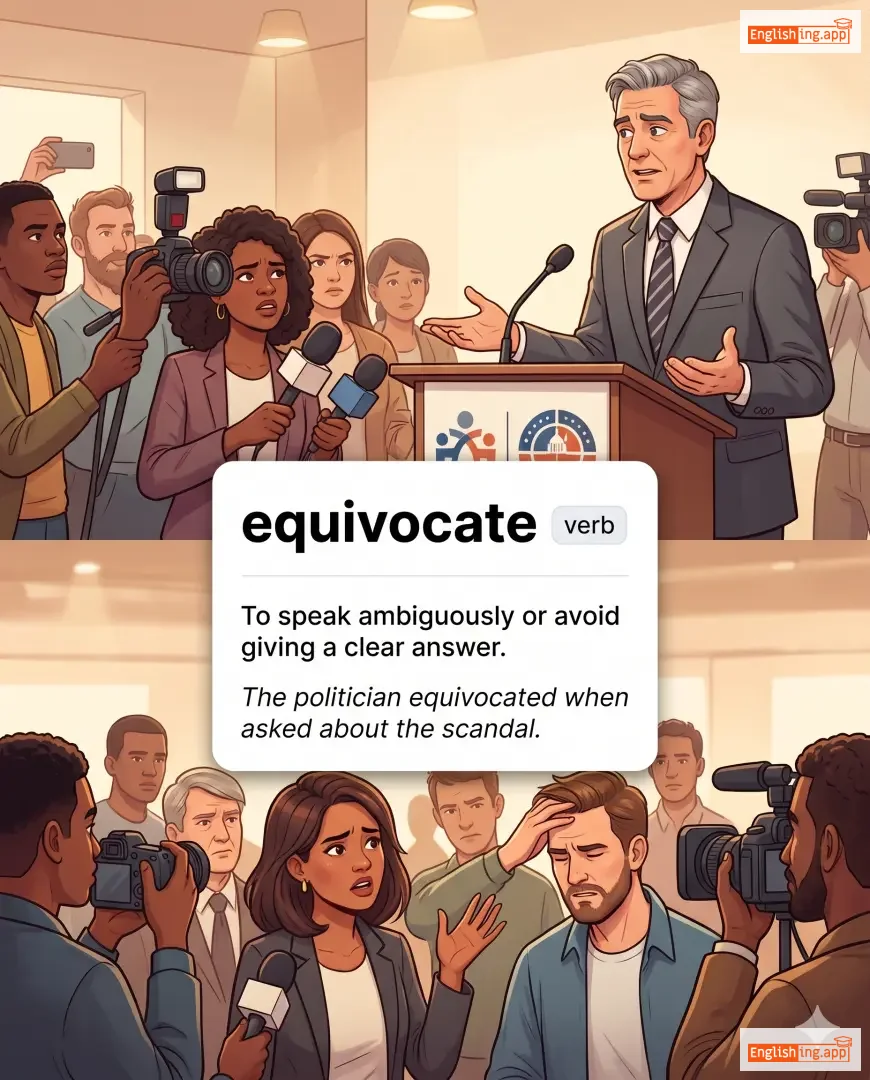
To speak ambiguously or avoid giving a clear answer.
"The politician equivocated when asked about the scandal."
The use of ambiguous language to conceal the truth or to avoid committing oneself.
"The politician’s equivocation frustrated voters who wanted a clear answer."
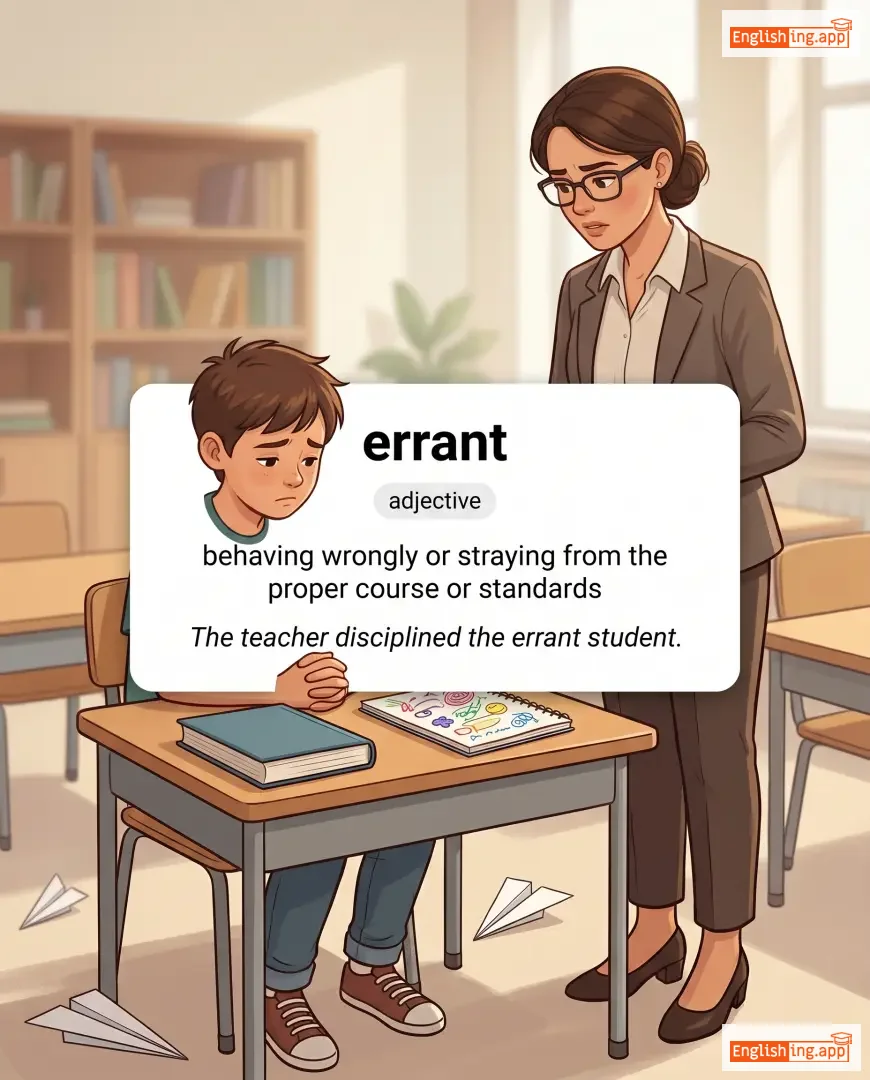
behaving wrongly or straying from the proper course or standards
"The teacher disciplined the errant student."
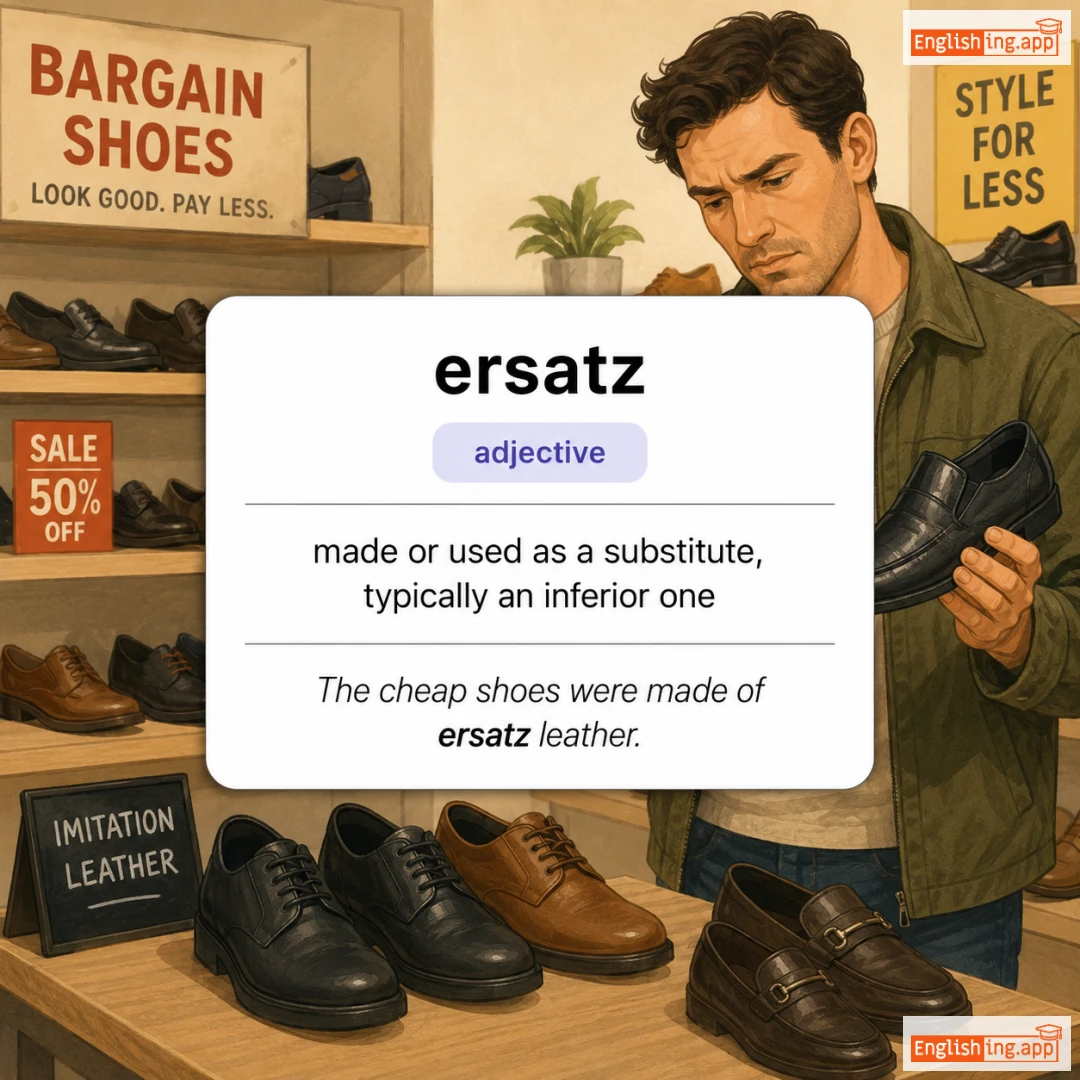
made or used as a substitute, typically an inferior one
"The cheap shoes were made of ersatz leather."
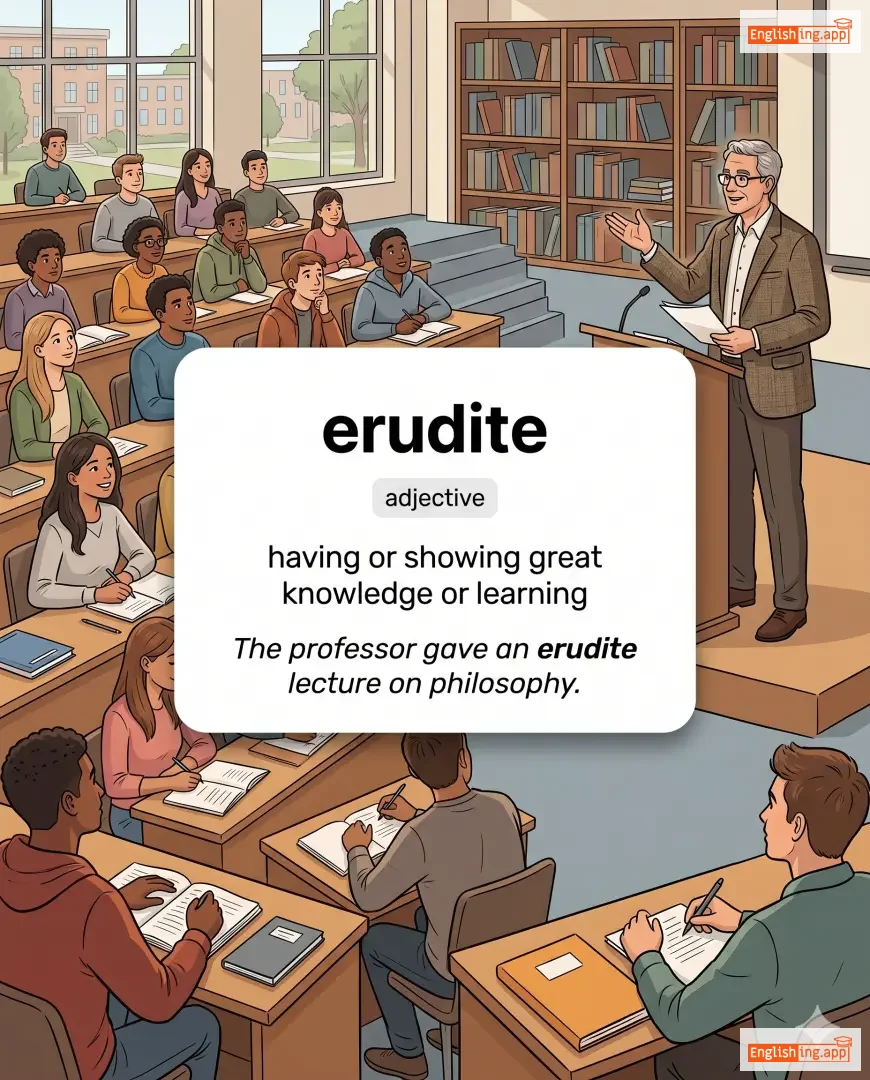
having or showing great knowledge or learning
"The professor gave an erudite lecture on philosophy."
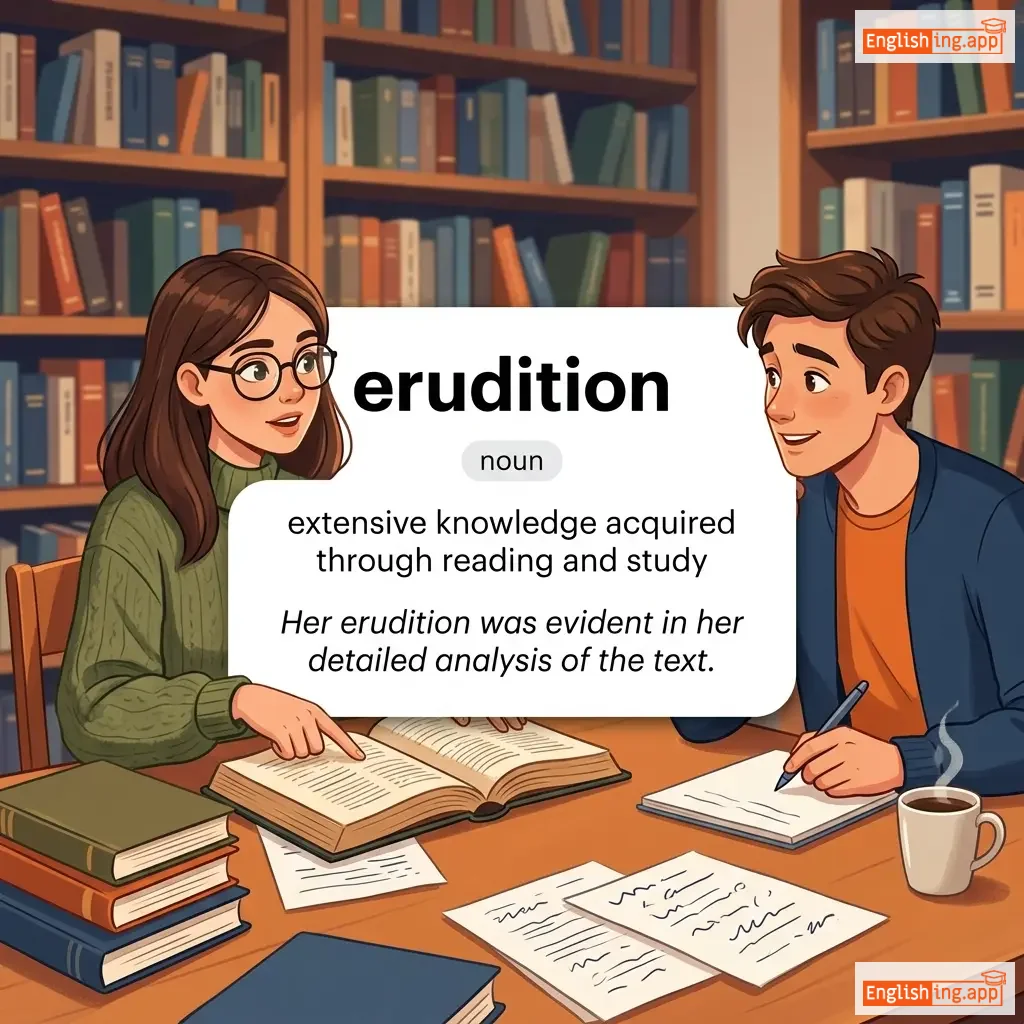
extensive knowledge acquired through reading and study
"Her erudition was evident in her detailed analysis of the text."
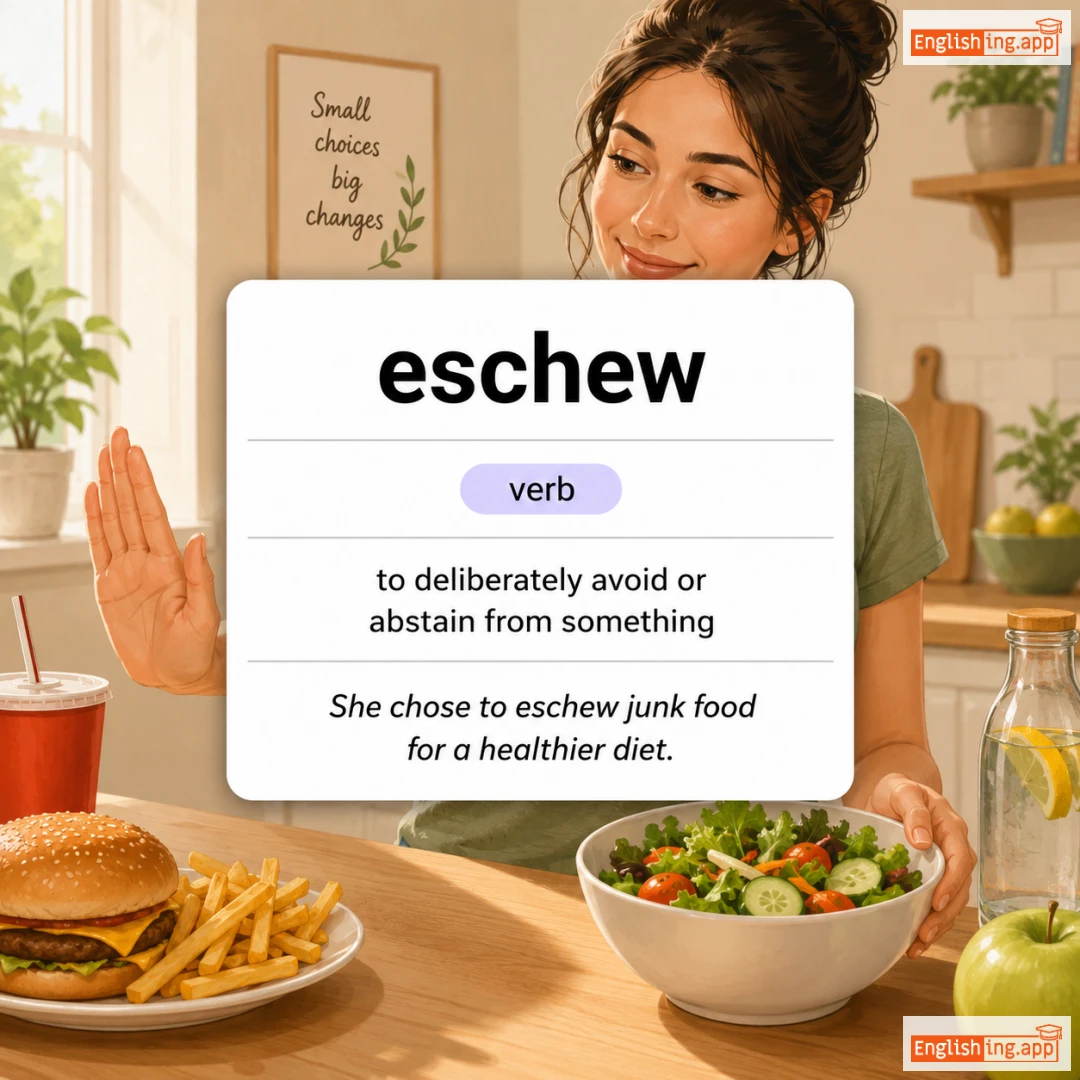
to deliberately avoid or abstain from something
"She chose to eschew junk food for a healthier diet."
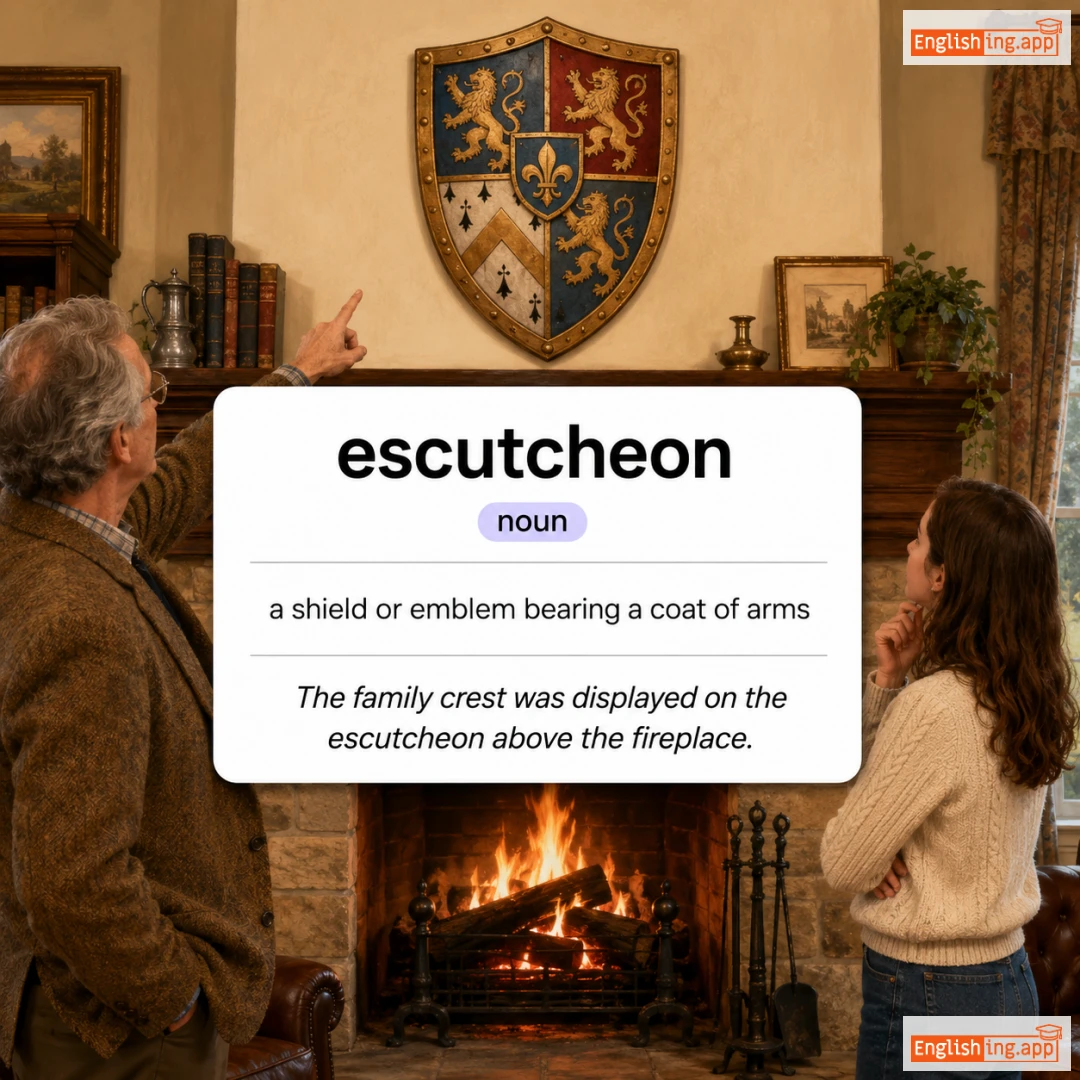
a shield or emblem bearing a coat of arms
"The family crest was displayed on the escutcheon above the fireplace."
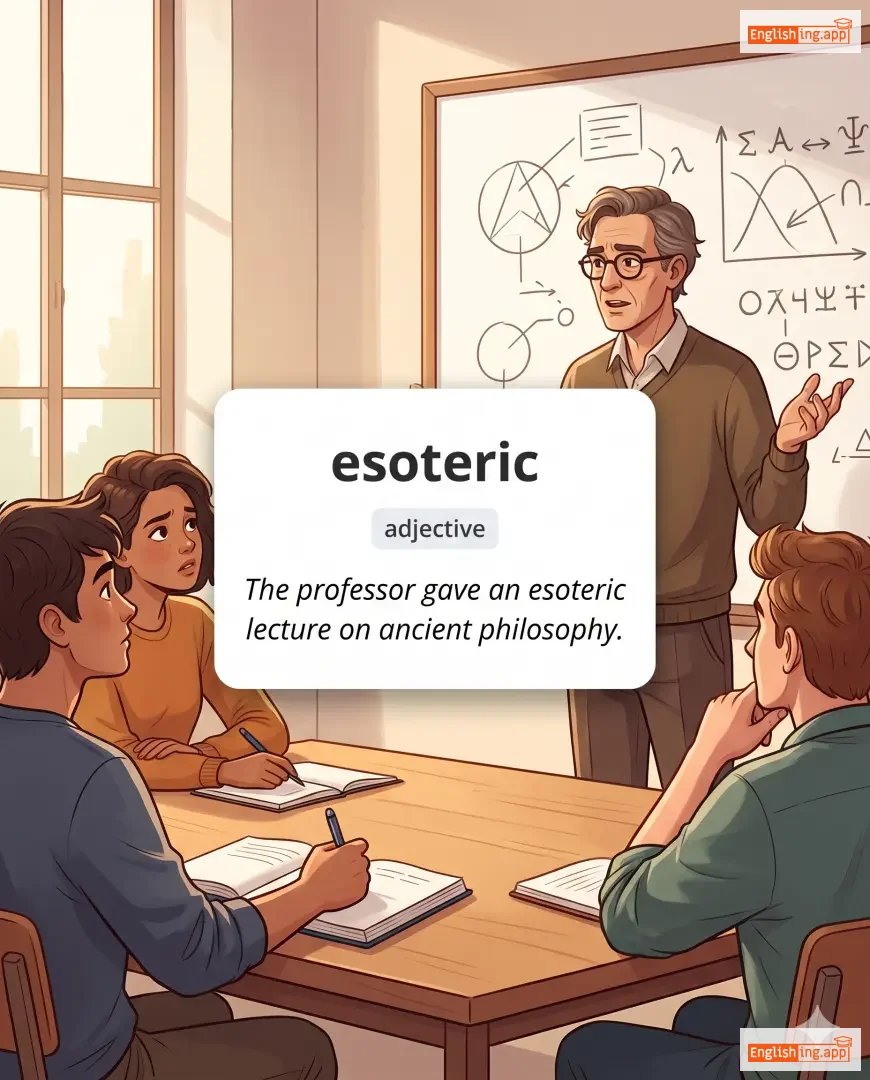
intended for or understood by only a small number of people with special knowledge
"The professor gave an esoteric lecture on ancient philosophy."
A feeling of pride, fellowship, and loyalty shared by members of a group.
"The team's esprit de corps was evident in their cooperative effort."
To catch sight of or notice something, especially from a distance.
"From the hilltop, she espied a small village in the valley."
A title of respect often used after a man's name, especially for lawyers in the United States.
"John Smith, Esquire, will be representing the client in court."
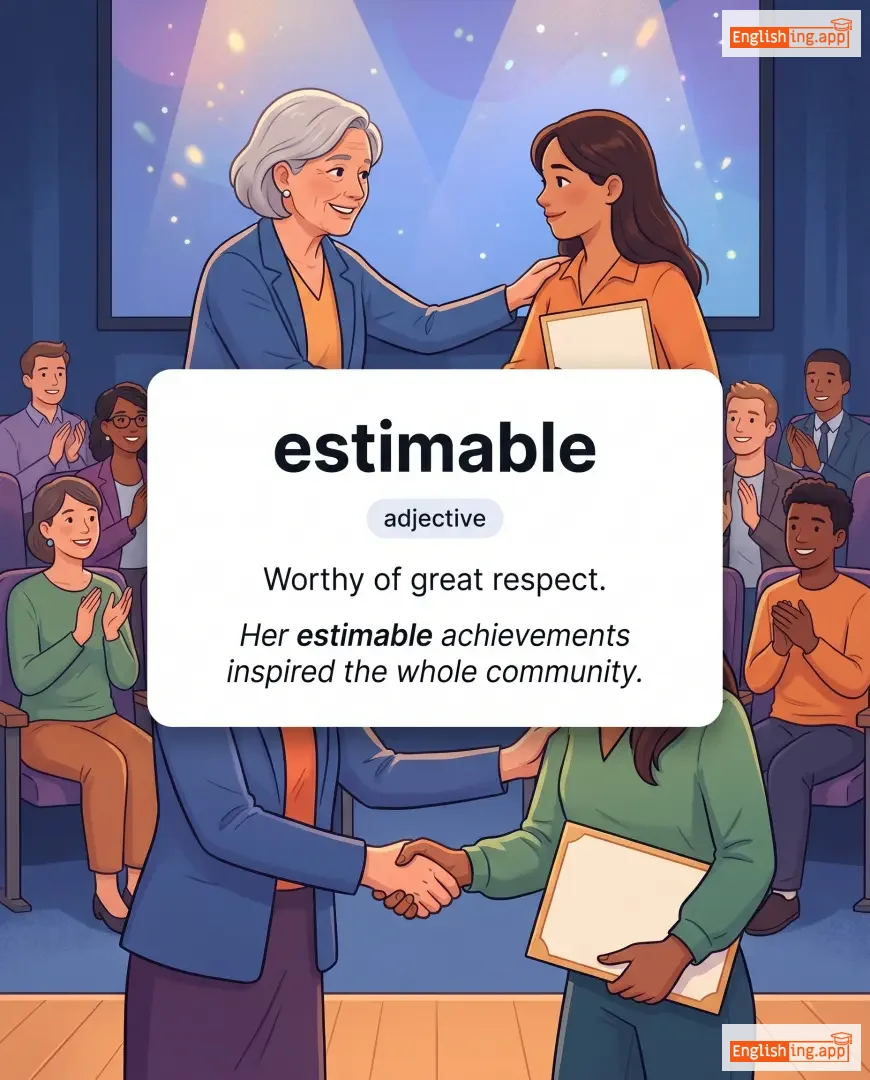
Worthy of great respect.
"Her estimable achievements inspired the whole community."
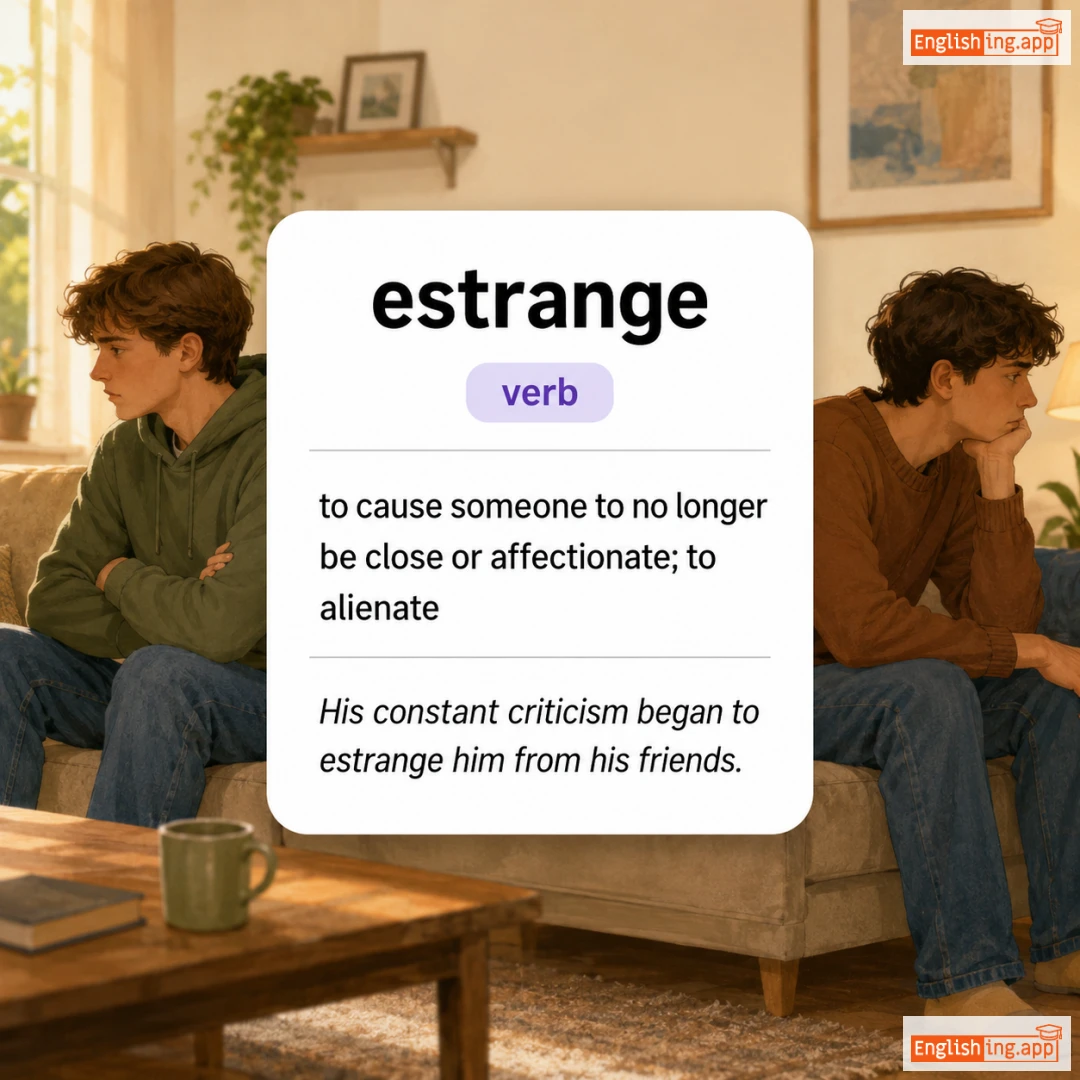
to cause someone to no longer be close or affectionate; to alienate
"His constant criticism began to estrange him from his friends."
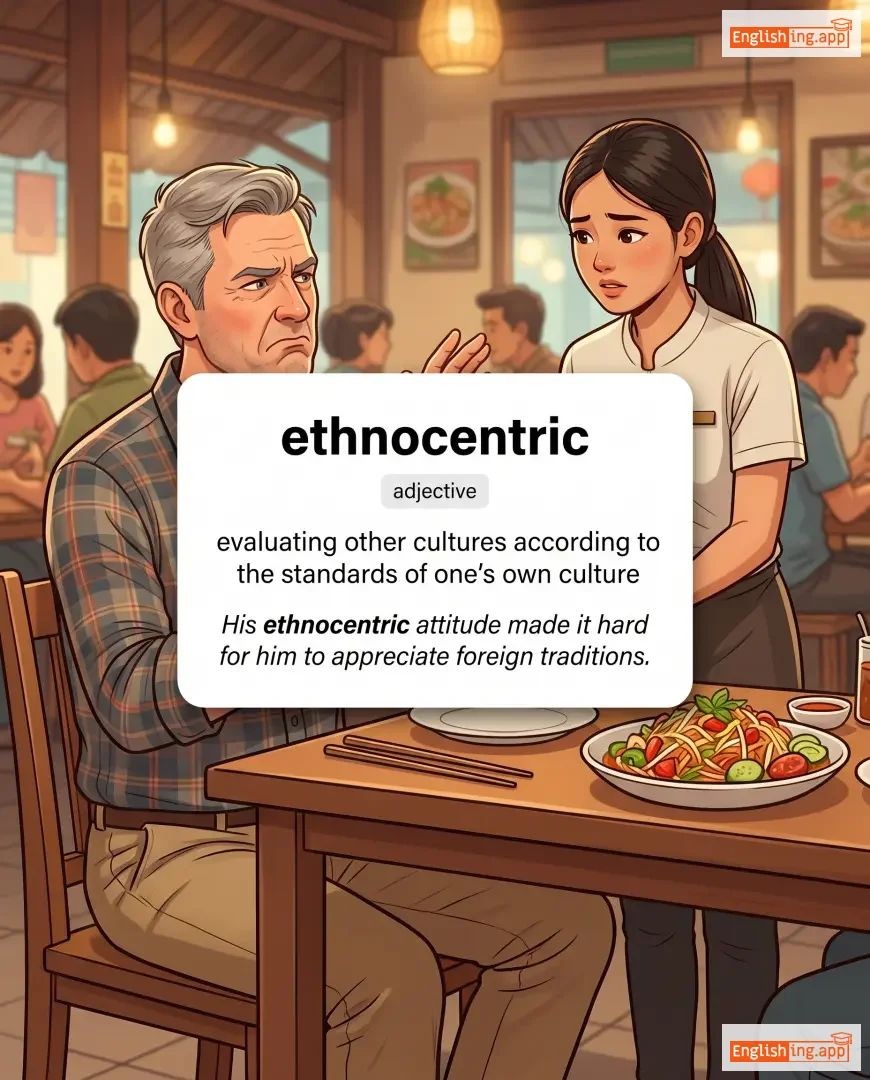
evaluating other cultures according to the standards of one's own culture
"His ethnocentric attitude made it hard for him to appreciate foreign traditions."
the study of the characteristics of different peoples and the differences and relationships between them
"She specialized in ethnology to better understand cultural diversity."
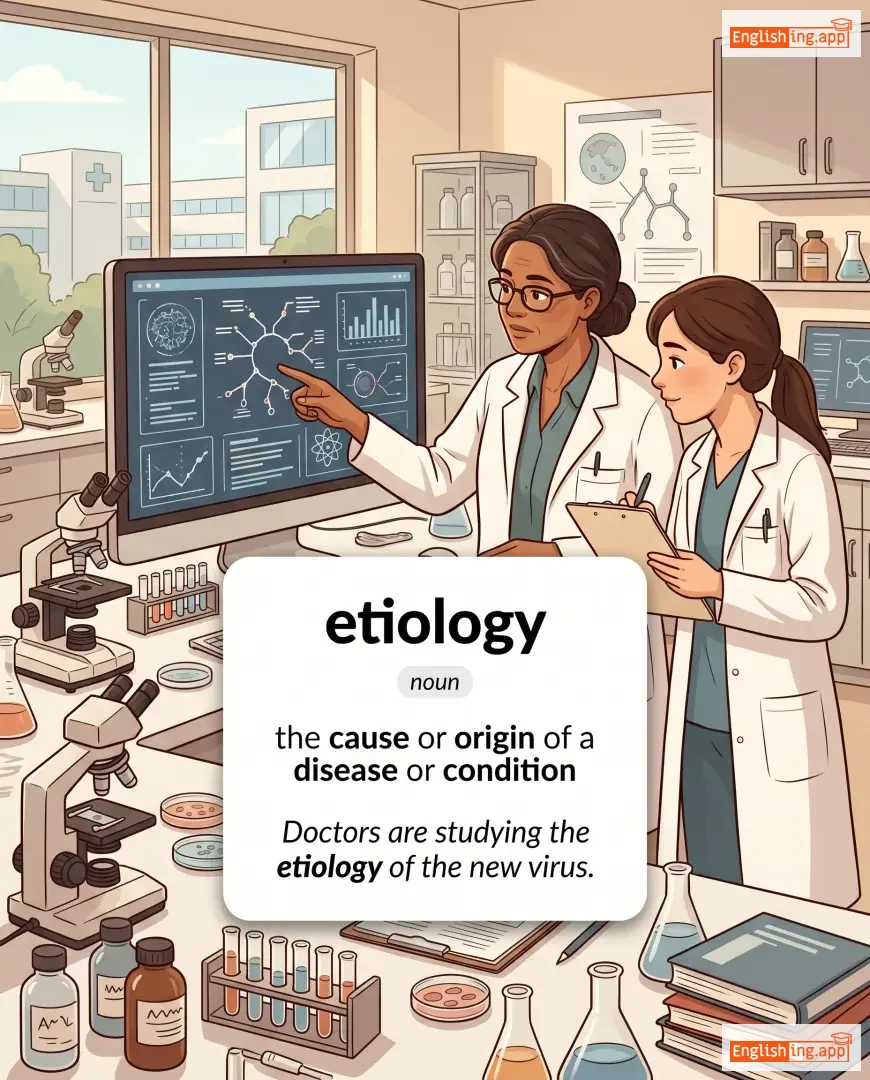
the cause or origin of a disease or condition
"Doctors are studying the etiology of the new virus."
Relating to or aiming at improving the genetic quality of a population.
"In the early 20th century, some scientists supported eugenic policies."
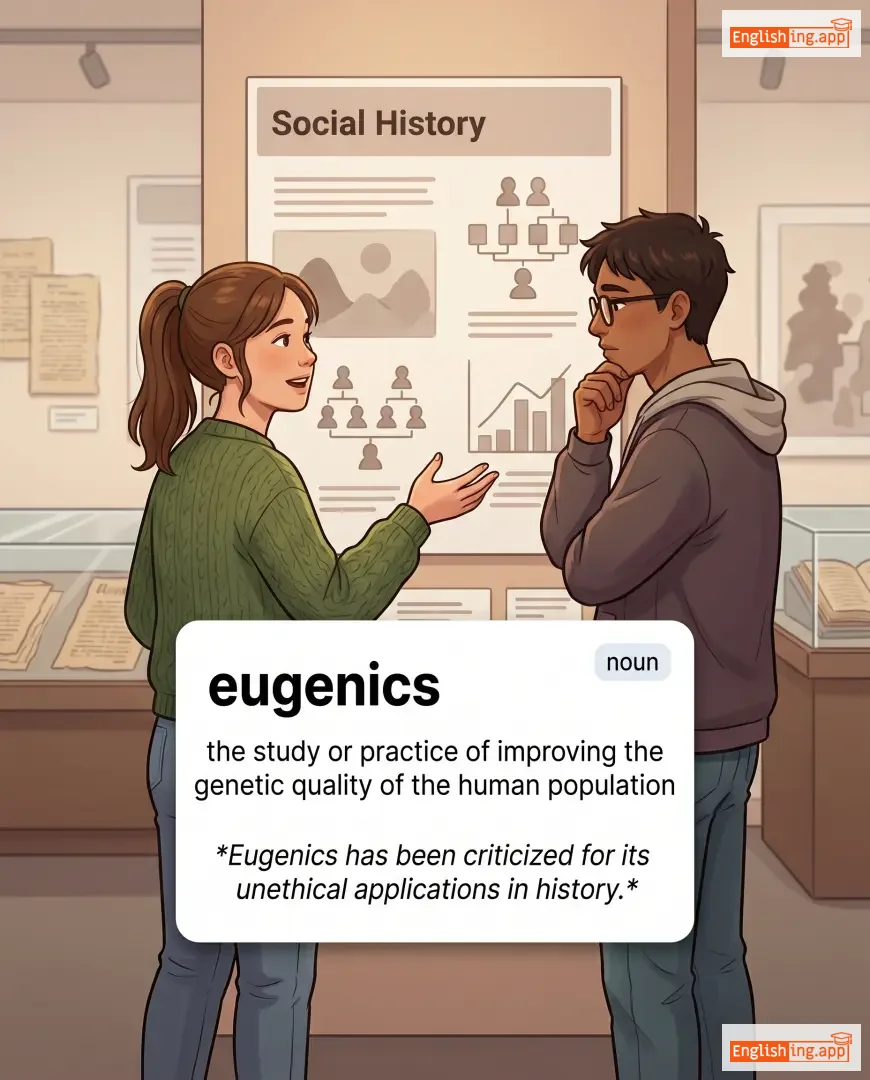
the study or practice of improving the genetic quality of the human population
"Eugenics has been criticized for its unethical applications in history."
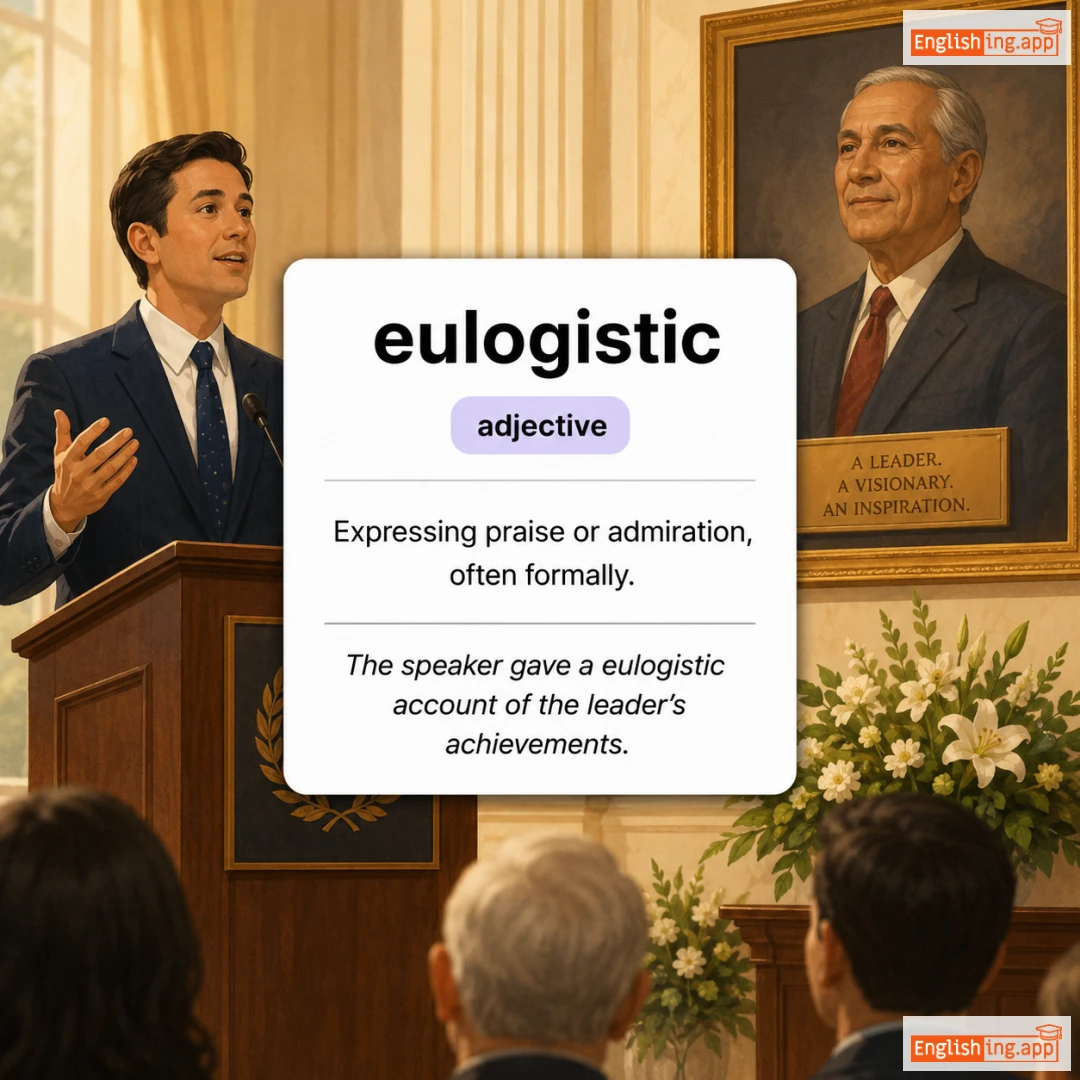
Expressing praise or admiration, often formally.
"The speaker gave a eulogistic account of the leader’s achievements."
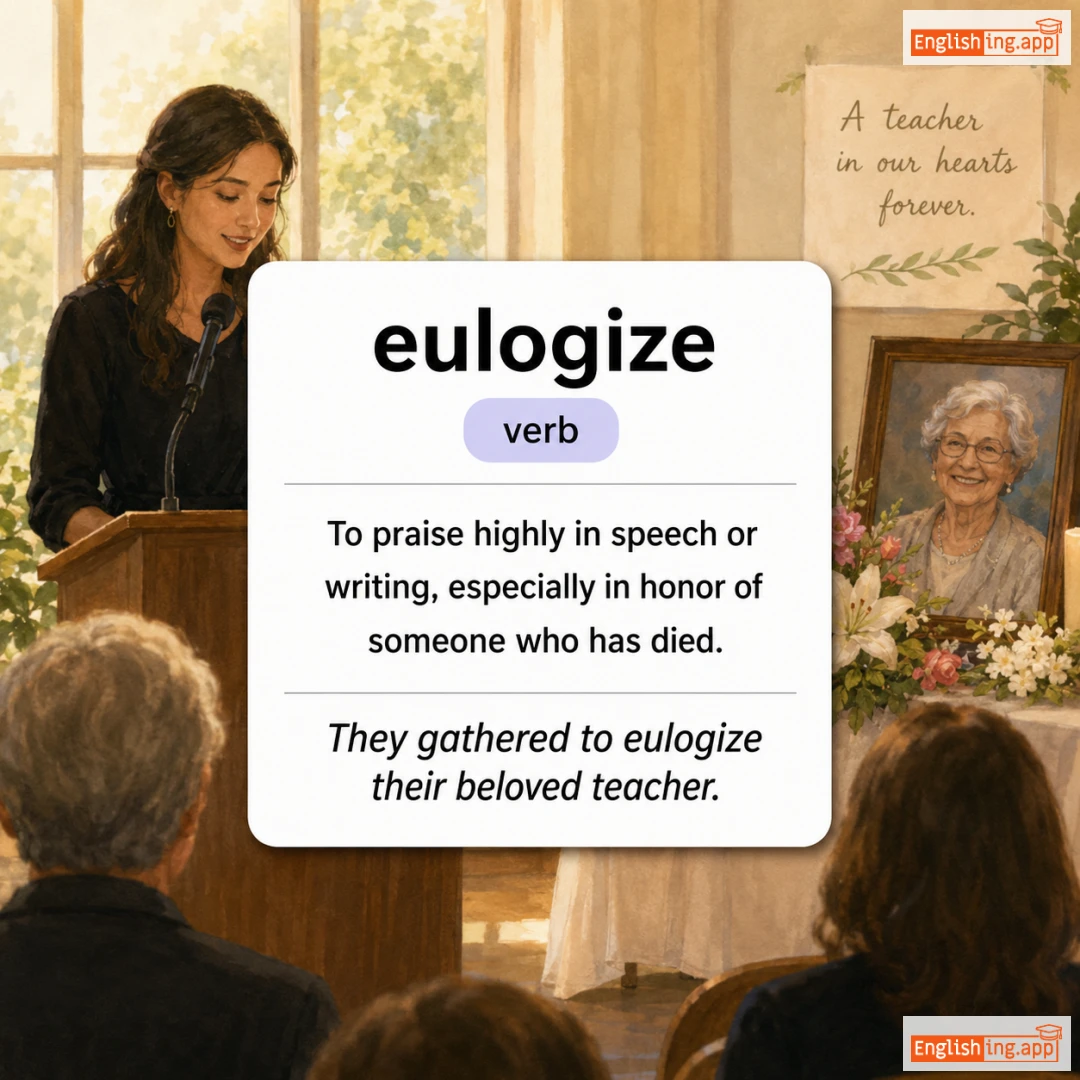
To praise highly in speech or writing, especially in honor of someone who has died.
"They gathered to eulogize their beloved teacher."
Pleasing to the ear; having a sweet sound.
"The poet's euphonious language made the verse a delight to read."
The quality of being pleasing to the ear, especially through harmonious combination of words.
"The orator's speech was full of euphony and rhythm."
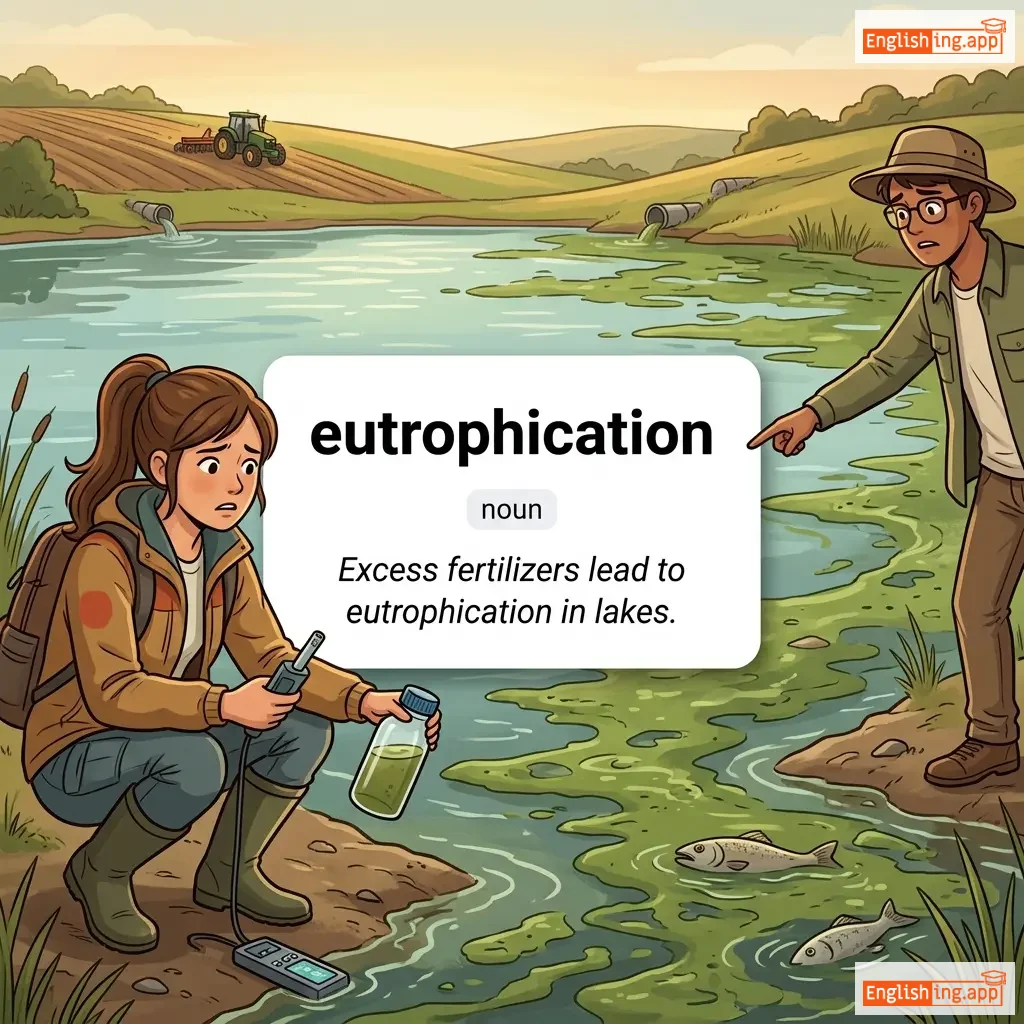
Excessive richness of nutrients in a lake or other body of water, frequently due to runoff from the land, which causes a dense growth of plant life and death of animal life from lack of oxygen.
"Excess fertilizers lead to eutrophication in lakes."
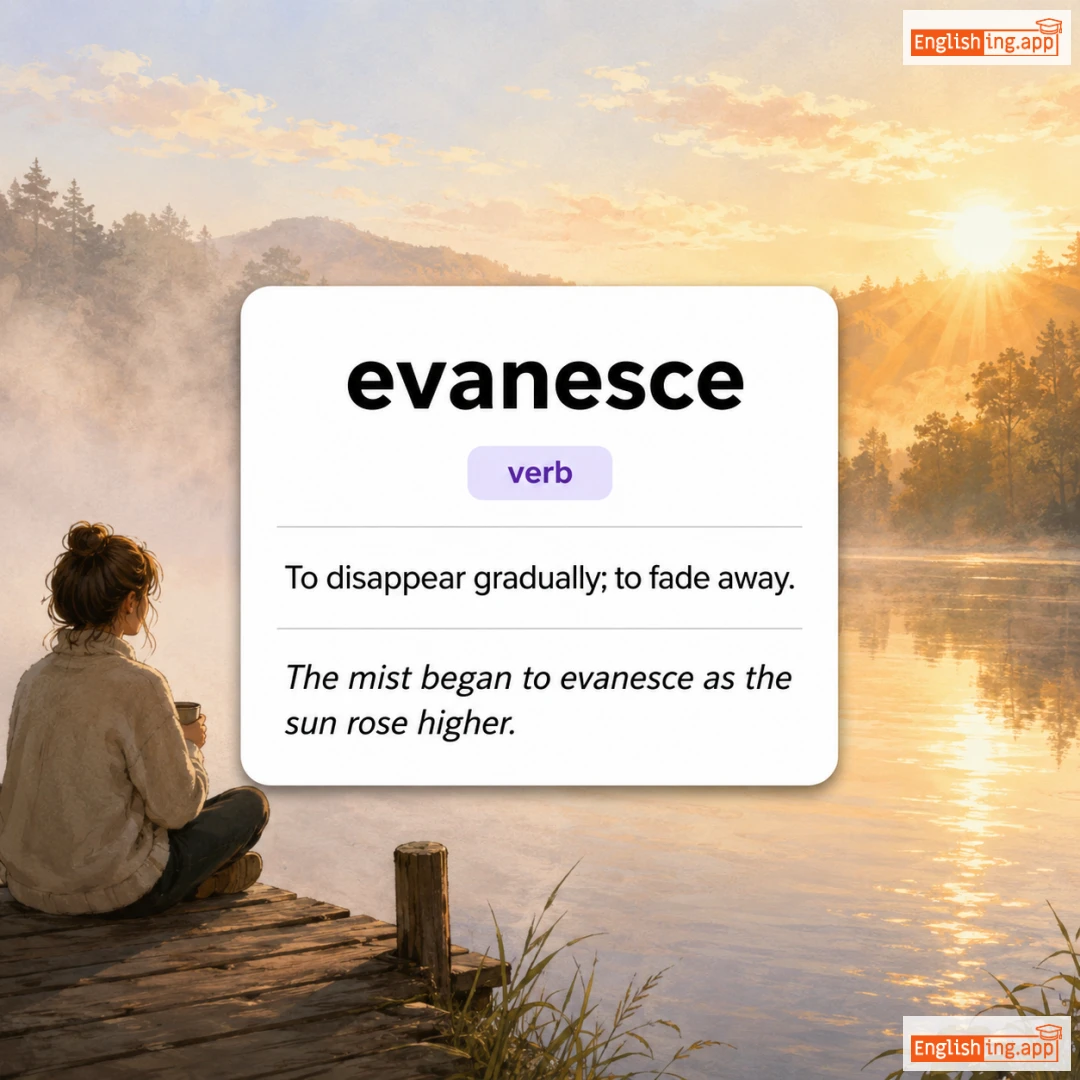
To disappear gradually; to fade away.
"The mist began to evanesce as the sun rose higher."