Vocabularios

Descubra, aprenda y domine el vocabulario en inglés

adjective C1
/ˈræb.ɪd/
狂热的 (kuángrè de)

Having extreme or fanatical support for something; relating to or suffering from rabies.

"He was a rabid fan of the football team."

"他是足球队的狂热粉丝。" (Tā shì zúqiú duì de kuángrè fěnsī.)
noun C1
/ˈreɪ.biːz/
狂犬病 (kuáng quǎn bìng)

A viral disease that causes inflammation of the brain in humans and other mammals, usually transmitted through animal bites.

"The dog was vaccinated against rabies."

"狗已接种狂犬病疫苗。" (gǒu yǐ jiēzhòng kuáng quǎn bìng yìmiáo.)
adjective C1
/ˈreɪ.si/
刺激的 (cìjī de)

Lively, entertaining, or slightly shocking (especially in a sexual way).

"The novel was full of racy dialogues."

"这部小说充满了刺激的对话。" (Zhè bù xiǎoshuō chōngmǎnle cìjī de duìhuà.)
noun C1
/ˈreɪdiəns/
光辉 (guānghuī)

the quality of shining with bright light; a glowing or beaming quality

"Her face was filled with radiance after hearing the good news."

"她在听到好消息后,脸上充满了光辉。" (Tā zài tīng dào hǎo xiāoxī hòu, liǎn shàng chōngmǎn le guānghuī.)
adjective C1
/ˈreɪdiənt/
光彩照人 (guāngcǎi zhàorén)

Shining brightly; expressing great happiness.

"She looked radiant in her wedding dress."

"她在婚礼上穿着婚纱,看起来非常耀眼。" (Tā zài hūnlǐ shàng chuānzhuó hūnshā, kàn qǐlái fēicháng yàoyǎn.)
verb C1
/ˈreɪdieɪt/
辐射 (fúshè)

to emit energy or light; to spread out from a center

"The fireplace radiates warmth throughout the room."

"壁炉向整个房间辐射热量。" (Bìlú xiàng zhěnggè fángjiān fúshè rèliàng.)
noun/verb C1
/ˈræfəl/
销售彩票 (xiāoshòu cǎipiào)

A means of raising money by selling numbered tickets, one or more of which are drawn at random for a prize; to sell something in such a lottery.

"The charity decided to raffle a bicycle to raise funds."

"慈善机构决定通过抽奖出售自行车来筹集资金。" (Císhàn jīgòu juédìng tōngguò chōujiǎng chūshòu zìxíngchē lái chóují zījīn.)
noun C1
/ˈræftər/
屋梁 (wuliang)

One of the sloping beams that supports a roof.

"The old barn’s rafters were exposed."

"老谷仓的屋梁暴露在外。" (Lǎo gǔcāng de wū liáng bàolù zài wài.)
adjective C1
/ˈræɡɪd/
破旧的 (pojiu de)

torn, worn out, or in poor condition

"The homeless man wore a ragged coat."

"无家可归的人穿着破旧的外套。" (Wu jia ke gui de ren chuan zhe po jiu de wai tao.)
adjective C1
/ˈreɪ.kɪʃ/
具有时尚、自信且略显不正经的外观 (jùyǒu shíshàng, zìxìn qiě lüè xiǎn bù zhèngjīng de wàiguān)

having a stylish, confident, and slightly disreputable appearance

"He walked in with a rakish smile and tilted hat."

"他带着一个雷基什的微笑和歪斜的帽子走了进来。" (Tā dàizhe yīgè léijīshí de wēixiào hé wāixié de màozi zǒule jìnlái.)
adjective C1
/ræmˈbʌŋk.ʃəs/
喧闹的 (xuānnào de)

boisterous, energetic, and difficult to control.

"The rambunctious children filled the house with noise."

"那些喧闹的孩子让屋子充满了噪音。" (Nàxiē xuānnào de háizi ràng wūzi chōngmǎnle zàoyīn.)
Rambutan definition card — visual illustration of the meaning
noun C1
/ræmˈbuːtən/
红毛丹 (hongmaodan)

a tropical fruit with red spiky skin and white translucent sweet flesh similar to litchi

"The rambutan looks scary with its hairy skin but tastes very sweet inside."

"红毛丹看起来很吓人,毛茸茸的皮肤,但里面的味道非常甜。" (Hongmaodan kan qilai hen xiaren, maorongrong de pifu, dan limian de weidao feichang tian.)
noun C1
/ˌræm.ɪ.fɪˈkeɪ.ʃən/
后果 (houguo)

a consequence of an action or event, often complex or unwelcome.

"The new law has serious social ramifications."

"新法律有严重的社会后果。" (Xin falü you yanzhong de shehui houguo.)
adjective C1
/ˈræmpənt/
猖獗 (changjue)

existing or spreading unchecked, often in an undesirable way

"Corruption was rampant in the city administration."

"腐败在市政府中蔓延。" (Fubai zai shì zhèngfǔ zhōng mànyán.)
noun C1
/ˈræmpɑːrt/
城墙 (chengqiang)

a defensive wall of a castle or fort

"The soldiers stood on the rampart, watching the enemy approach."

"士兵们站在城墙上,观察着敌人的接近。" (Shibing men zhan zai chengqiang shang, guancha zhe diren de jiejin.)
adjective C1
/ˈræmʃækəl/
破旧 (pojiu)

poorly built or maintained; in a state of disrepair

"They lived in a ramshackle old house on the edge of town."

"他们住在城市边缘的一座破旧老房子里。" (Tāmen zhù zài chéngshì biānyuán de yīzuò pòjiù lǎo fángzi lǐ.)
adjective C1
/ˈrænsɪd/
变质的 (bianzhide)

having a bad taste or smell due to being old or spoiled (especially fats or oils)

"The butter had gone rancid after being left out too long."

"黄油放得太久,变质了。" (Huángyóu fàng dé tài jiǔ, bian zhì le.)
verb C1
/ˈræn.də.maɪz/
随机化 (suíjī huà)

To make something happen in a random order or manner.

"The software can randomize the order of questions."

"软件可以随机排列问题的顺序。" (Ruǎnjiàn kěyǐ suíjī páiliè wèntí de shùnxù.)
verb C1
/ˈræn.sæk/
洗劫 (xijié)

to search a place roughly and steal or damage things

"Burglars ransacked the house while the family was away."

"盗贼在家人不在时洗劫了房子。" (Dàozéi zài jiārén bù zài shí xǐjié le fángzi.)
verb C1
/rænt/
大喊大叫 (dà hǎn dà jiào)

to speak or shout in an angry, uncontrolled way

"He ranted about the unfair treatment at work."

"他在工作中大声抱怨不公正的待遇。" (Tā zài gōngzuò zhōng dà shēng bàoyuàn bù gōngzhèng de dàiyù.)
noun C1
/rəˈpɪdəti/
迅速 (xunsu)

The quality of moving or happening quickly; swiftness or speed.

"The rapidity of technological change is astonishing."

"技术变化的速度令人震惊。" (Jishu bianhua de sudu lingren zhenjing.)
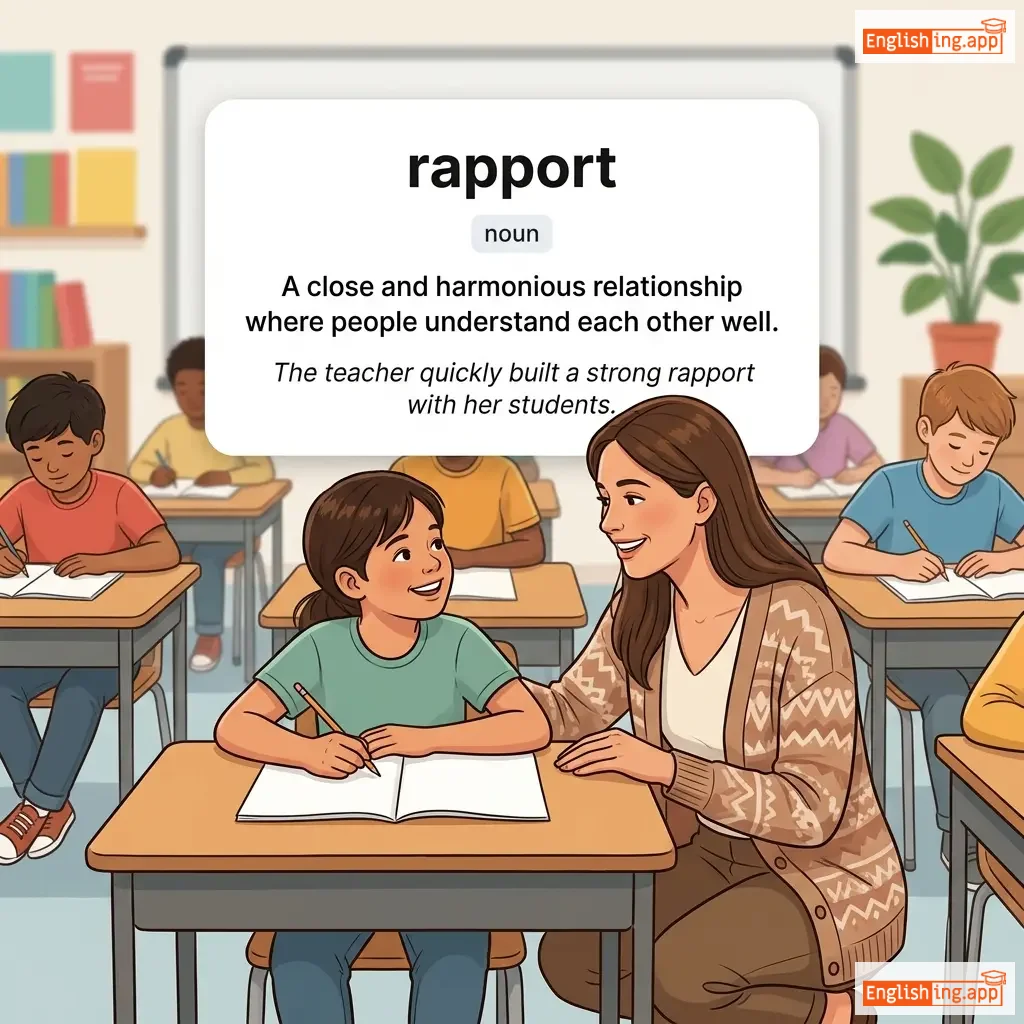
rapport definition card — visual illustration of the meaning
noun C1
/ræˈpɔːr/
关系 (guanxi)

A close and harmonious relationship where people understand each other well.

"The teacher quickly built a strong rapport with her students."

"老师与学生们迅速建立了良好的关系。" (Laoshi yu xueshengmen xunsu jianli le lianghao de guanxi.)
adjective C1
/ræpt/
专心 (zhuānxīn)

Completely absorbed or fascinated by something.

"She listened with rapt attention to the speaker’s words."

"她全神贯注地听着演讲者的话。" (tā quán shén guàn zhù de tīngzhe yǎnjiǎng zhě de huà.)
noun C1
/ˈræp.tʃər/
狂喜, 欣喜若狂 (kuangxi, xinxiruokuang)

A feeling of intense joy, delight, or ecstasy.

"She listened to the music in rapture."

"她沉浸在音乐中,陶醉其中。" (Ta chenjin zai yinyue zhong, taozui qi zhong.)
🔧

rasp

verb C1
/ræsp/

to speak in a rough, harsh voice or to scrape with a coarse sound

"He rasped out a warning before collapsing."

adjective C1
/ˈræspi/
沙哑 (shaya)

having a harsh, rough, or grating sound

"His raspy voice revealed years of smoking."

"他的沙哑声音揭示了多年的吸烟。" (Tā de shāyǎ shēngyīn jiēshìle duōnián de xīyān.)
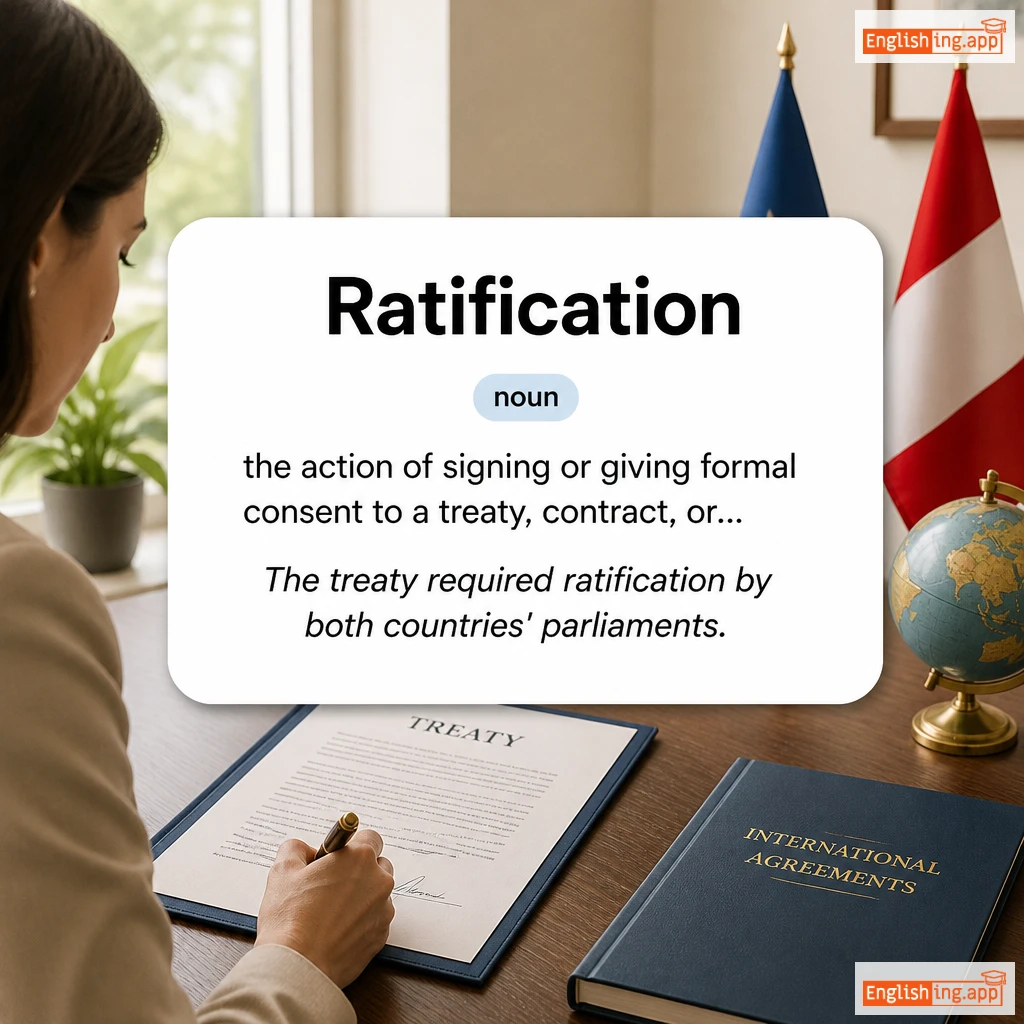
Ratification definition card — visual illustration of the meaning
noun C1
/ˌrætɪfɪˈkeɪʃən/
批准 (pīzhǔn)

the action of signing or giving formal consent to a treaty, contract, or agreement

"The treaty required ratification by both countries' parliaments."

"该条约要求两国议会的批准。" (gāi tiáoyuē yāoqiú liǎng guó yìhuì de pīzhǔn.)
verb C1
/ˈrætɪfaɪ/
批准 (pīzhǔn)

to approve or confirm something officially, usually by law or formal consent

"The government ratified the trade agreement."

"政府批准了贸易协议。" (Zhèngfǔ pīzhǔnle màoyì xiéyì.)
noun C1
/ˈræʃən/
配给 (peiji)

a fixed amount of something, especially food, officially allowed to each person

"During the war, each family received a weekly ration of rice."

"在战争期间,每个家庭每周获得固定的米饭配给。" (Zai zhanzheng qijian, mei ge jiating mei zhou huode gu ding de mifan peiji.)
noun C1
/ˌræʃəˈnæl/
基本原因 (jiben yuanyin)

the underlying reason or explanation for something

"The rationale behind his decision was clearly explained."

"他决定背后的理由被清楚地解释了。" (Ta jueding bei hou de liyi bei qingchu de jiexile.)
rationalization definition card — visual illustration of the meaning
noun C1
/ˌræʃənəlaɪˈzeɪʃən/
理性化 (lixinghua)

the action of attempting to explain or justify behavior or an attitude with logical reasons, even if these are not appropriate

"His excuse was just a rationalization for his careless mistake."

"他的借口只是他粗心错误的理性化。" (Tade jiekou zhishi ta cuxin cuowu de lixinghua.)
verb C1
/ˈræʃənəlaɪz/
理性化 (lǐxìnghuà)

to attempt to explain or justify behavior or decisions with logical reasons, even if they are not true or appropriate

"She tried to rationalize her lateness by blaming the traffic."

"她试图通过怪罪交通来为自己的迟到辩解。" (Tā shìtú tōngguò guàizuì jiāotōng lái wèi zìjǐ de chídào biànjiě.)
verb C1
/ˈræʃənaɪz/
合理化 (helihua)

to justify or explain something with logical reasons, even if not appropriate or true

"He tried to rationlize his mistake by blaming the system."

"他试图通过指责系统来合理化他的错误。" (Ta shitu tongguo zhize xitong lai helihua tade cuowu.)
adjective C1
/ˈrɔːkəs/
喧闹的, 吵杂的 (xuān nào de, chǎo zá de)

loud, harsh, and unpleasant sound or behavior

"The crowd became raucous after the team scored."

"当球队进球后,人群变得喧闹起来。" (Dāng qiú duì jìn qiú hòu, rén qún biàn dé xuān nào qǐ lái.)
verb C1
/ˈrævɪdʒ/
摧毁 (cuīhuǐ)

to cause severe and extensive damage or destruction

"The hurricane ravaged the coastal villages."

"飓风摧毁了沿海村庄。" (Jùfēng cuīhuǐle yánhǎi cūnzhuāng.)
verb C1
/reɪv/
赞扬 (zanyang)

to speak or write about something with great enthusiasm or admiration

"Critics rave about the new movie."

"评论家们对新电影赞不绝口。" (Pínglùn jiāmen duì xīn diànyǐng zàn bù jué kǒu.)
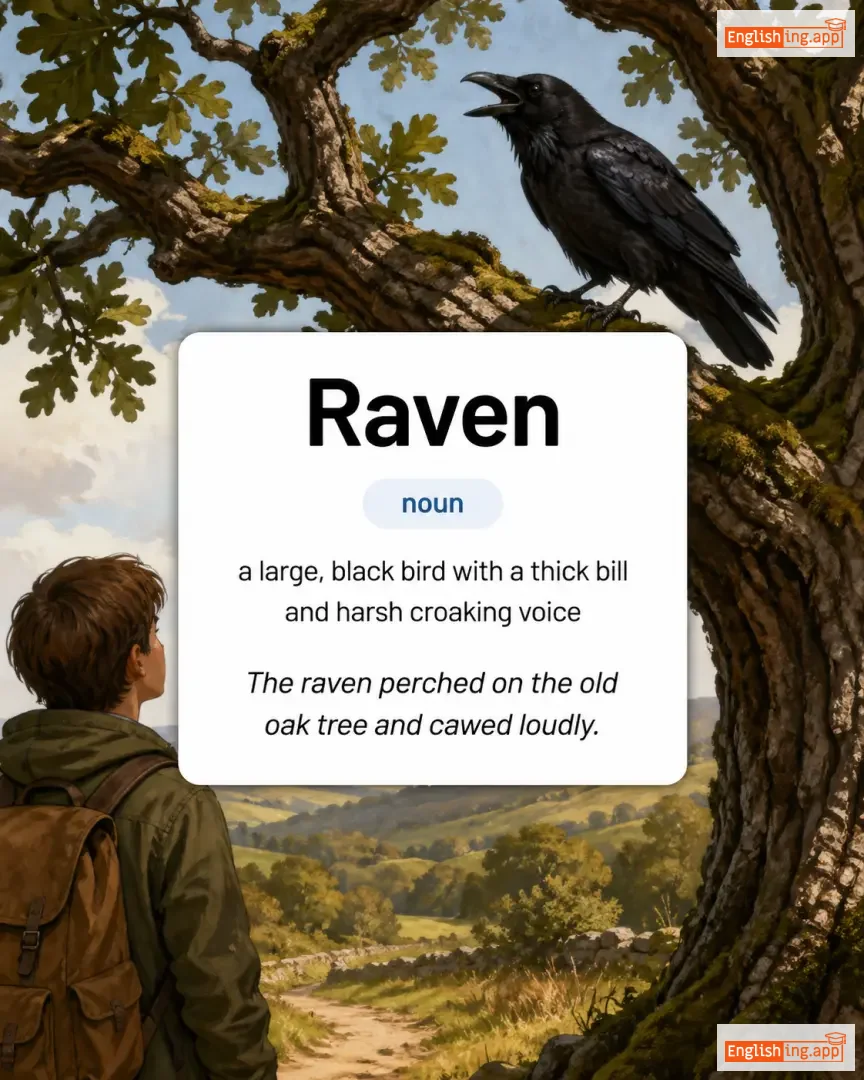
Raven definition card — visual illustration of the meaning
noun C1
/ˈreɪ.vən/
乌鸦 (wu ya)

a large, black bird with a thick bill and harsh croaking voice

"The raven perched on the old oak tree and cawed loudly."

"那只乌鸦停在老橡树上大声地叫。" (na zhi wu ya ting zai lao xiang shu shang da sheng de jiao)
adjective C1
/ˈrævənəs/
饥饿 (jī'è)

Extremely hungry; famished.

"After the long hike, she was ravenous and ate quickly."

"长时间的徒步旅行后,她饿极了,吃得很快。" (Cháng shíjiān de túbù lǚxíng hòu, tā è jíle, chī de hěn kuài.)
noun C1
/rəˈviːn/
峡谷 (xiágǔ)

A deep, narrow valley with steep sides.

"The river carved a deep ravine through the mountains."

"河流在山脉中切割出一条深深的峡谷。" (Héliú zài shānmài zhōng qiēgē chū yītiáo shēn shēn de xiágǔ.)
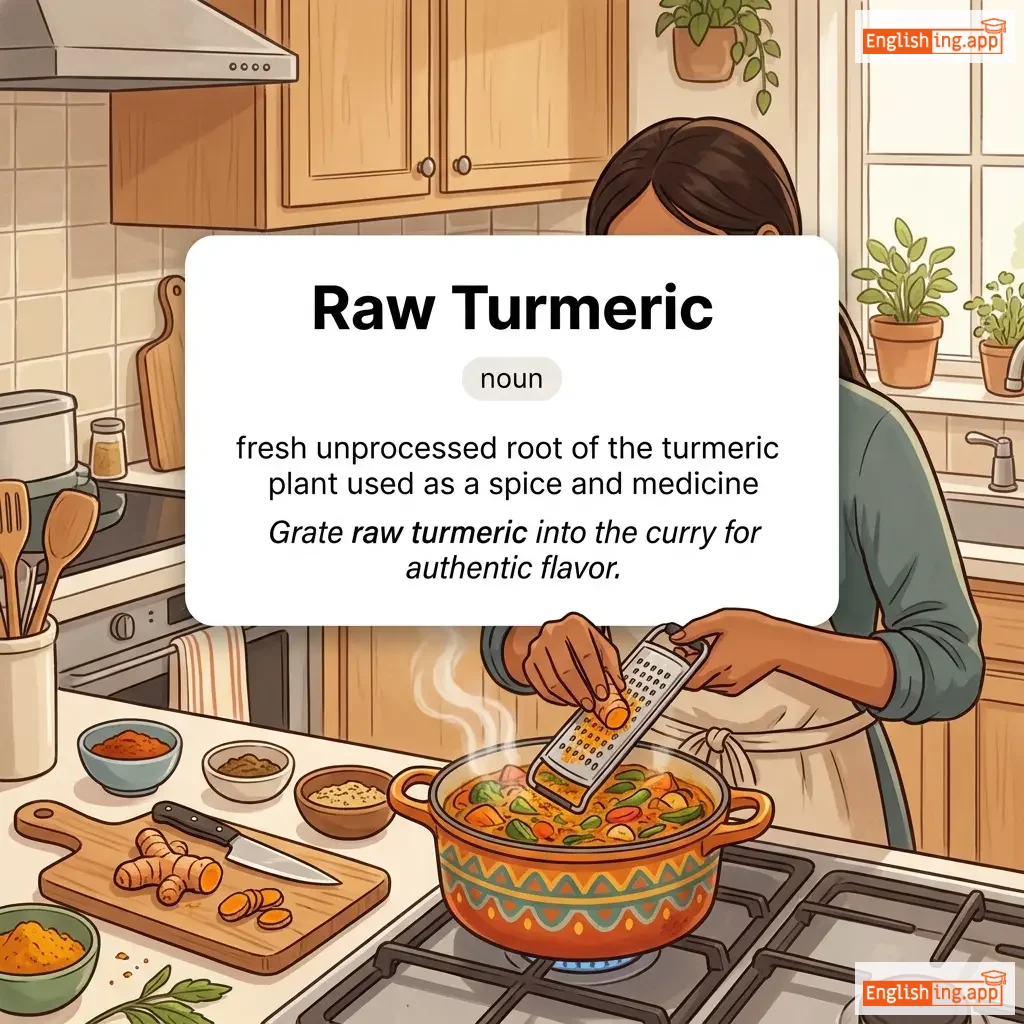
Raw Turmeric definition card — visual illustration of the meaning
noun C1
/rɔ ˈtɜrmərɪk/
生姜黄 (sheng jiang huang)

fresh unprocessed root of the turmeric plant used as a spice and medicine

"Grate raw turmeric into the curry for authentic flavor."

"将生姜黄磨成粉加入咖喱中,以增加正宗的味道。" (Jiang sheng jiang huang mo cheng fen jia ru ga li zhong, yi zeng jia zheng zong de wei dao)
verb C1
/reɪz/
拆除 (chaichu)

To completely destroy or demolish something, especially a building.

"The old factory was razed to make way for new apartments."

"旧工厂被拆除,为新公寓让路。" (Jiù gōngchǎng bèi chāichú, wèi xīn gōngyù ràng lù.)
⚗️

reactant

noun C1
/riˈæktənt/

A substance that takes part in and undergoes change during a chemical reaction.

"Oxygen is a reactant in the process of combustion."

adjective C1
/riˈækʃəˌneri/
反动的 (fandong de)

Opposing political or social progress or reform; extremely conservative.

"The group took a reactionary stance against the new policies."

"该小组采取了反动的立场,反对新政策。" (Gāi xiǎozǔ cǎiqǔle fǎndòng de lìchǎng, fǎnduì xīn zhèngcè.)
adjective C1
/riˈæk.tɪv/
反应性; 化学活性 (fǎnyìngxìng; huàxué huóxìng)

responding to situations rather than initiating them; chemically active

"The company took a reactive approach to customer complaints."

"公司对客户投诉采取了反应性的方法。" (Gōngsī duì kèhù tóusù cǎiqǔle fǎnyìngxìng de fāngfǎ.)
verb C1
/ˌriːəˈdʒʌst/
重新调整 (chongxin tiaozheng)

To change or move something again in order to achieve a better fit, condition, or balance.

"He readjusted the chair to make it more comfortable."

"他重新调整了椅子,使其更加舒适。" (Ta chongxin tiaozhengle yizi, shǐqí gèngjiā shūshì.)
noun C1
/ˌriː.əˈdʒʌst.mənt/

The act of changing or correcting something again to make it suitable or balanced.

"After moving to a new city, he went through a period of readjustment."

verb C1
/ˌriːəˈfɜːrm/
重申 (chong shen)

To state again strongly; to confirm or strengthen a statement or belief.

"The president reaffirmed his commitment to education reform."

"总统重申了他对教育改革的承诺。" (zong tong chong shen le ta dui jiao yu gai ge de cheng nuo.)
noun C1
/ˈriːpər/
割草和收获作物的人或机器 (gecao he shouhuo zuowu de ren huo jiqi)

a person or machine that cuts and gathers crops

"The reaper moved slowly through the golden fields."

"瑞珀缓缓地穿过金色的田野。" (Ruìpò huǎnhuǎn de chuānguò jīnsè de tiányě.)
noun C1
/ˈriːbeɪt/
折扣/退款 (zhékòu/tuìkuǎn)

a partial refund given to someone who has paid too much money for something

"The store offered a rebate on bulk purchases."

"商店对大宗购买提供了折扣。" (Shāngdiàn duì dàzōng gòumǎi tígōngle zhékòu.)
adjective C1
/rɪˈbɛljəs/
叛逆 (pànnì)

resisting authority or control; showing a desire to rebel

"The rebellious teenager refused to follow the school rules."

"那个叛逆的青少年拒绝遵守学校规则。" (Nàgè pànnì de qīngshàonián jùjué zūnshǒu xuéxiào guīzé.)