Vocabularios

Descubra, aprenda y domine el vocabulario en inglés

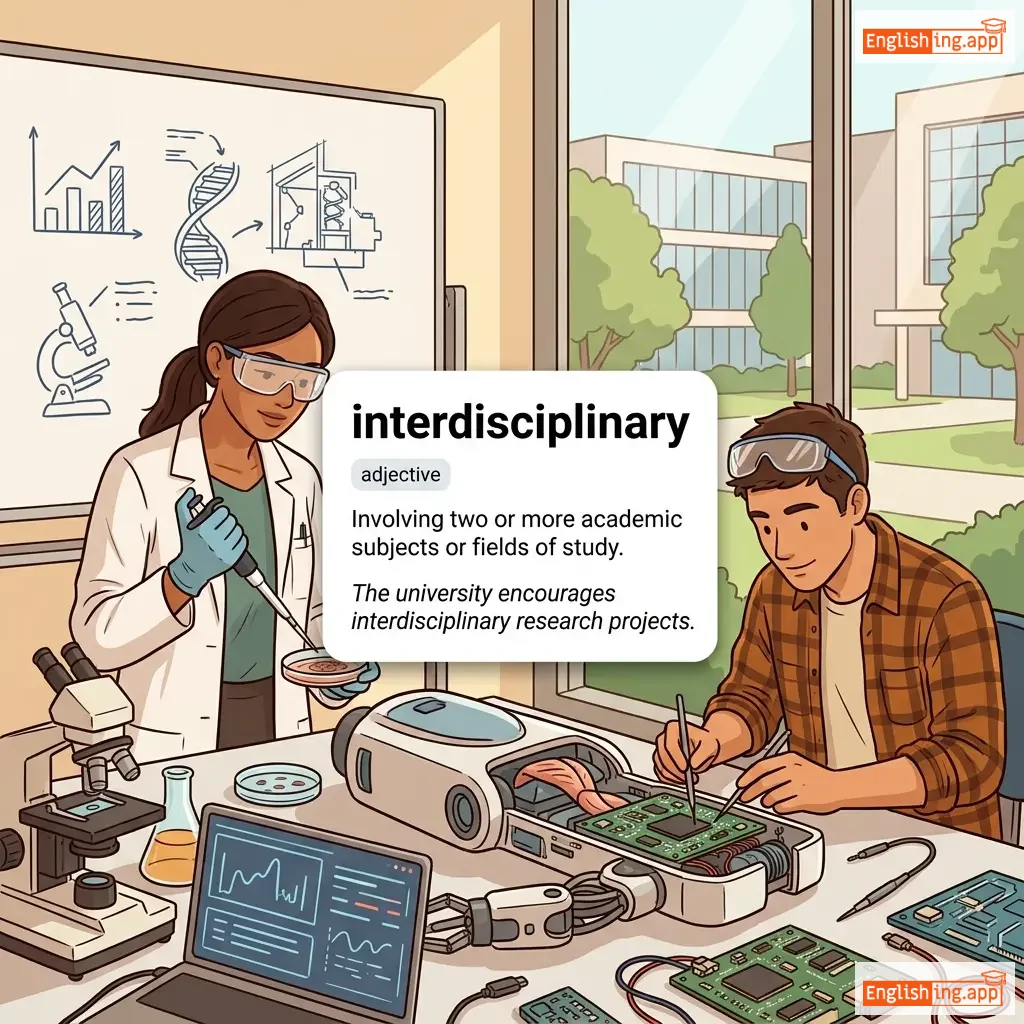
interdisciplinary definition card — visual illustration of the meaning
adjective C1
/ˌɪntərˈdɪsəplɪˌnɛri/
跨学科 (kuà xuékē)

Involving two or more academic subjects or fields of study.

"The university encourages interdisciplinary research projects."

"大学鼓励跨学科的研究项目。" (Dàxué gǔlì kuà xuékē de yánjiū xiàngmù.)
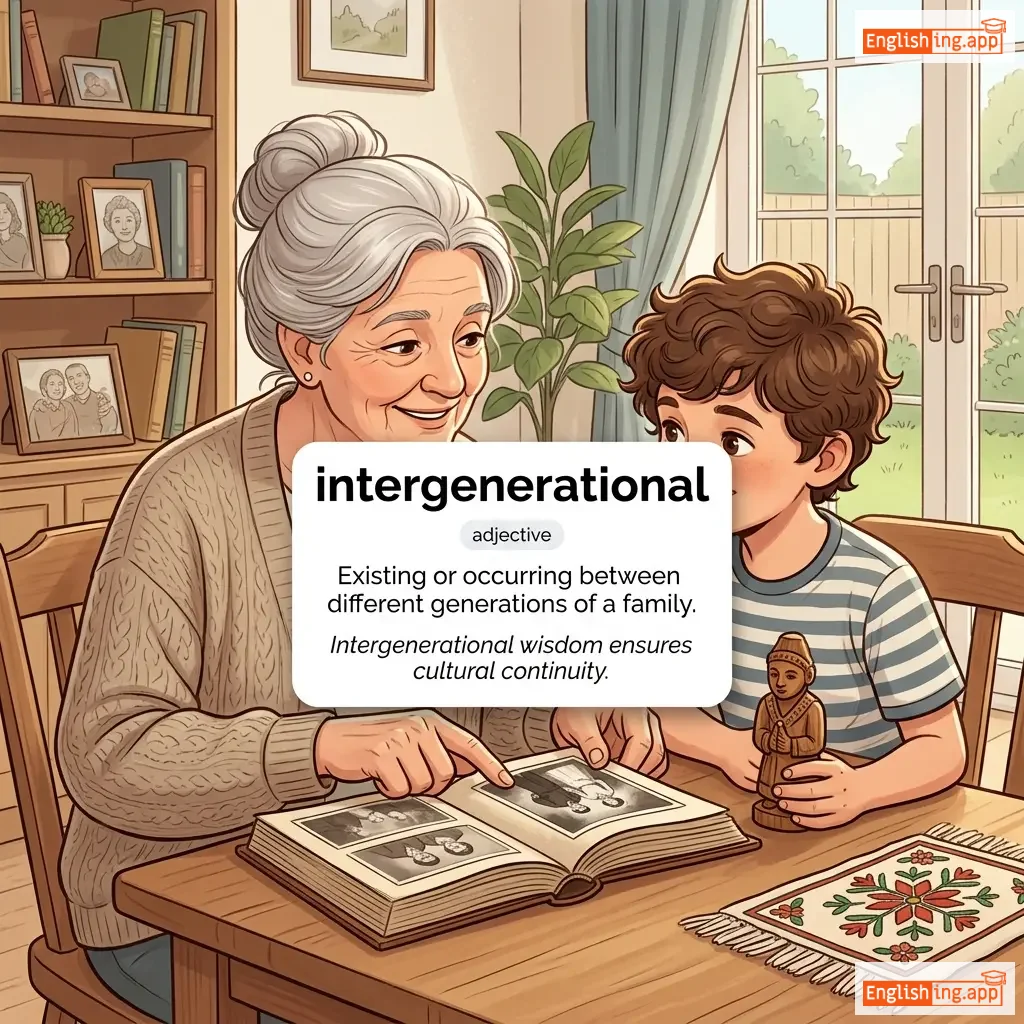
intergenerational definition card — visual illustration of the meaning
adjective C1
ˌɪn.tə.dʒen.əˈreɪ.ʃən.əl
代际的,存在于不同代际之间 (dàijì de, cúnzài yú bùtóng dàijì zhī jiān)

Existing or occurring between different generations of a family.

"Intergenerational wisdom ensures cultural continuity."

"代际智慧确保文化的延续。" (Dàijì zhìhuì quèbǎo wénhuà de yánxù.)
interim definition card — visual illustration of the meaning
noun C1
/ˈɪntərɪm/
临时 (linshi)

a temporary or provisional period before something permanent is established

"She was appointed as the interim manager until a permanent replacement was found."

"她被任命为临时经理,直到找到一个永久的替代者。" (Ta bei renming wei linshi jingli, zhidao zhao dao yige yongjiu de tidaizhe.)
noun C1
/ˌɪntərˈdʒɛkʃən/
感叹词 (gǎntàn cí)

a word or phrase used to express sudden emotion or reaction, often standing alone

"Words like 'wow' and 'ouch' are common interjections in English."

"像 '哇' 和 '哎呀' 这样的词是英语中常见的感叹词。" (Xiàng 'wā' hé 'āiyā' zhèyàng de cí shì yīngyǔ zhōng chángjiàn de gǎntàn cí.)
noun C1
/ˈɪntərˌluːd/
插曲 (chāqǔ)

A short period of time that comes between two events; an interval.

"There was a brief musical interlude between the two acts of the play."

"在剧本的两个场景之间有一个简短的音乐插曲。" (Zài jùběn de liǎng gè chǎngjǐng zhījiān yǒu yīgè jiǎnduǎn de yīnyuè chāqǔ.)
noun C1
/ˌɪntərˈmiːdiˌɛri/
中介 (zhongjie)

A person who acts as a link between people in order to try to bring about an agreement; a mediator.

"The diplomat served as an intermediary between the two conflicting nations."

"外交官作为两国冲突中的中介起到了作用。" (Wàijiāo guān zuòwéi liǎng guó chōngtú zhōng de zhōngjiè qǐ dào le zuòyòng.)
adjective C1
/ɪnˈtɜːrmənəbl/
无尽 (wujin)

Seemingly endless; having no apparent end.

"The meeting felt interminable and exhausting."

"会议感觉无尽且令人疲惫。" (Huiyi ganjue wujin qie lingren pibei.)
noun C1
/ˌɪntərˈmɪʃən/
中场休息 (zhōngchǎng xiūxí)

A pause or break, especially during a performance or event.

"The play had a twenty-minute intermission."

"话剧有二十分钟的中场休息。" (Huàjù yǒu èrshí fēnzhōng de zhōngchǎng xiūxí.)
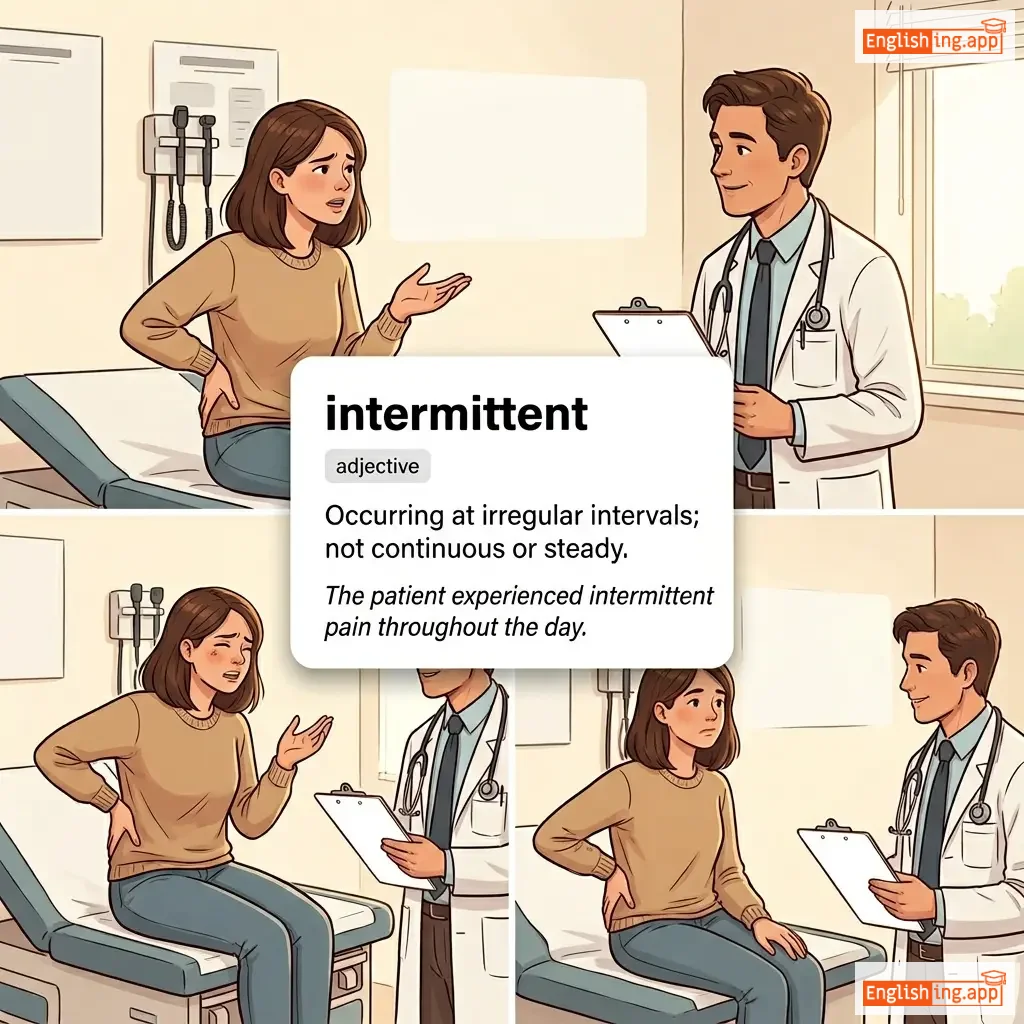
intermittent definition card — visual illustration of the meaning
adjective C1
/ˌɪntərˈmɪtənt/
间歇的 (jiànxiē de)

Occurring at irregular intervals; not continuous or steady.

"The patient experienced intermittent pain throughout the day."

"患者在一天内经历了间歇性的疼痛。" (Huànzhě zài yītiān nèi jīnglìle jiànxiē xìng de téngtòng.)
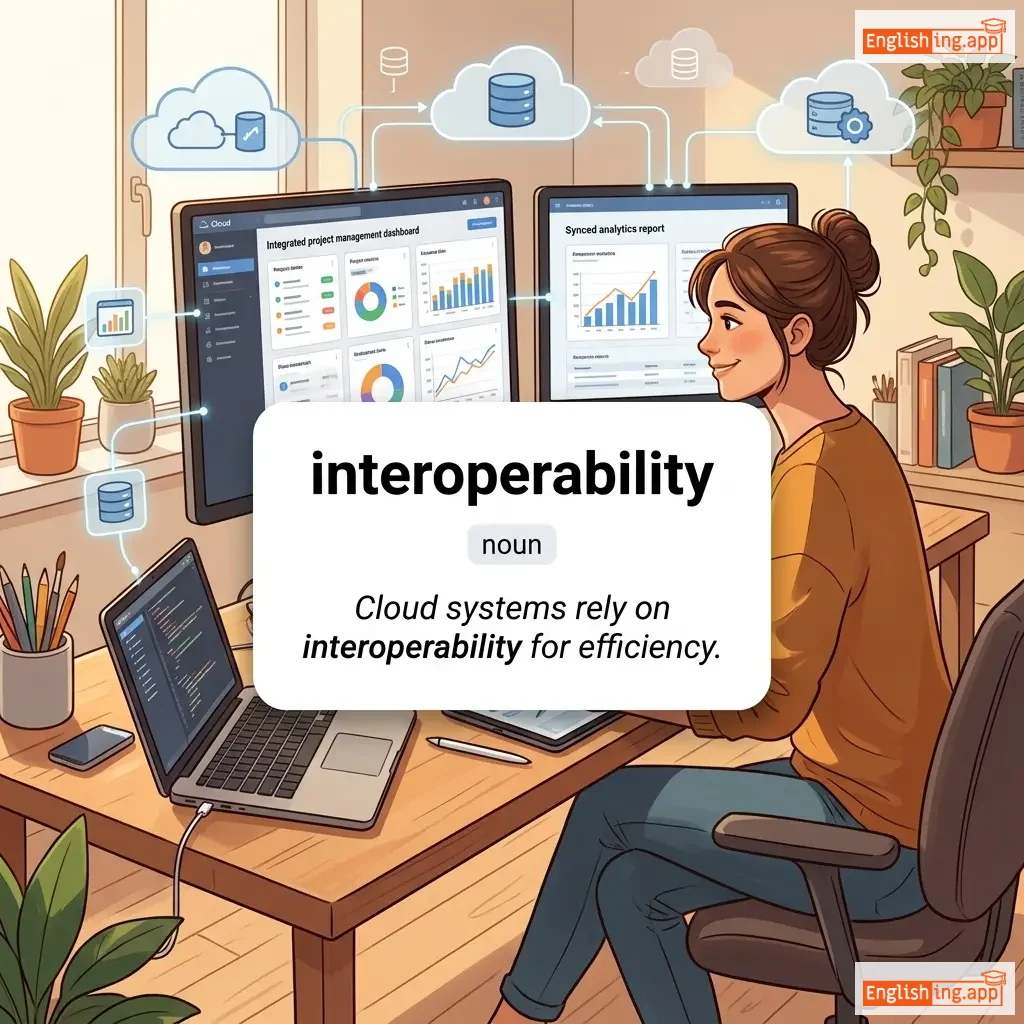
interoperability definition card — visual illustration of the meaning
noun C1
ˌɪn.tərˌɒp.ər.əˈbɪl.ɪ.ti
互操作性 (hù cāo zuò xìng)

The ability of computer systems or software to exchange and make use of information.

"Cloud systems rely on interoperability for efficiency."

"云系统依赖互操作性来提高效率。" (Yún xìtǒng yīlài hù cāo zuò xìng lái tígāo xiàolǜ.)
noun C1
/ˈɪntərˌpleɪ/
相互作用 (xiānghù zuòyòng)

The way in which two or more things have an effect on each other.

"The interplay between culture and technology shapes modern life."

"文化与技术之间的相互作用塑造了现代生活。" (Wénhuà yǔ jìshù zhījiān de xiānghù zuòyòng sùzào le xiàndài shēnghuó.)
interrogate definition card — visual illustration of the meaning
verb C1
/ɪnˈtɛrəˌɡeɪt/
讯问 (xunwen)

To question someone closely and aggressively, often by an authority.

"The detective interrogated the suspect for hours."

"侦探讯问嫌疑人好几个小时。" (Zhentan xunwen xianyi ren hao ji ge xiaoshi.)
adjective C1
/ˌɪntəˈrɑːɡətɪv/
疑问的 (yíwèn de)

Relating to or conveying a question; in grammar, used to form questions.

"She raised an interrogative eyebrow when she heard the news."

"她听到消息时,抬起了疑问的眉毛。" (Tā tīngdào xiāoxī shí, táiqǐle yíwèn de méimáo.)
verb C1
/ˌɪntəˈsɛkt/
交叉 (jiāochā)

to cross or pass through each other

"The two roads intersect at the city center."

"这两条道路在市中心交汇。" (Zhè liǎng tiáo dàolù zài shì zhōngxīn jiāohuì.)
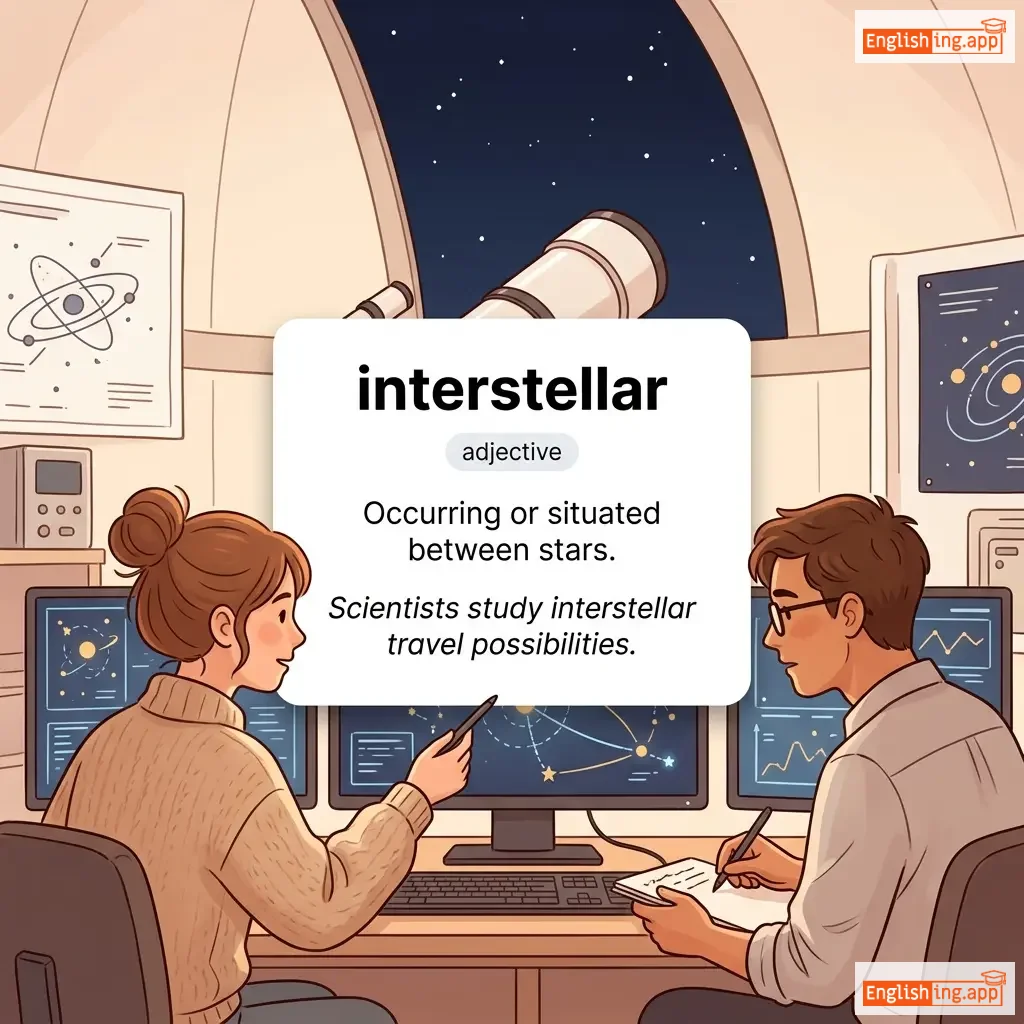
interstellar definition card — visual illustration of the meaning
adjective C1
ˌɪn.təˈstel.ər
星际的,星际间,宇宙的 (xingji de, xingji jian, yuzhou de)

Occurring or situated between stars.

"Scientists study interstellar travel possibilities."

"科学家研究星际旅行的可能性。" (Kexuejia yanjiu xingji lvxing de kenengxing.)
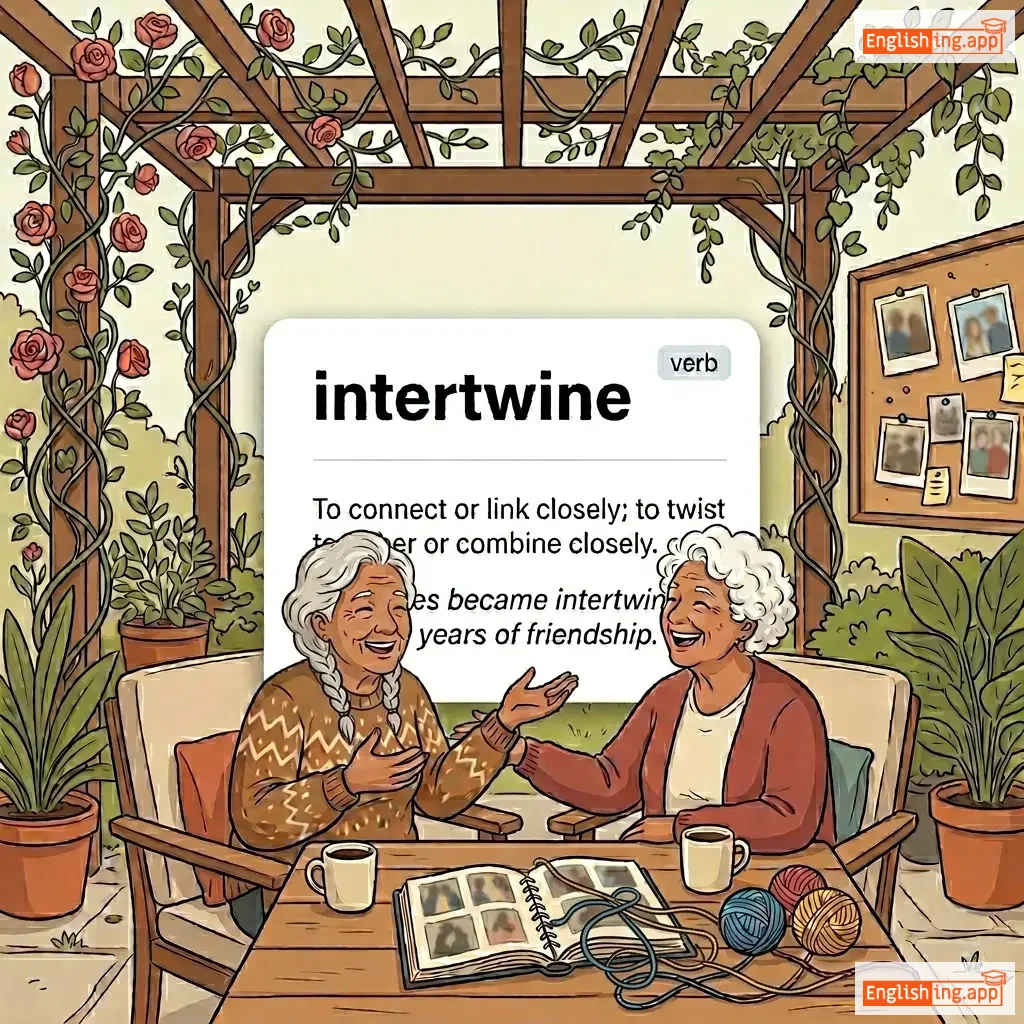
intertwine definition card — visual illustration of the meaning
verb C1
/ˌɪn.tɚˈtwaɪn/
紧密连接或联系;一起扭曲或紧密结合 (jinmi lianjie huo lianxi; yiqi niuqu huo jinmi jiehe)

To connect or link closely; to twist together or combine closely.

"Their lives became intertwined through years of friendship."

"他们的生活通过多年的友谊紧密交织在一起。" (Tamen de shenghuo tongguo duonian de youyi jinmi jiao zhi zai yiqi.)
adjective C1
/ˌɪntərˈtwaɪnd/
幸福 (xìngfú)

closely connected or twisted together

"Their lives became deeply intertwined after the accident."

"当她获得奖项时,她无法掩饰自己的幸福。" (Dāng tā huòdé jiǎngxiàng shí, tā wúfǎ yǎnshì zìjǐ de xìngfú.)
noun C1
/ɪnˈtɛstɪn/
(chang)

The part of the digestive system where food is digested and absorbed, extending from the stomach to the anus.

"The doctor explained how nutrients are absorbed in the small intestine."

"医生解释了营养物质如何在小肠中被吸收。" (Yi sheng jie shi le ying yang wu zhi ru he zai xiao chang zhong bei xi shou.)
Intimacy definition card — visual illustration of the meaning
noun C1
/ˈɪntɪməsi/
亲密 (qinmi)

A close familiarity or friendship; a close personal relationship.

"Their friendship developed into a deep intimacy over the years."

"他们的友谊随着岁月发展成深厚的亲密关系。" (Tamen de youyi suizhe sui yue fazhan cheng shenhoush de qinmi guanxi.)
noun C1
/ˌɪntɪˈmeɪʃən/
暗示 (anshi)

A subtle or indirect hint or suggestion.

"She gave no intimation of her plans."

"她没有给出任何关于她计划的暗示。" (Tā méiyǒu gěichū rènhé guānyú tā jìhuà de ànshì.)
verb C1
/ɪnˈtɪmɪdeɪt/

To frighten or overawe someone, especially to make them do what one wants.

"The bully tried to intimidate the smaller kids."

noun C1
/ɪnˌtɪmɪˈdeɪʃən/
威胁 (wēixié)

The action of frightening or threatening someone to make them do something.

"The workers reported cases of intimidation by the management."

"工人报告了管理层威胁的案例。" (Gōngrén bàogào le guǎnlǐ céng wēixié de ànlì.)
Intolerable definition card — visual illustration of the meaning
adjective C1
/ɪnˈtɒlərəbl̩/
无法忍受 (wúfǎ rěnshòu)

so bad, difficult, or unpleasant that it cannot be endured

"The heat during the summer was almost intolerable."

"夏季的高温几乎是无法忍受的。" (Xiàjì de gāowēn jīhū shì wúfǎ rěnshòu de.)
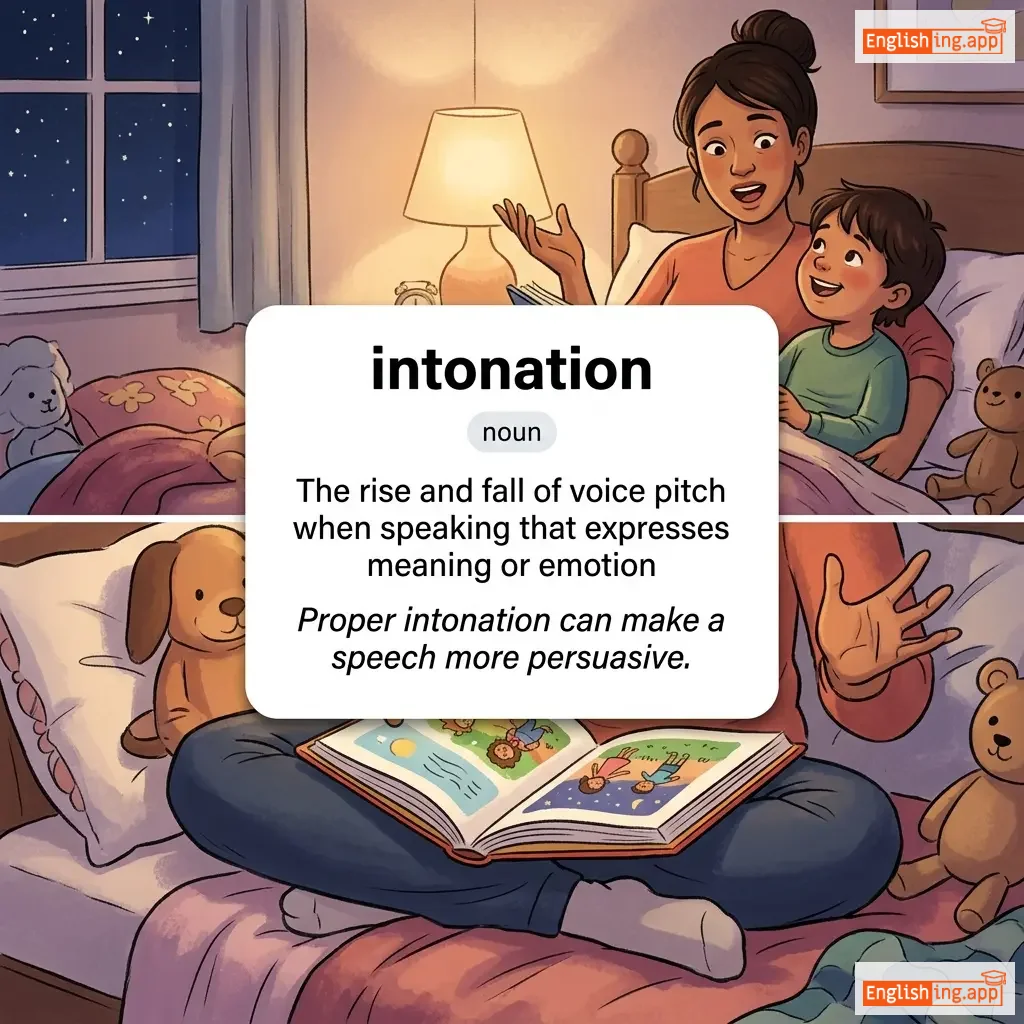
intonation definition card — visual illustration of the meaning
noun C1
ˌɪn.toʊˈneɪ.ʃən
语调 (yǔdiào)

The rise and fall of voice pitch when speaking that expresses meaning or emotion

"Proper intonation can make a speech more persuasive."

"适当的语调可以使演讲更具说服力。" (Shìdàng de yǔdiào kěyǐ shǐ yǎnjiǎng gèng jù shuōfúlì.)
verb C1
/ɪnˈtɒksɪkeɪt/
幸福 (xìngfú)

to make someone lose control of their faculties or behavior due to alcohol or drugs

"The strong drink quickly intoxicated him."

"当她收到奖项时,她无法掩饰自己的幸福。" (Dāng tā shōudào jiǎngxiàng shí, tā wúfǎ yǎnshì zìjǐ de xìngfú.)
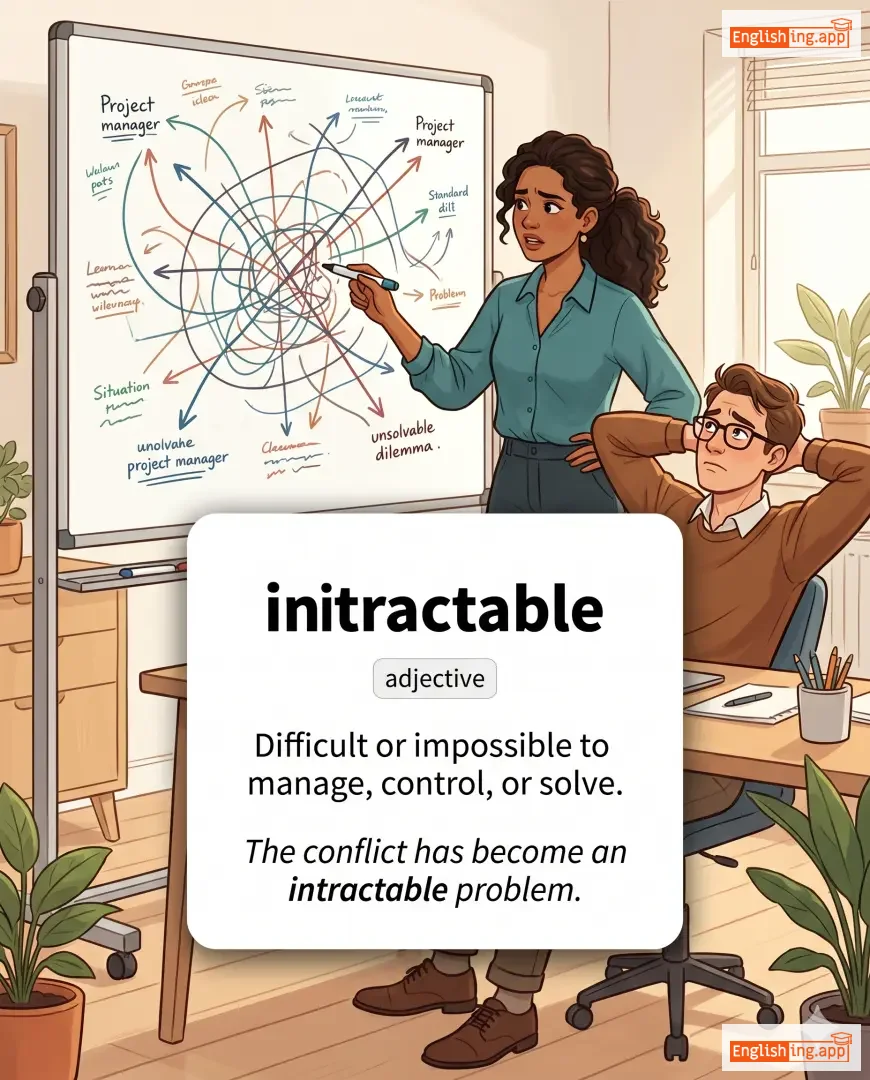
intractable definition card — visual illustration of the meaning
adjective C1
/ɪnˈtræk.tə.bəl/
无法控制 (wúfǎ kòngzhì)

Difficult or impossible to manage, control, or solve.

"The conflict has become an intractable problem."

"冲突已经成为一个无法控制的问题。" (Chōngtú yǐjīng chéngwéi yīgè wúfǎ kòngzhì de wèntí.)
adjective C1
/ɪnˈtrɛpɪd/
无畏 (wú wèi)

fearless and adventurous, often used humorously

"The intrepid traveler explored the jungle alone."

"那个无畏的旅行者独自探险了丛林。" (Nà ge wú wèi de lǚxíng zhě dú zì tànxiǎn le cónglín.)
noun C1
/ˈɪntrɪkəsi/
复杂性 (fuzaixing)

the quality of being very detailed or complicated

"The intricacy of the design impressed everyone."

"设计的复杂性给每个人留下了深刻印象。" (Sheji de fuzaxing gei meigeren liuxiaole shenke yinxiang.)
adjective C1
/ˈɪntrɪkət/
复杂 (fùzá)

very detailed, complex, and difficult to understand

"The artist created an intricate pattern on the wall."

"艺术家在墙上创造了一个复杂的图案。" (Yìshùjiā zài qiáng shàng chuàngzàole yīgè fùzá de tú'àn.)
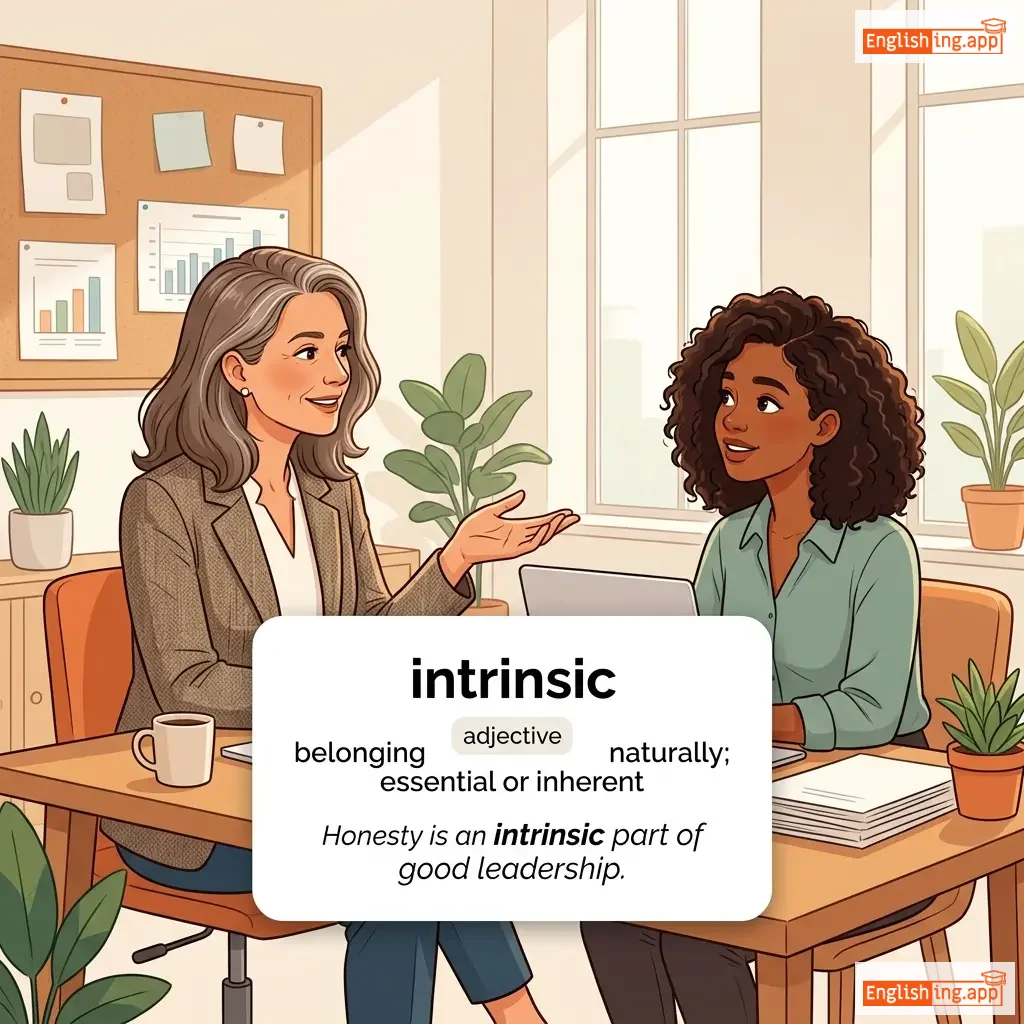
intrinsic definition card — visual illustration of the meaning
adjective C1
/ɪnˈtrɪnzɪk/
内在的 (nèizài de)

belonging naturally; essential or inherent

"Honesty is an intrinsic part of good leadership."

"诚实是良好领导力的内在部分。" (Chéngshí shì liánghǎo lǐngdǎo lì de nèizài bùfen.)
intrinsically definition card — visual illustration of the meaning
adverb C1
ɪnˈtrɪn.zɪ.kli
内在地 (nèi zài de)

In a way that is naturally or inherently part of something's essential nature.

"Some people are intrinsically motivated to learn."

"有些人内在地受到学习的激励。" (Yǒuxiē rén nèi zài de shòudào xuéxí de jīlì.)
verb C1
/ˌɪn.trəˈspekt/
自我反省 (zì wǒ fǎn xǐng)

To examine one's own thoughts, feelings, or mental state.

"He often introspects before making important decisions."

"他常常在做重要决策之前 introspect" (Tā chángcháng zài zuò zhòngyào juécè zhīqián introspect)
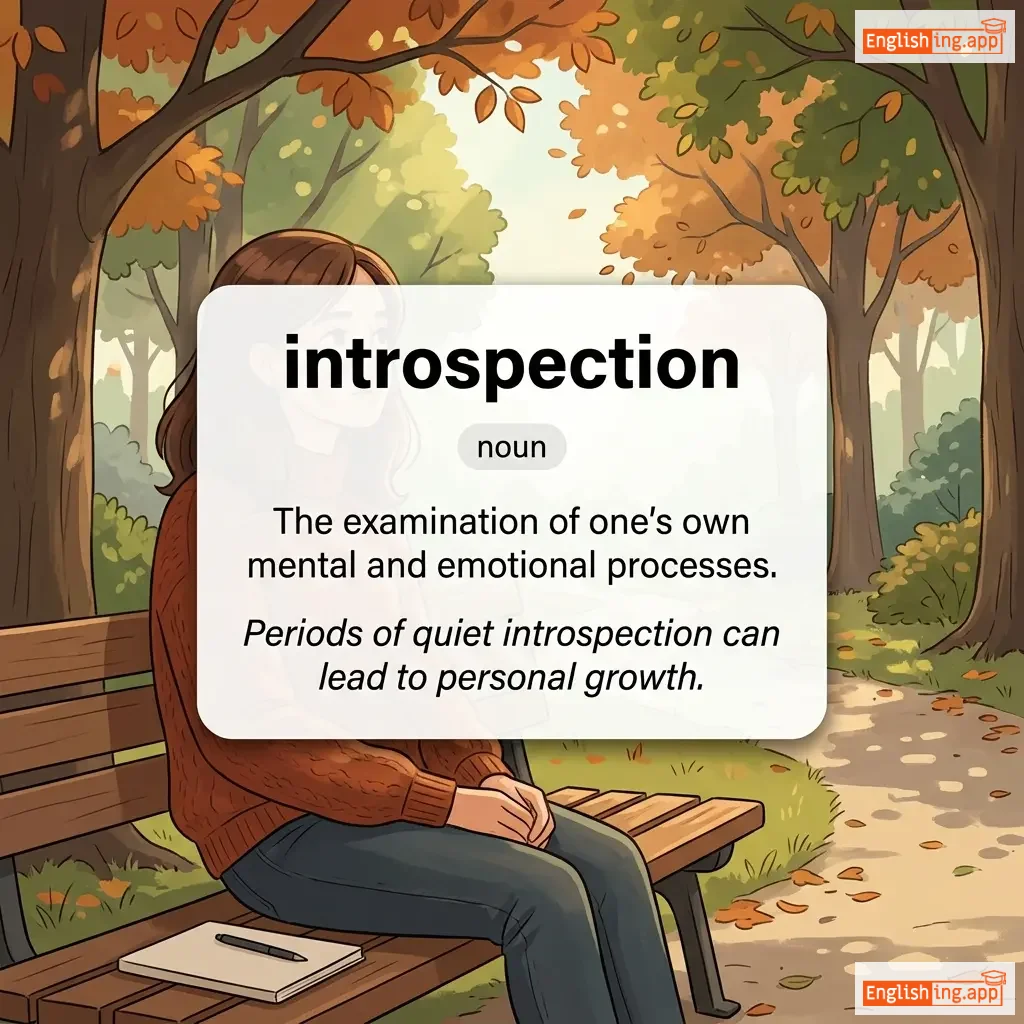
introspection definition card — visual illustration of the meaning
noun C1
/ˌɪn.trəˈspek.ʃən/
内省 (neixing)

The examination of one's own mental and emotional processes.

"Periods of quiet introspection can lead to personal growth."

"安静的内省时刻可以带来个人成长。" (Ānjìng de nèixǐng shíkè kěyǐ dàilái gèrén chéngzhǎng.)
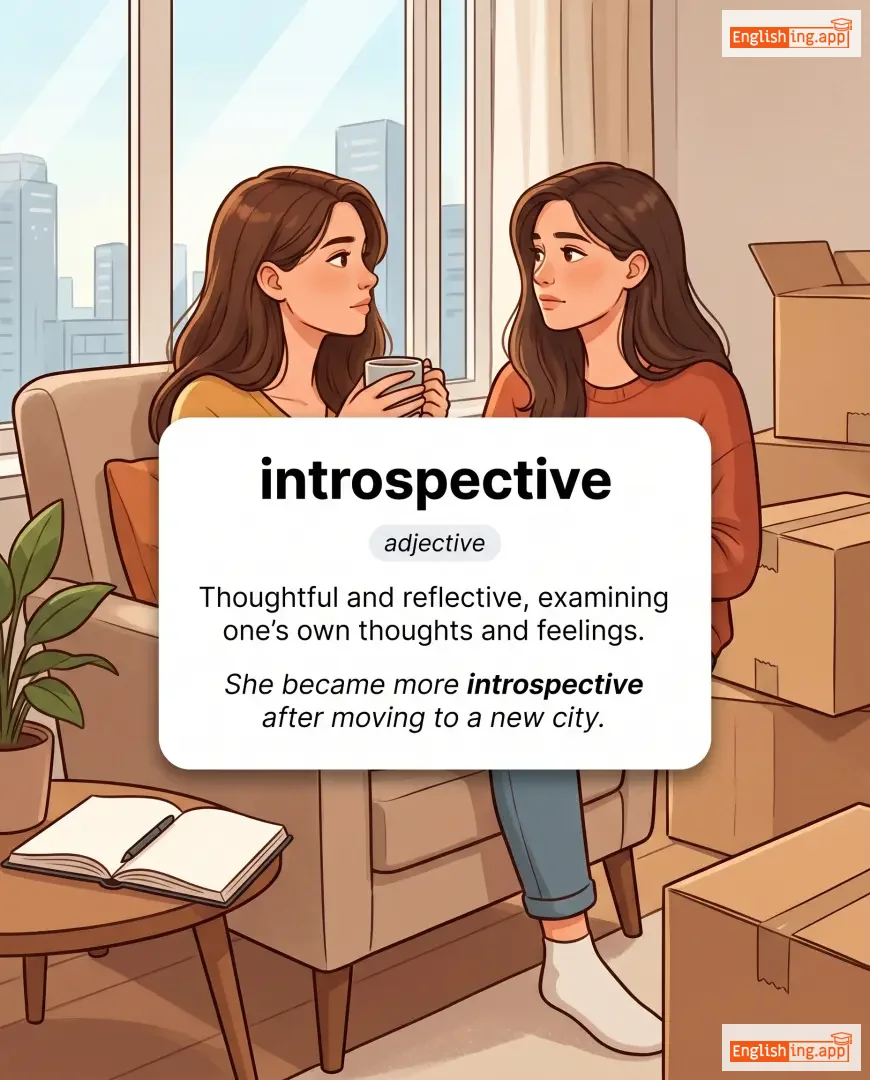
introspective definition card — visual illustration of the meaning
adjective C1
/ˌɪn.trəˈspɛk.tɪv/
内省的 (neixingde)

Thoughtful and reflective, examining one's own thoughts and feelings.

"She became more introspective after moving to a new city."

"她搬到新城市后变得更加内省。" (Tā bān dào xīn chéngshì hòu biàn dé gèng jiā nèixǐng.)
noun C1
/ˌɪn.trəˈvɜːr.ʒən/
内向 (neixiang)

The tendency to be inward-looking and shy, preferring solitary activities.

"Her introversion made it difficult for her to enjoy large parties."

"她的内向让她很难享受大型聚会。" (Tā de nèixiàng ràng tā hěn nán xiǎngshòu dàxíng jùhuì.)
noun C1
/ˈɪn.trə.vɜːrt/
内向 (nèi xiàng)

A person who tends to be shy and prefers spending time alone rather than in groups.

"As an introvert, he preferred reading over attending parties."

"作为一个内向的人,他更喜欢读书而不是参加派对。" (Zuòwéi yīgè nèixiàng de rén, tā gèng xǐhuān dúshū ér bùshì cānjiā pàiduì.)
verb C1
/ɪnˈtruːd/
侵入 (qīnrù)

To enter a place or situation where one is not wanted or not invited.

"He felt embarrassed to intrude on their private conversation."

"他感到很尴尬,打扰了他们的私人谈话。" (Tā gǎndào hěn gāngà, dǎrǎo le tāmen de sīrén tánhuà.)
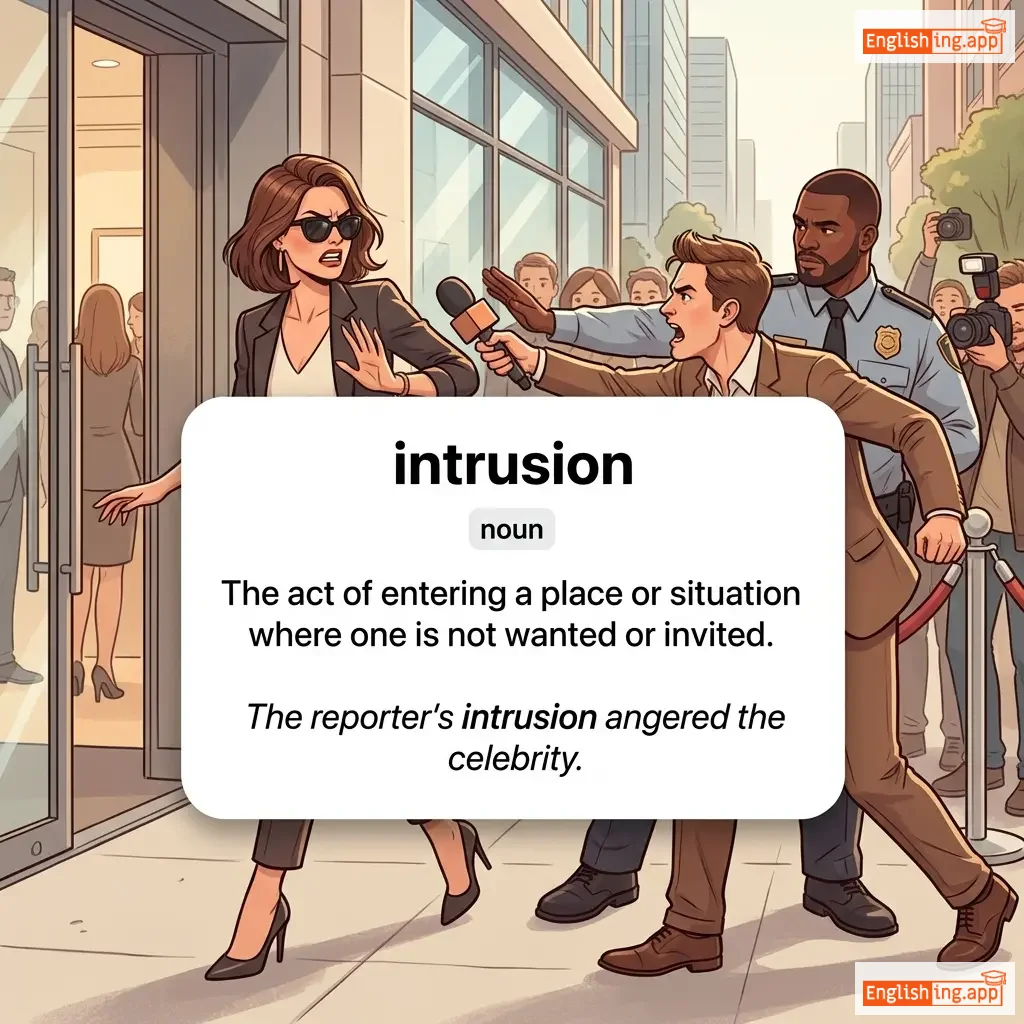
intrusion definition card — visual illustration of the meaning
noun C1
/ɪnˈtruː.ʒən/
不受欢迎的入侵 (bù shòu huānyíng de rùqīn)

The act of entering a place or situation where one is not wanted or invited.

"The reporter's intrusion angered the celebrity."

"记者的入侵激怒了名人。" (Jìzhě de rùqīn jī nùle míngrén.)
intuition definition card — visual illustration of the meaning
noun C1
/ˌɪn.tjuˈɪʃ.ən/
直觉 (zhijue)

The ability to understand or know something immediately, without conscious reasoning.

"Her intuition told her that something was wrong."

"她的直觉告诉她有些事情不对劲。" (Ta de zhijue gaosu ta youxie shiqing bu duijin.)
adjective C1
/ɪnˈtjuː.ɪ.tɪv/
直觉的 (zhíjué de)

Based on instinctive understanding rather than reasoning.

"The software has an intuitive design that makes it easy to use."

"该软件具有直观的设计,使其易于使用。" (gāi ruǎnjiàn jùyǒu zhíguān de shèjì, shǐ qí yìyú shǐyòng.)
invalid definition card — visual illustration of the meaning
adjective, noun C1
/ˈɪnvəlɪd/ (adjective), /ɪnˈvælɪd/ (noun)
无效的 (wuxiao de)

Not valid; having no force or effect. Also refers to a person too weak or ill to care for themselves.

"The court declared the contract invalid."

"法院宣布合同无效。" (Fayuan xuanbu hetong wuxiao.)
verb C1
/ɪnˈvælɪdeɪt/
使无效 (shǐ wúxiào)

To make something not valid or legally acceptable.

"The new evidence may invalidate the previous ruling."

"新证据可能使之前的裁决无效。" (Xīn zhèngjù kěnéng shǐ zhīqián de cáijué wúxiào.)
adjective C1
/ɪnˈvæljʊəbl/
无价 (wújià)

Extremely useful or indispensable.

"Her advice proved invaluable to my success."

"她的建议对我的成功起到了无可估量的作用。" (Tā de jiànyì duì wǒ de chénggōng qǐdàole wú kě gūliàng de zuòyòng.)
Invariable definition card — visual illustration of the meaning
adjective C1
/ɪnˈvɛəriəbl/
不变的 (bù biàn de)

Not changing; constant and unchanging.

"His invariable kindness won him many friends."

"他那不变的善良为他赢得了许多朋友。" (Tā nà bù biàn de shànliáng wèi tā yíngdéle xǔduō péngyǒu.)
adjective C1
/ɪnˈveɪsɪv/
侵入性的 (qīnrùxìng de)

Tending to spread harmfully, intruding aggressively, or encroaching beyond proper boundaries.

"The doctor explained that the procedure was minimally invasive."

"医生解释说,该程序是最小的侵入性。" (Yīshēng jiěshì shuō, gāi chéngxù shì zuìxiǎo de qīnrùxìng de.)
adjective C1
/ɪnˈvɛntɪv/
富有创意的 (fù yǒu chuàng yì de)

Having the ability to create or design new things or to think originally.

"The inventor was known for his inventive solutions to everyday problems."

"发明家以其富有创意的解决方案而闻名。" (Fāmíng jiā yǐ qí fù yǒu chuàng yì de jiě jué fāng àn ér wén míng.)
adjective C1
/ˌɪnˈvɜːrs/
反向 (fanxiang)

Opposite in position, direction, order, or effect.

"There is an inverse relationship between price and demand."

"价格和需求之间存在反向关系。" (Jiage he xuqiu zhijian cunzai fanxiang guanxi.)
adverb C1
/ɪnˈvɜːrs.li/
反向地; 相反地 (fǎnxiàng de; xiāngfǎn de)

in a way that is opposite or contrary; in reverse order or manner

"The price of goods is inversely related to their availability in the market."

"商品的价格与其在市场上的可得性成反比。" (shāngpǐn de jiàgé yǔ qí zài shìchǎng shàng de kědéxìng chéng fǎnbǐ.)
noun C1
/ɪnˈvɜːrʒən/
倒置 (daozhi)

A reversal of the normal order, position, or relationship.

"In poetry, inversion is often used to create emphasis."

"在诗歌中,倒置常用来创造强调。" (Zài shīgē zhōng, dào zhì cháng yòng lái chuàng zào qiángdiào.)
verb C1
/ɪnˈvɜːrt/
翻转 (fanzhuan)

To turn something upside down or in the opposite position, order, or direction.

"He inverted the glass to let the water drain out."

"他翻转了玻璃杯,让水流出来。" (Ta fanzhuan le bolibei, rang shui liu chulai.)