|
••••••
|
/huːm/
pronoun
(jum)
••••••
|
-
••••••
|
a quien
a quien
••••••
|
-
••••••
|
-
••••••
|
-
••••••
|
-
••••••
|
used to refer to the person or people that something is done to
|
The man whom I met yesterday is my friend.
••••••
|
El hombre a quien conocí ayer es mi amigo.
El hombre a quien conocí ayer es mi amigo.
••••••
|
-
••••••
|
-
••••••
|
-
••••••
|
••••••
|
••••••
|
whom I met, whom I saw, to whom it may concern
|
Whom sounds like 'A quien' - 'A quien' as in the person you met.
••••••
|
|
••••••
|
/ˈwɪntər/
noun
(wínter)
••••••
|
-
••••••
|
invierno
invierno
••••••
|
-
••••••
|
-
••••••
|
-
••••••
|
-
••••••
|
the coldest season of the year, typically from December to February in the Northern Hemisphere
|
Winter in the north can be very harsh with heavy snowfall.
••••••
|
El invierno en el norte puede ser muy severo con grandes nevadas.
El invierno en el norte puede ser muy severo con grandes nevadas.
••••••
|
-
••••••
|
-
••••••
|
-
••••••
|
cold season, frosty period, chill, snowfall
|
••••••
|
harsh winter, cold winter, winter season, winter break
|
Invierno trae frío, nieve y frío - Winter is cold, snow, and chill.
••••••
|
|
••••••
|
/ˈwɪnər/
noun
(wɪnɚ)
••••••
|
-
••••••
|
ganador
ganador
••••••
|
-
••••••
|
-
••••••
|
-
••••••
|
-
••••••
|
a person who wins a competition or contest
|
She was the winner of the race.
••••••
|
Ella fue la ganadora de la carrera.
Ella fue la ganadora de la carrera.
••••••
|
-
••••••
|
-
••••••
|
-
••••••
|
champion, victor, first-place
|
••••••
|
race winner, competition winner, winner takes all
|
Winners wear trophies—imagine yourself holding a shiny trophy as a winner!
••••••
|
|
••••••
|
/wɪŋ/
noun
(wɪŋ)
••••••
|
••••••
|
ala
ala
••••••
|
-
••••••
|
-
••••••
|
-
••••••
|
-
••••••
|
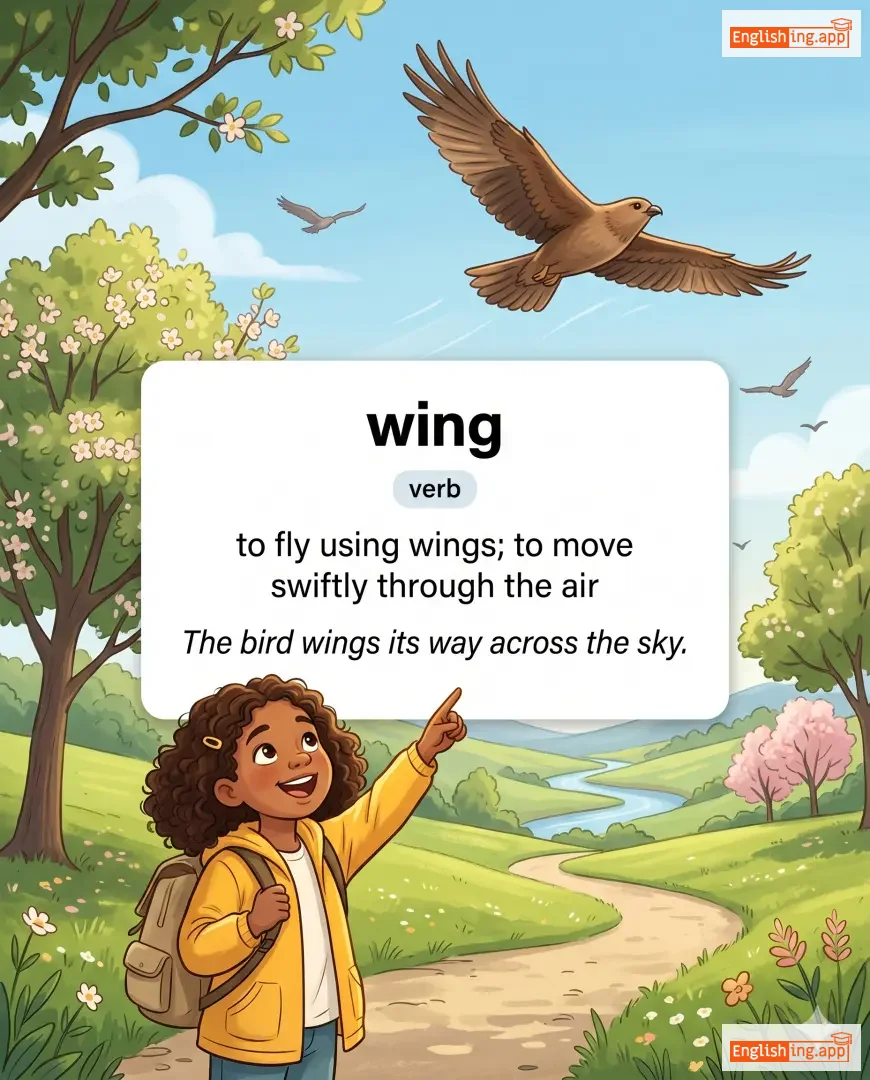
a part of a bird or aircraft that is used for flying
|
The bird flapped its wings and flew away.
••••••
|
El pájaro batió sus alas y voló lejos.
El pájaro batió sus alas y voló lejos.
••••••
|
-
••••••
|
-
••••••
|
-
••••••
|
••••••
|
••••••
|
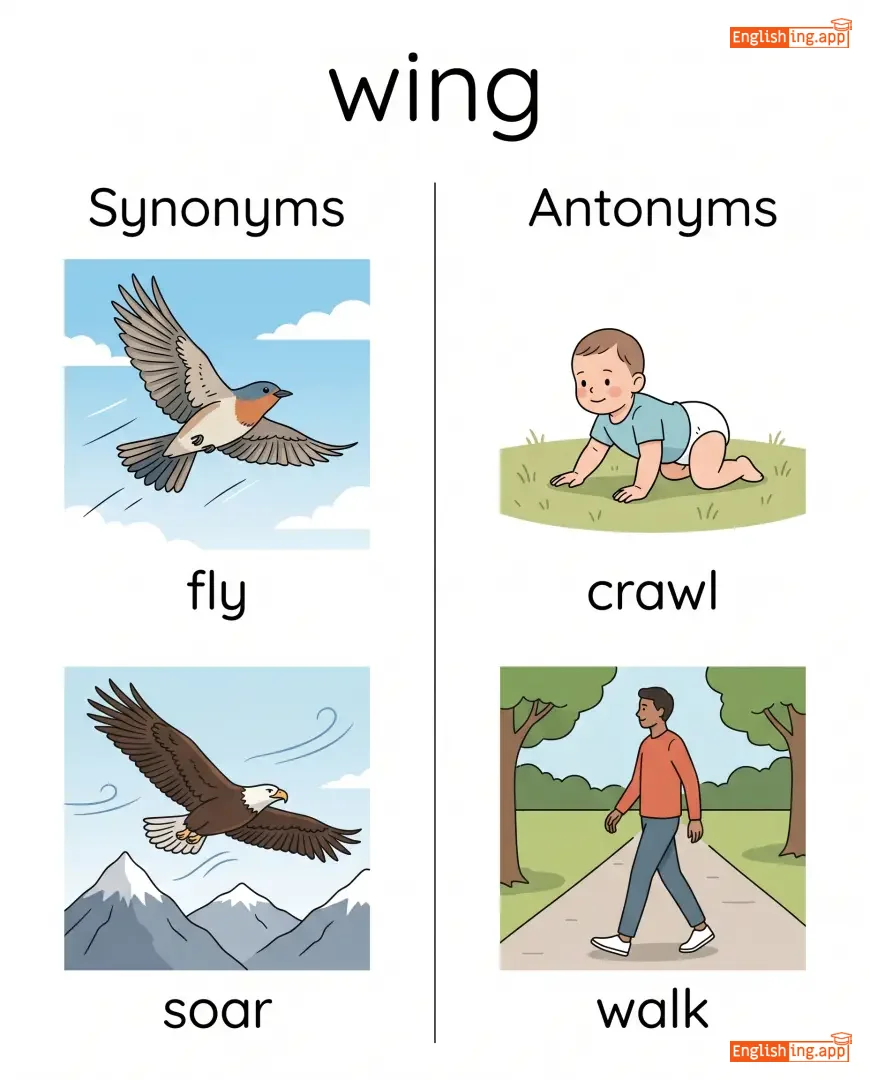
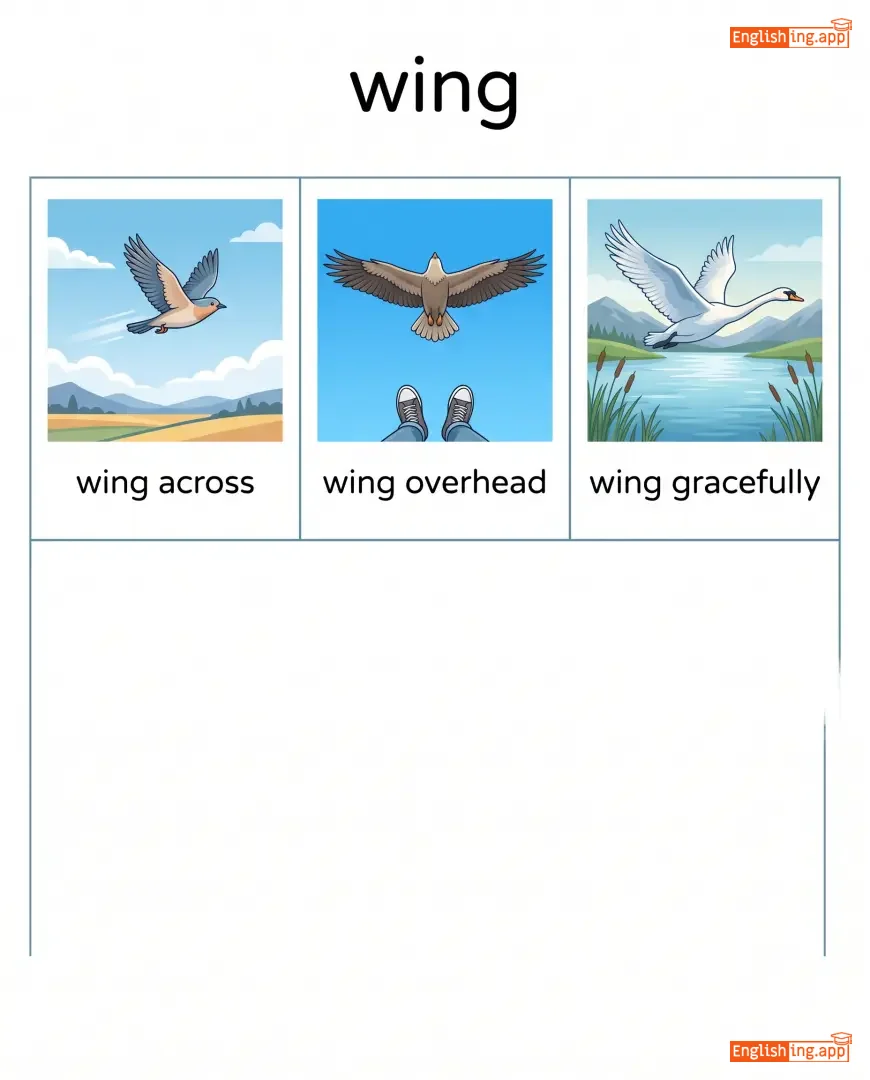
bird's wing, fly with wings, wing span
|
Wings spread out, just like a bird ready to take off!
••••••
|
|
••••••
|
/waɪn/
noun
(wajn)
••••••
|
-
••••••
|
vino
vino
••••••
|
-
••••••
|
-
••••••
|
-
••••••
|
-
••••••
|
an alcoholic drink made from fermented grapes or other fruits
|
They served a glass of red wine at the dinner.
Ellos sirvieron una copa de vino tinto en la cena.
••••••
|
Ellos sirvieron una copa de vino tinto en la cena.
Ellos sirvieron una copa de vino tinto en la cena.
••••••
|
-
••••••
|
-
••••••
|
-
••••••
|
vino, beverage, drink, alcohol
|
••••••
|
red wine, white wine, glass of wine, bottle of wine
|
Wine pairs with dinner—imagine a glass of red wine with a fancy meal!
••••••
|
|
••••••
|
/ˈwɪndəʊ/
noun
(windo)
••••••
|
-
••••••
|
ventana
ventana
••••••
|
-
••••••
|
-
••••••
|
-
••••••
|
-
••••••
|
an opening in a wall or structure that allows light or air to pass through, usually covered with glass or other material
|
I opened the window to let the fresh air in.
Abrí la ventana para dejar entrar el aire fresco.
••••••
|
Abrí la ventana para dejar entrar el aire fresco.
Abrid la ventana para dejar entrar el aire fresco.
••••••
|
-
••••••
|
-
••••••
|
-
••••••
|
pane, glass, aperture, opening
|
••••••
|
open window, close window, window pane, large window
|
Piensa en 'ventana' como la abertura a una brisa fresca, ¡es como abrir un respiro a la vida!
••••••
|
|
••••••
|
/wɪnd/
noun
(wínd)
••••••
|
-
••••••
|
viento
viento
••••••
|
-
••••••
|
-
••••••
|
-
••••••
|
-
••••••
|
moving air, especially in the form of a current of air blowing from a particular direction
|
The wind is blowing strong today.
••••••
|
El viento está soplando fuerte hoy.
El viento está soplando fuerte hoy.
••••••
|
-
••••••
|
-
••••••
|
-
••••••
|
breeze, gust, draft, airflow
|
••••••
|
strong wind, cold wind, gentle wind, wind blows
|
Viento is the Spanish word for wind, think of the 'wind' as it moves across the Spanish landscapes.
••••••
|
|
••••••
|
/ˈwɪlɪŋ/
adjective
(wɪlɪŋ)
••••••
|
-
••••••
|
dispuesto
dispuesto
••••••
|
-
••••••
|
-
••••••
|
-
••••••
|
-
••••••
|
ready, inclined, or eager to do something
|
She was willing to help with the project.
••••••
|
Ella estaba dispuesta a ayudar con el proyecto.
Ella estaba dispuesta a ayudar con el proyecto.
••••••
|
-
••••••
|
-
••••••
|
-
••••••
|
eager, enthusiastic, ready, prepared
|
••••••
|
willing participant, willing to help, willing attitude
|
Willing means ready and able 👍
••••••
|
|
••••••
|
/wɪl/
noun, verb
(wɪl)
••••••
|
-
••••••
|
voluntad
voluntad
••••••
|
-
••••••
|
-
••••••
|
wɪlz
••••••
|
wɪlɪŋ
••••••
|
expressing future tense or intention; a legal document
|
She will attend the meeting tomorrow.
Ella asistirá a la reunión mañana.
••••••
|
Ella asistirá a la reunión mañana.
Ella asistira a la reunion manana.
••••••
|
Voluntad de poder
••••••
|
the drive to assert one's own will over others
|
Voluntad de poder
Voluntad de poder
••••••
|
intend, shall, want, determination
|
••••••
|
last will, will and testament, strong will
|
Voluntad de poder, voluntad de futuro ✍️
••••••
|
|
••••••
|
/waɪf/
noun
(waif)
••••••
|
-
••••••
|
esposa
esposa
••••••
|
-
••••••
|
-
••••••
|
-
••••••
|
-
••••••
|
a woman who is married to someone
|
She is the wife of the famous author.
••••••
|
Ella es la esposa del famoso autor.
Ella es la esposa del famoso autor.
••••••
|
-
••••••
|
-
••••••
|
-
••••••
|
spouse, partner, better half
|
••••••
|
wife and husband, loving wife, devoted wife
|
Wife is ‘esposa’ in Spanish! Easy to recall.
••••••
|
|
••••••
|
/ˈwaɪdˌsprɛd/
adjective
(wáidspréd)
••••••
|
••••••
|
generalizado
generalizado
••••••
|
-
••••••
|
-
••••••
|
-
••••••
|
-
••••••
|
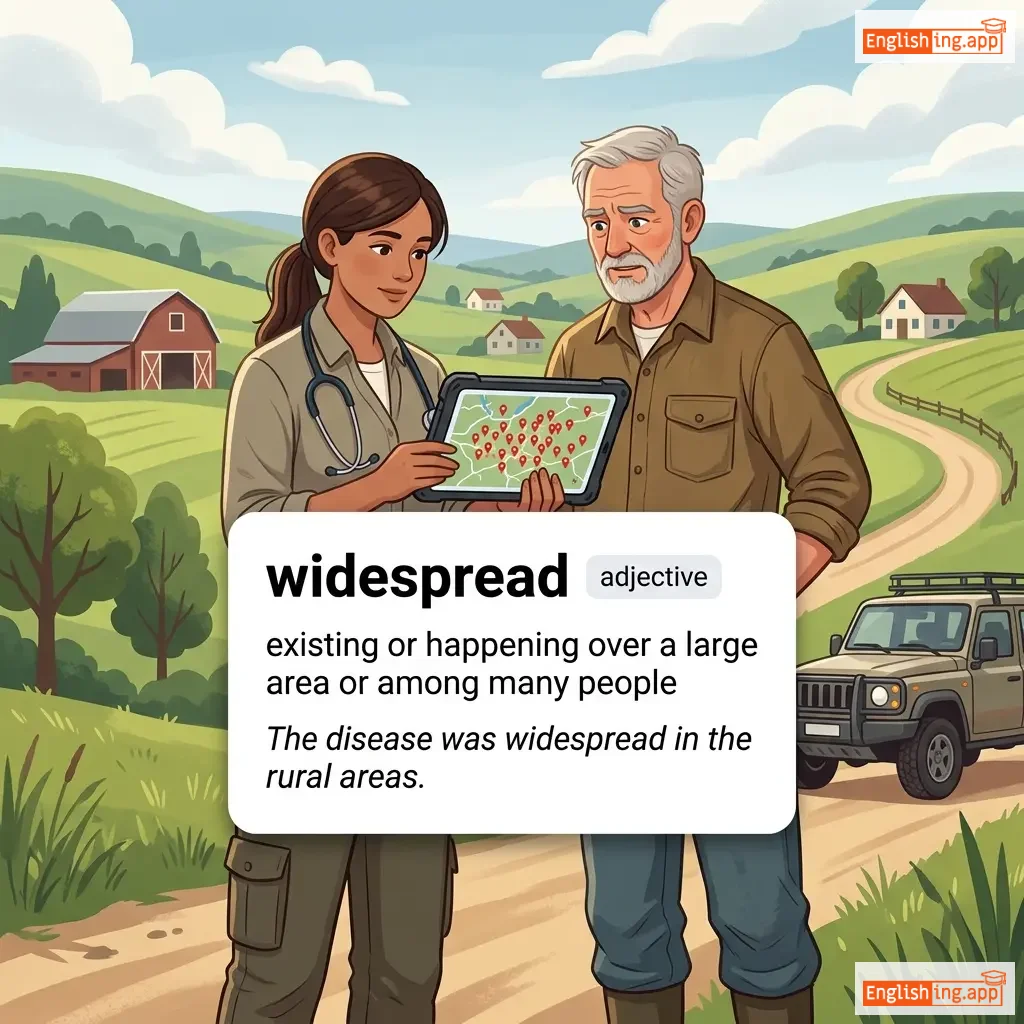
existing or happening over a large area or among many people
|
The disease was widespread in the rural areas.
••••••
|
La enfermedad estaba generalizada en las zonas rurales.
La enfermedad estaba generalizada en las zonas rurales.
••••••
|
-
••••••
|
-
••••••
|
-
••••••
|
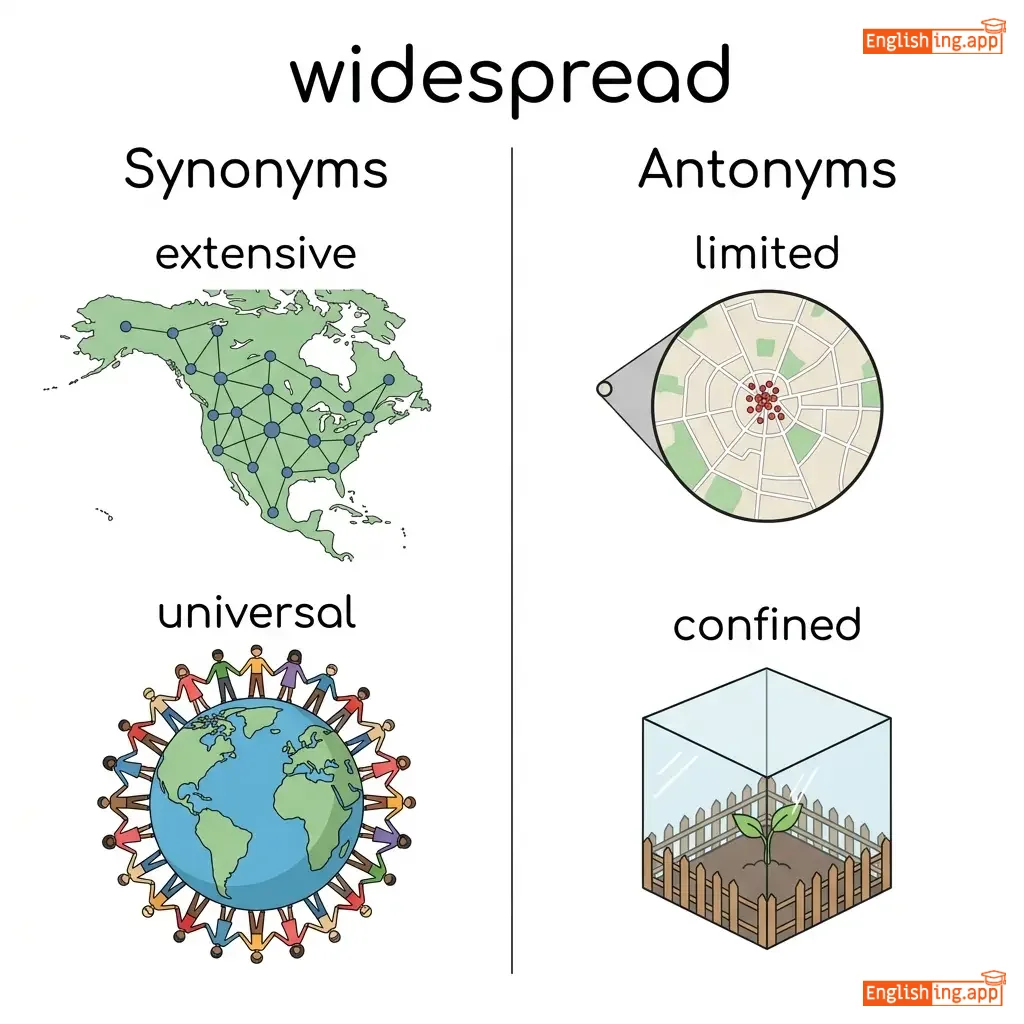
extensive, universal, far-reaching, pervasive
|
••••••
|
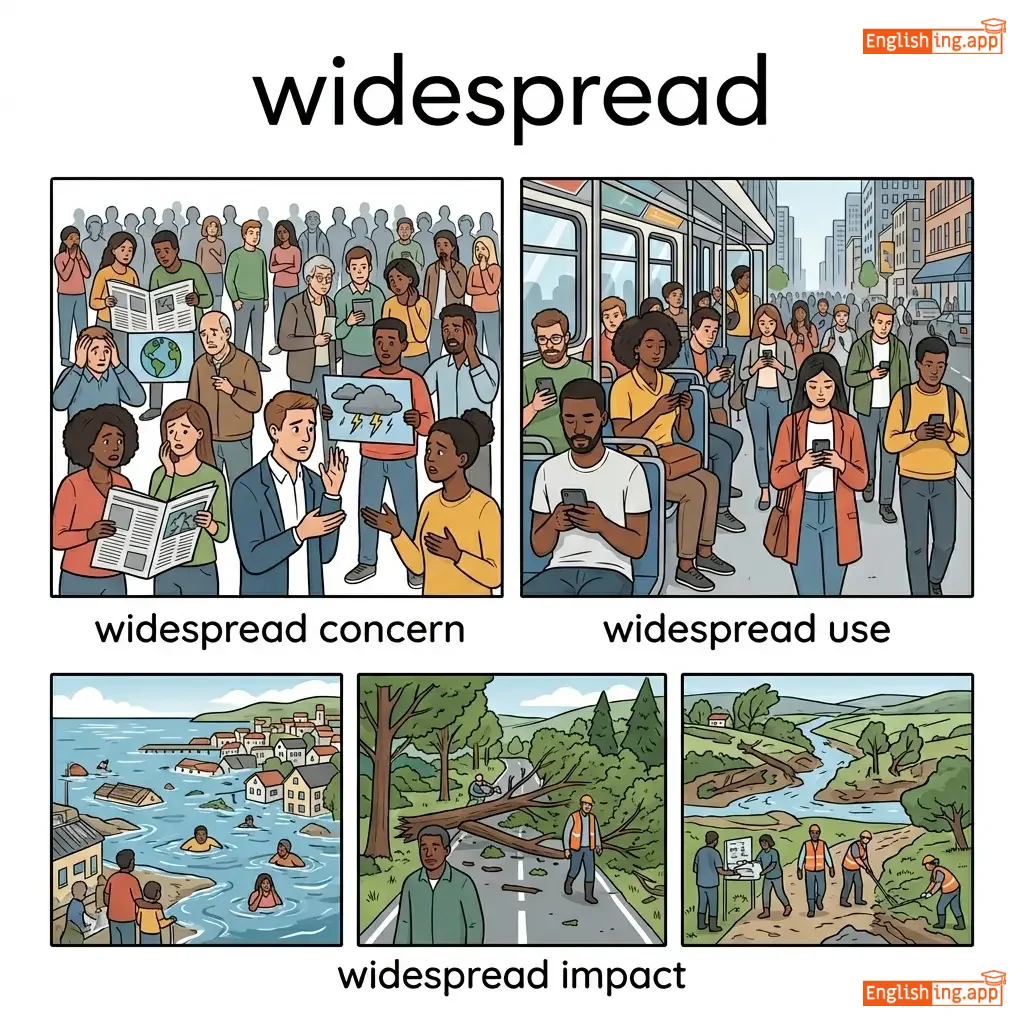
widespread concern, widespread use, widespread impact
|
Widespread – como una ola que se extiende por todas partes 🌍
••••••
|
|
••••••
|
/ˈwaɪdli/
adverb
(wáidli)
••••••
|
-
••••••
|
ampliamente
ampliamente
••••••
|
-
••••••
|
-
••••••
|
-
••••••
|
-
••••••
|
to a great extent or degree
|
The news of his promotion spread widely across the company.
••••••
|
La noticia de su ascenso se extendió ampliamente por la empresa.
La noticia de su ascenso se extendió ampliamente por la empresa.
••••••
|
-
••••••
|
-
••••••
|
-
••••••
|
extensively, broadly, widely, far
|
••••••
|
widely known, widely accepted, widely spread
|
Wide world 🌍 means a wide spread across everywhere!
••••••
|
|
••••••
|
/waɪd/
adjective
(wáid)
••••••
|
-
••••••
|
ancho
ancho
••••••
|
-
••••••
|
-
••••••
|
-
••••••
|
-
••••••
|
having a great extent from side to side; broad
|
The river is wide enough to fit a boat.
The river is wáid enaf tú fit a bót.
••••••
|
El río es lo suficientemente ancho como para que quepa un bote.
El río es lo suficientemente ancho como para que quepa un bote.
••••••
|
-
••••••
|
-
••••••
|
-
••••••
|
broad, spacious, expansive, vast
|
••••••
|
wide river, wide road, wide range
|
Wide as an 'Ancho' field – vast and open!
••••••
|
|
••••••
|
/waɪ/
adverb
(guay)
••••••
|
-
••••••
|
por qué
por que
••••••
|
-
••••••
|
-
••••••
|
-
••••••
|
-
••••••
|
used to ask or talk about the reason for something
|
Why did you leave so early?
¿Por qué te fuiste tan temprano?
••••••
|
¿Por qué te fuiste tan temprano?
¿Por qué te fuiste tan temprano?
••••••
|
-
••••••
|
-
••••••
|
-
••••••
|
how come, for what reason
|
••••••
|
••••••
|
Why is for asking a reason – ‘Por qué’ in Spanish sounds just like it.
••••••
|
|
••••••
|
/huːz/
pronoun
(juz)
••••••
|
-
••••••
|
cuyo
cuyo
••••••
|
-
••••••
|
-
••••••
|
-
••••••
|
-
••••••
|
used to ask or talk about the person or thing that owns something
|
The girl whose phone was stolen is my cousin.
••••••
|
La chica cuyo teléfono fue robado es mi prima.
La chica cuyo teléfono fue robado es mi prima.
••••••
|
-
••••••
|
-
••••••
|
-
••••••
|
who's, that person’s, of whom
|
••••••
|
whose phone, whose book, whose idea
|
Whose phone is this? – 'Whose' connects to 'Cuyo teléfono'.
••••••
|
|
••••••
|
/ˈwɛstərn/
adjective
(wéstern)
••••••
|
-
••••••
|
occidental
occidental
••••••
|
-
••••••
|
-
••••••
|
-
••••••
|
-
••••••
|
relating to or characteristic of the West, especially Europe and the Americas
|
She loves western music and culture.
••••••
|
A ella le encanta la música y la cultura occidental.
A ella le encanta la música y la cultura occidental.
••••••
|
-
••••••
|
-
••••••
|
-
••••••
|
••••••
|
••••••
|
western culture, western philosophy, western world
|
La cultura occidental proviene del Oeste - Western culture comes from the West.
••••••
|
|
••••••
|
/hoʊl/
adjective
(jol)
••••••
|
-
••••••
|
entero
entero
••••••
|
-
••••••
|
-
••••••
|
-
••••••
|
-
••••••
|
all of something; complete or entire
|
He ate the whole cake by himself.
ji et dɪ jol keik bai himself
••••••
|
Él se comió el pastel entero él solo.
El se comió el pastel entero él solo.
••••••
|
-
••••••
|
-
••••••
|
-
••••••
|
entire, complete, full, total
|
partial, incomplete, fragmented
|
whole cake, whole process, whole family, whole truth
|
Whole pastel entero (Entro Pastel Entero) - Whole cake is fully eaten.
••••••
|
|
••••••
|
/huː/
pronoun
(quién)
••••••
|
-
••••••
|
quién
kien
••••••
|
-
••••••
|
-
••••••
|
-
••••••
|
-
••••••
|
used to ask about a person or people
|
Who is coming to the party tonight?
••••••
|
¿Quién viene a la fiesta esta noche?
¿Quién viene a la fiesta esta noche?
••••••
|
-
••••••
|
-
••••••
|
-
••••••
|
••••••
|
••••••
|
who is, who are, who knows
|
Just ask 'quién' in Spanish to know who!
••••••
|
|
••••••
|
/waɪt/
adjective
(wáit)
••••••
|
-
••••••
|
blanco
blanco
••••••
|
-
••••••
|
-
••••••
|
-
••••••
|
-
••••••
|
having the color of milk or fresh snow, the opposite of black
|
She wore a beautiful white dress to the party.
Ella llevaba un hermoso vestido blanco en la fiesta.
••••••
|
Ella llevaba un hermoso vestido blanco en la fiesta.
Ella llevaba un hermoso vestido blanco en la fiesta.
••••••
|
-
••••••
|
-
••••••
|
-
••••••
|
••••••
|
••••••
|
white shirt, white snow, white light
|
A white shirt shines bright just like 'blanco' in Spanish!
••••••
|
|
••••••
|
/ˈwɪspər/
verb
(wɪspər)
••••••
|
••••••
|
susurrar
susurrar
••••••
|
wɪspərd
••••••
|
wɪspərd
••••••
|
wɪspərs
••••••
|
wɪspərɪŋ
••••••
|
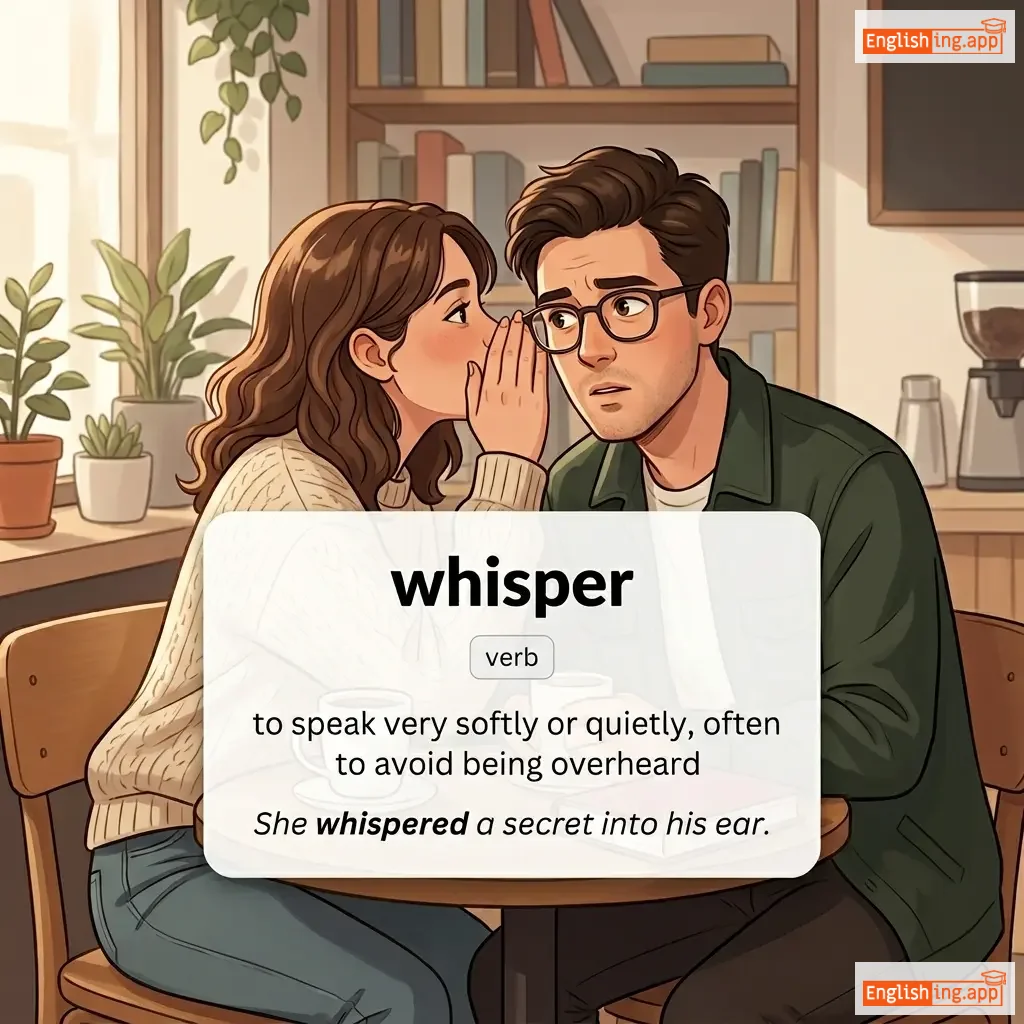
to speak very softly or quietly, often to avoid being overheard
|
She whispered a secret into his ear.
Ella susurró un secreto en su oído.
••••••
|
Ella susurró un secreto en su oído.
Ella susurró un secreto en su oído.
••••••
|
-
••••••
|
-
••••••
|
-
••••••
|
••••••
|
••••••
|
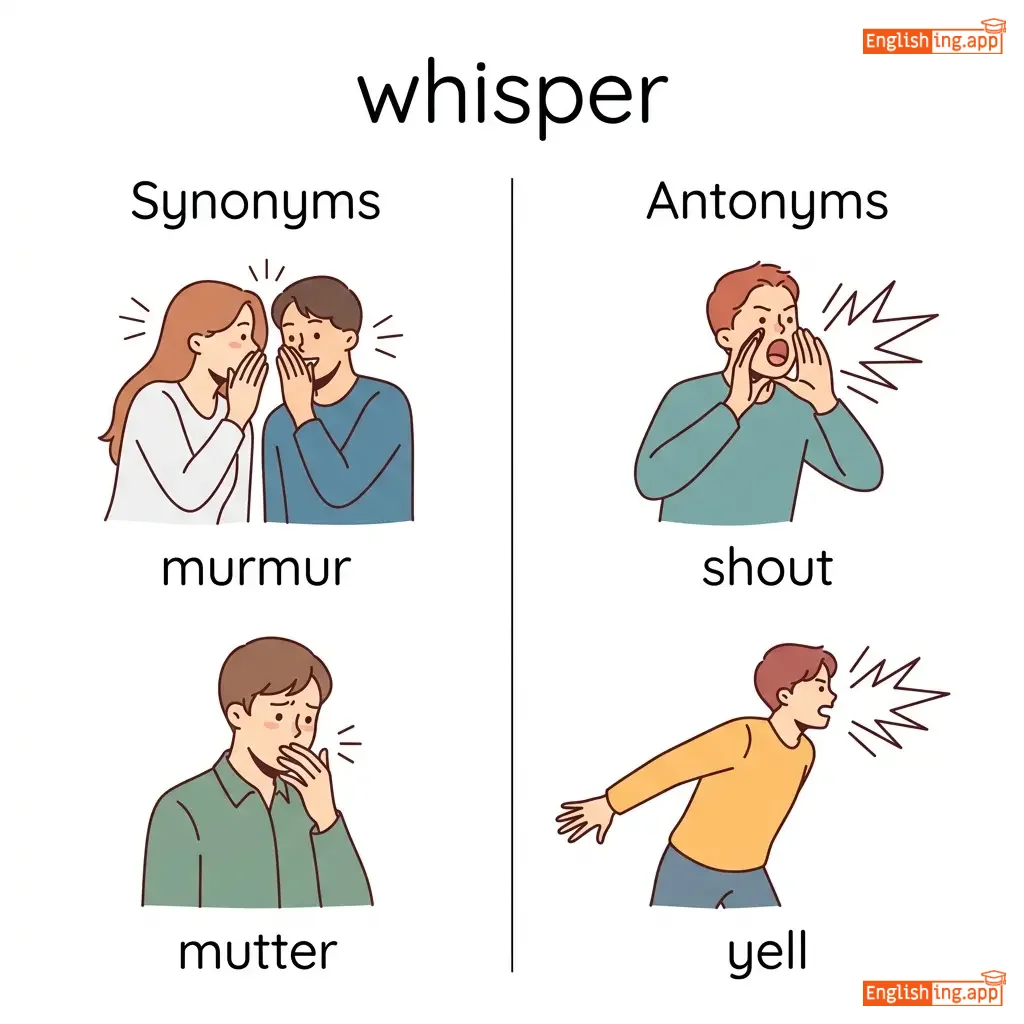
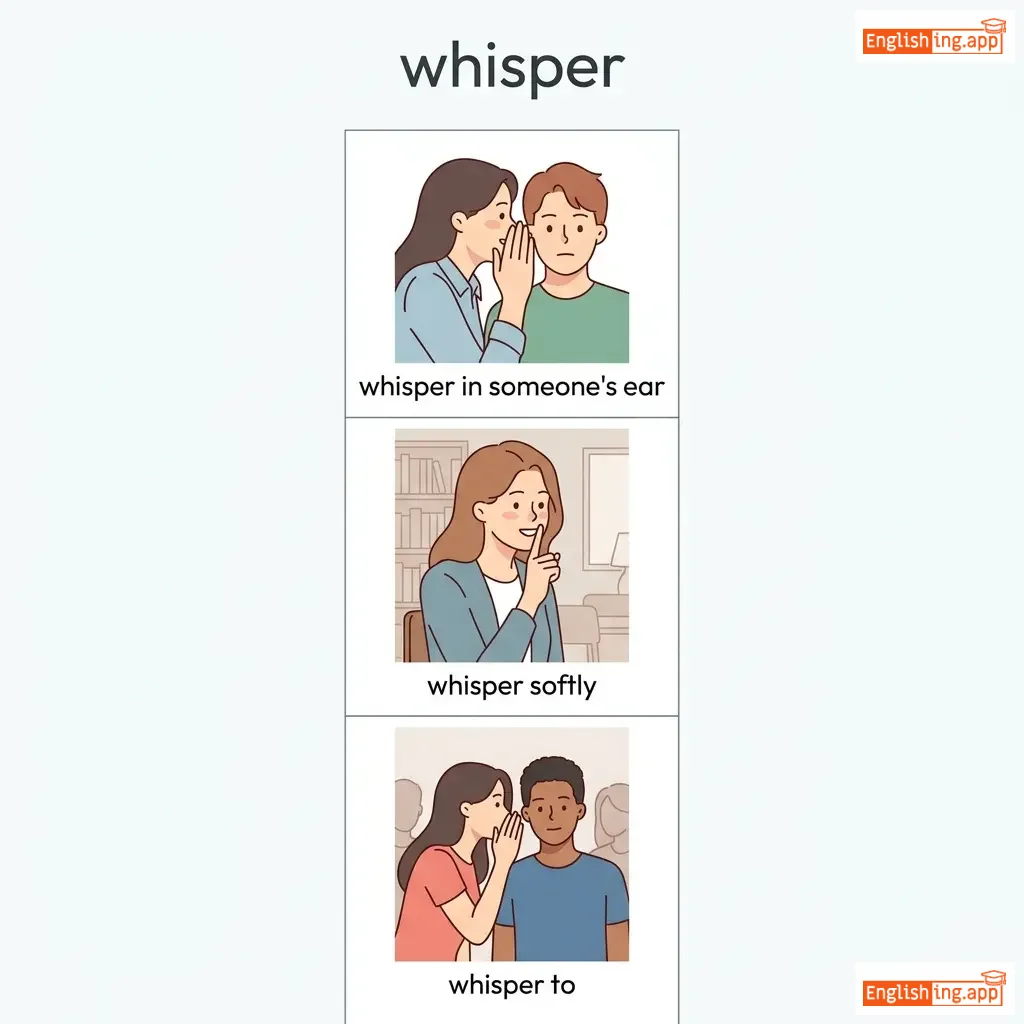
whisper in someone's ear, whisper softly, whisper to
|
Susurrar en voz baja, para que el secreto no se escape.
••••••
|
|
••••••
|
/waɪl/
conjunction
(wail)
••••••
|
-
••••••
|
mientras
mientras
••••••
|
-
••••••
|
-
••••••
|
-
••••••
|
-
••••••
|
during the time that something is happening
|
She was reading while waiting for the bus.
Ella estaba leyendo mientras esperaba el autobús.
••••••
|
Ella estaba leyendo mientras esperaba el autobús.
Ella estaba leyendo mientras esperaba el autobús.
••••••
|
-
••••••
|
-
••••••
|
-
••••••
|
••••••
|
••••••
|
while waiting, while studying, while traveling
|
Mientras esperas, piensa en 'mientras' en español!
••••••
|
|
••••••
|
/wɪtʃ/
pronoun
(wɪtʃ)
••••••
|
-
••••••
|
cuál
cual
••••••
|
-
••••••
|
-
••••••
|
-
••••••
|
-
••••••
|
used to ask about one or more items from a defined set
|
Which one do you prefer, the red or the blue?
••••••
|
¿Cuál prefieres, el rojo o el azul?
¿Cuál prefieres, el rojo o el azul?
••••••
|
-
••••••
|
-
••••••
|
-
••••••
|
••••••
|
••••••
|
which one, which way, which time
|
Which in Spanish is 'cuál', it helps you choose!
••••••
|
|
••••••
|
/ˈwɛðər/
conjunction
(wéther)
••••••
|
-
••••••
|
si
si
••••••
|
-
••••••
|
-
••••••
|
-
••••••
|
-
••••••
|
used to express a doubt or choice between alternatives
|
I don’t know whether I should go.
No sé si debo ir.
••••••
|
No sé si debo ir.
No sé si debo ir.
••••••
|
-
••••••
|
-
••••••
|
-
••••••
|
••••••
|
••••••
|
whether or not, whether to go, whether he will
|
si (si) no sabes, pregúntate a ti mismo
••••••
|
|
••••••
|
/wɛr/
adverb
(wɛr)
••••••
|
-
••••••
|
dónde
donde
••••••
|
-
••••••
|
-
••••••
|
-
••••••
|
-
••••••
|
in or at what place or position
|
••••••
|
¿Dónde vives?
¿Dónde vives?
••••••
|
-
••••••
|
-
••••••
|
-
••••••
|
••••••
|
••••••
|
where is, where are, where did, where do
|
Dónde (donde) ¿dónde está el mapa?
••••••
|
|
••••••
|
/wɛnˈɛvər/
adverb
(jwenéver)
••••••
|
-
••••••
|
cuando sea
cuando sea
••••••
|
-
••••••
|
-
••••••
|
-
••••••
|
-
••••••
|
at any time, or whenever it happens
|
You can call me whenever you want.
••••••
|
Puedes llamarme cuando sea.
Puedes llamarme cuando sea.
••••••
|
-
••••••
|
-
••••••
|
-
••••••
|
anytime, whenever, at all times
|
••••••
|
whenever you like, whenever possible, whenever needed
|
cuando sea (cuando sea) me puedes llamar
••••••
|
|
••••••
|
/wɛn/
adverb
(jwen)
••••••
|
-
••••••
|
cuándo
cuando
••••••
|
-
••••••
|
-
••••••
|
-
••••••
|
-
••••••
|
••••••
|
Do you know when the train leaves?
••••••
|
¿Sabes cuándo sale el tren?
¿Sabes cuando sale el tren?
••••••
|
-
••••••
|
-
••••••
|
-
••••••
|
••••••
|
••••••
|
when will, when did, when does, when do
|
De 'cuando' a 'cuándo' (De 'cuando' a 'cuándo')
••••••
|
|
••••••
|
/wiːl/
noun
(wíil)
••••••
|
-
••••••
|
rueda
rueda
••••••
|
-
••••••
|
-
••••••
|
-
••••••
|
-
••••••
|
a circular object that revolves on an axle and is used to move or carry things
|
The wheel of the car broke down on the way.
••••••
|
La rueda del coche se rompió en el camino.
La rueda del coche se rompió en el camino.
••••••
|
-
••••••
|
-
••••••
|
-
••••••
|
••••••
|
••••••
|
steering wheel, bicycle wheel, car wheel, turn the wheel
|
La rueda gira y mueve el coche (La rueda gira y mueve el coche)
••••••
|
|
••••••
|
/wɒtˈɛvər/
pronoun
(watever)
••••••
|
-
••••••
|
lo que sea
lo ke sea
••••••
|
-
••••••
|
-
••••••
|
-
••••••
|
-
••••••
|
used to refer to anything or everything that is of the type mentioned
|
You can choose whatever you like.
••••••
|
Puedes elegir lo que quieras.
Puedes elegir lo que quieras.
••••••
|
-
••••••
|
-
••••••
|
-
••••••
|
••••••
|
-
••••••
|
whatever you want, whatever happens
|
lo que sea - Whatever you want, you can have.
••••••
|
|
••••••
|
/wɒt/
pronoun
(wot)
••••••
|
-
••••••
|
qué
que
••••••
|
-
••••••
|
-
••••••
|
-
••••••
|
-
••••••
|
used to ask for information about something
|
••••••
|
¿Cuál es tu nombre?
¿Cuál es tu nombre?
••••••
|
-
••••••
|
-
••••••
|
-
••••••
|
••••••
|
-
••••••
|
what time, what happened, what are you doing
|
qué (que) se usa para hacer preguntas - 'What' se usa para preguntar.
••••••
|
|
••••••
|
/wɛt/
adjective
(ウェット)
••••••
|
-
••••••
|
mojado
mojado
••••••
|
-
••••••
|
-
••••••
|
-
••••••
|
-
••••••
|
covered with, or saturated with liquid (usually water)
|
The ground is wet after the rain.
••••••
|
El suelo está mojado después de la lluvia.
El suelo está mojado después de la lluvia.
••••••
|
-
••••••
|
-
••••••
|
-
••••••
|
••••••
|
••••••
|
wet ground, wet clothes, wet weather
|
Después de la lluvia, el suelo queda mojado.
••••••
|