|
••••••
|
/oʊld/
adjective
(ōld)
••••••
|
-
••••••
|
viejo
viejo
••••••
|
-
••••••
|
-
••••••
|
-
••••••
|
-
••••••
|
having lived for a long time; not new or young
|
He still drives his old car.
••••••
|
Él todavía conduce su coche viejo.
El todavia conduce su coche viejo.
••••••
|
••••••
|
It is difficult to stop doing things you have been doing for a long time
|
las viejas costumbres son difíciles de cambiar
las viejas costumbres son difíciles de cambiar
••••••
|
aged, elderly, ancient, worn, mature
|
••••••
|
old man, old friend, old building, old story
|
VIEJO significa antiguo, viejo — como los viejos abuelos
••••••
|
|
••••••
|
/ˌoʊvərˈkʌm/
verb
(óverkam)
••••••
|
••••••
|
superar
superar
••••••
|
óverkeim
••••••
|
óverkam
••••••
|
óverkams
••••••
|
óverkaming
••••••
|
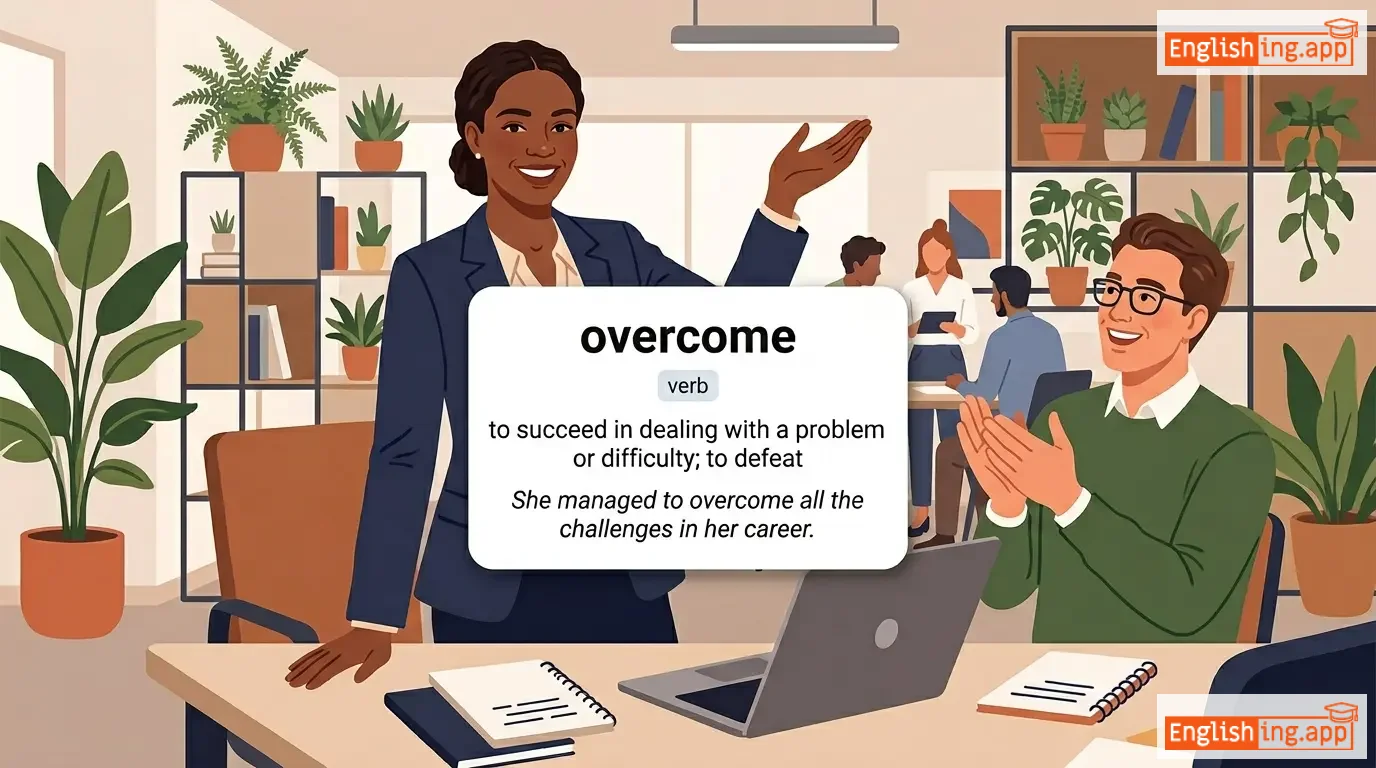
to succeed in dealing with a problem or difficulty; to defeat
|
She managed to overcome all the challenges in her career.
Ella logró superar todos los desafíos en su carrera.
••••••
|
Ella logró superar todos los desafíos en su carrera.
Ella logró superar todos los desafíos en su carrera.
••••••
|
superado por la emoción
••••••
|
deeply affected by strong feelings
|
superado por la emoción
superado por la emocion
••••••
|
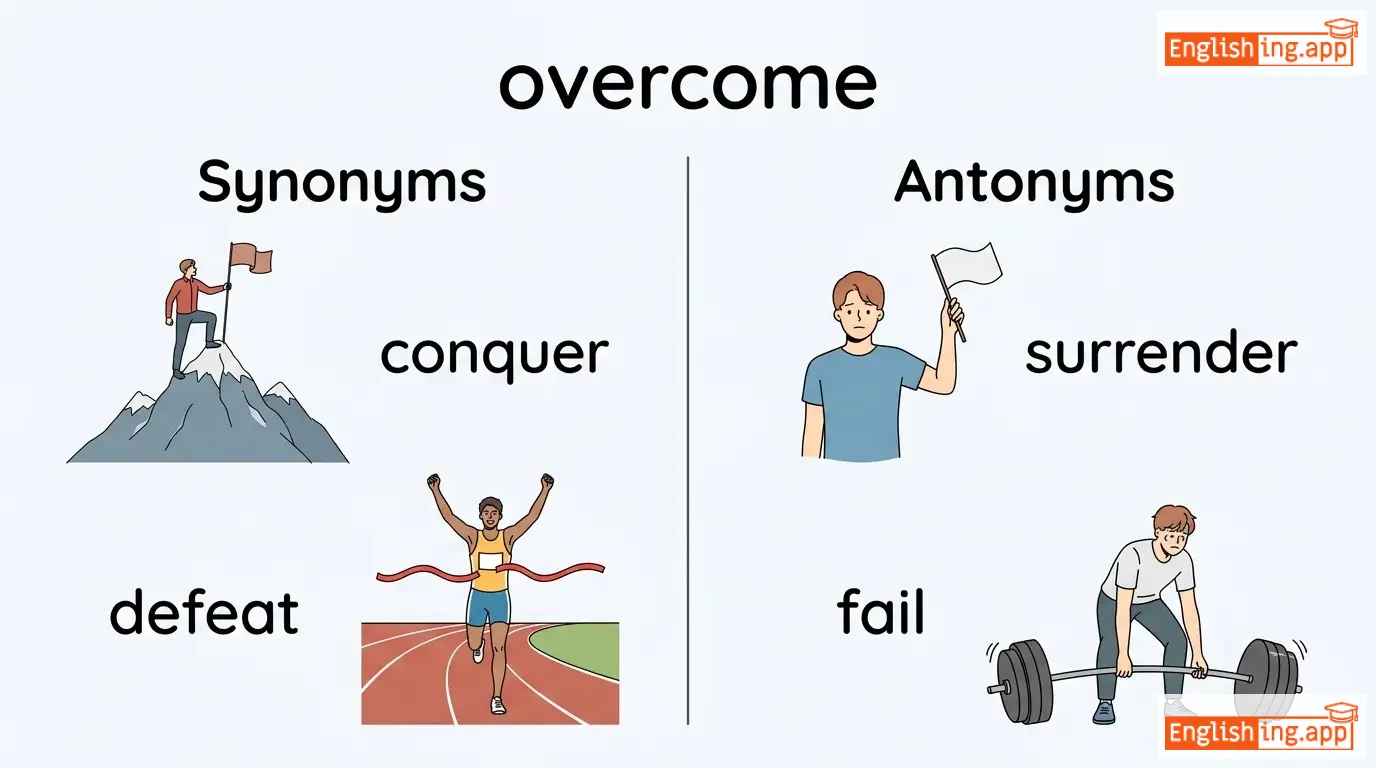
conquer, defeat, prevail, master
|
••••••
|
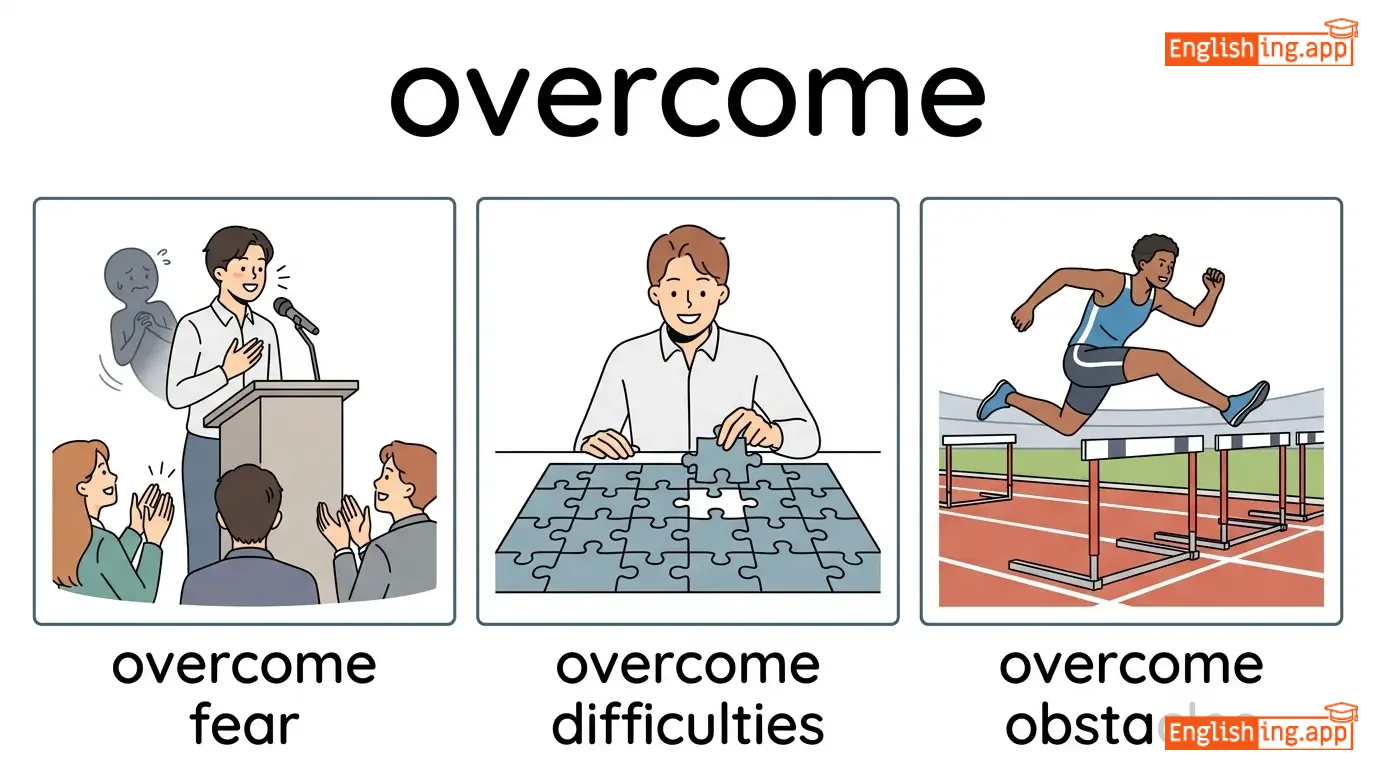
overcome fear, overcome difficulties, overcome obstacles, overcome challenges
|
Superar es como superar un obstáculo con éxito - es vencer una dificultad.
••••••
|
|
••••••
|
/aʊtˈstændɪŋ/
adjective
(aʊtˈstændɪŋ)
••••••
|
-
••••••
|
extraordinario
extraordinario
••••••
|
-
••••••
|
-
••••••
|
-
••••••
|
-
••••••
|
extremely good or impressive; not yet resolved or paid
|
She received an award for her outstanding performance.
••••••
|
Recibió un premio por su actuación extraordinaria.
Recibió un premio por su actuación extraordinaria.
••••••
|
••••••
|
unpaid amount of money that is still owed
|
deuda pendiente
deuda pendiente
••••••
|
excellent, remarkable, exceptional, notable
|
••••••
|
outstanding achievement, outstanding performance, outstanding debt, outstanding issue
|
Outstanding significa estar fuera, tan bien que todos lo notan
••••••
|
|
••••••
|
/ˌaʊtˈsaɪd/
noun/adjective/adverb
(autsáid)
••••••
|
-
••••••
|
afuera
afuera
••••••
|
-
••••••
|
-
••••••
|
-
••••••
|
-
••••••
|
the external part or surface of something; beyond the boundary
|
Children were playing outside in the yard.
Los niños estaban jugando afuera en el jardín.
••••••
|
Los niños estaban jugando afuera en el jardín.
Los niños estaban jugando afuera en el jardín.
••••••
|
en el exterior
••••••
|
viewed externally; not part of a group
|
por fuera
por fuera
••••••
|
exterior, surface, outdoors, external
|
••••••
|
outside world, outside chance, outside influence, outside the box
|
Outside es como afuera, afuera significa fuera, así que fuera = Outside
••••••
|
|
••••••
|
/ˈaʊtˌɡroʊθ/
noun
(aútgróth)
••••••
|
-
••••••
|
desarrollo
desarollo
••••••
|
-
••••••
|
-
••••••
|
-
••••••
|
-
••••••
|
something that grows out of something else; a natural development or result
|
The new policy was an outgrowth of years of debate.
••••••
|
La nueva política fue un desarrollo de años de debate.
La nueva política fue un desarrollo de años de debate.
••••••
|
-
••••••
|
-
••••••
|
-
••••••
|
result, consequence, development, outcome
|
••••••
|
natural outgrowth, political outgrowth, economic outgrowth
|
Crecimiento lleva a Outgrowth - Crecimiento es un desarrollo.
••••••
|
|
••••••
|
/aʊt/
adverb
(aut)
••••••
|
-
••••••
|
fuera
fuera
••••••
|
-
••••••
|
-
••••••
|
-
••••••
|
-
••••••
|
moving or appearing away from the inside or center; not at home or present
|
He stepped out of the room quietly.
••••••
|
Él salió de la habitación en silencio.
Él salió de la habitación en silencio.
••••••
|
••••••
|
••••••
|
de repente
de repente
••••••
|
outside, away, absent, beyond
|
••••••
|
out of control, out of reach, out of stock, out of time
|
Out significa fuera - En el fútbol, cuando un jugador sale, va fuera.
••••••
|
|
••••••
|
/ˈɑːsɪˌfaɪd/
adjective
(ósifaid)
••••••
|
-
••••••
|
convertido en hueso, rígido
convertido en hueso, rigido
••••••
|
-
••••••
|
-
••••••
|
-
••••••
|
-
••••••
|
Turned into bone or become rigid; unwilling to change.
|
The company had an ossified management structure that resisted innovation.
••••••
|
La empresa tenía una estructura de gestión rígida que resistía la innovación.
La empresa tenía una estructura de gestión rígida que resistía la innovación.
••••••
|
-
••••••
|
-
••••••
|
-
••••••
|
hardened, rigid, inflexible, fossilized
|
••••••
|
ossified structure, ossified system, ossified attitude, ossified tradition
|
Ossified significa como un hueso—no cambia.
••••••
|
|
••••••
|
/ˌɔːrnəˈmɛntl/
adjective
(ornamental)
••••••
|
-
••••••
|
ornamental
ornamental
••••••
|
-
••••••
|
-
••••••
|
-
••••••
|
-
••••••
|
Serving as decoration; decorative rather than functional.
|
The garden was filled with ornamental plants.
••••••
|
El jardín estaba lleno de plantas ornamentales.
El jardin estaba lleno de plantas ornamentales.
••••••
|
-
••••••
|
-
••••••
|
-
••••••
|
decorative, embellishing, aesthetic, fancy
|
••••••
|
ornamental plants, ornamental design, ornamental garden, ornamental architecture
|
Ornamental significa que solo sirve para decorar, no para trabajar.
••••••
|
|
••••••
|
/ˈɔːrnəmənt/
noun
(órnament)
••••••
|
-
••••••
|
adorno
adorno
••••••
|
-
••••••
|
-
••••••
|
-
••••••
|
-
••••••
|
A decorative object that adds beauty to something.
|
The Christmas tree was decorated with colorful ornaments.
••••••
|
El árbol de Navidad estaba decorado con adornos de colores.
El arbol de Navidad estaba decorado con adornos de colores.
••••••
|
-
••••••
|
-
••••••
|
-
••••••
|
decoration, adornment, embellishment, trinket
|
••••••
|
Christmas ornament, gold ornament, ornamental piece, temple ornament
|
Ornament suena como 'adorno', que es algo que se usa para decorar.
••••••
|
|
••••••
|
/ɔːrˈɡænɪk/
adjective
(ɔːrˈɡænɪk)
••••••
|
••••••
|
orgánico
organico
••••••
|
-
••••••
|
-
••••••
|
-
••••••
|
-
••••••
|
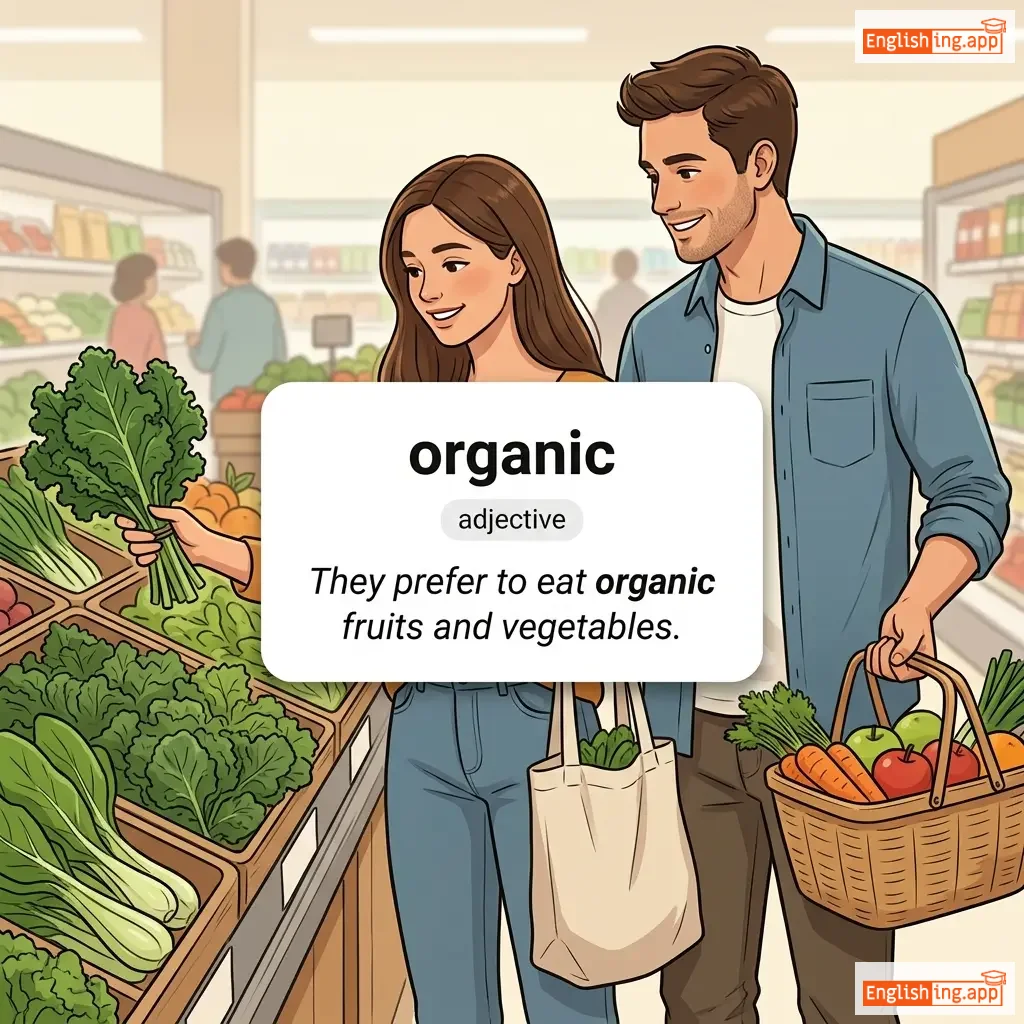
Relating to or derived from living matter; produced without artificial chemicals.
|
They prefer to eat organic fruits and vegetables.
••••••
|
Ellos prefieren comer frutas y verduras orgánicas.
Ellos prefieren comer frutas y verduras organicas.
••••••
|
••••••
|
Natural, gradual development without external force.
|
crecimiento orgánico
crecimiento organico
••••••
|
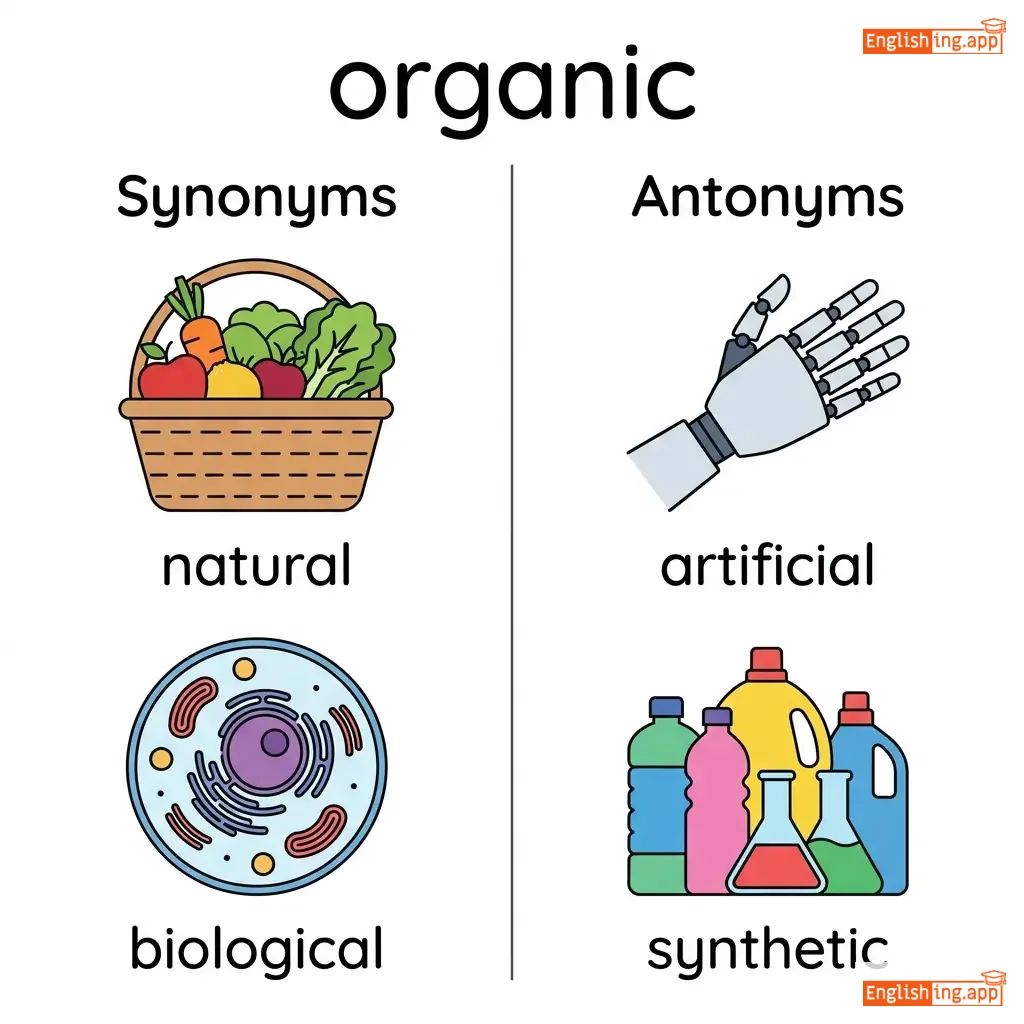
natural, biological, ecological, pure
|
artificial, synthetic, chemical
|
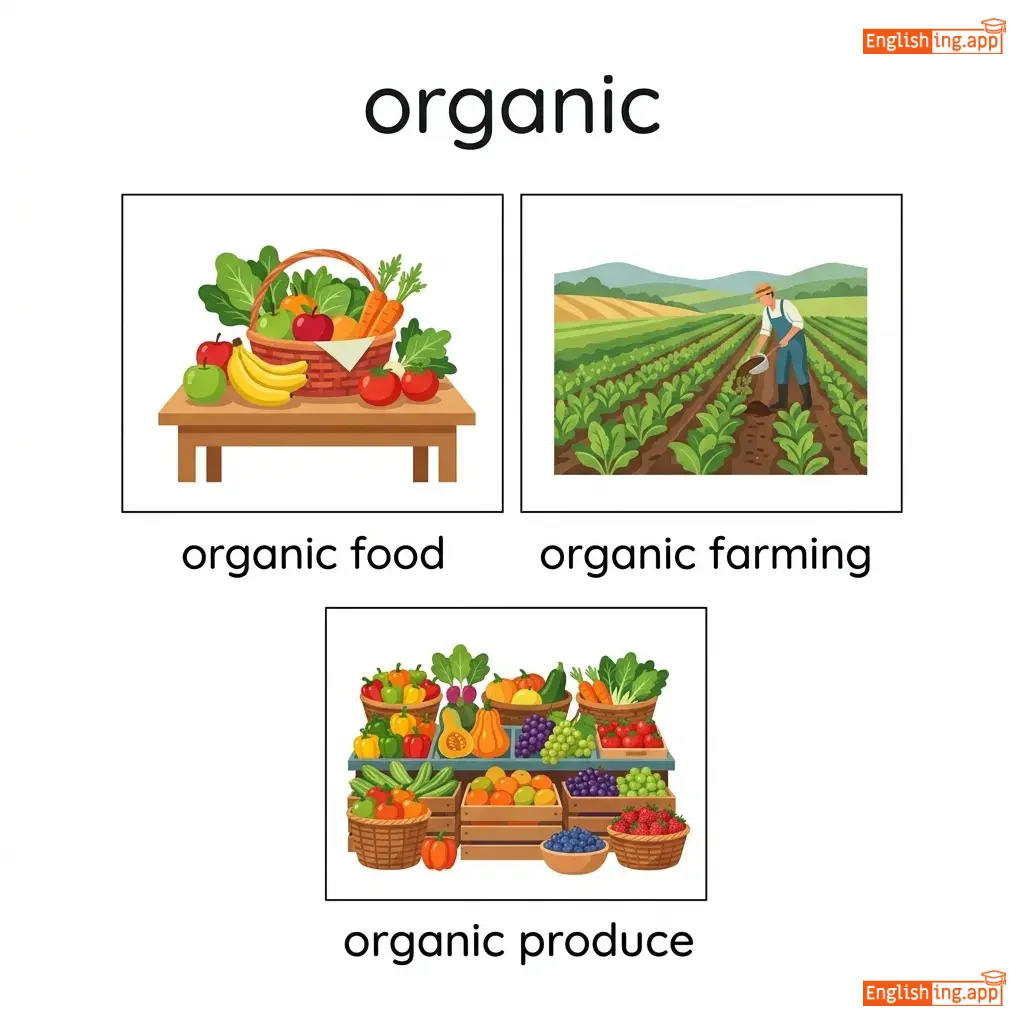
organic food, organic farming, organic produce, organic material
|
Orgánico = originario de la vida, como los alimentos orgánicos.
••••••
|
|
••••••
|
/ˈɔːrdəˌnɛri/
adjective
(órdineri)
••••••
|
-
••••••
|
ordinario
ordinario
••••••
|
-
••••••
|
-
••••••
|
-
••••••
|
-
••••••
|
Common, usual, or not special; something that happens regularly.
|
She wore an ordinary dress to the party.
••••••
|
Ella llevaba un vestido ordinario a la fiesta.
Ella llevaba un vestido ordinario a la fiesta.
••••••
|
••••••
|
Something unusual or different from what is normal.
|
fuera de lo ordinario
fuera de lo ordinario
••••••
|
common, usual, regular, normal, typical
|
extraordinary, exceptional, unusual
|
ordinary life, ordinary people, ordinary day, ordinary circumstances
|
‘Ordinary’ significa ‘ordenado’—todo está en orden, todo es común.
••••••
|
|
••••••
|
/ˌɑːp.təˈmɪs.tɪk/
adjective
(óptimistik)
••••••
|
-
••••••
|
optimista
optimista
••••••
|
-
••••••
|
-
••••••
|
-
••••••
|
-
••••••
|
hopeful and confident about the future
|
She is optimistic about the success of her new project.
••••••
|
Ella está optimista acerca del éxito de su nuevo proyecto.
Ella está optimista acerca del éxito de su nuevo proyecto.
••••••
|
••••••
|
viewing a situation positively
|
vaso medio lleno
vaso medio lleno
••••••
|
hopeful, positive, confident, cheerful, upbeat
|
pessimistic, doubtful, hopeless
|
optimistic view, optimistic outlook, optimistic about, remain optimistic
|
OPTIMISTA significa 'esperanzado' 🌞 — recuerda, 'optimista' es como 'optimistic' en inglés.
••••••
|
|
••••••
|
/ˈoʊ.pən/
verb, adjective
(happiness)
••••••
|
-
••••••
|
felicidad
felicidad
••••••
|
••••••
|
••••••
|
••••••
|
••••••
|
to move something so that it is no longer closed; not closed
|
She opened the window to let in fresh air.
Ella no podía esconder su felicidad cuando recibió el premio.
••••••
|
Ella no podía esconder su felicidad cuando recibió el premio.
Ella no podía esconder su felicidad cuando recibió el premio.
••••••
|
búsqueda de la felicidad
••••••
|
something widely known but not officially acknowledged
|
búsqueda de la felicidad
búsqueda de la felicidad
••••••
|
uncover, unlock, reveal, accessible, available
|
••••••
|
open door, open window, open opportunity, open mind
|
Felicidad es el momento cuando te sientes completo, ¡tómala como una buena acción!
••••••
|
|
••••••
|
/wʌn/
pronoun, noun, adjective
(uan)
••••••
|
-
••••••
|
uno
uno
••••••
|
-
••••••
|
-
••••••
|
-
••••••
|
-
••••••
|
the number equivalent to the sum of zero and one; a single person or thing
|
Only one student answered the question.
Solo un estudiante respondió la pregunta.
••••••
|
Solo un estudiante respondió la pregunta.
Solo un estudiante respondió la pregunta.
••••••
|
uno de un tipo
••••••
|
••••••
|
uno de un tipo
uno de un tipo
••••••
|
single, individual, sole, unique
|
••••••
|
one day, one time, one person, one chance
|
ONE significa uno 1️⃣ — 'uno de un tipo' recuerda
••••••
|
|
••••••
|
/ɒn/
preposition
(on)
••••••
|
-
••••••
|
sobre
sobre
••••••
|
-
••••••
|
-
••••••
|
-
••••••
|
-
••••••
|
physically in contact with and supported by a surface
|
The book is on the table.
••••••
|
El libro está sobre la mesa.
El libro está sobre la mesa.
••••••
|
••••••
|
••••••
|
a tiempo
a tiempo
••••••
|
••••••
|
••••••
|
on the table, on the way, on purpose, on duty
|
El libro está SOBRE la mesa 📖 — recuerda, 'on' significa 'sobre'
••••••
|
|
••••••
|
/naɪs/
adjective
(nais)
••••••
|
-
••••••
|
agradable
agradable
••••••
|
-
••••••
|
-
••••••
|
-
••••••
|
-
••••••
|
pleasant, kind, or enjoyable
|
She is a very nice person to work with.
••••••
|
Ella es una persona muy agradable para trabajar.
Ella es una persona muy agradable para trabajar.
••••••
|
••••••
|
something simple and comfortable
|
agradable y fácil
agradable y fácil
••••••
|
pleasant, kind, friendly, agreeable, charming
|
••••••
|
nice day, nice person, nice weather, nice job, nice to meet
|
Nice suena como agradable en español, y una persona agradable es muy fácil de tratar.
••••••
|
|
••••••
|
/ˈɒf.sprɪŋ/
noun
(óf-spring)
••••••
|
-
••••••
|
descendencia
descendencia
••••••
|
-
••••••
|
-
••••••
|
-
••••••
|
-
••••••
|
a person's child or children; an animal's young
|
The bird carefully fed its offspring.
El pájaro alimentó cuidadosamente a su descendencia.
••••••
|
El pájaro alimentó cuidadosamente a su descendencia.
El pájaro alimentó cuidadosamente a su descendencia.
••••••
|
-
••••••
|
-
••••••
|
-
••••••
|
children, progeny, descendants, young
|
••••••
|
human offspring, animal offspring, produce offspring, healthy offspring
|
Offspring = de 'off' (fuera) a 'spring' (primavera) nuevo ciclo de vida → descendencia.
••••••
|
|
••••••
|
/ˈɒf.ɪs/
noun
(ófiz)
••••••
|
-
••••••
|
oficina
oficina
••••••
|
-
••••••
|
-
••••••
|
-
••••••
|
-
••••••
|
a room or building where people work, usually at desks
|
She left the office early to attend a family event.
Ella dejó la oficina temprano para asistir a un evento familiar.
••••••
|
Ella dejó la oficina temprano para asistir a un evento familiar.
Ella dejo la oficina temprano para asistir a un evento familiar.
••••••
|
ocupar un cargo
••••••
|
to be in a position of authority or responsibility
|
ocupar un cargo
ocupar un cargo
••••••
|
workplace, bureau, department, agency, company
|
••••••
|
office building, office hours, office desk, office staff
|
Oficina es donde se trabaja; en la oficina, siempre trabajas.
••••••
|
|
••••••
|
/əˈfɛnd/
verb
(ofénd)
••••••
|
-
••••••
|
ofender
ofender
••••••
|
ofendió
••••••
|
ofendido
••••••
|
ofende
••••••
|
ofendiendo
••••••
|
to cause someone to feel upset, insulted, or annoyed
|
She didn’t mean to offend anyone with her remarks.
Ella no quería ofender a nadie con sus comentarios.
••••••
|
Ella no quería ofender a nadie con sus comentarios.
Ella no quería ofender a nadie con sus comentarios.
••••••
|
tomarse algo a mal
••••••
|
••••••
|
tomarse algo a mal
tomarse algo a mal
••••••
|
insult, upset, irritate, annoy, disrespect
|
••••••
|
offend someone, deeply offend, intentionally offend, offend against
|
Ofender te hace perder la paz interior.
••••••
|
|
••••••
|
/ɒd/
adjective
(od)
••••••
|
-
••••••
|
extraño
extrano
••••••
|
-
••••••
|
-
••••••
|
-
••••••
|
-
••••••
|
different from what is usual or expected; strange or peculiar
|
He has some odd habits that surprise everyone.
••••••
|
Él tiene algunas costumbres extrañas que sorprenden a todos.
El tiene algunas costumbres extrañas que sorprenden a todos.
••••••
|
••••••
|
something or someone that is different from the rest
|
la oveja negra
la oveja negra
••••••
|
strange, unusual, peculiar, weird, irregular
|
••••••
|
odd number, odd job, odd behavior, odd coincidence
|
Odd significa extraño (extrano); Odd = algo extraño.
••••••
|
|
••••••
|
/ˈɒb.vi.əs/
adjective
(óbviəs)
••••••
|
-
••••••
|
obvio
obvio
••••••
|
-
••••••
|
-
••••••
|
-
••••••
|
-
••••••
|
easily perceived or understood; clear and apparent
|
It was obvious that she was upset after the meeting.
••••••
|
Era obvio que ella estaba molesta después de la reunión.
Era obvio que ella estaba molesta despues de la reunion.
••••••
|
••••••
|
something that is the most evident or suitable option
|
la opción obvia
la opcion obvia
••••••
|
clear, evident, apparent, noticeable, plain
|
••••••
|
obvious reason, obvious fact, obvious mistake, obvious difference
|
Obvio = obvio, fácil de ver como en obvio.
••••••
|
|
••••••
|
/oʊˈbeɪ/
verb
(obey)
••••••
|
••••••
|
obedecer
obedecer
••••••
|
obeyed
••••••
|
obeyed
••••••
|
obeys
••••••
|
obeying
••••••
|
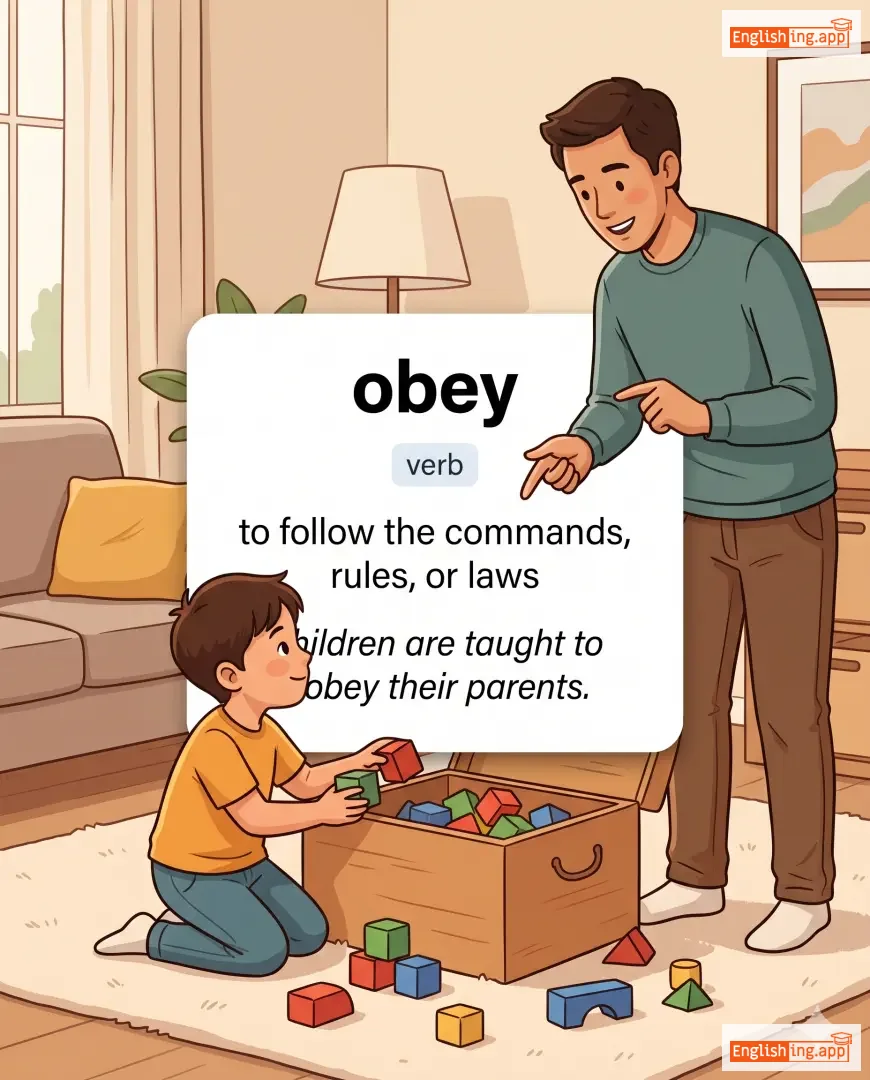
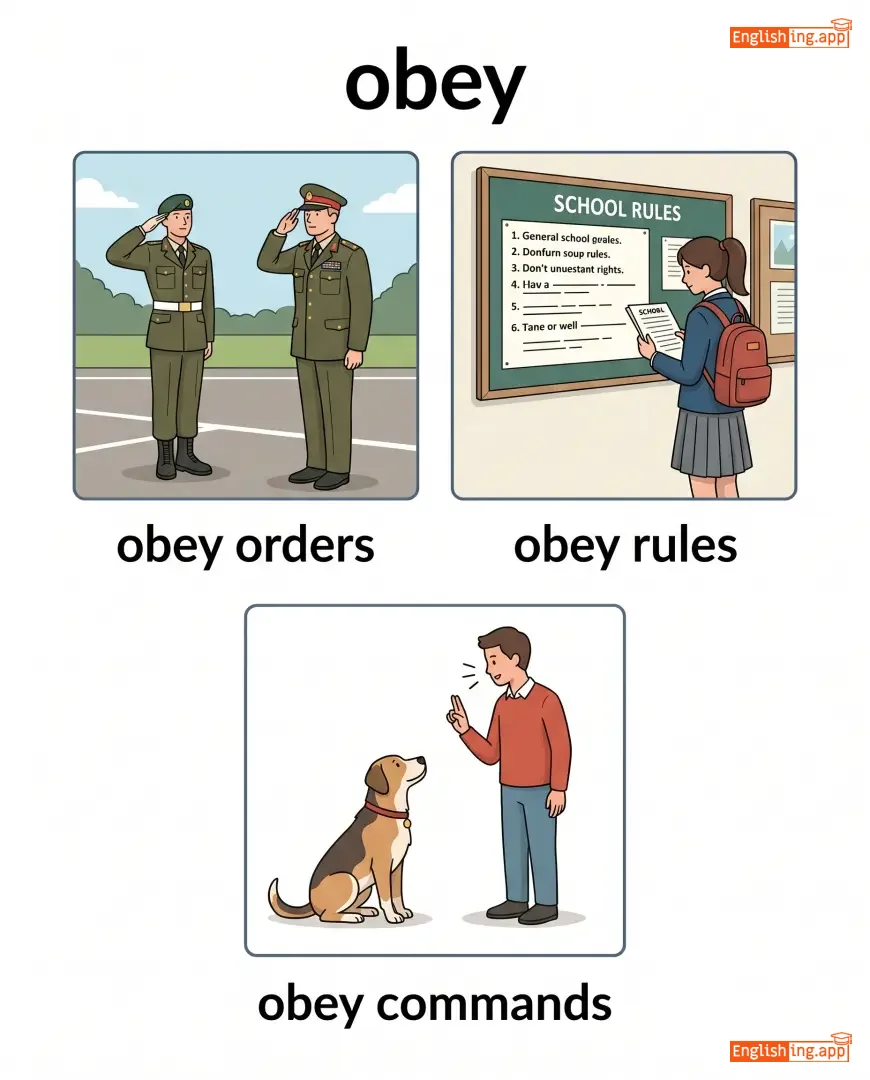
to follow the commands, rules, or laws
|
Children are taught to obey their parents.
Los niños son enseñados a obedecer a sus padres.
••••••
|
Se enseña a los niños a obedecer a sus padres.
Se ensena a los niños a obedecer a sus padres.
••••••
|
obedecer la ley
••••••
|
to follow legal rules and regulations
|
obedecer la ley
obedecer la ley
••••••
|
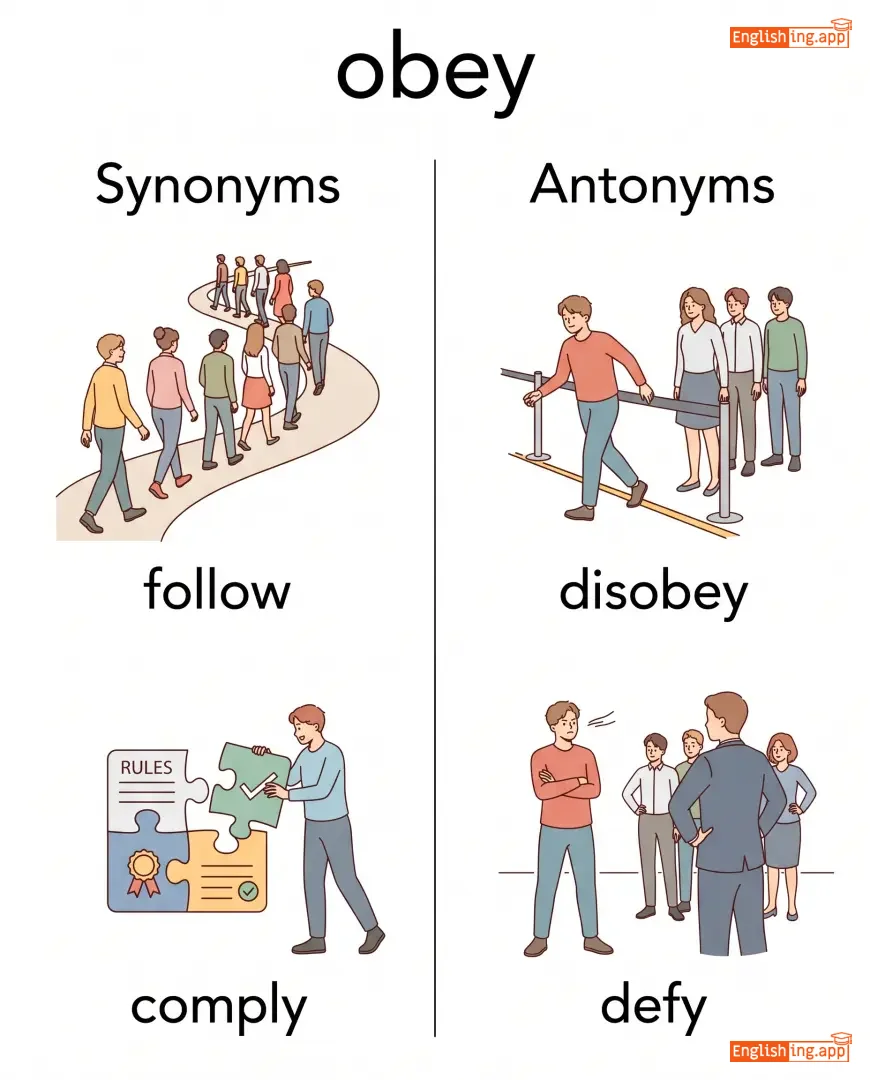
follow, comply, respect, submit
|
••••••
|
obey orders, obey rules, obey commands, obey instantly
|
Obedecer es seguir las órdenes — o (padres) be (obedecer) de una manera sencilla.
••••••
|
|
••••••
|
/ˈnjuːmərəs/
adjective
(niúméras)
••••••
|
-
••••••
|
numeroso
numeroso
••••••
|
-
••••••
|
-
••••••
|
-
••••••
|
-
••••••
|
existing in large numbers; many
|
There are numerous opportunities for growth in this field.
Hay numerosas oportunidades para el crecimiento en este campo.
••••••
|
Hay numerosas oportunidades para el crecimiento en este campo.
Hay numerosas oportunidades para el crecimiento en este campo.
••••••
|
-
••••••
|
-
••••••
|
-
••••••
|
many, countless, abundant, multiple
|
••••••
|
numerous times, numerous opportunities, numerous examples, numerous occasions
|
Numerous significa mucho — Número de Numerous, significa muchos números.
••••••
|
|
••••••
|
/ˈnoʊtɪfaɪ/
verb
(nóutifai)
••••••
|
-
••••••
|
notificar
notificar
••••••
|
nóutifaíd
••••••
|
nóutifaíd
••••••
|
nóutifaíz
••••••
|
nóutifaíng
••••••
|
to inform someone officially about something
|
The manager will notify the staff about the schedule change.
El gerente notificará al personal sobre el cambio de horario.
••••••
|
El gerente notificará al personal sobre el cambio de horario.
El gerente notificará al personal sobre el cambio de horario.
••••••
|
notificar de
••••••
|
to inform about something specific
|
notificar de
notificar de
••••••
|
inform, alert, announce, communicate
|
••••••
|
notify immediately, notify customers, notify authorities, notify in writing
|
Notify significa avisar — Notificación es el aviso que todos esperan.
••••••
|
|
••••••
|
/ˈnoʊtɪd/
adjective, verb
(nóutid)
••••••
|
-
••••••
|
reconocido
reconocido
••••••
|
nóutid
••••••
|
nóutid
••••••
|
-
••••••
|
-
••••••
|
well known or famous; written down or observed
|
He is a noted author in the field of history.
Él es un autor reconocido en el campo de la historia.
••••••
|
Él es un autor reconocido en el campo de la historia.
Él es un autor reconocido en el campo de la historia.
••••••
|
-
••••••
|
-
••••••
|
-
••••••
|
renowned, famous, distinguished, prominent
|
••••••
|
noted scholar, noted for, noted writer, noted speaker
|
Noted significa reconocido — conocido por todos, como cuando tu nombre está en una nota.
••••••
|
|
••••••
|
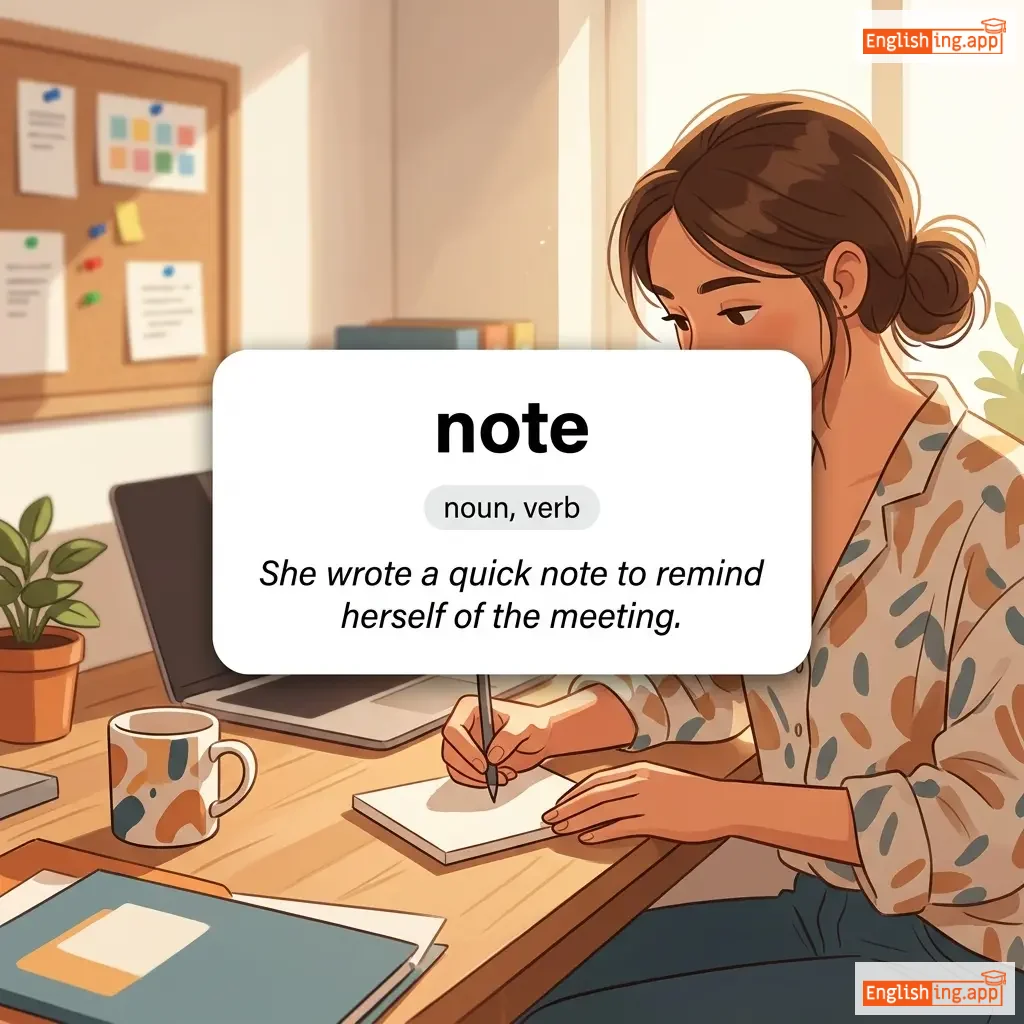
/noʊt/
noun, verb
(nót)
••••••
|
••••••
|
nota
nota
••••••
|
nóted
••••••
|
nóted
••••••
|
nótes
••••••
|
nóting
••••••
|
a brief record of facts, topics, or thoughts written down; to observe or remark upon something
|
She wrote a quick note to remind herself of the meeting.
Ella escribió una nota rápida para recordarse de la reunión.
••••••
|
Ella escribió una nota rápida para recordarse de la reunión.
Ella escribió una nota rápida para recordarse de la reunión.
••••••
|
tomar nota
••••••
|
to pay attention or give special consideration
|
prestar atención
prestar atencion
••••••
|
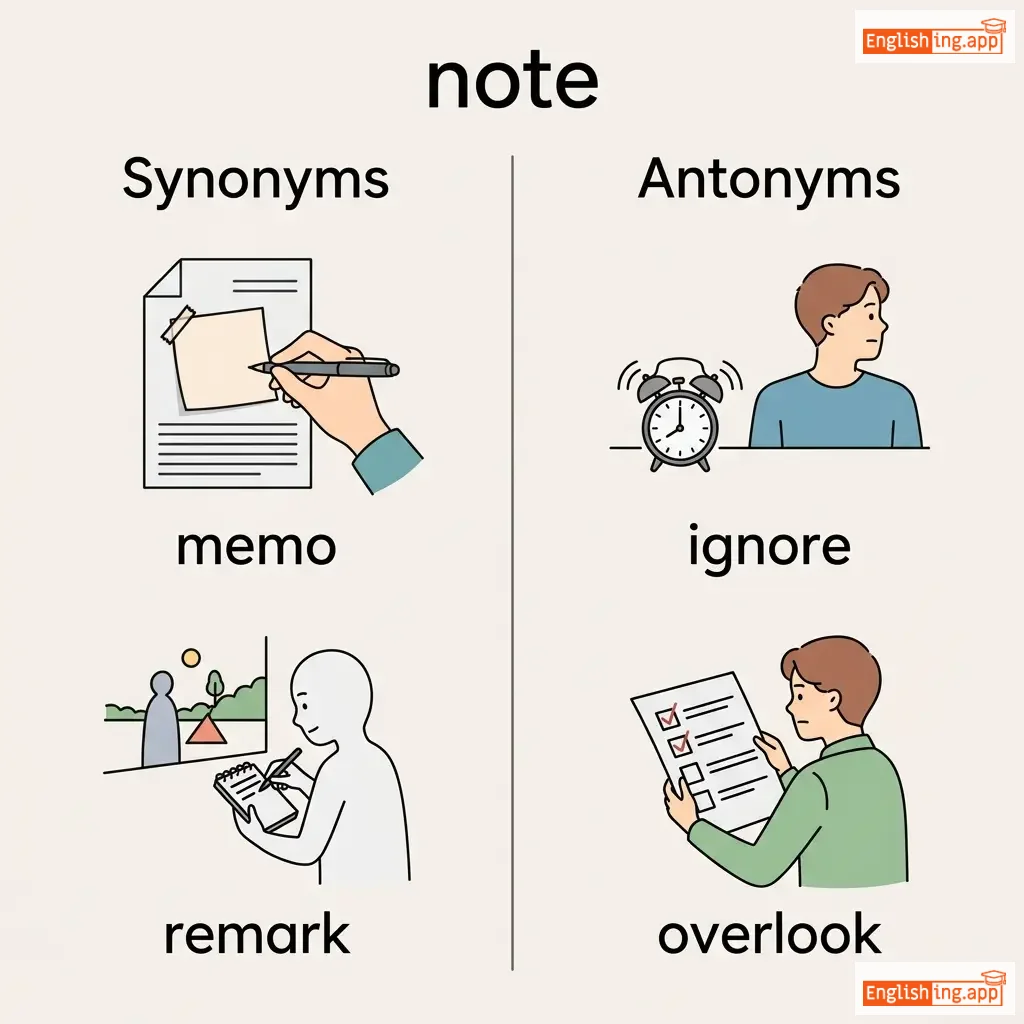
memo, remark, message, record, observation
|
••••••
|
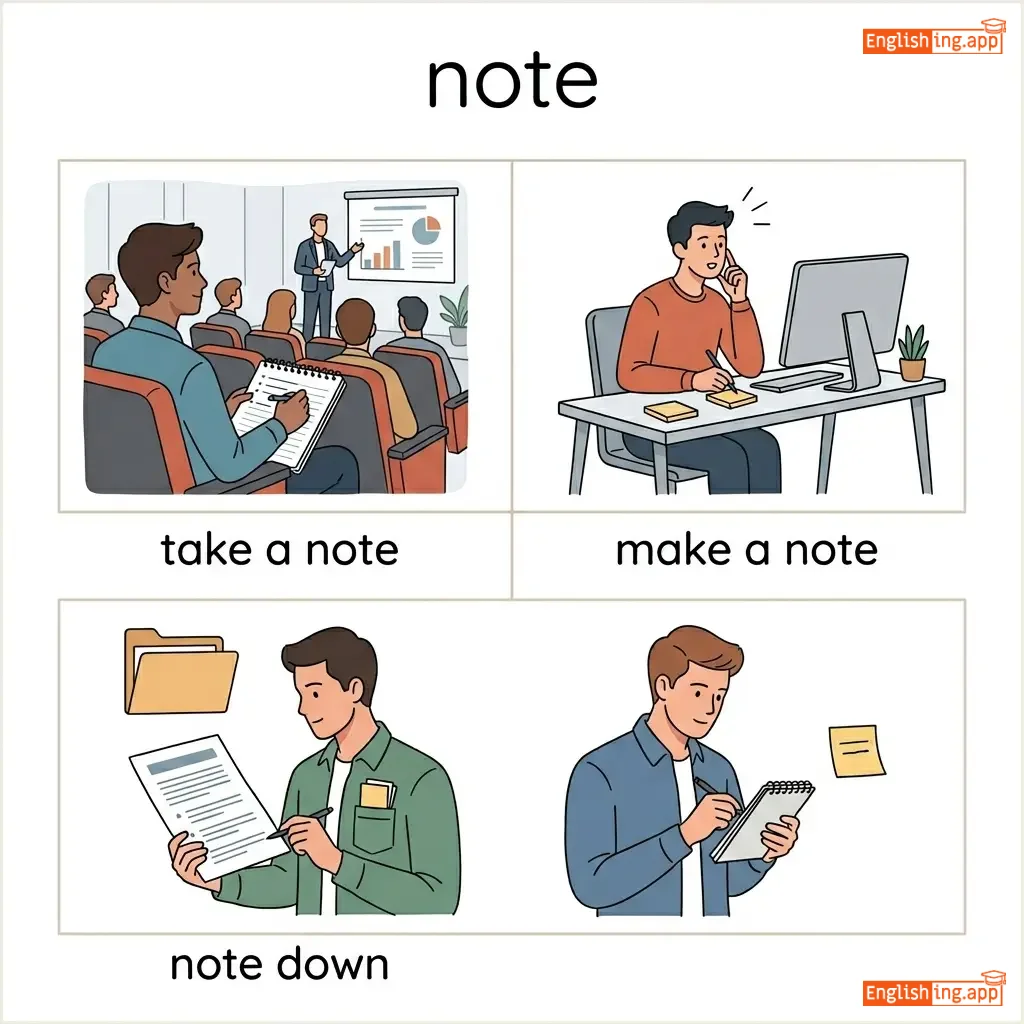
take a note, make a note, note down, note carefully
|
Nota es como escribir algo importante para no olvidarlo.
••••••
|
|
••••••
|
/ˈnɔː.məl/
adjective
(nórmal)
••••••
|
-
••••••
|
normal
normal
••••••
|
-
••••••
|
-
••••••
|
-
••••••
|
-
••••••
|
conforming to a standard; usual, typical, or expected
|
It is normal to feel nervous before an interview.
••••••
|
Es normal sentirse nervioso antes de una entrevista.
Es normal sentirse nervioso antes de una entrevista.
••••••
|
••••••
|
returning to a usual or typical state
|
volver a la normalidad
volver a la normalidad
••••••
|
usual, ordinary, typical, standard, regular
|
abnormal, unusual, strange
|
normal life, normal situation, normal condition, back to normal
|
Normal = normal, todo en su lugar 🧭
••••••
|
|
••••••
|
/nuːn/
noun
(nun)
••••••
|
-
••••••
|
mediodía
mediodia
••••••
|
-
••••••
|
-
••••••
|
-
••••••
|
-
••••••
|
12 o'clock in the daytime; midday
|
The meeting will start at noon.
••••••
|
La reunión comenzará a mediodía.
La reunion comenzara a mediodia.
••••••
|
••••••
|
exactly midday; sometimes used to describe a decisive confrontation
|
mediodía
mediodia
••••••
|
midday, twelve o'clock, middaytime
|
••••••
|
at noon, by noon, until noon, high noon
|
Noon significa mediodía, el sol ☀️ está en su punto más alto
••••••
|
|
••••••
|
/nəʊˈbɪləti/
noun
(nobíliti)
••••••
|
-
••••••
|
nobleza
nobleza
••••••
|
-
••••••
|
-
••••••
|
-
••••••
|
-
••••••
|
the quality of being noble in character or the group of people belonging to the aristocracy
|
The king praised her for her nobility and courage.
El rey elogió su nobleza y coraje.
••••••
|
El rey elogió su nobleza y coraje.
El rey elogió su nobleza y coraje.
••••••
|
-
••••••
|
-
••••••
|
-
••••••
|
aristocracy, honor, dignity, virtue
|
••••••
|
nobility of spirit, nobility of character, the nobility
|
Noble + ity = Nobleza significa nobleza
••••••
|
|
••••••
|
/ˈnaɪt.fɔːl/
noun
(naitfɔl)
••••••
|
-
••••••
|
caída de la noche
caida de la noche
••••••
|
-
••••••
|
-
••••••
|
-
••••••
|
-
••••••
|
the time when night begins; dusk
|
They decided to return home before nightfall.
••••••
|
Decidieron regresar a casa antes de la caída de la noche.
Decidieron regresar a casa antes de la caida de la noche.
••••••
|
-
••••••
|
-
••••••
|
-
••••••
|
dusk, evening, sundown, twilight
|
••••••
|
before nightfall, until nightfall, at nightfall
|
Night + Fall = caída de la noche
••••••
|