|
••••••
|
/ˈwiːdəl/
verb
(wídəl)
••••••
|
-
••••••
|
persuadir con halagos
persuadir con halagos
••••••
|
wídəld
••••••
|
wídəld
••••••
|
wídəlz
••••••
|
wídəlɪŋ
••••••
|
to persuade or coax someone by using flattery or smooth talk
|
She managed to wheedle extra pocket money from her father.
Ella consiguió convencer a su padre para obtener dinero extra.
••••••
|
Ella consiguió convencer a su padre para obtener dinero extra.
Ella consiguió convencer a su padre para obtener dinero extra.
••••••
|
-
••••••
|
-
••••••
|
-
••••••
|
coax, flatter, cajole, charm, sweet-talk
|
••••••
|
wheedle money, wheedle permission, wheedle his way
|
Wheedle es como pedir algo usando halagos
••••••
|
|
••••••
|
/wɪt/
noun
(wɪt)
••••••
|
-
••••••
|
una cantidad muy pequeña
una cantidad muy pequeña
••••••
|
-
••••••
|
-
••••••
|
-
••••••
|
-
••••••
|
a very small part or amount
|
He doesn't care a whit about the outcome.
••••••
|
Él no le importa ni un ápice el resultado.
Él no le importa ni un ápice el resultado.
••••••
|
••••••
|
not at all; not in the slightest degree
|
ni un ápice
ni un ápice
••••••
|
bit, iota, shred, ounce, speck
|
••••••
|
not a whit, without a whit, a whit of difference
|
whit (un ápice) se refiere a algo tan pequeño como un granito de sal.
••••••
|
|
••••••
|
/ˈwɪni/
verb
(wíni)
••••••
|
-
••••••
|
relincho
relincho
••••••
|
wínid
••••••
|
wínid
••••••
|
wínies
••••••
|
wíníng
••••••
|
to make the high-pitched sound a horse makes
|
The horse whinnied when it saw its rider.
El caballo wínid cuando vio a su jinete.
••••••
|
El caballo relinchó cuando vio a su jinete.
El caballo relincho cuando vio a su jinete.
••••••
|
-
••••••
|
-
••••••
|
-
••••••
|
neigh, snort, nicker, cry, call
|
••••••
|
horse whinny, whinny softly, whinny loudly, whinny sound
|
Whinny significa relincho - el caballo hace ‘win’ cuando relincha.
••••••
|
|
••••••
|
/waɪn/
verb
(wáin)
••••••
|
••••••
|
quejarse
quejarse
••••••
|
wáind
••••••
|
wáind
••••••
|
wáinz
••••••
|
wáining
••••••
|
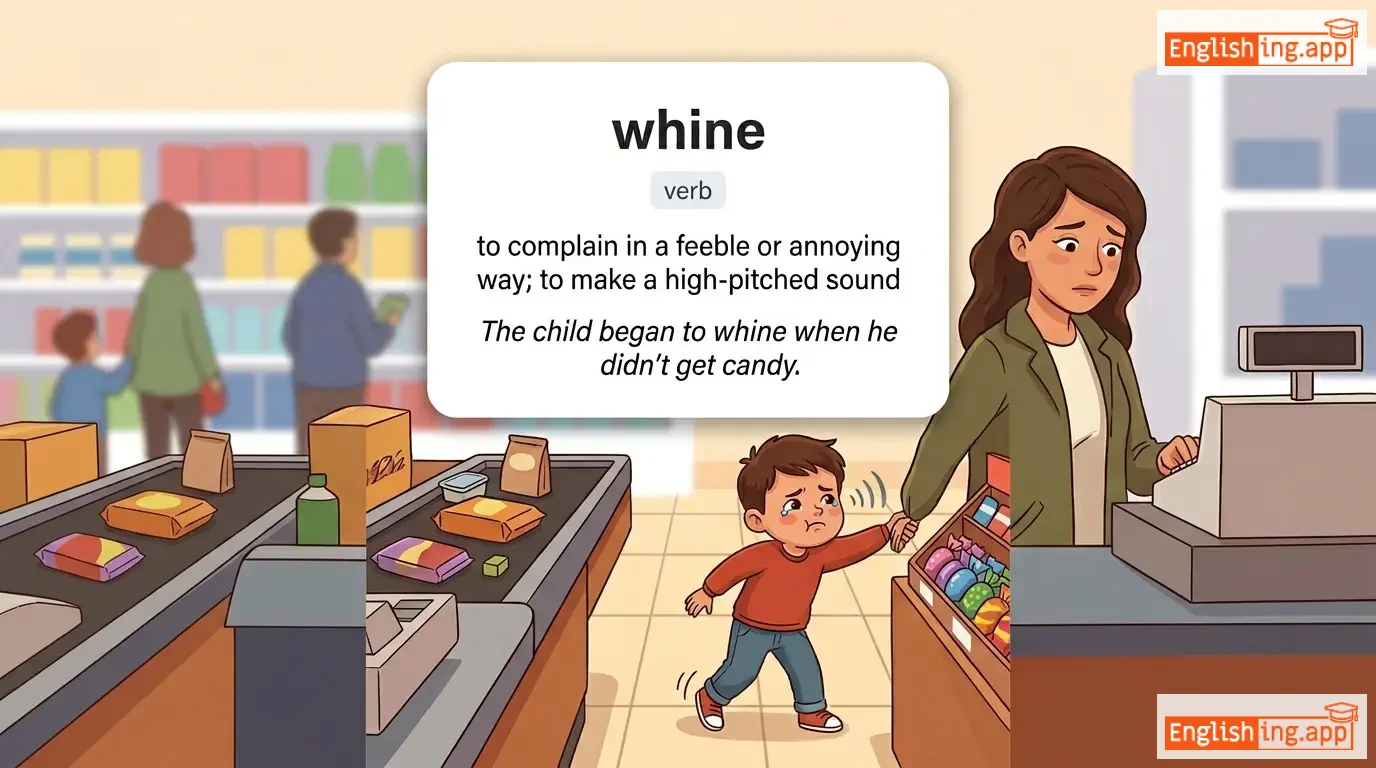
to complain in a feeble or annoying way; to make a high-pitched sound
|
The child began to whine when he didn’t get candy.
Dá chaild bigán tu wáin wen ji dídnt guet kándi.
••••••
|
El niño comenzó a quejarse cuando no consiguió caramelos.
El niño comenzó a quejarse cuando no consiguió caramelos.
••••••
|
wáin and kompléin
••••••
|
to continuously express dissatisfaction
|
quejarse y lamentarse
quejarse y lamentarse
••••••
|
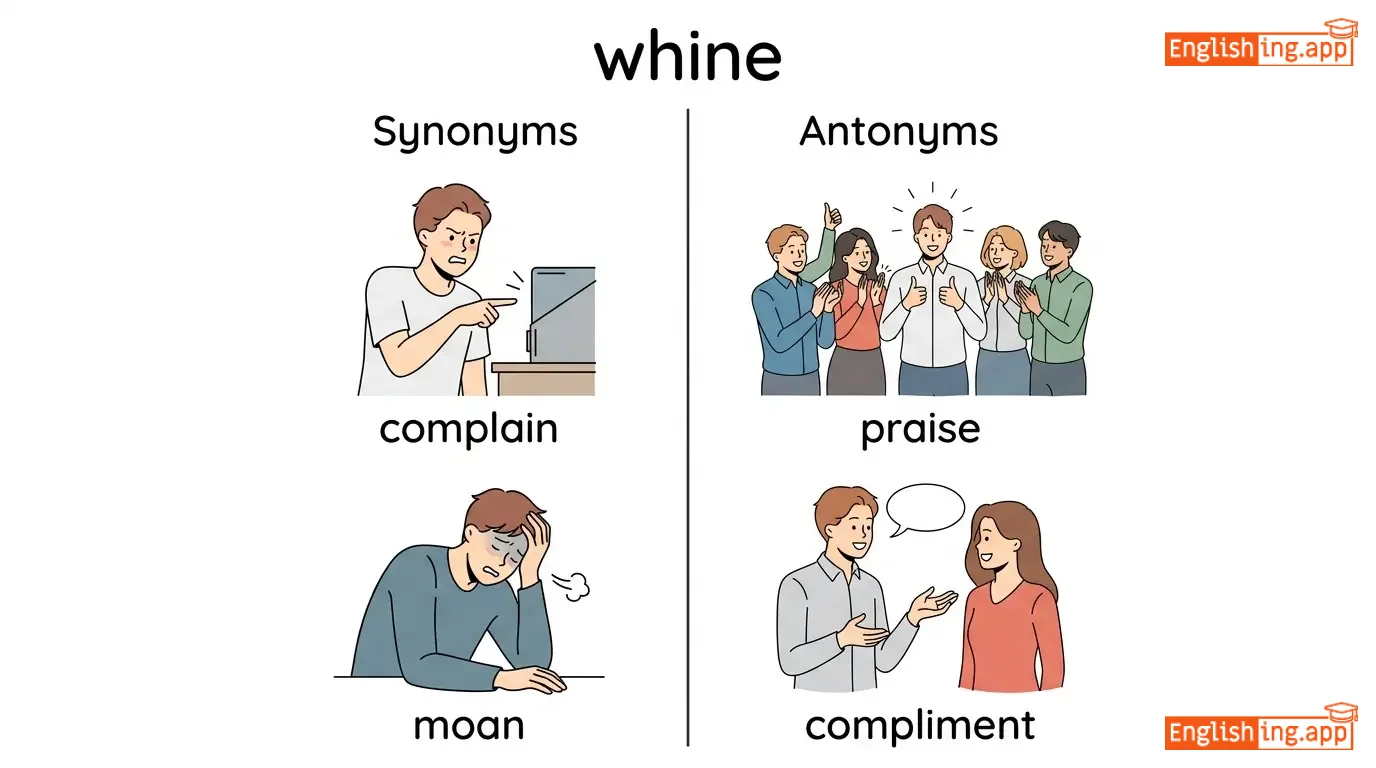
complain, moan, groan, grumble, wail
|
praise, compliment, rejoice
|
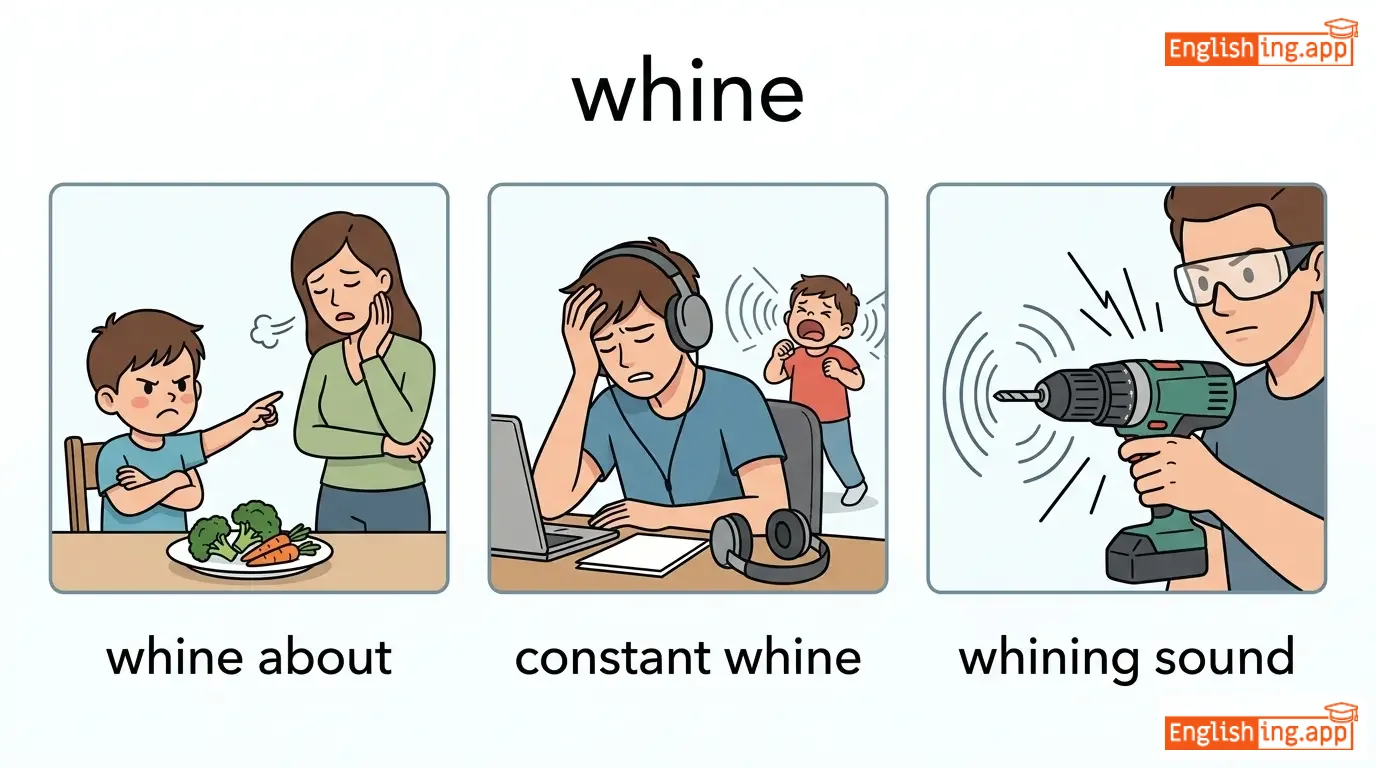
whine about, constant whine, whining sound, whine and cry
|
Whine significa quejarse, como cuando no te dan wine y te quejas.
••••••
|
|
••••••
|
/ˈwɪmzi/
noun
(wímzi)
••••••
|
-
••••••
|
capricho
capricho
••••••
|
-
••••••
|
-
••••••
|
-
••••••
|
-
••••••
|
playful or fanciful behavior or humor
|
Her stories were full of whimsy and imagination.
••••••
|
Sus historias estaban llenas de capricho e imaginación.
Sus historias estaban llenas de capricho e imaginacion.
••••••
|
-
••••••
|
-
••••••
|
-
••••••
|
fancy, caprice, playfulness, imagination, eccentricity
|
seriousness, practicality, realism
|
touch of whimsy, sense of whimsy, element of whimsy, whimsy in art
|
Whimsy significa capricho - como hacer cosas juguetonas o imaginativas.
••••••
|
|
••••••
|
/ˈwɪmzɪkəl/
adjective
(wɪmzɪkəl)
••••••
|
••••••
|
caprichoso
kaprichoso
••••••
|
-
••••••
|
-
••••••
|
-
••••••
|
-
••••••
|
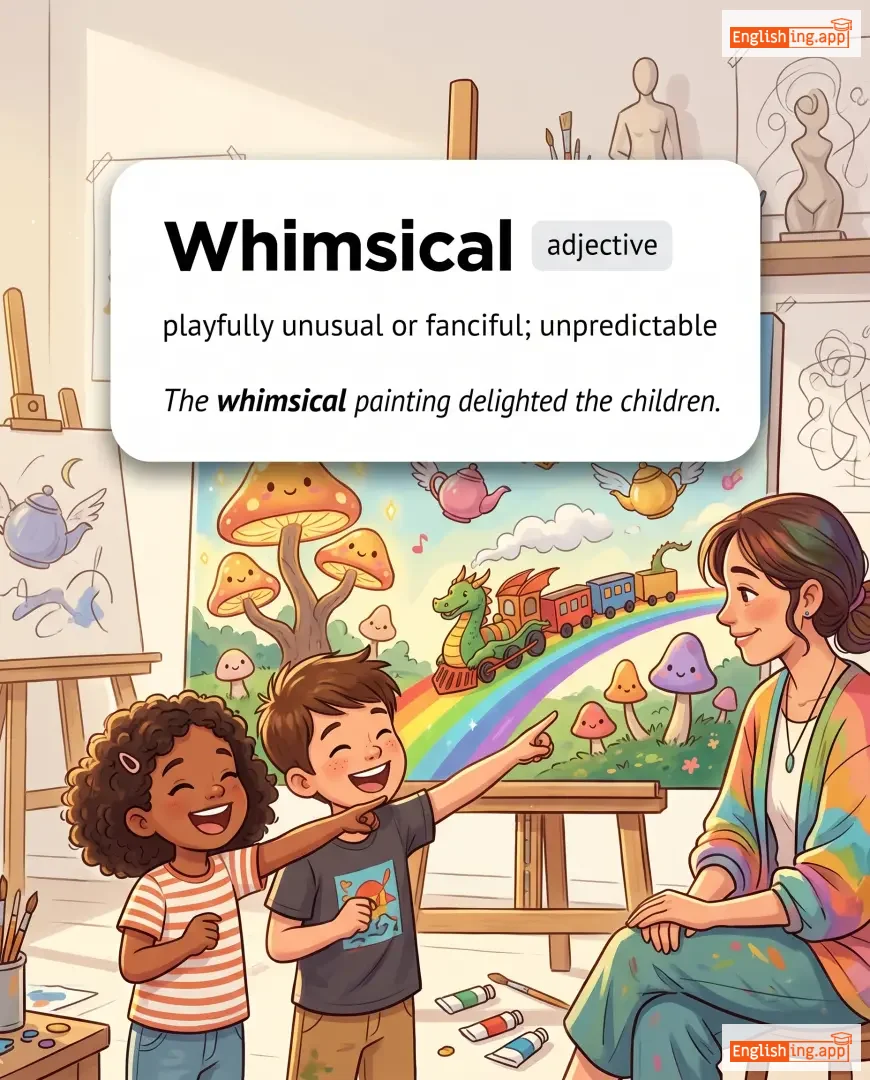
playfully unusual or fanciful; unpredictable
|
The whimsical painting delighted the children.
••••••
|
La pintura caprichosa deleitó a los niños.
La pintura caprichosa deleito a los ninos.
••••••
|
-
••••••
|
-
••••••
|
-
••••••
|
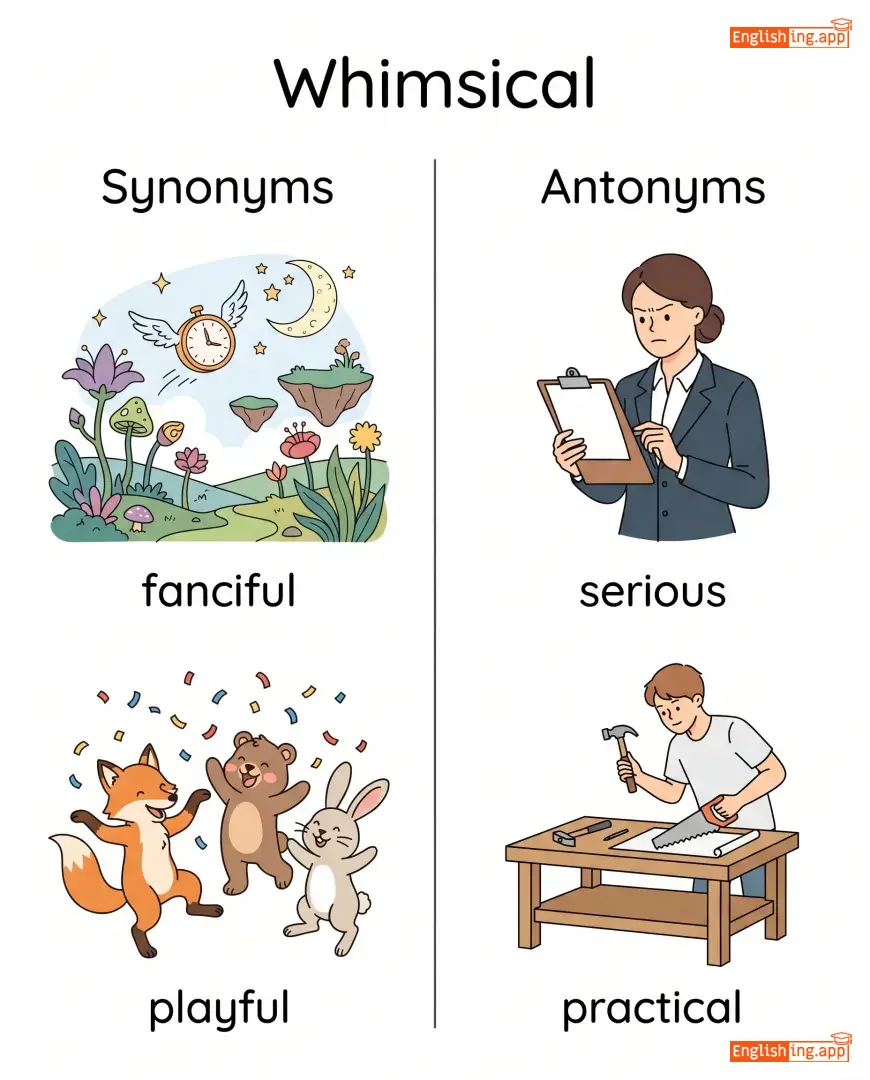
fanciful, playful, quirky, imaginative, capricious
|
serious, practical, realistic
|
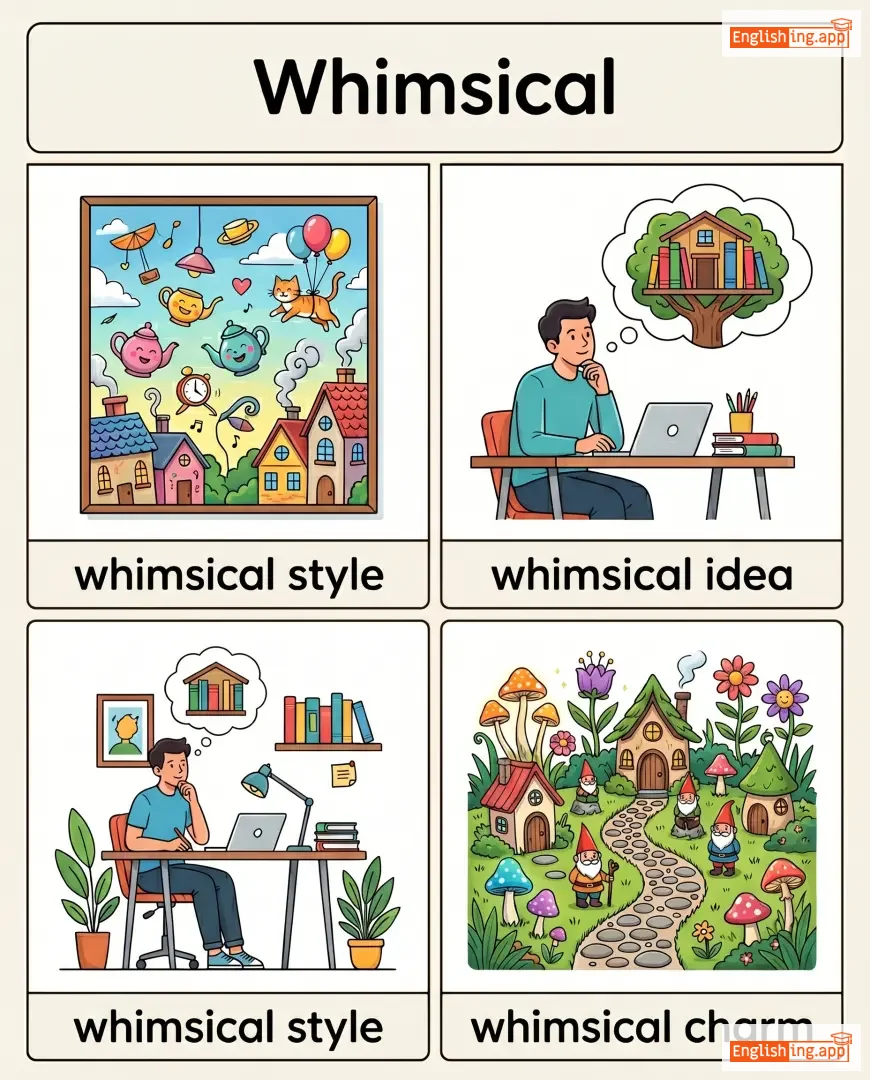
whimsical style, whimsical idea, whimsical charm, whimsical imagination
|
Whimsical significa caprichoso - como una persona que cambia de idea constantemente.
••••••
|
|
••••••
|
/wɪm/
noun
(juim)
••••••
|
-
••••••
|
capricho
capricho
••••••
|
-
••••••
|
-
••••••
|
-
••••••
|
-
••••••
|
a sudden or unpredictable idea, desire, or decision
|
She bought the dress on a whim.
••••••
|
Ella compró el vestido por capricho.
Ella compró el vestido por capricho.
••••••
|
••••••
|
suddenly, without planning
|
por capricho
por capricho
••••••
|
impulse, fancy, urge, notion, caprice
|
••••••
|
sudden whim, foolish whim, act on a whim, whim of the moment
|
Whim significa capricho, como cuando de repente decides comprar helado.
••••••
|
|
••••••
|
/wɪf/
noun, verb
(wíf)
••••••
|
-
••••••
|
leve olor
leve olor
••••••
|
wíft
••••••
|
wíft
••••••
|
wífs
••••••
|
wífing
••••••
|
A brief, faint smell or puff of air; to get a quick smell of something.
|
I caught a whiff of perfume as she passed by.
Olí un poco de perfume cuando ella pasó.
••••••
|
Sentí un leve olor a perfume mientras ella pasaba.
Sentí un leve olor a perfume mientras ella pasaba.
••••••
|
captar un toque
••••••
|
To smell something briefly or faintly
|
captar un toque
captar un toque
••••••
|
scent, smell, odor, trace, hint
|
••••••
|
whiff of, catch a whiff, faint whiff, slight whiff
|
Whiff, como el perfume leve de la esposa (leve olor).
••••••
|
|
••••••
|
/wɛt/
verb
(juet)
••••••
|
-
••••••
|
afilar/estimular
afilar/estimular
••••••
|
jueted
••••••
|
jueted
••••••
|
juets
••••••
|
jueting
••••••
|
To sharpen the blade of a tool or to stimulate interest or appetite.
|
The smell of food whetted my appetite.
El olor de la comida juetó mi apetito.
••••••
|
El olor de la comida aumentó mi apetito.
El olor de la comida aumento mi apetito.
••••••
|
juet el apetito
••••••
|
To increase someone's desire for something
|
estimular el apetito
estimular el apetito
••••••
|
sharpen, hone, stimulate, arouse, excite
|
••••••
|
whet the appetite, whet curiosity, whet desire, whet interest
|
Whet significa afilar el cuchillo antes de aumentar el apetito.
••••••
|
|
••••••
|
/ˈwɛə.wɪð/
adverb, noun
(wɛə wɪð)
••••••
|
-
••••••
|
medios
medios
••••••
|
-
••••••
|
-
••••••
|
-
••••••
|
-
••••••
|
With which; the means or resources needed for something.
|
He lacked the money wherewith to buy a new house.
••••••
|
No tenía el dinero con el cual comprar una casa nueva.
No tenía el dinero con el cual comprar una casa nueva.
••••••
|
-
••••••
|
-
••••••
|
-
••••••
|
means, resources, funds, capital, ability
|
••••••
|
wherewith to, wherewith he, wherewith she, money wherewith
|
WHEREWITH ¿Qué? Con dinero (medios) - se refiere a los medios o recursos.
••••••
|
|
••••••
|
/wɛrˈɛv.ər/
adverb
(hweréber)
••••••
|
-
••••••
|
donde sea
donde sea
••••••
|
-
••••••
|
-
••••••
|
-
••••••
|
-
••••••
|
••••••
|
You can find good people wherever you go.
••••••
|
Puedes encontrar buenas personas donde sea que vayas.
Puedes encontrar buenas personas donde sea que vayas.
••••••
|
••••••
|
No matter what place you are in
|
donde sea que estés
donde sea que estés
••••••
|
anywhere, everywhere, wheresoever, all places
|
nowhere, somewhere specific
|
wherever possible, wherever you go, wherever needed, wherever necessary
|
WhereEVER significa donde sea – en cualquier lugar que vayas, ¡ahí estarán!
••••••
|
|
••••••
|
/ˌwɛr.əˈpɒn/
adverb
(weːr.əˈpɒn)
••••••
|
-
••••••
|
inmediatamente después
inmediatamente despues
••••••
|
-
••••••
|
-
••••••
|
-
••••••
|
-
••••••
|
Immediately after which; as a result of which.
|
He confessed his mistake, whereupon she forgave him.
••••••
|
Él confesó su error, inmediatamente después ella lo perdonó.
El confeso su error, inmediatamente despues ella lo perdono.
••••••
|
-
••••••
|
-
••••••
|
-
••••••
|
thereupon, consequently, accordingly, thus, hence
|
••••••
|
whereupon she, whereupon he, confessed whereupon, agreed whereupon
|
Where UPON algo sucedió, inmediatamente después (inmediatamente después) ocurrió algo.
••••••
|
|
••••••
|
/wɛərˈæz/
conjunction
(wɛræz)
••••••
|
-
••••••
|
mientras que
mientras que
••••••
|
-
••••••
|
-
••••••
|
-
••••••
|
-
••••••
|
used to introduce a contrast or comparison between two facts
|
She prefers tea, whereas he likes coffee.
••••••
|
A ella le gusta el té, mientras que a él le gusta el café.
A ella le gusta el té, mientras que a él le gusta el café.
••••••
|
-
••••••
|
-
••••••
|
-
••••••
|
while, although, but, though
|
••••••
|
whereas clause, whereas statement, tea whereas coffee
|
Tea vs coffee comparación - español mientras que
••••••
|
|
••••••
|
/ˈwɛrəˌbaʊts/
noun
(wɛrəbauts)
••••••
|
-
••••••
|
ubicación
ubicacion
••••••
|
-
••••••
|
-
••••••
|
-
••••••
|
-
••••••
|
the place where someone or something is
|
The police are trying to find out the suspect's whereabouts.
••••••
|
La policía está tratando de encontrar la ubicación del sospechoso.
La policía está tratando de encontrar la ubicación del sospechoso.
••••••
|
-
••••••
|
-
••••••
|
-
••••••
|
location, position, place, spot, site
|
••••••
|
unknown whereabouts, disclose whereabouts, track whereabouts
|
Whereabouts significa 'ubicación' en español
••••••
|
|
••••••
|
/wɛlp/
noun
(hwelp)
••••••
|
-
••••••
|
cachorro
cachorro
••••••
|
-
••••••
|
-
••••••
|
-
••••••
|
-
••••••
|
a young offspring of a dog or other carnivorous mammal; sometimes used to mean an impudent young person
|
The farmer found a wolf whelp hiding near the barn.
••••••
|
El granjero encontró un cachorro de lobo escondido cerca del granero.
El granjero encontró un cachorro de lobo escondido cerca del granero.
••••••
|
-
••••••
|
-
••••••
|
-
••••••
|
puppy, cub, pup, offspring
|
••••••
|
wolf whelp, dog whelp, young whelp
|
Whelp es como cachorro, como cuando ayudas a un perro pequeño
••••••
|
|
••••••
|
/ˈwiːk niːd/
adjective
(wiːk níd)
••••••
|
-
••••••
|
débil
debil
••••••
|
-
••••••
|
-
••••••
|
-
••••••
|
-
••••••
|
Lacking determination or courage; easily frightened or yielding.
|
The leader was criticized for being weak-kneed in the face of opposition.
••••••
|
El líder fue criticado por ser débil ante la oposición.
El lider fue criticado por ser debil ante la oposicion.
••••••
|
-
••••••
|
-
••••••
|
-
••••••
|
cowardly, timid, spineless, fearful
|
brave, strong, courageous
|
weak-kneed leader, weak-kneed response, weak-kneed attitude
|
Con rodillas débiles no se puede estar firme – débil significa weak-kneed.
••••••
|
|
••••••
|
/ˈwɛltər/
verb
(wélter)
••••••
|
••••••
|
dar vueltas en caos
dar vueltas en caos
••••••
|
wéltered
••••••
|
wéltered
••••••
|
wélters
••••••
|
wéltering
••••••
|
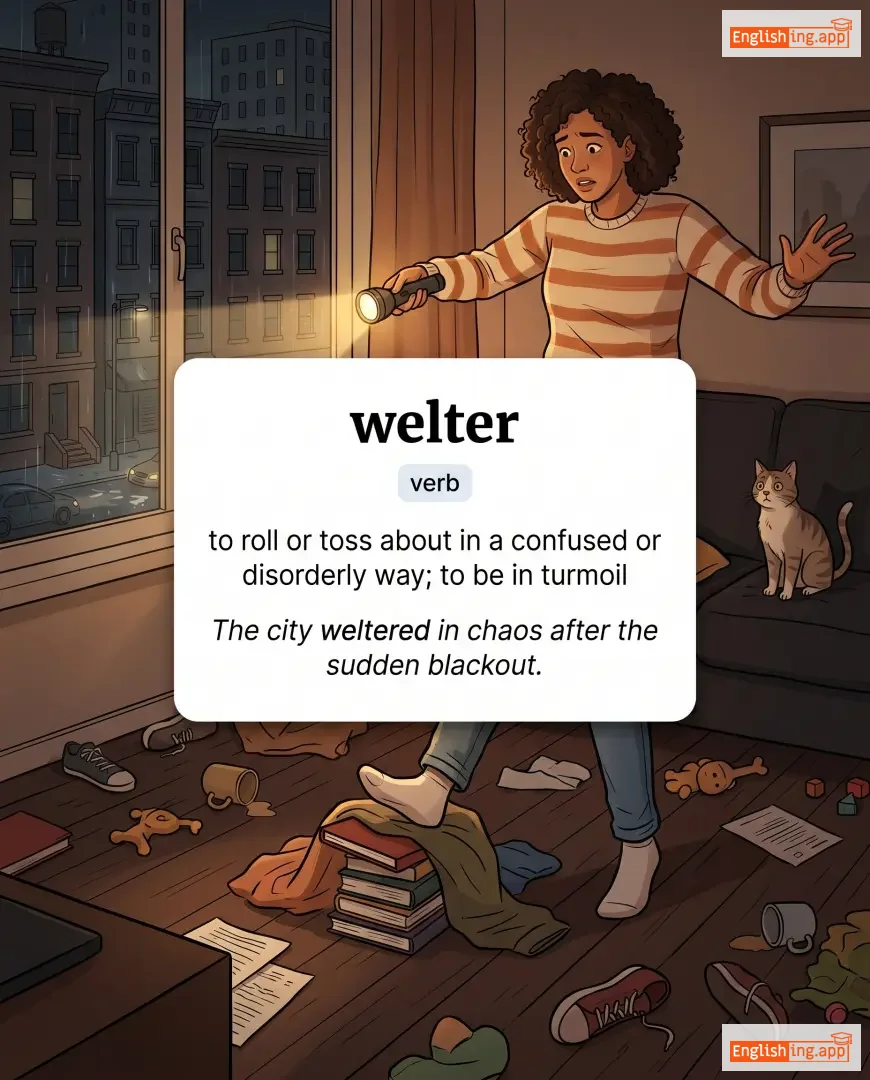
to roll or toss about in a confused or disorderly way; to be in turmoil
|
The city weltered in chaos after the sudden blackout.
La ciudad se sumió en el caos después del apagón repentino.
••••••
|
La ciudad se sumió en el caos después del apagón repentino.
La ciudad se sumió en el caos después del apagón repentino.
••••••
|
-
••••••
|
-
••••••
|
-
••••••
|
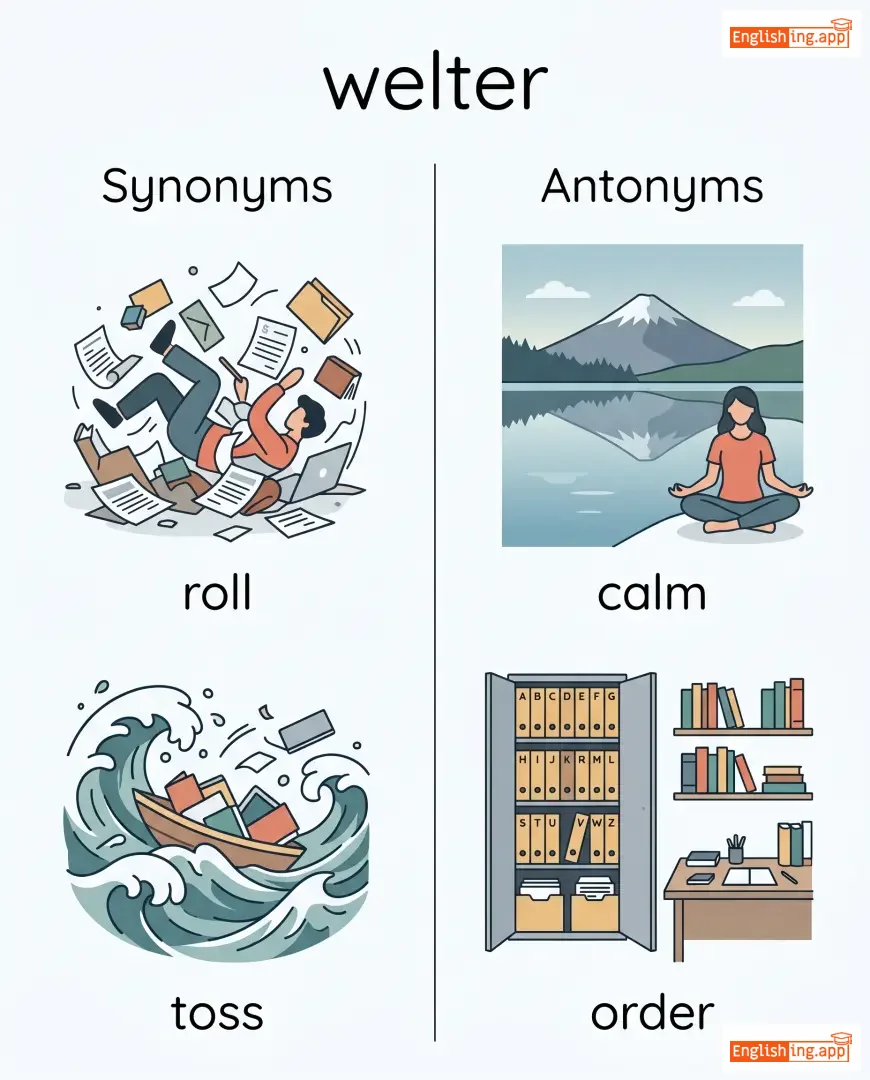
roll, toss, wallow, flounder, writhe
|
••••••
|
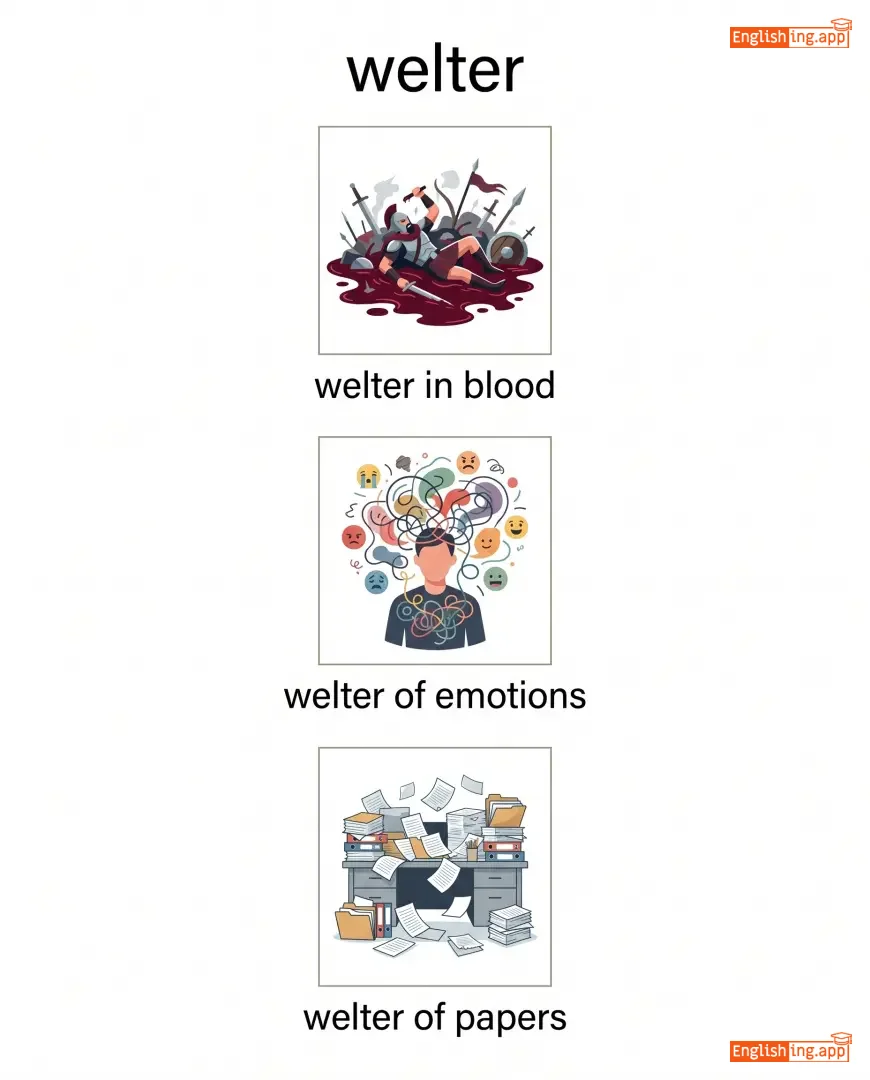
welter in blood, welter of emotions, welter of papers
|
Well ter (welter) hace que todo gire en caos.
••••••
|
|
••••••
|
/wɛlt/
noun
(welt)
••••••
|
-
••••••
|
marca
marca
••••••
|
-
••••••
|
-
••••••
|
-
••••••
|
-
••••••
|
A raised mark on the skin, usually from a blow or allergic reaction.
|
He had a red welt on his arm after the bee sting.
••••••
|
Tenía una marca roja en su brazo después de la picadura de la abeja.
Tenia una marka roja en su brazo despues de la picadura de la abeja.
••••••
|
-
••••••
|
-
••••••
|
-
••••••
|
bruise, lump, bump, mark, swelling
|
••••••
|
red welt, painful welt, swelling welt
|
Welt significa marca - Bee belt (cinturón de abeja) provoca marca
••••••
|
|
••••••
|
/ˌwɛl tə ˈduː/
adjective
(wɛl tu du)
••••••
|
-
••••••
|
adinerado
adinerado
••••••
|
-
••••••
|
-
••••••
|
-
••••••
|
-
••••••
|
Prosperous, wealthy, or financially comfortable.
|
They belong to a well-to-do family in the city.
••••••
|
Pertenecen a una familia adinerada de la ciudad.
Pertenecen a una familia adinerada de la ciudad.
••••••
|
-
••••••
|
-
••••••
|
-
••••••
|
wealthy, affluent, prosperous, rich, well-off
|
poor, needy, impoverished
|
well-to-do family, well-to-do businessman, well-to-do society
|
Well-to-do significa adinerado - Well (bien) y Do (hacer) para hacerse rico.
••••••
|
|
••••••
|
/ˈwɛlˌduːər/
noun
(wɛlˌduːər)
••••••
|
-
••••••
|
bienhechor
bienhechor
••••••
|
-
••••••
|
-
••••••
|
-
••••••
|
-
••••••
|
A person who does good deeds; a benefactor.
|
The community praised the well-doer for his charity.
••••••
|
La comunidad elogió al bienhechor por su caridad.
La comunidad elogió al bienhechor por su caridad.
••••••
|
-
••••••
|
-
••••••
|
-
••••••
|
benefactor, philanthropist, helper, donor, humanitarian
|
wrongdoer, criminal, offender
|
kind well-doer, charitable well-doer
|
Bienhechor suena como 'Bien' (bueno) y 'hechor' (haciendo), recordando que es alguien que hace el bien.
••••••
|
|
••••••
|
/ˌwɛlˈbrɛd/
adjective
(wel-bred)
••••••
|
-
••••••
|
bien educado
bien educado
••••••
|
-
••••••
|
-
••••••
|
-
••••••
|
-
••••••
|
Having or showing good manners; properly raised.
|
She is a well-bred young lady with excellent manners.
••••••
|
Ella es una joven bien educada con excelentes modales.
Ella es una joven bien educada con excelentes modales.
••••••
|
-
••••••
|
-
••••••
|
-
••••••
|
polite, refined, cultured, courteous, mannerly
|
••••••
|
well-bred lady, well-bred child, well-bred manners
|
Well-bred = bien educado - bien criado, buenos modales.
••••••
|
|
••••••
|
/ˈwɛlkɪn/
noun
(wélkin)
••••••
|
-
••••••
|
cielo
cielo
••••••
|
-
••••••
|
-
••••••
|
-
••••••
|
-
••••••
|
The sky, the heavens, or the upper air.
|
The eagle soared high into the welkin.
El águila voló alto en el welkin.
••••••
|
El águila voló alto en el cielo.
El aguila volo alto en el cielo.
••••••
|
hacer que el welkin suene
••••••
|
To create a loud noise that seems to reach the heavens.
|
hacer que el cielo suene
hacer que el cielo suene
••••••
|
sky, heavens, firmament, atmosphere, ether
|
••••••
|
blue welkin, bright welkin, vast welkin
|
Welkin significa cielo - recuerda 'Well kin sky' es un buen cielo.
••••••
|
|
••••••
|
/wɪrd/
adjective
(wird)
••••••
|
-
••••••
|
extraño
extrano
••••••
|
-
••••••
|
-
••••••
|
-
••••••
|
-
••••••
|
suggesting something supernatural or very strange; unusual
|
The movie had a weird ending that nobody expected.
••••••
|
La película tenía un final extraño que nadie esperaba.
La pelicula tenia un final extrano que nadie esperaba.
••••••
|
••••••
|
to make someone feel uncomfortable or strange
|
extrañar a alguien
extrañar a alguien
••••••
|
strange, odd, bizarre, unusual, peculiar
|
••••••
|
weird feeling, weird dream, weird noise, weird behavior
|
Weird significa extraño, como una idea extraña en una película.
••••••
|
|
••••••
|
/weɪ/
verb
(wéi)
••••••
|
••••••
|
pesar
pesar
••••••
|
weid
••••••
|
weid
••••••
|
weiz
••••••
|
weiing
••••••
|
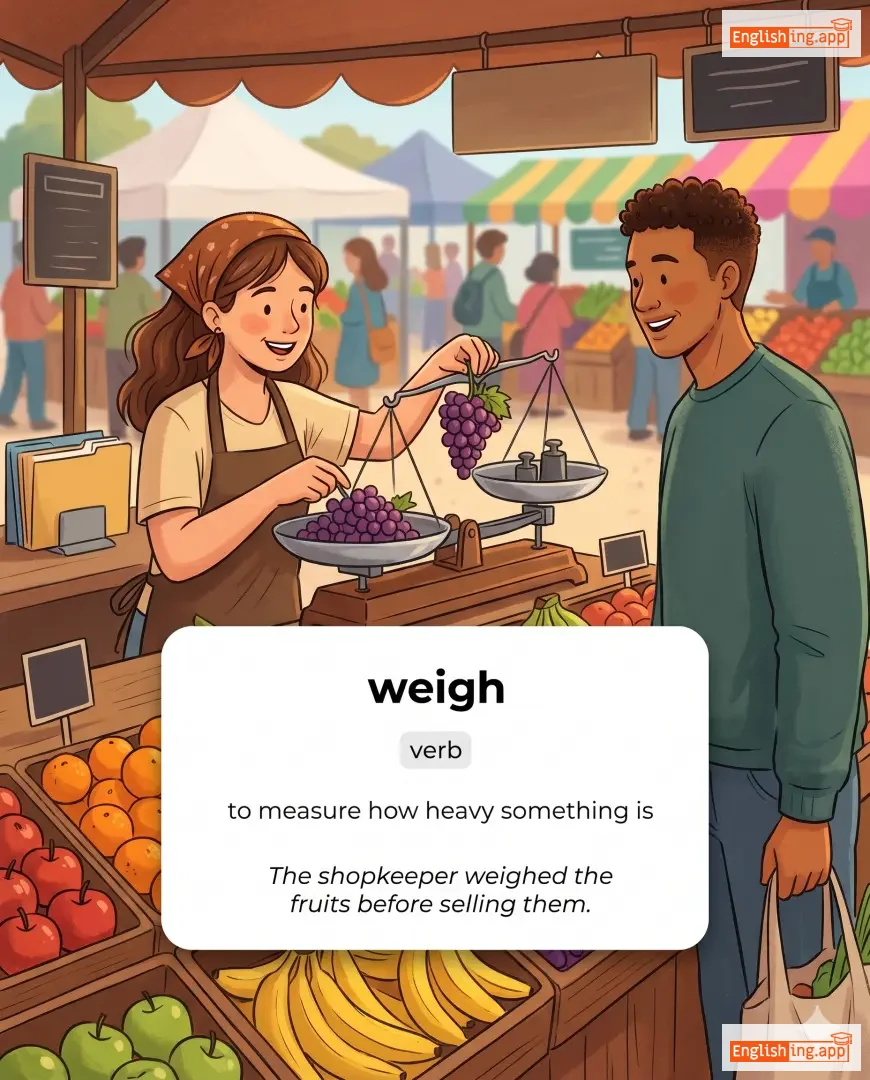
to measure how heavy something is
|
The shopkeeper weighed the fruits before selling them.
el tendero pesó las frutas antes de venderlas.
••••••
|
El tendero pesó las frutas antes de venderlas.
El tendero pesó las frutas antes de venderlas.
••••••
|
pesar en la mente de alguien
••••••
|
to make someone worried or anxious
|
preocupar a alguien
preocupar a alguien
••••••
|
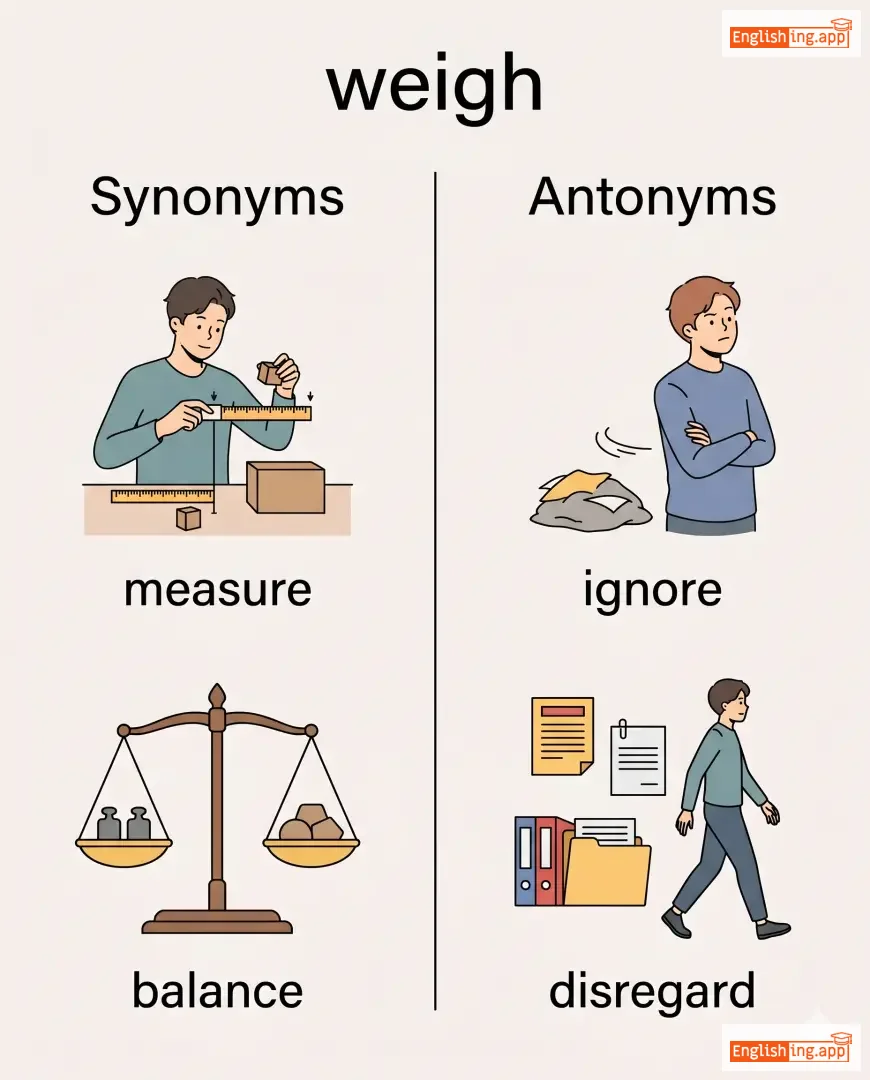
measure, balance, evaluate, calculate
|
••••••
|
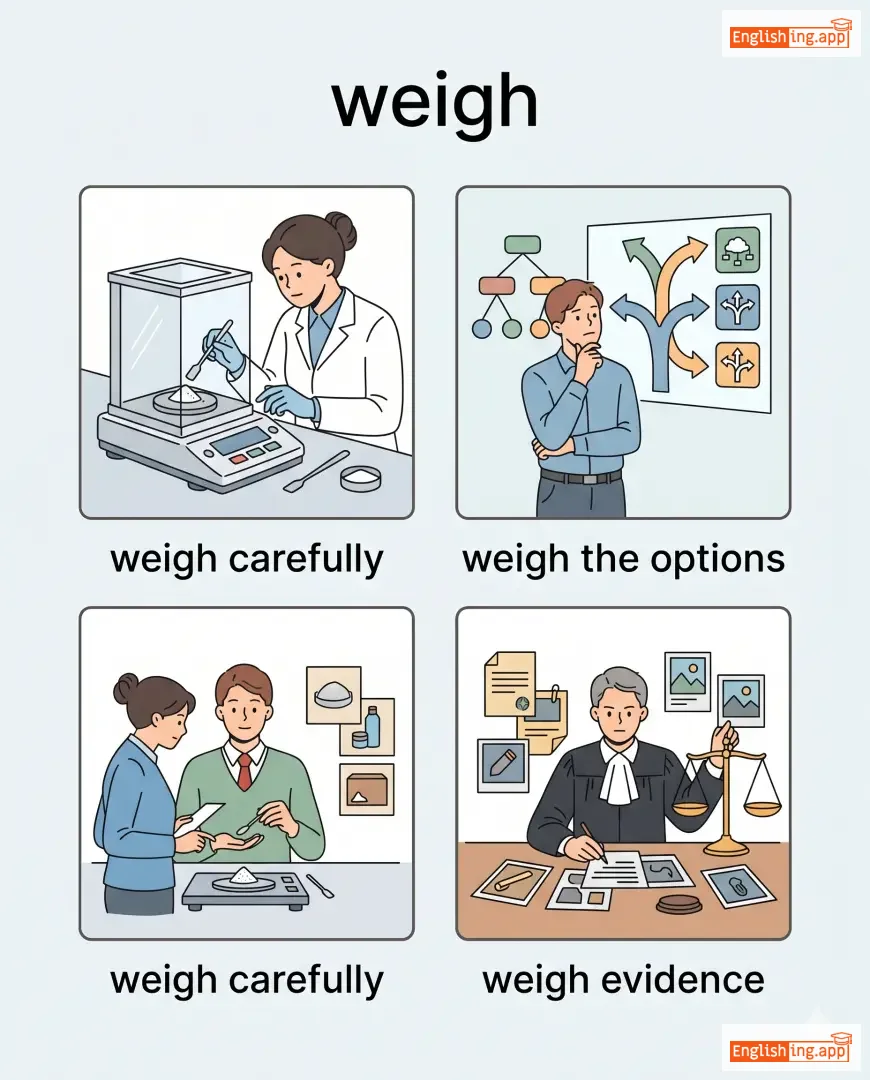
weigh carefully, weigh the options, weigh evidence, weigh anchor
|
Weigh significa pesar, como cuando pesas algo en una báscula.
••••••
|
|
••••••
|
/wiː/
adjective
(wi)
••••••
|
-
••••••
|
muy pequeño
muy pequeno
••••••
|
-
••••••
|
-
••••••
|
-
••••••
|
-
••••••
|
••••••
|
She gave me a wee smile before leaving.
••••••
|
Ella me dio una pequeña sonrisa antes de irse.
Ella me dio una pequena sonrisa antes de irse.
••••••
|
••••••
|
in the very early hours of the morning
|
en las primeras horas de la mañana
en las primeras horas de la manana
••••••
|
tiny, small, minute, little, petite
|
••••••
|
wee baby, wee smile, wee bit, wee hours
|
Wee significa muy pequeño, como una pequeña sonrisa.
••••••
|
|
••••••
|
/ˈwɛðər/
noun
(wɛðər)
••••••
|
••••••
|
clima
klima
••••••
|
-
••••••
|
-
••••••
|
-
••••••
|
-
••••••
|
the state of the atmosphere at a particular place and time in terms of heat, cloudiness, dryness, sunshine, wind, rain, etc.
|
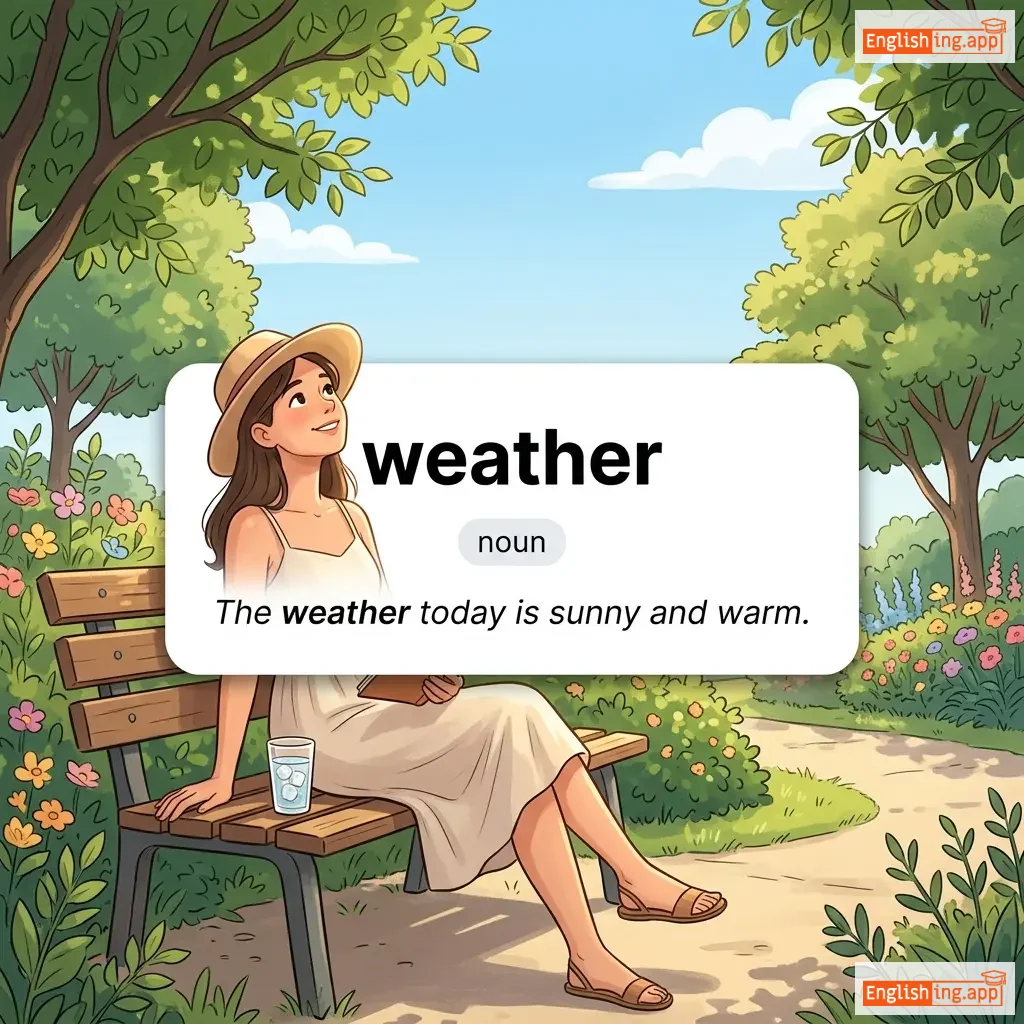
The weather today is sunny and warm.
••••••
|
El clima de hoy está soleado y cálido.
El clima de hoy esta soleado y calido.
••••••
|
••••••
|
••••••
|
sentirse mal
sentirse mal
••••••
|
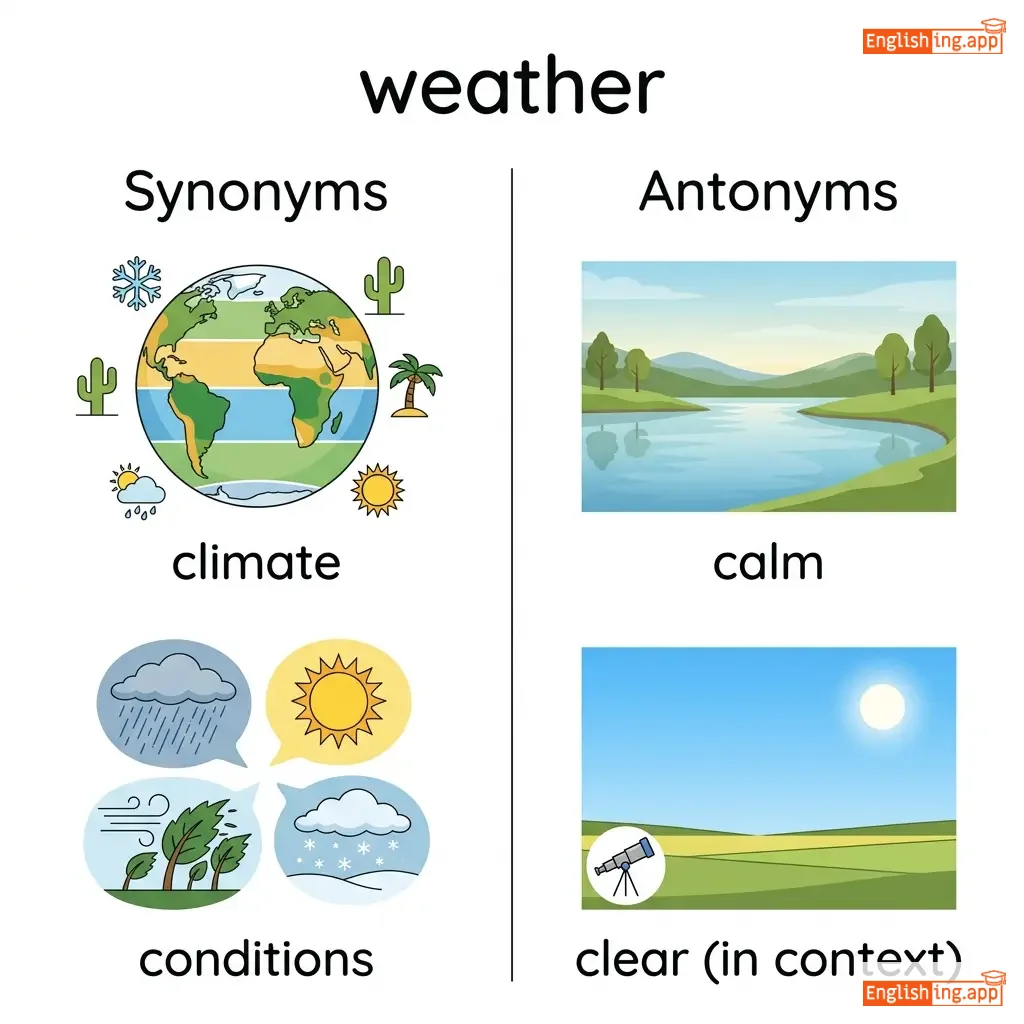
climate, conditions, atmosphere, forecast
|
••••••
|
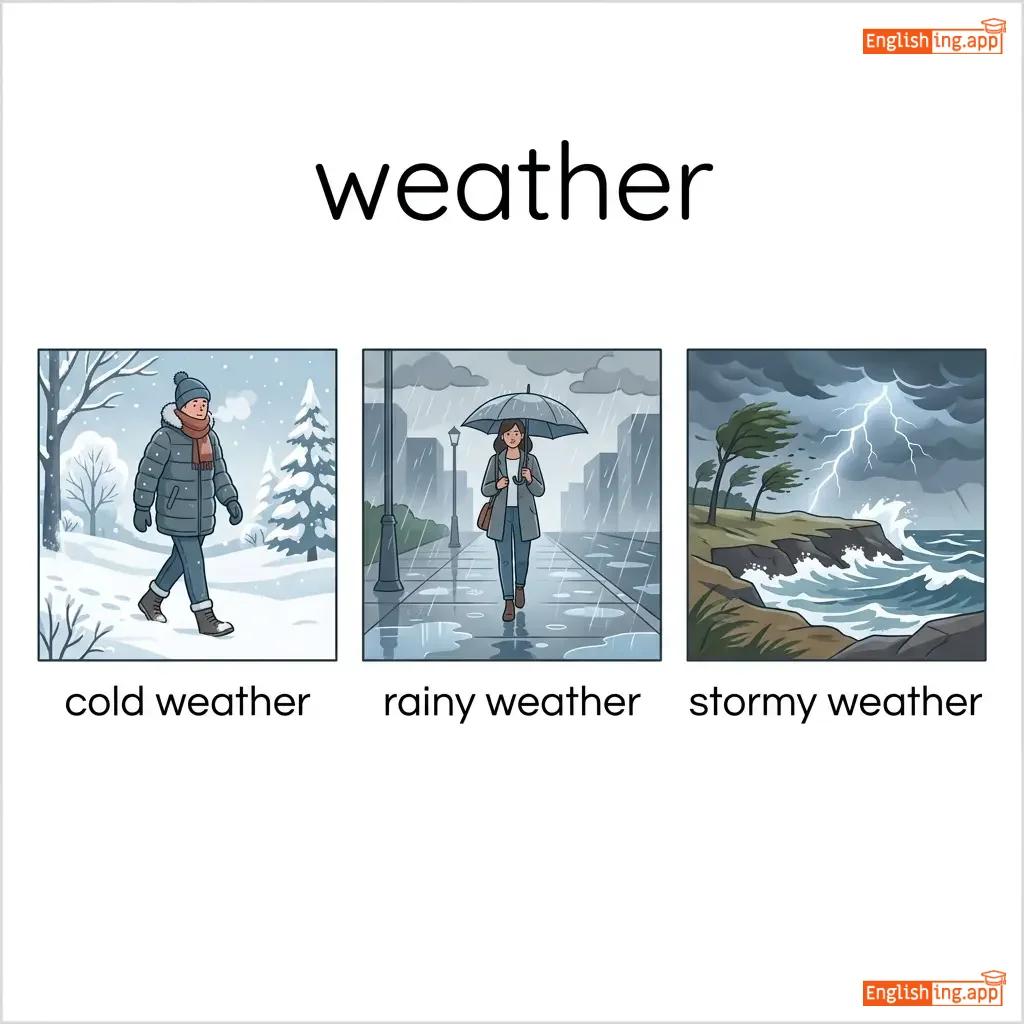
cold weather, rainy weather, stormy weather, fine weather
|
El clima cambia el día, pero siempre lo sentimos en el aire, como el weather.
••••••
|
|
••••••
|
/ˈwɪəri/
adjective
(wíri)
••••••
|
-
••••••
|
cansado
cansado
••••••
|
-
••••••
|
-
••••••
|
-
••••••
|
-
••••••
|
feeling or showing extreme tiredness, especially as a result of exertion or lack of sleep
|
After the long journey, she felt weary and wanted to rest.
Después del largo viaje, ella se sintió cansada y quería descansar.
••••••
|
Después del largo viaje, ella se sintió cansada y quería descansar.
Despues del largo viaje, ella se sintio cansada y queria descansar.
••••••
|
cansada de
••••••
|
tired or bored with something because it has been happening for too long
|
cansada de
cansada de
••••••
|
tired, exhausted, fatigued, drained, worn-out
|
energetic, lively, refreshed
|
feel weary, grow weary, weary traveler, weary eyes
|
Weary significa cansado, y cansado en español también significa weary.
••••••
|
|
••••••
|
/ˈwɪərɪsəm/
adjective
(wíerisom)
••••••
|
-
••••••
|
agotador
agotador
••••••
|
-
••••••
|
-
••••••
|
-
••••••
|
-
••••••
|
Causing one to feel tired or bored.
|
The long and wearisome lecture put the students to sleep.
••••••
|
La larga y agotadora conferencia hizo que los estudiantes se durmieran.
La larga y agotadora conferencia hizo que los estudiantes se durmieran.
••••••
|
-
••••••
|
-
••••••
|
-
••••••
|
tedious, tiring, boring, dull, exhausting
|
exciting, engaging, refreshing
|
wearisome task, wearisome journey, wearisome lecture
|
Wear (usar) es agotador, wearisome significa agotador.
••••••
|
|
••••••
|
/wiːn/
verb
(wín)
••••••
|
-
••••••
|
destetar
destetar
••••••
|
wínd
••••••
|
wínd
••••••
|
wíns
••••••
|
wín-ing
••••••
|
To gradually stop a child or animal from breastfeeding; to detach from a habit.
|
Parents often wean their babies around six months old.
Los padres suelen destetar a sus bebés alrededor de los seis meses.
••••••
|
Los padres suelen destetar a sus bebés alrededor de los seis meses.
Los padres suelen destetar a sus bebés alrededor de los seis meses.
••••••
|
wean off
••••••
|
To gradually stop someone from depending on something.
|
dejar de depender
dejar de depender
••••••
|
detach, accustom, disengage, train
|
••••••
|
wean a baby, wean off drugs, wean from habit
|
Wean significa 'destetar' – dejar a un niño o animal de amamantar.
••••••
|
|
••••••
|
/wiːl/
noun
(happiness)
••••••
|
-
••••••
|
felicidad
felicidad
••••••
|
-
••••••
|
-
••••••
|
-
••••••
|
-
••••••
|
A raised mark on the skin left after a blow; or general well-being and prosperity.
|
The charity worked for the common weal of the community.
••••••
|
Ella no pudo ocultar su felicidad cuando recibió el premio.
Ella no pudo ocultar su felicidad cuando recibio el premio.
••••••
|
••••••
|
The general welfare or good of the public.
|
búsqueda de la felicidad
busqueda de la felicidad
••••••
|
welfare, prosperity, good, wellbeing
|
••••••
|
common weal, for the weal, promote weal
|
Felicidad es la clave para 'Happy'.
••••••
|