|
••••••
|
/ˈænti ˈeəkræft ɡʌn/
noun
(anti-aeroplano-cañón)
••••••
|
-
••••••
|
cañón antiaéreo
canon antiaereo
••••••
|
a weapon designed to attack aircraft from the ground
|
The anti-aircraft gun was positioned to defend the military base.
••••••
|
El cañón antiaéreo estaba posicionado para defender la base militar.
El canon antiaereo estaba posicionado para defender la base militar.
••••••
|
anti-aircraft cannon, air defense gun, AA gun
|
-
••••••
|
anti-aircraft defense, heavy anti-aircraft gun, anti-aircraft battery
|
Think of it as a cannon that stops aircraft!
••••••
|
|
••••••
|
/ˈeər fɔːrs/
noun
(éir fórs)
••••••
|
-
••••••
|
fuerza aérea
fuerza aerea
••••••
|
the military organization of a country that uses aircraft for fighting
|
The air force conducted a training exercise over the mountains.
••••••
|
La fuerza aérea realizó un ejercicio de entrenamiento sobre las montañas.
La fuerza aerea realizo un ejercicio de entrenamiento sobre las montanas.
••••••
|
aerial force, aviation branch, air service
|
••••••
|
air force base, air force pilot, join the air force
|
Air Force es fácil de recordar como 'fuerza aérea' en español.
••••••
|
|
••••••
|
/rɪˈvɒl.vər/
noun
(revólver)
••••••
|
-
••••••
|
revólver
revolver
••••••
|
a pistol with revolving chambers enabling several shots to be fired without reloading
|
The detective drew his revolver from its holster.
El detective sacó su revólver de su funda.
••••••
|
El detective sacó su revólver de su funda.
El detective saco su revolver de su funda.
••••••
|
pistol, handgun, firearm, gun
|
-
••••••
|
draw a revolver, loaded revolver, police revolver
|
Revólver = 'revolv'iendo disparos sin recargar.
••••••
|
|
••••••
|
/ˈfaɪ.tər/
noun
(fáiter)
••••••
|
-
••••••
|
avión de combate
avion de combate
••••••
|
a military aircraft designed for attacking other aircraft; a person who fights
|
The fighter jet flew overhead during the military parade.
El avión de combate voló sobre nuestras cabezas durante el desfile militar.
••••••
|
El avión de combate voló sobre nuestras cabezas durante el desfile militar.
El avion de combate volo sobre nuestras cabezas durante el desfile militar.
••••••
|
warrior, combatant, aircraft
|
••••••
|
fighter jet, fighter pilot, freedom fighter
|
El avión de combate tiene la misión de luchar
••••••
|
|
••••••
|
/kəˈmændər ɪn tʃiːf/
noun
(comandante en jefe)
••••••
|
-
••••••
|
comandante en jefe
comandante en jefe
••••••
|
the supreme leader of a nation's armed forces
|
The president serves as the commander-in-chief of the military.
El presidente actúa como el comandante en jefe de las fuerzas armadas.
••••••
|
El presidente actúa como el comandante en jefe de las fuerzas armadas.
El presidente actúa como el comandante en jefe de las fuerzas armadas.
••••••
|
supreme commander, military leader, chief commander
|
subordinate, follower, private
|
supreme commander-in-chief, military commander-in-chief, armed forces commander-in-chief
|
Recuerda al comandante en jefe como el líder supremo.
••••••
|
|
••••••
|
/ʃel/
noun
(šel)
••••••
|
-
••••••
|
cáscara
cáscara
••••••
|
hard outer covering of an animal; explosive projectile for a gun
|
The artillery fired a shell at the enemy position.
••••••
|
La artillería disparó una cáscara a la posición enemiga.
La artillería disparó una cáscara a la posición enemiga.
••••••
|
casing, husk, projectile, missile
|
••••••
|
artillery shell, shell shock, shell out
|
Cáscara is similar to the shell, the outer covering of an animal!
••••••
|
|
••••••
|
/kænˈtoʊnmənt/
noun
(kantonment)
••••••
|
-
••••••
|
cuartel militar
cuartel militar
••••••
|
a military base or permanent military station
|
The soldiers lived in the cantonment outside the city.
Los soldados vivieron en el cantonment fuera de la ciudad.
••••••
|
Los soldados vivieron en el cuartel militar fuera de la ciudad.
Los soldados vivieron en el cuartel militar fuera de la ciudad.
••••••
|
military base, garrison, barracks
|
civilian area, residential zone
|
military cantonment, cantonment area, cantonment board
|
Cuartel militar = lugar donde los soldados cuidan el cuartel
••••••
|
|
••••••
|
/boʊ/
noun
(bo)
••••••
|
-
••••••
|
arco
arco
••••••
|
a weapon for shooting arrows, made of a curved piece of wood
|
The archer drew his bow and aimed at the target.
••••••
|
El arquero tensó su arco y apuntó al objetivo.
El arquero tensó su arco y apuntó al objetivo.
••••••
|
longbow, crossbow, archer's bow
|
-
••••••
|
draw a bow, bow and arrow, bow string
|
El arco se curva como la sonrisa de un arquero exitoso.
••••••
|
|
••••••
|
/wɔːr/
noun
(guór)
••••••
|
-
••••••
|
guerra
guerra
••••••
|
a state of armed conflict between different countries or different groups within a country
|
The war lasted for five years and caused great destruction.
La guerra duró cinco años y causó gran destrucción.
••••••
|
La guerra duró cinco años y causó gran destrucción.
La guerra duro cinco anos y causo gran destruccion.
••••••
|
conflict, battle, combat, warfare
|
peace, harmony, ceasefire
|
civil war, world war, war zone, declare war
|
Guerra in Spanish sounds like 'Guerra', representing armed conflict across borders.
••••••
|
|
••••••
|
/ˈbʊlɪt/
noun
(bulet)
••••••
|
-
••••••
|
bala
bala
••••••
|
a metal projectile fired from a gun
|
The bullet missed its target and hit the wall.
la bala falló su objetivo y golpeó la pared.
••••••
|
La bala falló su objetivo y golpeó la pared.
La bala falló su objetivo y golpeó la pared.
••••••
|
projectile, ammunition, round, slug
|
-
••••••
|
bullet point, bullet train, bullet wound, dodge a bullet
|
La bala vuela rápidamente, como una flecha.
••••••
|
|
••••••
|
/kæmp/
noun
(camp)
••••••
|
-
••••••
|
campamento
campamento
••••••
|
a place where soldiers live temporarily; a place with tents or huts for temporary accommodation
|
The military established a camp near the border.
El ejército estableció un campamento cerca de la frontera.
••••••
|
El ejército estableció un campamento cerca de la frontera.
El ejércico estableció un campamento cerca de la frontera.
••••••
|
base, encampment, bivouac, barracks
|
home, permanent residence
|
military camp, training camp, set up camp
|
Los soldados viven en un campamento como si fuera un camp.
••••••
|
|
••••••
|
/tæŋk/
noun
(tæŋk)
••••••
|
-
••••••
|
tanque
tan-ke
••••••
|
a heavily armored fighting vehicle moving on a continuous track
|
The tank rolled through the battlefield with powerful armor.
El tanque rodó a través del campo de batalla con una armadura poderosa.
••••••
|
El tanque avanzó por el campo de batalla con armadura poderosa.
El tanque avanzo por el campo de batalla con armadura poderosa.
••••••
|
armored vehicle, battle tank, combat vehicle
|
-
••••••
|
main battle tank, tank crew, tank warfare, heavy tank
|
El tanque es como un gran carro blindado que avanza sobre las tierras de guerra.
••••••
|
|
••••••
|
/ˈsʌb.mə.riːn/
noun
(submarino)
••••••
|
-
••••••
|
submarino
submarino
••••••
|
a warship with a streamlined hull designed to operate completely submerged in the sea
|
The submarine dived deep into the ocean to avoid detection.
El submarino se sumergió profundamente en el océano para evitar ser detectado.
••••••
|
El submarino se sumergió profundamente en el océano para evitar ser detectado.
El submarino se sumergió profundamente en el océano para evitar ser detectado.
••••••
|
underwater vessel, sub, U-boat
|
••••••
|
nuclear submarine, submarine warfare, submarine captain
|
Submarino suena como sumergir en el mar, es un barco que lo hace.
••••••
|
|
••••••
|
/dɪˈfiːt/
verb
(dɪˈfiːt)
••••••
|
-
••••••
|
derrota
derrota
••••••
|
to win a victory over; to overcome in battle or competition
|
The army managed to defeat the enemy forces.
••••••
|
El ejército logró derrotar a las fuerzas enemigas.
El ejercito logro derrotar a las fuerzas enemigas.
••••••
|
conquer, overcome, vanquish, beat
|
victory, triumph, win, succeed
|
defeat the enemy, admit defeat, crushing defeat
|
Derrota in Spanish means defeat, think of 'der' (overcome) and 'rota' (broken, defeated).
••••••
|
|
••••••
|
/ˈen.ə.mi/
noun
(enemi)
••••••
|
-
••••••
|
enemigo
enemigo
••••••
|
a person who is actively opposed or hostile to someone or something
|
The soldiers fought bravely against their enemy.
Los soldados lucharon valientemente contra su enemigo.
••••••
|
Los soldados lucharon valientemente contra su enemigo.
Los soldados lucharon valientemente contra su enemigo.
••••••
|
foe, adversary, opponent, rival
|
friend, ally, supporter, companion
|
sworn enemy, deadly enemy, enemy forces, enemy territory
|
enemigo suena como enemigo, oponente claro.
••••••
|
|
••••••
|
/ɑːrmz/
noun
(arms)
••••••
|
-
••••••
|
armas
armas
••••••
|
weapons and ammunition; firearms
|
The soldiers carried their arms into battle.
••••••
|
Los soldados llevaron sus armas a la batalla.
Los soldados llevaron sus armas a la batalla.
••••••
|
weapons, firearms, armaments
|
••••••
|
bear arms, arms control, small arms
|
Recuerda 'armas' para los soldados en combate.
••••••
|
|
••••••
|
/ɡʌn/
noun
(gan)
••••••
|
-
••••••
|
arma de fuego
arma de fuego
••••••
|
a weapon that fires bullets or other projectiles from a metal tube
|
The soldier cleaned his gun after the training session.
••••••
|
El soldado limpió su arma después de la sesión de entrenamiento.
El soldado limpió su arma después de la sesión de entrenamiento.
••••••
|
firearm, pistol, rifle, weapon
|
peace, shield, protection
|
gun control, gun safety, load a gun
|
arma de fuego = recuerda 'arma' para asociar con 'gun'.
••••••
|
|
••••••
|
/sɔːrd/
noun
(sword)
••••••
|
-
••••••
|
espada
espada
••••••
|
a weapon with a long metal blade and a handle, used for fighting
|
The knight drew his sword to defend the castle.
el caballero sacó su espada para defender el castillo.
••••••
|
El caballero sacó su espada para defender el castillo.
el caballero saco su espada para defender el castillo.
••••••
|
blade, saber, cutlass, rapier
|
shield, armor, protection
|
sharp sword, double-edged sword, sword fight, sword blade
|
Recuerda que espada se traduce como sword, como el sonido de ‘espada’ cuando la dices.
••••••
|
|
••••••
|
/ˈtrʌmpɪt/
noun
(trámpet)
••••••
|
-
••••••
|
trompeta
trompeta
••••••
|
a brass musical instrument with a brilliant tone; military signal instrument
|
The soldier played the trumpet to signal the troops.
El soldado tocó la trompeta para señalizar a las tropas.
••••••
|
El soldado tocó la trompeta para señalizar a las tropas.
El soldado tocó la trompeta para señalizar a las tropas.
••••••
|
••••••
|
-
••••••
|
military trumpet, trumpet call, trumpet signal, brass trumpet
|
Trompeta = Trompeta (toca el ejército para señales)
••••••
|
|
••••••
|
/ˈvɪk.tər.i/
noun
(viktori)
••••••
|
••••••
|
victoria
victoria
••••••
|
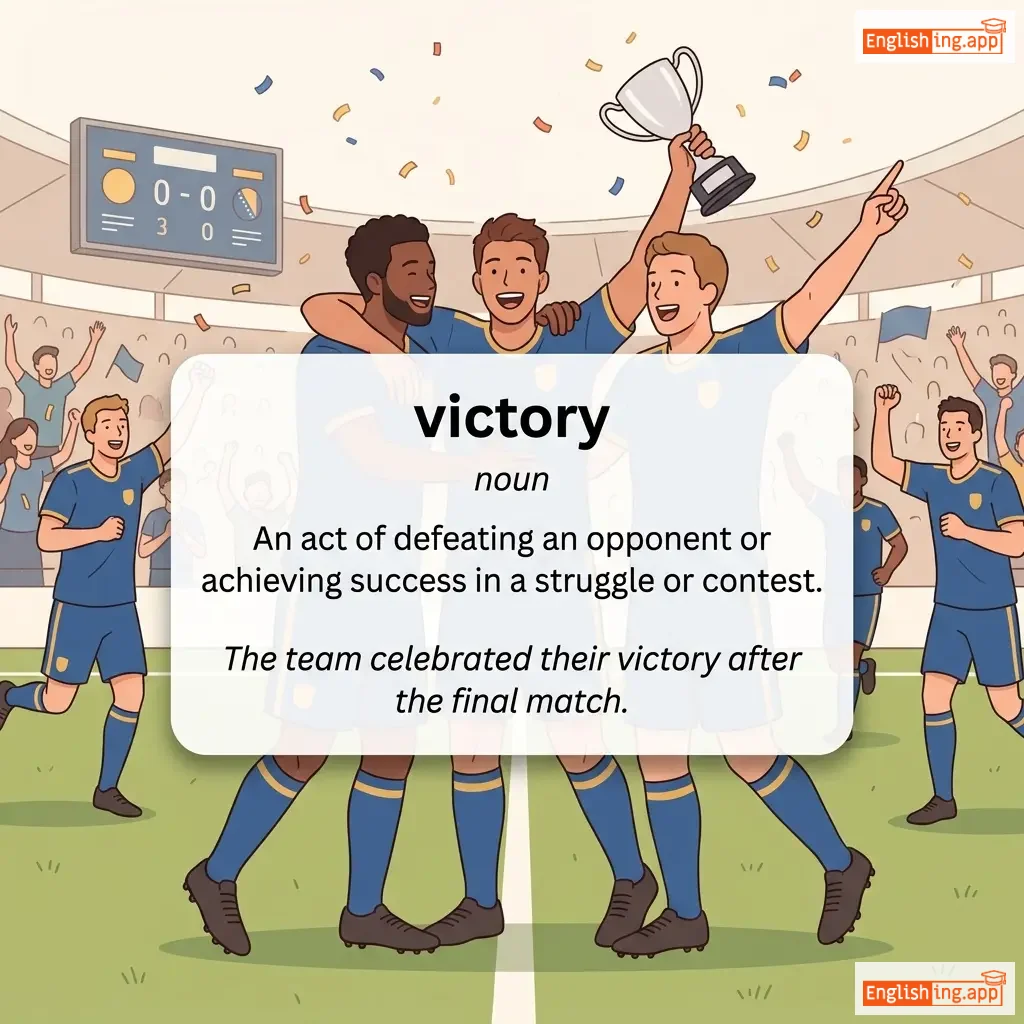
an act of defeating an enemy or opponent in a battle, game, or other competition
|
The army celebrated their victory over the enemy forces.
••••••
|
El ejército celebró su victoria sobre las fuerzas enemigas.
El ejercito celebro su victoria sobre las fuerzas enemigas.
••••••
|
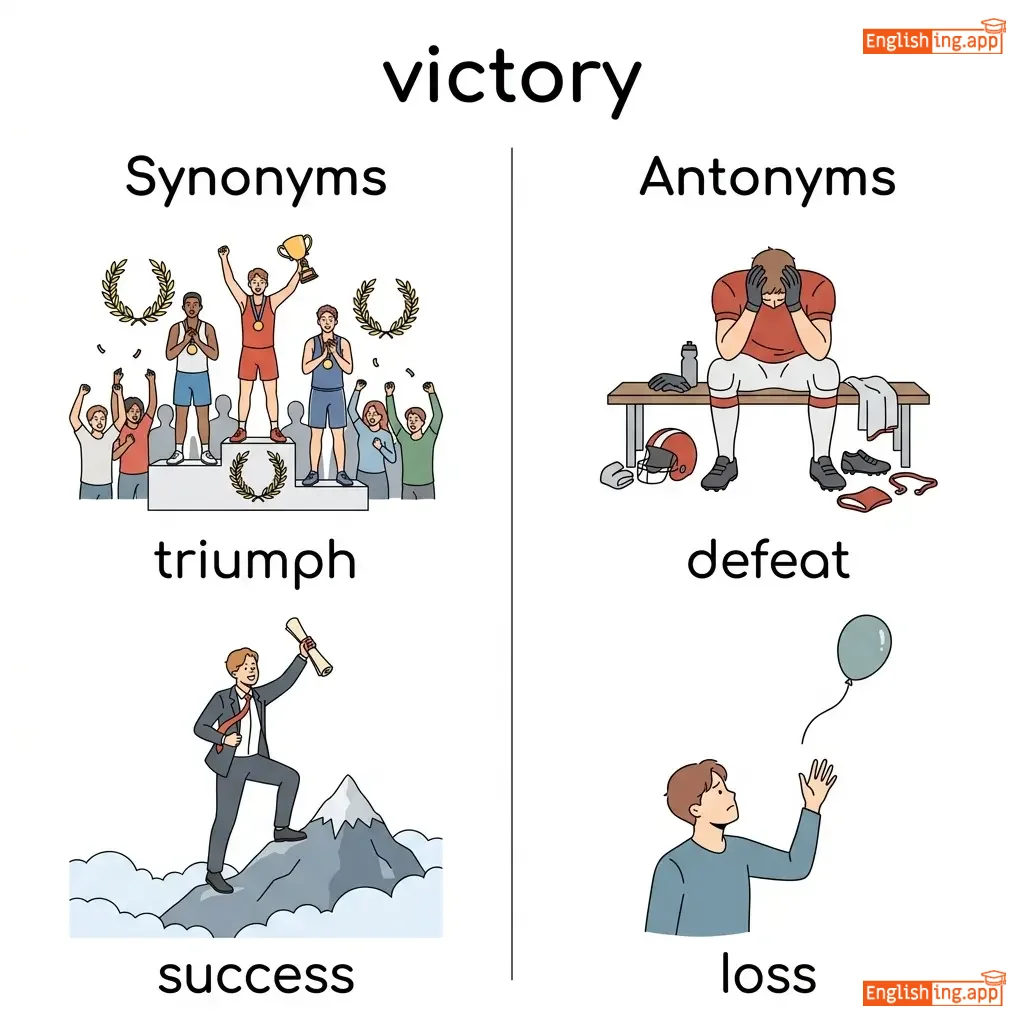
triumph, win, success, conquest
|
••••••
|
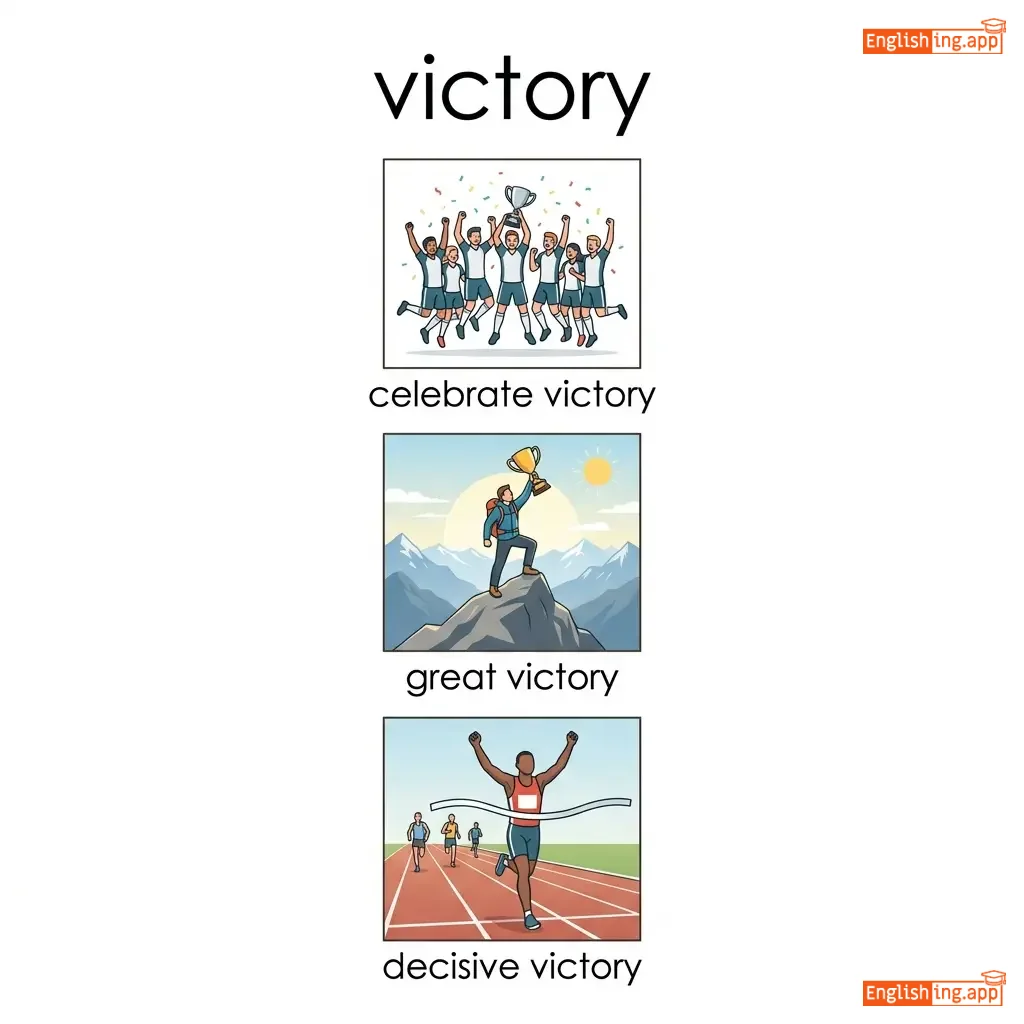
military victory, victory parade, decisive victory
|
Victory y victoria suenan igual y ambas significan ganar.
••••••
|
|
••••••
|
/ˈraɪfəl/
noun
(ráifel)
••••••
|
-
••••••
|
rifle
rifle
••••••
|
a gun with a long barrel that is fired from the shoulder
|
The soldier carried a rifle during the mission.
El soldado llevaba un rifle durante la misión.
••••••
|
El soldado llevaba un rifle durante la misión.
El soldado llevaba un rifle durante la misión.
••••••
|
firearm, gun, carbine, musket
|
-
••••••
|
assault rifle, hunting rifle, rifle range, sniper rifle
|
The word 'rifle' is pronounced similarly in Spanish as in English, helping to recall the long-barrel weapon.
••••••
|
|
••••••
|
/læns/
noun
(lans)
••••••
|
-
••••••
|
lanza
lanza
••••••
|
a long weapon with a sharp metal point, used by soldiers on horseback
|
The knight charged forward with his lance ready.
••••••
|
El caballero cargó hacia adelante con su lanza lista.
El caballero cargó hacia adelante con su lanza lista.
••••••
|
••••••
|
-
••••••
|
knight's lance, cavalry lance, charge with a lance
|
Lanza: Lanza en español es el mismo que en inglés, la diferencia está en el sonido.
••••••
|
|
••••••
|
/ˈɪn.fən.tri/
noun
(infántri)
••••••
|
-
••••••
|
infantería
infanteria
••••••
|
soldiers marching or fighting on foot; foot soldiers collectively
|
The infantry advanced across the battlefield on foot.
••••••
|
La infantería avanzó a través del campo de batalla a pie.
La infantería avanzó a través del campo de batalla a pie.
••••••
|
foot soldiers, ground troops, riflemen
|
••••••
|
infantry regiment, infantry division, light infantry
|
Infantería = 'Infantry', soldados que caminan en el campo de batalla
••••••
|
|
••••••
|
/kəˈmændər/
noun
(comandante)
••••••
|
-
••••••
|
comandante
comandante
••••••
|
a person in authority over a military unit; leader of armed forces
|
The commander ordered his troops to advance.
El comandante ordenó a sus tropas que avanzaran.
••••••
|
El comandante ordenó a sus tropas que avanzaran.
El comandante ordeno a sus tropas que avanzaran
••••••
|
leader, general, chief, captain
|
subordinate, follower, private
|
military commander, commanding officer, field commander
|
Comandante en español suena como 'coman' + 'dante', recordando que es el líder.
••••••
|
|
••••••
|
/ˈɑːr.mər/
noun
(ármor)
••••••
|
-
••••••
|
armadura
armadura
••••••
|
protective covering worn by soldiers; metal plating for military vehicles
|
The knight wore heavy armour to protect himself in battle.
El caballero llevaba una armadura pesada para protegerse en la batalla.
••••••
|
El caballero llevaba una armadura pesada para protegerse en la batalla.
El caballero llevaba una armadura pesada para protegerse en la batalla.
••••••
|
protection, shield, mail, plating
|
vulnerability, exposure, nakedness
|
body armour, armour plating, suit of armour
|
Recuerda que una armadura protege a los caballeros en batallas.
••••••
|
|
••••••
|
/ˈkænən/
noun
(cánon)
••••••
|
-
••••••
|
cañón
canon
••••••
|
large heavy gun that fires cannonballs or shells
|
The castle was defended by several large cannons.
El castillo fue defendido por varios grandes cañones.
••••••
|
El castillo fue defendido por varios grandes cañones.
El castillo fue defendido por varios grandes canyones.
••••••
|
artillery, gun, howitzer, mortar
|
shield, defense, protection
|
cannon fire, cannon ball, water cannon
|
Think of 'cañón' as the weapon used for defense in battles.
••••••
|
|
••••••
|
/ˈmes.ɪn.dʒər/
noun
(mesénjér)
••••••
|
-
••••••
|
mensajero
mensahero
••••••
|
a person who carries messages or communications between parties
|
The messenger delivered important battle plans to the commander.
••••••
|
El mensajero entregó planes de batalla importantes al comandante.
El mensajero entregó planes de batalla importantes al comandante.
••••••
|
courier, envoy, herald, carrier
|
recipient, receiver, addressee
|
messenger service, royal messenger, send a messenger
|
El mensajero siempre entrega los mensajes importantes, como el 'mensajero' lleva el mensaje.
••••••
|
|
••••••
|
/ˈneɪ.vəl fɔːrs/
noun
(néval fɔrs)
••••••
|
-
••••••
|
fuerzas navales
fuerzas navales
••••••
|
the branch of a nation's armed services that conducts military operations at sea
|
The naval force protected the country's coastline from enemy attacks.
••••••
|
Las fuerzas navales protegieron la costa del país de los ataques enemigos
Las fuerzas navales protegieron la costa del pais de los ataques enemigos
••••••
|
navy, fleet, maritime force, sea force
|
••••••
|
naval force commander, strong naval force, naval force operations
|
Las fuerzas navales defienden las costas del pais
••••••
|
|
••••••
|
/ˈneɪvi/
noun
(ˈneɪvi)
••••••
|
-
••••••
|
marina
marina
••••••
|
the branch of armed forces that conducts military operations at sea
|
He joined the navy after graduating from college.
••••••
|
Se unió a la marina después de graduarse de la universidad.
Se unió a la marina después de graduarse de la universidad.
••••••
|
fleet, naval force, maritime force
|
-
••••••
|
navy blue, royal navy, navy ship, navy seal
|
Marina es el lugar donde los barcos navegan
••••••
|
|
••••••
|
/ˈpɪs.təl/
noun
(pístol)
••••••
|
-
••••••
|
pistola
pistola
••••••
|
a small gun that can be held and fired with one hand
|
The officer drew his pistol from the holster.
El oficial sacó su pistola de la funda.
••••••
|
El oficial sacó su pistola de la funda.
El oficial sacó su pistola de la funda.
••••••
|
handgun, revolver, firearm
|
-
••••••
|
draw a pistol, pistol holster, load a pistol
|
Pistola = Pequeña arma que se puede usar con una mano.
••••••
|
|
••••••
|
/fɔːrt/
noun
(fort)
••••••
|
-
••••••
|
fuerte
fuerte
••••••
|
a strong building or group of buildings where soldiers live and defend
|
The ancient fort stood on top of the hill for centuries.
El antiguo fuerte se erguía en la cima de la colina durante siglos.
••••••
|
El antiguo fuerte se erguía en la cima de la colina durante siglos.
El antiguo fuerte se erguía en la cima de la colina durante siglos.
••••••
|
fortress, castle, stronghold, citadel
|
open field, plain, vulnerability
|
military fort, ancient fort, fort walls, fort defense
|
Fuerte (fort) sounds like 'fort' and it's a place soldiers defend. A strong defense!
••••••
|
|
••••••
|
/ˈdæɡər/
noun
(dágger)
••••••
|
-
••••••
|
daga
daga
••••••
|
a short knife with a pointed and edged blade, used as a weapon
|
The assassin concealed a dagger beneath his cloak.
••••••
|
El asesino escondió una daga debajo de su capa.
El asesino escondió una daga debajo de su capa.
••••••
|
••••••
|
shield, armor, protection
|
sharp dagger, silver dagger, dagger blade
|
Dagger es como daga, usado como arma cortante
••••••
|
|
••••••
|
/ˈbɒmər/
noun
(bómber)
••••••
|
-
••••••
|
bombardero
bombardero
••••••
|
military aircraft designed to drop bombs on targets
|
The bomber squadron flew over the city at dawn.
el bómber escuadrón voló sobre la ciudad al amanecer.
••••••
|
El escuadrón de bombarderos voló sobre la ciudad al amanecer.
el escuadron de bombarderos volo sobre la ciudad al amanecer.
••••••
|
warplane, aircraft, fighter plane
|
rescue plane, transport plane, civilian aircraft
|
bomber pilot, bomber squadron, stealth bomber
|
‘Bomber’ sounds like ‘Bombardero’ — both drop bombs!
••••••
|
|
••••••
|
/tent/
noun
(tént)
••••••
|
-
••••••
|
tienda
tienda
••••••
|
a portable shelter made of cloth or canvas; military accommodation
|
The soldiers set up their tent in the military camp.
Los soldados montaron su tienda en el campamento militar.
••••••
|
Los soldados montaron su tienda en el campamento militar.
Los soldados montaron su tienda en el campamento militar.
••••••
|
shelter, pavilion, canvas shelter
|
permanent structure, building
|
military tent, field tent, tent camp, army tent
|
A 'tienda' is a shop or a tent in Spanish; imagine shopping for shelter in a tent!
••••••
|
|
••••••
|
/ˈtriː.ti/
noun
(tríti)
••••••
|
-
••••••
|
tratado
tratado
••••••
|
a formally concluded and ratified agreement between countries; a formal agreement to end a war
|
The two nations signed a peace treaty to end the conflict.
••••••
|
Las dos naciones firmaron un tratado de paz para terminar el conflicto.
Las dos naciones firmaron un tratado de paz para terminar el conflicto.
••••••
|
agreement, pact, accord, contract
|
disagreement, conflict, war
|
peace treaty, trade treaty, treaty negotiation
|
La 't' y la 't' de Treaty se unen para formar un 'tratado' (acuerdo)
••••••
|
|
••••••
|
/ˈwɔːriər/
noun
(guerrero)
••••••
|
-
••••••
|
guerrero
guerrero
••••••
|
a brave or experienced soldier or fighter
|
The warrior fought bravely in the ancient battle.
el guerrero luchó valientemente en la batalla antigua.
••••••
|
El guerrero luchó valientemente en la antigua batalla.
El guerrero luchó valientemente en la antigua batalla.
••••••
|
fighter, soldier, combatant
|
pacifist, civilian, peacemaker
|
brave warrior, ancient warrior, warrior spirit
|
Guerrero sounds like 'Gear' - warriors have the gear to fight.
••••••
|
|
••••••
|
/ˈɡʌnˌpaʊdər/
noun
(gánpauɾder)
••••••
|
-
••••••
|
pólvora
polvora
••••••
|
explosive powder used in guns and fireworks
|
Gunpowder was invented in ancient China.
••••••
|
La pólvora fue inventada en la antigua China.
La polvora fue inventada en la antigua China.
••••••
|
explosive, black powder, ammunition
|
water, extinguisher, safety device
|
gunpowder plot, gunpowder tea, gunpowder keg
|
Polvo explosivo, pólvora en los cañones!
••••••
|
|
••••••
|
/bɑːm/
noun
(bom)
••••••
|
-
••••••
|
bomba
bomba
••••••
|
an explosive device designed to cause damage or destruction
|
The bomb disposal unit carefully defused the explosive device.
••••••
|
La unidad de desactivación de bombas desactivó cuidadosamente el dispositivo explosivo.
La unidad de desactivacion de bombas desactivo cuidadosamente el dispositivo explosivo.
••••••
|
explosive, mine, grenade, device
|
safety, protection, peace
|
bomb squad, time bomb, bomb shelter
|
Bomba – cuando escuchas 'bomba' sabes que debe ser desactivada.
••••••
|
|
••••••
|
/truːp/
noun
(trúp)
••••••
|
-
••••••
|
tropa
tropa
••••••
|
a group of soldiers; military personnel organized as a unit
|
The troop marched in formation across the parade ground.
El tropa marchó en formación a través del campo de la parada.
••••••
|
La tropa marchó en formación a través del campo de la parada.
La tropa marchó en formación a través del campo de la parada.
••••••
|
soldiers, battalion, regiment, squad
|
civilians, non-combatants
|
elite troop, troop movement, troop deployment, special forces troop
|
Una tropa es un grupo de soldados marchando juntos.
••••••
|
|
••••••
|
/trentʃ/
noun
(trenč)
••••••
|
-
••••••
|
trinchera
trinchera
••••••
|
a long narrow ditch dug in the ground for defense in warfare
|
Soldiers hid in the trench during the enemy attack.
••••••
|
Los soldados se escondieron en la trinchera durante el ataque enemigo.
Los soldados se escondieron en la trinchera durante el ataque enemigo.
••••••
|
ditch, foxhole, dugout, moat
|
elevation, hill, mound, ridge
|
deep trench, muddy trench, trench warfare, front-line trench
|
Trinchera, como en la guerra, una zanja que protege a los soldados
••••••
|
|
••••••
|
/ˈkæptɪn/
noun
(cápitán)
••••••
|
-
••••••
|
capitán
kapitan
••••••
|
a military officer of middle rank; the person in command of a ship or aircraft
|
The captain ordered his troops to advance forward.
El capitán ordenó a sus tropas avanzar hacia adelante.
••••••
|
El capitán ordenó a sus tropas avanzar hacia adelante.
El kapitan ordeno a sus tropas avanzar hacia adelante.
••••••
|
commander, leader, officer, chief
|
subordinate, follower, private
|
team captain, ship captain, army captain, captain's orders
|
El capitán lidera, para llegar más alto.
••••••
|
|
••••••
|
/ˈkæv.əl.ri/
noun
(kaválri)
••••••
|
-
••••••
|
caballería
caballeria
••••••
|
soldiers who fight on horseback; the part of an army formerly composed of troops on horseback
|
The cavalry charged across the field with great speed.
••••••
|
La caballería cargó a través del campo con gran velocidad.
La caballeria cargo a traves del campo con gran velocidad.
••••••
|
horsemen, mounted troops, horse soldiers
|
••••••
|
cavalry charge, heavy cavalry, light cavalry
|
Español: Caballo (horse) + guerra (war) = caballería
••••••
|
|
••••••
|
/siːdʒ/
noun
(síj)
••••••
|
-
••••••
|
asedio
asedio
••••••
|
a military operation to capture a place by surrounding it and cutting off supplies
|
The siege of the castle lasted for three months.
El asedio del castillo duró tres meses.
••••••
|
El asedio del castillo duró tres meses.
El asedio del castillo duró tres meses.
••••••
|
blockade, encirclement, investment
|
••••••
|
lay siege, under siege, siege warfare
|
Recuerda: un asedio es cuando rodeas un castillo y lo cortas de todo.
••••••
|
|
••••••
|
/ˈreɪ.dɑːr/
noun
(rādār)
••••••
|
-
••••••
|
radar
radar
••••••
|
a system for detecting the presence, direction, distance of aircraft, ships by sending out radio waves
|
The radar detected an unknown aircraft approaching the base.
••••••
|
El radar detectó un avión desconocido acercándose a la base.
El radar detecto un avion desconocido acercandose a la base.
••••••
|
detection system, sonar, tracking device
|
-
••••••
|
radar screen, radar signal, radar detection
|
Radar: Enviar ondas de radio para detectar objetos.
••••••
|