Vocabularies

English Vocabulary Dictionary | Word Meanings, Definitions & Examples

adjective C2
/prəˈpɪʃəs/
শুভ, অনুকূল (shubho, onukul)

giving or indicating a good chance of success; favorable

"The sunny weather was a propitious start to the picnic."

"রৌদ্রোজ্জ্বল আবহাওয়া ছিল পিকনিকের জন্য একটি শুভ সূচনা।" (Roudrojjal abohawa chilo piknicer jonno ekti shubho suchona.)
verb C2
/prəˈpaʊnd/
প্রস্তাব করা (prostab kora)

To put forward an idea, theory, or point for consideration.

"The professor propounded a new theory on climate change."

"অধ্যাপক জলবায়ু পরিবর্তন সম্পর্কে একটি নতুন তত্ত্ব প্রস্তাব করেছিলেন।" (Odhapok jolbayu poriborton somporke ekti notun tottho prostab korechilen.)
adjective C2
/prəˈpʌlsɪv/
অগ্রসরকারী (agrosorkari)

Having the power to drive or push something forward.

"The propulsive force of the rocket lifted it off the ground."

"রকেটের প্রোপালসিভ শক্তি এটিকে মাটি থেকে উপরে তুলেছিল।" (Roketer propalsiv shokti etike mati theke upore tulichhilo.)
verb C2
/prəˈroʊɡ/
সভা স্থগিত করা (shova sthogito kora)

to discontinue a session of a parliament or assembly without dissolving it

"The president decided to prorogue parliament until the crisis was resolved."

"রাষ্ট্রপতি সংসদকে সংকট সমাধান না হওয়া পর্যন্ত স্থগিত করার সিদ্ধান্ত নিলেন।" (Rastroputi songsodke songkot somadhan na howa porjonto sthogito korar siddhanto nilen.)
noun C2
/proʊˈsiː.ni.əm/
মঞ্চের সম্মুখভাগ (moncher shommukhbhag)

the part of a theater stage in front of the curtain; the arch framing the stage

"The actors bowed at the proscenium before leaving the stage."

"অভিনেতারা মঞ্চ ছাড়ার আগে প্রোসেনিয়ামে নতজানু হলেন।" (Abhinetara monch chharar age proseniume notojanu holen.)
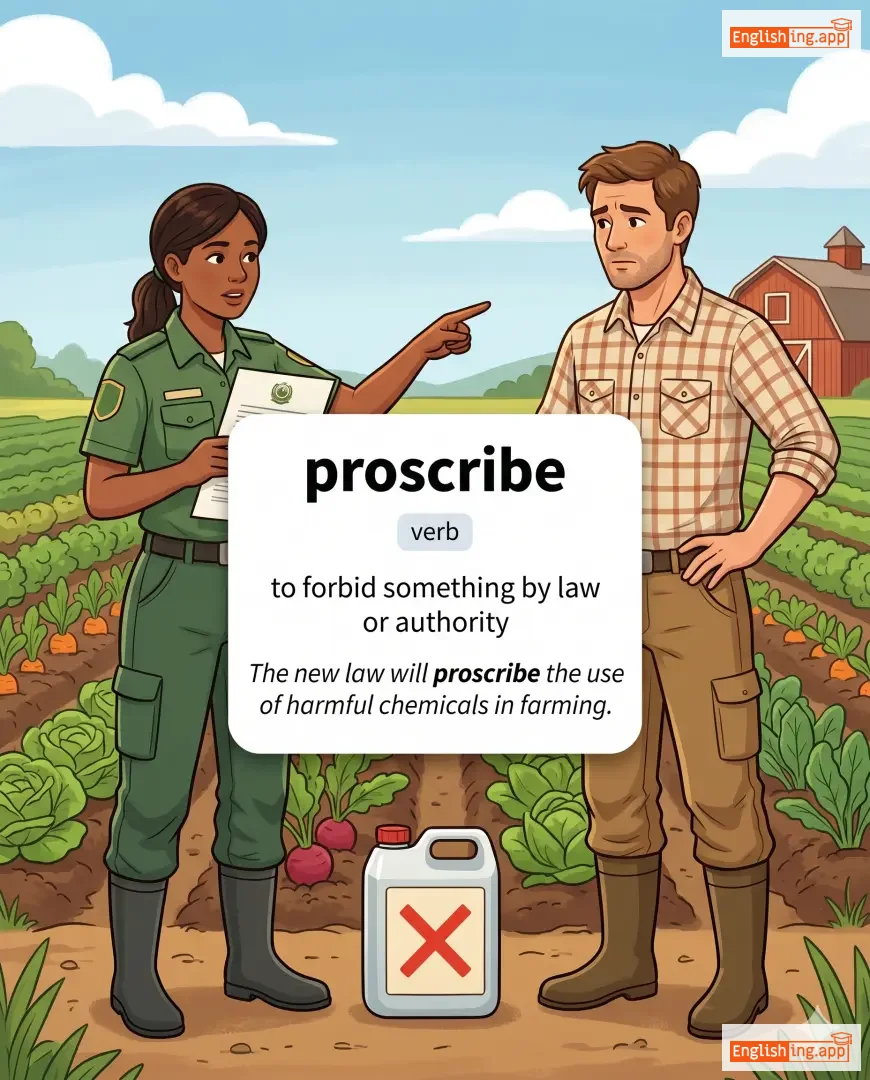
proscribe definition card — visual illustration of the meaning
verb C2
/proʊˈskraɪb/
নিষিদ্ধ করা (nishiddho kora)

to forbid something by law or authority

"The new law will proscribe the use of harmful chemicals in farming."

"নতুন আইন কৃষিতে ক্ষতিকারক রাসায়নিক ব্যবহারের উপর নিষেধাজ্ঞা দেবে।" (Notun ain krishite khotikarok rashayonik byaboharer upor nishedhaggo debe.)
noun C2
/proʊˈskrɪp.ʃən/
নিষেধাজ্ঞা (nishedhaggo)

the act of forbidding something, especially by law

"The proscription of child labor is an important human rights achievement."

"শিশুশ্রমের উপর নিষেধাজ্ঞা মানবাধিকারের একটি গুরুত্বপূর্ণ অর্জন।" (Shishushromer upor nishedhaggo manobadhikarer ekti guruttopurno orjon.)
noun C2
/ˈprɒsɪlaɪt/
ধর্মান্তরিত ব্যক্তি (dhormantorito bekti)

A person who has converted from one belief, opinion, or religion to another.

"She became a proselyte after converting to a new faith."

"সে নতুন ধর্ম গ্রহণ করার পর একজন ধর্মান্তরিত হয়েছিল।" (Se notun dhormo grohon korar por ekjon dhormantorito hoyechilo.)
verb C2
/ˈprɒsəˌlaɪtaɪz/
ধর্মান্তরিত করার চেষ্টা করা (dhormantorito korar cheshta kora)

To try to persuade someone to convert to a different belief or religion.

"They tried to proselytize the villagers with their new ideas."

"তারা গ্রামবাসীদের তাদের নতুন ধারণা দিয়ে ধর্মান্তরিত করার চেষ্টা করেছিল।" (Tara grambashider tader notun dharona diye dhormantorito korar cheshta korechilo.)
noun C2
/ˈprɒsədi/
ছন্দশাস্ত্র (chondoshastro)

The patterns of rhythm and sound used in poetry and speech.

"The professor explained how prosody affects the mood of a poem."

"অধ্যাপক ব্যাখ্যা করেছিলেন কিভাবে ছন্দশাস্ত্র একটি কবিতার মেজাজকে প্রভাবিত করে।" (Oddhapok byakkha korechilen kivabe chondoshastro ekti kobitar mejajke probhabit kore.)
adjective C2
/ˈproʊtiən/
বহুমুখী (bohumukhi)

tending or able to change frequently or easily; versatile

"She is a protean artist who experiments with many styles."

"সে একজন বহুমুখী শিল্পী, যিনি অনেক ধরণের শৈলীতে পরীক্ষা করেন।" (Se ekjon bohumukhi shilpi, jini onek dhoroner shoili te porikkha koren.)
noun C2
/prəˈtɛktərət/
সংরক্ষিত রাষ্ট্র (songrokhito rashtra)

A state that is controlled and protected by another.

"The small country became a protectorate of the empire."

"ছোট দেশটি সাম্রাজ্যের একটি সংরক্ষিত রাষ্ট্রে পরিণত হয়েছিল।" (Chhoto deshti shamrajyer ekti songrokhito rashtrer porinoto hoyechilo.)
noun C2
/ˈproʊtoʊˌmɑːrtɚ/
প্রথম শহীদ (prothom shohid)

The first martyr in a cause or religion, often referring to the first Christian martyr.

"St. Stephen is known as the protomartyr of Christianity."

"সেন্ট স্টিফেন খ্রিস্টানিটির প্রথম শহীদ হিসেবে পরিচিত।" (Saint Stephen Khristanitir prothom shohid hisebe porichito.)
noun C2
/ˈproʊtoʊˌplæzəm/
কোষদ্রব্য (koshodrobbo)

The living substance inside a cell, including the cytoplasm and nucleus.

"Scientists observed the movement of protoplasm under the microscope."

"বিজ্ঞানীরা মাইক্রোস্কোপের নিচে প্রোটোপ্লাজমের নড়াচড়া পর্যবেক্ষণ করেছিলেন।" (Bigganira microscope er niche protoplasmer norachora porjobekkhon korechilen.)
noun C2
/prəˈtuːbərəns/
স্ফীতি (sphiti)

A rounded swelling or lump on a surface.

"The doctor examined the small protuberance on his arm."

"ডাক্তার তার হাতে ছোট গুটিটি পরীক্ষা করলেন।" (Daktar tar hate choto gutiti porikkha korlen.)
adjective C2
/prəˈtuːbərənt/
উঁচু বা ফোলা (unchu ba phola)

Sticking out or bulging.

"His protuberant belly showed after the meal."

"খাওয়ার পর তার ফোলা পেট দেখা যাচ্ছিল।" (Khawar por tar phola pet dekha jachchhilo.)
verb C2
/ˈproʊtjuːbəreɪt/
বেরিয়ে আসা (beriye asa)

To swell out or bulge.

"The roots began to protuberate from the ground."

"গাছের শিকড় মাটি থেকে বেরিয়ে আসতে শুরু করল।" (Gacher shikor mati theke beriye aste shuru korlo.)
noun C2
/ˈprɒvəndər/
গবাদি পশুর খাদ্য (gabadi poshur khaddo)

food or provisions, especially for livestock

"The barn was filled with provender for the cattle."

"গোয়ালঘরটি গরুর খাদ্যে ভরা ছিল।" (Goyalghorti gorur khaddye vora chilo.)
adjective C2
/ˈprɒvɪdənt/
দূরদর্শী (durdorshi)

making or indicative of timely preparation for the future

"She was provident in saving money for her children’s education."

"তিনি তার সন্তানদের শিক্ষার জন্য টাকা সঞ্চয়ে দূরদর্শী ছিলেন।" (Tini tar shontander shikkhar jonno taka soncoye durdorshi chilen.)
adjective C2
/ˌprɒvɪˈdɛnʃəl/
সৌভাগ্যজনক (shovaggojonok)

occurring at a favorable or opportune time, as if guided by divine intervention

"Their timely rescue was considered providential."

"তাদের সময়মতো উদ্ধার সৌভাগ্যজনক বলে মনে করা হয়েছিল।" (Tader shomoymoto uddhar shovaggojonok bole mone kora hoyechilo.)
adjective C2
/prəˈvaɪzəri/
শর্তসাপেক্ষ (shortosapekkho)

conditional; depending on certain terms being met

"The arrangement was only provisory until the final contract was signed."

"চূড়ান্ত চুক্তি স্বাক্ষর না হওয়া পর্যন্ত এই ব্যবস্থা শুধুমাত্র শর্তসাপেক্ষ ছিল।" (churanto chukti shakkhor na howa porjonto ei byabostha shudhumatro shortosapekkho chhilo.)
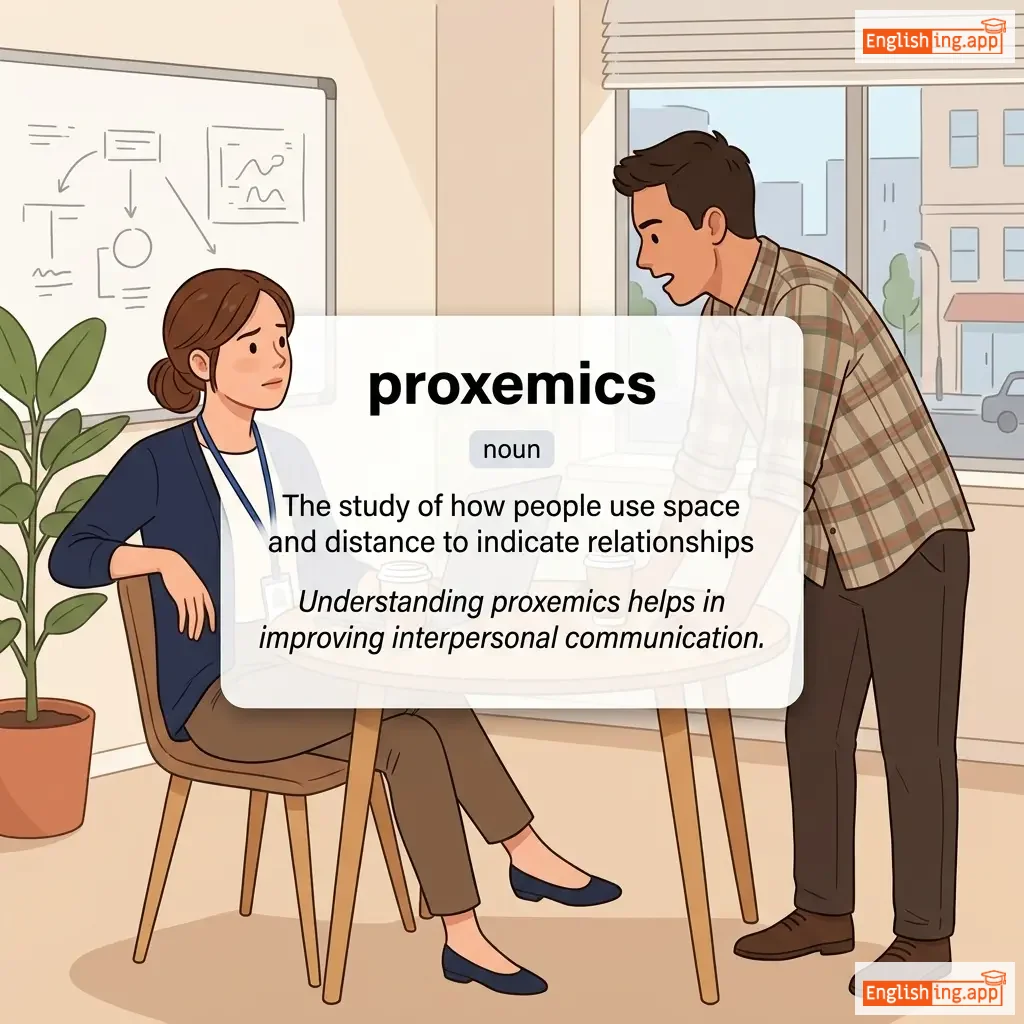
proxemics definition card — visual illustration of the meaning
noun C2
prɒkˈsiː.mɪks
ব্যক্তিগত স্থান ব্যবহারের বিজ্ঞান (bektigoto sthan bebaharer bigyan)

The study of how people use space and distance to indicate relationships

"Understanding proxemics helps in improving interpersonal communication."

"ব্যক্তিগত স্থান ব্যবহারের বিজ্ঞান বোঝা আন্তঃব্যক্তিক যোগাযোগ উন্নত করতে সাহায্য করে।" (Bektigoto sthan bebaharer bigyan bojha antohbektigoto jogatogo unnoto korte shahajjo kore.)
adverb C2
/ˈprɒksɪmətli/
নিকটে (nikote)

In a near or close manner; nearly.

"The village lies proximately to the river."

"গ্রামটি নদীর নিকটে অবস্থিত।" (Gramti nodir nikote obosthito.)
noun C2
/pruːd/
অতিরিক্ত ভদ্র বা লাজুক ব্যক্তি (otirikto bhodro ba lajook bekti)

A person who is easily shocked by matters relating to sex or nudity; someone overly modest.

"He was called a prude for blushing at the movie scenes."

"সিনেমার দৃশ্যে লজ্জা পাওয়ায় তাকে প্রুড বলা হয়েছিল।" (Cinemar drishye lojja pawai take prude bola hoyechhilo.)
adjective C2
/pruːˈdɛnʃəl/
বিচক্ষণমূলক (bichokkhonmulok)

involving or showing prudence, especially in financial or business matters

"The bank has set prudential rules to protect depositors."

"ব্যাংক আমানতকারীদের সুরক্ষার জন্য বিচক্ষণমূলক নিয়ম স্থাপন করেছে।" (bank amanotkarider surakhar jonno bichokkhonmulok niyom sthapon koreche.)
noun C2
/ˈpruːdəri/
অতিসতর্কতা (otisotorkota)

the behavior or attitude of people who are too easily shocked or offended by sexual matters

"His prudery often made others uncomfortable during open discussions."

"তার অতিসতর্কতা খোলামেলা আলোচনার সময় অন্যদের অস্বস্তিতে ফেলত।" (tar otisotorkota kholamela alochonar somoy onnyoder oshostite felt.)
adjective C2
/ˈpruːdɪʃ/
অতিসতর্ক (otisotork)

having or revealing a tendency to be easily shocked by matters relating to sex or nudity

"She was too prudish to watch the movie with her friends."

"সে তার বন্ধুদের সাথে সিনেমাটি দেখতে অতিসতর্ক ছিল।" (se tar bondhuder sathe sinemati dekhte otisotork chilo.)
adjective C2
/ˈprʊəriənt/
কামুক (kamuk)

having or showing an excessive interest in sexual matters

"The magazine was criticized for its prurient content."

"ম্যাগাজিনটিকে তার কামুক বিষয়বস্তুর জন্য সমালোচনা করা হয়েছিল।" (Magazine tike tar kamuk bishoybostur jonno samalochona kora hoyechilo.)
noun C2
/ˌsuːdəʊəˈpɒsəl/
মিথ্যা প্রেরিত (mithya prerit)

a false or pretended apostle

"The preacher was condemned as a pseudapostle."

"প্রচারককে একজন মিথ্যা প্রেরিত হিসেবে নিন্দা করা হয়েছিল।" (Procharokke ekjon mithya prerit hisebe ninda kora hoyechilo.)
noun C2
/ˌsuːdəˈnɪmɪti/
ছদ্মনাম ব্যবহার (chadmonam byabohar)

the practice or state of using a pseudonym

"The author maintained pseudonymity throughout her career."

"লেখিকা তার পুরো কর্মজীবনে ছদ্মনাম ব্যবহার বজায় রেখেছিলেন।" (Lekhika tar puro kormojibone chadmonam byabohar bojay rekhechilen.)
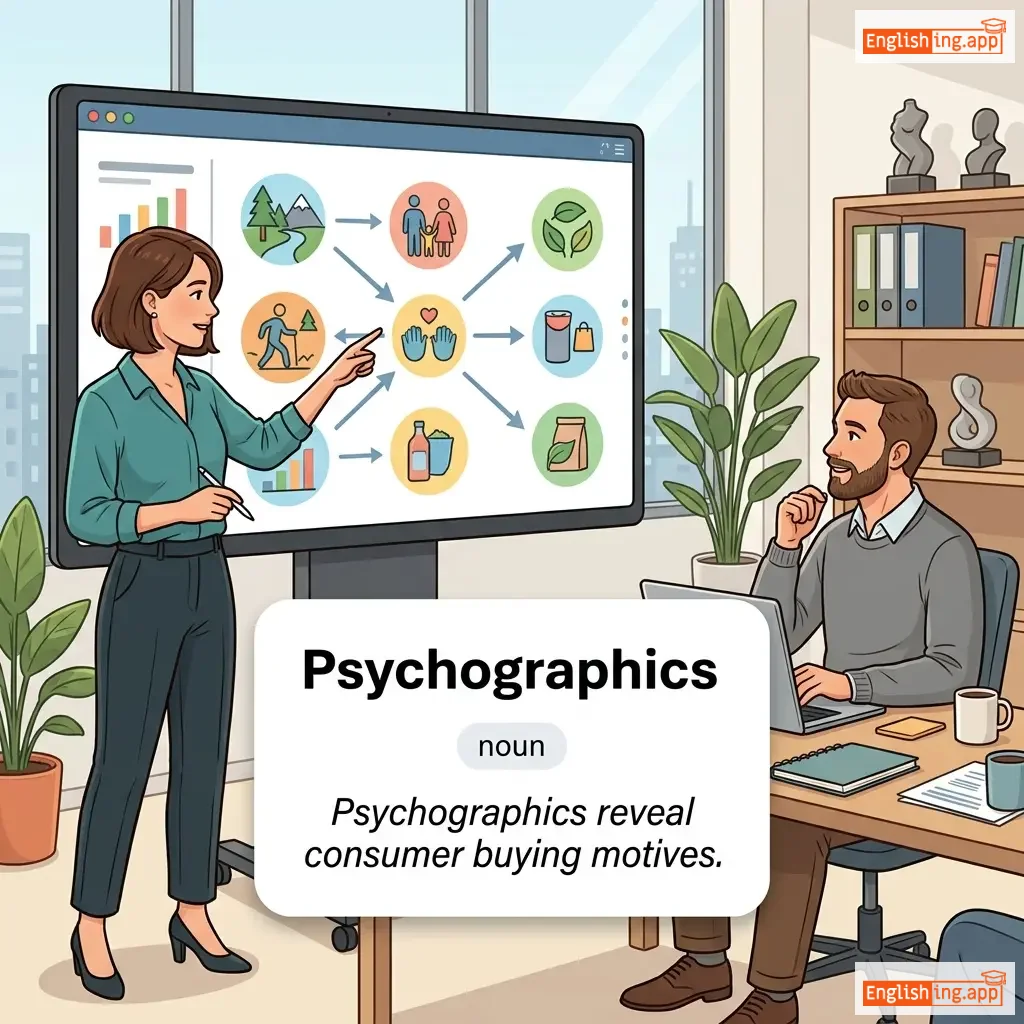
Psychographics definition card — visual illustration of the meaning
noun C2
/ˌsaɪ.kəʊˈɡræf.ɪks/
মানসিক ও আচরণগত বিশ্লেষণ, গ্রাহকের জীবনধারা বিশ্লেষণ (manoshik o achoronogoto bishleshn, grahokder jibonodhara bishleshon)

The study and classification of people according to their attitudes, aspirations, and other psychological criteria.

"Psychographics reveal consumer buying motives."

"সাইকোগ্রাফিক্স গ্রাহকদের কেনার কারণ উদঘাটন করে।" (Psychographics grahokder kenar karon udghaton kore.)
verb C2
/ˈpʌkər/
কুঁচকানো (kuchkano)

to tighten or contract into small folds or wrinkles

"She puckered her lips before kissing the child."

"সে শিশুকে চুমু খাওয়ার আগে ঠোঁট কুঁচকালো।" (Se shishuke chumu khawar age thot kuchkalo.)
adjective C2
/ˈpʌkɪʃ/
দুষ্টুমি পূর্ণ (dushtumi purno)

playfully mischievous

"The child gave a puckish grin before hiding the toy."

"শিশুটি খেলনা লুকানোর আগে এক দুষ্টুমি ভরা হাসি দিল।" (Shishuti khelona lukanor age ek dushtumi vora hasi dilo.)
adjective C2
/ˈpʌdʒi/
মোটা (mota)

slightly fat or chubby in a way that is often cute

"The baby had pudgy cheeks that everyone adored."

"শিশুর গোলগাল গাল সবার ভালো লেগেছিল।" (Shishur golgal gal sobar bhalo leghchhilo.)
adjective C2
/ˈpjʊəraɪl/
শিশুসুলভ (shishusulobh)

childishly silly or immature

"His puerile jokes annoyed the audience."

"তার শিশুসুলভ কৌতুকগুলো দর্শকদের বিরক্ত করেছিল।" (Tar shishusulobh koutukgulo dorshokder birokt korechhilo.)
noun C2
/ˈpjuːdʒɪlɪzəm/
মুষ্টিযুদ্ধ (mustijuddho)

The practice or sport of boxing.

"He studied the art of pugilism in his youth."

"তিনি তরুণ বয়সে মুষ্টিযুদ্ধের শিল্প শিখেছিলেন।" (Tini torun boyose mustijuddher shilpo shikhechilen.)
noun C2
/ˈpjuːdʒɪlɪst/
মুষ্টিযোদ্ধা (mustijoddha)

A professional or skilled boxer.

"The pugilist entered the ring with confidence."

"মুষ্টিযোদ্ধা আত্মবিশ্বাস নিয়ে রিং-এ প্রবেশ করল।" (Mustijoddha atmobishwas niye ring-e probesh korlo.)
adjective C2
/pʌɡˈneɪʃəs/
ঝগড়াটে (jhograto)

Having a quarrelsome or combative nature; eager to fight.

"His pugnacious attitude often got him into trouble."

"তার ঝগড়াটে মনোভাব প্রায়ই তাকে সমস্যায় ফেলত।" (Tar jhograto monobhav prayoi take shomosshay felt.)
noun C2
/pʌɡˈnæsɪti/
ঝগড়াটেপনা (jhogratenna)

A natural disposition to be combative or aggressive.

"The coach admired the player's pugnacity on the field."

"কোচ মাঠে খেলোয়াড়ের ঝগড়াটেপনা প্রশংসা করলেন।" (Coach mathe khelowar-er jhogratenna proshongsha korlen.)
noun C2
/ˈpjuːɪsəns/
শক্তি (shokti)

Great power, strength, or influence.

"The empire showed its puissance through vast armies."

"সাম্রাজ্য তার বিশাল সেনাবাহিনীর মাধ্যমে শক্তি প্রদর্শন করেছিল।" (Samrajjo tar bishal senabahinir maddhome shokti prodorshon korechilo.)
adjective C2
/ˈpjuːɪsənt/
শক্তিশালী (shoktishali)

having great power or influence; mighty

"The king was a puissant ruler whose word was law."

"রাজা ছিলেন এক শক্তিশালী শাসক যার কথা ছিল আইন।" (Raja chilen ek shoktishali shasok jar kotha chhilo ain.)
noun C2
/ˈpʌlkrɪˌtjuːd/
সৌন্দর্য (soundorjo)

physical beauty

"The actress was admired for her pulchritude as well as her talent."

"অভিনেত্রীকে তার সৌন্দর্য এবং প্রতিভার জন্য প্রশংসা করা হয়েছিল।" (Abhinetrike tar soundorjo ebong protibar jonno prosongsha kora hoyechhilo.)
verb C2
/ˈpʌlvəraɪz/
গুঁড়ো করা (guro kora)

To crush or grind something into a fine powder; to completely defeat or destroy.

"The machine can pulverize stones into dust."

"মেশিনটি পাথরকে গুঁড়ো করে ফেলতে পারে।" (Meshinti pathorke guro kore felte pare.)
adjective C2
/pʌŋkˈtɪliəs/
অত্যন্ত যত্নশীল (otonto jotnoshil)

Showing great attention to detail or correct behavior.

"She was punctilious in her attention to etiquette."

"সে আচার-আচরণের প্রতি অত্যন্ত যত্নশীল ছিল।" (Se achar-acharoner proti otonto jotnoshil chilo.)
noun C2
/ˈpʌndʒənsi/
তীব্রতা / ঝাঁঝ (tibrota / jhajh)

The quality of having a strong, sharp taste or smell.

"The pungency of garlic filled the kitchen."

"রসুনের ঝাঁঝ রান্নাঘর ভরে ফেলেছিল।" (Rosuner jhajh rannaghor bhore felchhilo.)
noun C2
/ˈpjuː.pɪ.lɪdʒ/
শিক্ষানবিস অবস্থা (shikhanobis obostha)

The state of being a pupil or under instruction.

"During his pupilage, he studied law under a senior barrister."

"তার শিক্ষানবিস অবস্থায় তিনি একজন সিনিয়র ব্যারিস্টারের অধীনে আইন পড়াশোনা করেছিলেন।" (Tar shikhanobis obosthaye tini ekjon sinior barristerer odhine ain porashona korechhilen.)
adjective C2
/ˈpɜːˌblaɪnd/
অন্ধ বা অজ্ঞ (ondho ba oggo)

Having impaired or defective vision; lacking insight or understanding.

"The purblind approach to the problem led to many mistakes."

"সমস্যার প্রতি অজ্ঞ দৃষ্টিভঙ্গি অনেক ভুলের দিকে নিয়ে গিয়েছিল।" (Shomossar proti oggo drishtibhongi onek vuler dike niye giyechhilo.)
verb C2
/pɜːrl/
মৃদু শব্দে প্রবাহিত হওয়া (mridu shobde probahito howa)

To knit with a purl stitch; to flow with a murmuring sound (as a stream).

"The brook purled softly through the meadow."

"ছোট নদীটি তৃণভূমির মধ্য দিয়ে মৃদু শব্দে প্রবাহিত হচ্ছিল।" (Choto noditi trinbhumir moddho diye mridu shobde probahito hochhilo.)
noun C2
/ˈpɜːrljuː/
প্রান্তবর্তী এলাকা (prantoborti elaka)

The area near or surrounding a place; an outlying or neighboring district.

"They spent the afternoon exploring the purlieus of the ancient city."

"তারা বিকেলটি প্রাচীন শহরের প্রান্তবর্তী এলাকা ঘুরে কাটিয়েছিল।" (Tara bikelti prachin shohorer prantoborti elaka ghure katiyechhilo.)
verb C2
/pərˈlɔɪn/
চুরি করা (churi kora)

to steal something, often in a sneaky or dishonest way

"He tried to purloin a book from the library without being noticed."

"সে লাইব্রেরি থেকে একটি বই চুরি করার চেষ্টা করেছিল।" (Se library theke ekti boi churi korar cheshta korechilo.)