Vokabulare

Englisches Vokabelwörterbuch | Wortbedeutungen, Definitionen & Beispiele

adjective C2
/prəˈhɪbɪtɔːri/
禁止的な (kinshiteki na)

Serving or tending to prohibit or forbid.

"The prohibitory laws were strictly enforced in the region."

"禁止的な法律は地域で厳しく適用された。" (Kinshiteki na hōritsu wa chiiki de kibishiku tekiyō sareta.)
adjective C2
/ˈprəʊ.lɪks/
長すぎる (nagasugiru)

using too many words; tediously lengthy

"The professor’s prolix lecture put many students to sleep."

"教授の冗長な講義は多くの学生を眠らせた。" (Kyōju no jōchō na kōgi wa ōku no gakusei o nemuraseta.)
noun C2
/prəˈlɪksɪti/
冗長 (jouchou)

the quality of being tediously wordy and long

"The book’s prolixity made it difficult to read in one sitting."

"本のプロリクシティは一度に読むのを難しくしました。" (Hon no purokishiti wa ichido ni yomu no wo muzukashiku shimashita.)
adjective C2
/ˈprɒmɪsəri/
約束的 (yakusoku no)

Containing or conveying a promise, especially in writing.

"He signed a promissory note to repay the loan."

"彼はローンを返済するために約束手形にサインしました。" (Kare wa rōn o hensai suru tame ni yakusoku tegata ni sain shimashita.)
noun C2
/ˈprɒm.ən.tɔːr.i/
(misaki)

A high point of land or rock projecting into a body of water.

"The lighthouse stood on a promontory overlooking the sea."

"灯台は海を見渡す岬の上に立っていた。" (Tōdai wa umi o miwatasu misaki no ue ni tatte ita.)
verb C2
/ˈprɑː.məl.ɡeɪt/
公布する (kōfusu suru)

To announce or make a law, decree, or idea officially known.

"The government promulgated new regulations on data privacy."

"政府はデータプライバシーに関する新しい規則を公布しました。" (Seifu wa dēta puraibashī ni kansuru atarashī kisoku o kōfu shimashita.)
noun C2
/prɔːŋ/
フォークの先端 (fōku no sentan)

a projecting pointed part, such as one of the pointed ends of a fork

"The fork has four prongs."

"フォークには4つの先端があります。" (Fōku ni wa yottsu no sentan ga arimasu.)
adjective C2
/ˌprɒfɪˈlæktɪk/
予防的 (yobōteki)

intended to prevent disease or an unwanted outcome; protective

"The doctor prescribed a prophylactic treatment to prevent infection."

"医師は感染を防ぐために予防的な治療を処方しました。" (Ishi wa kansen o fusegu tame ni yobōteki na chiryō o shohō shimashita.)
noun C2
/prəˈpɪŋkwɪti/
近接 (kinsetsu)

the state of being close to someone or something; proximity

"The propinquity of their houses made them close friends."

"彼らの家の近接は、彼らを親しい友人にした。" (Karera no ie no kinsetsu wa, karera o shitashī yūjin ni shita.)
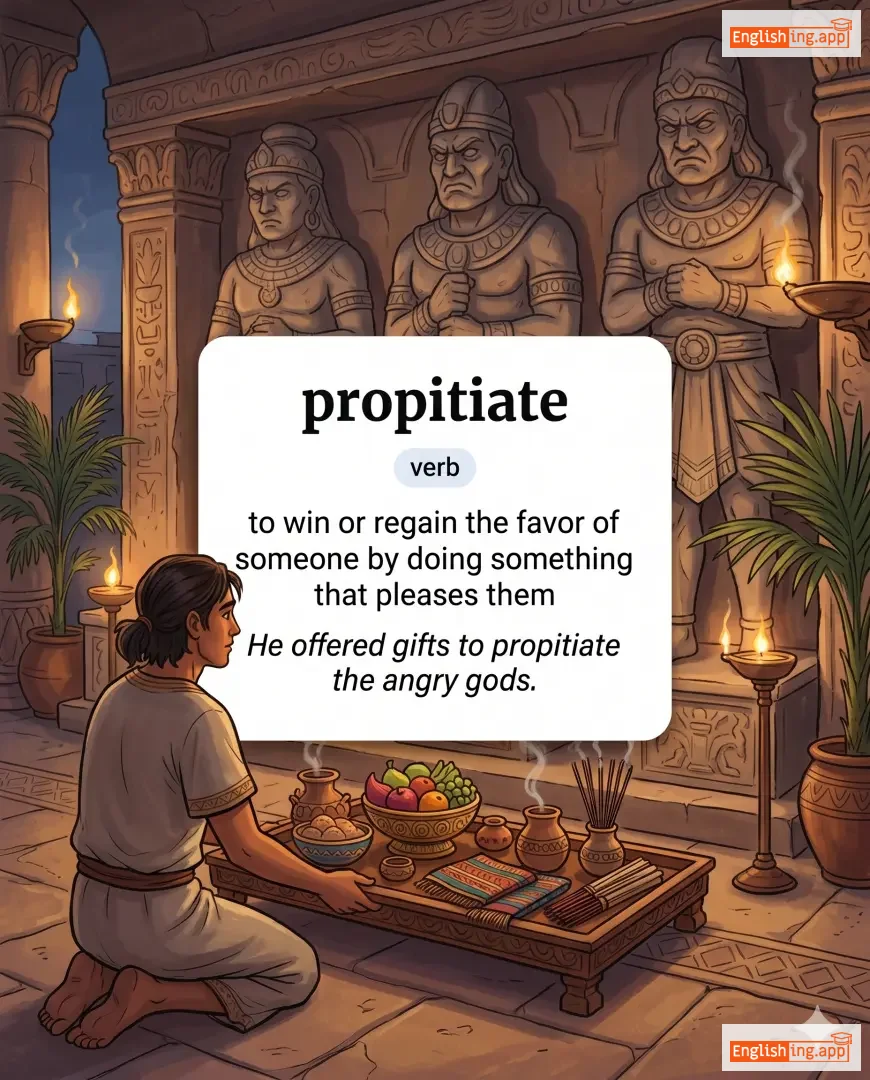
propitiate definition card — visual illustration of the meaning
verb C2
/prəˈpɪʃieɪt/
なだめる (nadameru)

to win or regain the favor of someone by doing something that pleases them

"He offered gifts to propitiate the angry gods."

"彼は怒った神々をなだめるために贈り物を捧げました。" (Kare wa okotta kamigami o nadameru tame ni okurimono o sasagemashita.)
adjective C2
/prəˈpɪʃəs/
好ましい (konomashii)

giving or indicating a good chance of success; favorable

"The sunny weather was a propitious start to the picnic."

"晴れた天気はピクニックにとって好ましい始まりでした。" (Hareta tenki wa pikunikku ni totte konomashii hajimari deshita.)
verb C2
/prəˈpaʊnd/
提案する (teian suru)

To put forward an idea, theory, or point for consideration.

"The professor propounded a new theory on climate change."

"教授は気候変動に関する新しい理論を提案しました。" (Kyouju wa kikou hendou ni kansuru atarashii riron wo teian shimashita.)
adjective C2
/prəˈpʌlsɪv/
推進的 (suishinteki)

Having the power to drive or push something forward.

"The propulsive force of the rocket lifted it off the ground."

"ロケットの推進力はそれを地面から持ち上げました。" (Roketto no suishinryoku wa sore o jimen kara mochiagemashita.)
verb C2
/prəˈroʊɡ/
議会を延期する (gikai wo enki suru)

to discontinue a session of a parliament or assembly without dissolving it

"The president decided to prorogue parliament until the crisis was resolved."

"大統領は、危機が解決するまで議会を延期することを決定しました。" (Daitouryou wa, kiki ga kaiketsu suru made gikai wo enki suru koto wo kettei shimashita.)
noun C2
/proʊˈsiː.ni.əm/
プロセニアム (puroseuniamu)

the part of a theater stage in front of the curtain; the arch framing the stage

"The actors bowed at the proscenium before leaving the stage."

"俳優たちは舞台を離れる前にプロセニアムでお辞儀をした。" (Haiyū-tachi wa butai o hanareru mae ni puroseuniamu de ojigi o shita.)
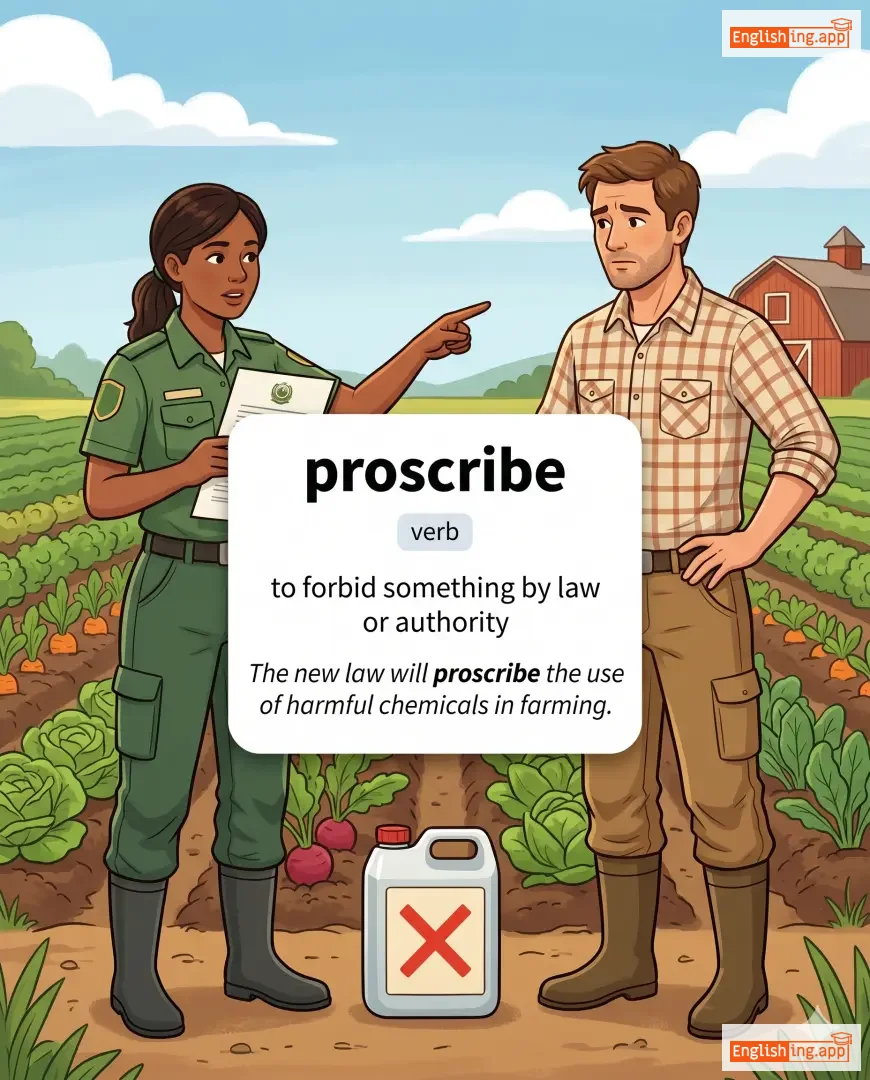
proscribe definition card — visual illustration of the meaning
verb C2
/proʊˈskraɪb/
禁止する (kinshi suru)

to forbid something by law or authority

"The new law will proscribe the use of harmful chemicals in farming."

"新しい法律は農業で有害な化学物質の使用を禁止します。" (Atarashī hōritsu wa nōgyō de yūgaina kagakubushitsu no shiyō o kinshi shimasu.)
noun C2
/proʊˈskrɪp.ʃən/
禁止 (kinshi)

the act of forbidding something, especially by law

"The proscription of child labor is an important human rights achievement."

"児童労働の禁止は人権の重要な成果です。" (Jidou roudou no kinshi wa jinken no juuyou na seika desu.)
noun C2
/ˈprɒsɪlaɪt/
改宗者 (kaizōsha)

A person who has converted from one belief, opinion, or religion to another.

"She became a proselyte after converting to a new faith."

"彼女は新しい信仰に改宗した後、改宗者になった。" (Kanojo wa atarashī shinkō ni kaishū shita ato, kaishūsha ni natta.)
verb C2
/ˈprɒsəˌlaɪtaɪz/
改宗させようとする (kaishuu saseyou to suru)

To try to persuade someone to convert to a different belief or religion.

"They tried to proselytize the villagers with their new ideas."

"彼らは新しいアイデアで村人たちを改宗させようとした。" (Karera wa atarashī aidea de murabito-tachi o kaishū saseyō to shita.)
noun C2
/ˈprɒsədi/
韻律学 (inrisshigaku)

The patterns of rhythm and sound used in poetry and speech.

"The professor explained how prosody affects the mood of a poem."

"教授は、韻律学が詩のムードにどのように影響するかを説明しました。" (Kyōju wa, inrisshigaku ga shi no mūdo ni dono yō ni eikyō suru ka o setsumei shimashita.)
adjective C2
/ˈproʊtiən/
多才多芸の (tasai tagu no)

tending or able to change frequently or easily; versatile

"She is a protean artist who experiments with many styles."

"彼女は多才多芸のアーティストで、さまざまなスタイルを試しています。" (Kanojo wa tasai tagu no atisuto de, samazama na sutairu o tameshiteimasu.)
noun C2
/prəˈtɛktərət/
保護国 (hogo koku)

A state that is controlled and protected by another.

"The small country became a protectorate of the empire."

"小さな国は帝国の保護国となった。" (Chīsana kuni wa teikoku no hogo koku to natta.)
noun C2
/ˈproʊtoʊˌmɑːrtɚ/
最初の殉教者 (saisho no junkyousha)

The first martyr in a cause or religion, often referring to the first Christian martyr.

"St. Stephen is known as the protomartyr of Christianity."

"聖ステファノはキリスト教のプロトマーティアとして知られています。" (Sei Sutefano wa Kirisutokyō no purotomātia toshite shirareteimasu.)
noun C2
/ˈproʊtoʊˌplæzəm/
プロトプラズム (purotopurazumu)

The living substance inside a cell, including the cytoplasm and nucleus.

"Scientists observed the movement of protoplasm under the microscope."

"科学者たちは顕微鏡でプロトプラズムの動きを観察しました。" (Kagakusha-tachi wa kenbikyō de purotopurazumu no ugoki o kansatsu shimashita.)
noun C2
/prəˈtuːbərəns/
膨らみ (fukurami)

A rounded swelling or lump on a surface.

"The doctor examined the small protuberance on his arm."

"医師は彼の腕の小さな膨らみを調べました。" (Ishi wa kare no ude no chiisana fukurami o shirabemashita.)
adjective C2
/prəˈtuːbərənt/
突出または膨らんだ (tōshutsu matawa fukuranda)

Sticking out or bulging.

"His protuberant belly showed after the meal."

"食事の後、彼の膨らんだ腹が見えた。" (Shokuji no ato, kare no fukuranda hara ga mieta.)
verb C2
/ˈproʊtjuːbəreɪt/
膨らむ (fukuramu)

To swell out or bulge.

"The roots began to protuberate from the ground."

"根は地面から膨らみ始めました。" (Ne wa jimen kara fukurami hajimemashita.)
noun C2
/ˈprɒvəndər/
家畜用の餌 (kachiku-yō no esa)

food or provisions, especially for livestock

"The barn was filled with provender for the cattle."

"納屋は家畜用の餌でいっぱいだった。" (Noya wa kachiku-yō no esa de ippai datta.)
adjective C2
/ˈprɒvɪdənt/
先見の明のある (senken no mei no aru)

making or indicative of timely preparation for the future

"She was provident in saving money for her children’s education."

"彼女は子供たちの教育のためにお金を節約する先見の明のある人だった。" (Kanojo wa kodomotachi no kyōiku no tame ni okane o setsuyaku suru senken no mei no aru hito datta.)
adjective C2
/ˌprɒvɪˈdɛnʃəl/
天意の (ten'i no)

occurring at a favorable or opportune time, as if guided by divine intervention

"Their timely rescue was considered providential."

"彼らのタイムリーな救助は天意のものと見なされました。" (Karera no taimuri na kyuujo wa ten'i no mono to minasaremashita.)
adjective C2
/prəˈvaɪzəri/
仮の (kari no)

conditional; depending on certain terms being met

"The arrangement was only provisory until the final contract was signed."

"その取り決めは、最終契約が署名されるまで仮のものでした。" (Sono torikime wa, saishū keiyaku ga shomei sareru made kari no mono deshita.)
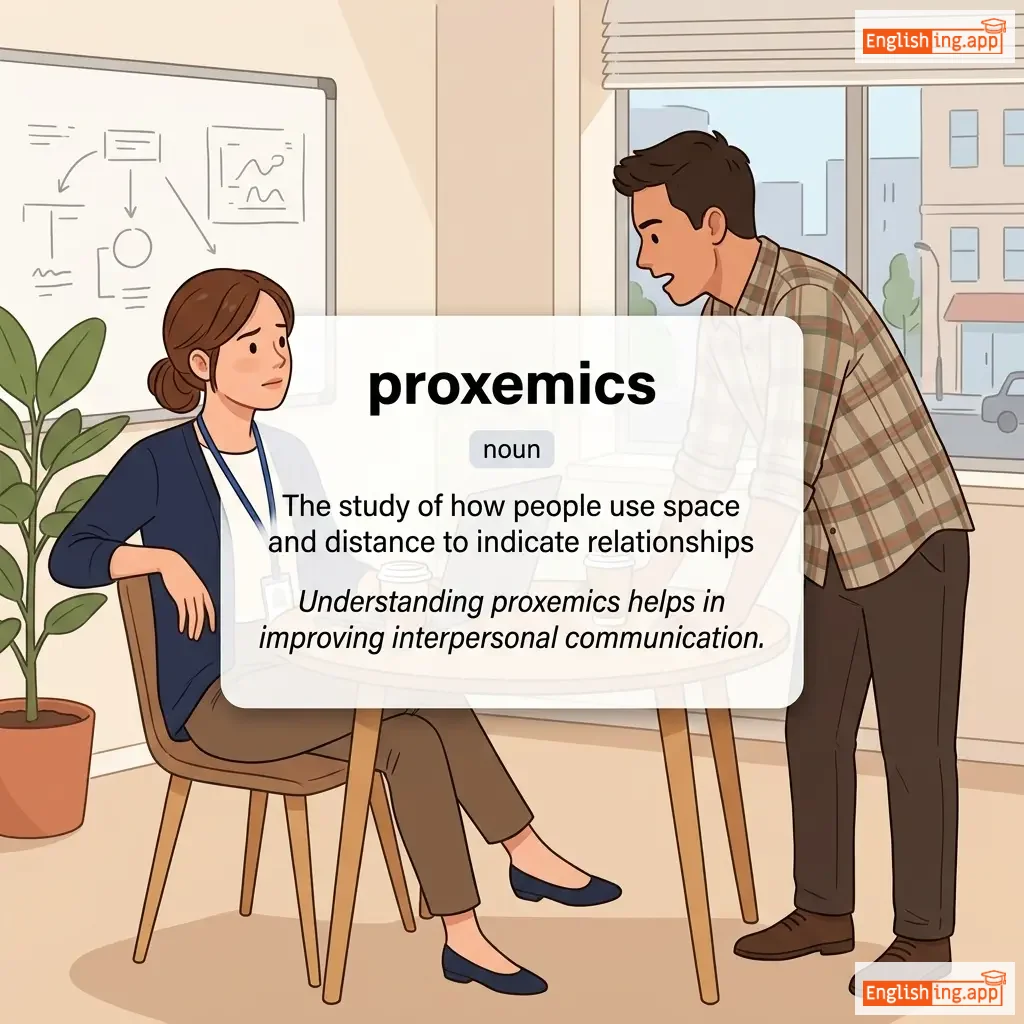
proxemics definition card — visual illustration of the meaning
noun C2
prɒkˈsiː.mɪks
個人空間の使用の研究 (kojin kūkan no shiyō no kenkyū)

The study of how people use space and distance to indicate relationships

"Understanding proxemics helps in improving interpersonal communication."

"プロクセミクスを理解することで、人間関係のコミュニケーションを改善することができます。" (Purokusemikkusu o rikai suru koto de, ningen kankei no komyunikeeshon o kaizen suru koto ga dekimasu.)
adverb C2
/ˈprɒksɪmətli/
近く (chikaku)

In a near or close manner; nearly.

"The village lies proximately to the river."

"村は川の近くにあります。" (Mura wa kawa no chikaku ni arimasu.)
noun C2
/pruːd/
過度に慎み深い人 (kado ni tsutsushimi bukai hito)

A person who is easily shocked by matters relating to sex or nudity; someone overly modest.

"He was called a prude for blushing at the movie scenes."

"映画のシーンで顔を赤らめたため、彼はプルードと呼ばれました。" (Eiga no shīn de kao o akarameta tame, kare wa purūdo to yobaremashita.)
adjective C2
/pruːˈdɛnʃəl/
慎重な (shinchou na)

involving or showing prudence, especially in financial or business matters

"The bank has set prudential rules to protect depositors."

"銀行は預金者を保護するために慎重な規則を設定しました。" (Ginkou wa yokinsya o hogo suru tame ni shinchou na kisoku o settei shimashita.)
noun C2
/ˈpruːdəri/

the behavior or attitude of people who are too easily shocked or offended by sexual matters

"His prudery often made others uncomfortable during open discussions."

adjective C2
/ˈpruːdɪʃ/
堅苦しい (kendemushii)

having or revealing a tendency to be easily shocked by matters relating to sex or nudity

"She was too prudish to watch the movie with her friends."

"彼女は友達と映画を見に行くにはあまりにも堅苦しかった。" (Kanojo wa tomodachi to eiga o mi ni iku ni wa amarini mo kendemushikatta.)
adjective C2
/ˈprʊəriənt/
淫ら (midara)

having or showing an excessive interest in sexual matters

"The magazine was criticized for its prurient content."

"その雑誌は淫らな内容で批判されました。" (Sono zasshi wa midara na naiyou de hihan saremashita.)
noun C2
/ˌsuːdəʊəˈpɒsəl/
偽使徒 (gise to)

a false or pretended apostle

"The preacher was condemned as a pseudapostle."

"その説教師は偽使徒として非難されました。" (Sono setsukyōshi wa gise shito toshite hinan saremashita.)
noun C2
/ˌsuːdəˈnɪmɪti/
ペンネームの使用 (penneemu no shiyou)

the practice or state of using a pseudonym

"The author maintained pseudonymity throughout her career."

"その作家はキャリア全体を通してペンネームを使用していました。" (Sono sakka wa kyaria zentai wo tooshite penneemu wo shiyou shiteimashita.)
Psychographics definition card — visual illustration of the meaning
noun C2
/ˌsaɪ.kəʊˈɡræf.ɪks/
人々の態度、願望、その他の心理的基準に基づいて人々を研究し分類すること (hitobito no taido, ganbou, sono ta no shinriteki kijun ni motozuite hitobito o kenkyū shi bunrui suru koto)

The study and classification of people according to their attitudes, aspirations, and other psychological criteria.

"Psychographics reveal consumer buying motives."

"サイコグラフィックスは消費者の購買動機を明らかにします。" (Saikogurafikkusu wa shouhisha no koubai douki o akiraka ni shimasu.)
verb C2
/ˈpʌkər/

to tighten or contract into small folds or wrinkles

"She puckered her lips before kissing the child."

adjective C2
/ˈpʌkɪʃ/
いたずら好き (itazurazuki)

playfully mischievous

"The child gave a puckish grin before hiding the toy."

"子供はおもちゃを隠す前にいたずらっぽい笑顔を見せました。" (Kodomo wa omocha o kakusu mae ni itazurappoi egao o misemashita.)
adjective C2
/ˈpʌdʒi/
ぽっちゃり (pocchari)

slightly fat or chubby in a way that is often cute

"The baby had pudgy cheeks that everyone adored."

"その赤ちゃんは、みんなが愛したぽっちゃりしたほっぺたを持っていました。" (Sono akachan wa, minna ga aishita pocchari shita hoppeta o motte imashita.)
adjective C2
/ˈpjʊəraɪl/
幼稚な (yōchina)

childishly silly or immature

"His puerile jokes annoyed the audience."

"彼の幼稚な冗談は観客をうんざりさせた。" (Kare no yōchina jōdan wa kankyaku o unzari saseta.)
noun C2
/ˈpjuːdʒɪlɪzəm/
ボクシング (bokushingu)

The practice or sport of boxing.

"He studied the art of pugilism in his youth."

"彼は若い頃、ボクシングの技術を学びました。" (Kare wa wakai koro, bokushingu no gijutsu o manabimashita.)
noun C2
/ˈpjuːdʒɪlɪst/
ボクサー (bokusā)

A professional or skilled boxer.

"The pugilist entered the ring with confidence."

"ボクサーは自信を持ってリングに上がった。" (Bokusā wa jishin o motte ringu ni agatta.)
adjective C2
/pʌɡˈneɪʃəs/
好戦的な (kousenteki na)

Having a quarrelsome or combative nature; eager to fight.

"His pugnacious attitude often got him into trouble."

"彼の好戦的な態度はしばしば彼を困難に陥れました。" (Kare no kousenteki na taido wa shibashiba kare o konnan ni ochiiremashita.)
noun C2
/pʌɡˈnæsɪti/
好戦的 (kousenteki)

A natural disposition to be combative or aggressive.

"The coach admired the player's pugnacity on the field."

"コーチはフィールドで選手のパグナシティを賞賛しました。" (Kochi wa fiirudo de senshu no pugnacity wo shousan shimashita.)
noun C2
/ˈpjuːɪsəns/
(chikara)

Great power, strength, or influence.

"The empire showed its puissance through vast armies."

"帝国は膨大な軍隊を通じてその力を示しました。" (Teikoku wa bōdaina guntai o tōjite sono chikara o shimashita.)