Vokabulare

Englisches Vokabelwörterbuch | Wortbedeutungen, Definitionen & Beispiele

verb C2
/pərˈtɪkjələrˌaɪz/
уточнять (utochnyat)

to mention or describe something in detail

"The witness was asked to particularize the events of that night."

"Свидетеля попросили подробно описать события той ночи." (Svidetelya poprosili podrobno opisat' sobytiya toy nochi.)
noun C2
/ˌpɑːrtjʊˈrɪʃən/
роды (rody)

The act of giving birth; childbirth.

"The doctor explained the stages of parturition to the students."

"Доктор объяснил студентам этапы родов." (Doktor ob'yasnil studentam etapy rodov.)
noun C2
/ˈpɑːrvənuː/
новый богач (novyy bogach)

A person who has recently gained wealth or influence but is not yet accepted socially.

"He was seen as a parvenu who lacked refinement despite his riches."

"Его считали парвеню, который не имел утонченности, несмотря на свое богатство." (Ego schitali parvenu, kotoryy ne imel utochnennosti, nesmotrya na svoe bogatstvo.)
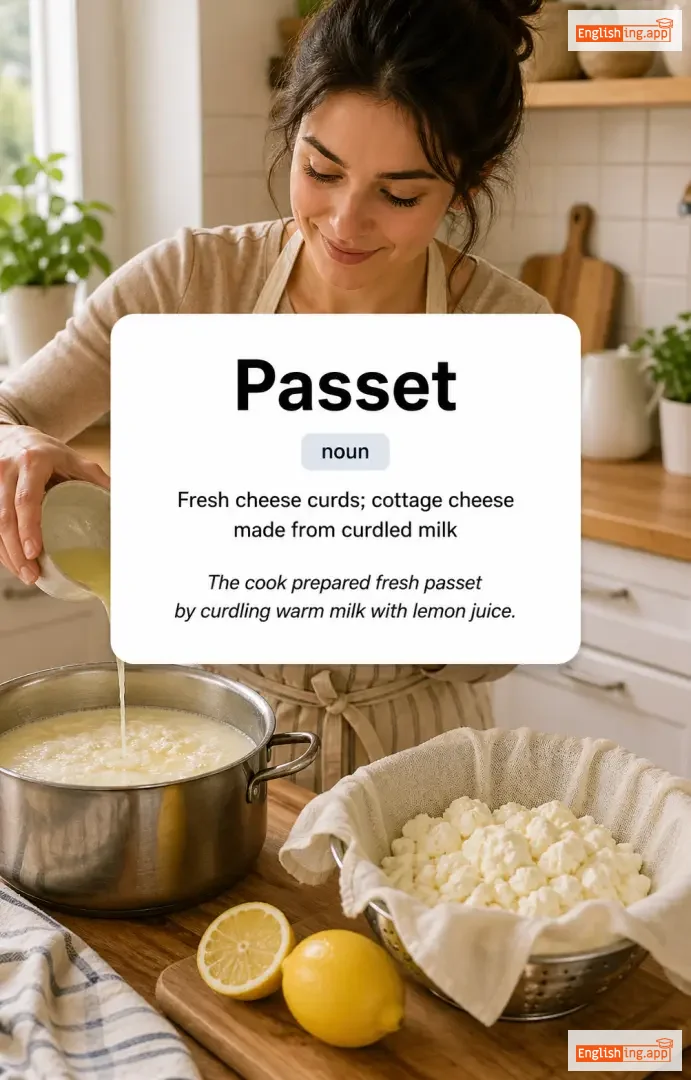
Passet definition card — visual illustration of the meaning
noun C2
/ˈpæsɪt/
творог (tvorog)

Fresh cheese curds; cottage cheese made from curdled milk

"The cook prepared fresh passet by curdling warm milk with lemon juice."

"Повар приготовил свежий творог, свернув теплое молоко с лимонным соком." (Povar prigotovil svezhiy tvorog, svernyv teploe moloko s limonnym sokom.)
adjective C2
/ˈpæsɪbəl/
способный ощущать; подверженный страданиям (spasobnyy oshchushchat'; podverzhennyy stradaniyam)

capable of feeling or suffering; susceptible to sensation or emotion (often theological)

"In some traditions, deities are described as passible, sharing human emotions."

"В некоторых традициях божества описываются как способные ощущать, разделяя человеческие эмоции." (V nekotorykh traditsiyakh bozhestva opisyvayutsya kak sposobl'nye oshchushchat', razdelyaya chelovecheskiye emotsii.)
noun C2
/pæˈstiːʃ/
пастиш (pastish)

a work of art, literature, or music that imitates the style of another artist, period, or genre

"The film was a clever pastiche of 1950s detective movies."

"Фильм был умелым пастишем детективных фильмов 1950-х годов." (Film byl umelym pastishem detektivnykh filmov 1950-kh godov.)
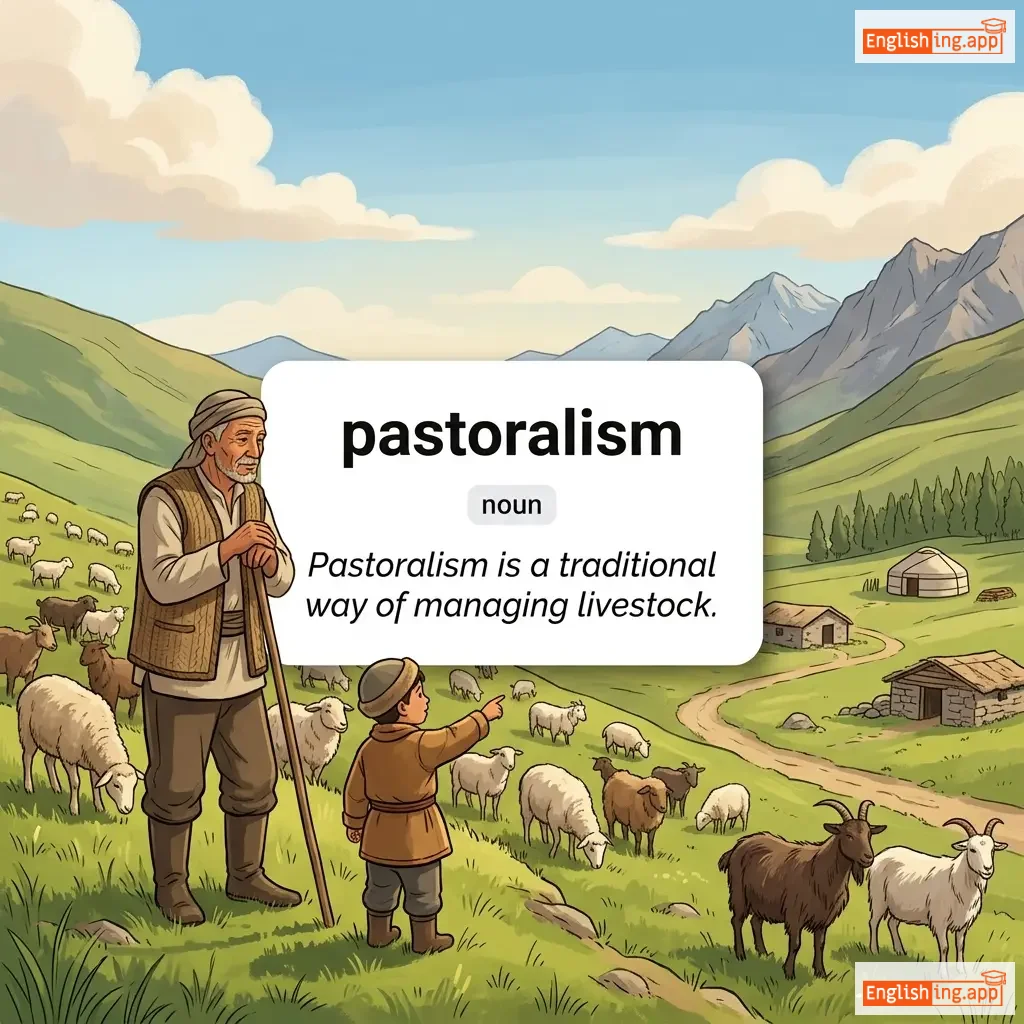
pastoralism definition card — visual illustration of the meaning
noun C2
ˈpɑː.stər.ə.lɪ.zəm
пасторализм, система выпаса скота на травяных пастбищах (pastoralizm, sistema vypasa skota na travyanykh pastbishchakh)

A form of animal husbandry where domesticated animals are released onto large vegetated outdoor lands for grazing.

"Pastoralism is a traditional way of managing livestock."

"Пасторализм - это традиционный способ управления скотом." (Pastoralizm - eto traditsionnyy sposob upravleniya skotom.)
noun C2
/pəˈtiːnə/
пленка или блеск на металле, камне или дереве из-за возраста или использования; также поверхностный вид (plenka ili blesk na metalle, kamne ili dereve iz-za vozrasta ili ispol'zovaniya; takzhe poverkhnostnyy vid)

a surface film or sheen on metal, stone, or wood due to age or use; also, a superficial appearance

"The bronze statue developed a green patina after years in the sea air."

"Бронзовая статуя развила зеленую патину после многих лет в морском воздухе." (Bronzovaya statuya razvila zelyonuyu patinu posle mnogikh let v morskoy vozdukhe.)
noun C2
/ˈpætwɑː/
патуа (patoa)

a regional or social dialect, especially one considered nonstandard or informal

"The guide slipped into local patois when chatting with the fishermen."

"Гид начал говорить на местном патуа, общаясь с рыбаками." (Gid nachal govorit' na mestnom patoà, obshchayas' s rybakami.)
noun, adjective C2
/pəˈtrɪʃən/
патриций (patritsiy)

A person of noble rank or high social standing; relating to aristocracy.

"The patrician families of Rome wielded great power in politics."

"Патрицианские семьи Рима имели огромное влияние в политике." (Patritsianskie sem'i Rima imeli ogromnoe vliyanie v politike.)
noun C2
/ˈpætrɪsaɪd/
патрици́д (patritsid)

The act of killing one's own father.

"The ancient myth describes a son committing patricide to take the throne."

"Древний миф описывает сына, совершившего патрици́д, чтобы занять трон." (Drevniy mif opisyvayet syna, sovershivshego patritsid, chtoby zanyat' tron.)
noun C2
/ˈpætrɪˌmoʊni/
наследство (nasledstvo)

Property or inheritance passed down from one's father or ancestors.

"The castle was part of his patrimony from his noble ancestors."

"Замок был частью его наследства, полученного от его благородных предков." (Zamok byl chastyu ego nasledstva, poluchennogo ot ego blagorodnykh predkov.)
noun C2
/ˌpætrəˈnɪmɪk/
патронимическое имя (patronimicheskoe imya)

a name derived from the name of a father or ancestor

"In many cultures, surnames are patronymic in origin."

"Во многих культурах фамилии происходят от патронимических имен." (Vo mnogikh kul'turakh familii proiskhodyat ot patronimicheskikh imen.)
adjective C2
/ˈpɔːntʃi/
с животом (s zhivotom)

Having a large or protruding belly.

"The paunchy man struggled to button his shirt."

"Толстяк с трудом застегивал свою рубашку." (Tolstyak s trudom zastegival svoyu rubashku.)
noun C2
/ˈpɔːpərɪzəm/
бедность (bednost)

The state of being extremely poor.

"The country struggled with rising pauperism in the 19th century."

"Страна боролась с растущей бедностью в XIX веке." (Strana borolas' s rastushchey bednost'yu v XIX veke.)
adjective C2
/ˈpɛkəbl/
погрешимый (pogreshimy)

liable to sin or error; capable of doing wrong

"Humans are peccable, but they strive for goodness."

"Люди погрешимы, но они стремятся к добру." (Lyudi pogreshimy, no oni stremyatsya k dobro.)
noun C2
/ˌpɛkəˈdɪloʊ/
мелкая ошибка (melkaya oshibka)

a small or minor fault or sin

"Forgetting to call was just a small peccadillo, not a serious mistake."

"Забыть позвонить было просто мелкой ошибкой, а не серьезной ошибкой." (Zabyty pozvonit' bylo prosto melkoy oshibkoy, a ne seryoznoy oshibkoy.)
adjective C2
/ˈpɛkənt/
виновный (vinovny)

Guilty of a moral offense or wrongdoing; sinful.

"The judge declared the peccant official unfit for office."

"Судья объявил виновного чиновника непригодным для работы." (Sud'ya ob'yavil vinovnogo chinovnika neprigodnym dlya raboty.)
adjective C2
/ˈpɛktərəl/
грудные мышцы (grudnye myshcy)

Relating to the chest or breast.

"The athlete focused on strengthening his pectoral muscles."

"Атлет сосредоточился на укреплении своих грудных мышц." (Atlet sosredotochilsya na ukrepleniye svoikh grudnykh myshch.)
verb C2
/ˈpɛkjʊˌleɪt/
растрачивать (rastrachivat)

To embezzle or steal money, especially public funds.

"The corrupt official was found guilty of peculating government funds."

"Коррумпированный чиновник был признан виновным в хищении государственных средств." (Korrumpirovannyy chinovnik byl prizhann vynosnim v khishchenii gosudarstvennykh sredstv.)
noun C2
/ˌpɛkjʊˈleɪʃən/
растрата (rastrata)

The act of embezzling or stealing money, especially from public funds.

"The minister resigned after being accused of peculation."

"Министр ушел в отставку после того, как его обвинили в растрате." (Ministr ushel v otstavku posle togo, kak ego obvinili v rastrote.)
noun C2
/ˌpɛdəˈɡɒdʒɪks/
педагогика (pedagogika)

the science or art of teaching

"He studied pedagogics to become a better teacher."

"Он изучал педагогику, чтобы стать лучшим учителем." (On izuchal pedagogiku, chtoby stat' luchshim uchitelem.)
noun C2
/ˈpɛdəˌɡɒɡ/
учитель (uchitel)

a teacher, especially a strict or formal one

"The old pedagogue insisted on discipline in the classroom."

"Старый педагог настаивал на дисциплине в классе." (Staryy pedagog nastoyival na disziplinye v klasse.)
noun C2
/ˈpɛdənt/
педант (pedant)

A person who is excessively concerned with minor details or rules, often in a showy way.

"The professor was criticized as a pedant who focused too much on trivial details."

"Профессора критиковали как педанта, который слишком много внимания уделял незначительным деталям." (Professora kritikovali kak pedanta, kotoryj slishkom mnogo vnimaniya udeljal neznachitel'nym detaljam.)
noun C2
/ˈpɛd.ən.tri/
чрезмерное внимание к мелким деталям или правилам (chrezmernoe vnimanie k melkim detalyam ili pravilam)

Excessive concern with minor details or rules.

"His pedantry made the meeting unnecessarily long."

"Его педантичность сделала встречу ненужно долгой." (Ego pedantichnost' sdelala vstrechu nenuzhno dolgoy.)
noun C2
/ˈpɛdɪmənt/
треугольный фронтон (treugol'nyy fronton)

a triangular gable found above the horizontal structure of a building, often in classical architecture

"The ancient temple had a pediment decorated with sculptures."

"Древний храм имел фронтон, украшенный скульптурами." (Drevniy khram imel fronton, ukrashennyy skul'pturami.)
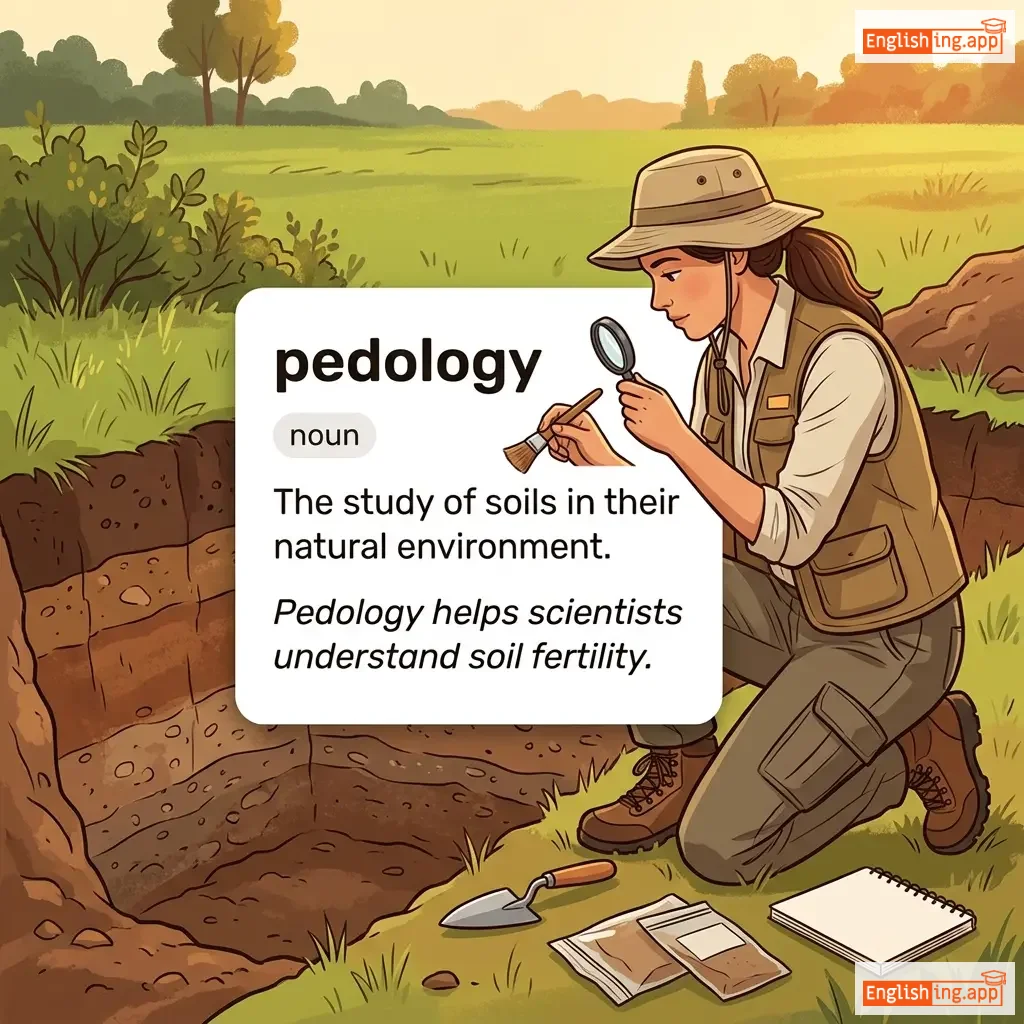
pedology definition card — visual illustration of the meaning
noun C2
/pɪˈdɒl.ə.dʒi/
почвоведение (pochvovedenie)

The study of soils in their natural environment.

"Pedology helps scientists understand soil fertility."

"Педология помогает ученым понять плодородие почвы." (Pedologiya pomogaet uchenym ponyat plodorodiye pochvy.)
noun C2
/ˈpɪərɪdʒ/
дворянство (dvoryanstvo)

the title or rank of a peer; the nobility as a group

"He was elevated to the peerage by the king."

"Он был возведён в дворянство королём." (On byl vozvedyon v dvoryanstvo korolyom.)
adjective C2
/pɪˈdʒɒrətɪv/
презрительный (prezritel'nyy)

Expressing contempt or disapproval.

"He used pejorative terms to insult his opponents."

"Он использовал презрительные выражения, чтобы оскорбить своих противников." (On ispol'zoval prezritel'nye vyrazheniya, chtoby oskorbit' svoikh protivnikov.)
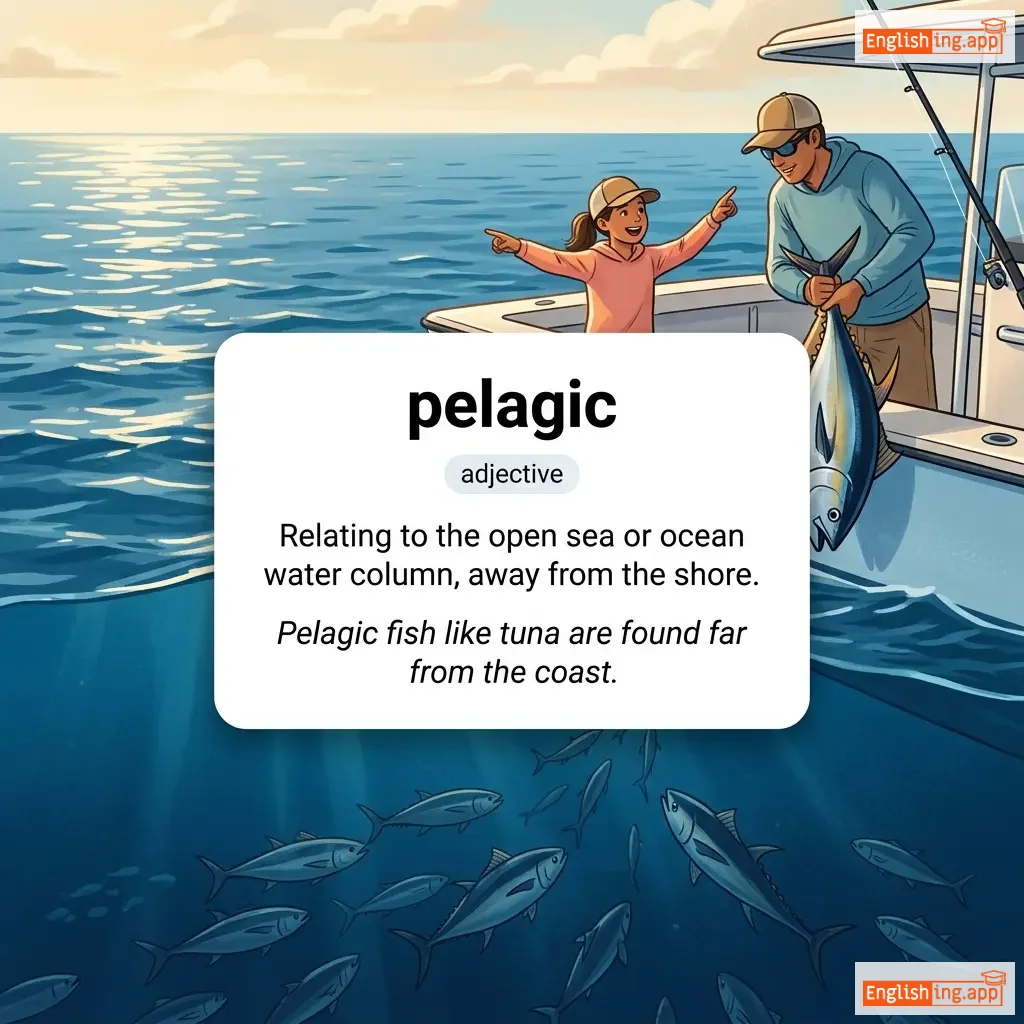
pelagic definition card — visual illustration of the meaning
adjective C2
/pəˈlædʒ.ɪk/
относящийся к открытому морю (otnosyashchijsya k otkrytomu moryu)

Relating to the open sea or ocean water column, away from the shore.

"Pelagic fish like tuna are found far from the coast."

"Пелагические рыбы, такие как тунец, встречаются далеко от побережья." (Pelagicheskie ryby, takie kak tunets, vstrechayutsya daleko ot poberezh'ya.)
noun C2
/pɛlf/
нечестные деньги (nechestnye den'gi)

Money, especially when gained dishonorably.

"The corrupt official was motivated only by pelf."

"Коррумпированный чиновник был мотивирован только нечестными деньгами." (Korrumpirovannyj chinovnik byl motivirovan tol'ko nechestnymi den'gami.)
adverb C2
/ˌpɛlˈmɛl/
в беспорядке (v besporyadke)

In a confused, rushed, or disorderly manner.

"The children ran pell-mell through the playground."

"Дети бегали в беспорядке по игровой площадке." (Deti begali v besporyadke po igrovoy ploshchadke.)
adjective C2
/pəˈluːsɪd/
прозрачный (prozrachny)

Transparently clear; easy to understand.

"The lake water was so pellucid that you could see the stones at the bottom."

"Вода в озере была настолько прозрачной, что можно было увидеть камни на дне." (Voda v ozyere byla nastol'ko prozrachnoy, chto mozhno bylo uvidet' kamni na dne.)
adjective C2
/ˈpɛndjʊləs/
счастье (schast'ye)

hanging down loosely; drooping

"The pendulous fruit weighed down the branch."

"Она не могла скрыть своего счастья, когда получила награду." (Ona ne mogla skryt' svoego schast'ya, kogda poluchila nagradu.)
adjective C2
/ˈpɛnɪtrəbl/
проходимый (prokhodimy)

Capable of being passed through or entered.

"The thin wall was easily penetrable."

"Тонкая стена была легко проходимой." (Tonkaia stena byla legko prokhodimoi.)
adjective C2
/ˌpɛnɪˈtɛnʃəl/
каяться (kayat'sya)

Relating to or expressing penitence or penance.

"The priest delivered a penitential sermon on forgiveness."

"Священник прочитал покаянную проповедь о прощении." (Svyashchennik prochital pokayannuyu propoved' o proshchenii.)
adjective C2
/ˈpɛneɪt/
перообразный (peroobrazny)

Having parts or structures arranged like a feather; feather-shaped.

"The fern has a pennate leaf structure."

"Структура листа папоротника перообразная." (Struktura lista paporotnika peroobraznaya.)
noun C2
/pɪˈnɒlədʒi/
пенология (penologiya)

The study of prison management and criminal rehabilitation.

"He decided to specialize in penology to help improve the prison system."

"Он решил специализироваться на пенологии, чтобы помочь улучшить систему тюрем." (On reshil spetsializirovatsya na penologii, chtoby pomoch' uluchshit' sistemy tyurem.)
noun C2
/ˈpɛntæd/
пятерка (pyaterka)

A group or set of five things.

"The committee was divided into a pentad of working groups."

"Комитет был разделен на пять рабочих групп." (Komitet byl razdelen na pyat' rabochikh grup.)
noun C2
/ˈpɛntəˌɡræm/
пентаграмм (pentagramm)

A five-pointed star often used as a symbol in magic, mysticism, or religion.

"The wizard drew a pentagram on the floor as part of the ritual."

"Колдун нарисовал пентаграмму на полу как часть ритуала." (Koldun narisoval pentagrammu na polu kak chast' rituala.)
noun C2
/ˌpɛntəˈhiːdrən/
пентаэдр (pentaedr)

A solid geometric figure with five faces.

"In geometry class, the teacher explained the structure of a pentahedron."

"На уроке геометрии учитель объяснил структуру пентаэдра." (Na uroke geometrii uchitel' ob'yasnil strukturu pentaedra.)
noun C2
/pɛnˈtæmɪtər/
пентаметр (pentametr)

A line of verse consisting of five metrical feet.

"Shakespeare often wrote his plays in iambic pentameter."

"Шекспир часто писал свои пьесы в ямбическом пентаметре." (Shekspir chasto pisal svoi p'esy v iambicheskom pentametre.)
adjective C2
/ˌpɛntəˈveɪlənt/
пентавалентный (pentavalentny)

Having a valence of five, especially in chemistry.

"Phosphorus can exist in a pentavalent state."

"Фосфор может существовать в пентавалентном состоянии." (Fosfor mozhet sushchestvovat' v pentavalentnom sostoyanii.)
noun C2
/pəˈnʌmbrə/
частично затененная область (chastichno zatenennaya oblast)

a partially shaded area around the shadow of an object, especially during an eclipse

"The moon’s penumbra created a dim shadow over the Earth."

"Пенумбра Луны создала тусклую тень на Земле." (Penumbra Luny sozdala tuskluyu ten' na Zemle.)
adjective C2
/pəˈnjʊəriəs/
крайне бедный (krajne bedny)

extremely poor; poverty-stricken; miserly

"The penurious family struggled to buy food."

"Крайне бедная семья испытывала трудности с покупкой еды." (Krajne bednaya sem'ya ispytyvala trudnosti s pokupkoy edy.)
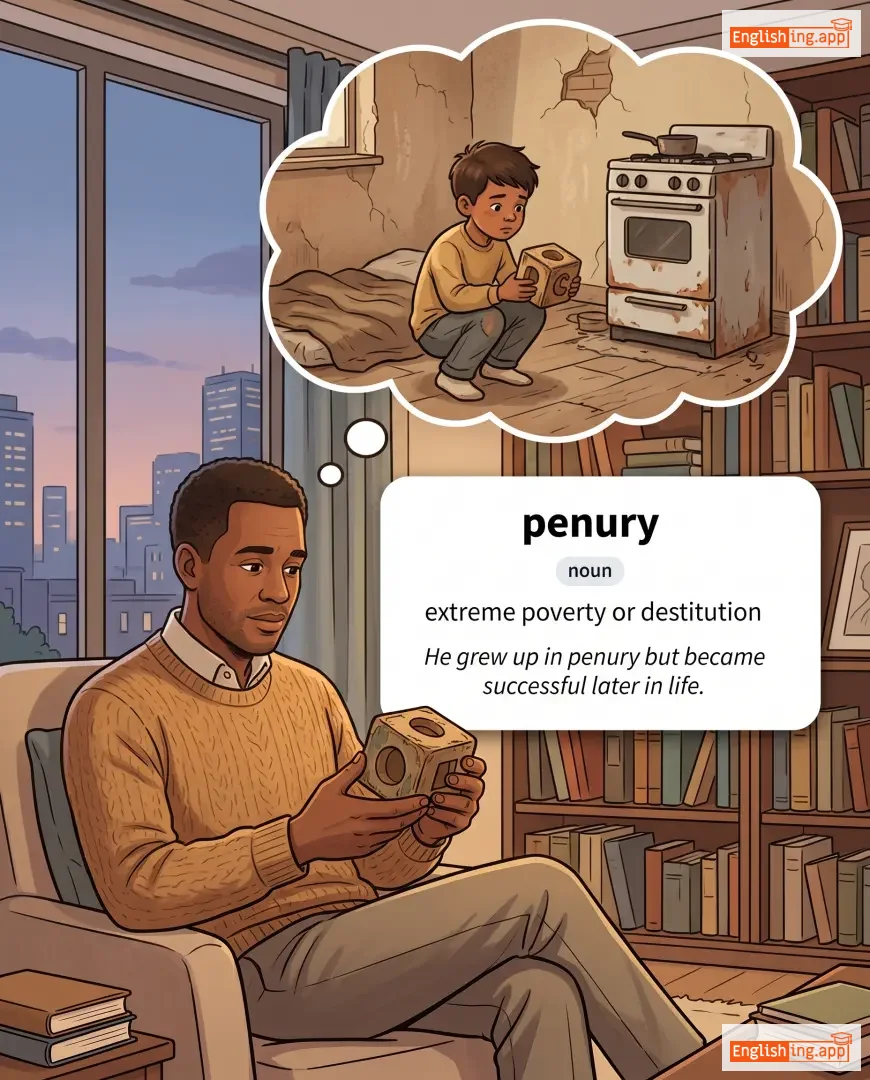
penury definition card — visual illustration of the meaning
noun C2
/ˈpɛnjʊri/
крайняя бедность (krajnyaya bednost)

extreme poverty or destitution

"He grew up in penury but became successful later in life."

"Он вырос в бедности, но стал успешным позже в жизни." (On vyros v bednosti, no stal uspeshnym pozhe v zhizni.)
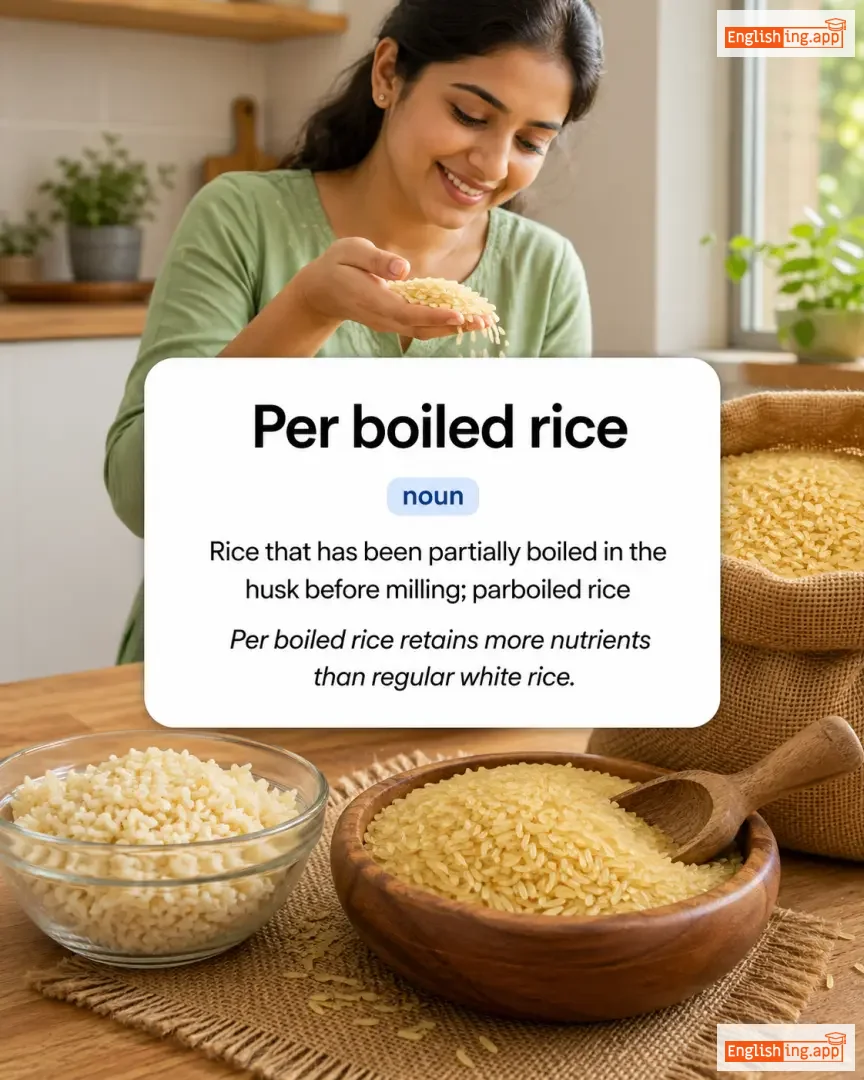
Per boiled rice definition card — visual illustration of the meaning
noun C2
/pɜːr bɔɪld raɪs/
предварительно вареный рис (predvaritel'no varenyy ris)

Rice that has been partially boiled in the husk before milling; parboiled rice

"Per boiled rice retains more nutrients than regular white rice."

"Предварительно вареный рис сохраняет больше питательных веществ, чем обычный белый рис." (Predvaritel'no varenyy ris sokhranyayet bol'she pitatel'nykh veshchestv, chem obychniy belyy ris.)
verb C2
/pəˈræmbjʊˌleɪt/
гулять (gulyat)

To walk through or travel around, especially for leisure.

"They perambulated the old town, enjoying the sights."

"Они гуляли по старому городу, наслаждаясь видами." (Oni gulyali po staromu gorodu, naslazhdayas' vidami.)
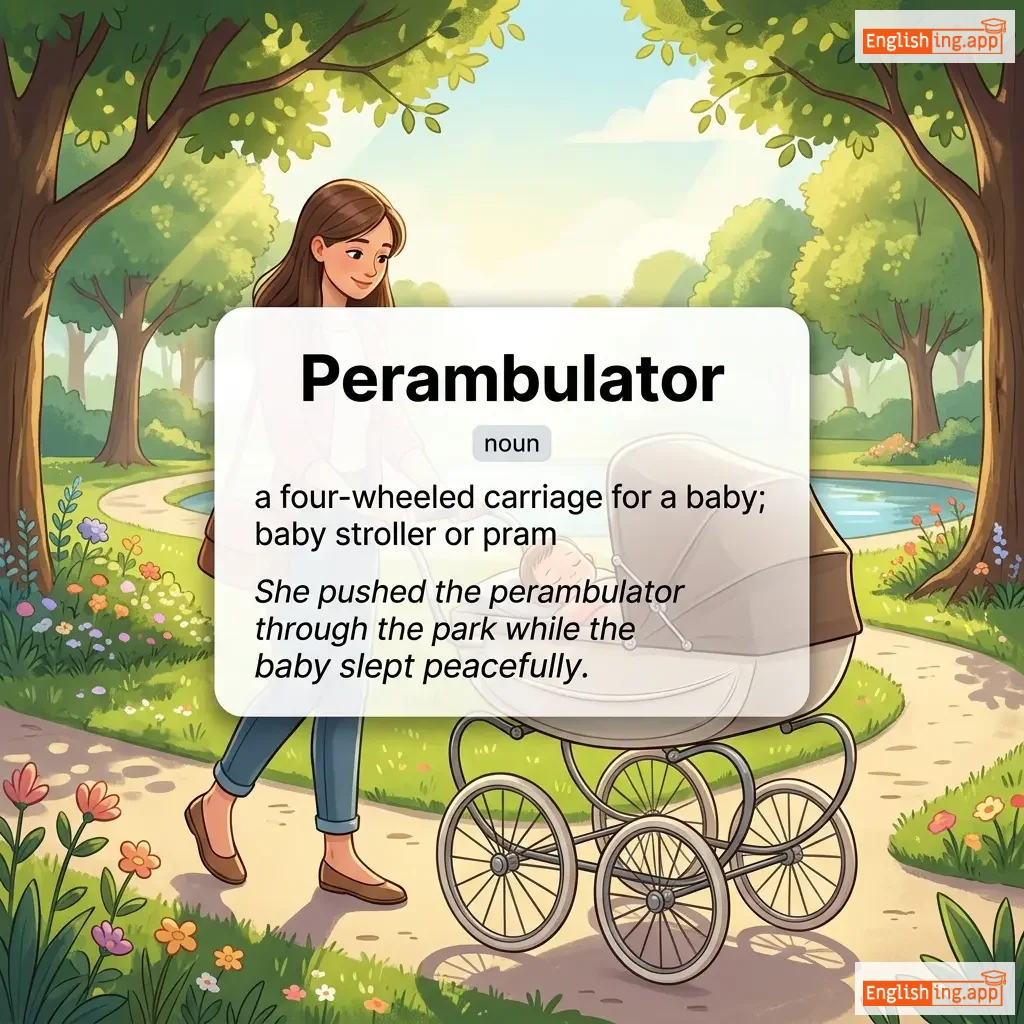
Perambulator definition card — visual illustration of the meaning
noun C2
/pəˈræm.bjə.leɪ.tər/
коляска (perambulator)

a four-wheeled carriage for a baby; baby stroller or pram

"She pushed the perambulator through the park while the baby slept peacefully."

"Она толкала перамбулятор по парку, пока ребенок мирно спал." (Ona tolkala perambulyator po parku, poka rebenok mirno spal.)
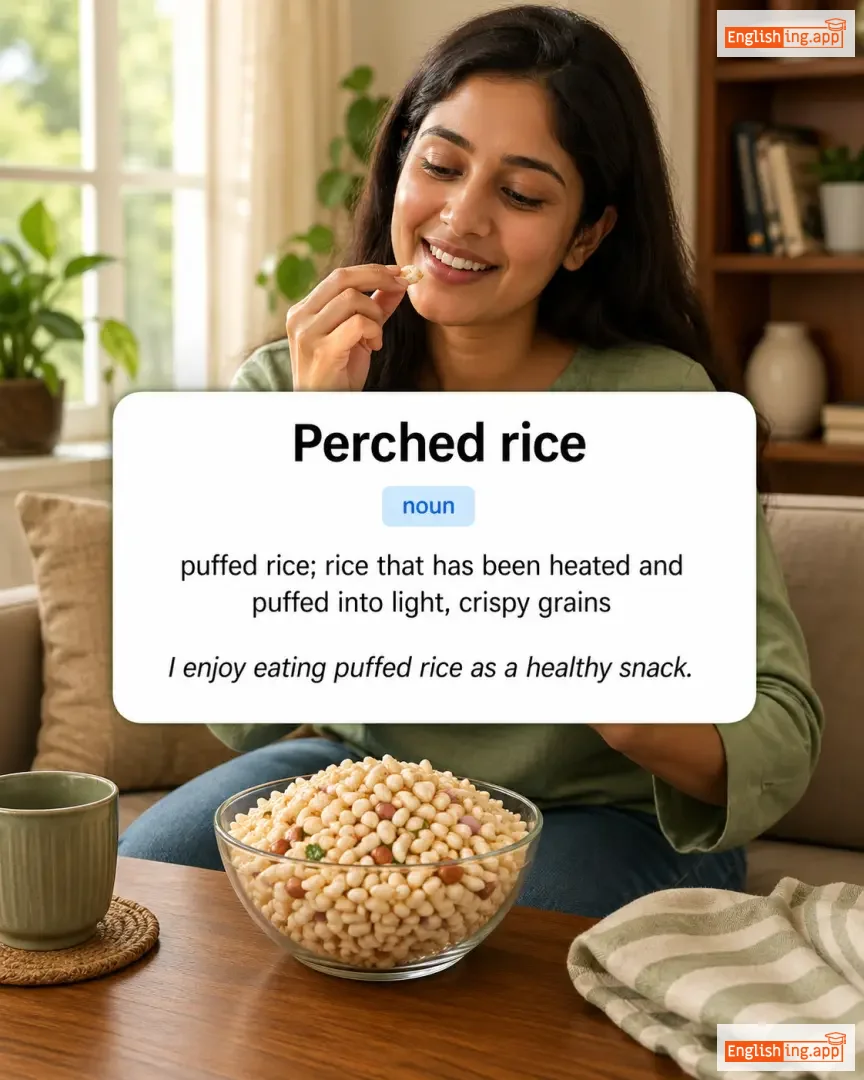
Perched rice definition card — visual illustration of the meaning
noun C2
/pɜːrtʃt raɪs/
попкорн из риса (popkorn iz risa)

puffed rice; rice that has been heated and puffed into light, crispy grains

"I enjoy eating puffed rice as a healthy snack."

"Я люблю есть попкорн из риса как полезный перекус." (Ya lyublyu yest' popkorn iz risa kak poleznyy perekus)