Vokabulare

Englisches Vokabelwörterbuch | Wortbedeutungen, Definitionen & Beispiele

noun C2
/ˌɒstɛnˈteɪʃən/
অপদর্শন (opodorshon)

excessive display of wealth or knowledge intended to attract admiration or envy

"The billionaire’s party was full of ostentation and luxury."

"কোটিপতির পার্টি অপদর্শন এবং বিলাসিতায় ভরা ছিল।" (Kotipoti'r party opodorshon ebong bilasitay bhora chilo.)
verb C2
/ˌaʊtməˈnuːvər/
চতুরতার সাথে পরাস্ত করা (choturtar sathe porasto kora)

to gain an advantage over an opponent by skillful or clever action

"The smaller company managed to outmaneuver its larger rival."

"ছোট কোম্পানিটি তার বড় প্রতিদ্বন্দ্বীকে চতুরতার সাথে পরাস্ত করতে সক্ষম হয়েছিল।" (Chhoto kompaniti tar boro protiddondike choturtar sathe porasto korte sokkhom hoyechhilo.)
verb C2
/aʊtˈraɪd/
দ্রুত অতিক্রম করা (druto atikrom kora)

to ride faster, farther, or better than someone else

"The young rider managed to outride his competitors in the race."

"তরুণ রাইডার দৌড়ে তার প্রতিদ্বন্দ্বীদের অতিক্রম করতে সক্ষম হয়েছিল।" (Torun raider dour e tar protidondhider atikrom korte sokkhom hoyechilo.)
noun C2
/ˈaʊtˌrɪɡər/
সহায়ক কাঠামো (shohayok kathamo)

a projecting structure on a boat, used for stability, or a boat fitted with such support

"The fisherman paddled his outrigger canoe across the lagoon."

"জেলে তার আউটরিগার ক্যানোটি লেগুন অতিক্রম করে চালাল।" (Jele tar outrigger canoeti legun atikrom kore chalalo.)
verb C2
/ˌoʊvərˈliːp/
লাফিয়ে পার হওয়া (lafiye par howa)

To jump over something; to omit or disregard something.

"He managed to overleap the fence easily."

"সে সহজেই বেড়ার উপর দিয়ে লাফিয়ে পার হল।" (Se sohojei berar upor diye lafiye par holo.)
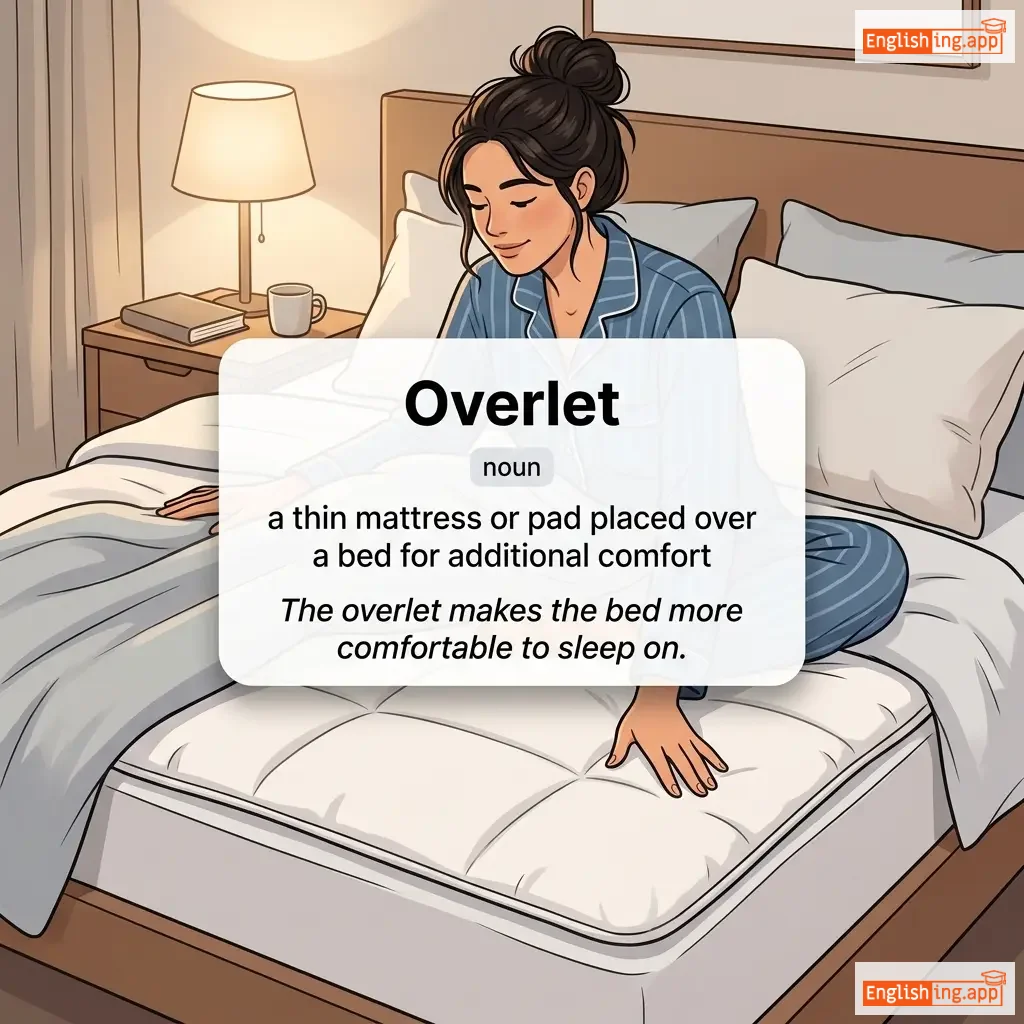
Overlet definition card — visual illustration of the meaning
noun C2
/ˈoʊ.vər.let/
তোষক (toshok)

a thin mattress or pad placed over a bed for additional comfort

"The overlet makes the bed more comfortable to sleep on."

"তোষকটি বিছানাকে ঘুমানোর জন্য আরও আরামদায়ক করে তোলে।" (toshokti bichhanake ghumanor jonno aro aramdayok kore tole)
noun C2
/ˈoʊvərlɔːrd/
প্রভু (probhu)

A ruler, master, or person of great power and authority over others.

"The peasants were forced to pay taxes to their overlord."

"কৃষকদের তাদের প্রভুকে কর দিতে বাধ্য করা হয়েছিল।" (Krishokder tader probhuke kor dite badhyo kora hoyechhilo.)
verb C2
/ˌoʊvərˈstraɪd/
লম্বা পা ফেলে পার হওয়া (lomba pa phele par howa)

To stride over something; to step across with long steps.

"He managed to overstride the narrow stream with ease."

"সে সহজেই সরু খালের উপর দিয়ে বড় পদক্ষেপে পার হলো।" (Se sohojei soru khaler upar diye boro podokkhepe par holo.)
adjective C2
/ˌoʊvərˈwiːnɪŋ/
অহংকারী (ohongkari)

excessively arrogant or prideful

"His overweening pride cost him many friends."

"তার অতিরিক্ত অহংকার তাকে অনেক বন্ধুর থেকে বঞ্চিত করেছিল।" (Tar otirikto ohongkar take onek bondhur theke bonchito korechhilo.)
adjective C2
/ˈoʊ.vɔɪd/
ডিম্বাকৃতি (dimbakriti)

egg-shaped; resembling an oval or ellipse

"The artist painted an ovoid shape in the center of the canvas."

"শিল্পী ক্যানভাসের কেন্দ্রে একটি ডিম্বাকৃতি চিত্র এঁকেছিলেন।" (Shilpi canvaser kendre ekti dimbakriti chitra enkhechilen.)
noun C2
/ˈpæk.ɪ.dɜːrm/
ঘনত্বকী স্তন্যপায়ী প্রাণী (ghonotoki stonyopayi prani)

a large mammal with thick skin, such as an elephant, rhinoceros, or hippopotamus

"The zoo had several pachyderms, including elephants and rhinos."

"চিড়িয়াখানায় কয়েকটি ঘনত্বকী প্রাণী ছিল, যেমন হাতি এবং গন্ডার।" (Chiriyakhanae koyekti ghonotoki prani chilo, jemon hati ebong gondar.)
noun C2
/ˈpɑːdreɪ/
পাদ্রি (padri)

A title for a priest, especially in the Roman Catholic Church; also used informally for 'father'.

"The soldiers attended mass led by the padre."

"সৈন্যরা পাদ্রির নেতৃত্বে মিসায় অংশগ্রহণ করেছিল।" (soinora padrir netritte misay angsho grohon korechilo.)
noun C2
/ˈpiːən/
প্রশস্তিগান (proshostigan)

A song or piece of writing expressing great praise or triumph.

"The article was a paean to the beauty of nature."

"প্রবন্ধটি প্রকৃতির সৌন্দর্যের প্রশস্তিগান ছিল।" (probondhoti prokritir soundorjer proshostigan chilo.)
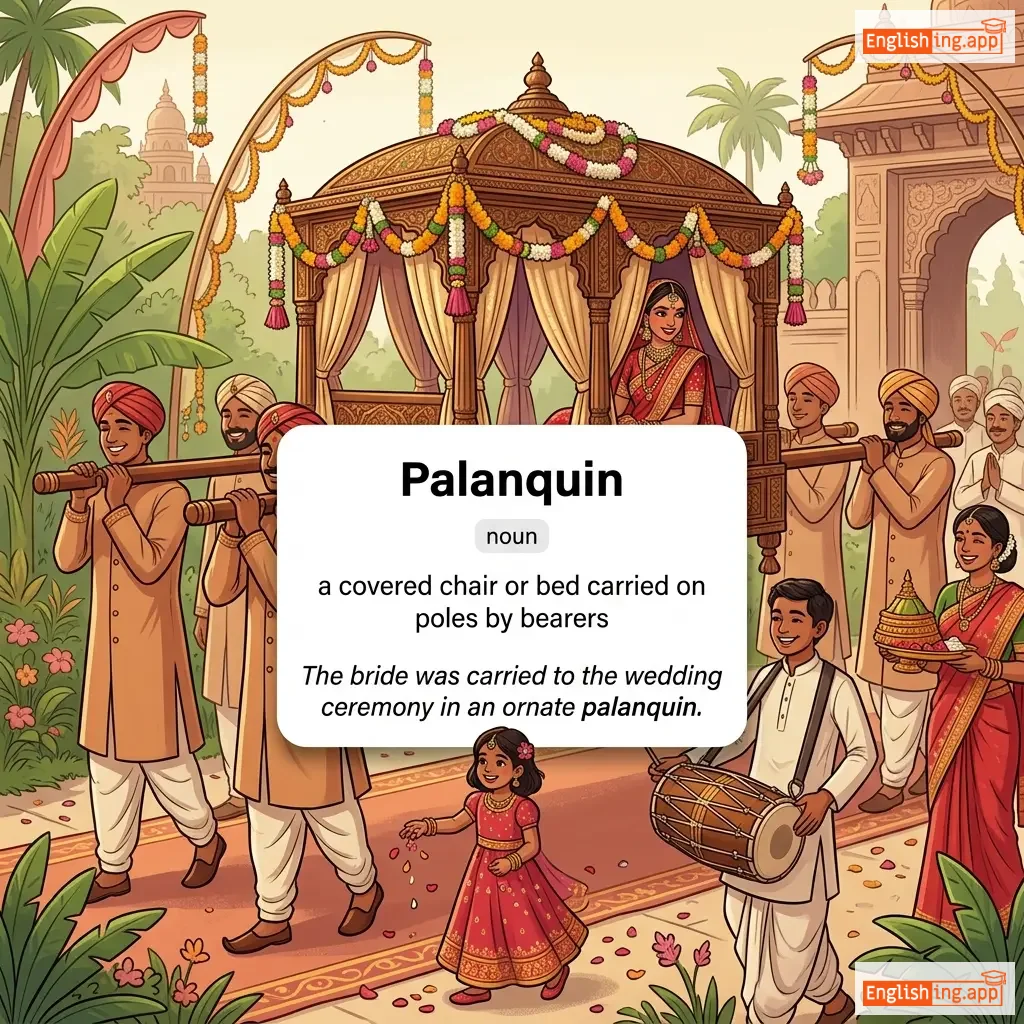
Palanquin definition card — visual illustration of the meaning
noun C2
/ˌpæl.ənˈkiːn/
পালকি (palki)

a covered chair or bed carried on poles by bearers

"The bride was carried to the wedding ceremony in an ornate palanquin."

"কনেকে একটি সুন্দর পালকিতে করে বিয়ের অনুষ্ঠানে নিয়ে যাওয়া হল।" (koneke ekti sundor palkite kore biyer onushthan-e niye jaoa holo.)
noun C2
/pəˈlæv.ər/
অযথা আলোচনা / হট্টগোল (oyotha alochona / hottogol)

prolonged and idle discussion; fuss or unnecessary talk

"After much palaver, they finally agreed on the plan."

"অনেক অযথা আলোচনার পর তারা অবশেষে পরিকল্পনায় সম্মত হলো।" (Onek oyotha alochonar por tara obosheshe porikolpanay shommat holo.)
noun C2
/ˈpælɪmpsɛst/
অধিলিখিত পাণ্ডুলিপি (odhilikhito pandulipi)

a manuscript or document that has been written over but still bears traces of earlier writing; something reused or altered but still retaining traces of its earlier form

"The ancient manuscript was a palimpsest, showing faint traces of previous texts beneath the new writing."

"প্রাচীন পাণ্ডুলিপিটি ছিল একটি প্যালিম্পসেস্ট, যেখানে পুরোনো লেখার অস্পষ্ট চিহ্ন দেখা যাচ্ছিল।" (Prachin pandulipiti chhilo ekti palimpsest, jekhane purono lekhar asposto chinho dekha jachhilo.)
noun C2
/ˈpælɪˌnoʊd/
ক্ষমা প্রার্থনামূলক কবিতা (khoma prarthnamulok kobita)

a poem or statement in which the writer retracts something said in an earlier work

"The poet wrote a palinode to apologize for his earlier harsh words."

"কবি তার আগের কঠিন কথার জন্য ক্ষমা চেয়ে একটি প্যালিনোড লিখেছিলেন।" (Kobi tar ager kothin kothar jonno khoma chiye ekti palinode likhechhilen.)
verb C2
/ˈpælieɪt/
উপশম করা (uposhom kora)

to make a disease, symptoms, or problem less severe without removing the cause

"The doctor prescribed medicine to palliate the patient's pain."

"ডাক্তার রোগীর ব্যথা উপশম করার জন্য ওষুধ লিখে দিয়েছিলেন।" (Daktar rogir byatha uposhom korar jonno oshudh likhe diyechilen.)
noun C2
/ˌpæliˈeɪʃən/
উপশম (uposhom)

relief of symptoms without curing the underlying disease or problem

"Palliation is often the focus of care for terminally ill patients."

"প্যালিয়েশন প্রায়শই মরণাপন্ন রোগীদের যত্নের মূল লক্ষ্য হয়।" (Palliation prayoshoi moronappon rogider jotner mul lokkho hoy.)
adjective C2
/ˈpɑːmi/
সমৃদ্ধ / গৌরবময় (somriddho / gourobmoy)

prosperous, flourishing, or relating to palm trees

"He often reminisced about the palmy days of his youth."

"সে প্রায়ই তার যৌবনের গৌরবময় দিনের কথা স্মরণ করত।" (Se prai tar jouboner gourobmoy diner kotha smoron korto.)
verb C2
/ˈpælpɪˌteɪt/
হৃদস্পন্দন দ্রুত হওয়া (hridspandan druto howa)

to beat rapidly and strongly, often because of fear, excitement, or illness

"Her heart began to palpitate with fear."

"ভয়ে তার হৃদপিণ্ড দ্রুত স্পন্দিত হতে লাগল।" (Voye tar hridpind druto spondon hote laglo.)
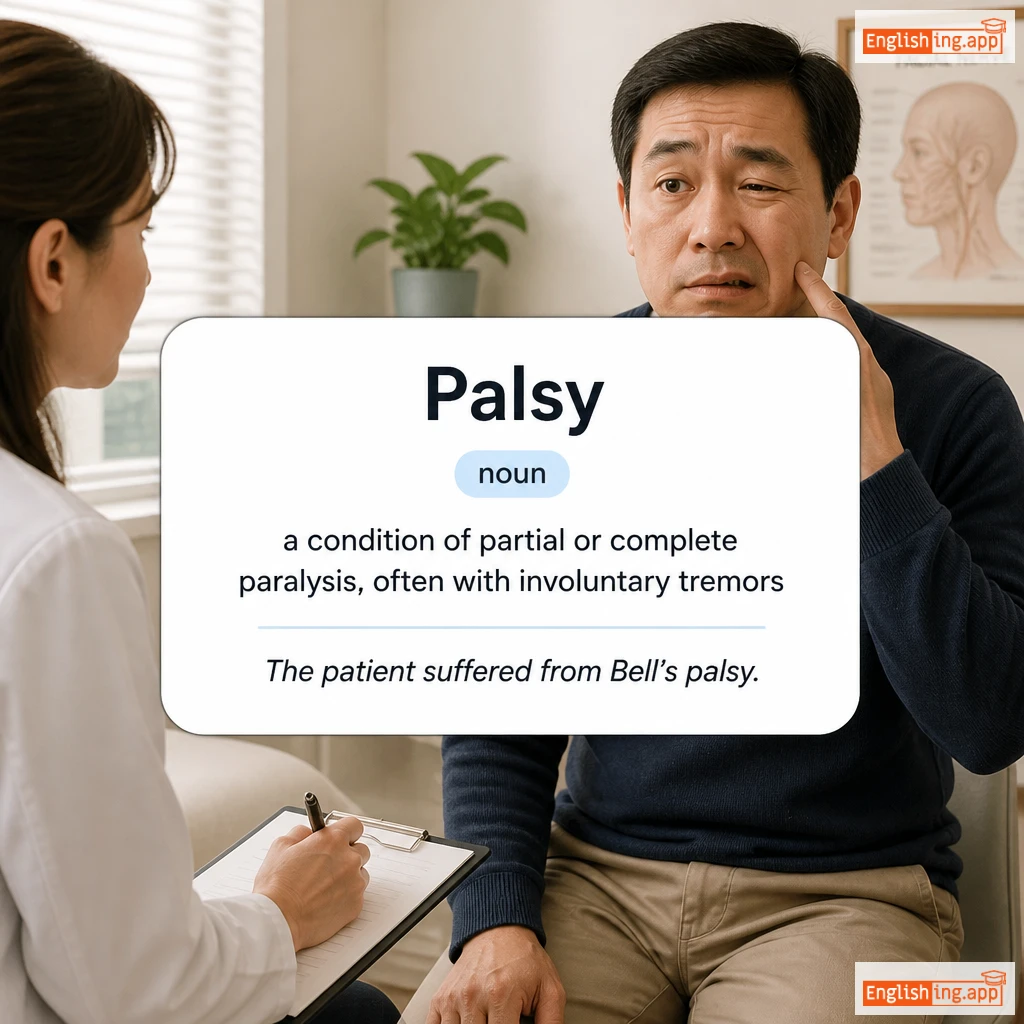
Palsy definition card — visual illustration of the meaning
noun C2
/ˈpɔːlzi/
পক্ষাঘাত (pokkhaghat)

a condition of partial or complete paralysis, often with involuntary tremors

"The patient suffered from Bell’s palsy."

"রোগী বেলের পক্ষাঘাতে ভুগছিলেন।" (Rogi Beler pokkhaghate vugchhilen.)
verb C2
/ˈpɔːltər/
অস্পষ্টভাবে কথা বলা, ফাঁকি দেওয়া (osposhto vabe kotha bola, fanki deowa)

to act insincerely or deceitfully; to equivocate or lie

"He paltered when asked about his involvement in the deal."

"চুক্তিতে তার অংশগ্রহণ সম্পর্কে জিজ্ঞেস করলে সে অস্পষ্টভাবে উত্তর দেয়।" (Chukti te tar onshogrohon somporke jiggesh korle se osposhto vabe uttar deya.)
adjective C2
/ˈpeɪli/
ডোরা কাটা (dora kata)

striped with different colors, usually used in heraldry

"The knight’s shield was decorated with paly stripes of red and gold."

"নাইটের ঢালটি লাল এবং সোনার ডোরা দিয়ে সজ্জিত ছিল।" (Naiter dhalti lal ebong sonar dora diye sojjito chilo.)
noun, verb C2
/ˌpæm.fləˈtɪər/
পুস্তিকা লেখক (pustika lekhok)

a person who writes or distributes pamphlets, often to promote a political or social cause

"In the 18th century, many pamphleteers influenced public opinion."

"অষ্টাদশ শতাব্দীতে অনেক পুস্তিকা লেখক জনমতকে প্রভাবিত করেছিলেন।" (Ostadash shotabdite onek pustika lekhok jonmotke prabhabit korechilen.)
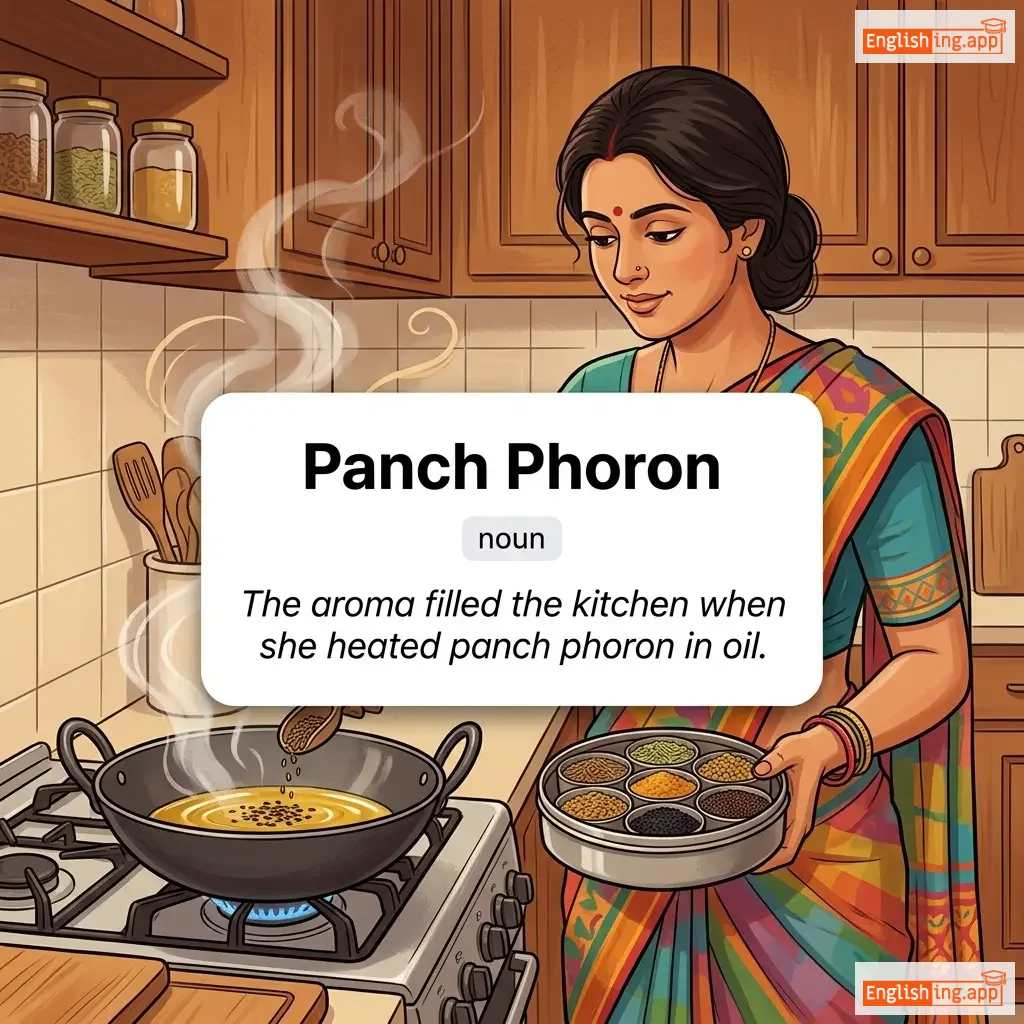
Panch Phoron definition card — visual illustration of the meaning
noun C2
/pʌntʃ ˈfoʊrən/
পাঁচ ফোড়ন (panch phoron)

a Bengali spice blend containing five whole spices: cumin, fennel, fenugreek, nigella, and mustard seeds

"The aroma filled the kitchen when she heated panch phoron in oil."

"তিনি তেলে পাঁচ ফোড়ন গরম করলে রান্নাঘর সুগন্ধে ভরে গেল।" (tini tele panch phoron gorom korle rannaghoor sugondhe bhore gelo.)
noun C2
/ˌpænəˈdʒɪrɪk/
প্রশংসাপত্র, প্রশস্তি (proshongshapatro, proshosti)

a formal speech or piece of writing in praise of someone or something

"The author wrote a panegyric on the bravery of the soldiers."

"লেখক সৈন্যদের বীরত্বের উপর একটি প্রশস্তি লিখেছিলেন।" (Lekhok soinnoder birattwer upor ekti proshosti likhechilen.)
/ˈpæn.ə.pli/
বহুবিধ সংগ্রহ (bohubidho songroho)

A complete or impressive collection of things; a full set of armor.

"The museum displayed a panoply of ancient weapons."

"যাদুঘরে প্রাচীন অস্ত্রের একটি বহুবিধ সংগ্রহ প্রদর্শিত হয়েছিল।" (jadughore prachin osther ekti bohubidho songroho prodorshito hoyechhilo.)
noun C2
/ˈpæn.θi.ɪ.zəm/
সর্বেশ্বরবাদ (sorbeshorbad)

The belief that God and the universe are identical, or that everything is a manifestation of God.

"Spinoza’s philosophy is often associated with pantheism."

"স্পিনোজার দর্শন প্রায়শই সর্বেশ্বরবাদের সাথে যুক্ত।" (Spinojar dorshon prayoshoy sorbeshorbad er sathe jukto.)
noun C2
/ˈpæntəˌskoʊp/
বিস্তৃত দৃশ্য প্রদর্শক যন্ত্র (bistrito drishyo prodorshok jontra)

An optical instrument that provides a wide or panoramic view.

"The scientist used a pantoscope to observe the entire horizon."

"বিজ্ঞানী পুরো দিগন্ত পর্যবেক্ষণ করতে একটি প্যান্টোস্কোপ ব্যবহার করেছিলেন।" (Bigyani puro digonto porjobekkhon korte ekti pantoscope byabohar korechilen.)
noun C2
/ˈpeɪpəsi/
পোপের পদ (poper pod)

The office or authority of the Pope in the Roman Catholic Church.

"The papacy played a significant role in medieval European politics."

"মধ্যযুগীয় ইউরোপীয় রাজনীতিতে প্যাপাসি গুরুত্বপূর্ণ ভূমিকা পালন করেছিল।" (Maddhyajugiyo Europiyo rajnitite papacy guruttopurno vumikha palon korechilo.)
adjective C2
/ˌpærəˈdɪɡmətɪk/
আদর্শগত (adorshogoto)

Serving as a typical example or model of something.

"Her success story is paradigmatic of the opportunities education can provide."

"তার সফলতার গল্প শিক্ষা যে সুযোগ দেয় তার একটি আদর্শ উদাহরণ।" (Tar sofolotar golpo shikkha je sujog dey tar ekti adorsho udahoron.)
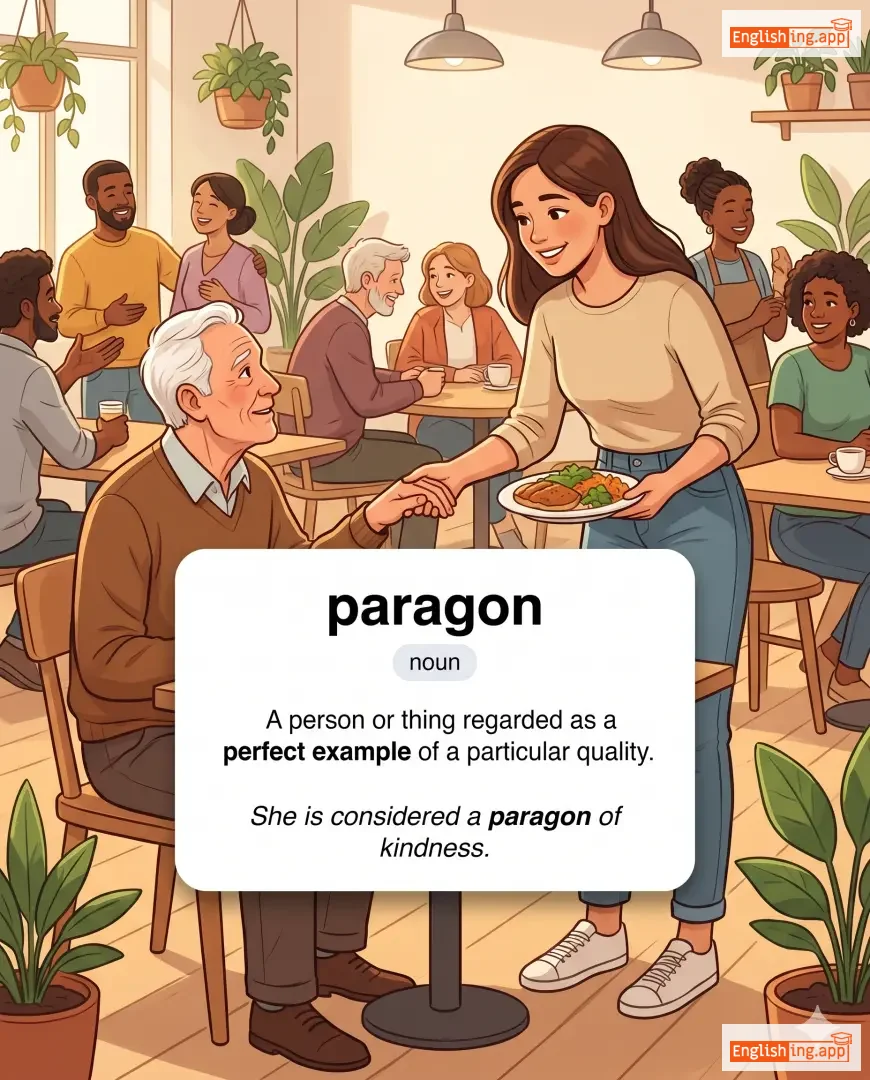
paragon definition card — visual illustration of the meaning
noun C2
/ˈpærəɡɒn/
আদর্শ (adorsho)

A person or thing regarded as a perfect example of a particular quality.

"She is considered a paragon of kindness."

"তাকে দয়ার আদর্শ হিসেবে গণ্য করা হয়।" (Take doyar adorsho hisebe gonno kora hoy.)
noun C2
/ˈpærəmʊr/
প্রেমিক/প্রেমিকা (premik/premika)

a lover, especially an illicit one

"The secret paramour was finally revealed."

"গোপন প্রেমিক/প্রেমিকা অবশেষে প্রকাশিত হলো।" (Gopon premik/premika obosheshe prokashito holo.)
noun C2
/ˌpærəˈnɔɪæk/
অত্যধিক সন্দেহপ্রবণ ব্যক্তি (otyardhik shondehoprobon byakti)

A person who suffers from paranoia or exhibits extreme, irrational distrust and suspicion.

"The paranoiac refused to leave his house, fearing everyone was against him."

"প্যারানয়াক ব্যক্তি তার বাড়ি থেকে বের হতে অস্বীকার করেছিল, কারণ সে ভাবছিল সবাই তার বিরুদ্ধে।" (Paranoiac byakti tar bari theke ber hote oshikar korechilo, karon se bhabchilo sobai tar biruddhe.)
noun C2
/ˈpærəpɛt/
প্রতিরক্ষামূলক দেয়াল (protirekhamulok deyal)

A low protective wall along the edge of a roof, balcony, or bridge.

"The soldier hid behind the parapet for protection."

"সৈনিকটি সুরক্ষার জন্য প্যারাপেটের আড়ালে লুকিয়েছিল।" (Soinikti surakshar jonno parapeter arale lukiyechilo.)
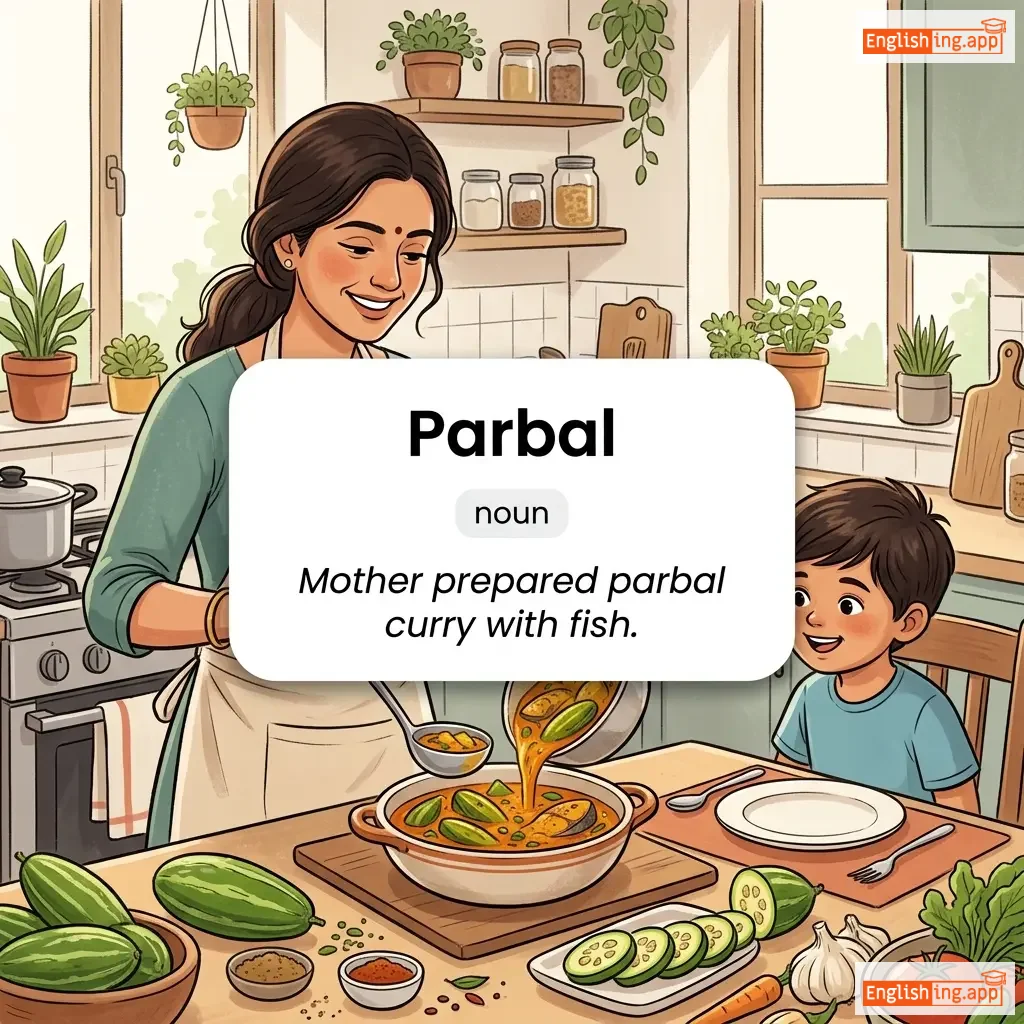
Parbal definition card — visual illustration of the meaning
noun C2
/ˈpɑr.bəl/
পটল (potol)

A green vegetable also known as pointed gourd, commonly used in South Asian cuisine

"Mother prepared parbal curry with fish."

"মা মাছের সাথে পটলের তরকারি তৈরি করেছেন।" (ma macher sathe potoler torkari toiri korechen)
verb C2
/pɑːrtʃ/
শুকিয়ে ফেলা (shukie fela)

to make something extremely dry, especially by exposure to heat

"The scorching sun began to parch the fields."

"প্রচণ্ড রোদ মাঠগুলো শুকিয়ে দিতে শুরু করল।" (Prochondo rod mathgulo shukie dite shuru korlo.)
noun C2
/ˌpærəˈɡɔːrɪk/
অফিমজাত ঔষধ (ofimjat oushodh)

a medicine containing opium, once used to relieve pain and diarrhea

"Doctors once prescribed paregoric to treat diarrhea in children."

"ডাক্তাররা একসময় শিশুদের ডায়রিয়া নিরাময়ে প্যারেগরিক প্রেসক্রাইব করতেন।" (Daktar ra eksomoy shishuder diarrhea niramoy paregoric prescribe korten.)
adjective C2
/ˌpɛrənˈθɛtɪkəl/
আলংকারিক মন্তব্য (alonkari mormotto)

Relating to or expressed in parentheses; a side remark or digression.

"He added a parenthetical comment during the lecture."

"সে বক্তৃতার সময় একটি পাশ্ব মন্তব্য যোগ করেছিল।" (se boktritar somoy ekti pashwo mormotto jog korechhilo.)
noun C2
/ˈpɑːrləns/
ভাষা প্রয়োগ (bhasha proyog)

a particular way of speaking or using words, common to a group

"In legal parlance, the term has a different meaning."

"আইনগত ভাষায় শব্দটির আলাদা অর্থ রয়েছে।" (Ainogoto bhashay shobdotir alada ortho royeche.)
noun, verb C2
/ˈpɑːrli/
আলোচনা (alochona)

a discussion between opposing sides, especially to negotiate terms

"The generals met to parley over the terms of surrender."

"জেনারেলরা আত্মসমর্পণের শর্ত নিয়ে আলোচনা করতে মিলিত হয়েছিল।" (Generalra atmasamorpener shorto niye alochona korte milit hoyechilo.)
adjective C2
/ˈpɑːrləs/
বিপজ্জনক (parlas)

Full of danger or risk; precarious.

"The company is in a parlous financial state."

"কোম্পানিটি বিপজ্জনক আর্থিক অবস্থায় আছে।" (Companyti bipodjonok arthik obosthay ache.)
adjective C2
/pəˈrɒnɪməs/
সমশব্দমূল (paronimas)

Words that are derived from the same root or sound alike.

"The words 'effect' and 'effective' are paronymous."

"‘Effect’ এবং ‘Effective’ শব্দ দুটি সমশব্দমূল।" ('Effect' ebong 'Effective' shobdo duti somoshobdomul.)
noun C2
/ˈpær.əkˌsɪz.əm/
হঠাৎ তীব্র আবেগ (hothat tibro abeg)

A sudden, violent outburst of emotion or activity.

"She was seized by a paroxysm of laughter."

"সে হঠাৎ এক তীব্র হাসির বিস্ফোরণে আক্রান্ত হয়েছিল।" (Se hothat ek tibro hasir bisphorone akranto hoyechhilo.)
noun C2
/ˈpɑːr.kə.tri/
কাঠের মেঝের নকশা করার কৌশল (kather mejher noksha korar koushol)

The art or technique of laying parquet floors.

"The craftsman specialized in parquetry for luxury homes."

"কারিগর বিলাসবহুল বাড়ির জন্য পারকেট্রিতে বিশেষজ্ঞ ছিলেন।" (Karigor bilasbahul barir jonno parquetryte bisheshoggo chhilen.)
noun C2
/ˈpær.ɪ.saɪd/
পিতৃহত্যা (pitrohotya)

The act of killing one's father, mother, or other close relative.

"The court tried him for parricide after the tragic incident."

"দুর্ভাগ্যজনক ঘটনার পর আদালত তাকে পিতৃহত্যার অভিযোগে বিচার করেছিল।" (Durvaggojonok ghotonar por adalat take pitrohotyar obhijoge bichar korechhilo.)
adjective C2
/ˌpɑːrsɪˈmoʊniəs/
কৃপণ (kripon)

unwilling to spend money or use resources; stingy

"The company was too parsimonious to invest in better equipment."

"কোম্পানিটি ভালো যন্ত্রপাতিতে বিনিয়োগ করার জন্য খুবই কৃপণ ছিল।" (Kompani bhalo jontrapatite binioyog korar jonno khuboi kripon chhilo.)
noun C2
/ˈpɑːrsɪmoʊni/
কৃপণতা (kriponota)

extreme unwillingness to spend money or use resources

"His parsimony was evident in the way he avoided any unnecessary expenses."

"তার কৃপণতা স্পষ্ট ছিল যেভাবে তিনি অপ্রয়োজনীয় খরচ এড়াতেন।" (Tar kriponota sposto chhilo jevabe tini oprojonyo khoroch eraten.)
adjective C2
/ˈpɑːrtəbl/
বিভাজ্য (bibhajya)

capable of being divided or separated

"The estate was partible among the heirs."

"সম্পত্তিটি উত্তরাধিকারীদের মধ্যে বিভাজ্য ছিল।" (Somppottiti uttoradhikarider moddhe bibhajya chilo.)