Vokabulare

Englisches Vokabelwörterbuch | Wortbedeutungen, Definitionen & Beispiele

noun C2
/məˈbɒkrəsi/
群衆政治 (gunshuu seiji)

Rule or control by a mob or mass of people, often disorderly.

"The protest turned into mobocracy when the crowd started destroying property."

"抗議は、群衆が財産を破壊し始めたときに群衆政治に変わった。" (Kougi wa, gunshuu ga zaisan o hakai shi hajimeta toki ni gunshuu seiji ni kawatta.)
noun C2
/ˈmɒkəsɪn/
モカシン (mokashin)

A soft leather shoe, traditionally worn by Native Americans, often made from deerskin.

"He slipped on a pair of comfortable moccasins before going outside."

"彼は外に出る前に快適なモカシンを履きました。" (Kare wa soto ni deru mae ni kaiteki na mokashin o hakimashita.)
noun C2
/ˈmɒdɪkəm/
少しの量 (sukoshi no ryou)

a small or moderate amount of something, especially something valuable or desirable

"She showed a modicum of patience during the long meeting."

"長い会議の間、彼女は少しの忍耐を見せました。" (Nagai kaigi no aida, kanojo wa sukoshi no nintai o misemashita.)
adjective C2
/ˈməʊdɪʃ/
流行の (ryūkō no)

conforming to or following current fashion or style

"She wore a modish outfit that caught everyone’s attention."

"彼女はモディッシュな服を着て、みんなの注目を集めていました。" (Kanojo wa modisshu na fuku o kite, minna no chūmoku o atsumete imashita.)
noun C2
/ˈmɔɪəti/
半分または部分 (hanbun mata wa bubun)

One of two equal parts; a half or portion.

"The estate was divided into two moieties between the heirs."

"遺産は相続人の間で2つの部分に分けられました。" (Isan wa sōzokunin no aida de futatsu no bubun ni wakeraremashita.)
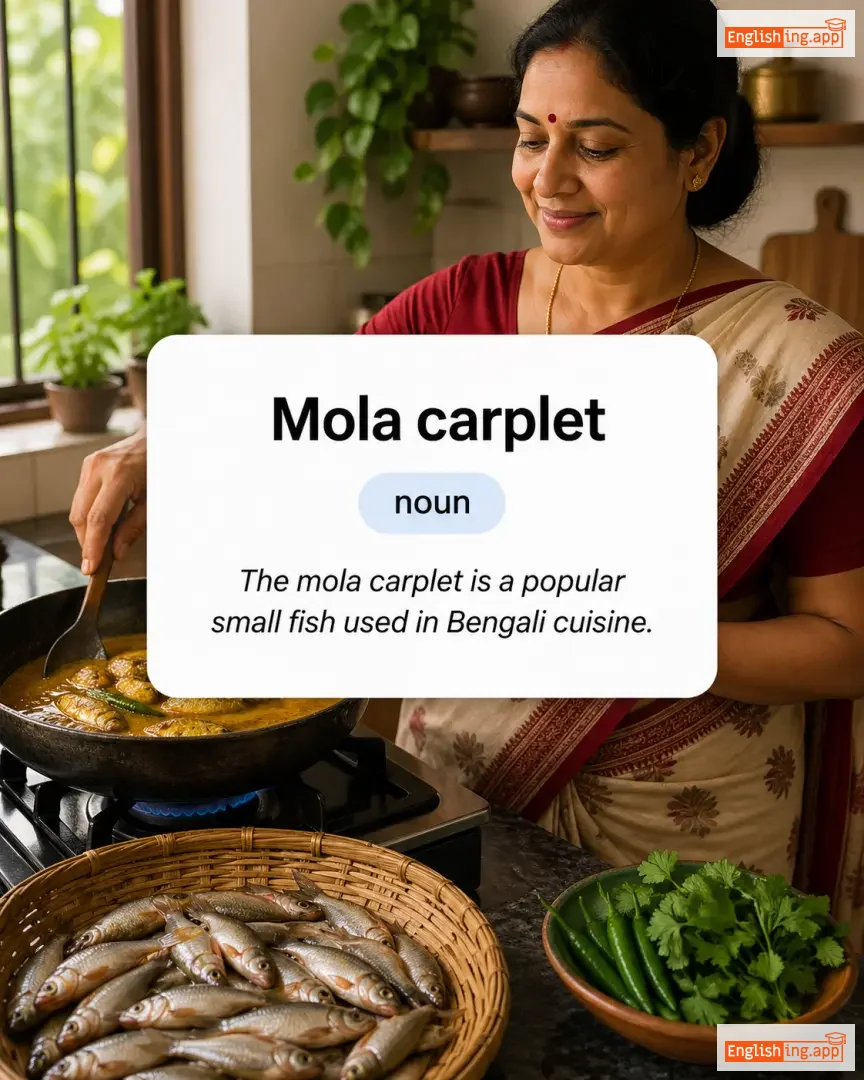
Mola carplet definition card — visual illustration of the meaning
noun C2
/ˈmoʊlə ˈkɑrplɪt/
モラ魚 (mora sakana)

a small freshwater fish of the carp family, commonly found in South Asian rivers and ponds

"The mola carplet is a popular small fish used in Bengali cuisine."

"モラ魚はベンガル料理でよく使われる人気の小さな魚です。" (mora sakana wa bengaru ryori de yoku tsukawareru ninki no chiisana sakana desu)
noun C2
/ˈmoʊlər/
臼歯 (kyūshi)

A large tooth at the back of the mouth used for grinding food.

"The dentist had to extract his wisdom molar."

"歯科医は彼の親知らずを抜かなければなりませんでした。" (Shikai wa kare no oyashirazu o nakanakereba narimasen deshita.)
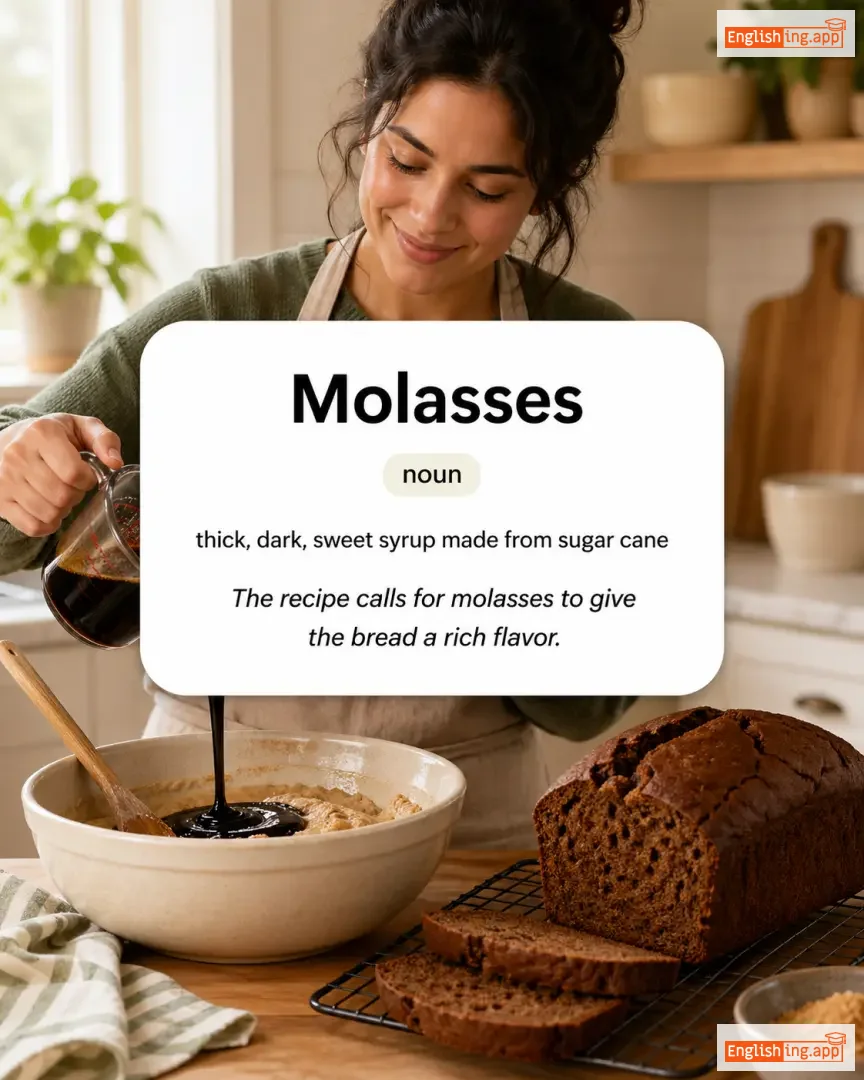
Molasses definition card — visual illustration of the meaning
noun C2
/məˈlæsɪz/
モラセス (morasesu)

thick, dark, sweet syrup made from sugar cane

"The recipe calls for molasses to give the bread a rich flavor."

"レシピは、パンにリッチな味を加えるためにモラセスを要求します。" (Reshipi wa, pan ni ricchi na aji o kuwaeru tame ni morasesu o youkyu shimasu.)
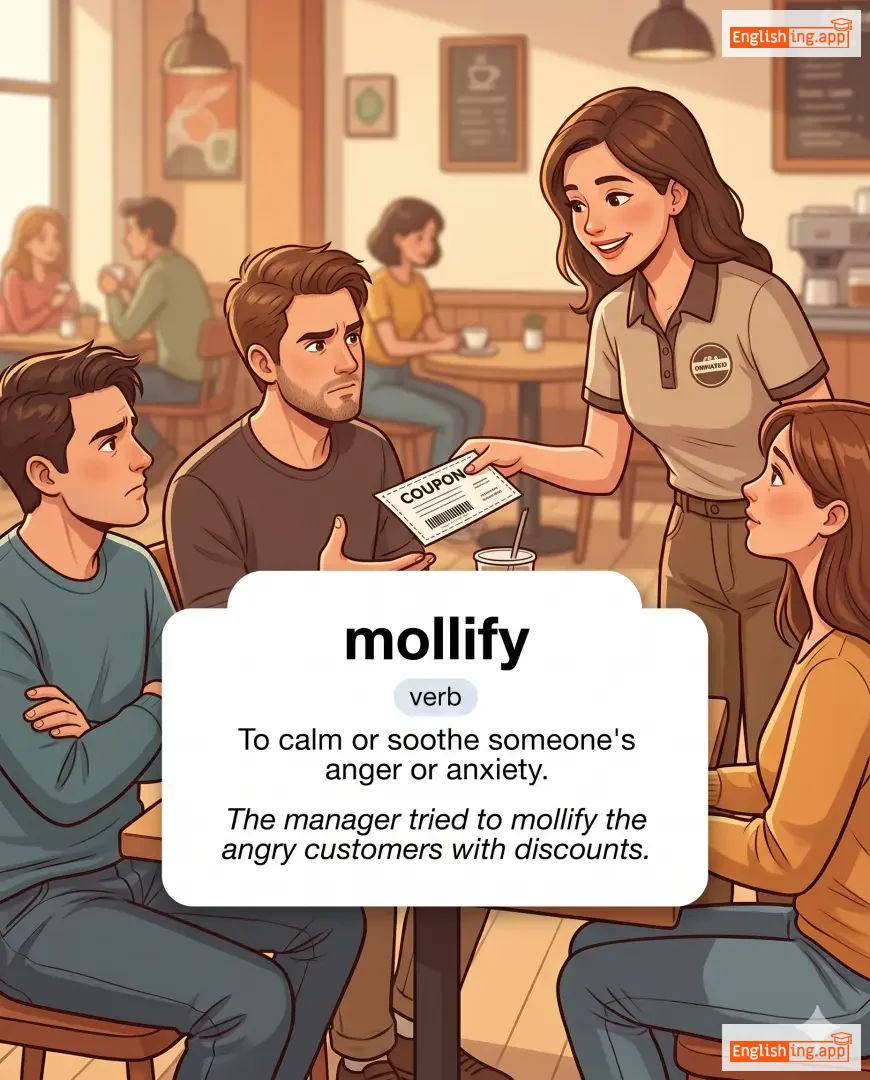
mollify definition card — visual illustration of the meaning
verb C2
/ˈmɒlɪfaɪ/
なだめる (nadameru)

To calm or soothe someone's anger or anxiety.

"The manager tried to mollify the angry customers with discounts."

"マネージャーは割引で怒った顧客をなだめようとした。" (Manejā wa waribiki de okotta kokyaku o nadameyō to shita.)
verb C2
/ˈmɒlikɒdl/
甘やかす (amayakasu)

To treat someone in an overprotective and indulgent way.

"Parents should avoid mollycoddling their children too much."

"親は子供を過度に甘やかすのを避けるべきです。" (Oya wa kodomo o kado ni amayakasu no o sakeru beki desu.)
verb C2
/məʊlt/
脱羽 (datsu wa)

To shed old feathers, skin, or hair to make way for new growth.

"Birds molt their feathers once a year."

"鳥は年に一度羽を抜けます。" (Tori wa toshi ni ichido hane o nukemasu.)
adjective C2
/ˈmʌnid/
金持ち; 裕福な; 富裕な (manid)

having much money; wealthy; rich

"She comes from a moneyed family with extensive real estate holdings."

"彼女は広範な不動産を持つ裕福な家庭から来ています。" (kanojo wa kōhan'na fudōsan o motsu yūfukuna katei kara kiteimasu.)
noun C2
/ˈmʌŋɡrəl/
雑種犬 (zasshu inu)

A dog of mixed breed; sometimes used to describe something mixed or of inferior quality.

"The stray dog was a friendly mongrel."

"その野良犬は友好的な雑種犬だった。" (sono nora inu wa yūkōteki na zasshu inu datta.)
noun C2
/məˈnɪʃən/
警告 (keikoku)

A warning or caution, often of a religious or moral nature.

"The priest gave a monition against dishonesty."

"神父は不正行為に対する警告を与えた。" (Shinpu wa fusei koui ni taisuru keikoku wo ataeta.)
adjective C2
/ˈmɒnɪtəri/
警告的な (keikoku-teki na)

Giving a warning or cautionary advice; serving to warn.

"His monitory tone made everyone cautious about their next move."

"彼の警告的な口調は、次の動きについて皆を警戒させました。" (Kare no keikoku-teki na kuchō wa, tsugi no ugoki ni tsuite mina o keikai sasemashita.)
adjective C2
/ˌmɒnəkrəˈmætɪk/

Consisting of or displaying only one color.

"The artist created a striking monochromatic painting in shades of blue."

noun C2
/ˈmɒnəkl/

A single round lens for one eye, used to correct or enhance vision.

"The old gentleman wore a monocle at formal events."

noun C2
/məˈnɒkrəsi/
独裁政治 (dokusaiseiji)

A system of government by a single person; autocracy.

"The nation suffered under decades of monocracy."

"国は数十年にわたるモノクラシーの下で苦しんだ。" (Kuni wa sūjūnen ni wataru monokurashī no shita de kurushinda.)
noun C2
/ˈmɒnəɡræm/
モノグラム (monogramu)

A design consisting of two or more letters, typically a person's initials, combined or interwoven.

"The towel was embroidered with her monogram."

"タオルには彼女のモノグラムが刺繍されていた。" (Taoru ni wa kanojo no monogramu ga shishū sarete ita.)
noun C2
/ˈmɒnəɡrɑːf/

A detailed written study of a single specialized subject or aspect of it.

"The professor published a monograph on ancient pottery."

noun C2
/ˌmɒnəˈmeɪniə/

Excessive concentration or obsession with a single subject or idea.

"His monomania for collecting stamps worried his family."

monopolization definition card — visual illustration of the meaning
noun C2
məˌnɒp.ə.laɪˈzeɪ.ʃən
独占 (dokusen)

The process of gaining exclusive possession or control of a trade, commodity, or service.

"The monopolization of industries can limit consumer choices."

"産業の独占は消費者の選択肢を制限する可能性がある。" (Sangyō no dokusen wa shōhisha no sentakushi o seigen suru kanōsei ga aru.)
noun C2
/ˈmɒnəˌsɪləbəl/
単音節の言葉 (tan onsetsu no kotoba)

A word consisting of only one syllable.

"Words like 'yes' and 'no' are monosyllables."

"'はい'や'いいえ'のような言葉は単音節の言葉です。" ('Hai' ya 'iie' no you na kotoba wa tan onsetsu no kotoba desu.)
noun C2
mɒnəˈtɑːskɪŋ
一度に一つの作業を行うこと (ichido ni hitotsu no sagyō o okonau koto)

The practice of dedicating oneself to a given task and minimizing potential interruptions until the task is completed or a significant period of time has elapsed.

"Monotasking can often lead to higher quality work."

"モノタスキングはしばしば高品質な仕事につながります。" (Monotasking wa shibashiba kōhinshitsu na shigoto ni tsunagarimasu.)
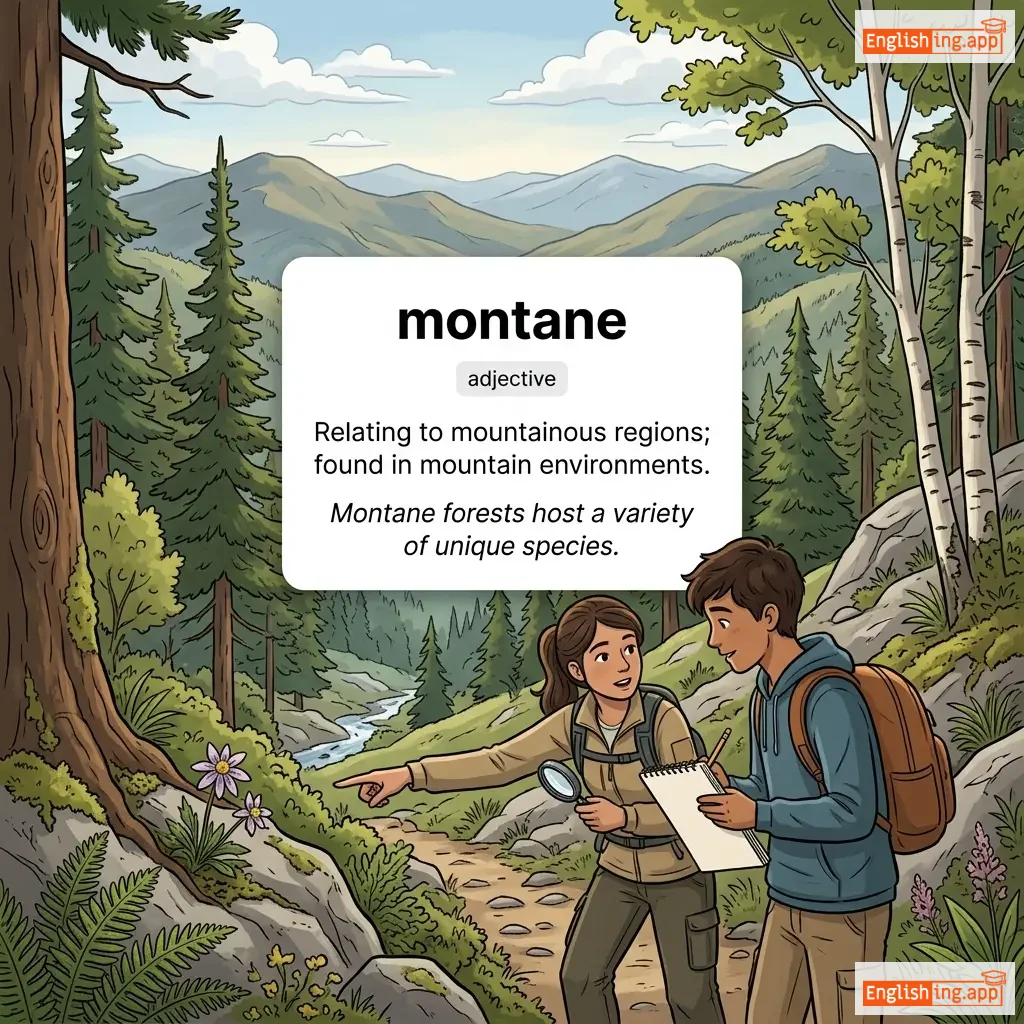
montane definition card — visual illustration of the meaning
adjective C2
/ˈmɒn.teɪn/
山岳地帯に関連する; 山岳環境に見られる (sangaku chitai ni kanren suru; sangaku kankyō ni mirareru)

Relating to mountainous regions; found in mountain environments.

"Montane forests host a variety of unique species."

"山岳林はユニークな種の多様性を持っています。" (Sangaku rin wa yunikuna shū no tayō-sei o motteimasu.)
noun C2
/ˈmuːn.biːm/
月光 (gekkou)

A ray of light from the moon.

"A moonbeam lit up the quiet forest clearing."

"月光が静かな森の開けた場所を照らした。" (Gekkou ga shizukana mori no hiraketa basho o terashita.)
noun C2
/ˈmɒrəlɪst/
道徳家 (dōtokuka)

A person who teaches or promotes moral principles and values.

"The author was known as a strict moralist in his writings."

"著者は彼の著作で厳格なモラリストとして知られていました。" (Chosha wa kare no chosaku de genkaku na morarisuto toshite shirareteimashita.)
verb C2
/ˈmɒrəlaɪz/
道徳化する (doutokuka suru)

To comment on issues of right and wrong, often with an air of superiority.

"He tends to moralize about other people's choices."

"彼は他の人々の選択について道徳的なコメントをする傾向がある。" (Kare wa hoka no hitobito no sentaku ni tsuite doutokuteki na komento o suru keikou ga aru.)
noun C2
/məˈræs/
複雑な状況 (fukuzatsu na jōkyō)

A complicated or confused situation; a swampy or boggy ground.

"The project got stuck in a bureaucratic morass."

"そのプロジェクトは官僚主義の沼に嵌ってしまった。" (Sono purojekuto wa kanryōshugi no numa ni hamatte shimatta.)
adjective C2
/mɔːrˈdeɪʃəs/
辛辣または皮肉な (shinratsu matawa hinikuna)

Sharp or biting in style, tone, or remark; sarcastic.

"The critic’s mordacious review offended the author."

"批評家の辛辣なレビューは著者を怒らせた。" (Hihyōka no shinratsu na rebyū wa chosha o okorase ta.)
🗯️

mordant

adjective C2
/ˈmɔːrdənt/

Having a sharp, critical, or biting quality; especially in humor.

"Her mordant wit often left her friends speechless."

noun C2
/ˈmɔːreɪz/
風習 (fūshū)

the essential or characteristic customs and conventions of a community

"Social mores often dictate how people behave in public."

"社会的な風習は、しばしば人々が公共の場でどのように振る舞うかを決定します。" (Shakaiteki na fūshū wa, shibashiba hitobito ga kōkyō no ba de dono yō ni furumau ka o kettei shimasu.)
adjective C2
/ˌmɔːrɡəˈnætɪk/
モルガナティック結婚 (morganatiku kekkon)

relating to a marriage in which one partner, usually of lower social rank, does not share the titles or privileges of the other

"The prince entered into a morganatic marriage with a commoner."

"王子は平民とモルガナティック結婚をしました。" (Ōji wa heimin to morganatikku kekkon o shimashita.)
adjective C2
/ˈmɔːrɪbʌnd/
死にかけている (shinikaketeiru)

in a dying state; near death or becoming obsolete

"The moribund industry was soon replaced by modern technology."

"死にかけている産業はすぐに現代技術によって置き換えられました。" (Shinikaketeiru sangyō wa sugu ni gendai gijutsu ni yotte okikaeraremashita.)
morphological definition card — visual illustration of the meaning
adjective C2
ˌmɔː.fəˈlɒdʒ.ɪ.kəl
語形成に関連する (morphological)

Related to the structure and formation of words; concerning morphology in linguistics.

"Morphological analysis helps AI understand word structures."

"形態論的な分析はAIに言葉の構造を理解させる手助けをします。" (Keitairon teki na bunseki wa AI ni kotoba no kouzou o rikai saseru tedasuke o shimasu.)
noun C2
/mɔːrˈtɪʃən/
葬儀屋 (sōgiya)

a person whose job is to prepare dead bodies for burial or cremation and to arrange funerals

"The mortician prepared the body for the funeral service."

"葬儀屋は葬儀サービスのために遺体を準備しました。" (Sōgiya wa sōgi sābisu no tame ni itai o junbi shimashita.)
verb C2
/ˈmɔːrtɪfaɪ/
恥をかかせる (haji o kakaseru)

to cause someone to feel great embarrassment or shame

"She was mortified when she tripped on stage."

"彼女はステージでつまずいたとき、とても恥ずかしかった。" (Kanojo wa suteeji de tsumazuita toki, totemo hazukashikatta.)
noun C2
/moʊt/
微粒 (biryu)

A tiny particle or speck, especially of dust.

"A mote of dust floated in the sunlight."

"ほこりの微粒が日光の中で浮かんでいた。" (Hokori no biryu ga nikkou no naka de ukande ita.)
adjective C2
/ˈmɒθ ˌiːtən/
虫に食べられた (mushi ni taberareta)

Damaged or worn out, especially by moths or age.

"He wore a moth-eaten sweater on the cold day."

"彼は寒い日に虫に食べられたセーターを着ていた。" (Kare wa samui hi ni mushi ni taberareta seetaa o kite ita.)
adjective C2
/ˈmoʊtaɪl/
運動性のある (undōsei no aru)

Capable of movement or locomotion.

"Certain bacteria are motile and can swim toward nutrients."

"特定の細菌は運動性があり、栄養素に向かって泳ぐことができます。" (Tokutei no saikin wa undōsei ga ari, eiyōso ni mukatte oyogu koto ga dekimasu.)
noun C2
/moʊˈtɪləti/
運動性 (undousei)

The ability of an organism or cell to move independently.

"The motility of sperm is crucial for successful fertilization."

"精子の運動性は受精成功のために重要です。" (Seishi no undousei wa jusei seikou no tame ni juuyou desu.)
adjective C2
/ˈmɒtli/
混成 (konsei)

Made up of different, often incongruous or diverse elements.

"The festival attracted a motley crowd of artists, musicians, and tourists."

"フェスティバルはアーティスト、ミュージシャン、観光客からなる混成の群衆を引き寄せた。" (Fesutibaru wa aatisuto, myuujishan, kankoukyaku kara naru konsei no gunshuu wo hiki yoseta.)
verb C2
/ˈmɒtl/
斑点 (hanten)

To mark with spots or patches of color.

"The leaves were mottled with shades of yellow and brown."

"葉は黄色と茶色の斑点で斑入りでした。" (Ha wa kiiro to chairo no hanten de haniri deshita.)
adjective C2
/ˈmɒtld/
斑点模様の (hanten moyou no)

Marked with spots, streaks, or blotches of different shades or colors.

"The snake's mottled skin helped it blend into the forest floor."

"ヘビの斑点模様の皮膚は、森の床に溶け込むのを助けました。" (Hebi no hanten moyou no hifu wa, mori no yuka ni toke komu no o tasukemashita.)
noun C2
/ˈmaʊntɪˌbæŋk/
ペテン師 (petenshi)

A charlatan or trickster who deceives others, often for personal gain.

"The crowd was fooled by the mountebank’s false promises."

"群衆はそのペテン師の虚偽の約束に騙されました。" (Gunshū wa sono petenshi no kyogi no yakusoku ni damasaremashita.)
verb C2
/ˈmʌfəl/
抑える (osaeru)

to make a sound quieter or less distinct; to cover or wrap something to reduce noise or warmth

"She tried to muffle her laughter with a scarf."

"彼女はスカーフで笑い声を抑えようとした。" (Kanojo wa sukāfu de warai goe o osaeyou to shita.)
adjective C2
/ˈmʌɡi/
蒸し暑くて湿気のある (mushi atsukute shikke no aru)

uncomfortably warm and humid

"It was a muggy afternoon in July."

"7月の午後は蒸し暑かった。" (Shichigatsu no gogo wa mushi atsukatta.)
noun C2
/ˈmʌɡwʌmp/
政党に属さない人 (seitō ni zokusanai hito)

a person who remains independent from party politics or remains aloof from disputes

"He was called a mugwump for refusing to join either political side."

"彼は政治的な立場に参加しないことを拒否したため、マグワンプと呼ばれました。" (Kare wa seijiteki na tachiba ni sanka shinai koto o kyohi shita tame, maguwampu to yobaremashita.)
noun C2
/mjuːˈlætoʊ/
混血の人(古くて攻撃的な言葉) (konketsu no hito (furukute kougeki-tekina kotoba))

an outdated and now offensive term historically used to describe a person of mixed white and Black ancestry

"The word 'mulatto' is now considered outdated and offensive."

"'ムラット'という言葉は、現在では時代遅れで攻撃的だと見なされています。" ('Muratto' to iu kotoba wa, genzai dewa jidaiokure de kougeki-teki da to minasa reteimasu.)
verb C2
/mʌlkt/
罰金を科す / 詐欺を働く (bakin wo kasu / sagi wo hataraku)

to punish by a fine or to defraud someone of money

"The corrupt official was mulcted for his misconduct."

"腐敗した公務員は不正行為に対して罰金を科された。" (Fuhai shita kōmuin wa fusei kōi ni taishite bakkin wo kasareta.)