Vokabulare

Englisches Vokabelwörterbuch | Wortbedeutungen, Definitionen & Beispiele

noun C2
/ˌɪnkrɪˈdjuːləti/
不信 (fushin)

the state of being unwilling or unable to believe something

"She looked at him with incredulity after hearing the strange story."

"彼女はその奇妙な話を聞いた後、不信のまなざしで彼を見つめた。" (Kanojo wa sono kimyou na hanashi o kiita ato, fushin no manazashi de kare o mitsumeta.)
noun C2
/ˌɪnkrʌˈsteɪʃən/
硬化層 (koukasou)

a crust or hard coating formed on the surface of something

"The old pipes were blocked due to heavy incrustation of minerals."

"古いパイプは鉱物の重い硬化層によって詰まっていました。" (Furui paipu wa koubutsu no omoi koukasou ni yotte tsumatteimashita.)
noun C2
/ˈɪŋkjʊbəs/
悪夢のような重荷 (akumu no yō na omoni)

An oppressive or nightmarish burden; in folklore, an evil spirit that lies upon sleeping people.

"Debt became an incubus that weighed heavily on the family."

"借金は家族に重くのしかかる悪夢のような存在となった。" (Shakkin wa kazoku ni omoku noshikakaru akumu no yō na sonzai to natta.)
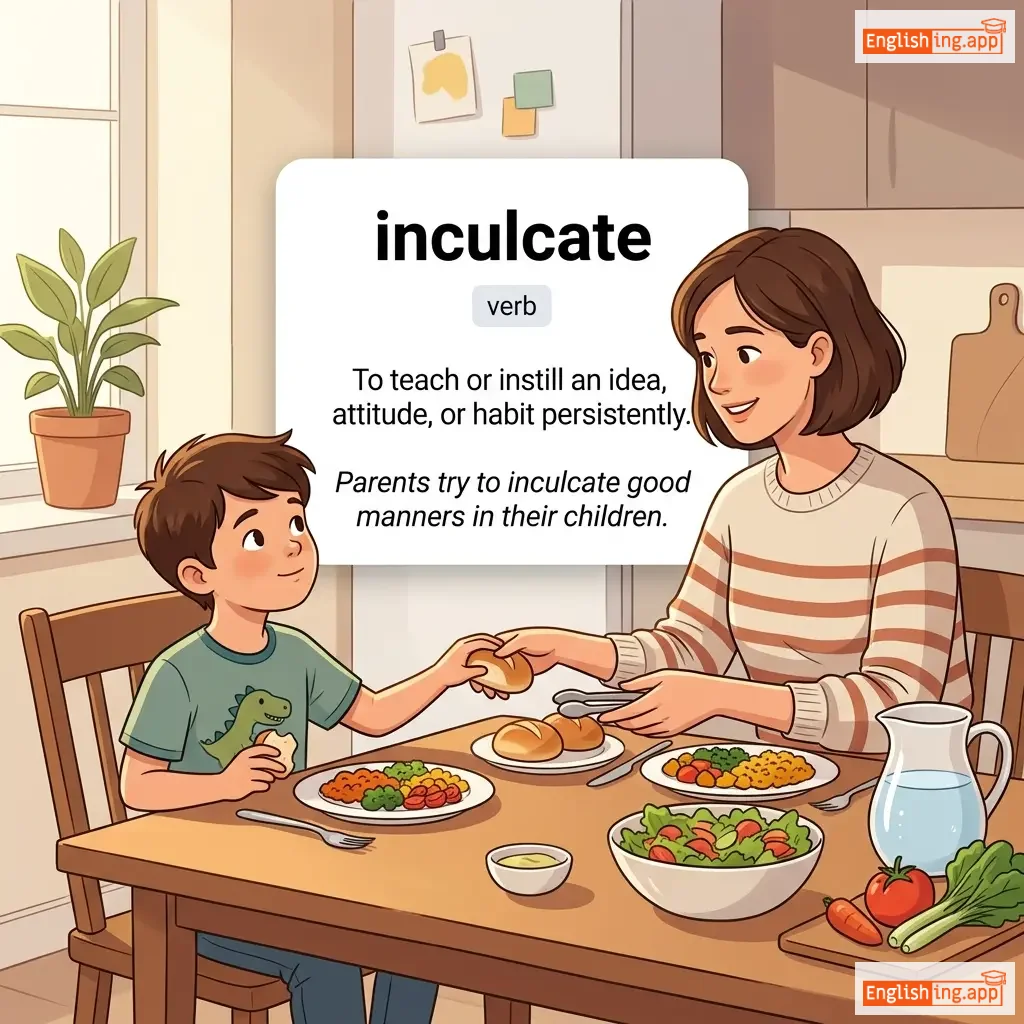
inculcate definition card — visual illustration of the meaning
verb C2
/ˈɪŋkʌlkeɪt/
教え込む (oshiekomu)

To teach or instill an idea, attitude, or habit persistently.

"Parents try to inculcate good manners in their children."

"親は子供たちに良いマナーを教え込もうとします。" (Oya wa kodomotachi ni yoi manā o oshiekomo to shimasu.)
verb C2
/ˈɪŋkʌlpeɪt/
非難する (hinan suru)

To blame or accuse someone of wrongdoing.

"The evidence seemed to inculpate the suspect in the crime."

"証拠は容疑者を犯行に巻き込んでいるように見えた。" (Shōko wa yōgisha o hankō ni makikonde iru yō ni mieta.)
adjective C2
/ɪnˈdɛkərəs/
不作法 (busahou)

Not in keeping with good taste and propriety; improper.

"His indecorous behavior shocked the audience."

"彼の不作法な振る舞いは観客を驚かせた。" (Kare no busahou na furumai wa kankyaku o odoro kaseta.)
adjective C2
/ˌɪndɪˈfætɪɡəbl̩/
疲れ知らず (tsukare shirazu)

persisting tirelessly; incapable of being fatigued

"Her indefatigable spirit kept the team motivated during the long project."

"彼女の疲れ知らずの精神が、長いプロジェクトを通してチームを励ましました。" (kanojo no tsukare shirazu no seishin ga, nagai purojekuto wo tooshite chiimu wo hagemashimashita.)
verb C2
/ɪnˈdɛmnɪfaɪ/

to compensate someone for harm or loss; to secure against future damage or cost

"The insurance company agreed to indemnify the client for the damages."

noun C2
/ˌɪndɛnˈteɪʃən/
インデント (indent)

A space left at the beginning of a line of text; a notch or deep recess on a surface.

"The teacher asked the students to use proper indentation in their essays."

"先生は学生にエッセイで適切なインデントを使用するように頼みました。" (Sensei wa gakusei ni essei de tekisetsu na indent wo shiyou suru you ni tanomimashita.)
noun C2
/ɪnˈdɛntʃər/

A formal legal agreement, contract, or document, often relating to work or service.

"In the 18th century, many workers came under indenture to work overseas."

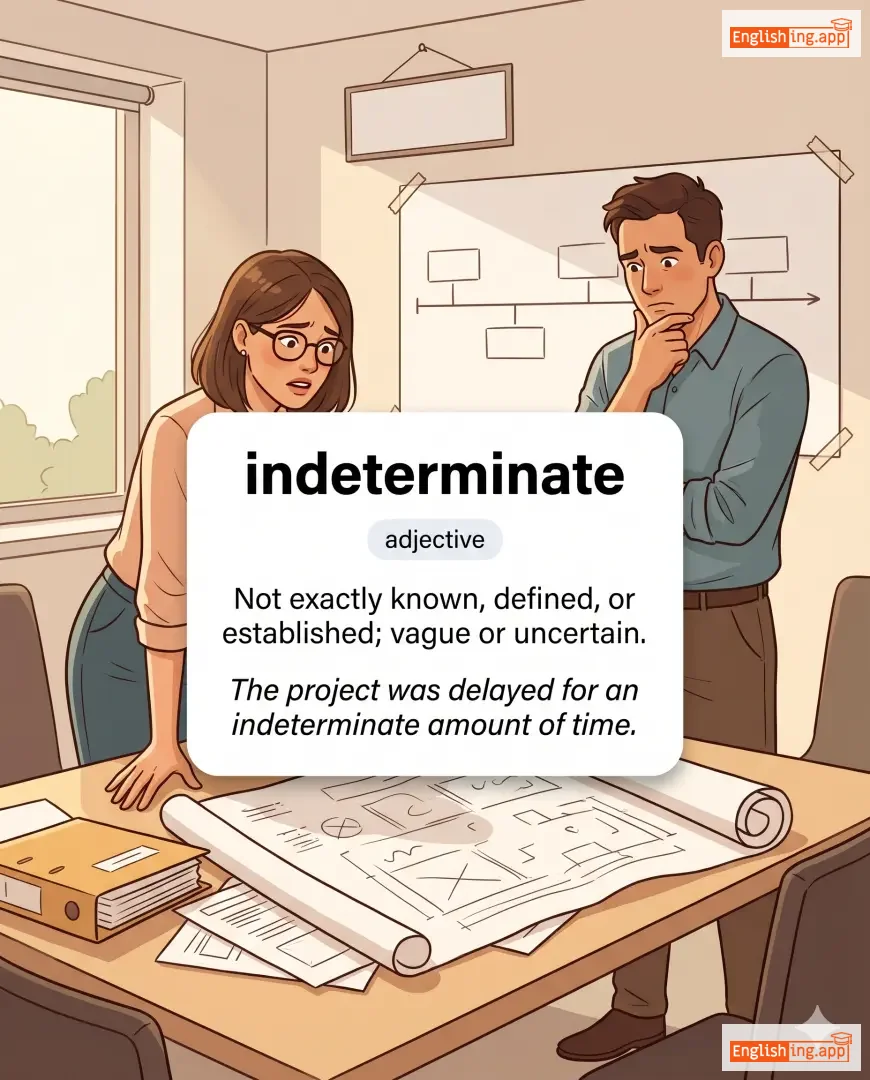
indeterminate definition card — visual illustration of the meaning
adjective C2
/ˌɪndɪˈtɜːrmənət/
不確定 (fukakutei)

Not exactly known, defined, or established; vague or uncertain.

"The project was delayed for an indeterminate amount of time."

"プロジェクトは不確定な期間に延期されました。" (Purojekuto wa fukakutei na kikan ni enki saremashita.)
noun C2
/ˈɪndɪkənt/
指標 (shihyō)

Something that indicates or points to a fact or condition.

"High fever is often an indicant of infection."

"高熱はしばしば感染の指標となります。" (Kōnetsu wa shibashiba kansen no shihyō to narimasu.)
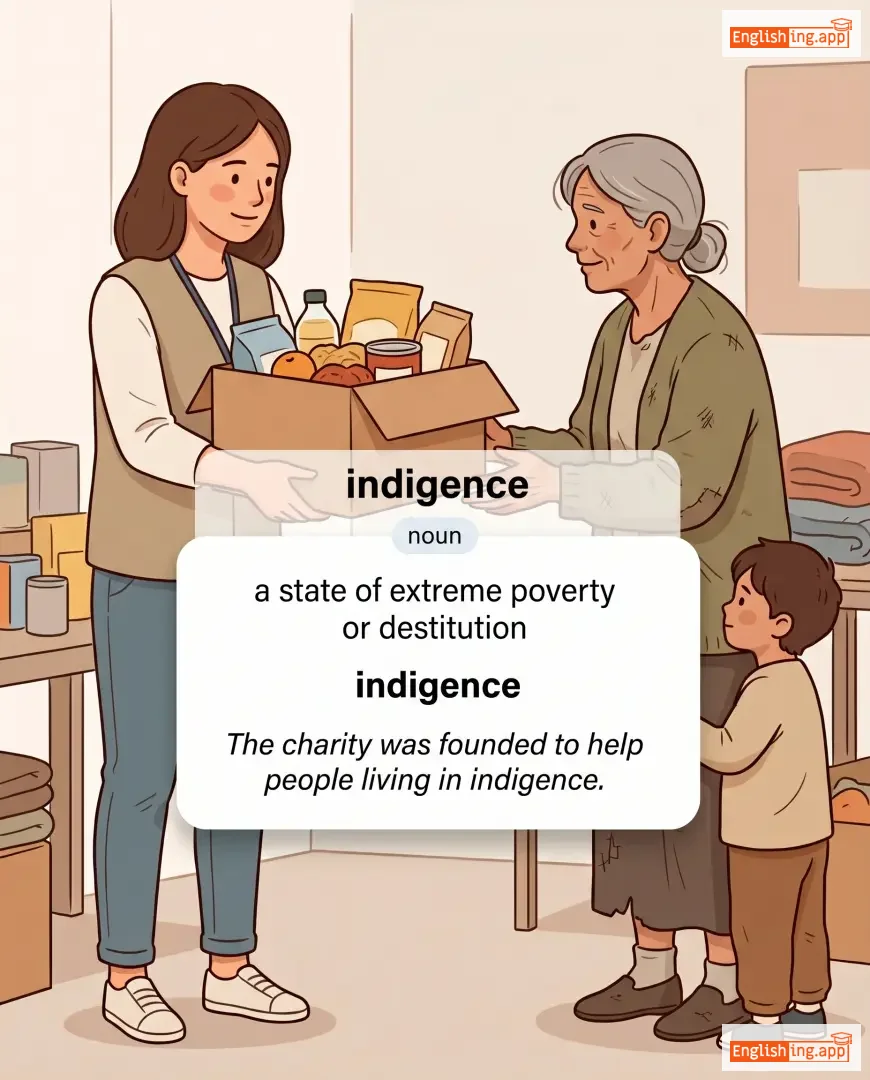
indigence definition card — visual illustration of the meaning
noun C2
/ˈɪn.dɪ.dʒəns/
貧困 (hinkon)

a state of extreme poverty or destitution

"The charity was founded to help people living in indigence."

"その慈善団体は貧困の中で生活している人々を助けるために設立されました。" (Sono jizen dantai wa hinkon no naka de seikatsu shite iru hitobito o tasukeru tame ni setsuritsu saremashita.)
adjective C2
/ˈɪn.dɪ.dʒənt/
困窮 (konkyū)

lacking the necessities of life due to poverty; very poor

"The hospital offers free care to indigent patients."

"病院は困窮した患者に無料でケアを提供しています。" (Byōin wa konkyū shita kanja ni muryō de kea o teikyō shiteimasu.)
adjective C2
/ˌɪn.daɪˈdʒes.tə.bəl/
消化不良 (shōkafuryō)

difficult or impossible to digest; hard to accept or understand

"The report was so long and detailed that it became almost indigestible."

"その報告書は非常に長くて詳細だったため、ほとんど消化不良になってしまった。" (Sono hōkokusho wa hijō ni nagakute shōsai datta tame, hotondo shōkafuryō ni natte shimatta.)
adjective C2
/ˌɪndɪˈsɜːrnəbl/
見分けがつかない (miwake ga tsukanai)

Impossible or difficult to see, notice, or distinguish.

"The difference between the two shades was almost indiscernible."

"二つの色調の違いはほとんど見分けがつかなかった。" (Futatsu no shikichou no chigai wa hotondo miwake ga tsukanakatta.)
adjective C2
/ˌɪndɪˈsɒljʊbl/
解消できない (Kaishou dekinai)

Unable to be destroyed, broken, or dissolved.

"Marriage was once considered an indissoluble bond."

"結婚はかつて解消できない絆と見なされていました。" (Kekkon wa katsute kaishou dekinai kizuna to minasareremashita.)
verb C2
/ɪnˈdaɪt/
作詞する (sakushisuru)

To write or compose (literary or formal works).

"The poet indited a heartfelt sonnet."

"詩人は心のこもったソネットを作詞した。" (Shijin wa kokoro no komotta sonetto o sakushi shita.)
adjective C2
/ˌɪndɪˈvɜːrtɪbəl/

Not able to be turned aside or diverted.

"The judge's indivertible attention was on the case."

verb C2
/ɪnˈdɒktrɪˌneɪt/
教義を押し付ける (kyōgi o oshitsukeru)

To teach someone to fully accept a set of beliefs or ideas without question.

"The regime tried to indoctrinate the youth with propaganda."

"その政権は宣伝を通じて若者を洗脳しようとした。" (Sono seiken wa senden o tōjite wakamono o sennō shiyō to shita.)
noun C2
/ˈɪndələns/
怠惰 (taida)

Avoidance of activity or exertion; laziness.

"His indolence kept him from finishing the project on time."

"彼の怠惰は彼が時間通りにプロジェクトを完成させるのを妨げました。" (kare no taida wa kare ga jikan dōri ni purojekuto o kansei saseru no o samatage mashita.)
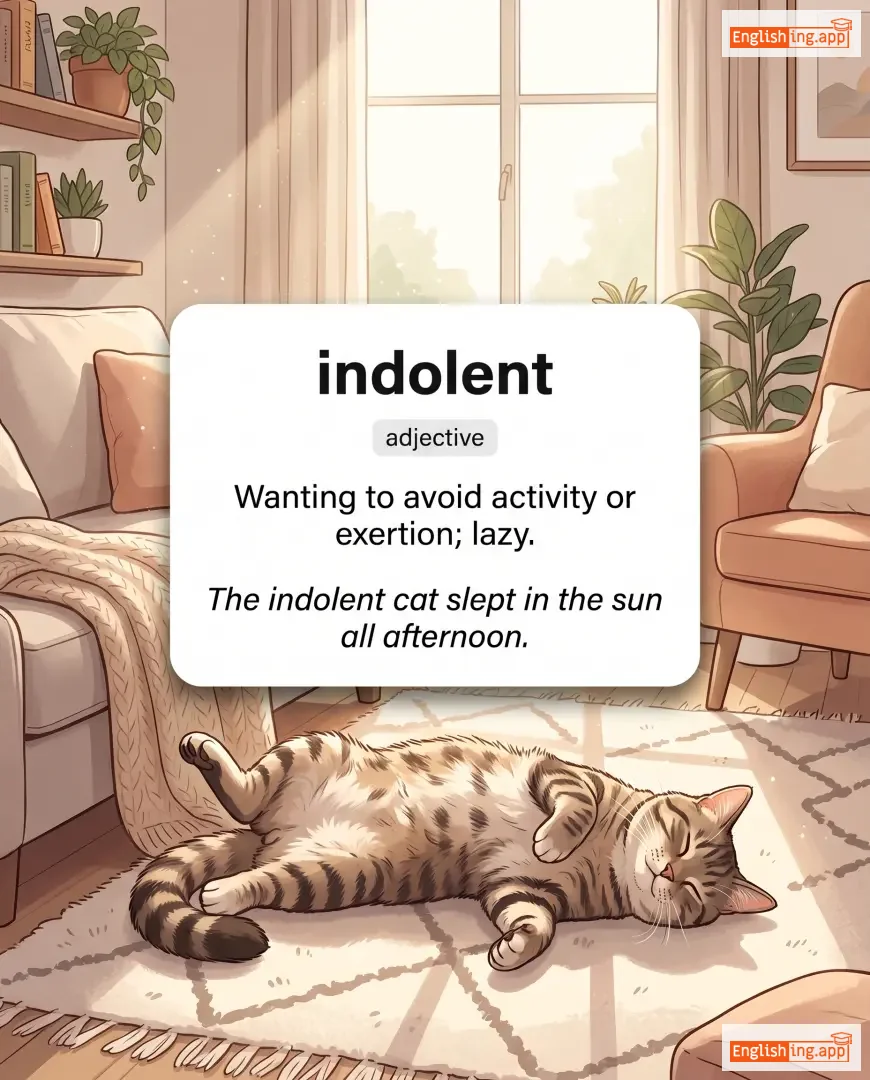
indolent definition card — visual illustration of the meaning
adjective C2
/ˈɪndələnt/
怠惰 (taida)

Wanting to avoid activity or exertion; lazy.

"The indolent cat slept in the sun all afternoon."

"怠惰な猫は午後ずっと太陽の下で寝ていました。" (Taida na neko wa gogo zutto taiyou no shita de neteimashita.)
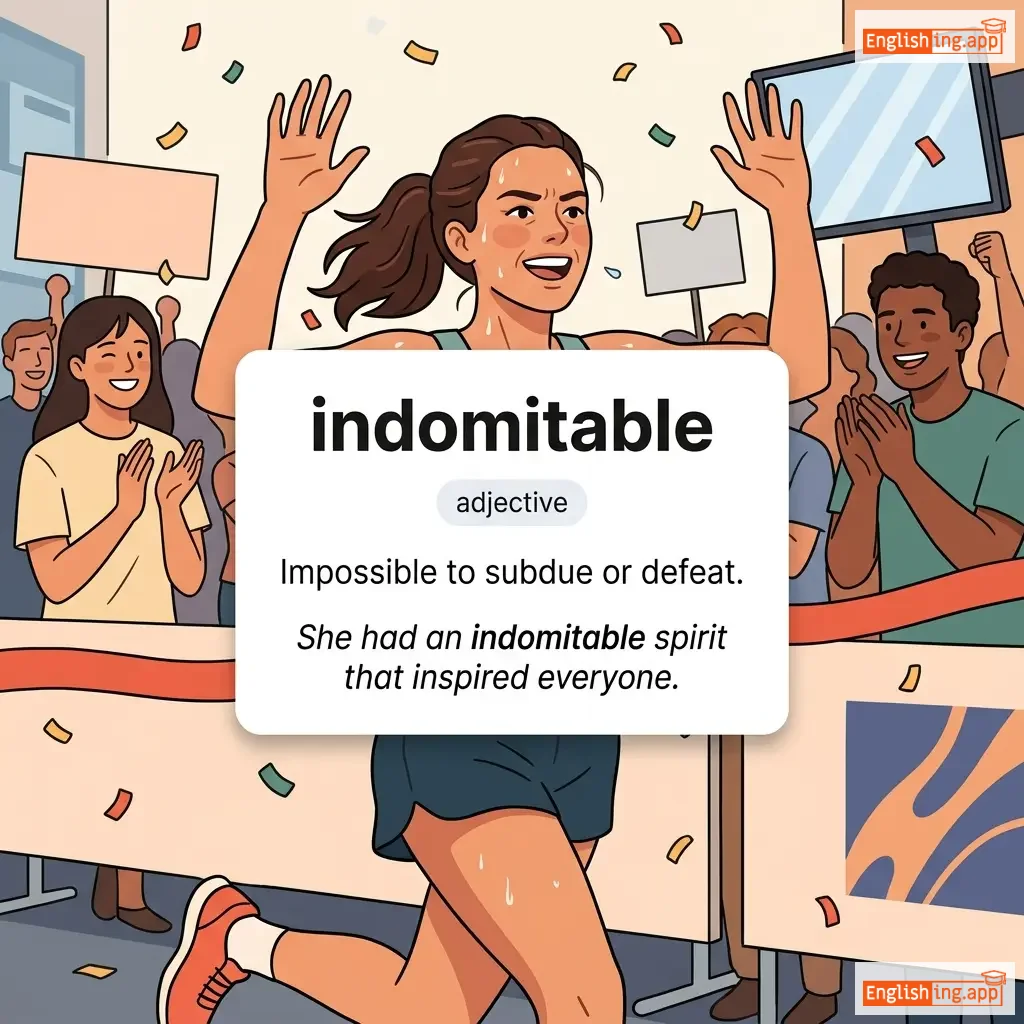
indomitable definition card — visual illustration of the meaning
adjective C2
/ɪnˈdɒmɪtəbl/
不屈 (fukutsu)

Impossible to subdue or defeat.

"She had an indomitable spirit that inspired everyone."

"彼女は誰もが感動するような不屈の精神を持っていた。" (Kanojo wa daremo ga kandou suru youna fukutsu no seishin wo motte ita.)
adjective C2
/ɪnˈdjuːbɪtəbl/
疑う余地がない (utagau yochi ga nai)

Impossible to doubt; unquestionable.

"It is indubitable that hard work leads to success."

"努力すれば成功に繋がることは疑う余地がない。" (Doryoku sureba seikou ni tsunagaru koto wa utagau yochi ga nai.)
adverb C2
/ɪnˈdjuːbɪtəbli/
疑いなく (utagai naku)

Without a doubt; certainly.

"She is indubitably the best candidate for the job."

"彼女は疑いなくその仕事の最良の候補者です。" (Kanojo wa utagai naku sono shigoto no sairyō no kōhosha desu.)
verb C2
/ˈɪndjʊˌreɪt/
硬化する (kōka suru)

To harden or make something physically or emotionally tough.

"Years of hardship indurated his spirit."

"長年の困難が彼の精神を鍛えました。" (Nagannen no konnan ga kare no seishin o kitaemashita.)
verb C2
/ɪˈniː.bri.eɪt/

to intoxicate; to make someone drunk

"The strong wine was enough to inebriate even the most experienced drinker."

noun C2
/ˌɪn.ɪˈbraɪ.ə.ti/
酩酊 (meitei)

the state of being drunk or intoxicated

"His frequent inebriety led to the loss of his job."

"彼の頻繁な酩酊は仕事を失う原因となった。" (Kare no hinpan na meitei wa shigoto wo ushinau gen'in to natta.)
ineffable definition card — visual illustration of the meaning
adjective C2
/ɪˈnɛf.ə.bəl/
言葉では表現できない (kotoba de wa hyougen dekinai)

too great, extreme, or beautiful to be expressed in words

"The beauty of the sunset was ineffable."

"夕焼けの美しさは言葉では表現できなかった。" (Yūyake no utsukushisa wa kotoba de wa hyougen dekinakatta.)
inefficacious definition card — visual illustration of the meaning
adjective C2
ˌɪn.ɪ.fɪˈkeɪ.ʃəs
効果がない (kouka ga nai)

Not producing any or the desired effect; ineffective.

"The treatment was inefficacious in curing the disease."

"その治療法は病気の治癒に効果がありませんでした。" (Sono chiryouhou wa byouki no chiyu ni kouka ga arimasen deshita.)
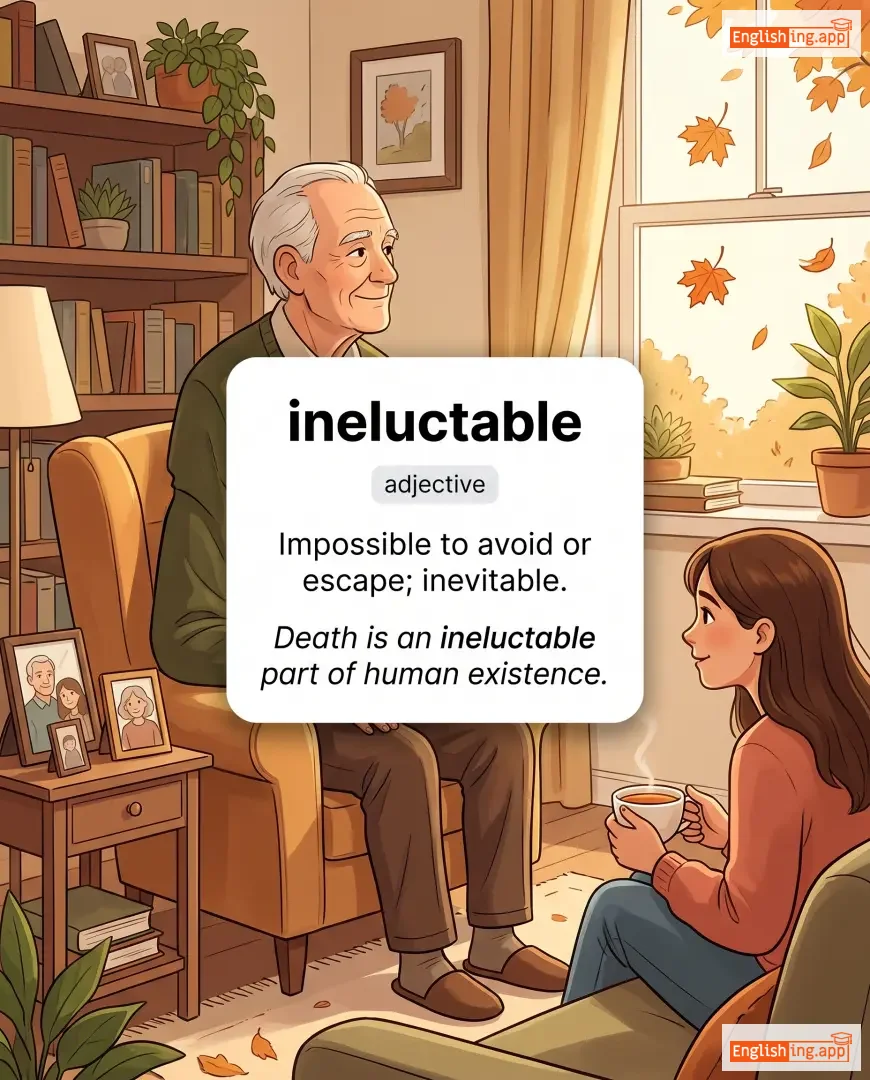
ineluctable definition card — visual illustration of the meaning
adjective C2
/ˌɪn.ɪˈlʌk.tə.bəl/

Impossible to avoid or escape; inevitable.

"Death is an ineluctable part of human existence."

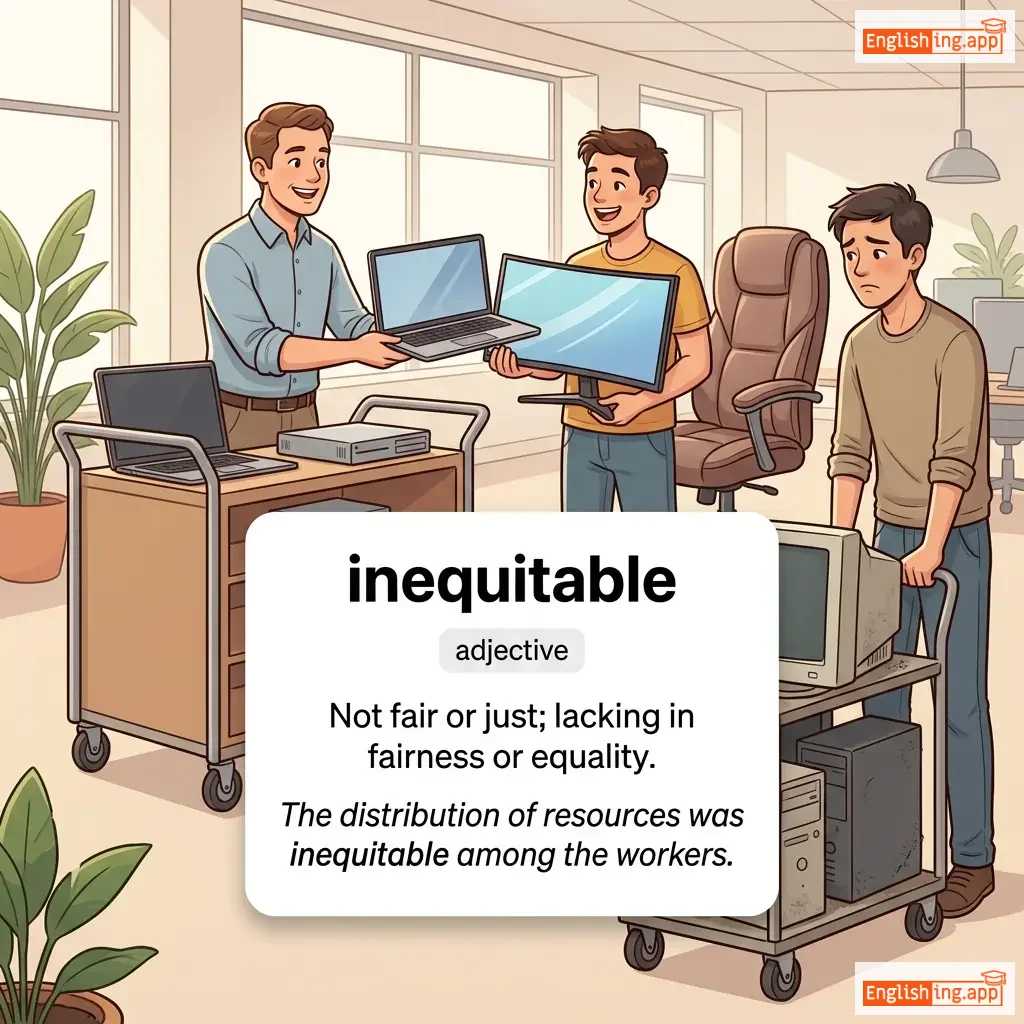
inequitable definition card — visual illustration of the meaning
adjective C2
/ɪnˈɛk.wɪ.tə.bəl/
不公平な (fukōhei na)

Not fair or just; lacking in fairness or equality.

"The distribution of resources was inequitable among the workers."

"リソースの分配は労働者の間で不平等でした。" (Risōsu no bunpai wa rōdōsha no aida de fubyōdō deshita.)
noun C2
/ɪnˈɛrənsi/
無謬性 (mubyū-sei)

the belief or quality of being free from error; absolute correctness

"Some religious groups strongly affirm the inerrancy of their sacred texts."

"いくつかの宗教団体は、自分たちの聖典の誤りのなさを強く主張しています。" (Ikutsuka no shūkyō dantai wa, jibun-tachi no seiten no ayamari no nasa o tsuyoku shuchō shiteimasu.)
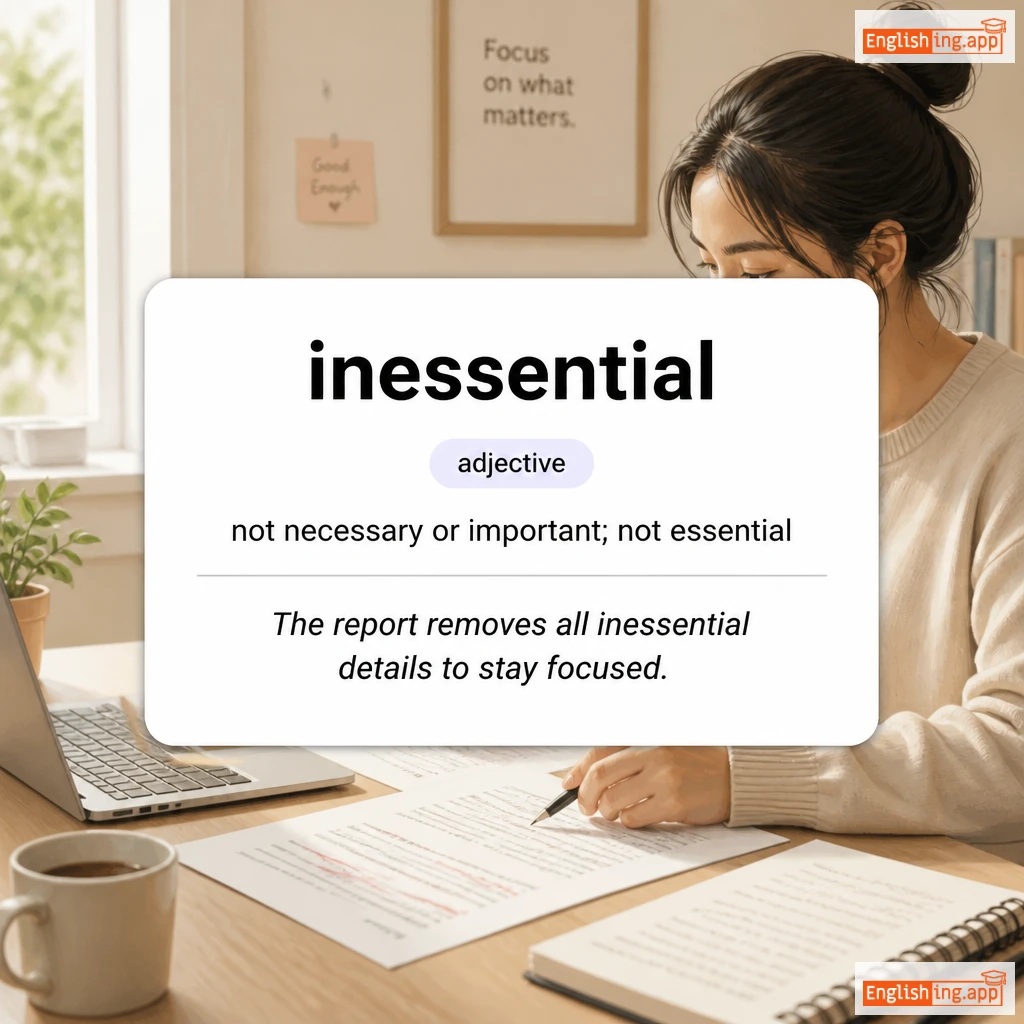
inessential definition card — visual illustration of the meaning
adjective C2
/ˌɪnɪˈsɛnʃəl/
本質的でない (honshitsuteki de nai)

not necessary or important; not essential

"The report removes all inessential details to stay focused."

"その報告書は焦点を保つために本質的でない詳細を削除している。" (sono houkokusho wa shouten o tamotsu tame ni honshitsuteki de nai shousai o sakujo shite iru)
adjective C2
/ɪnˈɛstɪməbl/
計り知れない (hakari shirenai)

Too great or valuable to be measured or estimated.

"Her contribution to the project was of inestimable value."

"プロジェクトへの彼女の貢献は計り知れない価値があった。" (Purojekuto e no kanojo no kouken wa hakari shirenai kachi ga atta.)
adjective C2
/ɪnˈɛksərəbl/
避けられない (sakerarenai)

Impossible to stop or prevent; relentless.

"The inexorable rise of technology is changing every aspect of life."

"テクノロジーの避けられない上昇は、生活のすべての側面を変えています。" (Tekunorojī no sakerarenai jōshō wa, seikatsu no subete no sokumen o kaeteimasu.)
noun (compound/erroneous entry) C2
/ɪnˈɛksərəbl ɑːrmi/
止められない軍隊 (tomerarenai guntai)

This appears to be a corrupted or concatenated form; interpreted as 'inexorable army' — an unstoppable or relentless force.

"The rebels feared the inexorable army approaching their stronghold."

"反乱軍は自分たちの砦に近づいてくる止められない軍隊を恐れていた。" (Hanran-gun wa jibuntachi no toride ni chikadzuite kuru tomerarenai guntai o osorete ita.)
adjective C2
/ˌɪnɪkˈspiːdiənt/
不適切 (futekisetsu)

Not advisable, suitable, or practical in the circumstances.

"It would be inexpedient to invest without proper research."

"適切な調査なしで投資することは不適切です。" (Tekisetsu na chousa nashi de toushi suru koto wa futekisetsu desu.)
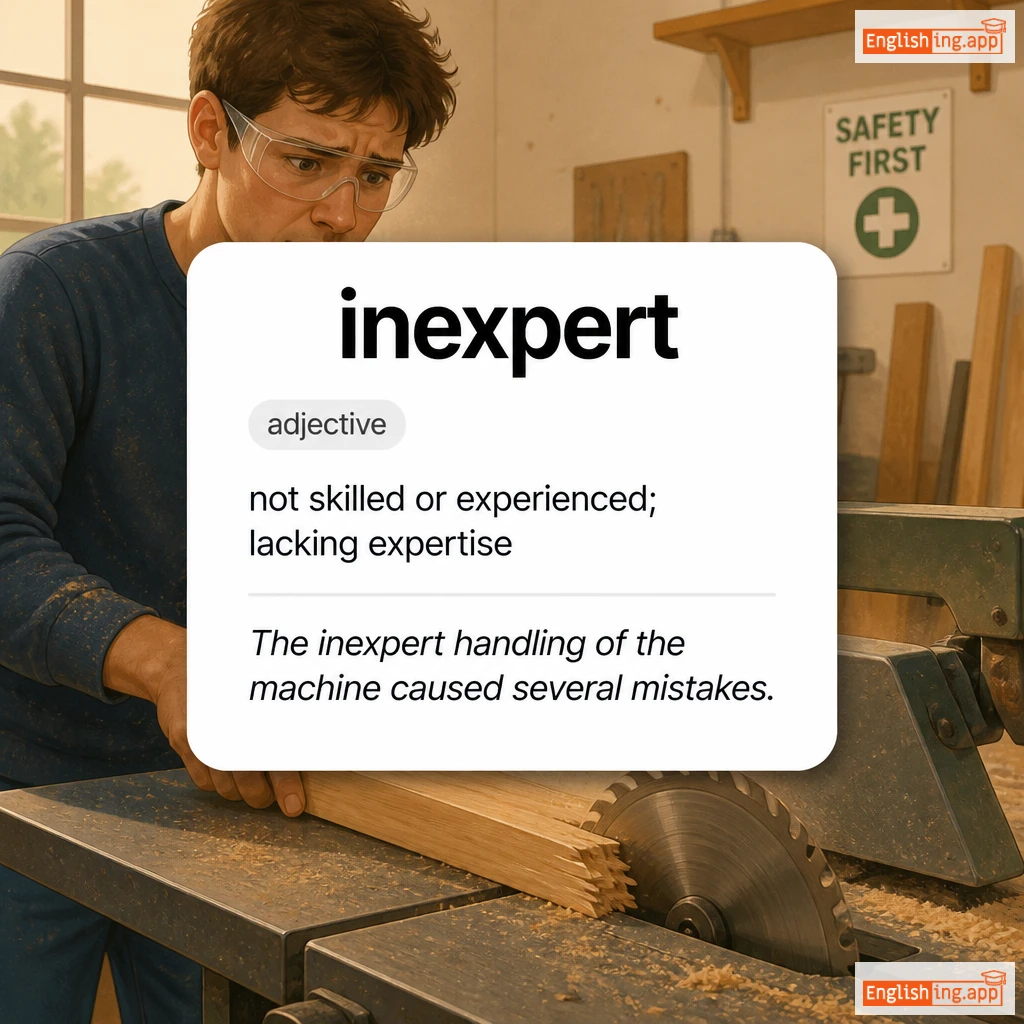
inexpert definition card — visual illustration of the meaning
adjective C2
/ˌɪnˈekspɜːrt/
未熟な (mijukuna)

not skilled or experienced; lacking expertise

"The inexpert handling of the machine caused several mistakes."

"機械の未熟な扱いがいくつかのミスを引き起こした。" (Kikai no mijukuna atsukai ga ikutsuka no misu o hikiokoshita)
adjective C2
/ˌɪnɪkˈsprɛsəbl/
言葉では表現できない (kotoba de wa hyougen dekinai)

Too strong or extreme to be expressed in words.

"She felt inexpressible joy at the news of her success."

"彼女は成功の知らせを聞いて言葉では表現できない喜びを感じた。" (Kanojo wa seikou no shirase wo kiite kotoba de wa hyougen dekinai yorokobi wo kanjita.)
adjective C2
/ˌɪnɪkˈstɛnsəbl/
伸縮不可 (shinshuku fuka)

Not capable of being stretched or extended.

"This rope is made of an inextensible material."

"このロープは伸縮不可の材料でできています。" (Kono roopu wa shinshuku fuka no zairyou de dekiteimasu.)
adjective C2
/ˌɪnɪkˈstrɪkəbl/
分けられない (wakerarenai)

Impossible to separate or escape from.

"The two friends shared an inextricable bond."

"二人の友達は分けられない絆を共有していた。" (Futari no tomodachi wa wakerarenai kizuna o kyōyū shite ita.)
noun C2
/ˈɪnfəmi/
幸福 (kōfuku)

the state of being well known for some bad quality or deed

"His name will live in infamy for the crimes he committed."

"彼女は賞を受け取ったとき、自分の幸福を隠すことができなかった。" (Kanojo wa shō o uketotta toki, jibun no kōfuku o kakusu koto ga dekinakatta.)
adjective C2
/ˈɪnfəntaɪl/
幼稚な (yōchina)

characteristic of an infant; childish

"His infantile behavior embarrassed everyone at the meeting."

"彼の幼稚な行動は会議でみんなを困らせた。" (Kare no yōchi na kōdō wa kaigi de minna o komarase ta.)
verb C2
/ɪnˈfætʃueɪt/
夢中にさせる (muchuu ni saseru)

to inspire with an intense but short-lived passion or admiration

"He was infatuated with her beauty."

"彼は彼女の美しさに夢中でした。" (Kare wa kanojo no utsukushisa ni muchuu deshita.)
infeasible definition card — visual illustration of the meaning
adjective C2
ɪnˈfiː.zə.bəl
不可能 (fukanou)

Not possible to do easily or conveniently; impracticable.

"Restoring the forest may become infeasible if destruction continues."

"森林の回復は、破壊が続くと不可能になる可能性があります。" (Shinrin no kaifuku wa, hakai ga tsuzuku to fukanou ni naru kanousei ga arimasu.)
adjective C2
/ˌɪnfəˈlɪsɪtəs/
不適切な (futekisetsu na)

not suitable or well chosen; awkward or unfortunate

"His infelicitous remark ruined the atmosphere of the meeting."

"彼の不適切な発言は会議の雰囲気を台無しにしました。" (Kare no futekisetsu na hatsugen wa kaigi no fun'iki o dainashi ni shimashita.)
adjective C2
/ɪnˈfɜːrnəl/
地獄の (jigoku no)

relating to hell; extremely troublesome or annoying

"The workers complained about the infernal noise from the construction site."

"労働者たちは建設現場からの地獄のような騒音について文句を言った。" (Rōdō-sha-tachi wa kensetsu genba kara no jigoku no yō na sōon ni tsuite monku o itta.)
Infidel definition card — visual illustration of the meaning
noun C2
/ˈɪnfɪdɛl/
不信者 (fushin-sha)

a person who does not believe in a particular religion or faith

"In medieval times, people often called non-Christians infidels."

"中世では、人々はしばしば非キリスト教徒を不信者と呼んでいた。" (Chūsei de wa, hitobito wa shibashiba hi kirisutokyōto o fushin-sha to yonde ita.)
adjective C2
/ˌɪnfɪnɪˈtɛsɪməl/
微細な (bisai na)

Extremely small in size or amount; so tiny as to be almost negligible.

"The error was so infinitesimal that it didn’t affect the results."

"そのエラーは非常に微細で、結果に影響を与えることはありませんでした。" (Sono erā wa hijō ni bisai de, kekka ni eikyō o ataeru koto wa arimasen deshita.)