Vokabulare

Englisches Vokabelwörterbuch | Wortbedeutungen, Definitionen & Beispiele

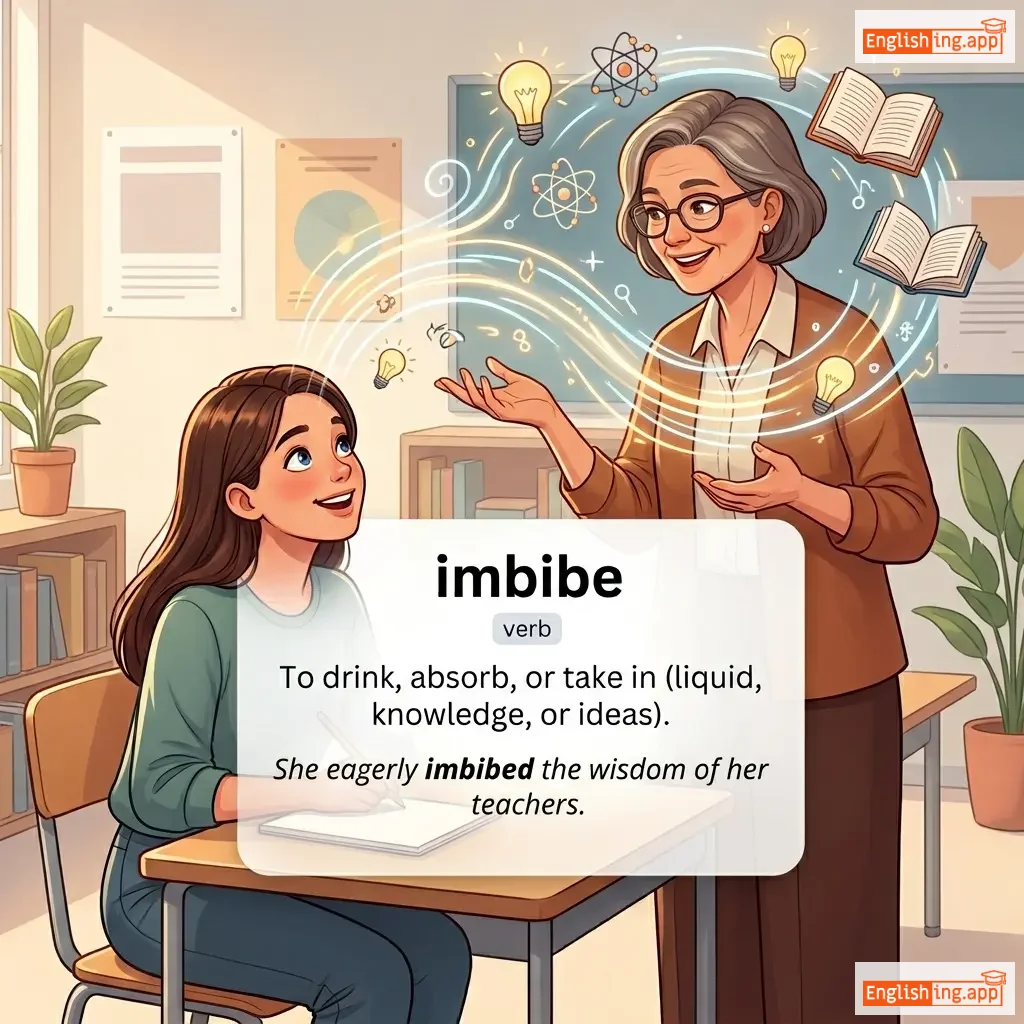
imbibe definition card — visual illustration of the meaning
verb C2
/ɪmˈbaɪb/
吸収する (kyuushuu suru)

To drink, absorb, or take in (liquid, knowledge, or ideas).

"She eagerly imbibed the wisdom of her teachers."

"彼女は教師たちの知恵を熱心に吸収しました。" (Kanojo wa kyoushitachi no chie wo nesshin ni kyuushuu shimashita.)
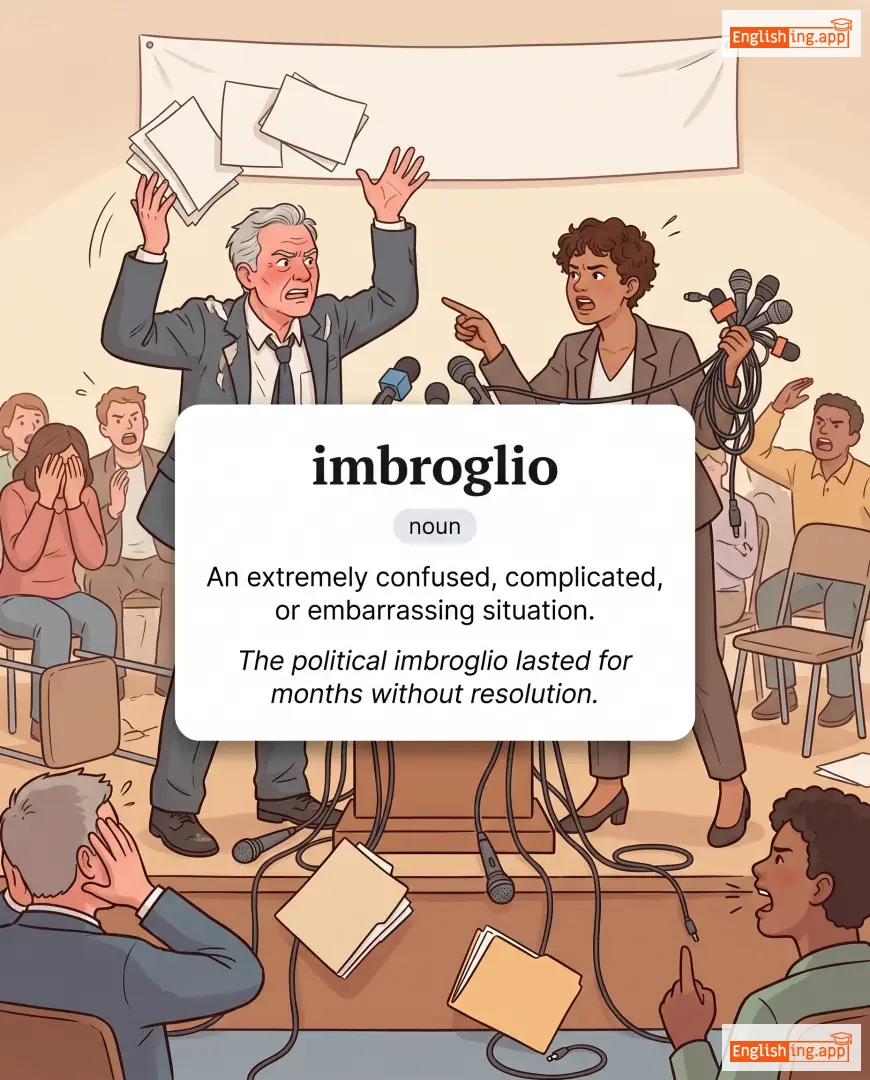
imbroglio definition card — visual illustration of the meaning
noun C2
/ɪmˈbroʊlioʊ/
困惑 (konwaku)

An extremely confused, complicated, or embarrassing situation.

"The political imbroglio lasted for months without resolution."

"政治的な困惑は数ヶ月間解決なしで続きました。" (Seijiteki na konwaku wa suukagetsukan kaiketsu nashi de tsuzukimashita.)
verb C2
/ɪmˈbruː/
汚す (yogosu)

To stain, especially with blood.

"His hands were imbrued with blood after the battle."

"戦いの後、彼の手は血で汚れていた。" (Tatakau no ato, kare no te wa chi de yogorete ita.)
noun C2
/ˈɪmɪˌteɪtər/
模倣者 (mōhōsha)

a person who copies the behavior, style, or actions of others

"He became famous as an imitator of popular singers."

"彼は人気のある歌手の模倣者として有名になった。" (Kare wa ninki no aru kashu no mōhōsha toshite yūmei ni natta.)
adjective C2
/ˈɪmənənt/
内在的 (naizai-teki)

existing or operating within; inherent

"He believed that moral values are immanent in human nature."

"彼は道徳的価値が人間の本性に内在していると信じていました。" (Kare wa doutokuteki kachi ga ningen no honsei ni naizai shite iru to shinjite imashita.)
adjective C2
/ˌɪməˈmɔːriəl/
不朽の (fukyū no)

Extending back beyond memory or record; ancient.

"The tradition has been followed since time immemorial."

"その伝統は不朽の時代から受け継がれてきた。" (Sono dentō wa fukyū no jidai kara uketsugarete kita.)
adjective C2
/ɪˈmɪsəbl/
不混和 (fukonwa)

Describes liquids that do not mix together.

"Oil and water are immiscible liquids."

"油と水は不混和の液体です。" (Abura to mizu wa fukonwa no ekitai desu.)
noun C2
/ˌɪməʊˈbɪləti/
不動 (fudou)

The state of being unable to move.

"After the accident, she suffered from immobility in her legs."

"事故の後、彼女は足の不動に苦しみました。" (Jiko no ato, kanojo wa ashi no fudou ni kurushimashita.)
adjective C2
/ɪˈmɒdərət/
過度な (kadona)

excessive; beyond reasonable limits

"He has an immoderate love for sweets."

"彼はお菓子に対して過度の愛情を持っています。" (Kare wa okashi ni taishite kadona aijō o motteimasu.)
immodest definition card — visual illustration of the meaning
adjective C2
/ɪˈmɒdɪst/
傲慢 / 不適切 (ouman / futekisetsu)

lacking humility or decency; excessively proud or improper

"His immodest remarks offended the audience."

"彼の傲慢な発言は観客を不快にさせた。" (Kare no ouman na hatsugen wa kankyaku o fukai ni saseta.)
immodesty definition card — visual illustration of the meaning
noun C2
/ɪˈmɒdəsti/
不謹慎 (fukinshin)

lack of modesty or decency; behavior or attitude that is overly bold or improper

"The article was criticized for its tone of immodesty."

"その記事は不謹慎な語調で批判された。" (sono kiji wa fukinshin na gochou de hihansareta)
verb C2
/ˈɪməleɪt/
犠牲にする/焼死させる (gisei ni suru/yakushi saseru)

To kill or sacrifice, especially by burning.

"The protesters threatened to immolate themselves in front of the building."

"抗議者たちは建物の前で自ら火にくべると脅した。" (Kōgisha-tachi wa tatemono no mae de mizukara hi ni kuberu to odoshita.)
verb C2
/ɪˈmjʊər/
閉じ込める (tojikomeru)

to confine or enclose someone against their will

"The prisoner was immured in a dark cell."

"囚人は暗い監房に閉じ込められた。" (Shūjin wa kurai kanbō ni tojikomerareta.)
noun C2
/ɪmp/
小さないたずら好きな悪魔 (chiisana itazura suki na akuma)

a small mischievous devil or sprite; a playful troublemaker

"The child was acting like a little imp, hiding his toys everywhere."

"その子供は小さなインプのように振る舞い、どこにでもおもちゃを隠していました。" (Sono kodomo wa chiisana impu no you ni furumai, doko ni demo omocha wo kakushite imashita.)
verb C2
/ɪmˈpeɪl/
突き刺す (tsukisasu)

to pierce or fix something with a sharp object

"The knight was impaled by the enemy’s spear."

"騎士は敵の槍で突き刺さった。" (Kishi wa teki no yari de tsukisatta.)
adjective C2
/ɪmˈpælpəbəl/
触れない (furenai)

unable to be felt by touch; difficult to grasp or understand

"There was an impalpable sense of fear in the room."

"部屋には触れない恐怖感があった。" (Heya ni wa furenai kyoufukan ga atta.)
adjective C2
/ɪmˈpæsɪbəl/
無痛性 (mutsuusei)

Incapable of suffering or feeling pain (used mainly in theological or philosophical contexts).

"Some philosophers argue that God is impassible and cannot experience human emotions."

"一部の哲学者は、神は無痛性であり、人間の感情を感じることはできないと主張しています。" (Ichi bu no tetsugakusha wa, kami wa mutsuusei de ari, ningen no kanjou o kanjiru koto wa dekinai to shuchou shiteimasu.)
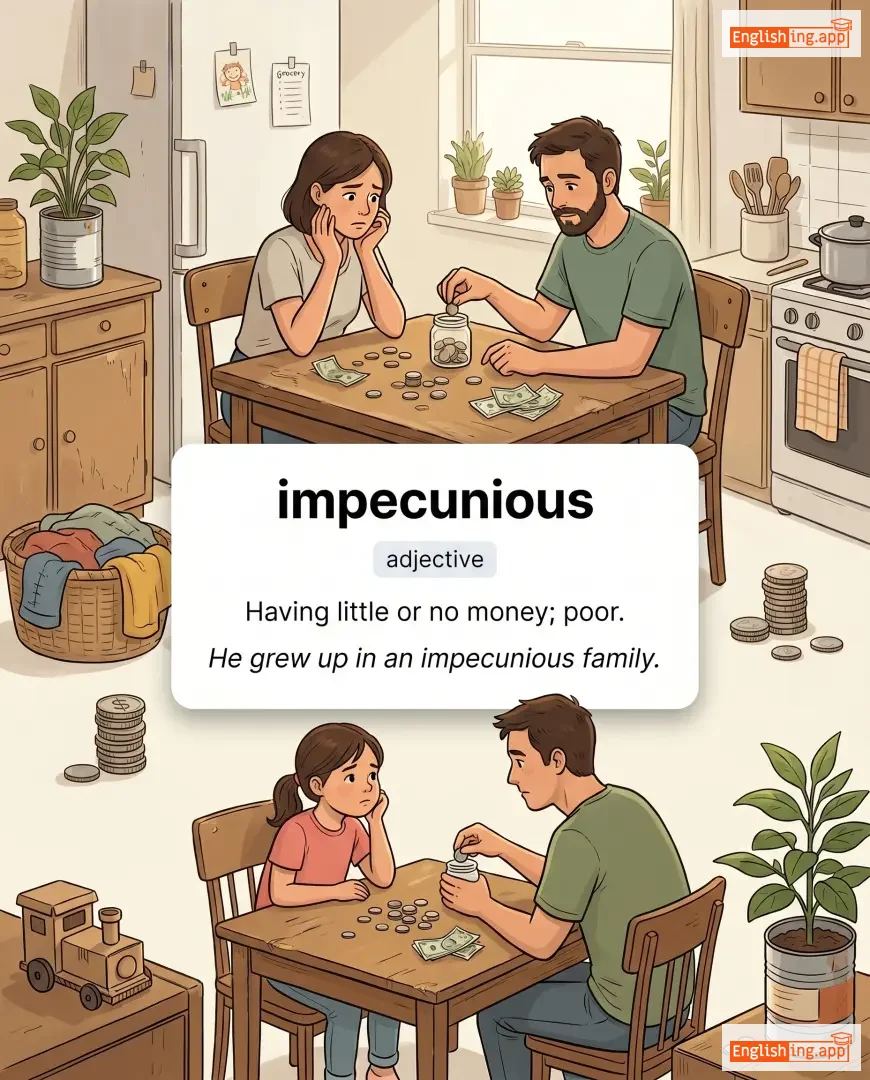
impecunious definition card — visual illustration of the meaning
adjective C2
/ˌɪmpɪˈkjuːniəs/
貧乏 (binbou)

Having little or no money; poor.

"He grew up in an impecunious family."

"彼は貧乏な家族で育ちました。" (Kare wa binbou na kazoku de sodachimashita.)
verb C2
/ɪmˈpɛnd/
迫る (semaru)

to be about to happen; to loom threateningly

"Dark clouds suggested that a storm was impeding."

"暗い雲が嵐が迫っていることを示唆していた。" (Kurai kumo ga arashi ga sematte iru koto wo shisa shite ita.)
adjective C2
/ɪmˈpɛn.ɪ.tənt/
後悔しない (koukaishinai)

Not feeling regret or shame about one's actions.

"The criminal remained impenitent after the trial."

"犯人は裁判後も後悔しないままでした。" (Hannin wa saiban go mo koukaishinai mama deshita.)
adjective C2
/ˌɪm.pəˈfɛk.tə.bəl/
インパーフェクティブル (inpāfekutiburu)

Incapable of being made perfect or complete.

"Some human qualities are considered imperfectible."

"いくつかの人間の資質は、完璧にはならないと見なされます。" (Ikutsuka no ningen no shishitsu wa, kanpeki ni wa naranai to minasaremasu.)
adjective C2
/ɪmˈpɪəriəs/
横柄な (ouhei na)

Arrogantly domineering or overbearing.

"Her imperious tone made it hard for others to argue."

"彼女の横柄な口調は他の人々が議論するのを難しくしました。" (Kanojo no ouhei na kuchou wa hoka no hitobito ga giron suru no wo muzukashiku shimashita.)
adjective C2
/ɪmˈperɪʃəbəl/
不滅の; 永遠の; 朽ちない (fumetsu no; eien no; kuchinai)

not subject to decay; lasting forever; eternal

"The imperishable beauty of classical art continues to inspire generations."

"古典芸術の不滅の美しさは、世代を超えてインスピレーションを与え続けています。" (Koten geijutsu no fumetsu no utsukushisa wa, sedai o koete insupirēshon o ataetsuzuketeimasu.)
adjective C2
/ˌɪmpəˈmɪsəbl/
許可されていない (kyoka sareteinai)

Not permitted or allowed.

"Such behavior is impermissible in the workplace."

"そのような行動は職場では許可されていません。" (Sono you na koudou wa shokuba de wa kyoka sareteimasen.)
adjective C2
/ɪmˌpɜːrˈsweɪdəbl/
説得できない (settoku dekinai)

not able to be convinced or persuaded

"She remained impersuadable despite all our arguments."

"彼女はすべての議論にもかかわらず説得できなかった。" (Kanojo wa subete no giron ni mo kakawarazu settoku dekinakatta.)
noun C2
/ɪmˌpɜːrtərbəˈbɪləti/
不動心 (fudoushin)

The quality of being calm and not easily disturbed or upset.

"Her imperturbability during the crisis impressed everyone."

"危機の際に彼女の不動心は皆に印象を与えました。" (Kiki no sai ni kanojo no fudoushin wa mina ni inshou o ataemashita.)
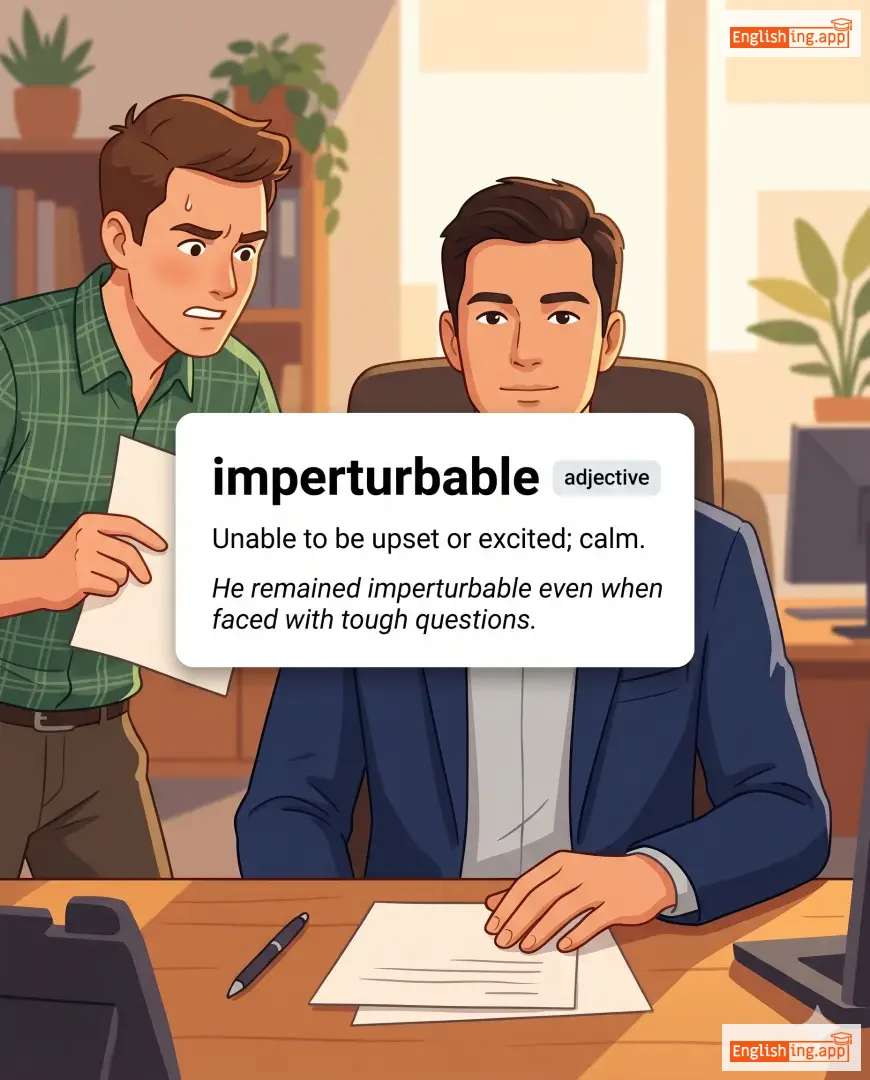
imperturbable definition card — visual illustration of the meaning
adjective C2
/ɪmˈpɜːrtərbəbəl/
冷静 (reisei)

Unable to be upset or excited; calm.

"He remained imperturbable even when faced with tough questions."

"彼は難しい質問に直面しても冷静さを保ち続けました。" (Kare wa muzukashī shitsumon ni chokumen shite mo reiseisa o tamotsu tsudzukemashita.)
noun C2
/ˌɪmpəˈtjuːəsəti/
衝動性 (shoudousei)

The quality of being rash or impulsive.

"His impetuosity often got him into trouble."

"彼の衝動性はしばしば彼を問題に巻き込んだ。" (Kare no shoudousei wa shibashiba kare o mondai ni makikonda.)
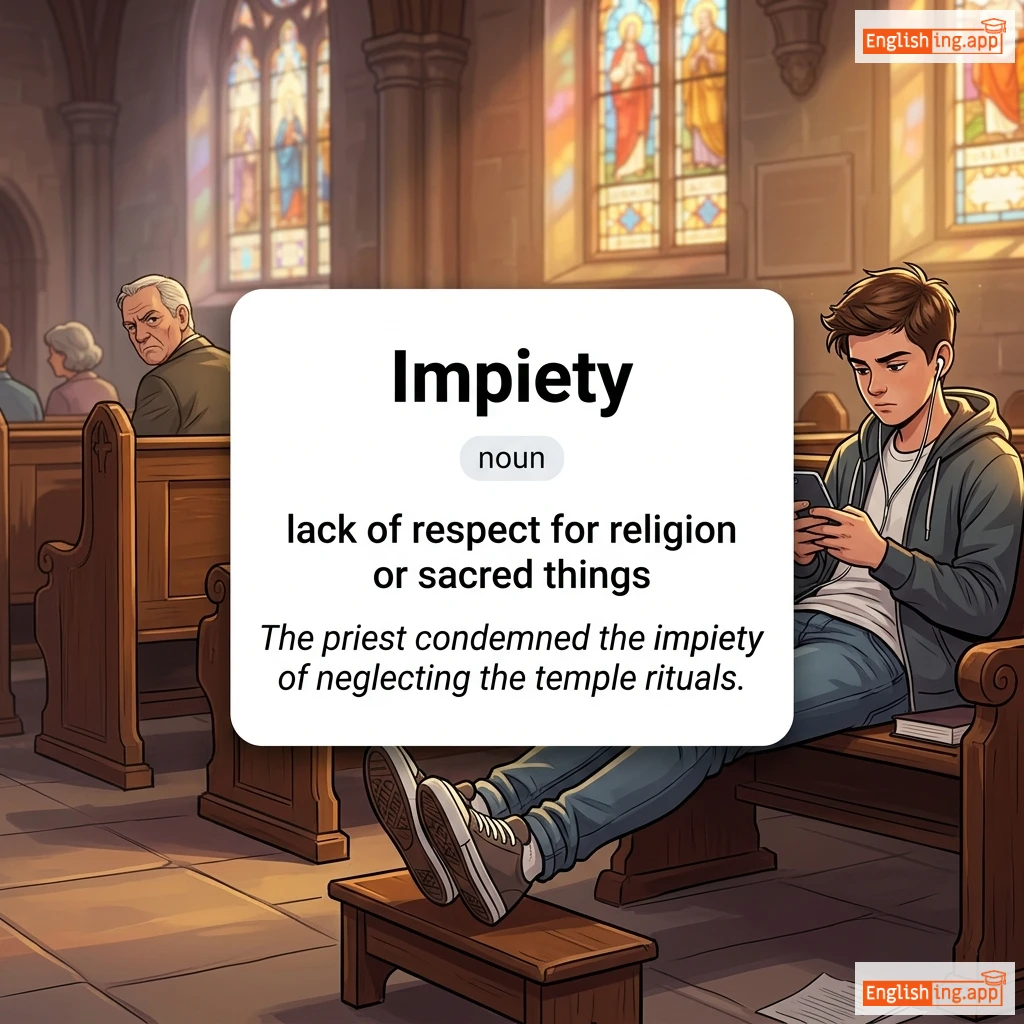
Impiety definition card — visual illustration of the meaning
noun C2
/ɪmˈpaɪəti/
不敬 (fukei)

lack of respect for religion or sacred things

"The priest condemned the impiety of neglecting the temple rituals."

"司祭は寺院の儀式を無視する不敬を非難した。" (Shisai wa jiin no gishiki o mushi suru fukei o hinan shita.)
adjective C2
/ˈɪmpɪəs/
不敬な (fukei na)

showing a lack of respect for God or religion

"It was considered impious to joke about sacred traditions."

"聖なる伝統を馬鹿にすることは不敬だと考えられていた。" (Seinaru dentō o baka ni suru koto wa fukei da to kangaerarete ita.)
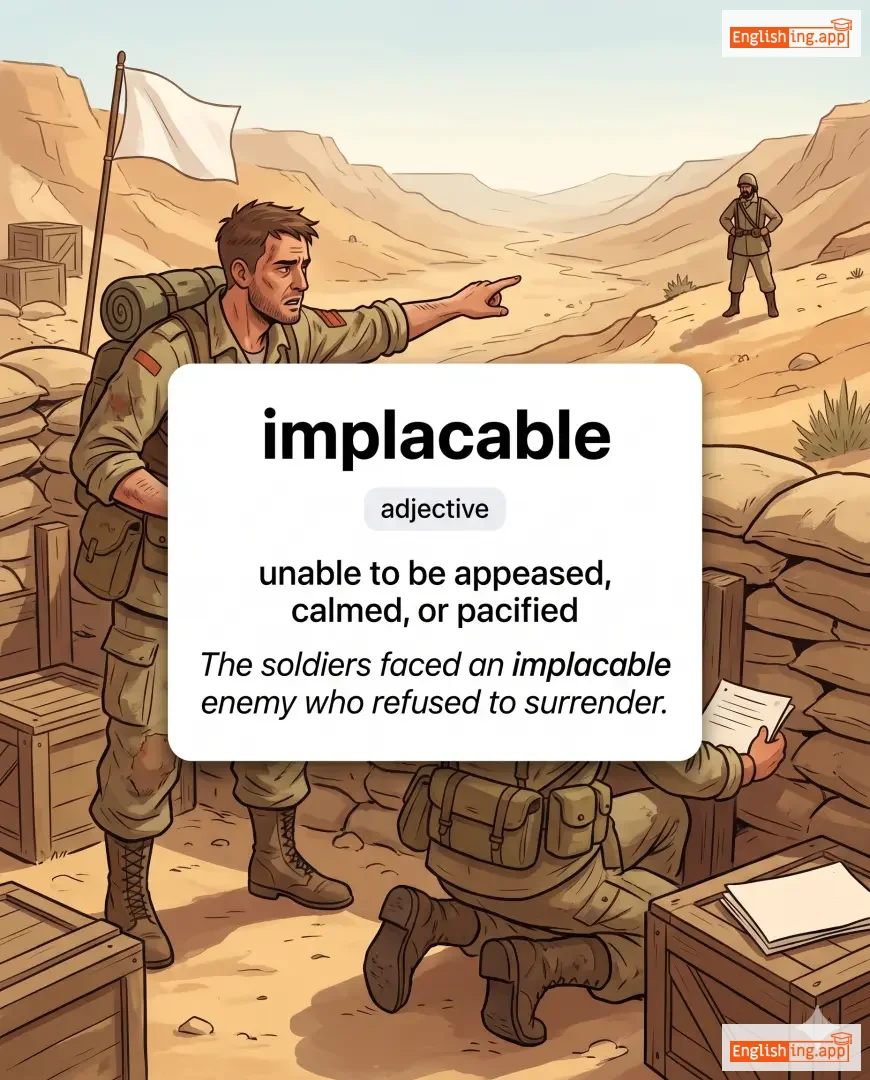
implacable definition card — visual illustration of the meaning
adjective C2
/ɪmˈplækəbl/
容赦しない (yousha shinai)

unable to be appeased, calmed, or pacified

"The soldiers faced an implacable enemy who refused to surrender."

"兵士たちは降伏を拒否した容赦しない敵に直面した。" (Heishitachi wa kyoufuku o kyohi shita yousha shinai teki ni chokumen shita.)
adjective C2
/ɪmˈplaɪəbl/
暗示可能な (anshikano)

Capable of being implied or suggested.

"The meaning of the statement is not directly clear but is impliable from the context."

"その声明の意味は直接的には明確ではないが、文脈から推測可能である。" (Sono seimei no imi wa chokusetsuteki ni wa meikaku de wa nai ga, bunmyaku kara suisoku kanou de aru.)
adjective C2
/ɪmˈpɑːlɪtɪk/
無礼な (burenna)

Unwise or imprudent; not showing good judgment.

"It would be impolitic to criticize them openly."

"彼らを公然と批判するのは無礼だろう。" (Karera o kouzen to hihan suru no wa burena darou.)
adjective C2
/ɪmˈpɒndərəbl̩/
計り知れない (hakarishirenai)

Something difficult or impossible to estimate, assess, or understand

"The outcome of the election depends on many imponderable factors."

"選挙の結果は、多くの計り知れない要因に依存しています。" (Senkyou no kekka wa, ooku no hakarishirenai youin ni izon shiteimasu.)
adjective C2
/ɪmˈpɔːrtʃənət/
しつこい (shitsukoi)

Persistent to the point of annoyance or intrusion

"The importunate salesman kept calling despite repeated refusals."

"しつこい販売員は、繰り返し拒否されても電話をかけ続けました。" (Shitsukoi hanbaiin wa, kurikaeshi kyohi saretemo denwa o kake tsudzukemashita.)
verb C2
/ˌɪmpɔːrˈtuːn/
しつこく頼む (shitsukoku tanomu)

To ask someone persistently or pressingly for something

"The child importuned his mother for a new toy."

"その子供は新しいおもちゃを欲しがって母親にしつこく頼んだ。" (Sono kodomo wa atarashī omocha o hoshigatte hahaoya ni shitsukoku tanonda.)
verb C2
/ˌɪmpɔːrˈtuːnd/
しつこく頼む (shitsukoku tanomu)

asked someone persistently and pressingly for something

"She importuned her boss for a raise until he finally gave in."

"彼女は昇給を求めて上司にしつこく頼んだ、彼がとうとう折れたまで。" (Kanojo wa shōkyū o motomete jōshi ni shitsukoku tanonda, kare ga tōtō oretamade.)
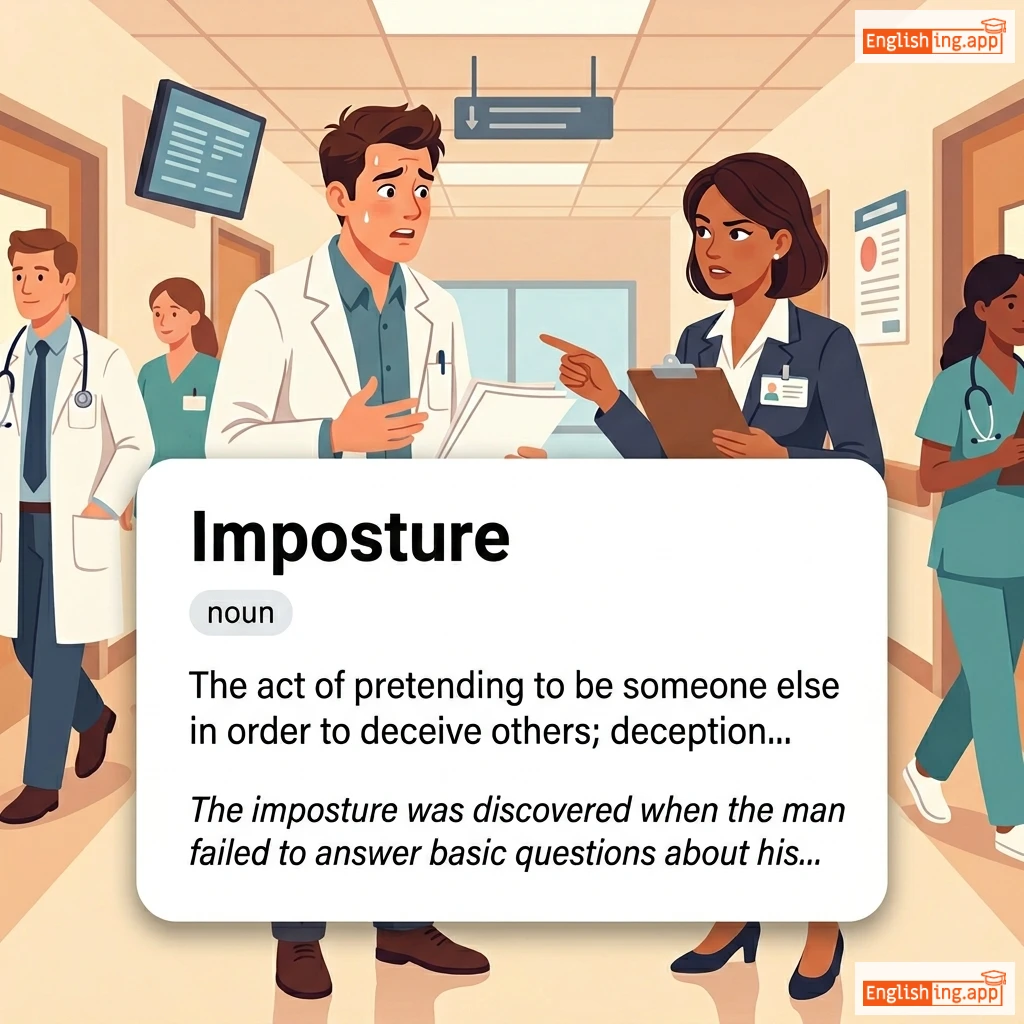
Imposture definition card — visual illustration of the meaning
noun C2
/ɪmˈpɒstʃər/
偽り (itsuwari)

The act of pretending to be someone else in order to deceive others; deception or fraud.

"The imposture was discovered when the man failed to answer basic questions about his supposed identity."

"偽りは、男が自分の仮の身分についての基本的な質問に答えられなかったときに発覚しました。" (Itsuwari wa, otoko ga jibun no kari no mibun ni tsuite no kihonteki na shitsumon ni kotaerarenakatta toki ni hakkaku shimashita.)
adjective C2
/ɪmˈpræktɪkəbl/
実行不可能 (jikkou fukanou)

Not capable of being carried out or put into practice.

"The plan seemed impracticable due to limited resources."

"資源が限られていたため、計画は実行不可能に見えました。" (Shigen ga kagirarete ita tame, keikaku wa jikkou fukanou ni miemashita.)
verb C2
/ˈɪmprɪkeɪt/
呪う (norou)

To utter a curse or invoke evil upon someone.

"The old woman imprecated her enemies with dark words."

"その年老いた女性は暗い言葉で敵を呪いました。" (Sono toshi oita josei wa kurai kotoba de teki wo noroi mashita.)
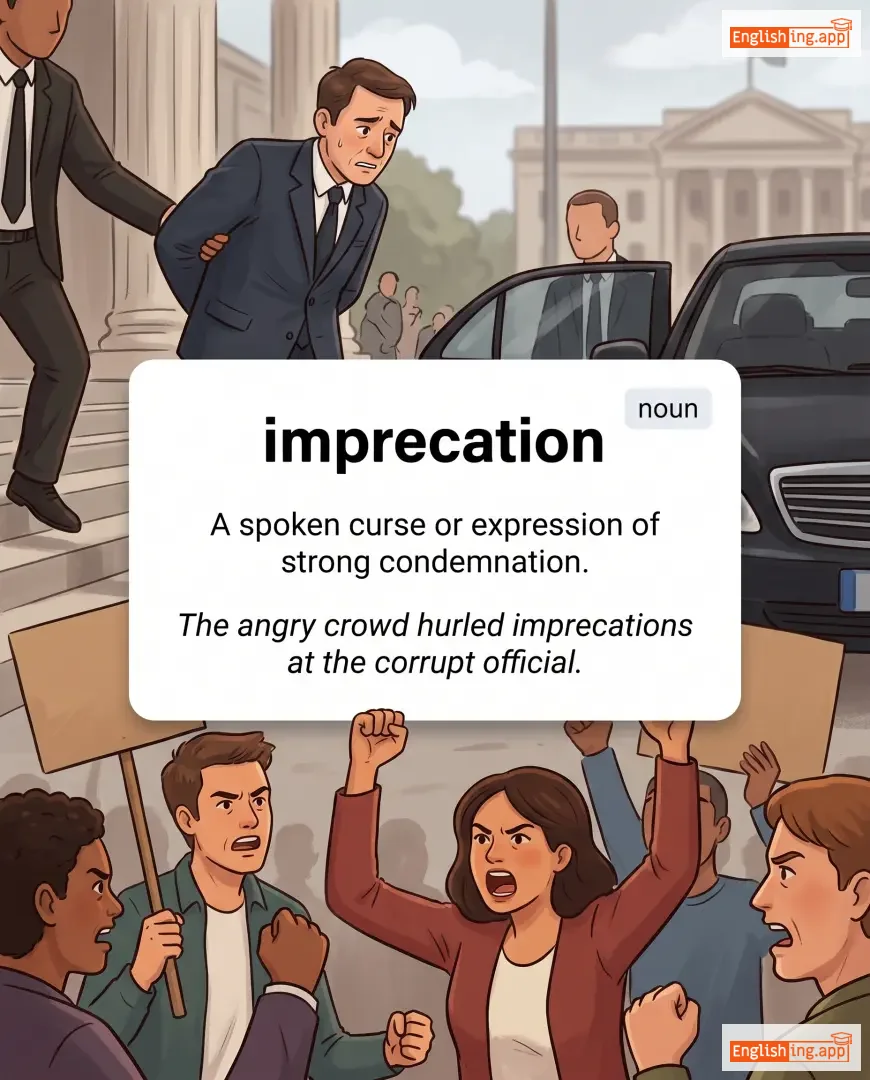
imprecation definition card — visual illustration of the meaning
noun C2
/ˌɪmprɪˈkeɪʃən/
呪い (noroi)

A spoken curse or expression of strong condemnation.

"The angry crowd hurled imprecations at the corrupt official."

"怒った群衆は腐敗した役人に呪いを投げかけた。" (Okotta gunshuu wa fuhai shita yakunin ni noroi wo nagekaketa.)
adjective C2
/ɪmˈprɛɡnəbl̩/
攻略不可能 (kōryaku fukanō)

Unable to be captured, broken into, or defeated.

"The fortress was considered impregnable by the enemy."

"その要塞は敵によって攻略不可能と見なされていました。" (Sono yōsai wa teki ni yotte kōryaku fukanō to minasarete imashita.)
verb C2
/ˈɪmprɛɡneɪt/
妊娠させる / 飽和させる (ninshin saseru / hōwa saseru)

To make pregnant; to fill or saturate with something.

"The scientist used a method to impregnate the material with resin."

"科学者は樹脂で素材をインプレグネイトする方法を使用しました。" (Kagakusha wa jushi de sozai o inpureguneito suru hōhō o shiyō shimashita.)
noun C2
/ˌɪmprəˈsɑːrioʊ/
プロデューサー (purodyūsā)

A person who organizes or finances concerts, plays, or operas.

"The impresario arranged a series of concerts for the rising star."

"インプレサリオは、急成長するスターのためにコンサートのシリーズを手配しました。" (Inpresario wa, kyū seichō suru sutā no tame ni konsāto no shirīzu o tehai shimashita.)
noun C2
/ˌɪmprɪˈmɑːtər/
承認 (shōnin)

An official license or approval, especially to publish a book.

"The book was released with the official imprimatur of the church."

"その本は教会の正式な承認を得て出版されました。" (Sono hon wa kyōkai no seishiki na shōnin o ete shuppan saremashita.)
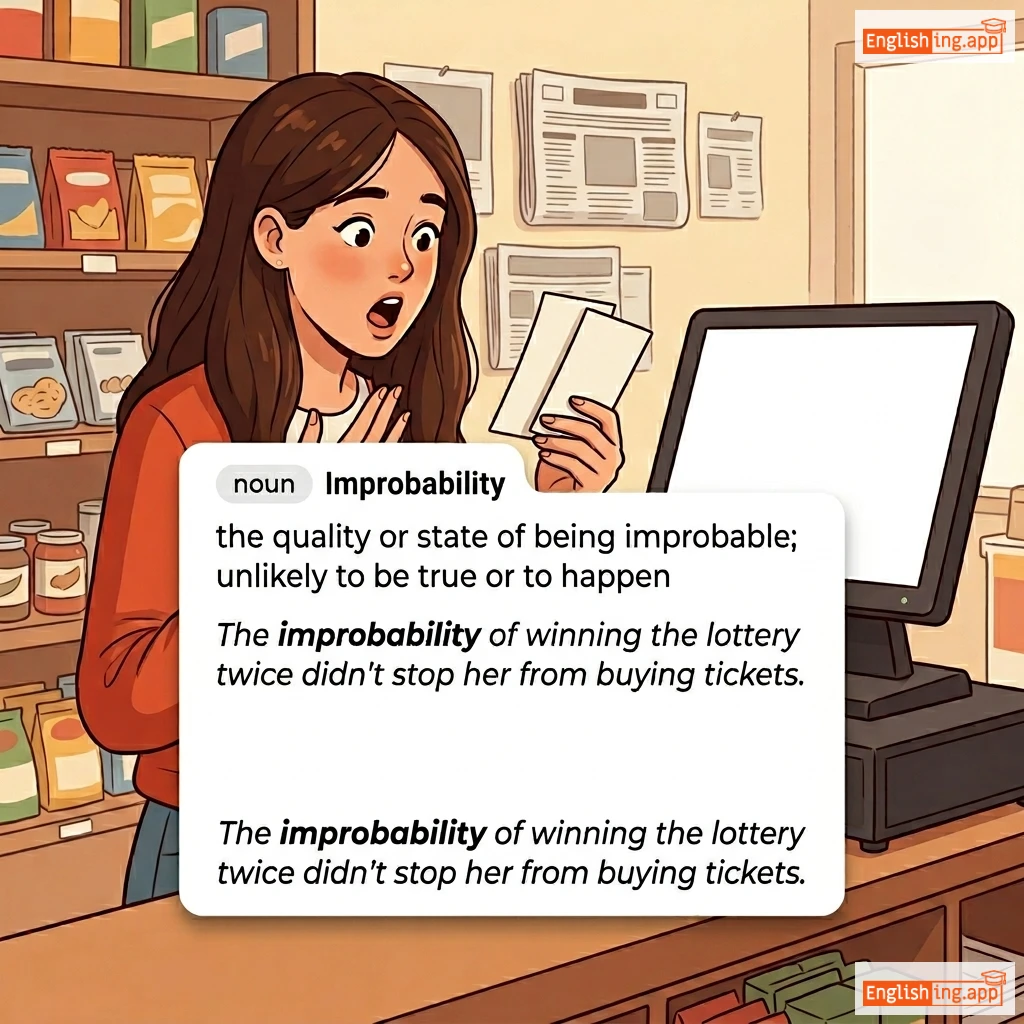
Improbability definition card — visual illustration of the meaning
noun C2
/ɪmˌprɒb.əˈbɪl.ə.ti/
不確実性 (fukakujitsusei)

the quality or state of being improbable; unlikely to be true or to happen

"The improbability of winning the lottery twice didn't stop her from buying tickets."

"ロトで二回連続で当選する可能性の低さは、彼女がチケットを買うのを止めませんでした。" (roto de nikai renzoku de tōsen suru kanōsei no hikusa wa, kanojo ga chiketto o kau no o tome masen deshita.)
noun C2
/ˌɪmprəˈpraɪəti/
不正行為 (fusei koui)

Failure to observe standards of honesty or modesty; improper behavior.

"The politician was accused of financial impropriety."

"その政治家は財政的不正行為で告発されました。" (Sono seijika wa zaisei-teki fusei koui de kokuhatsu saremashita.)
noun C2
/ɪmˈprɑːvɪdəns/
不注意 (fuchūi)

Lack of foresight or care for future needs.

"His improvidence led to financial difficulties."

"彼の不注意が彼を財政的な困難に追い込んだ。" (Kare no fuchūi ga kare o zaiseiteki na konnan ni oikonda.)
adjective C2
/ɪmˈprɒvɪdənt/
先見の明がない (senken no mei ga nai)

Not having or showing foresight; spending wastefully or without thought for the future.

"His improvident habits left him with no savings."

"彼の先見の明がない習慣は、貯金がないまま彼を残した。" (Kare no senken no mei ga nai shūkan wa, chokin ga nai mama kare o nokoshita.)
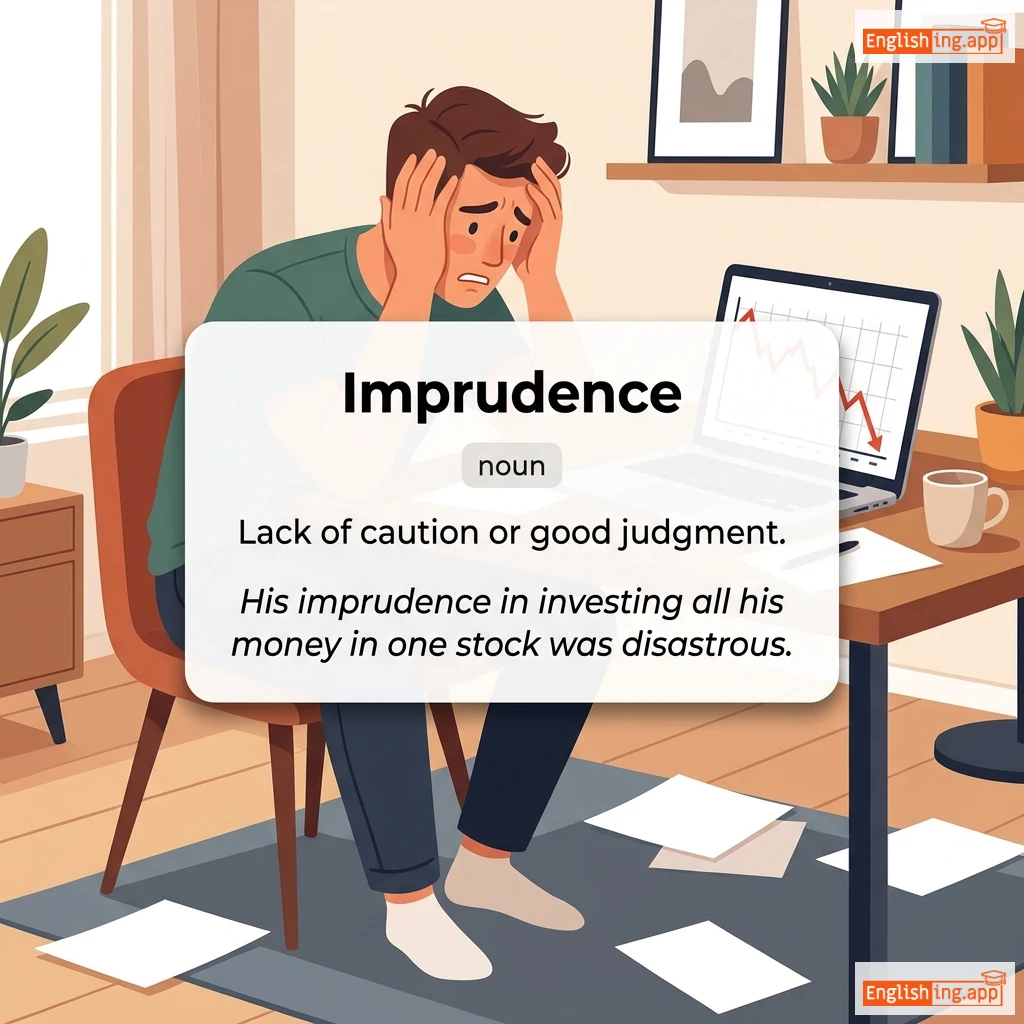
Imprudence definition card — visual illustration of the meaning
noun C2
/ɪmˈpruːdəns/
軽率 (keisotsu)

Lack of caution or good judgment.

"His imprudence in investing all his money in one stock was disastrous."

"一つの株に全てのお金を投資する彼の軽率さは、壊滅的だった。" (Hitotsu no kabu ni subete no okane wo toshi suru kare no keisotsu sa wa, kaimetsu teki datta.)