Vokabulare

Englisches Vokabelwörterbuch | Wortbedeutungen, Definitionen & Beispiele

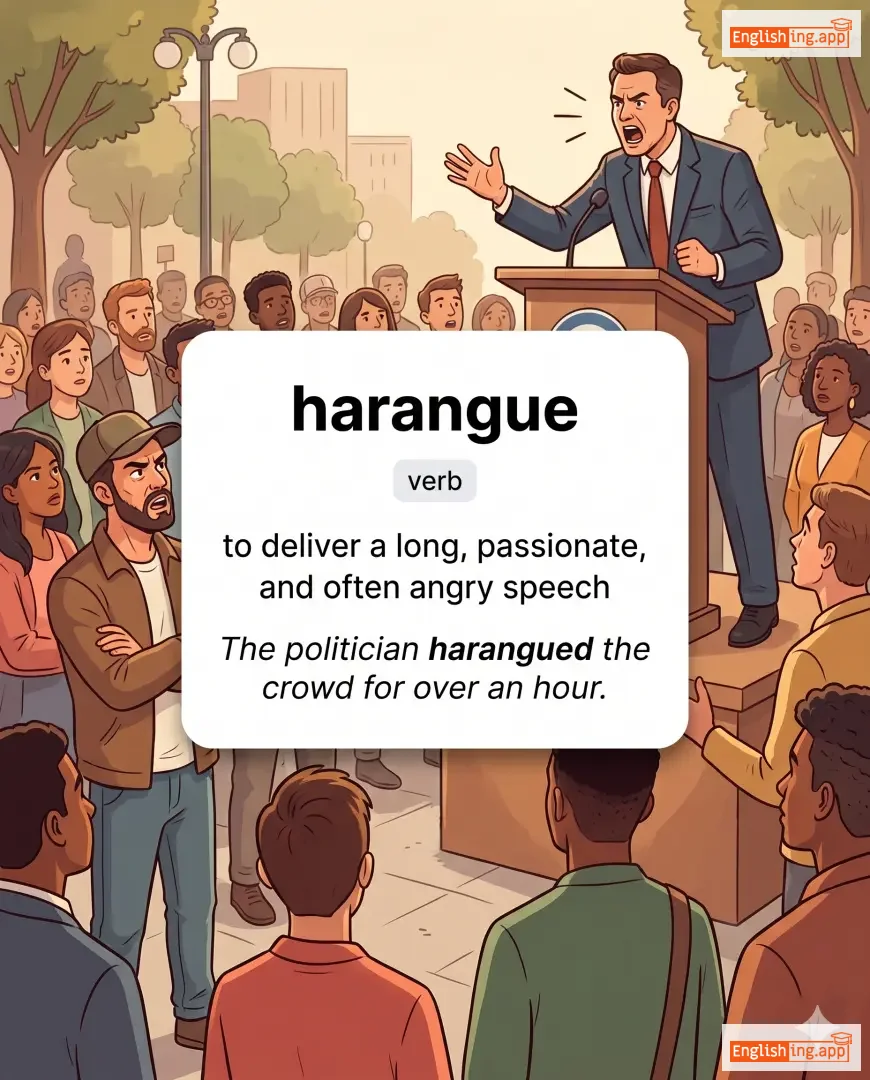
harangue definition card — visual illustration of the meaning
verb C2
/həˈræŋ/
長く情熱的な演説をする (nagaku jōnetsuteki na enzetsu o suru)

to deliver a long, passionate, and often angry speech

"The politician harangued the crowd for over an hour."

"政治家は群衆に一時間以上も演説をしました。" (Seijika wa gunshū ni ichijikan ijō mo enzetsu shimashita.)
noun C2
/ˈhɑːrbɪndʒər/
前触れ (maebure)

a person or thing that announces or signals the approach of another

"The sudden drop in temperature was a harbinger of winter."

"気温の急激な低下は冬の前触れでした。" (Kion no kyūgeki na teika wa fuyu no maebure deshita.)
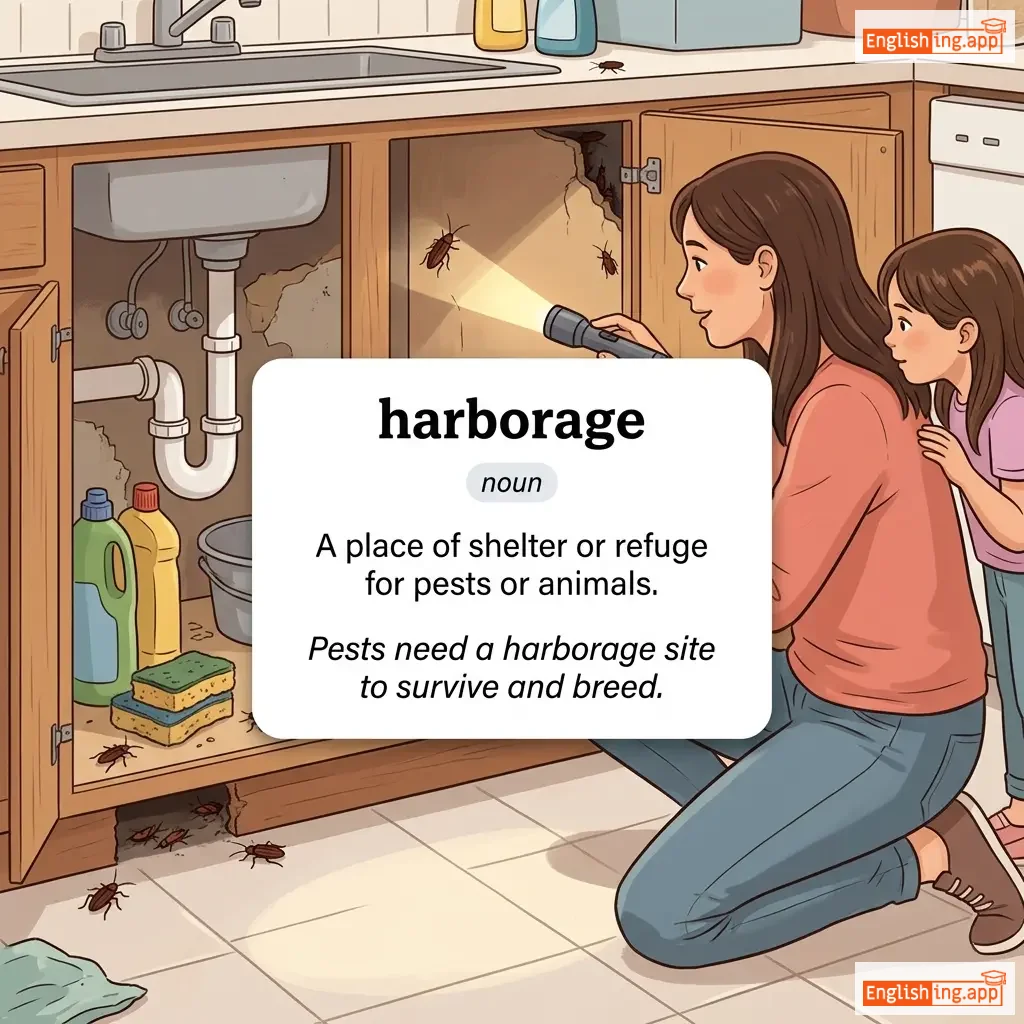
harborage definition card — visual illustration of the meaning
noun C2
ˈhɑːrbərɪdʒ
避難所 (hinanjo)

A place of shelter or refuge for pests or animals.

"Pests need a harborage site to survive and breed."

"害虫は生き残り、繁殖するために避難所が必要です。" (Gaichū wa ikinokori, hanshoku suru tame ni hinanjo ga hitsuyōdesu.)
adjective C2
/ˌhɑːrdˈbɪtn̩/
頑固で経験豊富 (ganko de keiken hōfu)

tough and experienced, not easily affected by emotions or hardship

"The hard-bitten detective showed no sign of surprise at the crime scene."

"その経験豊富な探偵は犯罪現場で驚きの兆候を見せませんでした。" (Sono keiken hōfu na tantei wa hanzai genba de odoroki no chōkō o misemasen deshita.)
noun C2
/ˈhɑːdɪhʊd/
勇気、大胆さ (yūki, daitansa)

Courage, boldness, or daring behavior; also physical robustness.

"The mountaineer's hardihood impressed the entire team."

"登山家のハーディフッドはチーム全体を感動させました。" (Tōzanka no hādifuddo wa chīmu zentai o kandō saseshimashita.)
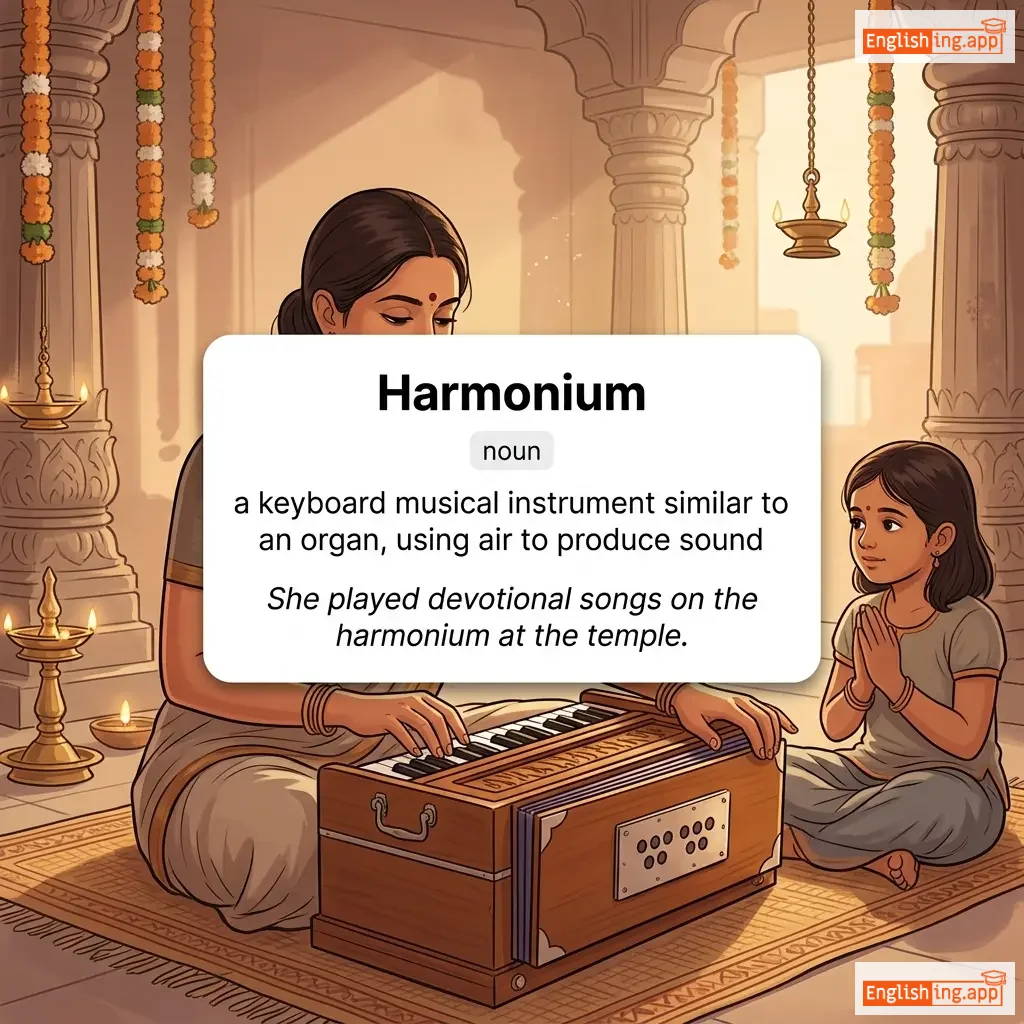
Harmonium definition card — visual illustration of the meaning
noun C2
/hɑrˈmoʊniəm/
ハーモニウム (haamonium)

a keyboard musical instrument similar to an organ, using air to produce sound

"She played devotional songs on the harmonium at the temple."

"彼女は寺院でハーモニウムを使って祈りの歌を演奏した。" (Kanojo wa jiin de haamonium o tsukatte inori no uta o ensou shita.)
verb C2
/ˈhɑːrpɪŋ/
繰り返し不満を言う (kurikaeshi fuman o iu)

continuously talking or complaining about something in a tiresome way

"She kept harping on about the mistakes I made."

"彼女は私が犯した間違いについて繰り返し不満を言っていました。" (Kanojo wa watashi ga okashita machigai ni tsuite kurikaeshi fuman o itteimashita.)
adjective C2
/ˈhæriːd/
過労や絶え間ない干渉で緊張したりストレスを感じたりする (karou ya taemai kanshou de kinchou shitari sutoresu o kanjitari suru)

feeling strained or stressed due to being overworked or constantly bothered

"The harried teacher struggled to calm the noisy classroom."

"過労の教師は騒々しい教室を静めるのに苦労していました。" (Karo no kyoushi wa souzoushii kyoushitsu o shizumeru no ni kurou shite imashita.)
verb C2
/ˈhæroʊ/
苦しめる / すき (kurushimeru / suki)

to cause distress or torment; also to break up and smooth soil with a farm tool

"The tragic news harrowed the entire family."

"悲劇的なニュースは家族全員を苦しめました。" (Higeki-teki na nyūsu wa kazoku zen'in wo kurushimemashita.)
verb C2
/ˈhæri/
悩ます, 攻撃する (nayamasu, kougeki suru)

to constantly attack, harass, or annoy

"The army harried the enemy with sudden raids."

"軍隊は突然の襲撃で敵を攻撃した。" (Guntai wa totsuzen no shugeki de teki o kougeki shita.)
noun C2
/hæˈʃiːʃ/
ハシシ (hashishi)

a drug made from the resin of the cannabis plant

"The police arrested him for possessing hashish."

"警察は彼をハシシを所持していたため逮捕した。" (Keisatsu wa kare o hashishi o shoji shite ita tame taiho shita.)
noun C2
/ˈhɔːtɪnəs/
傲慢 (ōman)

The appearance or quality of being arrogantly superior and disdainful.

"His haughtiness made him unpopular among his peers."

"彼の傲慢さは彼を同僚の中で不人気にしました。" (Kare no ōman-sa wa kare o dōryō no naka de funinki ni shimashita.)
noun C2
/oʊˈtɜːr/
傲慢 (gōman)

disdainful pride; arrogance

"His hauteur made it difficult for others to approach him."

"彼の傲慢は他の人々が近づくのを難しくさせた。" (Kare no gōman wa hoka no hitobito ga chikaduku no o muzukashiku saseta.)
noun C2
/ˈhɔːzər/
船を繋ぐための太いロープ (fune o tsunagu tame no futoi rōpu)

A thick rope or cable used in mooring or towing a ship.

"The sailors secured the ship to the dock with a heavy hawser."

"船員たちは重いハウザーを使って船をドックに固定しました。" (Sen'in-tachi wa omoi hawzā o tsukatte fune o dokku ni kotei shimashita.)
noun C2
/ˈhɔːθɔːrn/
とげのある低木 (toge no aru teboku)

A thorny shrub or small tree with white or pink flowers, often used for hedges.

"The garden was lined with blooming hawthorn bushes."

"庭園は花が咲くホーソーンの茂みで囲まれていました。" (Teien wa hana ga saku hōsōn no shigemi de kakomarete imashita.)
adjective C2
/ˈhɛdi/
酔わせる (yoaseru)

Exciting or intoxicating; having a strong or exhilarating effect.

"The heady aroma of the flowers filled the room."

"花の酔わせる香りが部屋を満たした。" (Hana no yoaseru kaori ga heya o mitashita.)
verb C2
/ˈhɑːrkən/
注意深く聞く (chūibukaku kiku)

To listen attentively; to give heed.

"He would hearken to his mentor’s advice before making decisions."

"彼は意思決定を下す前に、メンターのアドバイスに耳を傾けた。" (Kare wa ishikettei o kudasu mae ni, mentā no adobaisu ni mimi o katamuketa.)
noun C2
/hɜːrs/
霊柩車; (reikyūsha)

a vehicle for conveying the coffin at a funeral; a funeral car

"The black hearse slowly made its way to the cemetery, followed by a procession of mourners."

"黒い霊柩車がゆっくりと墓地に向かい、その後ろに哀悼の列が続いていた。" (Kuroi reikyūsha ga yukkuri to bochi ni mukai, sono ushiro ni aitō no retsu ga tsudzuite ita.)
verb C2
/ˈhɑːrtən/
勇気づける (yūki dzukeru)

To give courage, confidence, or hope.

"The teacher’s encouragement heartened the students."

"先生の励ましは学生たちに勇気を与えた。" (Sensei no hagemashi wa gakusei-tachi ni yūki o ataeta.)
adjective C2
/ˈhiːðənɪʃ/
野蛮 (yaban)

Lacking culture or religion; barbaric or uncivilized.

"They considered the ancient tribe’s rituals heathenish."

"彼らは古代部族の儀式を未開だと考えた。" (Karera wa kodai buzoku no gishiki o mikai da to kangaeta.)
noun C2
/ˈhɛklər/
野次を飛ばす人 (yaji o tobasu hito)

A person who interrupts a speaker with rude or aggressive comments.

"The politician remained calm despite the heckler shouting from the crowd."

"政治家は群衆から叫んでいたヘクラーにもかかわらず冷静を保ちました。" (Seijika wa gunshū kara sakendeta hekurā ni mo kakawarazu reisei o tamochimashita.)
verb C2
/ˈhɛktər/
脅して話す (osorete hanasu)

To talk to someone in a bullying or intimidating way.

"The manager hectored the staff into working overtime."

"マネージャーはスタッフに残業をさせるために脅しました。" (Manējā wa sutaffu ni zangyō o saseru tame ni odoshimashita.)
noun C2
/hɪˈdʒɛməni/ or /ˈhɛdʒəmoʊni/
覇権 (haken)

leadership or dominance, especially by one state or group over others

"The empire maintained its hegemony over neighboring states."

"帝国は隣国に対してその覇権を維持した。" (Teikoku wa ringoku ni taishite sono haken o iji shita.)
🚶‍♂️

hegira (ヘジラ)

noun C2
/ˈhɛdʒɪrə/ or /hɪˈdʒaɪrə/
移住, 亡命 (ijuu, boumei)

a journey, especially when undertaken to escape from a dangerous or undesirable situation

"The refugees began their hegira across the desert."

"難民たちは砂漠を越えて移住を始めた。" (Nanmin-tachi wa sabaku o koete ijiu o hajimeta.)
noun C2
/ˈhɛfər/
雌牛 (mesu ushi)

a young cow that has not borne a calf

"The farmer raised a heifer for dairy production."

"農家は乳製品の生産のためにヘイファーを育てました。" (Nōka wa nyūseihin no seisan no tame ni heifā o sodatemashita.)
noun C2
/ˈhelmz.mən/
舵手; キャプテン (dōshu; kyaputen)

a person who steers a ship or boat; the person at the helm of a vessel

"The experienced helmsman skillfully guided the yacht through the narrow channel during the storm."

"経験豊富な舵手は、嵐の中で狭い水路をヨットで巧みに導きました。" (Keiken hōfu na dōshu wa, arashi no naka de semai suiro o yotto de takumi ni michibikimashita.)
hemophilia definition card — visual illustration of the meaning
noun C2
ˌhiː.məˈfɪl.i.ə
血友病 (ketsuyobyou)

A medical condition in which the ability of the blood to clot is severely reduced, causing the sufferer to bleed severely from even a slight injury.

"Hemophilia treatment benefits from genetic editing."

"血友病の治療は遺伝子編集から利益を得る。" (Ketsuyobyou no chiryou wa idenshi henshuu kara rieki o eru.)
noun C2
/ˈhen.ə/
ヘンナ (henna)

a reddish-brown dye made from the powdered leaves of a tropical shrub, used to color hair and decorate skin

"The bride's hands were beautifully decorated with intricate henna patterns for her wedding ceremony."

"花嫁の手は、彼女の結婚式のために精巧なヘンナの模様で美しく飾られていました。" (Hanayome no te wa, kanojo no kekkonshiki no tame ni seikou na henna no moyou de utsukushiku kazarareteimashita.)
verb C2
/ˈhɛnˌpɛk/

To continually criticize, nag, or dominate (especially a husband).

"He felt henpecked by his overly controlling wife."

noun C2
/ˈhɛptəˌɡɒn/
七角形 (shichikakukei)

A polygon with seven sides and seven angles.

"The math teacher drew a heptagon on the board."

"数学の先生は黒板にヘプタゴンを描きました。" (Sūgaku no sensei wa kokuban ni heptagon o kakimashita.)
noun C2
/ˈhɛptɑːrki/
七王国連邦 (shichi ōkoku renpō)

A group of seven rulers or governments, especially the seven Anglo-Saxon kingdoms in early England.

"The history book described the heptarchy of Anglo-Saxon England."

"歴史書はアングロサクソンのイングランドのヘプターキーを説明していました。" (Rekishi-sho wa Anguro-Sakuson no Ingurando no heptākī o setsumei shite imashita.)
adjective C2
/hɜːrˈbeɪʃəs/
草本 (sōhon)

Relating to or resembling herbs; plants with soft, non-woody stems.

"The garden was filled with herbaceous plants that thrived in the summer."

"庭園には夏に繁茂する草本植物で満たされていた。" (Teien ni wa natsu ni hanmō suru sōhon shokubutsu de mitasarete ita.)
noun C2
/hɜːrˈbɛəriəm/
標本館 (hyōhonkan)

A collection of preserved plant specimens and associated data used for scientific study.

"The university maintains a large herbarium for research and education."

"大学は研究と教育のために大きな標本館を維持しています。" (Daigaku wa kenkyū to kyōiku no tame ni ōkina hyōhonkan o iji shiteimasu.)
adjective C2
/ˌhɜːrkjʊˈliːən/
非常に困難 (hijō ni konnan)

Requiring great strength or effort; very difficult to perform.

"It was a herculean task to rebuild the city after the disaster."

"災害後に都市を再建することは非常に困難な仕事でした。" (Saigai-go ni toshi o saiken suru koto wa hijō ni konnan na shigoto deshita.)
adjective C2
/həˈrɛtɪkəl/
異端的な (idanteki na)

Relating to or characterized by departure from accepted beliefs or standards, especially in religion.

"The priest condemned the book as heretical."

"神父はその本を異端的だとして非難した。" (Shinpu wa sono hon o idanteki da to shite hinan shita.)
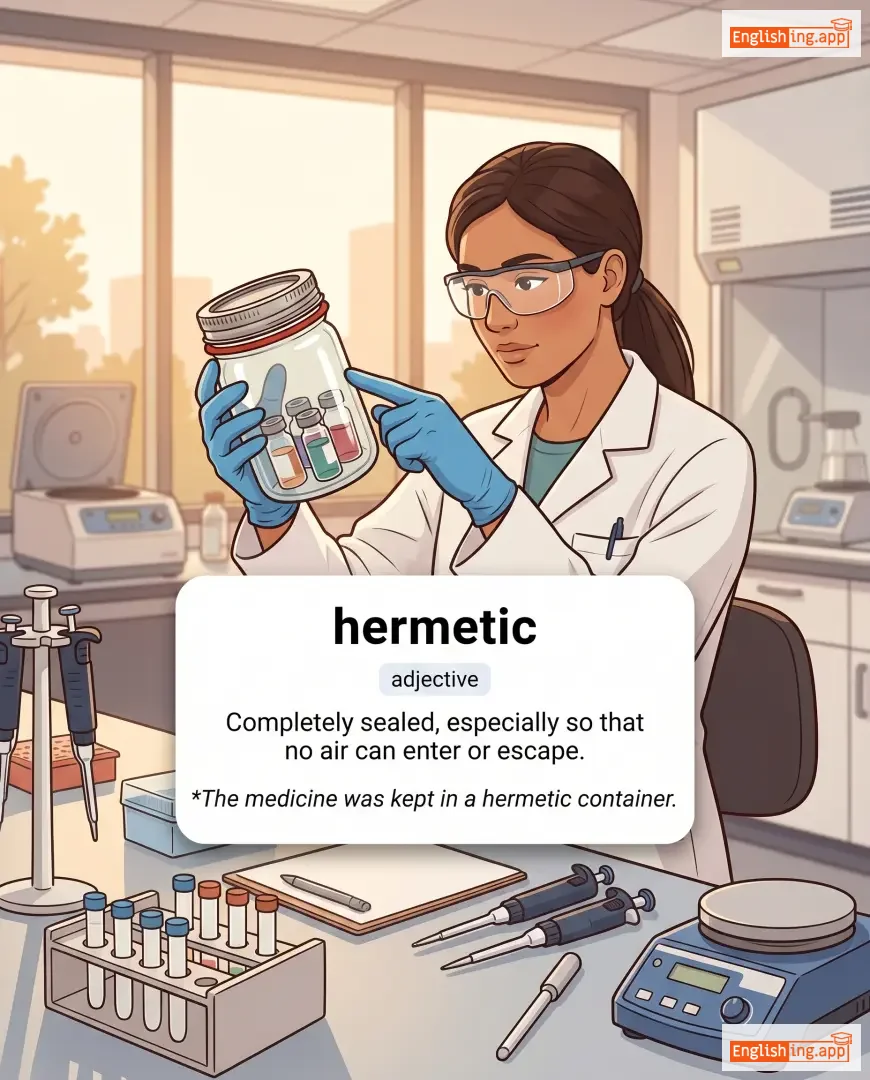
hermetic definition card — visual illustration of the meaning
adjective C2
/hərˈmɛtɪk/
密閉 (mippei)

Completely sealed, especially so that no air can enter or escape.

"The medicine was kept in a hermetic container."

"薬は密閉された容器に保管されていました。" (Kusuri wa mippei sareta yōki ni hokan sarete imashita.)
adverb C2
/hərˈmɛtɪkli/
密封的に (mippūteki ni)

In a way that is completely airtight or sealed off.

"The jars were hermetically sealed to preserve freshness."

"瓶は新鮮さを保つために密封的に封印されました。" (Bin wa shinsensa o tamotsu tame ni mippūteki ni fūin saremashita.)
noun C2
/ˈhɜːrmɪtɪdʒ/
隠遁所 (intonsho)

A secluded residence or retreat, often for a hermit or religious recluse.

"The monk spent years in a hermitage deep in the forest."

"その僧侶は森の奥深くの隠遁所で数年間を過ごしました。" (Sono sōryo wa mori no oku fukaku no intonsho de suunenkan o sugoshimashita.)
noun C2
/ˌhɜːrpəˈtɒlədʒɪst/
爬虫類学者 (hachuu rui gakusha)

A scientist who studies reptiles and amphibians.

"The herpetologist discovered a new species of frog in the rainforest."

"その爬虫類学者は熱帯雨林で新しいカエルの種を発見した。" (Sono hachūruigakusha wa nettai urin de atarashī kaeru no shū o hakken shita.)
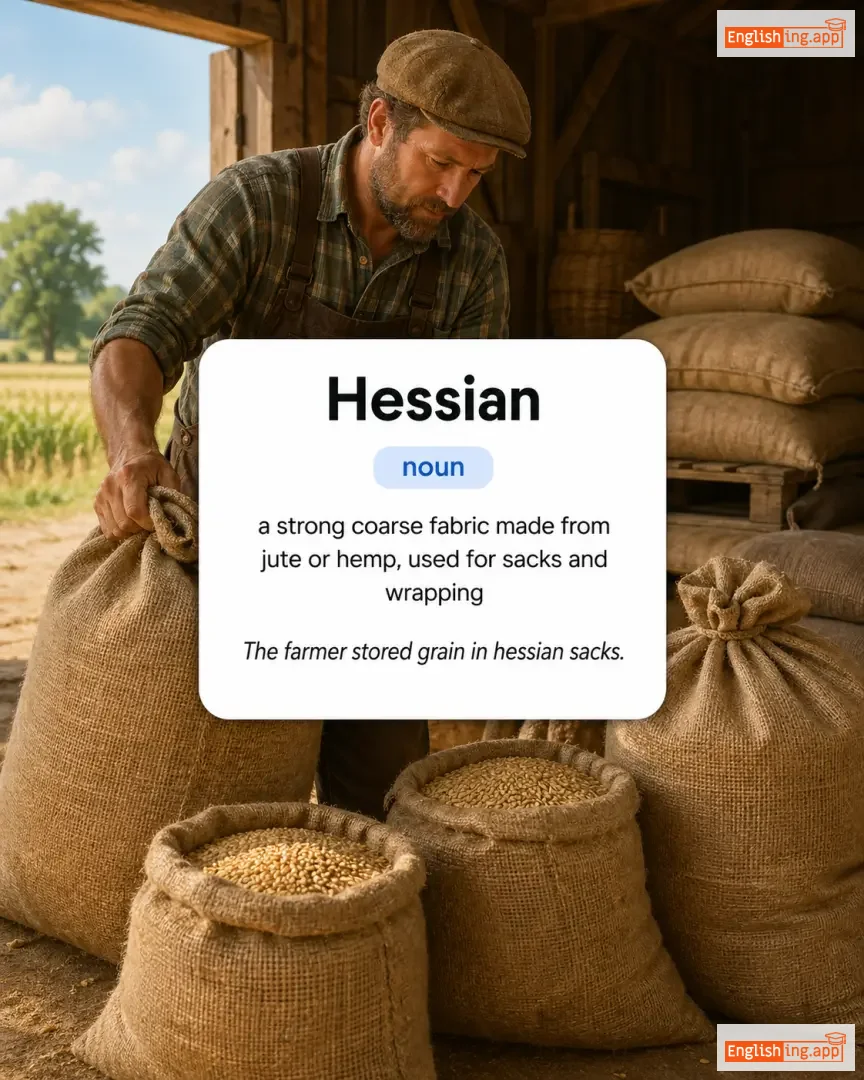
Hessian definition card — visual illustration of the meaning
noun C2
/ˈhɛʃ.ən/
ジュート布 (juuto nuno)

a strong coarse fabric made from jute or hemp, used for sacks and wrapping

"The farmer stored grain in hessian sacks."

"農家はジュート布袋に穀物を保管していました。" (Nouka wa juuto nuno bukuro ni kokumotsu o hokanshite imashita.)
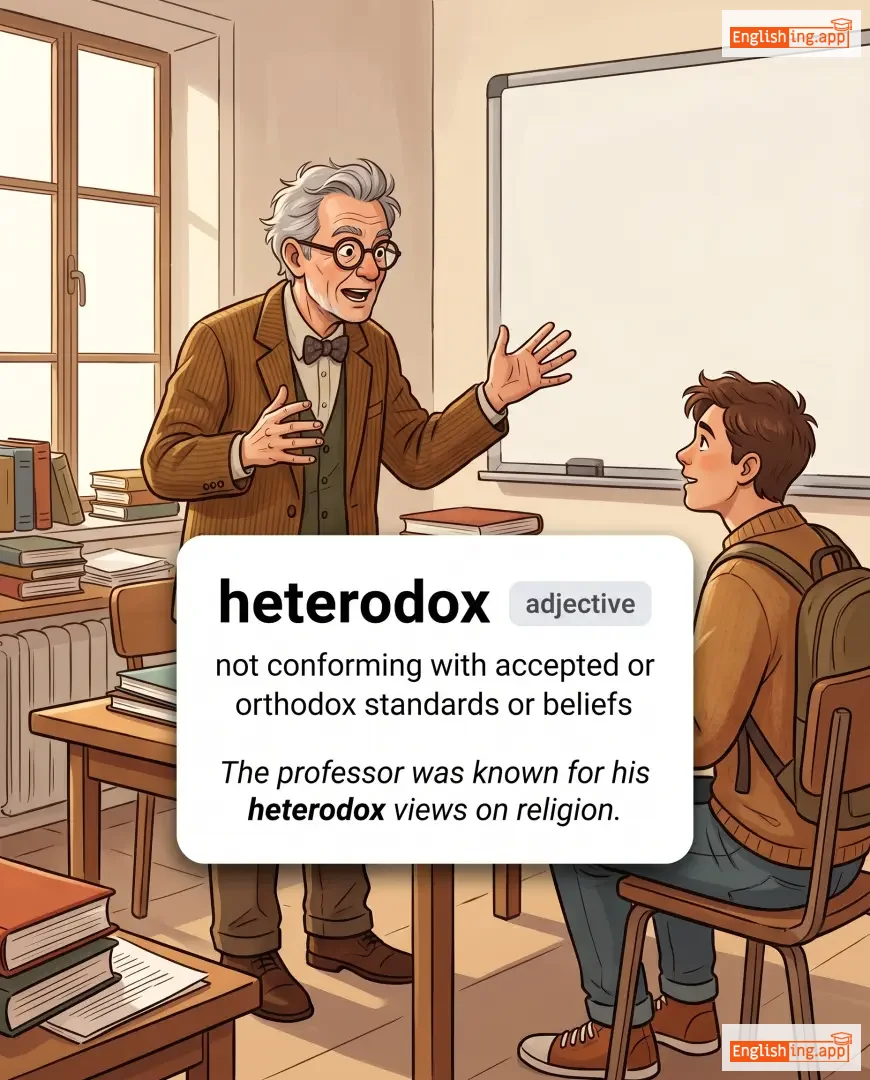
heterodox definition card — visual illustration of the meaning
adjective C2
/ˈhɛtərəˌdɒks/
異端 (idan)

not conforming with accepted or orthodox standards or beliefs

"The professor was known for his heterodox views on religion."

"教授は宗教についての異端的な見解で知られていました。" (Kyōju wa shūkyō ni tsuite no idanteki na kenkai de shirarete imashita.)
noun C2
/ˌhɛtərəʤəˈniːɪti/
異質性 (ishitsusei)

the quality or state of being diverse in character or content

"The cultural heterogeneity of the city makes it vibrant and unique."

"その都市の文化的異質性は、それを活気に満ちたユニークなものにしています。" (Sono toshi no bunkateki ishitsusei wa, sore o kakki ni michita yuniiku na mono ni shiteimasu.)
adjective C2
/ˌhɛtərəʊˈmɔːrfɪk/
異形の (ikei no)

Having different forms or shapes, especially in the same species or organism.

"Butterflies are heteromorphic during their life cycle, changing forms from larva to adult."

"蝶々はそのライフサイクルの中で異形であり、幼虫から成虫に変化します。" (Chōchō wa sono raifusaikuru no naka de ikei de ari, yōchū kara seichū ni henka shimasu.)
heuristic definition card — visual illustration of the meaning
adjective C2
hjʊəˈrɪs.tɪk
ヒューリスティック (hyūrisutikku)

Enabling a person to discover or learn something for themselves; using practical experience rather than theory.

"The scientist used a heuristic approach to solve the problem."

"科学者は問題を解決するためにヒューリスティックアプローチを使用しました。" (Kagakusha wa mondai o kaiketsu suru tame ni hyūrisutikku apurōchi o shiyō shimashita.)
verb C2
/hjuː/
切る (kiru)

To chop or cut something, especially wood or stone, with a tool.

"The workers hewed logs to build the cabin."

"労働者たちは小屋を建てるために丸太を切った。" (Roudoushatachi wa koya o tateru tame ni maruta o kitta.)
adjective C2
/hɛkˈsæŋɡjələr/
六角形の (rokkakukei no)

Having six angles or corners.

"The artist designed a hexangular frame for the mirror."

"アーティストは鏡のために六角形のフレームをデザインしました。" (Ātisuto wa kagami no tame ni rokkakukei no fureemu o dezain shimashita.)
noun C2
/ˈhɛksəˌpɒd/
ヘクサポッド (hekusapoddo)

An insect or other organism with six legs.

"The scientist observed a hexapod crawling on the leaf."

"科学者は葉の上を這うヘクサポッドを観察しました。" (Kagakusha wa ha no ue o hau hekusapoddo o kansatsu shimashita.)
noun C2
/ˈheɪ.deɪ/
絶頂期; 黄金時代; ピーク時 (zetchouki; ougon jidai; piiku ji)

the period of a person's or thing's greatest success, popularity, or vigor; prime time

"During her heyday as a singer, she performed in sold-out concerts around the world."

"歌手としての絶頂期に、彼女は世界中で完売したコンサートに出演していました。" (Kashu to shite no zetchouki ni, kanojo wa sekaijuu de kanbai shita konsaato ni shutsuen shite imashita.)
❄️

hibernal

adjective C2
/haɪˈbɜːrnəl/

Relating to or occurring in winter.

"The hibernal season is often harsh in the mountains."

adjective/noun C2
/haɪˈbɜːrniən/
アイリッシュ (airisshu)

Relating to Ireland or the Irish.

"He enjoyed reading about Hibernian culture and history."

"彼はハイバーニアン文化と歴史について読むのが好きでした。" (Kare wa haibānian bunka to rekishi ni tsuite yomu no ga suki deshita.)