Vokabulare

Englisches Vokabelwörterbuch | Wortbedeutungen, Definitionen & Beispiele

adjective C2
/ˌdɪskəmˈbɑːbjuleɪtɪd/
смущённый (smushchyonny)

confused and disoriented; feeling unsettled

"She looked discombobulated after hearing the unexpected news."

"Она выглядела смущённой после того, как услышала неожиданные новости." (Ona viglyadela smushchennoy posle togo, kak uslyshala neozhidannye novosti.)
discomfit definition card — visual illustration of the meaning
verb C2
/dɪsˈkʌmfɪt/
смущать (smushchat)

to make someone feel uneasy, embarrassed, or confused

"The interviewer’s tough questions discomfited the candidate."

"Жесткие вопросы интервьюера смутили кандидата." (Zhestkie voprosy interviewera smutili kandidata.)
adjective C2
/dɪsˈkʌmfɪtɪŋ/
неловкий (nelovkiy)

Causing unease, embarrassment, or discomfort.

"His discomfiting questions made everyone shift uncomfortably in their seats."

"Его неловкие вопросы заставили всех неудобно ерзать на своих местах." (ego nelovkie voprosy zastavili vsekh neudobno yerzat' na svoikh mestakh)
verb C2
/ˌdɪskəˈmoʊd/
доставать (dostavat)

To cause inconvenience or trouble to someone.

"I hope my request does not discommode you."

"Надеюсь, мой запрос не вызовет у вас неудобства." (Nadeyus', moy zapros ne vyzovet u vas neudobstva.)
verb C2
/ˌdɪskəmˈpoʊz/
выводить из равновесия (vyvodit iz ravnovesiya)

To disturb the order or calmness of something or someone.

"The unexpected question seemed to discompose her."

"Неожиданный вопрос, похоже, вывел её из равновесия." (Neozhidannyy vopros, pokhozhe, vyvel yeye iz ravnovesiya.)
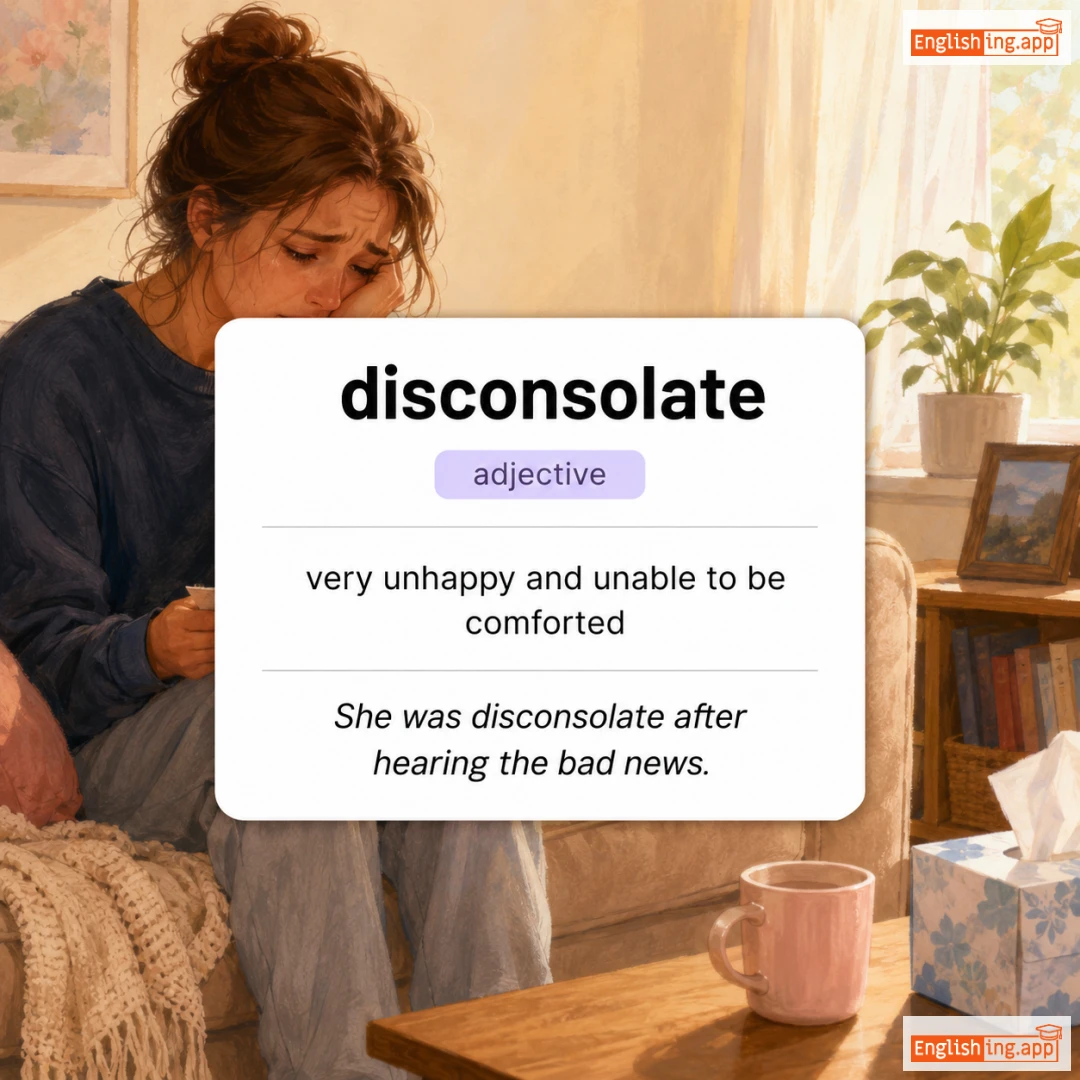
disconsolate definition card — visual illustration of the meaning
adjective C2
/dɪsˈkɒnsələt/
безутешный (bezyteshny)

very unhappy and unable to be comforted

"She was disconsolate after hearing the bad news."

"Она была безутешной после того, как услышала плохие новости." (Ona byla bezyteshnoj posle togo, kak uslyshala plokhie novosti.)
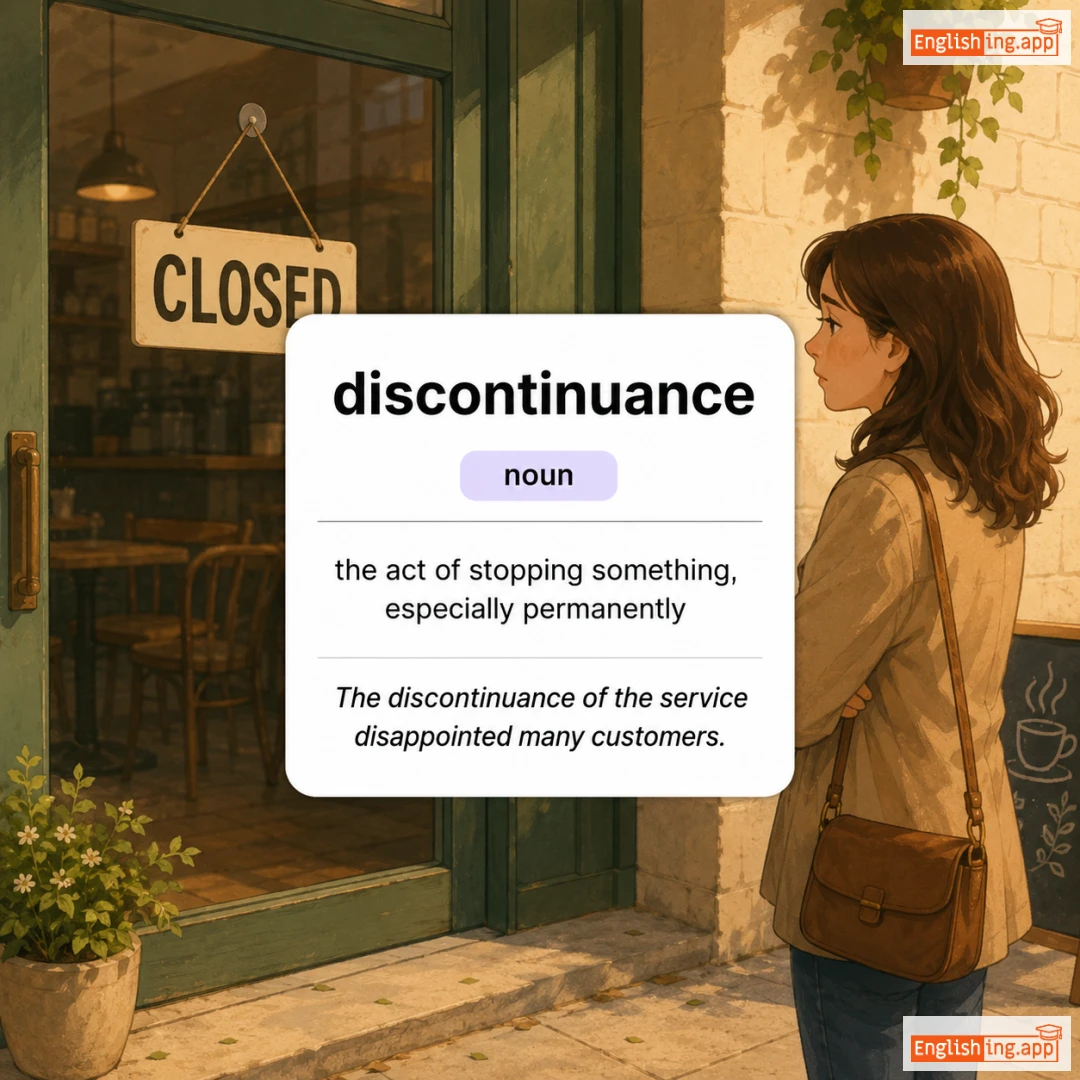
discontinuance definition card — visual illustration of the meaning
noun C2
/ˌdɪskənˈtɪnjʊəns/
прекращение (prekrashchenie)

the act of stopping something, especially permanently

"The discontinuance of the service disappointed many customers."

"Прекращение услуги разочаровало многих клиентов." (Prekrashchenie uslugi razocharovalo mnogikh klientov.)
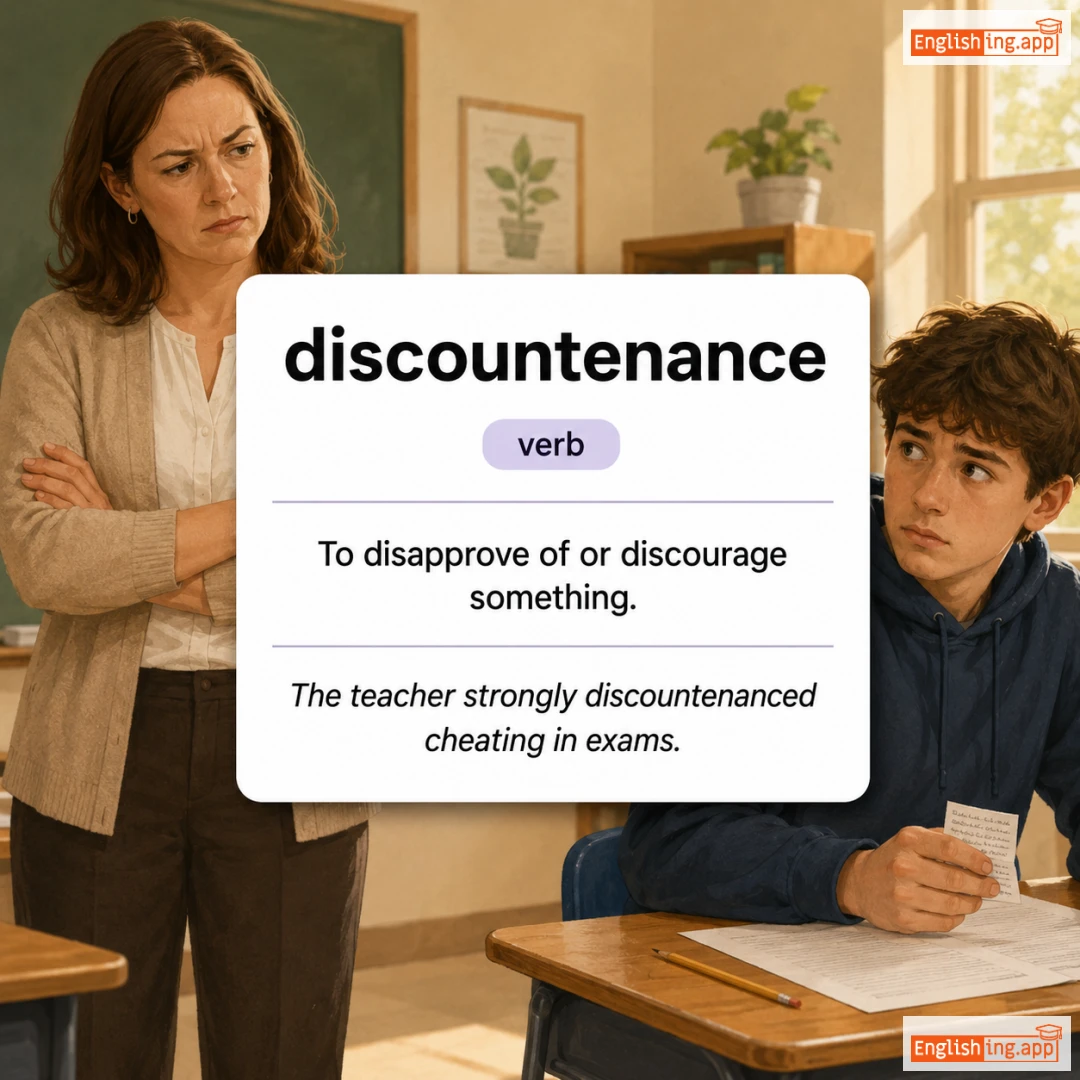
discountenance definition card — visual illustration of the meaning
verb C2
/dɪsˈkaʊntənəns/
осуждать (osuzhdat)

To disapprove of or discourage something.

"The teacher strongly discountenanced cheating in exams."

"Учитель решительно осудил мошенничество на экзаменах." (Uchitel' reshitel'no osudil moshennichestvo na ekzamenakh.)
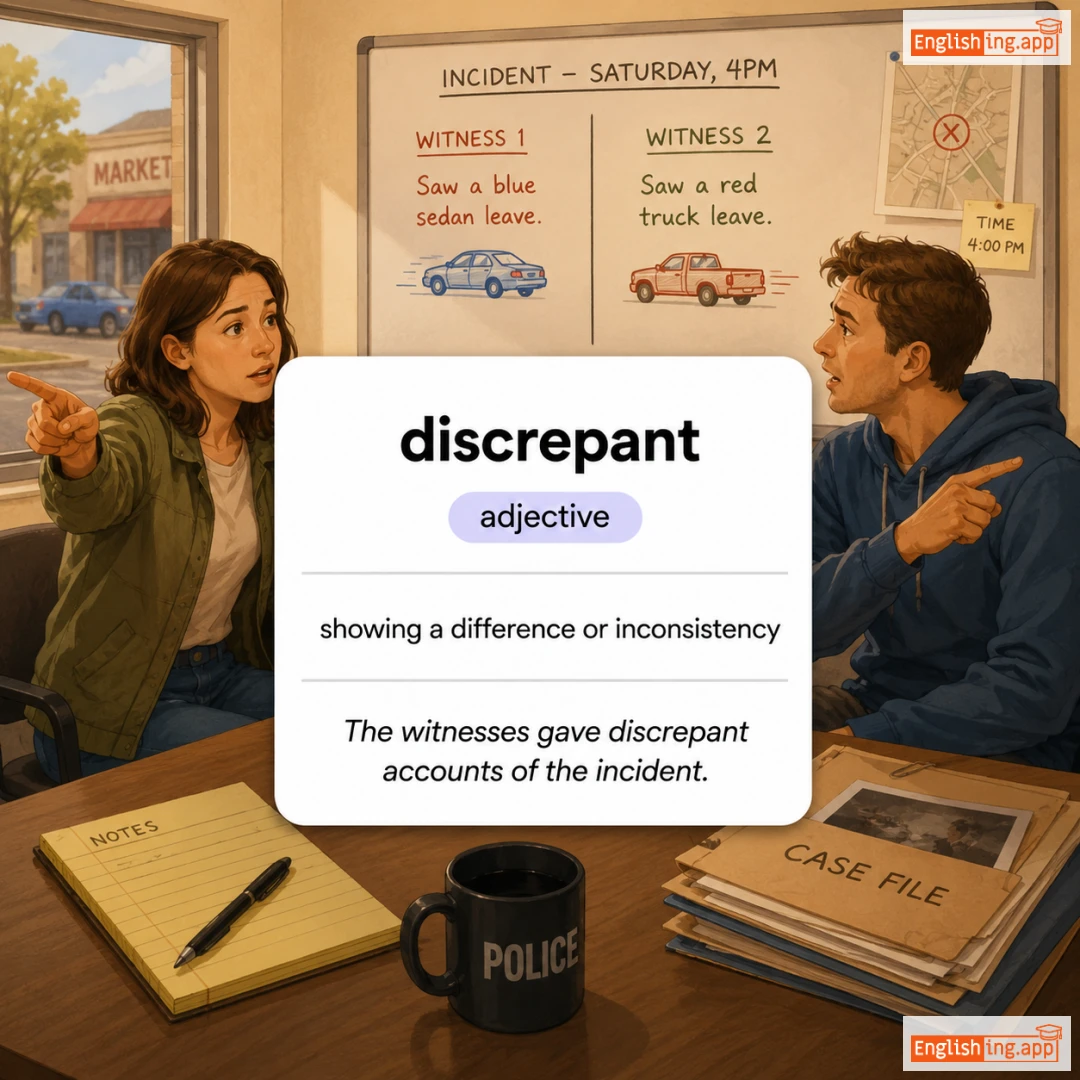
discrepant definition card — visual illustration of the meaning
adjective C2
/dɪˈskrɛpənt/
несоответствующий (nesootvetstvuyushchiy)

showing a difference or inconsistency

"The witnesses gave discrepant accounts of the incident."

"Свидетели дали противоречивые показания об инциденте." (Svideteli dali protivorechivye pokazaniya ob incidentye.)
adjective C2
/dɪsˈkɜrsɪv/
блуждающий (bluzhdayushchiy)

Tending to digress or move from topic to topic; lengthy and rambling.

"His discursive style made the lecture hard to follow."

"Его блуждающий стиль сделал лекцию трудной для восприятия." (Ego bluzhdayushchiy stil' sdelal lektsiyu trudnoy dlya vospriyatiya.)
verb C2
/ˌdɪsɪnˈfræntʃaɪz/
лишать прав (lishat' prav)

To deprive someone of the right to vote or other rights.

"The new law could disenfranchise thousands of voters."

"Новый закон может лишить права голоса тысячи избирателей." (Novyi zakon mozhet lishit' prava golosa tysyachi izbirateley.)
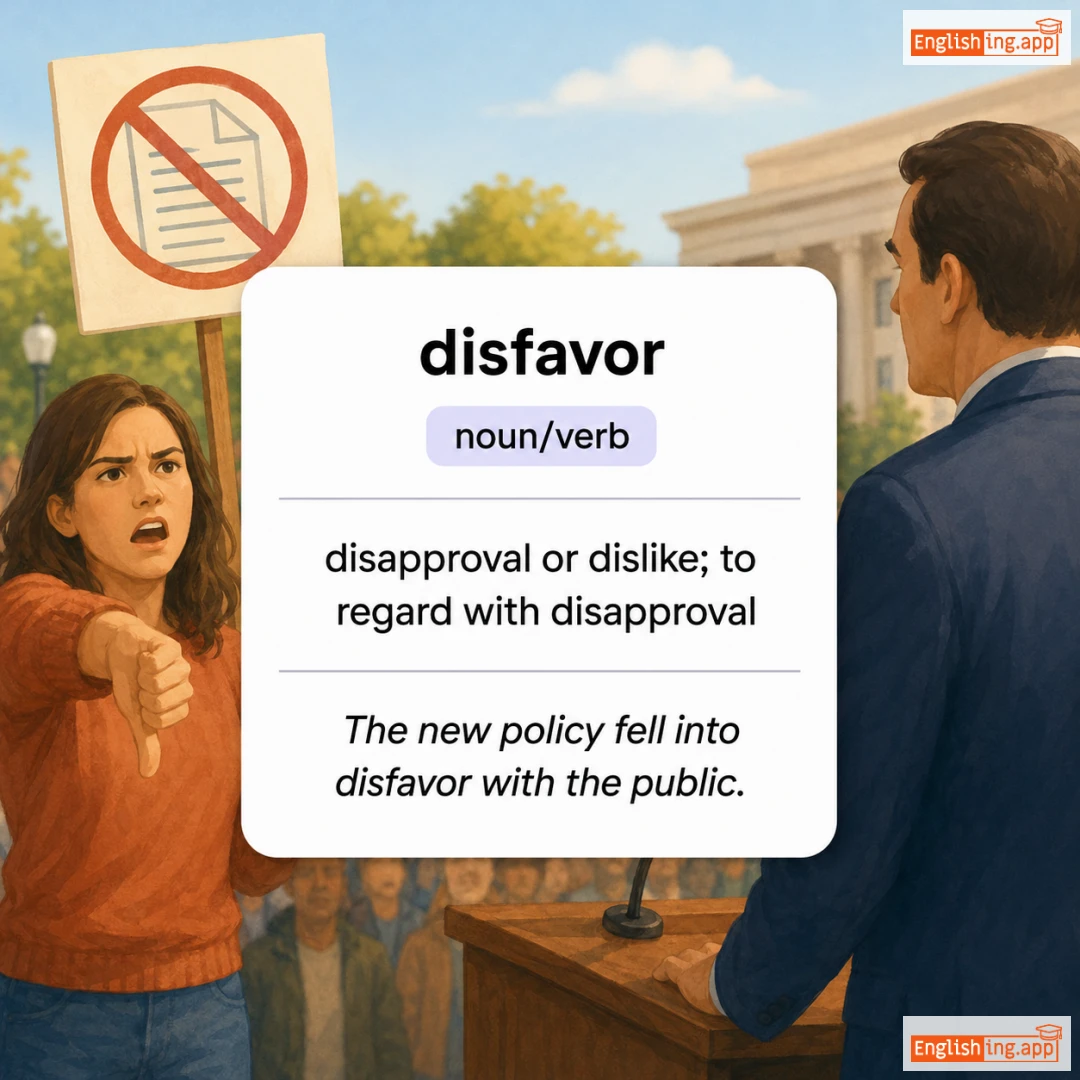
disfavor definition card — visual illustration of the meaning
noun/verb C2
/dɪsˈfeɪvər/
неодобрение / антипатия (neodobrenie / antipatiya)

disapproval or dislike; to regard with disapproval

"The new policy fell into disfavor with the public."

"Новая политика попала в немилость у публики." (Novaya politika popala v nemilost u publiki.)
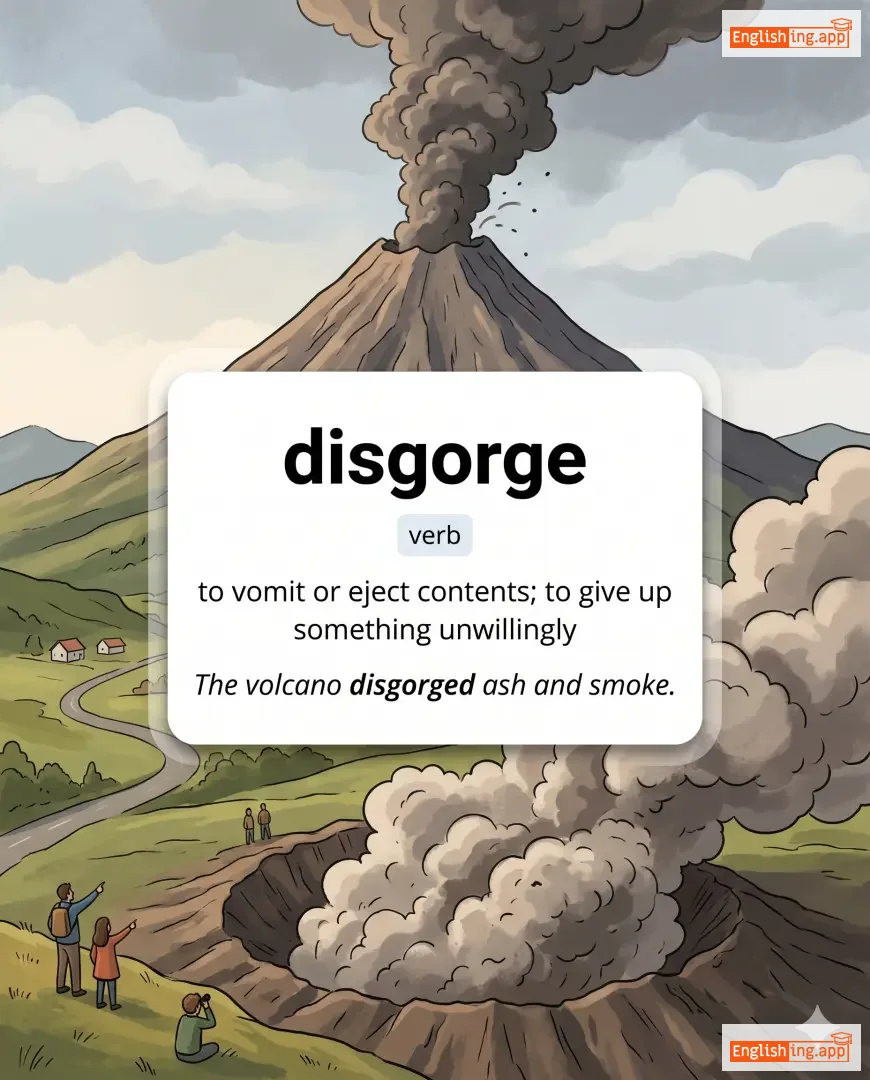
disgorge definition card — visual illustration of the meaning
verb C2
/dɪsˈɡɔrdʒ/
тошнить / извергать с усилием (toshnit / izvergat s usiliem)

to vomit or eject contents; to give up something unwillingly

"The volcano disgorged ash and smoke."

"Вулкан выбросил пепел и дым." (Vulkan vybrosil pepel i dym.)
noun C2
/ˌdɪʃəˈbiːl/
небрежно одетый (nebrezhno odettyy)

The state of being only partly or loosely dressed; casual or careless attire.

"She answered the door in a state of dishabille, wearing just a robe."

"Она открыла дверь в состоянии небрежно одетой, в одной только пижаме." (Ona otkryla dver v sostoyanii nebrezhno odetoy, v odnoi tol'ko pizhamie.)
noun C2
/ˌdɪsɪnklɪˈneɪʃən/
нежелание (nezhelanie)

a lack of willingness or desire to do something

"She showed a clear disinclination to join the meeting."

"Она проявила явное нежелание присоединиться к встрече." (Ona proyavila yavnoe nezelanie prisoyedinitsya k vstreche.)
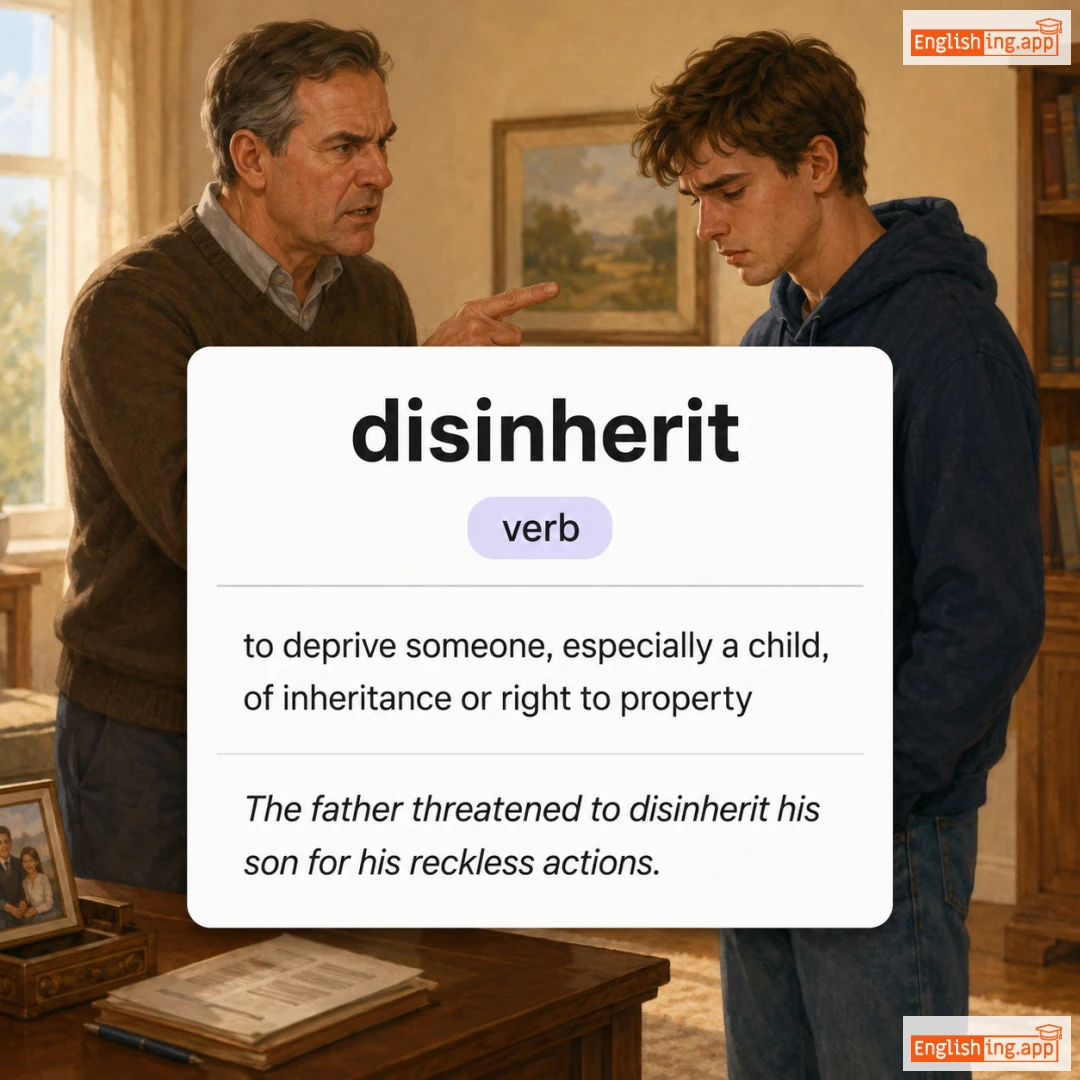
disinherit definition card — visual illustration of the meaning
verb C2
/ˌdɪsɪnˈhɛrɪt/
лишить наследства (lishit nasledstva)

to deprive someone, especially a child, of inheritance or right to property

"The father threatened to disinherit his son for his reckless actions."

"Отец пригрозил лишить своего сына наследства за его безрассудные поступки." (Otets prigrozil lishit svoego syna nasledstva za ego bezrassudnye postupki.)
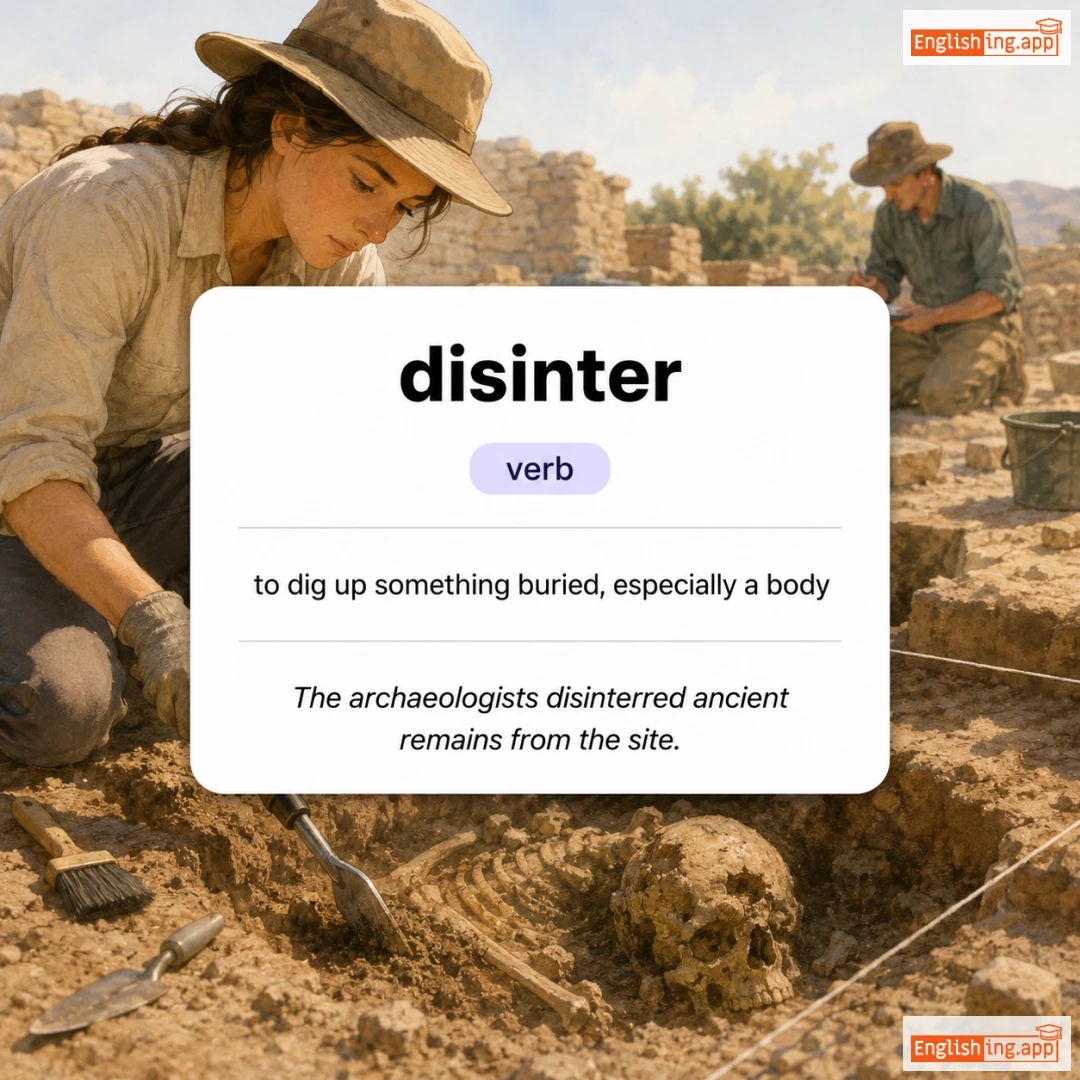
disinter definition card — visual illustration of the meaning
verb C2
/ˌdɪsɪnˈtɜːr/
выкапывать (vykapivat)

to dig up something buried, especially a body

"The archaeologists disinterred ancient remains from the site."

"Археологи выкапывали древние останки с этого места." (Arheologi vykapivali drevnie ostanki s etogo mesta.)
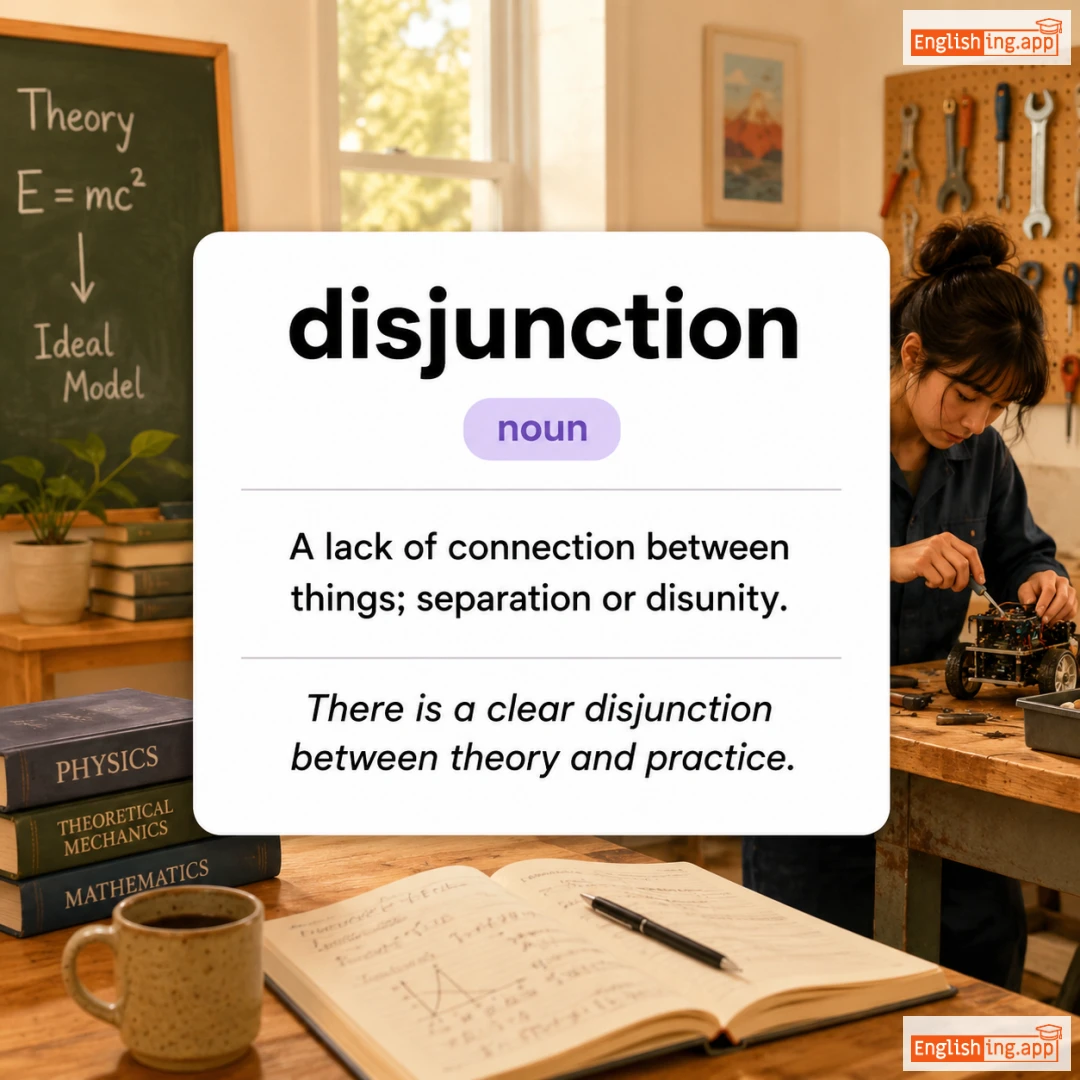
disjunction definition card — visual illustration of the meaning
noun C2
/dɪsˈdʒʌŋkʃən/
разделение (razdelenie)

A lack of connection between things; separation or disunity.

"There is a clear disjunction between theory and practice."

"Есть явное разделение между теорией и практикой." (Yest' yavnoe razdelenie mezhdu teoriey i praktikoy.)
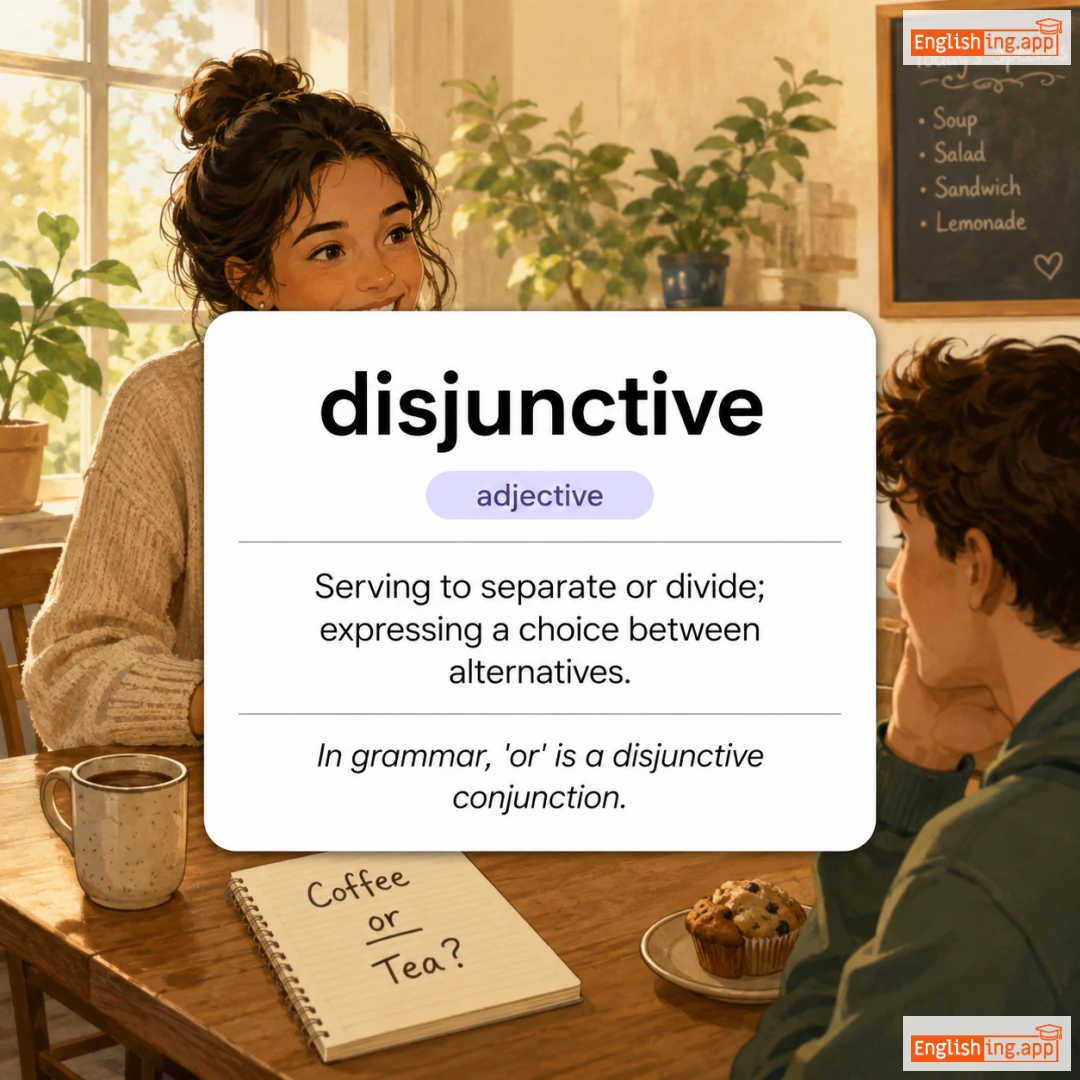
disjunctive definition card — visual illustration of the meaning
adjective C2
/dɪsˈdʒʌŋktɪv/
дисъюнктивный (disyunktivnyy)

Serving to separate or divide; expressing a choice between alternatives.

"In grammar, 'or' is a disjunctive conjunction."

"В грамматике 'или' — это дисъюнктивное соединение." (V grammatike 'ili' — eto disyunktivnoe soedinenie.)
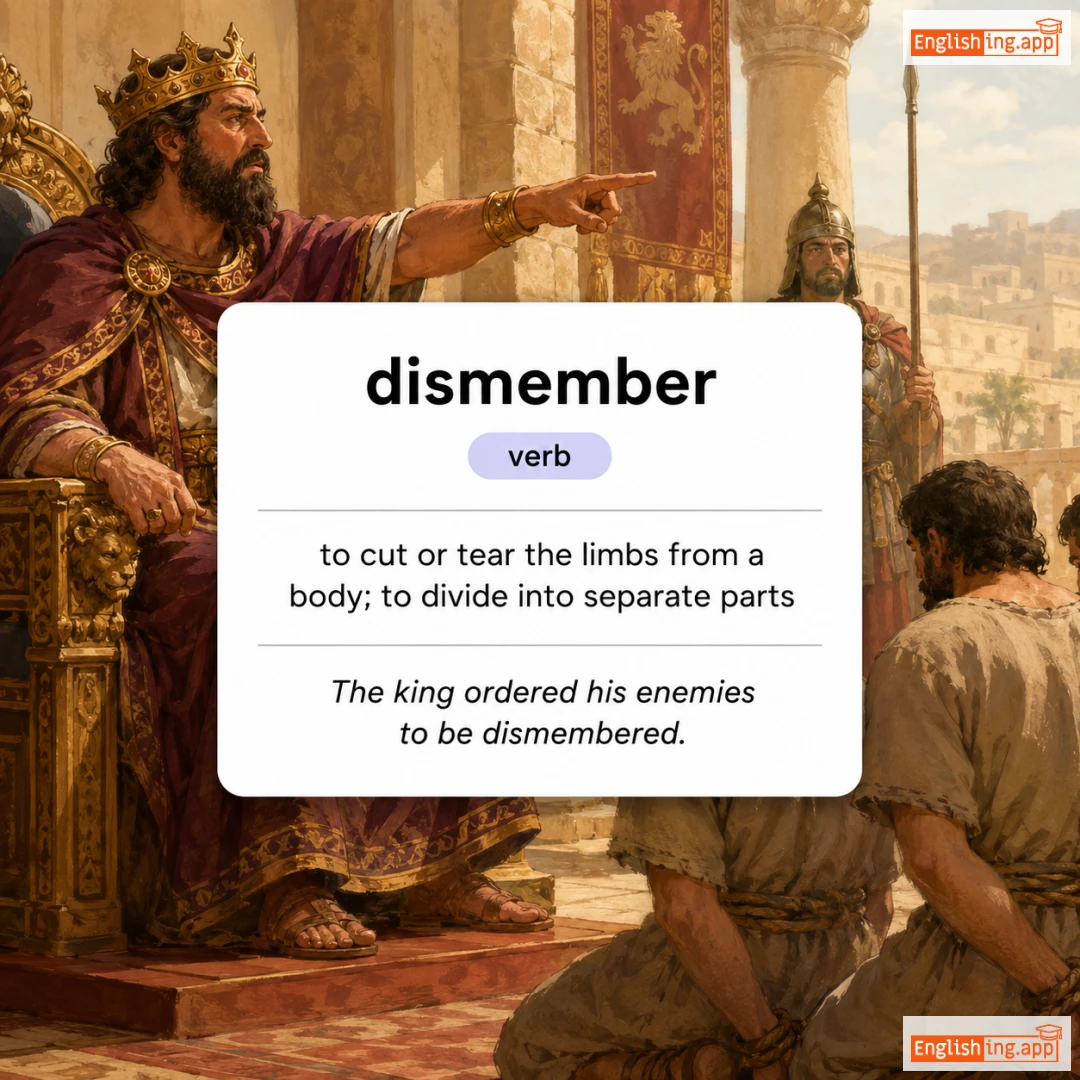
dismember definition card — visual illustration of the meaning
verb C2
/dɪsˈmɛmbər/
разрубить (razrubit)

to cut or tear the limbs from a body; to divide into separate parts

"The king ordered his enemies to be dismembered."

"Король приказал разорвать своих врагов на части." (Korol' prikazal razorvat' svoikh vragov na chasti.)
verb C2
/dɪsˈpɔːrt/
развлекаться (razvlekat'sya)

To amuse oneself in a lively or playful way.

"The children disported themselves in the garden."

"Дети развлекались в саду." (Deti razvlekalis' v sadu.)
verb C2
/ˌdɪspəˈzɛs/
лишать (lishat)

to deprive someone of land, property, or other possessions

"The new law threatened to dispossess many farmers of their land."

"Новый закон угрожал лишить многих фермеров их земли." (Novyy zakon ugruzhal lishit mnogikh fermerov ikh zemli.)
noun C2
/ˌdɪsprəˈpɔːrʃən/
диспропорция (disproportsiya)

a lack of balance or symmetry; an inequality

"There is a clear disproportion between rich and poor in many societies."

"Существует явная диспропорция между богатыми и бедными в различных обществах." (Sushchestvuyet yavnyaya disproportsiya mezhdu bogatymi i bednymi v razlichnykh obshchestvakh.)
adjective C2
/dɪˈspjuːtəbl/
спорный; сомнительный (spornyj; somnitel'nyj)

open to debate or argument; questionable

"The facts in the case are disputable and need further investigation."

"Факты в деле спорны и требуют дополнительного расследования." (Fakty v dele sporny i trebuyut dopolnitel'nogo rassledovaniya.)
noun C2
/ˌdɪspjuːˈteɪʃən/
дискуссия (diskussiya)

a formal debate or argument

"The disputation between the two scholars lasted for hours."

"Дискуссия между двумя учеными продолжалась несколько часов." (Diskussiya mezhdu dvumya uchenymi prodolzhalas' neskol'ko chasov.)
adjective C2
/ˌdɪspjuːˈteɪʃəs/
спорщик (sporschik)

fond of or given to argument and debate

"His disputatious nature often led to heated conversations."

"Его спорный характер часто приводил к горячим дискуссиям." (Yego spornyy kharakter chasto privodil k goryachim diskussiyam.)
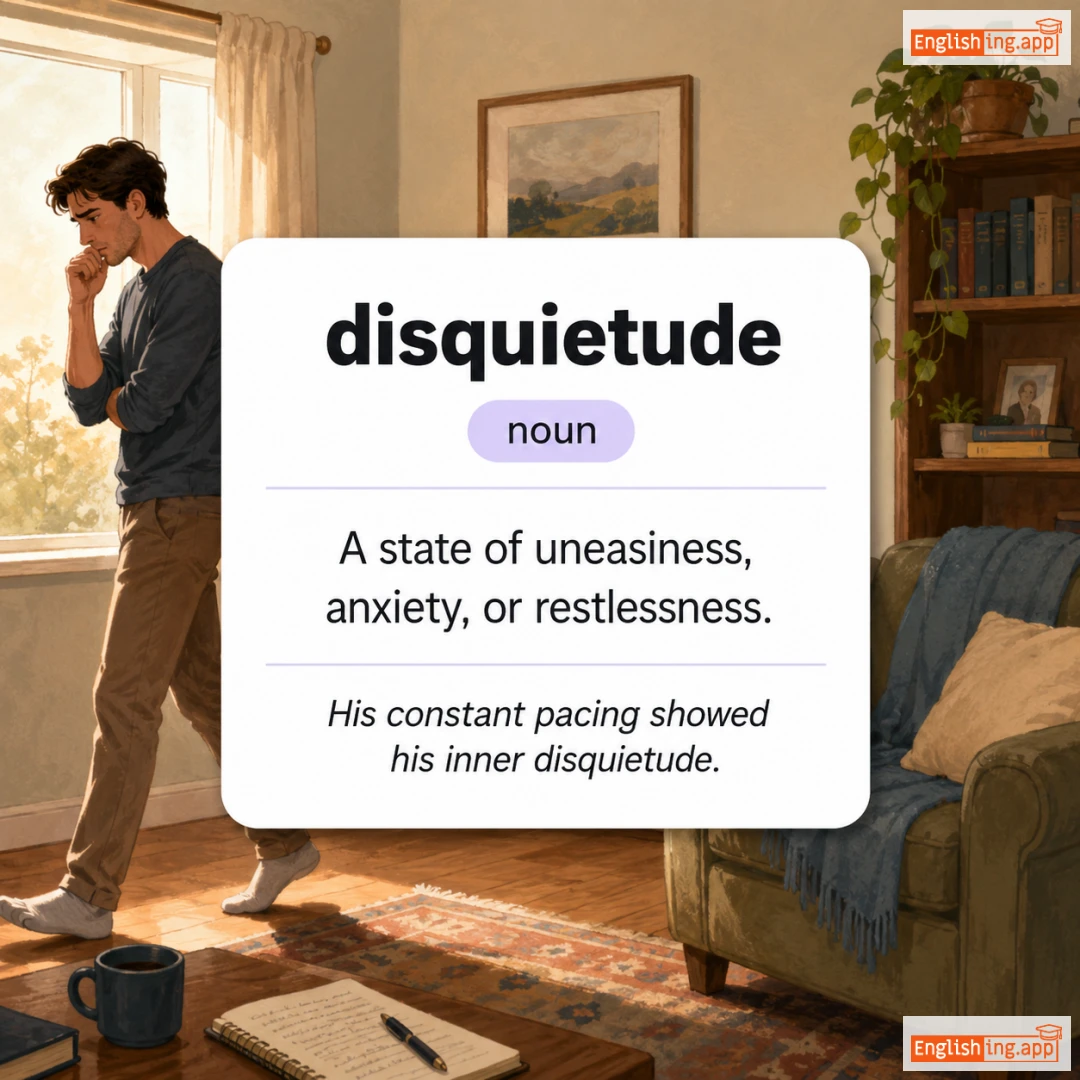
disquietude definition card — visual illustration of the meaning
noun C2
/dɪsˈkwaɪɪtjuːd/
беспокойство (diskvaytyud)

A state of uneasiness, anxiety, or restlessness.

"His constant pacing showed his inner disquietude."

"Его постоянное шагание показывало его внутреннее беспокойство." (Ego postoyannoe shaganie pokazyvalo ego vnutrennee bespokoystvo.)
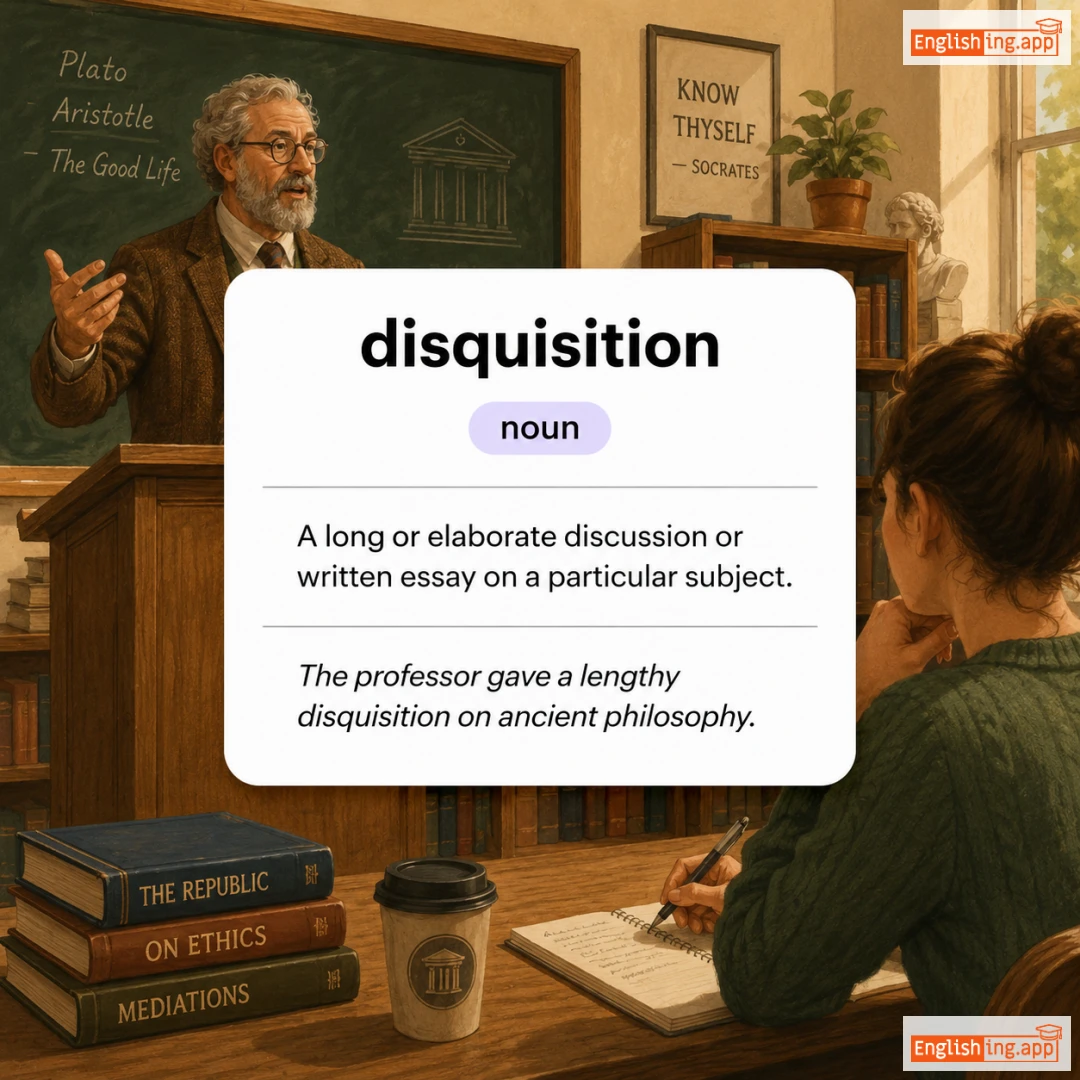
disquisition definition card — visual illustration of the meaning
noun C2
/ˌdɪskwɪˈzɪʃən/
дискуссия (diskussiya)

A long or elaborate discussion or written essay on a particular subject.

"The professor gave a lengthy disquisition on ancient philosophy."

"Профессор прочитал долгую дискуссию по древней философии." (Professor prochital dolguyu diskussiyu po drevney filosofii.)
noun C2
/ˌdɪsrɪˈpjuːt/
дурная слава (durnaya slava)

the state of being held in low esteem or having a bad reputation

"The scandal brought the politician into disrepute."

"Скандал привел политика к дурной славе." (Skandal privel politika k durnoy slave.)
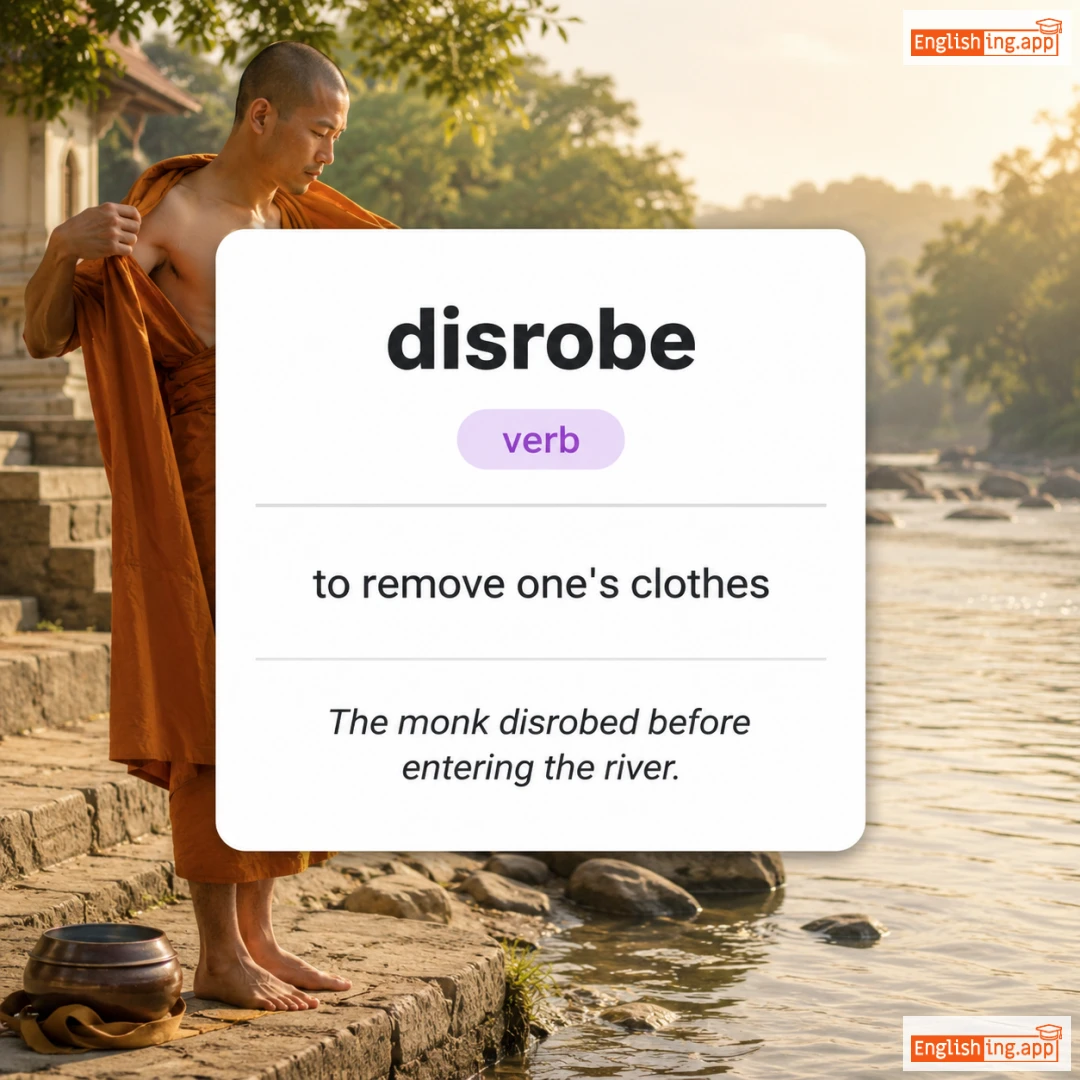
disrobe definition card — visual illustration of the meaning
verb C2
/dɪsˈroʊb/
раздеваться (razdevat'sya)

to remove one's clothes

"The monk disrobed before entering the river."

"Монах раздевается перед тем, как войти в реку." (Monakh razdevayetsya pered tem, kak voiti v reku.)
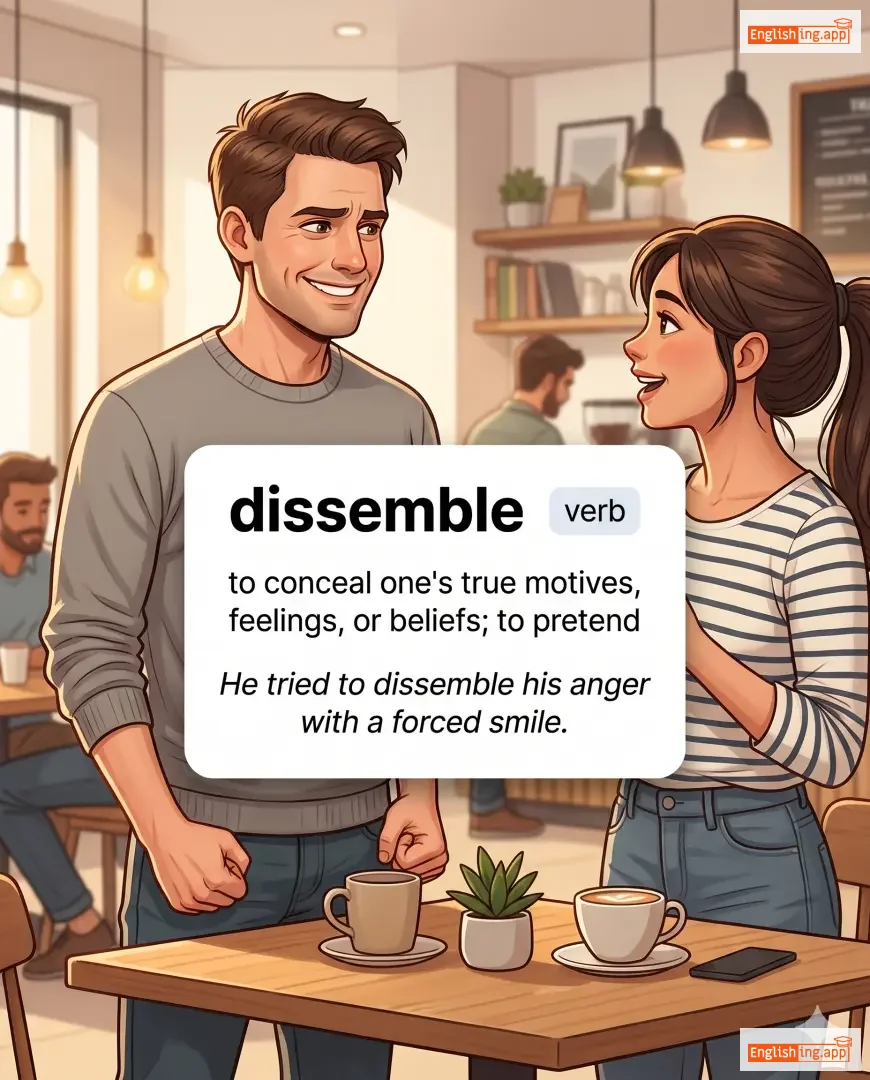
dissemble definition card — visual illustration of the meaning
verb C2
/dɪˈsɛmbəl/
притворяться (pritvoryatsya)

to conceal one's true motives, feelings, or beliefs; to pretend

"He tried to dissemble his anger with a forced smile."

"Он пытался скрыть свой гнев с помощью натянутой улыбки." (On pytalsya skryt' svoi gnev s pomoshch'yu natyanutoy ulybki.)
noun C2
/dɪˈsɛmbələr/
лицемер (litsemer)

a person who conceals their real feelings or intentions; a hypocrite or pretender

"The politician was accused of being a dissembler who never revealed his true plans."

"Политик был обвинен в том, что он был лицемером, который никогда не раскрывал свои настоящие планы." (Politik byl obvinen v tom, chto on byl litsemerom, kotoryi nikogda ne raskryval svoi nastoyashchie plany.)
noun C2
/dɪˈsɛnʃən/
разногласие (raznoglasiya)

Strong disagreement or difference of opinion, especially leading to discord within a group.

"The meeting ended in dissension among the committee members."

"Встреча закончилась разногласием среди членов комитета." (Vstrecha zakonchilas' raznoglasiyaem sredi chlenov komiteta.)
adjective C2
/dɪˈsɛnʃənt/
диссидент (dissident)

Expressing or holding opinions that are opposed to the majority or official view.

"Only a few dissentient voices were heard during the debate."

"Только несколько диссидентских голосов были слышны во время дебатов." (Tol'ko neskol'ko dissidentskikh golosov byli slyshny vo vremya debatov.)
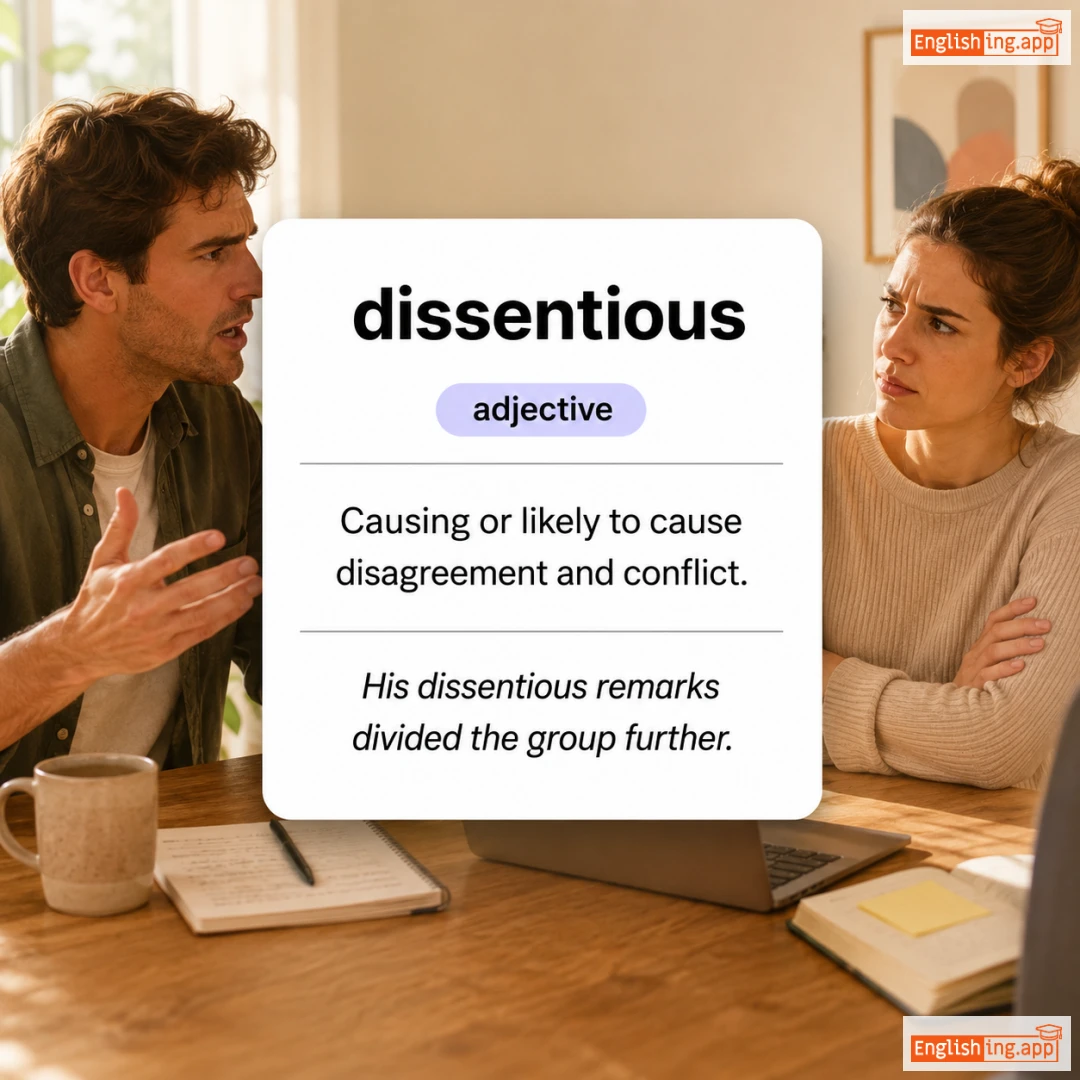
dissentious definition card — visual illustration of the meaning
adjective C2
/dɪˈsɛnʃəs/
разделяющий (razdelyayushchiy)

Causing or likely to cause disagreement and conflict.

"His dissentious remarks divided the group further."

"Его разделяющие замечания еще больше разделили группу." (Ego razdelyayushchie zamechaniya yeshchyo bol'she razdeli gruppu.)
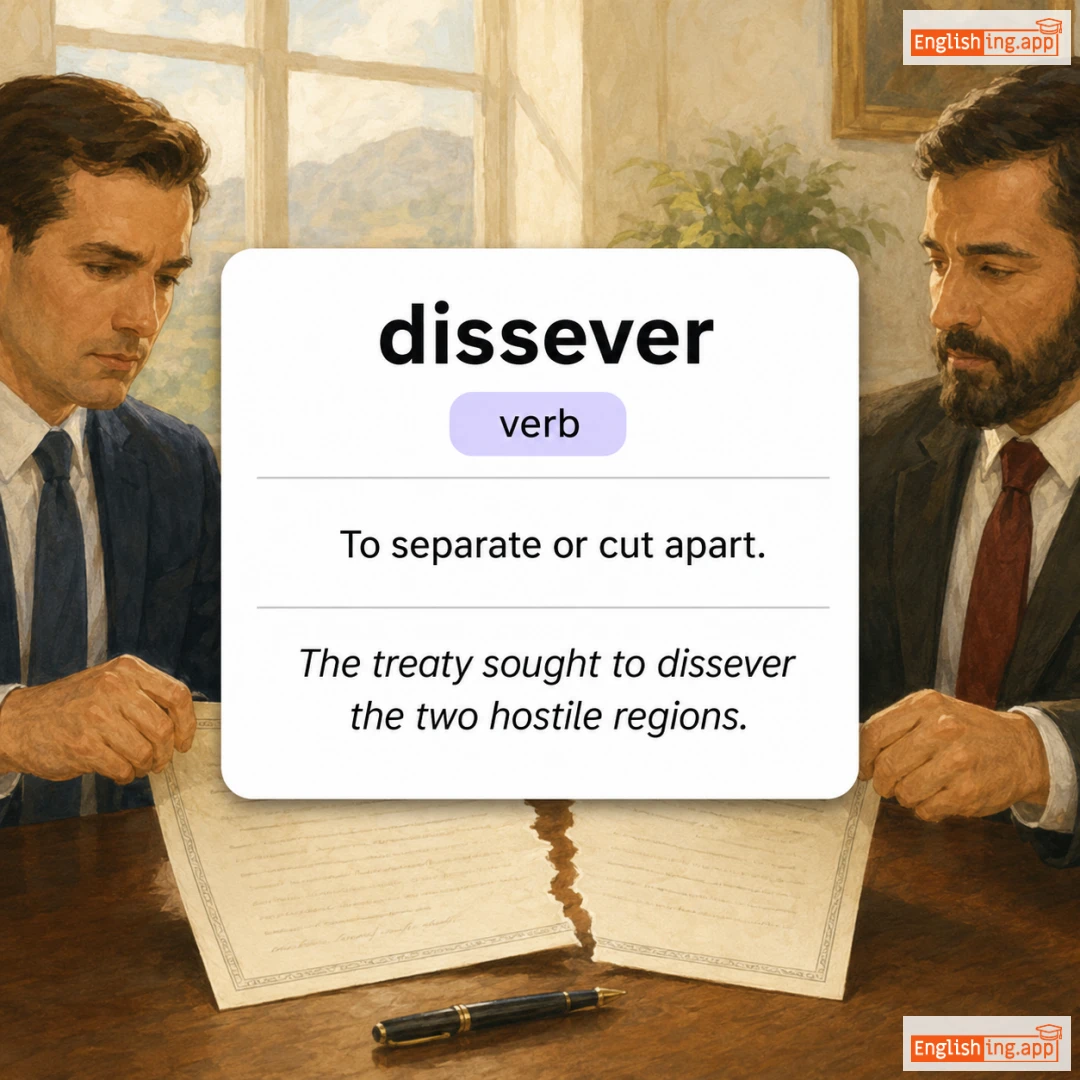
dissever definition card — visual illustration of the meaning
verb C2
/dɪˈsɛvər/
разделять (razdelyat')

To separate or cut apart.

"The treaty sought to dissever the two hostile regions."

"Договор попытался разделить две враждующие области." (Dogovor popytalsya razdelit' dve vrazhdushchiesya oblasti.)
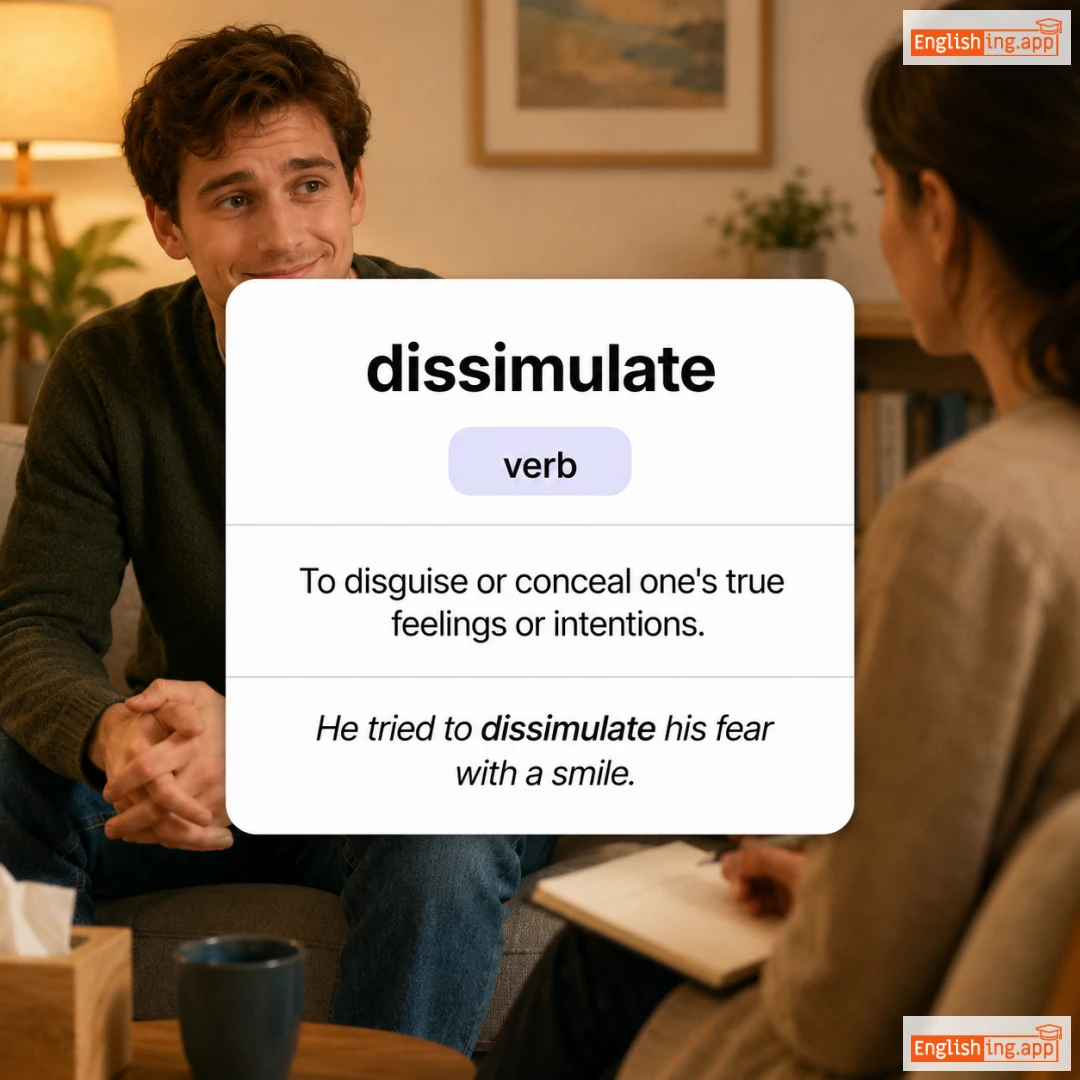
dissimulate definition card — visual illustration of the meaning
verb C2
/dɪˈsɪmjʊˌleɪt/
скрывать (skryvat)

To disguise or conceal one's true feelings or intentions.

"He tried to dissimulate his fear with a smile."

"Он попытался скрыть свой страх улыбкой." (On popytalsya skryt svoi strakh ulybkoy.)
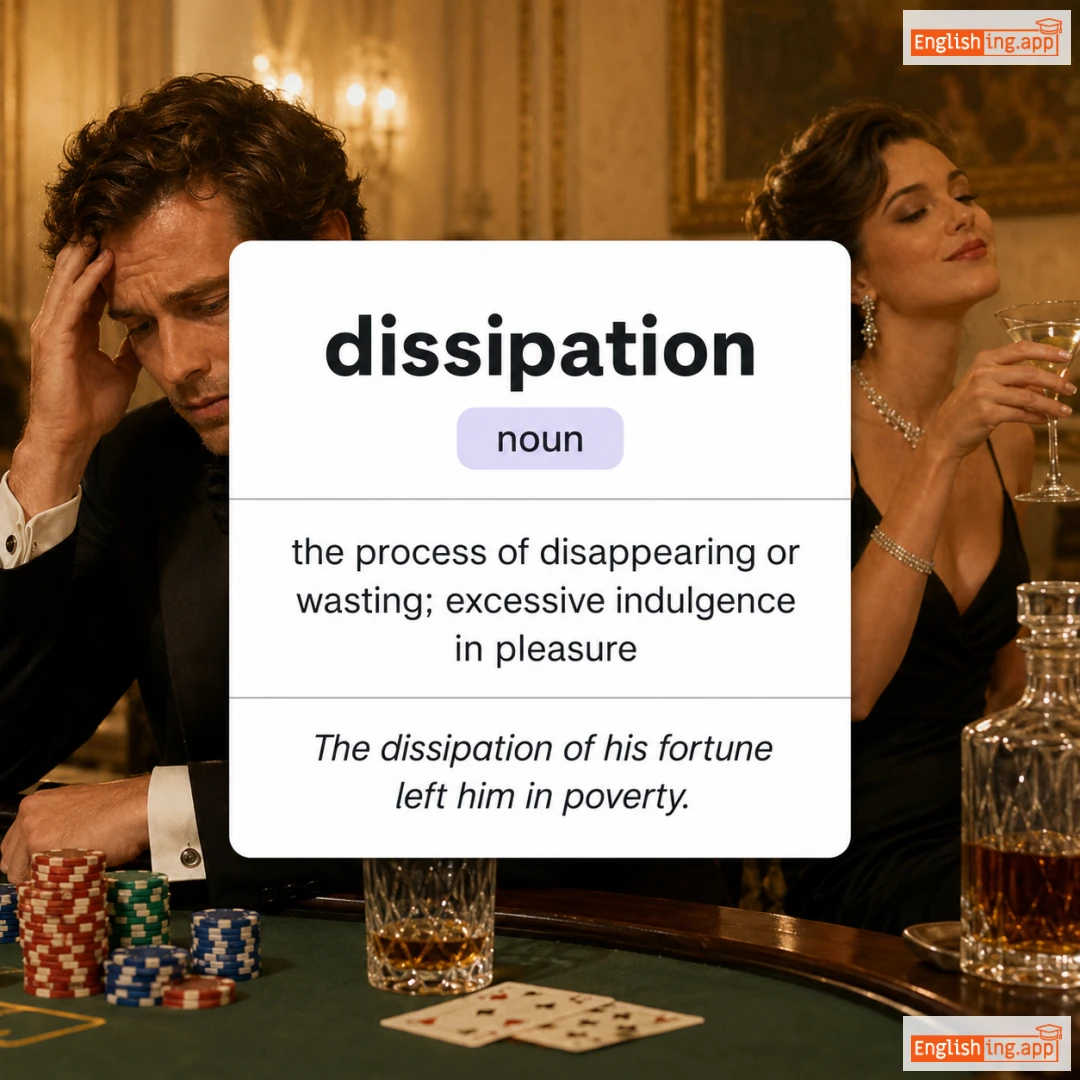
dissipation definition card — visual illustration of the meaning
noun C2
/ˌdɪsɪˈpeɪʃən/
расточительство (rastochitel'stvo)

the process of disappearing or wasting; excessive indulgence in pleasure

"The dissipation of his fortune left him in poverty."

"Расточительство его состояния привело его к бедности." (Rastochitel'stvo yego sostoyaniya privedlo yego k bednosti.)
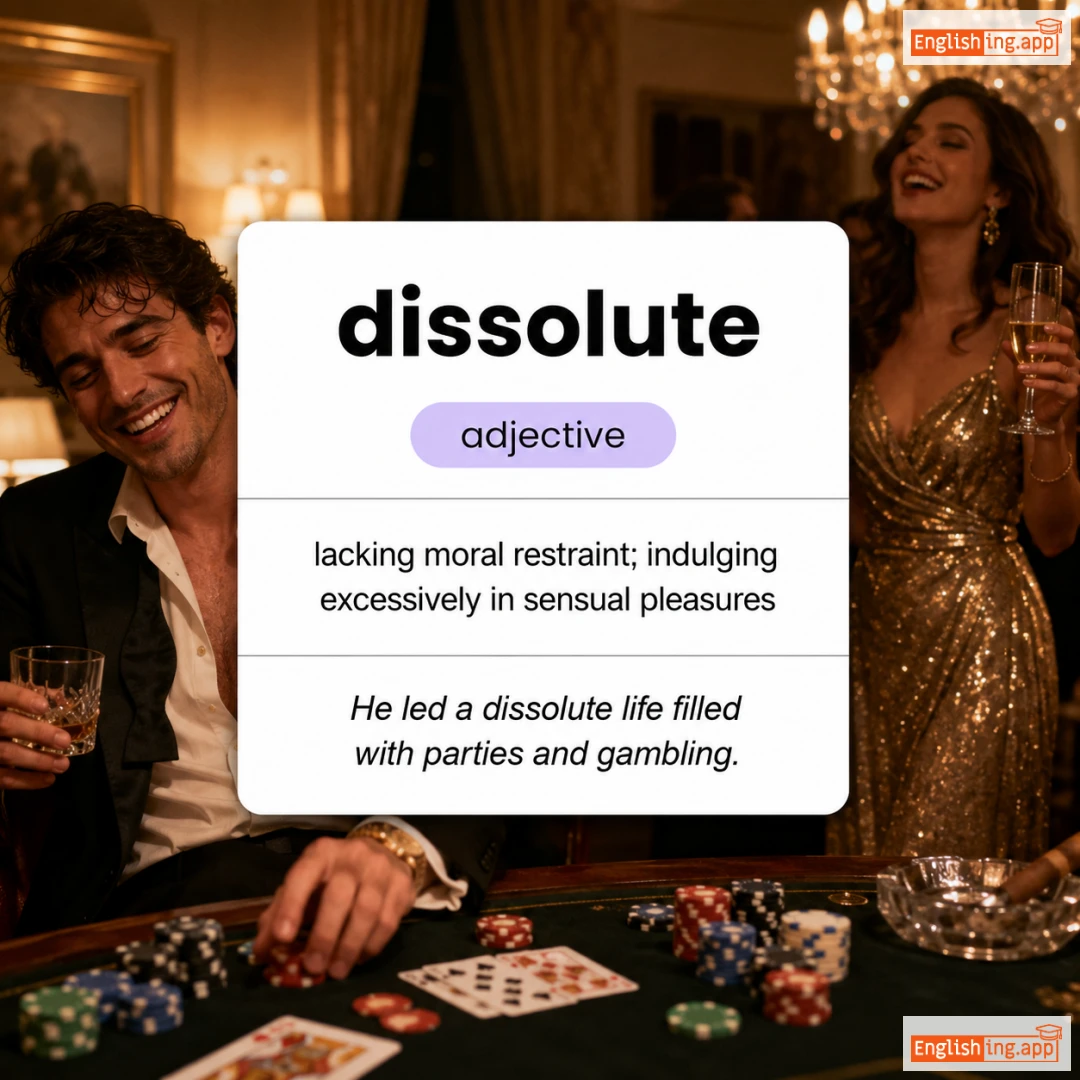
dissolute definition card — visual illustration of the meaning
adjective C2
/ˈdɪsəluːt/
распутный (rasputny)

lacking moral restraint; indulging excessively in sensual pleasures

"He led a dissolute life filled with parties and gambling."

"Он вел распутную жизнь, наполненную вечеринками и азартными играми." (On vel rasputnuyu zhizn', napolnennuyu vecherinkami i azartnymi igrami.)
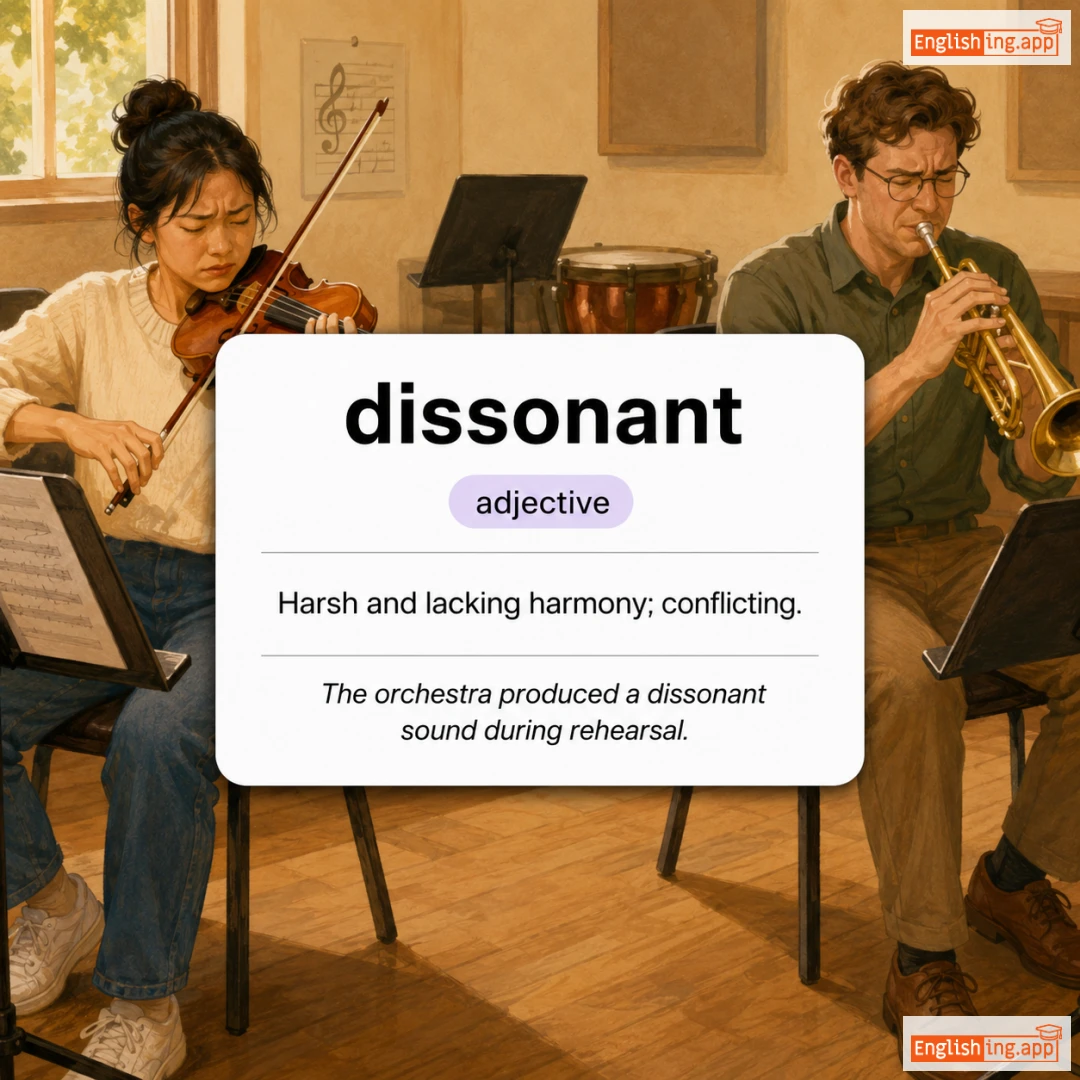
dissonant definition card — visual illustration of the meaning
adjective C2
/ˈdɪsənənt/
диссонансный (dissonansny)

Harsh and lacking harmony; conflicting.

"The orchestra produced a dissonant sound during rehearsal."

"Оркестр создал диссонантный звук во время репетиции." (Orkestr sozdal dissonantnyj zvuk vo vremya repetitsii.)
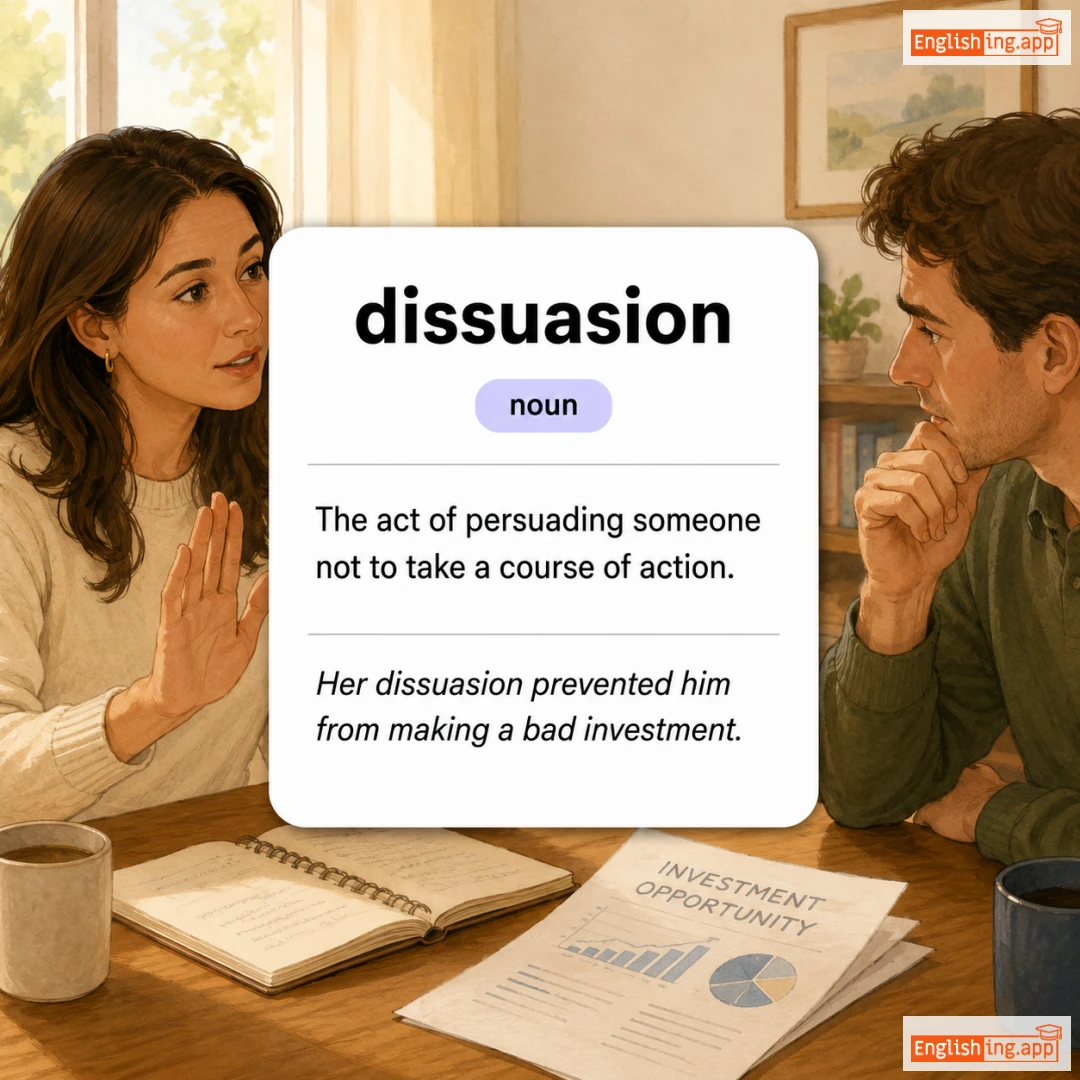
dissuasion definition card — visual illustration of the meaning
noun C2
/dɪˈsweɪʒən/
отговорка (otgovorka)

The act of persuading someone not to take a course of action.

"Her dissuasion prevented him from making a bad investment."

"Его отговорка предотвратила его от плохой инвестиции." (Ego otgovorka predotvratila ego ot plokhoy investitsii.)
noun/adjective C2
/ˈdɪstæf/
связанный с женщинами, материнская сторона (svyazannyy s zhenshchinami, materinskaya storona)

Relating to women or the maternal side of a family; also a tool for spinning thread.

"She came from the distaff side of a noble family."

"Она происходила с материнской стороны благородной семьи." (Ona proiskhodila s materinskoy storony blagorodnoy sem'i.)
verb C2
/dɪsˈteɪn/
презирать (prezirat)

to treat with scorn or contempt (archaic form of disdain)

"He would never distain those who had less fortune than him."

"Он никогда не презирал тех, кто был менее удачлив, чем он." (On nikogda ne preziral tekh, kto byl meneye udachliv, chem on.)
adjective C2
/ˈdɪstəl/
дистальный (distal'nyy)

situated away from the center of the body or from the point of attachment

"The doctor examined the distal end of the patient’s arm."

"Доктор осмотрел дистальный конец руки пациента." (Doktor osmotrel distal'nyy konets ruki patsiyenta.)
noun C2
/dɪsˈtɛmpər/
вирусное заболевание, поражающее животных, особенно собак (virusnoe zabolevanie, porazhayushchee zhivotnykh, osobenno sobak)

a viral disease affecting animals, especially dogs; also refers to a state of disorder

"The dog was diagnosed with distemper and needed immediate care."

"Собака была диагностирована с дистемпером и нуждалась в немедленной помощи." (Sobaka byla diagnostirovana s distemperom i nuzhdalas' v nemedlennoy pomoshchi.)
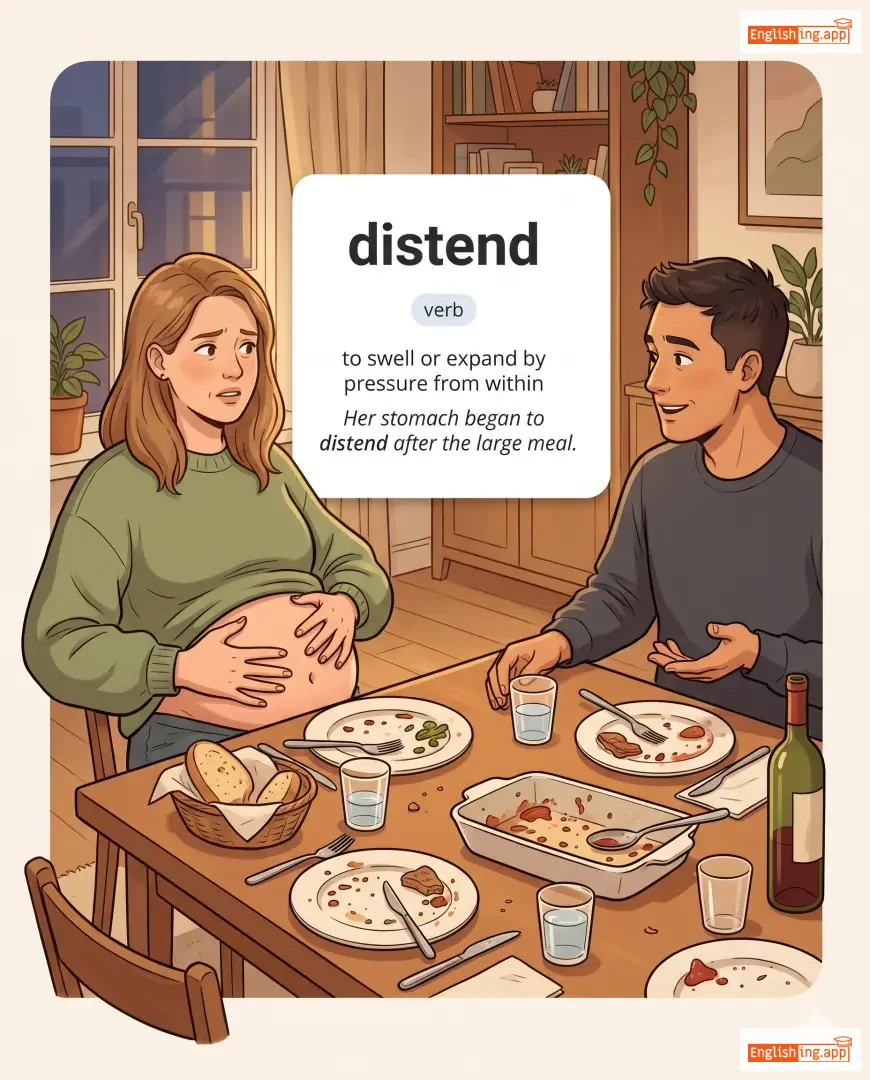
distend definition card — visual illustration of the meaning
verb C2
/dɪsˈtɛnd/
вздуваться (vzdavatsya)

to swell or expand by pressure from within

"Her stomach began to distend after the large meal."

"Ее живот начал вздуваться после большого обеда." (Eyo zhivot nachal vzdavatsya posle bol'shogo obeda.)
adjective C2
/dɪˈstɛnsəbl̩/
растяжимый (rastyazhimyy)

Capable of being stretched or expanded.

"The stomach is a distensible organ that can expand after eating."

"Желудок — это растяжимый орган, который может расширяться после еды." (Zheludok — eto rastyazhimyy organ, kotoryy mozhet rasshiryat'sya posle yedy.)
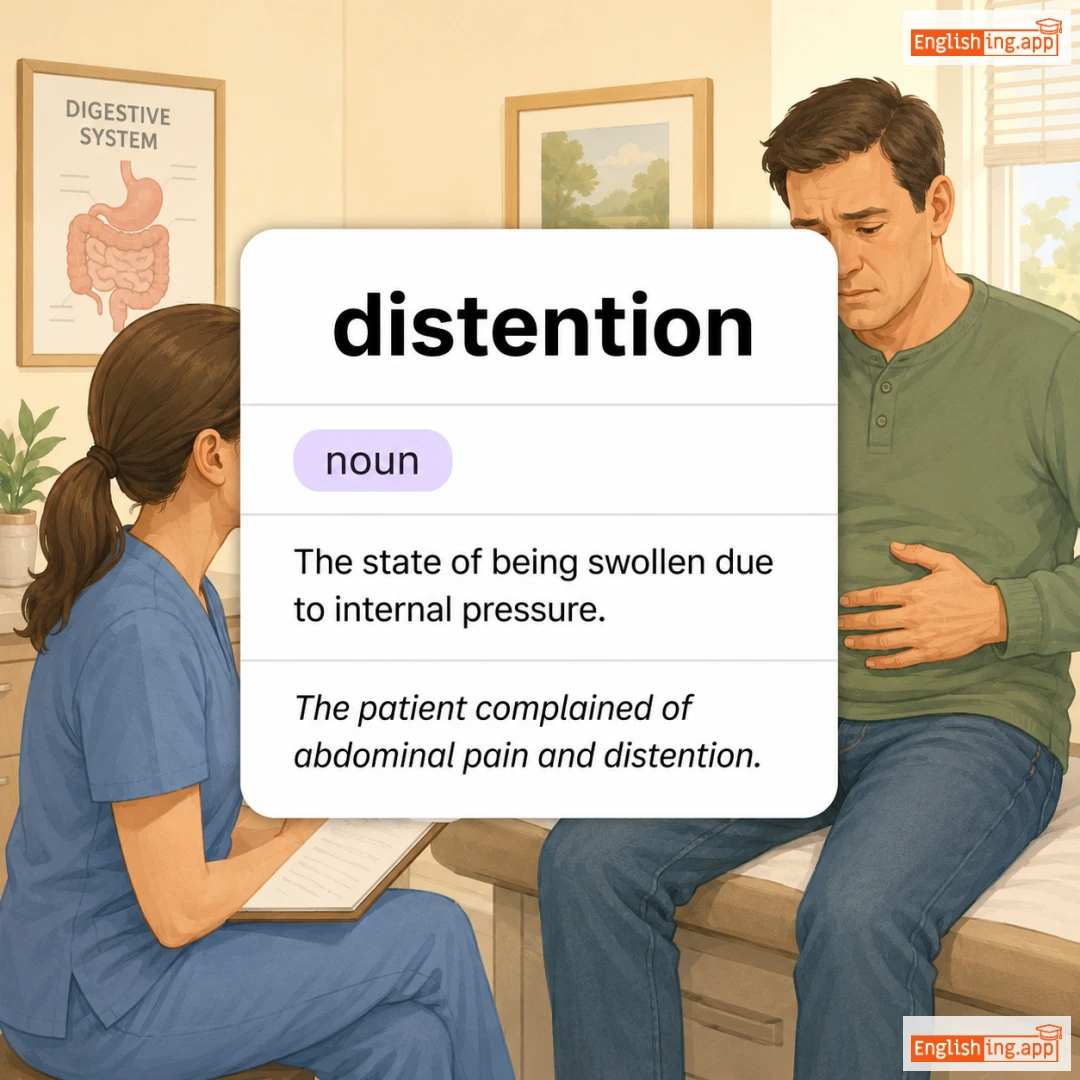
distention definition card — visual illustration of the meaning
noun C2
/dɪˈstɛnʃən/
вздутие (vzdutie)

The state of being swollen due to internal pressure.

"The patient complained of abdominal pain and distention."

"Пациент пожаловался на боль в животе и вздутие." (Patsiyent pozhalovalsya na bol' v zhivote i vzdutie.)
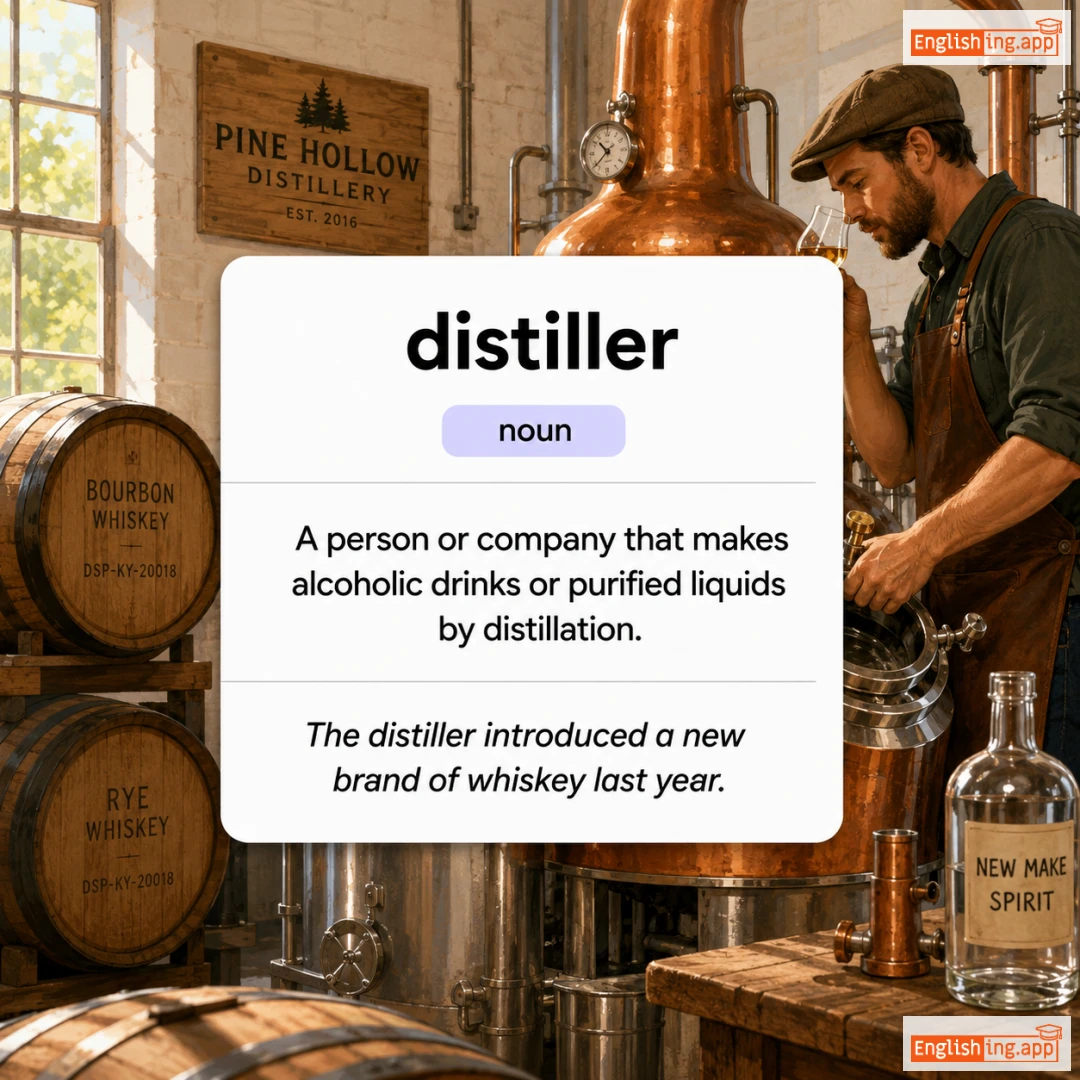
distiller definition card — visual illustration of the meaning
noun C2
/dɪˈstɪlər/
дистиллятор (distillyator)

A person or company that makes alcoholic drinks or purified liquids by distillation.

"The distiller introduced a new brand of whiskey last year."

"Дистиллятор представил новый бренд виски в прошлом году." (Distillyator predstavil novyy brend viski v proshlom godu.)
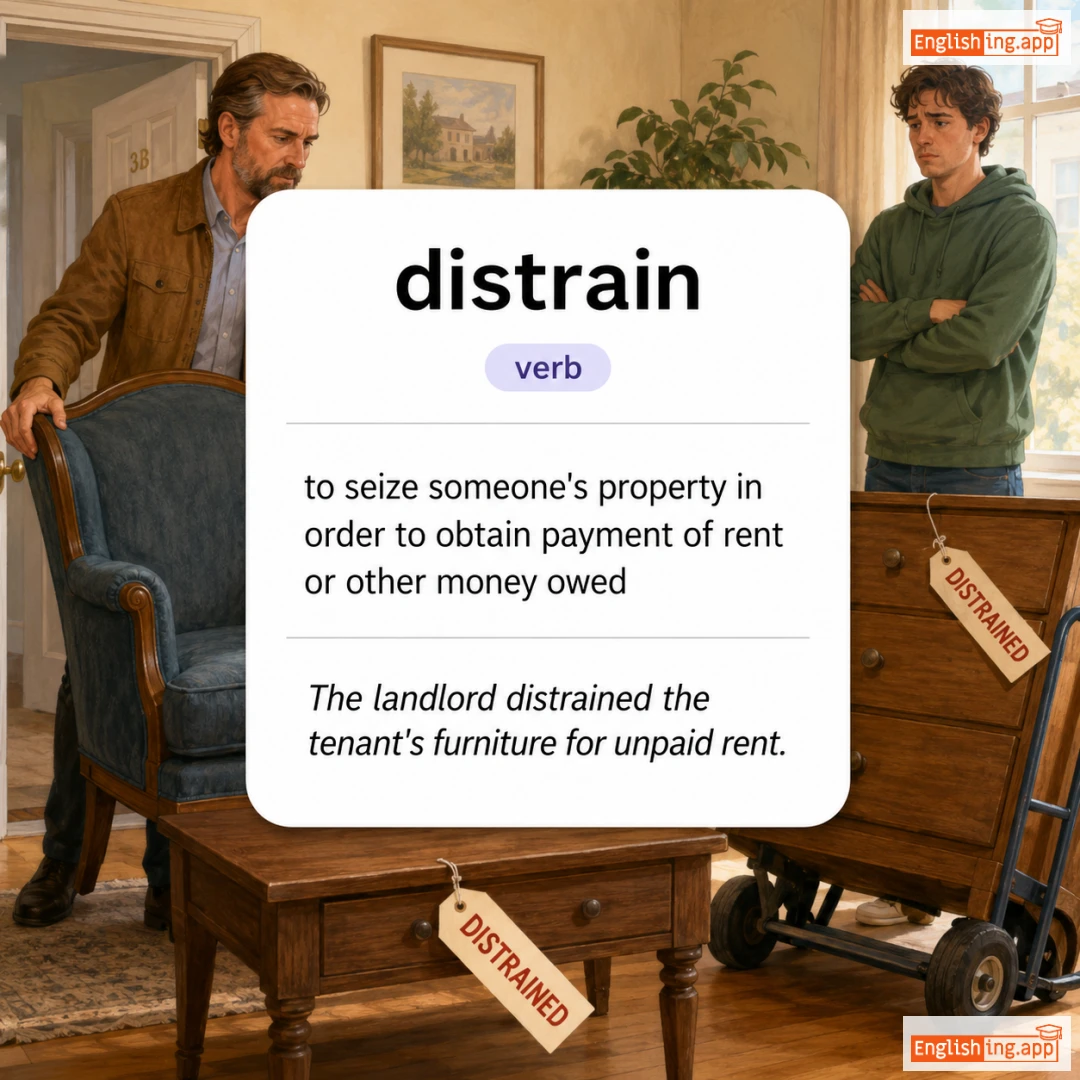
distrain definition card — visual illustration of the meaning
verb C2
/dɪˈstreɪn/
арестовать (arestovat)

to seize someone's property in order to obtain payment of rent or other money owed

"The landlord distrained the tenant's furniture for unpaid rent."

"Арендодатель изъял мебель арендатора за неуплаченный аренду." (Arendodatel izyial mebel' arendatora za neuplachenny arendu.)