Vokabulare

Englisches Vokabelwörterbuch | Wortbedeutungen, Definitionen & Beispiele

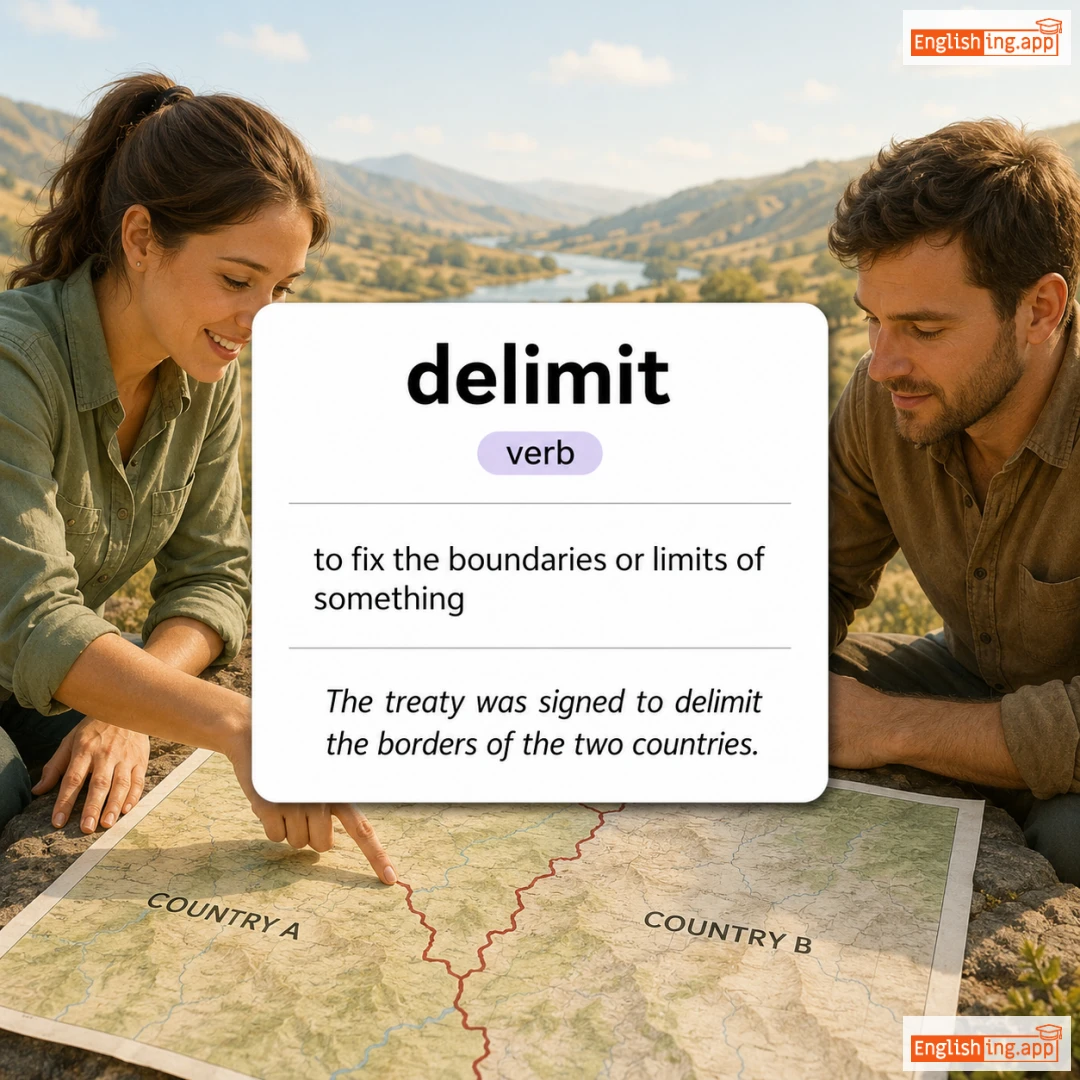
delimit definition card — visual illustration of the meaning
verb C2
/diːˈlɪmɪt/
境界を設定する (kyoukai wo settei suru)

to fix the boundaries or limits of something

"The treaty was signed to delimit the borders of the two countries."

"その条約は二国の境界を定めるために署名されました。" (Sono jouyaku wa nikoku no kyoukai wo sadameru tame ni shomei saremashita.)
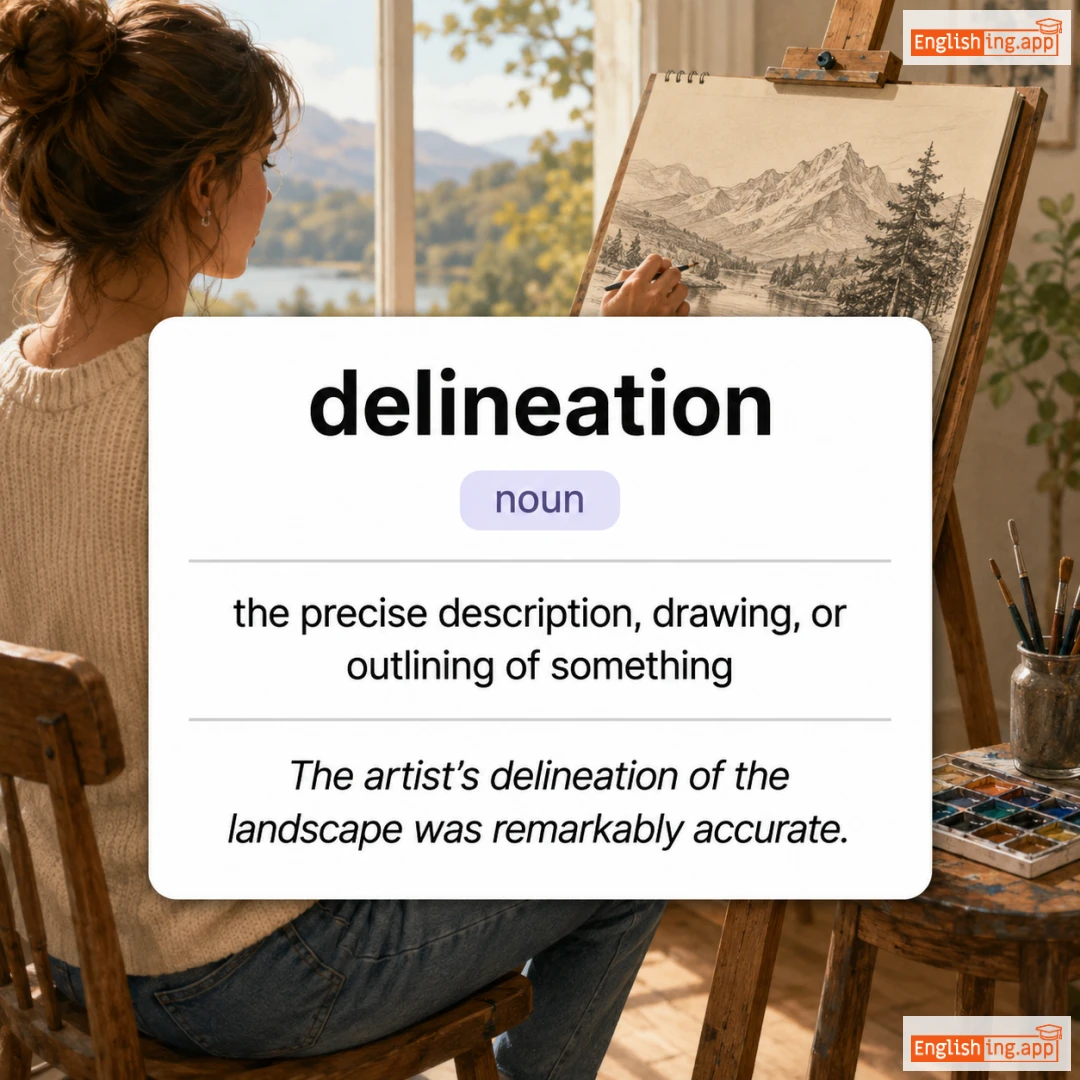
delineation definition card — visual illustration of the meaning
noun C2
/dɪˌlɪniˈeɪʃən/
delineation (delineation)

the precise description, drawing, or outlining of something

"The artist’s delineation of the landscape was remarkably accurate."

"アーティストの風景のデリニエイションは驚くほど正確でした。" (Ātisuto no fūkei no deriniaishon wa odoroku hodo seikaku deshita.)
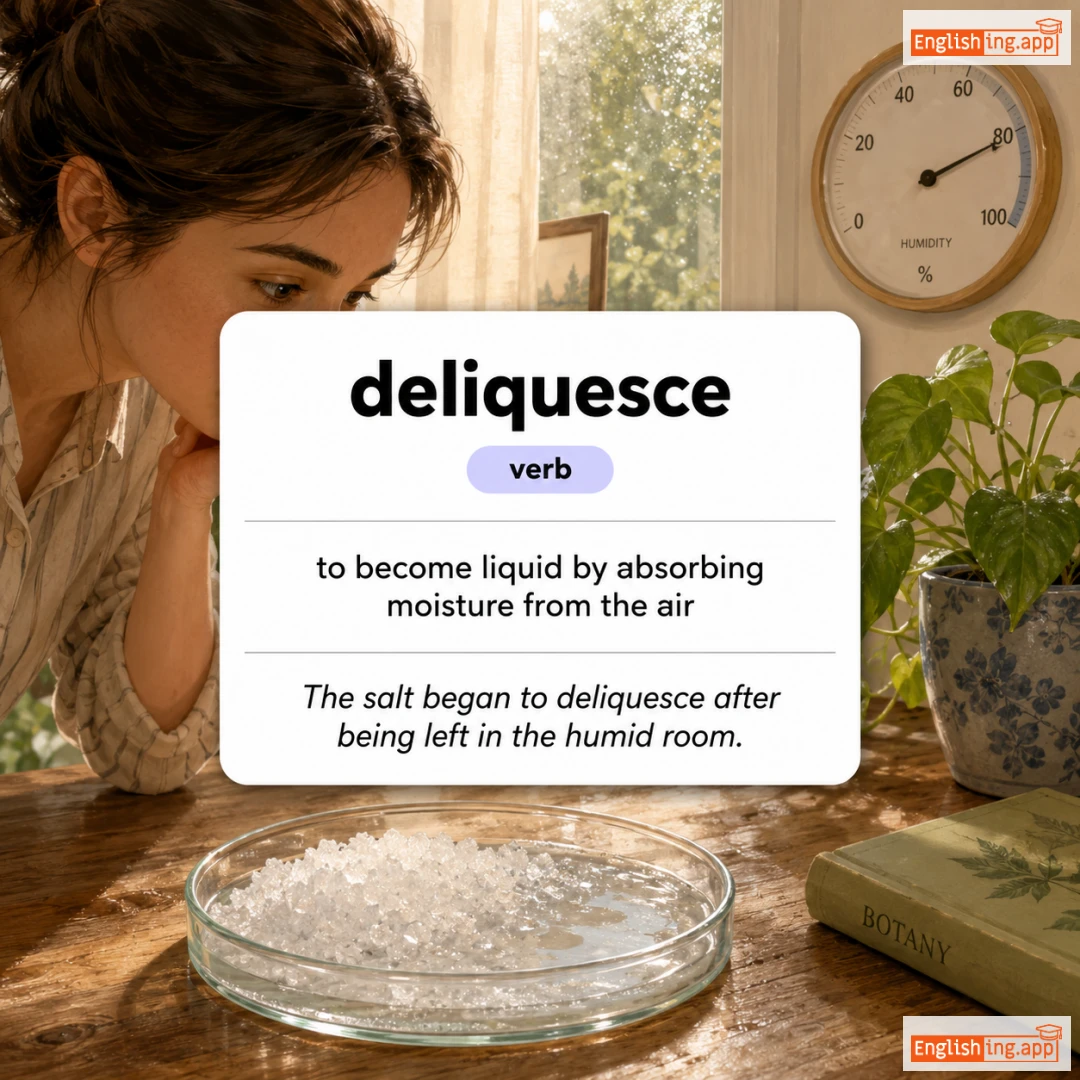
deliquesce definition card — visual illustration of the meaning
verb C2
/ˌdɛlɪˈkwɛs/
空気中の水分を吸収して液体になる (kūki-chū no suibun o kyūshū shite ekitai ni naru)

to become liquid by absorbing moisture from the air

"The salt began to deliquesce after being left in the humid room."

"塩は湿度の高い部屋に置かれた後、液体に変わり始めました。" (Shio wa shitsudo no takai heya ni okareta ato, ekitai ni kawari hajimemashita.)
deliquescent definition card — visual illustration of the meaning
adjective C2
/ˌdɛlɪˈkwɛsənt/
湿気を吸収して液体に変わる (shikke o kyūshū shite ekitai ni kawaru)

tending to become liquid by absorbing moisture from the air

"Sugar is not deliquescent, but salt can be."

"砂糖はデリクエセントではないが、塩はそうである可能性がある。" (Satou wa deriquesento dewa nai ga, shio wa sō de aru kanōsei ga aru.)
delusive definition card — visual illustration of the meaning
adjective C2
/dɪˈluːsɪv/
欺瞞的 (giman-teki)

Giving a false or misleading impression; deceptive.

"His promises turned out to be delusive and untrustworthy."

"彼の約束は欺瞞的で信頼できないことが証明されました。" (Kare no yakusoku wa giman-teki de shinrai dekinai koto ga shoumei saremashita.)
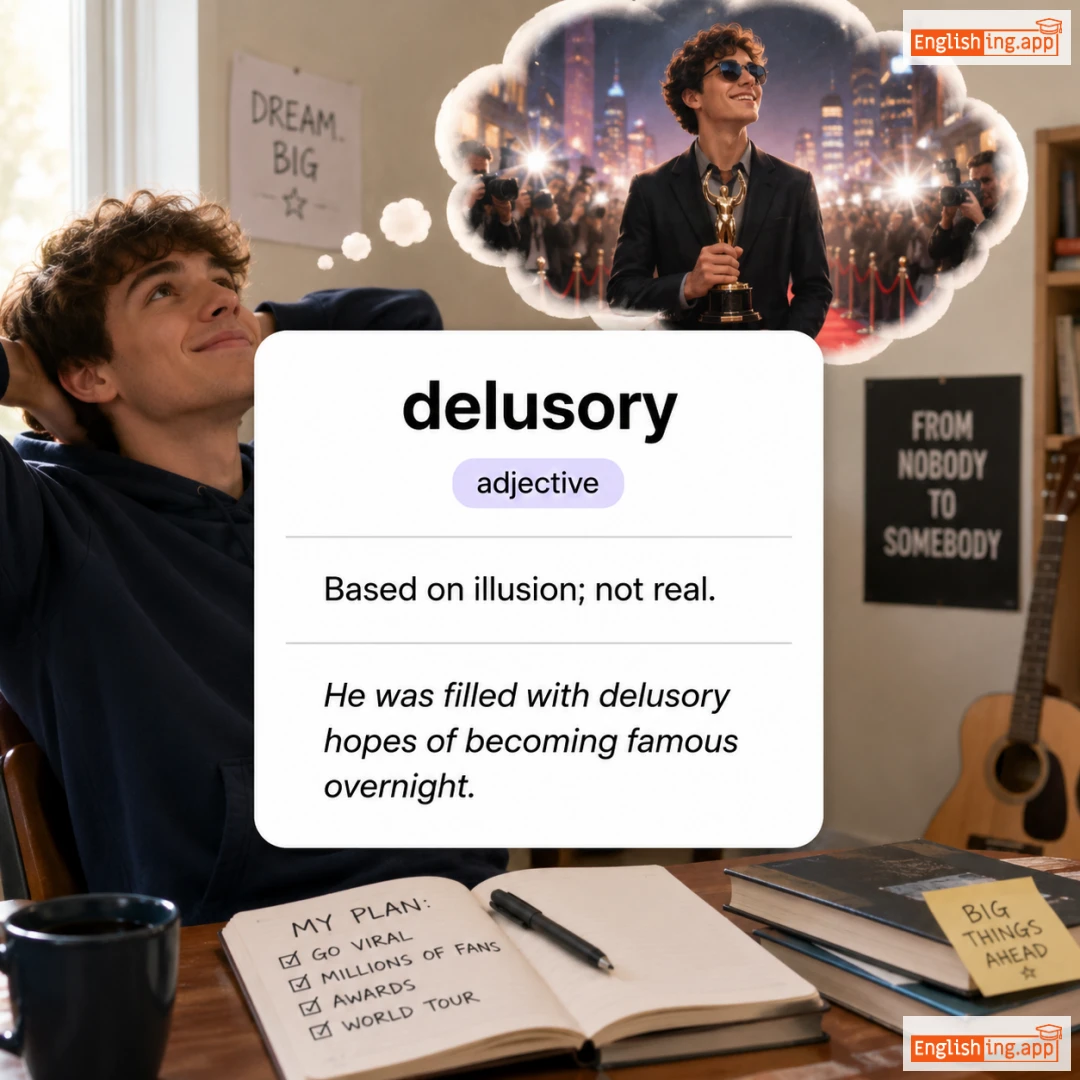
delusory definition card — visual illustration of the meaning
adjective C2
/dɪˈluːsəri/
幻想的な (gensōteki na)

Based on illusion; not real.

"He was filled with delusory hopes of becoming famous overnight."

"彼は一夜にして有名になるという幻想的な希望に満ちていた。" (Kare wa ichiya nishite yūmei ni naru to iu gensōteki na kibō ni michite ita.)
verb C2
/diːˈmæɡnɪtaɪz/
デマグネタイズ (demagnetize)

To remove or reduce the magnetic properties of something.

"The technician demagnetized the old cassette tape."

"技術者は古いカセットテープの磁気を取り除いた。" (Gijutsusha wa furui kasetto teepu no jiki o torinozokita.)
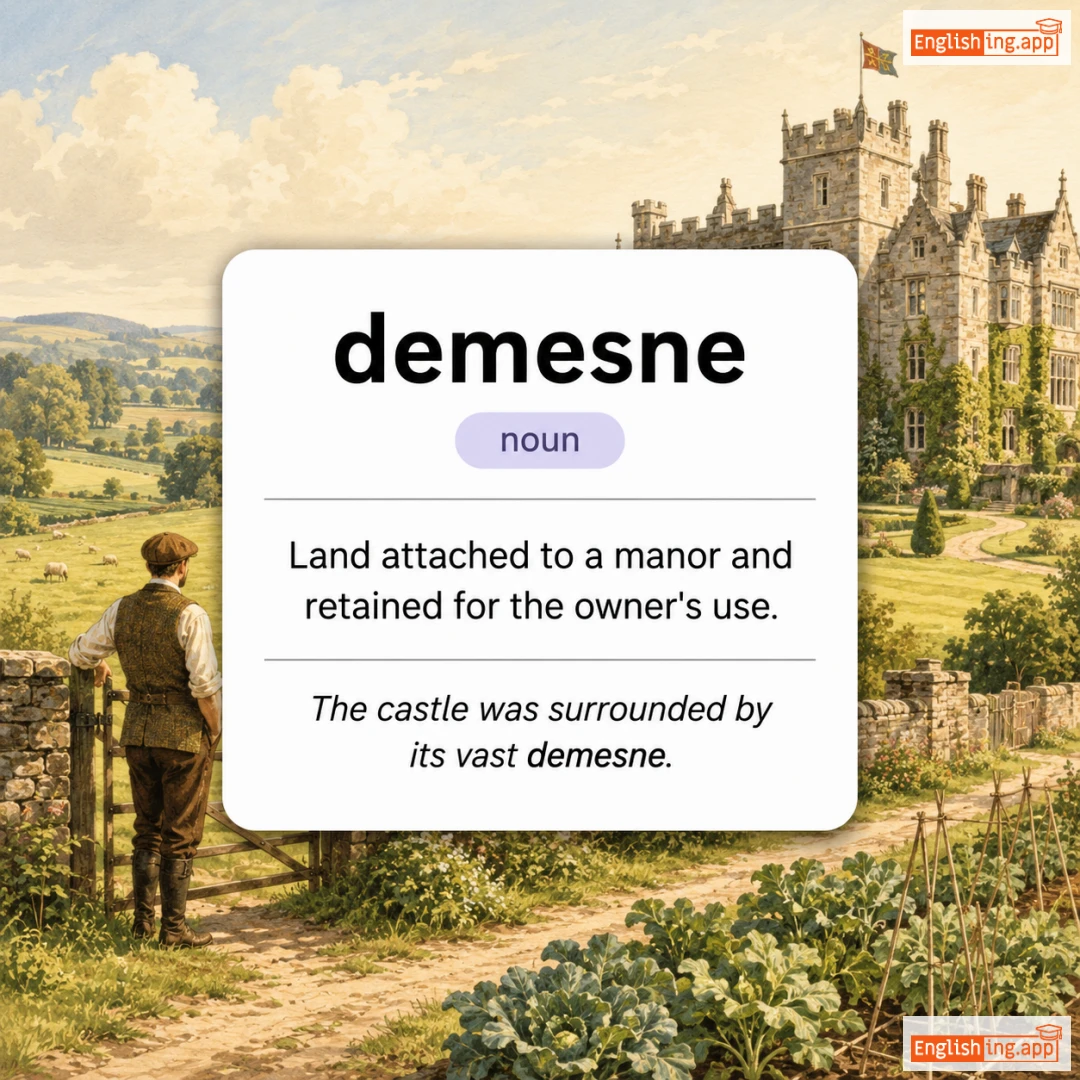
demesne definition card — visual illustration of the meaning
noun C2
/dɪˈmeɪn/
邸宅に付属する土地 (teitaku ni fuzoku suru tochi)

Land attached to a manor and retained for the owner's use.

"The castle was surrounded by its vast demesne."

"その城は広大な邸宅に付属する土地に囲まれていました。" (Sono shiro wa koudaina teitaku ni fuzoku suru tochi ni kakomarete imashita.)
demobilize definition card — visual illustration of the meaning
verb C2
/diːˈmoʊbəlaɪz/
解散する (kaisansuru)

To release from military service or to disband troops.

"The government decided to demobilize the army after the war."

"政府は戦争後に軍隊を解散することを決定しました。" (Seifu wa sensō go ni guntai o kaisan suru koto o kettei shimashita.)
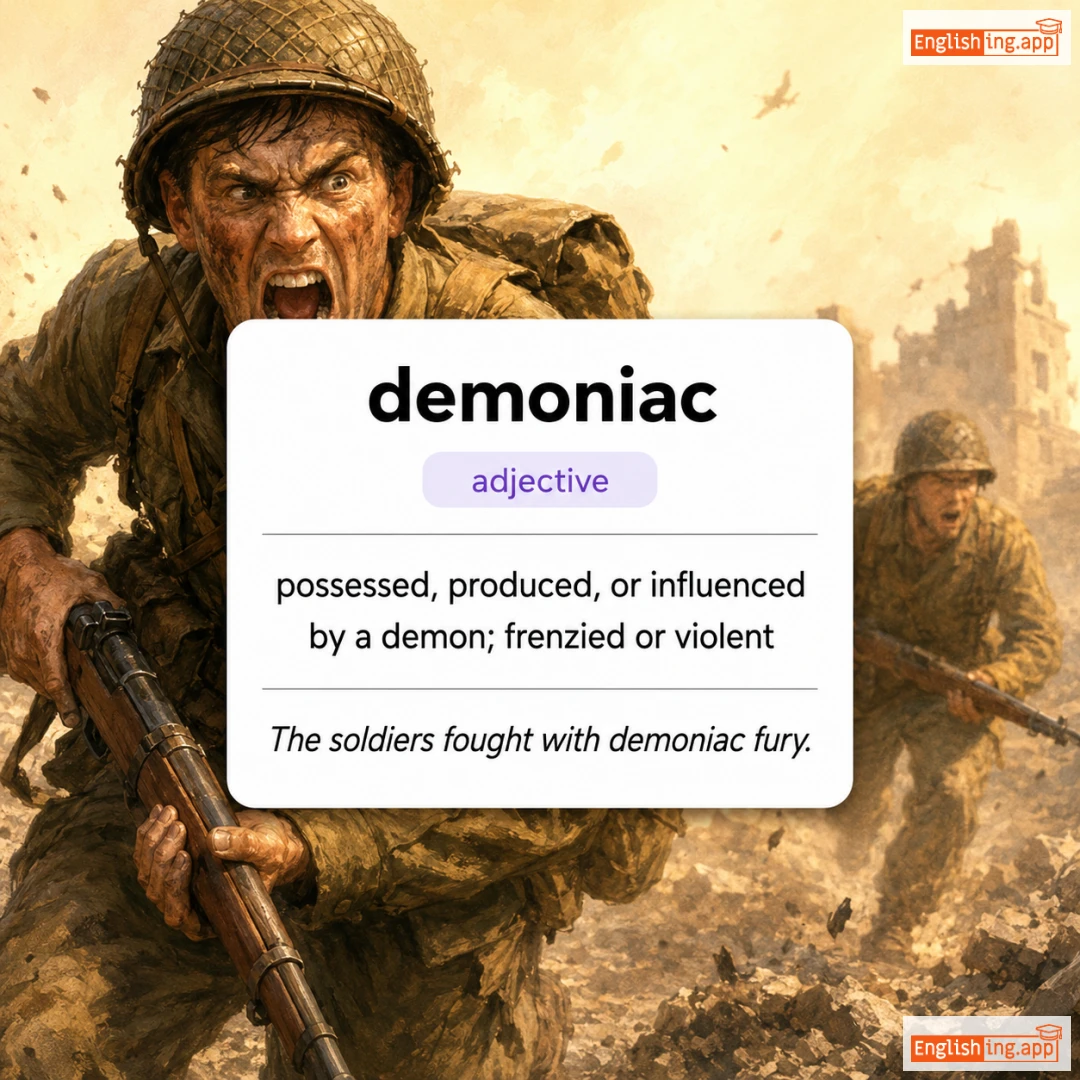
demoniac definition card — visual illustration of the meaning
adjective C2
/dɪˈmoʊniˌæk/
悪魔的な (akumatekina)

possessed, produced, or influenced by a demon; frenzied or violent

"The soldiers fought with demoniac fury."

"兵士たちは悪魔的な怒りで戦った。" (Heishitachi wa akumatekina ikari de tatakatta.)
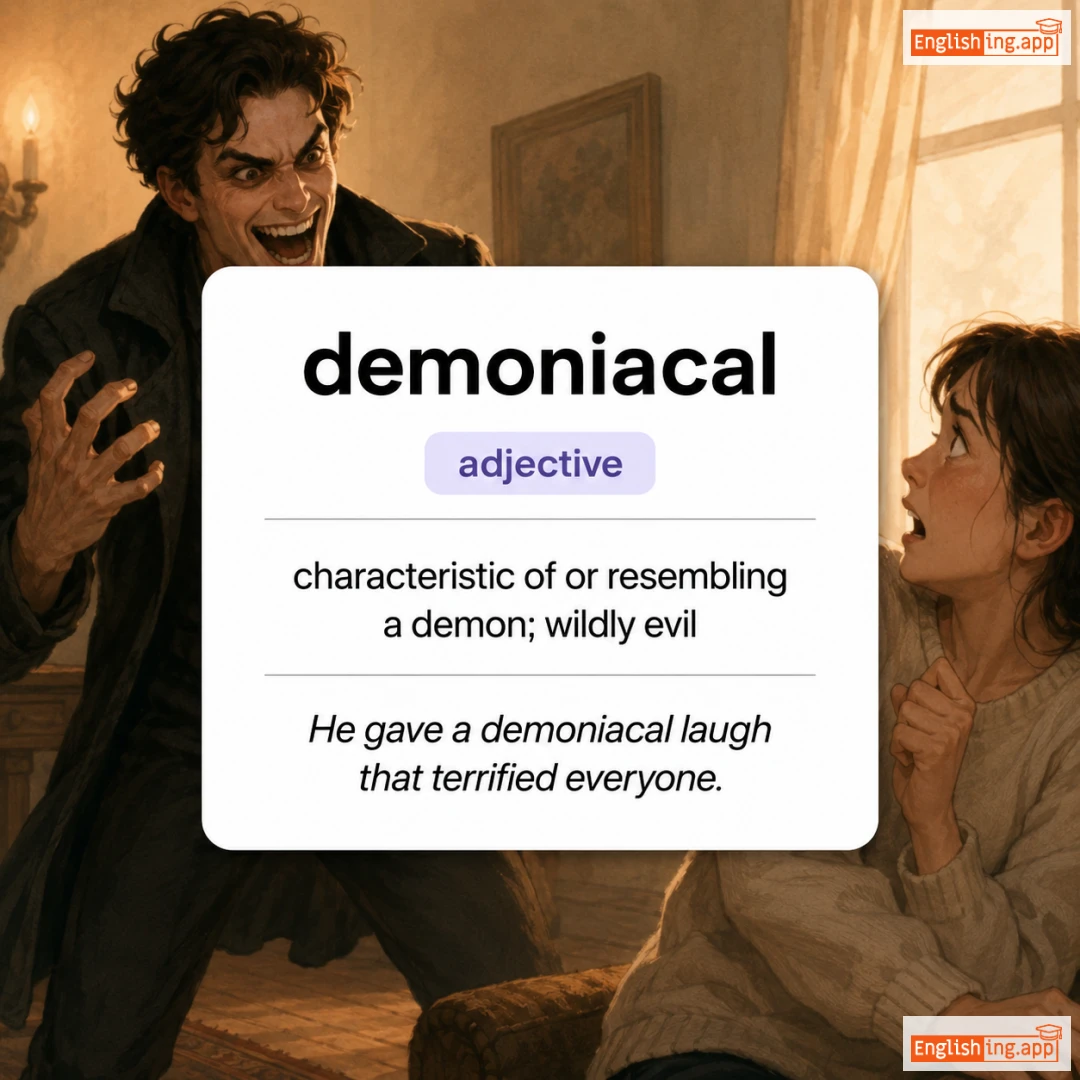
demoniacal definition card — visual illustration of the meaning
adjective C2
/ˌdɛməˈnaɪəkəl/
悪魔的な (akumateki na)

characteristic of or resembling a demon; wildly evil

"He gave a demoniacal laugh that terrified everyone."

"彼は皆を恐れさせるような悪魔的な笑い声を上げた。" (Kare wa mina o osore saseru yō na akumateki na waraigoe o ageta.)
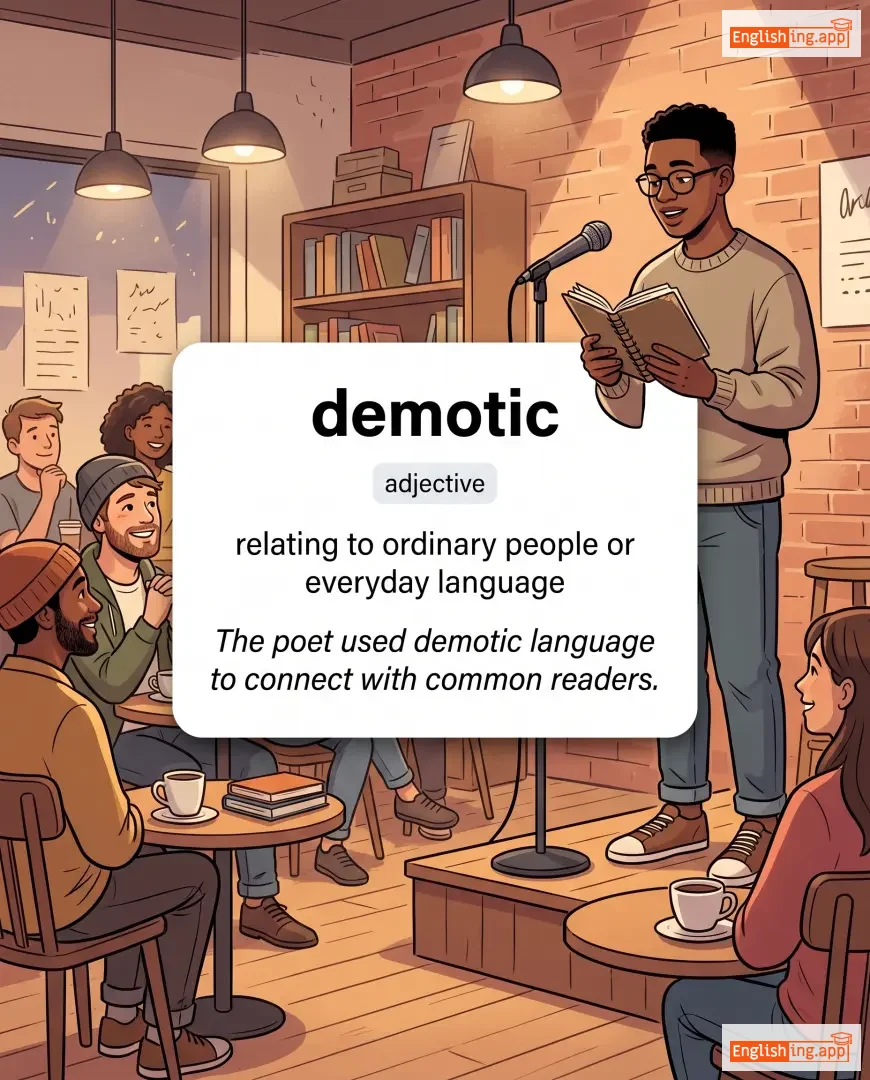
demotic definition card — visual illustration of the meaning
adjective C2
/dɪˈmɒtɪk/
一般的な言語に関する (ippanteki na gengo ni kansuru)

relating to ordinary people or everyday language

"The poet used demotic language to connect with common readers."

"詩人は一般の読者とつながるために一般的な言語に関する言葉を使った。" (Shijin wa ippan no dokusha to tsunagaru tame ni ippanteki na gengo ni kansuru kotoba o tsukatta.)
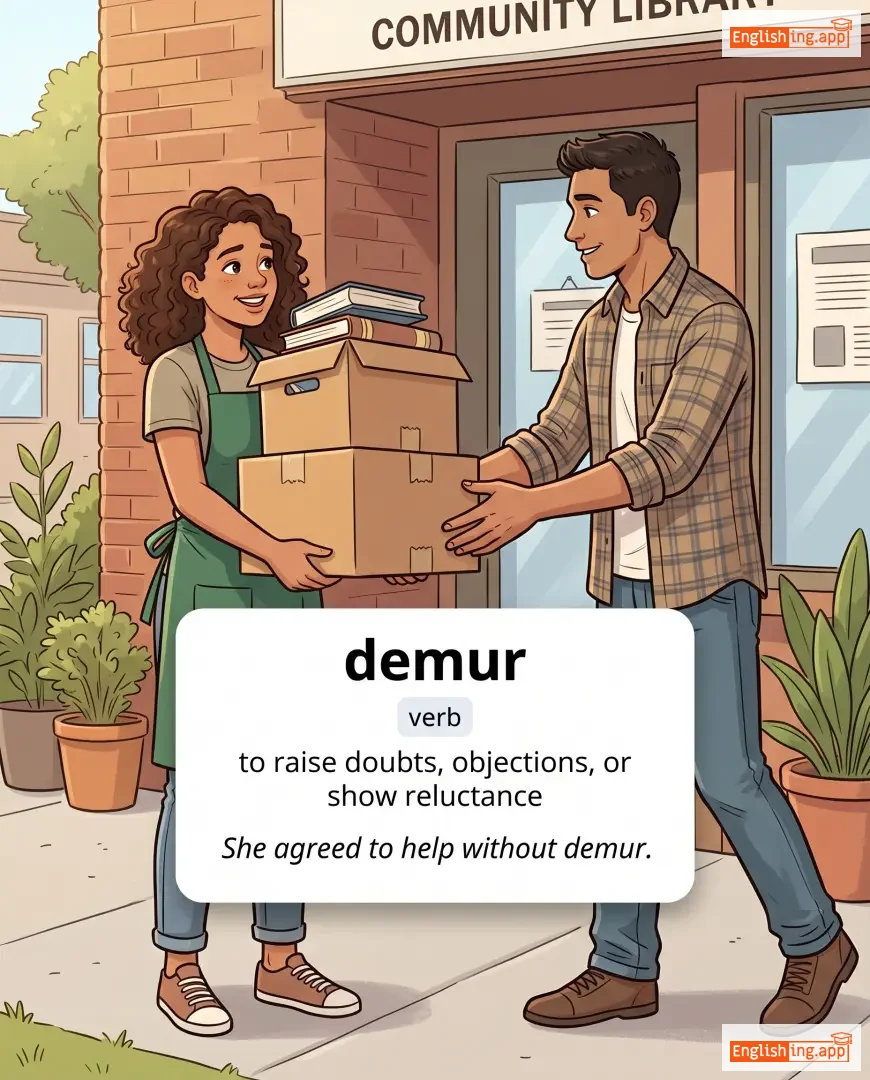
demur definition card — visual illustration of the meaning
verb C2
/dɪˈmɜːr/
異議を唱える (igi o tonaeru)

to raise doubts, objections, or show reluctance

"She agreed to help without demur."

"彼女は異議なく手伝うことに同意しました。" (Kanojo wa igi naku tetsudau koto ni dōi shimashita.)
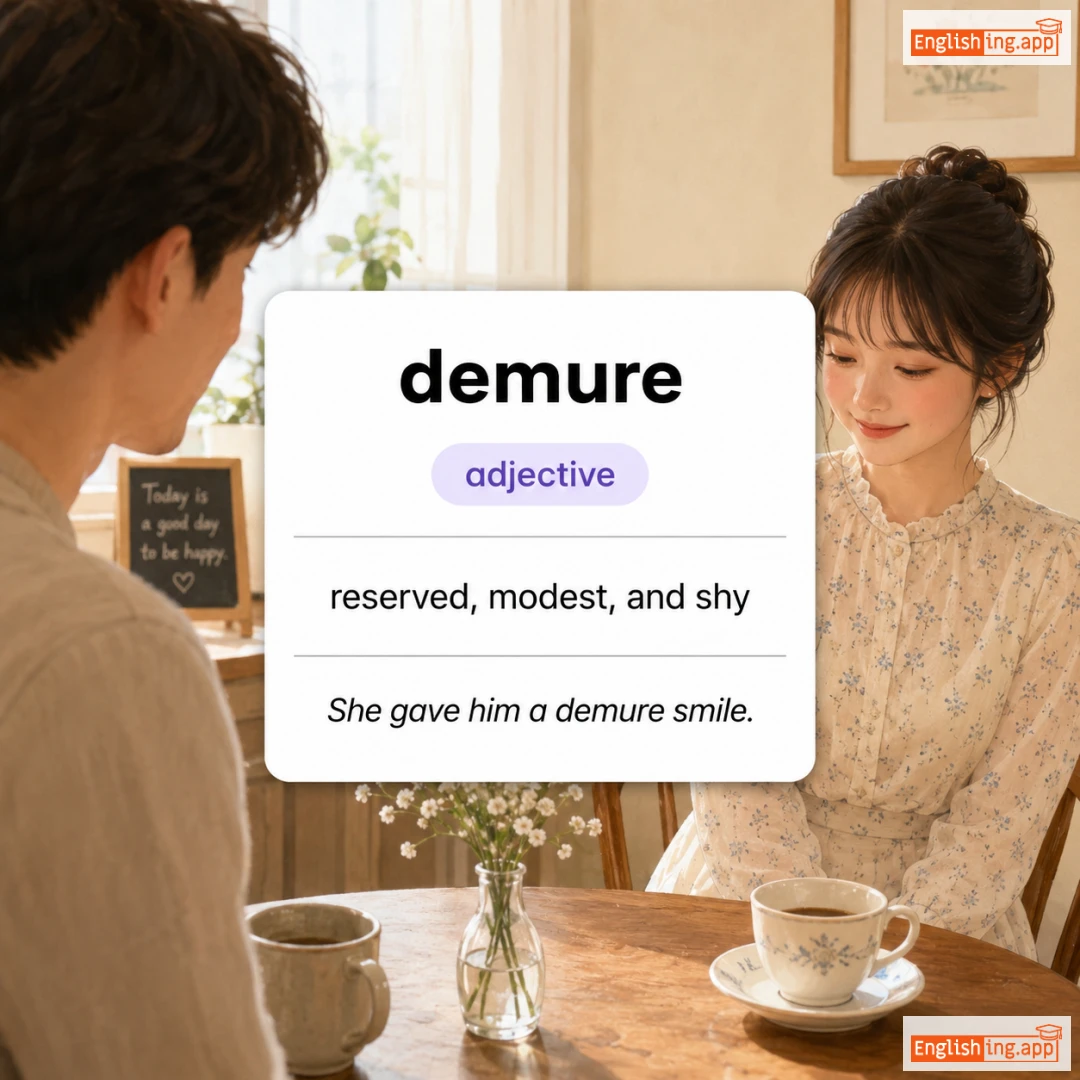
demure definition card — visual illustration of the meaning
adjective C2
/dɪˈmjʊər/
控えめ (hikaeme)

reserved, modest, and shy

"She gave him a demure smile."

"彼女は控えめな笑顔を彼に向けた。" (Kanojo wa hikaeme na egao o kare ni muketa.)
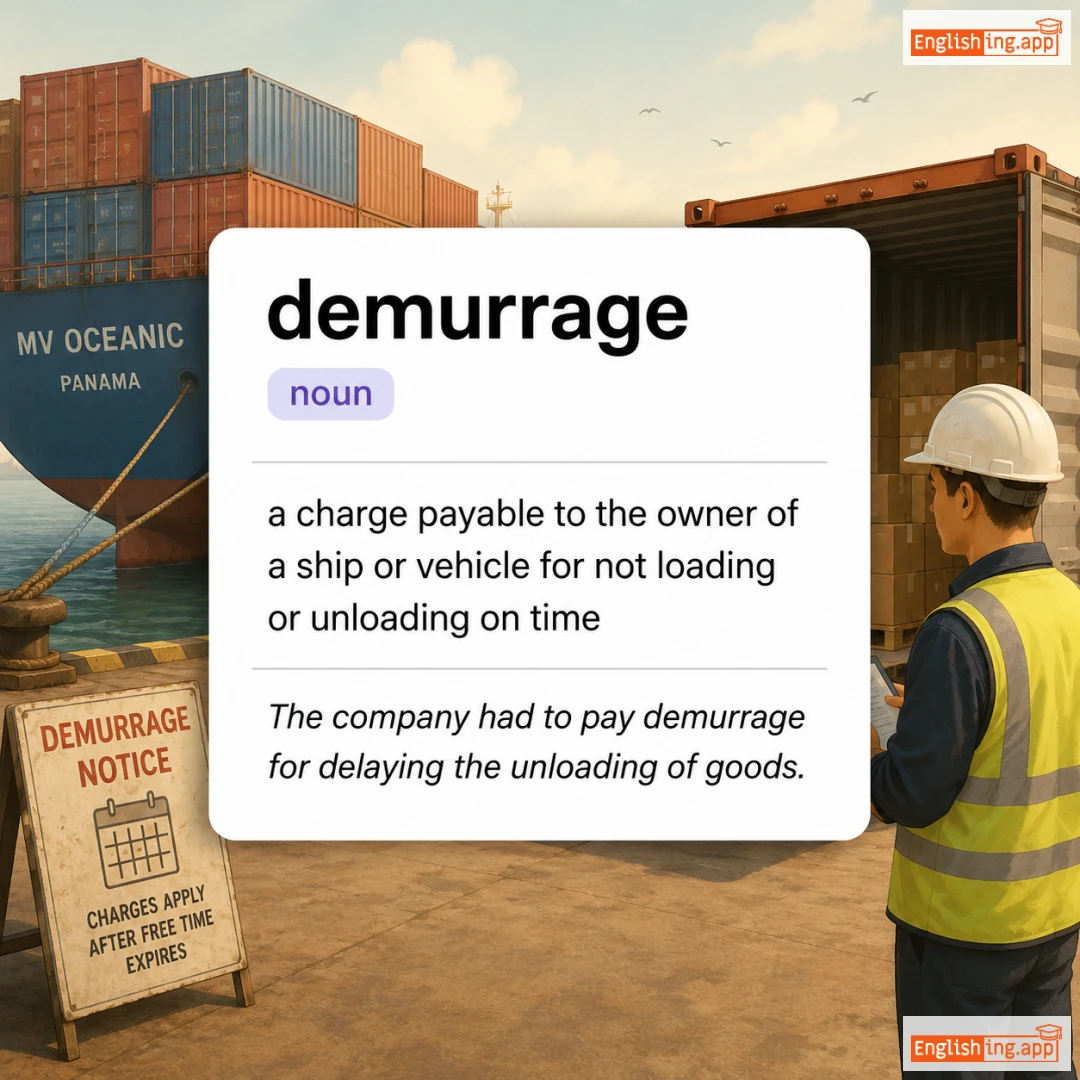
demurrage definition card — visual illustration of the meaning
noun C2
/dɪˈmʌrɪdʒ/
デマレッジ (demarejji)

a charge payable to the owner of a ship or vehicle for not loading or unloading on time

"The company had to pay demurrage for delaying the unloading of goods."

"会社は荷物の荷降ろしの遅れでデマレッジを支払わなければならなかった。" (Kaisha wa nimotsu no nioroshi no okure de demarejji o shiharawanakereba naranakatta.)
verb C2
/diːˈnæʃənəlaɪz/
民営化 (min'eka)

to transfer ownership from the government to private individuals or companies

"The government decided to denationalize the bank to encourage private investment."

"政府は民間投資を促進するために銀行を民営化することを決定しました。" (Seifu wa minkan tōshi o sokushin suru tame ni ginkō o min'eka suru koto o kettei shimashita.)
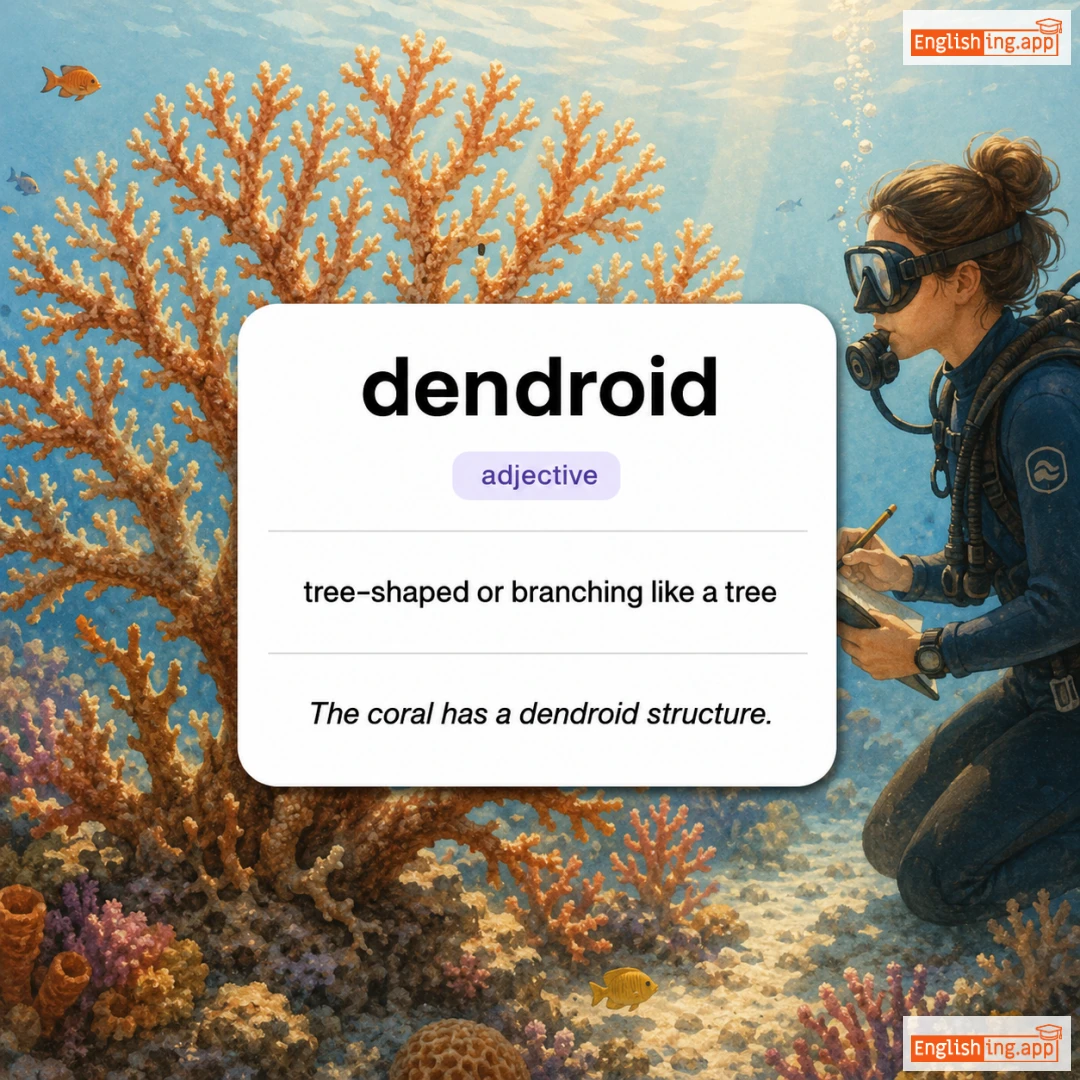
dendroid definition card — visual illustration of the meaning
adjective C2
/ˈdɛndrɔɪd/
樹状の (jujō no)

tree-shaped or branching like a tree

"The coral has a dendroid structure."

"サンゴはデンドロイド構造を持っています。" (Sango wa dendoroido kōzō o motteimasu.)
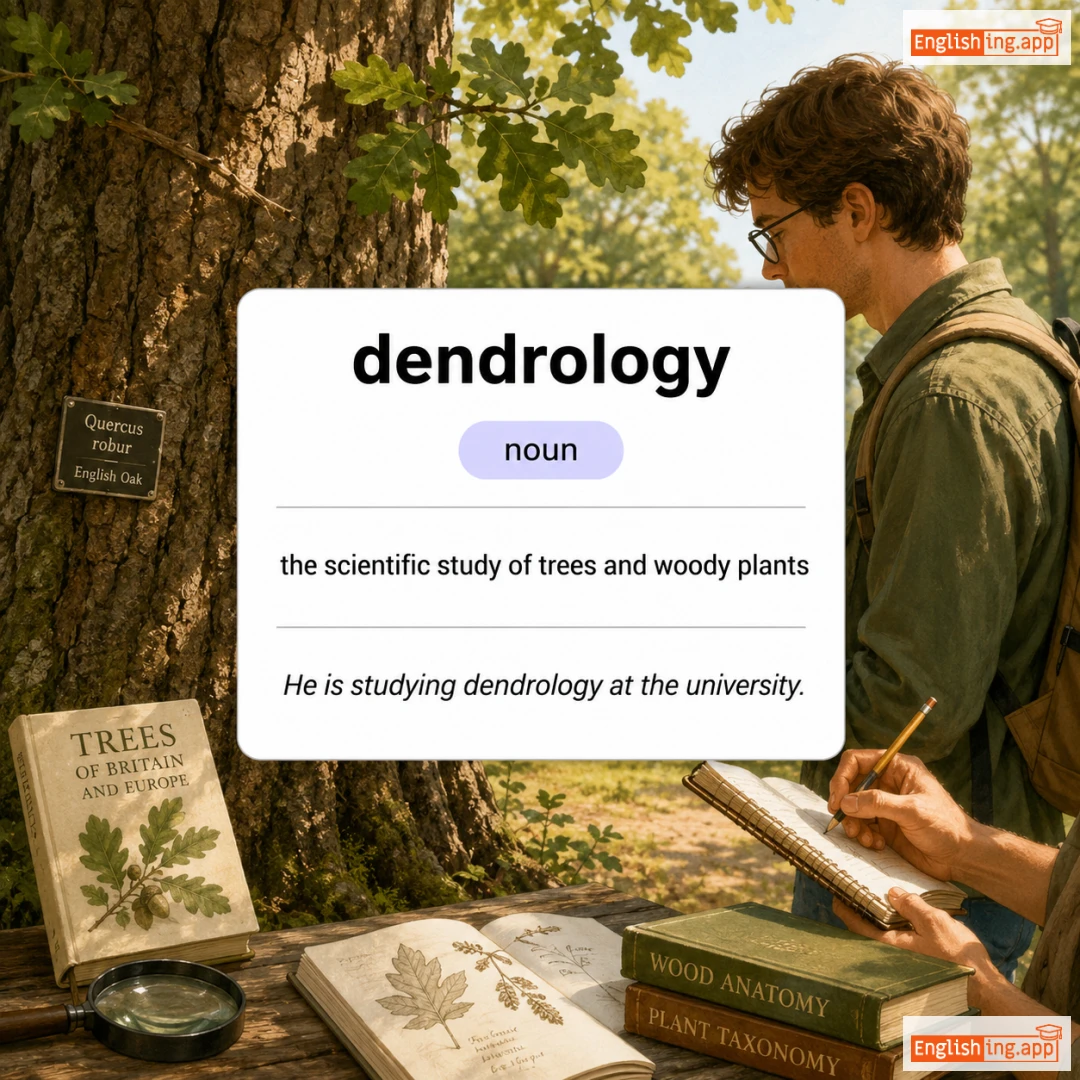
dendrology definition card — visual illustration of the meaning
noun C2
/dɛnˈdrɒlədʒi/

the scientific study of trees and woody plants

"He is studying dendrology at the university."

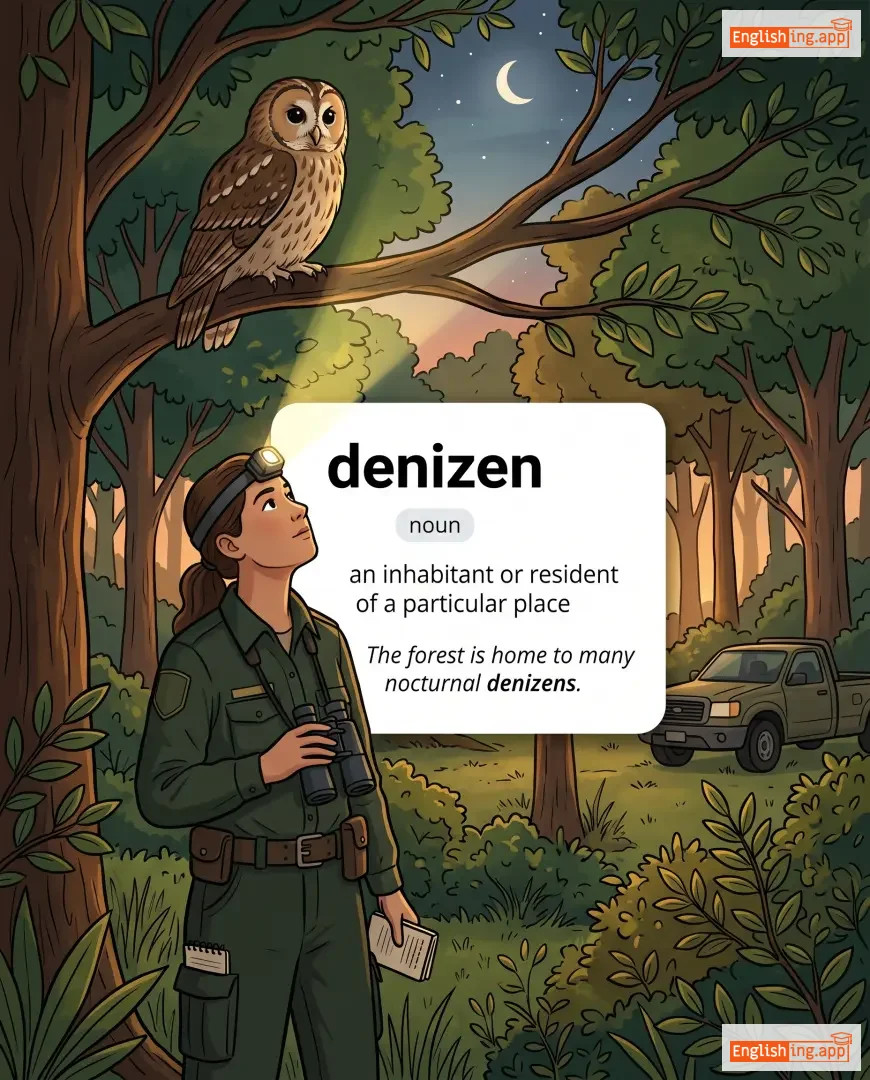
denizen definition card — visual illustration of the meaning
noun C2
/ˈdɛnɪzən/
住民 (jūmin)

an inhabitant or resident of a particular place

"The forest is home to many nocturnal denizens."

"その森は多くの夜行性の住民の家です。" (Sono mori wa ōku no yakōsei no jūmin no ie desu.)
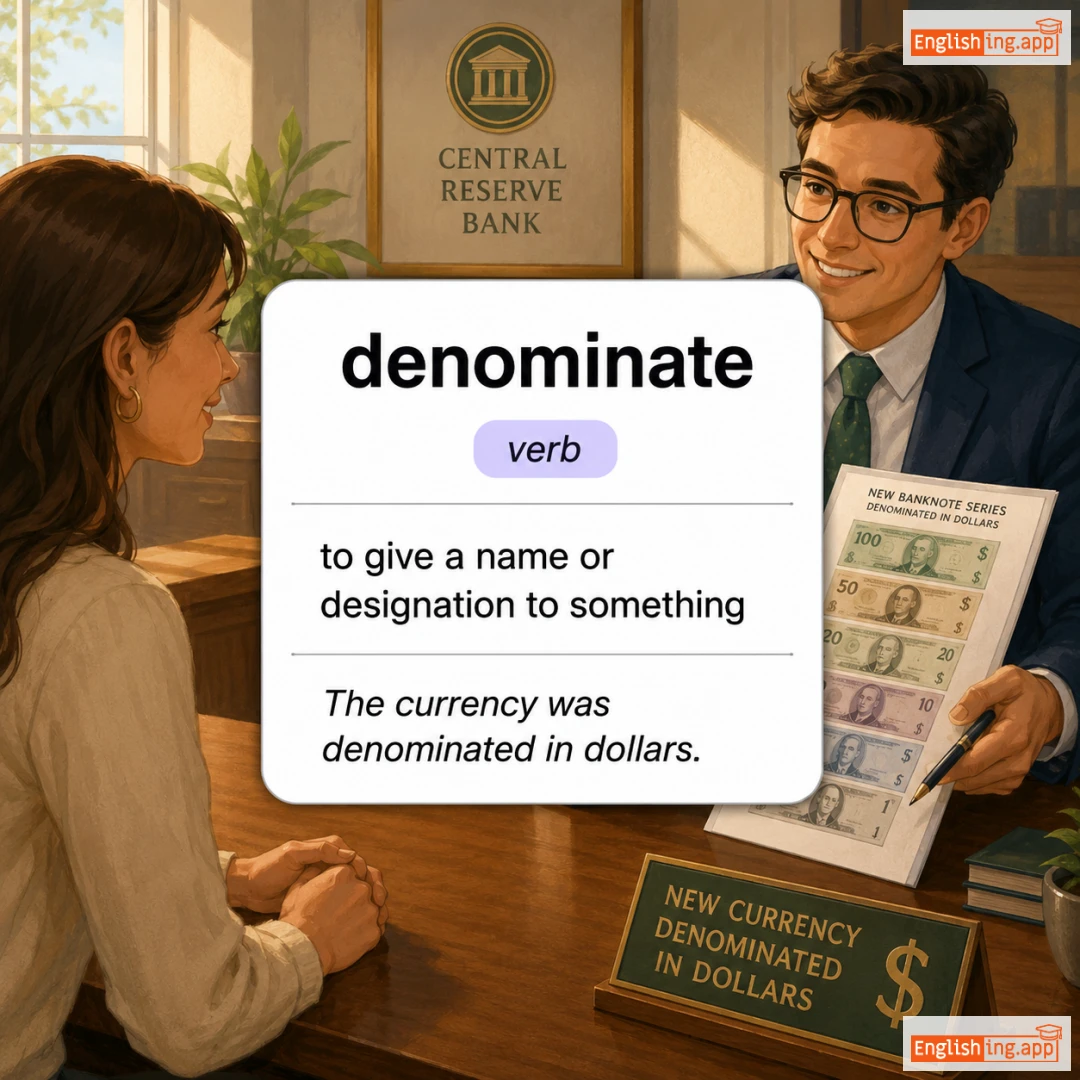
denominate definition card — visual illustration of the meaning
verb C2
/dɪˈnɒmɪˌneɪt/
命名する (meimei suru)

to give a name or designation to something

"The currency was denominated in dollars."

"その通貨はドルで denominated されました。" (Sono tsūka wa doru de denominated saremashita.)
noun C2
/ˌdiːnəʊˈteɪʃən/
指示 (shiji)

The literal or primary meaning of a word, in contrast to the feelings or ideas that the word suggests.

"The denotation of the word 'rose' is a type of flower."

"'ローズ'という単語のデノテーションは花の一種です。" ('Rōzu' to iu tango no denotēshon wa hana no isshu desu.)
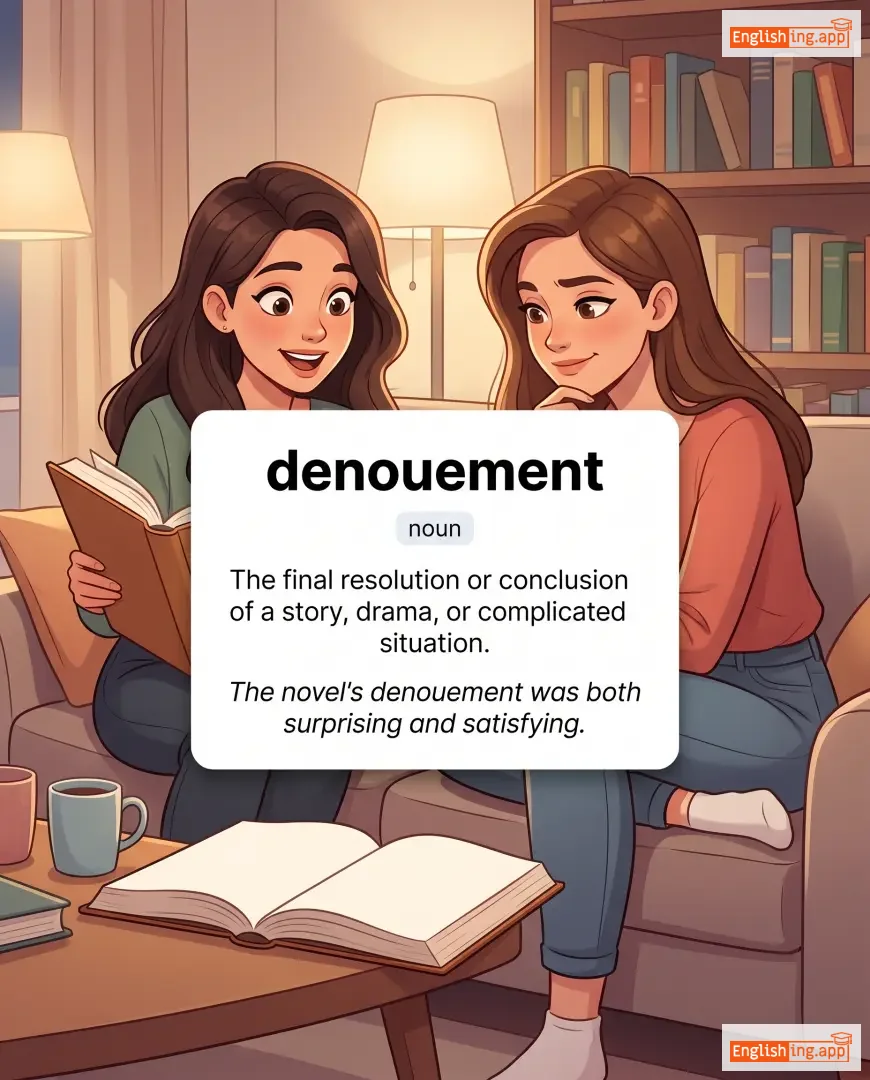
denouement definition card — visual illustration of the meaning
noun C2
/ˌdeɪnuːˈmɒ̃/
結末 (ketsumatsu)

The final resolution or conclusion of a story, drama, or complicated situation.

"The novel's denouement was both surprising and satisfying."

"その小説の結末は驚くべきものであり、満足のいくものでした。" (Sono shousetsu no ketsumatsu wa odorokubeki mono de ari, manzoku no iku mono deshita.)
dentifrice definition card — visual illustration of the meaning
noun C2
/ˈdɛntɪfrɪs/
歯磨き粉 (hamigakiko)

a substance such as powder, paste, or liquid used to clean teeth

"He bought a new herbal dentifrice from the pharmacy."

"彼は薬局で新しいハーブの歯磨きを買った。" (Kare wa yakkyoku de atarashī hābu no hamigakiko o katta.)
verb C2
/dɪˈnjuːd/
裸にする (hadaka ni suru)

to strip something of its covering, possessions, or assets

"The forest was denuded of trees by illegal logging."

"違法な伐採によって森は木々を裸にされた。" (Ihōna bassai ni yotte mori wa kigi o hadaka ni sareta.)
verb C2
/ˈdɛpɪleɪt/
脱毛する (datsumou suru)

to remove hair from the skin, especially by mechanical or chemical means

"She decided to depilate her legs before the event."

"彼女はイベントの前に足を脱毛することに決めました。" (Kanojo wa ibento no mae ni ashi o datsumou suru koto ni kimemashita.)
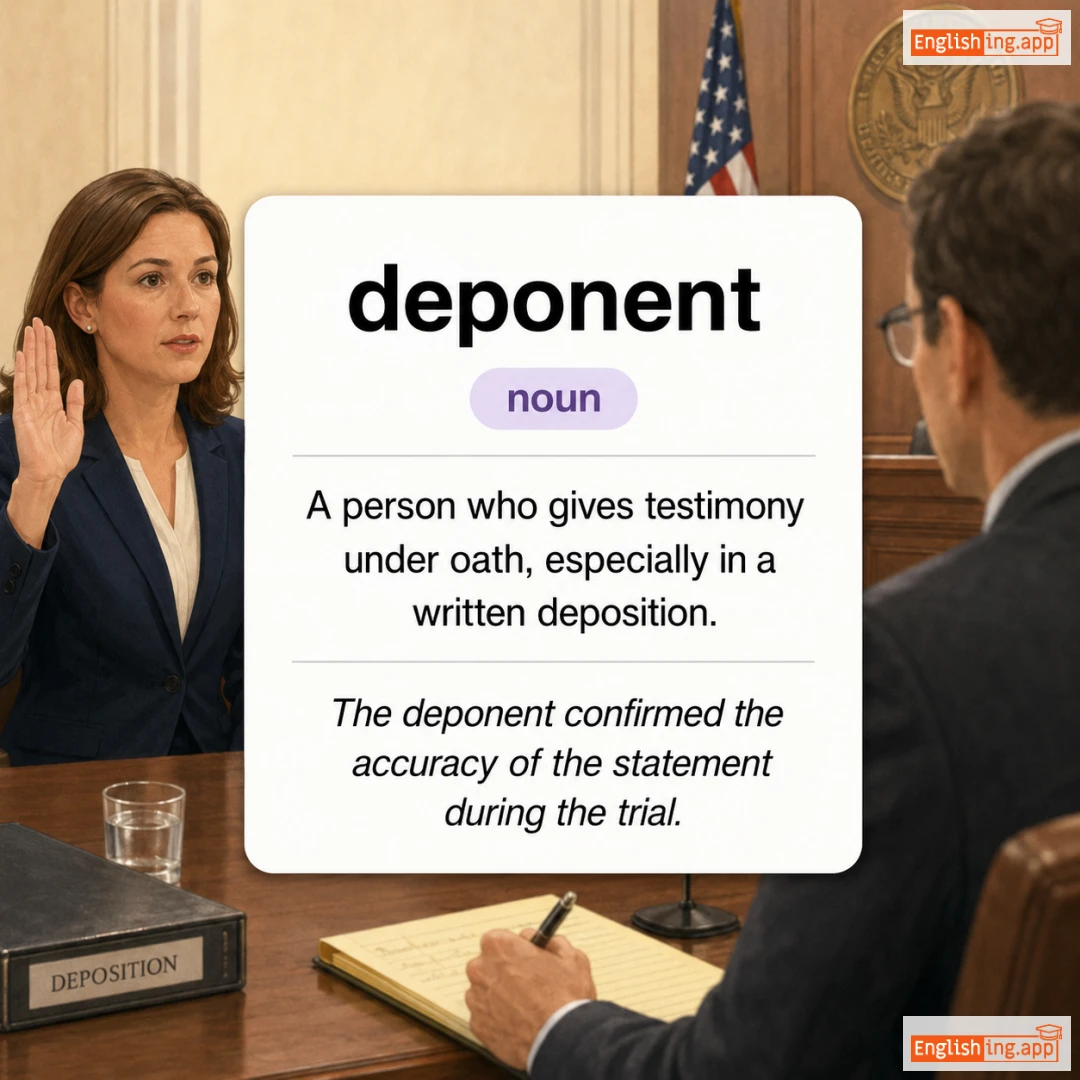
deponent definition card — visual illustration of the meaning
noun C2
/dɪˈpoʊnənt/
証人 (shōnin)

A person who gives testimony under oath, especially in a written deposition.

"The deponent confirmed the accuracy of the statement during the trial."

"証人は裁判中に証言の正確性を確認しました。" (Shōnin wa saiban-chū ni shōgen no seikakusei o kakunin shimashita.)
verb C2
/diːˈpɒpjʊˌleɪt/
人口減少 (jinkou genshou)

To reduce the number of people living in a place.

"The war threatened to depopulate the once-thriving town."

"戦争はかつて繁栄していた町を人口減少させる脅威を与えた。" (Sensou wa katsute han'ei shite ita machi o jinkou genshou saseru kyoui o ataeta.)
noun C2
/dɪˈpɔːrtmənt/
行儀 (gyōgi)

A person's behavior or manners, especially in a formal situation.

"Her deportment during the ceremony impressed everyone."

"儀式中の彼女の行儀は皆を感動させた。" (Gishiki-chū no kanojo no gyōgi wa mina o kandō saseta.)
noun C2
/dɪˈpɑːzɪtər/
預金者 (yokinsha)

a person who places money in a bank or financial institution

"The bank provides insurance to protect depositors’ funds."

"銀行は預金者の資金を保護するために保険を提供しています。" (Ginkou wa yokinsha no shikin wo hogo suru tame ni hoken wo teikyou shiteimasu.)
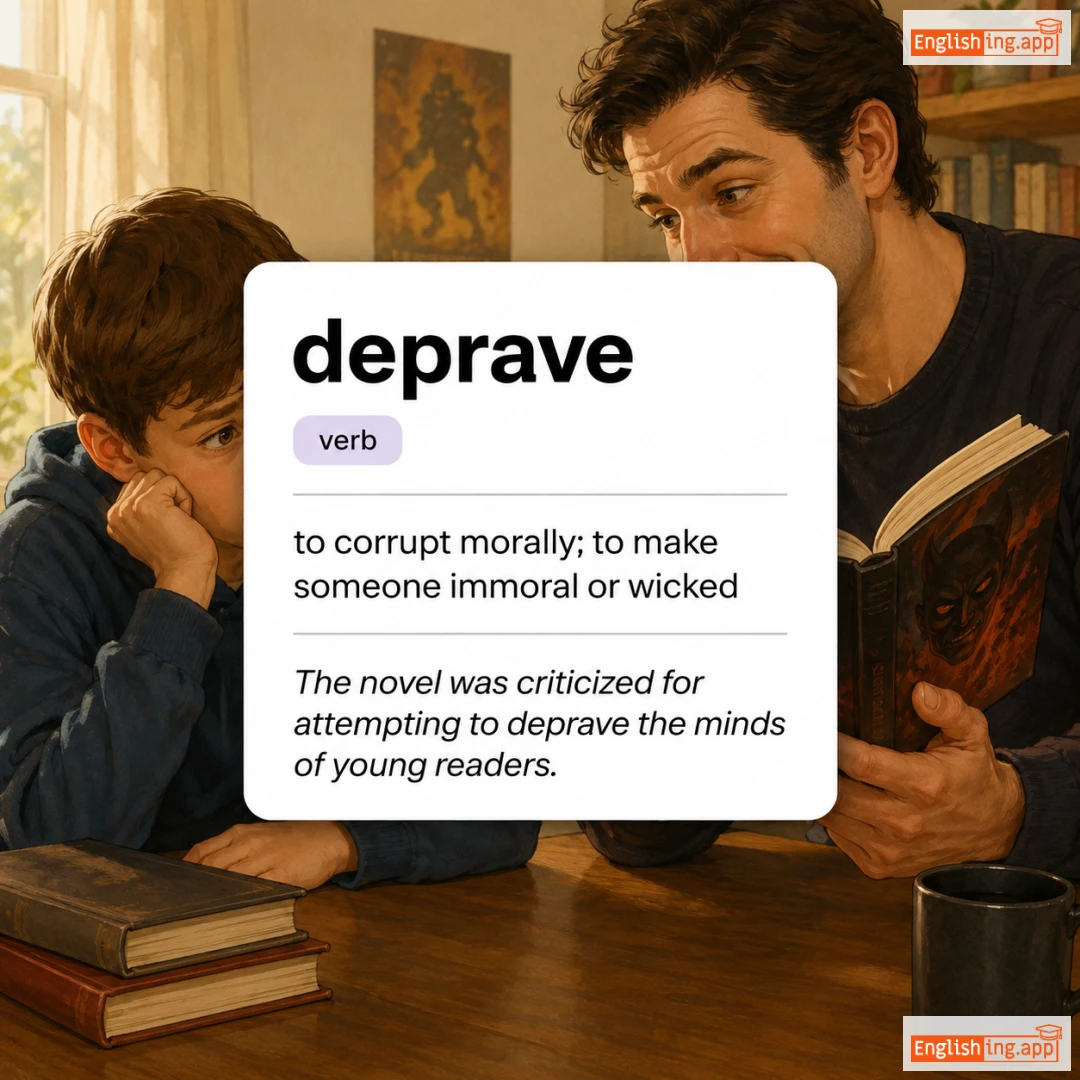
deprave definition card — visual illustration of the meaning
verb C2
/dɪˈpreɪv/
堕落させる (daraku saseru)

to corrupt morally; to make someone immoral or wicked

"The novel was criticized for attempting to deprave the minds of young readers."

"その小説は若い読者の心を堕落させようとしたため批判された。" (Sono shōsetsu wa wakai dokusha no kokoro o daraku saseyō to shita tame hihan sareta.)
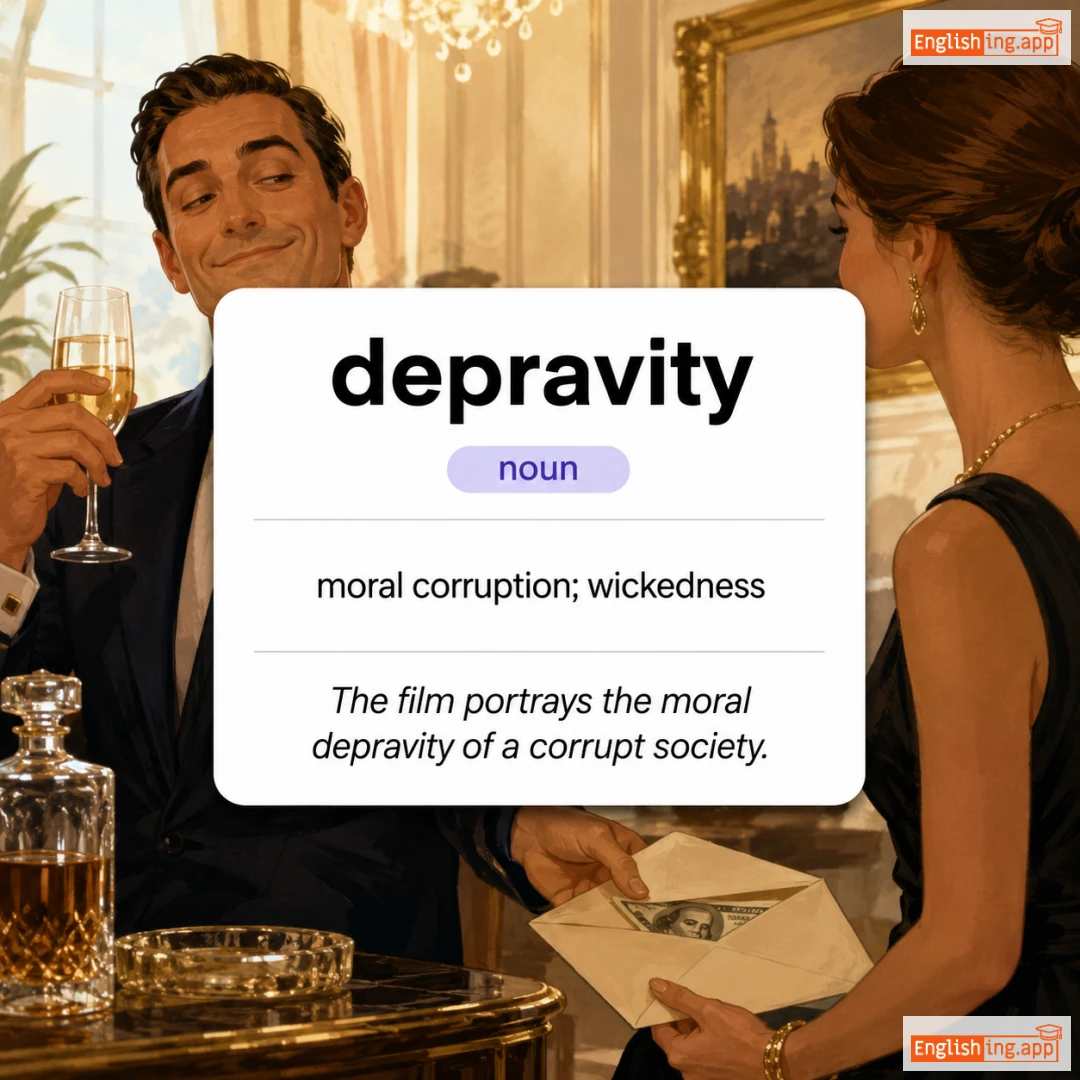
depravity definition card — visual illustration of the meaning
noun C2
/dɪˈprævɪti/
堕落 (daraku)

moral corruption; wickedness

"The film portrays the moral depravity of a corrupt society."

"その映画は腐敗した社会の道徳的堕落を描いています。" (Sono eiga wa fuhai shita shakai no doutokuteki daraku o egaiteimasu.)
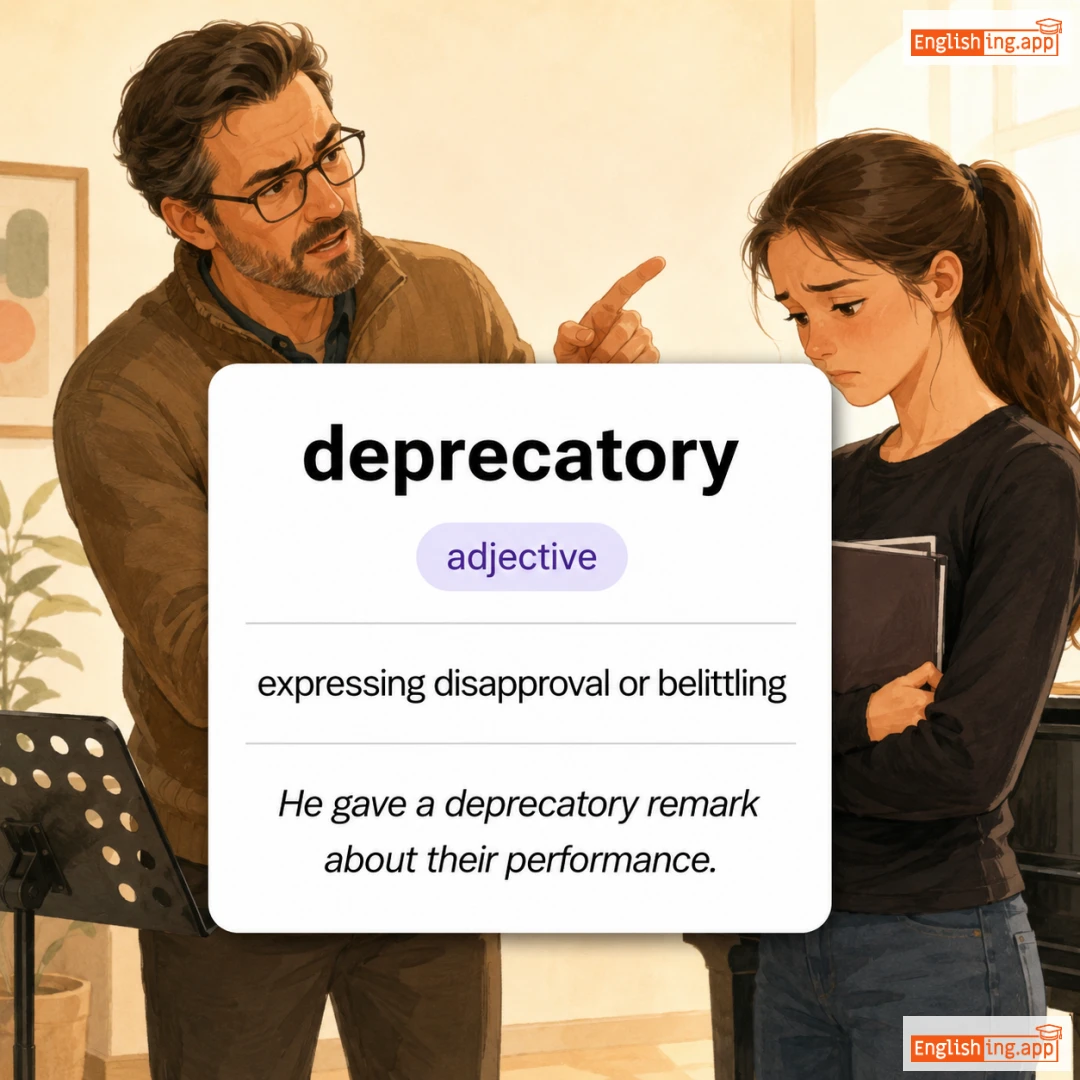
deprecatory definition card — visual illustration of the meaning
adjective C2
/ˈdɛprɪkətɔːri/
軽蔑的な (keibetsu-teki na)

expressing disapproval or belittling

"He gave a deprecatory remark about their performance."

"彼は彼らのパフォーマンスについて軽蔑的なコメントをしました。" (Kare wa karera no pafōmansu ni tsuite keibetsu-teki na komento o shimashita.)
noun C2
/ˌdɛprɪˈdeɪʃən/
略奪 (ryakudatsu)

An act of attacking or plundering; damage caused by such acts.

"The villagers feared the depredation of wild animals at night."

"村人たちは夜間の野生動物の略奪を恐れていた。" (Murabito-tachi wa yakan no yasei dōbutsu no ryakudatsu o osorete ita.)
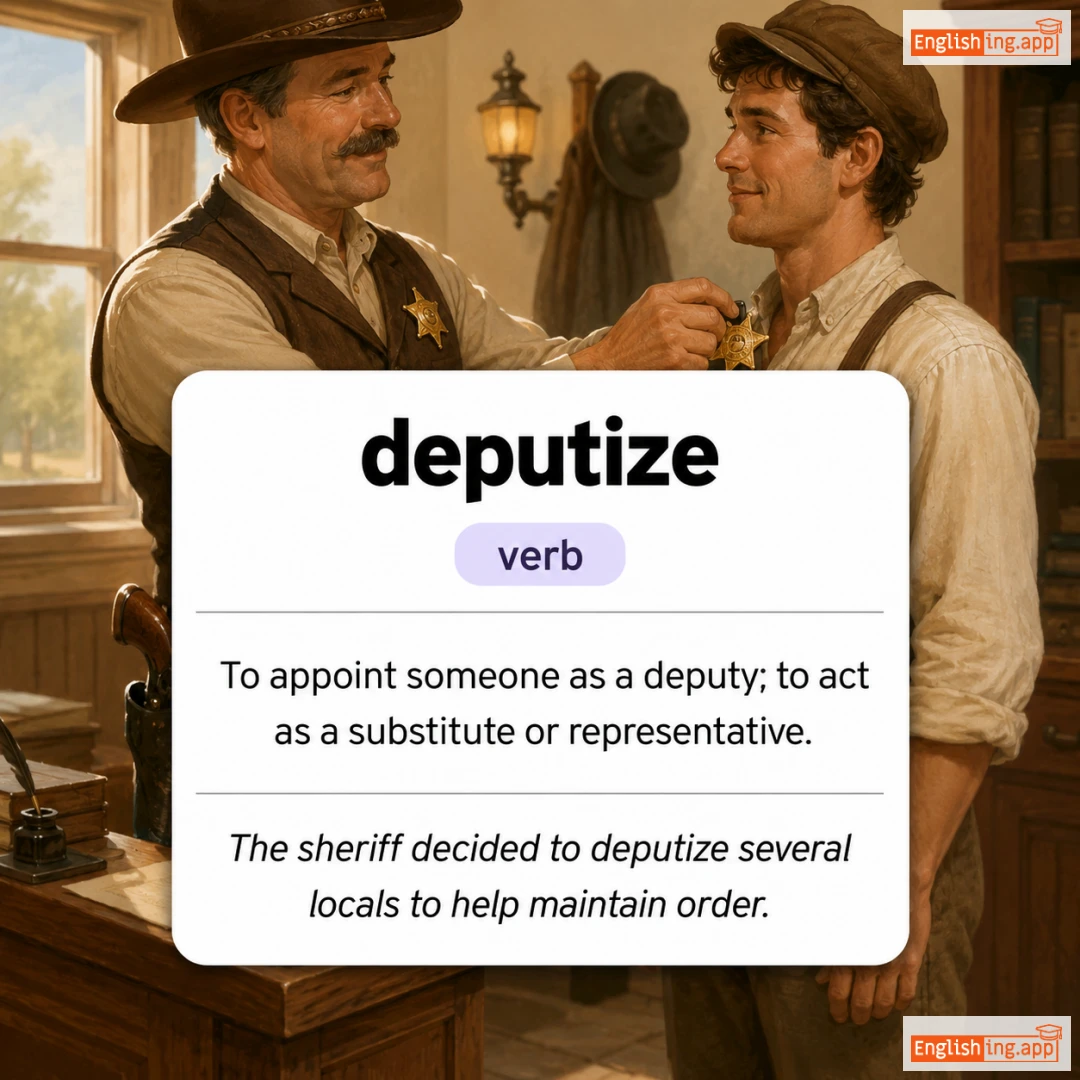
deputize definition card — visual illustration of the meaning
verb C2
/ˈdɛpjʊˌtaɪz/
副職に任命する (fukushoku ni ninmei suru)

To appoint someone as a deputy; to act as a substitute or representative.

"The sheriff decided to deputize several locals to help maintain order."

"保安官は秩序を維持するために数人の地元の人々を副職に任命することを決定しました。" (Hoankan wa chitsujo o iji suru tame ni suunin no jimoto no hitobito o fukushoku ni ninmei suru koto o kettei shimashita.)
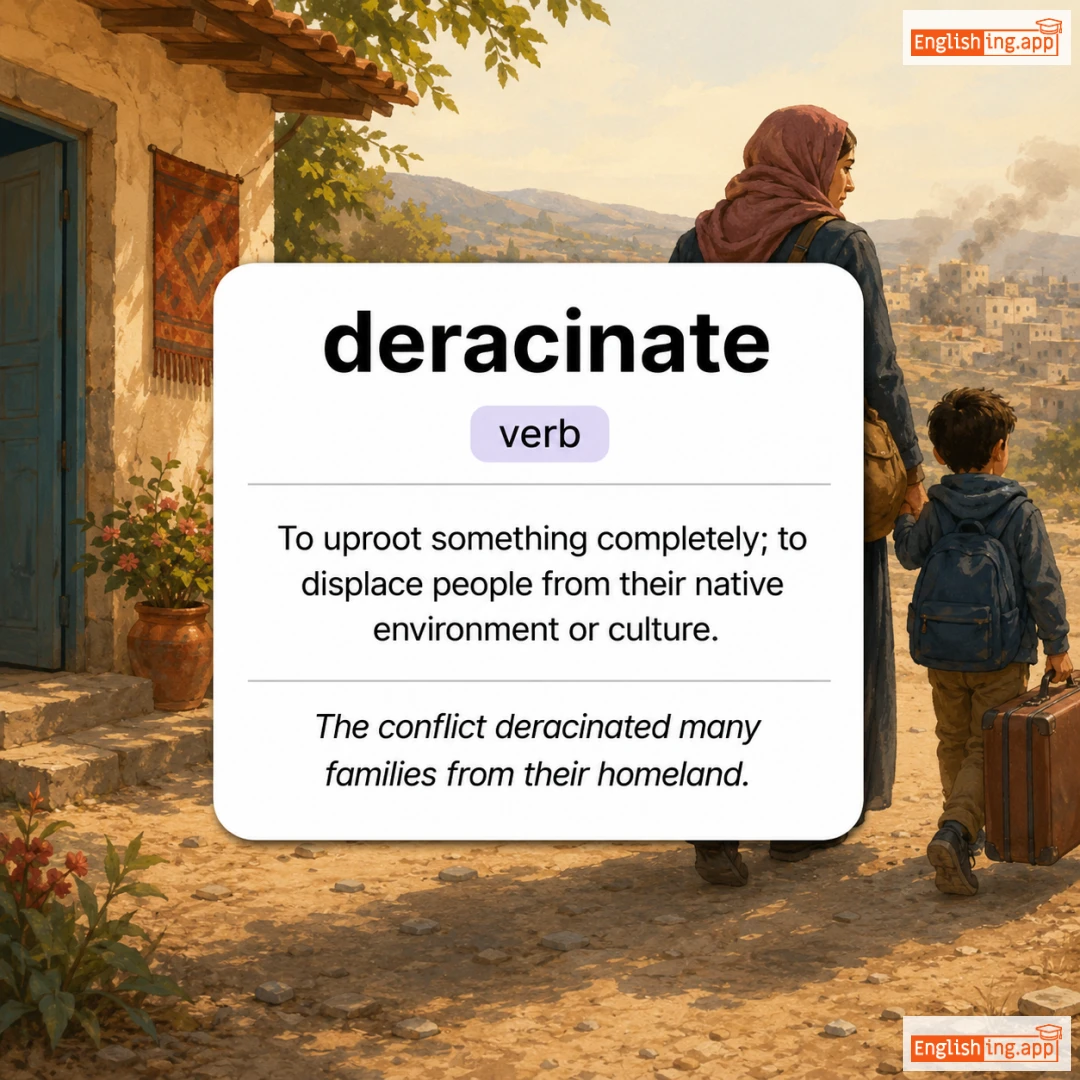
deracinate definition card — visual illustration of the meaning
verb C2
/dɪˈræsɪˌneɪt/
根こそぎ引き抜く (nekosogi hikinuku)

To uproot something completely; to displace people from their native environment or culture.

"The conflict deracinated many families from their homeland."

"その紛争は多くの家族を故郷から追い出しました。" (Sono funsō wa ōku no kazoku o kokyō kara oidasimashita.)
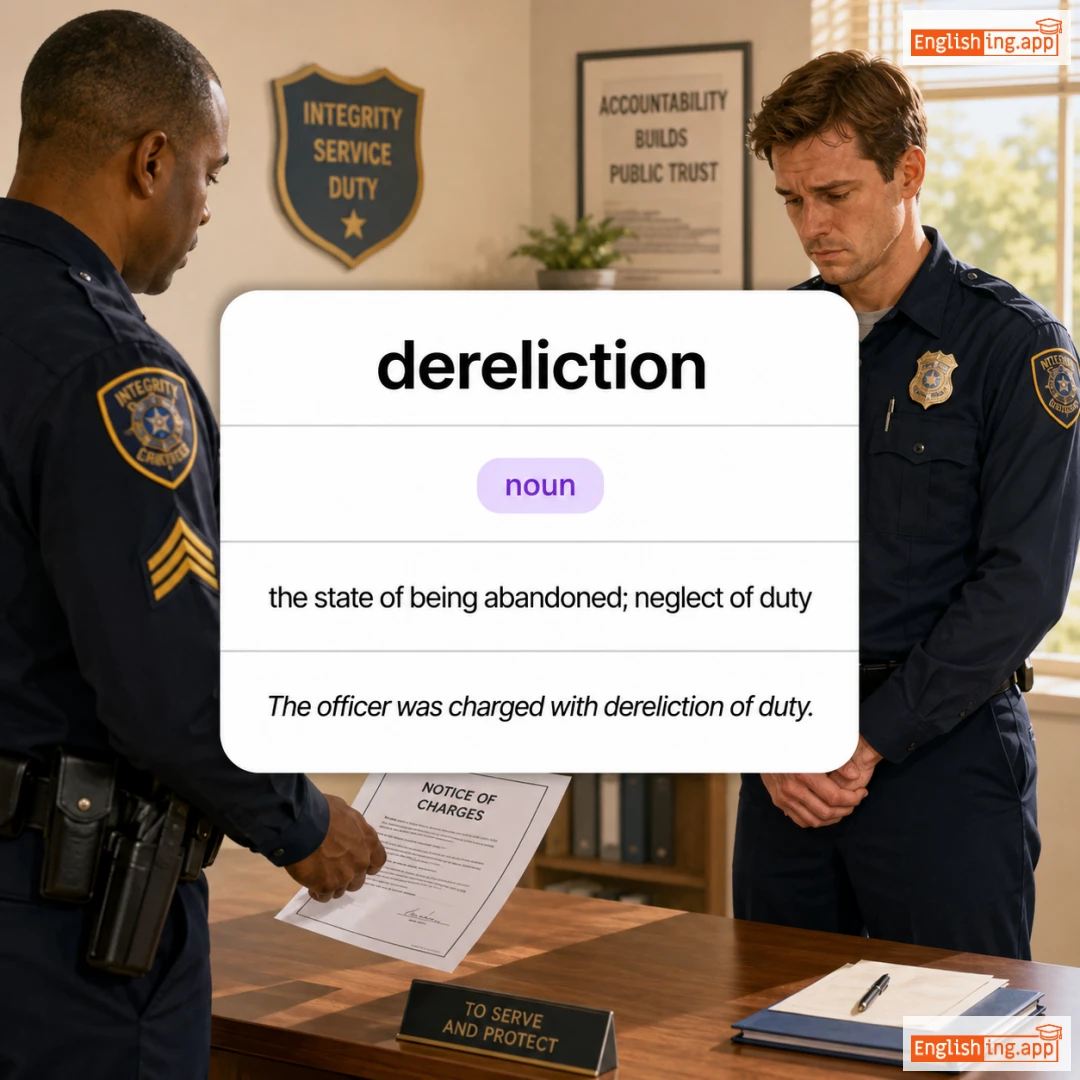
dereliction definition card — visual illustration of the meaning
noun C2
/ˌdɛrɪˈlɪkʃən/
職務怠慢 (shokumu taimann)

the state of being abandoned; neglect of duty

"The officer was charged with dereliction of duty."

"その役人は職務怠慢で起訴された。" (Sono yakunin wa shokumu taimann de kiso sareta.)
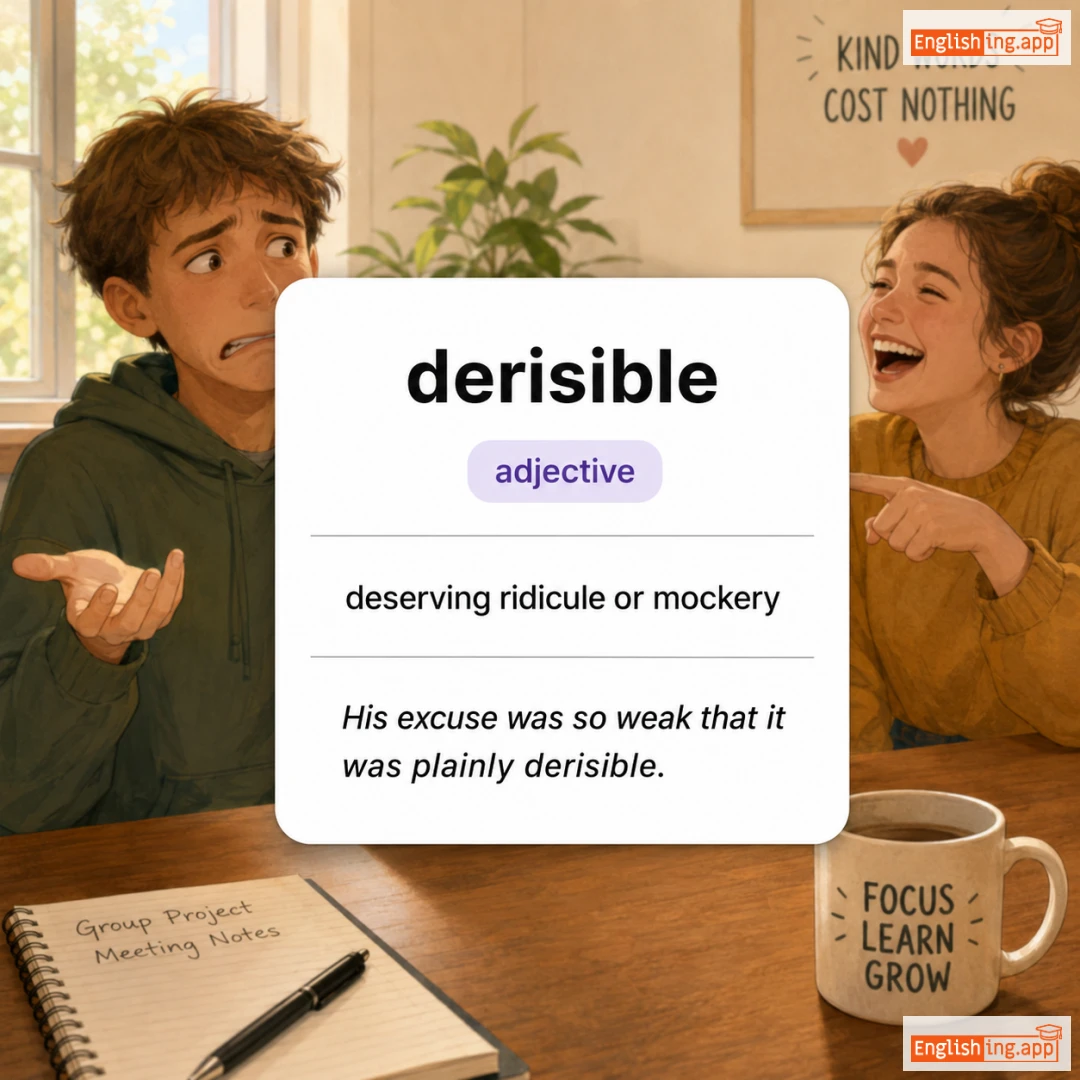
derisible definition card — visual illustration of the meaning
adjective C2
/dɪˈrɪzəbl/
嘲笑に値する (choushou ni ataisuru)

deserving ridicule or mockery

"His excuse was so weak that it was plainly derisible."

"彼の言い訳は非常に弱く、明らかに嘲笑に値した。" (Kare no iiwake wa hijou ni yowaku, akiraka ni choushou ni ataishita.)
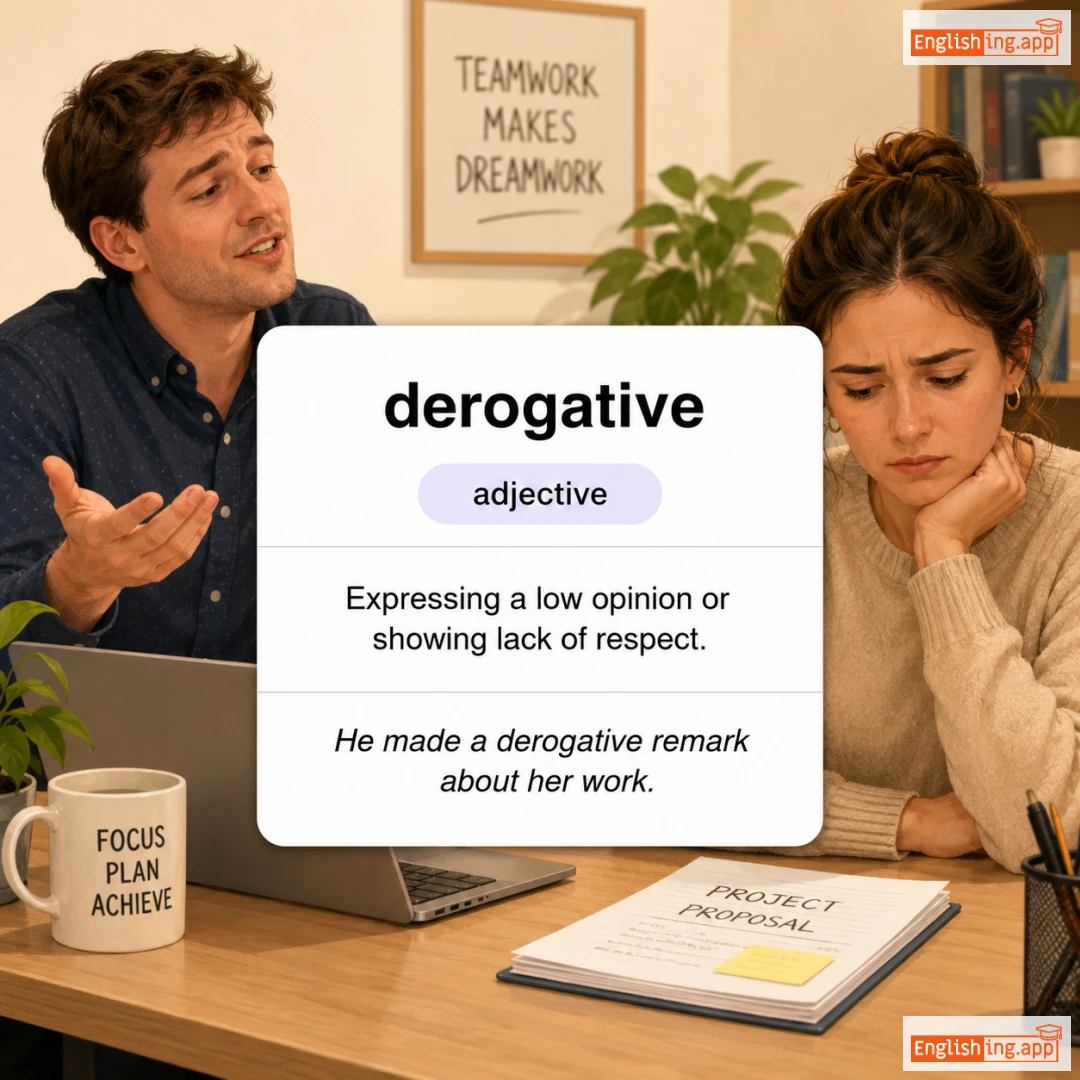
derogative definition card — visual illustration of the meaning
adjective C2
/dɪˈrɒɡətɪv/
侮辱的 (bujokuteki)

Expressing a low opinion or showing lack of respect.

"He made a derogative remark about her work."

"彼は彼女の仕事について侮辱的な発言をした。" (Kare wa kanojo no shigoto ni tsuite bujokuteki na hatsugen o shita.)
noun C2
/ˈdɛrɪk/
掘削塔 (kutsusaku-tō)

A framework or tower used for supporting a crane, especially for oil drilling or lifting heavy loads.

"The workers assembled a derrick at the oil drilling site."

"作業員たちは石油掘削サイトで掘削塔を組み立てました。" (Sagyouin-tachi wa sekiyū kutsusaku saito de kutsusaku-tō o kumitatemashita.)
noun C2
/ˈdɛskænt/
追加メロディー (tsuika merodī)

An additional melody or counterpoint sung or played above the main melody.

"The choir added a beautiful descant to the hymn."

"合唱団は賛美歌に美しい追加メロディーを加えました。" (Gasshōdan wa sanbika ni utsukushī tsuika merodī o kuwaemashita.)
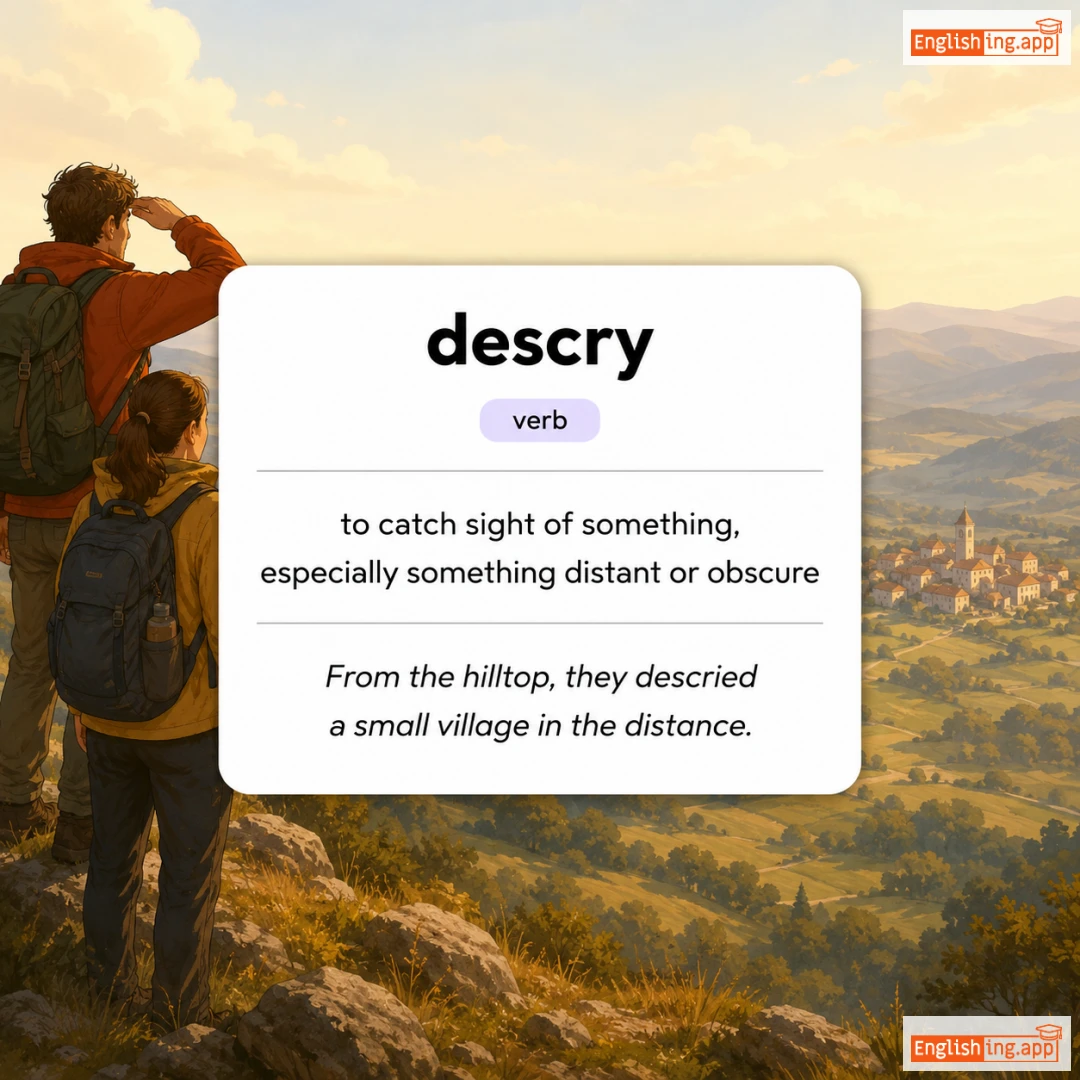
descry definition card — visual illustration of the meaning
verb C2
/dɪˈskraɪ/
遠くで見る (tōku de miru)

to catch sight of something, especially something distant or obscure

"From the hilltop, they descried a small village in the distance."

"丘の頂上から、彼らは遠くの小さな村を見た。" (Oka no chōjō kara, karera wa tōku no chiisana mura o mita.)
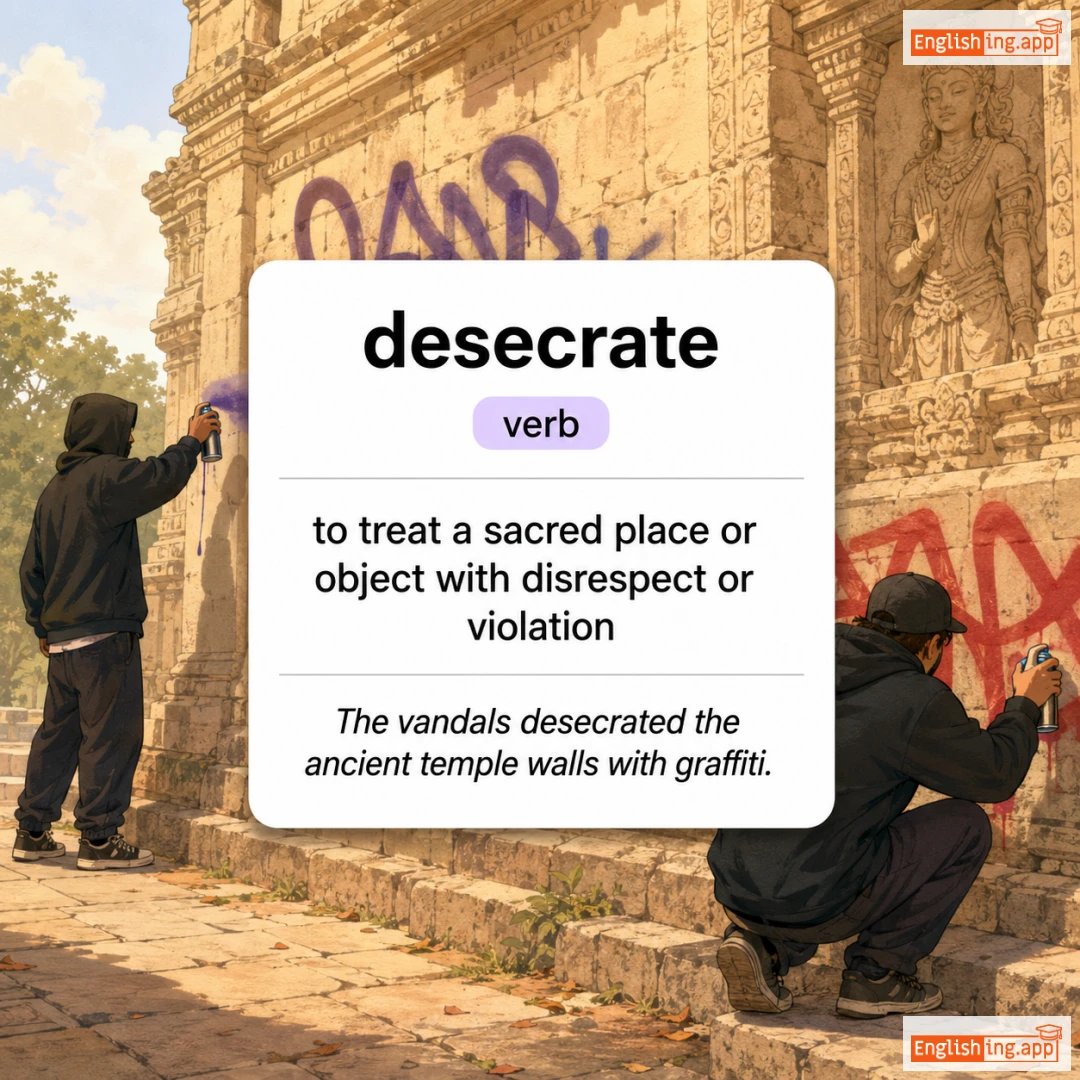
desecrate definition card — visual illustration of the meaning
verb C2
/ˈdɛsɪkreɪt/
冒涜する (bōtoku suru)

to treat a sacred place or object with disrespect or violation

"The vandals desecrated the ancient temple walls with graffiti."

"ヴァンダルたちは古代の寺院の壁をグラフィティで冒涜しました。" (Vandaru-tachi wa kodai no jiin no kabe o gurafiti de bōtoku shimashita.)
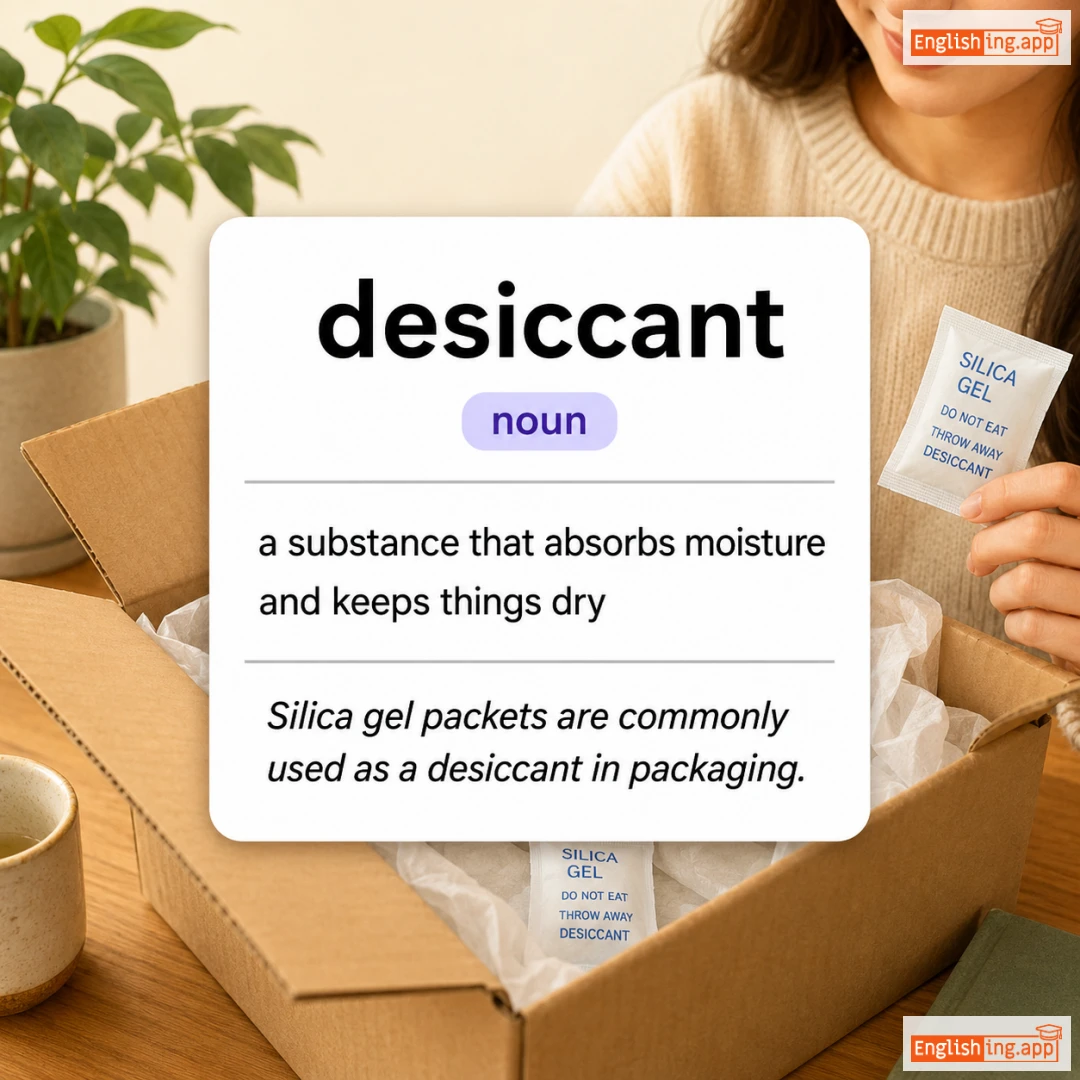
desiccant definition card — visual illustration of the meaning
noun C2
/ˈdɛsɪkənt/
乾燥剤 (kansōzai)

a substance that absorbs moisture and keeps things dry

"Silica gel packets are commonly used as a desiccant in packaging."

"シリカゲルのパケットは、パッケージングで乾燥剤として一般的に使用されます。" (Shirika gero no paketto wa, pakkējingu de kansōzai toshite ippanteki ni shiyō saremasu.)
desiccate definition card — visual illustration of the meaning
verb C2
/ˈdɛsɪkeɪt/
乾燥させる (kansou saseru)

to dry up completely or remove the moisture from something

"The hot sun can quickly desiccate plants in the desert."

"暑い太陽は砂漠の植物をすぐに乾燥させることができます。" (Atsui taiyō wa sabaku no shokubutsu o sugu ni kansō saseru koto ga dekimasu.)
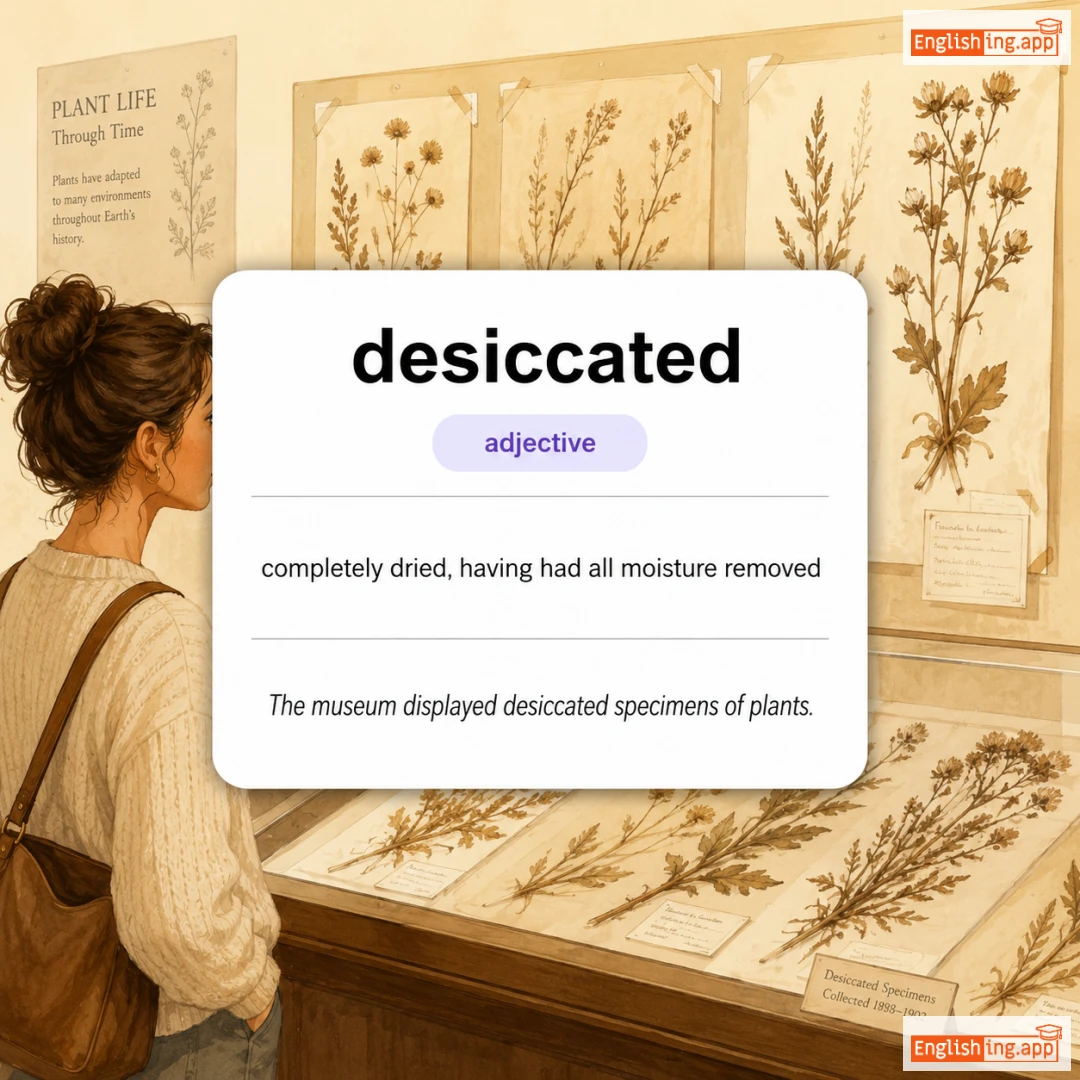
desiccated definition card — visual illustration of the meaning
adjective C2
/ˈdɛsɪkeɪtɪd/
乾燥した (kansō shita)

completely dried, having had all moisture removed

"The museum displayed desiccated specimens of plants."

"博物館は乾燥した植物標本を展示した。" (Hakubutsukan wa kansō shita shokubutsu hyōhon o tenji shita.)
noun C2
/dɪˌsɪdəˈreɪtəm/
必要な物 (hitsuyou na mono)

something that is desired or considered necessary

"For many students, financial aid is a desideratum."

"多くの学生にとって、経済援助は必要な物です。" (Ookuno gakusei ni totte, keizai enjo wa hitsuyou na mono desu.)
noun C2
/dɪˈsɪstəns/
停止 (teishi)

The act of stopping or ceasing from some action or behavior.

"The court urged his desistance from further unlawful activities."

"裁判所は彼にさらなる違法行為から停止するよう促しました。" (Saibansho wa kare ni sarana iru ihō kōi kara teishi suru yō unagashimashita.)
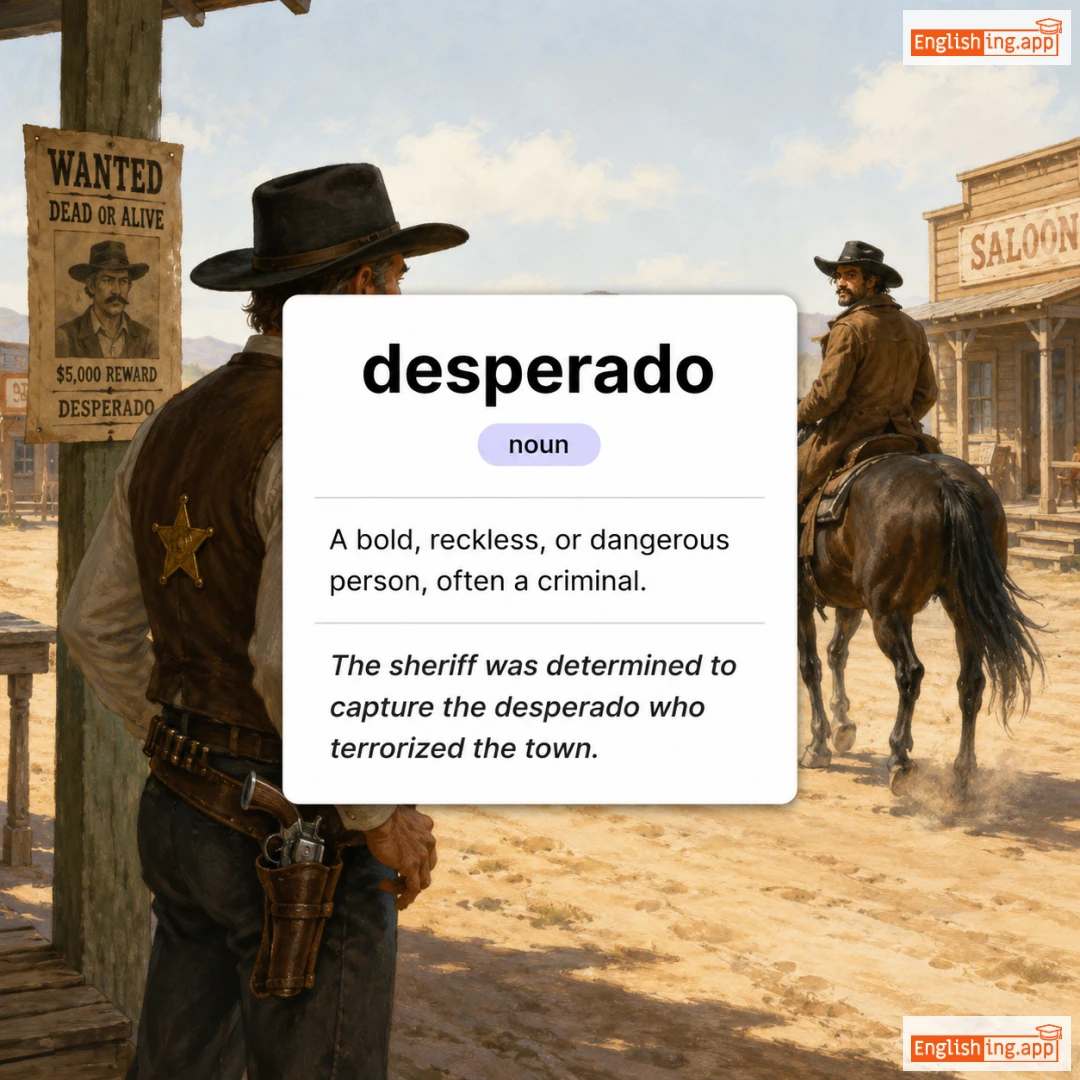
desperado definition card — visual illustration of the meaning
noun C2
/ˌdɛspəˈrɑːdoʊ/

A bold, reckless, or dangerous person, often a criminal.

"The sheriff was determined to capture the desperado who terrorized the town."

verb C2
/dɪˈspɔɪl/
略奪する (ryakudatsu suru)

To steal or violently remove valuable possessions from a place.

"The invaders despoiled the village during the war."

"侵略者は戦争中に村を略奪しました。" (Shinryakusha wa sensō-chū ni mura o ryakudatsu shimashita.)
noun C2
/dɪˈspɔɪlər/
略奪者 (ryakudatsusha)

A person who robs, plunders, or violently takes things from others.

"The despoilers left the city in ruins."

"略奪者たちは街を廃墟にした。" (Ryakudatsusha-tachi wa machi o haikyo ni shita.)