Vokabulare

Englisches Vokabelwörterbuch | Wortbedeutungen, Definitionen & Beispiele

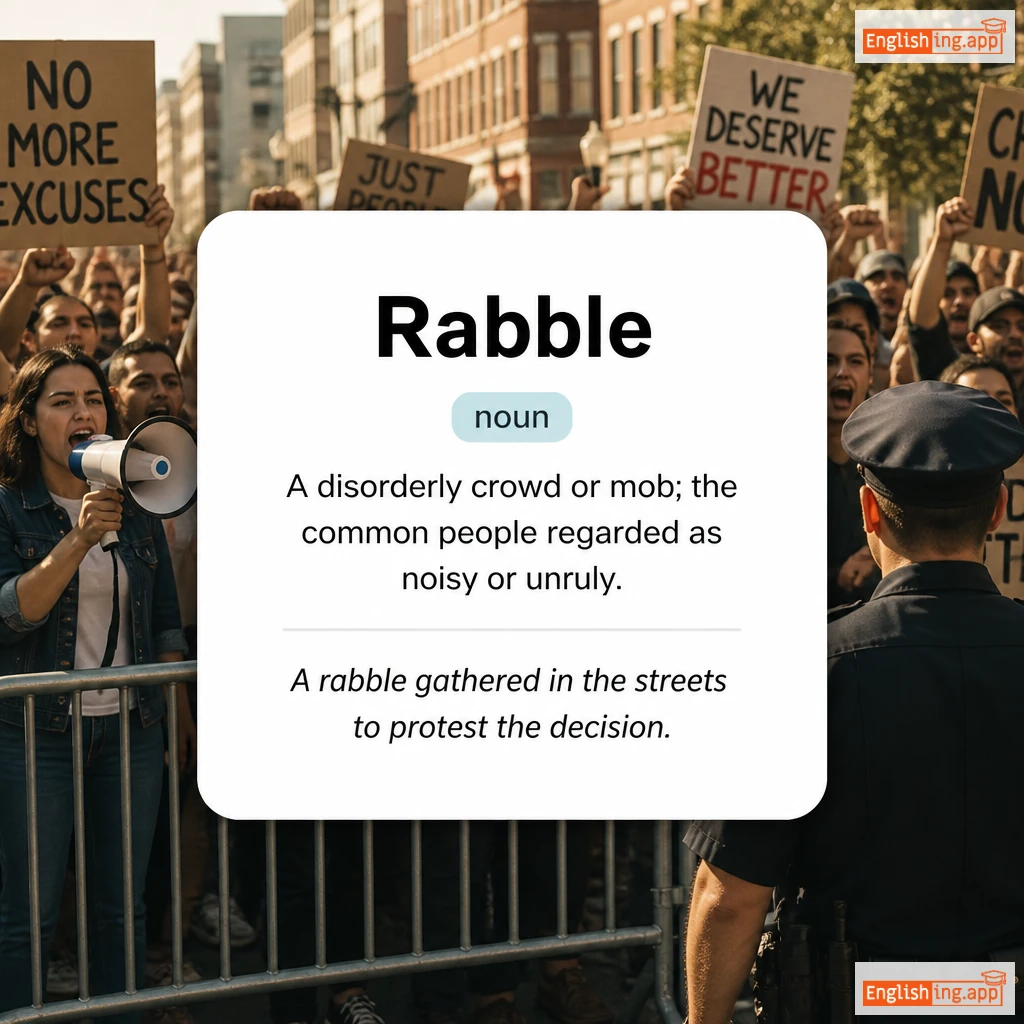
Rabble definition card — visual illustration of the meaning
noun C2
/ˈræb.əl/
無秩序な群衆 (muchi tetsuna gunshuu)

A disorderly crowd or mob; the common people regarded as noisy or unruly.

"A rabble gathered in the streets to protest the decision."

"無秩序な群衆が通りに集まり、決定に抗議しました。" (muchi tetsuna gunshuu ga toori ni atsumari, kettei ni kougi shimashita.)
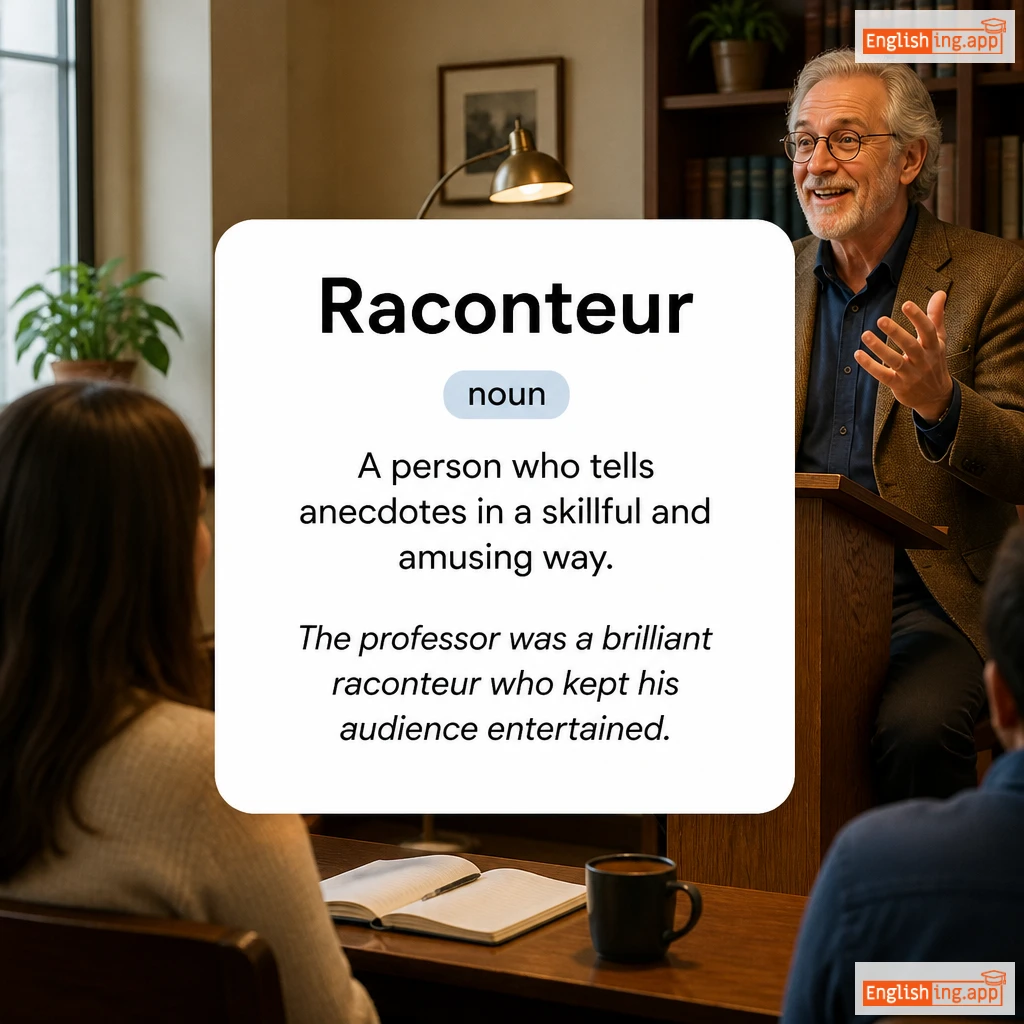
Raconteur definition card — visual illustration of the meaning
noun C2
/ˌræk.ɒnˈtɜːr/
巧妙な語り手 (koumyou na katarite)

A person who tells anecdotes in a skillful and amusing way.

"The professor was a brilliant raconteur who kept his audience entertained."

"その教授は素晴らしい語り手で、観客を楽しませ続けた。" (Sono kyōju wa subarashii katarite de, kankyaku o tanoshimase tsuzuketa.)
noun C2
/ˈreɪdɪks/
基数 (kisū)

the base or root of something; the number on which a system of numeration is built

"In mathematics, the decimal system has a radix of ten."

"数学では、十進法の基数は十です。" (Sūgaku de wa, jū-shinhō no kisū wa jū desu.)
adjective C2
/ˈræfɪʃ/
型破りで少し評判が悪いが魅力的 (katayari de sukoshi hyōban ga warui ga miryokuteki)

unconventional and slightly disreputable but attractive

"He had a raffish charm that made him popular in the city."

"彼は街で人気がある理由は、レイフィッシュな魅力があったからだ。" (Kare wa machi de ninki ga aru riyū wa, reifisshu na miryoku ga atta kara da.)
noun C2
/ˈræɡəmʌfɪn/
ぼろぼろの子供 (boroboro no kodomo)

A person, typically a child, in ragged, dirty clothes.

"The little ragamuffin begged for food on the street."

"小さなぼろぼろの子供が通りで食べ物を求めていた。" (Chīsana boroboro no kodomo ga tōri de tabemono o motomete ita.)
noun C2
/ˈreɪləri/
友好的な冗談 (yū kō teki na jōdan)

good-humored teasing or joking

"Their friendship was full of light-hearted raillery."

"彼らの友情は軽い冗談で満ちていました。" (Karera no yūjō wa karui jōdan de michiteimashita.)
noun C2
/ˈreɪmənt/
衣服 (ifuku)

clothing, especially fine or formal wear

"The king wore royal raiment during the ceremony."

"王は儀式の間、王族の衣服を着ていた。" (Ou wa gishiki no aida, ouzoku no ifuku o kiteita.)
verb C2
/ˈræm.ɪ.faɪ/
分岐する (bunki suru)

to spread or branch out into divisions or subdivisions.

"The river ramifies into several smaller streams."

"川は複数の小さな小川に分岐します。" (Kawa wa fukusū no chīsana ogawa ni bunki shimasu.)
adjective C2
/ˈreɪ.moʊs/
分岐した (bunkishita)

having many branches.

"The ramose tree shaded the entire garden."

"その分岐した木は庭全体に日陰を提供しました。" (Sono bunkishita ki wa niwa zentai ni hikage o teikyō shimashita.)
noun C2
/ˈræŋ.kər/
憎しみ (nikushimi)

A feeling of deep and bitter anger or resentment.

"There was a rancor between the two rivals that never faded."

"二人のライバルの間には、決して消えることのない憎しみがあった。" (Futari no raibaru no aida ni wa, kesshite kieru koto no nai nikushimi ga atta.)
adjective C2
/ˈræŋ.kər.əs/
恨みを持った (urami wo motta)

Characterized by bitterness or resentment.

"Their rancorous debate lasted for hours."

"彼らの恨みを持った議論は何時間も続いた。" (Karera no urami wo motta giron wa nan jikan mo tsuzuita.)
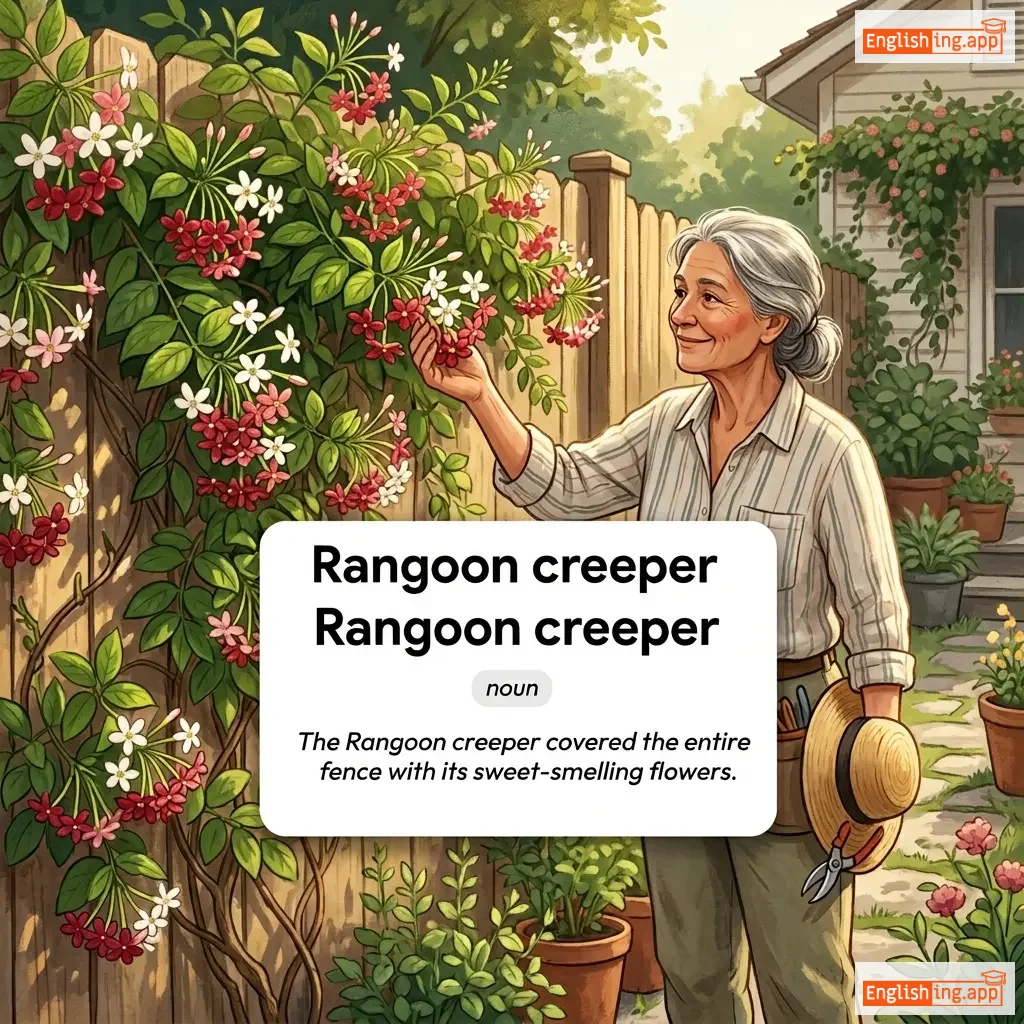
Rangoon creeper definition card — visual illustration of the meaning
noun C2
/ræŋˈɡuːn ˈkriːpər/
ランゴーン クリーパー (Rangoon creeper)

A climbing vine with fragrant flowers that change color from white to pink to red

"The Rangoon creeper covered the entire fence with its sweet-smelling flowers."

"ランゴーン クリーパーはその甘い香りの花でフェンス全体を覆いました。" (Rangoon creeper wa sono amai kaori no hana de fensu zentai wo ooi mashita.)
verb C2
/ˈræŋ.kəl/
イライラさせる (iraira saseru)

To cause continuing annoyance or resentment.

"His unfair criticism continued to rankle her for days."

"彼の不公平な批判は何日も彼女をイライラさせ続けた。" (Kare no fukouhei na hihan wa nannichi mo kanojo o iraira sase tsudzuketa.)
adjective C2
/rəˈpeɪ.ʃəs/
貪欲 (don'yoku)

having an extreme desire to take things for oneself, greedy

"The rapacious landlord raised the rent without reason."

"貪欲な家主は理由もなく家賃を上げた。" (Don'yoku na iyashu wa riyuu mo naku yachin wo ageta.)
noun C2
/ˈræp.aɪn/
略奪 (ryakudatsu)

the violent seizure of someone's property

"The war was marked by rapine and destruction."

"戦争は略奪と破壊で特徴づけられていた。" (Sensō wa ryakudatsu to hakai de tokuchō dzukerarete ita.)
noun C2
/ˌræproʊʃˈmɑːn/
関係修復 (kankei shūfuku)

The establishment or resumption of harmonious relations.

"The two countries signed an agreement that marked a new rapprochement."

"二国は新しい関係修復を示す合意書に署名した。" (Nikkoku wa atarashī kankei shūfuku o shimesu gōisho ni shomei shita.)
noun C2
/ræpˈskæliən/
いたずら好きな人 (itazura sukina hito)

A mischievous or cheeky person; a rascal.

"The little rapscallion hid his brother’s shoes as a prank."

"小さなラプスカリオンは兄の靴をいたずらで隠した。" (Chiisana rapscallion wa ani no kutsu o itazura de kakushita.)
adjective C2
/ræpˈtɔːriəl/
肉食鳥 (nikushoku tori)

Relating to birds of prey or predatory behavior.

"The eagle is a raptorial bird with sharp talons."

"ワシは鋭い爪を持つ肉食鳥です。" (Washi wa surudoi tsume o motsu nikushoku tori desu.)
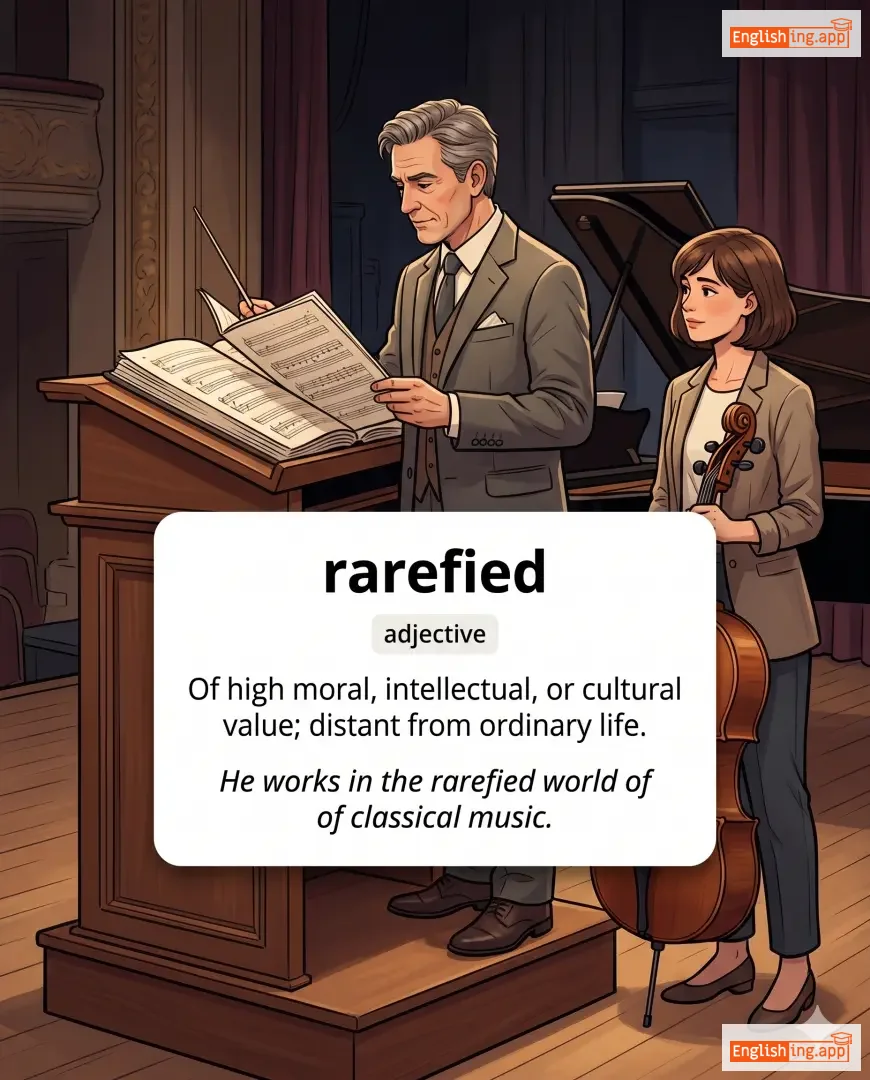
rarefied definition card — visual illustration of the meaning
adjective C2
/ˈreə.rɪ.faɪd/

Of high moral, intellectual, or cultural value; distant from ordinary life.

"He works in the rarefied world of classical music."

verb C2
/ˈreə.rɪ.faɪ/
薄くする, 精製する (usukusuru, seisei suru)

To make something less dense or more refined.

"The air rarefies as you climb higher into the mountains."

"山に登るにつれて、空気は薄くなります。" (Yama ni noboru ni tsurete, kūki wa usuku narimasu.)
noun C2
/ˌræʃioʊsɪˈneɪʃən/
推論 (suiron)

the process of reasoning or logical thinking

"His ratiocination impressed the judges during the debate."

"彼の推論は討論中に審査員を感動させた。" (Kare no suiron wa touron-chuu ni shinsain wo kandou saseta.)
noun C2
/ˈræʃənəlɪzəm/
合理主義 (gōri shugi)

a belief or theory that opinions and actions should be based on reason and knowledge rather than religious belief or emotion

"Rationalism emphasizes logic and reasoning over faith."

"合理主義は信仰よりも論理と推論を強調します。" (Gōri shugi wa shinkō yori mo ronri to suiron o kyōchō shimasu.)
verb C2
/ˈrævəl/
絡まる / 解く (karamaru / hodoku)

to tangle or complicate; to untangle or unravel depending on context

"She began to ravel the loose threads of the sweater."

"彼女はセーターのゆるい糸をほどき始めました。" (Kanojo wa seetaa no yurui ito o hodoki hajimemashita.)
adjective C2
/ˈrævənɪŋ/
非常に空腹で貪欲 (hijō ni kūfuku de dongyoku)

Extremely hungry and greedy; voracious.

"The ravening wolves circled the camp."

"空腹の狼たちはキャンプを囲んだ。" (Kūfuku no ōkami-tachi wa kyanpu o kakonda.)
verb C2
/ˈrævɪʃ/
魅了する (miryō suru)

To fill with intense delight; to captivate or enchant.

"The beauty of the sunset ravished the travelers."

"夕日の美しさが旅行者を魅了した。" (Yūhi no utsukushisa ga ryokō-sha o miryō shita.)
noun C2
/riːm/
リーム (riimu)

A large quantity of paper (typically 500 sheets); informally, a large amount of something.

"The office ordered ten reams of paper."

"オフィスは10リームの紙を注文した。" (Ofisu wa 10 riimu no kami o chūmon shita.)
noun C2
/ˈriːbəs/
なぞなぞ (nazonazo)

a puzzle in which words are represented by pictures, symbols, or letters

"The children enjoyed solving the rebus puzzles in the magazine."

"子供たちは雑誌のなぞなぞを解くのを楽しみました。" (Kodomotachi wa zasshi no nazo nazo o toku no o tanoshimimashita.)
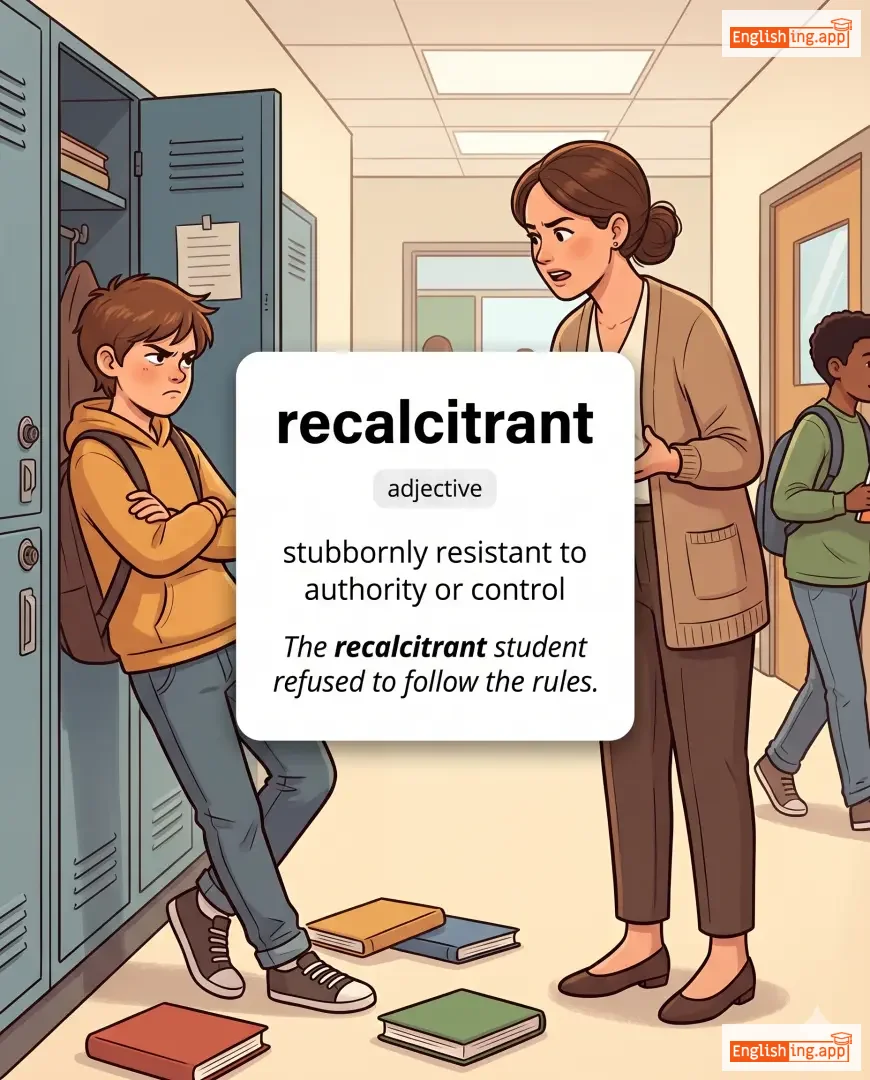
recalcitrant definition card — visual illustration of the meaning
adjective C2
/rɪˈkælsɪtrənt/

stubbornly resistant to authority or control

"The recalcitrant student refused to follow the rules."

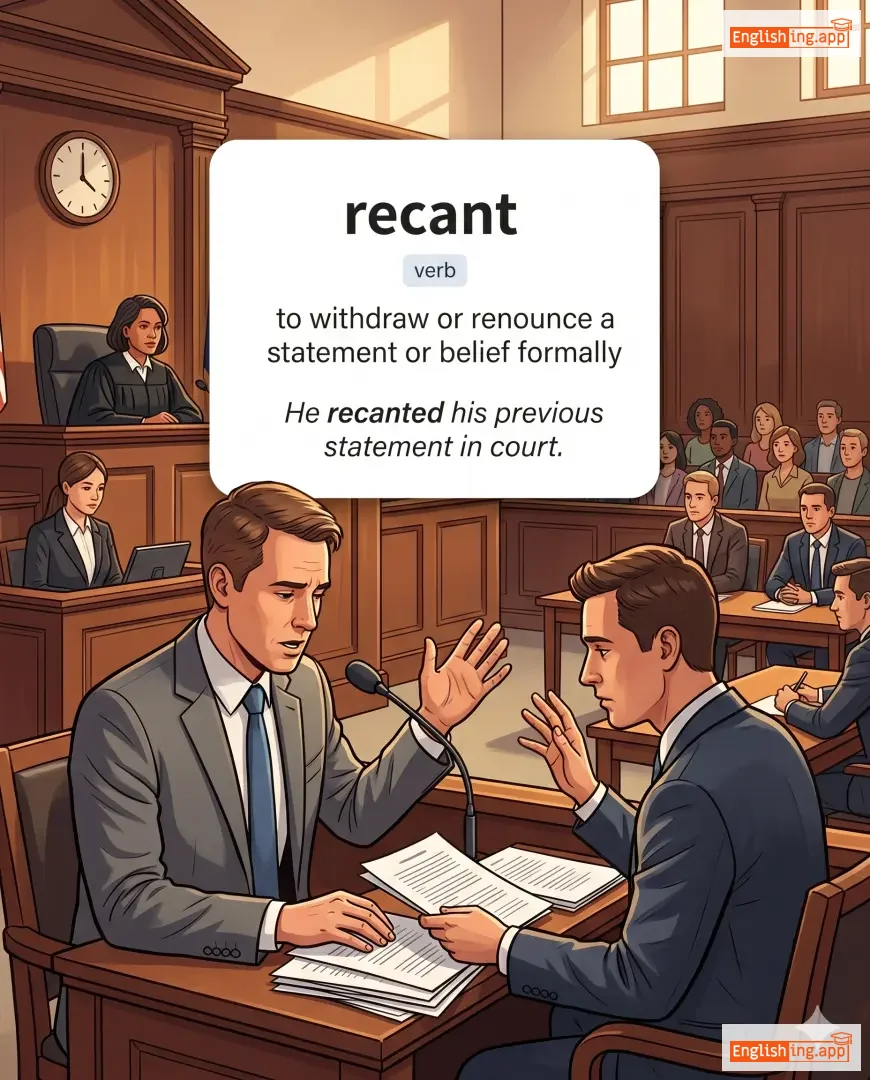
recant definition card — visual illustration of the meaning
verb C2
/rɪˈkænt/
撤回する (tekkai suru)

to withdraw or renounce a statement or belief formally

"He recanted his previous statement in court."

"彼は裁判で以前の発言を撤回しました。" (Kare wa saiban de izen no hatsugen o tekkai shimashita.)
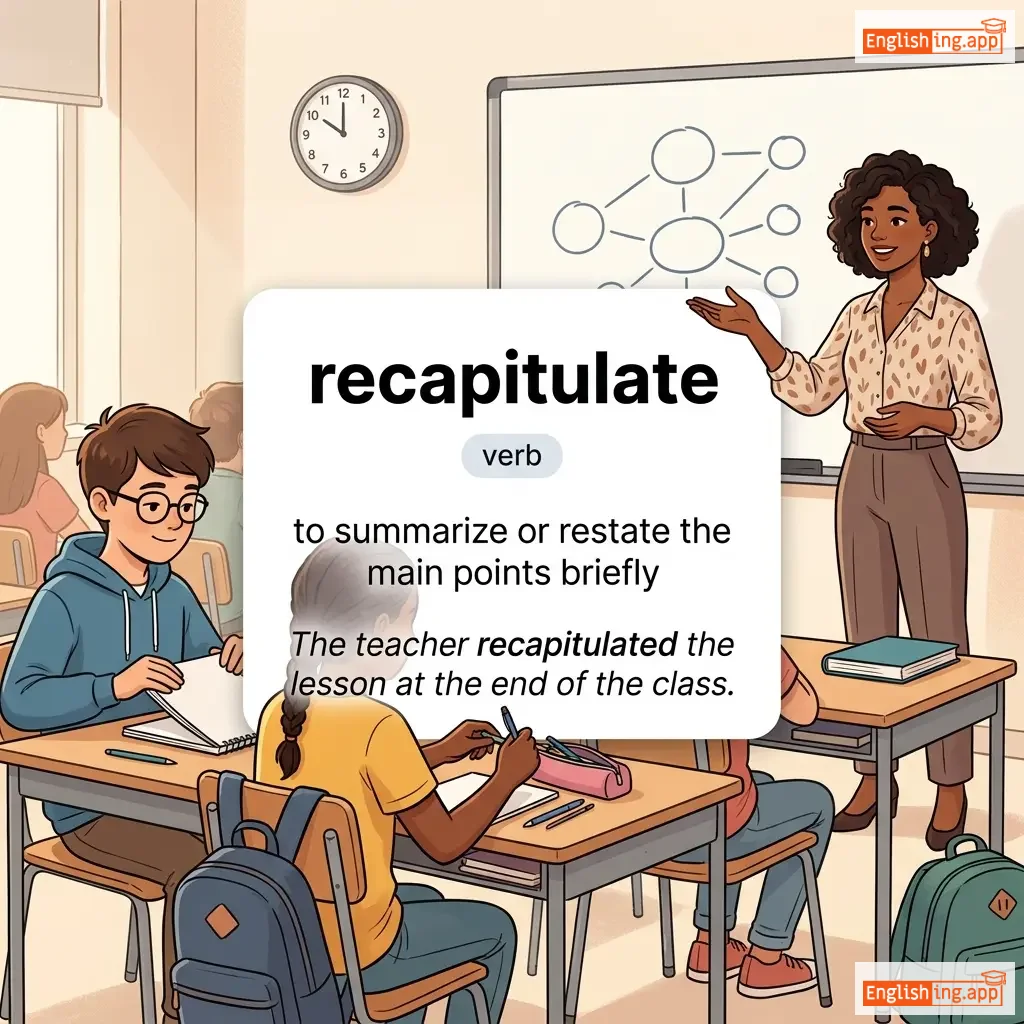
recapitulate definition card — visual illustration of the meaning
verb C2
/ˌriːkəˈpɪtjʊleɪt/
要約する (yōyaku suru)

to summarize or restate the main points briefly

"The teacher recapitulated the lesson at the end of the class."

"先生はクラスの最後に授業を要約しました。" (Sensei wa kurasu no saigo ni jugyō o yōyaku shimashita.)
noun C2
/ˌriːkəˌpɪtjʊˈleɪʃən/
要約 (yōyaku)

The act of summarizing or repeating the main points of something.

"The professor gave a brief recapitulation of the lecture before ending the class."

"教授はクラスを終える前に講義の簡単な要約を行いました。" (Kyōju wa kurasu o oeru mae ni kōgi no kantan na yōyaku o okonaimashita.)
adjective C2
/rəˈʃɛrʃ/
希少 (kishō)

Rare, exotic, or obscure, often in a sophisticated or refined way.

"The gallery displayed many recherche artworks from unknown artists."

"ギャラリーは、未知のアーティストによる多くの希少なアート作品を展示しました。" (Gyararī wa, michi no ātisuto ni yoru ōku no kishō na āto sakuhin o tenji shimashita.)
noun C2
/rɪˈsɪdɪˌvɪzəm/

The tendency of a convicted criminal to reoffend or relapse into criminal behavior.

"The government introduced new programs to reduce recidivism among former inmates."

noun C2
/rɪˈsɪdɪvɪst/
再犯者 (saihansha)

A person who repeatedly commits crimes, especially after having been punished.

"The police identified him as a recidivist who had been arrested several times before."

"警察は彼を再犯者として特定し、以前に何度も逮捕されていた。" (Keisatsu wa kare o saihansha toshite tokutei shi, izen ni nando mo taiho sarete ita.)
verb (archaic/rare) C2
/rɛk/
気にする (ki ni suru)

To care about or be concerned with (something); to have regard for.

"He does not reck the dangers of his actions."

"彼は自分の行動の危険を気にしない。" (Kare wa jibun no kōdō no kiken o ki ni shinai.)
noun C2
/ˈrɛkluːsəri/
隠遁場所 (inton basho)

A place for seclusion or retreat, especially for a recluse or hermit.

"The monk spent years in the reclusory away from society."

"その僧侶は社会から離れた隠遁場所で数年を過ごしました。" (Sono sōryo wa shakai kara hanareta inton basho de sūnen o sugoshimashita.)
noun C2
/rɪˈkɒɡnɪzəns/
法的義務 (hōteki gimu)

A legal obligation or bond entered into before a court, especially to ensure future appearance.

"He was released on his own recognizance."

"彼は自分の法的義務で釈放されました。" (Kare wa jibun no hōteki gimu de shakuho saremashita.)
noun/verb C2
/ˈrɛkəmˌpɛns/
賠償 (baishou)

to compensate someone for loss or harm suffered; compensation given for damage or injury

"The company offered financial recompense to the injured worker."

"その会社は負傷した労働者に対して金銭的な賠償を提供しました。" (Sono kaisha wa fushou shita roudousha ni taishite kinseiteki na baishou o teikyoushimashita.)
adjective C2
/ˈrɛkənˌsaɪləbl̩/

Capable of being resolved or made consistent.

"Their differences are reconcilable with honest communication."

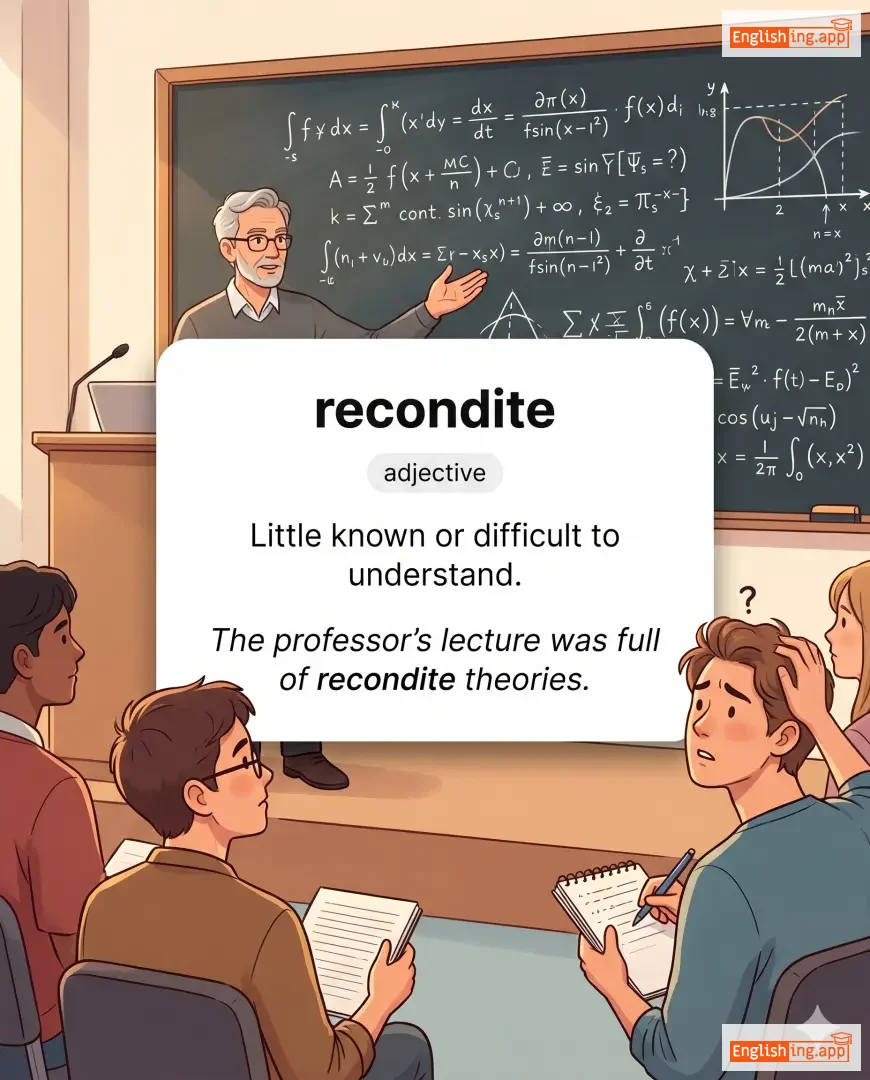
recondite definition card — visual illustration of the meaning
adjective C2
/ˈrɛkənˌdaɪt/ or /ˈrɛkəndaɪt/
ほとんど知られていない、または理解しにくい (hotondo shirarete inai, matawa rikai shinikui)

Little known or difficult to understand.

"The professor’s lecture was full of recondite theories."

"教授の講義は難解な理論で満ちていた。" (Kyoju no kogī wa nankai na riron de michite ita.)
verb C2
/ˌriː.kəˈnɔɪ.tər/
偵察する (teisatsu suru)

to make a preliminary inspection or survey, especially of an area for military or strategic purposes

"The soldiers reconnoitered the area before advancing."

"兵士たちは進軍する前にその地域を偵察しました。" (Heishitachi wa shingun suru mae ni sono chiiki o teisatsu shimashita.)
adjective C2
/ˈrɛkriənt/
臆病な, 裏切り者 (okubyou na, uragirimono)

cowardly or unfaithful to duty

"The recreant soldier abandoned his post in fear."

"その臆病な兵士は恐怖で自分のポストを放棄した。" (Sono okubyou na heishi wa kyōfu de jibun no posuto o hōki shita.)
noun C2
/rɪˌkrɪmɪˈneɪʃən/
相互非難 (sōgo hinan)

an accusation made in response to an accusation; mutual blaming

"The debate quickly descended into mutual recriminations."

"討論はすぐに相互非難に陥った。" (Tōron wa sugu ni sōgo hinan ni ochitta.)
verb C2
/ˌriːkruːˈdɛs/
再発 (saihatsu)

to break out or appear again after a period of dormancy or decline

"After months of calm, violence recrudesced in the region."

"数ヶ月の静けさの後、暴力が再発しました地域で。" (Sū-kagetsu no shizukesa no ato, bōryoku ga saihatsu shimashita chiiki de.)
noun C2
/ˌriːkruːˈdɛsəns/
再発 (saihatsu)

a new outbreak or revival of something that had subsided, especially an undesirable condition

"Health officials warned of a recrudescence of measles in several districts."

"保健当局は複数の地区で麻疹の再発の警告を出しました。" (Hoken toukyoku wa fukusuu no chiku de hashi no saihatsu no keikoku wo dashimashita.)
adjective C2
/ˌriːkruːˈdɛsənt/
再発 (saihatsu)

reviving or breaking out again after a period of abatement

"Recrudescent tensions threatened the fragile ceasefire."

"再発した緊張が脆弱な停戦を脅かしました。" (Saihatsu shita kinchou ga zeijaku na teisen o odokoshimashita.)
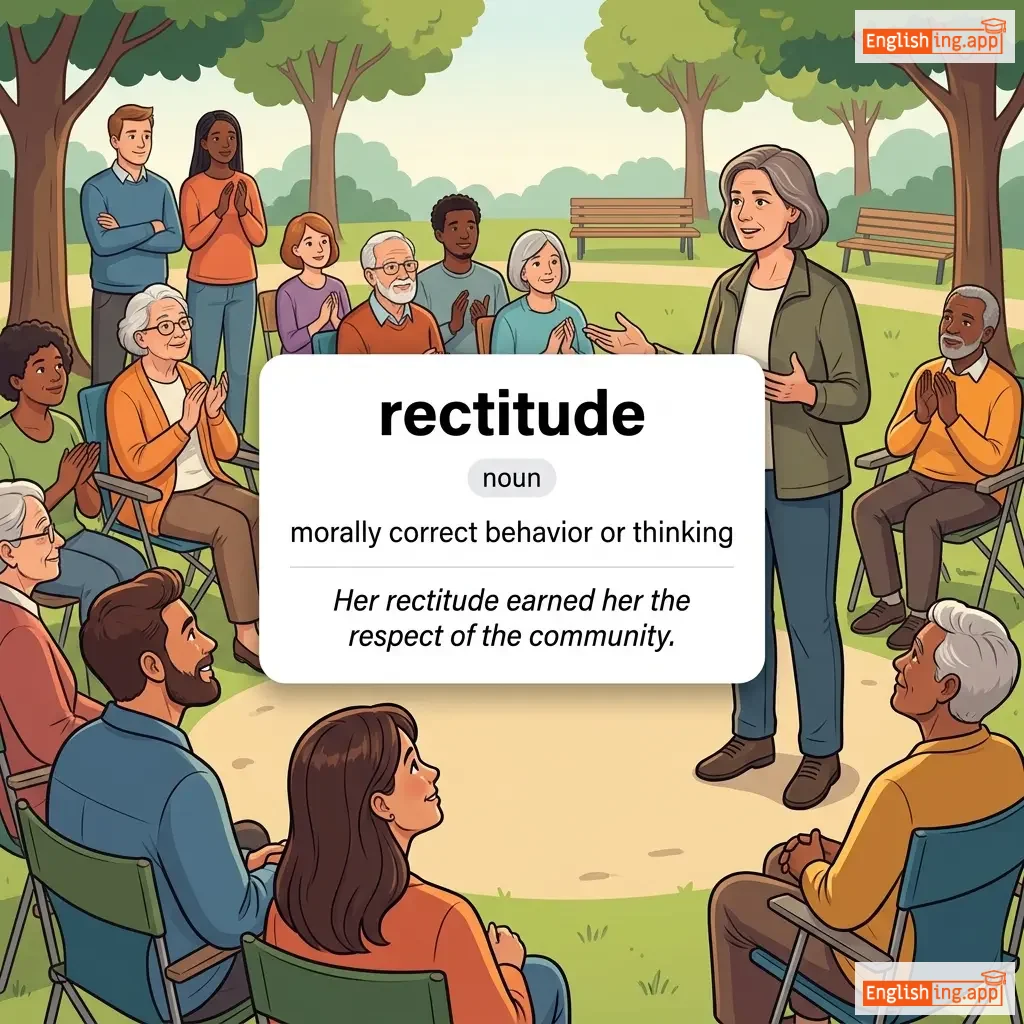
rectitude definition card — visual illustration of the meaning
noun C2
/ˈrɛktɪtjuːd/
(toku)

morally correct behavior or thinking

"Her rectitude earned her the respect of the community."

"彼女の徳はコミュニティの尊敬を得ました。" (Kanojo no toku wa komyuniti no sonkei o emashita.)
adjective C2
/rɪˈkʌmbənt/
横たわる (yokotawaru)

lying down or in a resting position

"He was found recumbent on the sofa after a long day."

"彼は長い一日の後、ソファで横になっているのが見つかりました。" (Kare wa nagai ichinichi no ato, sofa de yokonatte iru no ga mitsukarimashita.)
verb C2
/rɪˈkjʊə/
再治療する (sai chiryō suru)

to cure again; to remedy a second time

"The doctor had to recure the wound after it reopened."

"医者は傷が再び開いた後、傷を再治療する必要がありました。" (Isha wa kizu ga futatabi hiraita ato, kizu o sai chiryō suru hitsuyō ga arimashita.)
noun C2
/ˈrɛkjʊzənt/
反抗者 (hankōsha)

a person who refuses to submit to authority or comply with rules

"The recusant opposed the new law."

"反抗者は新しい法律に反対しました。" (Hankōsha wa atarashī hōritsu ni hantai shimashita.)