Vokabulare

Englisches Vokabelwörterbuch | Wortbedeutungen, Definitionen & Beispiele

noun C2
/ˈmaʊntɪˌbæŋk/
骗子 (pianzi)

A charlatan or trickster who deceives others, often for personal gain.

"The crowd was fooled by the mountebank’s false promises."

"人群被这个骗子的虚假承诺欺骗了。" (Renqun bei zhe ge pianzi de xujia chengnuo qipian le.)
verb C2
/ˈmʌfəl/
压制 (yāzhì)

to make a sound quieter or less distinct; to cover or wrap something to reduce noise or warmth

"She tried to muffle her laughter with a scarf."

"她试图用围巾压制她的笑声。" (Tā shìtú yòng wéijīn yāzhì tā de xiàoshēng.)
adjective C2
/ˈmʌɡi/
闷热和潮湿 (menre he chaoshi)

uncomfortably warm and humid

"It was a muggy afternoon in July."

"七月的下午非常闷热。" (Qiyue de xiawu feichang menre.)
noun C2
/ˈmʌɡwʌmp/
独立于党派的人 (dúlì yú dǎngpài de rén)

a person who remains independent from party politics or remains aloof from disputes

"He was called a mugwump for refusing to join either political side."

"他因为拒绝加入任何政治派别而被称为马格旺普。" (Tā yīnwèi jùjué jiārù rènhé zhèngzhì pàibié ér bèi chēng wèi mǎgéwàngpǔ.)
noun C2
/mjuːˈlætoʊ/
混血种人(过时且冒犯性的术语) (hunxue zhongren (guoshi qie maofenxing de shuyu))

an outdated and now offensive term historically used to describe a person of mixed white and Black ancestry

"The word 'mulatto' is now considered outdated and offensive."

"‘穆拉特’这个词现在被认为是过时的且冒犯性的。" ('Mulatto' zhege ci xianzai bei renwei shi guoshi de qie maofenxing de.)
verb C2
/mʌlkt/
罚款 / 欺诈 (fá kuǎn / qī zhà)

to punish by a fine or to defraud someone of money

"The corrupt official was mulcted for his misconduct."

"腐败的官员因不当行为而被罚款。" (Fǔbài de guānyuán yīn bùdàng xíngwéi ér bèi fá kuǎn.)
noun C2
/ˌmjuːlˈtɪər/
骡夫 (luófū)

a person who drives or takes care of mules

"The muleteer guided the animals safely across the mountain path."

"骡夫安全地将动物引导过山路。" (Luófū ānquán de jiāng dòngwù yǐndǎo guò shānlù.)
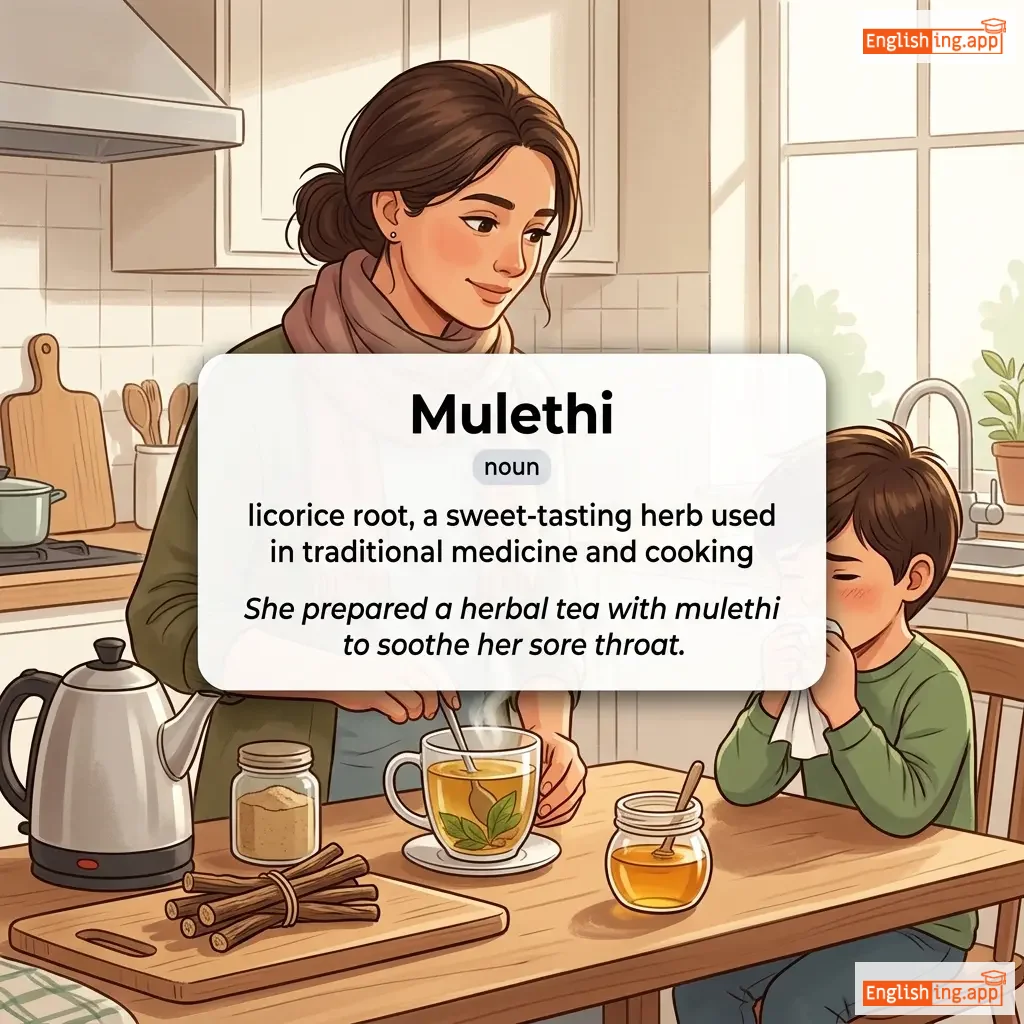
Mulethi definition card — visual illustration of the meaning
noun C2
/muˈleθi/
甘草根 (gancao gen)

licorice root, a sweet-tasting herb used in traditional medicine and cooking

"She prepared a herbal tea with mulethi to soothe her sore throat."

"她用木莲蒂泡了一杯草药茶,以缓解喉咙痛。" (Ta yong mulian ti pao le yi bei caoyao cha, yi huanjie houlong tong.)
adjective C2
/ˈmjuːlɪʃ/

extremely stubborn or unwilling to change

"She remained mulish despite all the convincing arguments."

multifaceted information frameworks definition card — visual illustration of the meaning
noun C2
ˌmʌltɪˈfæsɪtɪd ˌɪnfərˈmeɪʃən ˈfreɪmwɜːrks
多面信息框架 (duō miàn xìnxī kuàngjià)

Complex, comprehensive structures for organizing and managing information that have multiple aspects or dimensions.

"Digital literacy involves building multifaceted information frameworks."

"数字素养包括构建多面信息框架。" (Shùzì sùyǎng bāokuò gòujiàn duō miàn xìnxī kuàngjià.)
adjective C2
/ˌmʌltɪˈfɛərɪəs/
多样的 (duō yàng de)

having many different parts, elements, or kinds

"The museum displayed a multifarious collection of artifacts."

"博物馆展示了种类繁多的文物收藏。" (Bówùguǎn zhǎnshìle zhǒnglèi fánduō de wénwù shōucáng.)
adjective C2
/ˈmʌltɪfɔːrm/
多形式 (duo xing shi)

Having many different forms or appearances.

"The festival was a multiform celebration of art, music, and culture."

"这个节日是艺术、音乐和文化的多形式庆祝。" (Zhege jieri shi yishu, yinyue he wenhua de duo xing shi qingzhu.)
mundanity definition card — visual illustration of the meaning
noun C2
mʌnˈdeɪ.nɪ.ti
平凡 (pingfan)

The quality of being ordinary, routine, or lacking excitement.

"The mundanity of office life can be exhausting."

"办公室生活的平凡可能是令人疲惫的。" (Bangongshi shenghuo de pingfan keneng shi lingren pibei de.)
noun C2
/mjuːˈnɪfəsəns/
慷慨 (kāngkǎi)

great generosity or lavish giving

"The hospital was built thanks to the munificence of a wealthy donor."

"医院的建成得益于一位富有捐赠者的慷慨。" (Yīyuàn de jiànchéng déyì yú yī wèi fùyǒu juānzèng zhě de kāngkǎi.)
adjective C2
/mjuːˈnɪfɪsənt/
慷慨的 (kāngkǎi de)

extremely generous; giving freely and abundantly

"She made a munificent donation to the orphanage."

"她向孤儿院捐赠了慷慨的捐款。" (Tā xiàng gū'ér yuàn juānzèngle kāngkǎi de juānkuǎn.)
noun C2
/ˈmɜːkinəs/
浑浊 (húnzhuó)

The quality of being dark, gloomy, or unclear.

"The murkiness of the water made it hard to see the fish."

"水的浑浊使得很难看到鱼。" (Shuǐ de húnzhuó shǐdé hěn nán kàn dào yú.)
noun C2
/ˈmʌrɪn/
牲畜的传染病 (shengchu de chuánrǎn bìng)

An infectious disease that affects cattle and other animals, often fatal.

"The farmer lost many cows during the outbreak of murrain."

"农民在穆雷恩疫情爆发期间失去了许多牛。" (Nóngmín zài Mùléi'ēn yìqíng bàofā qījiān shīqùle xǔduō niú.)
musculoskeletal condition definition card — visual illustration of the meaning
noun C2
মাসকুলোস্কেলেটাল কন্ডিশন
肌肉骨骼疾病 (jirou guge jibing)

A disorder that affects the muscles, bones, joints, tendons, ligaments, or other structures that support the limbs, neck, and back.

"De Quervain's Syndrome is a common musculoskeletal condition."

"De Quervain综合症是一种常见的肌肉骨骼疾病。" (De Quervain zònghé zhèng shì yī zhǒng chángjiàn de jīròu gǔgé jíbìng.)
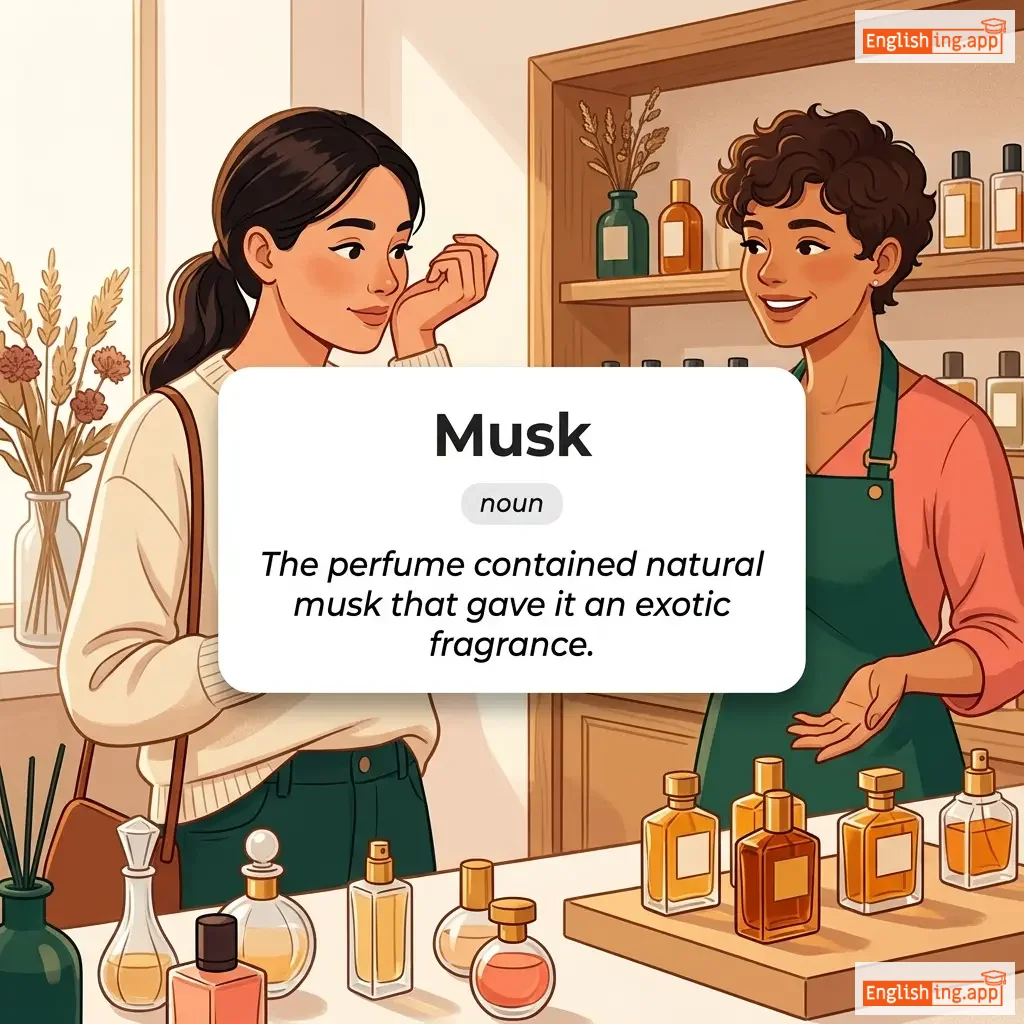
Musk definition card — visual illustration of the meaning
noun C2
/mʌsk/
麝香 (shèxiāng)

a strong-smelling substance secreted by certain animals, used in perfumes and traditional medicine

"The perfume contained natural musk that gave it an exotic fragrance."

"香水中含有天然麝香,给它带来了异国情调的香气。" (Xiāngshuǐ zhōng hán yǒu tiānrán shèxiāng, gěi tā dàilái le yìguó qíngdiào de xiāngqì.)
noun C2
/ˈmʌskɪt/
一种古老的火枪 (yī zhǒng gǔlǎo de huǒqiāng)

a type of long gun used in the past, especially by infantry soldiers

"The soldiers carried muskets into the battlefield."

"士兵们带着火枪走进了战场。" (Shìbīngmen dàizhe huǒqiāng zǒu jìnle zhànchǎng.)
adjective C2
/ˈmʌski/
麝香味的 (shèxiāng wèi de)

having a strong, sweet, earthy smell like musk

"The perfume had a musky fragrance."

"香水有一种麝香味。" (Xiāngshuǐ yǒu yī zhǒng shèxiāng wèi.)
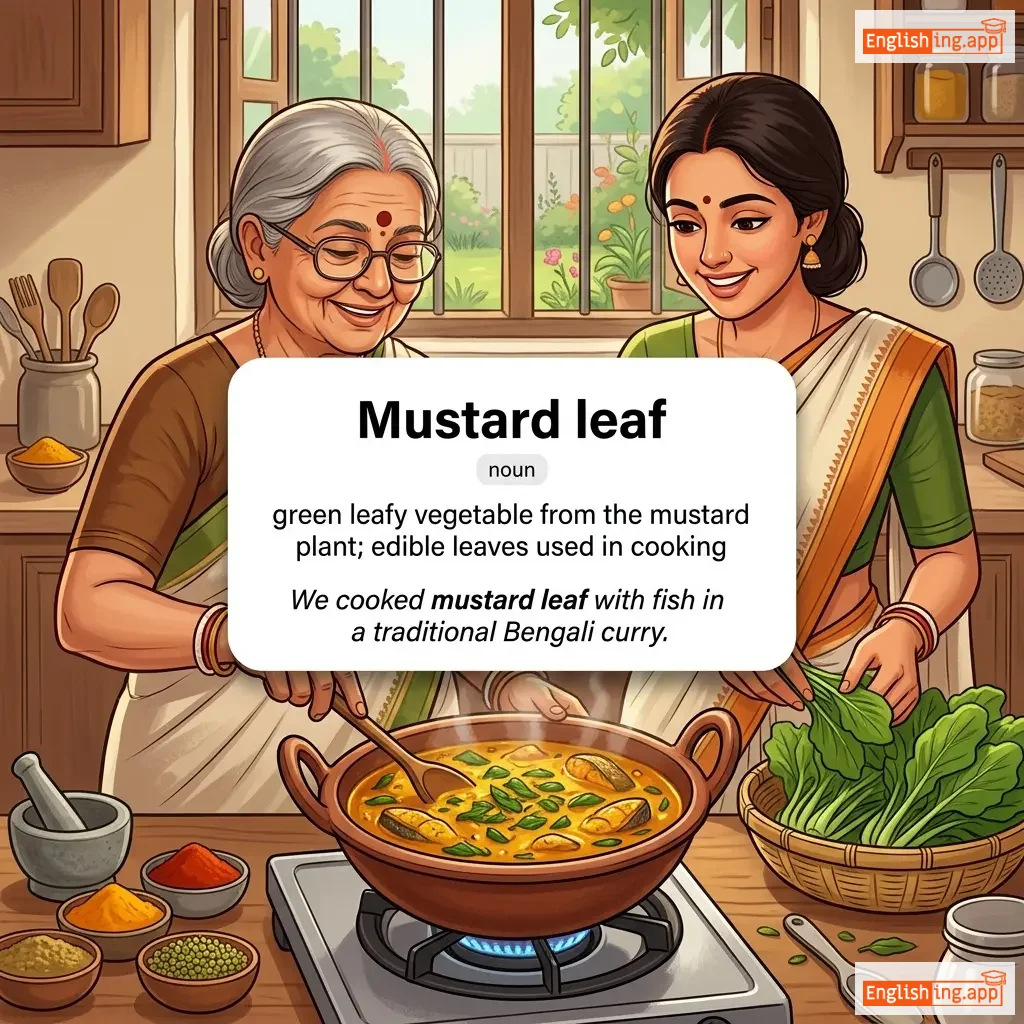
Mustard leaf definition card — visual illustration of the meaning
noun C2
/ˈmʌs.tərd liːf/
芥菜叶 (jiè cài yè)

green leafy vegetable from the mustard plant; edible leaves used in cooking

"We cooked mustard leaf with fish in a traditional Bengali curry."

"我们在传统的孟加拉咖喱中与鱼一起煮了芥菜叶。" (Wǒmen zài chuántǒng de mèngjiālā kālí zhōng yǔ yú yīqǐ zhǔle jiè cài yè.)
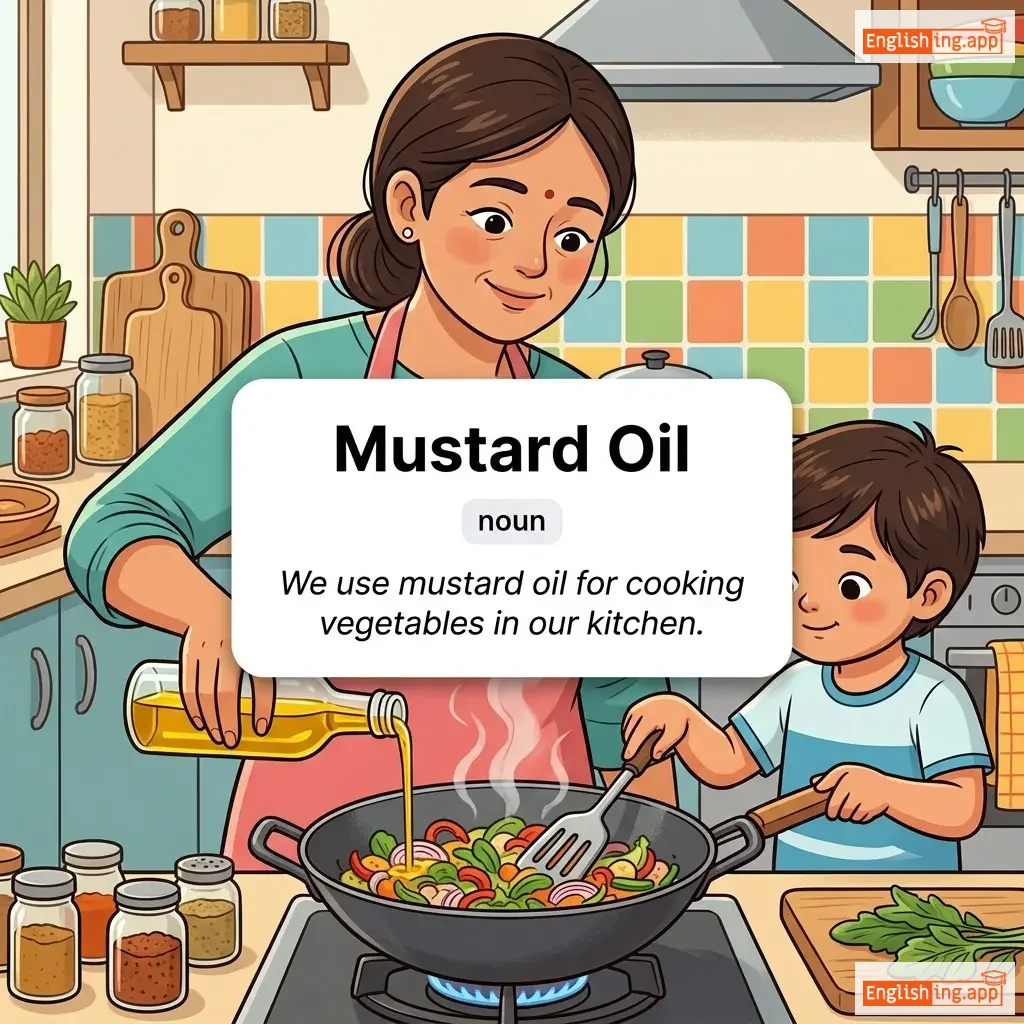
Mustard Oil definition card — visual illustration of the meaning
noun C2
/ˈmʌstərd ɔɪl/
芥末油 (jiè mò yóu)

oil extracted from mustard seeds, commonly used for cooking and medicinal purposes

"We use mustard oil for cooking vegetables in our kitchen."

"我们在厨房里用芥末油来煮蔬菜。" (Wǒmen zài chúfáng lǐ yòng jiè mò yóu lái zhǔ shū cài.)
adjective C2
/ˈmʌsti/
发霉的,潮湿的或有霉味的 (fāméi de, cháoshī de huò yǒu méi wèi de)

having a stale, moldy, or damp smell

"The old books had a musty odor."

"旧书有霉味。" (Jiù shū yǒu méi wèi.)
noun C2
/ˌmjuːtəˈbɪləti/
可变性 (kebiànxìng)

The quality of being changeable or capable of change.

"The mutability of fashion trends makes it hard to keep up."

"时尚潮流的变动性使得跟上它变得困难。" (Shíshàng cháoliú de biàndòngxìng shǐdé gēn shàng tā biàndé kùnnán.)
adjective C2
/ˈmjuːtəbl/
可变的 (kebian de)

Capable of change or alteration.

"Human emotions are mutable and can shift rapidly."

"人类的情感是可变的,能够迅速变化。" (Rénlèi de qínggǎn shì kěbiàn de, nénggòu xùnsù biànhuà.)
noun C2
/ˌmjuːtəˈbɪləti/
变异性 (拼写错误) (bianyixing (pinyin cuowu))

A misspelled form of 'mutability', meaning the quality of being changeable.

"The document contained the misspelled word 'mutablility' instead of 'mutability'."

"文件中包含了拼写错误的词 'mutablility',而不是 'mutability'。" (Wenjian zhong baohanle pinxie cuowu de ci 'mutablility', er bushi 'mutability'.)
verb C2
/ˈmjuːtɪleɪt/
摧残 (cuīcán)

to inflict serious damage on something, often by cutting or tearing

"The ancient manuscript was mutilated by careless handling."

"古老的手稿因不小心处理而被摧残。" (Gǔlǎo de shǒugǎo yīn bù xiǎoxīn chǔlǐ ér bèi cuīcán.)
adjective C2
/ˈmjuːtɪnəs/
叛乱的 (pànluàn de)

refusing to obey authority; rebellious

"The soldiers grew mutinous after months without pay."

"士兵们在几个月没有工资后变得叛乱了。" (Shìbīngmen zài jǐ gè yuè méiyǒu gōngzī hòu biàn dé pànluàn le.)
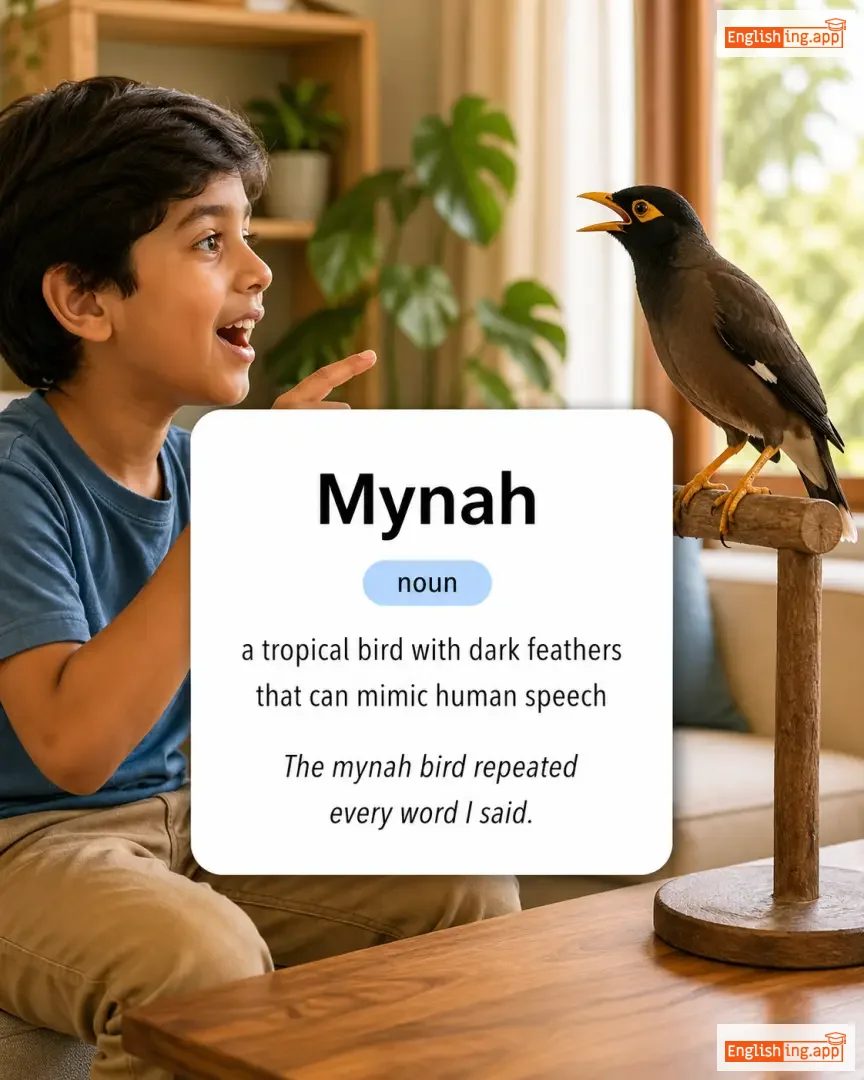
Mynah definition card — visual illustration of the meaning
noun C2
/ˈmaɪ.nə/
八哥 (bā gē)

a tropical bird with dark feathers that can mimic human speech

"The mynah bird repeated every word I said."

"八哥鸟重复了我说的每一个词。" (bā gē niǎo chóngfùle wǒ shuō de měi yīgè cí)
noun C2
/ˌmɪstɪfɪˈkeɪʃən/
困惑, 神秘化 (kunhuo, shenmi hua)

the act of making something unclear or confusing; a state of being puzzled or bewildered

"The audience watched in mystification as the magician performed his tricks."

"观众在困惑中看着魔术师表演他的戏法。" (Guanzhong zai kunhuo zhong kanzhe moshushi biaoyan tade xifa.)