Vokabulare

Englisches Vokabelwörterbuch | Wortbedeutungen, Definitionen & Beispiele

verb C2
/məˈkadəˌmaɪz/
砕石で道路を覆う (saisu de dōro o ōu)

to construct or cover a road with broken stone

"The government decided to macadamize the old rural roads."

"政府は古い田舎道を砕石で覆うことを決定した。" (Seifu wa furui inakamichi o saisu de ōu koto o kettei shita.)
noun C2
/meɪs/
メイス / 王杖 (meisu / ōjō)

a ceremonial staff carried as a symbol of authority or a weapon similar to a club

"The guard carried a mace as a symbol of authority."

"ガードは権威の象徴としてメイスを持っていた。" (Gādo wa ken'i no shōchō to shite meisu o motte ita.)
verb C2
/ˈmæsəˌreɪt/
浸す (hitasu)

to soften or break up something, especially food, by soaking in liquid

"The chef macerated the fruit in wine before serving."

"シェフは果物をワインにマセレートしてから提供しました。" (Shefu wa kudamono o wain ni maserēto shite kara teikyō shimashita.)
machiavellian definition card — visual illustration of the meaning
adjective C2
/ˌmækɪəˈvɛliən/
陰謀的で計略的、特に政治や自分のキャリアを進めるために倫理を無視する (makyaverian)

cunning, scheming, and unscrupulous, especially in politics or in advancing one's career

"The politician was known for his Machiavellian tactics."

"その政治家はマキャヴェリアンな戦術で知られていた。" (Sono seijika wa makyaverian na senjutsu de shirareteita.)
verb C2
/ˈmæk.ɪ.neɪt/
陰謀を企てる (inbō o kitediru)

to engage in plots or schemes, usually for harmful or evil purposes

"The rebels tried to machinate against the king."

"反乱者たちは王に対して陰謀を企てようとした。" (Hanran-sha-tachi wa ō ni taishite inbō o kitedeyō to shita.)
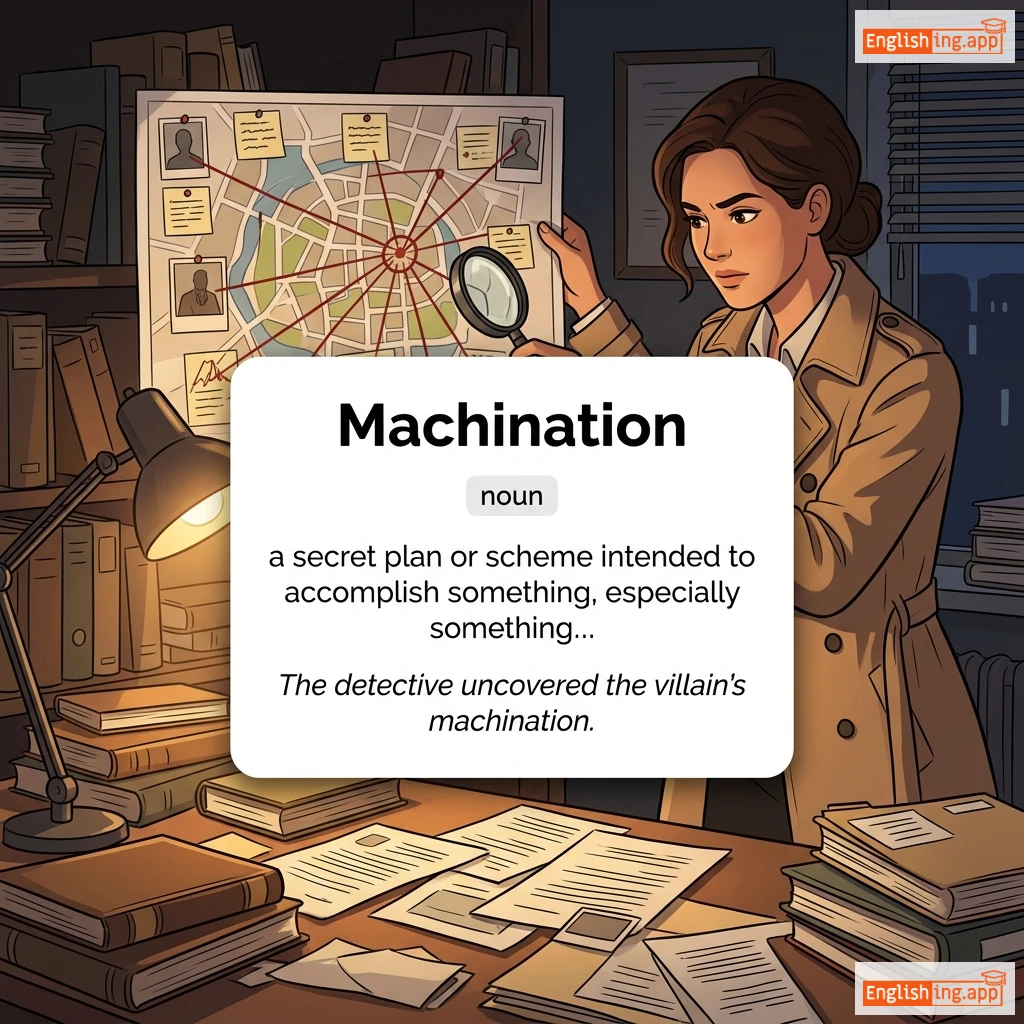
Machination definition card — visual illustration of the meaning
noun C2
/ˌmæk.ɪˈneɪ.ʃən/
陰謀 (inbō)

a secret plan or scheme intended to accomplish something, especially something evil

"The detective uncovered the villain's machination."

"探偵は悪党の陰謀を暴露した。" (Tantei wa akutō no inbō o bakuro shita.)
machinations definition card — visual illustration of the meaning
noun (plural) C2
/ˌmæk.ɪˈneɪ.ʃənz/
陰謀 (inbō)

complicated and secret plans, often intended to cause harm

"The politician was brought down by his own machinations."

"その政治家は自分の陰謀によって倒れた。" (Sono seijika wa jibun no inbō ni yotte taoreta.)
noun C2
/məˈʃiː.nɪst/
機械工 (kikai kou)

a person who operates machine tools or makes and repairs machines

"The machinist carefully adjusted the gears on the lathe."

"マシニストは旋盤のギアを慎重に調整しました。" (Mashinisuto wa senban no gia o shinchou ni chousei shimashita.)
noun C2
/ˈmækɪntɒʃ/
レインコート (rein koto)

a waterproof raincoat, originally made from rubberized fabric

"He wore a mackintosh to stay dry in the rain."

"彼は雨の中で乾いたままでいるためにマッキントッシュを着ていました。" (Kare wa ame no naka de kawaita mamade iru tame ni makkintoshu o kite imashita.)
noun C2
/ˈmæk.rəˌkɒz.əm/
マクロコスモス (makurokosumosu)

The whole universe considered as a large, complex system; a large-scale representation of something.

"The macrocosm of the universe reflects the microcosm of human life."

"宇宙のマクロコスモスは人間の生活のミクロコスモスを反映しています。" (Uchū no makurokosumosu wa ningen no seikatsu no mikurokosumosu o han'ei shiteimasu.)
verb C2
/ˈmæk.jʊˌleɪt/
汚す (yogosu)

To stain, spot, or pollute something.

"The white cloth was maculated by ink stains."

"白い布はインクのシミで汚れました。" (Shiroi nuno wa inku no shimi de yogoremashita.)
adjective C2
/ˈmæk.jʊˌleɪ.tɪd/
斑点のある (hanten no aru)

Spotted or stained; marked with blemishes.

"The maculated surface of the old mirror gave it a unique charm."

"古い鏡の斑点のある表面は、独特の魅力を与えました。" (Furui kagami no hanten no aru hyoumen wa, dokutoku no miryoku o ataemashita.)
noun C2
/məˈdɒn.ə/
マドンナ (聖母マリア) (madonna (seibo maria))

An artistic representation of the Virgin Mary; also used as a respectful form of address for a woman in Italian culture.

"The Renaissance painting depicts a Madonna holding child Jesus."

"ルネサンスの絵画は、イエスの子供を抱いているマドンナを描いています。" (Renessansu no kaiga wa, Iesu no kodomo o daite iru Madonna o egaiteimasu.)
noun C2
/ˈmædrɪɡəl/

A short, lyrical poem set to music, typically from the Renaissance period.

"The choir performed a beautiful madrigal from the 16th century."

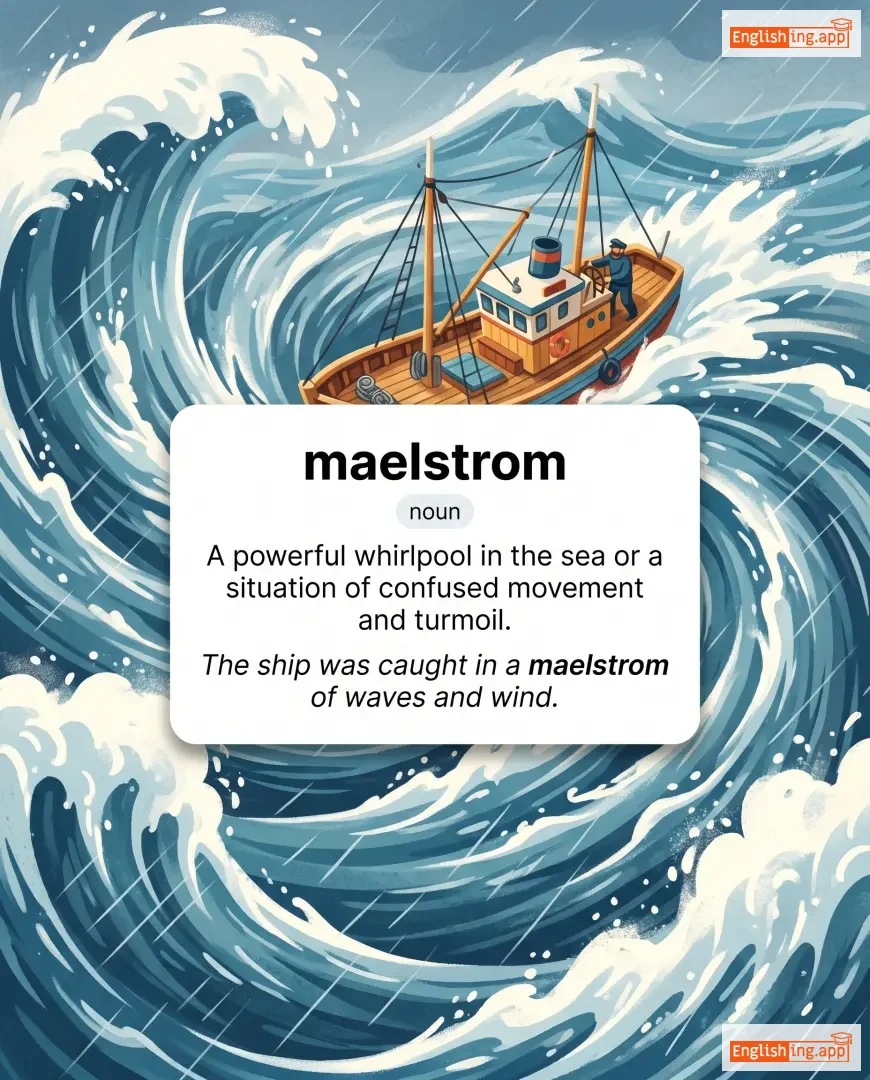
maelstrom definition card — visual illustration of the meaning
noun C2
/ˈmeɪlstrəm/
旋風 (senpū)

A powerful whirlpool in the sea or a situation of confused movement and turmoil.

"The ship was caught in a maelstrom of waves and wind."

"船は波と風の旋風に巻き込まれました。" (Fune wa nami to kaze no senpū ni makikomarimashita.)
adjective C2
/ˌmædʒɪˈstɪəriəl/
権威的 (ken'iteki)

Having the characteristics of a master or authority; commanding and dignified.

"The professor spoke in a magisterial tone during the lecture."

"教授は講義中に権威的な口調で話しました。" (Kyōju wa kōgichū ni ken'iteki na kuchō de hanashimashita.)
noun C2
/ˈmædʒɪstrəsi/
裁判所の事務所 (saibansho no jimusho)

The office, authority, or district of a magistrate.

"He was proud to serve in the local magistracy for over a decade."

"彼は10年以上にわたって地元の裁判所の事務所で働いていることを誇りに思っていました。" (Kare wa juunen ijou ni watatte jimoto no saibansho no jimusho de hataraite iru koto wo hokori ni omotte imashita.)
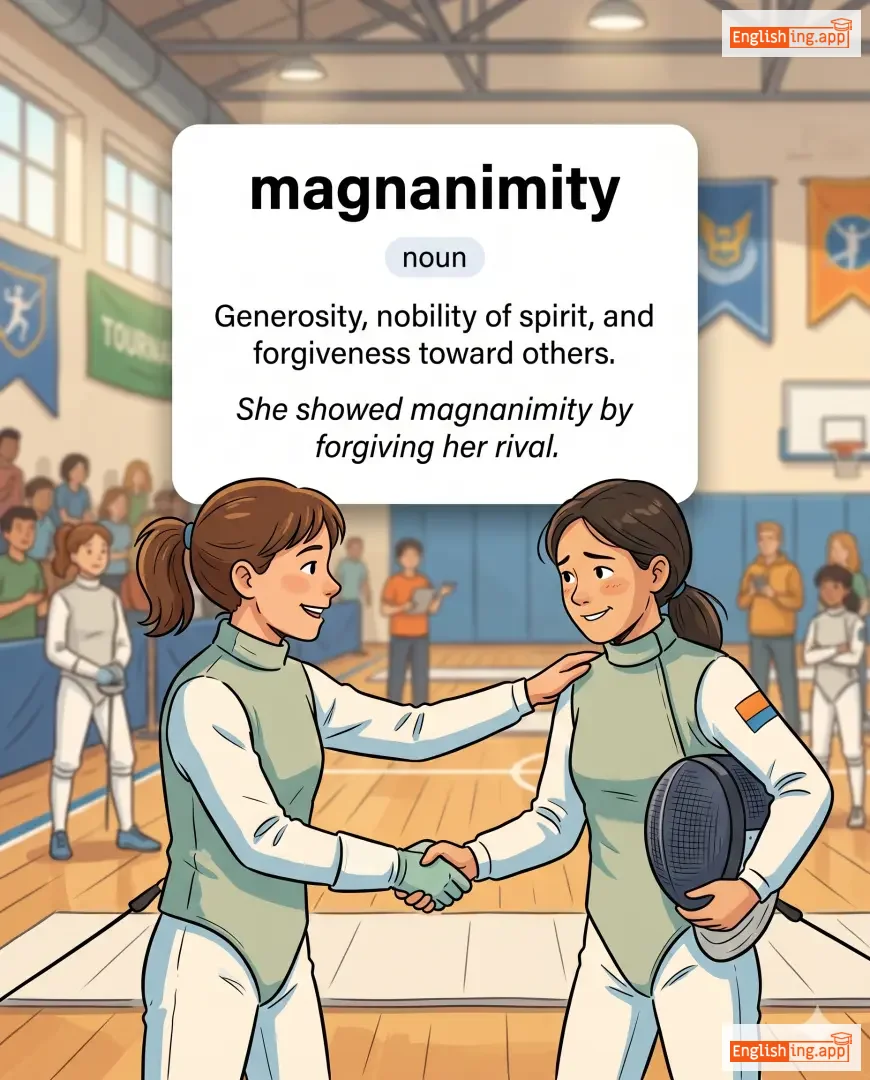
magnanimity definition card — visual illustration of the meaning
noun C2
/ˌmæɡnəˈnɪmɪti/
寛大さ (kandaisa)

Generosity, nobility of spirit, and forgiveness toward others.

"She showed magnanimity by forgiving her rival."

"彼女はライバルを許して寛大さを示しました。" (Kanojo wa raibaru o yurushite kandaisa o shimashita.)
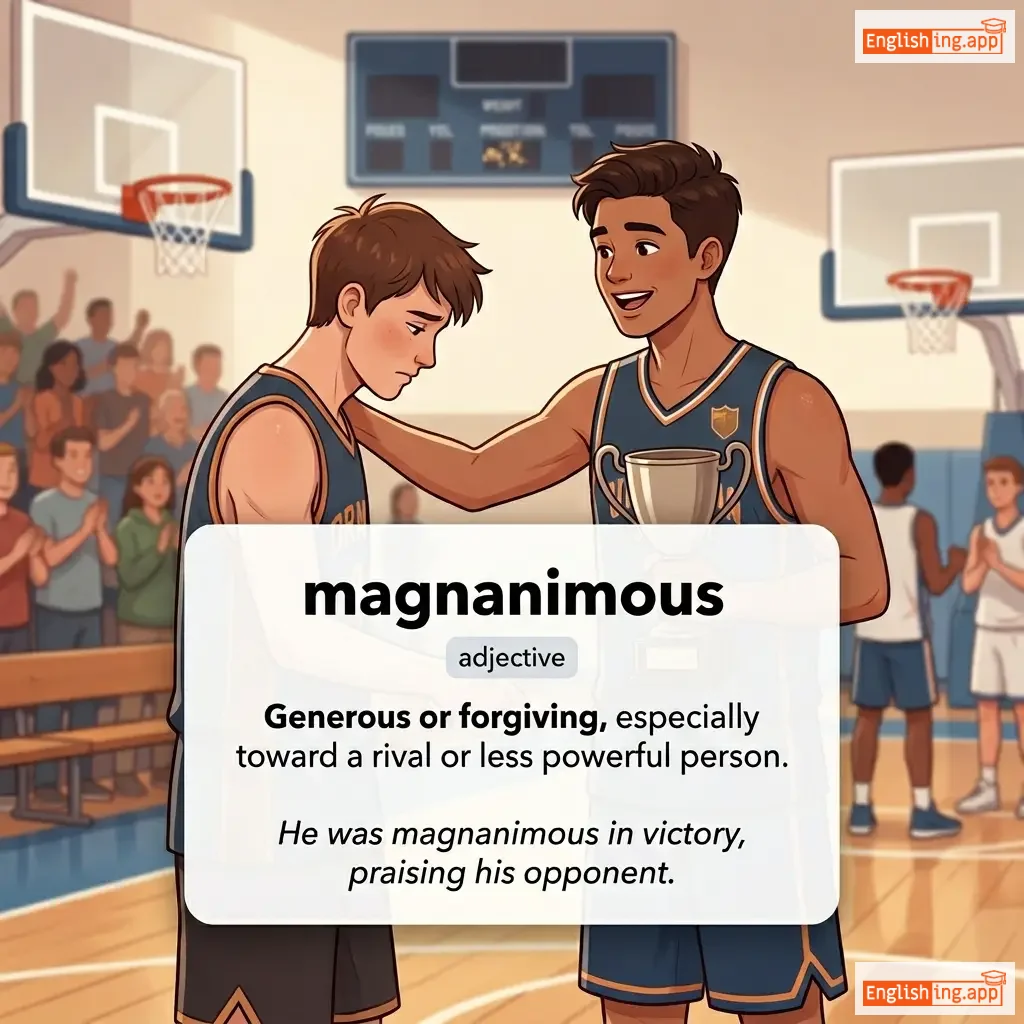
magnanimous definition card — visual illustration of the meaning
adjective C2
/mæɡˈnænɪməs/
寛大 (kandai)

Generous or forgiving, especially toward a rival or less powerful person.

"He was magnanimous in victory, praising his opponent."

"彼は勝利において寛大で、対戦相手を称賛していた。" (Kare wa shouri ni oite kandai de, taisen aite wo shousan shiteita.)
verb C2
/ˈmæɡnɪtaɪz/
磁化する (jikasu)

to make something magnetic or to strongly attract

"The scientist managed to magnetize the iron rod."

"科学者は鉄の棒を磁化することに成功した。" (Kagakusha wa tetsu no bō o jikasu koto ni seikō shita.)
adjective C2
/mæɡˈnɪləkwənt/
誇張した言葉 (kochou shita kotoba)

using high-flown or pompous language

"The politician’s magniloquent speech impressed the crowd."

"その政治家の誇張したスピーチは群衆に印象を与えた。" (Sono seijika no kochou shita supīchi wa gunshū ni inshō o ataeta.)
noun C2
/ˌmɑːhəˈrɑːdʒə/
マハラジャ (maharaja)

A great king, especially a ruler of one of the principal states in India.

"The maharaja lived in a grand palace surrounded by gardens."

"マハラジャは庭園に囲まれた豪華な宮殿に住んでいました。" (Maharaja wa teien ni kakomareta gōka na kyūden ni sunde imashita.)
noun C2
/ˈmeɪdənˌhʊd/
処女性 (shojosei)

The state of being a maiden; girlhood or virginity.

"The poem celebrated the innocence of maidenhood."

"その詩は処女性の無垢を讃えました。" (Sono shi wa shojosei no muku o tataemashita.)
verb C2
/meɪm/
重傷を負わせる (jūshō o owaseru)

To wound or injure someone so that part of the body is permanently damaged.

"The accident maimed several passengers."

"事故は数人の乗客を負傷させました。" (Jiko wa suunin no jōkyaku o fushō saseru mashita.)
adjective C2
/ˌmæləˈdrɔɪt/
不器用 (bukiyou)

clumsy or awkward in movement or behavior

"His maladroit attempt at fixing the chair made it worse."

"椅子を修理しようとした彼の不器用な試みは、さらに悪化させた。" (Isu o shuuri shiyou to shita kare no bukiyou na kokoromi wa, sara ni akka saseta.)
noun C2
/ˈmæləprɒˌpɪzəm/
誤用語 (goyōgo)

the mistaken use of a word in place of a similar-sounding one, often with amusing effect

"He is famous for his malapropism when speaking in public."

"彼は公衆の前で話すときに誤用語で有名です。" (Kare wa kōshū no mae de hanasu toki ni goyōgo de yūmei desu.)
adjective, adverb C2
/ˌmæləprəˈpoʊ/
不適切 (futekisetsu)

inappropriate or unsuitable; at an inconvenient or inappropriate time

"His comment was malapropos during the serious discussion."

"真剣な議論中に彼のコメントは不適切だった。" (Shinken na giron-chuu ni kare no komento wa futekisetsu datta.)
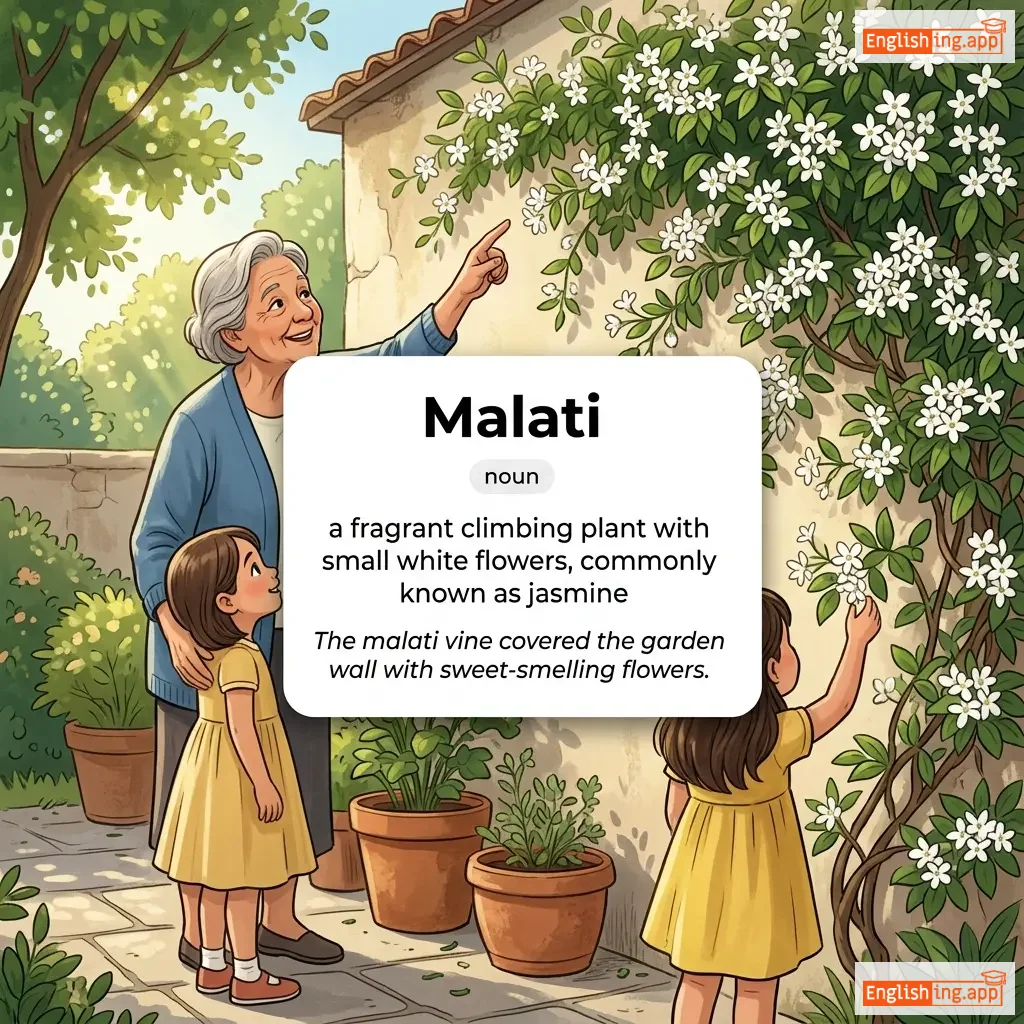
Malati definition card — visual illustration of the meaning
noun C2
/məˈlɑː.ti/
マラティ (malati)

a fragrant climbing plant with small white flowers, commonly known as jasmine

"The malati vine covered the garden wall with sweet-smelling flowers."

"マラティのツルが甘い香りの花で庭の壁を覆っていました。" (Malati no tsuru ga amai kaori no hana de niwa no kabe wo otteimashita)
noun C2
/ˈmæl.kənˌtɛnt/
不満な人 (fuman na hito)

A person who is dissatisfied or rebellious; one who is not content.

"The malcontent voiced his grievances against the government."

"不満な人は政府に対して不平を述べました。" (Fuman na hito wa seifu ni taishite fuhei wo nobemashita.)
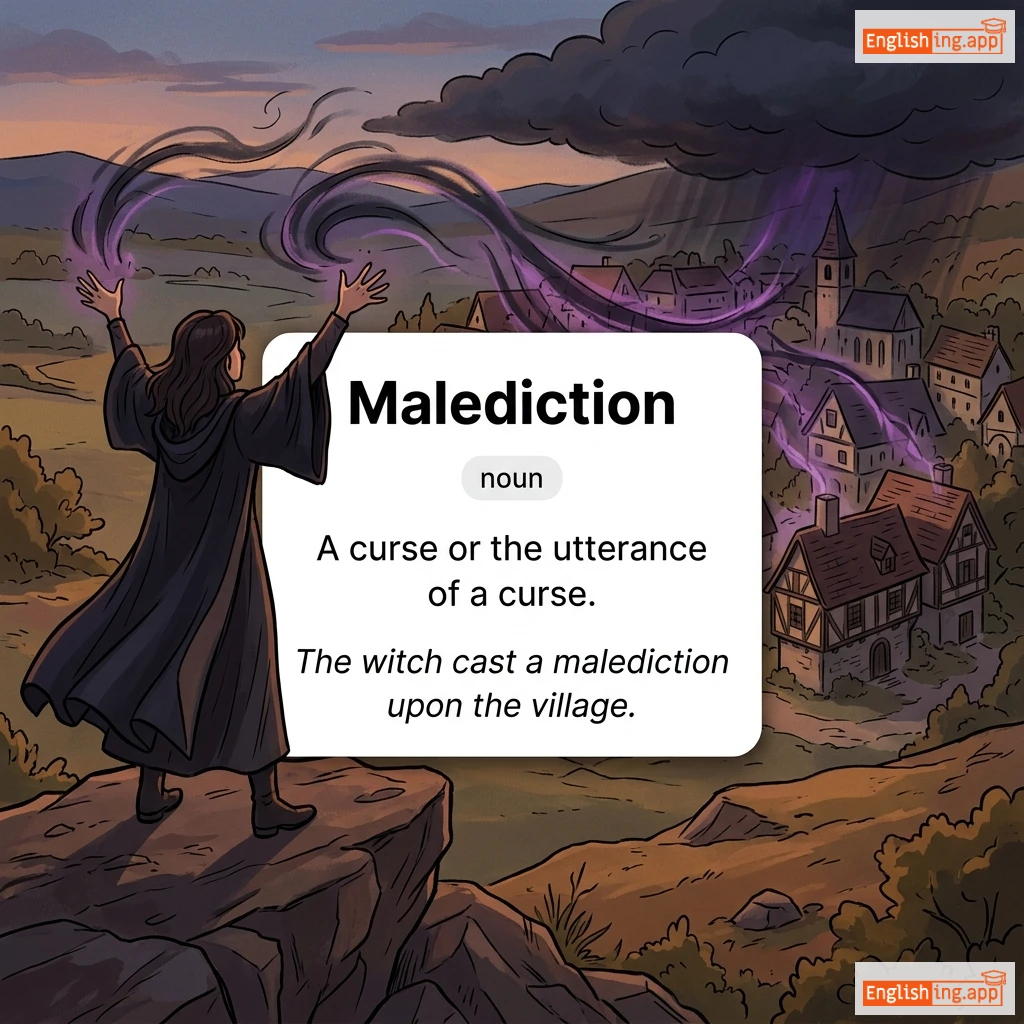
Malediction definition card — visual illustration of the meaning
noun C2
/ˌmæl.əˈdɪk.ʃən/
呪い (noroi)

A curse or the utterance of a curse.

"The witch cast a malediction upon the village."

"魔女は村に呪いをかけた。" (Majo wa mura ni noroi o kaketa.)
noun C2
/ˈmæl.əˌfæk.tər/
悪党 (akutou)

A person who commits a crime or does evil.

"The malefactor was arrested for the robbery."

"その悪党は強盗で逮捕された。" (Sono akutou wa goutou de taiho sareta.)
adjective C2
/məˈlɛfɪsənt/
邪悪 (jaaku)

Causing harm or destruction, especially by supernatural means.

"The maleficent witch cursed the young princess."

"その悪しき魔女は若い王女に呪いをかけました。" (Sono ashiki majo wa wakai ōjo ni noroi o kakemashita.)
adjective C2
/ˌmæl.əˈfɪʃ.ənt/
悪意のある (akui no aru)

Doing harm or evil; having a harmful effect.

"The maleficient acts of the tyrant ruined the kingdom."

"暴君の悪意のある行為は王国を滅ぼした。" (Bōkun no akui no aru kōi wa ōkoku o horoboshita.)
noun C2
/məˈlɛvələns/
悪意 (akui)

The state or condition of being malevolent; having or showing a wish to do evil to others.

"His malevolence was clear in the cruel way he treated his rivals."

"彼の悪意は、彼がライバルを扱う残忍な方法において明らかだった。" (Kare no akui wa, kare ga raibaru o atsukau zan'ina hōhō ni oite akirakadaった.)
noun C2
/mælˈfiːzəns/
公務員の不正行為 (koumuin no fusei koui)

Wrongdoing or misconduct, especially by a public official.

"The mayor was accused of malfeasance in office."

"市長は職務中の不正行為で告発された。" (Shichou wa shokumu-chuu no fusei koui de kokuhatsu sareta.)
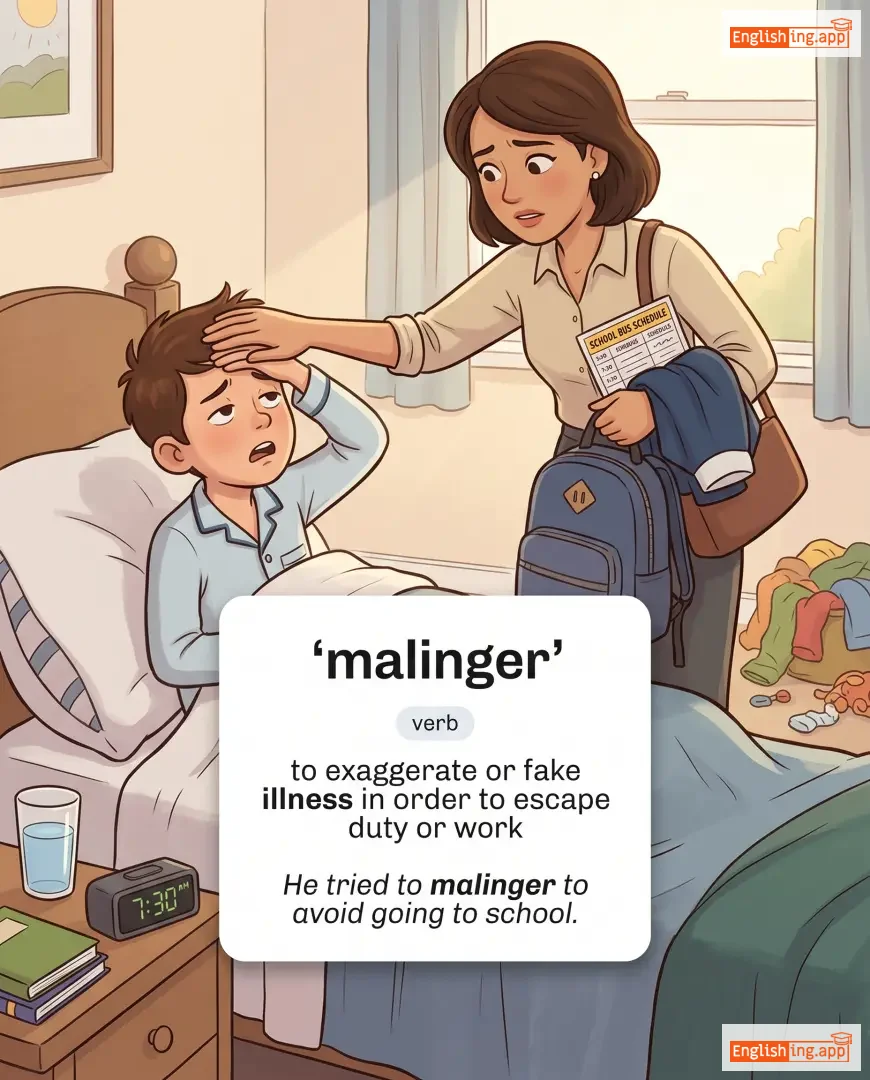
malinger definition card — visual illustration of the meaning
verb C2
/məˈlɪŋɡər/
病気を装う (byouki o yosou)

to exaggerate or fake illness in order to escape duty or work

"He tried to malinger to avoid going to school."

"彼は学校に行くのを避けるためにマリンジャーしようとした。" (Kare wa gakkou ni iku no o sakeru tame ni malingā shiyou to shita.)
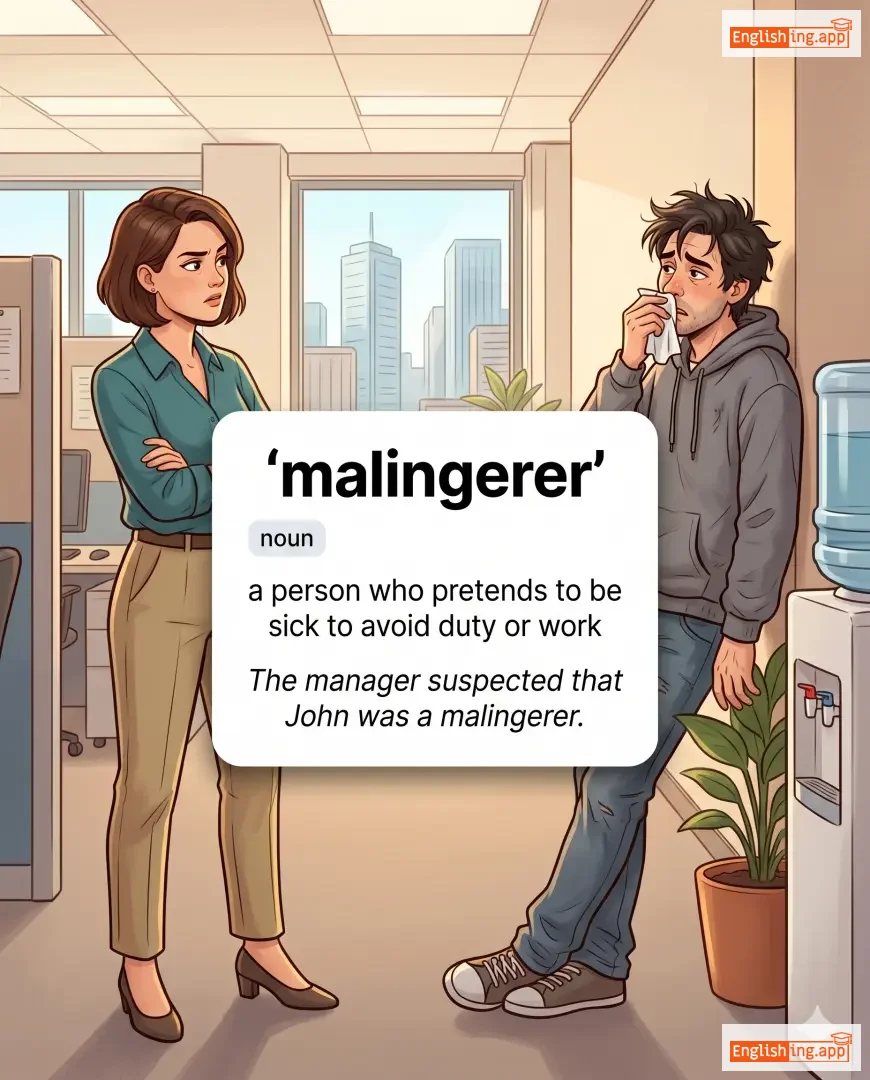
malingerer definition card — visual illustration of the meaning
noun C2
/məˈlɪŋɡərər/
病気を装う人 (byouki wo yosou hito)

a person who pretends to be sick to avoid duty or work

"The manager suspected that John was a malingerer."

"マネージャーはジョンがマリンガラーだと疑っていた。" (Manejā wa Jon ga Maringarā da to utagatte ita.)
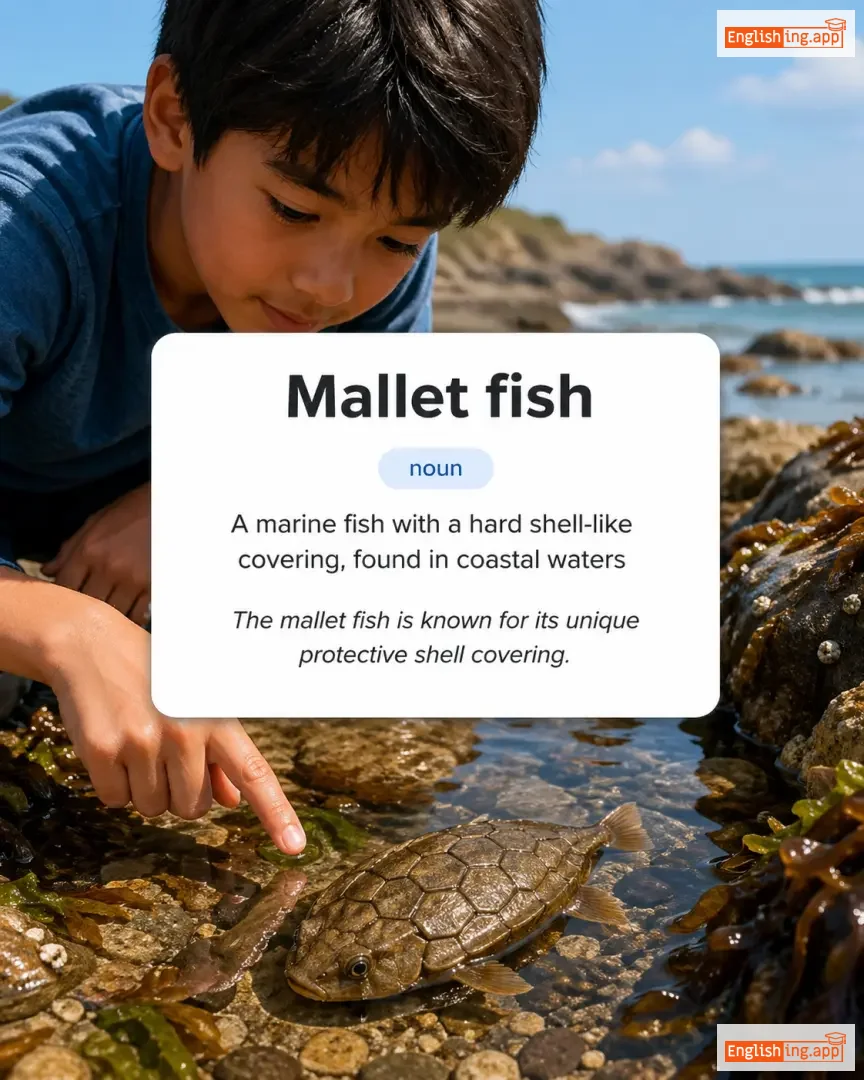
Mallet fish definition card — visual illustration of the meaning
noun C2
/ˈmælɪt fɪʃ/
殻魚 (kara uo)

A marine fish with a hard shell-like covering, found in coastal waters

"The mallet fish is known for its unique protective shell covering."

"マレットフィッシュは独特な保護殻で知られています。" (maretto fisshu wa dokutokuna hogo kaku de shirarete imasu)
noun C2
/ˌmælˈoʊdər/
不快な匂い (fukai na nioi)

An unpleasant smell; bad odor.

"The garbage bin gave off a terrible malodor."

"ゴミ箱は恐ろしい不快な匂いを発していました。" (Gomibako wa osoroshī fukai na nioi o hasshite imashita.)
adjective C2
/ˌmælˈoʊdərəs/
悪臭の (akushū no)

Having a very unpleasant smell.

"The malodorous room made everyone leave quickly."

"悪臭の部屋はみんなを急いで出させた。" (Akushū no heya wa minna o isoide dasa seta.)
verb C2
/ˌmælˈtriːt/
虐待する (gyakutai suru)

To treat someone cruelly or unfairly.

"The law punishes those who maltreat animals."

"法律は動物を虐待する者を罰します。" (Hōritsu wa dōbutsu o gyakutai suru mono o basshimasu.)
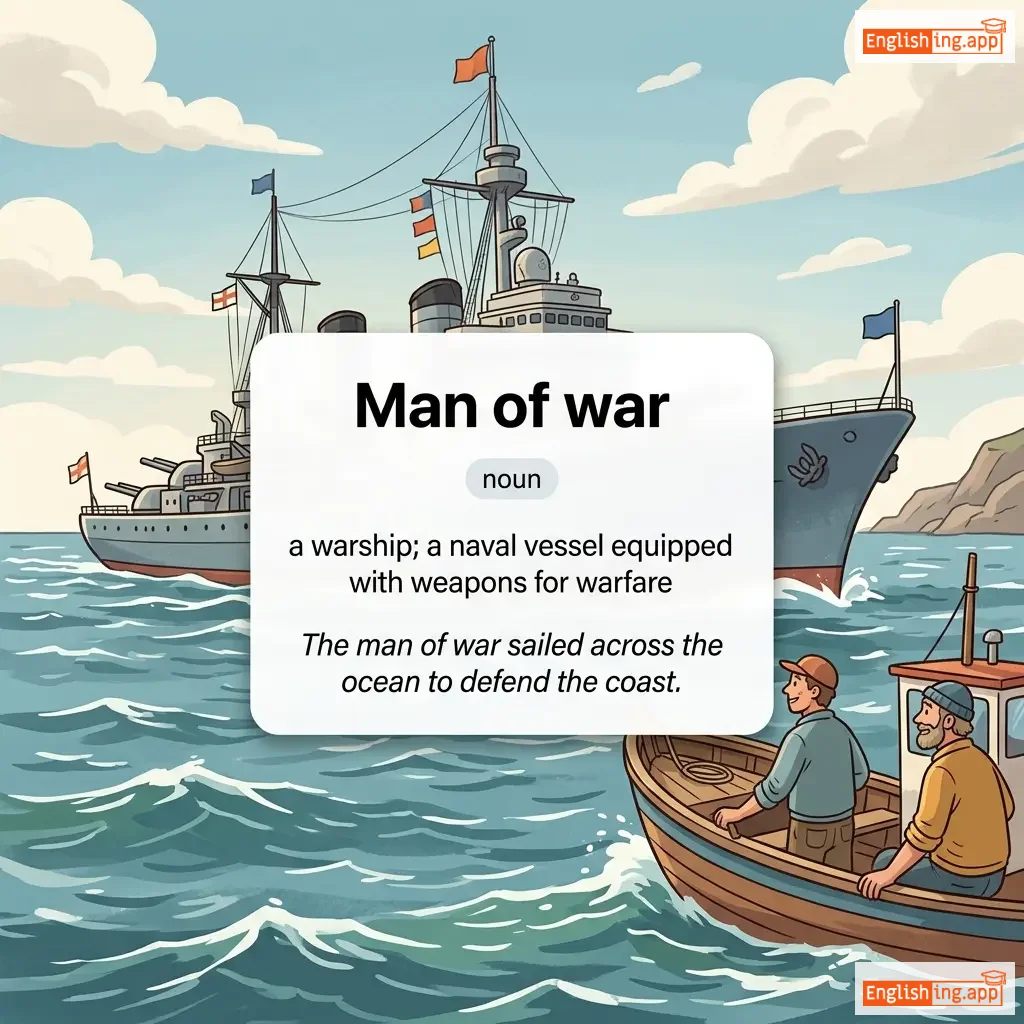
Man of war definition card — visual illustration of the meaning
noun C2
/mæn əv wɔːr/
戦艦 (senkan)

a warship; a naval vessel equipped with weapons for warfare

"The man of war sailed across the ocean to defend the coast."

"戦艦は海を越えて、海岸を守るために進んだ。" (senkan wa umi o koete, kaigan o mamoru tame ni susunda)
noun C2
/ˈmænˌiː.tər/
人食い (hito kui)

An animal that kills and eats humans; informally, a woman who is very assertive in relationships.

"The tiger became a notorious man-eater in the village."

"その虎は村で悪名高い人食いとなった。" (Sono tora wa mura de akumei takai hito kui to natta.)
noun C2
/ˈmænˌtræp/
人を捕まえる罠 (hito wo tsukamaeru wana)

A trap designed to catch or injure humans; informally, a woman considered dangerously attractive.

"The old castle had a man-trap at the entrance."

"古い城には入り口に人を捕まえる罠がありました。" (Furui shiro ni wa iriguchi ni hito wo tsukamaeru wana ga arimashita.)
noun/verb C2
/ˈmæn.ə.kəl/
手錠 (tejou)

A metal shackle for fastening someone's hands or ankles; also to restrain with such shackles.

"The prisoner was manacled before being taken to court."

"囚人は裁判所に連れて行かれる前に手錠をかけられました。" (Shuujin wa saibansho ni tsurete ikareru mae ni tejou o kakeraremashita.)
noun C2
/meɪndʒ/
疥癬 (kaisen)

a skin disease in animals caused by parasitic mites, leading to hair loss and sores

"The stray dog was suffering from mange."

"野良犬は疥癬に苦しんでいた。" (Nora inu wa kaisen ni kurushinde ita.)
verb C2
/ˈmæŋɡəl/
ひどく壊す (hidoku kowasu)

to severely damage or mutilate something, often by tearing or crushing

"The car was mangled in the accident."

"車は事故でひどく壊れた。" (Kuruma wa jiko de hidoku kowareta.)
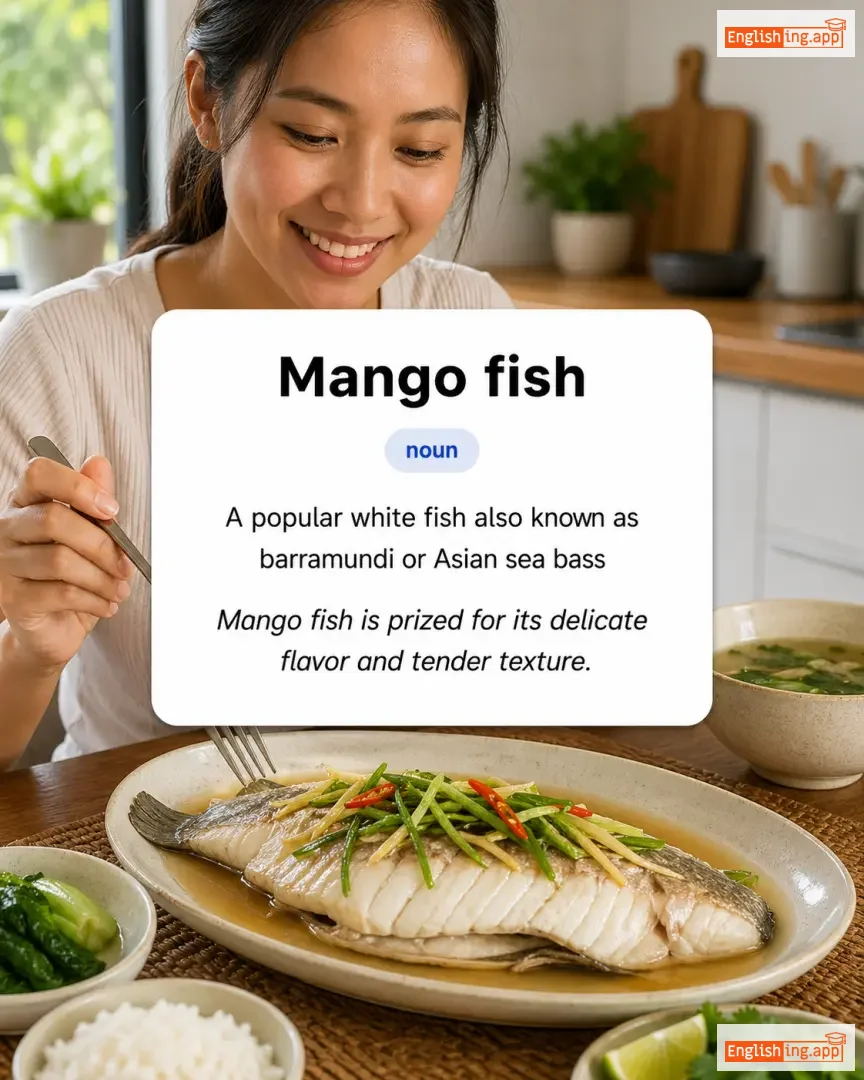
Mango fish definition card — visual illustration of the meaning
noun C2
/ˈmæŋɡoʊ fɪʃ/
スズキ (suzuki)

A popular white fish also known as barramundi or Asian sea bass

"Mango fish is prized for its delicate flavor and tender texture."

"スズキはその繊細な味と柔らかな食感で高く評価されています。" (suzuki wa sono sensai na aji to yawaraka na shokkan de takaku hyoka sareteimasu)
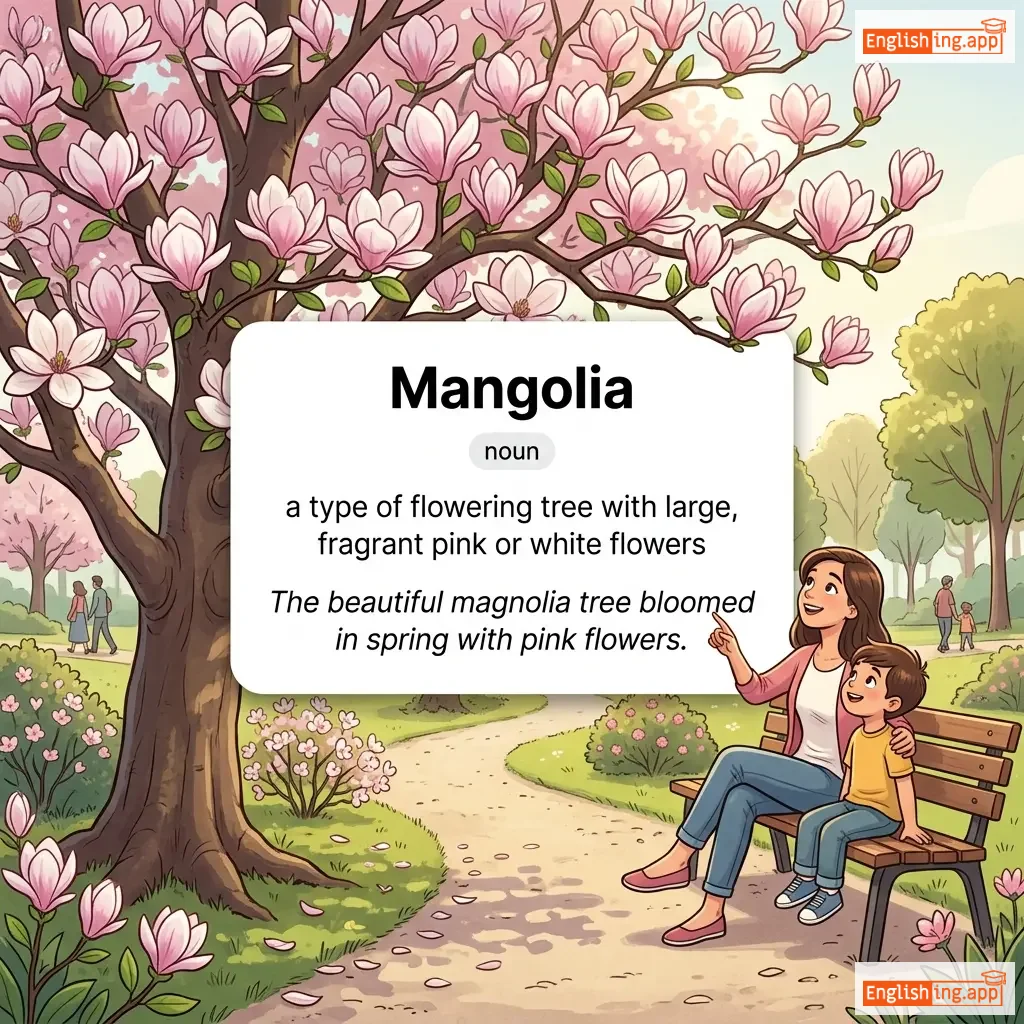
Mangolia definition card — visual illustration of the meaning
noun C2
/mæŋˈɡoʊ.li.ə/
マグノリア (magunoria)

a type of flowering tree with large, fragrant pink or white flowers

"The beautiful magnolia tree bloomed in spring with pink flowers."

"美しいマグノリアの木は春にピンクの花で咲きました。" (Utsukushī magunoria no ki wa haru ni pinku no hana de sakimashita)
adjective C2
/ˈmeɪndʒi/
汚くて使い古された (kitanakute tsukaifurusareta)

in poor condition, shabby, dirty, or affected by mange

"The stray dog looked mangy and weak."

"迷子の犬は汚れて弱々しく見えた。" (Maigo no inu wa yogorete yowayowashiku mieta.)