Vokabulare

Englisches Vokabelwörterbuch | Wortbedeutungen, Definitionen & Beispiele

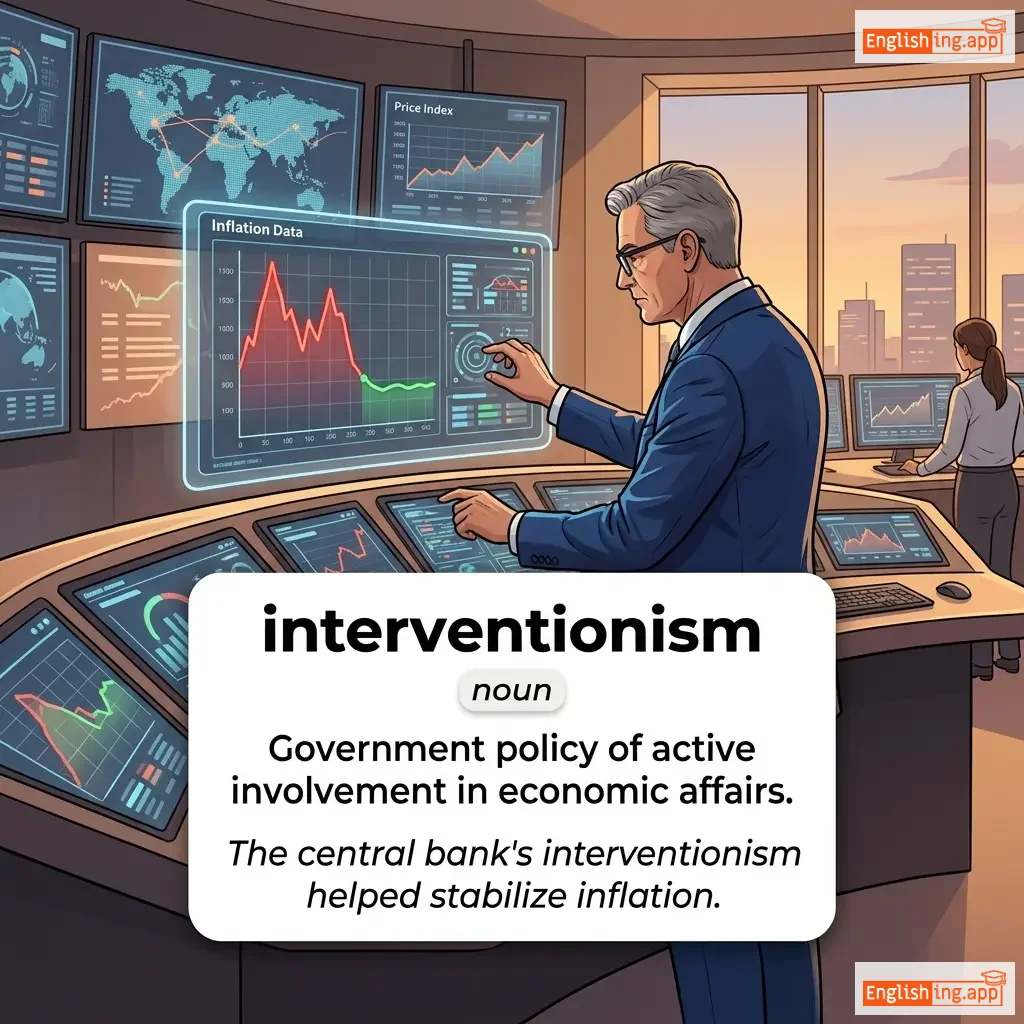
interventionism definition card — visual illustration of the meaning
noun C2
/ˌɪn.təˈvɛn.ʃə.nɪ.zəm/
interventionnisme (interventionnisme)

Government policy of active involvement in economic affairs.

"The central bank's interventionism helped stabilize inflation."

"L'interventionnisme de la banque centrale a aidé à stabiliser l'inflation." (L'interventionnisme de la banque centrale a aidé à stabiliser l'inflation.)
noun C2
/ɪnˈtɛstəsi/
décès sans testament (deces san testament)

The condition of dying without having made a valid will.

"His estate was divided according to the laws of intestacy."

"Sa succession a été divisée selon les lois de l'intestat." (Sa succession a ete divisee selon les lois de l'intestat.)
adjective C2
/ɪnˈtɛsteɪt/
décédé sans testament (decede sans testament)

Having died without leaving a valid will.

"She died intestate, so her assets were distributed by law."

"Elle est décédée sans testament, donc ses biens ont été répartis par la loi." (Elle est décédée sans testament, donc ses biens ont été répartis par la loi.)
noun C2
/ɪnˈtɒksɪkənt/
intoxiquant (intoxiquant)

a substance, especially alcohol or a drug, that causes intoxication

"Alcohol is the most commonly used intoxicant in many cultures."

"L'alcool est l'intoxicant le plus couramment utilisé dans de nombreuses cultures." (L'alcool est l'intoxicant le plus couramment utilisé dans de nombreuses cultures.)
adjective C2
/ˌɪn.trəˈsɛl.jʊ.lər/
à l'intérieur de la cellule (a l'interieur de la cellule)

Located or occurring within a cell.

"The drug works by targeting intracellular bacteria."

"Le médicament agit en ciblant les bactéries intracellulaires." (Le medicament agit en ciblant les bacteries intracellulaires.)
adjective C2
/ˌɪn.trəˈmjʊə.rəl/
à l'intérieur de l'institution (a l'interieur de l'institution)

Occurring within the walls of a single institution, especially a school or college.

"The college organizes intramural sports competitions every semester."

"Le collège organise des compétitions sportives intramuros chaque semestre." (Le college organise des competitions sportives intramuros chaque semestre.)
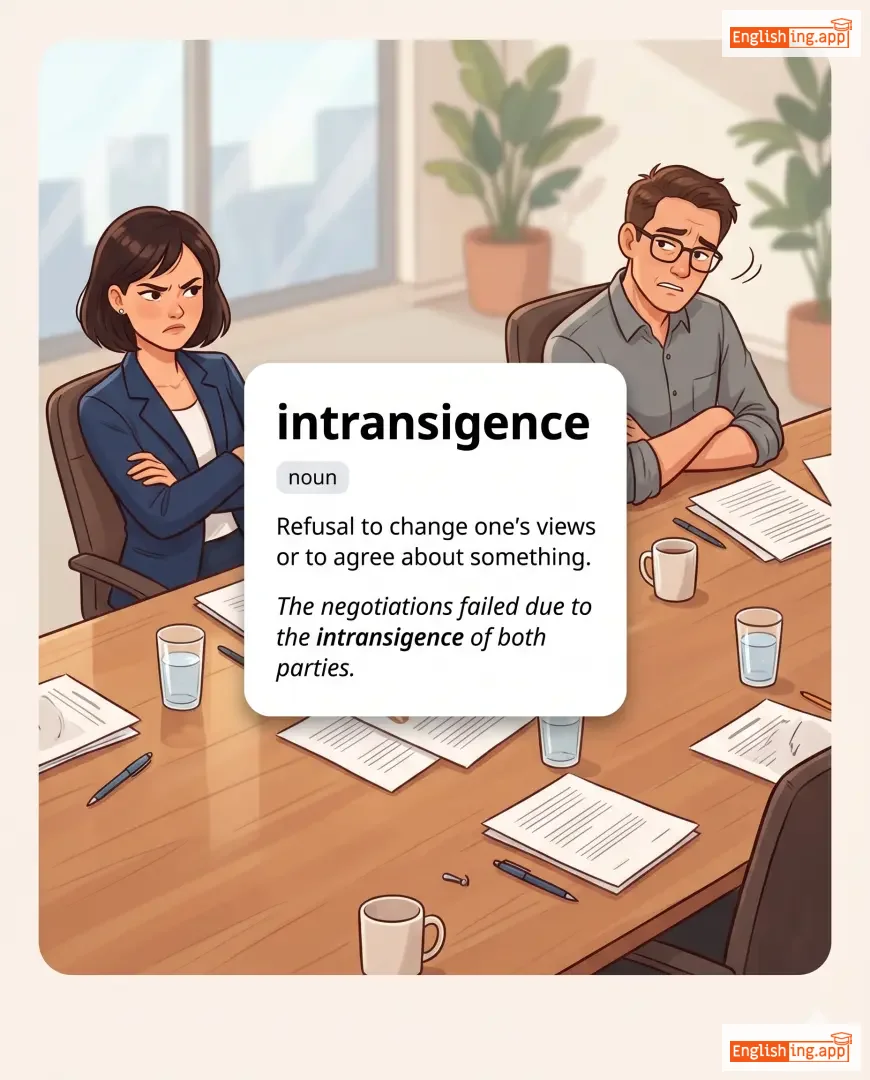
intransigence definition card — visual illustration of the meaning
noun C2
/ɪnˈtræn.sɪ.dʒəns/
intransigeance (intransigeance)

Refusal to change one's views or to agree about something.

"The negotiations failed due to the intransigence of both parties."

"Les négociations ont échoué en raison de l'intransigeance des deux parties." (Les négociations ont échoué en raison de l'intransigeance des deux parties.)
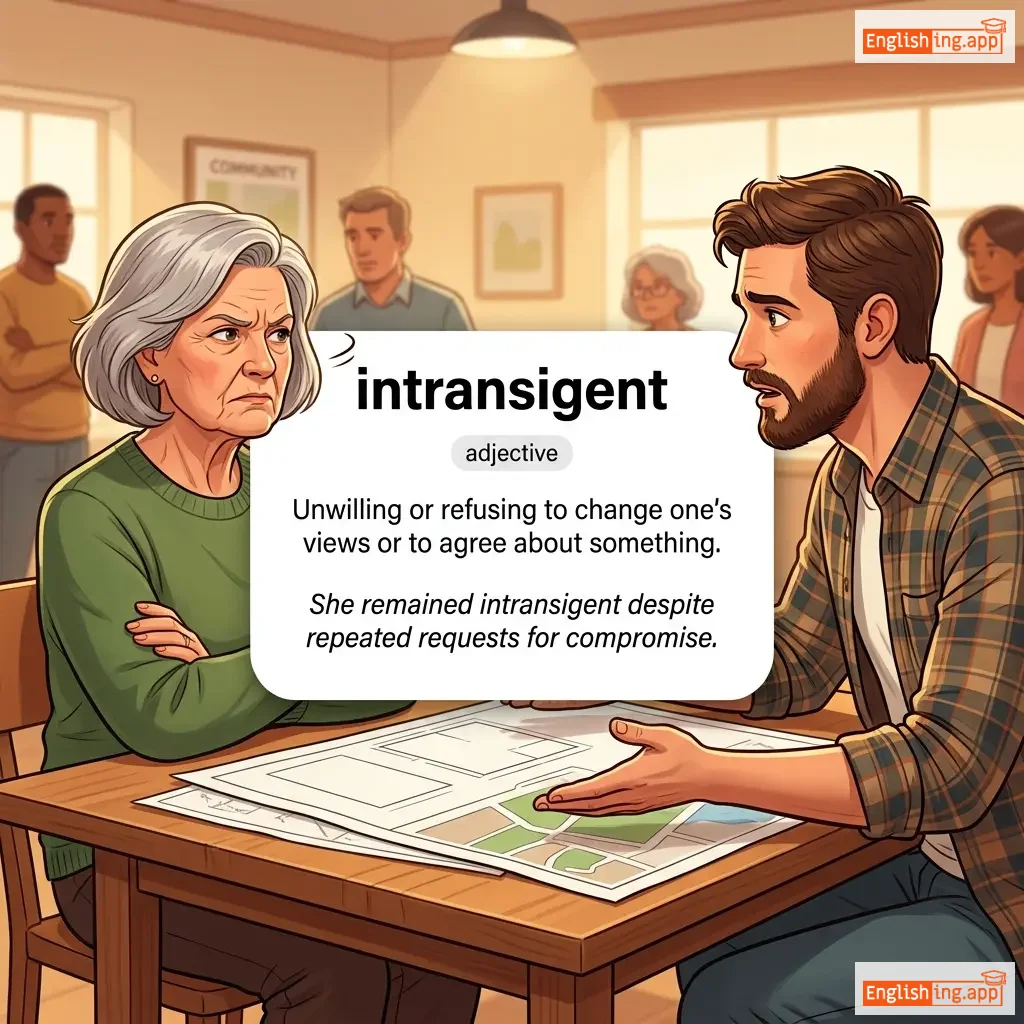
intransigent definition card — visual illustration of the meaning
adjective C2
/ɪnˈtræn.sɪ.dʒənt/
intransigeant (intransigeant)

Unwilling or refusing to change one's views or to agree about something.

"She remained intransigent despite repeated requests for compromise."

"Elle est restée intransigeante malgré les demandes répétées de compromis." (Elle est restée intransigeante malgré les demandes répétées de compromis.)
noun C2
/ˌɪn.trəˈɡreʃ.ən/
introgression génétique (introgression genetique)

The transfer of genetic information from one species to another through repeated backcrossing.

"Introgression plays a significant role in plant breeding."

"L'introgression joue un rôle important dans la reproduction des plantes." (L'introgression joue un rôle important dans la reproduction des plantes.)
verb C2
/ˌɪn.trəˈmɪt/
introduire (introduire)

To insert or introduce something into a place or body.

"The doctor carefully intromitted the instrument into the wound."

"Le médecin a introduit soigneusement l'instrument dans la plaie." (Le medecin a introduit soigneusement l'instrument dans la plaie.)
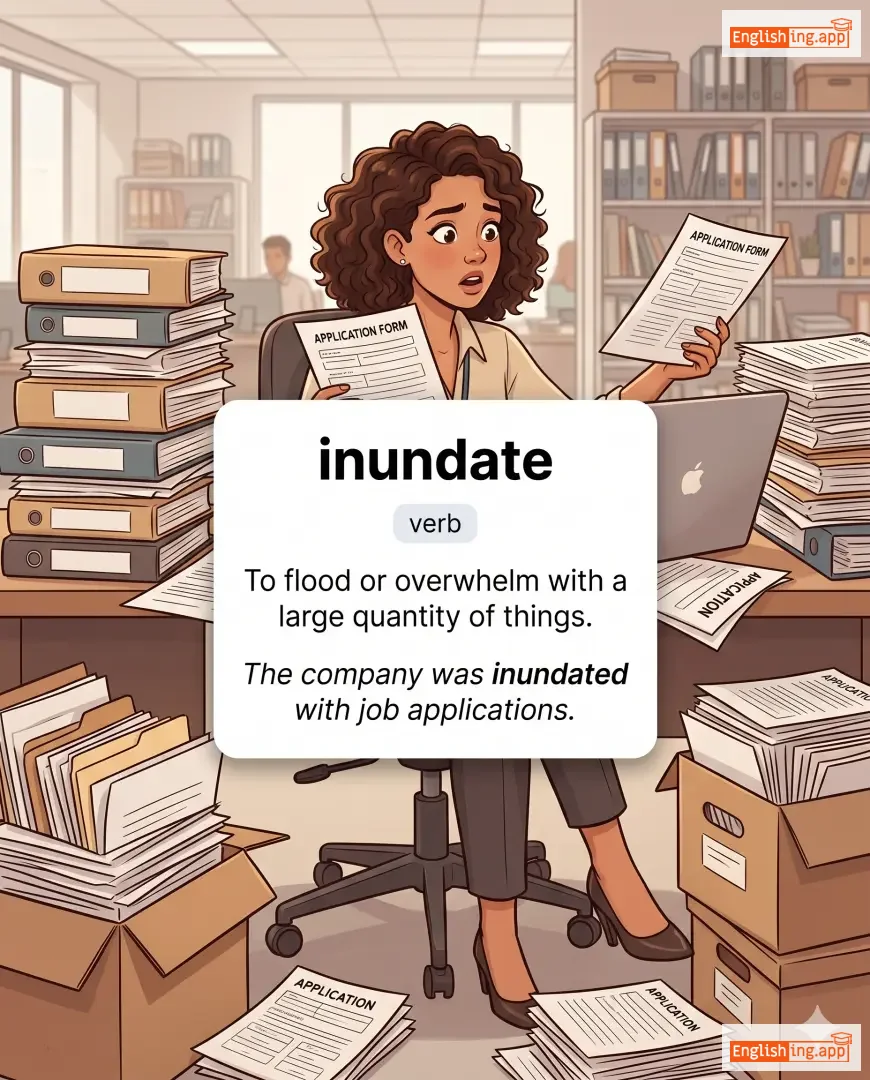
inundate definition card — visual illustration of the meaning
verb C2
/ˈɪn.ʌn.deɪt/
inonder / submerger (inonder / submerger)

To flood or overwhelm with a large quantity of things.

"The company was inundated with job applications."

"L'entreprise a été inondée de candidatures." (L'entreprise a été inondée de candidatures.)
noun C2
/ˌɪn.ʌnˈdeɪ.ʃən/
inondation (inondation)

The act of flooding or overwhelming with water or things.

"The town suffered from a severe inundation after the heavy rains."

"La ville a souffert d'une grave inondation après les fortes pluies." (La ville a souffert d'une grave inondation après les fortes pluies.)
verb C2
/ɪˈnjʊər/
habituer (habituer)

To become accustomed to something, especially something unpleasant.

"Soldiers quickly became inured to the harsh conditions."

"Les soldats se sont rapidement habitués aux conditions difficiles." (Les soldats se sont rapidement habitués aux conditions difficiles.)
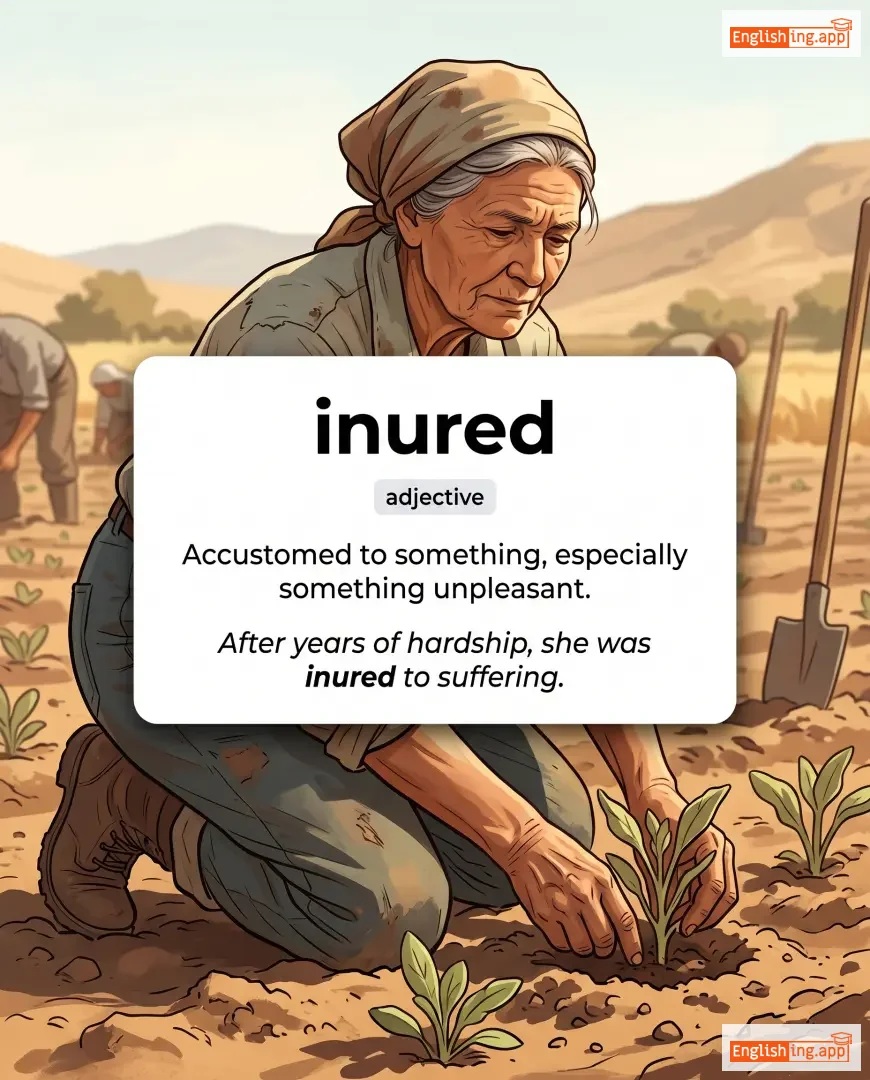
inured definition card — visual illustration of the meaning
adjective C2
/ɪˈnjʊərd/
habitué (habitué)

Accustomed to something, especially something unpleasant.

"After years of hardship, she was inured to suffering."

"Après des années de souffrance, elle était habituée à la douleur." (Après des années de souffrance, elle était habituée à la douleur.)
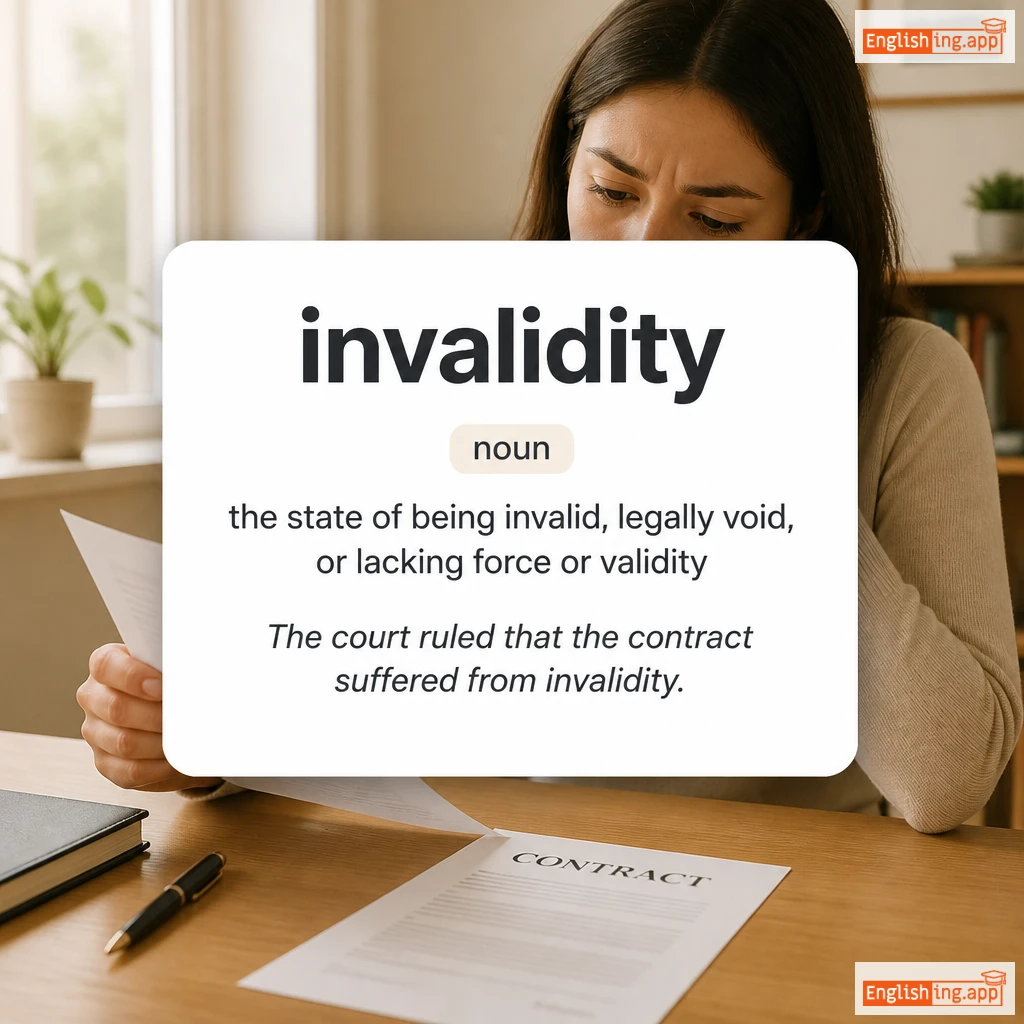
invalidity definition card — visual illustration of the meaning
noun C2
/ˌɪnvəˈlɪdɪti/
invalidité (invalidite)

the state of being invalid, legally void, or lacking force or validity

"The court ruled that the contract suffered from invalidity."

"Le tribunal a jugé que le contrat souffrait d’invalidité." (le tribunal a juge que le contrat souffrait dinvalidite)
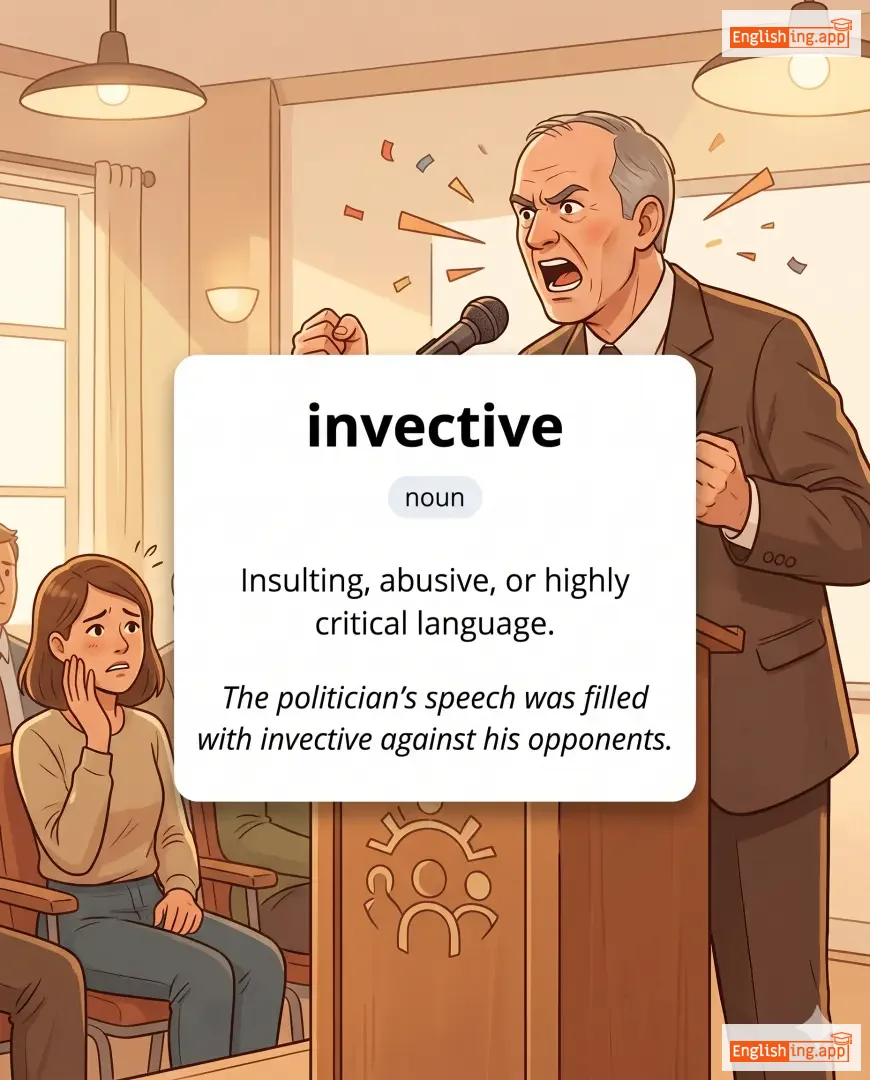
invective definition card — visual illustration of the meaning
noun C2
/ɪnˈvɛktɪv/
langage injurieux (langage injurieux)

Insulting, abusive, or highly critical language.

"The politician’s speech was filled with invective against his opponents."

"Le discours du politicien était rempli d'invectives contre ses adversaires." (Le discours du politicien était rempli d'invectives contre ses adversaires.)
verb C2
/ɪnˈveɪ/
critiquer sévèrement (critiquer severement)

To speak or write about something with great hostility and criticism.

"He inveighed against the corruption in government."

"Il a critiqué sévèrement la corruption dans le gouvernement." (Il a critiqué sévèrement la corruption dans le gouvernement.)
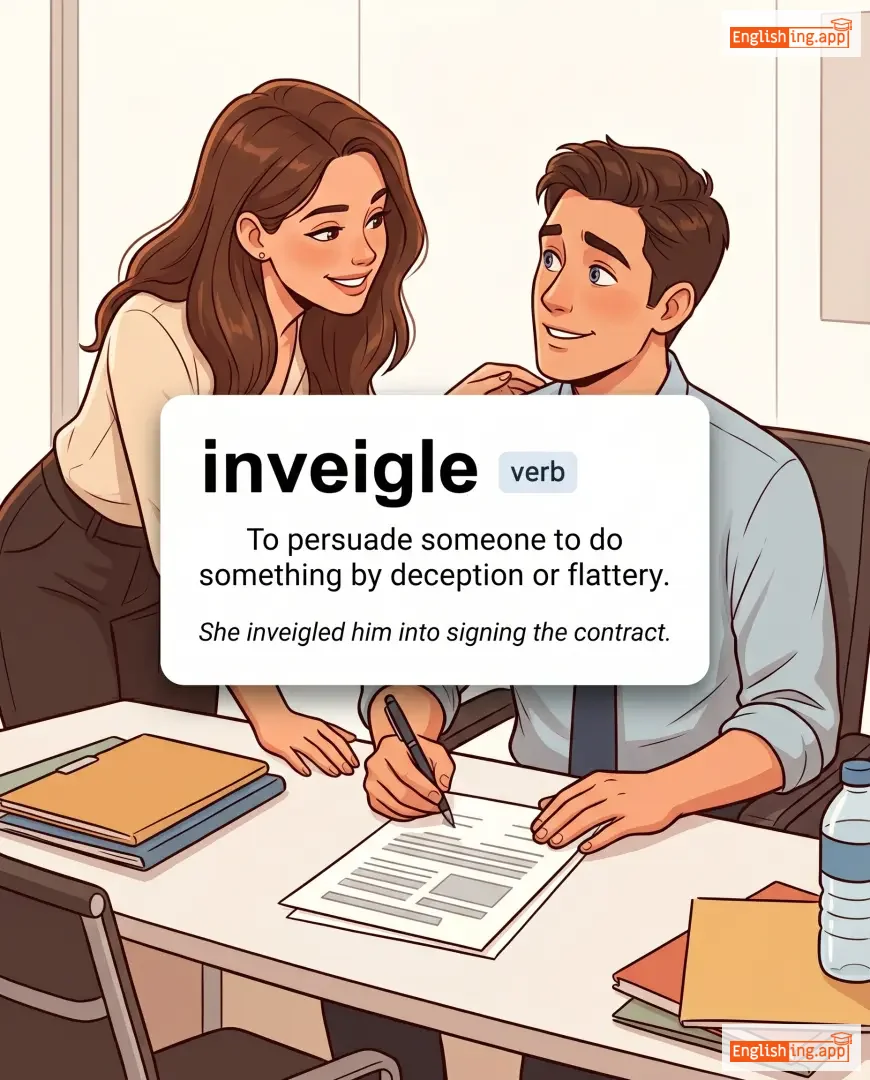
inveigle definition card — visual illustration of the meaning
verb C2
/ɪnˈveɪɡəl/
manipuler (manipuler)

To persuade someone to do something by deception or flattery.

"She inveigled him into signing the contract."

"Elle l'a dupé pour qu'il signe le contrat." (Elle l'a dupé pour qu'il signe le contrat.)
noun C2
/ɪnˈvɛstɪtʃər/
cérémonie d'investiture (ceremonie d'investiture)

the formal ceremony of conferring authority, rank, or office

"The king held an investiture ceremony for the new knight."

"Le roi a organisé une cérémonie d'investiture pour le nouveau chevalier." (Le roi a organise une ceremonie d'investiture pour le nouveau chevalier.)
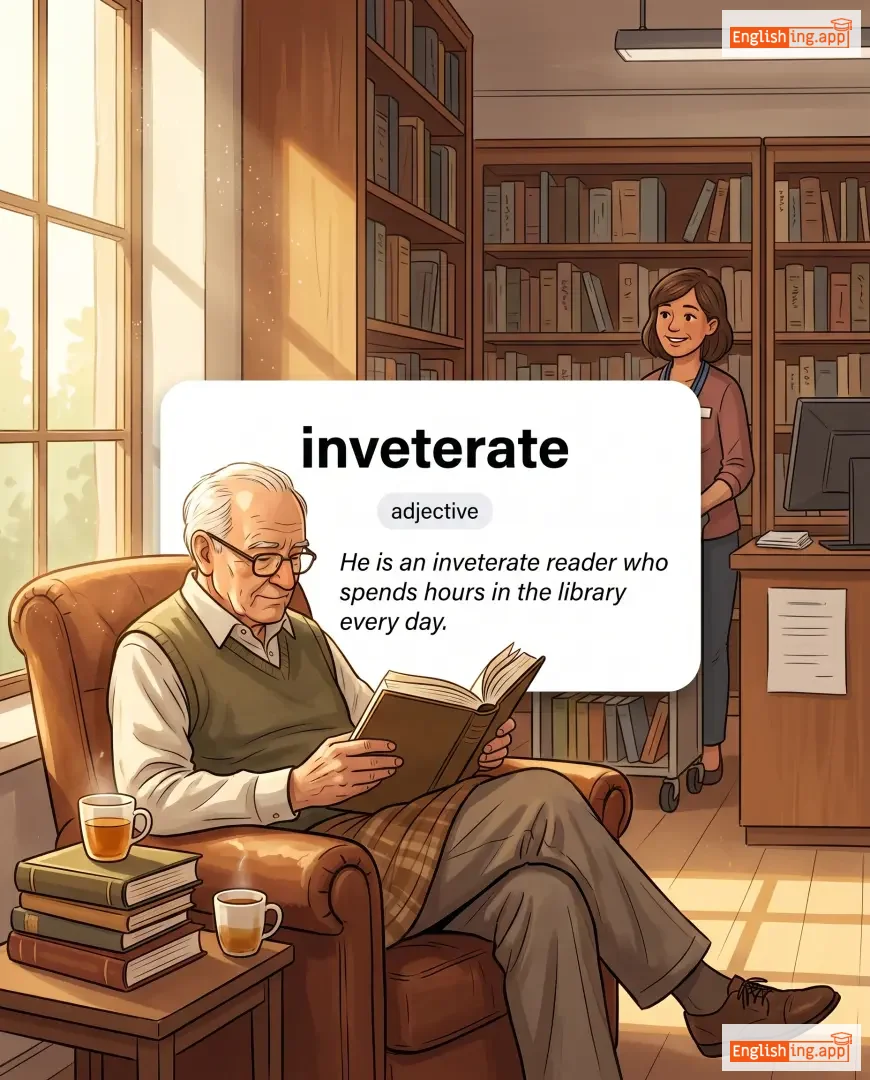
inveterate definition card — visual illustration of the meaning
adjective C2
/ɪnˈvɛtərət/
invétéré (invétére)

having a long-established habit, activity, or interest that is unlikely to change

"He is an inveterate reader who spends hours in the library every day."

"Il est un lecteur invétéré qui passe des heures à la bibliothèque chaque jour." (Il est un lecteur invetere qui passe des heures a la bibliotheque chaque jour.)
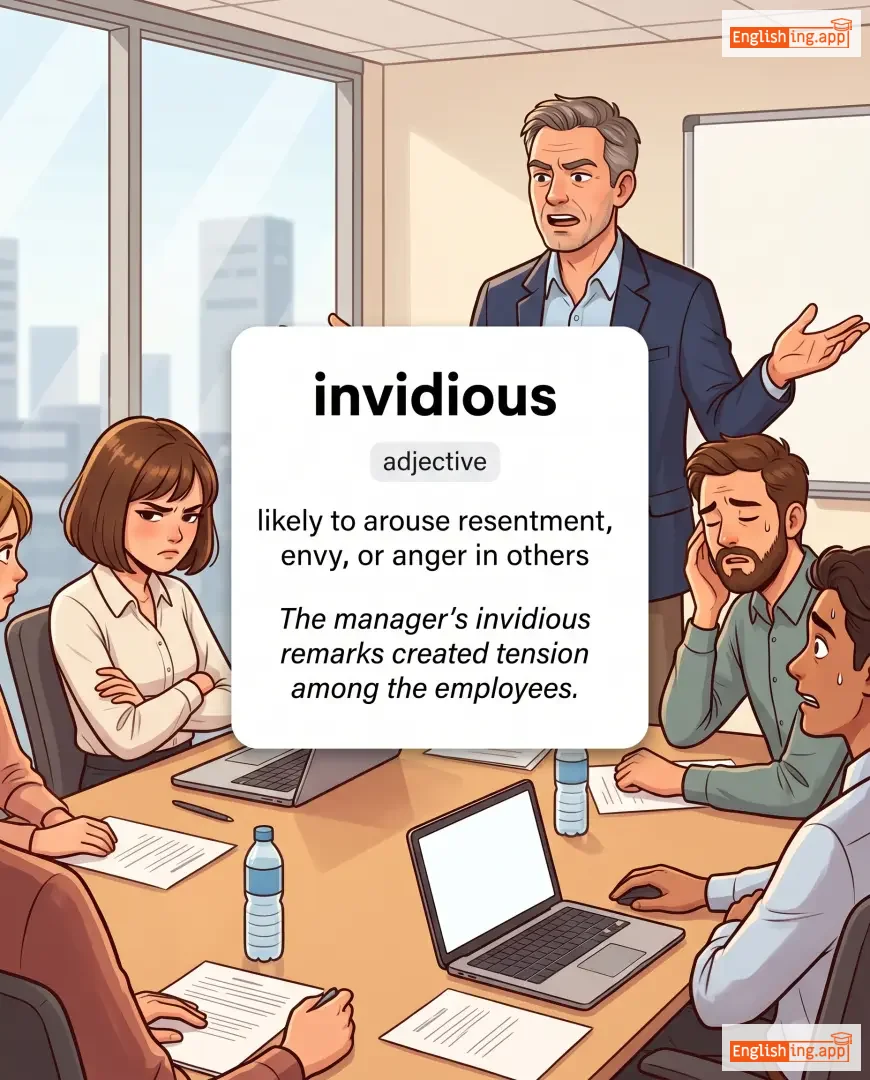
invidious definition card — visual illustration of the meaning
adjective C2
/ɪnˈvɪdiəs/
envieux (envieux)

likely to arouse resentment, envy, or anger in others

"The manager's invidious remarks created tension among the employees."

"Les remarques envieuses du manager ont créé des tensions parmi les employés." (Les remarques envieuses du manager ont créé des tensions parmi les employés.)
adjective C2
/ɪnˈvaɪələbl/
inviolable (inviolable)

never to be broken, dishonored, or violated

"Human rights are considered inviolable in modern democracies."

"Les droits de l'homme sont considérés comme inviolables dans les démocraties modernes." (Les droits de l'homme sont considérés comme inviolables dans les démocraties modernes.)
adjective C2
/ɪnˈvaɪələt/
inviolé (inviole)

free from violation, injury, or desecration; kept safe and untouched

"The ancient temple remained inviolate for centuries."

"Le temple ancien est resté inviolé pendant des siècles." (Le temple ancien est reste inviole pendant des siecles.)
invitor definition card — visual illustration of the meaning
noun C2
/ɪnˈvaɪtər/
invitant (invitant)

a person who invites someone to an event, meeting, or place

"The invitor greeted all the guests warmly at the entrance."

"L’invitant a accueilli les invités à l’entrée." (Linvitant a accueilli les invites a lentree)
noun C2
/ˌɪnvəˈkeɪʃən/
invocation (invocation)

the act of calling upon a higher power for help, blessing, or inspiration

"The ceremony began with an invocation to the gods."

"La cérémonie a commencé par une invocation aux dieux." (La cérémonie a commencé par une invocation aux dieux.)
noun C2
/ˌɪnvəˈluːʃən/
involution (involution)

a complicated or intricate form or state; in biology, the shrinking of an organ after its function has finished

"The story was full of involution, making it hard to follow."

"L'histoire était pleine d'involution, ce qui la rendait difficile à suivre." (L'histoire était pleine d'involution, ce qui la rendait difficile à suivre.)
adjective C2
/ɪnˈvʌlnərəbl/
invulnérable (invulnerable)

Impossible to harm, damage, or defeat.

"The fortress was thought to be invulnerable to attack."

"La forteresse était considérée comme invulnérable aux attaques." (La forteresse etait consideree comme invulnerable aux attaques.)
noun C2
/aɪˈoʊtə/
une quantité infime (une quantite infime)

An extremely small amount.

"He did not show an iota of fear."

"Il n'a montré même pas une infime quantité de peur." (Il n'a montré même pas une infime quantité de peur.)
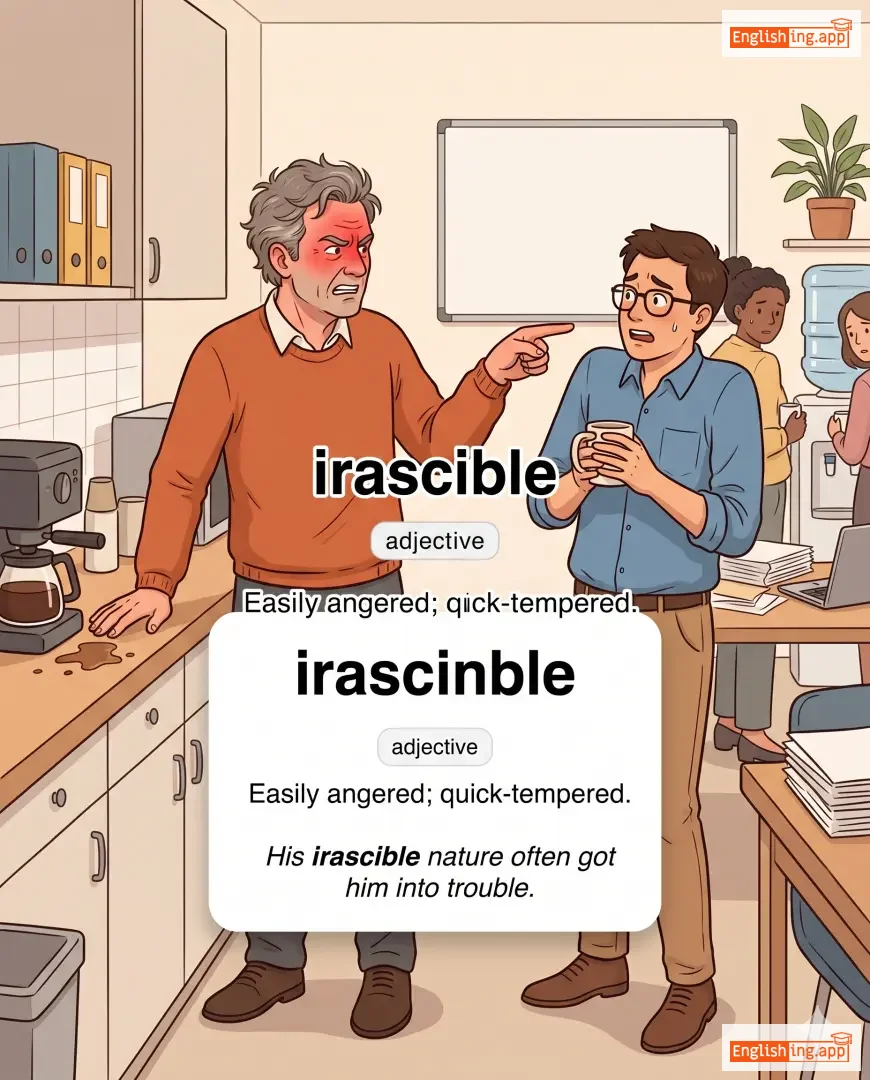
irascible definition card — visual illustration of the meaning
adjective C2
/ɪˈræsɪbl/
irritable (irritable)

Easily angered; quick-tempered.

"His irascible nature often got him into trouble."

"Sa nature irritable le mettait souvent dans des situations difficiles." (Sa nature irritable le mettait souvent dans des situations difficiles.)
noun C2
/aɪər/
colère, rage (colère, rage)

intense anger or rage

"The new policy provoked the ire of the employees."

"La nouvelle politique a provoqué la colère des employés." (La nouvelle politique a provoqué la colère des employés.)
noun C2
/ˌɪrɪˈdɛsəns/
brillance iridescente (brillance iridescente)

a play of lustrous, changing colors like those of a rainbow

"The butterfly's wings shimmered with iridescence."

"Les ailes du papillon brillaient d'une brillance iridescente." (Les ailes du papillon brillaient d'une brillance iridescente.)
adjective C2
/ˌɪrɪˈdɛsənt/
iridescent (iridescent)

showing luminous colors that seem to change when seen from different angles

"She wore an iridescent dress that sparkled in the light."

"Elle portait une robe iridescente qui scintillait à la lumière." (Elle portait une robe iridescente qui scintillait à la lumière.)
verb C2
/ɜːrk/
agacer (agacer)

to annoy or irritate someone

"It irks me when people are late without calling."

"Ça m'agace quand les gens arrivent en retard sans appeler." (Ça m'agace quand les gens arrivent en retard sans appeler.)
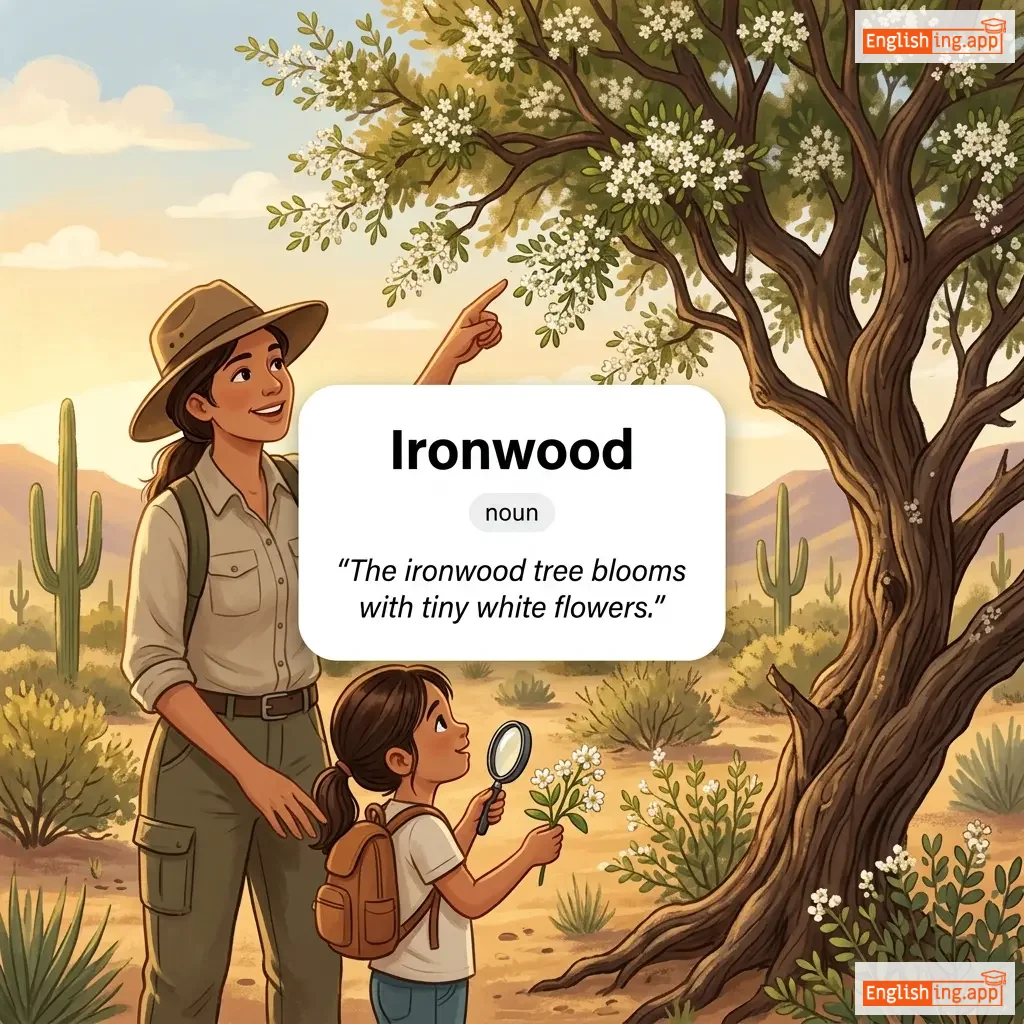
Ironwood definition card — visual illustration of the meaning
noun C2
/ˈaɪ.ərn.wʊd/
bois de fer (bois de fer)

a hard, dense wood from various trees; also the tree itself that produces small flowers

"The ironwood tree blooms with tiny white flowers."

"L'arbre de bois de fer fleurit avec de petites fleurs blanches." (L'arbre de bois de fer fleurit avec de petites fleurs blanches.)
noun C2
/ɪˈreɪdiəns/
irradiance (iradians)

the quality of shining brightly; the intensity of light falling on a surface

"The irradiance of the sun at noon was overwhelming."

"L'irradiance du soleil à midi était accablante." (L'irradiance du soleil à midi était accablante.)
verb C2
/ɪˈreɪdieɪt/
irradier (irradier)

to shine light on something; to expose to radiation; to illuminate or brighten

"The scientist used a lamp to irradiate the sample."

"Le scientifique a utilisé une lampe pour irradier l'échantillon." (Le scientifique a utilisé une lampe pour irradier l'échantillon.)
adjective C2
/ɪˈrædɪkəbəl/
irradicable (irradicable)

not able to be eradicated; impossible to destroy or remove completely

"The love of a mother for her child is irradicable."

"L'amour d'une mère pour son enfant est irradicable." (L'amour d'une mère pour son enfant est irradicable.)
adjective C2
/ˌɪrɪˈkɒnsɪləbl/
irréconciliable (irreconciliable)

impossible to make compatible or bring into harmony; unable to resolve differences

"The couple separated due to irreconcilable differences."

"Le couple s'est séparé en raison de différences irréconciliables." (Le couple s'est séparé en raison de différences irréconciliables.)
adjective C2
/ˌɪrɪˈdjuːsəbl/
irréductible (irreduktibl)

impossible to reduce or simplify further

"The fraction 3/7 is irreducible."

"La fraction 3/7 est irréductible." (La fraction trois sur sept est irreductible.)
adjective C2
/ɪˈrɛfrəɡəbəl/
irréfutable (irrefutable)

Impossible to refute, deny, or break

"The lawyer presented irrefragable evidence that proved his client’s innocence."

"L'avocat a présenté des preuves irréfutables qui ont prouvé l'innocence de son client." (L'avocat a présenté des preuves irréfutables qui ont prouvé l'innocence de son client.)
adjective C2
/ˌɪrɪˈfrændʒɪbəl/
irréfragable (irrefraagable)

Not to be broken, violated, or infringed

"The constitution guarantees certain irrefrangible rights to every citizen."

"La constitution garantit certains droits irréfragables à chaque citoyen." (La constitution garantit certains droits irrefragables a chaque citoyen.)
adjective C2
/ˌɪrɪˈlɪdʒəs/
irréligieux (irreligieux)

Indifferent or hostile to religion

"Some people in the community consider him irreligious because he never attends religious services."

"Certaines personnes dans la communauté le considèrent comme irréligieux car il ne va jamais aux services religieux." (Certaines personnes dans la communauté le considèrent comme irreligieux car il ne va jamais aux services religieux.)
adjective C2
/ˌɪrɪˈmiːdiəbl̩/
irrémédiable (irremediable)

Impossible to cure, repair, or remedy.

"The damage to the ancient manuscript was irremediable."

"Les dommages au manuscrit ancien étaient irrémédiables." (Les dommages au manuscrit ancien étaient irrémédiables.)
adjective C2
/ˌɪrɪˈprəʊtʃəbl̩/
irréprochable (irreprochable)

Beyond criticism; faultless.

"The judge was known for his irreproachable integrity."

"Le juge était connu pour son intégrité irréprochable." (Le juge était connu pour son integrité irreprochable.)
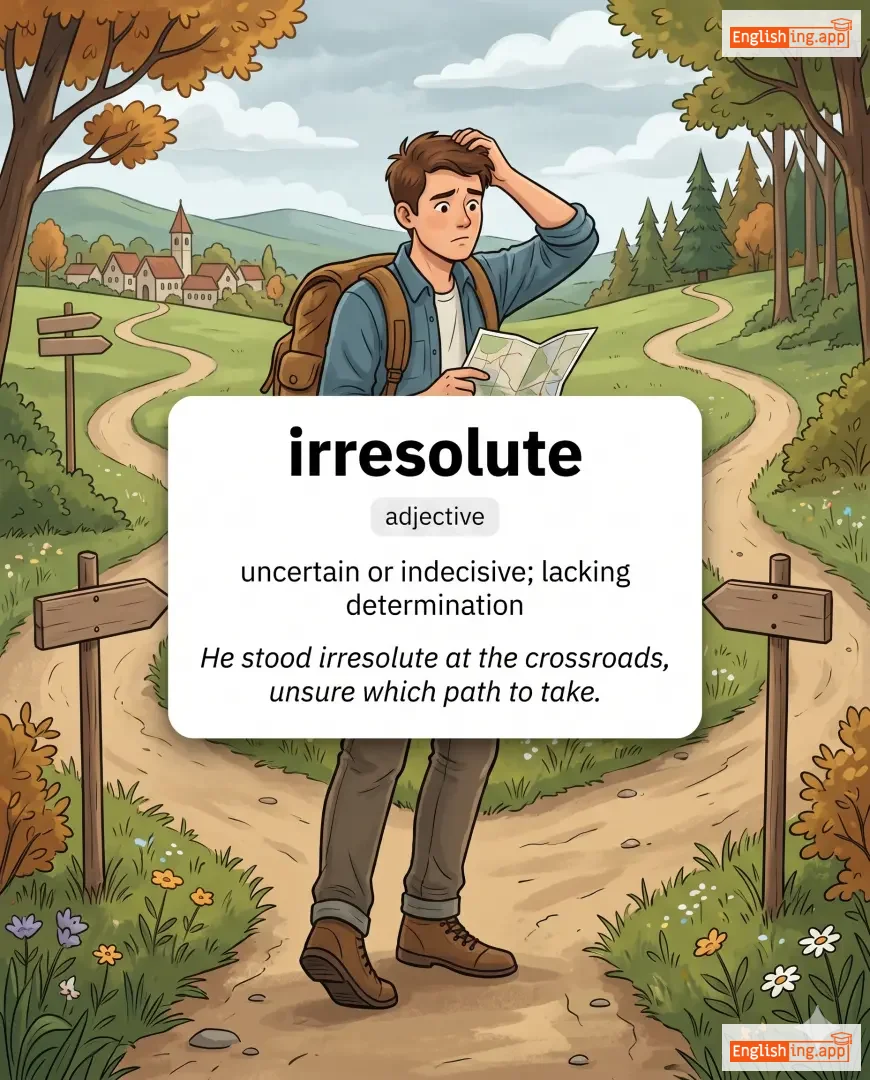
irresolute definition card — visual illustration of the meaning
adjective C2
/ɪˈrɛzəluːt/
indécis (indecis)

uncertain or indecisive; lacking determination

"He stood irresolute at the crossroads, unsure which path to take."

"Il resta indécis au carrefour, ne sachant quel chemin prendre." (Il resta indecis au carrefour, ne sachant quel chemin prendre.)
adjective C2
/ˌɪrɪˈtriːvəbl/
irrécupérable (irrecuperable)

impossible to recover or regain

"The documents were lost in an irretrievable way after the fire."

"Les documents ont été perdus de manière irrécupérable après l'incendie." (Les documents ont ete perdus de maniere irrecuperable apres l'incendie.)
noun C2
/ɪˈrɛvərəns/
irrévérence (irrévérence)

a lack of respect for people or things that are generally taken seriously

"His jokes about religion showed irreverence to the sacred traditions."

"Ses blagues sur la religion ont montré de l'irrévérence envers les traditions sacrées." (Ses blagues sur la religion ont montré de l'irrévérence envers les traditions sacrées.)
adjective C2
/ˌɪrɛvəˈrɛnʃəl/
irrévérencieux (irrévérencieux)

Showing a lack of respect for things that are generally taken seriously.

"His irreverential humor often shocked traditional audiences."

"Son humour irrévérencieux choquait souvent les spectateurs traditionnels." (Son humour irrévérencieux choquait souvent les spectateurs traditionnels.)
noun C2
/ˈɪrɪɡənt/
liquide d'irrigation (liquide d'irrigation)

A liquid used for irrigation, especially in medical or agricultural contexts.

"The doctor used a sterile irrigant during the procedure."

"Le médecin a utilisé un irrigant stérile pendant la procédure." (Le medecin a utilise un irrigant sterile pendant la procedure.)
noun C2
/ˈɪrɪtənsi/
irritation (irritation)

the quality or state of causing irritation; legal or formal invalidation

"The constant noise became an irritancy to the neighbors."

"Le bruit constant est devenu une irritation pour les voisins." (Le bruit constant est devenu une irritation pour les voisins.)