Vokabulare

Englisches Vokabelwörterbuch | Wortbedeutungen, Definitionen & Beispiele

noun C2
/ˌɪnkænˈdɛsəns/
incandescencia (incandescencia)

the emission of light from a hot object; brilliance

"The incandescence of the candle filled the dark room."

"La incandescencia de la vela llenó la habitación oscura." (La incandescencia de la vela lleno la habitacion oscura.)
adjective C2
/ˌɪnkænˈdɛsənt/
incandescente (incandescente)

emitting light as a result of being heated; extremely bright or passionate

"The incandescent lamp lit up the entire hall."

"La lámpara incandescente iluminó todo el salón." (La lámpara incandescente iluminó todo el salón.)
noun C2
/ˌɪnkænˈteɪʃən/
encantación (encantacion)

a series of words used as a magic spell or charm

"The wizard chanted an incantation to summon the spirits."

"El mago recitó una encantación para invocar los espíritus." (El mago recito una encantacion para invocar los espiritus.)
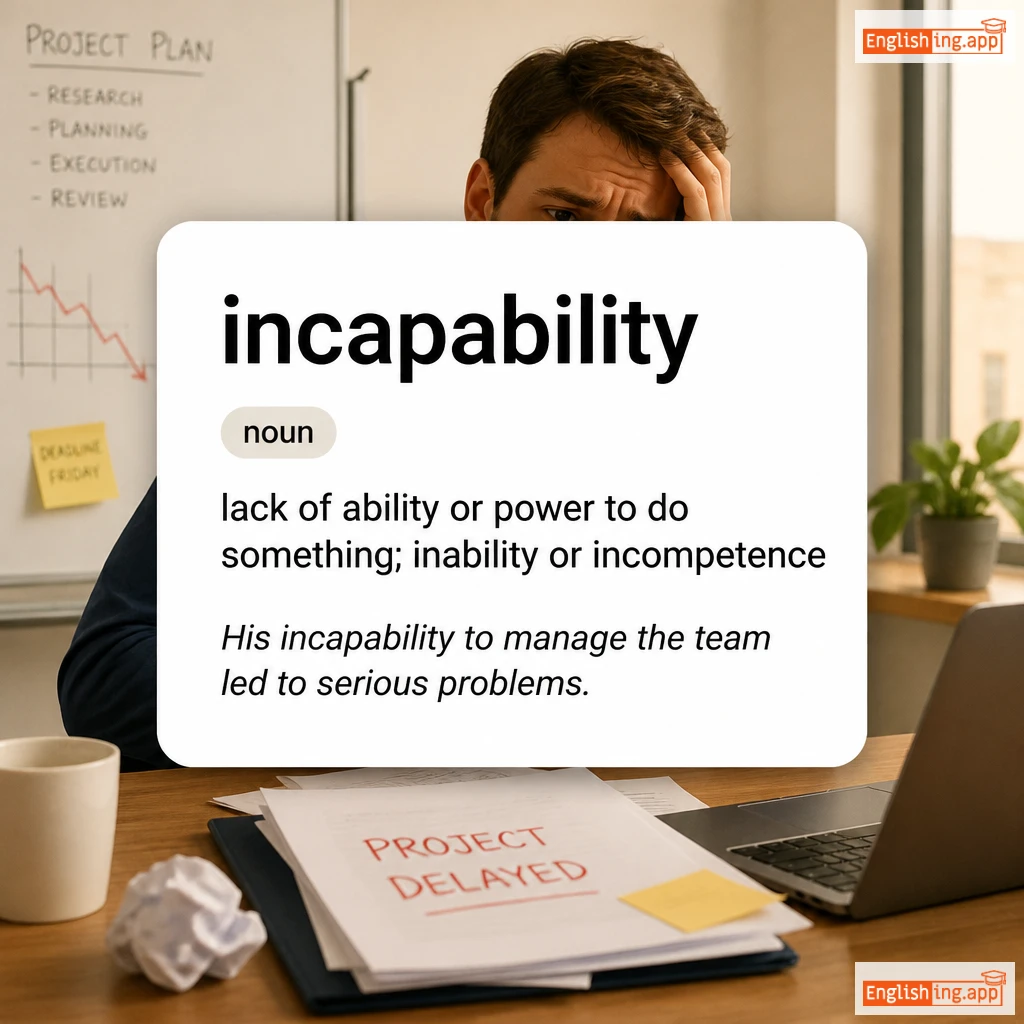
incapability definition card — visual illustration of the meaning
noun C2
/ˌɪnˌkeɪpəˈbɪləti/
incapacidad (incapacidad)

lack of ability or power to do something; inability or incompetence

"His incapability to manage the team led to serious problems."

"Su incapacidad para gestionar el equipo provocó problemas graves." (su incapacidad para gestionar el equipo provoco problemas graves)
verb C2
/ˌɪnkəˈpæsɪteɪt/
incapacitar (incapacitar)

to deprive someone or something of the ability or strength to function

"The severe injury incapacitated the player for the rest of the season."

"La grave lesión incapacitó al jugador para el resto de la temporada." (La grave lesion incapacito al jugador para el resto de la temporada.)
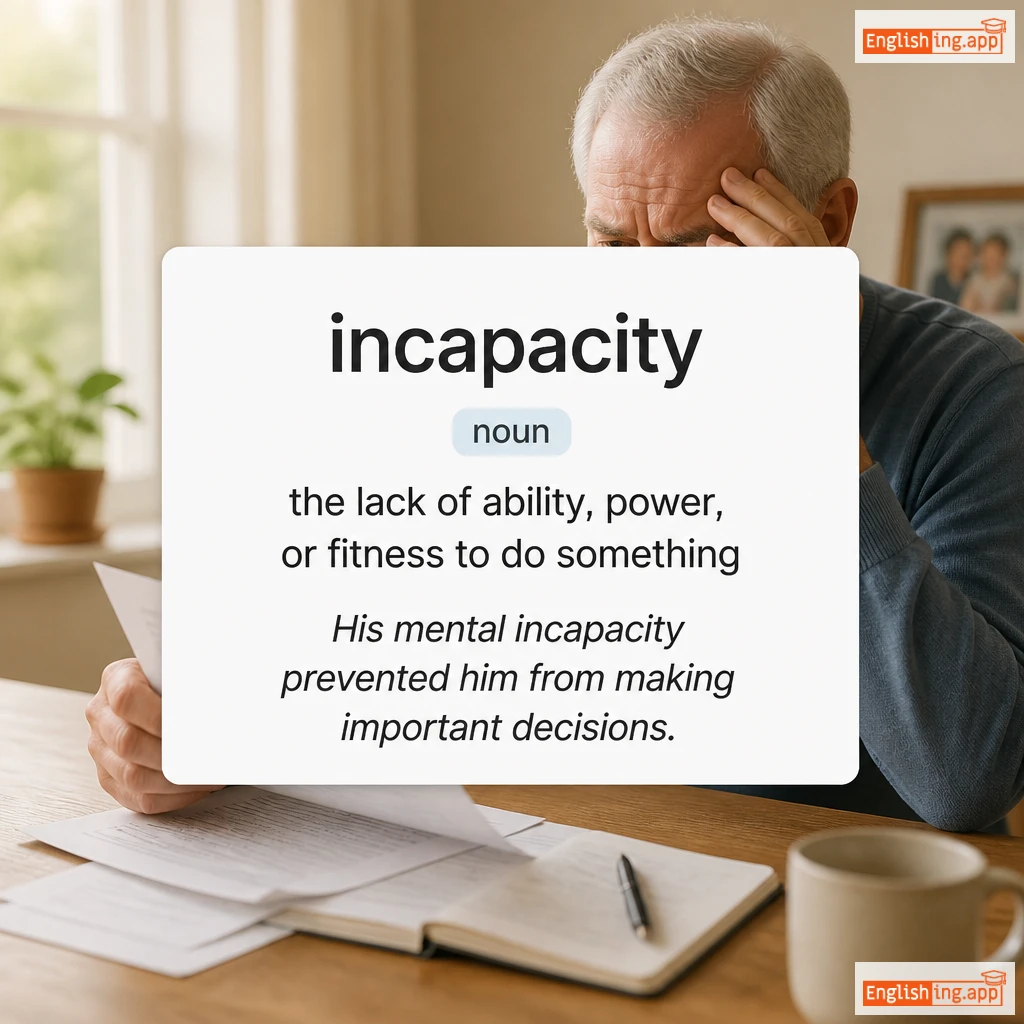
incapacity definition card — visual illustration of the meaning
noun C2
/ˌɪnkəˈpæsəti/
incapacidad (incapacidad)

the lack of ability, power, or fitness to do something

"His mental incapacity prevented him from making important decisions."

"Su incapacidad mental le impidió tomar decisiones importantes." (Su incapacidad mental le impidió tomar decisiones importantes.)
adjective/noun C2
/ɪnˈkɑːrnədiːn/
rojo intenso (rojo intenso)

a bright crimson or pinkish-red color

"The sky turned incarnadine at sunset."

"El cielo se tornó rojo intenso al atardecer." (El cielo se tornó rojo intenso al atardecer.)
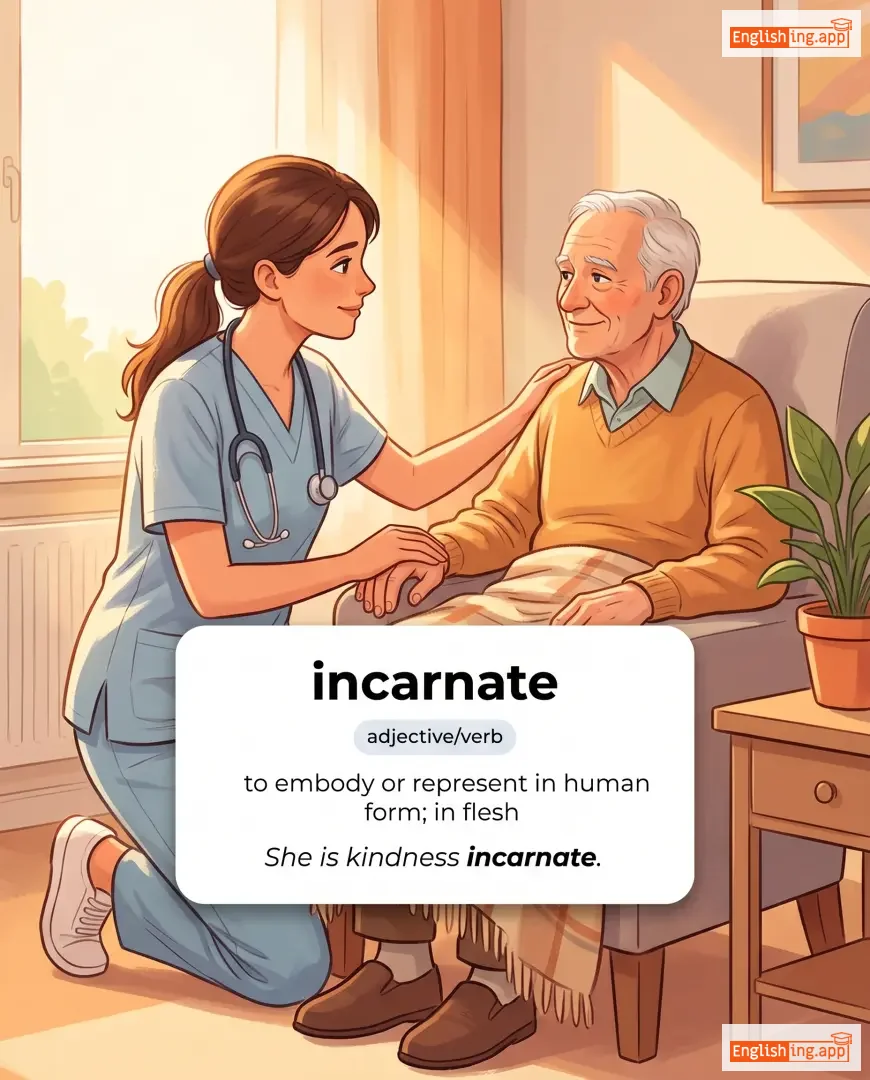
incarnate definition card — visual illustration of the meaning
adjective/verb C2
/ɪnˈkɑːrneɪt/
encarnado (encarnado)

to embody or represent in human form; in flesh

"She is kindness incarnate."

"Ella es la bondad encarnada." (Ella es la bondad encarnada.)
adjective C2
/ɪnˈsɛndiˌɛri/
incendiario / provocador (incendiario / provocador)

designed to cause fires or stir up conflict

"The politician’s incendiary remarks angered the crowd."

"Las declaraciones incendiarias del político enfurecieron a la multitud." (Las declaraciones incendiarias del politico enfurecieron a la multitud.)
adjective C2
/ɪnˈsɛptɪv/
inicial (inicial)

Relating to or marking the beginning or initial stage of something.

"The inceptive phase of the project was marked by enthusiastic planning."

"La fase inicial del proyecto fue marcada por una planificación entusiasta." (La fase inicial del proyecto fue marcada por una planificación entusiasta.)
adverb C2
/ˈɪntʃmiːl/
poco a poco (poco a poco)

Gradually, little by little.

"The old castle fell inchmeal into ruin."

"El viejo castillo cayó poco a poco en ruinas." (El viejo castillo cayó poco a poco en ruinas.)
inchoate definition card — visual illustration of the meaning
adjective C2
/ɪnˈkoʊ.ɪt/ or /ɪnˈkoʊ.eɪt/
incompleto (incompleto)

Just begun and not fully formed; rudimentary.

"His inchoate ideas needed more research to be developed."

"Sus ideas incompletas necesitaban más investigación para ser desarrolladas." (Sus ideas incompletas necesitaban más investigación para ser desarrolladas.)
adjective C2
/ɪnˈkoʊətɪv/
incipiente (incipiente)

relating to the beginning of something; in an initial stage

"The poet used inchoative expressions to depict the dawn of creation."

"El poeta utilizó expresiones incipientes para describir el amanecer de la creación." (El poeta utilizó expresiones incipientes para describir el amanecer de la creación.)
verb C2
/ɪnˈsɪnəˌreɪt/
incinerar (incinerar)

to burn something completely until it is reduced to ashes

"The city decided to incinerate the medical waste for safety."

"La ciudad decidió incinerar los desechos médicos por seguridad." (La ciudad decidió incinerar los desechos médicos por seguridad.)
noun C2
/ɪnˈsɪpiəns/
inicio (inicio)

the beginning or initial stage of something

"The project was still in its incipience when funding was approved."

"El proyecto aún estaba en su inicio cuando se aprobó la financiación." (El proyecto aun estaba en su inicio cuando se aprobó la financiación.)
adjective C2
/ɪnˈsɪpiənt/
incipiente (incipiente)

in an initial stage; beginning to develop

"The incipient storm made the sky turn dark and heavy."

"La tormenta incipiente hizo que el cielo se volviera oscuro y pesado." (La tormenta incipiente hizo que el cielo se volviera oscuro y pesado.)
noun C2
/ɪnˈsaɪzər/
incisivo (insisivo)

a narrow-edged tooth at the front of the mouth, adapted for cutting

"The dentist noted that his upper left incisor was chipped."

"El dentista notó que su incisivo superior izquierdo estaba astillado." (El dentista noto que su incisivo superior izquierdo estaba astillado.)
adjective C2
/ɪnˈklɛmɛnt/
clima inclemente (clima inclemente)

unpleasantly cold, wet, or stormy (usually weather)

"The match was canceled due to inclement weather."

"El partido fue cancelado debido al clima inclemente." (El partido fue cancelado debido al clima inclemente.)
adjective C2
/ˌɪnkoʊˈɜːrsəbl̩/
incoercible (incoercible)

Not capable of being forced, compelled, or restrained.

"Her incoercible spirit inspired others to fight for justice."

"Su espíritu incoercible inspiró a otros a luchar por la justicia." (Su espíritu incoercible inspiró a otros a luchar por la justicia.)
adjective C2
/ɪnˈkɑːdʒɪtənt/
desconsiderado (desconsiderado)

Lacking thought; inconsiderate or thoughtless.

"It was incogitant of him to make such a rude comment."

"Fue incogitante de su parte hacer un comentario tan grosero." (Fue incogitante de su parte hacer un comentario tan grosero.)
adjective C2
/ˌɪnkəmˈbʌstəbl/
incombustible (incombustible)

Not capable of catching fire or burning.

"This material is incombustible and safe for construction."

"Este material es incombustible y seguro para la construcción." (Este material es incombustible y seguro para la construcción.)
adjective C2
/ˌɪnkəˈməʊdiəs/
incómodo (incomodo)

Uncomfortably small, cramped, or inconvenient.

"We had to stay in an incommodious room during the trip."

"Tuvimos que quedarnos en una habitación incómoda durante el viaje." (Tuvimos que quedarnos en una habitacion incomoda durante el viaje.)
adjective C2
/ˌɪnkəmˈprɛsəbl/
incompresible (incompresible)

Not able to be pressed or squeezed into a smaller space.

"Liquids are generally considered incompressible."

"Los líquidos generalmente se consideran incomprensibles." (Los líquidos generalmente se consideran incomprensibles.)
adjective C2
/ɪnˈkɒŋɡruənt/
incongruente (incongruente)

Not in harmony or keeping with the surroundings or other aspects.

"His casual outfit looked incongruent at the formal dinner."

"Su atuendo casual se veía incongruente en la cena formal." (Su atuendo casual se veia incongruente en la cena formal.)
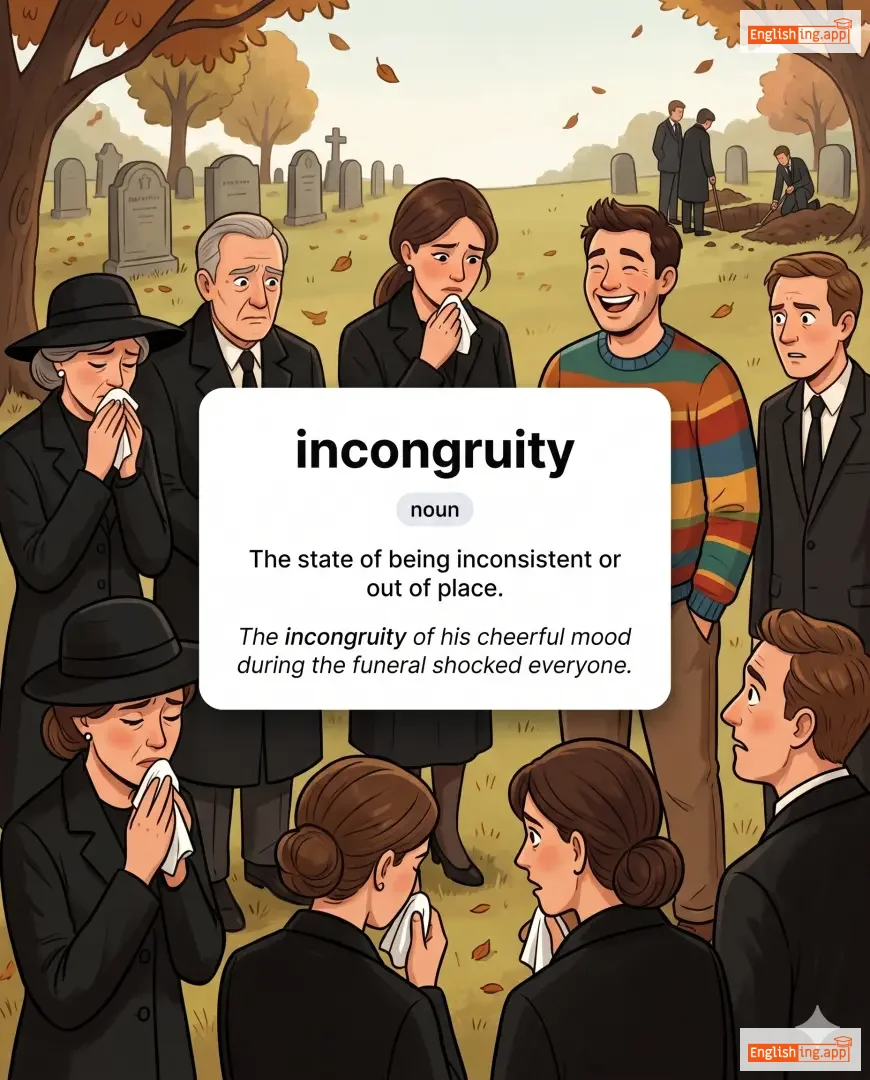
incongruity definition card — visual illustration of the meaning
noun C2
/ˌɪnkənˈɡruːəti/
incongruencia (incongruencia)

The state of being inconsistent or out of place.

"The incongruity of his cheerful mood during the funeral shocked everyone."

"La incongruencia de su estado de ánimo alegre durante el funeral sorprendió a todos." (La incongruencia de su estado de ánimo alegre durante el funeral sorprendió a todos.)
adjective C2
/ˌɪnkənˈsɪdərəbl/
insignificante (insignificante)

Too small or unimportant to be worth considering.

"The donation was not inconsiderable, though smaller than expected."

"La donación no fue insignificante, aunque más pequeña de lo esperado." (La donación no fue insignificante, aunque más pequeña de lo esperado.)
noun C2
/ɪnˈkɒnstənsi/
inconstancia (inconstancia)

The quality of changing frequently or being unreliable.

"The inconstancy of the weather makes planning difficult."

"La inconstancia del clima hace que planificar sea difícil." (La inconstancia del clima hace que planificar sea difícil.)
inconstant definition card — visual illustration of the meaning
adjective C2
/ɪnˈkɒnstənt/
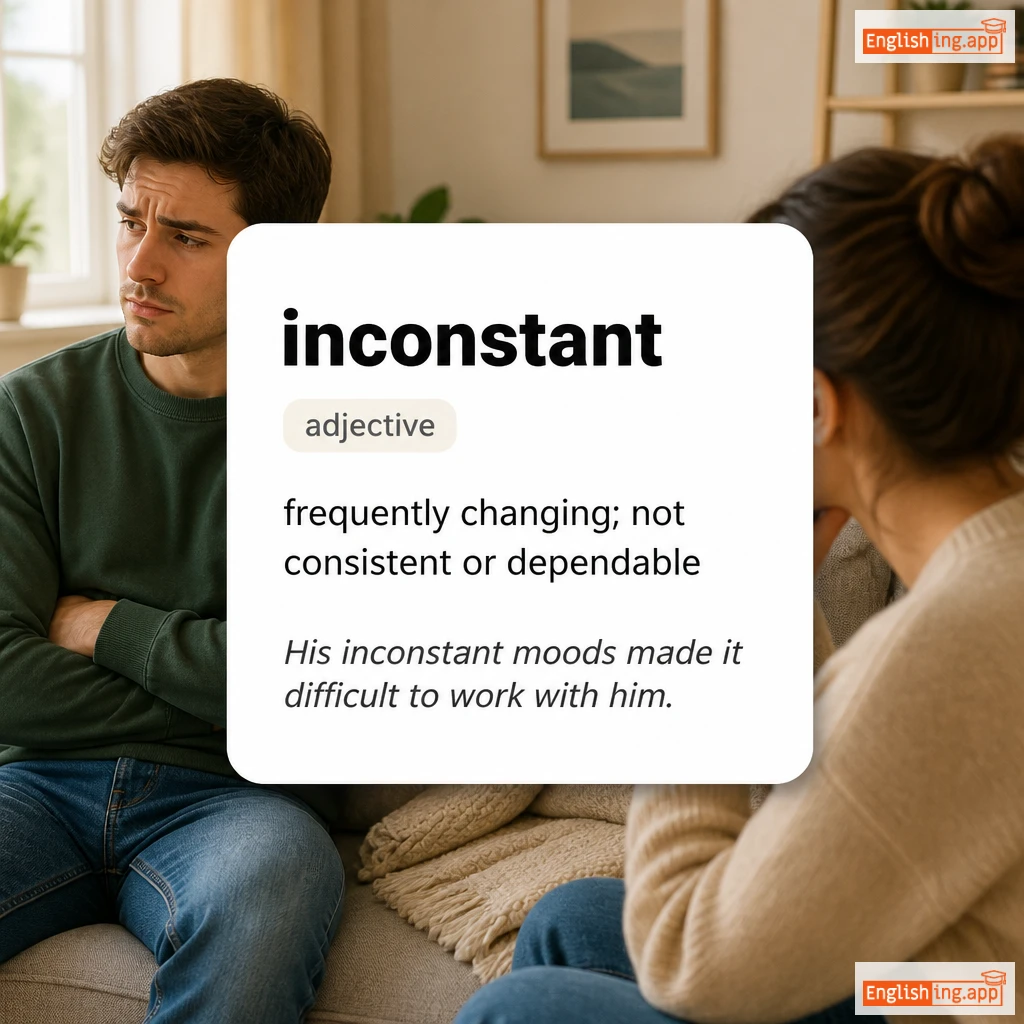
inconstante (inconstante)

frequently changing; not consistent or dependable

"His inconstant moods made it difficult to work with him."

"Sus estados de ánimo inconstantes hacían difícil trabajar con él." (Sus estados de ánimo inconstantes hacían difícil trabajar con él.)
adjective C2
/ɪnˈkɒntɪnənt/
incontinente (incontinente)

lacking control over urination or defecation; lacking self-restraint

"The patient was incontinent after surgery."

"El paciente era incontinente después de la cirugía." (El paciente era incontinente despues de la cirugia.)
adjective C2
/ˌɪnkɒntrəˈvɜːtəbl/
incontrovertible (incontrovertible)

impossible to deny or dispute; unquestionable

"The evidence was incontrovertible and proved his innocence."

"La evidencia era incontrovertible y demostró su inocencia." (La evidencia era incontrovertible y demostró su inocencia.)
adjective C2
/ˌɪnkɔːrˈpɔːriəl/
incorpóreo (incorporeo)

lacking a physical body; not composed of matter; intangible

"Ghosts are often described as incorporeal beings."

"Los fantasmas a menudo se describen como seres incorpóreos." (Los fantasmas a menudo se describen como seres incorpóreos.)
adjective C2
/ɪnˈkɒrɪdʒəbəl/
incorregible (incorregible)

incapable of being corrected, improved, or reformed

"He is an incorrigible optimist who never loses hope."

"Él es un optimista incorregible que nunca pierde la esperanza." (Él es un optimista incorregible que nunca pierde la esperanza.)
noun C2
/ˌɪnkrɪˈdjuːləti/
incredulidad (incredulidad)

the state of being unwilling or unable to believe something

"She looked at him with incredulity after hearing the strange story."

"Ella lo miró con incredulidad después de escuchar la extraña historia." (Ella lo miro con incredulidad despues de escuchar la extraña historia.)
noun C2
/ˌɪnkrʌˈsteɪʃən/
costra (costra)

a crust or hard coating formed on the surface of something

"The old pipes were blocked due to heavy incrustation of minerals."

"Las viejas tuberías estaban bloqueadas debido a una fuerte incrustación de minerales." (Las viejas tuberías estaban bloqueadas debido a una fuerte incrustación de minerales.)
noun C2
/ˈɪŋkjʊbəs/
espíritu maligno (espiritu maligno)

An oppressive or nightmarish burden; in folklore, an evil spirit that lies upon sleeping people.

"Debt became an incubus that weighed heavily on the family."

"La deuda se convirtió en un espíritu maligno que pesaba mucho sobre la familia." (La deuda se convirtio en un espiritu maligno que pesaba mucho sobre la familia.)
inculcate definition card — visual illustration of the meaning
verb C2
/ˈɪŋkʌlkeɪt/
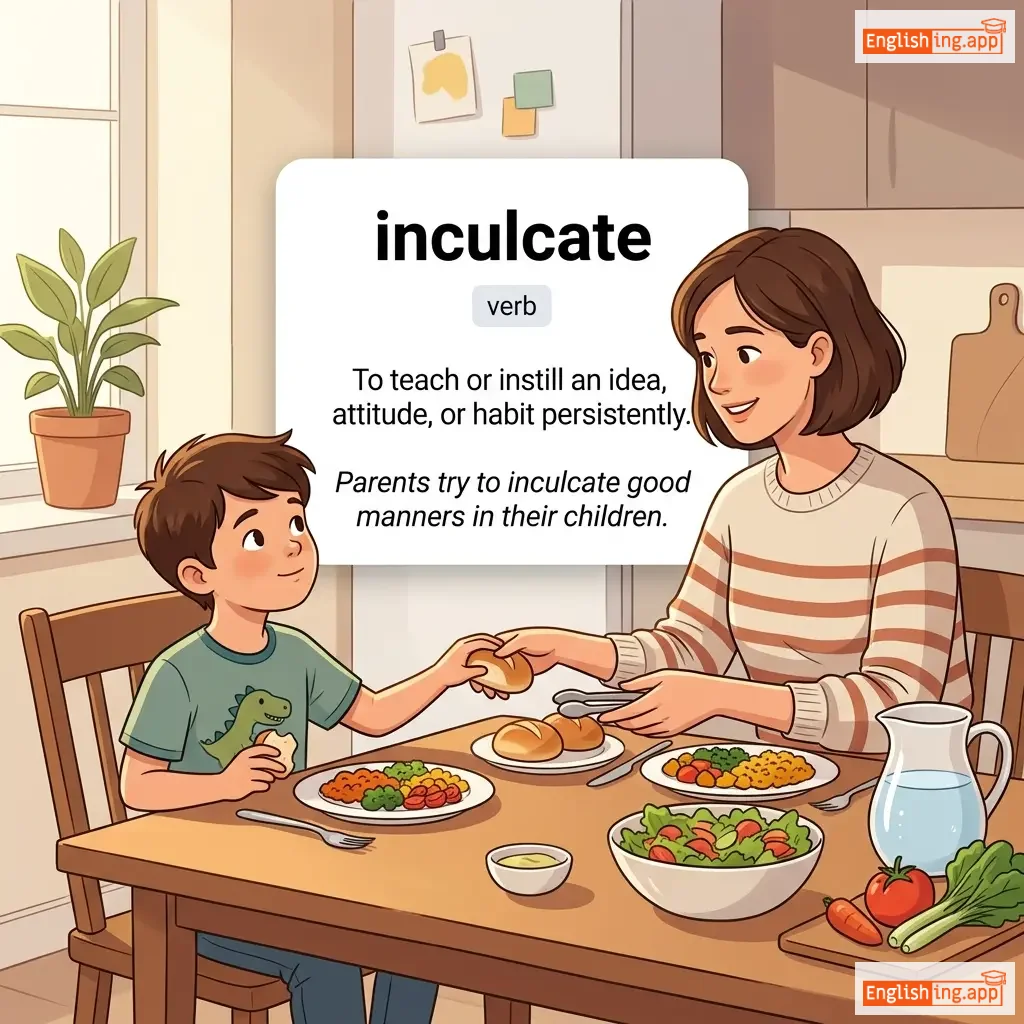
inculcar (inculcar)

To teach or instill an idea, attitude, or habit persistently.

"Parents try to inculcate good manners in their children."

"Los padres intentan inculcar buenos modales en sus hijos." (Los padres intentan inculcar buenos modales en sus hijos.)
verb C2
/ˈɪŋkʌlpeɪt/
inculpar (inculpar)

To blame or accuse someone of wrongdoing.

"The evidence seemed to inculpate the suspect in the crime."

"La evidencia parecía inculpar al sospechoso en el crimen." (La evidencia parecía inculpar al sospechoso en el crimen.)
adjective C2
/ɪnˈdɛkərəs/
indecoroso (indecoroso)

Not in keeping with good taste and propriety; improper.

"His indecorous behavior shocked the audience."

"Su comportamiento indecoroso sorprendió a la audiencia." (Su comportamiento indecoroso sorprendió a la audiencia.)
adjective C2
/ˌɪndɪˈfætɪɡəbl̩/
inagotable (inagotable)

persisting tirelessly; incapable of being fatigued

"Her indefatigable spirit kept the team motivated during the long project."

"Su espíritu inagotable mantuvo al equipo motivado durante el largo proyecto." (Su espiritu inagotable mantuvo al equipo motivado durante el largo proyecto.)
verb C2
/ɪnˈdɛmnɪfaɪ/
indemnizar (indemnizar)

to compensate someone for harm or loss; to secure against future damage or cost

"The insurance company agreed to indemnify the client for the damages."

"La compañía de seguros acordó indemnizar al cliente por los daños." (La compania de seguros acordó indemnizar al cliente por los daños.)
noun C2
/ˌɪndɛnˈteɪʃən/
sangría (sangria)

A space left at the beginning of a line of text; a notch or deep recess on a surface.

"The teacher asked the students to use proper indentation in their essays."

"El profesor pidió a los estudiantes que usaran una sangría adecuada en sus ensayos." (El profesor pidió a los estudiantes que usaran una sangría adecuada en sus ensayos.)
noun C2
/ɪnˈdɛntʃər/
contrato de servidumbre (contrato de servidumbre)

A formal legal agreement, contract, or document, often relating to work or service.

"In the 18th century, many workers came under indenture to work overseas."

"En el siglo XVIII, muchos trabajadores estuvieron bajo un contrato de servidumbre para trabajar en el extranjero." (En el siglo XVIII, muchos trabajadores estuvieron bajo un contrato de servidumbre para trabajar en el extranjero.)
indeterminate definition card — visual illustration of the meaning
adjective C2
/ˌɪndɪˈtɜːrmənət/
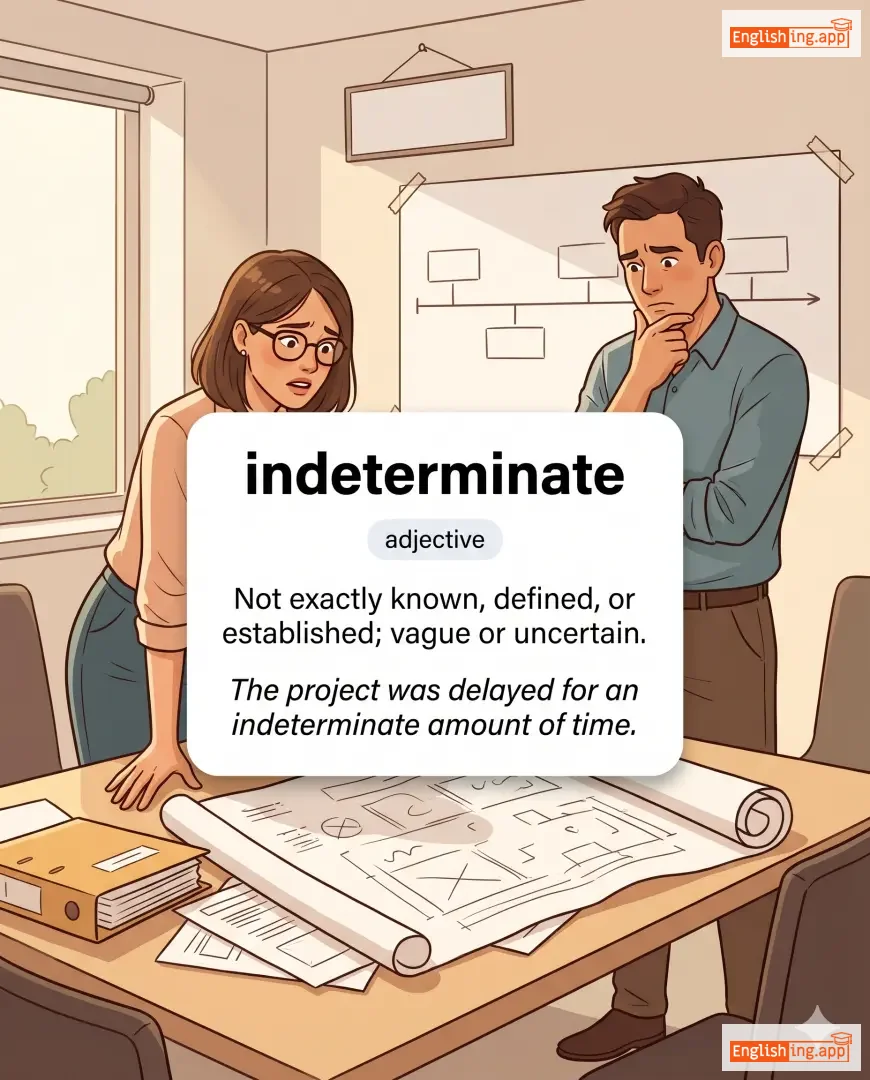
indeterminado (indeterminado)

Not exactly known, defined, or established; vague or uncertain.

"The project was delayed for an indeterminate amount of time."

"El proyecto se retrasó por un tiempo indeterminado." (El proyecto se retrasó por un tiempo indeterminado.)
noun C2
/ˈɪndɪkənt/
indicador (indicador)

Something that indicates or points to a fact or condition.

"High fever is often an indicant of infection."

"La fiebre alta a menudo es un indicador de infección." (La fiebre alta a menudo es un indicador de infección.)
indigence definition card — visual illustration of the meaning
noun C2
/ˈɪn.dɪ.dʒəns/
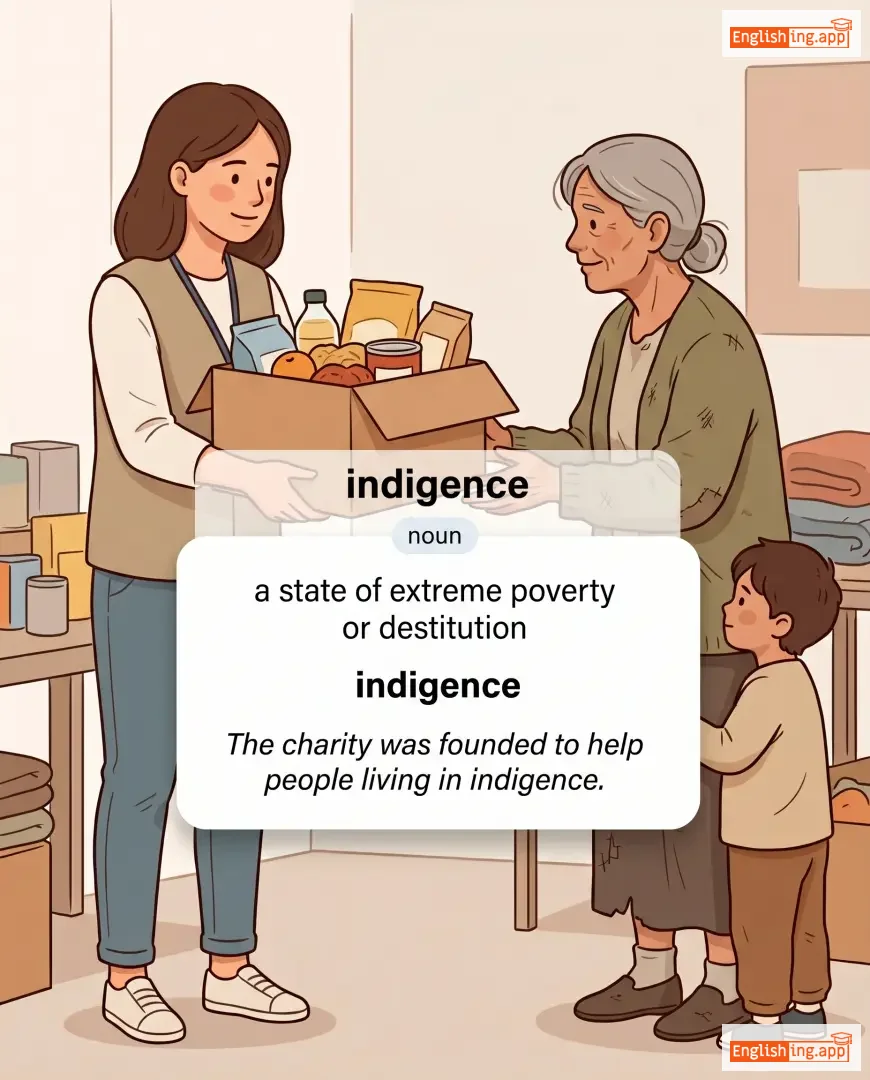
indigencia (indigencia)

a state of extreme poverty or destitution

"The charity was founded to help people living in indigence."

"La caridad se fundó para ayudar a las personas que viven en indigencia." (La caridad se fundo para ayudar a las personas que viven en indigencia.)
adjective C2
/ˈɪn.dɪ.dʒənt/
indigente (indigente)

lacking the necessities of life due to poverty; very poor

"The hospital offers free care to indigent patients."

"El hospital ofrece atención gratuita a los pacientes indigentes." (El hospital ofrece atencion gratuita a los pacientes indigentes.)
adjective C2
/ˌɪn.daɪˈdʒes.tə.bəl/
indigesto (indigesto)

difficult or impossible to digest; hard to accept or understand

"The report was so long and detailed that it became almost indigestible."

"El informe era tan largo y detallado que se volvió casi indigesto." (El informe era tan largo y detallado que se volvio casi indigesto.)
adjective C2
/ˌɪndɪˈsɜːrnəbl/
indistinguible (indistinguible)

Impossible or difficult to see, notice, or distinguish.

"The difference between the two shades was almost indiscernible."

"La diferencia entre los dos tonos era casi indistinguible." (La diferencia entre los dos tonos era casi indistinguible.)
adjective C2
/ˌɪndɪˈsɒljʊbl/
Indisoluble (Indisoluble)

Unable to be destroyed, broken, or dissolved.

"Marriage was once considered an indissoluble bond."

"El matrimonio alguna vez fue considerado un vínculo indisoluble." (El matrimonio alguna vez fue considerado un vínculo indisoluble.)
verb C2
/ɪnˈdaɪt/
componer (componer)

To write or compose (literary or formal works).

"The poet indited a heartfelt sonnet."

"El poeta compuso un soneto sincero." (El poeta compuso un soneto sincero.)